Shownotes
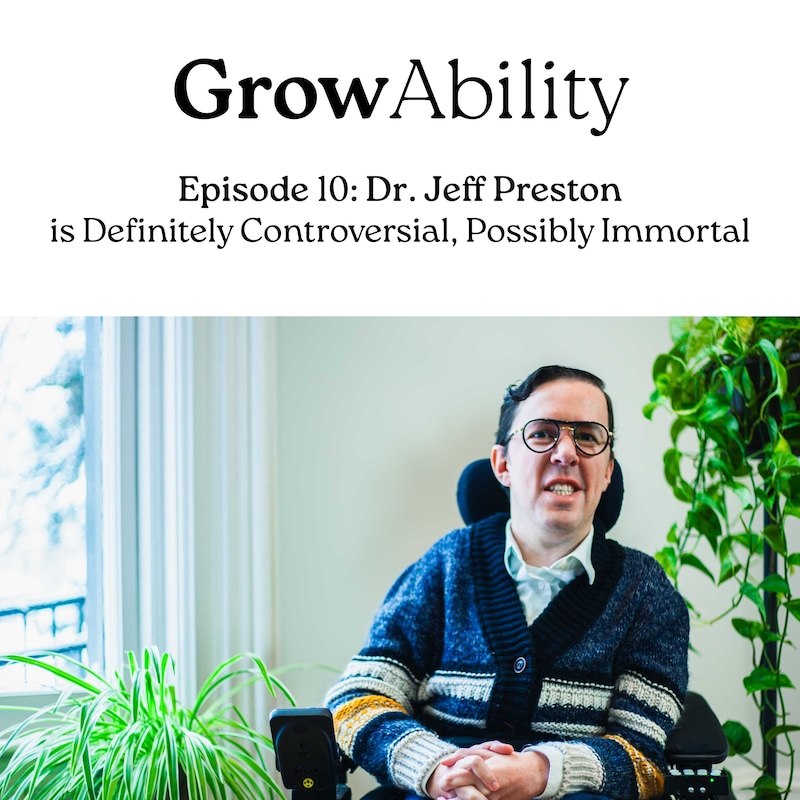
In a GrowAbility first (but certainly not last), Holly joins Joe for an in-person interview with Dr. Jeff Preston, a disability studies professor, advocate, and self-proclaimed immortal who refuses to let ableism win. From his early days as a three-year-old fundraising speaker to his current role challenging systemic barriers, Jeff shares candid insights about disability rights, accessibility legislation, and why spite makes an excellent motivator. He unpacks why Ontario won't meet its 2025 accessibility goals, explores the connection between disability and poverty, and explains why inaccessible spaces are a form of censorship. Through thoughtful analogies—from farmers as natural innovators to disabled people as "ghosts in the cornfield"—Jeff illustrates how accessibility benefits everyone. Whether discussing urban agriculture, media representation, or the importance of inter-ability relationships, his message is clear: disability is everywhere, and it's time our world reflected that reality.
Follow GrowAbility at any of our socials via: https://gapod.me/links
Subscribe to the Fresh & Nutritious Newsletter at: https://gapod.me/newsletter
Links Mentioned:
- Jeff Preston's Website: https://jeffpreston.ca/
- The Invalid Culture Podcast: https://invalidculture.com/
- Find Jeff on LinkedIn: https://www.linkedin.com/in/drjeffpreston/
- Find Jeff on Facebook: https://www.facebook.com/getmobilize
- Disability Studies at King's University College: https://www.kings.uwo.ca/academics/disability-studies/
About Jeff Preston
Born and raised in Port Elgin, Jeffrey Preston, Ph.D., is an Associate Professor of Disability studies at King’s University College @ Western University in London, Ontario.
A long-time advocate and motivational speaker, Jeff started fundraising for Muscular Dystrophy research when he was 3 years old (at a beach volleyball tournament in Port Elgin) and was later a 2-time Ontario poster child and the first national campaign assistant for Muscular Dystrophy Canada. His annual golf tournament, the Jeff Preston Celebrity Golf Tournament, ran for over 20 years and raised over $1.4 million for MD research.
Jeff has previously served as vice-chair for Easter Seals Ontario, member of the Accessibility Standards Advisory Committee for the Ministry of Community and Social Services, board chair of Defeat Duchenne Canada, two-term member of the Committee of Adjustments at London City Hall, and vice-chair of the leadership table of the London For All anti-poverty initiative organized by the City of London and the United Way of Elgin Middlesex.
Jeff’s first book, The Fantasy of Disability, was just published internationally 2016 and reissued in paperback by Routledge in 2018.
Show Credits
GrowAbility is hosted by Joe Gansevles and Holly Pugsley.
Special thanks to this week's guest, Jeff Preston.
Our show is produced by Adam Caplan, Joe Gansevles, and Holly Pugsley.
Production support from Oliver Gansevles, Evan Gansevles, Scott Hohn, Kevin Labonte, Paul Rogers, Dorantina Uka, and Allan Williamson.
Holly Pugsley of Just Keep Growing art directed this episode and made sure the plants looked great.
Audience strategy by Dorantina Uka and Tess Alcock.
Our theme music is Wandering William by Adrian Walther and can be found on Soundstripe.
Adam Caplan is web.isod.es Executive Producer, and Sammy Orlowski is our senior creator.
Thanks to TechAlliance of Southwestern Ontario, including Farida Abdelnabi and Sarah Edmondson, for letting us shoot at their beautiful offices.
Special thanks to Leanne Gansevles for the support and yummy food, Hubert Orlowski for helping our podcast sound great, and Gabor Sass for making some great introductions.
GrowAbility is a web.isod.es Production and is produced with the support and participation of the team at The Patch and Hutton House.
Transcripts
Hey Holly, who's your favorite
Speaker:superhero?
Speaker:Poison Ivy, of course.
Speaker:Isn't Poison Ivy a villain?
Speaker:Hey, one person's villain is another
Speaker:person's hero.
Speaker:Fair enough.
Speaker:Who's your favorite superhero?
Speaker:Oh, Sprocket Man, of course.
Speaker:That sounds made up.
Speaker:Sprocket Man is totally not a made up
Speaker:thing and his superpower is exactly
Speaker:what you think it is.
Speaker:He's a cyclist who wears a cape, isn't
Speaker:he?
Speaker:Well, no cape but plenty of safety
Speaker:tips.
Speaker:Whatever rings your bell, Joe.
Speaker:From webisodes, this is GrowAbility,
Speaker:a digital documentary at the
Speaker:intersection of urban agriculture, food
Speaker:security and community.
Speaker:On this episode, we speak with
Speaker:professor, motivational speaker,
Speaker:podcaster and staunch advocate for
Speaker:individuals with disabilities.
Speaker:Including himself.
Speaker:Including himself, Dr. Jeff Preston.
Speaker:Holly, we've spent a lot of time on the
Speaker:show talking about the grow part of our
Speaker:name, but not the ability part.
Speaker:It's true. We both work with people
Speaker:with disabilities at The PATCH,
Speaker:blending urban agriculture with skills,
Speaker:training, volunteering and connecting
Speaker:to the community.
Speaker:But we haven't really brought out those
Speaker:themes into this show yet.
Speaker:And that's where Dr. Preston comes in.
Speaker:One of the many things I love about
Speaker:Jeff's work is he looks at a whole
Speaker:bunch of parts of our community through
Speaker:an equity driven lens.
Speaker:I want him to talk about how social
Speaker:policy negatively impacts both the
Speaker:disabled community and the way that
Speaker:they impact those experiencing poverty.
Speaker:What about you?
Speaker:I'm just looking forward to having
Speaker:another person with fantastic taste in
Speaker:clothes on the pod.
Speaker:Of course you are.
Speaker:Before we meet Jeff, if you like this
Speaker:podcast, please rate and review us.
Speaker:Or if you're watching us on YouTube,
Speaker:please like and subscribe.
Speaker:Plus, when you sign up for our free
Speaker:fresh and nutritious newsletter, you'll
Speaker:get all the latest exclusive goodies
Speaker:delivered right into your inbox.
Speaker:And we want to hear from you.
Speaker:Send emails to hosts at growabilitypod
Speaker:.com.
Speaker:We want your ideas, questions or
Speaker:suggestions for guests in future
Speaker:episodes.
Speaker:And a special thanks to TechAlliance of
Speaker:Southwestern Ontario for inviting us to
Speaker:use their weirdly perfect space for
Speaker:this series of interviews.
Speaker:And now let's get this party started
Speaker:with Dr. Jeff Preston.
Speaker:Jeff, thank you so much for being here
Speaker:today.
Speaker:Yeah, absolutely.
Speaker:I'm so happy to be here.
Speaker:And do I have this right?
Speaker:Did you start fundraising by doing a
Speaker:public speaking gig for Muscular
Speaker:Dystrophy?
Speaker:Dystrophy, yes.
Speaker:Dystrophy, okay.
Speaker:Could you tell us a little bit about
Speaker:that?
Speaker:Yeah, so many moons ago,
Speaker:I was just a little child,
Speaker:maybe. I was about three years old.
Speaker:And there was this volleyball
Speaker:tournament in my hometown run
Speaker:by the firefighters to raise money
Speaker:for muscular dystrophy research.
Speaker:And so I was there and
Speaker:they asked me, they said, oh, you
Speaker:should come up and say something.
Speaker:It was my birthday around
Speaker:then, right around my birthday.
Speaker:So up I went, I got a happy birthday,
Speaker:and I thanked people for coming out.
Speaker:And that was sort of the beginning of
Speaker:the end for me as
Speaker:a fundraiser.
Speaker:From there, I started going to that
Speaker:tournament every year.
Speaker:That grew into an
Speaker:even bigger event and then eventually
Speaker:into working as a poster child
Speaker:for MDC and running
Speaker:on golf tournaments.
Speaker:And kind of never stopped asking
Speaker:people for money for the
Speaker:rest of my life.
Speaker:There's nothing wrong with that.
Speaker:No.
Speaker:Let's start with some common ground.
Speaker:Sure.
Speaker:What is a disability?
Speaker:That is a fun question.
Speaker:So I think there's the definition,
Speaker:there's the dictionary definition of
Speaker:what we understand to be disability.
Speaker:I actually take a very different
Speaker:perspective on disabled because
Speaker:I think that we focus a lot
Speaker:on bodily impairment,
Speaker:right? We talk a lot about disease
Speaker:and injury and those sorts of things,
Speaker:and we understand disability in that
Speaker:sense. I actually add another layer to
Speaker:it. I actually think that we are
Speaker:disabled not just by what is within
Speaker:our bodies, but also what we find
Speaker:outside in the world beyond us,
Speaker:because we have constructed this entire
Speaker:world for a certain kind
Speaker:of person, which results in
Speaker:those who don't fit that category
Speaker:or don't fit that ability grouping
Speaker:to now be disabled.
Speaker:So I would argue that I'm just as
Speaker:disabled by muscular dystrophy
Speaker:as I am by stairs
Speaker:at the front of every building we build
Speaker:or very narrow aisles
Speaker:in the stores that we construct
Speaker:or in the classrooms that we
Speaker:design that have steps to get
Speaker:up to the tiered seating.
Speaker:I think that these factors are just as
Speaker:disabling as the physical
Speaker:impairment that a doctor says is
Speaker:the disability.
Speaker:Well, to build off of that, if I may,
Speaker:this podcast will drop in 2025.
Speaker:Yeah.
Speaker:And we as a community
Speaker:made
Speaker:a vow to have something ready
Speaker:by 2025.
Speaker:Yeah, yeah.
Speaker:Are we there?
Speaker:Nope.
Speaker:Spoiler alert.
Speaker:No.
Speaker:We are not.
Speaker:Not even close.
Speaker:I would say that we've made progress.
Speaker:I think it's important for us to
Speaker:remember that disability rights and
Speaker:the disability rights movement as a
Speaker:semi-organized asynchronous
Speaker:grouping really
Speaker:has only been operating since like
Speaker:the 60s, maybe the
Speaker:70s, really the 80s,
Speaker:which means that we're also one of the
Speaker:youngest civil rights movements in
Speaker:North America. Having said
Speaker:that, if you look at what the world
Speaker:looked like when I was born in 1983,
Speaker:and you compare that to the
Speaker:world that we're entering into in 2025,
Speaker:fundamentally it's a different world
Speaker:for disabled people.
Speaker:We've made incredible gains
Speaker:in terms of access
Speaker:to programs and services, into access
Speaker:to educational opportunities,
Speaker:access to employment opportunities.
Speaker:There's a really good, happy
Speaker:story.
Speaker:At the same time, there's
Speaker:the fundamental reality that disabled
Speaker:people do not experience the
Speaker:same life as a non-disabled person
Speaker:right now in London, in
Speaker:Ontario, in Canada, in
Speaker:planet Earth.
Speaker:Right. And maybe for
Speaker:our listeners and our viewers, we
Speaker:should talk about what that community
Speaker:vow was.
Speaker:Yeah, of course.
Speaker:So, again, if we look back,
Speaker:flashback, 2005,
Speaker:that was actually 2003, 2004, I
Speaker:couldn't take when this happened, but I
Speaker:remember waking up as a university
Speaker:student and I
Speaker:flipped on the news in the morning and,
Speaker:you know, in my breakfast, and I see
Speaker:this big announcement, Ontario
Speaker:government promises by 2025,
Speaker:Ontario will be fully accessible.
Speaker:This was the vow. And we would do it
Speaker:through this piece of legislation
Speaker:called the AODA, the Accessibility for
Speaker:Ontarians with Disabilities Act.
Speaker:I remember hearing that news
Speaker:and I had this sort of two simultaneous
Speaker:thoughts.
Speaker:So, on the one thought,
Speaker:I was like, wow, that's
Speaker:amazing. It's not every day you hear
Speaker:about disability news, on the
Speaker:news. Often not less stories about
Speaker:people like me on the news.
Speaker:So, that was interesting.
Speaker:Number two, I never
Speaker:imagined that I would see a fully
Speaker:accessible province in my lifetime.
Speaker:Right.
Speaker:So, I had sort of assumed that what
Speaker:I lived in at that point would be
Speaker:what I would live in basically forever,
Speaker:that new buildings would be kind of
Speaker:accessible, people would do their best,
Speaker:but much of this world would remain
Speaker:inaccessible and much of the
Speaker:accessibility I would have to build for
Speaker:myself, but I'd have to bring access
Speaker:wherever I went.
Speaker:And I suddenly had this moment of
Speaker:realization that I wasn't
Speaker:experiencing the province in the
Speaker:same way that everyone else was.
Speaker:And that might seem obvious or
Speaker:simplistic, but it has never occurred
Speaker:to me that another world was
Speaker:possible.
Speaker:And so, this promise that we made in
Speaker:2005 was a
Speaker:remarkable future-looking
Speaker:promise that said we
Speaker:can, and not just can,
Speaker:but should, not just should,
Speaker:must do better for
Speaker:disabled people in this province.
Speaker:That was extremely exciting.
Speaker:And so, I said, I want to get involved.
Speaker:Can I ask you a sage question?
Speaker:Sure.
Speaker:Why haven't we made the progress
Speaker:we promised in the last 20 years?
Speaker:Man, how much time do we have?
Speaker:We have about eight hours, I think,
Speaker:right? The podcasts are usually about
Speaker:eight hours long, I think, usually.
Speaker:You know, for when you're driving from
Speaker:London to Montreal.
Speaker:So, okay, there's a few things.
Speaker:So, thing number one, I think
Speaker:the AODA got bogged down in politics.
Speaker:As everything does.
Speaker:Of course.
Speaker:And so, there ends up with a lot of
Speaker:negotiations that are happening to try
Speaker:to get the legislation passed.
Speaker:And often, in my opinion,
Speaker:humblest of opinions as it is,
Speaker:we often lost many of
Speaker:those negotiations.
Speaker:You have to understand that the AODA is
Speaker:a group of
Speaker:legislative pieces, standards, that
Speaker:were all created by a bunch of
Speaker:people together, put them in a room,
Speaker:and have them hash out what the
Speaker:standard looks like.
Speaker:What that meant was that many of
Speaker:the standards, all of the standards,
Speaker:were created with 50%
Speaker:industry, which essentially
Speaker:means 50% predominantly
Speaker:non-disabled people, and 50%
Speaker:disabled people, allies,
Speaker:service providers, et cetera.
Speaker:What that meant was that for the last
Speaker:20 years, disabled people have
Speaker:been expected to negotiate the
Speaker:definition of accessibility with
Speaker:people who stand to benefit
Speaker:from reducing the requirements
Speaker:of accessibility legislation
Speaker:and standards.
Speaker:So, quite literally, you're going in
Speaker:front of, say, a
Speaker:mega corporation who does
Speaker:not want to spend any more money on
Speaker:accessibility that are trying to keep
Speaker:costs down, and you now have to
Speaker:argue with that person what
Speaker:is or isn't accessible.
Speaker:So, I think that was a
Speaker:not right way to move forward
Speaker:in building these pieces of
Speaker:legislation. That slowed us down.
Speaker:I think, number two, we were
Speaker:dramatically slowed down by
Speaker:a lack of funding.
Speaker:I don't think the Ontario government
Speaker:realized how much it was going
Speaker:to cost to become fully
Speaker:accessible, quote, unquote.
Speaker:It was going to take an enormous amount
Speaker:of money, not just for physical
Speaker:changes, but also for education,
Speaker:also for developing new standards.
Speaker:This is something that the world had
Speaker:never really done before,
Speaker:that Ontario was trying to not just
Speaker:invent the wheel, but invent an entire
Speaker:vehicle where all they really had were
Speaker:stones and a couple chisels and
Speaker:axes, right?
Speaker:And so, I think that was another issue.
Speaker:And I think really the final real
Speaker:problem with the AODA is
Speaker:that we never were able to come to
Speaker:terms with a compliance measure.
Speaker:So, the AODA was supposed to have
Speaker:teeth. It was supposed to have the
Speaker:ability to provide fines and
Speaker:to compel people to become
Speaker:accessible. The idea being if
Speaker:it's more expensive to
Speaker:remain inaccessible,
Speaker:people will then choose to become
Speaker:accessible.
Speaker:That's the philosophy.
Speaker:The compliance measure didn't really
Speaker:get off the ground until years
Speaker:after the legislation was passed.
Speaker:And to this day, we actually don't
Speaker:even necessarily know how
Speaker:many organizations have
Speaker:been fined under the compliance
Speaker:measure. But my sense is,
Speaker:you could probably count on one or two
Speaker:hands the number of organizations that
Speaker:have faced any sort of financial
Speaker:penalty, despite the fact
Speaker:that barriers remain everywhere,
Speaker:that many organizations are
Speaker:non-compliant, whether they know it or
Speaker:not. And so, that inability to compel
Speaker:people to even follow the rules that
Speaker:do exist has meant that we've
Speaker:been extremely slow out
Speaker:of the gate to try to build an
Speaker:accessible province.
Speaker:I feel there's a huge value proposition
Speaker:in meeting the standards.
Speaker:Am I wrong on that?
Speaker:Absolutely. Absolutely.
Speaker:I don't think that people realize how
Speaker:big the disabled population is,
Speaker:right? So, Statistics Canada tells us
Speaker:somewhere around 20% to 25%
Speaker:of Canadians identify with a
Speaker:disability.
Speaker:Most researchers, myself included,
Speaker:believe that number is actually
Speaker:probably too low,
Speaker:that it actually is probably much
Speaker:higher.
Speaker:Now, it depended, again, as you say,
Speaker:how you define what a disability is.
Speaker:But the reality is there are disabled
Speaker:people everywhere.
Speaker:There are disabled people that want to
Speaker:participate in our society, who
Speaker:wish to get jobs, who wish to
Speaker:spend the money that they earn at those
Speaker:jobs, that want to live a life just as
Speaker:any other Ontarian.
Speaker:And so, if you are a business, for
Speaker:instance, and you go the extra step to
Speaker:become accessible, you've now opened
Speaker:yourself up to not just new
Speaker:consumers, but new consumers who
Speaker:have very few options in terms of
Speaker:where they may want to go to shop.
Speaker:So, I think that there's this economic
Speaker:benefit to it.
Speaker:There's also the downstream benefit of
Speaker:accessibility when we don't
Speaker:necessarily know what the future is
Speaker:going to hold. And so, what if you
Speaker:or one of your employees encounters
Speaker:a disability? What if they get an
Speaker:injury or something happens?
Speaker:And now you have an employee who
Speaker:may not be able to work in your space
Speaker:because your space isn't accessible.
Speaker:And if they leave that job, they're
Speaker:taken with them all of that
Speaker:institutional knowledge, all of that
Speaker:training, all of that quality skill
Speaker:that has been built up during
Speaker:their employment.
Speaker:So, for me, I look at accessibility not
Speaker:just as opening up new markets, not
Speaker:just opening up new opportunities
Speaker:for new customers, but I see
Speaker:it also as future-proofing yourself
Speaker:from the magic reality
Speaker:that is the human body is
Speaker:fragile, it is vulnerable, and
Speaker:it is subject to change throughout all
Speaker:of our lives.
Speaker:Is this exclusive to
Speaker:Ontario or is this everywhere?
Speaker:Or is there a sliding scale?
Speaker:This is a real fun question.
Speaker:So, in Canada, we have a
Speaker:patchwork of accessibility law.
Speaker:So, every province does it different,
Speaker:and everyone is kind of approaching
Speaker:this from a similar, but not similar
Speaker:at all sort of perspective.
Speaker:And you've got a bunch of other
Speaker:interconnecting industries,
Speaker:organizations, sectors, that
Speaker:are very different from province to
Speaker:province, right? So, the way that they
Speaker:do medicine in Alberta is different
Speaker:than the way they do medicine in
Speaker:Ontario, which is different than how
Speaker:it's done in Quebec and different how
Speaker:it's done in BC.
Speaker:And so, all of those programs and
Speaker:services, whether it comes down to
Speaker:therapy, access to adaptive devices,
Speaker:occupational therapists, physical
Speaker:therapists, speech language pathology,
Speaker:all these different sort of factors,
Speaker:that is done differently in many of
Speaker:our provinces.
Speaker:And so, too, is accessibility
Speaker:legislation.
Speaker:For a lot of provinces are looking
Speaker:on Ontario.
Speaker:A lot of Canada looks at
Speaker:Ontario and says, what did you do for
Speaker:the AODA?
Speaker:We want to do something similar, but we
Speaker:also don't want to make the mistakes we
Speaker:made. And so, we are sort of
Speaker:trailblazing in Ontario in that sense.
Speaker:But the problem then means that if
Speaker:I were to pick up shop and move
Speaker:somewhere else in Canada, I would
Speaker:actually have a radically different
Speaker:experience from one province to
Speaker:another, which begs the question,
Speaker:do disabled Canadians enjoy
Speaker:the human right, the enshrined right
Speaker:in Canada of free movement?
Speaker:We are supposed to be able to move
Speaker:anywhere in our country as
Speaker:Canadians. I would argue we
Speaker:don't have that as disabled people.
Speaker:So much great insight.
Speaker:You're currently a professor of
Speaker:disability studies at King's
Speaker:University in London, but
Speaker:you have a Master's and a Doctorate
Speaker:in media studies.
Speaker:What's the connection there?
Speaker:Yeah, absolutely.
Speaker:So, growing up, I was doing a lot of
Speaker:media work as I was doing my
Speaker:fundraising. I was doing some TV stuff,
Speaker:doing lots of radio stuff, doing lots
Speaker:of public speeches, and I became really
Speaker:interested in media.
Speaker:So, I actually thought that I wanted to
Speaker:be a journalist.
Speaker:That was my dream originally.
Speaker:I loved the guys that I was meeting in
Speaker:the radio world, loved the women that
Speaker:was meeting in journalism,
Speaker:and I thought- in print journalism,
Speaker:I thought maybe this is for me.
Speaker:Maybe I should do this.
Speaker:So, I go to school for media studies.
Speaker:I do an internship at a local
Speaker:newspaper- two months,
Speaker:and I was like, nope, I
Speaker:do not want to be a journalist.
Speaker:Not for me.
Speaker:Way too much hate mail.
Speaker:Not interested.
Speaker:So, I was like, no, that isn't for me.
Speaker:But as I started university here
Speaker:in London, I fell in love with
Speaker:school.
Speaker:I was not a school kid growing
Speaker:up. I did not like school.
Speaker:I was the kid who, like, every morning
Speaker:it was, mom, I think I'm sick.
Speaker:She's like, I'm sure you are.
Speaker:Off you go. Go to school.
Speaker:When I got to university, though, I
Speaker:actually fell in love with education.
Speaker:I fell in love with the pursuit of
Speaker:knowledge.
Speaker:And I remember being in the first year
Speaker:of class, I'm looking at a professor,
Speaker:the sage on the stage, and I'm
Speaker:thinking, I want to
Speaker:do this. I want to be a teacher.
Speaker:I want to teach people.
Speaker:I want to research.
Speaker:I want to learn new things and share
Speaker:that information with the world.
Speaker:And that's when I began to start this
Speaker:pursuit. And so, my original
Speaker:research was really focused on
Speaker:understanding how disability is
Speaker:represented in popular culture.
Speaker:I was fascinated in the disconnect
Speaker:between the stories we tell in
Speaker:the media versus the lived reality
Speaker:of disability, which often were,
Speaker:paradoxically,
Speaker:completely incongruent.
Speaker:And so, that was really sort of the
Speaker:early days of my research.
Speaker:I was trying to understand that
Speaker:question.
Speaker:And it's from there that I then got
Speaker:sucked into this world, this new field
Speaker:of study called disability studies,
Speaker:or now, critical disability studies.
Speaker:I don't know who you talk to.
Speaker:And so, I started bringing that work
Speaker:into the world of media studies,
Speaker:trying to mash together this cultural
Speaker:theory with disability studies and
Speaker:critical disability theory, bringing
Speaker:them together to try to have a new way
Speaker:of thinking about how we tell stories
Speaker:about disability, how we imagine
Speaker:disability, and how that cultural
Speaker:construction of disability actually
Speaker:really matters because the
Speaker:way we talk about disability influences
Speaker:what we do about it.
Speaker:And that includes things like
Speaker:legislation, like the AODA.
Speaker:Absolutely.
Speaker:We need knowledgeable teachers.
Speaker:We need, I use this word
Speaker:and you used this word, sages.
Speaker:Right.
Speaker:There's also a component of
Speaker:representation.
Speaker:Yeah.
Speaker:How important is representation?
Speaker:Unbelievably important, I would say.
Speaker:I think it's critical.
Speaker:I'm biased, of course.
Speaker:I'm a media studies scholar.
Speaker:So, of course, I'm going to say it's
Speaker:the most important thing.
Speaker:But I think that representation
Speaker:genuinely really matters because I
Speaker:think that representation not
Speaker:just allows us to tell our own
Speaker:story, to give legitimacy to
Speaker:lives with disabilities, to say that
Speaker:this is a real experience and it
Speaker:matters, that there's meaning in
Speaker:it. And it's meaning that we, the
Speaker:disabled, should be creating,
Speaker:that we should be the ones telling that
Speaker:story.
Speaker:But I think that stories also provide
Speaker:us that opportunity to invite people
Speaker:in to our lives, to invite
Speaker:people into our experience, not
Speaker:in the sense of like walk a mile in our
Speaker:shoes, but at least to get insight,
Speaker:to develop empathy for
Speaker:a different way of living, right?
Speaker:Right.
Speaker:And so, I think that media has this
Speaker:powerful ability to actually
Speaker:invite people to
Speaker:our worlds, to form mutual
Speaker:relationships into
Speaker:different worlds, different ways
Speaker:of being.
Speaker:And I think more than anything,
Speaker:media is fantasy, right?
Speaker:Yes.
Speaker:We often tell stories about the world
Speaker:that we live in, but we often tell
Speaker:stories about the world that we wish we
Speaker:lived in, about a world that we aspire
Speaker:to live in.
Speaker:Because in media, movie magic
Speaker:says that anything is possible.
Speaker:And so, something I think that's really
Speaker:fascinating is how as
Speaker:we build and tell stories about
Speaker:disability, how can we also
Speaker:be telling and showing a
Speaker:universally accessible world in
Speaker:a way that's not possible in the
Speaker:real world? And how can that then be
Speaker:something that we aspire to?
Speaker:In the same way that you look at
Speaker:something like Star Trek, which has
Speaker:inspired countless technical
Speaker:innovations.
Speaker:Absolutely.
Speaker:Because it said, this is what the
Speaker:future could look like.
Speaker:And an engineer says, I'm
Speaker:going to figure out how to make that
Speaker:happen.
Speaker:Right.
Speaker:I'm going to make that iPad,
Speaker:essentially, that I saw on Star Trek.
Speaker:I think that the same could be done
Speaker:with accessibility and inclusion.
Speaker:I really like that perspective a lot,
Speaker:actually. Yeah, it's beautiful.
Speaker:Groups like the Disability Screen
Speaker:Office and companies like Accessible
Speaker:Media Inc. have taken a
Speaker:nothing-about-us-without-us approach
Speaker:to disabled representation in the
Speaker:media. Is this the right path forward,
Speaker:would you think?
Speaker:Absolutely. Yeah, we need to get more
Speaker:disabled people involved.
Speaker:I actually wonder how many flubs,
Speaker:when it comes to telling stories about
Speaker:disability, how many of those flubs are
Speaker:generated by the fact that no
Speaker:one involved in this production
Speaker:actually had a disability.
Speaker:And so, there are all these things that
Speaker:you see. For instance, I see
Speaker:a lot of people in wheelchairs that
Speaker:do not make sense in the
Speaker:real world, right? So, I have a
Speaker:character, and they'll be in this
Speaker:rickety hospital chair.
Speaker:And I'm like, no, a guy
Speaker:with a spinal cord injury like that,
Speaker:they are not going to be rolling around
Speaker:in this heavy, clunky hospital chair.
Speaker:They're going to be in a light,
Speaker:titanium, ergodynamic thing,
Speaker:right?
Speaker:Right.
Speaker:Absolutely. Of course they would be.
Speaker:Why would they be in this unaesthetic
Speaker:chair?
Speaker:And so, I think that there is this sort
Speaker:of reality that you can be brought
Speaker:in by having people actually
Speaker:there to say, actually, that's
Speaker:not what that's like.
Speaker:Right.
Speaker:So, to give you an example, I have a
Speaker:buddy named Josh Cassidy.
Speaker:He and I grew up together.
Speaker:We went in very different paths.
Speaker:I went to be an academic.
Speaker:He became a Paralympian.
Speaker:And so, he is a Paralympic wheelchair
Speaker:racer. And in his spare time,
Speaker:he does media.
Speaker:And so, he was in a Hallmark movie.
Speaker:He was hired as a- He's a secondary,
Speaker:he wasn't the main character.
Speaker:He was buddies of the main character.
Speaker:So, this is a Christmas movie, rom-com,
Speaker:you know, Hallmark.
Speaker:What was fascinating for him in this
Speaker:process, as he shares with me,
Speaker:is that throughout the process, the
Speaker:director was asking him constantly,
Speaker:is this right?
Speaker:Do we have this right?
Speaker:And so, there was one scene in
Speaker:particular where he goes to a
Speaker:cafe and he has to enter the cafe,
Speaker:order a coffee, go and sit down, and
Speaker:then he has a conversation.
Speaker:And so, while they were doing it, Josh
Speaker:was saying, he's like, oh, no, like,
Speaker:I wouldn't order this way.
Speaker:This isn't how I order.
Speaker:They had it all set up where they had a
Speaker:whole thing. It wasn't right.
Speaker:It didn't feel natural to what he would
Speaker:do as a wheelchair user.
Speaker:And so, they said, great, well,
Speaker:show us. Show us what you would do.
Speaker:And so, they walked through the steps.
Speaker:They adapted the scene.
Speaker:They changed the format of it.
Speaker:And as a result, they got something
Speaker:that was actually authentic to what a
Speaker:wheelchair user would experience as
Speaker:they're moving in and out of a
Speaker:coffee shop, right?
Speaker:And so, I think having that on the
Speaker:ground insight is actually really
Speaker:important, and it cannot be replicated.
Speaker:You can't just hire an expert.
Speaker:You've got to have lots of different
Speaker:voices, lots of different experiences
Speaker:to be able to make better
Speaker:choices.
Speaker:Now, I feel this
Speaker:director may be a unicorn.
Speaker:Hah! Yes, yes.
Speaker:I think there
Speaker:may be a misjudgment of
Speaker:abilities.
Speaker:You know, when we look at
Speaker:abilities-first.
Speaker:I shouldn't say when we look at
Speaker:abilities-first. People should look at
Speaker:abilities-first.
Speaker:Yeah.
Speaker:How do you feel?
Speaker:Do you feel that there is a misjudgment
Speaker:of ability based on
Speaker:maybe people that,
Speaker:you know, physical,
Speaker:for instance?
Speaker:Oh, big time, yeah.
Speaker:I think that one of the things we hear
Speaker:a lot when it comes to sort of bigger
Speaker:media productions, we're looking at
Speaker:Hollywood, Toronto, British
Speaker:Columbia, the sort of the major
Speaker:producers.
Speaker:There is this belief that not
Speaker:only will it be more expensive to have
Speaker:a disabled actor or a disabled cast
Speaker:member, they believe that they
Speaker:will be slower to change.
Speaker:I've heard people not getting roles
Speaker:because they thought it would take them
Speaker:too long to change costumes.
Speaker:And they're like, you know, time is
Speaker:money, we can't wait.
Speaker:I mean, not necessarily.
Speaker:For some, maybe not necessarily.
Speaker:A really fun example, I think, of this
Speaker:is Jared Leto, which literally
Speaker:no one has ever said, fun example, and
Speaker:Jared Leto in the same sentence.
Speaker:No, this is the first, not just on
Speaker:this podcast, but universally.
Speaker:Generationally, this has never happened
Speaker:together.
Speaker:So Jared Leto was
Speaker:in this movie, Morpheus, which
Speaker:is historically one of the
Speaker:worst movies ever made.
Speaker:I've heard that.
Speaker:Not great.
Speaker:But in this, he is a character who uses
Speaker:a wheelchair, and Jared Leto was
Speaker:famously a method actor.
Speaker:And what's fascinating is if you hear
Speaker:some of the stories from the
Speaker:set, it was a
Speaker:nightmare because Jared Leto was
Speaker:taking like two hours
Speaker:to go pee.
Speaker:He was taking an inordinate amount of
Speaker:time. He was driving himself
Speaker:and limping his way and
Speaker:really exaggerated all these physical
Speaker:abilities. There was a negotiation.
Speaker:And they finally got him to agree to
Speaker:use a wheelchair to go from point
Speaker:to point to try to speed up the
Speaker:transit or whatever.
Speaker:And what I find fun about this, and
Speaker:I mean, you're going to be like, Jeff,
Speaker:that isn't fun at all, you're the
Speaker:worst, what is wrong with you?
Speaker:But what I find fun about it is that
Speaker:I've been.
Speaker:We'll sign a a petition.
Speaker:Yeah, exactly.
Speaker:Cancel Jeff Preston.
Speaker:But I think that Jared Leto is
Speaker:pantomiming all
Speaker:of the negative understandings of
Speaker:what we think disability is,
Speaker:right? That it's slow, that it's
Speaker:agony.
Speaker:He was pretty mean on set, apparently.
Speaker:There's a bitterness involved.
Speaker:And so I think this is such a perfect
Speaker:example because I think Jared
Speaker:Leto unintentionally was reflecting
Speaker:exactly how we
Speaker:understand- or think we understand
Speaker:disability, which is not
Speaker:at all the reality for most
Speaker:people with disabilities.
Speaker:In fact, I would argue barely any.
Speaker:When people talk about diversity,
Speaker:equity, and inclusion, they
Speaker:often hold race, gender, and other
Speaker:forms of ethnographic equity in
Speaker:mind.
Speaker:Is ableism and disability part of the
Speaker:DEI conversation?
Speaker:It needs to be.
Speaker:It absolutely needs to be, 100%.
Speaker:I think that often it falls a little
Speaker:bit off the radar.
Speaker:But it needs to be there, and it
Speaker:especially needs to be there because
Speaker:of the intersectional nature of
Speaker:disability, that disability
Speaker:is a factor that could
Speaker:apply to anybody.
Speaker:Every race, every age,
Speaker:every religious background, every
Speaker:gender, anyone can have a
Speaker:disability.
Speaker:And with that comes very different
Speaker:experiences.
Speaker:So my experience as a white man,
Speaker:middle-aged, educated with a physical
Speaker:disability is going to be radically
Speaker:different than somebody with a
Speaker:different set of intersecting identity
Speaker:factors. That to me means
Speaker:that ableism and accessibility
Speaker:actually needs to sit at the base
Speaker:of our EDI work.
Speaker:Rather than being something that we
Speaker:tack on after the fact,
Speaker:accessibility and ableism and
Speaker:anti-ableism in general should actually
Speaker:be sitting at the base of our EDI work,
Speaker:upon which we build everything
Speaker:else. Because disability is
Speaker:everywhere.
Speaker:Whether we want to believe it or
Speaker:not, we are everywhere,
Speaker:and we always have been.
Speaker:I mean, find me a historical figure,
Speaker:and I will find you a disabled person.
Speaker:Absolutely.
Speaker:When it comes to inclusion, I've heard
Speaker:you talk about a lack of accessibility
Speaker:being a form of censorship.
Speaker:Right.
Speaker:Can you unpack what that means?
Speaker:Yeah, absolutely.
Speaker:So I think that something that is
Speaker:fascinating is how
Speaker:we assume that disabled people don't
Speaker:exist.
Speaker:And we assume that they don't exist
Speaker:because we don't see them.
Speaker:I've often joked that if I were to ever
Speaker:write a memoir, and I shouldn't, my
Speaker:life has been fairly boring, but
Speaker:if ever did, the title of my memoir
Speaker:would be The Only Guy in a Wheelchair
Speaker:in the Room.
Speaker:Because very often when I'm in rooms,
Speaker:I am the only person in
Speaker:a wheelchair, which seems statistically
Speaker:impossible.
Speaker:It seems very unlikely that
Speaker:every time I go to the movie theater, I
Speaker:would be the only wheelchair user
Speaker:rolling up to Cineplex.
Speaker:The only, when I roll up to the Grand
Speaker:Theater, that there's no one else in
Speaker:that wheelchair section.
Speaker:It seems very strange.
Speaker:But I think of it a little bit
Speaker:differently.
Speaker:So the metaphor that I use is
Speaker:that movie Field of Dreams.
Speaker:I don't know if you know that old movie.
Speaker:I know that one.
Speaker:It's a baseball movie.
Speaker:It's a good one.
Speaker:Right?
Speaker:One of the things in the movie is that
Speaker:there's all these ghosts.
Speaker:They're in the cornfield.
Speaker:And no one knows the ghosts are in the
Speaker:cornfield, but they're there.
Speaker:And the sort of saying in the movie is,
Speaker:if you build it, they will come.
Speaker:And this is how I think about
Speaker:accessibility, is that disabled people,
Speaker:we are the ghosts in the cornfield.
Speaker:You don't know us, but we're out there.
Speaker:We are haunting these spaces outside
Speaker:of your sight.
Speaker:But when you build accessible, when
Speaker:you add accessibility features to your
Speaker:spaces, suddenly
Speaker:they show up.
Speaker:Suddenly there are disabled people kind
Speaker:of everywhere.
Speaker:And so what I ask us to think about
Speaker:always is who
Speaker:is in the room and who is
Speaker:not, and why?
Speaker:But if they're not in the room,
Speaker:they're not a part of the conversation.
Speaker:Right.
Speaker:So there was a study recently done of
Speaker:people working in the Ontario
Speaker:government.
Speaker:And that study found, this is
Speaker:self-disclosure, but it found
Speaker:that there's less than 5%
Speaker:of disabled people that are operating
Speaker:within our government structure right
Speaker:now, which means that 20%
Speaker:of the population is not really
Speaker:getting a fair representation in our
Speaker:government.
Speaker:And so when you think about censorship,
Speaker:who is not in the room?
Speaker:Who is not voicing their opinion at
Speaker:Queen's Park?
Speaker:Disabled people.
Speaker:That's right.
Speaker:Predominantly.
Speaker:And if we are not there to speak,
Speaker:perhaps that explains why there wasn't
Speaker:urgency to pass compliance
Speaker:measures for the AODA.
Speaker:Maybe that explains why there wasn't
Speaker:urgency to pass the
Speaker:post-secondary standard or the
Speaker:hospital education, sorry,
Speaker:healthcare standard of the AODA.
Speaker:Maybe that's why there isn't any real
Speaker:concern that we're not going to
Speaker:meet our standard,
Speaker:our fully accessible Ontario by 2025.
Speaker:If we're not there, we cannot speak.
Speaker:And if we're not speaking, we cannot be
Speaker:heard. And if we're not heard,
Speaker:nothing will change.
Speaker:Can I ask you a naive question?
Speaker:Please, I'd love that.
Speaker:Those are actually great questions.
Speaker:You've done really good.
Speaker:Why can't people just follow your
Speaker:blueprint?
Speaker:Well,
Speaker:it would be bad.
Speaker:It would be a bad choice.
Speaker:My life is littered with mistakes.
Speaker:I am here because of the mistakes I've
Speaker:made, which is a good thing,
Speaker:I think, actually, in many ways.
Speaker:You know, I enrolled at Western.
Speaker:I believed I had been enrolled into
Speaker:a web design program, and
Speaker:I arrived and learned that it was not a
Speaker:web design program, but I fell in love
Speaker:with it and got a PhD.
Speaker:I was like, I'm going to be a
Speaker:university professor. This is what I
Speaker:want to do. I graduate with a PhD,
Speaker:and I got not a lot of tenure-track
Speaker:jobs in this world of university
Speaker:anymore. And I got hired at Fanshawe
Speaker:College, and I'm like, this
Speaker:is the best. I love it.
Speaker:This college stuff is amazing.
Speaker:I love this classroom.
Speaker:I love the students that are here.
Speaker:This is sweet. I never want to leave.
Speaker:And then two years later, I see a job
Speaker:posted for disability studies at
Speaker:King's, and I did leave college.
Speaker:And so, I don't know that
Speaker:people want to follow my blueprint,
Speaker:necessarily.
Speaker:But I do think that we have to remember
Speaker:that I, myself, have an enormous
Speaker:amount of privilege.
Speaker:I've been extremely lucky
Speaker:to be where I am today.
Speaker:I would not have been here without
Speaker:an enormous amount of luck, without an
Speaker:enormous amount of public support, and
Speaker:without some really key advantages
Speaker:that I received when I was born.
Speaker:Namely, I was born with a physical
Speaker:disability.
Speaker:I've had my disability my entire life,
Speaker:so there was no adaptation for me.
Speaker:This has always been normal.
Speaker:There hasn't been anything different
Speaker:than using a wheelchair.
Speaker:It's who I am. It's part of me.
Speaker:I was very lucky to start talking
Speaker:young and to be doing public speeches
Speaker:when I was five, six years old,
Speaker:developing that skill, that ability to
Speaker:articulate myself, being kind
Speaker:of smart, being able to navigate
Speaker:school well, having two gainfully
Speaker:employed parents with good insurance
Speaker:that were well-known and well-respected
Speaker:in the community, that had a ton
Speaker:of community members that rallied
Speaker:behind our family to help us when we
Speaker:couldn't afford the things I needed to
Speaker:live independently, get it into the
Speaker:good school.
Speaker:Having London similarly accept
Speaker:me and wrap around me in
Speaker:the way that Port Elgin did.
Speaker:I've been uniquely extremely
Speaker:lucky, and I'm absolutely
Speaker:so grateful and thankful for everyone
Speaker:that's made my life possible.
Speaker:What horrifies me is the
Speaker:number of people that don't have that,
Speaker:that do not have the access that I've
Speaker:had, that haven't had the privileges
Speaker:that I've had in my life.
Speaker:And so people will look at me and say,
Speaker:well, Jeff Preston, he's a PhD.
Speaker:He's living independently.
Speaker:He's doing great. He's got a van.
Speaker:That was not without an enormous
Speaker:amount of work and predominantly not by
Speaker:me and by people around me that cared
Speaker:about me, that wanted to see me do
Speaker:better.
Speaker:And unfortunately, not everyone has
Speaker:that.
Speaker:And so for me, I think a better
Speaker:way of looking at it is not how can
Speaker:people follow in my footsteps, but
Speaker:rather how can my footsteps provide
Speaker:a pathway for
Speaker:more people to follow behind me,
Speaker:so that they don't need to be lucky.
Speaker:They can just be themselves,
Speaker:and they can thrive in this world like
Speaker:anybody else.
Speaker:Not everybody's lucky.
Speaker:Not everybody's lucky.
Speaker:I've been working in skills development
Speaker:and job development a long
Speaker:time.
Speaker:For, one would say, for the
Speaker:disabled community or abilities-first.
Speaker:And I've been working in
Speaker:assisting with food security.
Speaker:A lot of people that I work with are
Speaker:housing insecure.
Speaker:These are at the top of my
Speaker:concerns.
Speaker:Absolutely.
Speaker:How do you see these
Speaker:things?
Speaker:Lack of employment.
Speaker:And we've touched on it a little bit.
Speaker:Lack of employment.
Speaker:Lack of access to housing.
Speaker:These are things that, through my work
Speaker:in support employment, I encounter
Speaker:these conversations almost on
Speaker:a daily basis.
Speaker:Yeah.
Speaker:It's disproportionate.
Speaker:Absolutely.
Speaker:Absolutely.
Speaker:How do you see-
Speaker:I think it's all interconnected in a
Speaker:lot of ways. I think that one of
Speaker:the big gifts, I think, of having a
Speaker:disability is you're born into a
Speaker:very complicated life.
Speaker:And as a result, I think I have come to
Speaker:embrace and understand complication
Speaker:as the basis of everything.
Speaker:Everything is complicated all
Speaker:the time. And that we need to be
Speaker:aware of that. We need to be ready to
Speaker:address complication.
Speaker:We can't assume simplicity.
Speaker:And so, I think that when we look at
Speaker:the experiences of disability right
Speaker:now, I think things like housing
Speaker:and food security are intimately
Speaker:connected to access to
Speaker:employment, to access to education.
Speaker:All of these things are important,
Speaker:and we have to manage them in
Speaker:different ways.
Speaker:So, it's not enough to say,
Speaker:okay, we're going to ensure that
Speaker:education is accessible.
Speaker:People get educated.
Speaker:They'll get jobs. They'll get housing.
Speaker:It'll be great.
Speaker:Everything's fine.
Speaker:Actually, no.
Speaker:Because there aren't a whole lot of
Speaker:accessible houses in London, Ontario.
Speaker:And so, even if you have a job, you may
Speaker:not even be able to afford still an
Speaker:accessible house, and if you can, you
Speaker:might not even be able to find one.
Speaker:So, there's another issue here.
Speaker:We need to do a better job of building
Speaker:accessible housing.
Speaker:When it comes to those who cannot
Speaker:work, there are a lot of people with
Speaker:disabilities who just can't.
Speaker:Either work at a full-time pace, or
Speaker:maybe they work part-time,
Speaker:possibly occasional.
Speaker:Depends on the disability.
Speaker:We don't have very good structures to
Speaker:allow for that kind of flexibility,
Speaker:right? So, things like the Ontario
Speaker:Disability Support Program, it's very
Speaker:on-off.
Speaker:You're on it or you're not.
Speaker:And there isn't really any in-between
Speaker:there. Not a lot.
Speaker:I think that if we had better
Speaker:flexibility in some of these programs
Speaker:that allowed people to work when they
Speaker:can, not work
Speaker:when they can't, but still be
Speaker:able to enjoy quality of life,
Speaker:that I think is really important.
Speaker:That's an important part of the safety
Speaker:net that we should be building around
Speaker:people.
Speaker:But access to employment is another
Speaker:issue, right?
Speaker:I think that we need to do a better job
Speaker:of supporting businesses to not
Speaker:just get accessible, but also to
Speaker:understand the benefits of hiring
Speaker:disabled people.
Speaker:Because there are enormous benefits to
Speaker:hiring disabled people, right?
Speaker:Disabled people are far more reliable,
Speaker:generally speaking.
Speaker:We work our jobs longer, we're more
Speaker:loyal, often.
Speaker:We don't retire or quit jobs at
Speaker:the rate that other groups do.
Speaker:We often take less sick days.
Speaker:And not only that, but you're going to
Speaker:get someone who's a jack of all trades,
Speaker:right? Because to be disabled, to
Speaker:survive, you've got to do a little bit
Speaker:of everything, and you've got to be
Speaker:able to do it all at the same time.
Speaker:So, you're getting a multitasker,
Speaker:you're getting a problem solver, and
Speaker:you're getting someone who has a deep
Speaker:understanding that sometimes
Speaker:life is hard, and
Speaker:you just need a bit of help to get
Speaker:by. To me, that's a model
Speaker:employee.
Speaker:I would hire five of those any day.
Speaker:Do you feel that
Speaker:that's reflected in current government
Speaker:policy, taking the AODA outside
Speaker:of that food insecurity,
Speaker:lack of flexible employment, lack of
Speaker:accessible employment?
Speaker:No, not at all.
Speaker:We don't have that locked away.
Speaker:Not in any way. I don't know that we've
Speaker:even started to be totally honest.
Speaker:I would say, you know, it goes
Speaker:all the way down to education all the
Speaker:way up, right? So, if we look at the
Speaker:ways that we're trying to do education
Speaker:right now for people with disabilities,
Speaker:we're seeing a real push toward
Speaker:mainstreaming, which on its face
Speaker:is not a bad thing.
Speaker:I'm supportive of disabled people being
Speaker:in the mainstream classrooms.
Speaker:However, a lot of our mainstreaming
Speaker:efforts have been take the person out
Speaker:of special ed, place them in a
Speaker:mainstream classroom, don't provide any
Speaker:supports, right?
Speaker:Give them an iPad, put them in the back
Speaker:of the room, it's integrated.
Speaker:That's not integrated.
Speaker:No.
Speaker:That's not good education.
Speaker:That's just a full classroom.
Speaker:We're letting people down.
Speaker:Right.
Speaker:So, we're setting people up to fail at
Speaker:the education right off the bat,
Speaker:primary school, secondary school, if
Speaker:they could even get into university.
Speaker:They get into university, and what do
Speaker:you find when you arrive at the
Speaker:university gates? Well, you find
Speaker:articles like the one in the Walrus or
Speaker:a recent one in the Chronicle of Higher
Speaker:Ed, which basically states that
Speaker:people are lying about their
Speaker:disabilities, that children today are
Speaker:too fragile, that they're making up
Speaker:ADHD, that they don't know how to
Speaker:focus, they don't know how to control,
Speaker:they're taking advantage of services,
Speaker:they're just trying to get an easy way
Speaker:through the system.
Speaker:And so, you have a culture of doubt
Speaker:that you're entering into as a disabled
Speaker:student when you get into college or
Speaker:university right off the bat.
Speaker:Scary.
Speaker:It's brutal.
Speaker:It's brutal.
Speaker:And so, I think when we look at this
Speaker:problem, when you say, well, what can
Speaker:we do about housing?
Speaker:Well, unfortunately, it's not just a
Speaker:question of what do we do about
Speaker:housing. It's also a question of what
Speaker:do we do about education?
Speaker:What do we do about employment?
Speaker:What do we do about safety nets?
Speaker:What do we do about equipment funding?
Speaker:What do we do about tenant care
Speaker:funding? What do we do about medication
Speaker:and the way that we fund that type of
Speaker:stuff? And also, you know, why don't we
Speaker:throw mental health on the pile too?
Speaker:What do we do about counseling,
Speaker:psychotherapy, CBT, DBT,
Speaker:and the other types of tools that could
Speaker:really be helpful for people to live
Speaker:better quality lives.
Speaker:All of these conversations are actually
Speaker:connected.
Speaker:They're interlinked and then can't be
Speaker:done in silos.
Speaker:In the same way that for me,
Speaker:I entered into a hospital, it is
Speaker:not just one conversation with my
Speaker:pulmonary, one conversation with
Speaker:my neuromuscular, one conversation
Speaker:with my surgeon, one conversation
Speaker:with, you know, my occupational
Speaker:therapist.
Speaker:We do healthcare in teams because
Speaker:different people have different
Speaker:expertise, but they need to be talking,
Speaker:sharing information, and planning
Speaker:together.
Speaker:That's something that we really need to
Speaker:do better when it comes to disabled
Speaker:people.
Speaker:Communities.
Speaker:Absolutely.
Speaker:Integrated solutions.
Speaker:And in addition to advocating publicly
Speaker:for the disabled community, you've
Speaker:consulted with the government on both
Speaker:accessibility and poverty mitigation
Speaker:policy.
Speaker:Is there a link between these two
Speaker:topics, would you say?
Speaker:Absolutely. Definitely.
Speaker:Yeah, disabled people,
Speaker:by and large, there are many, many,
Speaker:many disabled people who are living
Speaker:under what we would call the low-income
Speaker:cutoff line.
Speaker:People in our ODSP, if you're a single
Speaker:individual living in London right now
Speaker:on your own, you're only getting about
Speaker:$1,200, $1,300 a
Speaker:month, give or take.
Speaker:When you take into consideration that
Speaker:rent right now in London, I mean,
Speaker:good luck, finding a place for under
Speaker:700 bucks, that's not a
Speaker:lot of money left over for, you know,
Speaker:simple things like food, clothing,
Speaker:heat, internet.
Speaker:Just basic supplies.
Speaker:Just basic things. If you don't have an
Speaker:internet-connected device, how are you
Speaker:going to apply for a job?
Speaker:Right.
Speaker:For instance most employers
Speaker:now are using online employment
Speaker:platforms.
Speaker:Services, yeah.
Speaker:So, yeah, so it all
Speaker:becomes very interconnected.
Speaker:So, one of those answers, I think, is
Speaker:about increasing access to employment.
Speaker:It's about supporting disabled people
Speaker:to get the skills and training that
Speaker:they need to get jobs.
Speaker:It's also about working with employers
Speaker:to break down stigma around
Speaker:disability that leads to them
Speaker:passing over disabled applicants.
Speaker:It's also about supporting them to
Speaker:become accessible within their
Speaker:spaces, to help them to ensure that
Speaker:if you hire someone, you actually
Speaker:have the facilities, the
Speaker:technology, the adaptations
Speaker:that you need for them to be able to
Speaker:function within your workspace.
Speaker:So, I think that all of these things
Speaker:are part of the conversation.
Speaker:But there also is, you know,
Speaker:the premier famously has said, you
Speaker:know, when you need to get these people
Speaker:with ODSP jobs, if you want
Speaker:a job, we're going to get you a job.
Speaker:That's good.
Speaker:But there are a lot of people that work
Speaker:is simply not possible, not in the way
Speaker:that we understand it in the current
Speaker:sort of neoliberal capitalism that we
Speaker:live in.
Speaker:There are folks who just can't
Speaker:because of disability.
Speaker:My question then is, so what then?
Speaker:Because at the moment, our answer is we
Speaker:will provide you enough to subsist, but
Speaker:we will not give you enough to actually
Speaker:survive.
Speaker:We won't give you enough to live a
Speaker:quality life.
Speaker:And I believe that most
Speaker:of us agree in our society that
Speaker:here in Ontario, that shouldn't
Speaker:be the case, that we should take
Speaker:care of people.
Speaker:That was what I was raised to believe
Speaker:as an Ontarian.
Speaker:I was raised to believe that those
Speaker:who can, give for those
Speaker:who can't.
Speaker:And that we take care of those people,
Speaker:that they should live a good life.
Speaker:Just because they're disabled shouldn't
Speaker:be a mandated
Speaker:poverty. It shouldn't be a mandate
Speaker:that they live an isolated life.
Speaker:I think there's a better way, but it
Speaker:means we all need to work together.
Speaker:It's good economics.
Speaker:Yeah. Yeah, in a lot of ways.
Speaker:I would argue the current system is
Speaker:wildly inefficient financially.
Speaker:It doesn't make good business sense.
Speaker:It doesn't. Not really.
Speaker:I mean, we spend a lot of money on a
Speaker:lot of things. I wonder
Speaker:how we're focusing our
Speaker:funding, how we're focusing where we
Speaker:put money.
Speaker:This is always a big question.
Speaker:I mean, a mentor of mine once famously
Speaker:said, if you want to understand what
Speaker:a society truly shares
Speaker:about, what they truly want
Speaker:and believe in, look where
Speaker:they put their money.
Speaker:Look where they spend their money.
Speaker:And I think that if we look at the
Speaker:Ontario government over the last 30
Speaker:years, 40 years, give or take, I
Speaker:do not believe that the finances
Speaker:continue to reflect
Speaker:what we believe as
Speaker:a society.
Speaker:I don't believe that.
Speaker:I think that we have shifted these
Speaker:funding models to a point
Speaker:where our schools are underfunded,
Speaker:our hospitals are underfunded.
Speaker:I don't actually really seem to know
Speaker:where we're spending all of our money
Speaker:because it seems like
Speaker:the people in the most need are not the
Speaker:ones that are receiving it.
Speaker:And on this topic, why do you think
Speaker:some of these programs tend to be
Speaker:underfunded when they represent our
Speaker:society's most vulnerable individuals?
Speaker:Yeah, I mean, that's a really tough
Speaker:question.
Speaker:It's a really tough question.
Speaker:I would say in my experience, it
Speaker:becomes really easy to
Speaker:get trapped in the spreadsheets.
Speaker:I think that government officials often
Speaker:end up trapped in these spreadsheets
Speaker:where they're looking at numbers and
Speaker:they're trying to balance the books,
Speaker:right? And so to them, they say,
Speaker:well, geez, if we were to increase ODSP
Speaker:by $100 a month for every
Speaker:person at ODSP, that would be
Speaker:billions of dollars, right?
Speaker:And that would kill our finances.
Speaker:How would we survive that?
Speaker:I think that unfortunately
Speaker:there's another number here
Speaker:that plays, which is
Speaker:I don't believe that politicians see
Speaker:disabled people as a voting block.
Speaker:I don't think they see us as active
Speaker:political participants.
Speaker:And as a result, we are not a part of
Speaker:the political agenda.
Speaker:I can almost guarantee you
Speaker:there will not be a political party in
Speaker:the next provincial election that has
Speaker:a disability-related,
Speaker:accessibility-related platform
Speaker:front and center in their campaign.
Speaker:You might have health care in there.
Speaker:You'll probably get education in there.
Speaker:But I don't think you'll get a
Speaker:disability-specific platform.
Speaker:And so I think the other question,
Speaker:why is it underfunded?
Speaker:I think it's underfunded in part
Speaker:because it's not perceived as a place
Speaker:where votes come from.
Speaker:Can I ask you a farming question?
Speaker:Yeah.
Speaker:Part of the work that
Speaker:I've been involved in with is urban
Speaker:agriculture.
Speaker:Accessible urban agriculture.
Speaker:For me,
Speaker:farming is independence.
Speaker:It's not readily accessible.
Speaker:No.
Speaker:No, it's not.
Speaker:But there are pillars of independence
Speaker:and accessibility.
Speaker:I don't know if it's something that
Speaker:you've studied or
Speaker:you have thoughts on.
Speaker:Yeah.
Speaker:But I would love to hear them.
Speaker:I will say- so I like to play
Speaker:this game where I
Speaker:imagine what if I was born without a
Speaker:disability.
Speaker:And I try to follow it through and see
Speaker:sort of where my life would end up.
Speaker:And so I grew up in a small town, a
Speaker:rural town, a lot of farmers in the
Speaker:area. And one of those pathways that
Speaker:I imagine if I wasn't disabled,
Speaker:I actually think I may have been a
Speaker:farmer.
Speaker:Because there's a lot of stuff about
Speaker:the farm life that I do find very
Speaker:appealing.
Speaker:Right? Like the working with your
Speaker:hands, being out in the field,
Speaker:being outside.
Speaker:The hard work with the really obvious
Speaker:return on that
Speaker:sweat equity. Right?
Speaker:You know, you go out, you do your work
Speaker:in the field, and boom, you've got some
Speaker:great food that's coming back the other
Speaker:direction.
Speaker:A lot of those things I think are
Speaker:really good for my mind and the
Speaker:way that I kind of function.
Speaker:But farming was never an option for me
Speaker:as I was growing up.
Speaker:I looked at this and I said, this is a
Speaker:highly physical job.
Speaker:This is not something I'll be able to
Speaker:do.
Speaker:And so I've never really been involved
Speaker:really in farm
Speaker:work beyond, you know, I have some
Speaker:friends who have farms, been to farms.
Speaker:But I've never really been involved in
Speaker:farm work or even really necessarily
Speaker:growing things.
Speaker:Two summers ago, we did receive,
Speaker:we bought some raised planters.
Speaker:Not with the idea that maybe I could
Speaker:get my hands in there.
Speaker:I also learned that I don't like my
Speaker:hands being dirty.
Speaker:So I would have been a bad farmer.
Speaker:[Laughter]
Speaker:I think. Probably good that I didn't go
Speaker:that way. So there's a bit of a
Speaker:contradiction there.
Speaker:But I think that farming is such an
Speaker:interesting one where it's a very
Speaker:different way of thinking about
Speaker:accessibility and inclusion, right?
Speaker:So what does accessibility mean?
Speaker:Well, part of it is about, you know,
Speaker:I've raised planters, right?
Speaker:But that's the things that are able to
Speaker:go up and give people the ability to
Speaker:actually work with their hands in
Speaker:those spaces. But it also is about tool
Speaker:use, right?
Speaker:And so you look at, you know,
Speaker:urban agriculture, for instance, and
Speaker:all the varieties of tools and things
Speaker:that we've developed to be able to do a
Speaker:little farming in our backyards, to
Speaker:grow plants, edible or otherwise,
Speaker:whether it be, you know, small shovels.
Speaker:And there's a different tool for every
Speaker:different need when it comes to
Speaker:gardening. And so to me, I feel
Speaker:like that's a population who actually
Speaker:understands what disability is like
Speaker:in some ways, because it's people who
Speaker:see a physical problem and
Speaker:they invent a tool to try to resolve
Speaker:that issue, right?
Speaker:So it makes it easier for you to do the
Speaker:things you need to do in order to grow
Speaker:the plants.
Speaker:I would love to get some of those
Speaker:people on this question, right,
Speaker:and say, all right, so if you weren't
Speaker:able to use your hands, how
Speaker:would you maybe develop a tool that
Speaker:would allow you to pull
Speaker:weeds or, you know,
Speaker:make your little lines
Speaker:to put your seed in and that sort of
Speaker:thing.
Speaker:I would love to get those minds on this
Speaker:question, because I bet you they would
Speaker:develop some fascinating things
Speaker:to make it easier, right?
Speaker:Right.
Speaker:They're innovators.
Speaker:Farmers are thoughtful.
Speaker:Absolutely.
Speaker:Problem solvers. Just like disabled
Speaker:people, right?
Speaker:Yep.
Speaker:Oh, I love that a lot.
Speaker:What do you think about indoor farming?
Speaker:Have you had any experience in that?
Speaker:I'm curious.
Speaker:I have killed every plant I've
Speaker:ever owned.
Speaker:In fact, these plants will likely
Speaker:die within several hours
Speaker:of me leaving today.
Speaker:So I'm sorry.
Speaker:It's just your energy?.
Speaker:It's just a vibe that I
Speaker:bring with me, I guess.
Speaker:So I've been very unsuccessful.
Speaker:Having said that, I
Speaker:think that there's something actually
Speaker:really beautiful about the
Speaker:people that are able to grow and
Speaker:cultivate plants within our home.
Speaker:I think there's a bit of a Zen kind of
Speaker:vibe to it in some ways, right?
Speaker:There's a routine to it.
Speaker:You see a product of
Speaker:your labor, which is something we don't
Speaker:get often in this world anymore, right?
Speaker:When you're like, oh, I did 18
Speaker:spreadsheets today.
Speaker:I have no idea what that means.
Speaker:There's a tangibleness to it,
Speaker:which I think could be really healthy.
Speaker:It could really help us, grounds us in
Speaker:some ways. And so I
Speaker:think it would be phenomenal if
Speaker:we were able to help people to get
Speaker:better, but they got for running.
Speaker:And again, if you're living
Speaker:on ODSP, having the ability to
Speaker:actually supplement some
Speaker:of your own food,
Speaker:that's not a bad thing.
Speaker:Very helpful, in fact.
Speaker:Incredible skill set to be learning
Speaker:to grow indoors.
Speaker:Like it's kind of incredible.
Speaker:You can also, it's cool having other
Speaker:plants indoors that are not edible too.
Speaker:Cause it's like, wow, interesting.
Speaker:It's color, right?
Speaker:Yes.
Speaker:I mean, when I was growing up, I
Speaker:grew up in a small town, and whenever
Speaker:I was stressed, we had a giant forest
Speaker:beside our house.
Speaker:And I spent most
Speaker:of my childhood in that forest.
Speaker:I mean, we were there all weekend.
Speaker:We were there all summer, building
Speaker:forts, fishing in the pond,
Speaker:playing hide and seek, playing tag,
Speaker:ripping around, exploring,
Speaker:right?
Speaker:And so, the forest really is
Speaker:a happy place for me, which
Speaker:is part of the reason why I love
Speaker:London, to be honest, because we're in
Speaker:a city.
Speaker:But you know, where I live, I'm steps
Speaker:away from the
Speaker:Thames River or Deshkan Ziibi,
Speaker:and it's a beautiful place to
Speaker:roll down, walk along the side
Speaker:of the river, and just have
Speaker:calm for a moment, right?
Speaker:I think that being surrounded by nature
Speaker:really is an amazing,
Speaker:calming influence in our
Speaker:life.
Speaker:It's hard to be upset when you're in
Speaker:nature.
Speaker:Hat is true.
Speaker:That is true. So much therapy.
Speaker:Yeah.
Speaker:Natural.
Speaker:It's just good for us.
Speaker:It's just good for us, right?
Speaker:It's so good, yeah.
Speaker:I have a couple other questions too.
Speaker:So, what policies or actions would
Speaker:you like to see to help the
Speaker:housing security to
Speaker:all of us who live in Canada?
Speaker:Yeah, sure.
Speaker:Well, that's a good question.
Speaker:So, number one, I'm
Speaker:a huge supporter of the Age
Speaker:In Place Movement.
Speaker:And so, this is a philosophy that as
Speaker:we're building houses, we should
Speaker:be building houses that are, if not
Speaker:already, accessible.
Speaker:They've been designed in such a way
Speaker:that it's very easy to modify them
Speaker:to become accessible so
Speaker:that people don't have to leave their
Speaker:houses because they've become old
Speaker:and are no longer able to live there,
Speaker:right? A lot of people end up having to
Speaker:leave their homes when they get older
Speaker:because it's no longer accessible to
Speaker:their needs.
Speaker:So, what if we actually started
Speaker:designing houses that people didn't
Speaker:have to leave because they were able to
Speaker:modify them easily or they were
Speaker:already made that way?
Speaker:So, what if we just started standard,
Speaker:make it wider doorways?
Speaker:What if we ensured that every home had
Speaker:one grade entry into
Speaker:it? Just one.
Speaker:Just one that people could get into.
Speaker:So, I would love to see updates on the
Speaker:building code to require that
Speaker:at least the main floor of the
Speaker:buildings that we're building, of
Speaker:houses that we're building, are
Speaker:accessible. So, we're starting to add
Speaker:to the amount
Speaker:of houses that are either already
Speaker:accessible or easily convertible,
Speaker:right?
Speaker:I think that would be a huge step
Speaker:forward.
Speaker:I would love to see the city, they're
Speaker:doing this a little bit now, I'd love
Speaker:to see more of it where they're working
Speaker:with developers to increase the
Speaker:number of accessible units within
Speaker:builds.
Speaker:So, when they're building condos, when
Speaker:they're building apartments, let's get
Speaker:more accessible units in there.
Speaker:And if that means we need to wheel and
Speaker:deal with the developer a little bit,
Speaker:so, you know, you're going to add a few
Speaker:more actually accessible units, we'll
Speaker:let you go up an extra floor for
Speaker:your zone and area.
Speaker:I think that there's an opportunity
Speaker:there to actually work with the
Speaker:developers to make it worth their while
Speaker:to build more accessible units
Speaker:into these buildings as they're
Speaker:starting to come online.
Speaker:I would also love to see some funding
Speaker:for retrofit to
Speaker:allow people to renovate their homes so
Speaker:that they themselves are either able to
Speaker:stay in place or once they
Speaker:leave, they're going to leave behind
Speaker:them an accessible spot, right?
Speaker:And so, you know, every place that I've
Speaker:lived in London, I've left behind
Speaker:me an accessible unit,
Speaker:right? Because I've had to go in, I've
Speaker:had to modify, and I've left those
Speaker:modifications as I
Speaker:move on to the next.
Speaker:But unfortunately, disabled people
Speaker:are not crabs, and we can't just keep
Speaker:trade in our shells for that shell
Speaker:up, right?
Speaker:We need to actually start building real
Speaker:sustainable volume of
Speaker:accessible homes.
Speaker:And we can only really do that through
Speaker:funding and through building code.
Speaker:A kind of a thought and a question
Speaker:mixed together, as
Speaker:most of my family are in construction.
Speaker:Accessible design is beautiful,
Speaker:but the word,
Speaker:the term accessible unit is
Speaker:less in vogue than an
Speaker:inaccessible unit.
Speaker:Right.
Speaker:You know,
Speaker:for somebody, for a
Speaker:developer or builder, to
Speaker:shake the tree and to give them
Speaker:a new thought ideology,
Speaker:how, in your
Speaker:opinion, is accessible
Speaker:design beautiful?
Speaker:Oh, man.
Speaker:So to me, I think we often
Speaker:think of accessibility as checklists,
Speaker:right? And so we think of
Speaker:accessibility as a list of things.
Speaker:You've got to have a ramp.
Speaker:You've got to have a door that's wide.
Speaker:You've got to have this much turn
Speaker:space, like yada, yada, yada.
Speaker:And I'm not saying it's not.
Speaker:But I actually think that we need to
Speaker:update our philosophy of accessibility.
Speaker:That I think instead of thinking of
Speaker:accessible as a set of
Speaker:rigid standards, a one-size-fits-all,
Speaker:that rather we need to be thinking
Speaker:about module and flexible design
Speaker:instead.
Speaker:And I think that's actually something
Speaker:that designers can wrap
Speaker:their heads around, right?
Speaker:To say instead of building a space
Speaker:that's for one kind of person, what
Speaker:if we build a space that's for lots
Speaker:of different kinds of people?
Speaker:How can we imagine different levels of
Speaker:function entering in and moving through
Speaker:a space?
Speaker:Because for a designer, that's actually
Speaker:their work, right?
Speaker:That's what they're actually trained to
Speaker:do. What we haven't taught them
Speaker:to do, or rather what we haven't
Speaker:required them to do, is
Speaker:to change where the line is
Speaker:for a general use case,
Speaker:right? And so designers right now, when
Speaker:they think of a general use case,
Speaker:they're thinking of, quote, an average
Speaker:person, the 70 percent-ish of
Speaker:us that don't have a disability.
Speaker:I think that we actually need to flip
Speaker:it around and say that actual good
Speaker:design is design that is
Speaker:designed for those who are the
Speaker:most limited, because it will
Speaker:then ensure accessibility for
Speaker:those who are not.
Speaker:So rather than trying to design spaces
Speaker:that fit most people,
Speaker:let's design spaces that
Speaker:fit those with the most need,
Speaker:because everyone benefits.
Speaker:This is what we call a disability case,
Speaker:right? Which is when you do things
Speaker:for disabled people, it often actually
Speaker:leads to better experiences for the
Speaker:non-disabled.
Speaker:That's the paradigm shift we need to
Speaker:happen in the world of design,
Speaker:the world of construction, the world of
Speaker:development.
Speaker:Can I ask you a math question?
Speaker:Maybe.
Speaker:I'm terrible at math.
Speaker:I'm awful at math.
Speaker:Can 100 percent of people use
Speaker:accessible design?
Speaker:No.
Speaker:Okay.
Speaker:That's an easy math question, I
Speaker:would say.
Speaker:Because I also think that 100%,
Speaker:I don't want to get too philosophical,
Speaker:but I mean, it's snowy out, so
Speaker:let's talk philosophy.
Speaker:Yeah, we can do that.
Speaker:We've talked math, we've talked
Speaker:farming, now we're on to philosophy.
Speaker:Yeah, on to philosophy.
Speaker:So, you know,
Speaker:when we think about accessibility and
Speaker:get it to become 100% accessible,
Speaker:philosophical debate or, you know,
Speaker:thought experiment is
Speaker:100% accessible,
Speaker:conceptually ableist in its nature,
Speaker:because it presumes a perfection,
Speaker:right? It presumes this
Speaker:top of the mountain that we should
Speaker:reach, that we should strive for, that
Speaker:perhaps instead of thinking about 100%
Speaker:accessible, instead perhaps
Speaker:we should be asking not what
Speaker:already exists, but rather
Speaker:how is the space able
Speaker:to change as different needs
Speaker:come in and go out?
Speaker:Because ultimately, paradoxically,
Speaker:these are accessibility paradoxes,
Speaker:which I love, which is when
Speaker:you make a space accessible for some,
Speaker:you inadvertently may have just made
Speaker:it inaccessible for someone else.
Speaker:Right.
Speaker:It's a paradox, right?
Speaker:It's a paradox.
Speaker:So curb cuts are a great example
Speaker:of this.
Speaker:So we need curb cuts for wheelchairs to
Speaker:get off sidewalks, right?
Speaker:Guess who needs curbs?
Speaker:People with low vision who are using
Speaker:the curb with their stick to know where
Speaker:the sidewalk ends and the road begins.
Speaker:So by making it accessible for
Speaker:wheelchairs, you've actually now
Speaker:reduced accessibility for some people
Speaker:with vision loss.
Speaker:Interesting.
Speaker:So now what do you do?
Speaker:Well, the engineers get at it, right?
Speaker:Let me try and find a new solution.
Speaker:So when you ask about this question
Speaker:of 100 percent accessibility, I
Speaker:would argue maybe that's
Speaker:actually fallen into this old trap
Speaker:of supremacy, which I
Speaker:think disability tries to push against,
Speaker:which is it's not about being perfect.
Speaker:It is about leaning on the skills
Speaker:that we have. It's about listening
Speaker:and it is about working together
Speaker:to try to find solutions.
Speaker:To me that's the truth of disability,
Speaker:and it's a story that gets lost in things like able-bodied supremacy,
Speaker:abelism, as we would call it, that getfs lost in
Speaker:a lot of other supremacies which seek to optimize, to perfect the human body.
Speaker:I don't want a perfected body; my body is better because it's not perfect.
Speaker:Thank you. We've covered a lot of things today.
Speaker:Yeah! I've been all over the place!
Speaker:Is there anything we missed?
Speaker:Oh, man, well we haven't talked about sports, and so that's
Speaker:that's always a thing. So we haven't talked about sports, I don't think.
Speaker:and we haven't talked really about relationships.
Speaker:That's-- OK.
Speaker:And so maybe that would be a great place for us to end off.
Speaker:Those are two- Those are two that we forgot.
Speaker:...Is to think about relationships.
Speaker:relationships,
Speaker:Yeah, so I've been thinking a lot about relationships,
Speaker:but I think that they're important.
Speaker:And I feel like in this current
Speaker:cultural, socioeconomic, political
Speaker:moment that we're in right now,
Speaker:2025, I
Speaker:think that relationships actually
Speaker:matter more than they have in a
Speaker:very, very long time.
Speaker:Because I think in the last five years,
Speaker:we have seen an erosion of
Speaker:our relationships, our relationships
Speaker:with each other, our relationships
Speaker:with the other, our relationships
Speaker:with neighbors, our relationships with
Speaker:the community.
Speaker:Our city relationships, our provincial
Speaker:relationships, even necessarily,
Speaker:I think our relationships with
Speaker:ourselves, understanding
Speaker:who we are, where we fit, what we
Speaker:want to be.
Speaker:And I worry that disabled people
Speaker:are sitting on the outside of
Speaker:many of these relationships,
Speaker:that it is a struggle at times to
Speaker:form and maintain relationships when
Speaker:you have a disability for lots of
Speaker:reasons. I mean, it's hard to maintain
Speaker:relationships when you don't have
Speaker:transit to go out and see your friends,
Speaker:for instance.
Speaker:Hard to maintain relationships when as
Speaker:soon as it snows, the sidewalks are no
Speaker:longer accessible for you, for months,
Speaker:potentially.
Speaker:But there's also this other issue,
Speaker:which is that ableism says that
Speaker:there are two kinds of people in the
Speaker:world. There are the disabled and there
Speaker:are the non-disabled.
Speaker:And often these two groups are not seen
Speaker:as being ones that should mix or
Speaker:intercede or intervene, right?
Speaker:We presume disabled people are happiest
Speaker:to best off with each other and that
Speaker:the non-disabled are happiest to best
Speaker:off on their own.
Speaker:And so what I actually think we really
Speaker:need to be talking about is
Speaker:inter-ability relationships
Speaker:and about how we actually bring these
Speaker:groups together and start to break down
Speaker:that division between the non-disabled
Speaker:and the disabled.
Speaker:How we don't have just disabled
Speaker:spaces and non-disabled spaces,
Speaker:disabled sports, non-disabled sports,
Speaker:right? How are we able to actually
Speaker:start to evade people in and break down
Speaker:some of those distinctions?
Speaker:And how do we start to open up the
Speaker:imagination of what relationships might
Speaker:be, right?
Speaker:So not just about befriending
Speaker:people with disabilities, but talk
Speaker:about dating people with disabilities.
Speaker:Talk about weddings and marriage and
Speaker:relationships and kids with
Speaker:disabilities, right?
Speaker:Talk about all of the ways that we
Speaker:interact with each other as people
Speaker:and asking ourselves,
Speaker:how many friends in your friend group
Speaker:have a disability?
Speaker:Is it a problem if there are
Speaker:none?
Speaker:What does that mean?
Speaker:And what does it mean if you yourself
Speaker:are afraid to have a friend with
Speaker:a disability?
Speaker:What if you've never met someone with a
Speaker:disability?
Speaker:You know, I'll share with you when I
Speaker:was an undergrad, I hired a person to
Speaker:work as a PSW for me.
Speaker:First-year student, she was 19 years
Speaker:old, and she disclosed after I hired
Speaker:her, I was the first person in a
Speaker:wheelchair she'd ever spoken to.
Speaker:19 years old, right?
Speaker:And so I said, oh, you're about to be
Speaker:from a small town, a village?
Speaker:She said, oh, I'm from Toronto.
Speaker:I was like, oh yeah, that's a small
Speaker:town.
Speaker:I think there are no disabled people in
Speaker:Toronto.
Speaker:I don't think there are any wheelchairs
Speaker:there.
Speaker:But it happens.
Speaker:It absolutely happens
Speaker:for a variety of reasons.
Speaker:But it's something that's happening
Speaker:less, and I'll tell you why.
Speaker:So in my first-year class, my first
Speaker:day of class at King's,
Speaker:I always ask the same question, which
Speaker:is, how many of you had a disabled
Speaker:student in your class?
Speaker:And when I started asking this question
Speaker:back in 2014, I would get three
Speaker:or four hands, maybe five, give
Speaker:or take.
Speaker:Now, one half of the class
Speaker:put their hand up and say that at some
Speaker:point in school, elementary or
Speaker:secondary, they had a disabled student
Speaker:that was in the class with them.
Speaker:And I think that helps,
Speaker:right? Meeting disabled people,
Speaker:getting involved in disability culture
Speaker:and community, I think helps
Speaker:to break down some of that stigma.
Speaker:But often it's a
Speaker:choice. It's a choice you have to make.
Speaker:And so why should you make that choice?
Speaker:Well, because frankly, disabled people
Speaker:are amazing.
Speaker:They really are.
Speaker:Very cool, very interesting,
Speaker:with a billion different backgrounds,
Speaker:a billion different interests,
Speaker:a billion different stories, a billion
Speaker:different experiences that you
Speaker:can not just learn from, but
Speaker:also find mutuality in.
Speaker:Because ultimately the disabled story
Speaker:is the story of humanity.
Speaker:It's the story that we all experience,
Speaker:which is not
Speaker:really knowing where we fit in the
Speaker:world, not really knowing what's coming
Speaker:next, but knowing that
Speaker:we want to do something, we want to be
Speaker:something, we want to be a part of this
Speaker:world that we live in.
Speaker:And to me, that's human.
Speaker:That's the human experience.
Speaker:100%. 100%. Thank you so much.
Speaker:I've loved this conversation so much,
Speaker:but it's time for our final question.
Speaker:What keeps you growing?
Speaker:Oh, spite,
Speaker:I would say.
Speaker:That's my favorite answer so far.
Speaker:Spite. Spite.
Speaker:Let's hear it for spite?
Speaker:Yeah, yeah, spite, I think is one
Speaker:of them.
Speaker:There have been numerous times where
Speaker:doctors have said, you're dead,
Speaker:you're going to die.
Speaker:Several times this has happened, and
Speaker:I'm still here, which I think means
Speaker:that I'm immortal.
Speaker:I don't know that I'm ever going to
Speaker:die.
Speaker:Which is great.
Speaker:I'm actually very happy about that.
Speaker:Congratulations on immortality.
Speaker:That's very good.
Speaker:It seems that's what the science is
Speaker:telling me at the moment.
Speaker:And anyway, I've long sort of joked.
Speaker:They say, you know, how do you do it?
Speaker:How do you keep on making it through
Speaker:these near misses?
Speaker:And I'm like, well, I'm really stubborn
Speaker:and I'm too spiteful, I think, to
Speaker:die.
Speaker:And so I think that spite
Speaker:has been a prime motivator
Speaker:in my life, in some sort
Speaker:of silly ways that, you know, people
Speaker:having lowered expectations for me has
Speaker:just meant that I want to far exceed
Speaker:those expectations.
Speaker:I'm totally the like, just watch
Speaker:me kind of person, right?
Speaker:And so, you know, having a teacher told
Speaker:me when I was younger, you know, you're
Speaker:not going to amount to much as a
Speaker:disabled person. It was just
Speaker:watch me.
Speaker:I'm going to send you a copy my
Speaker:dissertation when I'm done.
Speaker:You know, it was, you know, you're not
Speaker:going to get employed, you have a
Speaker:disability, just watch me.
Speaker:It's, oh, you're going to lose your
Speaker:friends when you get puberty because
Speaker:you have a disability, just watch me.
Speaker:And so, I think one of the things that
Speaker:really has sort of driven me forward is
Speaker:that I refuse to let ableism win.
Speaker:I will not do that.
Speaker:I cannot do that.
Speaker:And so, I'm going to spend my life
Speaker:beating down on ableism until
Speaker:I wrestle it into submission.
Speaker:And I might not win that fight and
Speaker:that's okay, but at least I'm going to
Speaker:tucker it out for the next pro wrestler
Speaker:that's coming behind me that's going
Speaker:to fly in from me afterwards.
Speaker:And hopefully they too will be driven
Speaker:by spite and then just
Speaker:absolute refusal to be all the things
Speaker:that people say that we are when we
Speaker:aren't.
Speaker:You've changed my mind on spite.
Speaker:Yeah, me too. I'm like positive about
Speaker:it.
Speaker:There you go. There you go.
Speaker:Where can people find out
Speaker:about the work that you're doing?
Speaker:Oh, man.
Speaker:I'm terrifyingly easy to find on
Speaker:the internet.
Speaker:So, that's not great.
Speaker:So, find me really easily if you look
Speaker:for me online.
Speaker:We'll put it in the footnotes.
Speaker:But you'll find me at jeffpreston.ca.
Speaker:It's the blog that I've written for
Speaker:decades.
Speaker:Most recently, I have a
Speaker:podcast of my own called Invalid
Speaker:Culture.
Speaker:It's a podcast that's based on
Speaker:weird, strange, bad movies
Speaker:about disability that I find.
Speaker:I've been gathering during COVID.
Speaker:So, these are not the movies you've
Speaker:ever heard of before.
Speaker:These are weird things
Speaker:I've found.
Speaker:Cool! I love that!
Speaker:So, I bring people on, I torture them.
Speaker:If you need an unqualified guest to talk about movies,
Speaker:sign me up.
Speaker:I would love, I will find you a
Speaker:horrendous film.
Speaker:I would love that.
Speaker:Crossover? I'm serious.
Speaker:So, yeah, it's Invalid Culture.
Speaker:You can find us at invalidculture.com...
Speaker:...or wherever you cast your pods.
Speaker:And you'll find me in Kings University
Speaker:College in
Speaker:the Disability Studies program,
Speaker:teaching in the first year but also across the spectrum.
Speaker:And always out throwing stones at
Speaker:various organizations and government
Speaker:officials.
Speaker:Wherever I can cause trouble.
Speaker:Yes. Wonderful.
Speaker:Lovely!
Speaker:Thank you so much.
Speaker:So, so nice chatting with you.
Speaker:Yeah, thanks for having me.
Speaker:Thank you.
Speaker:Thank you.
Speaker:If you like this show, please like
Speaker:and subscribe on YouTube and rate and
Speaker:review us on Apple Podcasts, Spotify,
Speaker:or wherever you get your podcasts.
Speaker:We're preparing a bunch of special
Speaker:extras for our fresh and nutritious
Speaker:newsletter subscribers.
Speaker:Sign up for free at growabilitypod.com.
Speaker:GrowAbility is hosted by Joe Gansevles
Speaker:and Holly Pugsley.
Speaker:Special thanks to this week's guest,
Speaker:Jeff Preston.
Speaker:Our show is produced by Adam Caplan,
Speaker:Joe Gansevles, and Holly Pugsley.
Speaker:Production support from Oliver
Speaker:Gansevles, Evan Gansevles,
Speaker:Scott Hohn, Kevin Labonte, Paul
Speaker:Rogers, Dorantina Uka,
Speaker:and Allan Williamson.
Speaker:Holly Pugsley of Just Keep Growing art
Speaker:directed this episode and made sure the
Speaker:plants looked great.
Speaker:Audience strategy by Dorantina Uka and
Speaker:Tess Alcock.
Speaker:Our theme music is Wandering William by
Speaker:Adrian Walther and can be found on
Speaker:Soundstripe.
Speaker:Adam Caplan, that's me, is web.isod.es
Speaker:Executive Producer, and Sammy Orlowski
Speaker:is our senior creator.
Speaker:Thanks to TechAlliance of Southwestern
Speaker:Ontario, including Farida Abdelnabi
Speaker:and Sarah Edmondson, for letting us
Speaker:shoot at their beautiful offices.
Speaker:Special thanks to Leanne Gansevles for
Speaker:the support and yummy food, Hubert
Speaker:Orlowski for helping our podcast sound
Speaker:great, and Gabor Sass for making
Speaker:some great introductions.
Speaker:GrowAbility is a web.isod.es Production
Speaker:and is produced with the support and
Speaker:participation of the team at The Patch
Speaker:and Hutton House.