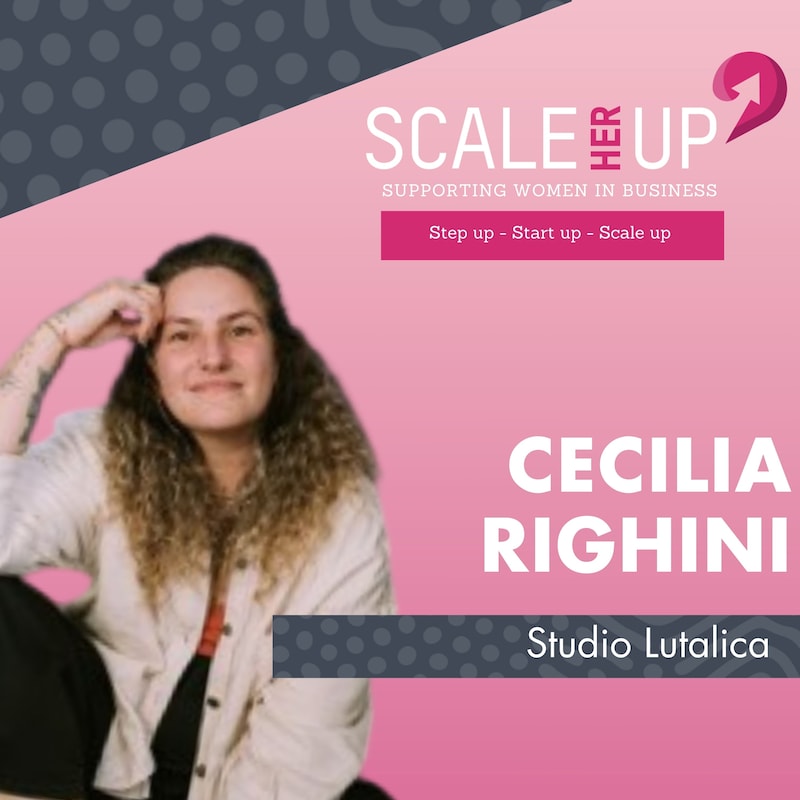
In this episode of Scale HER Up – The Female Entrepreneur Show, I’m joined by Cecilia Righini, founder of Studio Lutalica, a queer, feminist, neurodivergent-led design agency and community interest company. Lutalica creates branding, websites and editorial design for feminist and LGBTQ+ organisations and founders, with a strong focus on lived experience, values and community impact.
Cecilia shares how years of discrimination and microaggressions in traditional workplaces pushed them to create a studio where queer and trans people, and other marginalised identities, can feel safe, respected and fully themselves. They talk about the power of niching deeply – working specifically with feminist and LGBTQ+ communities – and why that has been one of the best decisions for both impact and business growth.
We explore what “professionalism” really means when you strip away suits and dress codes and instead prioritise respect, reliability and good work. Cecilia explains how Lutalica matches projects to designers with relevant lived experience, why being comfortable can unlock creativity, and how honesty about neurodivergence in the team (including ADHD and autism) helps everyone work better.
Cecilia also breaks down the decision to move from a limited company to a community interest company (CIC) so Lutalica could operate as a nonprofit, reinvesting surplus into pro bono and low-cost design support for grassroots organisations. They explain the difference between a CIC and a charity, why political voice matters, and how the studio is building a more structured community impact programme.
We talk about feminism, systems that were never designed with people like us in mind, and the reality of founding while neurodivergent – from masking and burnout to finally getting an ADHD diagnosis. Cecilia shares the importance of trusting your gut, choosing support that aligns with your values and building an internal support system through your team, board and community.
This is a thoughtful, energising conversation about designing businesses around who you really are, centring marginalised communities and letting your values drive both your work and your growth.
In this episode, we cover
- What Studio Lutalica does and why it focuses on feminist and LGBTQ+ communities
- How niching deeply actually helped the studio grow faster and become more visible
- Creating a workplace where queer, trans and neurodivergent people can show up without masks or constant explanation
- Redefining “professionalism” around respect, reliability and good work rather than suits and stereotypes
- Matching clients and projects with designers who share relevant lived experience
- Cecilia’s experience of discrimination in previous jobs and why they needed to create their own space
- Discovering ADHD and autism as a founder and how that changed their understanding of work, burnout and boundaries
- Why so many neurodivergent people start businesses and what structures can make that sustainable
- Moving from a limited company to a CIC and what being a nonprofit actually means in practice
- The difference between a CIC and a charity, and why retaining a political voice mattered
- Using surplus to fund pro bono and low-cost design and building a structured community impact programme
- Feminism, intersectionality and questioning systems that were never designed for women, queer people or neurodivergent people
- Building a support network: team, freelancers, mentors, accelerators, business advisers and a values-aligned managing director
- The advice Cecilia would give their 18-year-old self: you will find your place, keep trying and trust that it will come together