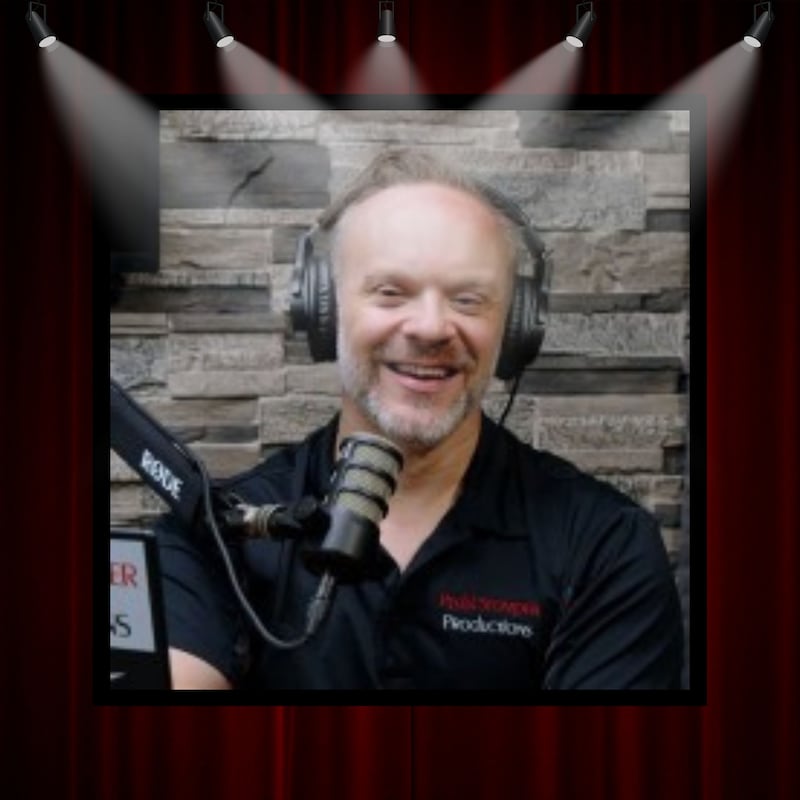
Shownotes
- The hilarious, humbling story of his first real speaking gig—delivered with a raging fever (he had COVID and didn’t even know it!).
- The lessons learned about preparation, confidence, and “winging it”—and why winging it rarely works out like you expect.
- Tailoring your talk to your audience, whether you’re teaching podcasting to 30-year-olds or sharing radio references with a 55+ crowd.
- Using podcasting as a springboard to speaking, and why panel invitations come easiest to those who show up consistently on mic and on stage.
- Josh Troche's step-by-step approach to getting on more stages—why a highlight reel matters (but authenticity matters more), and how he’s building his speaking platform in real time.
- The power of collaboration, the myth of the “arena stage,” and the real audience magic of a room with 10, 15, or even just one engaged person.
- Actionable advice for speakers at any level—about being efficient, effective, and compelling (and learning to shut up when you need to!).
- Share Your First Stage Story – I want to hear how you got started! Visit myfirststagepodcast.com to connect and maybe join me on a future episode.
- Connect with Josh Troche – Find him on LinkedInand catch his podcasts, “Podcasting Momentum” and “The Business Fix,” for more practical advice. Find my episode here: https://workwithbranded.com/beyond-vanity-metrics-smart-podcasting-for-long-term-business-impact/
- Subscribe & Review – If you found this episode helpful, please subscribe, leave a rating or review, and tell me who you want to hear from next!
- Build Your Reel – Take a page from Josh Troche’s book: film your next talk, however small, and start building your speaking story—one authentic moment at a time.
- Get Help – Don’t go it alone. Find a speaking coach, accountability partner, or supportive peer to get honest feedback and help you level up.
Transcripts
Welcome to my first stage, the podcast, where experienced public speakers share how they started getting booked on stages and how they've used them to grow their business. I am here with Josh Troche. He is a fellow podcast producer with a very different angle on things. I was just on his podcast, Podcasting Momentum, and I am so excited to continue that conversation. So, Josh, welcome, and thanks for being here.
Josh Troche [:Hey, thanks for having me. We had so much fun on mine that we, like, we had to flip the script, right?
Sara Lohse [:Absolutely. Get you in the hot seat instead of me. If anyone hasn't heard that episode, it is on our website and our blog. So go check it out. It was a lot of fun. And let's jump into your first stage. You started speaking how long ago, really?
Josh Troche [:I mean, I've always done a little bit of it here and there. People are like, hey, you're loud and willing to stand up in front of a crowd. Go ahead and do this. But really, the first intentional one I did was with. It was part of the 10,000 small businesses program. It was a program that I went through. And then every year they do their. They do their annual luncheon for the area that I'm in, which is Cleveland, Ohio.
Josh Troche [:And they're like, hey, can you speak to presenting and how to present for certain things? And I'm like, sure. It went okayish. I had a little bit glowing review that. Well, what was interesting about it is I felt like it most times for me, like, any public speaking engagement, I'm like, amped up. I am ready. I am excited. There's that little bit of adrenaline of like, hey, I could really screw this up. And I.
Josh Troche [:I truly love that. And I'm like, I feel really off today. I didn't deliver well and I went home and the next morning I woke up with 103 fever because I had Covid.
Sara Lohse [:Oh, no.
Josh Troche [:So the speaking engagements did not start out incredibly well.
Sara Lohse [:It started with COVID Correct. Love that for you.
Josh Troche [:It was interesting because there was some learning lessons in that, obviously, in terms of. I had a bit of time laying in bed to kind of run that speech through my head and be like, what did I do right? What did I do wrong? And how did I set this up right and wrong? And so, yeah, it was. It was a. It was a lot of lessons in that.
Sara Lohse [:So what were the things that came to you? What were the things that you did right or wrong?
Josh Troche [:The. The. The one wrong thing that I did was I. I've always enjoyed speaking. I've done well with it. I mean, as you and I both are pretty charismatic people, it's not a big deal for us to be like, hey, let's. I didn't have nearly the prep into it that I should have had. I needed to be more rehearsed.
Josh Troche [:I needed to be, I needed to have more of the prep into it. I thought I could go in winging a little bit better, and had I prepped better, I probably, even with the COVID probably could have still delivered quite a bit better than I did. But I went in and against all my own rules, did not do all the prep work that I should have and went in, and I don't want to. It wasn't a crash and burn, but it was not the best presentation ever either.
Sara Lohse [:That's how I feel about every session that I do. Like, every time I'm on stage, I'm like, oh, yeah, I forgot to prep for this, and now I'm just winging it. And I don't know, I don't remember what I said. I feel like I kind of black out every time. It's, it's probably a problem, but when you say, like, you didn't do the prep that you should have, what, what does that mean? Like, what kind of prep work are you now doing when you, before you get on stage?
Josh Troche [:For me, I'm not one that necessarily rehearses much. I, I, I like to speak freely. And I, I feel like, I mean, you and I both know with the podcast and that on camera, you need to be a little more rehearsed because you have to deliver with a confidence that, I mean, it's a blank eyeball staring at me right now. The. For me to be a little bit better rehearsed in my topics and to have a little bit more structure to it that was missing for me. I don't need to have every line rehearsed because once again, I'm going to tell some jokes that may be a little bit off. And there's times where you tell the joke and from a crowd you're like, hey. And when they're all staring back at you like, okay, don't tell jokes like that anymore on camera.
Josh Troche [:You kind of need to own that and just realize that it may not land and just keep trucking. So the preparation in how to go from piece to piece to piece to piece, I needed to be better rehearsed and better prepped in that in terms of having things organized, I ended up kind of saying, oh, I missed that spot. And I looped back to it over here and Then I'm like, oh, well, how do I get from this spot to this spot? And it. Once again, I think the message came across. I had a number of people say, hey, look, I loved the information. I don't think they did that out of pity, but it was just, it got a little disjointed and a little out of control for me. And I needed to have that in a better, better organization.
Sara Lohse [:I had someone on the show recently, Mickey, and the way that she explained the prep work that she does, it's like she'll do her, her presentation multiple times, record it, put it into an AI, have it, tell her what she did right and wrong and give her. I'm like, I, I show up and I hope for the best. What's interesting, we are not the same.
Josh Troche [:Is no is some people need that. And I needed what for me, once again, I think I'm more like you
Sara Lohse [:where like to be clear, I pro do need that. Like, I probably could benefit a lot from that. I just don't have the brain to do it.
Josh Troche [:I and it. To me it's the. There's certain ones of us that can just get up and speak naturally and really be engaging. There's other people that need those multiple steps. What the, the thing that I run into that's probably the same thing with you is you're like, I got this. And I'm like, I got this a little too early. Instead of saying, instead of saying, okay, I should know this. The, the order of things.
Josh Troche [:I should know how I'm presenting things. I should probably go into that with more of that committed to memory instead of relying as much on the slide deck or as much on that because we all get in that situation too, where you've got, let's say you've got a 30 minute speech, you've got 15 slides, you are 25 minutes in and you're on slide 10. You're like, okay, I have five minutes to burn through the rest of these slides.
Sara Lohse [:We've all been.
Josh Troche [:Or the vice versa, where you're scheduled for a half an hour speech, you've got 15 slides, you're 10 minutes in and you're already on slide 12. And you're like, okay, we've all been there too. How do I milk these for that extra 15, 20 minutes?
Sara Lohse [:Let's fingers crossed the audience has a lot of questions, right?
Josh Troche [:So it's. To me, it's being a little bit better prepared to be on stuff like that. And that's the thing that I feel like in so Many cases that I, I'm missing and that's the big thing that I've been trying to work on as we do stuff like this.
Sara Lohse [:Yeah, that's great. I, that's something I clearly I have to work on too. What is your speaking engagement since then been like?
Josh Troche [:I've been much better prepared for things and I have found I also one of the things that's been amazing for me is I teach a class, it's a non credit class at a local community college. And that has been a huge help to me because I have used that as a little bit of my test bed to say, okay, like how prepared can we be? What are the things that we need to look at? I feel like I've presented a lot better with that. What's tough is that's typically one type of student. It's typically middle aged people that are interested in podcasting. When I get outside of that, I found I'm like, okay, I need to figure, I need to do research on how I'm going to present better to some of these different audiences I recently spoke to. There's a program at the community college called Encore. It's continued learning for 55 and older. I talked about podcasting with them and I realized that I needed to once again have that speech.
Josh Troche [:But I'm like, you and I, we could both talk about podcasting for days.
Sara Lohse [:Yes. But I tell everyone is like, please stop talking 100%.
Josh Troche [:So for me I was like, okay. I needed to be a little bit more focused in my approach for them. So it was, it's once again it's those steps of like, okay, figuring out who's going to be in my audience, who's sitting in those chairs out there and who am I speaking to about that? Because once again the 30 and 40 year olds that I'm speaking to in the class are, have a totally different vernacular. Yes, I said vernacular dating myself there then the 55 plus high core audience.
Sara Lohse [:Do you have any like tips, tricks, advice for figuring out who an audience is for a speaking engagement? Figuring out how to mold your presentation to that audience? Like, what do you do there?
Josh Troche [:I, I've started really asking a question and it's the question that all marketers should be asking better is why the hell are they here? What, what are they like, what made them say, I'm going to plant my butt in this seat and listen to this guy talk? What problem am I solving for them? And it's to realize that is the key for keeping them engaged and keeping them interested. And realizing that, okay, the 55 plus crowd, I was like, okay, I'm talking to them about podcasting. So I'm like, I made a ton of references to old radio shows to make sure that I made that connection for them because they're loosely connected. So that was the big piece for me, is saying, okay, why are they here and what are they going to take from it?
Sara Lohse [:One of my recent guests, Marianne Hickman, she talked about understanding what an audience is there for. And I love what she said because she said a lot of people give potpourri answers. And it's just like, I'm here to learn. I'm here to meet people, I'm here to network. And it's like, it's like potpourri. It's like, yeah, it smells good, but nobody knows what it is. And it's like, what does that actually mean?
Josh Troche [:You said it when you were the guest on my show is you said, niche down till it hurts. And really, like, once again, if you are trying to speak, there's probably a wide array of people in your audience. But if you identify one person in your audience then and speak to that one person, other people are going to listen in. The example that I always love to give to people is if you walk into a room of 200 people just standing around and start talking, everyone's going to look at you like, who's this idiot? If you and I start having a conversation, partially because we're both loud, but other the conversations, like, I'm speaking directly to you, but other people around us are going to be like, hey, this is kind of interesting. It's not for me, but it's interesting. So I'm going to listen in. And that to me is like, once again, that what people need to do with their speaking engagements is don't think of, okay, I've got 18 to 72 year olds here. No, no, no, no.
Josh Troche [:Who is that one person in the audience that maybe they're a bulk of the audience that you really want to talk to?
Sara Lohse [:I love that. Yeah. That's a lot of what we talked about on, on your show. Absolutely. And having it, like, if your audience is women from age 35 to 55, women in that age range want very different things.
Josh Troche [:Yes.
Sara Lohse [:And you need to be very specific about who your audience is and know not only. I think the most important thing is knowing their pain points. Because if you just know, like, this is what they do for a living, this is their job. This is like, what they're interested in. Like, that's Great. But if you don't know their pain points, you can't help them do anything. You can't help them fix anything.
Josh Troche [:Right? Yeah. They're. They're giving you their time, their most valuable resource. Do something for them.
Sara Lohse [:Yeah, I. I want to bring up something. Oh, now why are you laughing at me?
Josh Troche [:No, I. To me, it's. It's this obvious thing, and to me, it's one of the reasons why I think we've. We've had such good conversations because we're. We're completely in alignment at this. Like, talk to someone and give them something for their time.
Sara Lohse [:There is one thing that I don't think we're in alignment with.
Josh Troche [:Let's hear it.
Sara Lohse [:So on. When I was on your show, you at, it was towards the end, you said to give, like, one piece of advice for podcasters, and you said, but I cannot say just hit record. And my advice was literally the opposite. It was don't just hit record. Correct. So you must be in the camp of just hit record. No, I am not. No.
Sara Lohse [:Okay.
Josh Troche [:Not at all.
Sara Lohse [:Just thought I was.
Josh Troche [:No, I. The reason why I say that is because so many people have given me that answer that I preface it that way. No, I am a big proponent, and it's funny. This is why I was so upset with myself about some of the speaking engagements that I didn't prepare as well for, because I talk about it in podcasting. 80% of podcasting is in the prep work. The example that I love to give is it's painting a room. Because so many of us have tried to paint a room. If you take off the switch plates, if you tape off all the trim, if you do all that stuff, wash the walls, your paint job is going to turn out really good.
Josh Troche [:That's not how you laid the paint on. It's the prep work that you put into it. If you just walk into a room, open a can of paint and sit, spin, well, then the paint job's probably going to be pretty bad. The podcast is look kind of cool artistically, it's going to be amazing, but in terms of a normal paint job, it's going to be awful. So I. I look at podcasting the same way, and one of the reasons why I got upset with myself about some of the speaking engagements, it's like, doofus, you preach this to people all the time, and then when you go to do something adjacent to this, you screw it up.
Sara Lohse [:I feel like I'm very much a do as I say, not as I do person 100%. People like, this is what you really need to do. I'm not going to follow my advice and I'm going to do it poorly. But you're going to do it right because you listen to me.
Josh Troche [:But it's why people need people like you as the coach, as the person to work with them. Because the example that I always give is, I don't think. And once again, I'm going to date myself here. Phil Jackson and was not a better basketball player than Michael Jordan, who. Correct. Used to be the coach of the Chicago Bulls. He was not a better basketball player than Michael Jordan. Michael Jordan still had Phil Jackson as a coach.
Josh Troche [:LeBron James still has a coach, still has a physical fitness trainer, still has coaches for these things. That doesn't mean like, I mean I, I've worked out with coaches for strength training that I'm stronger than. That doesn't mean I don't need them to kick me in the butt to be like, hey, dude, you're doing that wrong. That's what it's about.
Sara Lohse [:I love that. I feel like I've had so many conversations on this show about podcasting, which that isn't supposed to be the point. Supposed to be about speaking, but they do go hand in hand so well. And I guess just so many of the people I've had on have podcasts. So in your mind, how do podcasts and stages go together? How can you use podcasting to get on stages, etc, all of that?
Josh Troche [:It's so much easier to, for someone to book someone as a speaker when they can see and hear them. If I sounded like a 12 year old boy with my voice cracking all the time, you'd probably be like, maybe not. You can, come on, you can hear what I sound like. You can see how I present. If I just sat here like this with my head down, arms crossed and you'd be like, okay, this dude is not speaking to anyone unless it's at a library with a librarian shushing people. So it gives you a really good idea as to how people are. Now. The problem is, is any.
Josh Troche [:The thing that I see that's tough is anyone that puts together a demo video. Of course it's going to be their best clips. It's going to be when the fans are, they're screaming. I can't think of the guy's. Who's the really common like business coach guy. The, the super, the super tall guy. I can't think of his name right now.
Sara Lohse [:Alex Hormozi.
Josh Troche [:Alex Hormozi is another one there's, there's all, all types of people like that.
Sara Lohse [:Gary Vee.
Josh Troche [:Gary Vee. But you know what? They're taking the best clips and they're putting those out. How do you know how they were for the other 10 or 15, 20 minutes? To me, the podcast, it builds authority, but it also builds that trust in speakers because you're watching someone for 10, 15 minutes and anyone can be lively or whatever you want for a few minutes. And especially if you're just seeing the highlight reel. I could send you a highlight reel and you could be like, oh, my gosh, Josh is amazing at this thing. No, I just did it three times. Really well. Podcasting lets people build that authority because you get to see them time in and time again.
Josh Troche [:Plus, if they're going to be on a panel once again, that's. You see how they're going to speak on that, you see how they're going to react to that, and you see how they field questions. The podcast that I do landed me on a stage of 300 in Washington, D.C. for a breakout session that was the largest gathering of small business owners ever in. In Washington, dc.
Sara Lohse [:How did that happen?
Josh Troche [:That was. It was interesting. It was through 10,000 small businesses. Again, it was Goldman Sachs program. They, they. It was entertaining. They called the. I got a.
Josh Troche [:I was getting ready to cancel the trip. Had too many things going on. I'm like, I'm not going on the trip. I get an email from them saying, hey, we would like you to introduce one of the speakers on stage. And I'm like, oh. And the speakers were like, Kevin o', Leary, Damon John, Martha Stewart, Ken Lagon. So, like, big names. This is not like I'm introducing Bob.
Sara Lohse [:No, no, shade to Bob. We love Bob.
Josh Troche [:Correct. Bob's wonderful. But yeah, so they, they sent me that email and I'm like, oh, I guess. I guess I'm going to D.C. now. And they're like, you get 30 seconds to talk about your business on stage, and then you get to do this. And, like, it is scripted. And then they said, hey, we've got a lot of people that can read a script.
Josh Troche [:We don't have as many people that can talk on a panel. And they're like, we know you do a lot of, a lot of things in your business that involve AI and automation. They're like, could you be a panelist? Yeah, yeah, I could. And what it was is because they knew how I could field questions from seeing me and guesting on. Guesting on podcasts. The way I've Hosted podcasts, things of that nature. They can see how I interact with people and they're like, look, the guy eventually does figure out that he needs to shut up and move on to the next question. So they had me up on stage there for that.
Josh Troche [:So once again, really neat experience to, to be up on something like that.
Sara Lohse [:That's awesome. It makes me think of a panel that I did. And one of the people on the panel did not have the awareness of when to stop talking and also was not giving any valuable information while speaking. Like, I think one of the questions was, how do we get on your podcast? And his response was, I don't take pitches. That's okay. But like, maybe like, what if, if you would were to take pitches, is there something that would help? Like, they're not actually asking for your show, they're asking about shows in general. Like, how do you get on a podcast? And it got to a point I took his microphone away. I love, I just reached over and grabbed it.
Sara Lohse [:I'm just like, okay, maybe this will be helpful. And I just answered the question instead. And then I don't even know if I ever gave him his microphone back.
Josh Troche [:It's, it's entertaining because I, I see so much of that. They, Someone told me a while back that when you're doing any type of speaking, it should be efficient, effective and compelling. If it's not those things, shut up. There's so many people and it's fun. There's so many people where I. They feel like they're giving information about something and I'm like, no, no, no. You look around the room, everyone already has this information. Get to get to the point.
Josh Troche [:What, like, what does this do for me? And unless you're getting to that point, like directly, just shut up.
Sara Lohse [:It's. It's so true. But it also like hurts my heart because I. So I talk, I talk publicly a lot about like having adhd. And there's so much about ADHD that isn't fully understood by a lot of people. They think it's just like the little boy in kindergarten who can't sit still. But one of the like, common like effects of it is we over explain ourselves because we are worried that people aren't going to understand. So I'm like, I feel like I'm constantly over explaining or explaining the same thing like 14 times and I can't stop it because my brain is just telling me that I need to do this because they might misunderstand.
Sara Lohse [:And even like, I teach storytelling and I teach other People how to be concise and only use the important details and all of this. But then if, like, my brain takes over, I struggle to do it myself.
Josh Troche [:I can totally understand that. I very much used to be that way. Like, and to me, it came from an area of confidence. I didn't. I'm like, oh, my gosh. There's two areas that it came from, actually. A, confidence. I wasn't confident that my message was going to be heard.
Josh Troche [:And B, in some cases, I'm like, these people don't get it. I feel like, A, as I've gotten older and more experienced in speaking and things of that nature, people will either, A, they do get it, they're going to figure out how to catch up, or they don't care. It's one of those three things. And that's what's allowed me to deliver those messages now, once again, and making sure I'm delivering it for the right audience. I'm not talking about here to people that are here, but once again, if you do that, I felt like, to me, that was the game changer because I used to be the guy, and it started with my emails. My e. I was the guy that sent the email that you're like, oh, God, I gotta sit down and read this. And I started pulling words out of it and I'm like, oh, crap, that was two sentences.
Josh Troche [:But it came from confidence of just being. Saying, look, they're either gonna. They either know, they're willing to put the time in to catch up or they don't care.
Sara Lohse [:So true.
Josh Troche [:It's. It's so tough to get past, though, and especially as a speaker, because it's. It is that, hey, I have to get to this area. And it's one of the things that's so tough as a speaker is trusting that. Trusting your audience. Any one of us that speak, like, to me, I love speaking because there's a little bit of that adrenaline rush, like I said, like, hey, I can royally screw this up. And I love that little bit of adrenaline rush. Like, oh, hey, get up there.
Josh Troche [:It's also the reason why some people totally fear it. So I have to have the trust in my audience that, okay, if I fall on my face and they laugh at me, yeah, they. I probably earned that one. But for the most part, I have to trust them that they are there for the right reasons and lean into that.
Sara Lohse [:I feel like we get on stage for some reason convincing ourself that everyone in the audience, like, wants us to fail or they're judging us it's like, no, they're here because they want to learn something. They want you to do well because they want to learn something from you.
Josh Troche [:And it's. The. The other thing is, too. Is for me too, is I. What I take so seriously about it is what makes it tough, and I've had to kind of get past that is I want to make sure that every person in there feels like they got a tremendous value for their time. And it took me a while to realize that. No, that's. Unless you.
Josh Troche [:Unless there's only two people in the room and you being one of them, that's never going to happen. You want to make sure that more than 50% of the room got a tremendous value from it. That's. That needs to be your concern. They're the two people in the back that are texting. Guess what? You're always going to have that.
Sara Lohse [:Yeah, you can't. You can never make everybody happy.
Josh Troche [:No, no, especially, I mean, like I said, unless you're speaking to a room of one. And even in that case, sometimes that's very difficult is depending on who that other person is. But, yeah, you're not going to make the entire room happy. So focus on the ones that are happy and that are engaged and want to be engaged with it. Those are the ones that really are going to get the value from it, and those are the ones that you can connect with.
Sara Lohse [:Has there been a specific, like, speaking opportunity that was really impactful for your business, your career? Just one that you look back on and think like, that was a really important day.
Josh Troche [:I can't necessarily put one higher than the other. To me, the. The things that I have always taken from them is a. It's speaking is like anything else. If people see you repeatedly, they're going to be like, oh, this person really does know what they're talking about. They. It's that. It's that repetition.
Josh Troche [:I remember it used to be like seven touches before someone would actually buy something. Now it's like 30. These are these touches where, like, it's not the. They. Typically, someone isn't going to show up to see you speak and be like, oh, yes, yes, yes, here's my wallet. That doesn't happen on that first time. But showing up for them consistently truly has. And I know we've gained a number of clients that way just in showing up consistently for them.
Josh Troche [:And once again, when you show up here, you show up here, you show up there, and you show up in another place, they're suddenly like, oh, yeah, this is Someone that I want to be associated with.
Sara Lohse [:I'm trying to think of, I think. Oh, I think it's Kim Yancey. He says your repetition is your reputation.
Josh Troche [:Oh, yeah. I mean, if you show up consistently, that's once again, people in this, you brought it up before AI, all the AI stuff that's being generated. If people are going to hear from a person, they want to hear from that person. And if you show up consistently for them, that's, I mean, that's how trust is built. Trust is not built in one thing. If you show up consistently. So does that mean you need to show up at the same speaking gig every year? No, but people are going to see you in different circles. People are going to see you doing different things and they're going to realize that.
Sara Lohse [:You mentioned before we hit record that you are wanting to get on more stages and start speaking a little bit more. Do you have a plan of how you're going to start doing that and what you're going to be doing to try to get booked on more stages?
Josh Troche [:We've started working on that and it's interesting. So another podcast that I do is called the Business Fix where Chrissy Myers, my co host, and I, we talk about how like, we talk about leadership and how people typically are screwing up leadership and how to make that better. And when we started this podcast, we were kind of like, we're going to do this. We enjoy talking about it. We, I mean, we have a great interaction back and forth. And I thought maybe sometime we'll turn it into some speaking gigs or some consulting or something like that. We are just, in fact, later today we're going to be recording episode number 50 and we've had some things that we've started to really get some good traction. So we're like, hey, we both enjoy talking, so we are going to turn this into speaking gigs.
Josh Troche [:So we've, we're doing this backwards. Many speakers try and get on podcasts and try and do those other things. We're like, okay, we're going to build this base over here and then we're going to see what it turns into. And the speaking gigs is one of those things. So we're starting with, in many cases, a lot of chambers of commerce. We have a topic that is key to so many businesses. So we're targeting them specifically to, once again, we're starting with these entry level events to say, look, we're going to, we're going to work on this. We're going to use this to polish our delivery together because we haven't spoken together, which is going to be.
Josh Troche [:I mean, we have on the podcast, but it's going to be really interesting to get us on a stage at the same time. So we're starting with building those. The second piece that we're going to do with that. And this is one of the advantages that I have as a video production company is I'm going to have my production assistants come in and film some of those events, so that way we can put them out so people a see our interaction in the studio, but also they're going to see us up on stages, they're going to see us talking. Once again, the highlight reel that I accused everyone of building and showing off before. Guess what? We're going to build. We're going to build the highlight reel.
Sara Lohse [:No way.
Josh Troche [:Because once again, it's. It's that thing that. That you need. The thing that we're not going to do with it is we're not going to make this hugely complex. This doesn't need to be a $10,000 production. This can be two cell phones, a GoPro camera set up while you're talking, and two or three small clips while you're wearing a. A lav mic. Those can be the things that start pushing those speaking engagements to the next level.
Josh Troche [:Because people like, oh, hey, they're talking to people. The ones that I find irritating are the ones where people act like they're speaking to a crowd and they're not. I. I know some people don't necessarily see that, but I'm like, if every shot is, like, looks staged but yet not on a stage or not in a place like, it should look either on a stage or kind of rough. A lot of our speaking engagements are happening in, like, conference rooms or happening in, like, larger cafeterias. Give it that look and show that, oh, my gosh, there is 10 or 15 people listening to you.
Sara Lohse [:We talked about this on your show. The idea that we have to be in an arena.
Josh Troche [:Yeah. No. Show that you're speaking to 10 or 15 people. Show that those people are clapping and engaged.
Sara Lohse [:Like, show that like, someone's hand is in the air, like, they have questions.
Josh Troche [:Right. And you just need a couple of clips of that and show it as an audience. Don't show the person that's in the back of the room sitting there texting on their cell phone. That's not the one that you want to show. But really, it show. I tell you what, if someone sends me a reel because I help pick speakers for a large business summit, in Cleveland is if, if someone sends me a reel where I see that there's 15, 20 people in the room, I'm good with that. That's all we need. I don't need to see an audience of 700 show.
Josh Troche [:Show that there's an audience. Show that there's an engaged audience for one of your speeches. And that, that, that's a. That's once again, that's that credibility that we're all looking to try and build.
Sara Lohse [:I love that. And we are coming up at time. So I want you to give one last piece of advice for people who want to be speakers. Get on more stages, get on bigger stages. And it can't just be hit record.
Josh Troche [:Ouch. Oh, come on. I was going to say put in the reps and no, Nope. To me, it is literally, it is to work with someone like yourself. It is to have someone that is going to sit down with you and tell you the things that you. You need to hear. That may not be what you want to hear, but sit down with someone that's going to tell you the things that you need to hear. Because once again, you need someone in your corner that's going to help you get better.
Josh Troche [:You don't know what your blind spots are. So bring someone on that will work with you on this.
Sara Lohse [:I love that and I love getting to hang out with you. I for some reason, the best conversations I get to have are the ones that are with my com, like my competition 100%. And of course there is no competition in this industry. Everything is about collaboration. And I love being able to hang out with you, learn some things from you and see how we can kind of differ on some things sometimes, which is a lot of fun. So truly, thank you so much for hanging out with me today. And how can people get in touch with you, find out more about you, find out what you're doing.
Josh Troche [:LinkedIn is a great place. My last name is spelled T R O C H E. Look me up on LinkedIn. You can look up Pedal Snapper Productions there too, if you want. I am linked. LinkedIn's my jam. I do Instagram, but LinkedIn is my favorite. And then, yeah, then plus to your episode to they should go watch your episode because you had some great insights in that too.
Sara Lohse [:I will link that in the show notes as well.
Josh Troche [:Awesome.
Sara Lohse [:Awesome. Well, thank you so much for being here. Thank you guys, everyone for listening. And come back next week for another my first stage story.

