Shownotes
Paths of Rhythm is brought to you with support from vinylunderground.co.uk - take 10% off your next order with the code POR10 and free UK shipping on orders over £100
Paths of Rhythm is a Remote-CTRL production. If you're looking for audio or video production, then check out https://remote-ctrl.co.uk to see how they can help.
Other ways to support the show
- Follow the show on Spotify or Apple Podcasts
- Any feedback or questions? Hit up https://www.instagram.com/pathsofrhythmpodcast/
Amo/Tidy Trax links:
- https://www.instagram.com/tidytrax/ (label)
- https://www.instagram.com/tidyamo/ (Amo)
- https://www.youtube.com/@tidytrax
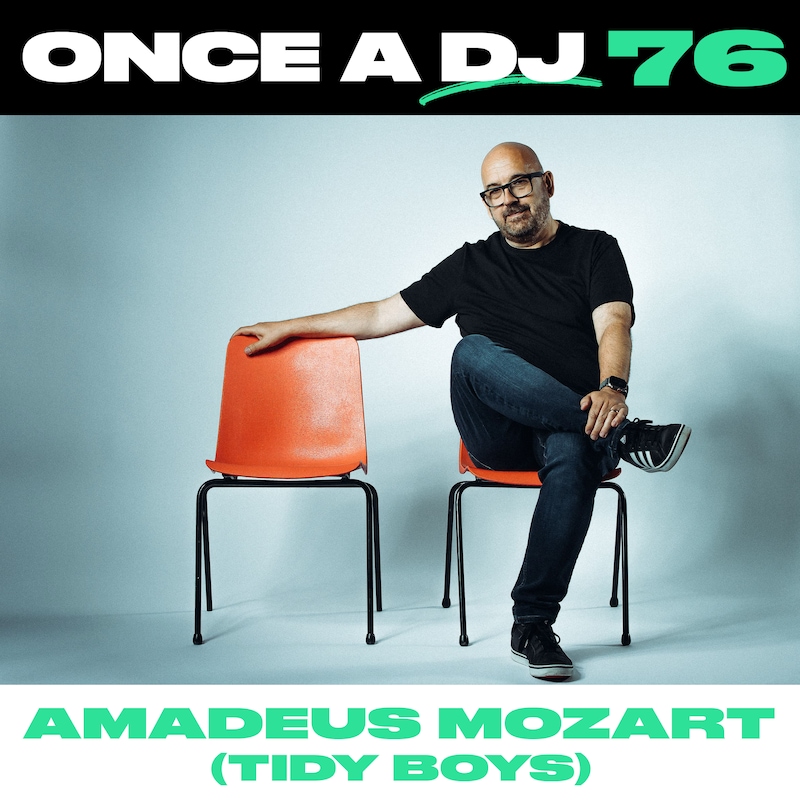
In part one of this two-part conversation, we sit down with Amadeus Mozart (Lee Marlow), one half of The Tidy Boys and the architect of the Tidy Empire that defined UK hard house.
Born in Kettering in 1965 into a working-class family, Amadeus traces his musical journey from his audiophile father's obsession with the Moog synthesizer to becoming a disco devotee in the punk rock era. We explore his formative years being bullied at school for loving Village People while his classmates embraced The Clash, his discovery of London's underground gay club scene in the 1980s, and navigating the AIDS crisis while waving the flag for gay rights.
This episode covers the crucial early years: his friendship with Darren Kennedy, the influence of classical music through his gay housemate Norman, and the loss of his father in 1996 just before his breakthrough success. It's a story of passion, persistence, and staying true to your musical vision against the odds.
Key Topics:
- Growing up with Spotlight on the Moog (1968) - the pre-Kraftwerk electronic revolution
- Being into disco during the punk rock movement (1977-79)
- The UK's reaction to the "Disco Sucks" movement
- Discovering London's gay club scene in the 1980s
- Living through the AIDS crisis and fighting for gay rights
- The influence of classical music on electronic music
- Working-class roots and the journey to music industry success
Guest: Amadeus Mozart (The Tidy Boys, Handbaggers) Recorded at: Tileyard North, Wakefield
Part two coming soon, covering the Hit the Decks era, the birth of Tidy, and 30+ years of UK dance music history.
Transcripts
Once A DJ is brought to you with the support of Vinyl Underground record store.
Speaker A: Since: Speaker A:From Northampton in the uk, they're your go to store for upfront releases, repressed classics and deep digging for undiscovered gems.
Speaker A:And they're a great crew to deal with who really care about the music and their customers.
Speaker A:To show their support to the Once a DJ community, they're giving you 10% off your next order.
Speaker A:Just head to vinylunderground.co.uk and use the code Once a DJ10 at checkout and you'll also get free UK delivery on all orders over £100.
Speaker A:That's one [email protected].
Speaker A:Come on.
Speaker A:Before we get back to the show, I just wanted to tell you that outside of this podcast, I run a business called remote control, that's remote-ctl.co.uk and basically it's where I get to do what I love.
Speaker A:Audio and video production, design, management, all of that sort of creative stuff.
Speaker A:And the nice thing is I don't do it alone.
Speaker A:Over the years, especially through DJing, I've met some seriously talented people, from producers to designers to videographers and more.
Speaker A:And we've built this little network where we can pretty much take on any creative project.
Speaker A:So whether you need a podcast edited or a video produced or branding work or whatever, we've got you covered.
Speaker A:It's honestly been one of the most rewarding things I've done, working with people I actually respect and enjoy collaborating with.
Speaker A:So if you've got a project in mind or you're just curious about what we do, head to remote-ctrl.co.uk and let's chat.
Speaker A:No pressure, just good creative work.
Speaker A:Welcome back to untodjay, everyone.
Speaker A:The show where we look back at what brings us together and what sets us apart.
Speaker A:It's always nice to get into a new genre that we've not looked at before.
Speaker A:So I'm delighted to welcome Hard House Don, one half of the Handbaggers, the Tidy Boys and in fact, the whole Tidy Empire.
Speaker A:Amadeus Mozart.
Speaker A:How you doing today?
Speaker B:I'm very well, thank you.
Speaker B:Thanks for inviting me to your podcast.
Speaker B:I. I do enjoy talking, so I'm looking forward to this.
Speaker A:That's all good.
Speaker A:And thanks a lot to Sam for hooking it up.
Speaker A:Sam Townsend.
Speaker B:Yeah, he's.
Speaker B:He's a good.
Speaker B: I've worked with Sam since: Speaker B:He's a good guy.
Speaker A:I'm sure he'll appreciate that.
Speaker A:Yeah.
Speaker A:So as we do with everyone, if we just start with kind of where music came into your life, really, and where you grew up.
Speaker B:Right.
Speaker B: Ketrin in Northamptonshire in: Speaker B:Yeah, I was born in black and white, as they say.
Speaker B:I was born into a very working class family.
Speaker B:We had a council estate on a council estate.
Speaker B:And I suppose humble beginnings.
Speaker B:My mum and dad.
Speaker B:My dad worked in a shoe factory.
Speaker B:My mum also worked in a shoe factory.
Speaker B:They worked very hard to bring us up.
Speaker B:But my dad was probably my inspiration for music.
Speaker B:He, for some reason, was obsessed with audio.
Speaker B:He was an audiophile, I think we call.
Speaker B:So he'd.
Speaker B:He'd always come home with new stereo equipment and you'd have a set of speakers and say, listen to these.
Speaker B:And then he'd sell them the next week and buy some better speakers.
Speaker B:He'd have a reel to reel, tape recorder, new amps.
Speaker B:So he was really into that.
Speaker B:He would buy records every week, spend all his money on records.
Speaker B:And I think I was.
Speaker B: bought me my first record in: Speaker B:I was about four years old.
Speaker B:And he bought it for me.
Speaker B:And there was two records.
Speaker B:I always remember one I don't talk about much because it's off bounds.
Speaker B:It was Rolf Harris, Two Little Boys.
Speaker B:Yeah.
Speaker B:But, hey, it was the last number one of the 60s, so he bought me that.
Speaker B:And I'm the Urban Spaceman by the Bonzo Dog Doodah Band.
Speaker B:So really two bizarre records.
Speaker B:And Lily the Pink by Scaffold.
Speaker B:So those were my first three memories of music.
Speaker B:But then there was one album he bought which was called Spotlight on the Moog, or Moog, as it's now called.
Speaker B:And what it was, it was an electronic album that was totally synthesizer.
Speaker B: I think it was originally in: Speaker B:It came out.
Speaker B:And it's an unbelievable album.
Speaker B:And it's probably one of the.
Speaker B:It's before Kraftwerk.
Speaker B:So it's.
Speaker B:It.
Speaker B:Yeah, it's not talked about much.
Speaker B:I think Norman Cook knows about it.
Speaker B:Spotlight on the Moog.
Speaker B:And because I think he sampled from Moog Indigo.
Speaker B:So the Moog or the Moog was the synthesizer of the 60s.
Speaker B:It revolutionized everything.
Speaker B:And this album was called Spotlight on the Moog.
Speaker B:And my dad played it.
Speaker B:And what he loved about it, the music went from left and right speaker.
Speaker B:It was all electronic.
Speaker B:And I think that is what got me, you know, if you look further down the line, it's that one album and I've got it upstairs.
Speaker B:Cause I went out and bought it about 10 years ago.
Speaker A:So was that when there wasn't a lot of stuff mixed in?
Speaker A:True stereo.
Speaker B:Well, the Beatles were the first playing around with stereo.
Speaker B:I mean, if you listen to some of the Beatles stuff now, it's too stereo.
Speaker A:Well, it's hard panned, isn't it?
Speaker B:Yeah, but they.
Speaker B:They revolutionized that stereo stuff.
Speaker B:But then when the Moog synthesizer came out, they did a lot of left right playing on the synthesizer.
Speaker B:It was panned all over the place, up and down.
Speaker B:It was really revolutionary.
Speaker B:So that album sticks in my mind.
Speaker B:And like I said, all the way through the 70s, my dad would give me, you know, a pound 50p pocket money.
Speaker B:And on a Saturday he'd take me to a shop and say, which.
Speaker B:Because I think the records were about 45p then.
Speaker B:So you get two records, which do you want?
Speaker B:I'd have a little record player.
Speaker B:So I'm only about seven or eight at this stage.
Speaker B:So that's quite young from my dad in store, I think my dad was a wannabe dj, looking back.
Speaker B:Because he used to make tapes on his reel to reel, so what we call playlists today.
Speaker A:Yeah.
Speaker B:And he would buy and.
Speaker B:And these tapes were so eclectic.
Speaker B:They were all over the place.
Speaker B:Like you get a ballad one minute, you get a Donna Summer track, then you'd get some bizarre folk track.
Speaker B:And it was like listening wise, it was crazy.
Speaker B:And then he'd make a cassette.
Speaker B:And then when we go on holiday, he was so proud of putting the tape in the cassette and sort of like listen to what I've made.
Speaker B: unfortunately passed away in: Speaker B:Which is a sad bit, but.
Speaker B:So that's where I was brought up.
Speaker B:Ketrin.
Speaker B:Yeah.
Speaker B:And then obviously when I went to school, there was a couple of us that were into music.
Speaker B:And a lot of people I suffered when I got to 13, 14 because punk rock was about.
Speaker B:And I was into disco.
Speaker B:So imagine the Clash and being picked on at school.
Speaker B:I'm into the Village People, the Gibson Brothers, the disco chic scene of Studio 54.
Speaker B:And all my mates are coming dressed as punks, thinking, well, they thought I was gay, basically.
Speaker B:Even at 13 and 14 at school I was being picked on because I was into disco.
Speaker B:When punk rock was in Florida did.
Speaker A:Because like the, the revolt, would you call it the whole like disco sucks movement in America is really well documented.
Speaker A:Was that the same feeling and reaction over here?
Speaker B:It was probably not as much.
Speaker B:I think we looked at it afar.
Speaker B:I don't think we, I don't think in the UK we took it that seriously.
Speaker B:I know as a 14 or 15 year old, because we're talking about 78, 79 now.
Speaker B:Yeah, when it was really booming and there was a kick.
Speaker B:I think it was a bit of a novelty news item in and I think it's, it's legendary now.
Speaker B:But at the time, you know, in social media world if social media was run out it would have gone within 24 hours.
Speaker B:But I think it was a big story because in 78 we didn't have much to talk about.
Speaker B:So yeah, I think it's, it's legendary.
Speaker B:But at the time it wasn't revolutionary what was going on.
Speaker B:It was just a one off news story that just blew up because it was nothing else to talk about.
Speaker B:So I didn't feel that disco sucks.
Speaker B:I think it was just that you're into Scar, you're into new wave punk and disco was a bit alien to a lot of people, particularly at school.
Speaker B:When you're a young 14 year old lad, you're supposed to be into punk.
Speaker B:Aren't you supposed to be a bit.
Speaker B:You're not, you're not.
Speaker B:And I, I remember my mum and dad bought me a briefcase and what I did to try and make good use of it, I got some paint and painted.
Speaker B:Chicago Crown Knights Affair, Gibson Brothers, all these disco acts on it in bright colors which made things worse really.
Speaker A:Why did they buy your briefcase?
Speaker B:Because they wanted me to do well at school.
Speaker B:I thought a briefcase was, you know, he's not doing that well at school.
Speaker B:Maybe a briefcase would make him look at least look cleverer.
Speaker B:But at school I was good at art and I love music.
Speaker B:Although music lessons were dull back in the 70s, you know, you'd sit there and listen to just rubbish folk or classical and as a young man you'd.
Speaker B:I didn't, you know, play the violin or the recorder and get into music.
Speaker B:It was terrible.
Speaker B:So although I was interested in music, music lessons weren't great.
Speaker B:I just did art.
Speaker B:In fact, I skipped a lot of other lessons and I came away from school with only one O level and that was, that was art.
Speaker B:So I was destined to be creative, I felt.
Speaker B:Yeah.
Speaker A:So what did you do after school then?
Speaker B: Well, in: Speaker B:I had a choice.
Speaker B:I could have go to art college.
Speaker B:And my dad said, look, you've got a choice here because you're good at art.
Speaker B:Could go that way or get a job and bring in some money for the family.
Speaker B:So I got a YTS and I worked in menswear.
Speaker B:I worked as a sales assistant in Ketron in a menswear shop.
Speaker B:And what didn't help me, because I'd already had this being picked on for possibly being gay at school, because it was in Tedisco, I didn't for.
Speaker B:I worked for a shop that in the town was renowned as maybe a menswear shop, you know, as maybe being a little.
Speaker B:They used to call it the gay shop.
Speaker B:Oh, don't go in there.
Speaker B:When they measure your inside leg, you know, it's all.
Speaker B:It was literally like that.
Speaker B: Wow, we're talking: Speaker B:You know, things were different back then.
Speaker B:So there I was, jumping straight from school, thinking, all right, here we go.
Speaker B:And I'd end up working in a supposedly gay menswear shop.
Speaker B:So there I was, 25 pound a week.
Speaker B:And what do I do with that 25 pound a week?
Speaker B:I give me dad a fiver for board.
Speaker B:And the other 20 quid went on records, because I'm still buying records.
Speaker B:But at this point, I've had a bit of a dilemma.
Speaker B:I've had a bit of a.
Speaker B:A problem.
Speaker B:I've.
Speaker B:I've been into disco for the last three or four years, but my brother got me into madness.
Speaker B:The Scar.
Speaker B:Yeah, everybody knows madness.
Speaker B:And what I loved about madness is their videos.
Speaker B:They were mad.
Speaker B:I love the energy of Scar music and they were the band of the moment.
Speaker B:And I. I had this sort of hair that suited disco.
Speaker B:My brother had a skinhead and a short of a short.
Speaker B:What we call a flat top.
Speaker B:And I was in this dilemma.
Speaker B:I love madness, but I love disco.
Speaker B:And in those days, you had to be one of the other you couldn't be into.
Speaker B:You were either a mod or you were into disco or you're a punk.
Speaker B:You had to conform to what the fashion was, because back in the day, and it doesn't happen now, I found music and fashion were so together, so together.
Speaker B:Well, you know, from the hip hop and everything else, everything.
Speaker B:Back in the late 70s, 80s, if you were into style of music, you had to wear the uniform.
Speaker B:So I went out and bought a Crombie Stay press mod, thin tie.
Speaker B:I was a mod and yet I was still into disco.
Speaker B:So in 81, I shaved all my hair back.
Speaker B:I looked like I was in madness.
Speaker B:And I used to dance like madness.
Speaker B:And I remember getting up in a nightclub and copying Chaz Smash from madness, who was the right hand man to Suggs.
Speaker B:He used to do this, what we call nutty dance.
Speaker B:And I got up, dance to madness.
Speaker B:And all of a sudden there were about 20 people around me, watching me, clapping me, and I thought, oh, my God.
Speaker B: I became a Madness dancer in: Speaker B:And all of a sudden I found, oh, people are looking at me quite like that, you know.
Speaker B:So I became.
Speaker B:Everywhere I went, I did this madness dance.
Speaker B:In fact, I actually performed in a place called Corby, near.
Speaker B:Near Ketria.
Speaker B:And somebody said, come and dance at our youth club.
Speaker B:And I thought, okay.
Speaker B:And he put on the flyer, Chaz Smash, Nutty Dancer.
Speaker B:Didn't put my real name underneath it.
Speaker B:So I turned up at this school and I thought I'd go out and do a dance on the stage.
Speaker B:It was like school disco.
Speaker B:I got mobbed because they thought I was Chaz Smash for madness.
Speaker B:And they had to escort me out the back.
Speaker B:I literally.
Speaker B:And when I got in my car, my mum's car, there were girls screaming.
Speaker B:I thought, oh, my God, if that's what stardom's like.
Speaker B: So, yeah, I'm: Speaker B:I'm into madness, still into disco, secretly.
Speaker B:Although that phase had gone out.
Speaker B:And then did.
Speaker A:Did you at that time, did you have other people, other mates that were into disco, or was it like a solo?
Speaker B:I had one mate who was into disco with me.
Speaker B:He had a weird name.
Speaker B:He came to school late.
Speaker B:You know, one of these guys that you're at school and then this new kid joins when he was about 14, and his name was Basil Radwan and he was Egyptian.
Speaker B:And I thought, basil, that's an unusual name for somebody who's come from Egypt.
Speaker B:But it may have been his parents sort of making him more English maybe, to fit in.
Speaker B:It was an unusual name, Basil Radwan.
Speaker B:And he.
Speaker B:We would talk about disco all day and.
Speaker B: o you know, we Left School in: Speaker B:I've even looked on Facebook, you know, Right.
Speaker B:You know, one of these friends that you think, where are they now?
Speaker B:I heard he went on to be a lawyer, but I think what it is, if his real name wasn't Basil, I'm never Gonna know what his real Christian name was.
Speaker B:And I never.
Speaker B:So, yeah, there was one guy, I think it was me and Basil Radwan in the whole.
Speaker B: then in our school, there was: Speaker B:You imagine two guys into disco, the rest of them into punk and new wave.
Speaker B:Yeah, yeah.
Speaker B:Tricky times.
Speaker B:But, yeah, I had nobody to talk to it.
Speaker B:And then I met one guy who was into everything, into.
Speaker B:Into Elvis and into.
Speaker B:His name was Darren Kennedy.
Speaker B:And he.
Speaker B:He.
Speaker B: I met him in: Speaker B:And all of a sudden I found a very common interest with Darren because we were talking about stuff that hadn't happened.
Speaker B:We were talking about taking tapes and editing records together on cassette, very crudely.
Speaker B:So you put a record on and you'd want it to be shorter or you want to jump from.
Speaker B:And so we had an interest music, technology, and he lived up the road.
Speaker B: So we became best friends in: Speaker B:Darren Kennedy, who will actually come into my story in another six years when we talk about my name.
Speaker B:So me and Darren became best friends, lived up the street.
Speaker B:He also worked in a menswear shop across the road.
Speaker B:Yeah, we were besties, I think, in 81.
Speaker B:I'd also met my future wife in 81 as well, who I'm still with now, which shocks a lot of people because a lot of people don't stay with people for 44 years.
Speaker B:We were childhood sweethearts.
Speaker B:She was 14, I was 16.
Speaker B:We'd.
Speaker B:We'd only just left school.
Speaker B:She went to the school up the road.
Speaker B:So, you know, you don't get many childhood sweethearts these days that stay together, do you?
Speaker B:I think, is that we live in a different time, where people meet different later in life and.
Speaker B:Yeah, you know, so me and my wife, Angie, or Angela she was then, we've been together all that time.
Speaker B:So she's actually seen my journey all the way through this.
Speaker B:So, yeah, there's a.
Speaker B:There's a.
Speaker B:There's a threesome happening there.
Speaker B:I've got my best mate, Darren Kennedy.
Speaker B:I work in a menswear shop and I've.
Speaker B:I've met my future wife and things are good until the next stage, which is a weird one.
Speaker B: My mum came home in: Speaker B:And I thought, what the hell is the disco decks?
Speaker B:And she brought me.
Speaker B:They were broke.
Speaker B:Two decks, I think they were called.
Speaker B:I think it was called Cloud 9 or something.
Speaker B:Or Cloud something.
Speaker B:Two decks.
Speaker B:Stuck together with some knobs on and a couple of disco lights.
Speaker B:Do you want them?
Speaker B:A bloke at works throwing them away.
Speaker B:They don't work, you can fix them.
Speaker B:So I thought, you know what, I'll get them fixed and see where we go from there.
Speaker B:That was probably the start of my next journey.
Speaker A:Yeah.
Speaker B:Being a dj.
Speaker B:Because when I used to play music in my bedroom at home, thinking about it in.
Speaker B:In the 70s, my disco.
Speaker B:Whenever I played it loud, and I did play it loud, I wanted to open the window so the neighbors heard it.
Speaker B:Which if you speak to any dj, I think that's inside them.
Speaker B:They don't want to just play the music for themselves.
Speaker B:They want to impress other people with the music that they're playing.
Speaker B:It's a show off, It's a.
Speaker B:It's a way of.
Speaker B:I bet you haven't heard this because I was.
Speaker B:I was actually trying to buy Rare Records in 78.
Speaker B:I was buying when my dad.
Speaker B:My dad bought my first 12 inch record and when he bought it, I think it was in the Navy or something like that by the Village People.
Speaker B:He brought it home and I stuck it on.
Speaker B:I said, dad, you've got the.
Speaker B:This is.
Speaker B:This is all long.
Speaker B:It's instrumental, it's.
Speaker B:What's this?
Speaker B:It sounded odd.
Speaker A:Yeah.
Speaker B:You gotta remember a 12 inch record extended version was just weird.
Speaker B:Like you're so used to a 7 inch and it being 3 minutes long to get a 7 minute version of it, it was just stretched out and it was really weird.
Speaker B:But I fell in love with the 12 inch format.
Speaker B:I just.
Speaker B:From then onwards, once I'd got over the fact it was.
Speaker B:It looked like an lp, but it.
Speaker B:And it was longer.
Speaker B:Every.
Speaker B:Everything I wanted was on 12 inch and this was like 79.
Speaker B:So.
Speaker B:Yeah, that, that.
Speaker B:So I was always infatuated with extended versions, making my own extended versions.
Speaker B: then I got my disco decks in: Speaker B:I always remember these, the.
Speaker B:These disco lights, I don't know where they came from, but the flashing light smelled pissed.
Speaker B:I always remember that smell.
Speaker B:It's quite distinct.
Speaker B:Smart, evocative.
Speaker B:I had to.
Speaker B:I had to give him a good clean.
Speaker B:But it stuck with me for a while.
Speaker B:That.
Speaker B:So, yeah.
Speaker B:Weirdo.
Speaker B:You must know that memories are all pulled back from either smells or music.
Speaker B:I think it's usually a smell or a music that takes you back in time, innit?
Speaker A:Yeah.
Speaker A:Did you have any of those?
Speaker A:I've talked with a couple of people about you and about later bits in your story and stuff and Did.
Speaker A:Did you have the, like the stars on 45 and stuff like that?
Speaker B:I did.
Speaker B:In fact, there were stars on 45.
Speaker B:I bought those on 12 inch.
Speaker B:And I love them.
Speaker B:Even though there was.
Speaker B:I was a bit cynical about it because although some of them, they sounded like the Beatles at the time or they sounded like abba, they were really good cover versions.
Speaker B:I loved it because of the backbeat.
Speaker B:I like the.
Speaker B:Because they.
Speaker B:They used a drum machine behind it.
Speaker B:There was also another thing called Hooked On Classics back in those days, which was.
Speaker B:I think it was Lewis Clark, I think, was the orchestra leader and he liter done classical versions mashed up with a backbeat.
Speaker B:I loved it.
Speaker B:Early Jive Bunny, but we'll talk about Jive Bunny later.
Speaker B:So, yeah, to answer your question, I did like those, what we call medleys or Segways back in the day, which, when you look back, were probably the early pioneers of mixing records together, weren't they?
Speaker B:They were, you know, bands making songs, going key and mixing together with a backbeat.
Speaker B:They were probably the start of it, really.
Speaker B:So, yeah, I was in love with those.
Speaker B:I was in love with that other people didn't like, which I suppose is bad.
Speaker B:As a dj, you should be buying popular music to please the crowd.
Speaker B:So then I became a frustrated mobile dj, just like Tony V, just like Cole Cox, anybody you interview, like Pete Tong.
Speaker B:Many of us of our age started as a mobile DJ and our first gigs were usually crap and they were usually for a mate's birthday party or then I got into weddings and that was horrific because you literally to be.
Speaker B:But though I think you learn your craft as a dj, as a wedding dj, because, yeah, you've got to please Nan, haven't you?
Speaker B:You've got to please the kids and you got to buy the top 40 and then they'll come and want Cliff Richard.
Speaker B:So you've got to have a very diverse collection of.
Speaker B:Of music and you've got to please everybody and you have to learn to speak on the microphone.
Speaker B:Back in those days, you couldn't be a dj just mixing and be quiet.
Speaker B:You had to be.
Speaker B:Ladies and gentlemen, the food is now.
Speaker B:The buffet is now served.
Speaker A:And the gig's changed a bit, hasn't it?
Speaker A:Because it used to be that and you used to.
Speaker A:It was very, very mainstream what people would want, I think, at a wedding back in the day.
Speaker A:Whereas now it's like people want their particular genre because so much of it's digital and stuff.
Speaker A:It is easy to go, right, we need an hour of drum and bass we need an hour of garage.
Speaker A:You know, where's the minimal techno, whatever it is?
Speaker A:You can kind of like go down all these routes whilst, like you say, still having to please Nan and the kids that are skidding on the knees.
Speaker B:I. I don't know whether it's easier today or harder.
Speaker B:I can't work it out.
Speaker B:But back in the day they wouldn't actually.
Speaker B:Apart from a couple of well known tracks that are in the charts, most people would ask for Motown.
Speaker B:In the early 80s, wherever I played, it was candy sticks and Motown on.
Speaker B:So people that went to weddings and discos were usually almost still enjoying stuff from 10 years ago.
Speaker B:And the Northern Soul was very big in Ketrim, where I came from.
Speaker B:And Northern stole.
Speaker B:Because of the mod revolution back in the early 80s, Northern Soul was being played a lot.
Speaker B:And I like Northern Soul.
Speaker B:It was good.
Speaker B:And what I liked about Northern Soul and this is a DJ in me, it was that trying to find these white labels from America and stuff.
Speaker B:And so that was for me, when we get back on to Hard House.
Speaker B:Northern Soul was a big, big subconscious inspiration for Hard House.
Speaker B:And the, the, the dance scene that we got today was there much in.
Speaker A:Terms of like RAF Bases and things like that in, in your neck of the woods around Kettering.
Speaker A:Because that's how some of the stuff came over, isn't it?
Speaker B:Yeah, RAF bases there was, yeah.
Speaker B:And I actually played a couple.
Speaker B:But yeah, again, you had a very mixed crowd.
Speaker B:You'd probably have a couple of what we call Trainspotters in the back that would want, can you play this white label B side from America?
Speaker B:I haven't got it.
Speaker B:Oh.
Speaker B:And then they walk away smiling.
Speaker B:You know, people wanted to down the dj.
Speaker B:They wanted to make him.
Speaker B:Have you got this?
Speaker B:No.
Speaker B:And I remember doing one gig and some guy bought literally a book of all tracks he wanted to play.
Speaker B:And he'd gone out of his way to choose these rare records he knew I hadn't got.
Speaker B:And he was just being an ass, like, have you got that?
Speaker B:And he looked at me and went, have you got that?
Speaker B:No.
Speaker B:Have you got that?
Speaker B:And I remember, I think he got to about the 20th record, said, I've got that.
Speaker B:And he went, oh, can you stick that on then?
Speaker B:So, yeah, it was hard work being a DJ back in the early 80s.
Speaker B:And then I had this real dilemma of me wanting to play because the next thing that comes along is my real passion.
Speaker B:And this is the start of Hard House.
Speaker B:The next thing that come along, I went to me and Darren Kennedy.
Speaker B:Darren Kennedy's dad was gay and we're talking about 84 now, 83.
Speaker B:And him and his partner used to go to a gay club in Leicester which was called Spots back in those days.
Speaker B:Now don't forget, I'm sort of like a 19 year old lad.
Speaker B:I've got a girlfriend, my reputation before me says that he's into disco and Village People, he works in a gay menswear shop and now he's going to a gay club.
Speaker B:Come on, Amadeus, you've got to come out the closet, as it was called back in it, surely.
Speaker B:No, I. I went and I had the best time of my life because I was, how can I put it emotionally wanted to feel like crying.
Speaker B:I went into a club that was black, had two lasers filled with smoke smelter poppers, and was the most underground feeling and vibe bass, loud music in my chest I'd ever heard.
Speaker B:And it was called High Energy was what they're playing.
Speaker B:And it was 128bpm, which at the time was fast.
Speaker B:Believe it or not, most pop records and dance records were slow.
Speaker B:So 128 to 136.
Speaker B:It was, it was what we call looking back now.
Speaker B:God, it's not banging at all, but at the time you thought, this is taking my head off.
Speaker B:And then I looked up at the DJ who was hidden away in the corner and all the records were mixed together beautifully.
Speaker B:You didn't know when one record was.
Speaker B:So this is 83, 84.
Speaker B:The DJs blending these records together, every.
Speaker B:There's no.
Speaker B:I'm.
Speaker B:I'm used to a mobile, like fading it down and, and used to gaps and silence.
Speaker B:All of a sudden I'm there for four hours and never heard a gap.
Speaker B:In fact, I didn't know when the tracks were changing.
Speaker B:And what are these tracks?
Speaker B:I'd never heard them before.
Speaker B:And then I, I actually got to know the DJ and he would show me the sleeves, I'd look at them and I'd almost like photographic memory.
Speaker B:Like, right, okay, it's called so Many Men, so Little Time by Mikel Brown.
Speaker B:So I mean, right, I'm gonna try and get that.
Speaker B:And then I couldn't get them in Ketrin because we had a two shops.
Speaker B:One was Revolver, another one might have been a hmv.
Speaker B:And you just didn't do high energy.
Speaker B:So I had to go to London to get my records in 84, me and Darren Kennedy, we're both into this.
Speaker B:We found something that only an underground gay crowd are into.
Speaker B:Nobody knows about it.
Speaker B:It's our secret passion.
Speaker B:I'm still playing weddings and then I found I'm starting to go down badly because I'm putting high energy in the middle of a wedding set and I'm going what the hell's this?
Speaker B:But it's me fighting.
Speaker B:I want to be that DJ in Leicester, in Leicester.
Speaker B:I don't want to be this DJ playing this pop.
Speaker B:Please get me out of here.
Speaker B:You know, real dilemma.
Speaker B:And, and also Darren had learned to mix these records together and I went around his house once, said look, I've got these decks and they've got a pitch on them.
Speaker B:They weren't technics, they were just, they were belt driven.
Speaker B:They were.
Speaker B:And he said look, if you move it.
Speaker B:And we were trying to get these records in time so we learned to mix together and God, looking back it was a.
Speaker B:You don't appreciate history until it's at least 30 years old.
Speaker B:I don't think.
Speaker B:Do you know, it's when time's gone that you appreciate.
Speaker B:It was a magical moment.
Speaker B:So we literally spent every non working hour trying to mix records together, making tapes.
Speaker B:And this is 83, 84.
Speaker B:We're having the time of our life.
Speaker B:My wife's coming, my social, my girlfriend's coming to the clubs.
Speaker B:She's loving the music as well.
Speaker B:This music by the way, Adam is, is pre stockache in Waterman.
Speaker B:It's, it's, it's, it's where Stockholm and Waterman got there.
Speaker B:Got their ideas and concept from.
Speaker B:You know, it's, it's underground, it's Italian imports, it's coming from Europe, it's not coming from America.
Speaker B:While the hip hop boom was over there, a totally alien scene was over here which was, you know, gay.
Speaker B:And, and this is where house is going to come from.
Speaker B:We don't know it yet but house is going to be born in a gay club in the next two years and we don't know it's not, we haven't seen it coming yet.
Speaker B:But I was there at the beginning of High Energy.
Speaker B:Yeah, and, and, and if I jump two years onto, well one year to 85, I never forget where I first heard a house record and it was in Birmingham and it was, I think it was Tony Devi that was playing it and it was a Monday night and it was a gay night called Bolts and they put these.
Speaker B:And this is the first as well.
Speaker B:A nightclub that's got another name.
Speaker B:You know, we get used to Sunday central and all these nights now that take over clubs but this, this night called Bolts Was a gay, used to go around the country, Luton, Birmingham, Leicester and different places and put a night on.
Speaker B:So I went to Bolts on a Monday night.
Speaker B:It's now the O2 Academy in Birmingham on a Monday night.
Speaker B:There must have been 2, 000 people there.
Speaker B:Tony de V's playing and I hear it.
Speaker B:We Eurobeat and High Energy's camp.
Speaker B:It's still got energy, but you've got.
Speaker B:You're dancing to a song, you've got.
Speaker B:You've got a song.
Speaker B:And so we're used to songs, we're not used to anything else at this point.
Speaker B:You've got to try and get that in your head.
Speaker B:We've always danced to.
Speaker B:Obviously with hip hop you've got rap, but it's still almost a verse, chorus, verse, chorus, verse, chorus.
Speaker B:Yeah, we've never experienced something that hasn't got a verse, chorus, verse, chorus format.
Speaker B:And then this track comes on and all I could hear.
Speaker B:And this is really weird in a gay club because you've got the songs, the high energy, camp music, then you've got this track that goes, jack, Jack, Jack, Jack, Gibardi, Jack, Jack.
Speaker B:And it does nothing but that all the way through.
Speaker B:And we're.
Speaker B:I'm on the dance floor looking at Darren saying, what the hell is this?
Speaker B:What it's doing?
Speaker B:Nothing.
Speaker B:It's just the same word repeated.
Speaker B:And as far as I can remember, I couldn't.
Speaker B:I'd never heard anything like that before.
Speaker A:Yeah.
Speaker B:And I thought, is this going to go on forever?
Speaker B:And then halfway through, probably four minutes into it, you think this is.
Speaker B:This is like the record stuck or something that's going wrong here.
Speaker B:And then you realize, actually, I like it.
Speaker B:And then obviously you get used to it.
Speaker B:So house music was 85, 86, came from the gay clubs in America.
Speaker B:The gay DJs over here, gay clubs played it.
Speaker B:I was there at the birth of it.
Speaker B:I jumped straight on it.
Speaker B:I had to get all these imports from America, Chicago house.
Speaker B:I had to get it.
Speaker B:And so I was in Ketrin, sleepy town of Ketrin.
Speaker B:I was a DJ now working in a nightclub, supposed to be playing pop music, wearing a suit.
Speaker B:I was turning up in jeans and a vest playing house music.
Speaker B:And I didn't know it, that it was revolutionary at the time.
Speaker B:You saw it was never.
Speaker B:You didn't realize it was going to change the world.
Speaker A:Yeah, you mentioned Tony there, Tony Devit.
Speaker A:Yeah, he's from your neck of the woods, isn't he?
Speaker B:He was from Birmingham originally.
Speaker B:Oh, right, he's from Birmingham.
Speaker B:Well, Although that's why I got to meet him or follow him, because he played in a nightclub called the Nightingale.
Speaker B:He was a resident there and he played at Boltz.
Speaker B:But when I first told of it, when I saw him play, I'll never forget the moment, because I was on a staircase looking down at the DJ booth and Tony was on.
Speaker B:And he would start at 108bpm and finish 136.
Speaker B:Because back in those days you had one DJ all night.
Speaker B:Yeah, that was it.
Speaker B:So he literally built it up over four hours from those BPMs.
Speaker B:And he was playing hot chocolate or something, 12 inch.
Speaker B:And then he mixed into Madonna Open your Heart.
Speaker B:And then he plugged in a keyboard and he started playing the chords of Madonna Open your heart over the link of these two records.
Speaker B:And I thought, oh, my God, this is just.
Speaker B:I've never seen this before, a DJ playing, playing over the top of a link, going into another record.
Speaker B:Hallelujah.
Speaker B:So that was my first thing.
Speaker B:I've got to get in.
Speaker B:I've got to get into this.
Speaker B:At the same time as a dj, I'd fallen in love with DMC Disco Mix Club, who'd done megamixes for DJ use only.
Speaker A:Yeah.
Speaker A:And DMC at the time was a very different thing to what it then became in the 90s.
Speaker B:Yes.
Speaker A:So if you can kind of talk to that a bit.
Speaker B:Yeah, they started in 83, I believe, and I think they probably started on cassettes, then they pressed on vinyl.
Speaker B:So what they would do, they would make what we call, I suppose, mashups these days.
Speaker B:But they would put together eight or 10 tracks that were current and they'd mix them together in a studio, digitally or analog, actually.
Speaker B:But they'd mix them together and then they would press them on a two 12 inch LPs and they would come through.
Speaker B:You'd pay 20 pound a month and you could.
Speaker B:You'd have to prove you're a DJ to get them, because their license meant that only DJs could play these in clubs.
Speaker B:They were not for sale for the general public.
Speaker B:So you paid 20 pound a month.
Speaker B:And what you'd get is two vinyl with lots of different mixes.
Speaker B:And occasionally you get a remix of a track.
Speaker B:And also you get a magazine, which back then was called Mix a Little, a little pamphlet about eight pages called Mix Mag.
Speaker A:And that was it Dave Seaman that started that.
Speaker B:It was Dave Seaman, yeah.
Speaker B:And it was.
Speaker B:All it was, was a supplement piece of almost a pamphlet that went with your.
Speaker B:It reviewed what you got with your records and had a Couple of adverts and probably a little bit of gossip.
Speaker B:The industry gossip and a chart, that's all it was.
Speaker B:And it was called Mixmax.
Speaker B:And it got, it got bigger and bigger.
Speaker B:From sort of 86 onwards, it just grew.
Speaker B:Every month there was another 20 pages.
Speaker B:Then they got sponsorship from Technics and they did the World Mixing Championship.
Speaker B:And so the magazine grew to be, you know, phenomenal.
Speaker B:And it was a part of the music industry eventually, but it started with, with DMC and the other thing at the same time.
Speaker B: When I joined DMC in: Speaker B:And they were like DMC, two bits of vinyl, 20 pound a month.
Speaker B:So I was paying 40 pound a month for these two.
Speaker B:But I loved it.
Speaker B:Oh my God.
Speaker B:I remember Paul Duquesne, a great producer.
Speaker B:As a DJ, I hated playing U2, indie stuff and stuff like that because when you're in a nightclub you still get these requests.
Speaker B:So when somebody like Paul Duquesne or Peter Slackhouse or Ben Libram would, would remix a rock track, I'd go out my way to play it and really piss off the audience because somebody come home and say, oh, can you play U2?
Speaker B:And you think, oh God, I want to play house music.
Speaker B:So you put the DMC remix on, which was cut up.
Speaker B:I mean, it was edited randomly, it got a drum machine behind it.
Speaker B:It was totally alien.
Speaker B:It would piss off a U2 fan, but it would please a DJ.
Speaker B:So I used to play it and I used to, I used to get threats.
Speaker B:People come up to me back in the day, passionate, say, you wanker, what are you playing this for?
Speaker B:You've ruined a good record.
Speaker B:And I'd just smile politely and say, well, just playing a remix.
Speaker B:So I love DMC and I love Master Mix.
Speaker B:They were two.
Speaker B:When I went to work, I'd actually have the day off.
Speaker B:I knew they were coming.
Speaker B:I'd phone in sick because I knew that I'd got four sides of music to sit at home and play.
Speaker B:And I got that giddy every month, insanely almost feeling sick with excitement when they were coming through.
Speaker B:I absolutely loved them and obviously without them I wouldn't have become a producer or a DJ as I am today at this point.
Speaker A:Were you still working at the clothes shop?
Speaker B:No, I jumped a bit there.
Speaker B:I still was in menswear.
Speaker B:I left there.
Speaker B:I had a brief spell of working as a trainee cameraman for a company called NTV Films, which was short lived.
Speaker B:I Then went back into menswear and then, then what happened is bizarrely I lost my job.
Speaker B:I think it was because I love music too much and I wanted to be at home mixing records and listening to DMC and Master Mix, not wanting to work, that I had a six months unemployed.
Speaker B:And during that six months my mate said to me, why didn't you do something with your day?
Speaker B:As well as mixing, can you come and help us out at this charity called mind, which was the national association for Mental Health.
Speaker B:And so we're talking 85 now.
Speaker B:86.
Speaker B:So I did some voluntary work for Mind.
Speaker B:I thought, you know what, that'll, that's, I, that's good work.
Speaker B:I like enjoying helping others.
Speaker B:Yeah.
Speaker B:So what we did is we set up a group in Catherine and Corby and we just, we set up what was called a day group where people would literally come with mental health issues of varying sorts and we would pick them up in a, in a, like an ambulance and we'd pick them up and we'd have a, what's called a coffee morning and we cook them dinner and we'd talk.
Speaker B:And the best thing about mental health as we all now know, but back in the day, probably didn't realize, was talking other people talking about other people about their problems.
Speaker B:So it was a self help group.
Speaker B:And so anyway, I must have impressed them because MIND then said, we've got an opportunity for you to come and work for us for a year if you want on a, on a scheme.
Speaker B:And I, I joined mine.
Speaker B:So I was a, a healthcare worker for Mind in 86.
Speaker A:What was the, the kind of perception of.
Speaker A:Because we all know what mental health like, the level of awareness we have around it now, what was the perception?
Speaker A:And kind of was there a lot of shame with people coming and saying, I feel this certain way.
Speaker A:Was there like a stigma attached to it?
Speaker B:We didn't know much about it.
Speaker B:I mean, MIND did, they were very early adopters of knowing it.
Speaker B:But we would have extreme cases of people that were just a little bit depressed, coming from people that were what we call schizophrenic and manic depression and they were on medication.
Speaker B:And one thing about people that do get into the medication of.
Speaker B:The dangerous part for, for people is when people are on medication to stable their mental health, particularly schizophrenia and manic depression.
Speaker B:The trait in all of them is they take the medication and it fixes them and calms them, but when they feel better, they start to refuse to take the medication and therefore then you have problems.
Speaker B:So we would, we would have these day groups and some days we would know that some people have not taken the medication because they were, they, they were difficult customers to deal with and very.
Speaker B:But as far as the stigma goes, I don't.
Speaker B:Do you know what.
Speaker B:It was almost not talked about to the point of.
Speaker B:And this sounds horrible, but people used to, you know, kids at school were cruel and they'd call you a loony and put you in a loony bin and these real horrible words.
Speaker B:There was no, There was no.
Speaker B:They'd say, oh, your Auntie Jill's coming around today.
Speaker B:She's got bad nerves.
Speaker B:I think that was about as.
Speaker B:She's had trouble with the nerves.
Speaker B:She's a.
Speaker B:Or you were either the mad woman who lives down the street who rides a bike shouting, you.
Speaker B:There were, there were outcasts, people that were.
Speaker B:If you were extreme with your mental health, schizophrenia, manic depression, you were a bit of a oddball.
Speaker B:And if you were just mildly depressed, people didn't talk about it, particularly men, as we now know, it's a big problem.
Speaker B:I think women were probably more vocal about, you know, the menopause and, and the sort of postnatal depression that, you know, postnatal depression was the thing we talked about in the 80s, but we didn't talk about a man being depressed.
Speaker B:Yeah, in his 40s and, and feeling down.
Speaker B:Although back in the day, I will say this, I do think, and this might be a controversial opinion, I do think the.
Speaker B:And it sounds horrible get up and get on with it approach was more pro.
Speaker B:It was, it's what you did back then.
Speaker B:I'm not saying it's right, but it's what you did.
Speaker B:So if you were down, other people look and say, oh, come on, you know, that old classic, cheer yourself up, feel better, come on, shake yourself out of it.
Speaker B:That was the terminology that was used all the way through the 70s and the 80s.
Speaker B:And maybe, just maybe we, sometimes I feel now maybe over talk about our feelings, which can in turn have a negative effect.
Speaker B:So we might be.
Speaker B: Let's just say it's: Speaker B:Not that I must stress that I've weirdly never suffered with my mental health myself.
Speaker B:I've just been one of those lucky people that hasn't had that situation.
Speaker B:But yeah, if you go to the 80s and you wake up and you are probably feeling depressed, I, I think with your mates rallying around and it not being the norm, it probably did jolt you a little bit to get on with life and you probably did battle through difficult times.
Speaker B:Better.
Speaker B:More resilient, I think's a word.
Speaker A:Well, this is where stoicism can be quite a good tool, isn't it?
Speaker B:Yeah.
Speaker B:But I think nowadays if there's.
Speaker B:It's better that we're talking about it, don't get me wrong, but we've got to be very careful that we don't over talk it.
Speaker B:And therefore, I know this for a fact that some people come to me and they say, oh, I'm really, really depressed.
Speaker B:When I dig deep and chat to them, they're just having a tricky time and they will come out the other side.
Speaker B:It's okay to be wake up some days.
Speaker B:As a creative person, particularly, we're supposed to be renowned for ups and downs.
Speaker B:We're supposed to be.
Speaker B:It's in our psyche to be excited one day and don't want to get out of it, out of the bed the next.
Speaker B:But I know through difficult times you do.
Speaker B:You can trick your brain a little bit.
Speaker B:Not everybody, I'm just talking about real straight down the middle.
Speaker B:People who deal with some days feeling like they don't want to go to work and they don't want to do that, you can trick your brain a little bit to get back on track.
Speaker B:And I think if I could just change.
Speaker B:One thing about today's mental health debate is let's bring a little bit of the old days in, shake a little bit.
Speaker B:I always think that somebody's got mental health.
Speaker B:You want to put your arm around them, hug them, but you also want to give them a slap on the wrist as well to wake them up.
Speaker B:Because some people do get into ruts.
Speaker B:I know what it's like some days.
Speaker B:If I'm the only time that I ever feel a little bit.
Speaker B:I'm not saying down, but lethargic and don't want to do anything is the time that I make myself.
Speaker B:So I'll say, right, this weekend I'm not going to do anything.
Speaker B:I'm going to lay on the sofa and watch darts and really be.
Speaker B:I'm going to be lazy this weekend.
Speaker B:Come Monday, I don't want to go to work.
Speaker B:I feel.
Speaker B:I really do feel I've almost put myself in a lazy, don't want to do anything state on purpose.
Speaker B:And I find it difficult to get back out of it.
Speaker B:It's like putting your car in neutral and then Monday, trying to get back into sixth gear is difficult.
Speaker B:Whereas if you're going through the weekend and you're.
Speaker B:I'm going to just go down to Fourth and fifth gear.
Speaker B:Come Monday, it's easy to get back into sixth gear.
Speaker B:So I do think that we.
Speaker B:We sometimes can trick ourselves into a mental state.
Speaker A:Yeah.
Speaker A:Yeah.
Speaker B:Do you see what I mean?
Speaker A:Yeah.
Speaker A:Sometimes it's a bit too easy to kind of wallow.
Speaker A:It's hard, isn't it, because it's different for everyone.
Speaker A:And like, to your point there, about sitting and just doing nothing, like, I think sometimes I find I just have to do that and just sit in it for a day or two and just be like, well, yeah, it is what it's.
Speaker A:Sometimes it's.
Speaker A:After you've done something that's been quite high, sort of pressurized, I'll just.
Speaker A:When that deadline's gone or whatever, I'll have a couple of days where I'm like, I just can't even kick myself into gear.
Speaker A:And it's like, you know what?
Speaker A:This is kind of needed.
Speaker A:So I think it's that self awareness is.
Speaker A:Is a big one, isn't it?
Speaker B:I agree.
Speaker A:What triggers what with you?
Speaker A:So I've got some intel that you weren't born Amadeus Mozart.
Speaker A:So I think the story of that is around now, Right.
Speaker B:It's bang on.
Speaker B: It's: Speaker B:I'm working for Mind me and Darren Kennedy.
Speaker B:Darren Kennedy at this point is getting involved still my mate.
Speaker B:We're learning to mix.
Speaker B:We're in his bedroom, we're going to gay clubs.
Speaker B:We're still into the music we love and he helps me with the mind.
Speaker B:He becomes a helper as well.
Speaker B:And one day Joanne, the girl at work, said, we need to raise some money and a bit more awareness for minor.
Speaker B:You got any ideas, lads?
Speaker B:And we sat there and we thought, well, what could we do?
Speaker B:We might not be raised money, but let's get awareness.
Speaker B:So it was my idea to change our names for Mind the charity.
Speaker B:And we sat there and at the time, I was actually going through a weird phase in my life where as well as being into banging house and high energy, I was my relaxing to get away from it, was going home and listening to classical music.
Speaker B:And I had a friend called Norman who worked for mine and said he introduced me to, hey, listen to Beethoven, listen to all this music.
Speaker B:It'll relax you.
Speaker B:It's brilliant.
Speaker B:Get away from the banging music.
Speaker B:Playing at the weekend.
Speaker B:That'll be nice.
Speaker B:Chill you out.
Speaker B:And I got into it and I really did take a lot of interest in classical music.
Speaker B:So at the time, this is where what's called planets align.
Speaker B:I'm into classical music.
Speaker B:I'm A dj and we were gonna raise awareness and money for mind who we work for.
Speaker B:So I came up with the idea of changing our name and I said, I. I think I'm gonna change my name to Amadeus.
Speaker B:No, Wolfgang Amadeus Mozart.
Speaker B:The Full Bang.
Speaker B:And he said, oh, I'll change my name as well and we'll do it together.
Speaker B:But at the time I didn't like Wolfgang, but I did like Amadeus and I think the single Falco was about at the time.
Speaker B:There was a number Rock Me Amadeus was bubbling around the same time, April 86.
Speaker B:And so I said, I like the word Amadeus, so I'm going to be Amadeus Mozart.
Speaker B:And he said, right, I'll be Johann Strauss.
Speaker B:That's crazy, isn't it?
Speaker B:And I said, it's not crazy enough.
Speaker B:I said, right, middle names.
Speaker B:I'm going to be Amadeus Celery Mozart.
Speaker B:And Darren said, why Celery?
Speaker B:And I said, well, it's got nothing to do with classical music and it sounds weird, so.
Speaker B:So I changed my name to Amadeus Celery Mozart and he changed his name to Johann Tomato Strauss.
Speaker B:And we got in the local paper and actually we got on the front page of the local paper and to tell you how big a story it was, Chernobyl was on page two.
Speaker A:Wow.
Speaker B:Yeah, typical local paper.
Speaker B:There's this big explosion in Russia.
Speaker B:I think somebody got stabbed on page three.
Speaker B:And we were on page one holding up signs with our names.
Speaker B:Actually, they made us typical local paper.
Speaker B:We're going to write some signs.
Speaker B:Can you hold them up and smile to the camera.
Speaker B:Full page from Evening Telegraph.
Speaker B:Amadeus Celery Mozart, Johan Tomato Strauss.
Speaker B:Changed the name for charity and yeah, we've done it.
Speaker B:We raised 250 pound, which is not a lot.
Speaker B:There was a sponsored walk at the same time.
Speaker B:Bad timing.
Speaker B:But we did raise awareness.
Speaker B:We got in the sun newspaper, we had local radio come round.
Speaker B:We had.
Speaker B:So it was good, it was good for Mind because every news story said, we're doing it for mind.
Speaker B:We're doing it for mind.
Speaker B:We had intentions to change it back.
Speaker B:Weirdly, I think it was four weeks later I was playing in a place called Daventry and it was a fancy dress do.
Speaker B:So it was.
Speaker B:It was come dressed as a woman if you're a man and come dressed as a man if you're a woman.
Speaker B:And me and I was DJing and me and Darren went, obviously what was called in drag and.
Speaker B:And we were driving back from Daventry and I couldn't believe it.
Speaker B:I wasn't breaking the law.
Speaker B:I Don't know why the police pulled me over, but three weeks after I changed my name, I was in drag.
Speaker B:I'm driving back from Daventry to Ketcher and the police pulled me over.
Speaker B:Now, back in those days, they never had computer systems out the car.
Speaker B:Course I'm in stocking suspenders.
Speaker B:Then he says, right, what's your name?
Speaker B:Then the problems start.
Speaker B:So I have to say.
Speaker B:I have to say, amadesh salary Mozart, without laughing.
Speaker B:Then he's looking at his fellow police officer going, what's going on here?
Speaker B:Ask what Darren's name was.
Speaker B:He says, yeah, I'm Tomato Strauss.
Speaker B:Of course we're pulled.
Speaker B:We're literally pulled over and they have to take us to the station and have to do checks on us because it just doesn't make sense.
Speaker B:It.
Speaker B:It really didn't.
Speaker B:So I've had a lot of interesting times and like I said, we were going to change our names back, but I thought, I'm a DJ and I'm getting a lot of attention with this name, so I'm going to stick with it.
Speaker B:It.
Speaker B:The wife had to get used to calling me.
Speaker B:Well, we shortened it in the end because Amadeus is a bit of a tongue twister.
Speaker B:So for.
Speaker B:So when it's written down, people were confused over the name, so they shortened it to Ammo.
Speaker B:And to this very day, I'm Ammo.
Speaker B:And, you know, me and my wife got married five years later and she became and Angie Mozart.
Speaker B:And my son, who was born in 93, became Max Mix Mozart.
Speaker B:That.
Speaker B:There's a reason why he's.
Speaker B:His name's that.
Speaker B:Because I'm just about to get onto.
Speaker B:I can quickly sidestep that.
Speaker B:And then as well as DMC and Master Mix, there was a Spanish mix team in Spain called Max Mix and they did albums that absolutely took the piss out of mixing.
Speaker B:It was like.
Speaker B:It was like on acid.
Speaker B:They just didn't put two records together, they mashed them together unbelievably.
Speaker B:They would samp.
Speaker B:They use samplers.
Speaker B:They literally the most creative way to get from.
Speaker B:In the old days, it was, how smooth can we get from one track to another?
Speaker B:Not with Max Mix.
Speaker B:How radical can we get from that track to that track?
Speaker B:We're gonna edit the hell out of it.
Speaker B:And it was so entertaining.
Speaker B:The Spanish albums, they're called Max Mix, I think.
Speaker B:I believe you can check them out on YouTube.
Speaker B:Max Mix 6 is unbelievable.
Speaker B:They took Kylie Minogue's voice, put it over the top, pitched it down to Rick Astley's voice and literally Played the whole track on a keyboard.
Speaker B:I was.
Speaker B:Oh, well, I was blown away.
Speaker A:They're doing this from the master or did they get multi tracks?
Speaker B:Well, there was such a big compilation that sometimes they would do it from the master, but I think the record, because they were like what's called.
Speaker B:Now that's called music in.
Speaker B:In Spain, they were so big TV advertise that record companies wanted their track on, so they would send them the acapella and the master.
Speaker B:Right.
Speaker B:So now all of a sudden, that opened it up and they were.
Speaker B:They.
Speaker B:Let's talk about inspirations.
Speaker B:At this point in time, I've got Tony Devi as a dj, I've got Max Mix doing these Spanish mix albums, I've got DMC and Master Mix.
Speaker B:And on.
Speaker B:At this time, there's another guy called Peter Slaghouse or Slackhus.
Speaker B:He's Dutch, he's a young DJ from just outside Amsterdam and he's remixing tracks and he's doing things that I'd never done.
Speaker B:He's actually not just putting a backbeat behind it, he's replaying everything.
Speaker B:He's.
Speaker B:He's doing magical things.
Speaker B:I actually got to know Peter Slaghouse.
Speaker B:He went on to do a track top 40 hit called Jack to the Sound of the Underground, which was by.
Speaker B:If you.
Speaker B:If you translate Slag House to English, it turns into Hit House.
Speaker B:And he had a top 10 hit in the UK under the name Hit House, which was called Jack to the Sound of the Underground.
Speaker B:Now, weirdly, back in those days, I still don't know I did it.
Speaker B:How do we do it without the Internet?
Speaker B:I'm trying to work out how the hell I got to know this guy in Holland and how I did it.
Speaker B:I went on a ferry to a DMC convention in Amsterdam and I went and saw Peter Slaghouse, who was at this DMC convention, and went and said, hello.
Speaker B:And he wrote on a piece of paper his phone number and his address.
Speaker B:This is.
Speaker B:This sounds real prehistoric.
Speaker B:It's hard to think we did it like this.
Speaker B:And then he said.
Speaker B:I told him how much I loved his stuff, like a big fanboy and I want to buy a studio and I want to get in and I want to be like, you know, knew.
Speaker B:You know, and he.
Speaker B:I think he's only a couple of years older than me, so he's probably only about 24.
Speaker B:And he.
Speaker B:He was so nice, real nice guy, Peter Slaghouse, and spoke great English and, and.
Speaker B:And was just a fun guy and said, look, there's me.
Speaker B:Details next time you're in Holland, come and see me.
Speaker B:Anyway, two weeks later I thought, I want to go to Holland again.
Speaker B:I'm gonna make an excuse.
Speaker B:So me and the, me and the Mrs.
Speaker B:Went to Holland just for a trip.
Speaker B:And when I got there I gave him a ring and said, pete, I'm in Amsterdam.
Speaker B:He was thought, jesus Christ, I've only just given his phone number.
Speaker B:This guy, this guy's a bit of a pest.
Speaker B:Can I pop down and see you?
Speaker B:He came up to Amsterdam, he lived in a place called Riesvig.
Speaker B:Came up, met us on the train, took him, took us back to his.
Speaker B:And he said, I'm going to show you my studio.
Speaker B:And he showed me he had a reel to reel Tascam 32 tape recorder.
Speaker B:He had Akai keyboard, an Akai S950 and a few little outboard keyboards.
Speaker B:And it was a small studio about the size of this podcast room.
Speaker B:And I just looked at it and my tongue was out.
Speaker B:And he said, you know that it just remixed Evelyn Thomas.
Speaker B:High energy on record chat records.
Speaker B:And there were some bits in there that I couldn't work out how it's done.
Speaker B:You know, we're so used to computers and we take it for granted.
Speaker B:I just couldn't work out how he chopped this thing up so tight.
Speaker B:And then I thought, because back in the day I thought he'd cut the tape up because that's what we used to do.
Speaker B:But he said, no, I didn't cut the tape.
Speaker B:I took two seconds of the track, put it in the Akai sampler, I put it on the keyboard and then I played it really fast and recorded it in.
Speaker B:And I said, you couldn't have done.
Speaker B:He said, let me show you.
Speaker B:And I watched him there do it.
Speaker B:And I, I did.
Speaker B:Not many times I cry in life, but I nearly wept in front of this grown man showing me how to do it.
Speaker B:I said to Ange on the ferry on the way back, right, I need to get a load.
Speaker B:I've got to get a studio.
Speaker B:This is 19 early 89.
Speaker B:I've got to get a studio.
Speaker B:I'm a DJ.
Speaker B:I've got to, I want to do what these guys are doing.
Speaker B:So I went to get a loan and at this point things are coming together.
Speaker B:Jive Bunnies in the charts with this mashup of rock and roll records.
Speaker B:In fact, they're number one.
Speaker A:And so for anyone that doesn't know, it's a lot of like Glenn Miller and things like that mashed up, isn't it?
Speaker B:And Elvis Presley and Buddy Holly.
Speaker A:Absolutely huge, huge commercial it was.
Speaker B:Jai Bunny went on to sell 15 million records.
Speaker A:Yeah.
Speaker B:And their first singles were three number ones.
Speaker B:They broke the record as having the first three singles as number one.
Speaker B:They were Ma in 89.
Speaker B:Jai Bunny were everywhere you couldn't move.
Speaker B:And.
Speaker B:And I remember getting the first Jai Bunny record because originally if people don't know this, it appeared on Master Mix an issue DJ only use, right?
Speaker B:It wasn't a single.
Speaker B:It was.
Speaker B:And I remember being at home, you know, the days off I had being sick.
Speaker B:I remember putting it on and it was by a guy called Les Hemstock and I put it on and for the first time ever this wasn't like stars on 45 covers.
Speaker B:This was Elvis Presley being sampled over a drum beat.
Speaker B:It was sacrilege to people who are into Elvis as a DJ I thought this, it was five minute rock and roll mix that I could play out at weddings or in clubs.
Speaker B:I thought this is brilliant and I'll never forget it.
Speaker B:What I played it and thought that is going to be a hit.
Speaker B:Little did I know that people who owned Music Factory Master Mix was John Pickles and his son Andy Pickles.
Speaker B:I didn't know, you know.
Speaker B:And what happened was is jumping the story to Jive Bunny before I get onto my own studio.
Speaker B:John Pickles saw the potential in this track who owned Master Mix and thought we could put this out as a single to the public not just for DJs.
Speaker B:I think Les Hemstock went in the studio with young Andy Pickles, his son and they redid it because there was one track they couldn't clear so they had to re remake it.
Speaker B:So they went in and that single that was for D.J.
Speaker B:sony became jive Bunny and Music Factory put it out on Music Factory Records.
Speaker B:And the tale goes that John Pickles remortgaged his house and put his whole livelihood on on the line because no record company wanted to sign it.
Speaker B:But John Pickles believed in this single and it went in at some like 38 in the charts and that was a success.
Speaker B:And then I think Radio 1 played it as a one off before you know it's number one and.
Speaker B:And it sold millions of records.
Speaker B:So good on John Pickles for believing in it.
Speaker B:And so you know, Andy Pickles mentioned there is going to come in the story shortly.
Speaker B:So Peter Slaghouse I want a studio, right?
Speaker B:He writes down what equipment I need.
Speaker B:I say to the wife I need a bank loan.
Speaker B:I go to the bank Barclays, sit down to the bank manager hello, my name's Amadesh Seller, Remote Start.
Speaker B:I'd like a bank loan.
Speaker B:I want 5,000 pound, please.
Speaker B:What for?
Speaker B:Well, listen to this.
Speaker B:I want a studio to mix records together and I'm going to make a living out of it.
Speaker B:The guy looked at me and he was almost abusive.
Speaker B:He said, you're having a laugh, aren't you?
Speaker B:You're never going to make money out of mixing records together.
Speaker B:Why should I give you £5,000?
Speaker B:And then I quoted, I think Jai Bunny.
Speaker B:I said, well look, Jai Bunny are in the charts.
Speaker B:They're making a living.
Speaker B:They sold millions of records.
Speaker B:Mixing records, that's what I want to do.
Speaker B:You know, I brought it down to layman's term.
Speaker B:You must have heard of Jai Bunny.
Speaker B:He said, no, I'm not having it, I'm not giving you the loan.
Speaker B:Went back to the wife in tears.
Speaker B:I thought, we're never going to get five grand because, you know, it was a lot of money back in 89.
Speaker B:She said, well, why don't you go to the Yorkshire bank in Ketrin and pretend we want a new kitchen?
Speaker B:So I went to the Yorkshire bank, said, I need new kitchens.
Speaker B:Kitchen, all right, how much do you need?
Speaker B:Five grand.
Speaker B:That's a expensive kitchen in it.
Speaker B:Oh yeah, I'm doing it all up.
Speaker B:It's gonna look lovely.
Speaker B:All right.
Speaker B:But anyway, I hadn't got good enough credit.
Speaker B:The wife got it in her name.
Speaker B: So the wife got a loan for: Speaker B: , Fostech mixer, two Technics: Speaker B:I've got the, they have got the beautiful studio at, Pete Slaghouse has.
Speaker B:And I'm gonna make and I'm gonna make a living out of it.
Speaker B:And I was determined and I do believe sometimes.
Speaker B:And Andy Pickles always says this.
Speaker B:If you believe in something a lot, it can happen.
Speaker B:Negative thoughts, you know, without getting to love Light and Rainbow.
Speaker B:Sometimes going back on the mental health thing, if you think it's not gonna happen, it sometimes doesn't happen.
Speaker B:I think I do believe a lot of entrepreneurs in life, they're either misguided, thick or thick skinned.
Speaker B:I can't work it out because when the entrepreneurs I've met, they do things that I would never dream of doing and pushing it and pushing it and stick with it.
Speaker B:When most of us with an intelligent brain would say I'm giving up, but entrepreneurs don't.
Speaker B:They're so focused.
Speaker B:So for that moment in time, I was focused.
Speaker B:I'm going to be a big DJ and I'm going to be.
Speaker B:Be like Pete Slaghouse and I'm going to be a superstar.
Speaker B:I had that moment and I got the studio set it up.
Speaker B:And of course, back in those days, there's no YouTube.
Speaker B:You've got a Japanese manual to learn, an Akai S950 manual, it's about that thick.
Speaker B:There's about two pages in English.
Speaker B:Oh my God.
Speaker B:So I did probably spend the next six months in my bedroom reading manuals and learning how to do it it.
Speaker A:And even just doing a single like little simple thing on something like that.
Speaker A:You've got this little control panel and a jog wheel.
Speaker A:Haven't yet.
Speaker B:Yeah, it's a nightmare.
Speaker B:It's a little blue window.
Speaker B:And if you want to get to the drum beat, you have to work out.
Speaker B:Okay.
Speaker B:I think it's 250 milliseconds in, you know, I mean it's.
Speaker B:And the.
Speaker B:To edit records together.
Speaker B:Back in those days, it wasn't digital, so you had a tape recorder reel to reel.
Speaker B:And so if you want to jump from one part of a record, what you do is you'd get a thin razor blade and you'd have a piece, what's called a china graph white pencil.
Speaker B:And you'd mark the drum beat where you're going from, pull it out, cut it with a razor blade, go to the next drum beat and stick it together with white tape.
Speaker B:That is.
Speaker B:It might sound really primitive to a lot of people, but that's how we did it and that's all we knew.
Speaker B:So I suppose.
Speaker B:But it was hard work, very, very hard work.
Speaker B:So to put together a mega mix that we would do today in an hour, a mix that's.
Speaker B:It would probably take.
Speaker B:I remember I did a. I did a mix that did eventually get on Master Mix that was called Five Years of House.
Speaker B:And I tried to get all the big tracks of the last five years into nine minutes and it took a month to do.
Speaker B:But anyway, I've got to get on Master Mix first.
Speaker B:I've got my studio and I sent a tape in a Janet Jackson megamix and it was awful.
Speaker B:At the time I thought it was great, but they politely declined Music Factory and said we can see potential, but you need to get your skills a little bit better.
Speaker B:At this point, I joined up with another friend, Darren Kennedy, by the way, Johan Tomart Strauss.
Speaker B:He.
Speaker B:We'd sort of lost a little bit of touch a Little bit.
Speaker B:But he went and bought out.
Speaker B:He went and bought a studio, the same.
Speaker B:He went and bought 5 grams for the studio, exactly the same.
Speaker B:And he went and tried to do the same thing as me.
Speaker B:So he lived up the road and said, look, I've bought what you've got.
Speaker B:I said, oh, brilliant.
Speaker B:But weirdly, I've met another guy called Guy Garrett, who was a dj, local dj, and he was a.
Speaker B:Probably I got on better with him than Darren for some reason, I think we were both passionate about the studio equipment.
Speaker B:So Guy Garrett became my new sort of studio partner.
Speaker B:And I always think, this is me personally, I think sometimes creative things are done better.
Speaker B:Sometimes when there's two of you in a studio, and it can be a lot of things when there's two of you, you've got that second opinion.
Speaker B:So when you do something good, good, that person could say, hey, that's good.
Speaker B:And when you can do, reduce them as.
Speaker B:That person's there to say that.
Speaker B:Whereas if you do something on your own, and you might find this when you're editing podcasts or doing something, you sometimes need a second opinion, don't you?
Speaker B:You doubt yourself.
Speaker B:You doubt yourself and sometimes you've done something brilliant that you probably scrapped that would probably.
Speaker B:Somebody else says, no, stick with that, Adam.
Speaker B:That's.
Speaker B:That's really good.
Speaker B:So I think working in pairs, I've always been a big advocate of that.
Speaker B:So Guy became my.
Speaker B:When we got a new studio, he said, let's.
Speaker B:Let's do it.
Speaker B:So we did the Janet Jackson mix.
Speaker B:We sent it to Master Mix.
Speaker B:There's a guy called Martin Smith down there who works.
Speaker B:Who worked there for ages, I think, since they started.
Speaker B:And he rang.
Speaker B:I was.
Speaker B:By this time, I'm now working.
Speaker B:Things have got.
Speaker B:I've missed one year out.
Speaker B:I work for Keep Catcher and Tidy.
Speaker B:Ironic.
Speaker A:Yes.
Speaker B:Yeah, yeah, yeah, ironic.
Speaker B:1987, I worked for Keep Catcher and Tidy.
Speaker B:That was on a scheme.
Speaker B:I jumped.
Speaker B:My scheme had finished at mind in 86.
Speaker B:I had nothing to do again.
Speaker B:I need to.
Speaker B:Although I was into music, I needed something else to distract me.
Speaker B:So there's another scheme to work for the Ketchin Borough Council to set up to teach kids in schools to put litter in bins.
Speaker B:And there was a team of us, crack team of about six of us to do this.
Speaker B:And what we do is come up with a concept, work with the council to go to schools.
Speaker B:And I came up.
Speaker B:This is 87, this is before Jai Bunny.
Speaker B:This is eight years before tidy Tracks.
Speaker B:There I am working at Keep Catching Tidy for Keep Britain Tidy.
Speaker B:And I came up with a concept for the Ketcher in Borough Bunnies because I thought bunnies keep their borough because it's Kettering Burrough keep their borough tidy.
Speaker B:So we came up with this big giant rabbit that would go around with schools.
Speaker B:Keep telling kids to put look after their litter.
Speaker B:Another player.
Speaker A:Nice.
Speaker B:See what I mean?
Speaker B:Borough litter.
Speaker B:I was creative genius way back then.
Speaker B:So there we are, we went around schools.
Speaker B:That was bad.
Speaker B:Imagine this, right?
Speaker B:There I am, I'm about.
Speaker B:What am I now?
Speaker B:I'm 22, I'm going to schools.
Speaker B:It's all right.
Speaker B:Teaching little kids that are under seven to put at a school assembly is the rabbit put the litter in the bin.
Speaker B:Seven year olds love it.
Speaker B:They love it.
Speaker B:Look at the big bunny.
Speaker B:Try going to a school when there's just 16 year olds assembly and you're.
Speaker B:You're on stage with a rabbit telling kids of 16 to put litter in a bin.
Speaker B:That is bad.
Speaker B:We got abuse.
Speaker B:You know, I was embarrassed in the end.
Speaker B:I think I actually started to become almost Ricky Gervais and took the piss out myself doing what I was doing because the kids would get the irony.
Speaker B:So I'd come on and say, so don't want to be here.
Speaker B:But kids, put your litter in a bin.
Speaker B:See you.
Speaker B:Bye.
Speaker B:I almost made a joke of it.
Speaker B:So anyway, I'm working for Keep Catching Tidy for a year.
Speaker B:Then I really have a spell of getting obsessed with music, which is detriment to me earning money because back in those days you got to still earn money.
Speaker B:And my dad installed in me.
Speaker B:My dad was never unemployed.
Speaker B:This is another thing that's compared with today.
Speaker B:If you were unemployed, there was a bit of a stigma attached, I think now there's not because there's a lot of people unemployed and I don't think it's as.
Speaker B:But if you, you were a bit of an oddball.
Speaker B:If you ain't got a job, you gotta have a job.
Speaker B:So I made sure I always was working.
Speaker B:So Darren Kennedy was working for Booker Cash and Carry, which if you don't know, they, they're the people that supplied the corner shops with the food in bulk.
Speaker B:And I worked for Booker Cash and Carry.
Speaker B:I had to wear red trousers and a red jacket and stack beans.
Speaker B:This is a low point, Adam.
Speaker B:This is, you know, you've got a low point in the story.
Speaker B:Here we go.
Speaker B:You know, other people probably talk about alcoholism and real dark times, but there I am in a cash and curry stacking beans in A red uniform and all I want to do is be at Omen Mix and there I am daydreaming with a bit of paper of how am I going to get from Michael Jackson to Billy Ocean in my head and you.
Speaker B:Yet I'm stacking beans.
Speaker B:So me and Darren are both doing it, which is good thing because we're stacking beans, talking about how to mix.
Speaker B:So I suppose if you've got a mate at work, I always say work is the best thing and the worst thing in the world.
Speaker B:But it can be the best thing in the world if you really get on with your colleagues.
Speaker B:Yeah, you're at work most of your life and then you die, as the saying goes.
Speaker B:And if you don't enjoy your work, and sometimes it's not about, I've got a fantastic job, you can have a shit job job, but if the team around you are also doing the job, it's a good job.
Speaker A:Well, it's like I used to.
Speaker A:I've worked at two different call centers in succession.
Speaker A:Back after uni.
Speaker A:The first one I worked at, like, everyone knew it was shit.
Speaker B:Yeah.
Speaker A:Like no one pretended it wasn't and then got made redundant from there.
Speaker A:It was a classic outsourcing.
Speaker A:Then went to a different one.
Speaker A:But like, one of my mates described it as a shit job.
Speaker A:Brightly packaged, but so many people there, the piss was taken with him.
Speaker A:And it just wasn't, in my opinion, like a good job or a nice place to work because they had a PlayStation in the Breakout room that you could barely ever get on.
Speaker A:There was a lot of people that had this perception it was really good and that was a struggle because same kind of enjoyment level as a job.
Speaker A:But the first one, you're all in the trenches together doing this thing you don't enjoy cause you need some cash.
Speaker A:The second one, you've got people that are just blissfully unaware of.
Speaker A:Of just how much they're getting shat on.
Speaker B:Yeah.
Speaker A:You know, so there's that kind of part of it as well, I think.
Speaker B:So it was a shit job.
Speaker B:Sometimes some of the.
Speaker B:I talk back to some of my shit jobs that I've had, but the best ones were the ones that you got on with people you work with and you all realized it was a shit job, but you had a laugh.
Speaker B:I've never took life seriously and I do get on with people that also have the same opinion.
Speaker B:And I think if you can laugh your way through dark moments, it helps.
Speaker B:So, yeah, shit jobs, we've all had them.
Speaker A:They teach you a lot as well.
Speaker B:You what?
Speaker B:Sorry.
Speaker A:I think you learn a lot from shit jobs.
Speaker B:Yeah, I think I've learned a lot through.
Speaker B:Through having shit jobs.
Speaker B:I think one thing that people don't have today, which we had back in the.
Speaker B:I don't want to ever sound like an old man, but.
Speaker B:And I always say there's some brilliant things today that I would never.
Speaker B:I take for granted that I absolutely love.
Speaker B:But there's some things from the past that I wish we still had.
Speaker B:And sometimes they're sentiments, they're thoughts.
Speaker B:And I think some things were better in the days.
Speaker B:Not much, but some things.
Speaker B:And I think the fact that we were.
Speaker B:We were more.
Speaker B:The word keeps coming up.
Speaker B:Resilient.
Speaker B:And I think having a job, it's like DJing a wedding makes you a good DJ.
Speaker B:When you do play hard house in front of 8, 000 people at Global Gathering, that's easy because I've done that.
Speaker B:And it's the same with having a job.
Speaker B:If you have a lot of jobs, then you have a nice job job.
Speaker B:You do that job really well because you appreciate bad times and it's light and shade.
Speaker B:You're never gonna enjoy something really, you're never gonna know it's good unless you've done something bad.
Speaker B:So it's the same with jobs.
Speaker B:You're right, you toughen up, you're resilient and you appreciate what you're doing.
Speaker B:Now if you're enjoying what you know, if you had shit jobs, and I've had some shit jobs.
Speaker B:And I think a lot of people these days expect, particularly DJs and producers, they expect to leave school, get an Instagram account and then play big gigs.
Speaker B:And nobody's an instant success, are they?
Speaker B:Some people are, but a majority have had to work quite hard behind the scenes to get where they are.
Speaker A:Well, if you look at like in the DJ world, Fish 56 Octagon's quite a controversial one.
Speaker A:Cause he's getting these gigs that everyone aspires for.
Speaker A:But he spent a lot of time building up a following through different things.
Speaker A:First, he was learning the trade of how to use social, doing like car restoration videos.
Speaker B:That's right.
Speaker A:And then he's kind of used the skills he's got from that and leveraged his existing audience to build one.
Speaker B:Have you met Ben before?
Speaker A:No, I've not met him.
Speaker B:Right.
Speaker A:Well, his story, I think, is really interesting.
Speaker A:I listened to him on Dodge Woodall's podcast and I learned a lot.
Speaker A:And you're like, it's.
Speaker A:When you get past that, oh, this guy's really got really popular really quickly now.
Speaker A:He's playing Glastonbury sets and stuff like that.
Speaker A:No, this guy's worked, he.
Speaker B:He has worked and he's a really nice guy.
Speaker B:And you know the other thing that I like about Ben, he's a nice guy, he's done well.
Speaker B:I. I applaud him for, for getting where he is.
Speaker B:I've.
Speaker B:I've met him a few times and his favorite label, table, is Tidy Tracks.
Speaker A:Oh, amazing.
Speaker B:And he said if you flick through his record vinyl collection, Tidy Tracks are the most in his collection.
Speaker B:So he is a big hard house fan.
Speaker B:What I like about him, though, he's eclectic.
Speaker B:He's not.
Speaker B:If he was just into hard house, we wouldn't have had this.
Speaker B:If he was just into garage or anything, I mean, yeah, he's.
Speaker B:We'll talk about in a minute because it comes full circle to him.
Speaker B:But, yeah, what we're saying is a lot of people do a lot of hard work, you don't see to get the success.
Speaker B:He's like Hannah Lane, who's a very big female DJ at the moment, you know, so she looks like an overnight success in, in the world, but she's worked in Dundee and played in shit clubs and done 10 years of hard graft and played to nobody.
Speaker B:And, and you know, the Pete Tongs and the Carl Coxes, don't forget.
Speaker B:Well, I'm just getting to that point, but we've played with Carl Cox before when he was not known and I've, you know, we've all done shit.
Speaker B:So.
Speaker B:Moral of the story is working in cash and carry, wearing a red uniform form, it's.
Speaker B:It's got to be done.
Speaker B:I had to make money, I had to fund my records, you know, because that's the other thing.
Speaker B:As a mobile DJ in the 80s, you'd earn 50 quid and go and spend 60 quid on next week's records.
Speaker B:You know, that's a classic tale and it's the same, so.
Speaker B:And also I've got.
Speaker B:I'd got a house by then in.
Speaker B:At this point, we'd got our first house.
Speaker B: please don't buy an Acai Boy: Speaker B:We need some curtains and we got.
Speaker B:And we got no carpet.
Speaker B:And guess what?
Speaker B: some money and I bought an S S: Speaker B:She's still not with you?
Speaker B:Yeah, I mean, this is.
Speaker B:This is a low point and a good point.
Speaker B:This is a turning point.
Speaker B:So we're looking.
Speaker B:Sending tapes to Music Factory.
Speaker B:Got my first house, no money.
Speaker B:I mean I'm having to put my hand down the back of the sofa.
Speaker B:And we were eating tin tomatoes because they were about 12p with bread dipped in.
Speaker B:And I'm sacrifice at this point, I'm sacrificing what I'm eating.
Speaker B:And my wife, who's not my wife yet, we've got another two years.
Speaker B:My girlfriend, we had a 10 year engagement.
Speaker B:I had to be sure she stuck with me through thick and thin.
Speaker B:Got my, got my studio loan, we're eating tin tomatoes, we've got no carpet.
Speaker B:And I'm upstairs trying to put Michael Jackson with Billie Jean in a mega mix for Master mix to earn 250 quid.
Speaker B:That's what you got back in those days.
Speaker B:If you got a mix on Master mix you got 250 quid.
Speaker B:Which was nice.
Speaker B: e got enough money to get an S: Speaker B:Where's the wife?
Speaker B:Down saying, please can we have some carpets.
Speaker B:So but it's sacrifices.
Speaker B:She looks back now and thinks, you know, okay, ammo, I get it now.
Speaker B:At the time I didn't get it, you know, we.
Speaker B:I could have given up really after being knocked back after a first few mixes.
Speaker B:I mean I got knocked back back six or seven times by Martin Smith who was the head of A R at Music Factory.
Speaker B:But I persisted.
Speaker B:And I'll tell you another thing I did.
Speaker B: er with us, he passed away in: Speaker B:And this is the difference.
Speaker B:And I finished a mix and me and Guy, instead of sending it through the post, we drove to Ladbroke Grove in London and delivered it personally and got to know Martin and we said, Martin, have a listen to this.
Speaker B:Whereas as Darren stroke Johan sent his.
Speaker B:Got a bit lazy and didn't come out the house and became very insular.
Speaker B:I was very, hey, look at me.
Speaker B:Have a listen to this.
Speaker B:I'm not going to.
Speaker B:You've heard it.
Speaker B:Put my face about Got to Know, became friends with Martin and it's the old chestnut then it's not what you know, it's who you know.
Speaker B:And I'm not abusing that situation.
Speaker B:I got to know Martin, we became very good friends to the point that he actually moved from Hastings to Ketrin because we became good friends.
Speaker B:So he's my idol.
Speaker B:And at this point there's so many stories trying to crowbar in.
Speaker B:At this point he is number 14 in the charts.
Speaker B:Martin Smith.
Speaker B:And he's number one in the album charts with an album called Megabass, which was probably the first underground mix album commercially.
Speaker B:You know, okay, you'd add Joy Bunny, but Megabass, Check it out on YouTube.
Speaker B:It's the current underground dance records mixed with a couple of pop tracks, but mainly underground.
Speaker B:Mashed up, fast flying.
Speaker B:20 minutes.
Speaker B:Unbelievable.
Speaker B:And there's one segment in the middle, middle of Megabase 1, the album, which I heard exclusively first time, because I went down to Martin to give him my latest tape.
Speaker B: aid he'd just bought an Atari: Speaker B:And he said, you know how you're doing it with a sequencer?
Speaker B:Forget it.
Speaker B:Computers are the way forward.
Speaker B:Look at this.
Speaker B:And he played me the segment where he'd sample Black Box, which was.
Speaker B:It's a holloway.
Speaker B:Where she screams.
Speaker B:And what he'd done.
Speaker B:This is a bit technical if you're listening, so bear with me.
Speaker B:He'd literally sampled it.
Speaker B:But he was triggering the sampler through the drum edit pattern of cube bass on the screen.
Speaker B:So he cut the hell out of Black Box up and each beat became a drum beat.
Speaker B:And he rearranged it into a new pattern that I'd never heard before.
Speaker B:And he said.
Speaker B:And he.
Speaker B:I remember him touching the space bar and said, watch this and listen to this.
Speaker B:I'm in London, I'm sitting in a chair, and there's only about twice I've ever shit myself.
Speaker B:Once when I was about 6, and that was because I was 6.
Speaker B:But this time, nearly did come out.
Speaker B:I'll be honest.
Speaker B:I sat in the chair and I blew me away.
Speaker B:Megabase One, Black Box sequence.
Speaker B:Right on time on a computer.
Speaker B:Guess what?
Speaker B:I had to drive back from London to Ketrin, me and Guy.
Speaker B:And all the way back was, how can we get some money to get a computer?
Speaker B: Atari: Speaker A:Yeah.
Speaker B:In fact, it wasn't Cubase.
Speaker B:It was Pro24, which was the one before Cubase.
Speaker B:So we were about a month away from Pro24, which you had to be a mathematician to use to Cubase.
Speaker B:The very version one.
Speaker B:So we got back, back.
Speaker B:Guy said, I'm gonna get a loan this time.
Speaker B:Not.
Speaker B:Not your wife.
Speaker B:Guy, bless him.
Speaker B:Guy Garrett got a loan.
Speaker B:We got a computer.
Speaker B:We were that.
Speaker B:That was the making of us.
Speaker B: Atari: Speaker B:When the album comes through, I look on the back, I open it up.
Speaker B:Martin had sent me a promo copy.
Speaker B:I was reading the credits, and at the bottom it says, Special thanks to Amadesh Mozart and Guy Garrett.
Speaker B:Oh, I wanted to run out in the street and say, look, I've got my name on a record.
Speaker B:I think Amadeus was spelt wrong, by the way.
Speaker B:But I've got my name on a record that was unbelievable and it's number one in the record charts.
Speaker B:And Martin Smith is megabaser on Top of the Pops and Jive Bunny are on Top of the Pops.
Speaker B:It's a great time to be alive.
Speaker B:I'm going to the disco mix convention.
Speaker B:I'm getting to know all the DMC guys.
Speaker B:I'm watching Chad Jackson and Scratch Records with a snooker queue at the Albert Hall.
Speaker B:It's a great time to be alive.
Speaker B:House music's massive.
Speaker B:I don't think people today can appreciate.
Speaker B:I suppose it was like when rock and roll came along in 55, when there's nothing and then there's something.
Speaker B:Dance music in from 86 to 91 those five years was revolutionary.
Speaker B:It was like.
Speaker B:It was like something new had been born and I can't explain it and you know, the things we're not talking about while this is all going on and I'm living me life trying to be a DJ producer.
Speaker B:Acid House is born, people are going to raves.
Speaker B:The Summer of Love Warehouse music DJs are becoming, making records.
Speaker B:Paul Oakenfold sending me records because he works for Champion Records back then and he.
Speaker B:All his job was working in the warehouse, sending out DJ promos.
Speaker B:I'm speaking, I didn't realize, I'm speaking to Paul Okefold on the phone and I don't realize I'm in the thick of it.
Speaker B:I'm in the thick of it.
Speaker B:I'm at the start.
Speaker B:I thought I was at the end, but I was at the start.
Speaker B:Do you know when you always think, oh, I'm too late to get a studio, I'm too late.
Speaker B:I didn't realize that was right.
Speaker B:Perfect timing really.
Speaker A:Yeah.
Speaker A:So you just mentioned there the sort of Summer of Love and the raves and things like that.
Speaker A:I've not really talked to anyone about that.
Speaker A:That's outside of London because a lot of the people that I talk to, UK based London is so much a part of it and it's quite nice that we've had the mention of Ladbroke Grove, but other than that it's been Midlands and stuff.
Speaker A:So what was the experience of the sort of rave emergence in the Midlands?
Speaker B:Well, I suppose I'm a clubber still, but I'm a DJ and a producer and I Suppose my clubbing life sacrificed because of my want to be a DJ and producer.
Speaker B:So I wasn't going clubbing as what I call a clubber.
Speaker B:I was going clubbing to hear what other DJs were playing, to hear new music, to almost be a voyeur of, Of.
Speaker B:Of what's happening.
Speaker B:So I, I was in a.
Speaker B:A different zone on that dance floor.
Speaker B:Don't get me wrong, I'm dancing, I'm enjoying it, but I am looking at the.
Speaker B:I'm looking at as like, imagine if I was a promoter, would I have more lasers?
Speaker B:Is the sound right?
Speaker B:DJs mixing well tonight.
Speaker B:Good.
Speaker B:I'm.
Speaker B:I'm analyzing everything, whereas people around me are chewing the face off.
Speaker A:Yeah.
Speaker B:And I can.
Speaker B:This is a good point for me to say.
Speaker B:I'm now 60 and I've never took any drug in my life, anything.
Speaker B:Not a pill, not a powder.
Speaker B:I didn't even sniff poppers.
Speaker B: at, because if I jump back to: Speaker B:I went to the doctors with a cough.
Speaker B:I thought I had a chest infection.
Speaker B:And they said, we think you've got a heart murmur.
Speaker B:Oh.
Speaker B:Next thing, I'm in Middlesex Hospital in London for a week doing all tests on my heart and scans.
Speaker B:I'm only at this point, 17 years old.
Speaker B:And I think, oh, you know, I was actually rushed into hospital thinking having a heart attack, but it was actually psychosomatic.
Speaker B:I'd got a chest pain.
Speaker B:Because when the doctor tells you you got somewhere on your heart, any chest pain, you think you're having a heart attack.
Speaker B:So at 17, I had this.
Speaker B:I was.
Speaker B:I was still dancing to madness.
Speaker B:I was.
Speaker B:I was still an active young man.
Speaker B:I was playing football as well, but I was told that I'd got a heart murmur, so this played on my mind.
Speaker B:So when we jump forward to people going to clubs, sniffing poppers, was taking this thing called ecstasy, cocaine and the drug revolution, I put my hand up and said, no, no, because I was too scared that if I took anything, it would affect this heart and I'd have a heart attack on the dance floor.
Speaker B:So I became the only one on the dance floor that was drinking a bottle of water, that was not, not doing anything.
Speaker B:And, you know, it was the golden era.
Speaker B:You know, we can't.
Speaker B:And by the way, Johan, Darren Kennedy at this point is going to these raves.
Speaker B:He is my mate still, and he is taking drugs and he is having the time of his life.
Speaker B:So we, we maybe this is.
Speaker B:You know, I said that we drifted.
Speaker B:Yeah, maybe he did drift to the.
Speaker B:The drug culture of.
Speaker B:And his story is probably more hedonistic than mine.
Speaker B:Mine's not that hedonistic.
Speaker B:Mine's a bit too analytic.
Speaker B:Although I could see everybody having a good time.
Speaker B:And don't get me wrong, without that drug revolution and what they call the ecstasy moment, we wouldn't be where we are today.
Speaker B:It needed to happen.
Speaker B:And the warehouse thing, Yeah, I mean, we put some raves on.
Speaker B:There was a thing called Helter Skelter that was near us and the early hardcore and we were doing when Megabase and the hit the Dex period, which I'm just about to talk about now, this is not 89, but we're talking 90, 91, 92, where I think the warehouse raves kicked off.
Speaker B:It's where music got faster and frantic and people wanted it faster and they wanted it harder.
Speaker B:So this is where Hard House will eventually spawn from Tony.
Speaker B:Dev's no longer playing Kylie Minogue or Europop, Andy Farley's.
Speaker B:We all followed suit.
Speaker B:We moved from the Euro.
Speaker B:It's too sweet.
Speaker B:To house Chicago to Italian house, to piano house, to acid house.
Speaker B:We all.
Speaker B:We all.
Speaker B:You know, if you'd looked in Tony's box and looked at my box and Andy Farley's box and E M's box, we were all, little did we know it, around our own little silos in our own little world.
Speaker B:We're all playing out the same box.
Speaker B:We're all.
Speaker B:When a new thing comes along, we're all into it.
Speaker B:So, yeah, I think the Midlands did have its warehouse rave scene.
Speaker B:It was more clubs.
Speaker B:I think you have to go up to the Burnley.
Speaker B:I mean.
Speaker B:I mean, I spoke to a guy the other day.
Speaker B:I think there's an unforgotten scene which is these Burnley raves and this sort of Preston and the Manchester, which, when I've learned the stories about them, compared with the London raves, these are more edgy up north.
Speaker B:I've only just learned about some of these ones where Rob Tasera played and that.
Speaker B:And, you know, people getting DJs getting threatened to be shot and police raids.
Speaker B:In fact, Rob Teer was involved with the biggest restaurant of all time.
Speaker B:I think.
Speaker B:890 people arrested in one rave, all taken, taken away.
Speaker B:So.
Speaker B:And these are the Northern Rays, which are a bit edgier.
Speaker B:The promoters are a bit dodgier.
Speaker B:So there was a dark, dodgy time.
Speaker B:And I think the London raves are okay and they were phenomenal part of the scene.
Speaker B:But I think if you Dig deep.
Speaker B:You'll find that the northern raves were a bit darker and edgier and probably happier.
Speaker B:You know, the thing that gets me is everybody talks about the Hacienda a little bit too much.
Speaker A:Yeah.
Speaker B: know, and yet here we are in: Speaker B:I think they.
Speaker B:There's, you know, when you talked to me earlier and said, oh, what was it like with the disco sucks era?
Speaker B:And there was this sort of mythology that it was massive.
Speaker B:I. I do think that we've.
Speaker B:We've another 20 years, we'll.
Speaker B:The Hacienda story will get bigger.
Speaker B:And yet probably at the time, it wasn't so big.
Speaker B:Do you know what I mean?
Speaker B:Having someone who lived through it.
Speaker B:Of course, I'm there in 91.
Speaker B:It wasn't the big story we were all talking about at the time.
Speaker B:We talk about it more now because a few pop stars went there.
Speaker B:It's a bit like Studio 54 and all the discos, you know.
Speaker B:You know, if a pop star or somebody famous went there, it became big.
Speaker B:But there was probably better, bigger, better nights going off than Hacienda.
Speaker A:I suppose there was the art scene around the Hacienda as well, wasn't there, and stuff.
Speaker A:Whereas I think with Gatecrasher, like, I played at Gatecrasher, but I played at Gatecrasher after Gatecrasher was big, when it was open in little bars.
Speaker A:And I played in the VIP room of Gatecrasher and I played in the VIP room, which was dead, at Gatecrasher.
Speaker A:So it was very different to playing at Gatecrasher, you know.
Speaker A:And so I think as a brand, it kind of fizzled a little bit.
Speaker B:Well, that's the problem.
Speaker B:Hacienda boomed and then stops, isn't it?
Speaker B:And sometimes in life, you know, we always say this when legends die early.
Speaker B:I often think this about Tony De V. Sometimes somebody says to me, would he.
Speaker B:Would he be a big DJ now, public early?
Speaker B:Probably not.
Speaker B:We don't know.
Speaker B:Is he a cult icon because he died too early?
Speaker B:You know, was Elvis big because he died?
Speaker B:Is John Lennon more talked about than Paul McCartney?
Speaker B:Because John Lennon died early?
Speaker B:So when things finish early, you don't see the demise.
Speaker B:You.
Speaker B:You see them at their peak, if you know what I mean.
Speaker B:Although I don't think Elvis was his peak.
Speaker B:But yeah, Hacienda boomed, peaked, Gate Crusher boomed, but unfortunately carried on.
Speaker B:And this is a worry, you know, I'm not going to talk about it now, but I worry about tidy because we've boomed and we're still here, although ironically having big success 30 years on.
Speaker B:But I think what we're talking about, this.93, going back to your question, I don't think that I can give you the story you want about those raves from a perspective as a clubber.
Speaker B:I think I'm too indulgent into wanting to be the dj, the producer, the promoter, even.
Speaker B:Even without knowing it.
Speaker B:So it, it is difficult to talk about that as far as a mad drugged up club because like I said, it sounds odd, but I felt an outcast.
Speaker B:Actually.
Speaker B:I, I did feel a little bit like saying no to drugs and, and trust me, I've been offered a lot more since then.
Speaker B:You imagine being a tidy boy, you know, I've turned up, I've gone to Canada sometimes and the promoters opened up his boot and said, said take what you want, lads.
Speaker B:And it looks like boots.
Speaker B:A chemist and you can have it all.
Speaker B:And I've said, Andy wants a bottle of beer and I'll have a Jack Danielson cake, please.
Speaker B:What?
Speaker B:You know, and promoters around the world and, and colleagues have been almost offended that you don't.
Speaker B:When you're in a green room or you're in the backstage and, and antics are going on, it's an awkward place to be.
Speaker B:When you're the.
Speaker B:Particularly in the heady days, you're the guy in the corner drinking the cream soda, you know, it's difficult.
Speaker B:And back in the day, like I said, Darren Johan, he's having the time of his life.
Speaker B:And maybe he thought there's something wrong with me because I wasn't being party to the acid house scene.
Speaker B:I wasn't taking acid or ecstasy.
Speaker B:I love the music, but I just.
Speaker B:And do you know what?
Speaker B:After a while I realized that I probably wasn't gonna die for taking anything cause of my heart.
Speaker B:But I got into a groove.
Speaker B:It's like not smoking.
Speaker B:I got into a groove and saying no eventually felt good, you know.
Speaker B:And to this day, me and Andy, some people say why's tidy tracks lasted so long.
Speaker B:It may be because both Andy, I mean, I've got my reasons, my heart.
Speaker B:I think Andy's just a bit of a lightweight.
Speaker B:He never, he never took drugs he followed suit with me.
Speaker B:So, yeah, Hit the Decks followed the Mega Bass album and it's Height of Rave.
Speaker B:You know, we did what Martin Smith did when he did the Mega Bass albums.
Speaker B:He had success.
Speaker B:He did two, I think, or three.
Speaker B:And then he didn't want to carry it on and he said he wanted a new thing.
Speaker B:Battle of the DJs.
Speaker B:Now me.
Speaker B:And I'm going to tell you, I've been to Rolf Harris's house now, so be prepared for this Next, next thing.
Speaker B:1991.
Speaker B:My first record ever put on vinyl, as far as a single release goes, is with Rolf Harris.
Speaker B:Wow.
Speaker B:So what happens is I've collected records all my life and I've got a thing called a stylophone, which is a little.
Speaker B:It's almost a synthesizer organ, if anybody doesn't know.
Speaker B: Big in: Speaker B:Because, you know, back in the day, none of us knew he was a legend.
Speaker B:So I got this record, which is how to Play the Stylophone by Rolf Harris.
Speaker B:And Rave was big.
Speaker B:And I wanted to make a big rave record with a big Hoover sound in it, but I needed a vocal.
Speaker B:And I sampled Rolf Harris playing the stylophone and he says, how you getting on with your stylophone?
Speaker B:Listen to this sound.
Speaker B:Isn't it marvelous?
Speaker B:And I thought.
Speaker B:Thought now if I could have a Hoover and him talking about the Hoover, not the stylophone, you could see what I was doing.
Speaker B:I was making this little shitty stylophone sound like a Juno 8 or something, Jupiter keyboard.
Speaker B:And it was really funny.
Speaker B: So in: Speaker B:And put this out as a single.
Speaker B:And I think we put it on Master Mix and it went down really well.
Speaker A:But did you first reach out to John and Andy, then just.
Speaker A:Yeah, Jive Bunny, just being like, I'm a fan.
Speaker B:Well, what happened is just to join the dots appear, because I got to know Martin Smith, who worked for Music Factory Master Mix, owned by John Pickles, son of Andy.
Speaker B:I got to become part of the family.
Speaker B:So I. I suppose really I got to know Andy Pickles.
Speaker B:I remember when I first met him, he was a pop star, you know, he was 19, wearing a blue velvet jacket.
Speaker B:I was just a young young lady and tin tomatoes.
Speaker B:So I looked up to Andy Pickles as.
Speaker B:And Martin Smith there was like my idols.
Speaker B:You know, I'm a young, young lad with my Idols.
Speaker B:But then I.
Speaker B:It's like anything in life, you get to know them and then they become mates.
Speaker B:And so I suppose I wormed my way into the music factory family that way.
Speaker B:So, yeah, at this point I'm speaking to John.
Speaker B:I've got to know Andy a little bit.
Speaker B:He.
Speaker B:He's a bit curious about me.
Speaker B:We part, pass each other in the corridor, pop my head in the studio.
Speaker B:All right, Andy.
Speaker B:Don't want to speak to him.
Speaker B:He's a big pop star.
Speaker B:He won't want to speak to me.
Speaker A:Who's he working with at the time, then?
Speaker B:Well, he was.
Speaker B:We're still working with Les Mstock and then he worked with another couple of engineers.
Speaker B:He was a driving force behind Joy Bunny.
Speaker B:But then it was Joy Bunny, the master mixer.
Speaker B:So there was a team of mixers, in fact, Martin Smith, who.
Speaker B:Who I talked about.
Speaker B:He.
Speaker B:He did the fourth single.
Speaker B:So it wasn't about one person.
Speaker B:Person.
Speaker B:It was about somebody dressed up as a rabbit dancing on stage.
Speaker B:And then a team of producers hidden behind the singles.
Speaker B:A collective.
Speaker B:Yeah.
Speaker B:So I sent this stylophone, I called it Stylophonia by.
Speaker B:And we called ourselves the Two Little Boys.
Speaker B:How ironic.
Speaker B:First single I ever bought was by Rolf Harris called Two Little Boys.
Speaker B:And then we became me and Guy Garrett because we've done this single with Rolf Harris, our DJ name become the Two Little Boys.
Speaker B:Looking back, what were we thinking?
Speaker B:So this track went out, it got to number 91 in the charts, but I couldn't clear the sample on the original record.
Speaker B:So John Pickle said, we're gonna have to speak to Rolf Harris's management and re record the vocals.
Speaker B:So I had to go with Guy and Martin to Rolf Harris's house in Berkshire with a DAT recorder and a microphone and sit in his living room with Rolf Harris and ask him to recreate these samples.
Speaker B:And he.
Speaker B:Obviously, it's like 30 years ago.
Speaker B:He's going, what?
Speaker B:What's the track?
Speaker B:He hadn't got a clue what Ray was.
Speaker B:What am I doing?
Speaker B:You know.
Speaker B:And we got him to say loads of silly things like, I'll house you, jack your body.
Speaker B:And he didn't know what he was saying.
Speaker B:He charged us three grand for an hour to do these samples.
Speaker B:Three grand.
Speaker B:Showed us around his house to be.
Speaker B:He was pleasant, he swore a bit.
Speaker B:But, you know, obviously at that time, I must dress.
Speaker B:Nobody knew.
Speaker B:Yeah, nobody knew.
Speaker B:And it's a bit like this with the.
Speaker B:With the Jimmy Saville stuff and everything like that.
Speaker B:A lot of people think, oh, you spoke To Jimmy Savile once.
Speaker B:Oh, it must be something wrong here.
Speaker B:No, the whole world was conned for 40 years.
Speaker B:The same with, with, with Rolf Harris.
Speaker B:We were.
Speaker B:He was on our television as a kid growing up, he was a superstar.
Speaker B:So at the time, this was great.
Speaker B:We got on Channel four.
Speaker B:The track was quite big in America.
Speaker B:Stylophone.
Speaker B:And that was my first single release that didn't chart.
Speaker B:I suppose it flopped in a way.
Speaker B:I would have thought with Rolf Harris on it at the time, it might have had a big, bigger success.
Speaker B:But we became the Two Little Boys.
Speaker B:And anyway, Martin Smith said, after Mega Bass, what I want to do is do an album called Hit the Decks battle of the DJs.
Speaker B:And because we, me and Guy, to be fair, we were bloody good at the time.
Speaker B:So were Megabass.
Speaker B:We thought we was as good as them.
Speaker B:Then we, we.
Speaker B:We got our skills right, by the way.
Speaker B:So we had a battle of the DJs album called hit the Decks and it was TV advertised.
Speaker B:It was on Telstar, I think.
Speaker B:So you're watching Coronation street and the next thing you got Praga Khan injected with the boys and being played.
Speaker B:And the Prodigy.
Speaker B:In fact, the Prodigies record label xl, when we were putting this album together, begged us to put it on, Charlie says.
Speaker B:Their first single.
Speaker B:Nobody heard of them.
Speaker B:We love the track.
Speaker B:Charlie says it was underground track.
Speaker B:They said, please, we.
Speaker B:We think Prodigy are going to be a big act.
Speaker B:We should.
Speaker B:We put it on the album.
Speaker B:Yeah, all right, then we'll put it on the album.
Speaker B:So hit the next one's got Prodigy, Charlie says on it, which was a TV advertised album, which actually helped that track become successful.
Speaker B:You know it's old, 300,000 copies.
Speaker B:Yeah, it's on during Coronation street on your advert.
Speaker B:And we use the Prodigy, Charlie says in the edit of the advert.
Speaker B:So it helped promote the single.
Speaker B:So I like to think that Liam Owlett should thank us a little bit for launching the Prodigy.
Speaker B:But.
Speaker B:So this album was underground.
Speaker B:It was like Dutch, Italian imports, German techno.
Speaker B:I think we had to put two unlimited.
Speaker B:You ready for this on it?
Speaker B:Just.
Speaker B:So there was one UK pop record.
Speaker B:Yeah, and it was crowbar in the middle to.
Speaker B:So some people would say, oh, I know that one and buy it.
Speaker B:But it was underground.
Speaker B:Round battle of the DJs.
Speaker B:Two little boys versus Megabase.
Speaker B:We've done one volume one, volume two and volume three.
Speaker B:We had Chrome and Time Slip, Mountain Lion.
Speaker A:Well, I remember number three, Jason Chaplin @ school had it in the day.
Speaker A:In the days of you know, passing your.
Speaker B:Tapes.
Speaker B:Right, yeah, yeah, Carl Cox was on it.
Speaker B:Cole Cox did.
Speaker B:And we did a tour hit the next tour with Carl Cox and we played at the Hippodrome in Leicester Square and we did a Hit the Decks night on a Thursday.
Speaker B:Not many people turned up, but we went.
Speaker B:It was all the DJs had to do that or recreate their mix in a nightclub with a sampler.
Speaker B:It was manic.
Speaker B:But, yeah, we played with Carl.
Speaker B:He wasn't really, I'd say, that big at that point.
Speaker B:It was probably early days, you know, but, yeah, this is all where we're going to get to.
Speaker B:We're tidy because these are all the things that make it up when people say wedded.
Speaker B:Hard house.
Speaker B:Come from high energy, Chicago house, Italian house, piano house, rave, German techno, put it all in a pot blender.
Speaker B:And what comes out in the cup is probably hard house.
Speaker B:You know, it's got.
Speaker B:You got to go through all this.
Speaker B:But you can see where all the connections are coming.
Speaker B:By the way, the only one bit of sad news at this point is during the success of I Thought I'd Made It TV Advertised album and the guy that inspired me, Peter Slaghouse, I get a phone call, he's dead.
Speaker B:He's been killed in a car accident.
Speaker B:26 years old.
Speaker B:Drove him back from the club.
Speaker B:Oh, no.
Speaker B:28 years old.
Speaker B:My hero.
Speaker B:For me, this was the first death I'd ever.
Speaker B:I'd had a nan, one great nan died, but I'd never had anybody close to me or anybody I aspired to.
Speaker B:I knew that died and I tore the news quite badly, actually.
Speaker B:I didn't.
Speaker B:I've never let on, even probably to my wife.
Speaker B:I think internally in my head, I did struggle with this death because it was.
Speaker B:So I'm there one minute, he's teaching me this stuff.
Speaker B:Great studio.
Speaker B:I mean, I'm a big fan of his.
Speaker B:He's only a couple years older than me.
Speaker B:He's driving back from a nightclub late at night, hits a car in his BMW and then he's dead.
Speaker B:And I think it was Martin Smith that actually told me the news.
Speaker B:And he told me in a bad way, I think, because he didn't realize how close I was to him.
Speaker B:And he said, oh, yeah, it was him that told me.
Speaker B:He said, oh, yeah, yeah, that Pete Slaghouse is dead.
Speaker B:You know, when somebody drops that in the comments, you've just said it.
Speaker B:He's not sat me down.
Speaker B:It's like I didn't think he realized how close I was to Him.
Speaker B:Shit.
Speaker B:And I remember for a. I went away on holiday with my parents, I think the week after.
Speaker B:And it was one of them holidays where I'm in a caravan staring out the window thinking a lost a relative really hit me bad.
Speaker B:And he just had success with Jack to the sound of the underground.
Speaker B:He was.
Speaker B:He was destined to be a big star and cut off in his prime and I. I like to think that he would have been a huge star.
Speaker B:He was from Holland.
Speaker B:He was Peter Slaghouse.
Speaker B:Yeah, check him out.
Speaker B:He's a bit of a legend, an unsung hero, I'd like to think.
Speaker B:Yeah.
Speaker B:So where do you want to go next from Hit the.
Speaker A:Decks.
Speaker A:So have you still got a full time job at this.
Speaker B:Point?
Speaker B:No, I do remember this.
Speaker B:19.
Speaker B: ,: Speaker B:There you go, dinner time, rainbows on.
Speaker B:I'm there in my red uniform eating tin tomatoes and I look at the wife and I'd had enough of work, I'd really had enough stacking beans.
Speaker B:It got to the point, even though I've got some great mates around me, I thought, I've got every working hour.
Speaker B:I was thinking, how can I.
Speaker B:How can I make this mix?
Speaker B:And I sat there and I said, ange, I'm not going back.
Speaker B:She said, what?
Speaker B:I'm not going back.
Speaker B:I can't do it anymore.
Speaker B:I want to be upstairs making music.
Speaker B:I've just.
Speaker B:Look, I've got this potential single with Rolf Harris.
Speaker B:We've got this album coming out.
Speaker B:I can't be stacking beans.
Speaker B:It's time to move.
Speaker A:On.
Speaker A:So when you say I've got the album coming out, you mean Hit the.
Speaker B:Decks?
Speaker B:Yeah, hit the first.
Speaker B:Hit the Decks.
Speaker B:I got the Roll Farris single in the wings.
Speaker B:I got Hit the Decks.
Speaker B:We were getting some decent regular 500 pound a month coming in from the mixes.
Speaker B:There was potent.
Speaker B:It was my golden moment.
Speaker B:And I said, I can't further my career if I don't put every working hour into the studio.
Speaker B:It's now or never.
Speaker B:I said, will you ring them up and tell her I'm not coming back?
Speaker B:And she said, you want me to ring them?
Speaker B:I said, yeah, yeah, tell her I'm not coming back.
Speaker B:And she did.
Speaker B:Bless her.
Speaker B:She rang him up and says, ammo's not coming back.
Speaker B:And I didn't go back.
Speaker B: ,: Speaker B:And so that was it.
Speaker B:That was the last time I had a proper, what they call in the industry, proper.
Speaker A:Job.
Speaker A:I'd love to have heard the other, the other end of that phone call, as soon as the person hung it.
Speaker B:Up.
Speaker B:Yeah, it was disbelief.
Speaker B:I imagine they were pissed off, but not shocked because they knew, you know, if I was in the canteen, what was he talking about?
Speaker B:He was talking about.
Speaker B:He was talking about Echo samplers.
Speaker B:No, you know, I was talking to a brick wall.
Speaker B:They wanted to talk about football and what was in the news.
Speaker B:I'm talking about, you know, the 909 drum machine and, you know, our.
Speaker B:Better it is than the 808 people.
Speaker B:What are you on about?
Speaker B:What is an 808, for God's sake?
Speaker B:So, so, yeah, I'm a bit of a quirky, odd animal, really, at work.
Speaker B:So it was time to leave and it was the best thing I ever done.
Speaker B:Johann Darren Kennedy, by the way, who still worked there.
Speaker B:He persisted and stayed there a few years longer.
Speaker B:It's sad about Darren because he did.
Speaker B:Looking back, I was with Guy and did I neglect Darren?
Speaker B:Did our friendship, did we drift apart?
Speaker B: died in pancreatic cancer in: Speaker B:Yeah.
Speaker B:Forgot any regrets.
Speaker B:I, I, I wonder whether we should have still.
Speaker B:I don't know why we, we drifted apart.
Speaker B:I don't know whether you've had friends where sometimes you can't put your finger on why.
Speaker A:Circumstances.
Speaker B:Yeah.
Speaker B:It's not like we fell out and we said the same interest.
Speaker B:If in fact he did some mixes from Master Weeks and got a few on, but he didn't.
Speaker B:He should have done better than me.
Speaker B:He taught me really how to mix.
Speaker B:He was probably a big inspiration and I didn't realize it.
Speaker B:He was a best mate.
Speaker B:We did everything together, his dad and him took me to gay clubs without Darren Kennedy.
Speaker B:He is a very important part of my life.
Speaker B:And yet during the 90s, when I started to have success with Guy, as the two little boys and Darren weren't there, he was in his studio trying to be me.
Speaker B:And the difference was I got to know Andy Pickles, I got to know the Music Factory team.
Speaker B:I went to Holland on a ferry to say hello to Pete Slaghaus.
Speaker B:He didn't have either the gumption or the drive to do that, that he was a.
Speaker B:He was a different person to me.
Speaker B:But then I sometimes think, looking back, particularly after his death, whether I should have pushed him to come with me and it would have been a different.
Speaker A:Story.
Speaker A:Yeah, it's hard though, isn't it?
Speaker A:Like, I've got friends where we've, we've been very close and we've kind of gone on very different paths and in some Cases, kind of, we've ended up at the same place and it's quite nice where it's kind of gone full circle but sometimes it just.
Speaker A:You gotta do your thing in your.
Speaker B:Way.
Speaker B:You drift, don't you?
Speaker B:Yeah, you drift.
Speaker B:It's not a falling out.
Speaker B:And we had so much in common but.
Speaker B:And he became unemployed and you know, I'm not gonna speak ill of Darren, but he became insular, I think he did.
Speaker B: k us to the gay Clubs died in: Speaker B:He was very close to his dad and his dad's partner and his dad died of aids, hiv.
Speaker B:Which by the way, you know, going back to the 80s, me going to gay clubs, you know, we'd not touched on it but you know, going to gay clubs was a, a dirty thing, a bad thing to do in the 80s.
Speaker B:Well, while it was a fun place, we were living in the terror that everybody was going to die.
Speaker B:Guy of aids.
Speaker B:You know, there's adverts on television, you know, you're watching EastEnders and at the end it would giving you a health warrant about catching AIDS and stuff.
Speaker B:And we were ill informed and you didn't know if you could get it through blood kissing, you know, it was so, you know, it was, it was a terrifying time, you know, Sexually transmitted disease.
Speaker B:We didn't know was it just gays, was it, was it straights, was it, was who was getting it.
Speaker B:You know, everybody was having tests done.
Speaker B:It was very dangerous.
Speaker B:And yet I suppose at the time I just wanted to go and hear the music and I was more educated than your average person because obviously we knew them people who had it and we did our research and we sort of embraced it and in fact me and Ange, we're sort of very.
Speaker B:We waved the flag, I think for gay rights of the 80s.
Speaker B:Me and Ange, we were very pro gay.
Speaker B:I remember my mum, bless her, to top it all, I moved in with a gay man for a Norman who got me into classical music.
Speaker B:And my mum must have thought all the way, well, why, why is my son, who was into the Village People in this?
Speaker B:She, she was convinced I was, I was gay, I'd got a girlfriend, but.
Speaker B:And it was.
Speaker B:She called me Lee.
Speaker B:Oh, by the way, I haven't told you what, just a caveat here, what my people are thinking.
Speaker B:Well, what was your real name before you were.
Speaker A:Amadeus.
Speaker B:Yes.
Speaker B:Celery Mozart.
Speaker B:We must point this out.
Speaker B:I was born Lee Marlow.
Speaker B:LW Lee Marlow, normal name yeah, she was the only person who called me Lee, but she said, lee, why are you moving in with a gay man?
Speaker B:There's all this age.
Speaker B:Why are you going to gay clubs?
Speaker B:She was an older generation.
Speaker B:I understand a concern, but then I tried to educate my parents and people around me to say, look, it's, it's.
Speaker B:It's a bad thing, but it's not as bad as you're baking out.
Speaker B:Too many normal heterosexual people were probably branding around.
Speaker B:It was a.
Speaker B:It was a bad plague.
Speaker B:And it was, you know, there were some bad things said back then in the 80s.
Speaker B:We were really naive.
Speaker B:It doesn't seem that long ago to me, but looking back, we were really naive.
Speaker B:So, yeah, we went to gay clubs.
Speaker B:We waved the flag and said, look, it's a bad thing.
Speaker B:Be careful, you know, if you're a gay man, but that if you're a straight man, do not be scared in going to the pub with a.
Speaker B:With a colleague or a friend or a loved one that's homosexual, that you're not gonna get anything from drinking out the same glass.
Speaker B:So, yeah, it was a funny old time, the 80s.
Speaker B:It was a great time, but a dark time there.
Speaker B:So, yeah, I think Darren Kennedy, he lost his dad in 91.
Speaker B:He didn't have the success I had during the hit the decks.
Speaker B:I was so focused.
Speaker B:Focused.
Speaker B:I didn't see him become depressed.
Speaker B:Darren, I think he started smoking weed and, and, and then the onset of that made him more insular.
Speaker B:I do believe that that can create a.
Speaker A:Problem.
Speaker A:I suppose that when you've got all these kind of positive things, it, you know, it must be so exciting and, and, you know, you must be kind of spending so much time looking forward that you may be not looking to the sides to.
Speaker B:See.
Speaker B:No, I wasn't.
Speaker B:But looking back now, only retrospectively, I think, yeah, maybe.
Speaker B:Maybe Darren wasn't the sort to come knocking at me door for help, but he became very insular.
Speaker B:He did become a bit depressed.
Speaker B:Looking back, he did smoke weed, which is probably the worst thing to do if you're lonely and sitting in your room.
Speaker B:Because no matter, you know, I've done a lot of research on different drugs and things.
Speaker B:It's.
Speaker B:It can make you.
Speaker B:What's the word?
Speaker B:Insular.
Speaker B:Not lazy, but.
Speaker A:Unmotivated.
Speaker A:It didn't do me any favors in my late.
Speaker B:Teens.
Speaker A:No.
Speaker A: comes out out at the start of: Speaker B:So.
Speaker B:But can I just stop you there?
Speaker B:Don't worry about those, because in those 30 years, there's probably five years where nothing happened.
Speaker B:So we can, we can jump that.
Speaker B:So it'll be.
Speaker A:Good.
Speaker A:Yeah, yeah.
Speaker A:So I think if we leave it there for today, I just want to thank Sam and Tyx for having us as well.
Speaker A:It's a lovely space at Tow Yard North.
Speaker A:Just to give it a shout.
Speaker B:Out.
Speaker B:Oh, it's fantastic.
Speaker B:You know, just before we finish, we moved here, you know, tidy moved here three years ago and we, we absolutely love the tile Yard north, you know, Tower Yard South's great, but yeah, who would have thought in Wakefield there'd be such a fantastic creative hub for people to come.
Speaker B:And the podcast room that we're in now is absolutely fantastic.
Speaker B:So.
Speaker B:Yeah, agree with you.
Speaker B:Thumbs up.
Speaker B:Big shout out to the Tyx.
Speaker A:Team.
Speaker A:Great stuff.
Speaker A:Well, yeah, cheers, Sam, and thanks a lot, Ammo.
Speaker A:It's been an absolute pleasure.
Speaker A:And yeah, let's get one locked in for.
Speaker A:In the next week or two.
Speaker A:Yeah, and do part.
Speaker B:Two.
Speaker B:Yeah, it gets even.
Speaker A:Better.
Speaker A:Awesome.
Speaker A:Ahman ticker.
Speaker A:Come.
Speaker B:On.
Speaker B:Oh, that was.
