Shownotes
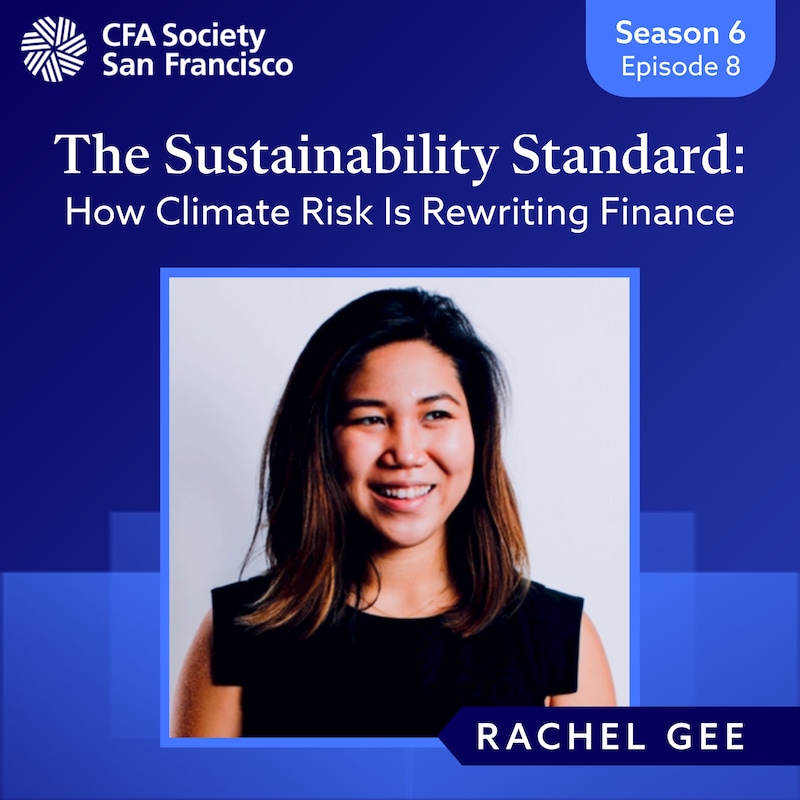
In this episode of Financial Perspectives, Tanya Suba-Tang sits down with Rachel Gee, Manager of FS Climate Change and Sustainability Services at EY, to examine how sustainable investing has evolved from a values-driven concept into a core financial discipline.
Rachel outlines how climate risk is already being priced across markets—from insurance disruptions and real estate exposure to emerging nature-based frameworks and AI-driven energy demand. The conversation explores why carbon was only the starting point, how biodiversity and water risk are influencing capital allocation, and where investors are finding opportunity amid volatility.
Looking ahead, they discuss what’s next: less headline noise, deeper integration into core decision-making, increased investment in data and risk modeling, and a shift from “sustainability strategy” to simply strategy.
Key Takeaways:
- Sustainability has become a central theme in finance, moving from niche to necessity.
- Climate risk is reshaping investment decision-making, particularly in insurance and real estate markets.
- Millennials and Gen Z are driving sustainable investing trends, integrating values into financial portfolios.
- The evolution of sustainability in finance is shifting from externality to core business strategy for firms.
- Nature-related risks are gaining attention, with frameworks like TNFD becoming essential in financial assessments.
- The future of sustainability in finance will see deeper integration into business as usual practices, beyond just headlines.
Transcripts
Lindsey Helman: Hello and welcome to Financial Perspectives.
Speaker:Lindsey Helman: A CFA Society San Francisco
Speaker:Lindsey Helman: podcast Where we explore trends
Speaker:Lindsey Helman: shaping the investment and
Speaker:Lindsey Helman: finance industry with experts in
Speaker:Lindsey Helman: their field.
Speaker:Lindsey Helman: This month, host Tanya Suba-Tang had the pleasure of speaking
Speaker:Lindsey Helman: with Rachel Gee of EY.
Speaker:Lindsey Helman: Listen in as they explore the evolution of sustainability into
Speaker:Lindsey Helman: a core financial discipline and how climate risk is reshaping
Speaker:Lindsey Helman: decision making across markets.
Speaker:Tanya Suba-Tang: Rachel, welcome to the show.
Speaker:Tanya Suba-Tang: Thank you so much for joining me.
Speaker:Rachel Gee: Thanks for having me.
Speaker:Rachel Gee: Glad to be here.
Speaker:Tanya Suba-Tang: So as the Climate Change and
Speaker:Tanya Suba-Tang: Sustainability Services manager
Speaker:Tanya Suba-Tang: at EY, I thought you would be
Speaker:Tanya Suba-Tang: the perfect person to talk about
Speaker:Tanya Suba-Tang: sustainability and climate risk
Speaker:Tanya Suba-Tang: for our Earth Day theme this
Speaker:Tanya Suba-Tang: month.
Speaker:Rachel Gee: I'm so excited to be here and talk about that.
Speaker:Rachel Gee: It's a really fascinating topic and definitely a hot, hot topic,
Speaker:Rachel Gee: that's for sure.
Speaker:Tanya Suba-Tang: It definitely is.
Speaker:Tanya Suba-Tang: And, you know, that's actually a perfect segue to my first
Speaker:Tanya Suba-Tang: question to you, is that not too long ago, you know, let's be
Speaker:Tanya Suba-Tang: real, hardly anyone in finance was talking about sustainability
Speaker:Tanya Suba-Tang: or climate risk.
Speaker:Tanya Suba-Tang: Right now it's front and center,
Speaker:Tanya Suba-Tang: and I'd love to get your
Speaker:Tanya Suba-Tang: thoughts on what you think
Speaker:Tanya Suba-Tang: impacted this shift and what
Speaker:Tanya Suba-Tang: significant changes have
Speaker:Tanya Suba-Tang: impacted it over the past few
Speaker:Tanya Suba-Tang: years.
Speaker:Rachel Gee: I think that's a really interesting question.
Speaker:Rachel Gee: and there are two core pieces to that, right?
Speaker:Rachel Gee: There's the, what has impacted the shift and then why has it?
Speaker:Rachel Gee: And I really, why has sustainability moved to the
Speaker:Rachel Gee: center of finance?
Speaker:Rachel Gee: if we really focus on that clear signal, it's, I think a perfect
Speaker:Rachel Gee: example is insurance.
Speaker:Rachel Gee: And, when we pull back,
Speaker:Rachel Gee: sustainability has been at the
Speaker:Rachel Gee: center of finance for a while
Speaker:Rachel Gee: now.
Speaker:Rachel Gee: We just really haven't noticed
Speaker:Rachel Gee: it, but we saw it most recently
Speaker:Rachel Gee: in twenty nineteen with kind of
Speaker:Rachel Gee: Hurricane Dorian.
Speaker:Rachel Gee: And there was a massive amount of damage to Florida.
Speaker:Rachel Gee: and what happened was a rise in
Speaker:Rachel Gee: premiums in Florida, Florida
Speaker:Rachel Gee: insurance actually.
Speaker:Rachel Gee: And so what we saw is that the
Speaker:Rachel Gee: average homeowner in premium for
Speaker:Rachel Gee: the state of Florida kind of
Speaker:Rachel Gee: shot up and private home
Speaker:Rachel Gee: insurance kind of withdrew, and
Speaker:Rachel Gee: the state had to come forward
Speaker:Rachel Gee: and not to kind of beat a dead
Speaker:Rachel Gee: horse about insurance because
Speaker:Rachel Gee: who actually enjoys talking
Speaker:Rachel Gee: about insurance?
Speaker:Rachel Gee: But I think this was one of the
Speaker:Rachel Gee: most tangible examples of seeing
Speaker:Rachel Gee: climate and sustainability in
Speaker:Rachel Gee: finance.
Speaker:Rachel Gee: Because how else do you think of
Speaker:Rachel Gee: finance except for pricing
Speaker:Rachel Gee: climate risk?
Speaker:Rachel Gee: Right?
Speaker:Rachel Gee: Like how else do you price it?
Speaker:Rachel Gee: So when we focus on that, it's kind of evolved from not just a
Speaker:Rachel Gee: values conversation, which I think is what most people think
Speaker:Rachel Gee: of sustainability as, but really a balance sheet conversation and
Speaker:Rachel Gee: how, how to price this and not to think about this even more.
Speaker:Rachel Gee: But you also see this really in California too, right?
Speaker:Rachel Gee: Like wildfire exposure in California.
Speaker:Rachel Gee: there's been a global reinsurance repricing.
Speaker:Rachel Gee: And once these losses repeat
Speaker:Rachel Gee: risk is always going to be
Speaker:Rachel Gee: repriced.
Speaker:Rachel Gee: So those are those are one of the things that kind of keep me
Speaker:Rachel Gee: awake at night.
Speaker:Rachel Gee: And, before even kind of dive into this, I have to caveat that
Speaker:Rachel Gee: these are my personal views, and not the views of my firm, but, I
Speaker:Rachel Gee: think in terms of market cyclical cyclicality, there has
Speaker:Rachel Gee: been a really big surge in sustainable investing and the
Speaker:Rachel Gee: interest around this as well.
Speaker:Rachel Gee: So across twenty twenty and
Speaker:Rachel Gee: twenty twenty one, there was a
Speaker:Rachel Gee: really huge, growing interest in
Speaker:Rachel Gee: sustainable investing.
Speaker:Rachel Gee: And generally speaking, the
Speaker:Rachel Gee: trend of millennials and Gen Z,
Speaker:Rachel Gee: They're really driven by their
Speaker:Rachel Gee: values and they invest in in a
Speaker:Rachel Gee: similar manner.
Speaker:Rachel Gee: but there's been a kind of
Speaker:Rachel Gee: familiar market cycle of early
Speaker:Rachel Gee: enthusiasm.
Speaker:Rachel Gee: Capital inflows, recalibration, rates rise, expectations reset.
Speaker:Rachel Gee: These kind of things happen in a very cyclical manner.
Speaker:Rachel Gee: So this isn't like a new thing in in many ways I would say.
Speaker:Rachel Gee: And I, I don't know if you agree with me actually, but I'd love
Speaker:Rachel Gee: to get your thoughts on that.
Speaker:Tanya Suba-Tang: No, I agree with you.
Speaker:Tanya Suba-Tang: I don't think it's a new thing.
Speaker:Tanya Suba-Tang: But you made some very good points with Gen Z and thinking
Speaker:Tanya Suba-Tang: and how now they're incorporating this into their
Speaker:Tanya Suba-Tang: portfolios and expectations.
Speaker:Tanya Suba-Tang: So, a quick question on, that is, you know, discussions about
Speaker:Tanya Suba-Tang: climate change to sustainability in finance, once it was
Speaker:Tanya Suba-Tang: discussed, was centered mainly on carbon emissions.
Speaker:Tanya Suba-Tang: Right now, they incorporate
Speaker:Tanya Suba-Tang: factors such as biodiversity,
Speaker:Tanya Suba-Tang: water risk and total
Speaker:Tanya Suba-Tang: environmental impact on
Speaker:Tanya Suba-Tang: investment portfolios.
Speaker:Tanya Suba-Tang: how are you and your team
Speaker:Tanya Suba-Tang: adapting your investment
Speaker:Tanya Suba-Tang: strategies to address this
Speaker:Tanya Suba-Tang: broader spectrum of
Speaker:Tanya Suba-Tang: sustainability issues?
Speaker:Rachel Gee: That's an interesting topic because I think when we think
Speaker:Rachel Gee: about sustainability and carbon particularly, we've always kind
Speaker:Rachel Gee: of thought about carbon in silo.
Speaker:Rachel Gee: Carbon has always been the gateway metric.
Speaker:Rachel Gee: it's never been the end state.
Speaker:Rachel Gee: it's very easy to measure.
Speaker:Rachel Gee: It's easy to compare, easy to regulate.
Speaker:Rachel Gee: But this isn't a thing that has been in silo.
Speaker:Rachel Gee: And when we look back on kind of sustainability across the
Speaker:Rachel Gee: spectrum and look at asset management in general, there's
Speaker:Rachel Gee: always been kind of the ESG component of it, right?
Speaker:Rachel Gee: Like governance has been a very
Speaker:Rachel Gee: core foundation of asset
Speaker:Rachel Gee: management.
Speaker:Rachel Gee: When you look at how they think about it, they would say that
Speaker:Rachel Gee: governance is what their sustainability program is kind
Speaker:Rachel Gee: of run off of.
Speaker:Rachel Gee: Whether or not you consider that
Speaker:Rachel Gee: greenwashing or not just a hotly
Speaker:Rachel Gee: debated topic.
Speaker:Rachel Gee: But when you marry that in with carbon and the broader
Speaker:Rachel Gee: biodiversity, nature and water agendas, these things are
Speaker:Rachel Gee: systemic, systemic, and they're like systems frameworks.
Speaker:Rachel Gee: So when water stress kind of
Speaker:Rachel Gee: shuts down operations across
Speaker:Rachel Gee: your entire value chain, that's
Speaker:Rachel Gee: not just an E problem, that's a
Speaker:Rachel Gee: social problem and it's a
Speaker:Rachel Gee: governance problem.
Speaker:Rachel Gee: So thinking about kind of
Speaker:Rachel Gee: climate change and
Speaker:Rachel Gee: sustainability in finance as
Speaker:Rachel Gee: again, calling back to that
Speaker:Rachel Gee: bottom line and balance sheet
Speaker:Rachel Gee: problem.
Speaker:Rachel Gee: These things have now become a broader.
Speaker:Rachel Gee: Carbon was easy to measure, but
Speaker:Rachel Gee: now we're thinking about these
Speaker:Rachel Gee: as broad spectrum system
Speaker:Rachel Gee: challenges.
Speaker:Rachel Gee: And when we look at nature risk in particular, this becomes a
Speaker:Rachel Gee: really big financial risk.
Speaker:Rachel Gee: So nature risk frameworks are really gaining traction.
Speaker:Rachel Gee: I think I have the TNF d, which is the task force for nature
Speaker:Rachel Gee: related financial disclosures.
Speaker:Rachel Gee: I think in this past year
Speaker:Rachel Gee: they've just really released a
Speaker:Rachel Gee: new framework.
Speaker:Rachel Gee: one hundred and seventy nine
Speaker:Rachel Gee: financial institutions are now
Speaker:Rachel Gee: reporting alongside TNF d. I
Speaker:Rachel Gee: think that's twenty five percent
Speaker:Rachel Gee: of g-sibs are included in that
Speaker:Rachel Gee: reporting representation.
Speaker:Rachel Gee: There's a huge amount of nature
Speaker:Rachel Gee: related risk that's being kind
Speaker:Rachel Gee: of accounted for now because
Speaker:Rachel Gee: having exposure to the
Speaker:Rachel Gee: agriculture industry, when you
Speaker:Rachel Gee: think about how many banks and
Speaker:Rachel Gee: asset managers and private
Speaker:Rachel Gee: equity firms and even insurers
Speaker:Rachel Gee: kind of have exposure to that
Speaker:Rachel Gee: are and are underwriting the ag
Speaker:Rachel Gee: sector or even just forestry in
Speaker:Rachel Gee: general.
Speaker:Rachel Gee: And you think about mining and, blue bonds or deep sea fishing.
Speaker:Rachel Gee: These are huge, huge industries
Speaker:Rachel Gee: and massive amounts of capital
Speaker:Rachel Gee: outflows and inflows that need
Speaker:Rachel Gee: to be considered when you're
Speaker:Rachel Gee: investing.
Speaker:Rachel Gee: And just kind of thinking, calling back to that insurance
Speaker:Rachel Gee: example I had a moment ago, I think the easiest example of
Speaker:Rachel Gee: this is real estate.
Speaker:Rachel Gee: Actually.
Speaker:Rachel Gee: If you think of underwriting a high rise building in Miami.
Speaker:Rachel Gee: Nowadays, you have to account for massive amounts of sea level
Speaker:Rachel Gee: rise and like hurricane risk and flooding and whether or not
Speaker:Rachel Gee: there's even going to be the ability to get insurance in,
Speaker:Rachel Gee: cities like that.
Speaker:Rachel Gee: So, so those are things that
Speaker:Rachel Gee: we're constantly thinking about
Speaker:Rachel Gee: when kind of advising clients
Speaker:Rachel Gee: and, and just generally
Speaker:Rachel Gee: speaking, considering the
Speaker:Rachel Gee: broader market trends of this,
Speaker:Rachel Gee: that's not to say that,
Speaker:Rachel Gee: deterring people from, from
Speaker:Rachel Gee: thinking of real estate as a
Speaker:Rachel Gee: strong investment whatsoever,
Speaker:Rachel Gee: but just generally speaking,
Speaker:Rachel Gee: when you look at the real estate
Speaker:Rachel Gee: industry, they are heavily
Speaker:Rachel Gee: thinking about the physical
Speaker:Rachel Gee: risks around their real assets
Speaker:Rachel Gee: because there are massive,
Speaker:Rachel Gee: considerations for stranded
Speaker:Rachel Gee: assets and how you price risk,
Speaker:Rachel Gee: particularly from a climate risk
Speaker:Rachel Gee: perspective.
Speaker:Rachel Gee: I think there's just another
Speaker:Rachel Gee: really interesting component to
Speaker:Rachel Gee: that too, in terms of like
Speaker:Rachel Gee: revenue and structural demands
Speaker:Rachel Gee: for this.
Speaker:Rachel Gee: Because again, this isn't just a risk story.
Speaker:Rachel Gee: There's a lot of upside opportunity to this.
Speaker:Rachel Gee: So there's a big thing around clean energy financing.
Speaker:Rachel Gee: that's been really driving meaningful change.
Speaker:Rachel Gee: So if we think about kind of AI and data center build outs, I
Speaker:Rachel Gee: think this is really reshaping our power infrastructure and
Speaker:Rachel Gee: grid at scale.
Speaker:Rachel Gee: And I think looking towards the future of this AI is it has
Speaker:Rachel Gee: massive power draw.
Speaker:Rachel Gee: It draws a huge amount from the grid.
Speaker:Rachel Gee: We know that going forward,
Speaker:Rachel Gee: we're going to continue using
Speaker:Rachel Gee: AI.
Speaker:Rachel Gee: That's going to be a continued trend.
Speaker:Rachel Gee: No one is going to stop using AI.
Speaker:Rachel Gee: I don't think anyone's going to argue with me on that.
Speaker:Rachel Gee: But at scale, you can't continue to say that we are going to use
Speaker:Rachel Gee: a finite number of resources to power this tool or this platform
Speaker:Rachel Gee: that uses the same amount of energy as a small metropolitan
Speaker:Rachel Gee: area in perpetuity.
Speaker:Rachel Gee: That's kind of defeats the purpose of finite resources.
Speaker:Rachel Gee: so how can you use renewable energy to support this?
Speaker:Rachel Gee: And, what we're seeing is a massive amount of investment
Speaker:Rachel Gee: despite kind of political headwinds blowing towards
Speaker:Rachel Gee: renewable energy because there is a strong demand for it.
Speaker:Rachel Gee: And you have to have this power infrastructure at scale to
Speaker:Rachel Gee: continue meeting consumer demand and, and business demand.
Speaker:Rachel Gee: So, I think it's an interesting case study, right?
Speaker:Rachel Gee: That, despite all of the changes there, there, there's a growth
Speaker:Rachel Gee: story to this and opportunity to make to make money.
Speaker:Rachel Gee: And in spite of, kind of market headwinds.
Speaker:Tanya Suba-Tang: Wow. Thank you for all that
Speaker:Tanya Suba-Tang: wealth of knowledge and
Speaker:Tanya Suba-Tang: insights.
Speaker:Tanya Suba-Tang: I think you made some very, you know, great points in how,
Speaker:Tanya Suba-Tang: sustainability and climate really is impacting so many
Speaker:Tanya Suba-Tang: other sectors and branches.
Speaker:Tanya Suba-Tang: like you said, real estate and so forth.
Speaker:Tanya Suba-Tang: So, before I let you go, I did want to ask you if you had to
Speaker:Tanya Suba-Tang: venture a bold prediction.
Speaker:Tanya Suba-Tang: Where do you see climate change
Speaker:Tanya Suba-Tang: and sustainability heading, you
Speaker:Tanya Suba-Tang: know, in the next few years,
Speaker:Tanya Suba-Tang: kind of just taking what you
Speaker:Tanya Suba-Tang: said and how much of an impact
Speaker:Tanya Suba-Tang: it really makes in other
Speaker:Tanya Suba-Tang: decisions?
Speaker:Tanya Suba-Tang: What is the next iteration of that?
Speaker:Tanya Suba-Tang: What what do you think is going to be happening in the future?
Speaker:Rachel Gee: Oh, well, I think there will be kind of two big parallel trends.
Speaker:Rachel Gee: Sustainability.
Speaker:Rachel Gee: will get quieter in terms of.
Speaker:Rachel Gee: Market headlines or big, bold
Speaker:Rachel Gee: news headlines, but it will
Speaker:Rachel Gee: become very embedded in your
Speaker:Rachel Gee: Bau.
Speaker:Rachel Gee: There's going to be less branding, but more integration
Speaker:Rachel Gee: into, say, your credit committees, your underwriting,
Speaker:Rachel Gee: your asset allocation.
Speaker:Rachel Gee: You're going to see a shift from
Speaker:Rachel Gee: a sustainability strategy into
Speaker:Rachel Gee: just strategy.
Speaker:Rachel Gee: Secondly, I think you're going
Speaker:Rachel Gee: to see kind of a risk mitigation
Speaker:Rachel Gee: growth, budget growth
Speaker:Rachel Gee: essentially.
Speaker:Rachel Gee: So most North American businesses have experienced kind
Speaker:Rachel Gee: of material weather related losses in the past year alone.
Speaker:Rachel Gee: this is driving through Depending on physical risk
Speaker:Rachel Gee: mapping, supply chain resilience and long term capital planning.
Speaker:Rachel Gee: So you think about how this has impacted their supply chains.
Speaker:Rachel Gee: There's going to be real investment in kind of
Speaker:Rachel Gee: weatherproofing those for, for lack of a better term.
Speaker:Rachel Gee: And I think the other thing, regulation is going to be messy,
Speaker:Rachel Gee: but directionally, it's going to be really clear.
Speaker:Rachel Gee: The the timing and scope across jurisdictions will ebb and flow.
Speaker:Rachel Gee: That's always kind of been the case.
Speaker:Rachel Gee: You've seen it in the seventies with the Carter administration.
Speaker:Rachel Gee: You've seen it year over year across every administration.
Speaker:Rachel Gee: It is super cyclical.
Speaker:Rachel Gee: But the expectations around what these regulatory regulations
Speaker:Rachel Gee: globally are driving will essentially remain the same.
Speaker:Rachel Gee: And I think that's why many organizations will continue
Speaker:Rachel Gee: doing this long lead time work.
Speaker:Rachel Gee: So scope three scenario
Speaker:Rachel Gee: analysis, stage data
Speaker:Rachel Gee: digitalization.
Speaker:Rachel Gee: Even amid this uncertainty
Speaker:Rachel Gee: that's going to continue
Speaker:Rachel Gee: remaining a long term
Speaker:Rachel Gee: investment.
Speaker:Rachel Gee: I think companies will continue investing in data.
Speaker:Rachel Gee: so you've seen like incredible
Speaker:Rachel Gee: amounts of satellite imagery
Speaker:Rachel Gee: data.
Speaker:Rachel Gee: There's some really, really
Speaker:Rachel Gee: cool, data, third party vendors
Speaker:Rachel Gee: that do awesome, scoping
Speaker:Rachel Gee: activities around like how, how
Speaker:Rachel Gee: to calculate carbon on trees and
Speaker:Rachel Gee: like in the water and in the
Speaker:Rachel Gee: forests and how, what the water
Speaker:Rachel Gee: level is for ponds in the middle
Speaker:Rachel Gee: of nowhere.
Speaker:Rachel Gee: It's very interesting.
Speaker:Rachel Gee: They have can like count people
Speaker:Rachel Gee: in the middle of Thailand, like
Speaker:Rachel Gee: their satellite imagery for
Speaker:Rachel Gee: geospatial awareness.
Speaker:Rachel Gee: These things I see a massive amount of continued investment
Speaker:Rachel Gee: in, third party vendors to continue driving this because
Speaker:Rachel Gee: you can't make strong decisions without good data.
Speaker:Rachel Gee: So directionally, I think that's, that's where it's going.
Speaker:Rachel Gee: Despite headwinds in regulation
Speaker:Rachel Gee: and the cyclical nature of that,
Speaker:Rachel Gee: organizations are going to
Speaker:Rachel Gee: continue investing in their data
Speaker:Rachel Gee: in kind of building out the the
Speaker:Rachel Gee: pipelines to deliver on, on
Speaker:Rachel Gee: regulation when it comes,
Speaker:Rachel Gee: because no one wants to be
Speaker:Rachel Gee: caught on the back foot and
Speaker:Rachel Gee: reactive to regulation when it
Speaker:Rachel Gee: lands.
Speaker:Rachel Gee: So kind of in summary, I think sustainability in finance is no
Speaker:Rachel Gee: longer really driven by enthusiasm and this kind of rah
Speaker:Rachel Gee: rah, view that we've always had.
Speaker:Rachel Gee: it's not driven by regulation alone anymore, but it's really
Speaker:Rachel Gee: shaped by opportunity because there is upside to this and this
Speaker:Rachel Gee: risk mitigation and like a need to operate globally.
Speaker:Rachel Gee: Um, so the cycles will always continue.
Speaker:Rachel Gee: I think the noise will always be there, but there is definitely
Speaker:Rachel Gee: an underlying shift in the sustainable finance market.
Speaker:Rachel Gee: And um, it's exciting to see it
Speaker:Rachel Gee: change from an externality, I
Speaker:Rachel Gee: would say to an input into our
Speaker:Rachel Gee: bottom line.
Speaker:Rachel Gee: So I'm excited to see what the future holds.
Speaker:Tanya Suba-Tang: Well, thank you so much and thank you again for all the
Speaker:Tanya Suba-Tang: insights you shared.
Speaker:Tanya Suba-Tang: I know our listeners are going to take it all in and appreciate
Speaker:Tanya Suba-Tang: it, and I hope we'll have you back in a couple of years.
Speaker:Tanya Suba-Tang: And you can give us more updates and see if any of your
Speaker:Tanya Suba-Tang: predictions come true.
Speaker:Rachel Gee: hope they do.
Speaker:Rachel Gee: Thanks for having me.
Speaker:Lindsey Helman: Thank you to this month's guest,
Speaker:Lindsey Helman: Rachel Gee For joining us to
Speaker:Lindsey Helman: share her insights on
Speaker:Lindsey Helman: sustainable investing, and
Speaker:Lindsey Helman: climate risk.
Speaker:Lindsey Helman: Be sure to join us for another episode of Financial
Speaker:Lindsey Helman: Perspectives released on the last Tuesday of each month.
Speaker:Lindsey Helman: This podcast is produced by CFA
Speaker:Lindsey Helman: Society San Francisco, a not for
Speaker:Lindsey Helman: profit professional association
Speaker:Lindsey Helman: providing professional learning
Speaker:Lindsey Helman: and career resources to over
Speaker:Lindsey Helman: thirteen thousand investment
Speaker:Lindsey Helman: industry professionals
Speaker:Lindsey Helman: worldwide.
Speaker:Lindsey Helman: To learn more about CFA Society
Speaker:Lindsey Helman: San Francisco, visit our website
Speaker:Lindsey Helman: at cfa-sf.org or connect with us
Speaker:Lindsey Helman: on LinkedIn.


