Shownotes
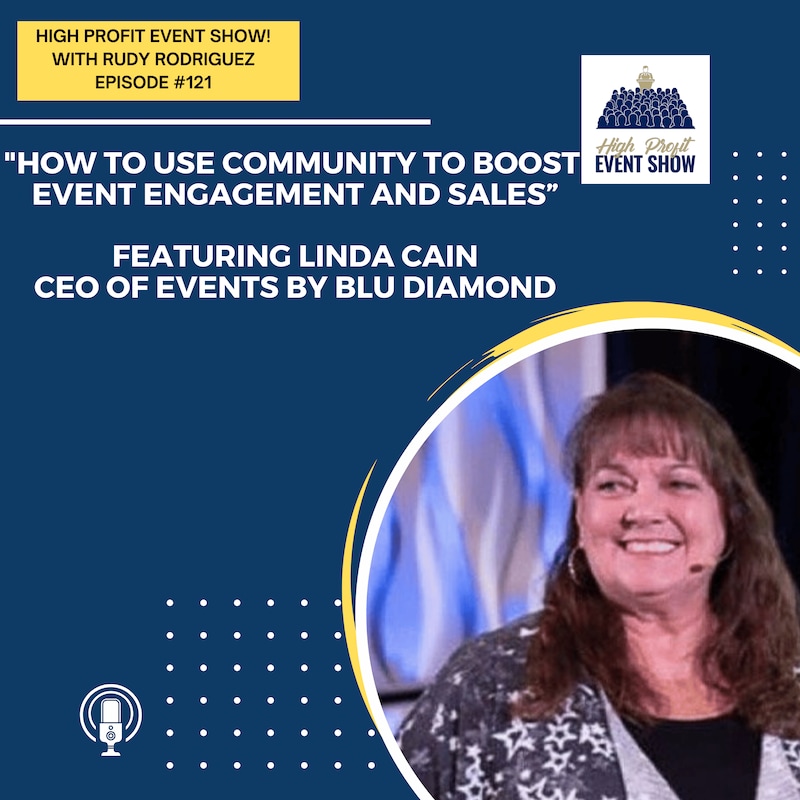
In this episode of The High Profit Event Show, Rudy Rodriguez sits down with Linda Cain, a woman whose impact in the events industry spans more than 1,400 events worldwide. Linda has been producing transformational experiences since she was a teenager, working with some of the most respected names in the industry. She is known not only for her event production company, BluDiamond Events, but also for her signature Sweet Retreats framework, which assists coaches and thought leaders deliver heart-centered, life-changing retreats. Outside her professional world, Linda is a long-time Pomeranian breeder, a devoted wife of 40 years, and an avid water skier.
Rudy and Linda begin by exploring one of the biggest shifts happening in the event industry today: the move toward bite-sized experiences. Linda explains that traditional webinars no longer create the kind of engagement event leaders need. Instead, mini workshops, short masterclasses, and hands-on micro-trainings are outperforming longer, lecture-style sessions because they give attendees a real, immediate win. She shares compelling examples from clients who deliver 90-minute interactive experiences—complete with breakout rooms and transformational exercises—that naturally lead participants into their larger three-day events or high-ticket programs. These small experiences create momentum, clarity, and early breakthroughs that make people want more.
The conversation expands into what Linda believes is the single most important strategy for event leaders right now: building community. She emphasizes that community is not a membership site, but rather the intentional ecosystem that surrounds an event as people get to know each other, connect, and feel seen. She describes how pre-event touchpoints—such as WhatsApp groups, networking sessions, micro-gatherings, and curated introductions—dramatically increase show-up rates and deepen engagement. When attendees feel connected before they even arrive, they are far more likely to stay engaged throughout the experience and continue working with the host afterward. Linda paints a clear picture of how nurturing low-hanging fruit, mid-tier prospects, and premium clients together creates a thriving long-term ecosystem.
Linda and Rudy then turn to the third major pillar of the episode: the use of surveys and assessments to tailor events and increase conversions. Linda reveals her three-survey system, beginning with an intake questionnaire at ticket purchase, followed by an event-specific survey closer to the start date, and finally a real-time assessment during the event—strategically placed before the offer. These surveys reveal what the audience truly needs, where they are in their readiness, and how the host can adjust the content or offer in the moment to match the room. She shares a powerful example from a JVology event where assessments completely reshaped the event design and produced the strongest outcomes the host had ever seen. For Linda, surveys are one of the most overlooked but essential tools for event success.
The episode concludes with Linda sharing her passion for events and her belief that everyone has an event inside them waiting to be expressed. She encourages leaders to charge what they’re worth, stay committed to building authentic community, and use assessments to stay aligned with the people they serve. Her message is clear: events are meant to bring people together, create transformation, and spark meaningful growth—and when designed with intention, they truly can.
If you are an event leader looking to increase engagement, fill your room with the right people, and create transformative experiences, this conversation offers a masterclass in modern event strategy from one of the most trusted experts in the field.
Want to connect with Linda?
Profitable Events: The Complete Guide: https://lindacain.kartra.com/page/PromoOT
Website: https://eventsbybludiamond.com/
LinkedIn: https://www.linkedin.com/in/bludiamond/
Facebook: https://www.facebook.com/linda.cain.3532
Instagram: https://www.instagram.com/thelindacain/
Transcripts
Hello and welcome to today's episode. Today we have a special guest with us, Mrs. Linda Cain. Welcome, Ma'am.
Linda Cain:Great to be here. Thank you for having me.
Rudy Rodriguez:It's great to have you. It's so much fun connecting with you in the green room here. I got to learn a lot about you personally and professionally. In addition to having been doing events seemingly since the age of 14, you've done over 1,400 events worldwide. That's pretty remarkable. You've been around the block. You've worked with some of the OGs in the space. You continue to work with some of the OGs to create extraordinary events where people have intimate experiences, are transformational, both small as well as large rooms. You've also created this process you call Sweet Retreats to help coaches and thought leaders to deliver life-changing impact through intentional heart-centered experiences. When you're having fun offstage, you're water skiing, hanging out with your husband of 40 years, and loving on your Pomeranians.
Linda Cain:Yes. We've been breeding and raising Pomeranians myself for about 30 years.
Rudy Rodriguez:You are a Pomeranian pro.
Linda Cain:We've had many. I'm really jealous because in New York, they have this big, huge Pom Fest every Christmas. I don't live in New York, so I don't take my dogs to New York, but I watch it and I don't know how many thousands of pom owners and poms, but they have everything pom and it's really crazy. If you live in New York, go to Pom Fest.
Rudy Rodriguez:Pom Fest. Now, I know. I didn't know that. Now, I know. Beautiful, Linda. Well, excited to have you on today. You have so much experience in the field of production. That's your core company, Blue Diamonds Events, doing production, but also knowing what works when it comes to what people are doing right now, when it comes to marketing strategy and filling the room, which we know, you and I know, that it's oftentimes the number one challenge that event leaders face. How do I get more of the right fit people to my event? And then ultimately, how do I engage them in a way that has them wanting more and wanting to continue that journey? How about we jump in right into the golden nuggets and love to chat a bit about your experience in events and specifically what you're seeing with your clients, which are some pretty well reputable companies, what they're doing right now to fill their events. I think that would be really interesting.
Linda Cain:So most of our clients are doing things like master classes or creating little mini workshops and bringing them in so that there's an experience that takes place and then they're inviting them to their enrollment programs, three-day events, retreats, and things like that. Rather than doing like the standard webinar that we all do, they're really bringing it down into little bite-sized learning that goes along with what they'll get and what they'll learn at the three-day enrollment event, shall we say, which also leads to their big program that they want to enroll for the year. But doing the bite-sized little mini classes, master classes, little mini workshop pieces seems to really be where we're really getting traction because people are getting that. It's not enough just to do a webinar and hear about something, but this allows them to have a little bit of an experience. So for example, we've got a client that teaches a lot around energetics and clearing out your subconscious mind that's telling you, no, you can't do something when you know you really want to do something. So rather than her just doing a webinar around the topic, she's actually created these little mini trainings. So people come in and they're like, okay, what is it that is holding you back? What's that one thing today that's holding you back? And then they workshop it and they actually go through a process so they can learn how to retalk, restructure that and manifest the next thing that they're going to manifest all through an energetic process.
Linda Cain:So that's just one example. We have a speaker company who everybody's like, how do I get my message out? What do I really say about what it is that I do? There's a lot of people that teach and train on create your elevator pitch or create your mini message and things like that. But what this guy does is he really takes a 90-minute session instead of a 60-minute workshop and they actually frame it and they practice with each other. They go into breakout rooms and they actually put it together and work on it. So people get a flavor and a taste of like, oh, I want more of this because look, I actually finally got this done. So I know what to say now and I practice it on some people and I got feedback. This was amazing. So then when he says, so come and do this all weekend and you're gonna walk out with your signature talk done. You will have practiced it. You will have been on stage. You will have gotten video. You have gotten your photo done. People want that then and they're more apt to buy that. Then along with that, what people have to remember is, using that kind of a technique to bring people into your world, to sell them into your event. Then in between, once they bought the ticket to when they show up at your event, depending on how far out they've bought the ticket, you also need to have touch points for them. So create little networking opportunities, whatsapps groups, so that they can meet each other, get in community, get connected to each other and build that. It's really about building community right now because the groups that are doing that and allowing people to network with each other, build community around their event coming up, they're seeing the show up, whether it's virtual or in-person.
Linda Cain:We're really big on in-person because we just like to be with people and hug each other. And the true transformation, I really believe, comes when you're actually in the human space. The virtual space is great, but there's nothing like sitting where you can actually talk to somebody and just keep going. So they're bringing people into their world by creating this community and then people want to be there because they've met each other and they've built up some relationships. So it's like, are you going? I'm going, yes, you know? And so they're doing it now and that's helping a lot.
Rudy Rodriguez:Beautiful, there's a lot in there. I mean, there's a lot to unpack that you just shared. I think you just gave a mini masterclass in like four minutes we could drill down on.
Linda Cain:I tend to do that. I could drill down in that for a whole hour.
Rudy Rodriguez:Yeah, yeah. Well, let's drill down just a hair here because you do have a wide angle view on the industry. You've been in the industry for a long time. You've been through the ups and the downs of the economy and all sorts of things. You've been in this business. What would you say, if you could drill down to one specific thing right now that you think is most effective? Because I know we're in a changing landscape, constantly changing landscape. Like today, if there was only one strategy that your clients could use to build their events, what could that be?
Linda Cain:I honestly think it's building the community. I really think it's beyond just reaching your avatar, the people that you wanna work with going forward. It's really bringing the people into your world that they have the potential to join your program. They're not quite there yet. So they need a little bit of nurturing to be ready. So rather you get them early, nurture them, bring them into your event, sell them into your program, rather than not paying attention to that low hanging fruit, learning how to incorporate the low hanging fruit into the high level clients that we want right away. So there's a community that's been built so that you're feeding, it's like you're building in your own little sales funnel.
Rudy Rodriguez:It's so interesting because I've heard that as a theme, idea that in today's age, community is the most important thing to focus on and to build sense that that is -
Linda Cain:And I'm not talking like membership groups where there's paid membership groups and things like that. It's building, like I said earlier, that community around the event, the whole purpose is that everyone's gonna attend that event and you wanna attend the event because you want the training, you want the culture, you want the community, and you want to continue to work with the host post event. But in order to get there, you wanna have everybody in your community come and be part of it. So you're bringing in the low hanging fruit, the mid hanging fruit, and the high end to all come together. They get to network with each other. They get to, like I said, pre-connect in a Whatsapp group or Mighty Networks or any of those other tools that you can use and just start building that and people will stay there. We have groups that have started this like three, four years ago, and those groups, those networks have grown and grown and grown. and they have people that are in the network that are constantly getting fed by the host and they're coming to their virtual, they're coming to their webinars, they're coming to their live events, they're looking for those specials that are offered. So sometimes a client will put up a special where 10 people only, 5,000 were going to Italy. Who's in? Fill out the application and they're looking for a specific person to come, obviously the higher end person, but you get a lot of information because people will fill out an application. Then you can look at those applications and know, ooh, I can serve, I've got a whole bunch of people that seem to be here.
Linda Cain:So I can do a little program for those people and then you can nurture and feed those people, which moves them along in the community to the next level.
Rudy Rodriguez:Beautiful. Thank you for giving those specific examples of what a community could look like and that we're not referring to like a membership site necessarily, we're referring to the specific group of people that are being nurtured at various levels of readiness, some specific outcome of coming to an event or retreat of some sort, and taking the time to understand the needs of the community through surveys, through applications, et cetera, and tailoring an experience for those people that are willing and ready to engage.
Linda Cain:Yeah.
Rudy Rodriguez:Yeah, one quick point I make on that, and then we can move on to talking about other things here. As seemingly simple as that is, I think that's definitely one of the most potent things that I've experienced personally is meeting a community of people and taking the time to survey them to see what exactly that they want and also seeing their availability, et cetera, their budgets, et cetera, and then turning around and making an event to serve where they're at, what they need and what they want. I find that the engagement and the conversion, when I take the time to do that, it does take a lot more time, is much higher and we're able to charge more and they're able to have a better experience because it was tailored for them and that's not for everyone. Everyone has a business where they wanna tailor events to people, but people are willing to pay premium for a well-tailored experience that meets their needs.
Linda Cain:Yeah, it's interesting because events can be used as like gathering a big pool. So you put it out and you, $97 and you're just getting a whole bunch of people into your event, $197, lower ticket, and you're getting more people in. But if you're really selling the high ticket and you're really wanting to build a lasting community or a lasting group of followers that are gonna give you a three to five year lifespan in your products and services that you're offering, then you really do want to pay more attention and cultivate that. Surveys, assessments are all the way through the process using them for, hey, I'm thinking about teaching on this topic. What do you want? Or just asking your community what they want. What are they looking for? Where they're at and you're gonna get different answers. So looking at those answers, you can figure out which are the ones that you wanna teach, who you wanna reach out to. I'll give you a really good example. A lot of us know Jay Facette with the old Masterminds to Millions and JV-ology brand. He and his wife, Corey, now have the couples brand that they're running and doing couples retreats, which is amazing. It's been awesome to watch their journey. But we had a Jvology event, joint venture program a few years back and we sent out an assessment and when the assessment came back in, Jay was like, these people don't even know what JV means.
Linda Cain:The three-day event has to change. We've got a few people that are really serious about doing joint ventures and we know that they're gonna walk away with something done and a joint venture done. But the majority of the people that have signed up for this event, they need to understand a little bit more. They need experience. They need to build their structure. They need to figure out what it is they wanna JV. What product program or idea do they have that they can even JV? So we totally restructured the event and it was the best event he ever had. That would not have happened had we not used three or four different assessments in the ticket purchasing process in order to know who really was gonna be in the room. So it's probably one of the most valuable tools and overlooked tools that people don't do because it takes time to try to figure out what questions you're gonna ask and then rework it and send it out again and to continue to filter and bring people in. It's very powerful in using surveys and assessments. It also helps you to fill the room because you're gonna fill the room. Wouldn't you rather, and I say this all the time, I would rather have 30 people that paid more money in a room that I know are there that fit my high-end offer than to have 200 people in the room that are just looky looing and car shopping.
Rudy Rodriguez:100%.
Linda Cain:You know?
Rudy Rodriguez:Yeah, the right fit people in the room. I think that's the tagline.
Linda Cain:Yeah.
Rudy Rodriguez:And I love what you emphasized in that example you gave about JVs or Jay Facette's JV-ology event. I used four different assessments to verify that and make that the best event to date. I'm curious if you're open to sharing a bit more about what those assessments were, the same survey done four times, four different surveys, combination of personality assessments, because I think this is something that doesn't get talked about that often and it sounds like you have quite a bit of experience with this. Would you mind expanding on that?
Linda Cain:Yeah, typically our clients will do three. The first one is the basic, who you are, what you're doing, what you're looking for, what do you make? Will you invest in yourself? The typical information gathering survey. Then the second one will be more specific. It's after they've joined the event or signed up for the event or they're considering. So it's like, what about this event intrigues you? Are you ready to scale yourself? If you're ready for this technology or this, what you're going to be learning, whatever the event is about. So it's a little bit more event specific questions. Then the third one is one that you do either during the event or post event, which during the event, it's a short assessment that's done in like, how did you feel on day one? What did you learn? What did you get? You typically give that like on the second day before you're going to make your offer and then that way you kind of have a real good feel for what's happening in the room. So you tailor those questions to lead to your offer. So it's like, what did you learn? Did you learn this? What did you like? What's resonating with you so far? You ask them in a specific way that leads to what you're going to be doing in your offer at the end of the second day. So you can quickly look at those at your lunch and get a real good feel for where people are in the room, which helps you immensely to be able to tweak the offer a little if you need to.
Rudy Rodriguez:Yeah, I love that. I love how real time that is three of them before, before at, and then right before you're making your offer, giving that real time feedback. I imagine you probably, obviously you're seeing changes along the way because you're getting real time feedback or you're looking at them closer to the point and nothing beats having real time feedback, especially when it comes to making an offer. One of my dear mentors and veteran of the event industry for over 40 years, four decades of experience, name is Scott deMoulin. We interviewed him, one of the first episodes on this podcast, and he taught me to do a survey in advance of the event, but at the end of every single day and actually taking the time to sit and read those and making those adjustments on the fly because people notice the difference. Ultimately it does lead to improving sales and conversions.
Linda Cain:We mentioned earlier in the green room, we were talking just a little bit about virtual events and the challenge with virtual events is it's so easy. And I've done it myself, folks. It's easy to do, put the laptop up, you have it running like the television or the radio or the white noise in the background and you're doing your regular work, but you're listening, so you signed up, so your camera's off and I just make it a point, don't sign up. If you can't be there for that full time, just think of a virtual event. If we all start to think of a virtual event as I'm in-person, because we are, we're sitting here, we're together, we're having a conversation, we're watching somebody teach and train us. So if we all just stop to take the time to like, only sign up when we know we're gonna actually commit for those three days or one day or whatever it is, we will turn the industry around so quickly and people will no longer be purchasing recordings that they never go and listen to. Clients, hosts will have better people in the room, they'll have the vetted people in the room. People will be showing up, they will be paying attention, but it starts with us as hosts. We have to train people that like, if you come and you're not gonna show up and you're not gonna be there, we're gonna kick you out. I mean, that's a scary thing, but I've had some clients do it and it's working. It's like, I'd rather talk to the 12 people.
Linda Cain:I'd rather talk to the 12 people that are going to be here with me and we're going to pay attention and we're going to get stuff done and then to have 30 people with half of them not there. In here, back forward. Now, we understand that some things happen and the whole thing about virtual is being able to be accessible and have that allowance for people to get their job done or do the things that they need to do. So then let's make them a little shorter, make them more compact. get to your message, get to your point quicker, have less speakers, less sponsors. Really tailor it. Shorten the days like nine to two, nine to three, something like that and allow the people to have three 30 minute interval breaks because you don't need an hour break, lunch break in a virtual if you do 30 minutes in the morning, 30 at lunch, 30 in the afternoon. 30 is enough time for us to go have a run, pee, check our email, check in with the family and get back to the event and so just tailoring it a little differently and structuring it a little differently to your audience is where those assessments come in to help because you can ask those kind of questions. Can you commit to being here with your video on? Yes or no? And if you just start to do things like that, it will change the landscape. I'm already seeing it and I'm doing it myself. So I don't typically go someplace unless I can be in-person and show up and just one starts a revolution.
Rudy Rodriguez:So really not so many levels. Linda, I really appreciate that you brought up the subject. So much inside of this, also the fact that the people that listen to this are the ones that are hosting events oftentimes but we're also attending events but we want to be the change that we see in the world. So as event leaders, have been hosts, when we attend events we should keep our camera on or stay engaged or don't attend an event as we can give the respect that we would hope someone would give to us, don't go. So I know it's kind of a sharp thing to say but I do agree with you on that and also to the event leaders here, make your events so that they are easily consumable and shorter and more practical for people to do and not all day, every day making the assumption that people will just go off camera.
Linda Cain:I especially think for virtual. In-person's its own different animal. There's so much more that you can do. I mean, you can drag them in at 7:30 in the morning and keep them till 11:30 at night if you want because you physically have them but in the virtual space it's harder and we just have to be still aware that people are, even though it's been five years, we're still navigating through what this world needs to look like and how do we really utilize the virtual space and maximize it not only for us as event hosts and leaders, but for our audience because we want them to be with us.
Rudy Rodriguez:Agree 100%. A couple more points I'll make and then we'll kind of start to bring this to a wrap up here. You talked about surveys and confirmations and the importance of staying on camera. One of the things that I do, I have an agency as well that supports and prevent confirmations and engagements and surveys as well as helping with sales during the events, virtual and in-person and very much we know that, we have data to show that, if you do the confirmations and the surveys in advance people are likely to show up.
Linda Cain:Yeah.
Rudy Rodriguez:If they're on camera during the event they're more likely to stay engaged and to move forward. Those directly correlate. You have a really special gift for our audience today. We're talking about this in the green room. You created a nice giveaway here. Would you mind sharing a little bit about the giveaway and how people can use that to help fill their events?
Linda Cain:Sure. We created something called the Profitable Events to Complete guide and we take a look at virtual events, hybrid events, three-day enrollment programs and the use of high-end retreats. So the idea there is in each chapter, in each of those different four categories of events, we've put in there what works at those events, some ideas for marketing, some ideas for filling the room and there's like a little worksheet that goes with each one, a few little questions to ask yourself and it'll help you determine which events are right for you and which ones that you can maybe do more of or do less of because you're not really familiar with them. Then it also leads to a strategy call with me if you'd like to book a strategy call.
Rudy Rodriguez:Awesome. Yeah, sounds like a great resource. Go ahead and find it somewhere around this audio or video. You'll see it in the show notes. Go ahead and click on that download, that resource and more importantly go ahead and if you're in the business of events and you want to chat strategy for your event and filling your event and having a profitable impactful event, you can book a consult with Linda. Thank you for that generous gift to our audience Linda. That's deeply appreciated. Any final words of advice for our audience?
Linda Cain:I love events. I've been in the coaching space, authors, speakers and coaches for 23 years now. We just celebrated our 23rd year this summer and I love it. I think everyone should. I think there's an event in every person and sometimes you just don't realize it. So you just need somebody to show you how and to pull it out of you but my best thing that I could say is have events. Don't lower your prices, charge what you're worth, do surveys, get really real with the people, build a community and don't be sold that you have to have a big event. Just bring the people. Start bringing people together, start teaching and training, get your message out there, and it's kind of like, you build it they'll come. They really will. They really will find you.
Rudy Rodriguez:Beautiful. Thank you for that, Linda. It's been great having you on today. Thanks for being a wonderful guest on our show.
Linda Cain:Thank you. It's been an absolute pleasure.



