Shownotes
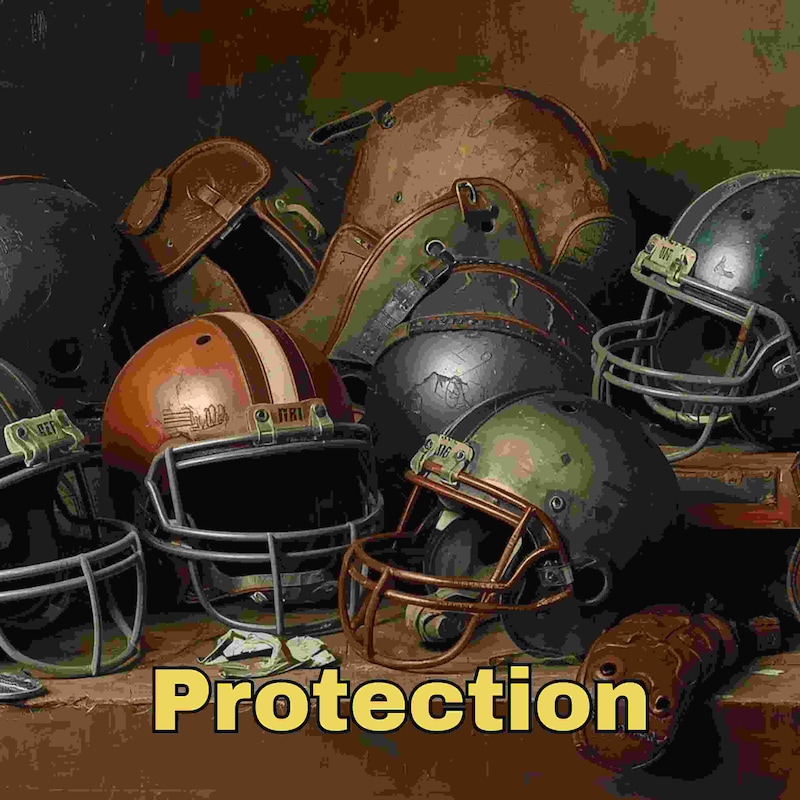
Head, Shoulders, Knees, and Toes: The "Laissez-Faire" History of Football Safety
Football is the ultimate collision sport, a game of high-speed impacts and physical prowess. But if you were to travel back to the early days of the gridiron, you might be shocked to find that for the first century of the game, the NCAA’s approach to safety was almost laughable.
In a recent episode of the Pigpen podcast, host Darin Hayes sat down with Timothy Brown of Football Archaeology to discuss the surprisingly slow evolution of football equipment. From the days of "gutta percha" to the highly engineered helmets of 2025, the story of how we protect players is a journey from antiquity to high-tech armor. This epsiode is based on one of Tim's recent articles titled: Head, Shoulders, Knees, and Toes: Football Equipment Safety Standards.
The Early Days: Protecting the Opponent, Not the Wearer
The first American football rules were developed in 1876, largely adapted from the laws of Rugby. Surprisingly, the earliest equipment rules weren't designed to keep the wearer safe—they were designed to protect the other guy.
Rule #58 of the original handbook barred players from wearing iron or gutta percha (a rigid, tree-sap-based pseudo-plastic) on their boots. "The whole thing was that they banned certain materials to ensure the safety of the other players," Tim Brown explains.
By 1900, this logic extended to "sticky or slippery substances." If a team greased their jerseys to make themselves harder to tackle, it was seen as an unfair advantage rather than a safety hazard. Even the first rules regarding cleats—which were originally just triangular leather nubs tacked onto the shoe by a cobbler—focused on preventing players from spiking their opponents.
The Era of "Only Fools"
One of the most startling revelations from Brown’s research is how long the NCAA resisted mandating essential gear. Take shoulder pads, for example. By the mid-1920s, shoulder pads were becoming harder, utilizing fiber and sole leather. The rulemakers required these to be padded on the exterior so they wouldn't bruise an opponent, yet they didn't actually require players to wear them at all.
This "laissez-faire" attitude peaked in 1970. The NCAA’s "Read-Easy" version of the rulebook actually noted that while shoulder pads weren't required, "only fools" would play without them. Despite this smart-aleck commentary, the NCAA didn't officially mandate shoulder pads until 1974.
A Timeline of Mandates
The shift from "recommended" to "required" happened in fits and starts, often with high schools leading the charge and the NFL trailing behind:
- Helmets:High schools mandated them in 1935, the NCAA in 1939, and the NFL finally in 1943.
- Knee Pads:Mandated by the NCAA in 1932—again, primarily to protect the head of a tackler from a hard bony knee rather than to protect the runner.
- Face Masks:The NFL required them in 1957, but the NCAA didn’t officially make them mandatory until 1993, largely because they assumed everyone was already wearing them.
- Mouth Guards:These became standard in high schools in 1962 and colleges in 1972.
The Helmet Revolution and Quality Control
Before 1978, there was no universal quality standard for football helmets. You could essentially wear any "head covering" and call it a day. In 1978, the introduction of NOCSAE certification changed the landscape.
This requirement for standardized testing decimated the market. "We went from having like 22 helmet manufacturers in the U.S. to three within just a handful of years," Brown noted. This era paved the way for the dominance of brands like Riddell and the high-tech, position-specific helmets we see players like Aaron Rodgers sporting today.
From Armor to Aesthetics
As we look at the 2025 rulebook, the focus has shifted. Today, technology is doing the heavy lifting, but the rules have become increasingly focused on aesthetics. While the quality of equipment is higher than ever, Darin Hayes and Tim Brown noted a curious trend: many modern players, particularly at the elite levels, are wearing smaller, thinner pads—or skipping thigh and hip pads altogether—to gain speed, relying on the softer artificial turf of modern stadiums.
However, the "Wayback Machine" reminds us that safety wasn't always a given. We’ve moved from a game where you could go out with bare heads and greased-up jerseys to a world where "targeting" and "spearing" are major penalties backed by video review.
The gear may be better, but as both Darin and Tim agree, the biggest impact on player safety has been the shift in coaching and rules—teaching players to keep their heads up and "see what they hit."
To dive deeper into the history of the game, visit FootballArchaeology.com and subscribe to Tim Brown’s daily tidbits for more stories from the gridiron's past.
Join us at the Pigskin Dispatch website to see even more Positive football news!
Don't forget to check out and subscribe to the Pigskin Dispatch YouTube channel for additional content and the regular Football History Minute Shorts.
Miss our football by the day of the year podcasts, well don't, because they can still be found at the Pigskin Dispatch website.
Transcripts
Football is one of the most ultimate collision sports of all time. But do you know, for the first 100 years of college football, the NCAA almost laughed at safety.
't enforce the rule until the:browner, Football Archaeology, joins us today to talk about safety equipment from antiquity. Tim, welcome back to the pig pen.
Tim Brown:Hey, Darin, I just want to say that you always make me feel safe, so I do, and I appreciate that.
Darin Hayes:Maybe that's because we. When you talk to me, you're hundreds of miles away and you're only looking at it through a. A glass box.
Tim Brown:We're in the same time zone, but that's. That's about as close as we get.
Darin Hayes:Yeah, we got like a lake in between us, right?
Tim Brown:Yeah.
Darin Hayes:All right. Well, Tim, you recently wrote an article titled Head, Shoulders, Knees and Toes Football Equipment Safety Standards.
What can you tell us about this story?
Tim Brown: , you know, were developed in:And you'll see gutta percha in a lot of the early rule books. And it's, it's like a. A pseudo plastic that came from some kind of Indonesian tree SAP. And like, early golf balls were all made with gutta percha.
So, you know, golfers who are into the history of the sport may have come across that. That same term, but. So, you know, it's kind of a tougher material. But the whole thing was, you know, they were.
They banned certain materials to ensure the safety of the other players. And, and then that was kind of the. That's kind of the way it remained. They didn't really have any other equipment rules, per se.
And then in:Initially, the rules were around banning certain substances in. In the equipment. And then, then everything kind of switched. So starting in 24, they had a rule that was no sharp cleats. Right.
Back then, the cleats were still leather. They weren't metal or plastic or Rubber or anything. You know, they were leather nubs.
Darin Hayes:I'm sorry, like leather nubs sewed on the bottom.
Tim Brown:Yeah. You know, they tend to be kind of triangular. You know, sometimes they'd be like rows, you know, but kind of triangular in shape anyways.
You know, you'd need a cobbler to tack them on and all kinds of stuff. But. So that was the first rule that was really, you know, kind of. That was a safety rule, but it was still protecting another player.
Right, because you weren't going to spike yourself. You're going to spike. Spike somebody else. So. But they.
But then that same year, they also said, okay, any equipment that you wear that is of a harder substance has to be padded on the exterior. So shoulder pads were, you know, initially shoulder pads were literally just, you know, soft pads sewn on the outside of the shoulders.
But then they turned in. You know, they became something you wore inside. And by the mid-20s, they were getting harder.
You know, different fibers and sole, leather and stuff like that. So it became an issue. You know, we got, you know, we got to protect players from the equipment, you know, others are starting to wear.
But that was the first rule that really did that. Then in 32, they added, you had to wear soft knee pads. You. And that was not to protect the player's knees.
It was to protect the head of somebody tackling a player. And, you know, so they wanted. They're going to get hit.
If you're going to get kneed in the head, they want the knee to be cushioned by some kind of, you know, felt or, you know, rubber sort of, you know, concoction. Then, you know, in the 30s into 40s, then they said, okay, you got to wear a head covering or helmet. Right? High schools didn't.
ire them, oddly enough, until:But that's kind of a whole other story. Mouth guards. 60 high schools in 62 colleges. In 72, the NCAA finally required shoulder pads in 74. And then in 78, you had the Noxy certified helmets.
en, Then. Then, you know, say:And then finally, you know, then you started having to wear a face vest.
And then you had to wear a helmet that was tested to meet a certain quality standard, you know, and those were, you know, even the ones in like, 70, 78 probably were kind of almost barbaric compared to what they.
What they are now, you know, but, you know, so it's just kind of funny, you know, that we had this equipment, you know, we went from leather helmets to the plastic and, like, suspension and then padded interiors and stuff like that.
But it wasn't until 78 there was that there was any kind of testing or, you know, any way to check the quality or to confirm the quality of the helmet. So, you know, we went from having, like, there were lots of lawsuits at the time, too.
So we went from having like, 22 helmet manufacturers in the US to three, you know, and within just a handle handful of years now, we've had a couple of others come into the market, but that's pretty recent. So it kind of explains why Rydell dominated the market, you know, for so long.
Darin Hayes:Yeah, it's really, really kind of interesting when you sit there and you talk about. You talk about the knee pads and, you know, the pads below the.
Tim Brown:The belt.
Darin Hayes:Now, most players at the upper levels don't wear them at all. You know, I mean, I hope to God they wear something underneath to protect the. The jewels.
But, you know, you don't see the thigh pads and knee pads and even hip and tailbone protectors anymore. They're just wearing spandex. You know, it seems like.
Tim Brown:Yeah, you know, it's a funny thing. Like, the, you know, I think about, like, you know, high school and even, you know, college, the fields we practiced were not particularly nice.
You know, I mean, depends on which area of the field you're on. But, you know, a lot of them were just dry dirt and, you know, mud and, you know, whatever. So the leg protection was probably a bigger deal.
But now, you know, these guys are playing on, you know, beautiful. You know, the artificial turf is so much softer than, you know, back in when it first was introduced.
And even, you know, like, the worst grass fields are so much better than, you know, what. What was available in the past.
Now, you know, again, practice fields prior come in all kinds of different shapes and sizes and colors and whatnot, but, you know, I don't know that it's. It's needed as much as it once was. Right? So. And, you know, I mean, they. They track injured, you know, injury statistics pretty darn close.
They've got a good idea of what. What really is needed from a safety standpoint. And so, I don't know, maybe as a referee, you saw some things a little differently. But.
Darin Hayes:Well, I mean, that was before, like the big, you know, helmet evolution that's gone over the last ten years or so.
You know, now, you know, these, these companies and you even see the NFL players, I think that, you know, you see some of these veterans, like Aaron Rodgers this year switching to Steelers. His helmet that he's wore his whole career is no long. It's obsolete. It's no longer allowed on the NFL field.
So he had to try to figure out a different style helmet, different brands, and they have three or four different brands they can use and different styles. But it's amazing what technology is doing.
And they still have a long way to go because there's still people getting head injuries and getting maimed and, you know, even deaths we still read about in the paper. So, you know, we, we applied the, the science doing it, but still a long way to go.
Tim Brown:Yeah. Yeah. So. But again, you know, looking all the way back, it was initially, you know, there just wasn't a lot of thought to protecting yourself. Right.
It was. It was about protecting other players.
And, you know, then eventually, then it became much, you know, the rules, you know, shifted to really be a combination. You know, it's. It's for each individual player's protection, but also, you know, to protect others. And I think a lot of.
Probably the plastic helmet drove a lot of that kind of stuff. You know, the, the need to just the, you know, the plastic helmet was a weapon, but it.
Especially the way they taught certain, you know, tackling and blocking at the time. But, you know, there were ways to kind of protect against it, too.
So, you know, I think a lot of the rule changes, you know, spearing and all that kind of stuff is dramatically. That's probably had as much an impact on preventing death as almost the equipment itself.
You know, I just, I mean, there were the number of people who used to come flying in with their head down, right. You know, just asking for an injury, you know.
Darin Hayes:Yeah, it's really came to light, especially these recent years, like the Ryan Shazier injury and some other, you know, famous NFL and college players that, you know, Daryl Stingley and some of those, you know, that were tragic. And it's mainly because players weren't, you know, looking at what they're hitting. You know, that's what the big motto of coaches today.
And, you know, a whole different world than it was 25 years ago and before world of football.
Tim Brown:Well, and back in the day, you Know, you had a lot of, you know, new players, you know, kids who hadn't played before and, you know, maybe they didn't have the best coaching in the world either, but, you know, they, they drop their head, you know, when coming in on a tackle or in blocking. And so, yeah, anyways, you know, thankfully that, that kind of stuff is, you know, by and large outlawed.
And, you know, while we can all argue about specific targeting calls that you think aren't fair or, you know, that it's a silly rule, I mean, to me, I'm all for it. And if we, a couple kids get kicked out of the game here and there, well, too bad, you know, given that, given the larger issue.
Darin Hayes:Yeah, I, I love the way it's being officiated using technology too. You know, like the college game does. That's really makes it a much better game and really puts people on alert.
Hey, keep your head up, you know, don't. Don't take cheap shots. Let's play a game of football. Let's play fair, and everybody can keep playing, you know, that's. That's the way to go.
Yeah, so, yeah, really, really interesting points you make up, you know, going through that, that whole history of, you know, basically the football equipment you just went through with us and you do a lot of this where you will talk about the modern game and take us in the Wayback Machine to tell us how do we get from there to here. And you do this in your tidbits and some other things. Maybe you could tell us a little bit about how we can enjoy some of those.
Tim Brown:Yeah, you know, the main thing is just go to footballarchaeology.com and subscribe. And if you do, you'll get an email. Every time that I publish a new.
A new story, you know, you got some other options you can follow or you can just follow, you know, follow me on. On Blue sky or just bookmark the site and, you know, come and show up anytime you want.
But anyways, you know, that's basically just go to footballarchaeology.com or go to Amazon or other retailers and, you know, look, look up my name if you're looking for a book.
Darin Hayes:All right, Tim.
Well, we sure appreciate you coming on here each Tuesday and sharing some of this great football ancient remedies and equipment things and rules changes and love to talk to you again next week.
Tim Brown:Look forward to it. Thanks, Jim.
Darin Hayes:That's all the football history we have today, folks. Join us back tomorrow for more of your football history.
We invite you to check out our website pigskindispatch.com not only to see the daily football history, but to experience positive football with our many articles on the good people of the game as well as our own football comic strip cleat marks comics.
Pigskindispatch.com is also on social media outlets, Facebook, Twitter, Instagram, and don't forget the Pigskin Dispatch YouTube channel to get all of your possible football news in history. Special thanks to the talents of Mike and Gene Monroe, as well as Jason Neff for letting us use their music during our podcast.
This podcast is part of the Sports History Network, your headquarters for the yesteryear of your favorite sport. You can learn [email protected].




