Shownotes
Manufacturing has a storytelling problem and it's costing the industry talent to the skilled trades.
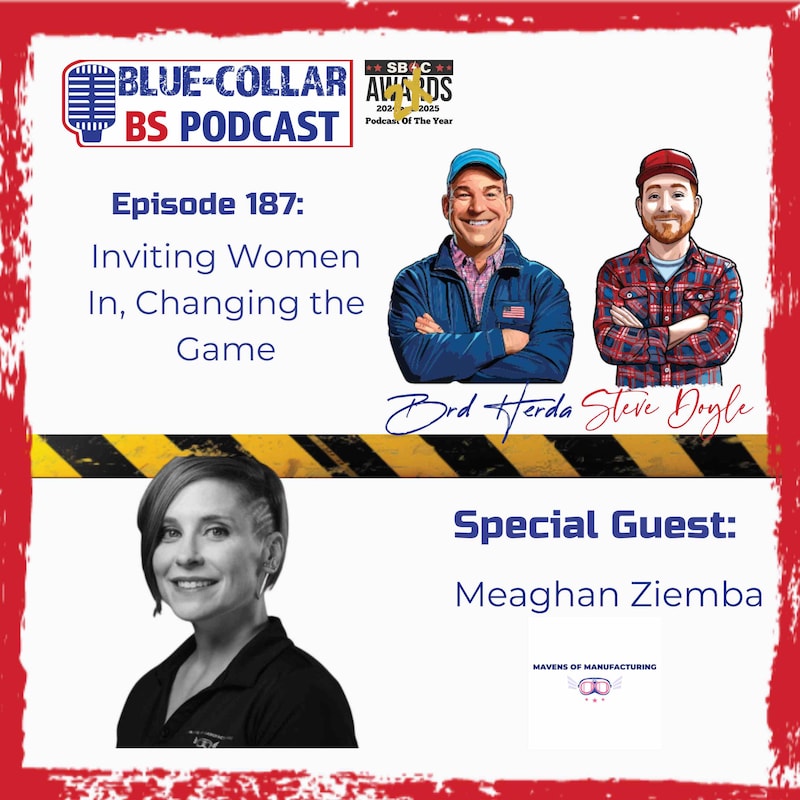
Meaghan Ziemba, a technical writer with a master's degree who's been in the industry since 2008, got tired of watching male hosts ignore her suggestions to interview women in manufacturing.
So she started Mavens of Manufacturing during the 2020 pandemic and has since interviewed over 200 women, creating a movement that's now bringing Gen Z into the industry through TikTok.
We explore the broken rung theory keeping women stuck in their careers, why assumptions about family responsibilities block women from networking while men face no such barriers, and why communication breakdowns across genders, generations, and hierarchy levels keep shop floor workers out of strategic conversations where they could solve real problems.
Highlights
- The broken rung theory where missing that first promotion opportunity creates a stagnant career path especially for women in manufacturing.
- How assumptions about women's family responsibilities exclude them from networking opportunities while the same assumptions don't apply to men.
- Gen Z isn't lazy but purpose-driven and tech-savvy enough to expect immediate results while wanting meaningful work.
- Communication breakdowns happen across genders, generations, and hierarchy levels when shop floor workers get excluded from strategic conversations.
Subscribe to Blue Collar BS for more real conversations about running and growing your business. Share this episode with a manufacturer who's looking to attract and retain more women in their workforce.
Get in touch with Meaghan:
Get in touch with us:
Check out the Blue Collar BS website.
Steve Doyle:
Brad Herda:
This podcast uses the following third-party services for analysis:
Podtrac - https://analytics.podtrac.com/privacy-policy-gdrp
OP3 - https://op3.dev/privacy
Transcripts
Welcome back everyone to Blue Collar BS. How you doing today, Brad?
Brad Herda (:I am fantastic Mr. Stephen Doyle and what is going on in Detroit Motor City this week?
Steve Doyle (:Well, it is the first Friday in June. It is the first day kids, well, it was the last half day of school. So my two daughters are now home. One successfully took a nap, like almost immediately after getting home at 11. And I think she's still napping at, you know, four or five hours later. And the other one has professed that, yes, dad, I am bored, has been in my office.
two or three times in the last four hours telling me she is bored and summer break has just started.
Brad Herda (:I'm so glad I'm past all of that. So grateful I'm done with all that.
Steve Doyle (:You know, it's just it's just great. It's just great. So so you know, fun times here as summer begins. So so Brad, who do we have on the show today?
Brad Herda (:Perfect. Summer begins.
gritty content to life since:And the second encourages the next generation to explore careers is why she is here. She is a mom of three, a CrossFit enthusiast, a connoisseur of caffeine, good whiskey it looks like. I'm a tequila person, so we might have a little conflict there. Chaos is her comfort zone and she thrives in it. We are grateful to have you here, Megan, to be able to talk to us about all the things manufacturing and why you are excited about that particular segment of the market and why you want people to get involved. Thanks for being here.
Meaghan Ziemba (:Thanks for having me. How are you guys?
Steve Doyle (:Yeah, yeah, thanks. So before we get started, which generation do you identify with or fit in with?
Meaghan Ziemba (:Yeah, so that's an interesting question. I'm the youngest of six, so I'm considered an elder millennial if you know the comedian Izzy, but I was in a household of Gen Xers, so I have, I'm an elder millennial with Gen X tendencies, I guess you could say.
Steve Doyle (:All right. All right. Excellent. So don't even go there. I am a wooden spoon survivor. Don't even go there. No. I do know. Yeah. My mother always had two after she was done with me. Because they'd crack in half. Anyways. So.
Brad Herda (:That's It's like Steve.
Meaghan Ziemba (:you
Yeah.
Brad Herda (:Whatever your wooden spoon was like a limp new it's like a limp noodle. You don't even know what a wooden spoons like
Meaghan Ziemba (:you
Brad Herda (:And you'd say, try that again, mom.
Steve Doyle (:Yeah, can I please have another? So Megan, our audience, how did you go down this path that you're on now?
Meaghan Ziemba (:which for technical writing or mavens or, yeah, so I mean, I did not think manufacturing was a place I would ever be. When I was growing up, I was a big dreamer, always curious about how everything...
Brad Herda (:manufacturing, the Mavens.
Meaghan Ziemba (:worked and why it worked the way that it did. I thought I was going to do something that involved a lot of traveling. So I like food and was considering cooking. A lot of people said I was good looking, so I thought maybe modeling might be a thing. I like, yeah.
Brad Herda (:Why did you make that face? Why did you make that face when you said when people said people said I was good looking? Why would you make that face?
Meaghan Ziemba (:Yeah, because I just, don't know, I just, yeah, I just never thought myself to be like a good looking person. I just, I was worried about other things and not like I was highly athletic, a little awkward, kind of weird, I guess you could say I loved singing, I loved acting and you know, those were the things that interested me and
My mom, being a stay at home mom and having six of us, four girls, two boys, she really wanted all of the girls to be successful. like in case we did get into a situation where it didn't work out, we could take care of ourselves. So college was really pushed in our household.
And by the time I got through high school, I felt like I was a little peer pressured to go into college. And I don't know if that was a good thing because I was on academic probation for like the first two years of my college career and didn't know what I wanted to do. And then.
Brad Herda (:Hey, I got kicked out, it's okay.
Meaghan Ziemba (:okay. Yeah, I was I was close. Didn't quite make it there. But after the second year of my college career, I found out I was pregnant with my daughter. And I was like, crap, I really need to like figure out what to do with the rest of my life. Because now I have a human being that relies on me. So I transferred to University of Wisconsin in Milwaukee. And that's where I found out about professional and technical writing. I didn't even
Steve Doyle (:You
You
Meaghan Ziemba (:know that was like a thing that existed, but I was talking to a former classmate of mine and she also was a single mom and she's like, yeah, you should look into this. And I was like, well, what attracted to you it? And she said, well, the money, the opportunities to make money, because I'm a single mom and I'm going to have to be able to support my child. And I was like, huh, interesting. So I had a really great professor and then I just thought it was fascinating how words can be interpreted.
Steve Doyle (:Mm-hmm.
Steve Doyle (:This is the whole show now. Now it's going to be a whole show.
Meaghan Ziemba (:depending on like your life experience. You know what I'm saying? Like just, yeah. So just depending on like your life experience and like your cultural experiences. So one of the very first projects we did was creating an instruction list on how to make a peanut butter and jelly sandwich. And there was about maybe 12 to 15 of us in the class. Not one of...
Brad Herda (:Exactly!
Meaghan Ziemba (:the instruction list came up with a successful peanut butter and jelly sandwich. it's, you know, it's all the information, like the micro information you forget and you pass over. So when you apply that to technology and how you build something that can be catastrophic, right? If you forget to put a certain gear in place, that could really mean a lot of bad things if it's something you need a gear in a certain place. So I just thought it was fascinating and
Steve Doyle (:Hehehehehe
Steve Doyle (:Okay.
Meaghan Ziemba (:ended up getting a master's degree in professional and technical writing. And my first job out of college was at a trade publication in Madison, Wisconsin. It was called Product Design and Development. And it was so much fun. Like I initially started out doing like product information. So I had to make sure that all of the text was cohesive and it followed the style guidelines that we had in place and all the abbreviations were the same and things were spelled correctly.
Brad Herda (:Okay.
Meaghan Ziemba (:And then they let me loose and I was able to go interview engineers and manufacturers and I just thought engineers were some of the most fascinating people in the world because once you could crack through that hard shell, they were really good teachers and just some of the stuff they came up with. Yeah, but I mean you guys look at the world in a different way and I think that's really cool. Like just to be able to solve.
Steve Doyle (:Other than me.
Brad Herda (:Other than Steve.
Brad Herda (:yes.
Meaghan Ziemba (:problems. Some of them are really complex. Some of them are really simple. I just thought it was really fascinating and I learned a lot like really, really quickly and I was able to travel to different places and just learn what issues were kind of hindering people from living their life. fast forward to 2020 when everybody was isolated because of the pandemic. I was working as a marketing manager for a chemical etching company and I was
on LinkedIn a lot because everybody was on social media a lot just to keep their sanity. And I noticed there was a lot of conversations happening, but it was all guys. And I was like, where the heck are the women on these conversations? Like there's women that are doing some really cool things. So I would reach out to some of the hosts and I would suggest some of the women that I met during my trade publication days. And they were like, yeah, we'll reach out to them. And then they never did. So I said, screw it.
Steve Doyle (:Mm-hmm.
Steve Doyle (:Mm-hmm.
Meaghan Ziemba (:I'm going to start my own thing. And I developed Maven's of manufacturing. And since, since I started it in 2020, I've interviewed over 200 women. I've had some guys on to talk about some of the things that they were doing to be allies for women in manufacturing. But it's been really like crazy because I started it out as a passion project and I didn't think it was going to last as long as it lasted. And I never thought I would.
Steve Doyle (:Nice.
Steve Doyle (:Mm-hmm.
Steve Doyle (:Mm-hmm.
Meaghan Ziemba (:make money off of it, but I've made money here and there off of it. And it's been really fun because it has brought women together. And I've gotten messages on LinkedIn from women who are like, you know, thank you so much for doing this. I feel like I belong here now. There's a younger woman, her name is Nush Ahmed. She started out as a CNC machinist.
Steve Doyle (:Mm-hmm.
Meaghan Ziemba (:And since she's heard my podcast, she had the courage to start her own thing. So now she started a group called Sisterhood of Trades where she's bringing Gen Z into the conversation. And she's found all these girls in the trades on TikTok because Gen Z really isn't on LinkedIn. So she went to TikTok. Yeah.
Steve Doyle (:Nice.
Brad Herda (:Awesome.
Brad Herda (:No, no, they are not. that's a problem when they're trying to get jobs and find things because not a recruiter is going to find them.
Steve Doyle (:Right, no. They are not.
Meaghan Ziemba (:Great.
Steve Doyle (:Nope. Right.
Meaghan Ziemba (:Right, but she's encouraging Gen Z to come onto LinkedIn so they can find jobs and connect with more opportunities. So she also started a podcast called The Next Generation of Manufacturing. And it's just cool to see this 20-some-year-old get comfortable and lead this way. And now she's trying to think of ways of, what shows can I go to with the Sisterhood of Trades? How can we have conversations?
Brad Herda (:This would be one. Just saying.
Steve Doyle (:This is one.
Meaghan Ziemba (:Yeah, so I'll introduce you to Nish after this conversation, but she's really cool and she just posted on LinkedIn today where she had a conversation with her dad because she's from India and initially her parents were not happy that she chose to go into this field and she's like, it's been a Yeah, uphill battle, but she announced today that she did an interview with her dad and her dad just expressed how proud he is of her. So it's super cool to see that. Yeah, so
Steve Doyle (:Mm-hmm.
Brad Herda (:Yeah, that's a culture thing for sure.
Steve Doyle (:Nope.
Brad Herda (:Fantastic.
Steve Doyle (:Yeah, that's really cool.
Meaghan Ziemba (:Yeah, so I'm just going around interviewing as many women as I can and trying to get the word out there about the opportunities. It's funny because a lot of people kind of forgot that I was a technical writer and I've been branded as this influencer, which I don't really like that title as much. But it's funny because some people are like, how do you know so much about technology? And I'm like, because I'm a technical writer. I'm writing for the space.
Brad Herda (:Ha
Steve Doyle (:Right.
Meaghan Ziemba (:2008 and they're like, you didn't know that. And then when they find out I have a master's degree, it's like their head explodes. And I'm just like, you guys, I've been in the industry for a long time. So it's been a fun journey and I can't wait to see what the next five years brings. I'm just having fun telling stories because I think that whole concept has been lost. We aren't very good at sharing the great stories that make this nation and
I think more manufacturers need to input that into their strategy and invest more into this human to human storytelling. So that's what I'm doing.
Brad Herda (:Right, and so the manufacturing sector is losing out to the skilled trades world right now because of the marketing, because of it is that skilled trades deficit impacts people more directly than the manufacturing deficit does. so being able to promote
Meaghan Ziemba (:Mm-hmm.
Steve Doyle (:Mm-hmm.
Meaghan Ziemba (:Yeah, that's a good point.
Brad Herda (:hey, manufacturing is still cool. It's still good. It's a good paying job. You don't have to be outside. You don't do all those other things. You have all this other opportunity. It's no longer dark, dirty and dangerous as it used to be. There are some tool and die shops that would, that is like walking back in a time zone scenario. But yeah, man, it, there's so many cool things. Everything gets, I mean, everything around you is manufactured somehow some way.
Meaghan Ziemba (:Yeah.
Meaghan Ziemba (:Yeah, well, it's, mean, it is connected to the trades too, because without manufacturing trades, people wouldn't get the tools that they need to do their jobs. So I think it's just an exciting time. And then, you know, there's a lot of conversation around automation and AI and all work where our jobs are getting takeover. And it's like, no, like it's going to help.
Brad Herda (:Correct.
Steve Doyle (:Mm-hmm.
Meaghan Ziemba (:you know, eliminate some of those mundane positions, but it's also opening up new opportunities for new positions that we don't even know about yet. And I think that's another part of the narrative we need to do a better job at discussing because, you know, I think back to the doc strikes that happened and I got so irritated with the conversations that were happening on LinkedIn because people were like mad at the doc workers for striking and they were like, don't they know? And I'm like, no, they don't know because we're not having conversations with them.
Steve Doyle (:I'm sorry.
Meaghan Ziemba (:And that's on us. Like we need to be more communicative of what these opportunities are and why they're better for them. And I was like, so you can't really get mad at them for being upset. Like you can't. So that's, that's zero. Yeah.
Steve Doyle (:Mm-hmm.
Brad Herda (:Right, because there was no communication. was no that connection. I just was with met a gentleman today. We were out golfing this morning and just met him today and they their seasonality. They're down in Texas and
Steve Doyle (:Right.
Brad Herda (:They go through these the assembly workers like crazy during peak season and and I'm like, okay, why is that high turnover? I'm like, are you not getting the right message? Are you not creating the connection and the purpose and doing those things? Or is the manufacturing guy just being a tyrant? You know, I'm just trying to ask questions so that this person is like, oh, those are really great ideas. We should probably have a conversation later. But I'm like, there's there's no reason for there to be a high turnover at entry level positions. Right.
Steve Doyle (:you
Right.
Meaghan Ziemba (:Mm-mm.
Brad Herda (:if you do the hiring correctly and you do those things and you put the stuff in place, it shouldn't be high turnover. It should be selective turnover.
Meaghan Ziemba (:But is he, I'm curious to know if they're hiring Gen Z specifically and that's where the high turnover rate comes in because.
Brad Herda (:Yeah, because it's entry-level assembly work, it's a lot of visa workers as well.
Meaghan Ziemba (:So that's a... Okay, but that's a cultural thing too because Gen Z doesn't put up with BS and I think that's why I like them so much. Because they'll just be like, nope, I'm out. Like, I'm not dealing with this.
Brad Herda (:Correct. That's part of it. It's not that connection. I just had another friend of mine's daughter. I was talking to her yesterday looking to connect with one of my clients possibly. And I said, what didn't you like about the current job you had? She's well, they gave me three days of training said, here you go. And that was it. I'm like, huh, okay. Right. That support. Same thing that your daughter talked about a little bit, Steve on the show that releases later in June.
But yeah, it's that connection. So as you're going through and doing your Maven's work and making those connections, what I guess is a theme that you've heard creating success opportunities?
Meaghan Ziemba (:specifically for women or anyone. So I.
Brad Herda (:Yeah, specifically for specifically for the women that you're talking to, what has been a common theme to their success?
Meaghan Ziemba (:So mentorship is massively important. People that are just supporting them and encouraging them to climb up the ladder and just opportunities for expanding on their skill sets, whether that's personal or professional, they want those opportunities for learning and to climb up the ladder. So one interesting theory that's out there is the broken rung theory, where if they miss that first opportunity of promotion, they kind of get stuck.
Steve Doyle (:Mmm.
Meaghan Ziemba (:in this stagnant stage. So how can we make sure that they hit that first rung so that they can continue to climb up the ladder? And I had a conversation with a colleague of mine and she was like, you know,
there's golf all over the place in manufacturing. People go golfing. And she's like, but not a lot of women in the manufacturing setting have been invited to golf. Like sometimes there's this assumption where they can't do after work activities because especially if they're a mom.
Steve Doyle (:Mm-hmm.
Meaghan Ziemba (:the assumption that's there is, they are not going to be able to join us because they have to go and take care of family matters or whatever. And she's like, those same assumptions don't really exist for men. So how can we provide the same?
types of internal networking opportunities for women that we've been offering to men traditionally. So some companies have done one-on-one lunches, some have done group, internal group things where it's still during work hours, but being more intentional of like inviting women to these types of events so that they know that they're included and then having those same conversations.
with them where they can learn about the ins and outs of the actual business has been pretty successful. The other thing is this flex type of schedule where, you know, if women have things that they have to take care of, whether that's early in the morning or, you know, earlier in the afternoon with pickup and drop off of their kids, how can they make up those hours? And then what sort of benefits do parents have, not just moms, but also dads, where they can spend time with their new
Steve Doyle (:Mm-hmm.
Meaghan Ziemba (:their new infant born baby if they need to and things like, okay, well, I want to breastfeed my kid. What opportunities are at the shop for a woman to feel safe and be able to breastfeed their children if they want to. I've talked to manufacturing companies who actually like have incorporated a daycare.
Brad Herda (:Correct.
Steve Doyle (:Mm-hmm.
Steve Doyle (:Right.
Meaghan Ziemba (:on site. like they've made partnerships with the educational institution. So you know if a parent needs to bring their kids to work so they can start working right away, the bus system comes by, picks up their kids, brings them to school and then comes back, drops them off and the kid can be at the daycare while the parent is working and then after they're done working they can pick up the kid at the daycare.
Brad Herda (:Mm-hmm.
Steve Doyle (:Mm-hmm.
Meaghan Ziemba (:So it's just being creative like that. Yes, the stuff takes funding. Yes, it takes investment, but that's why we need to have these conversations so that the whole community can be on board and support some of these initiatives that are happening.
Steve Doyle (:Right.
Brad Herda (:I love the invite part. mean, it's not difficult. It's not difficult to invite and it's not difficult to have somebody feel invited and being part of the team. It's not a difficult thing to do at all, particularly if there are coworkers on top of it. There shouldn't be this divide of things and I like how you put that together, right? How do we make it intentional?
Steve Doyle (:Okay.
Meaghan Ziemba (:Mm-mm.
Meaghan Ziemba (:Mm-mm.
Meaghan Ziemba (:Yeah.
Meaghan Ziemba (:Mm-hmm.
But because we've been a certain way for so long, know, there are stereotypes and there's assumptions and you have to get past those stereotypes and assumptions. And the only way we can really do that is creating a space where, you know, we can be a little awkward at first and ask uncomfortable questions. You can't assume that someone asking a question that might be offensive to you was intended to be offensive. They might just be asking a question because they don't know. I don't know if you guys are
Steve Doyle (:Mm-hmm.
Brad Herda (:Correct.
Steve Doyle (:Mm-hmm.
Meaghan Ziemba (:are familiar with women in manufacturing, but it's a great organization. They recently this year had their first Men as Allies event, and it was a great opportunity for women to attend just as men because I, like some of the...
Steve Doyle (:yeah.
Meaghan Ziemba (:things that the men brought up there. was just like, wow. I didn't even think about that. Like, I didn't know, you know, there's a certain way of addressing younger women because you have that dad personality and you're just trying to protect them. It's not that you're trying to be offensive and saying, no, you can't handle this. You just want to make sure that they're okay. And some women who are like, rawr, I'm raring to go. They might take that the wrong way as, you just think I can't do it. When in reality, they were just trying to watch out for you because
you remind them of their daughter or their younger sister or something. So it's just creating those spaces to have those awkward conversations and then getting past the awkwardness and then coming up with a strategy for solutions.
Steve Doyle (:No, that's so important to have that space to do that, to have those conversations. So the question that I have, and it kind of stems back from a little bit earlier and you talked about communication. So the question I have is from all the people that you've interviewed, all the people that you've interviewed, what would you say are kind of like those top three communication miscues that are current today?
Meaghan Ziemba (:Mm-hmm.
Meaghan Ziemba (:Mm-hmm.
Meaghan Ziemba (:That's a good question. I think again, it's, you know, the assumptions we have. Yeah.
Brad Herda (:That's why I keep him on the show, because he asks good questions.
Steve Doyle (:Hahaha!
Meaghan Ziemba (:think it's just the personal assumptions that we have from our own personal experiences. And then I think it's a little bit of both. mean, I think, you know, based off of our personal experiences, like for me personally, for example, I've had a lot of like traumatic experiences with men. So if a man looks a certain way, I'm gonna...
Brad Herda (:Is it assumption or judgment?
Steve Doyle (:Mm-hmm.
Meaghan Ziemba (:maybe hesitate to approach a man that looks a certain way that reminds me of my past trauma. So I have to tell myself, no, not every guy is like that person from your past. And this is just a coincidence that they look like that. So you have to step outside of your comfort zone and have crucial conversations. I think the other thing is, you know,
Steve Doyle (:Mm-hmm.
Steve Doyle (:Mm-hmm.
Steve Doyle (:Mm-hmm.
Meaghan Ziemba (:There's a lot of times where people are like, well, this is just how we've always done it. Great. We got to get past that. Right. We got to get past that. And we have to understand that even generational, people communicate differently. So Gen Z, I don't know if you've heard them talk before, it's confusing. It's massively confusing how they talk to one another. And I always have to ask my daughter like,
Brad Herda (:cares.
Steve Doyle (:Mm-hmm.
Meaghan Ziemba (:the hell does that mean? Like, what are you saying? And she just sits there and she laughs at me. And I think, can you please explain this to me? Because I don't, I don't know. I think the other thing is to is, you know, there's assumptions about generation. So right now I'm hearing a lot that Gen Z is lazy. I don't think they're lazy at all. I think, I think they're purpose driven. I think they know what they want. I think they know what they enjoy and they don't want their time wasted. They, they want
Brad Herda (:They're not.
Steve Doyle (:or not.
Meaghan Ziemba (:to be able to provide purpose in the things that they're doing. And they want immediate results because they're so tech savvy. But I also think that there's this assumption where, you know, cross-generational communication can't happen. So I think there's opportunities for the boomers to mentor Gen Z and vice versa. I think Gen Z can also mentor the boomers. Yeah. So I think
Steve Doyle (:Hehe.
Steve Doyle (:Mm-hmm.
Brad Herda (:Absolutely. A thousand percent agree.
Steve Doyle (:Mm-hmm.
Meaghan Ziemba (:I think there's miscommunication across genders. I think there's miscommunication across generations. And then I think there's miscommunication across hierarchy. So you have your shop floor workers and then you have your C-suite employees. And I think there's a gap between that. And we need to figure out how
Steve Doyle (:Mm-hmm.
Meaghan Ziemba (:shop floor workers can be part of the conversation in terms of how to grow a business because they're usually the ones that know right away what sort of bottlenecks there are on the shop floor and they're coming up with solutions and they need to be part of those strategic meetings where you you want to change the culture you can't just talk to your middle manager and then expect them to have that conversation with your shop floor workers you have to involve the whole company
Steve Doyle (:Mm-hmm.
Meaghan Ziemba (:and produce an environment where everyone can share their opinions and their ideas and also get awarded for that kind of stuff because I've seen it so many times where somebody had a really great idea on the floor, middle manager took that idea, ran with it, and then they got awarded and that shop floor worker did not. So it doesn't make them feel human. I also think there's miscommunication between manufacturers or businesses and the educational institutions. So everybody's talking about the skills gap.
Steve Doyle (:Mm-hmm. Yep.
Steve Doyle (:Mm-hmm.
Meaghan Ziemba (:I don't think it's a skills gap. I think it's just, you know, really attracting people in the next generation about why they should be here. Right, right. So how can we strengthen that bond between educational institutions and the companies and their local communities? Did that answer your question? I feel like I was rambling.
Brad Herda (:It's awareness. The gap is awareness, right?
Steve Doyle (:Mm-hmm. Mm-hmm. yeah, did. Yeah, it did. It did.
Brad Herda (:Absolutely, absolutely. So, so the next question here is a segment that Steve brought on a while back. So this is the, this is the question of, Hey, anytime in professional career that maybe you should have bit your tongue and maybe walk something back a little bit differently than maybe what you did. And, and what did you, what was the situation? What'd you learn from it? How did it turn out? What,
What could have been done differently?
Meaghan Ziemba (:That's a horrible question for me because I have no filter at all.
Steve Doyle (:That's why we ask it. We don't need filters. We are explicit. It's OK.
Meaghan Ziemba (:Yeah, so yeah, so I worked with the company and it's hilarious because I was so ticked off when they fired me because I feel like it was more of an ego issue than anything. But long story short, Saturday morning I was woken up.
Brad Herda (:Okay, we are an explicit show. It's
Steve Doyle (:Mm-hmm.
Meaghan Ziemba (:From my sleep, I had two little ones at home and I get a text message about something that's urgent and needs to be taken care of on a Saturday morning. So I was ticked off from the drop. I was, yeah, I was just like, okay, fine. So what ended up happening was something got pushed out and there was a spelling error on the front page. And I was getting emails from not only the,
Brad Herda (:From the get go, friends.
Meaghan Ziemba (:my boss who was related to the leadership of the company and I just had my own opinions about why he thought he thought he was all that. And then I was, yeah, exactly right. And then I was getting emails from the editor who they were paying.
Brad Herda (:because you have the right last name or the right wife or whatever.
Steve Doyle (:Yeah.
Meaghan Ziemba (:way more than this person deserved because they did not have manufacturing and engineering experience. So they were always off with whatever content they were creating. And there was just this, you know, entitled type of feeling I was getting from both of them. And it was Saturday morning. I didn't even have coffee yet. So I kind of went off a little bit and probably dropped a couple words I shouldn't have.
Steve Doyle (:Mm-hmm.
Hehehehehe
Meaghan Ziemba (:And I knew right away, I told my former husband at the time, I told him, I was like, I will probably not have a job by Monday. And I told him that. And I was like, so I'm gonna start looking when I get coffee. And sure as shit, I got a call on Monday morning as I was headed into the office. And the gentleman that wanted to fire me wasn't even part of the phone call.
it was his two partners. I was especially mad about that because I was like, if you just don't want me here, then be part of the phone call and tell it. Yeah, so. Right. So fast forward a few years later, I got invited to be part of this podcast from a good friend of mine. was like, yeah, sure, I'll be part of that. And before I entered the podcast recording studio, he came up to me and he's like,
Steve Doyle (:Mm-hmm.
Steve Doyle (:Just say it.
Brad Herda (:Right. All don't hide behind others. Let's have an adult conversation.
Meaghan Ziemba (:I didn't know this was the company that fired you. And I'm like, yeah, I'm like, it's good. I'm not mad about it anymore. And he's like, are you sure? And I'm like, we should talk about it actually. And he goes, what? And I'm like, we should actually talk about it because if it wasn't for them firing me, I would have never started Maimans. And he was like, that's a good angle. And I'm like, so let's talk about it. So everything's good. We smoothed everything over. But yeah, I probably should have just
Steve Doyle (:Yeah.
Steve Doyle (:Uh-huh.
Meaghan Ziemba (:paused. So I've learned a lot about the significance of the pause. So if you have any tension feelings, take a pause moment, get coffee, get water, take a 10 minute walk. You don't always have to immediately respond to emails or text messages. And you don't always have to answer your phone right away. Like if there's any sort of like
Steve Doyle (:Mm-hmm.
Meaghan Ziemba (:Energy negative energy building up. It's probably not the best time to respond. So just take that moment of pause and You know write something out, but don't send it come back to it read it and then fix it so it's more more professional Yeah, yeah, that would be that would be my advice for any Yeah
Steve Doyle (:Fix all the passive aggressiveness in the email.
Brad Herda (:I tell them to fuck off without really telling them how can I, how can, AI, can you please rewrite this email?
Steve Doyle (:You
Meaghan Ziemba (:Hey chat GPT, how can I write this so I don't get fired? Maybe that, yeah. Yeah.
Brad Herda (:Right. How do I make this HR compliant, please?
Steve Doyle (:last email.
Brad Herda (:You
Meaghan Ziemba (:Yeah, so, but no.
Brad Herda (:So, so, so Megan, how do people get ahold of you? Where do they find you? How do they get involved in the Mavens? How, where do they, where do they get ahold of you?
Meaghan Ziemba (:Yeah, so I'm mostly on LinkedIn, so you can definitely DM me there. My contact information is also on LinkedIn, so feel free to either text me or email me. But that's probably the easiest way to get a hold of me is email. I don't always check my LinkedIn DMs anymore because it's just, it gets too crazy. So I do have my email. yeah, I'm getting so annoyed with people just saying, hey, you know, I do this, this and this.
Brad Herda (:Right, too much spam action going on in that world.
Steve Doyle (:Mm-hmm.
Meaghan Ziemba (:And I'm like, you didn't even ask me what my favorite color was. I don't think I want to respond to you. Purple. Yes. I like all shades of purple. I think it's an amazing color. And I say black too, but then you get those people that were like, black's not really a color. And I'm like, OK, fine. But I just like how it looks. So purple and black, yeah.
Steve Doyle (:Light purple or dark purple?
Brad Herda (:So what is your favorite color? Purple.
Steve Doyle (:Okay.
Brad Herda (:Okay, awesome Well, thank you for sharing. Thank you for enlightening us as well. I really appreciate the I appreciate the broken rung theory Because I think that's an important thing for leaders to think about from an opportunity perspective Particularly for not just women but just for younger individuals as well As those opportunities come forward. So thank you so much for sharing your wisdom with our audience today
Meaghan Ziemba (:Yeah.
Steve Doyle (:Mm-hmm.
Meaghan Ziemba (:Absolutely.
Meaghan Ziemba (:Yeah, thanks for having me guys. I really appreciate it. This is fun
Steve Doyle (:Yeah. Yeah. Thank you.
Brad Herda (:Thanks.