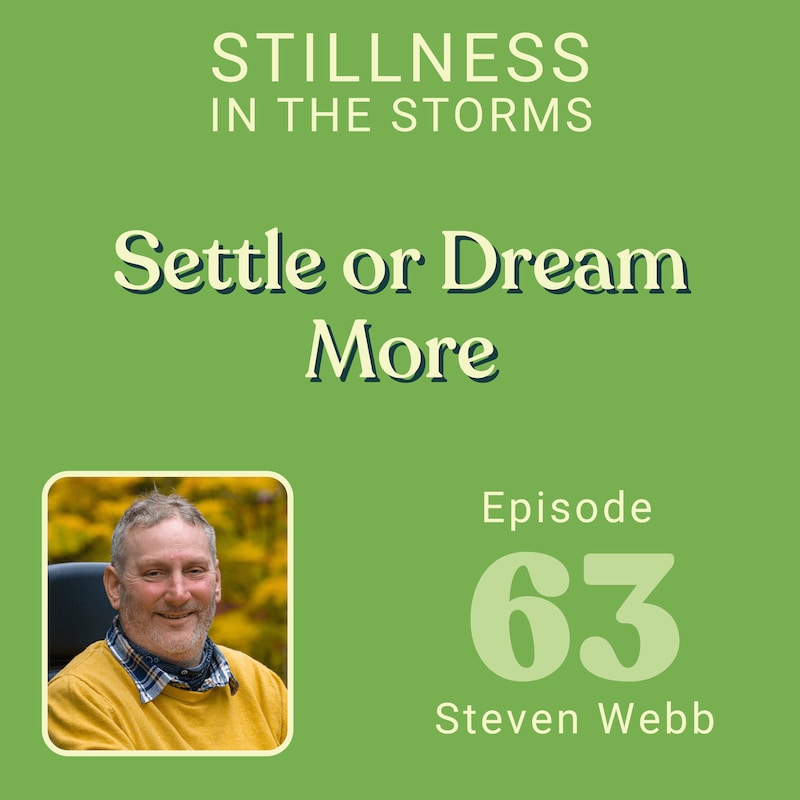
Shownotes
Links to Steven Webb's podcast and how you can support his work.
- Donate paypal.me/stevenwebb or Coffee stevenwebb.uk
- Steven's courses, podcasts and links: stevenwebb.uk
I'm diving into a big question today: if I'm feeling grateful and content, can I still dream for more? It's a real paradox, right? I'm exploring whether wanting more means I'm not happy with what I already have. I got some great feedback from last week's chat about happiness, which got me thinking about this idea of contentment versus ambition. So, let's dig into this together and see how we can balance feeling grateful for now while still dreaming for a brighter future.
It is a really interesting question, one I have grappled with for some time. If we are truly grateful and content with everything we have and our lives as they are, then is it painful and wrong to want more?
Gratitude and dreams often feel like they’re on opposite sides of a seesaw, don’t they? In this podcast, we dive into this big question: Can you be super grateful for what you have and still dream about more? It’s like standing on the edge of a cliff, looking down at both sides. On one hand, we’ve got contentment, that cozy feeling of being okay with our lives as they are. On the other, there’s that itch to reach for more, to push boundaries and aim higher. We share a touching email from Amanda, who wonders if being content might stop us from dreaming big. It’s a thought-provoking chat that challenges us to think about where we draw the line between appreciating the now and chasing future goals.
Throughout the conversation, we reflect on the paradox of happiness. We can find joy in the mundane, and yet, that doesn’t mean we shouldn’t aspire for bigger things. Sometimes, wanting more can actually inspire us and lead to personal growth. We share stories from our own lives, including my journey from meditation coach to mayor of Truro, illustrating how striving for more can coexist with gratitude. It’s about understanding that happiness isn’t tied to what we have or don’t have, but rather how we relate to our desires and aspirations.
In the end, we emphasize the importance of being present while still allowing ourselves to dream. It’s not about sacrificing one for the other; it’s about finding balance. Through this lens, we explore how our desires can enrich our lives and encourage us to connect more deeply with our current reality. So grab a cup of coffee, sit back, and let’s navigate this intricate dance between gratitude and ambition together!
Takeaways:
- In this episode, we explore the balance between feeling content and dreaming about more.
- We discuss how happiness is often found in the ordinary moments of life, not just big events.
- It's important to recognize that wanting more doesn't mean you're not grateful for what you have.
- Being content now is key to happiness; dreaming should not overshadow your present joy.
- We reflect on how attachment can lead to suffering and how to find peace in the moment.
- True contentment comes from understanding and accepting life as it is, not just what we want.
Transcripts
Hey, welcome. On this week's podcast, I'm asking the question, if I'm grateful and content with what I have, can
Steven Webb:I dream? Can I have more? Can I? Is it okay to want more?
Steven Webb:And I'm going to briefly go back to last week's podcast. And I've got some wonderful emails about last week's
Steven Webb:podcast. And this is why I want to revisit. So really, it's a part two of the Paradox of Happiness.
Steven Webb:I'm Steven Webb, and this is Stillness in the Storms, the podcast that helps you to think differently and helps
Steven Webb:you to find a little calmness when things around you are going wrong.
Steven Webb:I was really surprised by the amount of emails and the amount of attention that last week's podcast got. Maybe
Steven Webb:it was because I haven't done a podcast for a while or maybe something else, but there was one email
Steven Webb:that really stood out to me, and I'm going to read part of it now. and it was from a
Steven Webb:lady called Amanda. And. And I love getting your email. So please email me. Please head over to StevenWebb.com and
Steven Webb:I I will try to reply to every single email. I do get a lot, but I do try to
Steven Webb:reply to comments and emails and anything that comes my way, and I do take notice of all the reviews
Steven Webb:and everything that I wrote up. So really, thank you for that um Okay just before I go to that
Steven Webb:email, I just want to thank. Thank the. Thank you for listening and thank you for sharing this podcast. I
Steven Webb:really appreciate it. I've been doing this podcast now well over 12 months, and there's sometimes some weeks I miss
Steven Webb:it, and some weeks, you know, I'm not. I'm not brilliantly um What do you call fluent about doing it
Steven Webb:every single week? You know, focus. I really should be, because I really enjoy doing it. It's just sometimes I
Steven Webb:don't know what you. What you want to hear or what I want to talk about, and I cannot get
Steven Webb:my words out. So sometimes I'll record a podcast and I don't even release it. I've got a lot of
Steven Webb:them. Perhaps I'll do Stillness in the Storms, the unreleased podcast, at some point. That'd be good. Let me know
Steven Webb:if you want to hear some of them. You know, that they may be all right. I don't know. I
Steven Webb:don't know. I'll let you be the judge of that. If you want to hear the. The Stillness in the
Steven Webb:Storms, the unreleased podcast let me know. But Amanda emailed me, and it said have just
Steven Webb:listened to your latest podcast, which was really good, and Again, it was the podcast that says the paradox of
Steven Webb:happiness. And in this podcast, I was saying that.
Steven Webb:And in this podcast, I was saying that really, happiness isn't some. A good experience. Happiness isn't about getting
Steven Webb:something or anything like that. That's about having good experiences. Happiness is in the mundane, in the normal, you know,
Steven Webb:the everyday things. Because if you're really down on your luck and having a hard time, just getting back to
Steven Webb:the normal is feeling happy again. And if you're at a concert or anything like that, it's a wonderful experience.
Steven Webb:But we often think that that's happiness. It's not. Happiness is really just. Just there. It's our. It's
Steven Webb:what we are when we just. When we just relax. It's in the moment when we're not wanting or pushing
Steven Webb:away and things like that. So that's what that podcast was about. But if you haven't heard it, I urge
Steven Webb:you to go back and hear it. But you'll get the gist of this podcast. You won't need to go
Steven Webb:back to that one if you want to continue listening to this one. What Amanda writes is, I understand that
Steven Webb:true happiness lies in being content. But if you are content, does that mean that you can't dream?
Steven Webb:What if you are what if you allowed yourself to feel were so content, it resulted in never trying to
Steven Webb:achieve things? Oh, boy, that's a good question. Or you couldn't see better ways of doing things
Steven Webb:as you were so content doing things as you always did them. That pull to better
Steven Webb:yourself, that pull to want more, that pull to you know dream and build something in life. You know, I.
Steven Webb:I'm the mayor of Truro now. Last year I was a councillor and Before I was a councillor as a
Steven Webb:meditation coach. So I'm doing different things. I'm. You know, every week when I release a podcast
Steven Webb:I look at the numbers, how many people listen to it, and every week, if it's growing, I feel a
Steven Webb:little better. So it's that strange. This is why it's a paradox, really. It's that strangeness of,
Steven Webb:you know, being happy with what we got, being grateful for what we already have and that wanting more. And
Steven Webb:I really did wrestle with this for quite a while when I discovered Buddhism, because I thought Buddhism was all
Steven Webb:about not wanting, and
Steven Webb:I had it wrong, that I think I had it wrong. And very often I would ask some of my
Steven Webb:teachers and all that. It's like, well, I still got desires. I still got things I want to do, want
Steven Webb:to achieve. You know, I want to write a book, and I want to sell lots of copies. You know,
Steven Webb:I want to change people's lives and. But where do you level that with this
Steven Webb:state of just happy and being grateful for what you have? They're two different things, but they're the same thing
Steven Webb:as well. And I remember watching a Tv program a number of years ago now, not nearly 10 years ago,
Steven Webb:and they were doing up their small holding, and they had a nice little bungalow they had a little yard,
Steven Webb:and she had a couple of horses, and they were kept in an old barn. And it was one of
Steven Webb:these programs that they go in and they do some work and they go back a few years later to
Steven Webb:see how it was. Well they did an interview with the lady, and she was saying that all she's ever
Steven Webb:wanted is a nice big barn for her horses. And hopefully she could have several more horses.
Steven Webb:And. And that would be it. That would be complete. Then she's got everything she ever wanted.
Steven Webb:And it was really spoke at like, that was it. When she got there, that was it. And then And
Steven Webb:then they went back at nearly the end of the program, five minutes to go, and they went back and
Steven Webb:seen how they're doing. And this was two years on now. Then, of course, I don't know the whole story,
Steven Webb:and I'm somewhat judging and I'm somewhat um using this example, but
Steven Webb:it went back and she'd had these built, she'd had an extra couple of horses, but
Steven Webb:things were really not that happy. She wasn't happy. Things had gone wrong in the relationship um Life had taken
Steven Webb:another turn, and she just wasn't content. You know, the barns weren't being used at this point and things like
Steven Webb:of that Then there may have been a number of things in our life that were separate to the body
Steven Webb:So you know, I don't know what's going on in relationship and things like that. So there may have been
Steven Webb:a lot of things out of control But the point is that if you're not happy with what you have
Steven Webb:now, you won't be happy with what you get when you dream. And I think that's the difference. If I'm
Steven Webb:not happy with the number of viewers for my podcast this week, I'm not going to be happy next week
Steven Webb:because I will never be happy, because it'll never be enough. And I think this is where it comes down
Steven Webb:to um the difference between grateful and recognising that enough is enough. And even if I get more, that will
Steven Webb:be enough. And this is what. This is why it's so confusing and on. It can change on a daily
Steven Webb:basis on a Minute to minute basis, you know, like if I get slightly hungry, I want some food now
Steven Webb:If I get cold, I want to put a top on. So I have desires, I want things. But I've
Steven Webb:got to It's recognising that none of it will really bring you any kind of full contentment unless you're already
Steven Webb:content with what you have. And that's where it comes down to. You already have enough to be happy, you
Steven Webb:have enough to be content. You,
Steven Webb:you don't need anything more. And that's the difference. You don't want to be attached to that. When I get
Steven Webb:this, I will be happy. And also you don't want to get attached to. Well, I should be grateful. I've
Steven Webb:got more than most people in the world. I've got a better income, I got a better job, you know,
Steven Webb:I've got my health, I should be grateful. I shouldn't be unhappy, I shouldn't want, I shouldn't dream for more.
Steven Webb:No, that's a different thing again. See, really, there's nothing wrong with wanting and dreaming for more. It
Steven Webb:only comes down to your attachment of what you think it will give you.
Steven Webb:It's about attachment. And this is what the Buddha could not make any, any more clearer. Attachment is suffering. So
Steven Webb:when I have that, or you can, you can become attached to. Well, I need to be grateful for what
Steven Webb:I have. I shouldn't want anything.
Steven Webb:Eckhart Tolle went down that route of um giving away, ending up nothing, ended up on a bench
Steven Webb:with a desire for a sandwich. And he said, I've still got desires and wants Of
Steven Webb:course, you're human, that's
Steven Webb:wonderfully human to have desires and wants to better the world, to better your life. But
Steven Webb:it's recognising that you cannot have any of those things right here and now
Steven Webb:And the Buddha sums this up really, really well in this quote. And he says, health is the greatest
Steven Webb:gift, contentment, the greatest wealth,
Steven Webb:faithfulness, the best relationship.
Steven Webb:Then of course, health is the greatest gift. You know, no amount of money in the world, no amount of
Steven Webb:anything will replace health. You know, if you haven't got your health, you really don't have
Steven Webb:much. However, you can still have contentment.
Steven Webb:So contentment, the greatest wealth.
Steven Webb:And here's the reason why I said contentment is the greatest wealth is because if you're content with what you
Steven Webb:have, if you lose everything, you'll still be okay. And if you gain everything,
Steven Webb:you'll still be okay. You know, Eckhart Tolle was asked on stage one day, someone said to him, it's okay
Steven Webb:for you, you're chilled and relaxed. You're happy and you're giggly up there and you're doing your thing. You've sold
Steven Webb:multiple books, you've got seven houses around the world, you're rich. And he's laughing in his way,
Steven Webb:you know, Eckhart Tolle laughs and that was not a bad impression. Actually, I, I should do that Eckhart Tolle
Steven Webb:impressions I'm sure nobody's doing that in the world. But anyway, anyway, he asked, any wonder you're happy and content?
Steven Webb:And he laughs and he goes quiet for a minute and he replies,
Steven Webb:well, I've had nothing and I know I can be content and happy with nothing. So therefore, yes,
Steven Webb:these things are nice to have, but I'm not attached to them.
Steven Webb:So that's the answer. And I know I've lost everything, you know, if I get into another relationship, I know
Steven Webb:I can lose that relationship and be okay. I know I can go bankrupt and be okay, have a downturn
Steven Webb:in my health and be okay. I can have an accident and be okay. And
Steven Webb:and knowing that leaves you with a non-attachment to needing things. If you've got to protect
Steven Webb:what you have because you fear not been happy without it, then that's that's an attachment
Steven Webb:to what you have.
Steven Webb:Then you can be really grateful for what you have and be really content with what you have and still
Steven Webb:fear losing it.
Steven Webb:That's the that's a similar attachment, but the opposite one to The attachment of wanting more, wanting to better your
Steven Webb:life. I want my daughter to grow up. I want to see her successful and happy in her own right,
Steven Webb:and I I want to see her flourish with children and you know, flourish in a relationship now
Steven Webb:I want to grow old witnessing all that.
Steven Webb:But if I sit here right now thinking that's what I need to be happy, then I won't be happy
Steven Webb:now. I won't be content now with what I have.
Steven Webb:So take a deep breath and be content with what you have right now.
Steven Webb:That's the greatest wealth. You know, what does the Buddha say about contentment as well? In the
Steven Webb:one Buddhist tradition, contentment is not the fulfillment of what we want, but the understanding of what
Steven Webb:and how things are. Practicing contentment means using our conscious choice to see what's here and
Steven Webb:accept things as they are with gratitude. So that's the thing right here, right now, be grateful
Steven Webb:for this, this room, this ability to hear
Steven Webb:anything right now in your life. Be grateful for that and accept it the way it is, because that
Steven Webb:is the way it is. And that goes down to your desires and dreams and your wants to improve your
Steven Webb:life.
Steven Webb:Accept that you're a human, you have desires and dreams, you know, it's what's built
Steven Webb:everything. You know, if we did not have desires and dreams, we would be still in caves now and we
Steven Webb:wouldn't have even started finger painting.
Steven Webb:It's what improves our lives, it's what improves society.
Steven Webb:But we shouldn't, we shouldn't forgo our life now, our lives now, for a life
Steven Webb:later. That's what it points to.
Steven Webb:You know, you have everything in your life to be content enough, you
Steven Webb:know, when is enough enough to be happy? Can you ever have any more in this moment?
Steven Webb:No.
Steven Webb:You can never have any more money than you've got now because in 10 years time, you'll never have any
Steven Webb:more money than you have then, which will then be now.
Steven Webb:It's always now, it's always here, it's always what it is. And you cannot change what it is.
Steven Webb:So I guess the answer is
Steven Webb:be careful to live your dream as if it can become a reality now. Because then we become
Steven Webb:attached to and we miss what we have now. Does that make any sense? Because
Steven Webb:it kind of does when I think about it. And then I blurt the words out and it's like, yeah,
Steven Webb:no, maybe did it I'm Steven Webb and this is stillness in the storms and
Steven Webb:you know, leave a review, let me know, head over to StevenWebb.com and send me a message. I do read
Steven Webb:all your emails. I try to read all the comments people comment on all different platforms because my podcast is
Steven Webb:listened to on about 30 different platforms now. So if you really want me to see a comment and guarantee
Steven Webb:I'm going to see it, head over to StevenWebb.com and send me an email so contact us or contact me
Steven Webb:button at the top, right where it's contact me? Because it's only me. So that form goes to me. Nobody
Steven Webb:else reads it. Please say hi and and
Steven Webb:if you want to support me like Cheryl did this week. Thank you, Cheryl. I'm going to buy a book
Steven Webb:with your donations on buymeacoffee.com forward slash Steven Webb. Do you appreciate that? And if anybody else would like to
Steven Webb:do that, that's basically what I do is I buy books or I buy things that helps me to record
Steven Webb:my podcast and get editing done and do more meditations and things like that. So thank you. Thank you for
Steven Webb:listening. Thank you for staying this long.
Steven Webb:Love you guys. Namaste.





