Shownotes
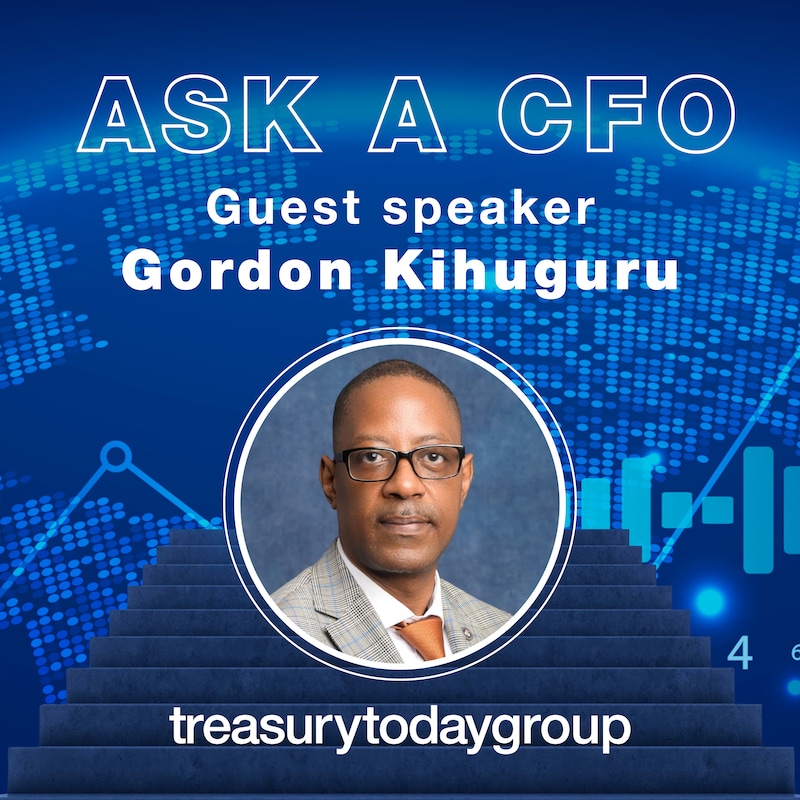
In this episode, Sophie Jackson talks to Gordon Kihuguru, Vice President of Finance at Habitat for Humanity. They explore Gordon’s unconventional path to the CFO role, his approach to handling crisis situations, how to leave a lasting impact, and much more.
Transcripts
Hello, and welcome to Ask a CFO, the podcast series that shines a light on the different paths taken to become Chief Financial Officer, and that also explores the personal stories of those that have made the journey.
Sophie:I'm Sophie Jackson, and in this episode, I'm thrilled to be joined by Gordon Kihuguru, Vice President, Finance for Habitat for Humanity. Gordon has previously worked for many prominent not-for-profit organisations, such as Save the Children and Oxfam, and his last role was as CFO at Management Sciences for Health.
Sophie:His unconventional path, beginning in humanitarian work before moving into the finance function, has given Gordon unique experiences and viewpoints that I'm excited to dive into with him today. First of all, can I ask you to introduce yourself before we go into your origin story?
Gordon:Okay, my name is Gordon Kihuguru. I am in my mid-fifties, I've lived and worked in very many continents, all of them probably. I am a blended family of five. I have a partner and between us we've got five kids.
Sophie:Wow. So, to kick us off, can you tell me a little about your early days, where you grew up, where you went to school, before we think about those first steps that you took on your career journey?
Gordon:Okay, so I'm from Uganda, so that's really English speaking and then there's also British trained. So, most of my early days were really focused around what a typical British person may be doing in their country. We were doing exactly the same thing, just different exposure, same curricula, we all went to school.
Gordon:And, you know, back in the day, we didn't, I think that generation of our parents and ourselves was pretty different, was very tight. It was focused around community, families. So, your neighbours, parents had responsibility over yourselves, we had no fences between us. We pulled to school, we have maintained friendships when we're children to now.
Gordon:And it's very different to how I see my children grow up in environments with walls and controls and that sort of thing, so.
Sophie:You grew up with a strong sense of the collective. Amazing, and then tell me what inspired you? What made you begin to take the first steps on the journey to the amazing career that you've had? And are there traces that you can look back and see, okay, that was one of my first inspirations or that set me on my path.
Gordon:I think I would say that all of my big shifts or moves in my life have been either guided or directed by a mentor. So, I'd say to anybody that, you know, really important for people to have some relationship with people they look up to and can speak to, and they don't have to be your age range, they can be even far older than that.
Gordon:So, I would say most of my inspiration has always been through talking to mentors, and sometimes that can be your uncle, or it could be just somebody you look up to, you have access to, and so traveling started out with a conversation I had with one of my uncles who had been living in many countries, including the US and the UK, and then parts of Africa. So, you know, just trying to understand why they do what they do.
Gordon:And the more I did talk to them; I felt in my heart that my future was going to be one that would be not about staying in one country and just being okay with that. So, really wanting to learn more about what's possible outside the boundaries of where you've been, where God has decided that you'd be started. So, I expanded that.
Gordon:I also had another mentor in the professional space that pushed me to try stuff that I wouldn't originally have felt was possible, so that's also good to have someone who can nudge you forward.
Sophie:Yeah, so we run a Treasury Today Group, we run something called the Global Equity Study. And every year, more than 70% of respondents say that mentoring is key to having a successful career so, it's always the overwhelming majority. But what do you think makes for a good mentor-mentee relationship? Like if you could try and identify what it was that was so special about those relationships.
Gordon:For the mentors, irrespective of who they are, they really break themselves down to a level that allow you to walk up to them and speak to them, so that's kind of one thing.
Gordon:The other piece is a mentor must be perceived or seen as somebody that is trusting so that, you know, if they know something, they say something. If they don't know something, they say they don't know something. Then somewhat, I think a good mentor, if they don't have direct access to the choices you're making, like a manager would or your parents, to really be engaged with a mentor. But then I would also say as a mentee, you have to also be very engaged. You have to be clear about the paths you want to take, and you need to be open enough to be criticised and still be able to move forward. So, the relationship is one that it clicks once you start to speak to one another.
Sophie:Yeah, I think that's a really important point. So, on the mentor side, being approachable, you've mentioned later that you should be able to open up to them. They should not be, for want of a more crass expression, they shouldn't be pretending anything, you know, they should be straight talking.
Sophie 6:01
And if they don't know something, they're not going to pretend they do. And then on the mentee side, what I'm hearing there is maybe being quite intentional, planning and being focused, because I think sometimes I think people can be a bit too passive and they think someone's just going to come and help them and pluck them from obscurity.
Gordon:No, it is. Sometimes it may feel like you've sort of have a friendship with a mentor. I had a mentor when I came into this role of CFO, and we spoke every Saturday, 6:30, and we did that every Saturday for four years, straight.
Sophie:Wow.
Gordon:What was peculiar to my partner and my friends was, what do you talk about? and actually, in the end, it seemed like I looked at him as my mentor, but in a sense, I too was his mentor. So, all the time, there started to be a flattening in the conversations. They seemed to be going two directional.
Gordon:And so, I think that's what built it, but there was also some gut drills that we didn't think about. We never really spoke about anything else, but a specific area. And so, we've really maintained a professional friendship, but at the same time, it's still distant in ourselves.
Sophie:Amazing. And so, tell me, you initially started out working in humanitarian aid. What drew you into that field? I mean, I'm from speaking with you previously, you know, you've got such a strong sense of purpose and commitment to the collective, which obviously resonates with your early stories. But tell me a little bit about that and then tell me about that transition into finance.
Gordon:Absolutely. So, it was accidental, to be honest. I was at a point in my life and I'd started out in banking where I wasn't clear that because what they had told us at orientation was start out as a cashier. You do that for a couple of years and then they gave us a path. That path was basically telling me that I'll be an associate director at 55, that path was too steep.
Gordon:And so, I started to look around. So accidentally, I did join the not-for-profit space and the organisation, which you must all know is Oxfam GB. And there, that organisation is the one that opened me up to humanitarian it's very easy to be passionate about it the moment you go to the front line.
Gordon:So, for me, my first front line would be the 1994 Rwandan genocide. So, we went in weeks after, where the aftermath of the war was fresh. So that was my entry into it, and, you know, I did that for another fifteen years for different reasons, but that's really when the commitment, the connection, the mission really started.
Sophie:I can't imagine how much of a profoundly life-changing experience that would have been. I think that's one of the first things I remember, I was born in eighty-seven, and I think that's the one of the first kind of global events that I have a piercingly strong image of in my head of just the absolute horror. And I can't imagine, so what you're then early on in your career, you're young and you're thrust into this moment.
Gordon:It was a dilemma that I think you continue to ask with no real answers, especially the one in Rwanda. And then it sort of spilled into what a country called Democratic Republic of Congo, so it spilled into that, but then it also spilled into Sudan and came South.
Gordon:I think for me at that point, I had been brought up pretty naively to think that, you know, if you did good, nothing could come upon you. And if something came upon you, not that you didn't do something, but maybe indirectly caused something to happen. It was that really basic mindset. Unfortunately, I did receive the opposite of that a couple of months into my humanitarian experience where I did get shot.
Gordon:Fortunately, not killed because I'm talking to you, but quite significantly in Sudan. And that was just being in the wrong place with the passion that we have, you know, we're not mindful about the risks that are directed at us. So, if you're in a humanitarian vehicle or you're protected by a brand, you feel safe. But actually, that's no longer the case.
Gordon:And so, there was exposure there. So, I had to think about whether that was the path for me. And so, I did a couple of adjustments just to make sure, you know, that doesn't happen to me again. At the same time, you still couldn't control the different forces that you're exposed to when you're doing humanitarian work. So, it shifted even more when I got children, I sort of slowed down taking the risks. So, being selective about where I would serve, that'd be the same goals.
Sophie:Yeah, still so, and I mean, now you're in this amazing new role as well that we're going to talk about later. But tell me then about how you started on your path to where you are now and what was that journey like transitioning away from, as you put it, being in the, I mean, I was going to say the firing line, I didn't realise that was quite so literal in your case, so thank you for sharing that story with us.
Gordon:Yeah, absolutely. I started out as an accountant, so that was the risk. And back in the day, in the nineties, there wasn't electronic ways in which you could move money. So, money was moved from a bank account to someone's pocket in the field. That's how simple it was.
Gordon:But we did, after accidents like mine, then there were some changes that were made. But in general, I could say if I could summarise, I did a lot of that frontline for a couple of years. And I did that in at least, I think, four different other countries. There was a crisis in Sierra Leone, so I was a part of supporting that. And then I went to Afghanistan, just after the Taliban took over in the late nineties.
Gordon:And I was in Afghanistan before when the Taliban were there, when they were taken over, when Bush declared war against the perpetrators, I was there as well. So, there was that, but that was all pre-children. When I started to get children, then the responsibilities and the balancing of one's security sort of came in.
Gordon:And so, I started to move a little bit away from the high-risk countries, but I still focused on, and that's when I moved to Hanover Regional, multi-country. With that experience now, trying to translate that across different countries was sort of my focus for another fifteen years.
Gordon:And I went into corporate shared services, which was a big programme I did in the Philippines for an organisation that's actually based out in Atlanta. And then from that, I really started to move into corporate from that point on, I came to Management Sciences. There were so many transformations that we were able to achieve together. I was based in Nigeria but then moved to the US.
Gordon:And yeah, so I did enjoy my services in Management Sciences, which by the way, I've moved now. So, I move from DC now to Atlanta, where I'm the VP Finance for Habitat for Humanity.
Sophie:So, tell me a little bit now, I mean, it's making a lot more sense to me now that I know more about your early days in the field. But when we've spoken previously, it seems to me that throughout your career, you've been the person that everyone comes to when there's a moment of crisis or a real challenge.
Sophie:And it seems more obvious to me now why they would go to you, because you've been, I mean, at the epicentre of some of the most fundamental political movements of my lifetime, certainly, which is just a very unique and rare and powerful set of things to go through that I can't even begin to imagine. So, tell me, what do you think it is about you that makes you so effective in those very high-pressure environments? And how do you look after yourself in those instances?
Gordon:Yeah. I think now it's clear that we're most successful when we know how to work through people. So, either as a source of or as a conduit to or influencing forward. So, I think one of the things that I have learned over the years is to understand the business that you're in. And yeah, I mean the wider business, not the specific job you do and then try to make that connection with, you know, what are those strategic things that really transform?
Gordon:So rather than just thinking about what we do every day is what can we change fundamentally today or tomorrow? And for me, it was clear that if you invested in people, the transformations, they actually follow through and they follow through not only in your brand, but in everybody else's brand.
Gordon:And so, you know, if you can then use that push to then engage teams, to then be transformational, you actually start to get a very wide success because it becomes almost cross-functional and bigger in terms of the impact. So, you could say, I'm usually called upon when there's a significant shift that's needed but done in a manner that respects change management and understanding the transitions of people. So, I think that's where the strength is really.
Sophie:And do you think that your childhood, growing up with such a strong sense of the collective, has left you with more, of a strong ability than others to galvanise everybody. Because when I was speaking to you before, there's a legacy that you've left behind in many of the organisations that you've been in.
Sophie:And as you just said there, understanding that it's the people that are going to drive things rather than sometimes people are very ego driven, they want to do everything themselves. But this idea of sort of setting a lot of people free on their own journeys and then letting them get on with it seems powerful to me.
Gordon:That is from the power of the community. And I think specifically my father, he was a dean of students at one of our prominent Ugandan universities called Makerere University, Kampala. And yeah, as a scholar, I saw how he connected with the rest of the students and how he always brought them to a single message.
Gordon:And there were certain qualities that they saw in him that I think allowed them to say, okay, if he came to talk to us, we would know that the management administration is serious about this issue, for example. And so, there is an element of also demonstrating trust across the organisation. And that's by trying to be equitable to the extent possible, and when you can't, you actually talk about it. And then being very transparent is one other thing that can strengthen that collaboration.
Sophie:Amazing. And when I speak with other finance leaders, we think about what's this path to the top in finance. And sometimes there's, what I would say, a conventional route and other times people are like yourself led by a consistent sense of purpose, but also, not being afraid to pivot and to do things differently.
Sophie:And you've had, I mean, I'll say it's not the usual route, but it's been one where I can see consistent threads throughout it. What do you think has marked your journey and how would you encourage others to, you know, who are listening, who aspire to reach the upper tiers?
Gordon:So, this is a dilemma that many finance leaders, but I could also say different about professions, is you've got tiers of professional growth. And then in those tiers of professional growth, you've got significant shifts. So, someone can be a director of finance for 20 years. The opportunity to be a chief financial officer of the enterprise comes up, it's such a steep thought to whether you can actually do that job.
Gordon:So, the question there is, how can I be inspired to go up there. And then one of the things is to pull down the job scope and do a self-evaluation of what do you think it takes to be that function. If you're close to that function already, then start to act like one, and so, you know, we're really ready for something when we've prepared for it.
Gordon:And so, when organisations say, I think John is the person that I think would be good for this, it's because John has been acting like one for a while. And so, I think sometimes it's important to understand the messaging. You're posturing in the business and, you know, being opportunistic to the extent possible, and also being willing to take the risks of saying yes to opportunities that open up when you don't know what that ultimate is.
Gordon:So, for example, if you asked me seven years before whether I would be the CFO at Management Science as well, I probably wouldn't, it wouldn't be the first thing that would come to my mind. So, it isn't a definite one, but the opportunity to transform a significant part of the organisation's foundation in finance puts you in such a significantly powerful position to lead that organisation.
Gordon:And so just that act of doing that, that wasn't even designed in my, when they hired me, people, it's my opportunity to then take this out. Doing whatever you're doing today and doing it very well prepares you for a role that is bigger with people watching, but you don't know they're watching, so, really trying to transform my decision as a way to go.
Sophie:Do you mean the mindset is critical to getting where you want to be?
Gordon:The mindset is very critical.
Sophie:And what's some advice you'd offer for those who are struggling? Because I see a lot of people at the moment who sometimes just seem a bit lost and they haven't got the intentionality with their own development that they have with developing, say, the technical expertise that they need to do their role. Is there any advice you would offer them?
Gordon:Usually, the last person you talk to is your line manager because they usually are covering you up for the job they want you to do. But if you've got this magical line manager who is expansive and, you know, can think outside the box, that may be a way to go, but I would push for, find a mentor, look for people like us. You know, there are many people who will volunteer time to have conversations around these sorts of things.
Gordon:And yeah, just target inspirational people, people that can allow you to even take a risk with changing your path career, for example. So, it's in talking to people, I think is where you, or reading books that they have written.
Sophie:Yeah, and I think one of the things I noticed, particularly with women, some of the people don't feel confident enough to ask for help. And all the people I see who are successful, who've done well, who continue to grow and to evolve, are not afraid to galvanise different groups of people at different moments in their career.
Sophie:And I think it's so powerful what you said throughout our conversation around these mentors, but also understanding that at certain moments, that group of people might change what you need. So, you might now need to be looking for this next level of help with another challenge that you didn't face in the past. Is that something you've noticed in your experience?
Gordon:Absolutely, yeah, and also, you know, we've been focused on profession, but, you know, we need to balance also other parts of what we focus on, and we need mentors for those spaces as well. Some parents need support with how to take care of young kids. Some of us are now trying to figure out how to deal with young adults. You know, you're balancing all of that with also your workplace.
Gordon:But the challenge is finding people that have walked the path, that can talk to you. And really, it's a mindset, all of this, most of what we're doing is in our minds, we're successful, or we fail really starts up here, you want to be able to have a mindset that allows you to believe that you can do more.
Sophie:Yeah, and I get, I mean, recently I've been working with a work coach, we talk a lot about the growth mindset. And I think you see that in people who you will fail at certain moments of your career, there will be obstacles, there will be moments where you're not at your best.
Sophie:But seeing that as an opportunity for a more expansive approach in the future takes a real shift in how we perceive ourselves., and I think a lot of us who are trying to prove yourself so you might be more humble will see that initial failure as maybe confirmation of your lack of ability.
Sophie:But it's that shift in seeing it instead as, okay, well, now I've gone through this thing. Next time I'm going to be twice as good, and I'll have this much more experience.
Gordon:Absolutely, yeah, you're right, you're right on the point there, yeah, absolutely.
Sophie:Something that comes out for me in speaking with you, and it's why it's a real privilege to speak with you, is that you certainly don't need to worry about whether you're going to have left an impact behind you when you finish your career. Leaving a lasting impact definitely seems to me to be something that's a major driver for you.
Sophie:What does it mean for you and what advice would you offer others? Because I think particularly for those in corporations, sometimes there can be a struggle between the desire to have a long-term positive effect and the day-to-day demands of your role, which are pulling you in another direction sometimes.
Gordon:I think we need to stop. Well, first of all, we continue to be that generation that needs to remind people that storytelling is a good thing. And so, I would say if you've got a significant experience, I think if there's ways in which you can share that, I think that can go a long way.
Gordon:Sometimes, you know, we wonder whether what we do, you know, to what extent has that put a return to everything that you sacrificed? So that's a balance, I think, also, that sometimes we reflect on later in life, right?
Gordon:But I think at the end of the day, it's important that you feel good about what you have done. Whatever size that, it's small, big and that you've done it to the best of your ability. So, if that's the only regret, then that's fine.
Sophie:Excellent. And when you look back over your career, what are some of the major standout moments for you, be that, as we mentioned, challenges that we've learned from or moments that you feel very proud of?
Gordon:I think the patience is one thing that, I guess, as we grow as leaders, we only start to realise how powerful it is. The patience to show grace, sometimes the patience to not have your way immediately has become something that's really powerful.
Gordon:And I say that because as we go through our careers, we face a number of dilemmas, some ethical dilemmas. Some are, you know, cultural, some are based on experience, and we always interact with people.
Gordon:And so, I think I've noticed people step away from certain careers because of their experiences with who they met in those careers and they'll never be in that industry anymore, and so there's unfortunately good and bad elements in every industry we're in.
Gordon:And sadly, if you don't have character, you could be influenced in either of those directions. So, I think for me, the question there would be what more we could do to encourage people to follow their dreams and not be distracted by the messages that go through.
Gordon:And then also in the areas where we should be encouraging people and supporting people, I don't know to what extent we're doing enough to help people, let's say like myself, also come through the same path, especially if I consider myself a minority as an example. So, am I doing enough to really help path through others? So, that's a question I think I still have to recite on.
Sophie:I love those, I'm nodding very furiously the whole time you're speaking, but I think the patience one really resonates with me as well because one of the things I don't like at the moment is in the kind of social mediaification of LinkedIn and everything.
Sophie:There's a lot of this pressure and I think misrepresentation is like within six months I went from this nothing to absolutely everything and all of my wildest career dreams came true. And I go to a lot of founders talks and like particularly, I don't like saying minorities because, that's not really actually true.
Sophie:But in the UK, particularly black women, when they're speaking at those and they give these amazing talks about how they've built up their businesses. And they often are telling me it's just the consistency and the patience. That is what makes a difference. That is what makes you succeed. You drip water on a stone and eventually you make a crack.
Sophie:And I think that's something that when I was younger, I thought, you have to be this by the time you're thirty, or you have to do this next year. And actually, where I see people with these fabulously successful careers with great legacy, with consistent purpose and impact, is that they are not afraid to wait for that moment to come and to keep every day being persistent, knowing that eventually that pays off.
Sophie:And I think that is something that we really misrepresent to the younger generation coming through about how long things take, how patient you have to be, and how many people it takes helping you.
Gordon:So, once you've figured out how we can tell them that story, let me know.
Sophie:The other thing I wanted to ask you about was what advice would you offer those in the audience who are listening, who aspire to get to where you are and are not quite sure what path they can take to arrive there?
Gordon:I think the guidance I would give you is, first of all, it's finance. Get in touch with folks like us, and we should be very happy to talk you through your journey. Your journey is yours, but we can definitely give you some ideas about pathing that. If it's in another industry, same thing.
Gordon:Please look out for people that inspire you and take the courage to reach out to them. They'll be actually inspired for you reaching out to them, and they should be able to guide your path. I think there's no real answer to destiny.
Gordon:I would say if you take every destination as the last destination, it makes the next destination even better. So, rather than being unhappy where you are, really use everything that you need. If that's not the place that excites you, move, find something that really excites you, inspires you, and uses most of your brain power. And then build from that but keep moving.
Sophie:Fantastic. And then just final question for me, because we are Ask a CFO, and you've made it to that role in your career. What do you think makes for a really great CFO?
Gordon:So technically, I think they should be very competent in that space, they should also know how to, by that time, they should know where to find very strong leaders to work with, you know, whether it's in the corporate controller's office, treasury, accounts payable. Just make sure that you've got really strong people on top of that, the people first.
Gordon:And then the rest is, you know, CFOs, it's really almost the business partners, the CEO and the board. And so you really spend a lot of time measuring what the performance is against the benchmarks and reassuring the organisation that it's going the right path.
Gordon:So, you manage the controls, but you also invest in growth. So, those are really the balancing points of a CFO, and I think that's really where the strengths are. They're also supposed to be people persons. They should be accessible, transparent and inspirational.
Sophie:I am just so thrilled that we could get you to take part today and you can share your very awe-inspiring, amazing journey. I mean, I can't believe some of the things that you've told me that you've been through and you have the most calm aura at the end of it all.
Gordon:Thank you.
Sophie:A very big thank you to Gordon for taking part in our Ask a CFO series. Please do subscribe and share this episode and stay tuned for our next episodes as we continue to share journeys of current and former CFOs located across the world.
