Shownotes
I bet you are not an angel investor because you think you need a ton of money to be part of the club, or you have no idea even where to start because you don’t have a network of entrepreneurs building projects you believe in! Well all of that may be true, but not anymore!
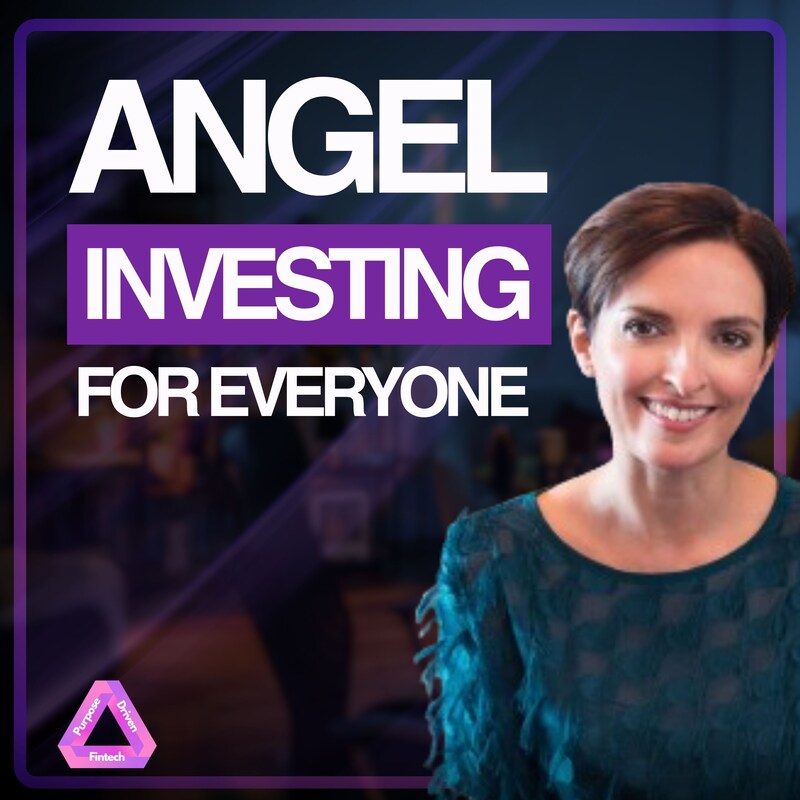
In this episode, Sarah helps us demystify Angel Investing. She explains what angel investing is, the challenges of Angel Investing, and a solution to make it accessible for all of us - Obu! We then go broader into the role of Obu in closing the Gender Investment Gap, the Importance of Financial Education, the inherent risks of angel investing, and creating a culture of psychological safety so that we can create FinTechs with impact!
Sarah is the CEO and CoFounder of Obu, an entrepreneur with Design Thinking embedded at the core of the work she does and a disruptor of the dominant narrative of entrepreneurship and investment in the U.K. Why? Only 1% of VC funding goes to women founded businesses.
Let’s dive into it!
👉 You can find Sarah here
- LinkedIn: https://www.linkedin.com/in/sarahlking/
- LinkedIn Obu: https://www.linkedin.com/company/obu-invest/
- Website: https://www.obuinvest.com/
👉 And you can find Monica here:
- LinkedIn: https://www.linkedin.com/in/monicamillares/
- YouTube: https://www.youtube.com/@moni_millares
- TikTok: https://www.tiktok.com/@moni_millares
- Website: https://moni-millares.mystrikingly.com/
If you enjoy this Purpose Driven FinTech episode it would mean the world if you subscribe and give it a follow so that we can have more impact. Remember to connect in YouTube or LinkedIn to keep the conversation going.
In this Purpose Driven FinTech episode we cover:
(0:01:08) Importance of diversifying the angel investor population
(0:02:03) Definition of success based on internal measures and values
(0:04:02) Coping with tough times by focusing on learning and growth
(0:07:54) Building purpose-driven fintechs through demystifying regulation, serving underserved audiences, and empowering entrepreneurs
(0:11:35) Demystifying angel investment as placing a bet on a business and supporting its success
(0:14:44) Due diligence for angel investors
(0:15:40) Obu's purpose to close the gender investment gap
(0:17:13) Sarah shares her personal journey and reasons for starting Obu
(0:20:08) Challenges within the current financial services system for women in angel investing
(0:23:29) Flipping the problem and focusing on changing the system to be more inclusive
(0:26:40) Sarah describes their fintech platform as a dating app for early stage entrepreneurs and angel investors
(0:31:07) Making legal documents more accessible for angel investors
(0:32:47) Financial education and due diligence for angel investors
(0:35:27) Evaluating the financial position and accepting the risk of potential loss
(0:38:57) Psychological safety in creating a culture that supports innovation
(0:41:06) The 1% jar and the importance of learning and growing together
(0:43:15) Funding diverse fintech founders as a way to drive inclusion
SEARCH QUESTIONS
- What is angel investing for beginners?
- How to close the gender investment gap?
- What percentage of VC funding goes to women founders?
- How to become an angel investor?
- What is inclusive design in FinTech?
- How to invest in diverse entrepreneurs?
- What is the risk of angel investing?
- How to do due diligence on startups?
- What is psychological safety in investment?
- How to build investment education programs?
- What is capital plus in angel investing?
- How to democratize angel investing?
- What are barriers to women in investing?
- How to create investor communities?
- What is the Obu Angel Collective?
- How to fund female-founded businesses?
- What is purpose-driven angel investing?
- How to design financial products inclusively?
- What is the 1 percent jar culture?
- How to flip systemic problems in finance?
—
Production and marketing by Monica Millares. For inquiries about coaching, collabs, sponsoring the podcast or creating or editing your podcast email Monica at [email protected]
Disclaimer: This episode does not constitute professional nor financial advice and does not represent the opinion nor views of my current, past or future employers. The guest has agreed to record and release our conversation for the use of this podcast and promotion in social media.
Transcripts
Monica Millares: Hi, Sarah. It is an absolute pleasure having you in the show. I'm really looking forward to this conversation.
Sarah King:How are you? I'm really good. Thank you. And I'm really pleased to be here. I think since that first interaction we had on LinkedIn and then call, I'm like, I want to talk to Monica some more. So really excited to be here.
Thank you.
Monica Millares: Here we are. Thank you. Before we go full on into the topic and what you're doing, I like getting to know people first. So let's start with a few mindset questions like human questions. So let's start with what is your definition of success?
Sarah King:So I think for me, success is all around this idea of accomplishment did I achieve that thing or not?
we can base that measure of [:And so I think when we think about success, it's really important to start from a place of how do I define into, how do I define success internally for myself, like it needs to be an internal measure. And if it's an internal measure, that means it needs to be based on our values and the things that really drive us and inspire us.
I was sharing earlier with you that last weekend I took part in an ultra endurance event and I didn't finish so I retired at 40 kilometers of a 55 kilometer event. Now to the outside world that could be seen as failure because I didn't, complete, I retired. But for me my measures were driven by I want to take part because I'm new to ultra endurance so I want the experience.
a measure of success for me. [:And I think that's why it's really important when we think about success, that we start from this sort of deep in a sense and understanding of. What is it that I want to achieve? And, recognizing that there are so many different ways that we can define our goals beyond just what the outside world might perceive as successful.
I really like
Monica Millares: that because you're tying success to values. Internal. It is, an internal thing. It is not whatever the world is telling us in any way. It's an internal compass.
Sarah King:Yeah. And I think that's really important and often gets lost because there's pressure for, but what are you going to put on social media?
the story that you'll, sell? [:So often we can define success by things that are outside of our control. And that's just the pathway for failure. Yes,
Monica Millares: totally. And talking about failure. Yeah, I think like it's a beautiful, big topic, but it's not just failure as such. It's about the tough times that sometimes we link them with failure, but it's more like I want to talk more about the tough times.
What are the traits that you think you have or how have you coped better with the difficult times?
that in my personal life or [:And I think if we can hang on to that. That belief, even in the darkest moments of there will be another side of this. I will be able to take the learning from this experience, even though it's really tough at the moment. I think that fuels our sense of hope. I think it also fuels our sense of kind of momentum and okay, let me work my way through this experience at the moment.
positive outcome. And, I say [:And, it's hanging on to that sense of there will be another side. And when I get to the other side, they will be learning. And that's always really fueled me. Yes,
Monica Millares: I like that. And it reminds me if I look back at, I don't know, five, six years ago, Monica, five to six years ago, I used to say a lot Yeah, everything is happening for a reason.
There's something that I need to do here, learn, grow. Yeah. And nothing is permanent.
, external circumstances can [:But again, if we're looking for those opportunities to grow and to learn that suggests movement and momentum and the ability to and I love that my design thinking background, growth mindset, I'm a leadership coach, that sense of through growth, we develop through growth.
We create change, I think, is really, important, especially in those moments when it feels like the odds are completely stacked against you. In those moments, that's what it's like. You have to hang on to that, sense of belief around, around learning and around growth.
Monica Millares: Yes, definitely. You do.
act? What is your opinion on [:Sarah King:Yeah, I love it. It's such a great question. And I think it's a conversation like more people should be a part of.
Because I think it's so critical. I think there were a number of different things I was thinking about in response to this question. So I think firstly Within fintech, within financial services, there is a lot of regulation and that regulation serves a really important purpose. Like it's there to keep people safe.
It's there to protect customers and ensure that we're doing the right thing. However, some of the ways in which that regulation is set up and structured. stifles innovation. And that stifling can come from the fact that the regulation is quite complex. I often look at my background and my co founder's background.
ment before within financial [:And, I think if we're gonna, if we're gonna see more purpose led. FinTechs, we need to recognize that regulation is a huge part of that. And we need to empower people who don't necessarily have a financial services background to understand that regulatory environment. I think it can be a barrier. Now of course it should act as a barrier from poorly led FinTechs and poorly led marketing and all of those other things.
ent accessible for founders, [:Intersection of demystifying the regulatory world having empathy for underserved audiences, and then frankly, back in those businesses who are saying, you know what, we're going to innovate and we're going to innovate for an underserved audience. I think that's how you really drive more purpose within tech by allowing that kind of grassroots passion and belief that financial services can do more and can do better.
And that's what we have to believe, right? We have to believe that's possible if we're going to economically empower more people. Yes. I love that
ix of three things. It's not [:It's the ecosystem.
Sarah King:Yeah, I tend to live my life in Venn diagrams, Monica.
Monica Millares: It's... That's right. That's right. And I've operated at that
Sarah King:intersection.
Monica Millares: Okay, that explains. I
Sarah King:think it's because I'm quite a visual thinker. I love to be able to picture things. And more often than not, there is a sweet spot in the middle where you go, ah, that's where the magic happens.
Okay.
Monica Millares: Exactly. That's it.
Sarah King:It probably won't be the first Venn diagram I mentioned. Okay,
at exactly you're doing. Can [:Angel investment, to be more precise.
Sarah King:Not that question. And again, it's such an important question because I think one of the key barriers to more people not counting themselves into angel investing is that there is so much myth and perception around what it means to be an angel investor. And that can be fueled by the media.
We see on TV. It also though can be fueled by the fact that where does deal flow conversations? Where do you have conversations about investment opportunities? It's probably a networking event that you don't necessarily feel like you're invited to or can attend. So we need to break that down.
they can afford to lose and [:I want to place a bet on that business existing in the future. And I'm going to place not only my capital, But ideally, my wisdom and my cheerleading and my network to support that business to be successful. There are no guarantees with angel investing in terms of return. It's a high risk asset class.
And that's why that framing of placing a bet on the type of business that I want to see exist in the world. That just really works for me as a this is what I'm doing. Like I'm stepping into a space where yes, it's high risk. But I really believe in that business. I really believe in the problem that it's trying to solve.
ct, that service successful. [:Monica Millares: I totally know. I'm like, I'm saying too much. I totally love it. That's what I was about to stop myself.
But I'm like, no, yeah, but I loved it because you used two words that caught my attention. One was money that you can't afford to lose. Yeah. And the other one is placing a bet. Yeah.
Sarah King:Yeah. And, again, it's that intersection, right? It's yes, angel investing is risky. No one should be placing money if they can't afford to lose it.
But where you place that money is really important, and due diligence isn't just about looking at the financial projections of that business, looking at the traction that they've achieved. But due diligence is also about saying do I care about this problem that this business is solving?
Do I believe [:So due diligence for, angel investors, whether you're a first time angel investor, whether you're an experienced angel investor, should be about, yes, absolutely look at the financials. Yes, absolutely look at their business model. But let's really build a relationship and understand Why does this founder really, care about this problem?
we need to demystify around [:It's about that relationship and that conversation that an angel has with a founder. To establish is this a business that I want to place a bet on?
Monica Millares: Yeah, definitely. And yeah, okay, before we go further into the conversation, we've been talking tons about angel investing and opportunities. What do you do?
What's Ubu about? What's your story? What's your purpose? Tell us more.
Sarah King:OBU exists to close the gender investment gap at scale. And we come at that gender investment gap through two lenses. Firstly through the lens of an entrepreneur. In the UK at the moment, less than 2 percent of investment is placed into businesses led by women.
nal lens to that data, those [:So inequality within the investment ecosystem for entrepreneurs is. Systemic like it's, there is significant inequality now on the other side of that coin where we also have inequality is that in the UK right now, just 14 percent of angel investors are women know is that if we can diversify that angel investor population.
country in the world, we see [:Monica Millares: What made you start?
Sarah King:Gosh, so I first leapt into entrepreneurship 10 years ago. So I left my corporate career in financial services 10 years ago. And I was, that decision was driven by three key factors. And three key factors that I still check in on every year now. So the first was. My daughter was approaching school age, and the type of mum that I wanted to be, my corporate career didn't allow me to do that.
e said. But I wanted to have [:And I was starting to feel frustrated by the level of impact I was having within my corporate career. And thirdly, it comes back to this point around learning. I love to learn. I love to be inspired. I love to feel that I always have that kind of growth and momentum. And entrepreneurship gives you that in bucket loads.
ree factors, then I'm out of [:Monica Millares: And it's like a little framework that people can also reuse to be like, Hey, doesn't have to be your three questions, but it's it's a three questions that drive your career that you ask yourself every year, or they may change over time as we mature and circumstances change.
But it's more of a, what's my North star. What are my three questions?
Sarah King:Exactly that. And I think sometimes it's really easy to get caught up in the, and I guess it comes back to your first question around success, right? It's really easy to get caught, up in those external measures or those, or am I getting a promotion every year?
al measure. And let's really [:Yes,
Monica Millares: totally. So coming back to the big problem statement of 2 percent of investment going to women. Can you guide us a little bit, go a little bit deeper on what are the pain points that we're seeing? Let's say if I want to become an angel investor, what's, what could be my pain point? Yeah.
Sarah King:So I think to answer this question, we have to look at the financial services sector in its entirety.
t products and services have [:Okay. And what we've said to Diverse people. And by diverse people, I literally just mean the people who don't fit that homogenous mold, is we've said, you know what, this is the product set, you either count yourself into it or you don't. Okay, and for us at OBU, our starting places are our kind of working hypothesis is If we take an inclusive design approach to angel investing, and that increases participation, then actually you can take that design approach, you can take the data, you can take the insight, and you can apply it to any financial services product to drive participation and to increase participation.
But to do [:Kind of what's wrong with the women? What's wrong? Yes. Why aren't the women participating? Come on, let's let's get the women to come and participate in the way that we currently do this thing.
Monica Millares: In this game. Yeah. That it was created not for them. Exactly.
Sarah King:Exactly that. And if we accept that people have different life experiences around Money and finance and wealth.
If we accept [:And that's quite a long way to answer your question but, I think it's really important to lay that ground because when we, talk about what challenges do women experience, I think we have to look at it from a systemic perspective and say what challenges are there within the system?
How will we design the system in a way that maybe doesn't recognize those life experience and needs and aspirations and motivations, and let's get to work on that system rather than let's support the women so that they can count themselves into what already exists. Yeah. And what are
Millares: the, that's a very [:What are the challenges with the current system as it is?
Sarah King:Yeah if we take so that let's look at that decision to invest, okay? What we know through research, generally, the research shows us that a more male approach to investment decision making is to look at what's the financial upside for me.
So when I'm thinking about the investment opportunity, what's the potential investment sorry, the potential financial return for me of making this investment. Now, for a woman, generally speaking, the way that she will approach an investment opportunity is to say, what's the purpose of this business?
something that I really care [:Now, again, I'm not saying that All investors will look at those things. But the way in which we weight those things when we're evaluating an investment opportunity can look different. Not necessarily better, just different. And when we think about designing, we need to recognize that difference and say you know what?
e on equality on the stories [:Monica Millares: Yeah, I was, as you were talking, I was picturing the group of senior women and you're talking and it's yeah, that makes more sense if you want to sell. Or not sell, but yes, influence. Yeah.
Sarah King:And I think it's, I think it's a really interesting topic because leading a business that is focused on addressing intersectionality
within gender as well, you On the good days challenge, on the bad days abuse. And what I find so hard about that is, all they're doing is saying, there is a customer segment, you have a different set of needs, therefore let's design a product for
[:Solving that problem is good for our economy, it's good for innovation. Output is good for a whole range of reasons. Let's just embrace the fact that there's a customer segment here that we're not serving. Let's get to work on serving that audience. It's as simple as that.
Monica Millares: Definitely. And I'm going to come to the other side of the question.
We have the question and the problem statement, and now the solution. So what are you doing to solve this problem?
re building a FinTech. And I [:So an early stage investment round. We take those businesses through a due diligence process to ensure that they're right for our platform. And then we bring those successful entrepreneurs into, our tech space, into our platform. On the other side we then have angel investors. We welcome all angel investors to our platform.
ticipate in closing that gap.[:Importantly, though, the step before the platform, particularly for first time angel investors, is that We go into corporates and we provide education and know how on angel investing so that we can start to demystify and remove some of those barriers for potential angel investors. We also host a community on LinkedIn where people can join for free and receive inspiration and know how and join us for fireside chats either with entrepreneurs or experienced angel investors just so that we can start to Increase and improve the dialogue around angel investing, what it is, why you might do it, how to do it.
But fundamentally, our FinTech is that platform where we bring those two audiences together and we facilitate and enable that entire investment journey. Yes.
thing called the collective. [:Sarah King:collective? Yeah, so the collective is the group that I mentioned that we host on LinkedIn.
And again for us If we are going to increase from 14 percent the number of women angel investors in the UK, we have to begin by providing know how, providing inspiration, providing the opportunity to connect. And for us, that's what that LinkedIn group is about. We host it on LinkedIn because we know that's where a lot of our target audience hang out.
We're seeking. angel investors, potential angel investors who not only have capital that they could place in an early stage business, but have what we call capital plus. So capital, yes, but know how networks and cheerleading that they can really plug into that business as well. And for us, LinkedIn was the perfect place to host.
that collective, the OBU [:Monica Millares: Can anyone join or is it just for UK based women?
Sarah King:No it's, open to everybody. So if anyone is curious to learn about angel investing then, come and join us. It's a space that is open to everyone.
And we really celebrate that, diversity of First time angel investors, aspiring angel investors, experienced angel investors, where those people can bring those lessons and they can learn together.
Monica Millares: Beautiful. And coming back to the platform, you said that in the platform you also look at the investment journey end to end as such.
we see across the industry. [:Sarah King:I think a lot of it stems back to that point around empathy on having understanding for what someone's experience and therefore, what are their questions likely to be?
What are their concerns likely to be? An example for us where we've deliberately created change on the back of that insight is on our shareholders agreement. So we on our platform for any businesses that close in rounds on our platform, we provide a shareholder's agreement. In our product development stage, we worked with a legal team to draft that shareholder's agreement, and it basically translates legalese into plain English, because often you can look at a shareholder's agreement and think I don't understand half of the clauses in there.
ested before, and there's no [:But we can make it more accessible. And I think that's an example, coming back to my point around regulated environments, where in our case, the FCA, there's real value in them understanding the experiences of those who are underserved within the financial services sector, because we've had conversations around, we want to put this into plain English, we want to make this more accessible, and the minute you use accessible within a regulated environment, that can create some nervousness because it's hang on, angel investing isn't right for [00:34:00] everybody. And of course it isn't. You have to have capital that you can afford to lose. But for those people who are in that financial position, we can still ensure that process is designed well for them in a way that is accessible and therefore means this environment is more inclusive.
Monica Millares: Yes. Now that you talk about that like, I was just hearing in my head the regulator saying no, but angel investment is not for everyone.
Sarah King:Yeah. Yeah.
Monica Millares: How do you decide if you can afford to lose that money or not? How does someone decide if they are suitable to become an angel investor?
Sarah King:Yeah. So a couple of ways to answer this question.
m doesn't deliver across the [:Now, again, there are some great financial education platforms. Financial female investor examples where they're going out into the world and they're educating people more generally around finances. So, I think the first part of the question is we need more financial education just generally, and that needs to be a priority.
nd that because we know that [:And so for us in our world, that means we do due diligence on businesses. It also means we do due diligence on angel investors. So we carry out anti money laundering checks, KYC checks, maybe a customer checks on angel investors when they want to place investment. Now that's fairly unusual. within that angel investing space.
sition and really evaluating.[:Can I afford to lose this money? Can I afford to lose it today? And if I don't have it in 12 months or in two years time, is that going to cause me a problem in the future as well? Because as we've already said, angel investing is high risk. You in
fact, the likelihood is that you will because more startups failed than succeed. I think what this opens up though is a really interesting question around returns. When you angel invest, what return is it that you're looking for? And that return isn't always financial.
Monica Millares: And when it comes to the financial return, oh, this is a huge question, but it's, are you expecting, I don't know, 5%, 10%, 100% What's the rule of thumb?
Probably there's not one, but
ges. What's really important [:What are you hoping for in terms of return? At what point in time might you be thinking that exit point that that milestone might happen but particularly with early stage investing, honestly, you have to take all of that with a bit of a pinch of salt. Because no entrepreneur has a crystal ball.
No entrepreneur can control their external environment, either positively or negatively. And again, that's why it's really important that we have this education around angel investing, so that people go into it with their eyes open, and to my earlier definition, to acknowledge and accept that what they're doing is placing a bet.
re doing as a group of angel [:And for me if I think about return. As an angel investor ultimately you hope that event, that exit event will happen at some point in the future and you will get your return. However, if you are placing your capital in a business that is purpose led, and therefore, on that business's journey to that exit event, they are providing returns, whether that be people, whether that be purpose, whether that be planet, Then you're actually starting to reap those returns along that journey to the exit point so for us, an investor could look at us and say you know what, on their journey to an exit.[00:40:00]
They changed government legislation and made angel investing more accessible for more diverse entrepreneurs and more diverse angel investors. That's a win. That's a return. And I'm going to bank that. And if I hadn't have invested in that business, that might not have happened. And I think that's one of the things that we need to demystify and have more conversation around.
That return isn't just about money.
Monica Millares: I, really like that. I hadn't thought about it like that. Usually we think return and it's it's my money return. Yeah. So as we approach the towards the end of the episode, usually I, like talking about the challenges around product, but I've discovered the more and more I talk with fintechers, it's not about product.
So in my opinion, one of the [:Sarah King:So I'd love to share an example with you actually from the world of angel investing.
And then I'll talk a bit about what we do here. So I completely agree with you for people for there to be growth. People need to feel psychologically safe. And that means I can expose the things I don't know, or I can expose the things I don't understand. I can fail, and together we can learn from that failing.
s for them to come and learn [:I have so many questions, but I don't want to ask them because if I ask my questions, I'll expose a knowledge gap. And if I expose a knowledge gap, I'm fearful that will raise questions about my ability to do my role. Oh. And that, that, I was going to say that's the perfect example of psychological safety.
It's the antithesis of that. It's the opposite of that. But it's for people to learn and for people to grow, we have to hold spaces. We have to design spaces where questions can be asked. Without a fear of judgment and an acknowledgement that is the only way we grow, that we evolve, that we enable innovation.
So, for us at OBU, that's a [:So, as a team, we have our 1 percent job. Every week we load into Slack the, 1 percent incremental gains that we've identified that we've spotted. And every week those incremental gains get put into a Kion jar. And as a team we vote on the one that we love the most. And that person gets a four [00:44:00] finger KitKat.
like it's a top notch prize. Yes, of course it is. And they also though, they get to keep that jar on their desk for the week. And it's just this kind of it's fun, it's playful, which are really important ingredients for innovation. But it's just a way for us to acknowledge that, you know what, it doesn't matter how small, it doesn't matter if it comes from a mistake.
We all have responsibility for learning and growing together. And it's that kind of symbology of the JAR. It's us sitting together as a team every week that enable us to embed that value and that culture within our team.
Monica Millares: Yeah, I like the JAR. The 1 percent JAR. Yeah, it's
Sarah King:a great job. And everyone wants that KitKat every week.
Really?
Monica Millares: Oh, KitKat is good.
ay there are other chocolate [:Monica Millares: It's been a really interesting conversation. Thanks so much, Sarah. Where can we find you? And obu, of course.
Sarah King:Yes. So I am always happy to connect with people on LinkedIn, so Sarah King on LinkedIn. Also though, you can visit our website, obu invest.com obu spelled OBU invest.com.
We're also predominantly either on Instagram or on LinkedIn. And our obu Angel Collective group is also hosted on LinkedIn.
Monica Millares: Amazing. And then one very last question that I love asking everyone in the episode. If you were to change one thing in fintech, just one thing that could make the lives of customers, employees and shareholders better, what would that be?
nd diverse fintech founders. [:And it has to start with funding. We need to start backing more diverse entrepreneurs. Awesome. Do you have
Monica Millares: a... FinTech startups in your platform.
Sarah King:Do you know, not at the moment, but if any diverse founded FinTech entrepreneurs are listening, then come and talk to us. We would love to talk to you.
Monica Millares: Perfect. Because it's a good, it's a good way to like close that circle, starting with
Sarah King:examples. Absolutely.
Monica Millares: Awesome. It's been an amazing pleasure, Sarah. Thank you so much for all your time and generosity.
Sarah King:Really great to talk to you, Monica. I can't wait to chat again.
ica Millares: Yes, likewise. [:And see you next week. Ciao. Ciao.

