Estimated Reading Time: 5 minutes
When your child goes from calm to chaos in seconds, it can feel confusing and exhausting. Many parents focus on behavior, but the real issue may be happening much deeper. The connection between minerals and meltdowns is stronger than most people realize. When the body lacks key nutrients, the brain struggles to regulate emotions, stress, and behavior.
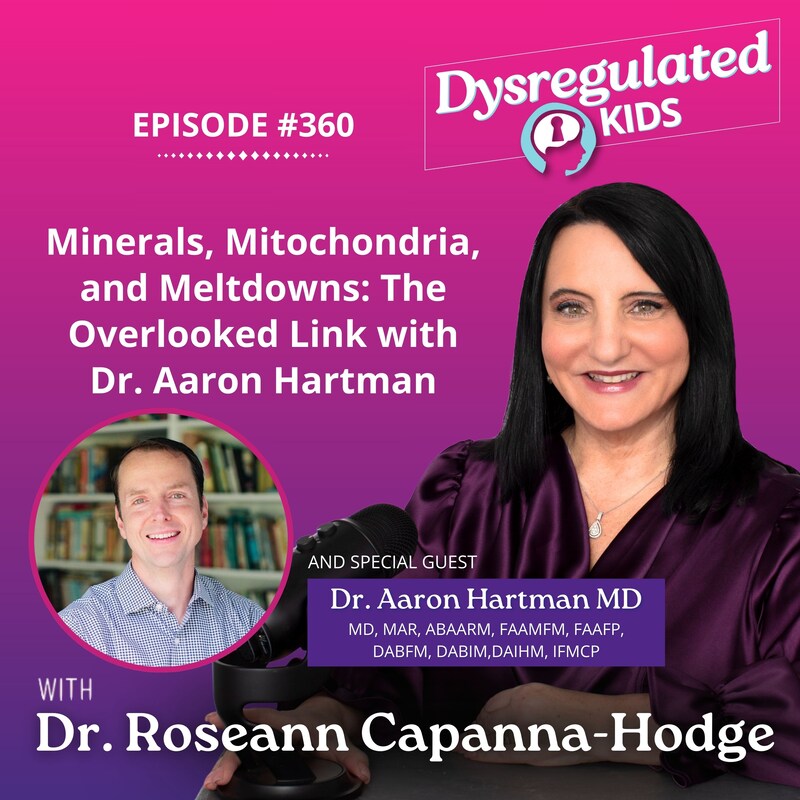
In this episode, Dr. Aaron Hartman and I explore how minerals and meltdowns are connected and what parents can do to support calmer moods, better focus, and improved emotional regulation.
In this episode, you'll learn:
• How mineral deficiencies affect emotional regulation
• The connection between nutrition, mitochondria, and behavior
• Why some children are more reactive to stress than others
• Practical ways to support nervous system health naturally
Why does my child melt down when they're tired or hungry?
What often looks like bad behavior is actually biology.
When children are low in key nutrients:
• The nervous system becomes more reactive
• Stress tolerance decreases
• Emotional control becomes harder
• Anxiety and irritability increase
Low magnesium or zinc levels may contribute to increased reactivity, while blood sugar crashes can quickly push children into survival mode.
When the brain is under stress, fight flight freeze in kids becomes more likely.
This is why a child who skips a meal or eats highly processed foods may suddenly experience emotional overwhelm.
Behavior is communication. It's not bad behavior. It's a dysregulated brain.
Could mood swings be linked to mineral deficiencies?
Absolutely.
Research continues to show strong links between nutrition and brain function.
Important nutrients include:
• Magnesium for relaxation and sleep
• Zinc for attention and emotional regulation
• B vitamins for neurotransmitter support
• Vitamin D for mood and focus
Imbalances in these nutrients may contribute to:
• Anxiety
• Irritability
• Mood swings
• Poor focus
• Increased emotional reactivity
This is one reason the relationship between minerals and meltdowns deserves more attention.
🗣️ “When your child’s body is missing key nutrients, their brain can’t regulate emotions, no matter how many coping tools you teach.” — Dr. Roseann
How can I improve my child's mineral intake?
You don't need to change everything overnight.
Start with simple improvements:
• Focus on whole, unprocessed foods
• Include eggs, leafy greens, nuts, seeds, and quality proteins
• Support hydration throughout the day
• Use supplements only with professional guidance
• Prioritize healthy fats such as avocado and omega-3-rich foods
Dr. Aaron often reminds families that food is powerful medicine when used consistently.
These changes support both brain function and help reduce behavioral dysregulation over time.
Need support while addressing root causes?
Try Quick Calm, a science-backed system designed to calm the brain and help families reset faster.
You don't have to figure this out alone.
Become a Dysregulation Insider VIP and get your FREE Regulation Rescue Kit: How to Stay Calm When Your Child Pushes Your Buttons and Stop Oppositional Behaviors.
Head to www.drroseann.com/newsletter and start your calm parenting journey today.
What if my child still struggles with a healthy diet?
If nutrition has improved but challenges remain, there may be additional factors involved.
Consider exploring:
• Gut health and inflammation
• Mitochondrial function
• Hidden infections or toxins
• Heavy metal exposure
• Sleep quality and recovery
Mitochondria are the body's energy factories. When they struggle, emotional regulation, focus, and resilience often suffer too.
Supporting both nutrition and nervous system health creates the strongest foundation for improvement.
How can I help my child stay calm while healing?
While addressing root causes, continue supporting regulation through:
• Deep breathing
• Movement breaks
• Co-regulation
• Consistent routines
• Celebrating progress, not perfection
When parents focus on both minerals and meltdowns, they often see improvements in emotional regulation, focus, and overall well-being.
Final Thoughts
The connection between minerals and meltdowns reminds us that behavior is often rooted in biology. Supporting the body with proper nutrition, movement, sleep, and nervous system regulation can make a meaningful difference.
Small changes add up, and healing happens one step at a time.
Need personalized support? Take the free Solution Matcher Quiz at www.drroseann.com/help.
FAQs
How do mineral deficiencies affect behavior?
Mineral deficiencies can increase irritability, emotional reactivity, attention challenges, and stress sensitivity.
Can low magnesium cause meltdowns?
Low magnesium may contribute to anxiety, poor stress tolerance, sleep difficulties, and emotional outbursts.
What foods support mitochondrial health?
Leafy greens, eggs, salmon, nuts, seeds, avocado, and other whole foods provide nutrients that support healthy energy production.
Why do labs look normal if something is wrong?
Blood tests don't always reflect nutrient levels inside cells where minerals perform many of their important functions.
Can improving minerals reduce meltdowns?
Many families notice better regulation, focus, and emotional stability when nutritional deficiencies and nervous system stressors are addressed.
Dr. Roseann Capanna-Hodge helps parents understand emotional dysregulation in children and teaches practical nervous system regulation and co-regulation strategies through her Regulation First Parenting™ approach.