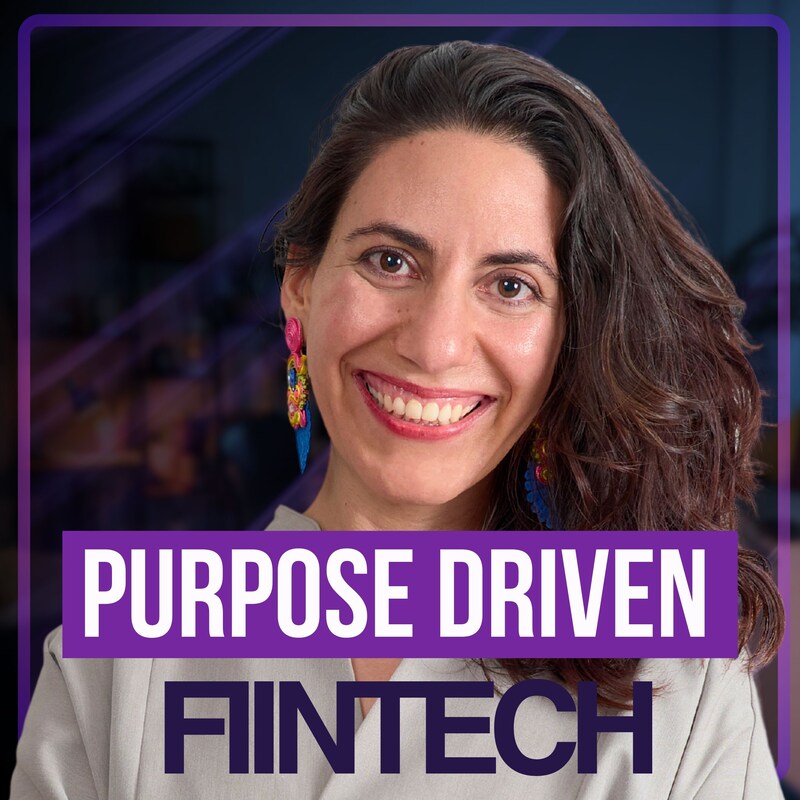
Shownotes
This is raw and personal.
Vivek Ishwar and Abin Shetty, host of “All Immigrant Podcast”, interview me on my over 15 year journey living away from home.
We go back in time on the why I decided to move out of Mexico in the first place, the personal challenges of being an Immigrant, work in Corporate vs Startup, the evolution of my own podcast, advice for Aspiring Entrepreneurs in FinTech and much more
If you enjoy this Purpose Driven FinTech episode it would mean the world if you subscribe and give it a follow so that we can have more impact. Remember to connect in YouTube or LinkedIn to keep the conversation going.
Let’s dive into it!
👉 You can find Vivek and Abin here:
👉 And you can find Monica here:
- LinkedIn: https://www.linkedin.com/in/monicamillares/
- YouTube: https://www.youtube.com/@moni_millares
- TikTok: https://www.tiktok.com/@moni_millares
- Website: https://moni-millares.mystrikingly.com/
If you enjoy this pod, please follow and leave a 5 star rating on Spotify and a review on Apple podcasts
Questions:
- What are challenges of being immigrant in FinTech?
- How to navigate visa constraints across countries?
- What is the "whatever it takes" immigrant mindset?
- How to find job during 2008 financial crisis?
- What are differences between student visa and work permit?
- How to work harder as immigrant to prove yourself?
- What is the importance of hiring immigration lawyer?
- How to pivot from engineering to product management?
- What are lessons from moving Mexico to UK to Malaysia?
- How to start podcast during COVID pandemic?
- What is creative expression through podcasting?
- How to overcome rejection after rejection?
- What is the role of resilience in immigration?
- How to master basics in FinTech entrepreneurship?
- What are challenges of geography expansion in FinTech?
- How to ensure product solves real customer need?
- What is difference between corporate and startup mindset?
- How to balance passion projects with full-time work?
- What advice for aspiring FinTech entrepreneurs?
- How to put positive spin on immigrant struggles?
—
For inquiries about coaching, collabs, sponsoring the podcast or creating or editing your podcast email Monica at [email protected]
Disclaimer: This episode does not constitute professional nor financial advice and does not represent the opinion nor views of my current, past or future employers. The guest has agreed to record and release our conversation for the use of this podcast and promotion in social media.
This episode was first released in October 2023 at the All Immigrant Podcast here - https://open.spotify.com/episode/3DsvyNFktlBp3hHON83F3g
Transcripts
Immigrant podcast
===
[:Introduction: Overcoming Challenges as an Immigrant Woman
---
People ask me all the time, what has been your experience as a woman in integral and financial services? And I always say in my mind, my challenge, since I was a youngster in the professional world, in my mind, I was never thinking about me being a woman. I was always thinking, Oh, I'm a foreigner. So that, that was the thing, different accents, or sometimes I didn't understand them.
So there was this limiting belief in my mind that. I was not from the UK. , so I think because of that, I felt that just to be average, let's say, I have to go the extra mile because I had to prove myself. Because I was not quote unquote, one of them. I don't know if that's true or not, but probably that's looking back.
to work harder to be normal, [:So that was key. I don't know if I would have done the same. In the same way if I could have stayed home, for example, because, yeah, I was a woman in a male dominated environment and a foreigner. So I felt like I had to peddle twice as much.
Welcome to the All Immigrant Podcast
---
Welcome back to another episode of the All Immigrant Podcast. I am your host Abin. I am once again joined by my co host Vivek. Vivek, how are you doing with my friend? It's good for 7am and it's getting a little cold. Chicago is getting a little bit cold now, but it's awesome, honestly. I think Vivek and I are taking turns in doing early morning podcasts.
Vivek Ishwar : The last one was me. I was up at 7 AM and this time it's him. So we're just trying to make this time difference.
ed to me, I am not a morning [:Vivek Ishwar : So at least I'm glad this is somehow fit into your schedule, but I think. Yeah, I think we should stop talking amongst ourselves and introduce our guest. What are our manners?
Meet Monica Meares: A Fintech Trailblazer
---
Vivek Ishwar : I would like to welcome to the episode, Monica Meares. I apologize if I've got that wrong, but I tried my best. Oh, thank you.
So Monica is a product leader in a financial well being advocate and a passionate advocate for diversity in the financial sector. With fintech industry, Monica has left an indelible mark on the industry. Monica's journey is nothing short of extraordinary. She began as a junior analyst with global giants like Visa and Barclaycard.
e of the largest neobanks in [:37 million users. Her work has spanned continents from the UK to Mexico and Asia, and she's established herself as a strong, empathetic, and resilient leader in every environment. Monica is not just a fintech professional, she's also a podcaster, hosting Purpose Driven Fintech, a podcast focused on building fintech companies the right way.
She's also committed to mentoring the next generation of professionals in the industry. Today we'll dive into Monica's remarkable journey as an immigrant, and how it has influenced her work in the fintech space. Her perspective on making FinTech more human and the lessons she's learned from her experiences in corporate and startup environments.
Monica, welcome to the show.
Monica Millares: Thank you. Thank you guys. The pleasure is mine. Thanks for such a good introduction.
Abin Shetty: Wow. That was, that's quite a, it's quite a remarkable journey thus far, Monica. It's pretty amazing. We have so many questions questions for you. So I'm just going to kick it off and let's build from there.
Monica's Journey: From Mexico to London
---
found on your story was that [:So this is quite a drastic pivot. So what are some of the circumstances that led to that pivot? If we put context, this is, I studied industrial engineering back in Mexico. My first job was in a bank in Mexico. And the context, like the thing that triggered the pivot was I wanted to study my master's abroad.
Monica Millares: Not in Mexico, but I wanted to go abroad and have that context, that experience. So I did. I did move to London. I went to LSE. I was always a good student. I got all my distinction degrees and all that stuff. But then I guess this is where going abroad for one year. It's fun, and everyone wants to do it.
a real immigrant, right? And [: it takes. And I, and this is: udget and pasta and tuna all [:So that kind of pushed me to be like, and I need to find a job. And that's where kind of the, I guess like the passion and resilience and determination kicked in because even that we were in the middle of the crisis and I was a foreigner. It's just like application after application for months, getting rejection after rejection.
And then until until one day you get a job. So it's not like I chose my next job, just. Was the job that I got in London and I was like, yes,
Abin Shetty: I got a
Monica Millares: job.
The Struggles and Resilience of an Immigrant
---
er you find and I think that [:If even for someone like me, who's. Who I didn't have the struggle of having to find a job because I moved as an immigrant with a job, but in my case as well there were different challenges within my job that made me, that stretched me and asked me, Hey, do you really want this? And it made me question and then I said, okay, I have to, whatever it takes, I have to stay on and I have to see the path that I chose and I have to see it through.
So I completely understand that whatever it takes is. It's like the slogan for every immigrant, right?
Monica Millares: Yes, and i've never thought about it. But yeah, it's like whatever it takes. I even remember I finished uni I did not have a job. I had money for the next three months My auntie gave me like a thousand dollars extra so that I could stay And I signed the rent contract with a friend.
degree of whatever it takes, [: ause much for you, it was the:So I was in my final year of grad school and in March and I was going for an intern. I've said this story on the podcast several times, but I was going up to intern with the ZEISS group and. Overnight, they were like, okay, we're not going to you can complete the internship, but we're not going to hire you because it's hiring freeze.
And that was the least of my concerns. I think because there was suddenly this pandemic that came out of nowhere. And the main idea was trying to stay alive in a country where healthcare is so expensive. And it just, there was so many different. Factors that came to play like much like your rejection after rejection.
When you can't make your own [:Monica Millares: Oh, I like that.
Vivek Ishwar : I should. I, you know what I would like to say? I came up, I practiced that line. I just came up with it on the spot.
Monica Millares: It's a good
line. It's a good time.
Vivek Ishwar : Thank you.
Abin Shetty: It's a good thing. So you can
remember what it is later. Yeah, for sure.
Adapting to Life in Southeast Asia
---
Vivek Ishwar : But Monica, moving on. So your life. Has been characterized by so many geographical pivots from Mexico to London, which Jesus has spoke about, and then to Malaysia.
Walk us through some of the key changes in those circumstances that led you to those moves. You spoke to us about London, but how did you move from London to Malaysia?
Monica Millares: Yes. That one I say, it was a little bit of luck. I was very well prepared and I had the courage to say yes. Because this is fast forward nine years later.
l financial services back in [:Where banking is broken, the Bank of England had only given one banking license in the past 100 years. We did not have a banking license, we did not even have a name, it was a concept. And this guy, Ricky Knox, was an amazing entrepreneur. He was like, yeah, but we're building a bank from scratch, no one has ever done this in the past 100 years.
ers, which was amazing. So I [:During that time, I got a phone call and it was, Hey, this opportunity in Asia to start a new bank, blah, blah, blah. And I was like no. I'm very happy in the UK. And then a month later. Hey, remember I told you about this opportunity. I was like, yeah, I am. I genuinely that time I answered by chance. One of those times that you have an unknown number, but somehow you answer.
And I did. And it was this guy and he was like, the founders are here. They really want to meet you. Why don't you go? There's nothing to lose. Just go for a coffee. Nothing to lose. And that's the phrase that caught me. I was like actually, that's a good point. There's nothing to lose. Let's just go for a coffee.
, the other da, I always say [:And I did learn a lot. I had a ton of exposure in the bank. And then when I moved here, I was moving as part of the leadership team. So it was different because it was very young leadership teams still, but it was part of the leadership team repeating what I had already done in the UK. So it was a hashtag the Asian adventure.
And I just went for it.
Abin Shetty: Wow. That's the context.
Monica Millares: Yeah.
Abin Shetty: That's good. That's pretty amazing. That's pretty amazing. That's very bold. Yeah, it was super bold.
Yeah.
ad very well. You move again [:When you moved to London, you were chasing a passion of yours where you wanted to live. Live in the UK when you moved here, you were chasing this amazing opportunity and you wanted to see how that unraveled but let's talk personally, right?
The Emotional Toll of Constant Change
---
Abin Shetty: How were these moves for you personally? Because you are, you were leaving, I think in the first move, you're leaving your family behind.
Moving to a place where you wanted to live in, you probably were really enjoying your life there. And then you left this behind and you moved to another country, which is in a completely different part of the world. So walk us through your journey personally some of the challenges you face, as well as some of the things you felt as an immigrant.
Yeah,
probably the first year was [:You like, I was very quote unquote nerd, but like you study, you party, whatever. But I was not a party girl, more like a studying girl. But then the challenge goes, started at the end of the program, when we're in the middle of the crisis, and then all my friends left, everyone left, only like a handful of people, all the people I knew, we stayed and had a job.
the culture shock was bigger [:And I'm like, I'm a hugger when I was in the UK, I was more like, Oh. You don't hug, just like I hug when we say hi, I hug a stranger, but in the UK it was more like cannot hug or even at work, like I felt like I had to be very serious and I couldn't be myself and I felt caged. So after, shortly after I, I finished uni and I started working, I went through what I call the quarter of a life crisis.
rsonal everything to go back [:Then you get comfortable being yourself. Okay.
Vivek Ishwar : So how was like I know this is not in the list of questions we'd ask, but like when you moved to Southeast Asia, how different was that from you? Because you'd spend nine years in the UK and again, you've had, you had to change again. What was that change like?
Monica Millares: Okay, I'll summarize it very simple. I cried for the first three months, almost every single day. I never swear. I never saw it. But the first three months I saw it every single day and my family, they laughed because I never saw it. And then you have me on the phone. Oh, this is, and they were like, Oh, you're so funny.
fferent continent, different [:So it was very difficult, especially the first three months. I've been here six years, right? So it's like you adapt. Or even you, though you've been here six years or nine years in the UK, it's never a smooth sailing, like if you were at home, because there's always.
upon. And the second one is [:Because you lose yourself a little bit when you. I'll throw it into this new environment where you don't, you can't connect with people, you're constantly learning and then you're also trying to figure out, hey who am I in all this, who am I, and I feel if you make that change to so frequently like you did, it could, it's really, it could really like this confuse you for some time because you're like, hey what's going on here and who am I, right? I think that stability, which maybe you're found now, is probably helping you because now you feel like, hey I know who I am and I'm finding that stability, Which is important. And I know it sounds really easy to just take your bags, start a new life in a new country. But I think the emotional part of that journey is something that we don't talk about as much as we should.
Monica Millares: I totally agree. Yes, and stability is important as well.
So I think the one question [:Monica's Fintech Experience: Corporate vs. Startup
---
Abin Shetty: We do have a question around Fintech specifically. And your experience in Fintech you didn't mention you work, you worked with big companies and you also worked with a startup and you went through some of the motions of working in a smaller company.
What did you enjoy about working in each type of company and how did that shape you as an individual?
Monica Millares: I guess the first half of my career, when I worked in the big banks. Then our corporates, that's where I learned quote, unquote, how to work. So it's like the structure. That's where I learned how the financial services industry works.
The governance, the yeah, how a bank works, how to work with incorporating. And that shaped me in the sense that I guess, as a
it's so interesting that you [:And I, and I, and I really love how you how you put that into a positive spin where you said that, Hey, because I had to work so hard, I learned so much more in the process. And I accelerated my career in a way. And I really liked that because I think you're the first person I'm hearing who's actually putting that positive spin to the fact that this is a reality that that immigrants may have to face in a different country.
've had to work a little bit [:Abin Shetty: work.
That's awesome.
Monica Millares: And it may have been just my mindset, but it shaped me. That's who I am now. And now it's not, Oh, because I'm a foreigner. Oh, because I'm a woman. No, now it's that's just who I am. I've always gone beyond what I'm done. That's why I have a podcast. I don't need to have a podcast. I go above and beyond.
Vivek Ishwar : That's awesome. That's actually, again, I feel like you set me up for the next question really well.
The Birth of Purpose Driven Fintech Podcast
---
Vivek Ishwar : Speaking of podcasts you started the FinTech product podcast and purpose, the purpose driven FinTech podcast, which I think was earlier called the FinTech product podcast. If I'm not mistaken.
pace, even though there's so [:Monica Millares: Yeah, I guess that was a personal evolution as such. So the podcast started as a COVID project. Boring like we were all bored at home.
Vivek Ishwar : All of us.
Probably
Monica Millares: stuck. stuck at home and then it felt like it was forever. So for me, it was like COVID, I lived on my own. So like at some point you stop, you're like, Oh, I've called everyone that I haven't spoken in the past 20 years.
sy. So when it gets tough, I [:And then one day I was crying, I was like crying and I look up and I saw one of the quotes and I said, it's enough, that's it. It's enough stop these snap out of this not good energy that it was a combination of everything and I asked myself Like I will I told myself I have to reinvent myself.
I need to go back to what is it that I liked I was like, yeah, what did you like? And then I was like, oh yeah, I used to love coaching. I used to do tons of coaching prior to the startup world. I was like, yeah, and I don't do any of that. I'm just like working a ton and that's it. And the other thing, it's like maybe two years before living in the UK or so.
id tell my boss at the time, [:I was like, Oh, I don't have an audience. I don't have the network PCLA. But then when I was asking myself, what did I like to do? I was like, Oh, I had this dream of having a talk show. And I was like, and things have changed between that time and now. And now with COVID, everything is becoming very digital, super fast.
I was like, why don't you start? And that's it. And that's the beginning of the podcast. And the beginning of the podcast actually was not about FinTech. It was about personal development, women and entrepreneurship.
Other: It started
Monica Millares: in Spanish. I did two episodes and I stopped and then I was like, I don't like this.
ee months later, so I picked [:It brings out the, these different types of passion that you might not show at work, for example.
Discovering the Passion for Podcasting
---
Monica Millares: So it brought that energy out of me. So over time I was like, Oh, I like this. And then people were like, Oh, you're good at it. I was like, oh my, it's not a good podcast. And eventually I got feedback that it's like, Hey, have you ever thought about merging podcasting, that, your thing, and work as in FinTech?
And then I got three to four [:Transitioning to FinTech Podcasting
---
Monica Millares: So basically what I did, it's one day I just changed the name of the previous podcast. And I was like I work in FinTech, work in product doing a podcast.
Let's call it FinTech product podcast. I had a few. interviews in that style topic. And then I was like, Oh, I could do this. And eventually I made the decision to close the podcast because that was a working product. So I was like, Oh, that was like my version one of my product, my baby podcast, baby closed it down.
And then I was like, okay, now let's relaunch and think properly. Because I did initially, I did not use product brain to build a podcast. It was just a hobby. And then I was like, okay, cool.
The Art and Evolution of Podcasting
---
Monica Millares: Now let's think about what's the purpose of a podcast. How could I do it? Let's improve the processes, have consistency, this, the other.
Tech. Which has been really [:community,
Vivek Ishwar : which is what it's great to hear Especially given even my first podcast which I began Like he was in the pandemic. I bought two things I bought an egg beater like an electric egg beater because I was really getting into baking and I bought a mic, a podcast mic.
So I've lost the egg beater since, I don't know where it is. Don't tell anyone about
Other: it, but the mic is still here. And initially it was just more of a, it was just more of a way to get, I began because see, I Apart from work, I worked in marketing, worked marketing all my life. It's not like I've, it's been a long career, it's just been under eight years.
More than anything else, it [:And once you get bit by that bug, you would just start to explore, okay. Find different ways of trying to see, okay, how can I make my podcast better? Or the iPhone has a continuity camera that, that I can now use for video. How can I copy video into the podcast? So when Vivek and I began this podcast, the idea was purely audio.
And I think three episodes. And I said, don't worry about it. Let's pivot to video and he was like, are you sure? But I said, don't know, we've got to go like find the YouTube audience because this would really, this format would really work for, let's say, a YouTube audience. So I looked at ways how I could edit the podcast, how I could incorporate AI into it.
t. I'm like, okay, how can I [:I've grown communities in the past. How can we. Look to grow this community. So it was it's, it, one thing led to another and just
here we are.
Monica Millares: Yes. I see it as creative expression. It's an outlet for creative expression and growth.
Abin Shetty: So I got dropped off for a second. So I lost the train of thought, but I'm going to, I'm going to just going to take up the next question.
Finding and Following Your Passion
---
Abin Shetty: One of the, one of the things you spoke about was passion, right? So you said you're extremely passionate about FinTech and you were passionate about something you felt they were passionate about was coaching. And then you got into podcasting. All of these were driven by passion.
I guess the question is how did you find that you are passionate about fintech? How did you find that you were passionate about some of the things you are and how do you suggest that? The listeners and people in general find the thing that they're passionate about.
ion I think at the beginning [:So if you do something, you try things out and it gives you energy. You're like, Oh, that is cool. I like that. So follow that. If you do something and you're like baking and you're like, you bought the thing, but you're like I'll stay interested in two weeks. You don't give you the energy, but the podcasting, you're like, Oh yeah, it gives me energy.
I want to do more. So when it's it's that, it's just try many things, follow the energy. That's it's like how it started especially with coaching, especially with the podcast. But I think it started with follow the energy, but what made it more of a passion, it's I saw progress.
it comes to fintech, it's a [:But there comes a moment where you say, where I said, either you stay and you go full on or you change and then you decide. So I did not become passionate about fintech because I was so passionate about fintech became passionate about it because One day I made a decision that I was here for the long term and I was here to stay and therefore I was going to make the best out of it and therefore I was going to be of service to the community and then it's a It just starts again.
mmunity. You are part of the [:I can just tell them don't do those mistakes. So I think that one, it's two ways. One, try many things, but I do believe that at some point you make a decision. Yeah. You're like, I like this and I'm going to stick with it and that's it. That's where the field and the fire and the determination and the discipline keeps you going by choice, not by passion.
It's not passion on its own. It's discipline and it's a choice.
Abin Shetty: I think that's so interesting because you pointed out that there are two kinds. At least what I'm taking from this is that there are two kinds of there are two kinds of things that happen here. The one is the thing that you naturally gravitate to, which is.
go into that. The second one [:Many of us don't find that. I think what you're saying is even if you don't find that you can carry passion with you into whatever you do, and you can make that a passion, which is what you did with with FinTech.
Monica Millares: Yes. Yeah. I'll add to that. I didn't like my job. I disliked my job for a long time, whether that was at banking or at some points, I had moments when I was in FinTech and I really didn't like it.
good at it. And then you go [:I'm like, okay, let's give this a try.
Abin Shetty: And of course it's a journey. It's a journey. It's a journey. It's not over.
And if you do anything with passion for some time, it's inevitable that you will become good at it. So the main thing is doing it, sticking the, staying the course and doing it with passion.
Then you will become good at it, no matter what it is.
Monica Millares: Agree. It might take you time. I'm still the newbie podcaster.
Abin Shetty: So am I. Abhin is not.
Monica Millares: I'm
Abin Shetty: a
Monica Millares: newbie. I'm a newbie. Oh
no please. I am very new. This is.
Challenges and Triumphs in FinTech
---
Vivek Ishwar : Still, I'm still learning and I don't think that will ever stop speaking of things that I'm getting good at speaking of being extremely good at things you were the, you were one of the founding members of the team at big pay, which is now one of the largest neobanks in Southeast Asia.
ove to know the story behind [:Monica Millares: I guess like by now we are almost a six year old company. So we've had any startup will have ups and downs. Whomever doesn't say that it's lying. It is just hard because you are starting something. That's it. It's like you're building something with limited resources With a lot of pressure, constraints on time, so it's high intensity But then it was not the first time that I was building a bank from scratch So that's good context because I had already seen In the UK.
bank from scratch. So I knew [:So I say like I channeled my ex bosses wisdom and that's how I did my first six months that it was like, what could they do? Oh, they could do this. Okay, cool. And that's what, that's how I went about it. And it was challenging because fintech at the time was quite of a new thing.
art of the conglomerates. So [:What do you mean? Like, why would I give you my money? You're a new player in the industry. It was difficult from that perspective and difficult building the thing ground up for me personally, it was very difficult because not only we were building a startup from scratch with all the complications that it has, but I was in a country that's very different to Mexico and the UK in where I didn't have a support network.
So the personal journey, that's why I said, I cried for three months, the personal journey. Was very difficult, but at the same time, because it was a new region, I was like, Oh, and I get to travel and I get to travel and I was motivated by the carrot in front of me that I was like, Oh, which country are you going to go next?
because of travel. And then [:The boss goes and has lunch on her own. That's it. A foreigner boss. I was on my phone, and I was having lunch on my own one day, and I remember I read an article, blog post or something, from an Olympic skate dancer, and basically she tells her story. And probably that's also inspired me to share it, because she tells her story about one day she goes to her mom and she says, Mom, I want to quit.
ise me one thing you have to [:Abin Shetty: I think that's a deeply philosophical concept, right? Because I think the one thing I've heard in the recent past is if you have a problem and you try to run away from it invariably the universe is going to, it's going to, it's going to throw that problem at your face in the next thing that you do.
ome that problem that you're [:Monica Millares: Thank you. I borrowed it from someone else, , but that touched me.
Vivek Ishwar : Still sound advice. Yeah,
that's right. I know AB been wants to ask stay and ask another question on FinTech, but I wanna ask one, one question. It's slightly pivoting. We spoke about you being an immigrant, moving across different countries. We spoke about your work.
Abin Shetty: We spoke about your personal passion.
Navigating Visa and Immigration Hurdles
---
Abin Shetty: The one thing we haven't touched upon is visa, right? And I think that's a very, that's a very deeply you can't say immigration without saying visa, right? As you move through these countries, talk us through, how did you overcome some of the constraints and challenges of being on different visas and how was that, how did that impact you personally?
e reality is for most of us, [:I didn't know in my country, they didn't have these, but all the big banks and consulting firms and everything beginning of October. You go to campus and they start recruiting for the graduate programs for next year, and I was like, what and it's oh, yeah, you can secure work now for next year.
ond. But remember, we were in:We want to stay, we want to stay, we want to stay, and then we discovered there was a very specific visa type that you could swap from student. to a work permit. So 90 percent of the people stayed because they got a job and then they were sponsored. I stayed because I did my research and then I hired a lawyer.
I did not risk it as in I invested in myself. I did not risk filling in an application the wrong way because you're out. That's what everybody told us. I had a good friend from Pakistan and I, we were both obsessed. We were like, we're going to get this. And then, but it's true, it's like the friend helps a lot.
lot because it, it helps you [:That's what he did. That's what I did. I sponsored myself and then every two years I had to pay the visa fees. I had to pay the lawyer's fees because I was determined and I had to ensure that I looked after my job because if I look my, if I lost my job, then I would not have the minimum income to meet the requirements to get the visa.
, I sponsored myself. No one [:I saved, I did the research, I did the due diligence. I lived my life in such a way that I could secure that visa. And then it's like, when I moved to Malaysia, yes, I am sponsored. And I'm very grateful for that. But at the same time in the back of my head, I know, you always know that it could just go away anytime because the government changes the rules and you're like, Oh, so what the impact that it has, it's a, it makes you appreciate what you currently have because you don't know when it's going to go and you just need to be ready to move if
it happens.
ivot, but in a scenario like [:So that, that financial hit the company, like the company is not thinking of your position from a financial perspective when it comes to the visa. And that is, and that itself is worth a good night's sleep because you go to bed thinking, okay, I have control over this narrative. I can. If things go south in any particular way, I still have more room to navigate as opposed to, let's say, somebody else.
I think the same with Vivek as well, where compared to cause Vivek is now on, I hope you don't mind me saying you now you now have your you're not on the H1B, you're you're a green card holder. So that itself removes a big weight off your shoulders.
Abin Shetty: It does.
grateful that it worked out [:Vivek Ishwar : Yeah, I think we'll we'll, we spent, I've, we've asked her so many questions on FinTech, Monica, I think we'll just try and pivot to the final question that we have.
Advice for Aspiring FinTech Entrepreneurs
---
Vivek Ishwar : So you've obviously had a lot of experience launching new products and expanding it to different markets. Is there, are there any valuable lessons or tips that or any sort of advice you'd give to aspiring entrepreneurs in the FinTech space?
Monica Millares: When it comes to launching on FinTech in a new geography or when it comes to what?
Vivek Ishwar : Yeah yeah, in a new geography that that, yeah, that would be that's more
accurate. That's a very broad question, but I guess the most important thing is you need to ensure that there is a need.
g our product thing. We were [:20 percent don't buy it because of the cost, it's too high. I was like, what? People are not price sensitive. It is just people don't need the thing. So like with any business, not just in FinTech, any business, you need to ensure that you are solving a customer problem. Why are they going to buy something from you?
They need it. Not because it's nice and beautiful. There's tons of competition. So you need to ensure that you're solving a real customer need and then that you do it in a really good way. That's the basics. No fancy. It's like basics, boring basics. Do that, do it well. It's not easy.
That's why it's basics. [:basics.
Final Thoughts and Reflections
---
Abin Shetty: I think I really enjoyed this conversation with you, Monica. Thank you so much once again for being a guest with us. I think this was a very, it's one of the more philosophical conversations I've had. So I think in almost every question towards the last few, we were touching upon some aspect of philosophy.
So that was great. Really enjoyed this conversation. I think I learned a lot personally about your journey. About your struggles. We I really appreciated how vulnerable and open you are. I think that's a sign Of a great human being and a great leader. So I really appreciate appreciated that.
Thank you so much for joining us. I know I really enjoyed this conversation and I hope to stay in touch. Thank you once again for responding to the linkedin and you know making this happen
Monica Millares: Thank you. No, the pleasure was mine. Generally. I really enjoyed the conversation too. Thank you. Thank you
Vivek Ishwar : so much.
It was [:So that was, it was super informative and a really fun episode, Monica, I must say I had a really great time talking to you.
Monica Millares: Thank you guys. Thank you for having me.
Vivek Ishwar : And yeah, that's us. That's us on another episode Vivek. This was a really nice episode as we've just waxed lyrical about it. We'll see you on the next one.
Until then, take
care

