Shownotes
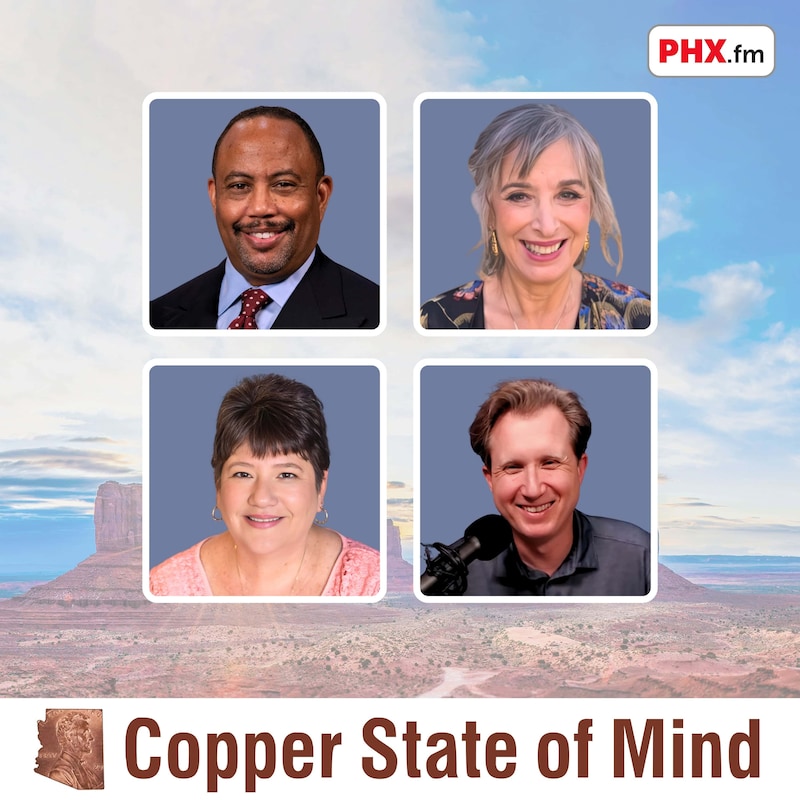
Dean Battinto Batts and Professor Julia Wallace from Arizona State University join us to talk about the recent launch of the Knight Center for the Future of News at ASU's Walter Cronkite School of Journalism and Mass Communication.
The Knight Center for the Future of News focuses on creating sustainable models and innovative practices for the journalism industry through three core initiatives: the Journalism, Community & Democracy Lab; the Sustainability Lab; and the Innovation in Reporting & Storytelling Lab.
Dean Batts and Prof. Wallace emphasize the importance of adapting to the changing dynamics of news consumption and audience engagement, recognizing that while the industry faces significant challenges, there is still a strong demand for credible information.
With the support of a $10.5 million grant from Knight Foundation, The Knight Center for the Future of News will foster innovation, research, and collaboration to ensure a sustainable future for journalism.
The center will function as a dynamic environment akin to a teaching hospital, where real-world applications and student mentorship converge to test new journalism concepts. Students will actively participate in hands-on projects, working with professionals to innovate in journalism.
Batts and Wallace express optimism about the role of education and new initiatives in reshaping the field, urging a shift in mindset to view disruption as an opportunity rather than a setback.
Read the transcript and notes for this episode on our website.
Key Takeaways
- The transformation of journalism education at ASU reflects the evolving state of the industry.
- In the past, news was seen as objective reporting on issues that directly impacted people's lives. Today’s news environment is characterized by outrage, polarization, and a decline in trust.
- Arizona State University's Cronkite School has a longstanding partnership with the Knight Foundation, which supports various initiatives aimed at revolutionizing journalism education and practice.
- Central to the Knight Center's mission is the engagement and understanding of audiences, vital for fostering trust and ensuring the relevance of news media.
- The episode highlights the importance of an entrepreneurial mindset in the journalism industry to drive innovation amid continuous disruption.
About the Guests
Dr. Battinto L. Batts Jr. is Dean and Professor at The Walter Cronkite School of Journalism and Mass Communication at Arizona State University. An award-winning journalist and educator with deep experience in philanthropy and nonprofit administration, Dr. Batts previously served as director of journalism strategies for the Scripps Howard Foundation in Cincinnati, Ohio. Batts holds a doctorate in higher education management from Hampton University, a master’s degree in media management from Norfolk State University and a bachelor’s degree in mass communications from Virginia Commonwealth University.
Julia Wallace is a professor of practice and the Frank Russell Chair in the Business of Journalism at the Walter Cronkite School of Journalism and Mass Communication, where she teaches ethics, the business of journalism and gender in the media workplace. She is also the Launch Director for The Knight Center for the Future of News. Prior to joining ASU, Prof. Wallace served in senior editing roles at four newspapers, including the Atlanta Journal-Constitution, where she was the first woman to serve as editor-in-chief. During her tenure there, the paper won two Pulitzer Prizes, and she was named Editor of the Year by Editor & Publisher magazine in 2004. Before joining Atlanta, Wallace was managing editor of the Arizona Republic from 1998-2000. She co-authored a book, There’s No Crying in Newsrooms: What Women Have Learned About What it Takes to Lead, with Cronkite faculty member Kristin Gilger about the challenges women have faced in newsrooms and the female pioneers who've broken barriers in this male-dominated industry over the last four decades.
Follow the podcast
If you enjoyed this episode, please follow Copper State of Mind in Apple Podcasts, Spotify, or any other podcast app. We publish new episodes every other Friday. Just pick your preferred podcast player from this link, open the app, and click the button to “Follow” the show: https://copperstateofmind.show/listen
Need to hire a PR firm?
We demystify the process and give you some helpful advice in Episode 19: "How to Hire a Public Relations Agency in Arizona: Insider Tips for Executives and Marketing Directors."
Credits
Copper State of Mind, hosted by Abbie Fink and Dr. Adrian McIntyre, is brought to you by HMA Public Relations, a full-service public relations firm in Phoenix, AZ.
The show is recorded and produced by the team at Speed of Story, a strategic communications consultancy for PR agencies and marketing firms, and distributed by PHX.fm, the leading independent B2B podcast network in Arizona.
If you like this podcast, you might also enjoy PRGN Presents: PR News & Views from the Public Relations Global Network, featuring conversations about strategic communications, marketing, and PR from PRGN, "the world’s local public relations agency.”
Transcripts
What is the news anyway? For years, we took for granted it was the information that was in the paper, was on the radio, it was on the television. It was objective reporting about facts that affected our lives. Sometimes there were opinions, sometimes there were debates.
But these days, what IS the news? It's a mélange of outrage and polarization and accusations. It's "fake," it's in peril, it's disappearing.
Abbie Fink:And it's still one of the most fascinating careers I think anyone can go into. I was realizing recently, it's been about 30 years since I got my master's from the Cronkite School at Arizona State University. I've been getting a lot of emails from recent graduates that are, you know, looking for their first career. And I tell the story about how I didn't know what I wanted to be when I grew up. And I stumbled into public relations.
At the time, the journalism program was in the basement of an old building on the main campus. Students today have this incredibly innovative and beautiful building on the ASU campus downtown and may not realize exactly what they have the opportunity to experience by being there. My first classes were on manual typewriters, which makes me sound really old. Maybe I am.
But I've been so excited to to watch the transformation that's happening at the Cronkite School and the innovative ways that the program is addressing journalism and communication, how it is really hitting head-on with what is happening in our society around this. And recognizing that this, in my view, is such an important part of our society and our democracy is a free and independent news.
Maybe it's shrinking, maybe it's evolving, but we are still going to have it. I've said this forever. We will always have newspapers. As long as people are born and people die and people get married, we will have a record of these types of things in our community.
And so I was thrilled when we extended the invitation to some representatives from the Cronkite School to talk about the newly launched Knight Center for the Future of News at Arizona State University. I am going to ask our guests to introduce themselves, and we're going to spend a little bit of time talking about this really exciting initiative that's happening at my alma mater.
Battinto Batts:Hi, I'm Battinto Batts. I'm the Dean of the Walter Cronkite School of Journalism and Mass Communication here at Arizona State University. I have just started my fifth year in this seat, and it has really, truly been a joy and a pleasure to play this role here at this particular time.
My background is really in three things: journalism -- spent a lot of time in newspapers and in media -- and then in education and in philanthropy. And so what I say, this is sort of my return to my second career. My second career was in higher education. And so come back into this role and been here, again, this is my fifth year at Arizona State and so really, truly am excited about this opportunity that we have here with the Knight Center for the Future of News, and also enthusiastically embrace the responsibility that comes along with these resources that we've been given, any opportunity to make a difference at this particular time.
And one of the other key things that I really enjoy is the opportunity to work along with Julia Wallace, who's my colleague here. And so I think she should introduce herself.
Julia Wallace:I'm Julia Wallace. I'm the launch director of the Knight Center. I'm also the Frank Russell Chair in the Business of Journalism. And I spent a long time as a newspaper editor various places around the country, including a short stint as managing editor of the Republic back in '99 and '00. And I'm excited to be with all of you.
Abbie Fink:Well, I'm so glad that you're here, and again, I'm just thrilled to be watch what is happening to and opportunities that the Cronkite School is bringing, not only to, you know, the students and those that are pursuing careers, but really the impact it's having in our community and the larger community when we can take a look at such important discussions around what journalism is, where we're at, the things that are impacting it.
So maybe to start the conversation, if you could, is really what is the center and what is your ultimate goal for the work that it's going to be doing. Talk us through how this is going to come to be, because you're still in the launching phase of this program. So share a little bit about where it's at and what we can expect to see over the next handful of months as you move through this process.
Battinto Batts:Sure. So, the Knight Center for the Future of News, really the end goal here is to help to chart a path for a sustainable future for the news industry. And that we want to do this by using current world conditions as a guiding path and having an eye towards where the future is going. And so that requires two things of us.
Number one is that we have to be accepting of where we are and embrace where we are and be very enthusiastic where, perhaps, others are pessimistic. We are very, very optimistic about where we are as an industry right now and that we see a pathway for the future that perhaps looks very different than what the past was, but is still very exciting and still very relevant and still very important.
And then we also have to not only embrace the now, but try to see around several corners in terms of where this is all going and where technology will not only disrupt, but where it will take us into the future and how we embrace technology, how we leverage it and utilize it to be not only sustainable, but to really be relevant and connecting with audiences. And so that, again, is also exciting.
And so the Knight Center, as you've seen, has three labs: one that focuses on the role of journalism in our democracy, the other that focuses on innovations and technology, and the third is about business sustainability and how those three come together.
But fundamentally, the underpinning for all of this is audience engagement. We want to understand audiences and their relationship to news, what brings them to news in all its different shapes, forms and sizes and outlets. And who's doing it, what brings them to news and how they, you know, engage with it, where we are with trust and where we can build from there. We accomplish nothing if we don't engage and involve audiences in this process. And so that's sort of high level of what we're endeavoring to do here. Julia, did I miss anything?
Julia Wallace:No, I think that's great. If I was going to add anything, I would sort of tell a historical story. In 19 99, I was at the American Society of Newspaper Editors conference, and Andy Grove, who was then the head of Intel, gave a speech in which he said, you know, that was back in '99, for those who remember, just when broadband was beginning, the Internet's just beginning. Craigslist had started only in California at this point. Really early, right? And he gives a speech that says, "You're at an inflection point. You're at an inflection point of revenue. You're at an inflection point on audience. And you need to invest heavily in research, because if you don't do it now, you're not going to have the money to do it later."
Well, so everybody walked out and was like, oh, yeah, yeah, whatever. And '99 was the highest year in revenue for newspapers, and no decisions were made. And, you know, in fact, I think pretty much throughout the industry, whether it's newspapers, there has not been the investment in research that there needs to be. And so I think one of the big values that we bring to it is we are one of the best or probably, well, we are definitely the most innovative university in the country, in the world, and do so much with research. So bringing research and real world experience together to create solutions is going to be critical.
Abbie Fink:Well, I think no one could have, could have really ... futurists might have been able to take a look at that timeframe and said to us, you know, there's going to be these things that are going to disrupt what you do.
I went to a presentation around that same time, just a couple years later, and up on a big screen they were showing us this thing called Twitter. And it was, you know, he would take a picture and then it would show up on the screen and he would tell us that people all over the world could see that picture. And if we wanted to watch a television program only about golf, there was going to be a channel that focused only on golf. And we thought this guy was crazy. Well, fast forward and here's where we are, right?
So the idea that we probably didn't think about it because we were the only thing out there, you know, there was the main newspaper in a community and you had small local, independent newspapers which, you know, you supported because they had the lunch schedule for your elementary school and the highlight of the sports for the high school. And that's what you had. And you had your three or four television stations. Our namesake here, Walter Cronkite, was on the air. You trusted him and his colleagues and such, and that was it. That was all that news was. There was ... it wasn't a discussion, it was, you flipped the television on at 6 o'clock, there was the news. You went to bed after you watched the 10 o'clock news, end of discussion.
So the idea that it was a business, you know, certainly there was revenue sources and things, but I mean, it doesn't surprise me that we as an industry probably didn't look at it the way it needed to have been looked at, if you can project backwards and say, this is where we are today.
So when you think about this type of center that exists then within the confines of a university that is, as you said, Julia, very well known and respected from its research perspective. How did ASU and you all initially attract the Knight Foundation to even look at ASU and say, this is the place to invest a significant amount of financial support and this is what we want to do, this very forward thinking, bold idea and help us with a nice contribution so we can make this happen. How did ASU even get in the running for a conversation like that?
Battinto Batts:So, I would love to tell you that we just met up for dinner and huddled and said, "here's an idea." And it was like, ta-da. "Okay, the checks in the mail." No, it's not that simple. This was a multi-year process. It was arduous. It was a lot of back and forth. There was a lot of streamlining and fine-tuning in terms of the concepts and the ideas around this. But we operated from a really fundamental premise.
And number one, we've been fortunate to have a relationship with the Knight Foundation going back some 30 years now. Knight has been a supporter of ASU and the Cronkite School for a number of years. And so we operated from a pretty good position starting out in that we had a relationship, we've had a measure of success. And you know, they've supported the, you know, the Knight Chair here at Cronkite. They've had support for our News21 program here at Cronkite. They've supported some work that we've done in the innovation space.
And so again, we weren't starting from scratch in terms of our relationship with Knight. And we were invited to think big about what a next-level project would be. So operating with, again, with that level of respect and appreciation for what we could do.
But then also we have what I frequently say is the very best laboratory to practice journalism, media and communications. And that being not just our school, but here in the greater Phoenix area and in Arizona. And because you think of all the, some of the key issues that our society is facing, we see them, we see many of them here in Arizona.
And so that's one of the calling cards that we have here with this city that's growing still, still at a rapid clip and all of the diversity of issues and concepts and again, people that are here, that's an advantage. And so Knight was looking at a place to do something at a place where it hadn't done something before.
And ASU was, again, highly regarded. And so we sort of, if this was to use a football analogy, we were sort of already at the 20-yard line because of that relationship. So then it was a matter of having something that made sense, that really would fill a space that wasn't currently being filled. And where that made sense was like looking at the impact of technology. And then of course, sustainability and where the path forward for the industry was going to be. And so that's really where we are. Our proposal resonated with the team at Knight.
Abbie Fink:So, Julia, you are the launch director, in addition to many other responsibilities, I'm assuming that you have there. What's happening now in terms of getting the center ready to launch, and what does a timeframe look like? When would we start to see or have opportunities to participate in what will be happening there?
Julia Wallace:It's a process to hire and bring in staff on, and so we wanted to get going right away. We have a report coming out next month by Professor Len Downie, the former editor of the Washington Post, that looks at the current landscape for local news, the successes and challenges, I'd say. So we're not, you know, we're getting going. That'll come out in August.
We also have a project working where we are analyzing all of the work done in AI and journalism in the past three years. You know, obviously, AI is a bigger and bigger part of what we need to be doing, both off offensively and defensively. And so before we decide where to jump in, we're like, we need to understand better the current universe. And so we're working on a project to understand what has actually been done in the past three years. And one of the opportunities.
So we have a couple projects going. There are a few more we're talking about. We're looking at something on sort of what videos make people respond to our messages about why our work's important and which ones don't. You get the idea. We're trying to get stuff done going with Cronkite faculty and others. We will be hiring an executive director -- probably late this year, I guess, before they're actually here. And then once they're here, they'll fill out the staff and we'll go from there.
Abbie Fink:What does it mean, you mentioned, Dean, that there are core initiatives that fall into three different labs. So what does the structure of that look like? Is this ... a lot of research, obviously. What role, if any, will the students be participating and playing in? What happens when we show up at the building and say, I want to see the Knight Center? Like, what's it going to be when we get there? This is not labs with little petri dishes, right? This is brain thinking and lots of stuff going on in the ether. So what are we going to see when we get there?
Battinto Batts:So if you've ever visited a teaching hospital where you've had an opportunity to see, you know, doctors and medical professionals interacting with students who are learning at the same time. This is the analogy and that's what we truly are. I mean, it is, you know, learning by doing, hands-on. And so you'll see our students, our graduate students, our undergraduate students getting to interact with the professionals in each of these labs.
And the students really are the differentiator that we have. They're coming to us fresh with their ideas and their perspectives on not only where media used to be, but where it is going. And that gives us some insights that we want to and will tap to lead us into the future with the Knight Center.
So you'll see these professionals working alongside the students, getting their ideas and testing and trying things in our environment. Not to get too geeky with you, but essentially the model that we're operating on here is that we're going to research, test, apply, share and train. So we're going to use that audience-based research to really inform what are we going, what are we looking to develop here?
Let's use AI as an example. Okay. How are people interacting with AI? So how might that influence, if we wanted to do an AI bot reading the news, for example, and then how we test that on our platforms and here at the Cronkite School or platforms within the Knight Center and testing that and then applying that, looking at how the audience engages with that particular concept and then what we learn from that in a live environment and then how we can share that with others.
Because that's a big part of what we're doing through the information hub part of the Knight Center is that we're not looking to do this and just hoard what we learn. We want to share this with everybody writ large. And then we're hoping to hear from other places who might be doing something similar. "Hey, we tried something similar with that. Here's what we learned," and then we can apply that.
Just to give an example, we are in conversations with another university I'll share with you, Northwestern. Medill. Their school has done a lot of work, similar work in this space. And we're looking to work together with the folks at Medill, we're looking to work together with folks at other universities or other journalism organizations and how we can again share what's learned, try things, fail quickly, move on, get to successes, share what we get from those successes and really build that momentum.
Adrian McIntyre:I have a sort of "realpolitik" question here. I appreciate so much the positivity and the desire to focus on what's right and to get ahead of the trend and so on. And at the same time, it seems to me like we're on this moving sidewalk, with the earth swallowing us up right behind us, and we need to stay ahead because Mutually Assured Destruction, at some level, seems to be percolating out there in this industry.
When you talk about a sustainable future -- and I think that is exactly the right frame -- clearly, to make this sustainable, it has to focus on the business model, the revenue model, for news and other forms of reporting and objective information sharing. It's got to deal with technology. There's this much larger problem you've pointed at, which is the nature of audiences, the way they discover "content," as it's now called, the distribution channels through which they consume it.
All of that has changed and continues to change very, very dramatically, even to the point maybe where this concept of a journalist and an audience may be less relevant. We might need different ways to think about the fundamental relationship there underneath all this.
It seems to me there are two very real concerns. First, students, undergraduates as well as people seeking a postgraduate degree, are seeking careers. And second, the industry at large is not run by the academics, the researchers, or even the smartest thinkers out there. There are owners, publishers, editors, who control so much of what's actually happening at the places students want to work -- or thought they wanted to work until they discover some of the realities there.
All of which is to say, so this is one of these macro questions that becomes impossible to answer: how do you responsibly deal with all of that? How do you, you know, yes, the research drives insight that shares best practices, etc. And you're sending folks out into a world that is not driven by the best ideas. How do you handle that?
Julia Wallace:So let me take that.
Battinto Batts:Yes, go.
Julia Wallace:I teach an entrepreneurship class, and here's one of the things I say to my students. As journalists, we are our own worst enemies, because as journalists, we are trained to look at the problems. And if you think of entrepreneurs, they don't see problems, they see opportunities. And so many of the great brands, so many of the great businesses have grown out of disruption, have grown out of moments of uncertainty.
I mean, you know, I think part of it is for a certain generation of us, we grew up in a world in which we were dealing with, you know, this sort of "la, la, la," mature organization. And there were all these barriers to entry that kept that in place, et cetera. And that's gone, you know, but great, because we need to be entrepreneurial. And I think if you look at some of the success stories out there, and they're gonna continue to be more, it's people who walk in and like, "okay, that's what was. I don't care what was. I care about what's going to be and how do I contribute in this space, you know, to the larger goals." So I think part of the challenge is getting a very different mindset of how we approach it. That'd be my pitch.
Battinto Batts:I think you're right. You know, disruption has been a part of this industry ever since I started in it and graduated from college 35 years ago. Then it was the decline of afternoon newspapers. So there's been disruption ever since I got into this. But I think now, you know, we are at a phase where it's not about, well, the woe is me, people aren't getting the newspaper anymore, but it's more about people see the possibilities.
And the possibilities are provided because the barriers to entry now are so much lower. I mean, if we decided today that the three of us are going to launch a news business, we could do it. Back when I was graduating from college, if I wanted to start a newspaper, I needed a few million dollars to do it, which I didn't have and still don't have. But there you go. I mean, so the possibilities are endless now. And it's, and you can, you can go from idea to concept much quicker. And I think that that sort of fuels the optimism.
Abbie Fink:Well, you know, when I ... The word disruption, when it was in the context of what we would say before, I think is very different than what we mean now when we say, you know, "we're disrupting the way of doing it."
And one of the things that struck me, Julia, and what you were saying is this entrepreneurial mindset and that this type of conversation opens up the idea that you can be in this business and be a journalist or reporter or any element that can connects to the news business, still being a great writer, still liking research, still liking to look at things and find things. But you're coming to it with a very different perspective.
And there's room in this discussion for all of that way of thinking, which is what this lab environment thrives on, right, is the different viewpoints, the different life experiences, the different ways that we come to this industry and this business, which again, when I was studying journalism and made the decision to go into the public relations side of things, we didn't talk about it as a business. I mean, it just wasn't.
It is now "the news business," certainly is. And we're watching it and discussions around the financial components of the newsroom and what's happening and lawsuits and other various things that are impacting what is considered news. And an opportunity like this and what the potential for something like this is obviously is incredibly powerful for ASU and the Cronkite School.
But the information that's going to come out of here is going to be impacting, certainly in the immediate, but I think we will see it for generations to come. If disrupt is what we're doing, we're disrupting the way of thinking about it again. Only maybe this time we're doing it by asking different questions of different people and wanting to know what you think about this product that we're putting out there into the world. Is it relevant? Is it valuable? How do we value it? Do we still need it? If we don't need it, what do we need instead?
And we can have those discussions inside of a lab like this where we're forcing people to think differently and it's encouraged to be thinking differently about this. And really to me is another example of what leadership role ASU is taking and certainly how it blends in with the other programs and circumstances that are happening in the Cronkite School here at the downtown campus and in your campuses around the country that are really causing all of us to think differently and reengaging and reigniting, I think, the power of what journalism really needs to be in our society.
Battinto Batts:Yeah. If I may, I will say that anyone who says that journalism is dead is just dead wrong. The need for and the desire for news and information continues and remains very strong. But I think that what we did and what we allowed ourselves to do is to become what I would call generalists in this practice. And that the idea that one news organization could represent successfully all of the voices of a community was really wrong-minded. And really where we've gone now is from the few to the many, which is good. And from the generalist point of view to more specialization and really understanding audiences and communities and perspectives narrow and deep and very, very well, rather than just, sort of, you know, broad and shallow.
So that's what's emerged. And I think that that's a good thing, is that, you know, there's no one organization that has a grasp on all the audience. And if we're honest with ourselves, it never did. We fooled ourselves into thinking that. But if we're honest about it, it never really did.
Abbie Fink:And that's hopefully what's going to happen is we're going to we're going to take a look inside and a look outside and pay attention to what our responsibilities are and what we've agreed to be a part of as we've taken on this career and the future of journalism and news and what is content, what are stories, and what is information sharing gets redefined as a result of the good work that is anticipated coming out of the Knight Center. I for one, am thrilled to see and excited to see what's going to be happening there.
Adrian McIntyre:Thanks for listening to this episode of Copper State of Mind. If you enjoyed the conversation, please share it with a colleague who might also find this podcast valuable. It's easy to do, just click the "Share" button in the app you're listening to now to pass it along. You can also follow Copper State of Mind in Apple Podcasts, Spotify, or any other podcast app. We publish new episodes every other Friday.
Copper State of Mind is brought to you by HMA Public Relations, the oldest continuously operating PR firm in Arizona. The show is recorded and produced by the team at Speed of Story, a B2B communications firm in Phoenix, and distributed by PHX.fm, the leading independent B2B podcast network in Arizona. For all of us here at Speed of Story and PHX.fm, I'm Adrian McIntyre. Thanks for listening and for sharing the show with others if you choose to do so. We hope you'll join us again for another episode of Copper State of Mind.





