Shownotes
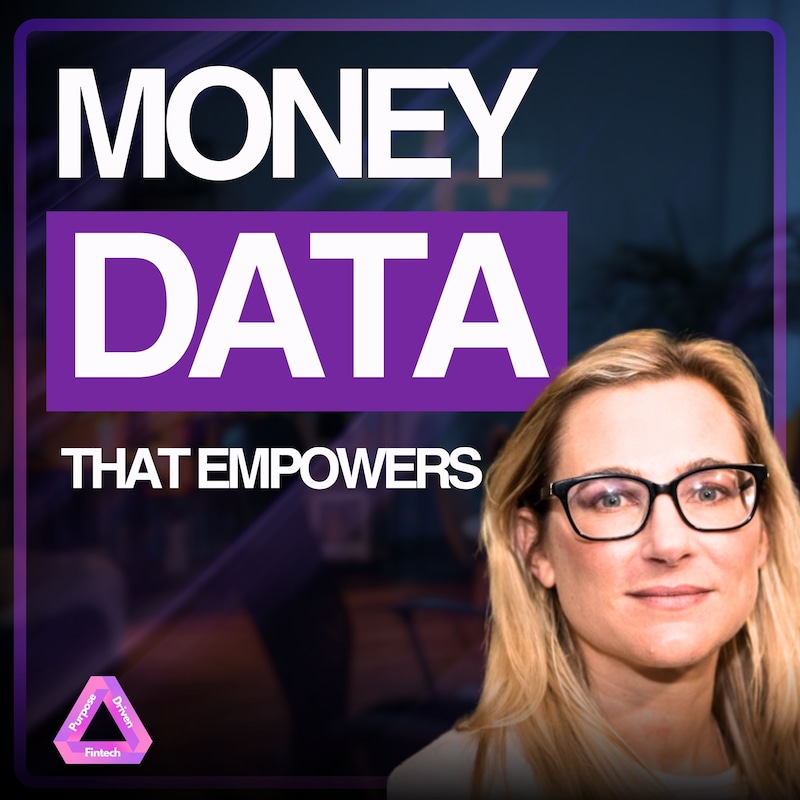
In today’s episode Tina Fisher, Chief Marketing Officer at Intix, shares with us the how we can 10x the impact we have as FinTechers and go deep on the role of trust.
Tina has an impressive trajectory, she was named “Top Female Tech Founder” by the British Government, and her company SnapSave was listed as “Top 12 Series A investment opportunity” by VC4A. We tap into her mind and heart and she shares her top advice for women wanting to grow their business and career and as part of international women’s month, we deep dive on how we as an industry can invest more in women.
Lastly, in today’s world, Data is king! Data empowers so many propositions and operations, hence it’s important we become data savvy. In this episode we discuss how Intix helps organizations consolidate transaction data for improved efficiency and hence better customer experience and reduced costs, and the power of their unique value proposition.
If you enjoy this Purpose Driven FinTech pod, please subscribe in YouTube, follow and leave a 5 star rating on Spotify and a review on Apple podcasts. Remember to connect in LinkedIn to keep the conversation going.
Let’s dive into it!
👉 You can find Tina here
- LinkedIn: https://www.linkedin.com/in/tina-fisher-a62852/
- LinkedIn Intix: https://www.linkedin.com/company/intix/
- Website: https://www.intix.eu/
👉 And you can find Monica here:
- LinkedIn: https://www.linkedin.com/in/monicamillares/
- YouTube: https://www.youtube.com/@moni_millares
- TikTok: https://www.tiktok.com/@moni_millares
- Website: https://moni-millares.mystrikingly.com/
If you enjoy this pod, please follow and leave a 5 star rating on Spotify and a review on Apple podcasts
—
Production and marketing by Monica Millares. For inquiries about being in the show, coaching, consulting, creative collabs, sponsoring the podcast or creating or editing your podcast email [email protected]
Disclaimer: This episode does not constitute professional nor financial advice and does not represent the opinion nor views of my current, past or future employers. The guest has agreed to record and release our conversation for the use of this podcast and promotion in social media.
Transcripts
Introduction to Banking Transactions
There are billions and millions of transactions going through the bank in, in any one time. And these transactions, as they come in and they come out, go through a number of different silos, whether it be anti money laundering or fraud or domestic, international, whatever it might be. And as much as the banks don't want to say this, they often, these transactions get lost or they get stuck for various reasons.
Sometimes silos don't speak to each other, whatever it might be. So Intix is a data platform. It's a data, data layer that essentially takes all the transactions and puts them into one place. A, you can find them and B, you can put alerts in. For example, a transaction is any longer than 30 seconds in anti money laundering and it gets stuck.
You got a flag.
Welcome and Podcast Overview
Monica Millares: Welcome to the show. Thank you for your time.
Tina Fisher: thanks very much for having me.
t. So we ask questions like, [:Building Purpose-Driven FinTechs
Monica Millares: I'd like to start with how can we design and build more purpose-driven Fintechs.
Tina Fisher: Wow. That's a loaded question, isn't it? I think it's about solving problems. So what problems are in the world? And how can we solve them? I have lived and worked for a very long time in Africa and there, the problems are very different than they are. Let's say in other parts of the world very few people have bank accounts.
They're very expensive. Cash is king. And so there's not only the crime involved in, having large amounts of cash about how do you move cash around different countries and that kind of thing. And then in, in Europe or the UK, obviously. The issues around finances are very different. How do you make your money work for you?
It's about financial [:Monica Millares: Yes, and that's a very good point. I love that you start with such a good point that it's geography does matter. We have Africa is different to Asia, that is different to Europe, which then leads me to This point that this is like what I keep thinking about, which is at FinTech as an industry, we started 10 years ago or so with the idea of have, of having impact, of helping people with financial stress and as much impact and progress that we've had in the past 10 years and now there's FinTechs everywhere.[00:03:00]
I don't think that we've had. Massive impact, especially because like financial stress continues to be one of the top sources of stress for people. And given where we are with the macroeconomics and inflation, like people feel the stress even more. So the question that runs in my mind, it's. If we continue doing what we're doing today, we'll continue to have incremental impact in people's lives.
So what do we need to think about today so that then we can have five times or 10 times the impact and really have impact in people's lives in their lifetime? Let's say people in Africa in their lifetime, what do we need to be thinking about today so that then we can accelerate that impact?
The Importance of Trust and Scale in FinTech
Tina Fisher: I think it boils down to trust and scale. And why I say trust, number one, is
Monica Millares: [:Tina Fisher: table with lots of cash. They work in three different currencies in the country and you come along with one currency and the guy will give it.
And then I was working for a fintech that would help people take their cash and transfer it to another location, to another country, another location, and there's a lot of distrust around the system because what if I give you my money and someone takes it the understanding around that, and I would say that also happens in Europe or anything before, let's say, Apple pay and Google pay came along.
Could you imagine just having your card details in your phone and thinking that was safe and someone could come along and scam them or you're touching and tapping whenever tap came out, everybody thought, okay anything under 200 pounds.
r you didn't know? But scale [:Yeah. Yeah. It's something people do the safety measures along it. So there's, yes, there's always some issues, but my point is in a grand scheme of things as, a woman getting into a car, knowing the driver, knowing his rating, knowing his details in advance I, trust the system. And so if you go back to FinTechs, I think again.
there's geography, but ultimately it's trust and scale. So trust we need to build in terms of how we're going to, that people's money is safe. And then scale that actually, this is going to help. So like the tapping and that now has become part of our lives. And I think until that happens, it's going to be really hard, difficult to have.
The type of impact that we want on people's lives.
Monica Millares: that's very interesting because it's going back to the roots Simple.
ink, yeah I, think there's a [:But if you're shopping at, you Tesco and John Lewis, or from a UK perspective or Carrefour from a European perspective you're going to get, and you can trust the brand. So I think a
Monica Millares: Yeah.
Tina Fisher: to come down to that.
Monica Millares: Definitely. And then just to build on this, let's say we manage to nail down the trust barrier and scale, and we're like, yes, we had impact, we had five times, 10 times the impact, especially as a data person, when we look in the future and we say, Hey, as not as a individual FinTech, but as an industry, how could we measure this impact?
Tina Fisher: [:I
Monica Millares: Transcription by
Tina Fisher: there's something to be said by going to an expert that, that is all that they do. And again, it's that trust. About someone else might do something have been more expertise than you will.
Yeah, I think it circles around to that as well.
Monica Millares: Interesting.
Understanding Intix's Data Platform
ica Millares: So coming now, [:Tina Fisher: so describe a little bit to what, the problem that we're solving and the solution, and then that can give you an insight. If you deal with a tier 1 bank, that's a great. There are billions and billions of transactions going through the bank and any one time, and these transactions, as they come in and they come out, go through a number of different silos, whether it be anti money laundering or fraud or domestic international, whatever it might be.
at essentially takes all the [:A, you can find them, and B, you can put alerts in. For example, a transaction is any longer than 30 seconds in anti money laundering, and it gets stuck, you get a flag. So think of Google as exactly pretty much the same technology. It's an indexing technology. Technically, you're not actually acting.
Accessing every single webpage in the world, it's just indexing. If you type something in, you can find what you're looking for. It's the same type of thing. You type in your name, for example, the value or the country that you've been sending it from, and then you can find that actual transaction. So by being able to have that goes back to the tagline.
So all the transactions in one place, which you'd think is something that is easily done, but it's really not because they're different formats. They're different systems. They're. 20 year old or 2 year old systems, they don't talk to each other. So it brings it all in 1 place. It's a single window for all your transactions.
ct that if you have all your [:So the fact that now I can see that my customer care queries have gone down, or I can see that my liquidity has gone up because I have everything in one place, I can then monitor. So that's where comes from. So
e. explains a lot behind the [:And we're, here to win. What was the thing going on through people's minds?
Tina Fisher: the founder started this about 11 or 12 years ago, and they both worked at Swift. And they were basically, huge organization specializing in transferring money internationally. And what they noticed was that Swift has one particular format of international payment, but there are many out there.
Monica Millares: By
it anywhere. And so I would [:Because they were involved in the organization and they were involved with the banks that they saw, actually, there's no data layer to actually capture all of this information.
I suppose like anything, it's about finding a problem and then solving it. And sometimes a very, niche problem, if you solve it and you solve it it then becomes successful.
Monica Millares: Yes, and you know what, you're not the first person that says that in the podcast. It's more of a, Hey, find the niche problem and then be the best in solving that problem. That's
Tina Fisher: Exactly.
Monica Millares: And then, it makes you a very successful fintech slash company.
Tina Fisher: Exactly. Exactly. Yes.
Challenges and Success in Female Entrepreneurship
Monica Millares: into Intix as such, because it's a fascinating topic as such, data.
have an amazing trajectory, [:And your company SnapSafe was listed as top 12 series A investment opportunity by VC4A. Okay. So yes, well done first well done. Building a business is not easy in general, like life is not easy. There's many women, whether we're building a career or building a business, building a family or a mix of the three for some of them.
What's your top advice for women wanting to grow their business? Even if it's not a busy business, it's just a, their
ch I'm very passionate about [:To change because the systems are set up are not necessarily set up for women in the workplace, whether we like it or not, whether we have supportive partners, which I absolutely do whether if you have children or if you have other responsibilities, oftentimes we carry this, burden in it.
And the way that the workplace is set up sitting in an office and nine to five, it doesn't always allow that flexibility. From a growing a business perspective, so snap and save just for everyone out there is a, business that's in Southern Africa and it's a B2B2C. So on one side you have FMCG companies P& G, Unilever, Pepsi, Coke of the world.
on the other side, you hear [:Brands get the sales uplift and everybody's happy. What was really difficult was working with VCs and who were all men. Again, I was the only person in the room, my co founder is a man and convincing them of the market need for something like this, because they couldn't put themselves in, they couldn't picture themselves as the consumer who would use something like this.
t be off a loaf of bread and [:And you're purchasing power. And they couldn't picture themselves. Needing something like that because of course they don't make the purchasing decisions. They aren't economically in that bracket. And so it was very difficult to get the funding in the first place. And I think that there has to be, whether there are more female led funds, or whether there's a broadening of understanding of the target market, for example, of who we're trying to serve.
I gave them all the statistics in the world, but it really, at the end of the day, there's a personal bias.
Monica Millares: Yeah.
to be tenacious. You have to [:Monica Millares: Yeah, it's so interesting because about a year ago, maybe less, I, had a guest in the podcast. She is a unicorn by now in Brazil. And when I asked her a similar, what was the secret like your secret to success and she was like, I always work harder than anyone else. was like,
Tina Fisher: yeah,
sitting in board meetings or [:And he, knew what he was doing. He was doing it on purpose because that he wanted everyone to hear it. But it didn't resonate. So yeah, until things like that change and it doesn't have to be even growing a business, it could be in the corporate world. It could be corporate policies.
It could be. Flexible working environments that after COVID people mandated going back into the offices where for, women, people of color, socioeconomic disadvantaged people who have childcare issues, that becomes a real problem. And it's not about their commitment to the, to their work it's really circumstances.
t again in your employees, I [:Monica Millares: Yeah, because
then, exactly,
Tina Fisher: about this topic.
Monica Millares: I can do a full, hour of that,
Tina Fisher: yeah I could.
Investing in Women and Changing Workplaces
Monica Millares: just to add to that, so this year, the theme is investing women for international women's month. What's your take on how can we invest in women practically? Absolutely. Absolutely. Transcription by CastingWords
Tina Fisher: there's a big push on empowering women and female led households, because the majority of women are single parents. And teaching skills, just smart, start small businesses and all that kind of thing so that they can feed their families and be self sufficient.
way up to representation in [:Monica Millares: Yeah.
Tina Fisher: and I don't think that's a bad thing because it is actually, Increasing awareness. So increasing awareness is great, but I think we also need to, change. For example the way we work in a corporate setting, or, hasn't changed in a very, long time. And I think it, it has to for the way that families are changing and we it has to change with us.
So just allow people to be successful.
of working, product ways of [:And we just
Tina Fisher: Yeah.
Monica Millares: how we work in, in, in the workplace.
Tina Fisher: Yeah, it's true. And one would say, oh particularly in a lot of countries now, they, there's a quality in that there's more quality than others. Not every country has this, male partners are often helping out more. Women are making, they're still not a hundred percent, but they are getting, but it's interesting.
oesn't, she doesn't care and [:And I think that then, yeah, it changes even just the empathy that women have sometimes more around other colleagues. And it goes into the way, I think way we work has to change to, to fit Different needs of different people. And that's also too wide from, a cultural perspective. It's not just a men, women and men.
It's people from different cultures as well. Bring different. Ways of looking at the same problem because of their experiences. So I think it's really important to have representation so that we can change the way of working.
dcast, you can go back home, [:Tina Fisher: Yeah,
Monica Millares: and their circumstances and how do we need to change internally to make it more, to make it better for them,
Tina Fisher: exactly. Even little things when you're doing interviews. And being aware of unconscious bias, studies have been done, many, studies that actually people tend to hire that are like them and look like them and that kind of thing. And if you look around your office, is that true? One would argue it probably is.
Monica Millares: yeah, definitely. Okay. So I think we could have this very long conversation about women in tech.
The Role of Data in FinTech
on to intics and data. What [:Now it's become part, like core of the business because now everything is digital, we enable digital solutions based on customer behavior and guess what, data is behind all these, right? what is your take on what's the role of transaction data in payments operations as such, so that we understand the context?
Tina Fisher: I, it's interesting as a marketeer, I try to stay away from the word data as much as possible. I have to use it, but I preface it as transaction data or payments data because data I've realized is a jargon word. It's, a terminology in FinTech.
Understanding Transaction Data
about, it could be anything.[:That's why transaction data. So as I was mentioning, the thousands actually billions and billions of transactions that are going in and out, it's about knowing where the bottlenecks are, what's keeping you from from providing the best service to your customers and knowing that. So it's being able to analyze it and take out the nuggets of information that's really going to make a difference.
For example, in one of our customers, they implemented index and they had an 85 percent reduction in customer care calls. So that's great from a customer service perspective. That's great from a reputational perspective, because you have less likely of losing a payment. So overall, you're having a better experience with your customers.
So what, which, you know, obviously from. Revenue perspective and from an outcomes and reputational perspective. That's what a lot of banks want.
Benefits of Real-Time Payment Tracking
Yeah, so then can you expand [:Tina Fisher: so there's 2 different ways of looking at this. So you can either track transactions that have completed. I sent my money through my bank, it went overseas to another country and landed in my friend's bank account, and then they received it. So that's a completed transaction for some reason, taxation or whatever it might be.
I have to go back in history and I need to find the details of that transaction. Before, if I was to call my bank up, it could take seven to 10 days to track that transaction because they would have no idea what system it's in. Now it'll take seconds, literally seconds. So then you, again, you're, instead of having customer care queries that are taking seven days, they're taking 30 seconds.
Then from [:There's alerts that come up. You can get additional data. Is it because it's going to another country? Am I sending it to? I don't really want to countries that are embargoed at the moment or sanctions,
On the front page of a newspaper sending, say they've sent millions and millions of whatever currency it is to a country that has sanctions against it. So these, payments are stopped before they go out.
an issue with this specific [:So basically what you're doing, it's. Someone like me couldn't have to and build the monitoring system to flag when this happens, but it's more like, given that you have access to all these streamlined data, transaction
Tina Fisher: Yeah, exactly. is just there. If you think of all the transactions now, what we don't go deep down. So we can't say that this 1 transaction is, anti money laundering capabilities or whatever, but we partner with the people who do because we have access to all the transactions from a partner perspective.
It's really valuable as well. We partner with one of the, obviously, Yeah, exactly. Largest fintechs in the world. And so again, they, we have the layer and then we can plug other people into it. Again, the people who are experts.
The Importance of Partnerships in FinTech
Monica Millares: Yeah, so [:Tina Fisher: Well, a lot of times, so because we have access, it's a data lake, a data layer that has access to all the transactions, but we don't necessarily go deep diving into anti money laundering, fraudulent, all these different things, reg tech, meeting your compliances, your regulatory requirements, because then you would be.
Everything to everybody, right? And it's not that kind of organization, but you can get those come. We can partner with those organizations that do. For example, in a, for you might, there might be it. There probably is a FinTech out there that all they do is they monitor regulations for setback, for example, or instant payments or.
they can go through all the [:Monica Millares: That is powerful because then you have, like you say, it's not just the side of data. It's you have all of the data and then you
Tina Fisher: Exactly.
Monica Millares: partners using the all of the data.
Tina Fisher: Exactly. Exactly. And that's the one thing from a fintech perspective that I think doesn't happen enough is that there's not enough partnerships within fintechs, because I think that there's a lot of probably a lot of competition for our customers. Attention there's only so many tier 1 and tier 2 banks, a lot of fintechs trying to get in front of these people, but actually it's not.
within the fintech community.[:Monica Millares: Yeah, especially when it comes to B2B fintechs
Tina Fisher: Yes.
Monica Millares: that provide all these solutions where their could be either the large banks or even the fintechs themselves as such the B2C fintechs, for
Tina Fisher: Yeah
Monica Millares: Yeah,
Tina Fisher: no, but exactly and actually, we need to learn to work together and partner. Yeah, I'm sure there's overlap in terms of some of the solutions and the, outcomes, but actually, if you look at what someone's core capabilities are partnering together, we can provide. So many more
Monica Millares: by
Rev. com Page of
Tina Fisher: than building it in house.
Building vs. Buying FinTech Solutions
're so and can you have five [:Partner, then of course, the question is always going to be, how much does it cost? And the second question is, oh, should we build this in house instead? Why go with them? So can you expand again? Why, yeah. What's, why should we use someone like Intix instead of building the thing in house?
Tina Fisher: Because this is what we do every day. Every we've lived it and breathed it. We are in some of the most, the biggest, most reputable banks in the world. And so we know what we're doing. We have customers who have tried to build it themselves and they failed. It didn't work. It went on for years.
ere are proven track records [:Monica Millares: Yeah. And save you the time.
Tina Fisher: Exactly.
Monica Millares: As well, yeah, because building a house is never as simple.
Tina Fisher: Yeah. Because you have to learn as you go. You're learning, the mistakes and, if you're working with an external party who has already learned their mistakes, then you can be much further down the road.
Monica Millares: Yeah, you just accelerate the growth
Tina Fisher: Exactly.
Monica Millares: important these days,
Tina Fisher: Yes,
Monica Millares: teams.
at, and and I think there is [:But I think some more than others are, open to external expertise.
Monica Millares: That is interesting because it's a, it sounds even a little bit alien to me because what I'm noticing, it's a little bit of mindset. If you work in a B2C fintech versus if you work in a big bank, I'm like why, could there be any hesitation? Like it's so much pain to build in house, it's so much work.
So many things can go wrong. It's, we're not the experts. They are. Let's go and bring them. Of course, we need to justify the business case, but if we're going to do this. It's likely easier, better, faster to do it with a
Tina Fisher: Exactly.
Monica Millares: a house. But it seems like I'm getting the impression that a big traditional bank, there's still some resistance to that mindset.
. Like I said, it could be a [:So yeah, ultimately I guess time will tell the winners and losers in that, race. Yeah.
Monica Millares: Exactly. So just building on this and talking about partnerships, you just announced a partnership a few weeks ago with Clearstream.
Tina Fisher: Yes.
: you tell us more about it? [:Tina Fisher: The best systems for them and their customers and their outcomes, they have chosen index, as I mentioned before, as the mechanism to keep track and analyze all of their transactions in the organization, the organization. And it's been a really great partnership, because they're very happy, obviously, with this innovation, and we're very happy to be, to be able to partner with them and help them on this road of, evolutionizing their tech systems.
Monica Millares: Awesome. It will be very interesting to see, okay, you just announced a partnership, let's say in 6 months, 12 months, 18 months to say, Hey, and actually this is how we how the partnership went. This is how
Tina Fisher: Exactly. And the impact on their business.
Monica Millares: on the impact. Yeah.
Tina Fisher: Yeah.
Monica Millares: super cool to see.
Tina Fisher: again [:But you're right. Time will tell, it's really exciting to be in an organization. Like I said, who's who thinks so forward has so forward thinking.
Monica Millares: Definitely. Yes.
Challenges and Resilience in FinTech
oaster of events. So part of [:Tina Fisher: I've been a lot. So I actually thought, I think at the beginning of my career, I thought that I As you went through your career and got to a certain level of seniority, you have all the answers and I've realized now that you're I think your gut instinct is a lot better and I'm not saying you fake it till you make it cause I don't think that.
they're not necessarily, you [:So running a business, starting a business, cashflow issues joining corporate change of leadership, change of direction, new solutions. And you have to just. Be comfortable with change. And I think that's one of the things that has really helped me along the way is that you never know.
g to change direction. Yeah, [:And I think that's again, going back to women as being in women in the workplace. I'm seeing women, I think, take things a lot more personally. We're a lot more emotive. And sometimes things in the workplace that happen are not personal and we just have to have a thick skin. that's what I've learned as well.
You have to change. And yeah, make a decision with your gut.
we are emotionally attached [:That's what
Tina Fisher: Exactly. Your motivation.
Monica Millares: Otherwise you're just like detached. So it's more like. Go all in with your motivation and your engagement and drive that you have for the business. But when we have setbacks, a, Oh, don't take it personal. It was not you. It's just the thing.
Tina Fisher: And is that a genetic, not a genetic thing? Is that a gender thing? I don't know.
Monica Millares: I don't know.
Tina Fisher: I don't know. Or is it different personality types as well? Take things very personally. And you have to, you have, yeah, you're right. You have to bring your emotions and you have to bring your motivation to work at the same time.
difficult thing to navigate, [:I
Figured it out yet. I don't, I think I'm, learning every single day and I'm reflective. I think the difference is I'm very reflective and I'm trying not to be so hard on myself.
As it might, maybe in my beginning of my career, I would have been much more harder on myself. Maybe it's because I've seen some things before. But it is, yeah, it's a difficult road to navigate. That's for sure.
Monica Millares: Yeah, I like that idea of being reflective. I'm quite reflective as well. And probably now what I do, it's Oh, I liked how I handled that. It was better than last time. That's it.
Tina Fisher: Which is better than not liking how you handled it.
Monica Millares: yeah, exactly. Or even part of being reflective is also the saying like, Hey, well done, pat on the back.
your biggest lessons in your [:The Value of Team and Culture
Tina Fisher: I think that I think it's really important when you are working with people and you're leading a team, you're leading a company that the most important asset is the people within the organization. It's the most expensive asset, but there's a reason that it's the most expensive asset. And I think that's something at the beginning of my career, I don't think I really understood as you come in at the bottom of and you're working your way up, but I've really realized how the culture of an organization, the way employees are treated.
or their people. It's about, [:Are we all in this together? And I think that's something that I. Yeah, I find is very, important in the teams that I lead, so I like to create teams that are, I always call it a team of experts. Around a long time and I've seen a lot of things, but I'm not an expert in everything and I don't care if you're just a graduate out of school, you probably know something more than me in a particular subject.
And in the teams that I lead, I want people to stand up for their particular area of expertise or their functional area of expertise and own it. So that then we get the best out of everybody.
if there was one thing, just [:The Power of Collaboration
Tina Fisher: I think it would be partnerships. I think it would be more organizations working together towards a common good. Then seeing each other as competition,
Monica Millares: I love them.
Tina Fisher: excuse me, I'm seeing, as I said, there are obviously some capabilities that overlap, but if more and more organizations in the FinTech world got together, and actually one plus one would be equal three.
And I think customers and consumers at the end of the day would win from this because there's so many different organizations that they're providing so many solutions. Actually, it's hard to find them all and how they all fit together. Bring them
together.
t happens if we align and we [:Conclusion and Final Thoughts
Monica Millares: That's a beautiful message towards the end of the episode.
Thank you, Tina. It's been a pleasure having you in the show.
Tina Fisher: Thank you very much. I've really enjoyed this. It was really really fun conversation.
Monica Millares: Yeah. Thank you. Me too. Thank you everyone. See you next week. Bye bye.
Tina Fisher: Bye bye.

