Shownotes
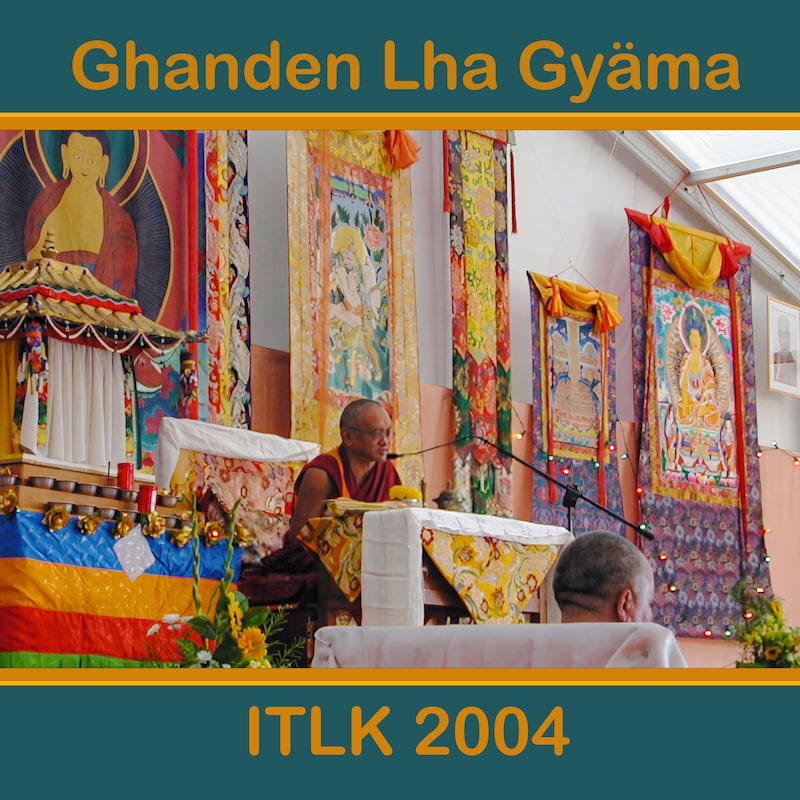
This teaching was given by Lama Zopa Rinpoche at Lama Tsonkhapa Institute in Italy as part of the Ganden Lha Gyama retreat between September 3-30, 2004.
Find out more about Lama Zopa Rinpoche, his teachings and projects at https://fpmt.org/
Transcripts
The mantra that I gave during the, along with the other mantras, that, the one that makes to, by other people hearing your voice, seeing you that it, it’s meaningful to them that it purifies the five uninterrupted negative karmas of others. Others’ simply hearing your voice or talking to you or your talking to them, however, the touching or the, by, also might be by seeing you, that was done.
But the other one, that when you recite the mantra, the other one that if you recite this mantra then, that you become meaningful to other sentient beings, anyone who see you, touch, however, that it becomes more meaningful than, twice and then the stupa, so by the power of this mantra, so before I recited this SAM HA, so it’s SANG HA, I checked the Prama Lotsawa’s how to read the Sanskrit, so there, I checked there, so it says OM HRI YA DHE SARWA TATHAAGATA HRIDAYA GARBHE / DZOLA DHARMA DHATU GARBHE / SANG HARANA, before I think I said SANG HA, but then I said SAM, at the end, the last time, so OM HRI YA DHE SARWA TATHAAGATA HRIDAYA GARBHE / DZOLA DHARMA DHATU GARBHE / SANG HARANA AAYU SANG SHODHAYA / PAAPAM SARWA TATHAAGATA SAMENDRA USHNIKHA BIMALE BISHUDHE SWAAHAA. So it’s not SAM HA, SANG HA.
[Ven. Sarah: Rinpoche, when Rinpoche gave the mantra before, it went too fast and nobody got it. Could Rinpoche please...]
I read a few times.
[Ven. Sarah: I know, and we got more confused each time.] But that was, might be from last time, from Adelaide?
[Ven. Sarah: Nobody has it here. A lot of people have been asking for it, Rinpoche.
Nobody has it here.]
I see. Okay. Then later. Just make sure, later to write down exactly, so that’s better, rather than writing now. Then print, then everybody can have. I’m just correcting that, because there’s Tibetan letters, circle on top, so sometimes MA, sometimes, depending on which, so there’s, not same, like, for example, KA KHA GA GHA NGA, so these ones if it has circle, then NGA, the fifth one goes, so it means KANG, KHANG, GANG, GHANG, so like that, that’s how it applies. Then, SHA SHA SA HA KSHA, so then if there’s a circle on top then, so, I don’t know that is, but it’s said like that, but I don’t know that is read. So sometimes there’s a NGA, there’s NGA on top of another letter, then there’s another letter, three, there’s one letter, then NGA then, like PANCH, like five, PANCH, written like that, but here I don’t know, I haven’t seen that, I don’t know how that is read.
Then, TA THA DA DHA NA, so the fifth one NA, so TAN THAN DAN DHAN, so like that, so whatever the fifth one, then you, if there’s circle on top, so TA THA DA DHA NA, TA THA DA DHA NA, PA PHA BA BHA MA, so PA PHA BA BHA MA, so then if there’s a circle on top, then MAM, PAM PHAM BAM BHAM, so like that. So the fifth one is MA. So then, SA SHA YA RA LA WA, SHA KA SA, HA, so also, SA HA KSHA, so SHA SA YA RA LA WA SHA KSHA, so this, SHA SHA SA HA KSHA, so this last part, much of these letters, if there’s a circle on top then there’s a NGA, so therefore, SA, this one is not SAM, it’s SANG. Because last time I mentioned before, but first I mentioned SANG then I mentioned might be SAM, so because didn’t remember clear, so then I checked again, so it’s SANG. So that’s just to clarify.
OM HRI YA DHE SARWA TATHAAGATA HRIDAYA GARBHE / DZOLA DHARMA DHATU GARBHE / SANG HARANA AAYU SANG SHODHAYA / PAAPAM SARWA TATHAAGATA SAMENDRA USHNIKHA,
so then US, NI, then the next one SHOLAKA, that’s not pronounced SA, the previous one pronounced SA, US, USNI, the next one is not pronounced SA, which is SHALOKA alone, then there’s the, I think that one I mentioned last time, not KA, not KA, but softer than that, USNISHKA, USNISHKA, something like that, softer, the Sanskrit way, that’s what the Pama Lotsawa has introduced. I don’t know how the Sanskrit, who has studied well, who actually has learned Sanskrit, I don’t know how they read, but, that I have no idea. But the Tibetan lama, Pama Lotsawa, this is how he explained there, written the mantra. So, well it, everything what Pama Lotsawa said is, whether people who have really studied well Sanskrit, how to, it does fit on that account, I’m not sure, can’t say. So, like, so the OM and HUNG, that’s always, that’s the exceptions, the OM, and it doesn’t say HUM, it says HUNG in Pama Lotsawa, it’s the way HUNG, but usually, but Indians when they recite OM MANI PADME HUNG, looks like that what they’re ?reading , but they say HUM. When the Indians they recite OM MANI PADME HUNG, I think they recite OM MANI PADME HUM. They say not HUNG, HUM. So I, really somebody knows very well Sanskrit, but here the great lama, the Pama Lotsawa, how to read the mantra there’s a HUNG, like normally Tibetans recite OM MANI PADME HUNG, like that, there it says HUNG.
So this, I think he must have realization of emptiness.
One monk, I think, one lama or monk, had realization of emptiness, so I think the totally lost, so he grabbed the cave, the rock, grabbed it, so I think he realized that the I exists, but so scared lost so grabbed the cave, the rock. So somebody hold the dongka, this one, this one’s dongka, so hold this, where got so much fear, so frightened, unbelievable, because I lost, then grabbed on this, so then it is said in the teachings, this lama, the existence of I is by grabbing on the dongka, how to say, the existence of I left on the dongka, so by grabbing, so then, so I guess, realized that there’s a I, at the end, after the I is totally lost, then the I grasping, somebody grabbing the dongka. So exist in mere name, something like that.
Anyway, so, OM and HUNG, these are exceptions, how to read doesn’t depend on the next syllables or whatever there is, but some others, like the NA MA NAWA, the first mantra that I gave, you see, the mantra before, the one that anybody who see, anybody who make, connect, make connection to, hear your voice, things like that, then purify the five uninterrupted negative karmas, that means no question the ten non-virtues, that the NAMA NAWA NAWA TI NEN, so again the NA, then there’s a circle on top, so there is no, there’s no other syllable there, so there may be the circle like this, with the, might be that or “she” means line like this, like a comma, so that you read in NEN, the circle on top, NA, NEN. [Reads mantra quickly to] TATHAGATA NAM, so again there’s a circle, NA, there’s a circle, then there’s another, there’s next there’s another syllable, so that one then you recite NAM, yeah, like that DIWA LUKA NEN, then that’s because there’s no syllable after that, NEN SAHA SA NEN [reads mantra to end].
So there are details like that, NA, then a circle, but it’s all, everything’s not the same, so depending on which, how, whether it’s “she” stops there or syllable there, so SANG, so that’s to be corrected.
So I do a few oral transmissions so that in case somebody hasn’t received before, then by having received the oral transmission, then more powerful to do the practice. There’s more benefit to the mind, more powerful. When you do the practice, when you recite, also when you teach, when you explain to others there’s more power, benefit for the mind. Also, Kirti Tsenshab Rinpoche explained that, so you achieve the, after actualizing bodhicitta, you enter the Mahayana path, the path of merit, which has small, middle and great. After that then there’s path of preparatory path, then heat, tip, patience, sublime Dharma. So when you achieve the sublime Dharma, before achieving the, before entering the exalted path, the right-seeing path, so when you achieve the preparatory path, the sublime path, the sublime Dharma, so that time, how many oral transmissions that one has received in the past, so you remember all, just all together, all the teachings, every single teaching that you, oral transmission you have received, that time then everything you remember, before enter in the exalted path, right-seeing path, so it seems it’s part of the qualities that practitioner, before engaging in the exalted path. So remembering everything, so that time, all those teachings and all those who, every single word, so how many thousands of pages you receive oral transmission, so remember everything, the meanings, words. So Rinpoche explained as part of the benefit of taking oral, receiving oral transmissions.
So anyway, maybe to do later.
Yeah, I think maybe, probably liberate our stomachs, I think. Maybe liberate our stomachs and the cooks.
So you end up, the last part.
Päl dän tsa wäi la ma rin po chhe
Dag gi chi wor pä möi teng zhug la
Ka drin chhen pöi go nä je zung te
Ku sung thug kyi ngö drub tsäl du söl
Magnificent and precious root Guru,
Please abide on the lotus seat on my crown,
Guide me with your great kindness,
And grant me the realizations of your holy body, speech, and mind. (3x)
Jang chhub sem chhog rin po chhe
Ma kye pa nam kye gyur chig
Kye pa nyam pa me pa yi
Gong nä gong du phel war shog
May the precious supreme bodhichitta
Not yet born arise.
May that arisen not decline,
But increase more and more. (3x)
[Then group reads general dedication prayers in English, plus specific dedication for the fourth session.]
So, please enjoy the great blissful dinner. [Short LZR long-life prayer (3x)]