Shownotes
What happens when the system designed to care for you requires you to become your own advocate, negotiator, researcher, and risk manager?
For millions of people, illness is no longer only a physical crisis. It is a financial and emotional one, intensified by opaque prices, delayed treatment, insurance denials, and the quiet fear that help may never arrive.
Amy and Adam Cunningham explore the human cost of a healthcare system that often leaves patients and families navigating alone. Adam’s work with Sylk Health began with a friend’s suffering and grew into a larger question: what changes when people can see real prices, compare international options, and act before waiting becomes deterioration?
Their conversation reaches beyond medical tourism or employee benefits. It asks what responsibility looks like when institutions become difficult to trust. For individuals, that may mean seeking a patient advocate or looking beyond familiar systems. For employers, it may mean treating affordable care as a human obligation rather than an expense to absorb without question.
Sometimes agency does not arrive as confidence. It begins with the quiet recognition that waiting is also a choice. When people can see their options clearly, they are no longer only reacting to a system. They are participating in the future of their own care.
Moments That Create Momentum:
- The “You’re on Your Own” Threshold: Why accepting that the system may not rescue you can be the first step toward reclaiming control of your care.
- The Navigation Trap: How years spent waiting, appealing, and decoding healthcare bureaucracy can quietly become part of the harm itself.
- The Price Blindness Machine: Why medical costs remain hidden until after treatment, and how that secrecy keeps patients powerless when they are most vulnerable.
- The Credible Threat: How simply having a legitimate international healthcare option can force domestic providers to reconsider prices, even when no one gets on a plane.
- The Employer Accountability Question: Why offering health insurance is not the same as protecting employees, and what responsible leadership demands when care becomes financially destructive.
About the Guest:
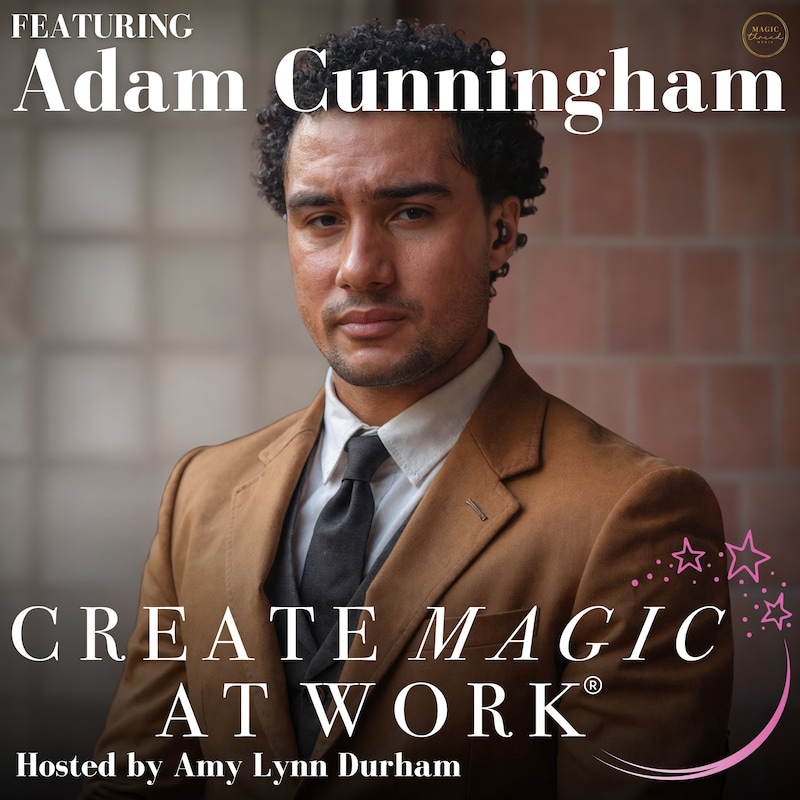
Adam Cunningham is the lead founder of Sylk Health, a company providing direct access to accredited international hospitals and freely publishing healthcare prices.
About Amy:
Amy Lynn Durham, known by her clients as the Corporate Mystic, is the founder of the Executive Coaching Firm, Create Magic At Work®, where they help leaders build workplaces rooted in creativity, collaboration, and fulfillment. A former corporate executive turned Executive Coach, Amy blends practical leadership strategies with spiritual intelligence to unlock human potential at work.
She’s a certified Executive Coach through UC Berkeley & the International Coaching Federation (ICF) In addition, Amy holds coaching certifications in Spiritual Intelligence (SQ21), the Edgewalker Profile, and the Archetypes of Change . In addition to being the host of the Create Magic At Work® podcast, Amy is the author of Create Magic At Work®, Creating Career Magic: A Daily Prompt Journal and the founder of Magic Thread Media™. Through her work, she inspires intentional leadership for thriving workplaces and lives where “magic” becomes reality.
Connect with Amy:
https://createmagicatwork.net/
https://www.linkedin.com/company/create-magic-at-work
https://www.facebook.com/112951637095427
https://www.instagram.com/createmagicatwork
https://www.youtube.com/channel/UCnEm4h3fUgaq8qgvZpz6dGg
Thanks for listening!
Thanks so much for listening to our podcast! If you enjoyed this episode and think that others could benefit from listening, please share it using the social media buttons on this page.
Do you have some feedback or questions about this episode? Leave a comment in the section below!
Subscribe to the podcast
If you would like to get automatic updates of new podcast episodes, you can follow the podcast on Apple Podcasts or your favorite podcast app.
Leave us an Apple Podcasts review
Ratings and reviews from our listeners are extremely valuable to us and greatly appreciated. They help our podcast rank higher on Apple Podcasts, which exposes our show to more awesome listeners like you. If you are enjoying the show, please leave us a review on Apple Podcasts.
Mentioned in this episode:
This show was brought to you in part by the Magic Thread Media Network. To learn more visit: https://magicthreadmedia.com/
Transcripts
Many people spend, you know, not just years navigating, sometimes decades navigating the healthcare system, and you know that entire time their their health is deteriorating, and frankly, many people end up dying as a result. And so, the moment that you realize that that you need to go out and find solutions on your own is the moment that I think real healthcare. can begin.
Adam Cunningham:Amy Lynn Durham: Hey, it's Amy. Welcome to Create Magic at Work, where we cast visions for a future of work where business decisions ripple outward to our teams, our communities, the planet, and humanity as a whole. If you're ready to edge walk instead of sleepwalk through your leadership, you're in the right place. So let's start making magic at work. 82 million Americans are currently making financial trade-offs just to afford health care. Over 27 million have no insurance, and more than a quarter of workers have delayed necessary surgeries simply because of the cost, and if you think this is just an issue for entry-level jobs, think again. A quarter of households earning over $90,000 a year are in the exact same boat. The reality is that the American middle class, the everyday people showing up to work every day, is, according to our guest, just one diagnosis away from bankruptcy. If you run a small business or work for a global team, the talent pool is feeling the
Adam Cunningham:squeeze everywhere. In the UK, 7.5 million people are stuck on NHS waiting lists. In Canada, the median wait for specialist treatment is nearly 20-eight weeks. It's starting to feel like the healthcare system is designed to make money and not to support you or your teams. If you're a small business owner, you watch your premiums increase every single year. If you're an employee, you pay higher deductibles for worse care. The system feels so convoluted that your own doctor doesn't even know what a surgery costs until you get the invoice. The U.S. is the only developed country where a worker or a business owner cannot find out the price of a medical procedure before it happens. Insert our guest today, Adam Cunningham, the founder of Silk Health. Adam studied medicine and ended up on the patient side of the system himself, and built a platform the healthcare industry would honestly rather didn't exist. He created Silk Health after watching a close friend lose her job, her
Adam Cunningham:health insurance, and get completely abused by the system when she desperately needed treatment. Adam, welcome to Create Magic at Work, and thank you for being here.
Adam Cunningham:Thank you very much for having me, Amy. It's a pleasure to be here.
Adam Cunningham:Amy Lynn Durham: Tell us about this journey that brought you to starting Silk Health. I read some pretty compelling data points to kick off this episode and just give the Create Magic at Work community a little bit more about your background and who you are.
Adam Cunningham:We could start right at the beginning if you like. I was quite ill as a child, having a lot of asthma and things like that, in and out of hospital quite frequently. And so, at about maybe five years of age, I decided I was going to be a doctor, and eventually achieved that. Had trouble practicing simply because of my illness. Around that time is when a friend of mine, though the one that you mentioned in Maine, she's got rheumatoid arthritis, and as a result of the the Doge cuts that Trump instituted, she lost her job working at a women's advocacy, and you know, of course, lost her health insurance because of it. But in the time that she did have health insurance, they pretty much did their best to give her the runaround, not actually providing her with any treatment, and for her to pay out of pocket for those treatments for frankly debilitating rheumatoid arthritis. She simply wouldn't be able to. She'd have to rely on family members, and even then, if she did,
Adam Cunningham:they would be almost completely prevented from paying the continued costs of treating her rheumatoid arthritis. When she did eventually lose her job and lose her health insurance. She's effectively been stuck suffering for the better part of a year afterwards, with having almost no healthcare coverage, spending most of her days just struggling to get by. And you know there are different forms of rheumatoid arthritis, but hers seems to be very aggressive. And the well, I would say funny, but it's actually quite morbid. Recently, she got a job. She usually works as a bartender, but one of her patrons offered her a job, and that is caregiving for. His infirm sister, who's in her 60s, and this is only a few weeks ago, by the way, and she, you know, a person who can barely function, can barely walk, can barely move around, is now taking care of a almost bedridden woman in her in her 60s. You know, from the outside perspective, it's quite disgusting, to say the least. That you know
Adam Cunningham:you've got the sick taking care of the infirm. It's not just depressing, but I think it's a a live critique of the reality of not just American healthcare, but the way a lot of Western healthcare is going.
Adam Cunningham:Amy Lynn Durham: Thank you for illustrating that with a personal story. I think a lot of us in my generation and in my age group too are starting to. I'm Gen X, and we're starting to experience this a little bit more frequently as we are taking care of elderly parents too. If we're in the sandwich generation, no matter what age, if we have elderly parents and kids, and we're trying to navigate through that, there's definitely been a rise, and I read all of the data points in the beginning, but there's definitely been a rise of longer wait times for referrals to specialists, or just frankly getting into an appointment period, and a lot of confusion around what's covered, what's not. In the past couple of years, I've really experienced a difference, and I'm like, is it just me because I'm getting older? I'm having a hard time even navigating this for my elderly parents right now, and I'm pretty good at going through paperwork and scheduling things, and so I'm like, this true that this
Adam Cunningham:is happening, or is this me getting older too? Sometimes I, I don't know, or I feel like maybe I'm gaslighting myself on the on the experience. But what would you say to those of us that are in that space? Is there anything we can do.
Adam Cunningham:Probably the the most important thing to do is to realize, to one degree or another, that you're on your own. And I don't necessarily mean that as some end of the world prophecy or anything like that. But you have to realize that you're on your own and that you're not necessarily going to be helped, and you know you assume that you are going to be helped because you're a taxpayer. For instance, you assume you're going to be helped because you pay insurance or health insurance. But the moment that you fully accept that you're on your own and you've got to figure it out yourself is the moment that you can actually start doing something about it, because far too many people they spend their time waiting or trying to navigate the healthcare system to actually get something done, and you know half the reason that patient advocates exist, you know, beyond their immediate clinical abilities, is simply to to help people navigate the healthcare system, not
Adam Cunningham:necessarily in a clinical sense, but in a payment and policy sense, to find out you know what programs they're open to joining or whatever it might be, and so it really is about navigating. Many people spend you know not just years navigating, sometimes decades navigating the healthcare system, and you know that entire time their their health is deteriorating, and frankly, many people end up dying as a result. And so, the moment that you realize that you need to go out and find solutions on your own is the moment that I think real healthcare can begin. And that's really why I created Silk health was a means by which to allow people, or enable people, or empower people to be able to find those solutions on their own.
Adam Cunningham:Amy Lynn Durham: That seems sad to me that people that are suffering can't receive care because they're navigating this ocean or this wave of paperwork and systems that just seems very, very sad. I don't know what what other word to to describe it. And your inspiration to starting Silk Health. Tell us about that. Tell us about what Silk Health is and why you started it?
Adam Cunningham:Well, really, to answer to answer your question, you know, regarding your parents, and in the case of my friend in Maine, to help her and things like that. Well, let me go back a bit. There's a bit of peculiarity, in particular when it. Comes to the U.S. being that in the rest of the world we're not too worried about disclosing prices of healthcare. Like you can go to China, for instance, and they will tell you almost exactly what a procedure is going to cost. Or you can go to Germany, for instance, or Italy, or Southeast Asia, say Malaysia or or the Philippines or Turkey or Russia, it really doesn't matter. In all of these places, before you engage in a surgery or whatever it might be, generally you're going to be told the price. However, that isn't necessarily true when it comes to the United States, and when I say not necessarily true, it's completely untrue when it comes to the U.S. Actually, finding out what a procedure costs is not just something that will
Adam Cunningham:preoccupy a significant amount of your time, but has come to the point where it's a profession. The vast majority of people in the U.S. do not actually know what their healthcare prices are going to be, and that's not me being a conspiracy theorist about the the healthcare situation. But back in, I believe it was either 21 or 22 Biden introduced a new law requiring hospitals to disclose their healthcare prices, and since then, only about 20-1% of hospitals have actually complied with that law. So the vast majority simply don't publish their prices, and those that actually do publish their prices, they're able to obfuscate what those prices actually are through very creative bookkeeping means and methods to do their best to make sure nobody can actually find out what the prices are, and so much so to the point that there are entire companies almost completely dedicated to actually finding out what individual hospitals charge for individual procedures. If you, as a patient, or you as
Adam Cunningham:a layman, ever have or ever feel as though you can't actually find out what something costs for the most part. Don't worry about it because you know even people in big business you might say are still trying to figure that out as well. What Silk Health is really, it's a platform for which hospitals internationally can upload their procedures or select procedures which they want to offer, and then they upload their prices there. I could give you a whole bunch of other jargon about you know what silk health is, but that's really it. It's a catalog or of healthcare providers, their procedures, and a means by which to immediately contact them. That's it.
Adam Cunningham:Amy Lynn Durham: And the transparency in seeing those prices internationally can lead to what for us?
Adam Cunningham:Well, that is the crux of a bit of an academic argument that we're involved in right now. But essentially, the U.S. currently it sets its prices based upon itself, and if we were to go into business, for instance, any other business, you'd say that that's unreasonable. Like if I want to sell, I don't know, rubber ducks in the U.S. I also have to consider the cost of rubber ducks in China. I also have to consider the cost of rubber ducks in Germany as well. So if I'm charging $100 for a rubber duck here, and I can get it for five in Germany and two in China, then the market will correct simply because we supposedly live in a free market, a free world with a free market. But that really isn't the case, in particular when it comes to U.S. healthcare, and sadly the way that Australian healthcare is going, for that matter. And so, the market domestically is able to essentially insulate itself from international options, and so hospitals are able to set their prices
Adam Cunningham:against other hospitals or effectively price gouge to their heart's content, and that is one of the primary reasons why you've got obfuscated prices in the first place, and then very high prices when they actually are found out, which is almost always after you've had the treatment. And the way in which that can seem very predatory is that because there is no yardstick to base things on healthcare companies, hospitals, the non for profits that operate them, quite often set prices that are frankly absurd to the point where Medicare sets base rates for particular procedures. So, take for instance a hip replacement. Medicare may say that is $15,000 when in reality, all of the private hospitals, which make up the vast majority of American healthcare, or private healthcare companies, or that make up the majority of American healthcare, will charge anywhere. And I'm not joking. When I refer to this, anywhere between three to 30 times the Medicare base rate, and that's not just a you know oh
Adam Cunningham:once in a blue moon somebody's charged you know 27 or 30 times or whatever it might be, but it's actually very very very common, and there even are some outliers to that that are above 30. So it's truly an absurdity, and the absurdity is allowed to continue simply because there is nobody, there is no competition. The U.S. market has essentially insulated itself from the rest of the world, and so the only competition is other hospitals. And frankly, they're they're not necessarily inclined to compete with each other. They're just inclined to, you know, negotiate their own carve outs or cut outs in their own particular geographic areas, and then make as much money as possible.
Adam Cunningham:Amy Lynn Durham: Wow, you have said that one of the biggest struggles to spiritual and mental peace in the workplace is financial stress, but specifically medical debt. So, on that note of everything you're saying, and you and I actually had this conversation offline because I was talking about one of the skills and spiritual intelligence, which is the interconnectedness of life, the experience that we are all connected, that we are all one, mainly on the interconnectedness of life piece. Sometimes problems, issues can feel so big to one person that they often feel entirely helpless to do anything about it. So we just accept the high bills, we accept the insurance denials. I even had a situation a few weeks ago where I was with one of my elderly parents that needed a procedure fully on Medicare here in the U.S. and we couldn't get it done. The doctor was clearly on board; they needed it, and I said, "Can we pay cash? And they said, "No,
Adam Cunningham:no.
Adam Cunningham:Amy Lynn Durham: I mean, even then, it was like, what do we do here? What I'm getting at with all of this is, how can we move from a mindset of helpless bystander to empowered change maker when dealing with our wellness, our employees' wellness, our family members' wellness, the wellness of our community?
Adam Cunningham:Well, it's it's funny you mention that. I think the two things are extremely related, as a matter of fact, and you know, related beyond the obvious is if you're in a terrible physical condition, then your mental condition is going to be almost, if not worse. I think the key thing, the key crossover between the two is that, at least that I found, is that it very much is an individual journey, both in healthcare and mental wellness, mental health, and any other esoteric additions you might consider on top of that, whether it comes to spirituality or not, and it is truly a a personal journey, and at least from my experience, you know, to look outside yourself to look for solutions that are outside yourself quite often aren't aren't beneficial, aren't timely, and simply aren't worth the effort. To look elsewhere for help is quite often the wrong way to go about things from a spiritual standpoint. At least in my opinion, it's really about looking within
Adam Cunningham:yourself and how you can improve your own experience of this plane of existence, if you like, and so the way in which I would correlate the two is that if you're in a situation or an environment that is detrimental to your own spirituality, then you have to be able to either change that environment or look within yourself to. I wouldn't necessarily say improve, but strengthen your own spiritual resolve. And the way in which I apply that to healthcare is instead of, as I mentioned before, is instead of looking elsewhere for solutions, looking for Medicare to help you, or looking for family to help you, or looking for the system to help you, or looking for an insurer to help you. It really is as simple as taking action into your own hands. That's probably the best thing I can correlate between the two. Is it's all about taking action into your own hands,
Adam Cunningham:Amy Lynn Durham: and that's what you did with starting Silk Health, right?
Adam Cunningham:Very much so. If I had known what I know now about how difficult it might be, I probably wouldn't have started. But I'm glad I did.
Adam Cunningham:Amy Lynn Durham: What is your ultimate vision for silk health? The
Adam Cunningham:part I haven't necessarily spoken about as much or intently is that, of course, yes, we do provide the ability to for patients to view procedures and their prices and book with hospitals, but that information is also turning out to be incredibly useful within the domestic U.S. market. There's some examples of some various companies that have previously made deals with international hospitals, and a good example being Hannaford within the U.S. I'm not sure if you've heard of the company, but they back in I believe 2012 they set up a deal with a Singaporean hospital or group of hospitals, essentially providing employee benefits that employees could go over to Singapore, get treatment, and so on and so forth, and that would be covered by the company's health insurance. As a result of that, they were able to use that position to leverage down domestic options within the U.S. so much so that I believe those domestic options went down by about 70% in price,
Adam Cunningham:and that's how serious U.S. healthcare providers can take a real actionable threat. And so, our intention is, of course, to provide these these services, which, by the way, are free to the patients to provide them to anyone and everybody that we can. But in addition to that, to to also give employers, insurers, unions, and any other representative organization within the U.S. at least to begin with, the ability to have access to international prices and have the means by which to send patients overseas, either as a means by which to actually send those patients overseas, or simply just to leverage their domestic options so that their prices can be decreased.
Adam Cunningham:Amy Lynn Durham: Interesting. That's what I was just going to ask you. How can business leaders help lower insurance costs for their employees and for themselves without forcing anyone to get on a plane? You answered it by saying the connection is once that competition is there, it'll lower here in the U.S. so they don't have to get on that plane. Ideally, yeah,
Adam Cunningham:yeah. The missing piece that I hadn't necessarily put in is the fiduciary duty, and that's something that's relatively new, or at least when it comes to healthcare. Of course, there's been you know other fiduciary duty discussions, particularly when it comes to investments in 401k's and I don't think I need to elaborate too much on the upcoming fiduciary discussion when SpaceX takes a bit of a plummet. But when it comes to healthcare, essentially the fiduciary argument, which has been proven in court at least a few times now, is that employers or their representatives have a fiduciary duty to look for not just quality healthcare, but reasonably priced quality healthcare, and that doesn't necessarily have to be domestic. It can be international as well. And so, once we start thinking about that as a legal requirement, that should very well hopefully change the scenery. And when it comes to just what's on the table for healthcare,
Adam Cunningham:Amy Lynn Durham: for leaders, HR executives, business owners that are listening, healthcare benefits are usually one of the top three massive expenses if they have healthcare in their company. Do you have a piece of advice for them on how to lower those costs?
Adam Cunningham:Of course, my my advice would be to get in contact with us. But the most important thing to do is to fight tooth and nail, regardless of whether it is through silk health or not, I think the most important thing to do is to fight absolutely tooth and nail, and the reason for that is because the monopoly, you might say, or functional monopoly of healthcare in the U.S. is so entrenched, it's so deep rooted that anything less than an apocalyptic effort will probably encounter great difficulty. It's just so well entrenched that you are going to pay several 100% what the cost of a procedure actually is, and of course that shows up in insurance costs and so on and so forth. But it's just so deeply entrenched that. Unless you fight tooth and nail for it, it's very difficult to actually bring down costs.
Adam Cunningham:Amy Lynn Durham: You mentioned the power of a credible threat in negotiations. So, if you're an everyday employer, or I don't know if this applies to an entrepreneur or a small business owner, even, and you're using global price transparency to force monopolies to stop overcharging. What is this power of a credible threat? Give us like one or two tips how we would do it.
Adam Cunningham:That really comes back down to medical tourism. Maybe 10 years ago, medical tourism it was taken seriously, but it wasn't a very big thing. Not too many people were doing it, and over time, it's become significantly more common. From I believe 1.1 million in 2019 1.1 million Americans traveling internationally every year for medical travel to now, where it's about 2 million every year, and that's a very significant increase. Of course, you know, for a population of 350 million, it's a drop in the bucket. However, it does show a trend that people are traveling internationally for healthcare, and you know, most often than not, that's not necessarily internationally. You know, across seas and oceans, but straight over to Mexico, for instance. But still, that is going outside the system. When it comes to our credible threat, we simply provide the streamlined means by which we can make that happen. We're not a typical medical tourism facilitator that interjects themselves
Adam Cunningham:into the process, we don't have coordinators or anything like that, and we don't take weeks to get back to a patient or anything like that. A patient can come to, or a person can come to Silk Health. As I mentioned, they can find the procedure that they want. They can see the providers that offer it and their prices. They can select a consultation slot available, and then they can directly book with, or book a consultation, or a lead call. I guess would be the correct term with the healthcare provider of their choice internationally. That isn't something that needs to be worked into any particular software or any particular HR system or anything like that. It's simply an option that is there and can immediately be acted on without any wider integration or involvement, and that really is the crux of the credible threat. And of course, we can do this at an individual level. We can do this at an employer level. We can do this at an organizational level, or a union level, or even an
Adam Cunningham:insurer level, so there are many different ways in which we can implement this. But the crux of it is that yet, yet again, we're providing a credible threat and actually allowing a means for which people, patients, employees can travel overseas and receive care.
Adam Cunningham:Amy Lynn Durham: You've mentioned a few examples. Some other examples that you've shared with me are in China. Can some cancer therapy treatments cost $60,000 compared to a half a million here? In China, they've built 4000 new hospitals in 15 years. Their top surgeons operate three to five times the annual volume of American ones. Most elective surgeries are scheduled within two weeks, so the discrepancy is compelling when you start comparing the data. And I guess my takeaway from all of this, because this is a newer topic that we're talking about on Create Magic at work, but I I was so inspired by your personal story and how you started this because this is definitely something that could feel so big that those of us that are just getting up, going to work, trying to take care of our kids and our parents and pay our bills are kind of like how are we going to overhaul the like jacked up healthcare system in the U.S. Right? I commend you for everything that you have done and for
Adam Cunningham:being an example of showing that if we take a step forward and try to create that ripple effect, it can really have some compounding change. So I appreciate that, and I do want to note that you are actually patching into the podcast right now from West Africa, right?
Adam Cunningham:Very much so. I'm in mosquito and malaria infected Baden right now in Nigeria, I'm doing some volunteer work at one of the hospitals here, and soon to be leaving, given how frequently I'm getting malaria. But I don't necessarily mind it.
Adam Cunningham:Amy Lynn Durham: Tell us what your vision is for when you leave in the work that you'll be doing.
Adam Cunningham:My vision really is that I'll give people a choice. I'll empower the individual, in particular, to be able to pursue healthcare on their own, and it really is just about knowing, for the most part, just knowing that you know these international options do exist, and even as an employer or a union or whatever it might be, it's yet again it's knowing that these options exist. If you just are, I guess, for lack of a better term, born into a into a system where you the only expected means of healthcare is you know going through insurance or whatever it might be, then you're essentially relegated to poor health. And so, what I'm really here to do is to provide options.
Adam Cunningham:Amy Lynn Durham: So it's knowing these options exist and utilizing them in the power of negotiation to help us here. For those of us here in the U.S. or wherever in the U.K. it sounded like there was similar issues as well as Canada from the the data that we shared in the beginning, and using them to lower prices so everyone can receive care at an affordable rate, I do have one more burning question that I'm. I know I'm going to be like, I should have asked that, and I want to ask it before because I'm going to pull a card for both of us and for everyone listening from our Edge Walker card deck because you're such an edge walker in our world. But before I get to that, for those of us that can't even hop on a plane and go to some other country for some medical procedure, what do we do?
Adam Cunningham:I'll be the contrarian here and say that for the vast majority of people who really do need healthcare, hopping on a plane is the most reasonable solution, even if it is, even if it does seem unreasonable at the time, and I'll give you an example. I was on a podcast a little while ago with a healthcare insurance broker, and she had to have her hip replaced, or maybe it was a knee. I can't recall. She paid with insurance. She paid $67,000 in the U.S. and overseas, in with any of the providers that we work with, that hip replacement's closer to 10 to $15,000 And you know, even if you got both hips replaced and went flew first class and stayed at the Hilton, you'd still end up paying less than a single hip replacement in the U.S. and to me, the price savings are so monumental and so significant and so life changing for frankly the vast majority of people that it's unconscionable to even consider domestic options in in many cases unless you've got the absolute
Adam Cunningham:best of insurance cases, but if it truly is impossible to to travel overseas, then of course you know the the options of leveraging down healthcare costs in the U.S. there, but of course that's not quite accessible for the individual. And then the most important thing after that simply would be to make use of a patient advocate, I think they are perhaps a underappreciated and underutilized and little known savior of healthcare in the U.S. at least, being that they know most things about the or most of the functional things about the U.S. medical system, they're able to help navigate both at a clinical level, but then when it comes to billing and insurance and things like that, they're also able to help people truly understand just what the hell they're getting into and how to get through it.
Adam Cunningham:Amy Lynn Durham: Thank you for illustrating that for us. That was a really great way to paint the picture in that, and to feel like, I mean, at least look at those options just to see, right? Instead of feeling like we're stuck where we are. So, Adam, in the Edgewalker work that we do here at Create Magic at Work, one of the qualities and skills that leaders can skill build in is vision, and the Edgewalker definition of vision is the gift of being able to see what others cannot, possibilities, trends, the future, and guidance from something greater than oneself, and one of my favorite affirmations on vision from the Edgewalker work and in the Edgewalker card deck is: I create time and space for guidance from the spiritual world. I ask questions and get answers. I ask. Questions and get answers, and I would love for you to share with all of us how this vision of starting Silk Health came about for you in the spirit of this Edgewalker quality.
Adam Cunningham:There's a few different ways to put it, but perhaps the simplest way to say it is: it came to me in a dream. I was half awake, half asleep one night, trying to finally get to sleep, and almost in this semi-waking state, it just suddenly occurred to me. I had all of the prior information accessible. I already knew it to one degree or another, and I would think this half waking, half asleep dream was the synthesis of all of that different information, and essentially where it was brought together. I would say that's probably the first time that I truly realized exactly what I was going to do and how I was going to do it. The how, of course, wasn't quite as simple as just having a dream, but I would say the how became of not really of any importance once I realized what I was going to do. It was just simply a question of time. I know I'm going to accomplish what I want, or what came to me, and it's just a matter of doing it. Every day poses a new challenge, a new task,
Adam Cunningham:sometimes a new issue, but I get through them all. And in some ways, a lot of the a lot of the issues that I face now, I would think perhaps 10 years ago, my former self would see them as insurmountable. But now that the end goal is clear, I I've never had this much energy in my life. I've never had this much conviction in my life. As a matter of fact, I would say in some ways it's an alignment of all levels of consciousness. You know, we can talk about the the conscious and the subconscious and whatever other levels there might be, but it truly feels as though every way that you could define me is fully in alignment to to achieving this goal or this task,
Adam Cunningham:Amy Lynn Durham: and some of your personal experiences that contributed to this. Tell us about the different types of. I think you worked with a shaman, and then you you really did a lot of meditation, and a lot of the visions came to you in that way. I'd love to hear how that formed, if you're comfortable.
Adam Cunningham:Yeah, no, of course. Believe it or not, the the visions you might say those are things that came afterwards. My my background, you might say, has been something of a lot of dabbling in religion and spirituality, and frankly, for the majority of my life, not by choice either. It's been been a result of my parents. They were heavily into Christianity when I was a child, and as a matter of fact, came to the point of running their own ministry, and eventually left that behind to join a synagogue, and from a synagogue back to the church, and from church into into a lot of traditional practices, I guess you would call them voodoo, you might say, both African and European, which of course are the two sides of my family. I've always understood. I'm not to say that I'm any kind of spiritual spiritual person, but I've always understood from a young age that religion, in almost all its forms, at least that I've experienced, are simply a layer of obfuscation on top of true
Adam Cunningham:spirituality, and that's not to say there's no value to them at all, but rather the way in which they're commonly practiced feels like a an added layer and a needless added layer in between true spirituality and and yourself. As a result, I never really took much of an interest in it. I I was actually quite dismayed by it. Perhaps I learnt, you know, a lot of the core values of, say, Christianity, for instance. I, I think I internalized them as a child, or at least, you know, New Testament Christianity. I may have internalized them, but one thing that I will say is that I always saw other people who profess themselves to be Christians quite often, being as unChristian as you could possibly imagine, and so there was a very heavy disconnect for me there, and so as a partial result of that, I started straying as far away from religion and anything like that as I could. That. In part, led me to not being very spiritual or interested in any of those things altogether. But
Adam Cunningham:about I think maybe six years ago now, I'm starting to get old, so I can say I can say five, 610, years ago. But about six years ago, I maybe seven years ago, I had an asthma attack, a very bad asthma attack, and as a matter of fact, I caught malaria, which was the the reason for the asthma attack, much the same as I have now. And it got to the point where I was so bad that I lost consciousness and nearly died as a result. And I lost consciousness in the car and woke up in a hospital a few months later. Sorry, a few hours later, with a a rather soiled pair of pants. But after that experience, I won't say. Well, yes, certainly it was a near death experience. But after that, I I perhaps felt a little bit more seated in my body, and not in a like a mystical or spiritual sense, but as perhaps an understanding of the fragility of life, that led me to. I can't necessarily explain or detail exactly the method through which that happened, but I certainly felt a greater connection to my thoughts
Adam Cunningham:ever since then. Perhaps a greater understanding of who and what I am.
Adam Cunningham:Amy Lynn Durham: I'm curious. There's these series of moments. That moment that you were talking about, where it came to you in a dream when you were in sort of the in between is what I call it, you know, in between maybe the waking state and being fully awake in our 3d reality here, I'm just really intrigued by the moments that people take action once they have that vision because I think we get inspired and we get visions all the time, but then we don't take action on them. And so, what was it in that moment where you actually brought this into our reality from that vision?
Adam Cunningham:I think this is a fairly maybe a common a common experience is that there was a lot of trauma and unhappiness prior to prior to that realization. I was very deeply unhappy with my life after finishing med school, and I had quite a few family issues and personal issues and all kinds of things like that, but I knew that I was going to do something. I just wasn't entirely sure of what. And so after I did have this have this dream, it didn't necessarily feel like I was presented an option, but instead I would say I was presented a purpose, and in the fulfillment of that purpose, I have almost had any and all questions I have answered in one form or another, whether that be through my own realization and reflection, or whether that be external through the people in which I come into contact with and discuss things with, almost everything has felt as though it's been meant to be. And I don't necessarily, of course, you can apply like the spiritual aspect to that,
Adam Cunningham:and I don't necessarily want to dismiss it here, but I would say that it's more of an opening of the eyes. Like once you're able to realize something, once you're aware of something, then you can notice things related to it, either indirectly or directly, much easier than you would otherwise, and perhaps not recognize at all otherwise. Now that I've been given a certainty of what I'm doing, everything has fallen into place, and you can understand that from the spiritual lens, as it's meant to be, or you can understand that from the perhaps more, I guess, traditional understanding that now that I'm aware of it, all of these things are more accessible to me. I'm
Adam Cunningham:Amy Lynn Durham: going to pull a card for everyone listening from our Edge Walker card deck that Dr. Judy Neal and I authored. An Edgewalker is an archetype of change, and the Edgewalker looks to the future with creative, positive visualization, and they take risks. They build bridges. They have vision. They have passion. They have focus. They can bring things into our reality. They can sense what's next. So let's see what card comes up for us. And a message for everyone today, because this has definitely been an edge walker type conversation. Well, this is interesting. The manifesting card came out. The definition of the manifesting skill with the edge walker work is the ability to take a thought, idea, or vision and take concrete, practical steps to bring it into being. I think that's pretty much what you did with Silk Health, Adam-the ability to take a thought, idea, or vision and take concrete, practical steps to bring it into being. And the affirmation for everyone
listening is:I clearly articulate my intention. I think and feel that it has already happened. That's amazing.
Adam Cunningham:That that certainly is true for me. All of those things are quite true. I spent far too much time visualizing exactly what I want and how I'm going to do it. It really comes down to rabid, violent action right now. Not thinking about the what ifs and the could be's, but doing it right now.
Adam Cunningham:Amy Lynn Durham: I love it. Thank you for being that example for us. One more question: What can you sense but not yet see for the future of healthcare?
Adam Cunningham:Ah, I wish I had good news there, but I don't think it's headed anywhere good. I think that most people of your generation, my generation, are probably going to end up with some very poor healthcare outcomes. So I would like to say that everything's going to go well. I'm going to save the world, but it really does look terrible, and it's not something just in the U.S. In a lot of Western countries, it just looks cataclysmic for us.
Adam Cunningham:Amy Lynn Durham: So the hope for all of us-what's the hope for all of us to take the radical action? I think
Adam Cunningham:really it is all about taking action, our own lives, our own health into our own hands. Just as we were saying before, whether it's spiritual, whether it's physical, whether it's health, it's all about taking action and doing something. So that's probably the the best thing that it's going to come out of it is that we're. I think we're going to become a lot more invested in our in our own health, whether it be spiritual or physical or mental, and we hopefully will start to do something about it, as opposed to relying on a church or a healthcare system or whatever it might be to do it for us.
Adam Cunningham:Amy Lynn Durham: We have a lot of visions. We talk a lot about a lot of ideas. Now's the time to take that risk, take that thought, take that idea, take that vision, and take concrete, practical steps to bring it into being. While we're here, there's no time to wait. Is my is another takeaway I have from our conversation, Adam. Thank you so much for patching in from West Africa, taking time off from the work you're doing to share what you've created and the way that you're trying to empower everyone to take care of their own health and get us to think differently in our day about our health. Thank you for being the example of risk taking for us edge walkers out there.
Adam Cunningham:Very much appreciated.
Adam Cunningham:Yeah, thank you for having
Adam Cunningham:me.
Adam Cunningham:Amy Lynn Durham: Yeah, thanks, Adam. Thanks for bringing hopefully some magical change to all of us through this conversation, and look forward to seeing how this goes.
Adam Cunningham:Thank you.




