Shownotes
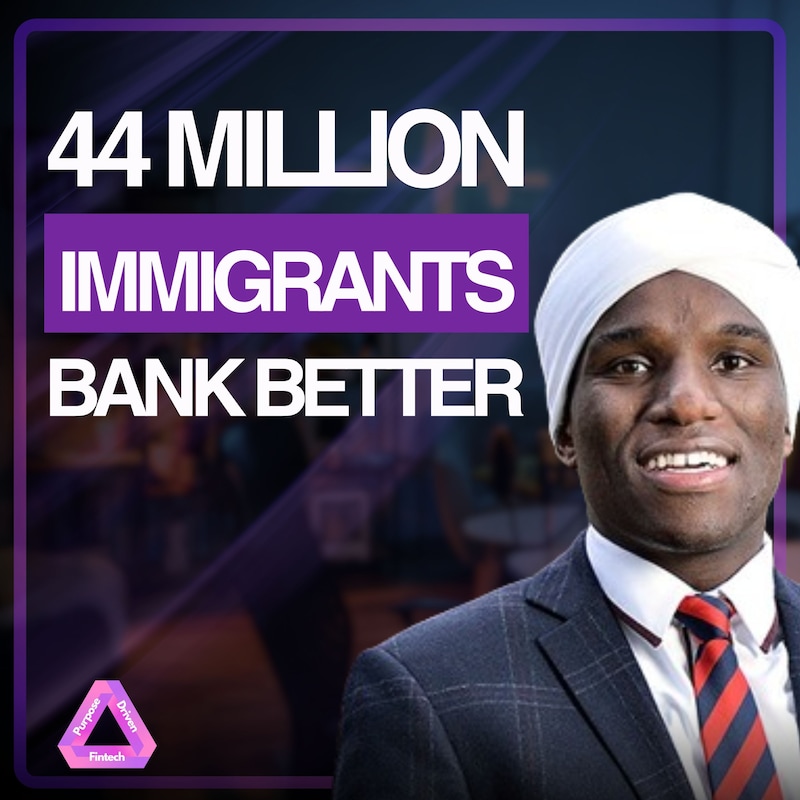
Being an immigrant in the US comes with financial challenges, starting with struggles to open a bank account. This is a 44 Million problem with 13% of US population classified as immigrants, and contributing to 22% of US GDP - that’s USD 3.9Trillion per year.
In today’s episode, Dr David Wachira, CEO & Co-Founder at Waya, talks to us about this customer problem statement and how Waya is being part of the solution.
We explore how to create purpose driven FinTechs to create more impact, the biggest challenges immigrants have accessing financial services in the US. Waya’s customer segments ranging from students, workers, minorities and professionals, solving for financial inclusion, requirements for illegal immigrants to open a bank account, and how marketing efforts to reach out to immigrants is different from your traditional FinTech.
If you enjoy this Purpose Driven FinTech episode it would mean the world if you subscribe and give it a follow so that we can have more impact. Remember to connect in YouTube or LinkedIn to keep the conversation going.
Let’s dive into it!
👉 You can find Dr David here
- LinkedIn: https://www.linkedin.com/in/david-wachira/
- LinkedIn Waya: https://www.linkedin.com/company/wayapay/
- Website: https://getwaya.com/
👉 And you can find Monica here:
- LinkedIn: https://www.linkedin.com/in/monicamillares/
- YouTube: https://www.youtube.com/@moni_millares
- TikTok: https://www.tiktok.com/@moni_millares
- Website: https://moni-millares.mystrikingly.com/
If you enjoy this pod, please follow and leave a 5 star rating on Spotify and a review on Apple podcasts
In this Purpose Driven FinTech episode we cover:
(01:05) The Role of Fintechs in Society
(05:43) The Challenges of Immigrants in the U.S.
(07:11) The Importance of Financial Access
(08:19) The Journey of Immigrants in the U.S.
(09:00) The Role of Waya in assisting immigrants
(14:42) The Size and Impact of the Immigrant Population in the U.S.
(18:17) The Challenges Immigrants Face in Accessing Financial Services
(20:41) The Possibility for Illegal Immigrants to Open Bank Accounts
(24:18) The Importance of Financial Education and Literacy
(27:19) Overcoming Fear as an Immigrant
(28:23) The Reality of Deportation and Living in Fear
(30:10) Understanding the Struggles of Immigrants
(31:00) Defining Financial Inclusion
(32:09) The Impact of Financial Exclusion
(36:56) The Role of Fintech in Financial Inclusion
(43:27) The Power of Word of Mouth in Community Outreach
(44:30) The Importance of Trust in Building a Fintech Brand
(49:07) The Potential Change in the Fintech Industry
Questions:
- How can illegal immigrants open bank accounts in US?
- What is an ITIN tax ID number?
- How to build credit as an immigrant in America?
- What are challenges immigrants face accessing financial services?
- How many immigrants contribute to US economy?
- What is financial access for undocumented immigrants?
- How to open checking account without social security number?
- What is neobanking for immigrants and minorities?
- How to pay taxes as illegal immigrant?
- What are community-based marketing strategies?
- How to reach immigrant communities through churches?
- What is the difference between legal and financial documentation?
- How to build wealth without credit history?
- What are deposit requirements for immigrants renting apartments?
- How to reach unbanked immigrant populations?
- What is the role of remittances in immigrant communities?
- How to design FinTech for non-digital savvy customers?
- What are valid IDs for immigrant bank accounts?
- How to market FinTech to immigrant communities?
- What is financial education for immigrant populations?
—
Production and marketing by Monica Millares. For inquiries about coaching, collabs, sponsoring the podcast or creating or editing your podcast email Monica at [email protected]
Disclaimer: This episode does not constitute professional nor financial advice and does not represent the opinion nor views of my current, past or future employers. The guest has agreed to record and release our conversation for the use of this podcast and promotion in social media.
Transcripts
Dr David Wachira: I'm doing really well. How are
Monica Millares: you Monica? I'm really good and I think the reason why this conversation is so relevant is because we're going to talk about A cohort that is underserved, that it's under a lot of pressure just because of their situation, and you're doing something about it, which I love.
And this cohort is illegal. It's immigrants specifically in the U S so it's a very important and relevant topic. I am from Mexico and thank God I have not gone through the being an illegal immigrant moving to the U S but I've seen the pain points and I was a kid since I was a kid. And it's about a pain point.
So thank you. Thank you for the work you do first and thank you for joining the podcast.
ng me. And I know it's quite [:Monica Millares: board. Thank you. Okay. So before we go into the work that you do, this podcast is about.
How do we create fintechs that have more impact? In your opinion, how can we create purpose driven fintechs that such that we can maximize impact?
Dr David Wachira: Yeah, I think people may look at this as a very complex undertaking, but whether it's fintechs or just any other business, at least my personal opinion and belief is that if you're solving a community based problem or a society based problem.
Those are usually the best fintechs or the best businesses. So they're there to solve a fundamental issue that is not being solved in the market. And just by the way markets are designed, the business can be rewarded by solving that particular aspect because it's a pinch point for, a lot of people.
[:And I think. Being at that intersection is what really exciting and that you can be like, okay, now look what we can do. We may not have been able to do this 10 or 15 years ago, but now we can easily do it just because of the advent of technology.
Monica Millares: That is such a very, good point. Like my first job was in a development bank in Mexico and we were targeting, actually my first product that I've ever built was.
Mexican immigrants in the U [:So the, what we can do with the tech that we have today is impressive.
Dr David Wachira: Yeah, no, I completely agree. No, it does make the process a little bit easier, largely because and sometimes unexplored in that. Hey, this check is here. For us, it has come in the way we validate users, for example, previously, it would have been, Not necessarily impossible, but just very difficult and require a lot of physical work.
Someone has to go to a bank, has to do all these things, queue up, take the IDs. But now it's much, much easier.
bout why and why you started [:Dr David Wachira: Yeah, So my co founders and I started WIRE in in 2019 and the reason we started it was experiences that we ourselves were undergoing as immigrants in this country.
Coincidentally, all my co founders are immigrants. It was not necessarily by design, but it was this crux where you find yourself undergoing the same problem from different avenues. And the most interesting thing about it is that we were in. What I said, different stages of immigration or even different classes of immigration, if you want to use that word.
So I came in as an immigrant student. So I understood that from a F1 visa perspective and very, low income perspective. Whereas Enoy came in as a refugee from Laos, a completely different experience, him it didn't have any papers whatsoever, let alone a passport, because everything was attained here.
n, so he was already running [:Where we met so high income, different class, but for him, he could not get an apartment because he didn't have any credit history. And as a result, he had to, even though he had quote unquote, a high income, he had to put a very big deposit for his apartment 6 months, which, you know, for most people.
Regardless of whether you're middle class or not, to be all of a sudden told to pay six months rent up front and that's the first day that you're starting work it's nearly impossible. And so this was the different circumstances of how we met and we were each trying to solve this problem from different avenues and different areas.
co founders Enoy and Renzo. [:And then we thought, why can't we solve it? Or why can't we try to solve it? And so that's, how we begun. Met incorporated in 2019 and started working this journey. It happened and slowed us down a little bit, but fast forward to where we are today and officially launched the product.
In September of last year to private beta and then publicly in May of this year. And we're still building so our focus is on immigrants and minorities living in and working in the United States. We also realize that a lot of the problems that immigrants are experiencing.
To a similar [:And as you mentioned, with your brother being in the United States, when you don't have that foundational element of financial access, particularly in the United States, it makes it very difficult to build wealth. You may have a job, but if that job doesn't translate to. Financial access in terms of being recognized in the system that it becomes difficult, if not impossible to build credit.
y underpins, wealth building [:Monica Millares: Yes. I have never thought about moving to a new country and then having to pay upfront six months of rent. It was just not part of my thinking. Yeah, so exactly. It's just like the challenges of an immigrant as such in the us. So you explain like you and your co-founders, you all came to the US as immigrants with very different type of immigrants.
When we look at WIAA, do you specialize in a category of immigrants, a sub segment, let's say, or do you cover all of the immigrants?
Dr David Wachira: In short, yes, we do specialize, at least at the beginning stage, because you can't be everything for everyone. But as we grow, we expect to be our, internally what we say is that we want to be that, a neobank for people living and working outside their home countries.
Amazing.
Monica Millares: I need [:Dr David Wachira: In the starting off phase, at least what we have built is the checking account. That one is live. So we do have other products that will be up and coming, particularly this quarter and the next quarter that will Cater to different, classes.
For example, right now, we may not be able to cater to people who want mortgages, but that is coming when we open our lending and mortgages. But in short people who can open a bank account with us essentially immigrant students, we have a lot of non skilled and semi skilled workers.
t very well because they are [:And that's a different conversation. But we do feel at least for now, what we have is for the someone who was recently immigrated in the United States for a minority who is essentially denied access to the regular banking rails for a variety of reasons. Usually it's the convenience part that has underpinned particularly for minorities.
And then for, immigrants, it's just being able to understand that particular story, but being able to say, Hey, You have a valid passport, we'll accept it as, your ID. It doesn't need to be a U. S. issued ID. Okay,
Monica Millares: I guess like basic sensitive question. And I'll use Mexico because that's my nationality.
e fees and I came in through [:Dr David Wachira: Yeah, so the short answer is yes there's some, hoops that you need to jump over that, that we are legally, mandated because of anti money laundering and anti terrorism activities and just the make sure that you're not on some OFAC list the so we can just say, Hey, open an account without any identification.
Because I wasn't driving it [:The only ID I had was my I 20 and my passport, which was valid. But that was not good enough. Now, there are some banks I should say who do accept those documents they're not necessarily well publicized But what i'm saying is that it's not the norm Even if you walk into chase or jp morgan aspect and you walk in with your international issue passport Yes, they can take it But the teller usually has never seen that aspect before and they're shuffling through papers It's not common knowledge and it creates a very difficult process Then of course the, stigmatization, the the feeling, huh?
When you are being scrutinized yes. Why don't you have this? You feel like, yeah. So most people just and that's why check cashing in the US may, be much easier because I can get a check, I can go to the seven 11, cash, the check, pay 5%, but at least I get the cash and I'm not asked all these questions.
But to your [:And they meet certain level of international standards. And we're trying to move away from this whole aspect of that is quite common. I was like yeah, you have a license from Germany, then it gets accepted. But if you have a license from Mexico no, it's no good, so we're, stratifying, yeah, we are stratifying the different countries where you'll find, quite frankly, a lot of developing countries have very selling not superior IDs in terms of anti forgery. So at least for now to answer [00:14:00] your question is short you can open an account if you have your passport.
And then what we do is if you don't have a social security number we do take an ITIN which is a tax ID and if you don't have that we, a large part of why is to facilitate financial education and and create those opportunities. So beyond just. The provision of financial access, we are also, we have podcasts, we have a lot of material if someone wants to open an account, but they don't have that particular one, say, okay, this is how you get your ITIN.
This is where you go. This is the application form, submit it. And then once you get the document, come back to us and we'll be able to open the account. Oh, that's awesome.
Monica Millares: So coming back to the core segment is immigrants in the US. Can you share with us, how big is this population give us some numbers to have a feel of the immigrant population in the U.
S. [:Dr David Wachira: It's, relatively big and that's a surprising part, because, the fact that it's so large, but so overlooked, it's just perplexing, because If you're just a pure MBA from Harvard, it's like, Hey, this makes perfect sense. This is where you should go to open a business. So that's where the money is.
I, think it's just from the perception from the banks. It's ah, it's not our, typical it's a little bit of more work, but it's, quite light. So what you should know about the United States is that the United States has the largest immigrant population in the world.
Which is pretty fundamental. It's a nation of immigrants. Not even the immediate immigrants, but often the first, second generation immigrants but US population of immigrants is 44 million which is the largest one, which is significant to put it into perspective, that's almost the size of my country, Kenya.
That's what I'm about
ger than Malaysia. Yeah, and [:Dr David Wachira: then the numbers even get more interesting. They make up roughly 22 percent of the U. S. GDP 3. 9 trillion per year. And it's it's a significant amount, and roughly. And then if you even break it down even further the quote unquote illegal immigrants contribute nearly 600 billion per year to the U.
onomy, which is Meaning that [:And then, of course, we can get into the other different contributions which you know, the immigrants. On the helms of starting or fortune 500 companies how many companies have been started by immigrants? And even you start to take a look at the, biggest ones Elon Musk, the CEO of Google, Steve Jobs was an immigrant, from immigrant parents.
There, there, is so much of this that is quite blatantly evident out there but still largely not necessarily, I wouldn't say misunderstood, but unknown. Yes.
omfort of home, and then you [:And then that helps you build all these skills that, yeah, it doesn't surprise me that there's tons of SMEs contributing a ton because
Dr David Wachira: And you do it without bringing attention to yourself. You're not beating your own drum.
Monica Millares: Yeah, exactly. So what are the biggest challenges then that immigrants have when it comes to moving to the U S and then accessing the financial services system
Dr David Wachira: as such?
Moving to the United States is moving. Let me start off by saying moving to any country has significant challenges. I moved to Zimbabwe for a year, and that was a significant moving to the United States or moving to another developed country like the United States.
s widely accepted. In Kenya, [:You can buy a house in cash. In the United States, you can't do any of that. And if you do then there's there's always why is the, person, I remember I bought a car, for my mom. We went to buy a car and the seller insisted that we pay in cash 20, 000. And then you're like, you know what, I'm just going to leave that deal.
That just sounds, too, suspicious. Why don't we want to a record keeping of, it. And it starts off by trying to go to the bank to get 20, 000 in cash. Asked so many questions. He's like, why do you need your own money? But and I guess the underpinning, this is the money laundering aspect and trafficking aspect.
cepted as a medium for trade [:So it means that if you can only pay for your apartment in cash then the apartments that you select will usually be in neighborhoods that are not so stellar or neighborhoods where there may be a lot of illegal activity, and that's why they accept, cash. So you'll find people living in neighborhoods, not necessarily by choice, but.
. That's what happened to my [:It's that. It's not that he didn't have the money. So first of all, it was a hurdle of okay, you can't pay in cash. And at first they, he thought that the person was meaning that the cash could be fake. He goes no, it's really, it's really, it's no, we can't take, 18, 000 in cash for your six months.
We are six months. That's because that's not safe for anyone. But beyond that, even if you do have the money. They want to pull your credit history to see your ability to pay. And if you don't have your credit history, then they'll say you may have the cash. But your credit history doesn't elicit confidence.
And even me, when I when I, rent out my place, it's the first thing that I pull on zero on Redfin. Okay, let me pull someone's rental history. Let me pull someone's credit history. Now. If you have been paying by cash for your rent, as I did as a student, that history is not recorded at all.
ns. And if you're telling me [:So it makes the U. S. technically very peculiar. And then there is the notion of. What documentation is needed to open an account now legally, you just need to be able to identify yourself. It doesn't necessarily say what document you need. The government does not say you need to have a social security number.
You need to have a passport. It just says you need to be able to identify Monica, and and pass reasonable KYC, that internal policy is set up by the banks. Now, different banks have different policies. For the most part they take the load of risk resistance.
Okay. They will pull Social [:Once you now factor in the stigmatization, the question that you asked, most people just feel legitimately. I see, it's, a very negative interview. And so you're like, the feeling of it may make you feel, you know what, let me just move away from this. And then, yeah. If you merge that with the fear that some particularly legal immigrants may feel, it's why are they so hard pressed on knowing where I live?
Are they going to be passing this on to the United States Immigration Service? And there's also a lack of understanding, which is where we feel financial education is important.
legally, but it's a, I'm an [:resident in the country, but I'm putting my money from my work as an illegal immigrant in a, in the legal system, but I don't have a work permit basically. And that's how
Dr David Wachira: it works. Yeah, and you'll find from an education perspective, and that's where we're really focused on, on, on financial education and literacy and just informing people because if you're not informed then you may live your life out of fear or just make a lot of unreasonable choices that may impact your financial health and your health in general, simply because you do not know.
use what they ask for is the [:For example, my wife, is Norwegian. When we're in Kenya and to add her to my bank account not only do you, it's not actually the visa that she needs because she has a visa, it's the dependent pass that they call it all a kind of like the green card residency equivalent of it. And if you don't have that, then you can't open a bank account.
The U. S. Surprisingly, is quite, and I'm very glad for that. It's quite different in that they're like we don't really care whether you're an illegal immigrant, we would prefer if you're a legal immigrant, but that is not the crux that we use to allow you to open a bank account, you can travel freely within the United States, you can buy property, you can do all that stuff without needing legal status,
Monica Millares: you can buy a property.
Yeah, he's an illegal immigrant. Yeah. Legally,
es came about, it's you know [:They don't particularly care about your, legal status. And, and you've, interestingly, and this is a different aspect of conversation, that aspect of paying taxes is what catches a lot of criminals. The Al Capones and all these other ones, we can't prove that they're doing legal activity, but we know they haven't paid their taxes.
The income is coming in. It becomes a way for the, company to, so
Monica Millares: an illegal immigrants. Can pay taxes in the U S.
Dr David Wachira: Yeah. Yeah. You can I've I've, encouraged and it's on a fearful perspective. I've encouraged people.
ah. Pay your taxes it's it's [:Oh, wow.
Monica Millares: I like, I could have fear. If I were to move right now, suddenly going to immigrate, then I won't. I would be like, Oh my God, but if I open a bank account and pay my taxes, they will come and get me because they know I am here. Yeah. And that's going to be my, do you know, that's my natural fear of knowing Oh no, but they know I'm here rather than, Oh, that pay me cash and I'll do everything in cash.
And then you don't know that I'm existing.
States is a nation of laws. [:Yes. You can enter the country illegally. Yeah. You can enter the country legally and tomorrow go register and say, Hey, I'm here legally. And I wouldn't encourage anyone to do this, but unless you, commit a high crime, more than likely, they're not going to come after you.
They're not very concerned about, that. It doesn't mean necessarily that you can't get deported. But what I'm saying is that. You don't have to live your life in fear as an immigrant in the United States and do things a lot under the table. Take cash payments and everything else. You can take those cash payments, go and open an account.
ld me in no uncertain terms. [:So when you call him to do your plumbing or your walls, he's actually licensed. And he has an ITIN to where I'm, able to get him to issue me a receipt that I can say, Hey, I have this particular person and I can withhold that from my taxes. And he himself is paying his taxes because we're, doing this formally in, in the system.
And, that's. That's more or less the beauty of it is that he is an example of a man who has, even despite his immigration status, has taken advantage of the formalization of his business and he's building wealth for his family because he's, there's a shortage of registered, contractors in the city that I live in who are essentially fair and not expensive.
to do that particular stuff [:Monica Millares: You are opening my eyes Vicky, I'm like, Oh, wow, I didn't know all of this. Yeah, but it's empowering in a way. Now I understand why people go through all these hoops to get into the U.
S. Because I understand some of their living conditions just by being, for example, from a country like Mexico and the challenges that they have back home. And then many of them risk their lives to just go through. But once you're on the other side, it is very tough. Yes, it is very tough. But there is a way to manage the system somehow.
Dr David Wachira: Yeah, very true. Oh, wow.
ell being advocates like for [:Let's go back to the basics.
Dr David Wachira: Yeah, that's a good question. Yeah, it's funny now I think of these terms in very high level sometimes when you ask me to define them in very simple terms. It can be quite difficult. But let's just go up even before we define the financial aspect.
It's just the word inclusion. And that purely is to include someone. What you're including them with. In into is irrelevant, but in this particular case is in the access to finances or access to the financial sector. So when we say financial inclusion it goes back to this conversation that we'll be having there people who are operating outside the rails of of formalized financial system.
ese people can be recognized [:From the financial system. And if you think of the United States historically it has unfortunately a very sad history when it comes to how it treated its minorities. So Latinos, blacks, and, other people of color in policies like redlining, where you specifically exclude someone from the ability to buy a house and because they can't buy a house then it's, you read them of that of that, for that wealth gap. But how do you exclude them from the ability to buy a house? Is that you, exclude them from the financial access. That becomes the underpinning aspect. It's the step one and [00:33:00] usually the most fundamental step in multiple countries, but definitely in this one is that it doesn't matter whether you have a job that is paying pretty well.
If you're not able to move those funds into the financial system, it's very difficult in this country to build wealth because, for example, right now, even if you're earning 100, 000 a year, which is a very above, above average income, you can't buy a house with that money. You would have to.
Save for 10, 15 years of not doing anything else, but saving so that you can take those cash payments in my house. And because that's not impossible, that's where credit that's impossible and that's where credit comes into place. If you excluded from the financial system, then you're not able to build that particular world because you cannot.
he future to bring them here [:Or rather access to health is very expensive in this country. And people who don't have insurance by a large extent also are not very financially secure. And so there, there are a lot of other, you can pull multiple different levers and you can work this on, different aspects when it comes to.
hborhoods in this particular [:Yes. Okay. Let's start on their financial access. Okay. Do we want to address education or the lack of education in low income countries? In low income communities, then let's start off on their financial, wellness, because, you're starting off in a race and you're you're way in the back largely because your parents couldn't afford, like in this country, a Head Start program, or you lived in a neighborhood that, school systems or daycares were not there, or they were too expensive.
e in to the financial system.[:Monica Millares: Yes, I think it's very clear and I think you explained really well the implications of. Being excluded as
Dr David Wachira: such, yeah, it can be, painful and I've seen it from multiple different different avenues, from, I've mainly worked, at least in my background in, in the World Bank I've always wanted a financial sector, but I worked a lot in the health and education system, then you could see what, you That lack of financial access was doing for health and education and those were just 2 elements that we could use, but it's definitely a very important, aspect.
. What are the Challenges or [:Dr David Wachira: inclusion. Yeah. So as FinTechs that's, a very good question. And then it goes back to what we were talking about.
I think for, us it's it's, a system where everyone can access financial services. That can help them build wealth, including savings, credit, loans, equity and insurance. And so you can have a FinTech company that is focused on insurance. You can have a FinTech company that is focused on on investments and wealth building like Robin Hood, for example where now you have.
oing, growing up. And during [:And then there was this fintech Mint app that was free. Thankfully that I could input my stuff and I could come up with goals. I could come up, see where my money was going. I think fintech, whether it is, directly in insurance tech, in health tech in in pure banking like we are, there are a lot of avenues that we can, underpin when it comes to accessing in the marketplace because From a general perspective, I feel that individuals, still suffer from their lack of knowledge when it comes to this.
ssarily explaining it to the [:And I think FinTech in general can play that role because institutions, whether they are financial institutions. Or whether they're health institutions just by general design, I'm not the most formative when it comes to admin technology. And I think that's where the fintechs come in is that you, you, take what we've built, for example, a wire and you couple it with, a traditional bank, and then you can build something, remarkable because at the end of the day, on this back end, you still need someone to do the regulatory banking aspect of it and from capital requirements, that's completely prohibited for us, but at the same time the, bank wants our customers, they want the tech that we've built, they want the intellectual property and they're able to expand into those without building a single branch.
So it becomes a very nice.
Monica Millares: So you're enabled by a bank. Yes.
Dr David Wachira: Yes. Yes. [:And sometimes, at the end of the day, this capitalist society you come with the market. Analysis. It's okay, this is how much we stand to make up, or this is the type of impact we stand to have. Then you can have more formative conversations. And thankfully, compared to 10 years ago, it, is, much easier.
And there are companies that are helping fintechs like us in, in terms of that, problem solving and solution.
Monica Millares: Yes, I like that. And I'm seeing that as a theme. I spoke with a CEO in Mexico saying she's very focused on financial inclusion. And she talks about like partnering with the banks.
I spoke with an AI [:Dr David Wachira: You definitely have to. For us, we've been, very fortunate to have great supporters in our banking. We have Mastercard, for example, who has been instrumental in this support.
On the one hand, it brings credibility to what you're doing when you have MasterCard stand behind your brand. On the other part, from our perspective, it's oh yeah, actually, MasterCard believes in us you're like, okay, we're on to something right if they, looked at our numbers and they're like, okay yeah, we like what you're doing.
You figure you have a great number of smart people who are standing and looking at this and they said, yes, let's move forward. We're like, okay. We, feel very good. We were not living in a pipe dream.
Monica Millares: That is awesome. So yeah, you're not living in a pipe dream. Definitely. You're having a lot of impact.
want to ask like a marketing [:Dr David Wachira: Yeah, one of the, two ways, the short answer is we use traditional marketing, digital marketing, just like everyone else does but we also have an ace up our sleeves is that we go down to the community itself and we meet with the community organizers, largely because we are part Of that community.
So what we have done for our ourselves, at least at Swire, is that we understand the problem because we're immigrants ourselves. When we came to building these things, we reached out to other immigrants and asked them, if you were to build a financial institution, or what about your bank do you not like, and what could you change?
And you [:We've built it. This is what we have. You mind testing it. And they're like, oh my gosh, this is really great. Finally, an institution for us by us. And there's that kind of pride that comes with it. And then we say, tell others. And so we reach out within the community aspects and because we really believe in impact, not just as a lip service, but we work within the community.
few of my Latino friends, I [:And then you go and speak to that person. You tell them what they're building and then you have this community leaders then push it down. So that's what we've done by actually working within the community ourselves and within the community leaders. And then we couple that with the traditional marketing.
That's what everybody's doing. But we're finding that the fast part is actually not only building a lot more credibility. But you get a lot of word of mouth and you get a lot of trust because, Oh, why am I going to try? Why I'm going to try? Why? Because Monica told me about it and I trust Monica.
And as a result, I, will, trust why.
Monica Millares: That is so interesting. Even I think about my life and now that you say, Hey, I want, I reach out to the community lead. And then in one hour, I know who to speak to. If I want to find the Mexican community and I'm like, yeah, we have a WhatsApp group here, it's if you find one of those ladies, then it's boom, all of us know, because it's a WhatsApp community and we post everything there and then everybody knows.
So [:Dr David Wachira: true. They're usually we all, unfortunately have this stereotypical picture of who. Who is the, voice in the community, and I would say nine times out 10, they're not what I expected. I'm always surprised, they're, sometimes they're the most non-tech of of the people.
But there's this element of trust and the ladies it's unbelievable. Just if you want to something just spread like the like wildfire, at least within the immigrant community, within the Kenyan community, for example, and you don't. Approach the ladies and you just think, Oh, yeah you should, speak to the men the the main bread owners.
than when I, sit around the [:How are we going to pay for this, school fees? How are we going to pay this? There's a very different aspect of it. And so you find that and then the savings culture as well, particularly among immigrant moms it's it's it's very well developed. Yeah. And so I found that becomes a very good medium for us to approach the community with, which is powerful much much, hats go off to the ladies in terms of what they're doing within our communities.
Monica Millares: Yes, and you surprised me again, because it's like you say, it's the communities, but it's not a. Organization for the community. It's the, Hey, we are a community with the same identity or same struggle. And we're just hang out and then we help each other. It's genuinely. Yeah, community.
Dr David Wachira: Yeah, it's definitely community.
I would [:Are they in the churches? Are they in the mosques? Or where are they? And then finding these individual people and it's, not organized. You wouldn't find them registered anywhere, but you're like, okay you, get into some random WhatsApp group and boom, you have 300 users.
Monica Millares: That is cool. Yeah, I like that.
e need to, close it down. So [:Dr David Wachira: Yeah, so wire is pretty easy. It's W A Y A. And our website is get wire dot com G E T W A Y A dot com.
We're on Facebook, LinkedIn, and Twitter, or I guess X, formerly Twitter. And also, we're on the Google Play Store and the Apple Play Store. So just go ahead download the app. Easy to set up for those in the U. S. In about 7 to 10 minutes, you'll have a bank account that's ready for you to utilize.
You can request your debit cards. You can set up your direct deposit. You can get paid there. You can pay others. And then myself, my name is David. That's my name on across the social media platforms as well. LinkedIn, Facebook, Instagram and X. But yeah, that's essentially where you can find us.
, please. Thanks. Spread the [:Monica Millares: tell their friends. Definitely. Yes. Just one more question before we go. I asked this to every guest at the very end that it's if we were, if you were to change one thing in the FinTech industry that could have the most impact to customers, colleagues, and investors, what could you change?
Dr David Wachira: Oh, what would I change? That's a very good question. For me, I would, I would change the onboarding requirements. I would, I would make it more plausible or at least helping people understand. Why it is, this information is, being collected and then to, I would make it, it's a battle that we're fighting.
sible. As long, it's a legal [:That inclusion that we're talking about.
Monica Millares: Yes. I think that sounds sensible because then you give accessibility to everyone, regardless of their nationality you can open the account anyway. So now make it easy, frictionless. Cool. It's been an absolute pleasure having you in the show, David. Thanks so much for sharing your time and wisdom.
Dr David Wachira: Thank you so much. It's a pleasure. It's all mine. And I really enjoyed it.
Monica Millares: Thank you, David. Yeah. Everyone see you next week. And in the meantime, keep thinking customer, colleagues, and let's have some impact. Ciao. Ciao

