Shownotes
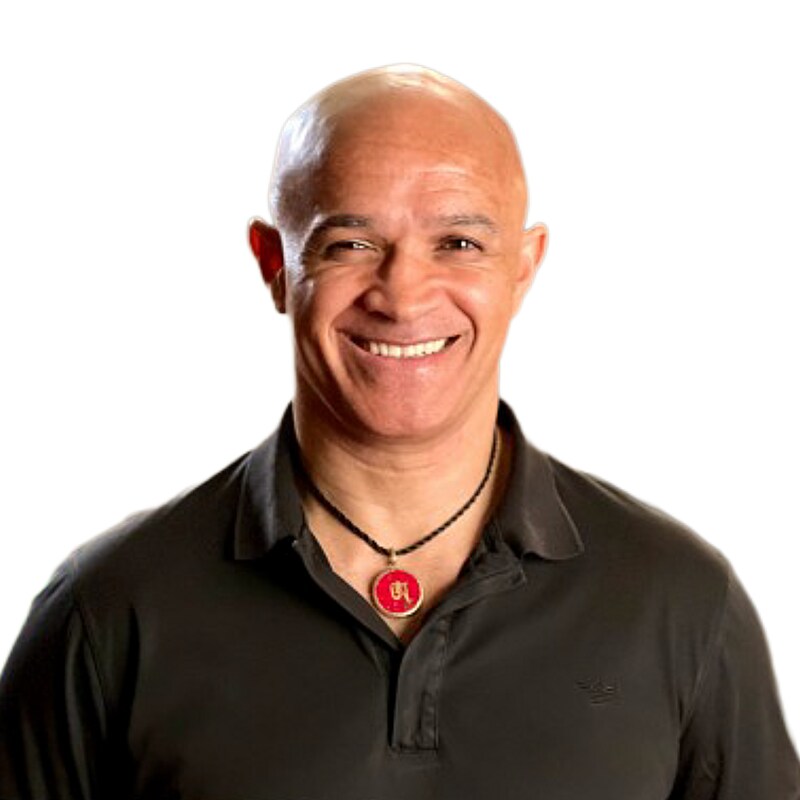
David Thomson is the founder of Suada whose life was shaped by growing up mixed-race in 1970s Britain, poverty, violence at home, and the fight to build a different future.
In this episode of Life by Misadventure, David talks about racism at school, joining the army at 16, becoming a boxing champion, discovering sales, and using persuasion, self-education and discipline to change the direction of his life.
David shares how resilience can come from harsh beginnings, but also why young people need better systems, stronger communication skills, and people willing to teach them rather than write them off.
About the Show
Life by Misadventure is hosted by David Brown and features honest, engaging conversations with interesting people about life, loss, resilience, ideas, and the experiences that shape us.
Connect with David on LinkedIn: https://www.linkedin.com/in/4dmbrown/
Watch the UNCUT video on YouTube: https://www.youtube.com/@lifebymisadventurepod
Listen on Apple Podcasts: https://podcasts.apple.com/gb/podcast/life-by-misadventure/id1782077287
Listen on Spotify: https://open.spotify.com/show/6Z1MszCU19QglChFb11Pw2?si=98ab1a34db074b3d
Transcripts
When somebody gets a job at Ritz Carlton, they put that brown uniform on and the first thing they say is, we're ladies and gentlemen, serving ladies and gentlemen. You have to go there and there's a code as to how you behave, right?
But when you bring people into a business, often we haven't got the systems and the processes to tell people how they should behave. And when they start acting how they would naturally act, we act disappointed.
David Thomson:My mum didn't really work.
She worked beyond the bar and she worked in Butlins for a while, like slightly before I was born. And my real father, I didn't know, but my stepfather, he. He was a coal miner. His first job was a coal miner. And a funny story about that, he.
He moved from England to Scotland and his name was Jimmy Moffat, James Anderson Moffat, they used to call him Jimmy and he was the angry little Scotchman, like, proper archetype. He would, you know, my grandmother used to say that he would pick a fight in an empty house, right. So angry. Anyway, when.
When he left Scotland in:I've never been to Bellini Prison, but apparently it's not nice prison, which I remember it was the Christmas of 74. It was delightful because he was a nasty piece of work, even though he was a small, angry little man. But, yeah, so coal miner.
And my mother worked in Butlands for a while, did a few bar jobs but didn't really work. So, yeah, that was going up and then Jimmy had about 50 jobs between then and the rest of his time. He was a ragman after that most of his life.
David Brown:What was your real father like?
David Thomson:My real father, I only met him twice. He was named. His name was Lloyd Terong. He.
n from Scotland to England in:So, you know, and racism was quite a big thing back then, so. Yeah, but I didn't really know my real father. I remember, you know, I've had some decent success in my life as well.
So when I came out of the army, I went to go and find him. I was a financial adviser, actually. Gus had come out the army. I went to find him, and I found him in Nottingham. And he was a bit of a nobody.
There was nothing there. It was like, stick your hand in a bucket of water, pull it out, where's the gap? That was it. There was nothing really there.
David Brown:Yeah.
And, you know, the reason that I asked that, because I was trying to get to the mixed race sort of, you know, thing, because I think that was from when we had our chat the other day. I think that was one of the things that you talked about that. That was probably quite challenging for you as a kid, wasn't it? Particularly in.
I mean, we're talking, what, early 70s, then? Yeah, you know, when. When you were in school in Scotland, I guess. And so that was that. That must have been unusual.
David Thomson:Well, my first real memories of school were. I remember going to St. Mary's School. I was 5 years old. And that, you know, racism was rife.
I mean, you had programs on the television like Love Thy Neighborhood, where they'd call somebody like Nig Nog or Sambo or whatever, and, you know, all horrible names and, like, Afghan. It was on it. It. And there was a program on television on it. I remember my buddies talking about it, and it was called Roots.
And there was a guy in there that was a slave, and they called him Kunta Kinti, and they said, your name's Toby. The amount of racism that came off the back of that, you know, if you're mixed race or black, like, you know, you. It was purgatory.
It was really, really tough. Really, really tough. But, you know, everybody gets a tough time at some point in this world.
Everybody gets a tough time, and it's how you deal with it. You know, these challenges that are given to us, they can be turned from adversities into benefit, which, you know, you.
You learn how to be, you know, like, tough as a result of it.
David Brown:And, yeah, and you and I are the same age, but, like, near almost to the day. We're only like, what, a month apart? Maybe, I think six. Six weeks maybe. So I think we're, you know, we're. We're of the same generation.
And I do actually remember, I mean, roots was on TV in the U.S. it's like a miniseries that was on TV, if probably some of the people listening have never even heard of it. But, yeah, I remember. I remember the show. I remember Kunta Kente and all that.
And I grew up in Memphis, which was probably at the time, but even back then, probably had a higher black population than most cities. And so it was a very. I grew up in a very different kind of racial mix than even most people in the US which was quite interesting as well. So.
Yeah, anyway, I know what you're talking about.
David Thomson:Yeah.
David Brown:So. And. And what was that?
I mean, I know we talked about the fact that, you know, you kind of had all of that and you had some struggles and stuff, and then as you got a little bit older, you ended up going into the military. So tell us. Tell us about the military and what. What that experience was like.
David Thomson:So, I mean, growing up, by the time I was nine years old, I'd lived in 10 different houses. So that. That gives you an idea. Like, we moved a lot. You know, it was like, we're moving and we were, you know, really poor. Like, really, really poor.
And like, racism was. Right. It was just how it was at the time.
David Brown:And was it harder every time you went to a new. Like. Like, were you moving city to city or were you just moving kind of around the neighborhood that you were in now?
David Thomson:We were moving in. I was changing schools. I mean, like I said, by the time I was 10, I've been to. I've been to five different schools.
So, you know, we were moving, moving schools to different places, and it was genuinely tough. And when you got to a new school, if you were the black kid, it was like, who's the. Here we go again. Let's play this one. And like, that was tough.
Like, most black kids are tough. I remember somebody saying to me once that.
That, yeah, the reason black kids were tough is because, you know, if you look at the islands, only the toughest slaves made it across, and it was only the best that were allowed to breed. So you, like, you're the super race. Somebody said that to me, and.
David Brown:Yeah.
David Thomson:And I thought, okay, you know, it was sort of a backhanded comment, but.
David Brown:But it is a weird way to look at it. But if you look at things like sports in the U.S. you know, some.
Some of the more physical sports, you do tend to have more, you know, a higher than average black population in those sports. And there must be something to that. I don't know if it's like. I don't know, is it like pop science or something?
I don't know if there's any science to back it up, but I. I know I've heard all that stuff as well.
David Thomson:Yeah. If you look at football in the uk, look at the Premier League, most of the teams, you know, at least 50 black people.
David Brown:Yeah.
David Thomson:Just Just a fact, you know, And I'm the whitest black person ever because I know nothing about being black. So I wasn't brought up by any black parents. So I know nothing really about my race or culture. Nothing.
David Brown:Well, I was.
That was something I did want to say to you, and I didn't say it the other day, but you don't really particularly present as being a typical black person as well. So I. Yeah, I guess, like, you were different enough that people knew that there was something different about you.
But like I said, you know, you're not. It's not like, you know, you have like a Nigerian who has really. Or a Ghanaian who has really, really dark skin.
And I know, you know, black people have various shades of skin and all that sort of stuff, but, you know, again, you don't tip. You don't kind of typically have that presentation, so. But the kids still were able to pick up on the fact that there was something different.
David Thomson:Yeah, well, kids are really, really nasty, aren't they? And, you know. You know. Yeah, and I used to get it at home. My stepfather was a white guy and he used to beat me up and beat my mum up.
I was in the children's home for a while. So as a kid, I wanted to be two things. When I was older. Rich and tough, you know, tough so that I could keep people's heads in if they.
If they started coming it. And I did that in the army. I got to be a boxing champion. And then rich, you know, I made some money. You know, I made.
You made a few million quid selling a financial services business that I built with no investment. So, yeah, two things. Quite cool.
David Brown:Yeah, yeah, yeah, yeah. And I guess the other thing. And just going back, not.
Not to belabor the point, but because I moved around schools quite a lot, and at that age, kids are assholes. Even if. Even if you're white, right. There's still. And. And it's difficult having to do that over and over and over again.
And you go to a new neighborhood and the kids don't know you, and then you just get shit again. And so all of that just kind of chipping away again. Probably gave you some resilience in your character. Would you. Would you say that's true?
David Thomson:Yeah, I would definitely say it's true. I mean, I'm massively resilient and determined. And so, like, you know, almost turn up to the new place and you go, here we go again, here we go.
Somebody's gonna get it.
And so you do develop a resilience to it and, you know, there's that thing, what doesn't kill you makes you stronger, you know, I was the hardest kid in my year at school, you know, when I was like 11, and you know, like loads and loads of scraps and you get good at it if you, if you, if you're doing it, which I think's helped me in business genuinely, because you, you know, if you have a fight and you've got some fight in you, then you don't give up so easily.
David Brown:So you leave school, you get a bit older, you go into the military and again. So you, I remember you said that you sort of excelled at the physical side of the military. Is that right?
David Thomson:Yeah, well, so when I was 16, I left a school, I got a job in a shoe factory for a short space of time, a place called Myrick Moccasins. Didn't really like that and then went straight into the army. Status quo. We're playing in the army now. Do you remember that song?
Oh, you're in the army now. I don't remember it.
David Brown:Yeah, I have heard it. Yeah.
David Thomson:Yeah.
So I went in that, I went into the army and the army was good because it was all about physical and, and everybody was on the same level and their motto is, nobody gets left behind, you know, because obviously if you got shot on the battlefield and if you thought somebody shot me, they're not going to leave you any behind. So it was good. And I got voted as the best recruit of physical training in, in training because I was, I was really determined.
I wasn't necessarily the best, but I was, I was definitely the most determined. And, and that, that was a good experience. And then I got to the battalion and the racism started all over again. I'm like, oh, here we go again.
But then what, what, you know, you learn from these things. So I got into boxing and I learned to box and I became the best. I got voted the best boxer in the battalion.
So that now I was genuinely really tough because boxing's about technique. It's like you people say, when I lose my temperature Lose your temporary light man, I'm a boxing champion.
You better be brilliant because you've got some real skills in the same way that, you know, in any sport if you've got some real skills. And boxing, you know, it's a deadly sport, you know, it's not like you can outwit a boxer, just knock you out in a minute.
You won't hit them and then they'll only be two hits. They hit you and you hit the ground.
So I learned to do that, and I think that gave me a better self image, which is really important in terms of success, how I thought about myself, and also supreme confidence that, you know, what, you know, something. What had to stop. And, you know, and the bullying and the racism and all that was, that's that done. You know, that's never happening again. Yeah.
You know, Mike Tyson called it. He said, everybody's got a big mouth until they get punched in the face. Yeah.
So if somebody knows they've got one of them coming, they're like, yeah, well, I won't say it to you. You ain't going to get it. So, yeah.
David Brown:And I imagine that was probably like, did you fight against it a lot or did you just kind of roll with it and that? I mean, the comments in the. I mean, I'm sure you heard comments.
David Thomson:And all sorts of. I never ever let it go. Right. Ever, ever, ever, ever.
My grandmother used to say, and she was a little Scottish lady, her name was Jane Reynolds, born on the 20th of December, 20th of September was her birthday. She used to say, tell the truth and shame the devil. And I just think we all know the score, right? And somebody's called you something.
You can let it go if you want or you cannot. I'm like, I was choosing, you know, it was like, have you seen the Game of Thrones thing?
And when they say to Cersei Lannister, you, you're gonna get this or you got violence. And she says, I choose violence. Well, I was always picking violence. I'm like, you better be brilliant because I'm bringing it.
David Brown:You chose violence. Okay. And I was asked, because what I was thinking is, is that, you know, probably by becoming the boxing champion and all that sort of stuff, you.
You were able to develop a level of respect from people that probably you. Because they didn't know you, right?
And so as you sort of developed that and you were the champion and whatever, then that probably helped overcome some of it and. And you were able to develop some respect with. What was your job in the army?
David Thomson:I was just a soldier. I was just a normal soldier, which I didn't really like being a soldier, digging holes in the infantry, running around, the enemy's coming.
I'm like, no, they're not. If they are, the Russians will be coming. We're on. We're in Germany for most of the time.
I was in the army in Northern Ireland for a bit, which, you know, there was lots of bombs going off in the 80s and people getting shot at and stuff. But. But I was good in Northern Ireland as a soldier, but when there was nothing going on, it. It was.
We used to call to do right, because you'd look at when you were going to get out of the army and, you know, like, I left the army like my ass was on fire. I was like, I'm a celebrity, get me out of here. Because you getting told what to do again. I was like, you know.
Yeah, but it was a little bit like for me university, what. What it would have been if you're forced into it. But it was a. It was a. It was a great experience.
Taught me about leadership because, you know, you've got people there that have been there and done that and shown you how they've done it. So the arm is all about. They call it E Dip. Explain, imitate, demonstrate and practice. Everybody has to show you.
It's not about telling you and writing things down on a piece of paper. And then all of a sudden, you know, a week later, you've gotten 90% of what you'd learned. You actually had to demonstrate it, which.
That's a game changer in terms of learning, which helped me in my current business.
David Brown:So how long were you in the army?
David Thomson:Four years and 93 days. Not that I was counting.
David Brown:17 Hours and 42 minutes.
David Thomson:I came in, I joined when I was 16. It was just under five years. I joined when I was 16 and I left and I left.
th April: David Brown:You're a young man, you're not a teenager anymore. You've been in the army for several years. You've been a boxing champion. You know, you've kind of. You've developed a bit of discipline.
Maybe you probably feeling pretty good coming out and then what do you do? What's your first day out of the military? And you start. You start looking around and did. Were you just thinking, now what?
David Thomson:Yeah, I lived in Northamptonshire and so the first thing was just get a job, you know, just get a job. I didn't care what job it was. And my friend's father worked in. Have you ever seen Dr. Martin's airway boots? The boots with yellow stitching?
He worked there and I said, get me a job. So I got a job in there as the head of packing and dispatch on 150 quid a week. And you know what? It was fun.
The people in the factory, there's some really clever people in factories. Like, really, really clever. But it's almost like the Hotel California, you know, once you've been there for a while, you can never le.
You just enough to stay, but nowhere near enough to want to stay, but, you know, and you get used to it. And so I was packing yellow stitch boxes and putting one box into another box and shipping them around the world. And, you know, for.
For a period of time, for a few months, it was all right, it was a job. It was better than the army because, you know, you finished, you got your wage, you get a girlfriend, you get a car.
But do you remember the song Dirty Cash?
David Brown:No, I don't know that one.
David Thomson:There's a song. Dirty cash, I want you Dirty cash I need you more and. And My Prerogative, Bobby Brown. They were like the songs of.
And I thought, I need to sort my shit out. I need to get a proper job. And I think I applied for a job to be an estate agent.
And the guy that interviewed me, he was a bit of a knob, he said to me, where do you reside? And I just said, I'll hang around my mates at the Windmill. I haven't got a clue what he meant when he said reside. I didn't know what he meant.
Anyway, I never got the job. But later on that year, I got a job as a financial advisor, believe it or not.
And I mean, in:So I got a job as a financial advisor and I couldn't believe that, you know, you could just talk to people and get paid a load of cash rather than actually have to do work. And I thought. I felt like I discovered gold the first time. I'm like, this is amazing, you know.
And then I started learning about skills that had utility. So I started learning about Socrates and philosophy. And I thought.
I found it fascinating, you know, 2, 400 and whatever years ago, there was this old fellow walking around just asking questions, and he was the foundation. And then I found a. It was the foundation of sales. I found about a positive mental attitude and negotiation.
And when you start to learn those skills, you become more persuasive and influential, like really persuasive and influential. And I was like. I was a ferocious learner.
And then at the time, there was a company called Nightingale Conan that used to do these cassettes that you could put in your car, audio cassettes, where you could listen to the best people that have ever lived, the most richest. And. And, you know, if you Think. Imagine, like, we've lived this amazing, amazing life, David.
Like, we've got to 85 and you think you've got a fag paper left, but you've made, you know, 10 billion, and you think we've got to give something back. You either write a book or you record an audiobook. And those things exist, so you can go and learn from them.
And I just discovered this whole new world, and I'm dyslexic, so reading was like, nah, but I'm listening to audiobooks, I'm thinking, this is amazing. Like, you know, you could never get to these people, but all of a sudden you're learning from them. And every day I used to drive.
I got a job as a mortgage advisor the following year, but I used to drive as a mortgage advisor from Ketrion to Wellingborough, which was 20 minutes a day, and I'd put these audio cassettes in my car for the 20 minutes and the 20 minutes on the way home. And that would be like 40 minutes a day, 200 minutes a week, 800 minutes a month.
And then if you did it, you know, every, every month of the year, then all of a sudden you. You done 8, 000 minutes if you only work 10 minutes.
And I thought, if somebody offered me a pill, this was my thoughts with 8, 000 minutes worth of learning, would I take it? And I thought, yeah, probably take three of them. So every time I got in my car, I was listening to these cassettes and it just changed my life.
David Brown:Which is funny because that's kind of what podcasting, in a way, has. A lot of podcasts try to be that also, right, which is why people listen.
In fact, I used to listen to a management podcast on the Way to Work in the morning, because I used to travel from West London into Central London every day, and it was the same thing.
And I just put it in and I'd listen to them and they, you know, they had this whole show and I learned tons and tons and tons about running effective teams and how to manage people and all sorts of stuff.
I'm curious, though, to go back, because, you know, you come out of the army, you're working at Doc Martens, you know, you got a factory job, which that's fine. We've all done factory jobs and stuff.
Like, that's good, it's good, you know, you're earning money, whatever, it's a normal job, but something in you is. You're like, I need to know more. And you, I assume that you did, you Start reading the classics and stuff just on your own.
Or did you have a mentor or someone who said, you need to read these? Like, how? Because that seems like a big step you've got to a dyslexic kid who, you know, moved around schools.
You go in the army, you come out and then you just start reading Plato. Like it seems weird. How did that happen?
David Thomson:What happened was I went out with this girl from Desborough, her name was Lisa Fenwick. And her brother in law, a guy called Paul Iiff, took a shine to me because I, you know, I did a little bit about me. I had the gift of the gab.
And he said, I think you'd be good at sales. And he gave me this book in a brown paper bag. And it was called the Success System that Never Fails. And I was like, right, okay.
And I thought, success system. I like the idea of systems because the army was a system, the shoe factory was a system.
And then as I started reading the book, the first few pages of the book is about this little kid that goes into a cafe that gets thrown out. And he goes back in. He gets thrown out, then he goes in again and he's successful. And the guy builds a business called the Aon Corporation.
It's worth a billion. He was brought up by a single parent, which I thought I'd love to have been brought up by a single parent. My stepfather was a, you know. Yeah.
And he lived till he was 100. And I thought his book was amazing.
ctory, you know, like October:Literally, I sat there until my lunch break And I read 63 pages in the first day or 65 pages. First day. And I've never read 65 pages of anything. And it was like 65 pages, forget it. It was never going to happen.
David Brown:Yeah.
David Thomson:So I read 65 pages of the Success System Never Fails. And in the. When I read in the book, it talked about the most important ingredient for success was a positive mental attitude.
And then, you know, sometimes when you get like. People talk about life, shatter earth shattering moments. Right. And it gave the definition.
And I thought, I looked around the factory and I looked at everybody and I thought, God, if I don't. You know, it was like. And it talked about being the right mental attitude and having hope, faith and integrity and having a can do world.
Try Attitude. And I looked around and I could see like all the people in the factory. I thought I could be doing this forever.
And you know, like I thought, and I could see the world walking around in these yellow stitch boxes. I'll probably ship to them. And I thought I could be doing this forever.
And then at that moment I thought, either I can do something and I will try, or I'll stay here forever. So that time I went to Paul when he gave me the book, he said, if you want me to get you an interview, I'll get you an interview.
I went to the phone box with my 10p at the time that you had to put in the box. I rang him and I said, you know, I rang him in Desborough and I said, paul, I want to come and see you. I want to, I want you to get me that job.
And he said, okay, come over. And that was, that was the, the game changer. It was actually taking action. And it talked about self starters, having the right self image.
And you know, that was, that was the, that was the change. And so it was looking at my life and thinking I could be doing this forever and I have to do something different.
And obviously at 21, you know, I was quite brave. I've been boxing, I've learned some new skills. I thought, I can do it. And then what it made me reflect back on was like, we were poor as kids.
Like, I mean, we call it Brassic park, you know, Jurassic Park. We're Brassic Park. We're so skinny. It was unbelievable.
I remember stealing potatoes with my father out of people's allotments, you know, and because we never had any food a lot of the time. And then I remember, like, there's times when you could make money.
I remember going carol singing, like going, knocking on people's doors like 8 years old, walking around Rothwell going, you know, Silent Night or, you know, once in Royal David City or away in a manger and, you know, just, just doing that. So I'd almost given myself the thing that I'd been out and I'd gone and I'd spoken to people. I'd made titchy little bits of money.
I remember getting a Starsky and Hutch jacket, saving up a five and then going to Market Harbo mum on the bus to get this jacket that, you know, I'd saved up for it like 8 years old. So I thought something just spoke to me, it resonated and I thought I, you know, I could do this.
I genuinely felt like for the first Time in my life I could do it.
And then later on in October that year, I was sat in the station hotel in Derby, there was a train station hotel and I sat there and I was learning about Socrates and I thought, this is the thing I'll do for the rest of my life. And I knew I would be a fine. I knew I'd be a salesperson, I knew I'd spend the rest of my life in sales.
And I guess the thing I did that most people didn't do to be successful was I studied everything that sat behind sales, pitching, framing, negotiating, neuro linguistic programming from the best people in the world. And then I became the top financial advisor in the uk, which was, you know, it made a difference.
David Brown:You're that you're the top performing financial advisor. Are you happy? Does the money make you happy?
David Thomson:It gives you choices. But I've always. One of my friends, a guy called Phil, right, I'll never forget him, he was a bouncer on the door of a pub in, in town, right?
And he, we were in and there was this little girl come and stood next and feels beautiful looking, six foot four, massive blonde, like mega look, mega looking. And this little girl come and stood next to us who was like stunning, like 9 out of 10 stunning. And I said to Phil, I said she likes you.
And he went, nah mate, no she don't. She wants Ferrari, Dave, because obviously I've got Ferrari and stuff like that. What do you mean? He said, she wants the old bbd. And I was like, bbd?
What do you mean? He went bigger, better deal. He said, she wants to be. I'm married, I've got a Mrs. And he said, she don't care, she thinks you can take her on.
So I've always been, I've always wanted whatever I've had, I've always wanted the next thing and always been hugely ambitious. So. And it's all.
And it's been constant, you know, it's a little bit like if you look at the great football managers, whether it's Pep Guardiola Current Day or Sir Alex Ferguson or you know, the Liverpool great managers or Jock Steen, they just want to win and win and win and win and win and win and win. And that's what I'm like, I'm just like, whatever I've done, it's like next and on to the next one.
That's just what drives me, which is mad because you're thinking you should be happy, but I'm like, no, next.
David Brown:Yeah. So there's an Ins. Kind of an insatiable drive just for the next thing.
David Thomson:Yeah, always.
David Brown:What's your drive today?
David Thomson: k in the day, if I go back to:We were number one in the world for all of the major insurance terms, life insurance, house insurance, home insurance, like, health insurance, like whatever and all those things. And we're making like profits cut of 100 grand a month for me, probably 400, but I was spending 200 on shit that didn't need to.
And now I'm focused on the LLM optimization with Callum so we can get all the traffic, so we can get the recurring revenue, so we can do whatever. So that's, that's my big focus in terms of change and also the neat problem in the uk, you know, the not in education, training or employment.
You know, there's a, there's a, there's a million kids that are neat and to me they, all they need is to be, they need to be taught how to reframe their self image, to have the right mental attitude and have the communication skills because if somebody teaches them how to have that, they'll get themselves a ticket and all they need is a ticket because they've got that determination and resilience. So they're my two projects at the moment that I'm working on.
How do we reverse Google's algorithm and then how do we do something significant on neat?
David Brown:We'll steer away from the whole AI conversation because we could go down a massive rabbit hole there and how that's changing and upending that, that whole part of the industry.
I'm interested though in the, in maybe exploring the NEAT idea because I know, as you know, I have a 19 year old son, so you know, he's recently out of, you know, doing his eight levels. He's taking a gap year. Wasn't really sure, you know, fewer. I think only 40% of the kids in his school went on to uni or are planning on going to uni.
The rest of them are, are, I think, I think a handful have jobs, like I would say a proper job. Right. My son has a job and he works and he does video editing, but that's freelance.
David Thomson:It's up to.
David Brown:When I say a proper job, I mean like going into an office every day on a salary or something like that, right, like, or working at McDonald's where you're doing shift. Like, like a job like that. Like he does freelance work kind of Creative, which I, it is a job, but it's different. Yeah, I think.
And, and only a few of his mates have, have jobs like that, like proper jobs. And I don't know, you know, I don't see much. None of them seem to have any drive. None of them seem to, you know, take the initiative for anything.
And for me personally, that's the, the thing that I have taught him. He has had jobs working in pubs and stuff.
And I said to him, look, when he started his very first shift, I said, the only thing you need to focus on is being proactive. Do not stand around and just look around like you don't know what's going on. I'm like, if nothing else, pick up a rag and go walk, wipe a table down.
I'm like, just. Do not do nothing. Right? Like just. Or go ask, what can I do now? What can I do now? What can I do now? And I said, that will set you apart.
And, and the funny bit was, is, is I. I knew the lady that he was. Almost spilled my drink.
I knew the lady that he was working for and after he worked his, his shift, I came to pick him up and I saw her and I said, oh, how's it going? She's got, oh, my God, I love him. And I went, really? She's like, he's amazing. He just, he just cleans the table so I don't have to ask him.
I was like, yeah, I've worked in a restaurant before, I know that deal. And, but, but even doing that little thing, do you know what I mean, set him apart from everybody else. She absolutely loved him.
And, and that's the one thing I don't see in kids today. And so how do you, how do you think we can address that issue? Is like, how do we do that as a society?
David Thomson:Well, to me, the biggest problem is if you look at today, the kids are born digital.
They're born with a, you know, a cell phone in, in their hand from the, you know, and this, you know, if you look at them at night, their faces are glowing up in these screens. And, you know, I've got four kids. So, you know, I can tell you now, you know, I've seen it and been part of that, you know, play.
I don't think you're going to change them. You need, we need to meet them where they're at. But then they need some additional skills. Like working hard is a learned skill.
It's a learned skill, same as the communication skills. But you're not going to get it Coming out of a, of a, of a school, as things stand right now, I'm going to a big school tomorrow in Bristol.
We need to recognize, and also they're going to want more than working behind a bar, is going to want a better job than working behind a bar. But we need to give them the ability to be able to get better jobs.
And it's going to be the shiny penny in the barrel that gets the one that gets picked out. How do you make them stand out?
And, you know, ultimately, if you're going to run a business, you know, you can get AI to do bits of it, but you're going to need people, we're going to need people. Businesses need people. And for every business that's not doing well, there'll be businesses that are doing well.
And the ones that are the best communicators will tend to get the job because you'll like them more, because they, they're more eloquent in the way they speak you. They'll be able to do what your son was doing, was doing that woman a favor by cleaning the tables.
That's reciprocity and it's showing that it's going the extra mile. But if we don't teach these skills digitally and meet them where they're at, what's going to happen is we're going to keep leaving people behind.
And so at some point, you know, like, it has to stop. You know, it has to stop this, this fast that, you know, everybody can just go on and get a pit payment and just sit there. That has to stop.
And it will either stop in one of two way, there'll be some kind of crisis. Alternatively, you know, like, it just won't be sustainable. And so as it is at the minute, you know, it should, it should stop.
But kids don't want to be sat at home in their bedrooms looking at screens. They want to work, they want to do things.
But it's going to take a different breed and a different system to educate those kids in a better way with the right things that they're going to want to engage with.
David Brown:How do you think we got where we are now?
David Thomson:It's leadership in any business that takes you where you are right now.
I mean, if you look at the last, you know, like God knows how many prime ministers, you know, how many of those kids, if we went to school, right, Somebody said to you, boris is in charge, you know, you know, like you, you could, you couldn't make it up. Teresa's in charge, you can. Liz is in charge. Then, you know, Rush is in charge. Those. They're not proper leaders in real terms.
So we're putting the wrong people in charge of the country. And then you look at, you know, the. There's a thing called the European Human Rights Act.
If you read that, European human rights, it's written incredibly fair for both sides, but you've got lord humor or whatever that's judging and saying, no, no, we can't throw these people out or do these things and reading it from a negative perspective rather than a positive perspective. So the lawyers are currently running the country. So it needs change. And change is obviously always constant. It's ongoing, and it will change.
It has to change. You'll have to, because you can't sustain what we're doing right now. But we got there with poor leadership. Really, really, really poor leadership.
And, you know, and if the route to, like, becoming a politician or leading the country is the way that it's always been, we're going to keep getting what we've always got. We need something different. We need a different, you know, narrative and different story. And so, you know, hopefully we'll get that coming along.
I mean, what you can see now is the Reform Party in reality, off the back of nobody else is really electable, making themselves saying, we need to change now. They're probably not very good at what they're doing, you know, but it is what it is. It is what it is. I mean, if you really look at where we.
How we got to, where we got to now, it was because Theresa May called a general election when she had a majority.
If she hadn't done that, labor, what's it called, labor, would have been in power through the COVID years, probably screwed it up, and then you'd have had different politics, you'd had conservatives in right now doing something and blaming labor for wrong. But I don't know. I don't think, you know, they're two cheeks of the same ass in real terms, and none of them are any good.
David Brown:They're always going to blame each other, right? Like, that's just. That's. That's what they do.
I was more thinking, like, because when you and I grew up, the world obviously was a different place, right? Like, we have to take that. But how did we get to the point? Because I don't remember anybody not being kind of.
I mean, of course there's always people that aren't motivated, right? But. But by and large, pretty much everybody that I went to school with, we all went to university.
We, like, everybody wanted to make something of themselves. They all wanted to do something. They. You know, and. And I think the. The world feels like a very different place, and it feels like we've.
We've kind of lost our way and the kids have lost their way a bit. Do you have any theories on how you think that that happened? Because that's not Theresa May.
David Thomson:That's skills, though. It's a skills gap. In real terms, if you look at it, it's a skills gap.
Some of the skills that we have, the resilience skills, the communication skills, skills like, you know, for me, I learned a lot from going into pubs and clubs. Like, loads. I learned about winning and losing, about people getting drunk, about violence, about whatever.
Now a lot of that stuff's been taken away and it's been replaced with a mobile phone. And we give.
I mean, if you think about it today, right, a kid's born, you give them access to the world's information, and then when they get to 20 or 19 or whatever you say, now, be normal. We don't even know what. The heads are wide like. No one's ever done this before. Normal's got. Hold on a minute.
I'd like to see what you would have been like, mate, if you'd live their lives. And so we can't blame the people. What we've got to do is we've got to make sure that we. We meet people and give them a better education.
And also, normally, right when things are tough like they are right now, there's big infrastructure projects. If you look at Germany, how it recovered after the Second World War, we should have some big infrastructure projects going on.
The waterways are still terrible. The policing service is still terrible.
David Brown:They had a lot of building today.
David Thomson:Yeah, but we have as well. There's loads to be done now. The roads are still terrible. So we should have some big infrastructure projects going on.
David Brown:Well, we. We do. We've got the. The new Thames crossing thing that. The project that they're working on. And I know in Kent.
I'm down in Kent, and I was talking to someone who works in the trades. I think he's a plumber or something, but he was saying that they have.
Basically, they have a whole office set up, and it's like, literally they're begging people to come in and to get jobs. And they're like, we will train you. We will teach you everything. We need laborers. We need, you know, bricklayers. We need everything.
And they're just like, literally, if a teen. If a young person shows up and says, I want a job. They basically will go, can you fog a mirror?
And if they say yes, they're like, fine, we'll put you in and we'll train you. And they're absolutely desperate for people.
And again, I said to my son, I'm like, mate, if I were you and had an opportunity to do that, I would probably go and do it because that's like a job for like 10 years working on a massive, massive infrastructure project.
David Thomson:Good money. And everybody wants digital leaders. But what we need to do though is get people telling stories and making it more visual about, you know, there's.
I was talking to Karen who does all of our accounts, she's brilliant lady and she was saying that when she has a welder come to her place, how much do you think they charge you for an hour? One hour?
David Brown:150 Quid?
David Thomson:300 Quid?
David Brown:Yeah.
David Thomson:Okay, two hours work a day. Knock it on. Yeah, yeah. You look at that and you go, can you get a couple of hours a day? And you know, okay, specialist and whatever.
But there are really good jobs. But the communication's not out there to the kids, so they understand. And we're not meeting people where they're at.
I don't think there's any, that they're no less capable than what we are today. But our communication and leadership, the wrong people are trying to telling people they're wrong, they're broken, they're whatever.
And we're not creating the on ramp and the communication skills to get people in place. It's missing. And we're blaming the kids. I mean, ultimately, the minute I start blaming you.
I remember having, having a business, you know, and things went wrong in the business when we lost all of our rankings. And I remember thinking that, you know, there was heroes and bums, she was useless, he was crap. This was whatever, right?
But I was paying these people, I was paying them. So I was the idiot. Because what I should have done is worked with them and help them become better.
And then when you work out how to do that, you have a better business.
But too many times we blame people rather than work with them and realize that this is our life, we're going through it together, we should work together as a team and help people rather than blaming them for what they're not good at.
David Brown:Yeah, I was actually, I was listening to Alex Hormozi the other day and he was answering questions to people in the audience and there was a lady who was asking about her team and how she could motivate them and you know, get them to. To be, you know, basically to be involved in the business. And his answer was, you can't. Like, if they're not.
If they're not that type of person, it's a waste of time. You need to just get rid of them and get somebody who is interested. And it's a pain and it's difficult.
But as a business owner, that's how you build a good, strong team, is that you get people that are interested.
David Thomson:I disagree.
David Brown:And it. I mean, my theory is. And this is good, we could talk about this.
But my theory is, is that you hire for fit and you train for skill, because you can't. You can. You can train anybody.
But the thing is, it's how much effort and how much time and everything does it take to train an attitude versus a skill?
And I want the people with the right attitude, because if I get the right people with the right attitude that fit in with the team's attitude and how we feel. Training for skill is easy because the people that I get will be interested in going, okay, I need to figure out how to do this so that I can do it.
Well, I disagree, but go on then.
David Thomson:I disagree. Right, so.
David Brown:So you think it's easier to train for attitude than it is for skill?
David Thomson: n do amazing things. Yeah. So:And then we lost our staff because we were like, we're running a financial services business, and we were getting all these lovely leads coming in from Google. And the next thing you know, the leads are gone.
And then I have to start buying some data lists where somebody had inquired about buying some protection on a thing. And I'm like.
And it was like, you know when you go to a zoo and you got zoo lions and then you've got wild lions from the Savannah, I'm gonna mine rule zoo lines. I'm going to be a giraffe. And they're going, oh, no, that I'm full of today. Wait for the thing to run.
If there's some buffalo, I'd really like buffalo. Today I was giving them all those lovely leads. And on what I needed was wild lines from the Savannah. Right. That that was what was required.
And so you look and you go, okay, whose fault was it? Was it their fault? Was it my fault?
Anyway, they all started leaving when I'm giving Them, these leads that are not, you know, like you're breaking your teeth on rocks, they're harder, harder leads to close. And so some of them start leaving. And you learn from that.
And then you start realizing that, you know, we're in Wellingborough in Northamptonshire, where the gene pool wasn't like where you've got a big university like an Oxford or Cambridge. It was a normal town, normal place, normal people like me. And then you go, well, what is the right mental attitude? Right?
And so you have to define that a positive mental attitude is the right mental attitude in any given set of circumstances, incorporating the plus traits of life. Words such as hope, faith and integrity. PMA equals can do, will try.
Now, if you make people turn that into images and then teach you back from those images, they learn it twice. They learn what the image is and they learn what the words are. It stops the decay. They've not forgotten it within a week.
And then all of a sudden, when you're talking about attitude, we're talking about the same thing right now.
If somebody wants to elect out because they can't act in a way consistent with an attitude that's been defined, that people know what it is and everybody knows what it is, then you can see who wants to throw their job away. But too many times we, we tell somebody that they need to have the right attitude, but we don't define what it is.
And Seneca said, a consciousness of wrongdoing is the first step towards salvation, right? You have to define what, what it is before you can say whether somebody has or hasn't got it.
And I'll tell you now, I've taken kids that, you know, people said got the wrong mental attitude and whatever, and you work with them because our gene pool, wasn't that the Oxford, Cambridge gene pool?
And all of a sudden you've got some of the top financial advisors in the country because you meet people where they're at and you train them as to what it's like.
And one of the best stories for this is when somebody gets a job at Ritz Carlton, they put that brown uniform on, and the first thing they say is, we're ladies and gentlemen, serving ladies and gentlemen. You have to go there and there's a code as to how you behave, right?
But when you bring people into a business, often we haven't got the systems and the processes to tell people how they should behave. And when they start acting how they would naturally act, we act disappointed. And it's not because they're not. They're good or bad people.
It's because we're not good enough in terms of our business. You know, too many times with sales, like, which is my background, we blame people.
We say, he's useless, he's crap, but we've not taught them the competencies they required to be amazing at sales. We don't teach them how to pitch, frame, negotiate, how influence works. When we do, all of a sudden they're significantly better.
But instead what we do is we blame these people and we say he's useless or she's crap, but it's because our systems and processes aren't good enough in our businesses. And that's where you can take ordinary people and make them extraordinary. And that's when you got an extraordinary business.
David Brown:I mean, I think, yeah, it feels like we're kind of saying the same thing in different language. You're using much better words than me, and that's okay. Interesting. Yeah. I don't know.
I. I kind of feel like at some point along the way, I feel like parents, like, just handed off all of their responsibility for raising their kids to, like, someone else. Yeah.
Like, whether it's this, like, I don't know who they think is supposed to do all this stuff, but, you know, my, My view of my job as a parent is it's my job to teach my son all this stuff. Right. It's.
That's a parent's job is we're supposed to teach our kids how to do those things and how to, you know, try to have a positive mental attitude when you're approaching challenges and all this sort like that's what we're supposed to do. But at some point it feels like, and I don't know when it was, but it wasn't in the last five years.
This is something that's happened 20 years ago or 25 or 30 years ago, like, that there was like this whole idea that parents just went, oh, no, that's like someone else the school's job or whatever. And like, you even talk to. You talk to schools now and they've got like, kids who come to school who aren't even potty trained.
And like, the parents are like, oh, but that's what school's supposed to teach them. It's like, oh, my God. And so I blame the, the breakdown of society on parents. And I don't know.
And again, I don't know exactly when it happened, and I don't know if there was some sort of weird societal thing that that happened. And it's in the. It's in the U.S. it's over here. It's like, it's not, you know, it's certainly in the West.
I can't really speak for other kind of big cultures like the Middle east or the Far east or you know, like south and Central America, but certainly sort of the west. In, in quotes, it seems like that kind of happened. And I just, I, I just don't know when that was and, and how we, how we get back from that.
But for me it feels like we've got to get back to that point where we've got parents taking responsibility for teaching those lessons to our kids. And it's going to be on people like you, frankly, to lead the charge to teach the parents what to actually teach the kids.
Because again, we've got to a point where I don't think the parents know even know what they should be teaching, even if they were inclined to do so. But I don't know, I just, I judge it pretty harshly.
David Thomson:But I agree with you. I mean, we're living in the most connected time in all of human history.
And I agree with you regards to party training, this, the social psychology, the science behind how we can do this.
But ultimately it's about leadership and it's about having the will and then saying, okay, what, what's the goal, you know, what's the outcome and what actions can we take to do it?
This is a closable gap in terms of if somebody had your problem, handed you a problem, they said, look, you're terminally or you're going to be dead, whatever within a fortnight, or you have to solve this problem, make parents better, I'll take the parents better one all day long, you know, in terms of contrast.
So it, it's, it's, you can make, we can make it better, but everybody needs to be brought in and work together as a team and there's got to be more trust and communication and put in place. And it's leadership, you know, and you look at like different, different countries around the world that are solving these problems.
There are, this has been done before, this can be done, but it takes unity and leadership. And at the minute it's all about division and saying, you can't do this and this is wrong and here's where it is.
Rather than actually having a positive mental attitude and actually having that can do, will try approach to it. I mean, if you think about countries, right, we live on one of the best rocks in the world. There's no natural disasters, right?
We've got our infrastructure in place. We've got a police force in place, all the roads are in place. You know, we've got an NHS in place.
You know, in other places they've got natural disasters, the food's not there. We've got a lot. This is a really good, good rock.
And so you look and you think, okay, and you know, we've got 4 trillion in GDP that we collect and so, you know, but we need to work out how to do things better. And it's leadership that's going to change that. And it's about everybody being unified around having a long term goal.
The way we elect our politicians are in for four years. You know, they do what they want for the first two, then they lie for the next two and try and make it nice. They get back in again.
There's no long term planning there in real terms. So the system is broken. The way that, the way that we lead is broken.
And then ultimately when we shut down big communities like, like Port Talbot, there was the young kids that were committing suicide and that, you know, you think we're going to shut down this mining, this mine, but you're going to close a community down for generations to come. It's not all about making money.
Some of it's about making sure that we've got long term planning in place for building that community and making sure that we get these places right so they don't look like rundown towns. You know, that's, that shouldn't be the case. And in order to get that to happen, we need to start off with a pain and a project.
And like the neat for me is one of the pains in the projects because I think we've got some of the most well educated kids in the world that are misunderstood and they're not being educated in the right skills to get them jobs.
And some of the jobs that you've spoken about, whether it's working on a building site, if it was sold in the right way and kids understood it and it was explained in the right way, I think we would close the gap significantly from where we are, from a million to start bringing it down. And then ultimately it's going to take clever people than me. It's going to take a team of really clever people to work together.
So okay, we've got a digital skills gap.
Some people are going to want to go into digital skills, some into construction, some big infrastructure projects and then all of a sudden we can start getting on the right side of the road. And when you get momentum and success then it continues I think there are.
David Brown:Some green shoots thinking about that. Like, certainly a lot of kids are starting to look at trades and stuff again, which is really good.
And, you know, like I said, we've encouraged my son to, to look at that as an option, you know, of something that he may want to do.
And I think, I think also for a long time there was general society had sort of got to this point where I, again, and this is something that you and I experienced as we were growing up. I think when, when we were very young, not everybody went to uni, right? Only this. The very smartest, brightest, richest people went to uni.
Or if you wanted to be a doctor or an engineer or something like that, like you had to be extremely smart and whatever already to get accepted into university. And then we got in this period where they started doing, you know, governments wanted this big push.
It's like, all the kids need to go to university, everybody needs to be educated. You know, we're going to throw loads of money at it. This, this.
They introduced school loans, these student loans, which had a massive impact on the affordability for students to be able to go to uni. And then all of a sudden the universities realized that they could make tons of money because all the kids had these loans now, now.
So the universities just started taking anyone because it meant that they got more money.
David Thomson:And David Beckham, couldn't you.
David Brown:Yeah.
David Thomson:So studies.
David Brown:Yeah, so. But then what you ended up with ultimately now is we've got a society where everybody has a degree, so the degree doesn't mean anything anymore.
And now all the kids are looking at it, they're going, well, the degree doesn't mean anything. It doesn't mean I'm going to get a job. I can have a master's degree and I'm still working at, at McDonald's.
What's the point of getting in all this debt to go to university when it's not even going to matter? Because I don't want to be a doctor, I don't want to be an engineer.
So now they're looking at other options and they're kind of looking around and going, well, actually, if I train to be a plumber, I'm making £80 an hour, like straight away as a junior, right?
And, and not only am I making money, but I'm getting my training so that when I'm done and I'm fully qualified, then I can go off and I can sort of work on my own. And there's all these old boys that have been doing this for Decades, and they want to quit. The plumber who used to come and service our. Our.
Our central heater basically would come out and he would say, I can't retire. He's like, I've got all these customers, and I don't have anyone to give my. He's like, I would give my business to someone.
David Thomson:Yeah.
David Brown:He's like, I wouldn't even sell it. I just give them the business if they. If I had somebody to give it to. And he's like, I can't even find anyone that wants. That wants to do it.
And he's like, there's so much opportunity out there. But we got to this point in society, I think, where everybody looked down on those jobs. They're all like, no, you need to go to university.
You don't want to be a plumber. That's, you know, they're thick. They don't know they haven't been to school.
And that, you know, we went through this phase that I think we're coming out of.
So, you know, maybe there's a little bit of hope on the horizon from that where, you know, society in general has started to look at it and say to the kids, actually, that is an okay thing to do. And you can, you know, you can still be respected as a person and be a plumber, as opposed to everybody looking at you going, well, you're thick.
And you, you know, you had to be a plumber because you couldn't go to uni. And it's like, I make more than anybody that's been to uni.
David Thomson:Going to uni. I mean, ultimately, that's not a bar now. It's just one of those things you go, I. I told my son to go to uni so he didn't grow up too soon.
That was why I told him, I said, go to you. He don't grow up too soon. My daughter's just. She's just finished school now. She's 18. In a couple of months, she's not going to uni.
My other daughter went to uni. None of them that she. She's not used the degree in any way. Yeah, I think it was a good experience for her.
Just because I. I didn't want them to grow up too soon. But, you know, that was it. Because life comes at you and then it doesn't stop. Yeah, I've never gone to uni, like, ever in a million years.
You know, I'm dyslexic. I've had more chance being. Getting in at NASA than a uni.
David Brown:I Don't know. I think you do all right. You seem to apply yourself pretty well in there now and make the effort,.
David Thomson:So, yeah, I could do it now.
David Brown:So if you had some advice for anybody listening, you know, I mean, this is life by misadventure and, you know, obviously you've had challenges throughout your life, but what's your, what's your biggest piece of advice? I think if you were going to leave with somebody, you know, about whatever you like, life and, and the state of the world, I don't know in general.
David Thomson:And one of the biggest things that I've learned in my life is if you can get people to give you a chance, you can be persuasive and influential. You can get people to give you a chance, right? Then you'll get to the front of the queue, right?
Because it's going to be person they like the most, that's the most persuasive and influential. So learning about, you know, my company's called Suader. Suede is the goddess of persuasion.
And, you know, drop me an email, I'll give you something to learn that'll be useful to you. Sueda's S U A D A. But I'll give you something that'll be used to useful to you.
There's, there's tons of books, audio books, cassettes, we've got programs, but that's the killer. It just makes a difference.
When you can persuade and you can be influential, then it makes everything of the different, you know, all of the difference.
You can have, you can have all the knowledge inside of you, but if you can't talk to somebody and explain it in a way that, frame it in a way that the people buy into you and they believe in believing, you got no chance. You might as well not have it. You might as well be a tree. Cool.
David Brown:Thanks, Dave. Yeah, good conversation.
David Thomson:Yeah. So anyway, drop me a david.com and I'll. I'll give you something if you want to learn something.
David Brown:I was going to say, how do people get in touch with you? So you've, you've done it. So that's brilliant.
David Thomson:Yeah. So S U a D a dot com. David.
David Brown:Brilliant. Thanks, Dave.
David Thomson:Cheers, Brian.


