Shownotes
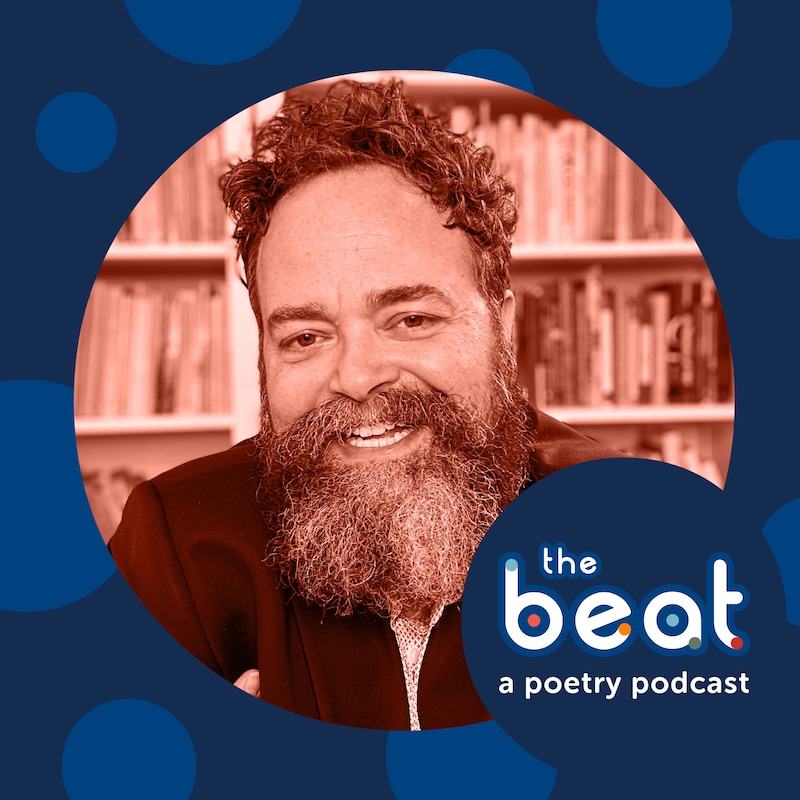
Donovan McAbee is a poet, songwriter, and essayist. His work has appeared in The New York Times, TIME magazine, The Hudson Review, The Sun, Garden & Gun, Poetry London, and others. McAbee grew up in a small town in South Carolina, in the foothills of the Blue Ridge Mountains. He holds a Master of Divinity degree from Princeton Theological Seminary and a PhD in Creative Writing and Contemporary Poetry from the University of St Andrews in Scotland. McAbee lives in Nashville, Tennessee with his wife and two children.
Kathleen Jamie was raised in Currie, Scotland, and she studied philosophy at Edinburgh University. Her awards include the Forward Prize for best poetry collection of the year, a Scottish Arts Council Book of the Year Award, the Somerset Maugham Award, a Paul Hamlyn Award, and a Creative Scotland Award. From 2021 to 2024, Kathleen Jamie served as Scotland’s Makar (a title given to the national poet).
"The Whale-watcher," "The Buddleia," and "The Wishing Tree" were recorded with permission from Kathleen Jamie.
Links:
Donovan McAbee
Read "The Tunnel," "Holy the Body," and "Sightings" in The Sun Magazine
Read "Coming Back Down" in Reflections
Hear Major Jackson read McAbee's "Desert Sayings" on The Slowdown
Kathleen Jamie
Read "The Whale-watcher," "The Wishing Tree," and other poems at Scottish Poetry Library
Transcripts
Welcome to The Beat. Today, we’ll hear Donovan McAbee read four of his poems: “Holy the Body;” “Sightings;” “Coming Back Down;” and “After the Fact.” He’ll follow with three poems by the poet Kathleen Jamie.
Donovan McAbee:Hey, there. My name is Donovan McAbee. And I'm excited to get to share with you today some poems from my collection Holy the Body, published by Texas Review Press. When I think about this collection, I think about what--what's the seed that got it going for me, and I think this collection, like my writing life in general, was born from grief. When I was twenty-one years old, we found out my mom had terminal cancer, and, at that time, writing took on a new urgency for me. I was writing poems and short stories and songs, and a lot of the things that I talk about in this book, a lot of the poems, grow from those experiences. Some of these poems were written quite a long time ago, some more recent. In writing the book, I think I write through the grief of my mom's experience of cancer and death. I write through the grief of anticipating, watching my dad grow older. I write through the grief and the hope of wrestling with religious faith. So all of these things--and, ultimately of finding love--all of these things are tangled up in this book. I think I've found that, even in grief--as I'm writing through life's experiences--even in grief, there's beauty. Even in grief, there's joy, and, no matter what, for me, and, hopefully, this comes through in the book as well, there's always laughter. So, the first poem I want to share with you this morning is title poem for the collection itself.
"Holy the Body"
I’ve thought so little of you that now you seek your revenge in the grinding of kneecaps, the tightening of hamstrings, loss of elasticity, the skin. So long neglected, you weren’t even an afterthought. I apologize each morning with a handful of pills. Oh, scarred flesh of me in the mirror, as I turn the page on another decade, I bless the stretch marks on my stomach, evidence of those dead years when food was my one friend. I bless the crow’s feet at the corners of my eyes, proof of days spent under the sun. I bless the gray in my beard, reminder that sometimes, despite ourselves, wisdom appears. I bless our breaking down, dear body, pray the process is slow, that when time confronts us with its choices, you’ll teach me when to hold on, when to let go.
"Sightings"
Shortly after her death, Mother Teresa appeared in a cinnamon bun in Nashville, Tennessee. She looked serious, perturbed even, as though this epiphany were an inconvenience. Once, in the nineties, when statues of the Virgin were crying all over Ireland, one in Donegal did not get the memo. A sign hung around its neck announcing: THIS HOLY MOTHER OUT OF ORDER. I found myself, two years after Mom died, in the second pew from the front in a dark, empty chapel. I looked up at the six-foot-tall wooden Jesus, votive candles at his feet, and I could see a tear falling over and over down his right cheek, a trick of light and shadow—but somehow, in that moment, I knew they were for me, those tears.
This next poem came out of an experience that I had as a young teenager at a Pentecostal storefront church in East Tennessee, over in the mountains. There was a pastor called Pastor Leon. And Leon, earlier in life, had found himself both illiterate and incarcerated, when he felt called to ministry. And let's just say that Leon's life, at least the stories that I knew from it, sounded like a character straight out of a Flannery O'Conner short story. I only attended this church a few times. But this next poem grows out of that experience I had one time there. It's called "Coming Back Down."
"Coming Back Down"
What was it landed me flat on my back against the floor of that storefront church? The preacher speaking in tongues over my laid-out body as that lonesome gospel lifted me elsewhere. Mama helped me stagger to the car once the service had ended. I’d never been to a church like that. I don’t know what it was made the preacher single me out. Maybe I looked an easy target, or maybe he read on my face the signs of someone in need of a good dose of wonder. Whatever it was, that afternoon as we drove through the mountains, I couldn’t stop crying for the beauty of it all.
The last of my poems that I want to share with you today is kind of a short one. It's called "After the Fact."
"After the Fact"
I know you by the space you leave empty. I draw lines in the air where the roof used to be. I wait for you, Lord, like a mailbox for a letter. The grass still wonders how the ground got there.
In addition to my own poems today, I'm excited to read a few poems by one of my favorite contemporary poets, who I happen to know and love. Her name's Kathleen Jamie, and she is just a boss of a poet. The former Scottish Makar. Ten months after my mom died, I found myself doing a PhD at the University of St. Andrews in Scotland. Kathleen, along with also a wonderful poet and human, Don Paterson, were my advisors for my PhD. But Kathleen's collection The Tree House had come out the year before I got there. It came out, actually, maybe two years before I got there, but it's just a remarkable collection. It's the first one of Kathleen's that I read, and I just fell in love with it, and it's one of those collections I go back to as sort of a touchstone. And the first poem I want to share with you is one of those poems I come back to when the melancholia has taken over. Sort of like the book of Ecclesiastes. When you're feeling kind of down, you go to other people who are feeling kind of down. There's a turn in "The Whale-watcher" that I just really love. And, uh, so the first poem I want to share with you is a poem called "The Whale-watcher" by Kathleen Jamie.
"The Whale-watcher"
And when at last the road gives out, I'll walk- harsh grass, sea-maws, lichen-crusted bedrock-and hole up the cold summer in some battered caravan, quartering the brittle waves till my eyes evaporate and I'm willing again to deal myself in: having watched them breach, breathe, and dive far out in the glare, like stitches sewn in a rent almost beyond repair.
The next poem I want to read for you by Kathleen Jamie is called "The Buddleia." When you're first starting out being a poet, sometimes you think of the wild lives of poets. You think of Dylan Thomas and Sylvia Plath. But, then, at a certain point, you go "Hmm. I don't want life to be self-destructive. Perhaps, a healthy, sane life is one that I should shoot for." And, so, one of the things I like about so many of Kathleen's poems is the way they're just, they're rooted in life. Everyday life. And family life, and "The Buddleia" is one of those poems that talks about the experience of having kids and beginning to enter that phase where you have parents that you're caring for. Sometimes it's called "the sandwich generation," and listeners who are in it know what that feels like. So, I hope you enjoy this poem.
"The Buddleia"
When I pause to consider a god, or creation unfolding in front of my eyes—is this my lot? Always brought back to the same grove of statues in ill-fitting clothes: my suddenly elderly parents, their broken-down Hoover; or my quarrelling kids? Come evening, it׳s almost too late to walk in the garden, and try, once again, to retire the masculine God of my youth by evoking instead the divine in the lupins, or foxgloves, or self-seeded buddleia, whose heavy horns flush as they open to flower, and draw these bumbling, well-meaning bees which remind me again, of my father . . . whom, Christ, I've forgotten to call.
Yeah, that poem "The Buddleia" and the way it finds images for the divine in nature reminds me of why Kathleen Jamie is one of those founding voices of Ecopoetry and Ecopoetics, and the last poem I want to read for you today is also a poem that, I think, causes us to question the ways we interact with the natural world and what gifts are waiting there as we observe the beauty of the natural world that we find ourselves in. It's called "The Wishing Tree."
"The Wishing Tree"
I stand neither in the wilderness nor fairyland but in the fold of a green hill, the tilt from one parish into another. To look at me through a smirr of rain is to taste the iron in your own blood because I hoard the common currency of longing: each wish, each secret assignation. My limbs lift, scabbed with greenish coins I draw into my slow wood fleur-de-lys, the enthroned Britannia. Behind me, the land reaches towards the Atlantic. And though I'm poisoned, choking on the small change of human hope daily beaten into me, look: I am still alive--in fact, in bud.
Alan May:You just heard Donovan McAbee read four poems from his book Holy the Body, published in February by Texas Review Press. He also read three poems by Kathleen Jamie: “The Whale-Watcher;” “The Buddleia;” and “The Wishing Tree.” Donovan McAbee is a poet, songwriter, and essayist. His work has appeared in The New York Times, TIME magazine, The Hudson Review, The Sun, Garden & Gun, Poetry London, and others. McAbee grew up in a small town in South Carolina, in the foothills of the Blue Ridge Mountains. He holds a Master of Divinity degree from Princeton Theological Seminary and a PhD in Creative Writing and Contemporary Poetry from the University of St Andrews in Scotland. McAbee lives in Nashville, Tennessee with his wife and two children.
Kathleen Jamie was raised in Currie, Scotland, and she studied philosophy at Edinburgh University. Her awards include the Forward Prize for best poetry collection of the year, a Scottish Arts Council Book of the Year Award, the Somerset Maugham Award, a Paul Hamlyn Award, and a Creative Scotland Award. From twenty twenty-one to twenty twenty-four, Jamie held the position of Makar (Scotland's national poet). You can find books by Kathleen Jamie and Donovan McAbee in our online catalog. Also, look for links in the show notes. Please join us next time for The Beat.


