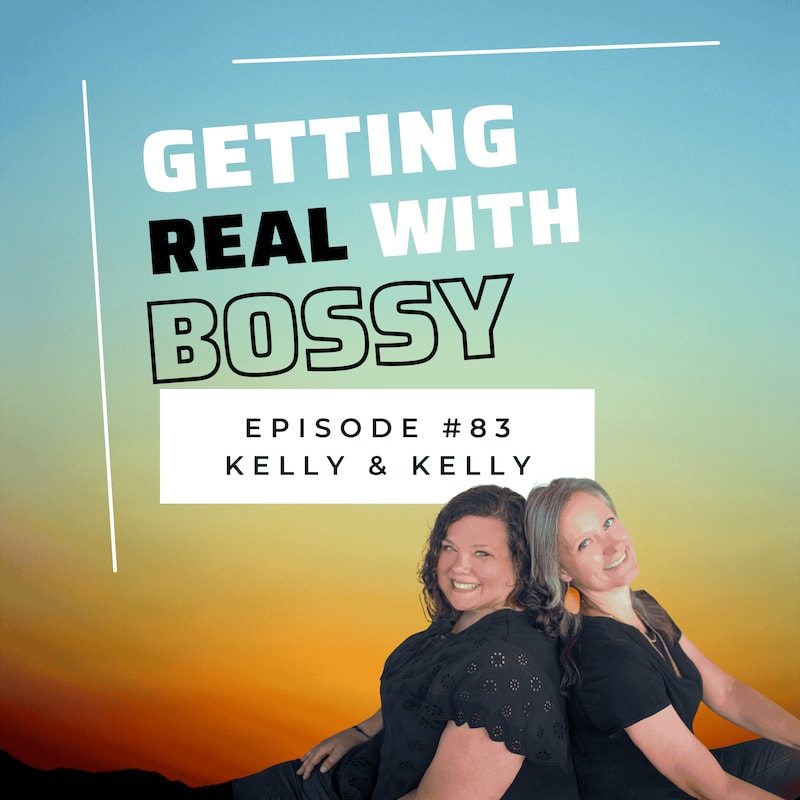
Shownotes
Reintroducing Yourself as a Business Owner
Who are you now as a business owner?
In this episode, Kelly Bush and Kelly Metras dive into a conversation every entrepreneur needs to hear: how your business- and your identity within it- evolves over time.
As business owners, it’s easy to get stuck introducing ourselves based on who we were when we first launched. But after years of growth, challenges, pivots, and unexpected life events, our stories shift, and so should the way we tell them.
Kelly and Kelly share honest reflections on navigating business ownership through seasons of change, including recovery from major surgery, stepping away from day-to-day operations, and learning firsthand what happens when you’re forced to work on your business instead of constantly in it.
This episode is a reminder that growth doesn’t just happen inside your business, but it happens within you, too.
Through candid conversation and practical insight, they explore:
-Why reintroducing yourself can strengthen your personal brand
-How stepping back reveals the true strength (and gaps) in your team
-The difference between being the engine of your business and being its leader
-Why your networking introduction should evolve as much as your business does
-How honesty about challenges builds stronger client and community connections
Whether you’re in a season of reinvention, burnout recovery, expansion, or simply realizing your old elevator pitch no longer fits, this conversation will encourage you to own your expertise and confidently communicate who you are today.
Because the version of you that started your business isn’t the same version leading it now. And that’s a good thing.
In This Episode, We Talk About:
- Reintroducing yourself as your business evolves
- Personal growth alongside business growth
- The impact of forced pauses and recovery periods
- Leadership, delegation, and team trust
- Community as a cornerstone of business success
- Embracing change and telling your current story with confidence
Key Takeaways:
- Your introduction should reflect where you are now, not where you started.
- Time away from your business can reveal valuable operational insights.
- Your team may be more capable than you think.
- Owning your expertise is essential in networking and leadership.
- Vulnerability and adaptability create stronger business relationships.
Mentioned in This Episode:
- Bossyroc.com
- Salenas.com
- UnionTavernSeabreeze.com
Connect With Us:
Follow along for more conversations on entrepreneurship, leadership, hospitality, and building businesses with intention. Subscribe now!
#BusinessPodcast #WomenInBusiness #Entrepreneurship #Leadership #HospitalityBusiness #FounderJourney #NetworkingTips
Mentioned in this episode:
internal ask
Joe Bean Roasters
Use promo code Lunchador for 15% off your order! https://shop.joebeanroasters.com
Lunchador Podcast Network
Check out all of the shows on the Lunchador Network at lunchador.org!
Transcripts
Foreign.
Speaker A:Hello and welcome back to another episode of Getting Real with Bossy, the podcast that talks to you about what it's really like to be a business owner.
Speaker A:We are your hosts, Kelly Bush and Kelly Metres, and we are so excited to be here today.
Speaker A:Kelly, I don't know if you can look behind me, but I'm back home.
Speaker B:I love it.
Speaker A:I am back home and I'm so.
Speaker A:I'm sitting up, I'm walking with a boot and sometimes crutches, but I am.
Speaker A:I am getting there.
Speaker B:We did not take advantage of you.
Speaker B:Medicated nearly enough.
Speaker A:We didn't.
Speaker A:But I also didn't really take much of my medicine.
Speaker A:So if I feel like I'm in pain one day, I'll let you know and we'll pop on live.
Speaker B:Well, I feel like, especially as business owners, like, you're so busy all the time and when these big things happen, you think you're going to take advantage of it and you're like, oh, I am going to get caught up.
Speaker B:I'm going to get so many things done and I have all these projects I want to work on and all of these things I want to do.
Speaker B:And then life just keeps on lifing and it doesn't change much even though you've got this big thing going on.
Speaker B:Not at all.
Speaker B:You go back and you're like, I didn't get anything done.
Speaker B:Like, Aaron really wants to work on those Broadway musicals that he was supposed to do with you over your injury.
Speaker B:Brazen.
Speaker B:So I'm like, you're losing.
Speaker B:You got to get on it.
Speaker B:I'm like, you're.
Speaker B:Kelly's gonna be busy again.
Speaker A:Well, we'll get there.
Speaker A:You know, I think we'll just have to take a trip or something.
Speaker A:And you drive and he and I will just sit in the backseat and.
Speaker A:And work on our musicals or a retreat.
Speaker A:Cause I think we need one.
Speaker A:We need a lot of things.
Speaker A:But yeah, I had so many intentions of things that I was gonna get done and I did get some big projects done, but not what I had intended planned on.
Speaker A:But it did make me think about a couple things.
Speaker A:Being away from my business made me see a what people are capable without me.
Speaker A:Maybe I don't need to work the 90 hour weeks that I'm working and I wanted to transition some things and it gave me time to do that because I had space.
Speaker A:And I don't think we can.
Speaker A:We talk about it all the time how working on your business and in your business are two totally different things.
Speaker A:And even if you don't have a life changing surgery that is going to disrupt everything for three months.
Speaker A:You're working.
Speaker A:Even if you're working on it, you're probably working in it as well.
Speaker A:And really being taken out of that scenario and being taken out of that, that situation gave me a lot more insight and I realized that I am a much different person.
Speaker A:We're just going to say for the Union Tavern, just for the sake of this episode, it's different than it was in 2019.
Speaker A:And I'm still introducing myself like it's 2019.
Speaker B:And in 2019, but those of us did well before that.
Speaker B:It's still brand, like it's new.
Speaker A:Yeah.
Speaker B:You're running a new business the past couple years than you ran before.
Speaker B:No matter how long you were open.
Speaker B:I mean, absolutely small.
Speaker B:You are.
Speaker B:And it's funny that you say that because I look at Aaron and he took over prep during the day and so he makes comments all the time about how he's working in the business and not on the business.
Speaker B:And he's like, you know, your podcast always tells me.
Speaker B:But what he doesn't see is because he's by himself and that involves.
Speaker B:It also includes being away from me.
Speaker B:Right.
Speaker B:Our home stuff, our work stuff, our couple stuff.
Speaker A:Right.
Speaker B:Like he's there by himself.
Speaker B:He is more creative in doing more beneficial changes because he has the time to sit on things and think about them instead of constantly being in the running mode of just that wheel of go, go, go.
Speaker B:So I think it can look like different things to take that space.
Speaker B:But you mentioned space and I just immediately thought of what he's been able to accomplish, just being taken out of the chaos of life and being put in a space where he could be like, I don't actually like the way this is working, or oh, I need to change this, or, oh, we should do this fun thing and that creative space that we all need to be in.
Speaker A:Right.
Speaker A:And it's such a great example.
Speaker A:It's going to look different for different people.
Speaker A:My taking space is going to look different than yours and Aaron's and Don's and everyone we know.
Speaker A:For me, I physically needed to be unable to be there to be taking that space, because when I'm there, I'm just going to figure out something to do.
Speaker A:So for him that's I'm great.
Speaker A:It's such a great example how that can look differently.
Speaker B:Yes.
Speaker B:You need to be like completely physically, emotionally, mentally separated and forced to be separated without an option because you'll find you found a way Back a couple of.
Speaker B:I was like, you are not butt scooting up those stairs.
Speaker A:And you did.
Speaker B:You butt scooted up the stairs.
Speaker B:And I was like, what the hell are you.
Speaker B:Stay home.
Speaker B:But anyways.
Speaker A:Yeah, right?
Speaker A:But yeah, I think it's just an important reminder that we.
Speaker A:We need to take a look at who we are and how we're.
Speaker A:How we're talking about ourselves and how we're introducing ourselves.
Speaker A:Because it is a constant evolution, like our business plan.
Speaker A:Like so many things about us and what we do.
Speaker A:We're constantly evolving and reintroducing yourself.
Speaker A:As much as it's uncomfortable for people like us to talk about ourselves, we need to put some time in and really think about how we're presenting ourselves.
Speaker A:And those elevator pitches and those.
Speaker A:How do you answer quick questions and networking.
Speaker A:Because everything is turning into networking today.
Speaker A:I swear to God.
Speaker A:I feel like the more people know who we are, a lot more now business owners.
Speaker A:Because we did get the memo in 2020 that people actually care about us as human beings, not just as businesses.
Speaker A:They may have.
Speaker A:Some have forgotten, but.
Speaker A:So I think it's becoming.
Speaker A:People are getting to know who we are more and asking question.
Speaker A:All those moments are networking and we need to have those questions down and talk about what the answers can be so you don't stumble and sound like a buffoon like I usually do before.
Speaker B:We go into it.
Speaker B:I also just want people to take a moment because I think we're all thinking about how much we've changed.
Speaker B:No matter how long your business has been, it could be a year, it could be a couple weeks, it could be decades.
Speaker B:You know, we're constantly evolving and changing, but in that evolution and change, we've become fucking experts in things that we don't acknowledge.
Speaker B:So not only are we becoming fucking experts in our business, but there are so many other things that we are forced to do as business owners that we're fucking experts at.
Speaker B:And I use that term on purpose because it pushes pins and it makes people stop and think.
Speaker B:And while we talk about ourselves and introducing ourselves and what our business is, we don't have to say that we're a fucking expert in things, but it should be in your head because you're gonna talk about yourself differently.
Speaker B:If you can acknowledge all of the things that you're really fucking good that most people have no idea that you have this knowledge base.
Speaker A:Yeah, I think that's next.
Speaker A:Next week, next time it's just you and I.
Speaker A:Let's just devote to what we're fucking experts at.
Speaker A:And how to get people to understand what they're fucking experts at.
Speaker A:Yes, Take that note.
Speaker A:All right, so today we're going to do something that we probably should have done a long time ago and honestly, often avoid.
Speaker A:We are going to reintroduce ourselves.
Speaker A:Because here's the thing.
Speaker A:Most of us don't do this nearly enough.
Speaker A:You evolve, your business evolves, what you care about shifts.
Speaker A:But you're still out here introducing yourself like it's five years ago or worse.
Speaker A:When somebody asks, so what do you do?
Speaker A:Your brain just shuts off because all of those things in your head, like, you're a fucking expert just go out the window because you're taken out of context.
Speaker A:So you shut off.
Speaker A:Everything's gone.
Speaker A:You've never worked a day in your life, and you say something vague, often awkward, and then think about it for the next six hours.
Speaker A:So today we are going to fix that.
Speaker A:We're going to reintroduce ourselves, like, actually who we are, and walk through how to talk about what you do in a way that feels real clear and doesn't sound like you copied it off of your LinkedIn posts.
Speaker A:If that's what you sound like, you've got some work to do.
Speaker B:All right, let's do it.
Speaker A:All right, so we're gonna just ask each other some questions and fire off sponsors.
Speaker A:So are you ready, Kelly?
Speaker B:No.
Speaker B:But, you know, I hate talking about myself, and I hate elevator pitches, and I hate telling people what I'm a fucking expert at, even though I will tell all of you that you need to do this.
Speaker B:But I do know that we have to do it.
Speaker B:So.
Speaker A:Yes.
Speaker A:So what's your default intro?
Speaker A:Somebody asks, you know, what you do.
Speaker A:What's the thing that you've been saying kind of forever?
Speaker A:And let's see if we can rework it.
Speaker B:So we.
Speaker B:We serve delicious food from amazing staff at affordable prices.
Speaker B:And then our other little tagline is changing the world one taco at a time.
Speaker A:I love that.
Speaker A:Don't ever change that.
Speaker B:Well, people don't understand what that means.
Speaker B:And.
Speaker B:And we don't do that today.
Speaker B:But that's more of our, like, referencing all of the community work that we do that's really important to us.
Speaker B:Whereas the elevator pitch that I said first is more, you know, Selena's as a restaurant, like, this is what we provide right now.
Speaker A:Can you update that to kind of where you were at now and maybe incorporate more of those things together?
Speaker B:I would say that we serve delicious food that can feed almost anyone and any size group, and Then including, you know, we have the best staff.
Speaker B:Like, the people that work for us, the ones we keep, you know, the ones that don't keep are not kept for a reason.
Speaker B:But, yeah, we have the best staff.
Speaker B:So we have the best staff.
Speaker B:Serving delicious food that can feed almost anyone.
Speaker B:And any dietary restriction in any size group.
Speaker A:I think that's such a huge thing because you guys pay so much attention to that, and I don't know that everybody knows that.
Speaker A:So I think it definitely.
Speaker A:It should be.
Speaker A:And that actually sounds like you.
Speaker B:That's.
Speaker A:That's who you are, because that's who you are as a person, too.
Speaker A:You're going to do what you can to meet everybody's needs, because you're amazing.
Speaker B:I'm going to try.
Speaker B:All right, your turn.
Speaker B:What's your default intro?
Speaker A:So I really loved when I was coming up with some of these things, because I went onto my Google, like, my Google page, and it says, because it's from the very beginning, a cozy tavern located in Seabreeze, where everyone is welcome.
Speaker B:And where are you now?
Speaker A:We're historic, slightly haunted tavern and sea breeze.
Speaker A:But what we've really built is a third place somewhere you can come for great food and drinks, stay because it feels like you belong, and always find something going on, from events and experiences to hosting gatherings of your own.
Speaker B:All right, listeners, we could just drop the rest of the segment because you just showed the difference between when we're throwing it together and when we're actually talking about what is important to us.
Speaker A:Mm.
Speaker A:It's like, it was such a challenge, but because I feel like I go between.
Speaker A:I gotta make it short and simple to.
Speaker A:I have to include everything that's important about us.
Speaker A:And honing that in is tricky.
Speaker A:So I kind of set it out to my sister and, like, does this make sense or is this too long?
Speaker A:And one point she's like, this is.
Speaker A:I would.
Speaker A:Nobody's listening.
Speaker A:And I think, you know, we get in our head, either nobody cares or everybody cares too much.
Speaker A:And I always reference back to that moment in Schitt's Creek.
Speaker A:If Schitt's Creek wants to sponsor us or the Levy family, feel free.
Speaker A:But there's that one moment where Alexis says to David, like, nobody's thinking about you as much as you think they are.
Speaker A:And it's like, there's a balance there that you have to figure out.
Speaker A:So you don't want to give too much info, but it's okay to bump it up a little bit, because we are more than just a Cozy tavern located in Seabreeze where everyone is welcome.
Speaker B:So much more.
Speaker A:Right.
Speaker B:And you didn't even talk.
Speaker B:I don't want to go off topic, but there are so many things that you've built and I'm sure we'll touch base on these that you include in that that are huge for your business now.
Speaker A:Well, you need that tagline and that quick pitch to get people interested and then that continues the conversation.
Speaker A:Something quick.
Speaker A:And they're just going to move on.
Speaker B:Yeah.
Speaker A:So to hone in our story, let's add some more questions.
Speaker A:Are you ready for some more questions?
Speaker B:I bring it.
Speaker A:All right.
Speaker A:What problem were you trying to solve when you started?
Speaker B:So for us, we started in this particular business.
Speaker B:We purchased a business and it wasn't just any business.
Speaker B:It was a business we both worked at for over a decade.
Speaker B:So we went into it very specific.
Speaker B:We wanted to improve consistency, improve customer service, improve quality.
Speaker B:So it was all these things that we didn't have control over as employees that we knew it could fairly easily be taken care of.
Speaker B:Right.
Speaker B:And built systems.
Speaker B:Right.
Speaker B:We're both systems people and coming from different service based industries, like you have to have systems in place and you have to have policies and procedures and none of that stuff existed.
Speaker B:So that was really what we were trying to solve when we started.
Speaker B:And then on a personal level we were given this opportunity and it was a huge risk and it was a huge expense, but we were like, okay, our personal interests and jobs that we would want don't pay well and we can't have two people that make shitty amounts of money.
Speaker B:So we were like, well, if we can make this successful, then this can kind of finance us doing the things that we're passionate about and that we really want to do in the community.
Speaker B:And then, you know, pandemic and we're kind of back where we started.
Speaker B:So whatevs.
Speaker B:But that was, that was where we started.
Speaker A:What did you think this would be versus where are you actually now?
Speaker A:Because I think that was a wonderful reason to start the business and that you did.
Speaker A:You were able to do that for quite some time.
Speaker A:And then, you know, there's things that we cannot control.
Speaker A:Like global pandemics.
Speaker B:Yes.
Speaker B:So where I thought I'd be right now is the complete opposite of where I am.
Speaker B:But it's where I am.
Speaker B:Right.
Speaker B:There's no could have beens, would have been, should have beens.
Speaker B:I just read in a book I was reading last night, it's Terry Pratchett, I love him.
Speaker B:But in one of his books.
Speaker B:Somebody was like, well, what if?
Speaker B:What if?
Speaker B:What if?
Speaker B:And the other person was like, well, yeah, and then you died in a car crash.
Speaker B:And they're like, well, I didn't die in a car crash.
Speaker B:And they're like, well, what if?
Speaker B:Like, I don't know.
Speaker B:Like, if we had not done it right.
Speaker B:You don't know all the what ifs.
Speaker B:So this is where we are.
Speaker B:This is where we have to keep going.
Speaker B:So that's kind of where now is.
Speaker B:I kind of laughed and I was like, I love him so much.
Speaker B:Because you can't dwell on what could have happened.
Speaker B:Right?
Speaker B:What we wanted to happen is what happened.
Speaker B:We did build consistency.
Speaker B:We did improve quality.
Speaker B:We did bring great service.
Speaker B:We have made a huge impact on the community, just on our personal lives.
Speaker B:We're just, you know, not financially as the place that we thought we'd be.
Speaker B:So, yeah, so that's where I thought I'd be versus.
Speaker B:Yeah.
Speaker B:Where I am.
Speaker A:All right, I think I know the answer to this.
Speaker A:But what's a moment that changed how you show up now?
Speaker A:Like, what's the moment in business or an event?
Speaker B:Okay, so I could go big event or little event.
Speaker B:Our.
Speaker B:Granted it was only a couple years in, but in 2014, when we had the flood happen, the fight, that moment really sticks out every time.
Speaker B:I hate people, you know, because everybody's a food critic and everybody knows better than you do about your business.
Speaker B:But I just dream about all of those people that showed up and helped us tear down and rebuild our restaurant.
Speaker B:People we didn't know, people we didn't know, people, friends of people that we didn't know that heard about us.
Speaker B:Like, so I think about that a lot.
Speaker B:And then on a smaller note, there's these times where people tell us their Selena's story, and I think that as business owners, it's kind of like how we skip past the five star reviews and we only dwell on the one star reviews.
Speaker B:Like, we have a couple that they still come in and they.
Speaker B:We're gonna divorce.
Speaker B:And they caught.
Speaker B:They came into Selena's to talk it through and figure out if they were gonna divorce.
Speaker B:Okay.
Speaker B:Are you kidding me?
Speaker A:Like, right?
Speaker B:Holy shit.
Speaker B:So they came into the restaurant.
Speaker B:They ended up staying for like, four hours.
Speaker B:The service staff, we were closed.
Speaker B:They just started, like, cleaning around them.
Speaker B:Like, nobody really wanted to ask them to leave.
Speaker B:So they were like, just kind of doing what you can to close up around the last people.
Speaker B:And they.
Speaker B:I think they could kind of tell something was going on.
Speaker B:Right?
Speaker B:So the staff we had at the time gave them some space and did what they could and ended up being like, I kind of gotta vacuum where you are.
Speaker B:And they left, deciding they were gonna stay married.
Speaker B:And if my staff hadn't done what I would've wanted them to do in that moment and allowed these people to have this space, who knows what would.
Speaker B:Like, they might have been divorced, right?
Speaker B:They might have made a different choice.
Speaker B:But because of that moment, they come back all the time, and this is their space, you know?
Speaker B:And it's.
Speaker B:It's things like that, or the person that comes in every year on their anniversary and sits at the table where husband asked them to marry them.
Speaker B:You know, those people I try to focus on.
Speaker B:And that's what changes how I do my business now.
Speaker B:Cause I didn't have that when we started.
Speaker B:It was more just kind of business focused.
Speaker A:I don't know that many industries do.
Speaker A:It's such a wonderful opportunity that we get to be there for people's important moments.
Speaker A:So many things happen in bars and restaurants and spaces like that.
Speaker A:It's just such an incredible thing.
Speaker A:And it's good that you remember those moments, because I think they're rare and so important to keep us going when times are hard, which they usually are.
Speaker B:And now I'm tearing up.
Speaker A:Well, you're supposed to.
Speaker A:I love those stories.
Speaker A:I might cry.
Speaker A:Who knows?
Speaker A:What do you usually leave out when you tell your story?
Speaker B:Oh, I leave out all the shitty parts.
Speaker B:All the shitty parts.
Speaker B:You know, like, we joke about some of the shitty parts, but it's shitty sometimes.
Speaker B:I leave out the loneliness.
Speaker B:I leave out what it did to my kids.
Speaker B:Like, we make choices as adults and we don't think about how they affect our families.
Speaker A:Right.
Speaker B:My kids are the kids of the people whose parents, you know, the people whose parents own the popular restaurant.
Speaker B:When I meet their moms, their moms are like, oh, Selena's margaritas.
Speaker B:And then it's hard to connect past that because I'm a person that makes their favorite margaritas that they like to go to every Friday night.
Speaker B:I'm not just this mom at school, right?
Speaker B:So the kids get that connection, right?
Speaker B:And neither do I.
Speaker B:So I leave that out.
Speaker B:I leave out the financial woes.
Speaker B:I leave out the fact that when the pandemic hit, my oldest kid tried to sell everything she owned.
Speaker B:I'm gonna cry again.
Speaker B:So, yeah, I leave out the shitty parts and I just focus on the good ones.
Speaker B:Nobody heard those anyways.
Speaker A:I mean, I disagree.
Speaker A:There are some people that really do, but yes.
Speaker A:In those moments, yes, nobody wants reality.
Speaker A:But I think there's ways to put that into a story.
Speaker A:When you consider to reintroduce yourselves.
Speaker A:Your children.
Speaker B:My children.
Speaker B:All right, your turn.
Speaker B:Now that you meet me at Altieri, right, What problem were you trying to solve when you started?
Speaker A:We were really trying to create a space where our customers at Marshall street could go and have a nice dinner.
Speaker A:Something a little bit fancier.
Speaker A:Not scale necessarily, but a place where they could get more than we can offer there and not feel uncomfortable.
Speaker A:You know.
Speaker A:You know, my husband, well, he is not going to dress up unless it is for hiking or a wedding or a funeral.
Speaker A:To be able to go someplace and have a nice dinner, a nice sit down dinner and not worry about who you are, where you came from, if you come in muddy from work, that you would just feel comfortable and welcome.
Speaker A:So that was the main thing we were looking for.
Speaker A:I wanted something with some amount of history, but that certainly wasn't the plan from the beginning.
Speaker A:But that's.
Speaker A:That's really what it was that we were looking to start.
Speaker B:All right, so 2019, what did you think the Union Tavern would be versus what it is?
Speaker A:A booming success.
Speaker A:You know, I thought we really put a lot of time and.
Speaker A:And thought into this business.
Speaker A:We did start the process in 2018.
Speaker A:There was a government shutdown.
Speaker A:We were doing a federal mortgage.
Speaker A:So it took a long time, which was really shitty.
Speaker A:Yeah, really shitty, but really great because it did force us to kind of slow down because there wasn't.
Speaker A:There was no movement in government.
Speaker A:So we had to kind of wait on a lot of stuff.
Speaker A:And we really felt like seabreeze was such an interesting community and so much going on.
Speaker A:But there was one thing that was missing.
Speaker A:We really felt that there was a void.
Speaker A:And.
Speaker A:And we knew as business owners, meeting a need, filling a void is.
Speaker A:Is a very strong way to move forward towards longevity and success.
Speaker A:So we really felt like we were.
Speaker A:We were doing that and we did do it.
Speaker A:We just didn't realize how many people would also be against that and change.
Speaker B:Oh, people hate change.
Speaker A:Yeah, that was.
Speaker A:That was a huge surprise.
Speaker A:We really felt like everybody would be on our side because what we were doing really, like, how could it was right?
Speaker A:You know, it wasn't.
Speaker A:The business that was there wasn't going to continue.
Speaker A:And I think that people really struggled with that.
Speaker B:It wasn't your fault.
Speaker A:Right.
Speaker A:We didn't steal it.
Speaker A:We didn't.
Speaker A:Like they had it on the market for years, you know, so.
Speaker A:And everything we were Doing was, was, was positive and wonderful.
Speaker A:And this idea that just because you don't agree makes it wrong was like bananas to me.
Speaker A:And how many times I had to say that to people.
Speaker A:And where we are now, a lot of people have bought in, but it is certainly not the community that I thought buying in because it's a, it's a struggle to get some of our neighbors even just to understand we are not, not these horrible, horrible liberals that came in and ruined their community from the city.
Speaker A:Uh huh.
Speaker A:So that's, that's where we are now though.
Speaker A:But it is, it is.
Speaker A:You know, we are not the financial success that I thought.
Speaker A:I thought this was going to save a lot of things financially for us.
Speaker A:And it was the complete opposite.
Speaker B:This is business ownership.
Speaker B:Mm.
Speaker B:What's a moment that you think about that changed how you show up now versus 2019?
Speaker A:We have people.
Speaker A:It's again, not necessarily a moment that we have.
Speaker A:Our regulars are incredible, absolutely incredible.
Speaker A:And the fact that they now get together and go other places too, which is wonderful.
Speaker A:But they've now become, we've kind of created this interesting community.
Speaker A:You know, Don and I have always said our staff are often, we've referred to them, us included, as the island of Misfit Toys.
Speaker A:Because it's just, that's just who we gravitate towards and it's, it's come that way into our community and we're always trying to do things to be more inclusive.
Speaker A:And my non alcoholic program is huge and I love that.
Speaker A:And one of my favorite moments is we have this real, real blue collar fella that comes in and you know, there's times where I have to remind him it's 20, 22, 23, 24, 25, 26.
Speaker A:Whenever the comments is made, hey, we don't use language like that anymore.
Speaker A:He's just one of those guys.
Speaker A:But he's wonderful and has a heart of gold.
Speaker A:We just.
Speaker A:And he's.
Speaker A:It's great that we've been able to redirect him as needed, but I was doing a non elk mingle, which is something I used to do a lot and where we'd have a bunch of people in and he came over and was like, what's going on over here?
Speaker A:And I was like, oh my God, don't ruin this for me like this.
Speaker A:Please, please stop.
Speaker A:And I explained what we're doing.
Speaker A:You know, we're trying some non alcoholic products.
Speaker A:And he's like, well, I like Blue Moon.
Speaker A:And he picked up the Blue Moon non elk.
Speaker A:And it's like, this is delicious.
Speaker A:And now like he drinks them all the time with his jack fire.
Speaker A:And it's really incredible.
Speaker A:But like, that was such a wonderful moment where these worlds can meet and we're a part of that.
Speaker A:And I just, I love that.
Speaker A:That's amazing for me.
Speaker B:What do you leave out when you tell your story?
Speaker A:How much we've had to adapt.
Speaker A:You know, we opened right before COVID and there is a, you know, we always say we're the queens and kings of pivot.
Speaker A:Like we just, we are very comfortable living in that world.
Speaker A:Cause that's all we've had to do.
Speaker A:And we're pivoting with purpose.
Speaker A:And I talk about that a little bit, but I think that turns people off sometimes.
Speaker A:Like, I don't want to hear.
Speaker A:It's hard.
Speaker A:You chose this.
Speaker A:It's the price of doing this.
Speaker A:Cost of doing business.
Speaker A:I love that one.
Speaker B:Yes.
Speaker A:But yeah, it's been a constant evolution and finding a way to kind of talk about that without making it sound, you know, pity me is tricky, but it has changed the trajectory of our business.
Speaker B:So I think the listeners.
Speaker B:You just heard us answer the questions.
Speaker B:I think that everyone should write down the questions.
Speaker B:But there'll be a worksheet available.
Speaker A:Yes.
Speaker B:On the website.
Speaker B:So you want to talk about, you want to think about the problem you tried when you started, what you thought you were going to be doing versus what you're actually doing.
Speaker B:Moments that change how you show up and then what you're leaving out and whether or not that should be a part of your story.
Speaker B:Like I was gonna mention your non alcoholic program in the beginning.
Speaker B:Cause I was like, that's huge for what you guys are doing over there.
Speaker B:And you mentioned you were able to bring it up anyway, so.
Speaker A:Right.
Speaker A:Yeah.
Speaker A:Thinking like who you help, what you do and why it matters is the perfect framework for putting together your story.
Speaker A:Right.
Speaker A:So.
Speaker A:Yes.
Speaker A:Answer those questions for yourself and then think about it like in the moment and maybe have some friends, some trusted friends challenge you like, Kelly, like, how are you going to say, like, what it is?
Speaker A:Like you're at a bar and you're answering questions.
Speaker A:Kelly, what do you do?
Speaker A:What do you do for a living?
Speaker B:I parent.
Speaker B:Are you asking me to answer that question for real?
Speaker A:I'm saying if you want to.
Speaker B:I provide a space and opportunity to meet the needs of your group, no matter what they are.
Speaker B:We have everything from kids birthday parties to corporate luncheons to weddings.
Speaker B:I mean, we have covered it all.
Speaker B:We've catered for 2,000, you know, it's.
Speaker B:We really are capable and are fucking experts at what people need in any setting.
Speaker B:Any need.
Speaker B:Any.
Speaker B:I mean, we.
Speaker B:Even though our kitchen and our recipes follow under certain allergen guidelines, like we work with people all the time that have different needs, and we just create menus that are different.
Speaker B:You know, if you need items that are soy free, or you need items that, you know, have a different allergen on them.
Speaker B:Cilantro's tough, but we have a cilantro woman.
Speaker B:We have a woman that comes in at least once a month that is allergic to everything.
Speaker B:We have created a dinner for her, and she comes in every month and eats it, you know, so we really are able to meet the needs of any group.
Speaker B:So that's what I do is I find interesting, unique ways to meet the needs of every group and then to get the word out that we can do it.
Speaker B:That's what I do for a living.
Speaker A:Yeah.
Speaker A:Amongst a thousand other things.
Speaker A:But, yes, absolutely.
Speaker B:All of a thousand other things kind of funnel into that.
Speaker A:Right.
Speaker B:What do you do for a living, Kelly?
Speaker A:Everything.
Speaker A:That's what I feel like sometimes, and I hate to give that answer, but I'm solving the needs of my community.
Speaker A:I'm creating menus that are accessible and affordable.
Speaker A:We're really working on some, like Monday night just having a very simple menu option available.
Speaker A:We are bringing in entertainment that we feel fits our brand and still meets the needs of a very vibrant, little, tiny community.
Speaker A:We call it our miracle in a mile.
Speaker A:We've also started working with our local businesses.
Speaker A:So I put together as many women businesses together as I could, because Seabreeze is 52% women business owned.
Speaker A:And we get together and we talk about what we're doing.
Speaker A:We share that, we're collaborating, we collaborate.
Speaker A:We have each other's backs on social media.
Speaker A:So I feel like I'm creating this community, which really is our brand.
Speaker A:We really, we, like I said, we saw a void and wanted to meet that need.
Speaker A:And I feel like I'm now extending that into our bigger community as well.
Speaker B:I could be wrong, but I think that you have created community.
Speaker B:You haven't just engaged with it and collaborated with it, but your introduction into seabreeze changed that neighborhood and that business neighborhood.
Speaker B:But that's just my personal.
Speaker A:Thank you.
Speaker A:It's my cue to cry now.
Speaker A:But I mean, that's all we did.
Speaker A:I mean, community is the biggest part.
Speaker A:That's part of hug our name.
Speaker A:Like we, you know, community wanted.
Speaker A:We wanted to do that and have that be A part.
Speaker A:Which is why we chose Union.
Speaker A:Just Community is tough to have in a business name, right?
Speaker B:Union Tavern, Seabreeze.
Speaker A:Community.
Speaker A:Yeah.
Speaker A:So, yeah, that's.
Speaker A:That's who I am.
Speaker A:I'm a community maker, community builder.
Speaker B:You are.
Speaker B:I mean, look at Bossy.
Speaker A:Mm.
Speaker A:Well, I mean, it's all connected.
Speaker A:And, you know, I think this is really important.
Speaker A:I'm glad you said that.
Speaker A:If you own or run multiple businesses, find a way to work that into your elevator pitch.
Speaker A:You can talk about all of them, because chances are you at the base, it's all your value system.
Speaker A:Right.
Speaker A:So they're going to have something to do with each other, even if they're all out.
Speaker A:I mean, I have this.
Speaker A:We have Bossy.
Speaker A:I've got this ridiculous merch company that I'm trying to start doing so I can make some money someday.
Speaker A:And.
Speaker A:But they all, at the end of the day, all have the same.
Speaker A:The same vision and the same values.
Speaker A:So you can work it all into one.
Speaker A:One system, one little pitch.
Speaker A:Yes, I'll work on that.
Speaker A:I'm going to do that.
Speaker B:We always leave with things to do.
Speaker B:We have to stop that.
Speaker A:Exactly.
Speaker A:What else do we want to talk about?
Speaker B:Who shouldn't work with you?
Speaker A:People with no tolerance for people other than themselves.
Speaker A:We've made that very important that we've got a diverse community in our customers and our staff.
Speaker A:We tend to get people that are.
Speaker A:Are similar to myself and Amy, who helps me run the union.
Speaker A:I know.
Speaker A:I can tell very quickly if you're not going to get along, because we are not always structured in a way.
Speaker A:People want things to be structured.
Speaker A:But we have a method to our madness, and it works.
Speaker A:We are still here because you actually.
Speaker B:Know what you're doing.
Speaker B:Right?
Speaker A:What about.
Speaker A:I am a fucking expert at that.
Speaker A:Who should not be working with you.
Speaker B:Well, we have the general dickhead, like, guests, employees, the whole nine yards.
Speaker B:Like, don't be a dick.
Speaker B:And we have our nice little sign out front that says, if you're a dick in any way, shape or form, we're gonna get rid of you.
Speaker B:It doesn't matter who you are or what your position is at the restaurant.
Speaker B:It's not allowed.
Speaker B:And then I would say nickel and dimer is like, people who think that Mexican is Taco Bell don't come to me.
Speaker B:I don't overcharge for my food, but I'm charging what it costs.
Speaker B:So if you're going to be like, oh, well, I could go to this place and get dollar burritos, I can't give you dollar burritos.
Speaker B:It's not possible.
Speaker B:I would be donating my time, money and mortgage.
Speaker B:Because dollar don't pay for the burritos.
Speaker A:No.
Speaker B:So, yeah, I would say those nickel and dimers, your nickel and dime, just don't reach out.
Speaker B:Just look at everybody's menus and pick the cheapest one and go with it.
Speaker B:And that's what you're going to get.
Speaker A:Yeah, you will.
Speaker A:You will be unhappy, or maybe you'll.
Speaker B:Be happy, who cares?
Speaker B:But just you're going to be unhappy with me if.
Speaker B:If that's the hype, you are.
Speaker B:Or if you're a dickhead.
Speaker B:Right.
Speaker A:Why do people keep coming back to Salinas?
Speaker B:So I think that we've made a very concise and driven.
Speaker B:It's in our training, it's in our manuals, it's in everything we talk about at meetings.
Speaker B:It's called Brains.
Speaker B:It's from my favorite author, zombie loyalist Peter Shankman.
Speaker B:But it's bringing random amazement into normal situations.
Speaker B:And that's everybody's job every day.
Speaker B:So the goal is that no matter where you are, when you walk in, everybody comes in again.
Speaker B:Customers, employees, everything with their life underneath.
Speaker B:We don't know what you've experienced.
Speaker B:We don't know if you got fucked over by the mechanic on your way over.
Speaker B:We don't know if you're gonna fight with your spouse or your kids are assholes or your job sucks.
Speaker B:Like, we don't know.
Speaker B:Or maybe you're having the best day ever.
Speaker B:We don't know how you're walking in.
Speaker B:So our goal is to make you feel just a little bit better.
Speaker B:And that's everybody's job.
Speaker B:And that is their number one job.
Speaker B:And it doesn't matter how they need to do it.
Speaker B:They have full open reign on what they think they need to do to make this person feel a little bit better.
Speaker B:Because when you feel a little bit better, you're going to want to come back because customer service doesn't exist.
Speaker B:Right.
Speaker B:I just came back from Disney.
Speaker B:Disney used to be a place that I. Disney, if you want to sponsor us, I'm not about to talk nice about you, but you could sponsor us.
Speaker B:I used to really study because they were known for their customer service.
Speaker B:It doesn't exist the same way it used to.
Speaker B:You know, you go to the local stores, you go to your gas station.
Speaker B:You know, like, customer service is just not what it used to be.
Speaker B:And everyone is angry and divisive and just expects pushback.
Speaker B:So when you walk into Selena's our goal is to release all of that.
Speaker B:We don't need any of that.
Speaker B:So I think that's why people come back and I don't even think they know we're doing it.
Speaker B:They don't realize we consider it everyone's number one job to make people feel better.
Speaker B:So that's why I think they come back.
Speaker B:Why do they come back to Union?
Speaker A:Like simply because they feel good when they're there.
Speaker A:See, I mean it's so, it's so simple.
Speaker A:It's not complicated, but it's is really difficult to create.
Speaker A:And once you've created it, it's a lot easier to execute by building the right team, by managing your clientele and their experience.
Speaker A:But it's just really that simple.
Speaker A:Yeah, they feel good.
Speaker A:They feel good, they feel welcome.
Speaker A:And we've created things to make them feel welcome.
Speaker B:And people see, they feel happy about spending their money.
Speaker B:Everybody's like angry about spending their money because there's less of it.
Speaker B:Everything costs more right now.
Speaker B:So you want to be good when you're spending more money.
Speaker B:Nobody wants to spend money and be angry.
Speaker A:Right.
Speaker A:So yeah, that's really why I think they continue to come back and tell their friends.
Speaker B:How would you describe the Union Tavern if you were coming off of a 20 hour shift and drunk at the bar?
Speaker A:Well, a lot of hiccups, I would say very simply because I probably want to keep it as short, as simple as possible.
Speaker A:It's a historic tavern, but really it's a place belong.
Speaker B:Oh, I got the elevator pitch.
Speaker A:Yeah, right, done.
Speaker B:We got, we got our team for the show.
Speaker B:Done.
Speaker A:Yeah, done.
Speaker A:Perfect.
Speaker B:So it's important to reintroduce yourself.
Speaker B:It's important.
Speaker B:Your elevator pitch, I love that.
Speaker B:We just came up with one on the fly.
Speaker B:No, that was not planned.
Speaker B:We do come into these lines, but we don't know where they're going to go until they happen.
Speaker A:Never.
Speaker B:Because that's who we are.
Speaker B:Real raw and honest and still bossy is the mantra.
Speaker B:So you need to reintroduce yourself.
Speaker B:People aren't paying attention.
Speaker B:They forgot.
Speaker B:We live in a TikTok world.
Speaker A:Go.
Speaker A:Right, Go, go, go.
Speaker A:Attention spans are limited to seconds, not hours like they used to be.
Speaker B:So even if you're the same person, you have to continually introduce yourself because people forgot.
Speaker B:But then if you've changed and you've evolved and you become better at things and now you're a fucking expert, people really don't know unless you tell them true.
Speaker A:And when you're doing that, that evolution, your Clientele is often going to change.
Speaker A:So you do need to reintroduce yourself for that reason.
Speaker B:Business changes.
Speaker B:What you care about changes.
Speaker B:People change.
Speaker B:All right, action items for the listeners because we are going to leave you with how to create a quick elevator pitch.
Speaker B:So you're going to go through this episode and you're going to answer our questions for yourself.
Speaker B:So if you didn't do it while you were listening, go back.
Speaker B:And also they'll be on the worksheet if you don't want to re listen.
Speaker A:Agreed.
Speaker A:And I will get that up and it'll be amazing.
Speaker A:And you'll really, at the bare minimum of it, you don't want to do all of that.
Speaker A:Think of these three things.
Speaker A:How you answer these questions.
Speaker A:I help by.
Speaker A:I do that by.
Speaker A:And it matters because.
Speaker B:And if you want to level it up, right now I'm really focused on.
Speaker B:You're really focused on your n A program.
Speaker B:I'm really focused on my large groups and meeting everyone's needs.
Speaker A:Yes.
Speaker B:Level it up.
Speaker B:You're allowed to evolve and change.
Speaker B:And if people don't like it, that's on them, not you.
Speaker B:Because it's your business.
Speaker B:Do whatever you want with it.
Speaker A:Exactly.
Speaker A:You're allowed to introduce yourself as many times as you want and as many times as it takes to reach the audience that you need.
Speaker B:So I'm Kelly Metras, owner of Selena's Mexican restaurant in the Village Gate in Rochester, New York, where we're changing the world one taco at a time.
Speaker A:But that covers it all.
Speaker A:I did love that.
Speaker A:And I'm Kelly Bush.
Speaker A:I own a historic tavern, but really it's just a place to belong.
Speaker B:And now I'm going to cry.
Speaker B:Follow usyrochester.
Speaker B:Email us bossyrockmail.com that's bossierocmail.
Speaker B:Come be on the show.
Speaker B:Tell us the things that you're a fucking expert at and share it with the world.
Speaker B:Practice your elevator pitch.
Speaker B:We're pretty easy to talk to.
Speaker B:Any of the people we've interviewed were in 80 some odd episodes, and all of them have been happy with the results so far.
Speaker B:So follow us.
Speaker B:Make sure you're subscribed.
Speaker B:Reach out to us.
Speaker A:Be bold.
Speaker B:Be brave.
Speaker A:Be the boss.
Speaker B:Be the boss.
Speaker A:Till next time.
