Shownotes
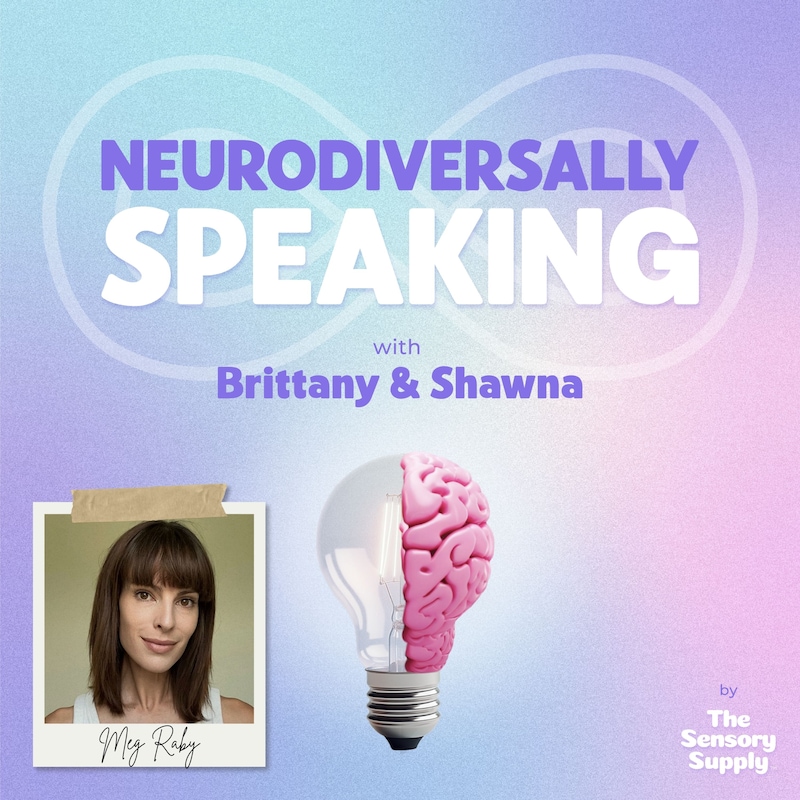
Time for a guest we're so excited about. In this episode, we'll be sitting down with Meg Raby of Kulture City to discuss all things inclusivity!
Meg Raby is an autistic female, pediatric speech-language pathologist (SLP) and neurodivergent advocate, writer of the children's book series "My Brother Otto", and a regular contributor to "Scary Mommy". She writes about life, love, family dynamics and hustling for an inclusive world for other neurodivergent children and adults while working full-time for global leading nonprofit, KultureCity, alongside an unstoppable, diverse team of like-minded individuals.
KultureCity is all about making sure that every individual, no matter their sensory needs, feels like they belong, and Meg is leading the charge with her work there. Throughout our conversation, we discuss ground-breaking initiatives at KultureCity, Meg’s background and work as an author, and much more! Meg's insights aren't just heartwarming but also packed with practical tips for parents and communities. So, if you’re looking to shift from just awareness to real inclusion & acceptance, grab a comfy seat and tune in, because this chat is gonna spark some serious joy!
Timestamps:
(01:36) - Welcome & Life Updates
(02:16) - Today's Topic
(05:21) - Introduction To Meg
(06:43) - Meet Meg
(17:41) - The Mission of KultureCity
(27:38) - Setting The Table Of Hospitality
(36:03) - KultureCity App w/ Koji
(43:45) - KultureCity's Newest Exciting Project
(56:44) - Understanding Inclusion and Awareness
(01:08:30) - Barriers to Inclusion
Mentioned In This Episode:
Meg's Socials:
- IG - @author.meg.raby - https://www.instagram.com/author.meg.raby/
- FB - Author Meg Raby - https://www.facebook.com/meg.raby.5
- LinkedIn - Meg Raby Klinghoffer - https://www.linkedin.com/in/meg-raby-klinghoffer-934a89269/
KultureCity Socials:
- IG - @kulturecity - https://www.instagram.com/kulturecity/
- FB - @kulturecity - https://www.facebook.com/kulturecity
Meg’s children’s books:
- My Brother Otto https://amzn.to/47Pzykt
- My Brother Otto and the Birthday Party https://amzn.to/49aKYSp
Meg shared about her ASD diagnosis and the link with Ehlers-Danlos, for more information see: https://www.ehlers-danlos.com/what-is-eds/
KultureCity app with Koji - includes venues with sensory materials, social stories, and Koji AI AAC app
KultureCity’s Make The Nevers Possible ® Experience Program
****
Visit The Sensory Supply for the best in sensory products to soothe, stimulate, and inspire.
Learn about our clinic Elemenoe where we work to reach milestones together through speech, language, behaviour & learning.
Visit neurodiversallyspeaking.com for all podcast & show info:
Follow us:
Contact:
Have a question or a topic that you'd love to hear on the show? Get in touch with us at [email protected]
Mentioned in this episode:
CTA - Brit - Show Idea
Transcripts
Kulture City. What's their like big mission? Like kind of overarching mission. And then what do you do there sort of on a day to day?
What does that look like for you?
Meg:So Kulture City is the global leading nonprofit in sensory accessibility and inclusion. So it's 1 in 4 kids and adults universally that have sensory challenges.
So yes, autism, but also adhd, ptsd, generalized anxiety, Parkinson's, dementia, stroke, recovery.
Brittany:Hey everyone, I'm Brittany, speech language pathologist.
Shawna:And I'm Shawna, behavior analyst.
Brittany:And we're your hosts at Neurodiversally Speaking.
Shawna:This is a podcast where we bridge the gap between research and practice, exploring autism and neurodiversity through the lens of speech and behavior.
Brittany:Whether you're a parent or a professional, we'll give you practical tips to bring into your home or your next therapy session.
Shawna:Let's get started.
Narrator:Welcome to the Neurodiversally Speaking podcast with Brittany Clark and Shauna Fleming from lmno, brought to you by the Sensory Supply.
While we aim to make neurodiversity speaking suitable for for all audiences, mature subject matter can sometimes be discussed suitable only for those over the age of 18.
If you're under the age of 18, please talk to your parent or guardian before listening to our show or listen together with them to stay up to date on new episode releases and show updates. Connect with us on Instagram eurodiversityspeaking.
You can also send us listener questions to address on the show at [email protected] - Neurodiversally Speaking starts now.
Shawna:Hi everyone. Welcome back to Neurodiversally Speaking. I'm Shawna. Hey.
Brittany:And I'm Brittany. We're really excited to have you guys here today. As always, I think I say that at the intro of every episode. So sorry.
But we're always really excited to be here on the podcast with you guys and it gives us a space to just sort of sit back and reflect and look beyond outside our day to day at the clinic or our day to day as a speech pathologist and a behavior analyst. And I wanted to share a little story as we're getting started.
Shauna and I celebrating my because our families often hang out together outside of work too. We were celebrating my daughter's as she turned my youngest turned six this past week and a half because we celebrated more than one weekend.
Shawna:We did have two weeks of party.
Brittany:Very fun. And today on the podcast we're talking about sensory inclusive spaces.
And my youngest, I would say is very can be very overwhelmed in A sensory space. And birthday parties, to me as a parent, also make me think of, like, sensory overload.
So so many of the birthday parties, at least where we live in Waterloo, Ontario, Canada, you know, birthday parties are these, like, intense sensory overload spaces where.
Shawna:You actually, like, will not go to a play place. I said, my husband, it's too much. I will be there. So grumpy. Exactly.
Brittany:And so we feel that as parents who, like, have some sensory regulation tools, et cetera, and like, communication to say, hey, I don't like this. Like you said, I'm not going. And so then imagine that for like a four or five, six year old with sensory differences and, or neurodiversity.
And so my little one, like, she also hates going to these trampoline parks or play places that are all loud and overwhelming and will just likely stay by my side. And I thought for her birthday, I want her to have fun and really enjoy it.
Shawna:Of course.
Brittany:Exactly. Of course. And so we are so lucky. I want to shout out to this local little gym that we have here, they do gymnastics.
And we went and we had this whole gymnastics place to ourselves. And your son was there and just a few of our friends in our friend group. And my daughter felt so, so safe and supported and included.
And I was like, she belonged there. It was amazing.
And all it really was was, like, not crazy loud noises, no children were screaming, which, you know, you can't help if kids are screaming, but not everyone was screaming. And, you know, it's just like, so nice to have this space.
And I went home thinking I have to write to them and say thank you for being, like, neuroaffirming. Thank you for being sensory affirming and just, like, inclusive. Like, we felt like we belonged there.
Brittany:Oh, so nice.
Shawna:Oh, well, today's episode, we are diving into exactly that, that we care about deeply from our own experiences. And then certainly at the clinic as well, moving beyond just that awareness piece and how do we bridge that gap into inclusion? Right.
It's one thing to know about what's going on. It's another thing to, like, truly embrace it and think about. Theme I think you'll hear come up in our conversation today is that you're thought of.
Brittany:Yes.
Shawna:Right.
Brittany:And that you belong here. And, like, you're not. We're not just sort of fixing you or like, trying to fix things to make you feel more included, like more welcome.
You are welcome and you do belong. And like, how can we change some of that environment so that we're not changing you? We're just changing the space.
Shawna:Exactly. And we're, like, thinking of these things ahead of time. It's not an afterthought. We planned for this.
You know, we know that this is a crazy environment. And here's all this stuff that we have to support you so that you can also go to different places, because sometimes we'll find they'll only.
And again, we talk about this in the episode, but you'll find, like, families only go to this McDonald's. You might only go to this Walmart or whatever, you know, because you find spaces that work for your family.
Brittany:Yeah.
Shawna:And so really looking beyond that and how do we help make more inclusive spaces so that people can really, like, jump into life.
Brittany:Yeah, exactly. So we just love our conversation that we're having today with Meg Raby.
She's an advocate, she's a speech pathologist, and she's part of the leadership team at Kulture City. And Kulture City is an organization that's transforming how public spaces approach sensory inclusion.
So we'll hear more from Meg about what that looks like in this world and how to make spaces more feel like you belong as a family.
Shawna:Yeah. Meg is also a children's author.
Wrote a book based on an experience that she has, like, a very key memory of as a young child interacting with someone that was Neurodiverse, my brother Otto. And so we'll chat with her about that and how we can really help shift that idea from fixing the person to fixing that environment.
Brittany:And so as speech pathologists and behavior analysts, the two of us, we see every day how, like, access and regulation can really shape participation. And, you know, we talk about here how participation is really the essence of life.
And so you want to have those tools around you to feel included and supported so that you can participate fully wherever you go and grab your coffee. We're so excited for you to have this conversation with us.
Get comfortable and join us as we move beyond awareness and towards that vision of inclusion. And chatting with Meg.
Shawna:Yeah. And I think one thing that stuck with me is making the never possible. And so think about that throughout the conversation. Hi, Meg.
Thanks for joining us on Neurodiversally Speaking. We're so excited to have you here today.
Meg:Yes. Thank you for having me. I'm excited, too.
Shawna:Yay.
Brittany:Fantastic.
Shawna:Why don't you start by telling us a little bit about your background and you're coming here from Kulture City and a little bit more about that. Why don't we start with yourself and sort of your background?
Meg:Yes. So my background is as a Speech and language pathologist for over a decade. I primarily have worked with autistic children and young adults.
Lots of these individuals, these kids and young adults were non speakers. So lots of AAC in. In the background, for sure.
And also included in the realm of being speech and language pathologist was this outlet that I got to pursue in the world of writing. And I'm a children's author of the book my brother Otto. And Otto is a non speaking crow who also uses a tablet to communicate.
And he was developed based off of one of my own classmates when I was in preschool who was autistic. Had. I mean, I was four years old at the time, had no idea, but wrote that book just because I wanted to make sense of who Otto was.
And I was a very curious and empathetic child. Still am.
Shawna:Yeah, I'll say that you have this, like, core memory of being four years old and like being in preschool and having this boy that obviously had such an impact on you and I would imagine led sort of was a guiding light to you as you became a speech pathologist and stuff.
Meg:Yes, yes. And I think. And maybe you guys can relate to this too. In. In grad school, you learn about autism and you learn. They call them.
I think they kind of scare you a little bit. And I think it's changed in the last few years, but they've said like, the 13 red flags of autism.
And I remember thinking like, oh, my gosh, this is actually a devastating kind of a diagnosis. And that's said, I still to this day believe there are challenges for sure that come with a neurodivergent autistic brain.
But what the kids and the young adults that I worked with showed me is that they are 100% wholly human. They want connection. They do communicate, even if it's not using the speech mechanism.
And those 13 red flags, almost, it felt like a little bit of an episode of this is an older show, but of Mythbusters, like, hanging out with them and doing the therapies and being like, oh, my gosh, these guys are my. They're my buddies and my friends. These young ones and the older ones become my friends. And I'm like, it just.
Yeah, some of the communication interactions look different. But all in all, I think the loudest message was they want to belong.
They have the same desires to feel safe, to be included, to have connection and friendship.
And then that translated back into my brother Otto, because I would go up to Otto, my classmate, as a little kid, and ask if he wanted to play and I would be told by his aide, because he was non speaking, like, oh, Meg, he's fine, don't worry, Just go back and join the other kids. And I would, I would do that and I would be super confused because I'd be like, what? Like, he doesn't do anything with us.
And I would try a couple more times and then landed in the space that like, Otto is just so different than the rest of us, like. And I landed in the space and I don't like saying it, but I'm being honest.
As a kid, when I was a kid, I said that he was weird because what is not understood, I think for all humans, all of us, when something we don't get is right in front of us, we're kind of like, I don't know about that. And like that seems kind of different and weird and maybe scary. And then through life's experiences and yeah.
Career and speech and language and then being good friends with the kids and the young adults on my caseload. And then I myself have autistic adult friends that I'm really close with.
All that came together to create brother Otto and to kind of connect me to where I am even today, even with Culture City for sure.
Shawna:Yeah, I love that. And how, like I said, you're looking back at a four year old and obviously society has change a lot as well. Right.
The neurodiversity movement has come in and we know a lot more about autistic children than I'm sure when we were kids for sure, people weren't really talking about it. And then this idea that you're like, I didn't really understand it and I didn't know. So then it becomes weird because you're four, right.
And that's like the only way to sort of process what you're seeing.
But then now I'm thinking like, what a cool, like what we know about you now, a cool full circle moment with your role at Culture City, really focusing on that awareness and acceptance and inclusion. How did you go from. So you're a speech pathologist and then now with Culture City, like, how did that connection sort of come up for you?
Meg:Yeah, that happened. I'm one of those, I think few and far between that find social media to actually be a very positive space.
But however, I will tell you, I think I've protected my algorithm. Keep it positive.
right before the pandemic in:Let's set up a call. When are you thinking? And they're like, can you do now? And I'm like, okay, let's go. So we ended up chatting for like an hour on the phone.
I remember I was doing like, fig, like walking in a figure 8 path in my backyard and just listening to. So our founder's name, who I was speaking. We have two founders and their husband and wife of Culture City.
And I was speaking with one of them, Dr. Julian Maha.
And just hearing Julian kind of express the mission of Culture City and what they're doing and to hear his passion in the origin story about how he's kind of. I mean, this is all about his son Abram, who is now a teenager and is non speaking on the autism spectrum, getting to hear all that.
It was so hard not to be like, let me be involved. Let me volunteer. Like, what do you need? This is so amazing. And so they would have me. I'm. I reside in Utah.
So anytime there would be an event or we call them activations at Culture City in Utah, they would reach out to me just to volunteer.
Because at that time I was working full time still as a speech and language pathologist and just doing a bunch of different types of volunteer work for Culture City.
Even in the realm of helping with writing, the trainings that we provide for the partners that we work with to make them sensory, accessible and inclusive. And that gradually turned into, hey, Meg, what if we make it a part time job? And like, oh my gosh, I would love it.
And then if you know anything about a nonprofit, though, part time. Part time is a little bit of a joke because it turns into full time in one. One minute exactly. Part time or maybe a couple days.
And then that turned into a full time position, which even my boss at the time, like when I was doing speech and language therapy in the Salt Lake Valley, my boss then when I told, when I had to call him, like, chat with her about this new job that I was taking, she even goes, you can't pass that up. Like, that's such a great opportunity.
And so I think something that I always say to people when I'm explaining my story and connection with Culture City is what I love is these kids and these adults that we are working with, like week after week, year after year, you get so Close to them and like close to their families. And it's a beautiful thing. It really is.
And at the same time though, it hit me about, oh my gosh, I could have, and I did have some of the same folks on my caseload for like seven, eight years. Yeah, like you could have the same people, the same kids and adults on your caseload because you always can be finding kind of something to work on.
Or like we all know the standardized assessments are not normed often, if at all, for neurodivergent learners and humans. So you can always make a case for why they could stay on your caseload. And I always tell people, like, I'm not ashamed.
I love like psychology and my therapist, but I don't want to see my therapist every single week indefinitely.
Brittany:Yeah.
Meg:And so, yeah, so I love, love, love that it gives these kids and their families, it gives these adults and their families or friend groups a chance to take a. Just live and be themselves.
And then Culture City comes alongside and bends toward their neurology, toward the way they're experiencing life, so that they can just, you know, enjoy a concert, enjoy a zoo, enjoy their classroom environment in a new way where they're seen.
And it's okay to maybe regulate in ways that look different than their peers via if it's like repetitious behaviors, like stimming, that's fully embraced. And I think there's something that's just so freeing and invaluable with that.
So it was really nice because I got to tell all the families, I'm not working with you in the same capacity, but I'm still working with you in the sense of what I'm doing will still have an impact on your child and on you. And also just give me a phone call and if you want to hang out, let's go do that.
Brittany:So true.
Shawna:And we talk about that often too.
Brittany:With our clients and families is like.
Shawna:Therapy is something where you might come in and out, you know, and like the. It's never goodbye, it's you later.
Because like you said, you really do like genuinely care for and are committed to that progress and success and like their life journey. Right. Take a side step. Culture City. What's their like, big mission? Like kind of overarching mission.
And then what do you do there sort of on a day to day. What does that look like for you?
Meg:Yeah. So Culture City is the global leading nonprofit in sensory accessibility and inclusion.
So it's 1 in 4 kids and adults universally that have sensory challenges. So yes, autism, but also ADHD PTSD, generalized anxiety, Parkinson's, dementia, stroke, recovery, traumatic brain injury, Ms.
It's one in four of us that have sensory challenges where either externally, what we're like, the stimuli that we are experiencing, or internally, the stimuli that we are experiencing or the information can lead us to become sensory overloaded, where the brain might enter into what we call a fight, flight or freeze mode. Yeah.
And this pushes a lot of individuals and again, their friend groups and families to just kind of stay home or to go to the same safe spaces of, like, the particular restaurant, you know, the particular grocery store and the particular trampoline park or something like that as an example.
Brittany:Yeah.
Meg:And it's our goal at Culture City, our mission, we call it making the nevers possible that there's no such thing as a never.
We just know that, like Our founder again, Dr. Julian Maha, and his wife, Dr. Michelle Kong, they say with accessibility, that eliminates impossibility.
And I think that is something that is so exciting and energizing for me to get behind and to not ever need to shut up about, because I think it is so true. And I've seen. Seen the impact of Culture City firsthand. And so, yeah, we train, we provide trainings with all of our partners.
And we have partners from mom and pop coffee shops and donut shops all the way up to the NFL, the NBA, all professional sports and stadiums, arenas, Coldplay. We've been on tour with them for three years. And Paul McCartney, he just did a little US tour, which is also so cool.
Like, I was, I was to my husband the other day, like, thinking, you know, Paul McCartney is older and like you guys were mentioning, like, we're in the neurodiversity, neurodivergent movement. And it's really cool to see someone like him within his age group even being able to understand. Yes.
You know, I'm hearing, I'm listening to these stories, you know, maybe I have no idea his own neurology. Yeah. But all of us humans at some point have sensory overload. Like, anyone can enter into that.
And to see someone who is also not used to probably sensory processing and all that terminology say, yes, this is important. And I want these families, these kids and adults to be here and to be accommodated for is just something super refreshing.
And so, yeah, main thing with Culture City is we believe kids, adults, their families and friend groups belong everywhere 24, 7. That's integral to who we are. We love the idea of if you're familiar with curbs on sidewalks for those that use wheelchairs.
We want Sensory accessibility and what we are championing and providing to be everywhere so that anytime, any day, you can go and explore the new restaurant or attend that specific school or if you get pulled over by a first responder, like a police, that you feel confident that you're gonna be seen and understood and accommodated for. And that it's also just that messaging of it's okay, you know, to be neurodivergent, it's okay to have sensory needs.
It does not make you wrong or less than. This is just your neurology. And we love it. And we're needed. Like all of us are needed.
Brittany:Perfect. And beautifully describes that world of being inclusive and not changing the person. Like moving away from that fixing sort of old mentality. Right.
And instead changing the environment so that we can all live. And that's really what it should be. So I absolutely love that. And you said it very eloquently and beautifully. So thank you.
I was curious when you said Coldplay and like some of the concerts, like to me, sensory overload and a concert. Yep. That's like very overwhelming. Like the sound, the lights, like it's intense. All the people.
Like when you're working with a famous artist or group, like, what does that look like, accessibility at a concert? Can you describe that a little bit more? Because that example got me thinking.
Meg:Yes, no, absolutely. So what that entails is we provide trained staff to attend every single concert.
And at those concerts, all the patrons that are attending have access to Culture City sensory bags. Okay.
And our bags are researched based and they have a variety of tools inside, including noise canceling headphones, three specific fidget tools that provide a different tactile input. And there's even strobe. Strobe reduction glasses. Yeah. To help with like the light effects that are happening.
And then the interesting thing though, with that is we provide those glasses even if you're not a concert venue, because we know that what is comfortable visually to one person or one brain is, can be actually painful or dysregulating to the next person. Especially if you're post traumatic brain injury. And lights can push you into migraines or up to like 40% of autistic individuals have epilepsy.
And so even the flickering of of a fluorescent light can be the impetus of a seizing event. And so these glasses are amazing because they're higher UV filtration and they're thick on all sides. So that light doesn't like penetrate in.
That said, that's Meg's brain going on a tangent.
Shawna:No, that's helpful. I know a lot of sensory tools. I've never heard of this before, so I think, very cool.
Brittany:I love that. And then what Culture City does then is make it accessible so people can then get these kits at the venue or you get it ahead of time.
Meg:So what's great, great question.
Each of our events that are set up, so concert events, they are like, we have a whole events team that will go over like the logistics and figure out like, what makes sense, what number of sensory bags should be available. And then some of them, like, I know Coldplay actually does pay to give the sensory bags for folks to keep, but we have. Yeah, it's amazing.
And we have partnerships where though you can always check out a sensory bag to use while you're at the arena or the stadium, like the festival, and then you return it, you know, whenever you're done or. Yeah, when you're done using it and everything can be sanitized.
And then the other tool I wanted to mention that's in those bags are these visual communication cards. Slash like feelings thermometers. What we know is, yeah, they're amazing.
So they were definitely created for, again, non speaking individuals or minimally speaking individuals.
However, as you guys are probably aware, anyone that's in a state of fight flight or freeze mode can benefit from some form of assistive communication. Because it's really hard to advocate for yourself to say, like, I am so overwhelmed right now and I need a fidget. Like, exactly.
Even like the most, you know, the most wise adult in those moments, it is really hard to access the needed language to advocate.
So these are great because on one side it's going to have the emotions and then the other side it has a variety of tools available, including even just locating to a quieter space or getting a drink of cold water. Those are all provided with pictures on one side, which is nice to hit, like universality for communication.
If someone does speak a different language too, they can still use that card to kind of express themselves in those moments.
And what's really great, and I think something that's so cool that sets Culture City apart in general is our stuff is 100% for kids and adults, like seniors. Like, we love to come alongside people of all backgrounds and ages because this impacts all of us.
And there are people that acquire sensory challenges later in life. So I love that.
And then the other thing that I love, specific to how our partnerships look is we always provide an annual training that's specific to your type of event or entity. And so it makes it empowers the staff or the volunteers that are at these concerts or that are at a restaurant or a school or that is.
That are a first responder to be able to not just say, hey, we have these sensory bags available for you, but to come alongside and to be able to identify a child or an adult who could benefit from it. Because again, there's going to be people in their 60s, 70s, 80s that maybe don't even know that sensory tools could be helpful.
And you might be the first person that is introducing them to that and changing their life because they're like, oh my, this helped me so much, you know, So I love how it is. Yes.
It's like setting the table of hospitality by providing the Culture City sensory bags, but then upping that for those reactive moments like where someone has entered into overload so that the volunteers and staff can help and feel confident in helping return them to what we call homeostasis or peace that in the body.
Brittany:Perfect. That's so cool. And so you said you gave some examples of places where you could find these kits.
So concert venues and then also like sports sporting places. Right. And so some of our listeners are Canadian, but we've also got a lot in the US and then across worldwide.
And so how do you find out how to access these?
Meg:Absolutely. So please, anyone that is listening, download. It's completely free, the Culture City app.
It's culture with a K. And the reason for that, I like to tell people, because I didn't ask that for.
Brittany:Three years, I did wonder.
Meg:And it just, it's because we're changing the culture. So we just.
Brittany:Cool.
Meg:So it's Culture City. One word.
Brittany:Yep.
Meg:That's the app. You'll see headphones on an orange background. That's what the icon looks like.
And it's amazing because it's geolocated and it calibrates to wherever you are, honestly, in the globe. But yes, and in the US is where we have the majority of our partnerships, but that is growing, which is exciting outside.
And then Canada, we have several partnerships as well. And what it's going to do is it's going to pull up all the nearby partnerships of places that have been trained and certified with Culture City.
And then it's going to provide you with a social story that corresponds to each venue or location or event and walk you through or your child through, or your spouse or grandma or grandpa through what they can expect sensory wise at these locations. How can they access Sensory Bag and the tools should they need them?
You know, where is a quiet area on the campus, wherever the concert is, or in the school building. Like, where are these places that you can go? Should you feel, you know, in the.
Or should you be placed in those places of fight, flight or freeze mode, which then empowers that child, empowers that family to be like, it's okay for us to even have those experience.
It's okay if we enter into disregard or sorry, into overload, because we've been thought of and they're kind of, you know, indirectly telling us in a way, we're ready for this and we're so happy you're here. And instead of having to avoid coming in the first place or leaving early, there are these tools and training and spaces available.
And some of our partners, what's cool on the app, too, you'll note they will also go above and have a culture city sensory room there. And that's opposite, Quiet area. Quiet area is a place to give the brain a break for more information coming in.
So we always say, like, choose places that have minimal things on the walls, maybe just natural lighting, no smells, no sounds. And then in the sensory rooms are the places that have the variety of, like, sensory experiences with lights and tactile elements and seeding.
So you're hitting a lot of the senses needs and putting the brain in control of that experience. So that's really cool, too, because that's on the app as well. So that's a great way to figure out, like, okay, where are these places?
And then to kind of curate your own weekend. You could do that.
You could be like, we're going to go to the Children's Museum, you know, Salt Lake City, and then we're going to go to this restaurant afterward.
And it's just neat that you can kind of confidently go to these places knowing that at least there is that ethos of acceptance and that ethos of we always call it. We like to call it the ninth sense of belonging in these spaces. And I love that so much. Beautiful.
Brittany:Thank you. Captured so many different things there.
When I looked at the app and the social story piece, one thing I liked about it was you were saying it transcends all ages, too. And so it's not just like cartoon drawings for little kids.
I think I looked at the one that was for one of the venues in Toronto, and it was just like a picture of the place. And it's very, very simple. So in my mind, I was thinking, hey, this is also aphasia friendly.
This is also, you know, friendly for a child or a teen or anyone. Just like, here's where you enter, here's where you just, you know, here's where you would experience this. And I thought this is so nice.
Like, I want to know sometimes if I'm going to a new place with what to expect. And so it was just really well done. Like very adult friendly, child friendly, sort of everyone friendly, which is sort of the. Your values, right?
Is like that it really, everyone is welcome here.
Meg:And I love that because I think that also hits on, I mean, not even just sensory accessibility and inclusion, but like all disability, all accessibility of any type in the world of disability impacts every human in a positive way. Like, there's always collateral effect. So like again, the curbs on sidewalks, yes, they were made originally with those that use wheelchairs in mind.
But we know like moms with strollers, dads with strollers, Amazon delivery, like, or people that, you know, have a harder time with motor control of their legs. Like, it's what impacts the one person and provides that accessibility still has these benefits for everyone else.
And I know you are you guys both moms. I know. Yes you are. Okay.
Like, you know, if you have a kid that's five or younger, all of them can benefit from sensory tools because having to sit still ever for any given period of time can get hard and make you feel antsy in your body. And sometimes you just want to move around or your brain is wanting. It's like zoning around the rest of the room.
And so these tools, yes, the they are actual tools that help those with invisible disabilities and sensory challenges.
But again, they all benefit the next toddler or even someone who just heard, you know, really hard news and now they feel dysregulated or overloaded and they have to maybe go give a public presentation and they're like, not in the headspace. Like these tools are helpful for that person. Or every human gets overloaded in an airport. It doesn't matter if you have a diagnosis of any or not.
Like, these tools are also helpful for those kinds of environments too. For anybody.
Shawna:Amazing.
I keep thinking how lucky for Culture City that you're the person that they found and because you're training as a speech pathologist and then that like early life experience, like really seems like a perfect space for you.
What is it that you're doing on like a day to day or like what are some of, are you working on some of this initiatives or like what are some of the areas of passion within obviously the broader mission that really spark joy for you?
Meg:Yeah. Oh, I love that. I love spark joy I always. One of my words is joy. I love that. Yes.
I laugh because people will, you know, if I'm speaking publicly, it'll be like, what's your title? And like, all of our. All my teammates and I should tell you, at Culture City was really cool.
We're a small team, and over 80% of us are neurodivergent ourselves.
But when we're asked that question, we laugh because we're like, well, we kind of are, you know, the customer success customer experience manager or something. But then we're like, but we also, you know, write trainings, write grants, do trainings, public speak, work on renewal. I don't know.
You know, you just wear so many hats.
But if you go and you see, like, my title, my formal title, which is fun and is directly related to speech and language, is I'm called the Chief Koji Officer. And Koji is our free communication system. It's an AI generative communication system that is on that Culture City app.
So if you download the Culture City app in the bottom right, you will see an icon that's, like, pink, and it says Koji.
And Koji was created because, you know, we champion inclusion and we say, you know, we're doing pretty well with, like, the sensory, like, meeting those sensory needs. But true inclusion is participation, and for many kids and many adults, like, they don't have access to a voice to fully participate.
And so that's where Koji came from. And then we were like, let's make it a little bit different in the ways in which it works, even from the next kind of AAC system.
So we utilized AI, not in a predictive way. I don't know if you guys. Have you guys read about some of the ways in which they'll use AI with AAC for predictive measures?
Shawna:I feel, like, interesting to share some more.
I know, like, a very little bit about it, but some of the ways that they're using AI, I think, is to sort of see patterns in what you're seeing and sort of guess what you're going to say next.
Meg:I guess, yes, like, what you're gonna say next is very. It's that. That is common, and I can see places for that. But I've. I've heard the pushback, and it makes sense.
The pushback is, well, what if that's not at all, you know, like, my voice and what I wanted to say, did we then lose that whole presuming competence of the child or the adult user? And so how we utilize AI on Koji, it's so cool. Like, I'm sure again, best practices across AAC is model, model, model. Right?
Like the speech therapist models it, the parents model it, or caregivers the teachers. And it's hard, right?
I always laugh because I'm like, yeah, I know I have lots of years of like AAC experience, but each device is a little bit personalized. Finding the needed vocabulary and, you know, if I'm just gonna name a. Make. Make up a name, call him Little Johnny.
Like if Little Johnny, you know, is into playing a game of Angry Birds with me. But then all of a sudden, in two seconds, you know, is hungry and wants to go get a snack. I even know as a speech therapist I would be like, oh, no.
Because I know where the language was gonna use for Angry Birds, you know, and so now it's that whole switch and be like, let me go find the food now. And what I love about Koji is that there's this AI talker button on it.
You select it as the parent, teacher or therapist, you can literally say anything into it, naturally hit send and then it is gonna generate high frequency responses back while also allowing them to access the keyboard if they're independent and X scene. Or they could X out of it and go to language folders that are also on there. But it's just so cool. And you can be specific then.
So I always love to tell people if, I mean, I guess globally, we all know Ms. Taylor Swift. Yes, I am a Swifty.
But you know, if you have a kid on your caseload come in and they're wearing like a Taylor Swift sweatshirt, you can flat out say to them, oh my gosh. Like you hit the record or the little green button on the AI talker on the app and say, oh my gosh, I love Taylor Swift. What's your favorite song?
And because it's AI, it's gonna actually name the actual names of Taylor Swift songs. So it's like, it's just, I don't know, in a way, to me I'm like, oh, it's just so human and like empowering and I love that.
And yes, no, we would never say Koji is 100. For every single person we know, there's new and fine motor that has to be taken into account and learning style, all the above.
But it's definitely something people should be aware of because it's completely free, will always be free. It comes in six languages and it's about to come in more in Koji 2.0 along with some other fun tools. And again, Free.
You can put it on your smartphone, on a tablet. It's so that definitely gives me deep, deep joy. Yeah.
Shawna:What an innovative solution. I wouldn't necessarily have thought of their reversal.
We, of course, work with a lot of students or clients that have assistive communication devices, and I would never have thought of that reverse idea of letting it take the input of my input and helping at that point. So very cool solution and something I definitely want to check out for there.
Meg:Very, very cool on the play. Let's definitely play around with it.
And then again, anyone can reach out to, like, [email protected] and say, hey, could you make it do this maybe? And we'll add it to our list and chat about it if we can raise money and make it happen.
So it's fun because it's like all of us get to be involved in it and so love that too.
Brittany:And we do really love the apps for communication when there's a professional advisor on the scene. So I think that adds so much more value to for sure that, you know, you know, the evidence, like you said, there's modeling.
There's so many things that we need to think about, you know, what the font should look like or the, you know, interface should look like. So that's really, really cool. But I was just thinking too, how it's a standalone piece, like you said.
Shawna:It'S part of the Culture City app.
Brittany:Where you can go and look and find, you know, sensory experiences in your city. But then this app is sort of. It's embedded in that, and it could really stand on its own as its own app.
Shawna:Appreciate.
Brittany:Yeah.
Meg:Yeah.
Brittany:Cool.
Meg:And that's intentional because we did talk about that.
Brittany:Yeah.
Meg:I'm sure you guys also, again, know as speech pathologists. Like, there are so many amazing, cool tools and app there, but it can almost cause internal overload. Right. For sure. Users.
Because you're like, okay, I have this app for that. This one for this, this one for there. And this is just nice because it's kind of like your go to for things when you're in outings or. Yeah.
When you need a voice or you need a space to go to. I love that.
Brittany:So you could use that part, the Koji part.
If I'm at the stadium and I'm, you know, looking for my sensory bag, but I can also use that in my living room if I want a cookie, is what you're saying.
Meg:Yes.
Brittany:Yeah, exactly. Yeah. Cool. I love that. Very, very cool.
Shawna:That's awesome. Okay. The app, I could see definitely being something that Sparks, joy.
And it sounds like you also maybe enjoy the variety of things that you get to be a part of.
Meg:Oh, my go. Yes.
Brittany:Yes.
Meg:My boss also says so I'm. I got diagnosed three years ago as an autistic female, but my boss says he's like, oh, you totally have adhd.
Because my brain is very like, I'll be doing one thing, very focused, and then I'll be like, oh, 15 more things that I see that I need to do to attach to this, and then I'll forget to go back to. I don't know. That's just. I have to be doing a variety of things. I love novelty, but I also. That's funny.
I love novelty, but then I also love sameness. Yeah, it's a mix.
Brittany:Yeah. Relate to that for sure.
Shawna:Very cool. Can you share anything that you're excited about that you're working on right now?
Meg:Yes. Something that gives me goosebumps, I can share with you all is that Culture City.
So our hub is in Birmingham, Alabama, and that's where again, Julian and Michelle and his family live. And then a couple of my teammates live there. I always get jealous because I'm on the opposite side of this country.
storical steam plant from the:And what we are doing with it and what we have begun, like with plans and figuring out all formalities, legalities and everything and fundraising, all the fun, all the good stuff is we are turning it into the world's first disability hall of fame and disability museum that also, it's so cool that also will have like a fine dining restaurant that's operated by individuals with disabilities. We're partnered with Lego. We're in all of the LEGO storefronts. And so there's going to be a LEGO store in there.
And then the coolest thing about it is it is going to have a training college for those with disabilities that will provide hands on training so that you will be pipelined to a job, to one of our partners that we work with. So it could be at a LEGO store, it could be at a coffee shop, it could be on a Carnival cruise, because these are all of our partners.
But you're going to have the hands on training made available to you or to your child. And we could not be any more excited about this. I keep laughing because I'M like, everyone's gonna move.
Brittany:Yes, exactly.
Shawna:Y.
Brittany:Amazing.
Shawna:We see there's such a problem, right?
Of underemployment and so, and certainly actually Brittany and I had looked into this a couple years ago to see if we could open up like a donut shop or.
I don't know, we were like, just looking at anything because we were also like, thought be very cool to be able to provide that hands on support and then back away, right? Like, help you kind of get used to the system and learn sort of the process. Processes and that sort of thing.
And then back away and to see them flourish and like, what a amazing thing you guys are going to be able to do. And like, I was thinking of the ways you're looking at inclusion. So it's like a huge piece of inclusion that I think people are struggling to tackle.
I think this sounds so cool to have all of these unique opportunities in one building.
Brittany:I love it. Like, talk about goosebumps, right?
I think we're both in awe and I think I know this is a podcast so you can only hear us, but my cheeks are hurting from smiling so much just listening to this. Incredible.
Meg:Y' all are my people. I know. I tend to. I tend to cry in every, like, public engagement, like, speaking engagement that I have because it is.
It's just like, this is like the good stuff of life, you know, like just establishing and letting everyone know from person to person, like, you are thought of and you belong here. Like, there's nothing better than that.
And it's just fun that, like, as a nonprofit and just with our specific team, like, we're given freedom to dream up things and to present it and to see if we can make stuff happen. And then we just have the coolest.
Both of our founders are biggest hearted humans and are always doing things behind the scenes that then they tell us about. And we're like, do this. Like, when did you. Or when did you have time?
Because, like, one of them is like an ER trauma surgeon and the other one runs pediatric icu. And so you're like, where is.
Brittany:But I'm not even computing how. That's incredible.
Meg:Oh, my God. That's my joke with them. I tell them that they. I go, you guys are at. You're ahead of all of us, aren't you? You like our robots? Like AI robots?
For sure.
Shawna:Yeah.
Brittany:Oh, that's amazing.
Shawna:I'm thinking of your mission of making the never possible. And like, what a cool never to add on to your list of things that you're supporting.
I Think a lot of people, obviously when they get a diagnosis of autism, they don't know what to expect.
Brittany:Right.
Shawna:And we certainly have a lot of those conversations with families that come into our clinic. I'm sure you've had them as well.
Meg:Oh, yeah.
Shawna:And. And there's so few resources. Well, one, I don't have a crystal ball, so I can't see into the future.
But then there is like so few resources for that teen and up. Up age group. And so I really feel like it's such a pocket and so needed and hopefully you can show a model that works. Right.
And really inspire more than just in Birmingham, Alabama, where, like you said, people will be flocking there.
Meg:Now, I love it. I'm gonna lose all my friends.
Brittany:But I also love that there are so many big players involved. Like you said, the collaborators, like Lego and Carnival, like, these are not. Not small companies.
Meg:Right.
Brittany:These are large places that are international. And the fact that there are some large names, like, really embracing this, then it feels more.
It feels really hopeful, you know, that it can become this. Like you said, we were just sort of trying to change the environment and try and change the world, really. And Nick, you're doing it. It's so cool.
Meg:You all are a part of it with us. We are very big believers. Like, it. Like, we rely heavily, heavily on volunteers and on people that are also just very passionate.
And like a lot of us, a lot of you guys have personal stories too. And so we can't do what we do. We can't open up the world in this way without our partners and without our volunteers. So that's amazing.
Shawna:I am. We didn't sort of talk about this before you came on, and if you don't want to talk about it, that's totally fine.
But you shared that you got a diagnosis, this just a few years ago, and I wondered if you feel like that, I don't know, changed any perspective you had or about inclusion or. I don't know.
Meg:Yeah, it's always fascinating to me to reflect on it because with my background in speech and language pathology and like, I think I had a pretty clear. I mean, not a full. I think. I think even from autistic person to autistic person, there's crazy ranges, right? Like just any human to any human.
There's. There's likes and differences, strengths and weaknesses, all the above. But it was interesting for me to actually come out and say it when I was.
When I did receive the diagnosis, because the kids and the adults that I. The young adults that I worked with, with just had more frequent high support needs or ongoing needs, ongoing supports that look different than mine.
And so I was just like, ooh, I don't know. Like, you know, I started going through, like. Like, I have a job, I am married.
But really deeply in that, though, too, is like, me saying in a way, like, oh, is that a possibility for those kids? And I a million percent think it's a possibility.
And I. I've seen so many of the kids on my caseload go on and do amazing, amazing things, like if they get the right tools and stuff, like, the sky is the limit, full stop. But then I've had. I have a lot of autistic adult friends.
And they said to me, though, Meg, like, think about the other females that are out there that were similar or are similar to you that also maybe have the same struggles, and you're giving them a chance to be seen by sharing your own story.
And I tell people all the time, I don't know from person to person if they would want to know if they were autistic, you know, at an earlier age than I found out. But I know for me, if I could have known, it would have made my childhood much more easy in the sense of understanding the why.
Because I was so why child? Like, and I would come home from school and I would think, like, oh, my gosh, like, this is exhausting.
Like, I was teacher's pet, straight A's and a deep, deep feeler. And I would be like, is this what, you know, like, I would feel like, isn't this what everyone goes through? And if it is, like, how.
How does it look like everyone else's is, you know, doing so well and can handle it all and why am I having such a hard time? And so I think if someone could have just said to me, hey, guess what? Your brain works one way.
But even your best friend, you know, her brain works a different way and she doesn't, like, her brain doesn't go to that space. And, you know, it's not your fault and it's not wrong. It just. I just know me.
I was such like a why I wanted to know the reason and give me information and, and that would have been helpful for me. But that said, it's still been a beautiful thing to find out because it's just made me be able to explain myself. Even in, like, my. With my husband.
I can explain some of the things that I do.
I can explain some of the things that I need because I'm more aware of, like, how My brain works or why the way I communicate sometimes can be a little more direct or, like, I don't. I don't know if you've heard this sometimes, but, like, sometimes you'll hear, like, those that are autistic don't really lie.
Like, we're just truth tellers. And that is me to a fault. And he will tell you, too, like, when he dated me that it was very different because I just name. Here I am. This is me.
This is what you need to know about me. And he was like, you just. Yeah, we're very straightforward. No games kind of a thing. And. Yeah, I don't even know what that.
Brittany:Means, but love it.
Meg:Yeah. So it's been a journey.
And it's so fascinating because if anyone does read the book, my brother Otto, Piper is his sister in it, and she's narrating this story. And Piper is me as young Meg. And again, my autistic friends that read my brother Otto before knowing about my neurodivergent.
They read it and they're like, oh, my gosh, Piper's neurodivergent. And I was like, no, she's not. You know, and they're like, yes, she is. Like, she's. She likes, you know, order.
She wants to know why he's fiercely devoted to her brother. Like, super empathetic. And I was just like, oh, my gosh, that is fascinating. But I still, at that moment, I did not make that connection.
But now, now I can see it. And I actually. What led me to the final like, of getting diagnosis. I got diagnosed with Ehler Danlos syndrome, if you've heard of that. Eds.
Shawna:No.
Meg:So it's a connective tissue. I'm super bendy, which sounds like, oh, it's your super trick. But, like, my.
Like, my elbows can pop out, like, of joints and stuff, and there can be a lot of pain with it.
But there is all these studies that have come out now that are showing the correlation between Ehler Danlos of the hyperbole mobile type, which is what I have, and female autism. And when I started reading those, I was like, oh, my gosh. You know, I have these friends saying this about me. I can kind of see it.
And then that led me to just seeking diagnosis here in Utah. But, yeah, that's the story for that. And so it's just full circle. And. Yeah, Yeah.
I feel like I'm living completely in alignment now, though, with myself and what I'm doing. And it all feels for sure like a gift.
Like, I still, you know, when You're a little kid, you don't get to track out exactly where you're gonna end up. And nor did I even know anything like Culture City existed. So I get very overwhelmed with gratitude to get to be a part of this.
Shawna:And yeah, and like I said, it seems like like really a perfect sort of match, right? It like brings together a lot of your, your life experience and your professional experience really in a way that can be so impactful.
And so when we look at inclusion versus awareness, one thing that I've noticed you've said is like, you're thought of and we have a plan for you, you know, or we've thought about some things that might be useful. Would you say that's like a big difference between just aware, like inclusion versus awareness, or is it more than that?
Meg:That. Yeah, no, I, I always say that, like, honestly, things do start with awareness, right?
If you don't know something exists, how are you going to do the steps to elevate that and make acceptance and inclusion kind of happen. So. But it can't stop at awareness.
But awareness, I do think what's embedded in that is kind of an education or some sort of information to be able to understand.
You know, there's humans out there, there's one in four of them that are experiencing the world in either a heightened or a reduced way and navigating constant dysregulation or entering into sensory overload. Who are these kids and these adults commonly like, what are things we can look for? What are things we can do?
What are some communication practices we can do? And so it just can't stay at awareness, right?
Because we can could be aware, you know, that our lunch exists, but we're not gonna enjoy our lunch and we don't go and eat it, you know, and like consume it. And so I think that inclusion needs the awareness, it needs the acceptance. And then I always tell people something.
With acceptance though, is, is also making sure we champion the message of you want your autistic child too to accept themselves, you know, or I as an autistic adult want to know that I accept myself too and that I don't have to rely 100% on other people to make me feel worthy.
And I think that's an interesting, that is an interesting thing to just sit with, but that these are tangible steps to inclusion by becoming partnered with Culture City because you're getting the training, you're getting the sensory tools and the spaces, and you're getting the check ins with us and webinars if you want to attend them. And you're getting a lot of excited, joyful people that can't shut up about their area of interest. And.
And I think that technically what we're doing is it's just a form of a hospitality. Yeah. And that is. And it's. It's a granting to one another of, like, you. You have your own value that you bring to this space, too.
And it's not just us bringing our, you know, tricks of the trade or, like, our personalities in this space. Like, we want you here because we know you do have value and you're worthy completely. And then again, falling back on that acceptance.
Like, I've thought about that a lot of, like, I think it's important for, like, me to accept myself and for the child to accept themselves, to not be so 100% reliant on another person to meet that need. But Culture City is showing you that this world needs you, that you are worthy, and that inclusion is kind of the point of it all, the point of life.
There's a lot of hard stuff out there. And I think that that sense of belonging and inclusion are what are the beautiful things and the things that we are all.
Even if you don't work for Culture City, those are the things we're all going after.
Brittany:That belonging. You said it. The word popped into my head. And you said it at the same time, actually, because you were just describing that sense of belonging.
And that's really what inclusion looks like. It's not like, here's a sensory tool bag that you can use so that you can hang out here. It's like, no, no. This is.
We're your hosts, and we want you to feel at home here, wherever you are in your environment. And we want you to feel like you belong. And that is really beautiful and the way that we want to see the world going, for sure.
But that belonging seems like the perfect word.
Shawna:I was thinking as you were talking, too, you're going beyond just dropping sensory kits off at places, right? Like, really making sure that inclusion piece is. And it sounds like you guys are doing it through education, too, right?
Like, educating these spaces so that then they know, like, oh, hey, this person might benefit from a sensory kit Instead of here's 25 sensory kits, and they sit in a storage bin for the year.
And then we come back, you know, and so I think that's a really key piece that you guys are focused on too, is, like, spreading the awareness piece that helps connect with these tools and strategies.
And then I think your expertise as a speech, language Pathologist of course in these lived experience kind of tying it all together so that people are really feeling that inclusion versus like I said, just having a bunch of sensory kids around.
Brittany:Yeah, exactly.
Meg:Yes. We always say like I mean you can go, I'm just laughing this Canada, Canada has Target.
Shawna:We did for a little bit and then it got it left. It was very sad day for us Canadians.
Meg:What is your name? What is the name of a store that's similar to Target in Canada?
Brittany:We wish there was one. No, I'm kidding.
Shawna:Maybe Walmart I guess is our.
Meg:There is Walmart.
Brittany:There's.
Meg:Even at Walmart you can go anywhere and get sensory tools. They're in those dollars dollar section.
Brittany:Exactly.
Meg:And so we tell people all the time like exactly what you were just saying that it's, it's so much more than a sensory bag. It is the ethos of the place you're going into it is seeing.
So part of all of our partners get signage to map out sensory locations like that are headphone zones that are really loud or a quiet area or even just the sign that says this is a sensory inclusive location.
All of those are ways of again my brain just goes back to the word hospitality but it's like you see that, that and you're just, you just know you're seeing.
And even if say zero people ever checked out, you know, went up and sought out a sensory bag, you still have no idea how many lives you've impacted just by proactively, you know, partnering up and proactively having these signs that say hey, you know, this is sensory inclusive. We thought of you. And so then they do feel their best self because they're like oh my gosh, this is amazing. And so I love that too.
I think the signage just really makes the accessibility actually happen too because a lot of times yeah, you could have all the tools, toys, rooms, but if no one knows they exist and that they're available or if you don't have staff that's trained that can identify someone in need because it's not always possible to get ahead. Some people will become sensory overloaded. Like that's where I think the difference is of where it reaches far past like tangible tools and stuff.
Shawna:It's amazing. I love the mission and everything that you guys are doing looking at creating those inclusive spaces than the forward thinking.
I'm very excited to hear updates on your guys latest project. If you were to give some like quick strategies to, I don't know, families or the community, man, school community.
How can we be more Inclusive, sort of right away. Do you guys have some quick tips?
Meg:Yeah, I. I mean, you're speaking to someone who. Yeah. Also is a children's author.
But I'm such a believer that books are so powerful because they give you visuals, they give you that connection time, and the most random thing will stick out to a child or even an adult from a picture book. So I think reading. There are so many amazing books out there now that. That are on a variety of topics of anything to do with diversity in general.
So making sure, like, your home library is full of those kinds of books, or going to the library and asking a librarian, they're very well versed in what books to refer you to. So just spending time each week in those kinds of books.
Shawna:One thing that I've also thought of with the books is as an adult, don't shy away from the kid book books, because I learned a lot from reading children's books too. Right. You see the perspective of the child, which I might not get from like a. I don't know, like a narrative from a parent perspective or something.
Meg:Yes, we all say that as children's authors. Like, we're all. Most of us are adults that are writing them too, so.
Brittany:Yeah, yeah, exactly.
Meg:Yeah, they're definitely for adults. And then. Yes, I already mentioned. But the Culture City app would be an amazing thing to download because if you have.
Maybe you have a neighbor that, you know, has a child with either autism or ADHD or you know that they have multiple kids and it can be hard to get them all in the car in general to get out and about in the world. Just showing them, like, hey, look at these places that are nearby. And like, they're set up with quiet areas and the sensory bags.
That's a great way, just word of mouth, kind of spreading that inclusion. I always say following. I mean, that's one of the gifts of social. I mean, there's.
There are curses of social media, but one of the gifts of social media is that there are really neat, totally free people, like resources and people sharing their stories. So do a little digging and find different handles to follow. And yeah, you can follow Culture Cities as well.
We're always posting different stories about where we're at and what's coming next or where we were. And maybe someone's sharing a little testimony about what it was like at that specific venue or at that specific event. Yeah.
And just maintain, I always say maintain that disposition of curiosity because that is where the learning happens.
If you are constantly curious about one another and about the Kids about the adults and wondering, kind of like putting yourself in their shoes of saying, like, I wonder what they're experiencing right now.
Like, maybe something seems great and peaceful for you, but maybe to them, they're not getting enough sensory input, you know, at a library or a museum or something. And I love that. It kind of puts us all in. In that sense of empathy, too, toward one another. Like, we don't know what's going on. We can't.
It's not like we can see each other's brains and how the neural pathways are working. But I do think just taking, like adopting that position of curiosity and just chase after the curiosity and read and talk with people and.
Yeah, those are all really beautiful, great things.
Brittany:I love it. We talk about that at our clinic as speech pathologists and behavior analysts too. Like, get curious.
So you know when you're interacting with a new child and you're wondering, like, oh, interesting, they're playing a little bit differently than I might. Then we stop and get curious and sort of think, like, okay, cool, like, what can we learn more about them?
And I think you're sort of saying that same mentality, you know, of just like, get curious rather than. We talked about it earlier. But I was thinking how you're saying, like, there's no shame and blame in having different sensory needs.
It's like, hey, no, this is actually part of who you are and what makes you cool, you know, and so it's the same sort of thing.
Meg:Yeah, absolutely.
Brittany:I felt like, no, it wasn't, but thank you. But, yeah, very, very cool. So, you know, you're sharing some of the tips, which is wonderful. What about some of the barriers you face?
Like, what are some of the sort of barriers to creating more inclusive environments?
Meg:Well, right away, I will say not everyone is curious.
Shawna:Very true.
Brittany:You're right. And change is hard for people.
Meg:For example, I had a friend, one of our. One of our strongest partners, and they're amazing. Is Carnival Cruise Lines.
Brittany:Yeah, that's so cool.
Meg:I have a friend that went on a cruise with her daughter who is on the autism spectrum. And they said the staff was amazing. Like, they used.
They did use a sensory bag every day because there were times where overload happened because a cruise ship is very vulnerable and there's a lot on going. It's lot going on, travel in general. Very, very vulnerable.
Brittany:Yeah.
Meg:And of sensory input happening. And the staff, again, totally amazing with them. The issue was sometimes. And this is this. This is the reality. Sometimes when she.
When their daughter would enter into overload people would pull their phones out and record. Oh yeah. So and I, it's a, it is mind boggling but it's not unheard of.
I've heard this a lot from people, like people you know, again that's, I think we're such digital social, I guess media little creatures.
Brittany:You're saying recording her, like if she's having a meltdown or like not supporting.
Meg:And so like recording. Yeah. It adds to the already the loneliness and social isolation that these families and individuals already feel.
So it's really sad when you're trying to champion something and like you get so far but sometimes some things are just out of your control because the other people you're around don't have the same curiosity at the same time. What I will say with that, what is beautiful, is that in that moment that is horrendous of someone, you know, recording your child.
I love that you're not alone. Like you have the staff there.
But it still breaks my heart and broke this mom's heart about thinking like why are you filming this like versus like either leaving us alone or offering help.
Shawna:That is mind boggling to me that that would be someone's response. Like the last thing you would need in this. Like I'm thinking from the mom's perspective, from the person's perspective. Like I'm.
That's so unfortunate.
Meg:It is, yeah. Oh gosh, it is, is. And so I think just like everything is brain by brain I always say and it's human by human.
Some humans have that curiosity and some don't and we do our best and I think you can't lose heart and just surrender because we are making such great progress.
Like even you guys, like you know, speech pathology has become way more neuro affirming and we, yeah we're, we can't let the barriers be roadblocks and be like complete obstacles that keep us from progressing. But we're also allowed to be human and to be sad or a little bit angry when people do that kind of stuff.
But yeah, there are barriers with that and then like obviously funding, sometimes money and the needs from family to family are different. The number of kids in one family is different.
The number you know, of co occurring medical diagnoses that happen or even for you know, a grandma, grandpa or an adult. Yeah, I'm all like, a little more empathy, a little more curiosity, we'll all be good. The planet will be a much better place. I love that.
That's perfect.
Shawna:Thank so much for joining us today. I feel like I learned A lot about inclusion and some of the cool stuff that you guys are doing that I wasn't aware of.
So thank you so much for sharing your story and about your book. My brother Otto sounds amazing and beautiful. And then all the amazing things you guys are doing at Culture City.
Meg:Thank you so much for having us. And yeah, we just want to spread about all these resources that are out there.
Brittany:Yes.
Shawna:Fantastic.
Brittany:Thank you. Your message is going to shine through for our listeners of that belonging is really the value of Culture City, but also yours too.
And so I think Shauna said it too, like, they're so lucky to have you and we've been so lucky to have you on the show. So thank you so much. This has been such a really meaningful conversation.
Meg:It's very sweet. Thank you for what you're doing and, yeah, you're a part of all this beautiful work.
Shawna:Yes. You reach out to us if you need support in Canada. We are excited to further this mission.
Meg:Yes. In and tell people like, you need to get certified.
Brittany:Yeah, yeah.
Meg:Seriously, the word of mouth stuff is so powerful.
Brittany:Yeah, yeah, Exactly. Amazing. Well, thank you so much. We'll put some of your resources in the show notes, Meg, because I think there's a second auto book too, right.
About a birthday party.
Meg:Yes.
Brittany:Yes. Perfect.
Meg:There's another podcast. We'll talk about that one. I love it. Oh, okay, perfect.
Brittany:We'd love to have you back, Meg. Thank you so much and chat with you again.
Meg:Yes. Thank you, guys.
Brittany:Take care.
Meg:Good day. You too.
Brittany:Bye. Before we go, we want to remind our listeners that topics we discuss in the podcast are not a replacement for professional medical advice.
Please contact a professional if you have questions.
Shawna:And just a heads up, we'll use both identity first and person first language to respect different preferences. We'll also see treatment and therapy since we come from a clinical space, but always with respect and a focus on what works for each person.
Brittany:See you next time.
Shawna:Bye.


