Shownotes
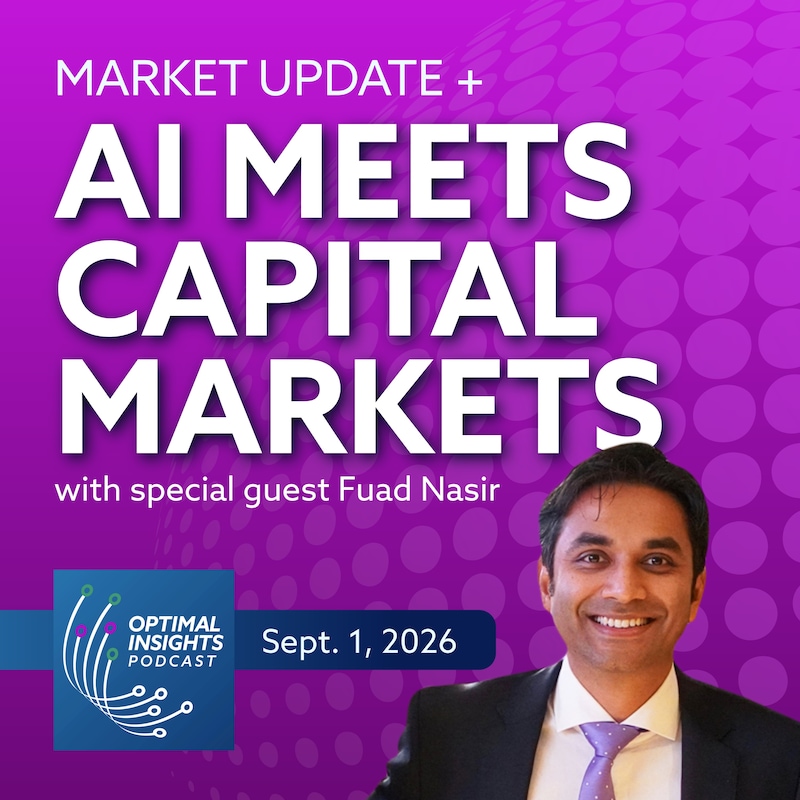
Welcome to this week’s episode of Optimal Insights. Jim Glennon, Alex Hebner, and James Cahill break down the latest market developments heading into September, including Federal Reserve expectations, inflation trends, labor force participation concerns, employment data, energy market dynamics, and what those factors could mean for mortgage capital markets professionals. Special guest Fuad Nasir also shares insights from the MISMO Fall Summit and discusses responsible AI, capital markets innovation, mortgage technology modernization, risk management, and the future of connected pricing, hedging, execution, and analytics workflows.
Key Points
- Jackson Hole takeaways, inflation data, and the market’s growing expectation of a potential Fed rate hike.
- Why labor force participation may be one of the most important indicators shaping the employment outlook and broader economy.
- Fuad Nasir discusses responsible AI, the MISMO FRAME initiative, and how technology can better support mortgage capital markets decision-making.
Chapters
- 00:00 – Welcome & Mortgage Market Snapshot
- 02:44 – Jackson Hole, Inflation & Fed Expectations
- 07:10 – Employment Data and Labor Force Participation
- 12:42 – CPI, PPI & Inflation Outlook
- 14:27 – Oil Markets, Geopolitics & Energy Prices
- 16:01 – Labor Day Hedge Positioning Reminder
- 16:32 – Interview: Fuad Nasir Joins Optimal Insights
- 21:14 – MISMO Fall Summit & Responsible AI Governance
- 23:45 – How AI Creates Value in Mortgage Capital Markets
- 25:52 – The Future of Capital Markets Technology
- 28:38 – Connecting Pricing, Hedging, Execution & Analytics
- 31:03 – Product Innovation, Fallout Risk & Risk Management
- 35:44 – Closing Remarks
Optimal Insights Team
- Jim Glennon, SVP, Hedging and Trading Operations
- Alex Hebner, Hedge Account Manager
- James Cahill, MSF/MSR Account Manager
Special Guest
Fuad Nasir, VP, Product Management, Hedging & Trading
Production Team
- Executive Producer: Sara Holtz
- Producers: Matt Gilhooly & Alex Kreuter
Commentary included in the podcast shall not be construed as, nor is Optimal Blue providing, any legal, trading, hedging, or financial advice.
Mentioned in this episode:
Get Ahead of What’s Next at Optimal Blue Summit 2027
The mortgage market keeps moving. Optimal Blue Summit 2027 brings together industry leaders, innovators, economists, and technology experts for three days of market intelligence, hands-on learning, and meaningful connections. Join us February 1–3 in Scottsdale, Arizona, to hear from Troy Aikman, Bob Broeksmit, Michael Fratantoni, Joe Tyrrell, and other influential voices shaping the future of mortgage. Optional training sessions and a championship golf experience are also available. Early-bird registration is just $199 through October 31. Register today at Summit.OptimalBlue.com.
Transcripts
Welcome to Optimal Insights. I'm your host, Jim Glennon, Senior Vice President of Hedging and Trading Operations at Optimal Blue. Our clients and industry partners have long relied on Optimal Blue for trusted insights and commentary. And these podcasts are an evolution of our commitment to keeping the industry informed. Let's dive into today's episode.
Jim Glennon (:Thanks everybody for being here today. Welcome, welcome. It is August thirty first as we're recording this. You'll be checking it out on first of September. Hard to believe. We're we're zeroing in on Labor Day right now. Kids are back to school for the most part, or you folks on the East Coast, probably next week. A lot to talk about today, a lot of numbers coming up later this week, a little bit of geopolitical items to discuss as well.
Jim Glennon (:So, in the interest of keeping you informed, you know, we're always going to strive to bring you up to the hour, current events, and how we should think about those, whether we're capital markets professionals, originators, hedgers, people that are just interested in the mortgage industry or some good market commentary. So in a minute here, we'll touch base with Alex and James on what's going on in the market. And then we had the pleasure of interviewing Fuad Nasir, who is our new ish.
Jim Glennon (:Head of product, our VP of product development for hedging and trading. So looking forward to talking with him later as well. let's see, before we get into that, in the way of data, we have OBMMI still higher than we'd like it to be, about 6.7, slightly below 6.7 as of Friday. The 10-year creeping up again this morning, 4.76. So I think we fear the five handle on the 10-year. We haven't seen that yet, but
Jim Glennon (:not seeing the type of activity we like to see in the long term part of the curve. Volume has slowed finally. We were pretty resilient through the first part of the summer with rates high. We were still seeing decent amount of lock volume, but that's really started to slow now going into the fall, which is typically when we see volume start to slow down anyway. So something to keep an eye on. And again, just all these things we talk about on this podcast, just propping rates up higher, whether it's AI spending
Jim Glennon (:Government spending not just by the US or but across the world, the NATO allies especially, just just increasing their spending on things like military. So let's let's start talking about the market, gentlemen. Welcome, Alex, James. Thanks for being here as always.
Alex Hebner (:Good morning.
James Cahill (:Yeah, thank you.
Jim Glennon (:Morning.
Jim Glennon (:So where should we start? Should we let's maybe we start with Jackson Hole? What's been the word out of that conference? We had Kevin Walsh speaking last week. He had his typical and his promised sort of opaque nature of his comments, trying to focus on the initiatives that the Fed is undertaking, some of what the Fed sees in terms of economic.
Jim Glennon (:growth and economic numbers and things like inflation, but obviously not showing his hand, not showing their hand. I mean, what do you all make of the the Walsh comments last week?
Alex Hebner (:Yeah, it was it was much in line with what I was expecting from him, which was to say as little as possible, to give as little opinion as possible. what I'm coming to expect from him when he speaks is is kind of the bullet points mission statement from the Federal Reserve's website. But he he really doubled down on I I think it most looked like his first FOMC meeting. really he was hammering hard on inflation again, saying that, you know, here's my standard. We we gotta be confident that
Alex Hebner (:underlying inflation is moving to our objective. He clearly stated that objective was two percent as it has historically been. and he wants to see that that we're clearly making progress towards that. he did not indicate any policy action that that he would be supporting in support of that, but it really just had the market thinking again that that we could be in
Alex Hebner (:in for some some rate hikes here into the fall. you know, heading into his his speech, it was about sixty forty expecting a a stay in the September meeting and that flipped to sixty forty for
Jim Glennon (:Mm-hmm.
Alex Hebner (:a a hike at the September meeting and and as of this morning, Monday morning, it's flipped even more so in support of a hike closer to like a 70-30
Jim Glennon (:Interesting. Yeah, there's been speculation, as you said, before this Jackson Hole meeting, we were starting to lean towards maybe the job is already done just by way of market conditions. Short term rates had gone up, the yield curve had flattened a little bit. Some of that was some of that was due to Scott Besson and the Treasury undertaking this initiative to try to lower rates on the long end of the curve and you know, by probably by default then raising rates on the shorter end.
Jim Glennon (:That that hasn't really beared much fruit, at least over the past couple of weeks. But the short end has been getting higher. The like short term rates have just been rising with everything else. But maybe maybe it needs another nudge by way of a hike from the Fed. It does feel like in this meeting next month, unless something happens in the next couple of weeks, that we will finally get that hike. At least that's where the money is pointing right now.
Alex Hebner (:Yeah, that's sort of money's pointing right now. We'll get a much clearer picture here in a couple weeks when we'll get the CPI and PPI. That'll be the final inflation reading heading into this meeting. but everything that we're seeing so far indicates that inflation is still it's not escalating as it was in the late spring and early summer, but it's it's again, it's just above target and he has made it very clear that he'd like to get us back on target. PCE last week came in both for the non-core and core number with a three handle on it. So still
Alex Hebner (:work to be done there.
Jim Glennon (:Right. Yeah, the PCE came out last week, as you said, and that is the Fed's preferred measurement and still has that, you know, high threes really. I I know they're just looking at the handle, but you could almost argue w that we're still close to four percent.
Alex Hebner (:Yeah, yeah. The core number was three point three. You know, when you include the those volatile energy and food numbers, it was three point seven. So that's a pretty
Jim Glennon (:Right.
Alex Hebner (:ugly release.
Jim Glennon (:Okay, so that covers last week. What do we see coming around this week? We've got the big one on Friday. We might as well cover that. We've got the unemployment report. Almost always the one that everybody should be paying attention to. It's not had huge impacts on the markets recently. Almost like under this new administration and this different
Jim Glennon (:job market, this different labor market that we have, it's taken on less of the focus, especially with, you know, the headline rate being in that low, very low forehandle. But is there anything we should be focused on? Like the participation rate is probably something that we should take into consideration. Alex, you've you've touched on that quite a bit and James, just how that's affecting the numbers, even as we're not creating a ton of jobs, we're somehow keeping the the headline rate very, very low.
Jim Glennon (:Lower than the anywhere near where the Fed would need to act.
James Cahill (:Yeah, it's definitely into the big number coming out this week and the thing to look for on Friday. exactly as you pointed to, over the last couple of releases there hasn't really been too much to act on or even the market hasn't reacted where there might be news. And the last release we saw
James Cahill (:There was actually net job losses, but the unemployment rate fell. So looking at the participation rate is going to give you a clearer picture of what's really happening there. So as people come into or fall out of the labor participation rate, how is that denominator moving in this equation?
James Cahill (:you know, it's always even if the market's maybe not treating it as important as it should be, because unemployment has been relatively controlled, right? Around 4.1 percent, as you said. It's an
Jim Glennon (:Right.
James Cahill (:important number just to see because it is the second half of the dual mandate. So any weakness here will really provoke the Fed. It'll have to be addressed, it will make things more awkward. Right now, we're looking at that.
James Cahill (:possible rate hike in about two weeks. If this comes out and we see a weakening job support, it could really draw that back quite suddenly. So
Jim Glennon (:Right.
James Cahill (:if everything goes according to plan, it's not that important. But if there's any surprise, it's kind of a critical one.
Jim Glennon (:Mm-hmm.
Jim Glennon (:So we'll get not necessarily a preview, but we'll get the initial claims number this Friday and those numbers as far as people claiming unemployment benefits, that number's been extremely low. I think we we hit or broke a record somewhat recently, like a forty year old record.
Jim Glennon (:Again, just sort of odd things happening in the in in the labor market, it feels like. I don't I don't feel like we look at these numbers the same way as we used to in this new paradigm of the ch between the changes in migration patterns in and out of the US and then this general labor participation rate that has been dropping over the past couple of years.
Alex Hebner (:I'm focusing on the labor force participation rate right now. I think it I I'd encourage anyone listening to to go look at the the Fred data of the labor force participation rate. It is been a s a steep decline, even like outpacing
Jim Glennon (:Mm-hmm.
Alex Hebner (:some recessions. if you look at it back on on a decades long you know, look back.
Alex Hebner (:so so I think it's definitely concerning that I I think it's contracted something like in the neighborhood of point seven to one percent, which is it doesn't sound like a lot, but but that would in the general economy is is hundreds of thousands of people exiting the the labor force. And
Jim Glennon (:Yeah.
Alex Hebner (:you have to ask yourself, you know, where are these individuals going? and and and what are they doing? They're they're not on unemployment roles when they exit the labor force like that. So the that's probably the number one question I have for myself right now is is what is
Jim Glennon (:Yeah, there's a lot of speculation out there 'cause it is sometimes difficult to figure out, especially with numbers that large. You're getting into the millions, right? You're talking about two hundred something million people that are working age or close to it in this country, and you know, a percentage point is a ton of people. Is it are they discouraged over the prospects of new jobs that they've applied for? Are they perhaps they
Jim Glennon (:are heavily invested in the stock market and they've decided to retire early. There's a whole argument there that with the K-shaped economy, there's just there's a ton more millionaires out there and it can make it easier to retire sooner, which would put some of the boomers and even some of the, you know, later generations almost to that tipping point where they say, I I I'm not finding it very easy to find a new job. I'm not going to take unemployment. I'm just going to bow out and see how I c you know, see how my
Jim Glennon (:Portfolio performs over this next five to ten years.
Alex Hebner (:Definitely, definitely. I I think it it's definitely all of the above. we are seeing a a generational shift. the the last of the baby boomers are are starting to filter out of the the job ranks and you're I even starting to see the the oldest of the the Gen X begin to retire. but but with that good I think that there's there's also bad that I think that I think if you talk to anyone at the around the dinner table or friends family, there's a lot of frustration out there with the the current employment picture as well. and and that in my mind is probably where
Alex Hebner (:the bulk of the the pain right now is is is is just discouragement at the state of the the traditional jobs economy. and and I think a third one that that Warsh wants to address is th they've been doing work, but some of these collection is a little bit antiquated. There are questions around is this the way that they c
Alex Hebner (:currently collect the data, is it up to date with the 21st century economy? There could be people who are making a living out there, whether it's, you know, on the internet, doing all sorts of different things, you know, self-employment that that isn't being captured
Jim Glennon (:Mm-hmm.
Alex Hebner (:by these these employment statistics. So I think that that's a a third pillar of this this restructuring of the employment situation.
Jim Glennon (:Right, just a metamorphosis of what it looks like to have a job. The gig economy is out there, as y as you said, just internet influencers, who knows? Like what does it really mean to have a job anymore?
Jim Glennon (:All right. So at the end of the day though, at the end of this week, that is, expecting roughly fifty thousand jobs, which is basically anemic, but still expecting a four point one percent headline jobless rate, which is again h healthy. Until you break four and a half percent, the Fed's really not gonna pay very close attention to these numbers, even if they have a feeling that the underlying situation is worse than that number would suggest.
Jim Glennon (:So what do we have on tap then next week? Just looking ahead before the Fed meeting, after Labor Day, short week. But we do have, as you mentioned earlier, we have CPI and PPI. So the the the other inflation numbers that most of us consumers like to see because we want to see what it you know w what's really affecting us at the grocery store, at the gas pump. And then we on this podcast like to
Jim Glennon (:look at the PPI as well just to sort of speculate on where price increases are really hitting and where they're being absorbed, right? Are producers absorbing some of this and and kind of taking a lower profit margin or are they passing it directly on to the to the consumer? What do you all think we should expect next week?
Alex Hebner (:I wouldn't expect any significant degradation in the numbers over over where they have been at in the in the I think they've all been in the with the three handle on so I I the the collection period is has already closed and the the real pain point there has always been with energy over the this summer. So I I wouldn't expect there to be really a significant change in either direction. I think that where those are expected to come in in the in the mid threes is is where they'll come in at.
James Cahill (:Yeah, I I
James Cahill (:I would take Alex on that. I expect it to stay roughly where it is. There's not much you know, additional tariff that is going to influence this one way or the other. Energy has really been the story, but we're a bit sunk in on it. We were talking before the call, there is a a deal going forward. We're gonna be buying sixty-five million barrels of oil from Venezuela, so a huge influx. But as tension with Canada heats up, there's a threat of getting less energy.
James Cahill (:energy from them and their oil production, our refineries are pretty well aligned together as they have been since the nineties. So there's you know even as oil is coming in more from one way, might be reducing from another. So it's a little bit of a stalemate to say. So I wouldn't expect any major breaks.
Jim Glennon (:Right. That's an interesting current event there that you mentioned. It's it's worth our listeners thinking about. I saw the announcement myself yesterday, I think it was, that we had made this deal with Venezuela, which was probably a foregone conclusion. I mean, a lot of people would say the the whole reason we went in there in the first place and deposed the president was to get better access, easier access to Venezuelan oil. Apparently we've made a deal where we basically own the reserves underneath Venezuela.
Jim Glennon (:So that announcement comes out right at the same time that we're having arguments with Canada over tariffs, which are potentially affecting our use of their oil or our consumption of their oil or oil products like gasoline. So that you're saying that was kind of the counterbalance. That's the reason we're not seeing a a drop-off in oil prices today after that Venezuela announcement is because it's basically being wiped out by the probability that Canada's going to use oil against us in this trade war that has recently
Jim Glennon (:Reheated up.
James Cahill (:That and a a resumption of strikes on Iran today, I think will
Jim Glennon (:Too.
James Cahill (:put the region back on high alert.
Jim Glennon (:Mm-hmm. Yep, Groundhog's Day with with the attacks for sure.
Jim Glennon (:All right, what else, gentlemen?
James Cahill (:I'd really just remind people that it is a long weekend, Monday off for Labor Day. So Friday, be sure to shure up your hedge position for the long weekend there.
Jim Glennon (:Yes. Good call. Yeah, we're already almost into the fall at this point. So yes, don't forget about Labor Day. And yeah. Set it up for success come Tuesday.
Alex Hebner (:Agreed?
Jim Glennon (:All right everybody.
Jim Glennon (:Thanks for your time today. Thanks, gentlemen.
Alex Hebner (:All right. Thanks Sean. Have a good
James Cahill (:Thank you.
Jim Glennon (:Okay, as promised in the intro, we have Fuad Nasir with us today. Fuad is our new ish VP of product management for hedging and trading at Optimal Blue. I've had the pleasure of working with Fuad here since since basically since Summit. I think Fuad Summit was your first day, which was in February of this year. So not so new anymore, but still, you know, still getting you know, building your knowledge of our products, but also bringing us just a ton of of wisdom and good ideas.
Jim Glennon (:to bring to our platforms and just to our business strategy in general. So welcome Fuad. Thank you for being here, sir.
Fuad Nasir (:Thank you for having me, Jim.
Jim Glennon (:So, I mean, let's just kick it off with a little bit of background on on you, Flaw. You've you've been in the industry for longer than you probably care to admit, like most of us. and you come
Fuad Nasir (:Yeah.
Jim Glennon (:to us from from one of our competitors. And you've been but you've been in this space long enough to know Optimal Blue and to know the players on the buying buy and sell side of the business, as well as the other tech players in, you know, in mortgage technology. But just like give us a little bit more about your background in the industry and
Jim Glennon (:And what you hope to accomplish, you know, working with us at OB.
Fuad Nasir (:Sure. Thank you, Jim. so I have my background's basically been in the secondary marketing, hedging, trading, risk management, and basically working with a lot of mortgage lenders and institutional market participants, starting from the smallest IMBs out there and credit unions to the industry's largest aggregators. several of them have, you know, come
Fuad Nasir (:come and gone through my doors basically and
Jim Glennon (:Mm-hmm.
Fuad Nasir (:I've had a lot of experience working with them as well as bulge bracket banks, Wall Street banks, institutions that are heavily involved in mortgages and origination warehouse banks also I spent years sitting on the other side of the screen using a lot of these tools that we use today in capital markets and making decisions using them.
Fuad Nasir (:Now at Optimal Blue, one of the primary drivers for my decision to come here was to have a much more impact towards the product and trying to develop, you know, next gen product for capital markets practitioners in the industry. And I'm hoping to achieve some of those goals and some of those visions that I've, you know, tried to sort of
Fuad Nasir (:spent time working on developing and I feel that the Optimal Blue platform has already advanced a lot in this space. And I'm just coming in somewhere in between, trying to, you know, take it to the next level with an amazing product team here. And so this has been a huge motivation for me to advance those goals.
Jim Glennon (:That's awesome. Yeah. I've I've definitely been impressed with just the knowledge you came in with and sort of the innate feel for what we currently have and what we need to build on top of the what's already an industry leading platform. And as you said, we have an amazing product team that was just here ready to work with you, right? I'm sure that was a bit of a maybe a relief, but also a a a few steps in the right direction just right off the bat when you started at Optimal Blue, right? Just knowing that we were already kind of hustling.
Jim Glennon (:in the right direction and and moving that finish line forward.
Fuad Nasir (:Absolutely. And I think that drives a a lot of the innovation, you know, that we have in capital markets. And Optimal Blue is very well positioned to be able to produce some of those very sophisticated
Fuad Nasir (:applications that the industry actually needs and you know the mortgage tech in general it's been a laggard when you compare mortgage tech relative to other tech in
Jim Glennon (:Right. Other tech.
Fuad Nasir (:other industries, you know? and I feel like this is where you know we need to very strongly try to get a lot of this talent together and try to come up with much more better product for the industry.
Jim Glennon (:Right. We haven't invented our iPhone yet, right? As an industry. We need to get to that point where we're where we're leading versus lagging
Fuad Nasir (:Yeah. Yep.
Jim Glennon (:the rest of the world in in terms of, you know, still having paper files and all that.
Fuad Nasir (:Yep.
Jim Glennon (:So I do in a minute here, I want to get a little more not super specific. I don't want to spoil any surprises, but I want to get a little more specific about what what you're envisioning and what we're doing. But first I wanted to touch on the MISMO fall summit that you
Jim Glennon (:attended last week. You represented us on a panel. You were also there, I assume, going to sessions and just kind of br you know, taking in the general vibe of the the conference and also, you know, what people were saying, what clients are talking about, what investors are are dealing with and what operators are are doing and focusing on. Just tell us a little bit about what you experienced there, including including your panel.
Fuad Nasir (:Yeah, absolutely. one of the major themes for the MISMO Fall Summit this past week was around AI. And it wasn't just AI in general, but it was more around the specific s in relation to the governance of AI.
Jim Glennon (:Mm-hmm.
Fuad Nasir (:So there's been
Fuad Nasir (:a lot of talk about, especially in the mortgage industry, as you know, we have to be extremely careful in how we use AI.
Fuad Nasir (:And and how we position ourselves with AI. So at the MISMO conference, I had the honor of being on stage with Pennymax chief information officer, Mike Hogan. at the conference, one of the larger takeaways was that AI, as we know, has already sort of entered mortgage capital markets, and a lot of companies out there are now somehow using AI. But the question is, trustworthy AI depends
Fuad Nasir (:a lot on standardization of data, high quality governance of AI, and the fact that it has to be highly explainable, right? So MISMO ended up developing a framework for responsible AI, which was my discussion point with with Mike at the conference. And they called it Frame, which stands for Framework for Responsible AI in the mortgage ecosystem.
Fuad Nasir (:And it's very interesting because they are taking a leading part in making sure that capital markets participants, are well aware of what responsible AI really means. You can't just use AI willy-nilly, and there's a lot of guardrails you need to put up in order to ensure that AI is being utilized because it has dollar impact, right? Like if you use
Jim Glennon (:Right.
Fuad Nasir (:AI and
Fuad Nasir (:something goes wrong and you end up losing money, who's responsible? You have to ask yourself those questions. And so you may eventually ask yourself, where does AI actually create value? Right.
Jim Glennon (:Mm-hmm.
Fuad Nasir (:So AI helps capital markets professionals interpret enormous amounts of information and also identifies anomalies, explains PL, for instance, improves the workflow and other surface opportunities and makes decisions faster, right? So at Optimal Blue, what are we doing? We've invested heavily on AI architecture to better assist capital markets.
Fuad Nasir (:Practitioners and making these high quality decisions most effectively. And I think these are extremely important because you know we want to ensure that the tools that we bring to the market that are AI enhanced or AI sort of facilitated to enable capital markets practitioners just make better decisions along the way.
Jim Glennon (:Yeah, I like how you you you you focus on something that I've noticed as well at these conferences and just having conversations with weirdly, I've had this conversation with Chat GPT on my phone, you know, asking it what what are the what's the future of AI going to look like? How are humans going to interact with it? You know, what are some of the things that we should be focused on with our own children, right? Like what are they gonna be dealing with ten, twenty years from now? And it's judgment is something that came that struck me in in some of the things you just said.
Jim Glennon (:There's AI doesn't have very good judgment yet. It can like you said, it could dig through mountains of data. It can make suggestions based on what it can learn from what's, you know, on in your data or on the internet, but it doesn't yet have that judgment. And it maybe it never does. Maybe we we need humans involved in in a lot of that decision making, but it just makes it easier or more direct to get to that decision point. Like you said, it helps you make better decisions. It doesn't do that for you because then you put yourself
Jim Glennon (:under a burden of risk, potentially, if if it's making decisions based on just what you've fed to it. There are going to be other factors that humans are going to think about that but the machines, at least for now, are not going to
Fuad Nasir (:Yeah, exactly, exactly.
Jim Glennon (:So let's get a little more broad, right? just in terms of the future, the next three, five plus years, not necessarily just focused on optimal blue, but I'd be interested in what you think, you know, we're gonna be working on just kind of high level. But also what's the capital markets in mortgage? What are capital markets looking like in the next three to five years, do you think? What are gonna be the differentiators? What are the things that are gonna help or hurt?
Jim Glennon (:The capital market's professional over the next half decade or so.
Fuad Nasir (:Sure. That's actually a very, very good question. And I wish I had a crystal ball, but I can basically sort of extrapolate based on where we are today and where we potentially could end up. Granted, my extrapolation may be completely wrong, but I can I can use some of my just judgment, as you were saying earlier, to understand where the industry probably should be heading. So it's a great question in terms of where we see.
Fuad Nasir (:ourselves as capital markets practitioners and our clients in the next three to five years from now. So technology should augment as we understand it, should augment capital markets expertise, right? And not necessarily abstract it away. So what does that mean? So the best capital markets technology shouldn't simply automate existing workflows, right? We want it to understand
Fuad Nasir (:Why the trader or the hedge manager or secondary marketing manager or even the investor in this case is making a decision and give that person better information at the point of that decision, right? So the future isn't about just
Jim Glennon (:Right.
Fuad Nasir (:the capital markets professional out of the dis you know, putting that person out of the decision per se. It's about giving the best information, the best intelligence, and the best tools.
Fuad Nasir (:At the at the exact moment that that particular person needs it to make that decision. Right. So I think in
Jim Glennon (:Mm-hmm.
Fuad Nasir (:the next, you know, three to five years, as technology evolves and becomes better, faster, more accurate, I feel like we as you know capital markets folks, we will end up utilizing these kind of very powerful tools to make way more.
Fuad Nasir (:Highly, highly efficient decisions and high quality decisions along the way. So I think what we here at Optimal Blue, we are spending a lot of time sort of doing a lot of research and development in enhancing some of these tools that we're developing. And we're trying to enhance the user experience along the way too. And so you might be asking the question: so where do we see cap markets technology?
Fuad Nasir (:Heading. So in so here I would answer the question along the lines of where we see the direction of the strategy to be. And I see that to be connecting pricing, risk, hedging, execution, analytics, and investor decision making more tightly in that order. And I feel like Optimal Blue is so well positioned in this regard, in making sure that the front end
Fuad Nasir (:And the sell the buy side and the sell side in essence, right? So you have the PPE side connecting all the dots all the way down to the sale and execution of the loan and making sure that you have this feedback loop, which is humongous, because it pick places us in a much more well positioned platform where users can really understand the entire life cycle of a given loan.
Fuad Nasir (:starting from origination all the way to final disposition. And I feel like this is extremely important for market participants to understand and what we bring to the table.
Jim Glennon (:Right. That full ecosystem that we've you know, we have all
Fuad Nasir (:Mm-hmm.
Jim Glennon (:the pieces we've we've tied them together, but just making it even more obvious where those touch points are and completing that very crystal clear feedback loop, like you said, right? Like the the more I know about how I'm executing and the the PL that I'm protecting, the better I can understand what kind of price I can put out on the street, for instance, right? Versus
Fuad Nasir (:Exactly.
Jim Glennon (:I think a lot of lenders who might be using disparate
Jim Glennon (:or disconnected pieces of technology, they're doing a little bit of guesswork or translation between those systems and saying, you know, I'm gonna put a price out there, I'm gonna get what I get. I'm gonna hedge as much of it as I can and I'm gonna sell for as much as I can on the back end. That's sort of old school at this point. It's really there's so much more that you can understand from from having that connection between the price that the loan loan officer and the borrower are seeing and the price where you're actually executing 45 to 60 days later on a continuous basis too, just like that perpetual feedback loop.
Fuad Nasir (:And just basically
Fuad Nasir (:removing the back of the hand calculation. You know, a lot like you were saying, you know, when
Jim Glennon (:Sure.
Fuad Nasir (:you have, you know, disconnected and fragmented systems, people end up doing back of the hand or in your head calculation. We want to remove that. We want to be able to make that more precise, make it more actionable and put it in the software. And that's our goal.
Jim Glennon (:Right. So, I mean, without giving away too much, we you know, we have the summit coming up in February where we undoubtedly will have some amazing things to announce in terms of functionality and just service and everything that we offer to our clients. Without getting into too much, like what are the themes? So we're talking more short term now, more like six to twelve months out. What are some of the areas of especially with hedging and trading and capital markets that you think are going to evolve within OB, but also
Jim Glennon (:evolve in the industry over the next year or so.
Fuad Nasir (:Sure. okay, so there are some things on the roadmap that obviously I can't get too deep into. but one of the particularly exciting items and about some of the things that we're thinking about now are in relation to the interaction between lenders, investors, and the market and how we can make those workflows much more intelligent and connected. And it feels like, you know, right now there are certain
Fuad Nasir (:items and certain sort of you know roadmap strategies that we have that are going to enhance some of the user experience for our clients, as well as improving the idea the concept of actual risk management, right? So we need to start looking into how we
Jim Glennon (:Mm-hmm.
Fuad Nasir (:can better enhance our modeling, better provide execution, better provide you know the additional basis points. How can we extract more nectar out of this?
Fuad Nasir (:This exercise of you know selling loans into the secondary market, helping originators, you know, price loans better. How do we do all of this in a much more efficient way? so there's been a lot of talk and a lot of basically, you know, brainstorming within the Optimal Blue product team in what we can do to enhance that strategy and those experiences for our customers. So I feel like
Fuad Nasir (:In the coming six to twelve months from now till middle of next year or so, there's a lot of enhancements in our product, as well as improving some of the, you know, one of the biggest risks in secondary marketing is fallout. So we're looking into enhancing a a lot of that from that angle
Jim Glennon (:Mm-hmm.
Fuad Nasir (:in terms of how we can improve and sort of mitigate fallout risk in a much more sophisticated and scientific way.
Fuad Nasir (:And I feel like that is going to impact positively a lot of our clients and and better manage risk in a much more effective way.
Jim Glennon (:Love that. You know, I I I love that we are while we are implementing AI in practical ways, we are automating more and more of the the process, whether it's loan sales or trading with broker dealers, just streamlining things there, streamlining PL and position, recon and management. But we're not losing sight of the fundamentals, which is the model itself, right? We already have a a world class risk model and we're just
Jim Glennon (:Further enhancing that with some of the tools that are now available to us through some of its AI, some of its machine learning, some of it is just faster computing speed, right? To be able to just do some of those things that five, ten years ago maybe seemed like they took a little bit too much horsepower or were a little bit too nebulous, just getting to a point where we're, again, still focusing on the fundamentals of hedging in addition to just making things faster, smarter, more
Fuad Nasir (:Right.
Jim Glennon (:streamlined.
Fuad Nasir (:Yep, absolutely.
Jim Glennon (:All right, Fuad, what else do we have? I feel like we covered a lot today. You know, the the past, the present, the future. yeah, really enjoyed speaking with you, Fuad.
Fuad Nasir (:And a lot more coming.
Jim Glennon (:Yes. Yeah, this this will not be the last time.
Fuad Nasir (:There's a lot more coming.
Jim Glennon (:Agreed. Agreed. Yeah, we're looking forward to you know, we've got an event coming up next week, which is our our forum. We'll be, you know, talking about some cool things there, not just
Jim Glennon (:strategy and what's going on in the markets, but also a lot around what our roadmap looks like and what the product where the product currently stands. But then yeah, moving forward, the summit coming up in in February, super excited to announce some cool stuff there and get just get a ton of industry people in groups of rooms to just kind of share best practices and collaborate on how they're they're being successful using our, you know, using our tech and and working in partnership with our team.
Jim Glennon (:So we'd love to have you on again at some point within the next month or so. And yeah, I think Fuad will be a staple on this podcast going forward. So thanks for being here today, Fuad, and dropping some knowledge on us and we'll have you on again soon.
Fuad Nasir (:Thank you very much, Jim, for having me. Appreciate it.
Jim Glennon (:You bet. Take care, Floyd.
Fuad Nasir (:Thank you.
Jim Glennon (:And that's it for today. Join us next week for another episode of Optimal Insights, where we'll continue to provide you with the latest market analysis and insights to help you stay ahead. Check out our full videos on YouTube. You can also find each episode on all major podcast platforms. Thanks again for tuning into Optimal Insights.






