Shownotes
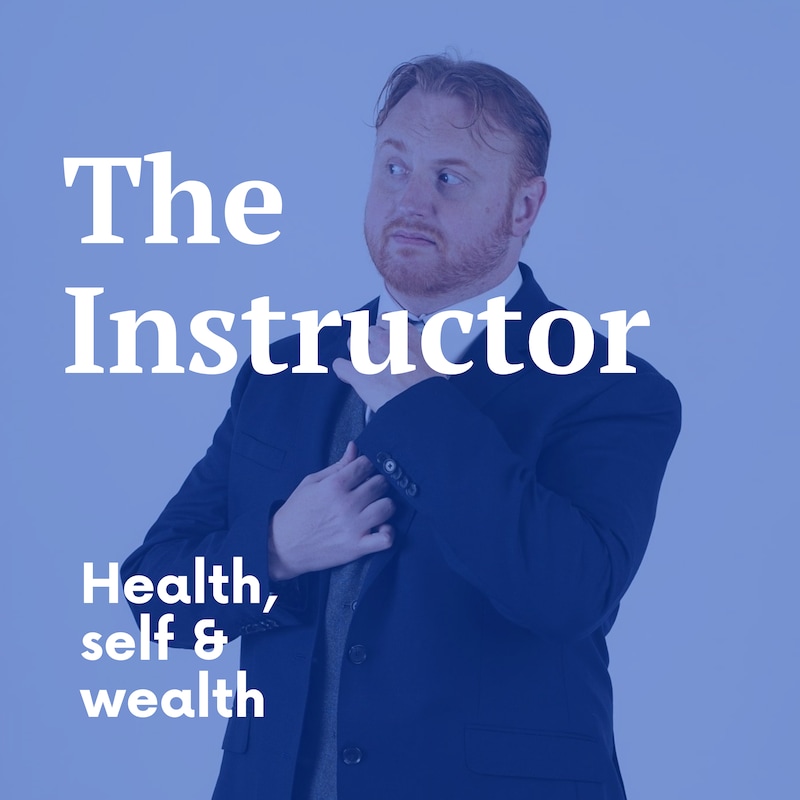
Recording podcasts is super fun! Especially when you have someone as enthusiastic as Chris Brooker who joins me on this episode to discuss confidence and comfort zones.
Chris is a comedian, compere and wrestling promo coach, and shares stories of how he found the courage to change career course during the pandemic. He talks about overcoming impostor syndrome and failure. Chris also explains how he reasoned with himself to put up his prices and gives an impassioned speech on how he takes time to stop and be grateful that people value him enough to pay for his services.
You can find Chris on:
Twitter: https://twitter.com/TheBrookerMan
Instagram: https://www.instagram.com/thebrookerman/
Facebook: https://www.facebook.com/TheBrookerMan
For more information on The Instructor Podcast visit https://www.theinstructorpodcast.com/ here you'll find guest profiles, spotlighted episodes, blogs access to The Instructor Podcast Premium, previous episodes and more...
Join The Instructor Podcast Facebook group: https://www.facebook.com/groups/4791266350902301
For additional content early and ad free, be sure to check out our Patreon feed: https://www.patreon.com/theinstructor - Here you'll find bonus shows and more!
You can contact us or follow us on social media:
Facebook: https://www.facebook.com/theinstructorpodcast
Twitter: https://twitter.com/TCDrive1
LinkedIn: https://www.linkedin.com/in/terry-cook-5233b719a/
Instagram - https://www.instagram.com/the_instructor_pod/
And be sure to check out the DITC - https://theditc.co.uk/
Transcripts
Foreign.
Speaker B:Welcome and thank you for joining us on the instructor podcast, where every week we're joined by experts and innovators, leaders and game changers so we can hold a mirror up at the instructor industry and see where we can improve and raise our standards.
Speaker B:So if you're ready, we'll make a start.
Speaker B:Welcome to episode nine of the Instructor Podcast.
Speaker B:I'm Terry Cook of TC Drive and I will be your host as always.
Speaker B:And if you're enjoying these shows, make sure you click and subscribe or follow wherever you're listening, say drop into your feed every Sunday.
Speaker B:Now, these podcasts are grateful to do.
Speaker B:I've not been doing them long, as you can tell by the episode nine.
Speaker B:But I'm really enjoying doing, especially when I've got a guest like today, which is comedian Compare and wrestling promo coach.
Speaker B:Chris Brooker is actually a lot more than that.
Speaker B:But, you know, they're key things we touch upon today.
Speaker B:He comes to us today talk about his history, history of driving, what he's up to now, and also how it helps people gain confidence and step out of their comfort zones.
Speaker B:So he's got some great stories for us as always and.
Speaker B:And including some about how it helped me step out of my comfort zone leading to me doing this podcast.
Speaker B:So, yeah, Chris Brooker will be joining us on this episode.
Speaker B:We're also joined by Chris Benson of the ditc and they're giving us a brief update on their recent discussion with nasp.
Speaker B:And we'll have a little bit more information about that at the end of the show for you.
Speaker B:So make sure you stay to the end to catch up on that discussion.
Speaker B:So make a start.
Speaker B:So we are joined today by the enigmatic and wonderful Chris Brooker.
Speaker B:How are you doing, Chris?
Speaker C:I'm doing good.
Speaker C:I feel I'm.
Speaker C:I'm gonna have to live up to my intro straight off the bat.
Speaker C:Enigmatic.
Speaker B:Well, I believe so.
Speaker B:I mean, I can give you a worse one if you want.
Speaker B:The mundane and mediocre Chris Brooker.
Speaker C:I'll take that.
Speaker C:That gives me a very low bar.
Speaker C:That's a bar I can fall over.
Speaker C:Whereas enigmatic.
Speaker C:I feel like I need to talk in riddles or just.
Speaker C:You know what?
Speaker C:I'll just cheat.
Speaker C:I'll just do the Australian inflection at the end of every sentence that makes everything sound like a question.
Speaker B:And we already have ticks.
Speaker C:Mystery.
Speaker C:Mystic Meg approach.
Speaker B:I think it's called Mystic Meg.
Speaker B:I've not heard that.
Speaker B:One of the Australian version.
Speaker B:What?
Speaker B:The Mystic Meg version.
Speaker B:I'll probably do that.
Speaker C:With Mystic Meg, I feel I'm dating myself now.
Speaker C:When we talk about Mystic Meg, when she.
Speaker C:Do you remember, do you remember when the, when the National Lottery program started?
Speaker C:She was on every week, stealing a living as far as I'm concerned.
Speaker C:And just going things like this week, the jackpot winner has an arm on each side of their torso.
Speaker C:And I feel that people who've occasionally been to Italian restaurants will, will be lucky too.
Speaker B:And there will be a number and then you're waiting for the number, but the number never arrives.
Speaker C:Yeah, it's.
Speaker C:Oh, God.
Speaker C:Without wanting to hijack this and turn it into a nostalgia podcast.
Speaker C:Yeah, we could talk.
Speaker C:We could split into this and then talk about young people in an angry way.
Speaker C:That's.
Speaker C:That's become my new hobby as soon as I hit my 40s, just being angry at the young.
Speaker B:We'll do a bonus episode.
Speaker B:We'll record next one at the end of this on Nostalgia and angerness towards.
Speaker C:The Youth, the enigmatic podcast about young people.
Speaker C:There we go.
Speaker B:Yes.
Speaker C:Branding, Right.
Speaker B:So, Chris, welcome.
Speaker B:Tell us a little bit about yourself, about your journey and where you're at now and what you're actually doing now.
Speaker C:Okay.
Speaker C:This is great.
Speaker C:Even my pet, if my parents said this to me, I'd have a breakdown.
Speaker C:So tell us what you're up to.
Speaker C:Tell us about your journey.
Speaker C:I'm a good person.
Speaker C:They've been great.
Speaker C:So it's like a dating profile, isn't it?
Speaker C:Hi, my Name's Chris.
Speaker C:I'm 44 and an Aries, obviously my livelihood.
Speaker C:So for the last 20 years, God help me, I've been a stand up comic.
Speaker C: And my first gig in May of: Speaker C:So it's kind of a big anniversary this year.
Speaker C:Even though in the last year, due to some overarching downfall of society issues, I've actually gigged less than any time I have even included my first year doing it.
Speaker C:So I'm a stand up comic, I'm an event host.
Speaker C:I also dabble, have dabbled as a pro wrestling fan, which I think is what we.
Speaker C:How we first came to know about each other.
Speaker C:I have dabbled in professional wrestling promotion and booking, and I also have a bit of a side side hustle, which is rapidly becoming my only hustle at the moment until things open up again, where I coach people in confidence when it comes to public speaking and presentation skills specifically, my entry point was for professional wrestlers for whom the ability to develop and portray a character that can connect with your audience and speak confidently as that character is as important and probably more important in many ways than how hard they throw a forearm or how high they can jump or throw a mean suplex.
Speaker C:So that's me.
Speaker C:I am.
Speaker C:If, if you, if you look at the.
Speaker C:The bio on my website that has been half finished on Squarespace for six freaking months.
Speaker C:I.
Speaker C:Comedian compare coach.
Speaker C:That's me.
Speaker B:You could have just said that.
Speaker C:Yeah, fair point.
Speaker B:Yeah, no, I mean, I find that fascinating from a personal standpoint.
Speaker B:As you mentioned, I've got a long standing pro wrestling going back to a child.
Speaker B:I think most of us learn some of it as a child, don't we, and grow up.
Speaker B:The fear and the drama around it and.
Speaker B:And full transparency.
Speaker B:You were one of my massive.
Speaker B:I don't know what the right word is.
Speaker B:One of my massive hurdles.
Speaker B:One of my, you know, someone that I've seen live, someone who, I'm always impressed with what you do, and yet I still reached out to you and asked you for help with this podcast.
Speaker B:But also previously I asked you, asked you for some help on their coaching session for my confidence on.
Speaker B:On.
Speaker B:And I was thoroughly impressed by that.
Speaker B:And I'm still using some of the stuff you've given me that today and that's helped me massively.
Speaker B:And.
Speaker B:And that was back when I was really only just beginning to get the confidence to actually speak to people like that.
Speaker B:So, yeah, you were one of my big.
Speaker B:Hurdles is the wrong word.
Speaker B:Milestones.
Speaker B:That's the word I'm looking.
Speaker C:Yeah, I like milestone sounds better.
Speaker C:Hurdles, yes.
Speaker B:You were not a hurdle.
Speaker B:You were an effective milestone.
Speaker C:This is image of you trying to go somewhere, me on my hands and knees going, yeah, jump me if you can.
Speaker C:Go on.
Speaker B:It does amuse me sometimes when I'll speak to people and they'll.
Speaker B:Because I still wouldn't class myself as massively confident on lives on Facebook and stuff like that.
Speaker B:But I'm happy doing them.
Speaker B:But I think to a lot of people I do appear that way and they'll ask me where my confidence comes from.
Speaker B:I said I went to wrestling class, which obviously isn't quite true, but it amuses me with that answer.
Speaker B:But, yeah, the reason we've.
Speaker B:The big reason I've got you on today is to talk about confidence and stepping out of your comfort zone.
Speaker B:And that's something that I'm passionate about within the driving instructor industry in that we don't do enough of.
Speaker B:And we will come onto that in a moment.
Speaker B:But the first question I want to ask you around that is, I know you've passed your driving test Just reflect back on that.
Speaker B:I know it was a while ago, but did you struggle?
Speaker B:Just give me your thoughts.
Speaker B:Looking back over that.
Speaker C:So, yeah, learning to drive.
Speaker C:So I grew up.
Speaker C:So a bit of background.
Speaker C:Obviously you now realize there's not going to be a short answer to this.
Speaker B:That'S good for you.
Speaker C:Even just the hello was.
Speaker C:Was horribly self indulgent.
Speaker C:But I'll keep it as brief as I can.
Speaker C:We'll give you the Snyder cut.
Speaker C:Right.
Speaker C:Hopefully it won't be Joss Whedon level quality, but I'll go.
Speaker C:I'll go for brevity and quality together.
Speaker C:Right.
Speaker C:So I grew up in Somerset and grew up in a relatively rural part of the world.
Speaker C:So it was a real kind of cliche.
Speaker C:There was one bus and it came and it went in one, two directions, you know, and it came in frequently.
Speaker C:You needed to walk for.
Speaker C:You had to walk for like 45 minutes to get to where you can catch the bus.
Speaker C:And if you wanted to see your friends, if you wanted to socialize in other villages nearby you, you had to be able to drive.
Speaker C:And I didn't, I failed.
Speaker C:I didn't.
Speaker C:I started to learn to drive, I think was when I was 17, and then didn't see it through.
Speaker C:Then I moved away and my little brother, who's much more proud of me, he was driving, he learned to drive very early and had that independence.
Speaker C:I then went away to university and lived in Derby, which to me was like Metropolis.
Speaker C:Having come from a little village, you know, to everyone else it's a.
Speaker C:It's a.
Speaker C:It's a small to medium city.
Speaker C:To me, it was like, oh, my God, this is insane, right?
Speaker C:And I just didn't need a car.
Speaker B:And.
Speaker C:It wasn't until various circumstances I ended up moving back to my folks again.
Speaker C:I thought, right, well, I'm.
Speaker C:I was what.
Speaker C:I would have been 24 at the time, which now I look back and I think, well, that's really young as a perspective.
Speaker C:But at the time I thought, I'm old, I need to learn to drive because you get to be that person in the group of friends who doesn't drive.
Speaker C:So I did and I ended up going to the driving instructor that my dad had used because we'd moved back from Canada.
Speaker C:I was born out there crib nights, right?
Speaker C:So born in Canada.
Speaker C:My parents are both British.
Speaker C:We moved back when I was five.
Speaker C:My dad, because of the way the driving license work, had to learn to drive again and retake his test.
Speaker C:So he, he learned to drive from a local instructor the brilliantly named Headley James.
Speaker C:What a great name.
Speaker C:I don't know if he's still going.
Speaker C:I don't know how he is doing.
Speaker C:It's been 21 years now.
Speaker C:But he was.
Speaker C:Yeah.
Speaker C:And he said, right, I recommend him.
Speaker C:And my experience of learning to drive was actually was pretty good, to be honest.
Speaker A:He.
Speaker C:I, I sort of.
Speaker C:I still hear.
Speaker C:I think it's a good sign that I still kind of hear his voice every so often in, in relevant places.
Speaker C:How about, I'm out in the town, I'm just gonna sort of, sort of chat someone that go, oh, mirror, signal, maneuver.
Speaker C:No, no, no.
Speaker C:Yeah, like, you know, new road, check your mirror, you know, handbrake neutral at junctions.
Speaker C:All the little things that he put in.
Speaker C:And it was.
Speaker C:It took me two goes to pass my test because I made a couple of silly little mistakes.
Speaker C:But there was no pressure and I think it set me up pretty well.
Speaker C:So my experience of learning to drive were pretty positive.
Speaker C:It took me about, what, eight months in total?
Speaker B:That's good then.
Speaker B:I think that's not far off what the average is when you look at it.
Speaker B:So you kind of learnt to drive almost more from necessity than choice.
Speaker C:A bit of both.
Speaker C:I mean, I could, I could still have.
Speaker C:I could still have not driven at that point, but I just, it was, it was a real.
Speaker C:Also, it kind of helped me get out my.
Speaker C:My state of mind.
Speaker C:The reason I'd moved back to my folks was because I'd lost my job and there wasn't any work where I was living.
Speaker C:So I ended up kind of going and resetting myself.
Speaker C:So it was, it was, it was handy to have something to do as well and a goal and something to work on.
Speaker C:And then subsequently, when I moved away, I didn't have a car for the next couple of years.
Speaker C:I lived in Nottingham at the time.
Speaker C:It wasn't until I moved to Manchester became more serious with the comedy.
Speaker C:I went, right, if I want to do this, I need to have a car because trains stop.
Speaker C:Thank you, Dr. Beeching.
Speaker C:Our train and public transport system.
Speaker C:I spent too many times sleeping rough in train stations and bus stations to make it to gigs that I couldn't afford hotels for that.
Speaker C:I just went, yeah, you know what time to get a car.
Speaker B:Bringing that forward to now, regard to the driver, train driver trainer industry, the driving instructors, and I'm asking everyone this, that's external from our industry and please be as honest as you feel like.
Speaker B:I don't take offense easy.
Speaker B:Do you have an opinion or what is your Opinion on the driver trade industry.
Speaker C:I, I've been so far removed from it that I don't know.
Speaker C:I, I can't comment on it and it, yeah, more people should say that anyway.
Speaker C:I just think, I don't know.
Speaker C:Rather than going, well I'm, I'm deeply disconnected.
Speaker C:I don't have any strong opinions.
Speaker C:I and most the people that I know have been driving for a long time.
Speaker C:I don't know many who are learning to drive.
Speaker C:I think my only opinion is find someone who suits you and don't be afraid to shop around.
Speaker C:That's my only opinion I think because this in so many aspects of life, weirdly like counseling or anything like that there's this idea that you have to go to one person and see it through.
Speaker C:It's a moral failing or you let yourself down.
Speaker C:No, just.
Speaker C:Yeah, shop around.
Speaker B:I like that.
Speaker B:I think the reason I asked that question and is I've done quite a few jobs and this is the one that stands out the most.
Speaker B:That you'll tell people that you're an instructor and they immediately have an opinion.
Speaker B:It's one of those things and I'd imagine it's.
Speaker B:I can imagine you get this as a comedian, you tell someone a comedian, you get.
Speaker B:Tell me a joke.
Speaker C:I'll take that over.
Speaker C:Here's one for you.
Speaker C:My inevitably racist joke that would get me canceled if I even thought it out loud.
Speaker B:Yeah, yeah.
Speaker B:But that amuses me that there are certain trades and industries that people immediately have an opinion on.
Speaker B:So you know, it's interesting that you don't stems from being on the receiving end of that.
Speaker B:Well, you know, you kind of on the flip side if that makes sense.
Speaker C:Yeah, I'm sure, I'm sure you get it's also I think because you make a point by having been on the receiving end of it.
Speaker C:I've got very little patience for hacky kind of observations that everyone makes.
Speaker C:So I will almost go.
Speaker C:I'm going to take a wild guess that almost everyone you meet in a social situation makes some joke about when you hit the dashboard, it's time to stop.
Speaker B:Yes.
Speaker C:Yeah, there you go.
Speaker C:That's the first one.
Speaker C:It's like.
Speaker B:Or the other one is people bragging about the fact that when they learn strive 40 years ago and you only needed 10 hours.
Speaker B:Yes.
Speaker B:But there were 6 million less cars on the road and no such thing as mini roundabouts.
Speaker C:Oh yeah, man.
Speaker C:I tell you what, this as an aside, right When I, when I had my provisional license I was driving around, my parents were really good at giving me a bit of time when we had to drive somewhere to get my practice.
Speaker C:And I think that's important as much as.
Speaker C:And that, I think also is pushing your comfort zone, we'll come back to it, is you can't just have a lesson once a week and expect to be brilliant if you don't engage outside of it.
Speaker C:So I was very lucky.
Speaker C:But one of the most traumatic experiences of my youth was in Colchester because we have family out there and we were visiting and Mum said, oh, you can drive today.
Speaker C:And I don't know if you've seen it.
Speaker C:They have this horrific cluster of mini roundabouts near the hospital where my uncle worked at the time.
Speaker C:And it just defies.
Speaker C:It's literally, if you look it up.
Speaker B:Online.
Speaker C:It'S like a Rorschach painting.
Speaker C:You look at it and you see your own personal hell.
Speaker C:There's like five, either four or five mini roundabouts in a cluster around one in the middle.
Speaker C:And is it like playing Downfall?
Speaker C:Do you go clockwise around this one, then that one and then.
Speaker C:Oh, my God, it's like.
Speaker C:It's like a Spirograph from hell that's come to haunt my nightmares.
Speaker C:Spoiler survived.
Speaker B:I'm not going to attempt to give any advice on that today.
Speaker B:I think that requires visual advice, not verbal advice.
Speaker B:Bringing it back to that, though, and the industry.
Speaker B:The.
Speaker B:One of the key things for me is.
Speaker B:Is coaching.
Speaker B:It's something I'm passionate about.
Speaker B:I've had people on the podcast before speaking specifically about coaching, and obviously you're a coach that I've worked with and have a lot of time for.
Speaker B:How would you describe coach in what you do?
Speaker B:How would you describe coaching?
Speaker C:Okay, coaching.
Speaker C:This.
Speaker C:This is something I kind of picked up from my dad, who, God bless you, Eric Brooke, who was a bit of a philosopher on the side.
Speaker C:He always told me and professed that teaching isn't just about what you can hammer into someone.
Speaker C:It's not about.
Speaker C:And considering when he grew up as well, you know, the schooling was very different and it was very much about learning by rote and about.
Speaker C:Right, here's a big block of knowledge.
Speaker C:Here's a child's head mash.
Speaker C:He said that teaching was as much about drawing out, about what you can draw out of people, about.
Speaker C:About what you can bring out of them.
Speaker C:And between that and something more recent.
Speaker C:So Matt Bloom, who is the head coach for anyone who's not familiar, he's the head coach at WWE's Performance center in Orlando.
Speaker C:He also tweeted something that Crystal or, you know, he said it, I think in one of their documentaries said that when you, when you teach two people learn.
Speaker C:And I think that's the important thing about coaching is it's always going to be a two way process.
Speaker C:It's, it's, you are going to be sharing knowledge, you are going to be sharing your experience and you are hopefully going to take that.
Speaker C:And the goal is to use that to bring the best out the people that you are working with.
Speaker C:Your coaching, teaching, however you want to say it.
Speaker C:And that, that's very important to me is, is that whole, I'm not just here to thump, thump, thump things into your head.
Speaker C:And for the most part I've also found that coaching is about letting people know what they have already.
Speaker C:It's very easy to look at everyone as a blank slate with nothing to offer.
Speaker C:And I think to do so is to discount their innate abilities, their inner experiences and everything they bring to the table.
Speaker C:Whether they're in my case like coaching pro wrestlers, whether they're brand new.
Speaker C:And I've coached wrestlers who are absolutely new, who are still training, who are also like in their late teens, early 20s.
Speaker C:And I've worked with guys who are in their 30s to 40s who have loads of experience and everything in between.
Speaker C:And everyone has something to bring.
Speaker C:And a lot of times it's about, rather than criticizing, it's about saying, yeah, you're doing fine.
Speaker C:It's not necessarily, it's helping to develop and helping someone to grow and you are going to have to cross, cross examine a bit.
Speaker C:You are going to have to say no, don't do this.
Speaker C:It's easier for me, I'd imagine in a lot of ways because what I do is almost entirely subjective, whereas there are these things called laws when it comes to driving.
Speaker C:No, you probably shouldn't run people over in the nicest possible way.
Speaker C:Stop applying your lipstick on a dual carriageway, which was not necessarily the minor that cost me my driving test the first time.
Speaker C:But I'm not going to, I'm not going to dismiss it.
Speaker C:And yeah, it's, that I think is quite important.
Speaker C:It's a two way process.
Speaker B:I like that and I agree.
Speaker B:And I think that, I think it's a real key point in that people generally have a set of skills already.
Speaker B:You know, I mean, to use yours, your trade example, you know, someone's coming to you to learn promo skills, the chances are they can talk, so they can already say words, so they've already got kind of a basic set of skill.
Speaker B:It's just learning how to then direct those words and put them together in a certain way, which, again, switch that around to my trade.
Speaker B:Generally, if you're coming for a driver, there are obviously exceptions to this, but you're going to have hands, you're going to have legs, you're going to be able to see.
Speaker B:So you've already got a certain set of skills.
Speaker B:And the chances are for most young people nowadays, you're going to have been in a car, so you're going to see people driving, so you've already got some knowledge there.
Speaker B:So I think it's really key, what you said there about sometimes it's drawing that out rather than saying, sit there and listen to what I'm saying.
Speaker C:Yeah, I see this a lot in.
Speaker C:And it's been really fascinating because over the last.
Speaker C:And thank you.
Speaker C:Because you're one of the guys who sort of came to me early on when I was under charging, by the way.
Speaker B:Yes.
Speaker C:One of these guys who came to me earlier on while I was still finding my feet, and it really sort of boosted my confidence that someone was.
Speaker C:Was.
Speaker C:I'm still.
Speaker C:I think that's quite important as well, is to still have that sense as a coach of gratitude that people are willing to invest their time and their money in you to teach them.
Speaker C:And I think it's very easy to take that for granted, especially when you're a position of knowledge and authority to go, well, you should be grateful that I'm letting you give me your money and your time.
Speaker C:And I think that's something I hope I never lose.
Speaker C:Because as well as on a personal note, it means it's much more exciting, it's much more enjoyable, and you feel a greater sense of appreciation for what you're doing.
Speaker C:But I see so many folks initially as well, and I don't know how this is for you, who are almost apologetic when they come to me and they're very, oh, I don't know what I'm doing.
Speaker C:I'm very sorry.
Speaker C:I'm so sorry.
Speaker C:I don't.
Speaker C:This isn't very good.
Speaker C:I'm not very good at this.
Speaker C:And almost that first session is kind of deprogramming and going, all right, take a breath.
Speaker C:If you were perfect, I'd be robbing you right now.
Speaker C:We wouldn't even be having this conversation.
Speaker C:And this, this.
Speaker C:This weird expectation.
Speaker C:And I think maybe driving is one of those.
Speaker C:That there are certain things in life we should just be able to do because we see people doing it and we don't see the process we just see the end result and we don't like if you grow up normally, I think most people, it's their parents, they normally see drive first.
Speaker C:And we didn't see our parents learn to drive, you know, we just see the end result.
Speaker C:So we compare our progress to their finished article and in wrestling, you'll get someone who, who's genuinely scared of public speaking.
Speaker C:And public speaking is a weird one because everyone feels that it's something we should just be able to do without practicing.
Speaker C:We should just do it.
Speaker C:And it's binary and you're born with it or you're not, and it's not true.
Speaker C:And it's getting past that first bit of, you've got skills, you have something about you.
Speaker C:And moreover, you've chosen to learn, you've chosen to make this step, you want to improve.
Speaker C:So don't dismiss who you are now.
Speaker C:Accept, give yourself permission.
Speaker C:That's something that's come up a lot, is giving yourself permission to learn, giving yourself permission to go, I'm not.
Speaker C:I'm not where I want to be, but that's why I'm here.
Speaker B:Yeah, I think again, you bit the nail on the head there.
Speaker B:I think you look at again, your industry, the wrestling industry.
Speaker B:The people that come into that are the people that come to you again, I would imagine they've.
Speaker B:They've been in that business, some form of the other.
Speaker B:So whether that's been in the business in terms of watching it or actively being involved in it, so they're seeing that all the time.
Speaker B:So like you've said, it's.
Speaker B:I should be able to do that with driving.
Speaker B:I think it's.
Speaker B:It's even wider than that in that you go out down street, you see people driving.
Speaker B:Everywhere you go, you see people driving, so you put that pressure on yourself.
Speaker B:I should be able to do this, however, if I said to you, right, play my piano, you don't see that all the time.
Speaker B:You think that's a specialist skill, but because you see everyone else driving, albeit 90% of them badly, but you see everyone else driving, you assume you should be able to do it as well.
Speaker B:So I think you really kind of met almost an inadvertently brilliant, brilliant point there.
Speaker B:There is something else you touched on.
Speaker C:Thank you for calling my brilliance inadvertent.
Speaker C:Thank you, sir.
Speaker B:Inadvertence, brilliance and mediocri see so far today.
Speaker C:So.
Speaker B:But you also made another point that I want to touch back on.
Speaker B:And, and you know, you use the example, so I hope you don't mind me using this about your prices and undercharging.
Speaker A:Yeah.
Speaker B:I will be blatantly honest.
Speaker B:When I used you, I made sure that I used you for your coaching session, paid you for your searching session and then said you should charge more.
Speaker B:Didn't say it before.
Speaker C:Oh yeah, I noted that.
Speaker C:That was, that's good business.
Speaker B:But what if you, I hope you don't mind me asking us, what was it that in the end swayed you to change that?
Speaker B:Because that's a confidence thing within our industry that a lot of people are scared of putting their prices up.
Speaker C:It's really, it's really hard unless you are a sociopath, unless, unless you genuinely have that ability to disconnect because there's a bit of imposter syndrome.
Speaker C:There's a bit of fear of if I put my prices up too high, people will go away.
Speaker C:And that, that's something that I've encountered in, in coaching but I also encountered it in, in comedy and most, I'm quite lucky in the sense that most of the times if I apply for a gig, if I'm playing the Frog and Bucket or the City hall in Sheffield or the Stand or anywhere else they have a set, this is how much you get paid to MC and you apply for it and that's easy.
Speaker C:It's when someone comes to you and goes like I want to book you for a corporate or something else, give me a price.
Speaker C:There's that, you know, what should be quite simple becomes like a two hour long internal dialogue of no, but I don't want to go too high.
Speaker C:And then inevitably you give them a price, they say yes right away and you go fuck, I should have quoted twice as much.
Speaker C:Yeah, it's when I, when I was, when I was starting out with the coaching, I really didn't know how to price it.
Speaker C:Now admittedly part of that was I wanted to price it low to begin with.
Speaker B:One interrupt you for a second if you can hear bark in the background.
Speaker B:My dog hasn't barked for three years.
Speaker B:Literally hasn't barked for three years.
Speaker B:She's now decided to back.
Speaker B:So if you can hear that, that's what that is.
Speaker B:But sorry, carry on.
Speaker C:I don't know how I do it.
Speaker C:I don't know how I do it.
Speaker C:So when I started I was very conscious that I was not particularly experienced in this field and no one was, no one was really doing it.
Speaker C:So I set my price quite low, deliberately one because I felt that there was going to have to be an element of taking on faith.
Speaker C:I had no reputation.
Speaker C:That's not true.
Speaker C:I had a bit of a reputation, but I didn't have a reputation as a teacher or a coach outside of a few people I've maybe helped.
Speaker C:And there was also no kind of industry standard that I could compare it to.
Speaker C:And also there's not a lot of money in pro wrestling at the grassroots level.
Speaker C:So I was conscious that I didn't want to overcharge.
Speaker C:So to begin with, I set my rates quite low.
Speaker C:I was quite happy with it.
Speaker C:It got me started and it wasn't until it was actually like.
Speaker C:So that was towards the end of last year.
Speaker C:And then earlier on this year I made choice.
Speaker C:I went, right, if I'm gonna.
Speaker C:Especially because if I wanted it to move from being a hobby that maybe make that it didn't feel like it was my apprenticeship anymore.
Speaker C:In the same way and acknowledging your own worth and telling that little imposter syndrome voice to shut up.
Speaker C:Because I, you know, I have a particular set of skills, you know, I've, I've spent.
Speaker C:It was, it was a particular moment when I, when I go, oh, am I, am I, am I the right person?
Speaker C:What right do I have to try and tell people how to do this?
Speaker C:And that was the point where I went, well, yeah, I've been doing this.
Speaker C:I think I was talking to someone else and I went, yeah, well I've been doing stand up for 20 years.
Speaker C:20 years, like 22 decades.
Speaker C:Almost half my life.
Speaker C:Right.
Speaker C:And people aren't, it's remembering that you're not, people aren't paying.
Speaker C:When I do a 20 minute set, it's this for exposure thing.
Speaker C:It's if I'm doing a 20 minute set, you're not paying me for 20 minutes, you're paying me for 20 years or 10 years or however long it took me to get to the point that, you know, that when I go out there, I'm going to do the business that I'm going to deliver.
Speaker C:And getting past that imposter syndrome is hard, but it's very important.
Speaker C:And having kind of faith in what you bring.
Speaker C:So compound that I also still have had, I still have a little bit, not so much a bit of imposter syndrome about, okay, well, I'm, I've done a lot of stand up and, and even in the stand up industry, I'm, I think broadly, I'm not on tv, I'm not famous, I'm not really interested.
Speaker C:So you know, from, from it, there are people who would say that I failed as a stand up because I'm not online at The Apollo.
Speaker C:And there are people in the industry who rain in people who don't.
Speaker C:So that in itself is a bit of a gray area.
Speaker C:That's an ongoing thing.
Speaker C:But then in wrestling, I was.
Speaker C:I still feel like.
Speaker C:Because time does funny things, you think to yourself, what business do I have doing this?
Speaker C:I've only been around for a few minutes, then I went, actually, I've been involved in indie wrestling for 10 years now and looking at the people that I've worked with, who trusted me to work with them, and I've been very, very fortunate to.
Speaker C:To work with some of the best minds, both locally and internationally, and learn from them.
Speaker C:And it's like, no, no, no, you know what?
Speaker C:I have something of value.
Speaker C:I have something unique to bring to people.
Speaker C:And don't get me wrong, have not become a boutique retailer.
Speaker C:I've not suddenly fucking quadrupled my prices.
Speaker C:But they are more in line with also my need that this isn't a hobby anymore.
Speaker C:This is with the way the world's changing, the way stand up's changing.
Speaker C:We don't know if the industry is going to recover.
Speaker C:We don't know if it's going to be the same.
Speaker C:What I do know is that as the gigs are trickling in, every single comedian in the country wants them and therefore the competition is ferocious.
Speaker C:I'm just not getting the work that I was even like a year and a half ago.
Speaker C:So this is now going to go from being a hobby to being.
Speaker C:This is going to be part of me paying my bills.
Speaker C:And as such, you've got to value it honestly.
Speaker C:And again, as soon as I put my price up with a, is this okay?
Speaker C:And then everyone.
Speaker C:Yep.
Speaker C:And I went, I should have said, I should have asked for more.
Speaker C:But I'm committed to now and in all honesty, I'm not.
Speaker C:I'm not greedy.
Speaker C:I enjoy it and I'm making enough money and it.
Speaker C:And it's developing skills that I can then use beyond just coaching pro wrestlers.
Speaker C:So, yeah, charge more.
Speaker C:There's a short answer.
Speaker B:But again, a lot of that reflects probably not just to my industry, but to every industry.
Speaker B:And even just where your price is.
Speaker B:Then one thing I say to people that might speak to me, you don't have to put them up by £20 hour, put by £1 an hour, because every time you do that, it's breaking down that little bit of imposter syndrome that you mentioned, it's breaking down that fear of doing it.
Speaker B:So, you know, for my industry, again, you pull them up by £1 an hour starting Monday when we go back to work next week.
Speaker B:I'm recording this a little while ago and then six months time you put my.
Speaker B:Another pound and another pound.
Speaker B:It might only be a pound, but if you do 40 hours a week, you're making 40 quid out for that week.
Speaker B:Then in two years time, all of a sudden you're making 160 quid extra a week, you know, and that's soon gonna build up.
Speaker B:I think the other thing I want to touch.
Speaker B:Sorry, the other thing I want to touch on there is you mentioned failure and that's a massive part of our industry and I find it really, really telling.
Speaker B:And some of you said then really tickled me and I don't think it was an advert, but something you said really tickled me.
Speaker B:Not tickle me.
Speaker B:I don't know, made my hair stand up almost.
Speaker C:Yeah, it resonated.
Speaker B:Yeah, yeah, that's the word.
Speaker B:And it was you mentioned about, well, if you haven't been to the, the Apollo or the Lorn podium or whatever, you fail as a stand up.
Speaker B:And I thought there's a hell of a lot of failed stand ups out there then.
Speaker C:Oh yeah.
Speaker C:More than successes.
Speaker A:Yeah.
Speaker B:And it, it's that.
Speaker B:And I think you can relate that again to our industry.
Speaker B:When people say if you don't pass first time you've failed, you know, they look at it as failure.
Speaker B:And it's not failure.
Speaker B:It's like people that struggle with a manual car and end up going to automatic.
Speaker B:That's not failure, that's making a choice of what's, what's best for you.
Speaker B:It's again, this is maybe going towards learners a bit more.
Speaker B:But failing your driving test isn't a failure, it's a learning experience.
Speaker B:You go back and take it a second time, go back and take it a third time, however many times you need to.
Speaker B:And then the same for us instructors when we take our test to become an instructor, it's not a failure.
Speaker B:If we attempt to coach someone and don't succeed the first time, that's not a failure.
Speaker B:That's pushing out of your comfort zone and moving on.
Speaker B:And I think there's just a massive stigma attached to the word failure.
Speaker C:Yeah, yeah.
Speaker C:And it's, it's gonna sting and it sucks not passing a driving test as someone who's done it, you know, but you kind of try to be philosophical about it.
Speaker C:You know, it's argue in theory, in quote and in practice it's there to make sure that if you're out on the road on your own that you're not a menace.
Speaker C:Yeah, it doesn't always work, you know, as evidenced by.
Speaker C:I don't know.
Speaker C:I live in my side, I see it all the time.
Speaker C:But at the same point it's.
Speaker C:It's like, you know, without.
Speaker C:It's like life, you know, sometimes there's a reason why you won't get past a certain barrier or over a certain hurdle.
Speaker C:You know, you won't get past that point because there's.
Speaker C:You don't necessarily have all the tools that you need.
Speaker A:And.
Speaker C:So much pressure as well, going and doing the driving test.
Speaker C:So much pressure on yourself.
Speaker C:And it's like.
Speaker C:For me, it's like having a big gig and it's.
Speaker C:It's like being.
Speaker C:When you can just go in and just be in that moment and easier said than done then.
Speaker C:Then it.
Speaker C:You're not going to make those mistakes that you do under pressure.
Speaker C:You're not going to make those mistakes that.
Speaker C:I've sort of liken this to.
Speaker C:I read a really good book, the name of which and the author of which eludes me, Lasting Impression.
Speaker C:But he talked about thing called tightening, which is where if you're thinking about something that you would normally be able to do without effort, it becomes harder because your entire body and your mind tightens up and all of a sudden you're not in the moment.
Speaker C:You know, like if you give someone a full.
Speaker C:If you give someone a tray of drinks to take across the room, they'll generally do it.
Speaker C:But if you give them a tray of drinks, look them dead in the eye and say, take these drinks over there.
Speaker C:Do not spill a drop.
Speaker C:If you spill a drop, there'll be trouble.
Speaker C:Don't you dare spill any of these.
Speaker C:All of a sudden it's like we've got an exploded bomb on a tray, you know, and that's, that's, that's the whole mentality is fear of failure is so ingrained in us and I'd love.
Speaker C:And again, I wish I was better at this.
Speaker C:I'd love to be able to move beyond fear and just again, awareness and see it as okay.
Speaker C:If you learn from it, it's not a failure.
Speaker C:If you're better because of it, it's not a failure.
Speaker B:I think it's somewhat that impacts are just massive, not just with the learners, but with the instructors as well.
Speaker B:And I think it plays a big part in why there's very little.
Speaker B:What I would refer to as game changers within the industry.
Speaker B:Why there's very few people are really Stepping out on, doing something different.
Speaker B:And that's something that again, used to affect me massively.
Speaker B:But there's, I think fear of failure.
Speaker C:Is a part of that.
Speaker B:Quick example, I've got a Facebook group that there is literally just me and my wife in and I need two people in so I can go live.
Speaker B:And it's my practice group.
Speaker B:I'll go and put stuff in there, I'll have a little play, that kind of thing.
Speaker B:Anyway, I've also got a Facebook group for my learner drivers.
Speaker B:Now every week I go live in that group for about 30, 45 minutes.
Speaker B:The other week I went live for about 25 minutes wondering why no one was joined me if I realized I was in the practice group where there was no one in.
Speaker B:So I learned from that, you know, it was nothing disastrous happened.
Speaker B:But I do think that there's, there's a lot of issues.
Speaker B:I think there's a fear of failure, I think there's a fear of judgment and I've used this before.
Speaker B:But the driving instructor industry is a microsm of society in that, you know, you put some out there about coaching or about raising your prices and you will get people that come in and criticize and immediate is getting their backs up.
Speaker B:So for anyone out there that's maybe thinking of doing something different, what advice would you maybe give to them to not be afraid to step out of the box and just do it, just go for it.
Speaker C:The first thing is that especially nowadays with, with social media, what it being what it is, I'm not, I'm not going to proclaim it's abundantly evil.
Speaker C:It's like anything else, it takes on the qualities of the people that make it up.
Speaker C:But because of the immediate nature of it, there are going to be people who, simply because it's easy.
Speaker C:I've sort of ruminated in the past that like in the old days of Points of View on TV where if you wanted to complain about something, you had to write a letter and put a stamp on it and pay you 30 pence and walk it to a post box, you know, so the people who really complained were proper mental and really put the time in for it.
Speaker C:Whereas now for a lot of folk, it's just become as easy as yawning.
Speaker C:So folk who are not necessarily invested in you, who are, who, I'll use the example this week of Hot Water Comedy club in Liverpool, who have.
Speaker C:Who are an amazing business who have worked really hard throughout Covid to try and find a way to sustain their business and to help Comedians survive by doing online shows, by doing podcasts, by doing broadcasts, all kinds of stuff.
Speaker C:They were going to be part of a pilot scheme in Liverpool that would involve COVID testing before and after the show just to check spread in a limited scientific environment which obviously is enhanced by stand up.
Speaker C:Now what happened is someone reported on this in the media and it was picked up as being part of the COVID passport vaccination passport trials.
Speaker C:And it's a divisive topic, isn't it, shall we say?
Speaker C:People have strong feelings on both sides but what happened immediately is that they were bombarded, they were review bombed, everyone was sending them messages, there were, social media was flooded, going, you've sold out.
Speaker C:This is disgusting, It's a fact, it's an attack on our freedom.
Speaker C:It's blah, blah, blah, blah blah blah.
Speaker C:All kinds just hate, a wall of hate.
Speaker C:And because it was in the national press, none of these people would never, ever, ever have gone to hot water Comedy club, didn't live in Liverpool, weren't fans of comedy or being polite or in some cases basic punctuation, right?
Speaker C:And these are the people that will often find you and these are the people that it's very easy to assume have validity, don't necessarily surrender that power to them because they, they're not the ones who will support you, they are not the ones who have an interest in you.
Speaker C:They just want to be heard, they just want to be noisy and you see it all the time.
Speaker C:So don't be careful of who you take feedback from.
Speaker C:Which isn't to say that there isn't valid feedback from people.
Speaker C:But if we're honest, we kind of know who we can trust and who we can't.
Speaker C:Who has our best interests at heart and who doesn't.
Speaker C:And putting yourself out there is scary.
Speaker C:Me doing it again, that little imposter syndrome.
Speaker C:I know, like I've, I've, I've had this in the past with stand up.
Speaker C:I taught stand up comedy for a bit and I was about 10 years in that, seven, eight years in and there were established comics giving me the side eye going, who's this guy?
Speaker C:What rights he got?
Speaker C:I know.
Speaker C:And taught me to do stand up.
Speaker C:That was good, you know, I still did it, I had a lot of fun.
Speaker C:A couple of the guys that I taught have gone on to be more successful than me, which if I'm honest is kind of the benchmark of being a good teacher, you know.
Speaker C:And then it's also the same with wrestling.
Speaker C:There's thankfully not much.
Speaker C:It helps that I have a bit of standing in the community as someone who used to promote a show, so people know who I am.
Speaker C:It also helps that I've got friends in high places, you know, people know that I'm associated with people who are quite important and rightly or wrongly, they go, if they take the piss out of me, I might stop and get into wwe.
Speaker C:Which isn't true.
Speaker C:Or is it?
Speaker B:No, it isn't.
Speaker C:So I.
Speaker C:But there's still.
Speaker C:I know that there's a bit of slydite and a bit like, oh, who's this fucker?
Speaker C:Who does he think he is telling us, we've always done it this way, you know, we've always done it.
Speaker C:So to use pro wrestling as an example, it blew my mind that for a business so invested in personality and connection showmanship that that was never really taught or at least taught in a very passing way.
Speaker C:Whereas if you go to a restaurant, I've trained for a bit and I didn't do very well because I don't like pain or exercise, right?
Speaker C:Turns out it's not fun, right?
Speaker C:It's so hard, right?
Speaker C:Full respect for anyone who even.
Speaker C:And anyone who even does it at a low level to be.
Speaker C:It's not like going to the park and having a kick around, right?
Speaker C:You have to work really hard to be shit, let alone good.
Speaker C:And I was.
Speaker C:I was barely shit, right?
Speaker C:It's seeing that there was no.
Speaker C:So my journey was seeing that there was no second thoughts about going to a training session.
Speaker C:And you do your roll drills, you learn how to bump, you repeat, you repeat, you repeat, you train, you train, you train, you train and train.
Speaker C:But this bit, the talking bit, the character bit, maybe five minutes every so often.
Speaker C:But you were expected to be able to perform at a very high standard when you were put in a live fire situation, given a mic at a show.
Speaker C:So many of the young wrestlers, the first thing they cut a promo is, here's a mic.
Speaker C:Go talk in front of 100 people.
Speaker C:No wonder they often shit the bed and then think they can't do it.
Speaker C:So my whole thing was, let's put as much emphasis without detracting from the other parts of the business into that side of pro wrestling.
Speaker C:This bastard son of sports and entertainment.
Speaker C:And there are folk, because wrestling is still very closed in a lot of ways.
Speaker C:It's come a long way, but it's still very related to that Carney business.
Speaker C:That was all, you know, keep it, keep it sort of under your hat talking Carney and kayfabe.
Speaker C:And don't let on that it isn't legit.
Speaker C:And, you know, in the same way that we're only like X number of generations away from burning witches, we're only like a couple of generations away from successful wrestlers who didn't clue up their families or their kids that this wasn't a legit sport, that they weren't really being beaten up every night on tv.
Speaker C:Right.
Speaker C:So there is a bit of side eye and a bit of kind of, oh, who's this guy?
Speaker C:Who does he think he is?
Speaker C:Not much, thankfully.
Speaker C:At least not that I've encountered.
Speaker C:But it's getting past that first.
Speaker C:Put it out there and push yourself a little bit.
Speaker C:And then.
Speaker C:And I had a lot of doubt when I started because it wasn't flowing, it wasn't building.
Speaker C:But you will hit that point if you persist where people start to credit you.
Speaker C:And that was another thing that was tough, is people didn't necessarily want to admit that they were getting help with it because it was seen as something you should just be able to do.
Speaker C:But gradually it built and people were more willing to go, yeah, you know what?
Speaker C:Brooker helped me.
Speaker C:He made a big difference.
Speaker C:Tweeting, sharing, and then you hit a bit of momentum.
Speaker C:And once you get past that initial part of.
Speaker C:People will always question things that are different.
Speaker C:But I'm very, very skeptical of anyone who's reasoning for not doing something will boil down to it's the principle of it, or that's just how we've always done it.
Speaker C:Those are not good reasons.
Speaker C:Those are not good reasons to keep doing something.
Speaker B:Sorry, no, no, place that one there.
Speaker B:That's where we've always done it.
Speaker C:Yeah, that's.
Speaker B:That rings in my ears every single day on social media, within driving instructor groups.
Speaker B:Why should we start coaching?
Speaker B:Why should we think outside the box?
Speaker B:Why should we do a podcast?
Speaker B:Why?
Speaker B:Why should we do anything?
Speaker B:It's like life changes, the world changes, everything changes.
Speaker B:We need to do things differently the way we've always done them.
Speaker B:And there was another point you made there about getting help.
Speaker B:And again, I'm sure this is a not just an instructive thing.
Speaker B:I'm sure it's people thing.
Speaker B:But do you find out that there is a reluctance for people to actually go and get help and even more.
Speaker C:Than that, pay for help?
Speaker C:Yeah, yeah.
Speaker C:It's vulnerability.
Speaker C:There's a real vulnerability in admitting that you can't do something and going to someone else for assistance with it.
Speaker C:And it's getting across.
Speaker C:It's that this, this so many people.
Speaker C:Again, it's this quest for perfection.
Speaker C:I should.
Speaker C:Should is such a.
Speaker C:And I don't know how you found it's teaching, but there's, there's.
Speaker C:There's a very, very soft border between coaching and counseling.
Speaker C:And so often by.
Speaker C:By teaching someone or discussing their motivations or their processes, you kind of discover a bit about them and they find out a bit about themselves as well.
Speaker B:I think, like you said, there is a vulnerability.
Speaker B:It's like if I ask this person for help and if I pay this person, I'm admitting I'm not good enough.
Speaker B:I think there's that.
Speaker B:And again, that's something I struggled with for a long time.
Speaker B:And I said before, you were the hurdle that I overcame to, to deal with one of them.
Speaker B:And it's like, right, this person knows this stuff.
Speaker B:This is someone that I look up to and admire, and it's good at something.
Speaker B:They are better than me, and I'm going to pay them to level up.
Speaker B:And as an instructor, that's what I get done to me every day.
Speaker B:People come to me to pay me to level up, but yet in theory, I'm reluctant to do that.
Speaker B:What.
Speaker B:Do you have any sort of specific advice for people that are still reluctant to actually go and invest in themselves or invest in someone else to invest in themselves?
Speaker C:Yeah, it's.
Speaker C:I think a big help is realizing that because everyone thinks, because we live in our own heads all the time, we don't necessarily understand that other people.
Speaker C:I think the fact that we're talking about it is a big part.
Speaker C:If someone's listening to this and they previously thought they were the only person who thought, geez, I don't want to.
Speaker C:I don't want to admit that I don't know things because it's uncomfortable.
Speaker C:It's like changing your mind or this whole cognitive dissonance thing.
Speaker C:There's also a bit of a weird power dynamic.
Speaker C:You're kind of surrendering to someone else.
Speaker C:And for a lot of folk, it's like giving up your ego.
Speaker C:Guys in particular, men in particular, as men, women don't.
Speaker C:Asking for help, asking for directions, all that shit.
Speaker C:It's a sign of weakness.
Speaker C:And I think that the first step is just acknowledging that everyone has a bit of that, that it's perfectly normal.
Speaker C:In the same way that, like the public speaking thing, everyone's a bit nervous about public speaking.
Speaker C:Everyone's a bit worried about it.
Speaker C:And that, I think is a huge part of it is acknowledging it.
Speaker C:And then it gets easier.
Speaker C:It gets easier.
Speaker C:Once you're over that first Hurdle you mentioned, the first hurdle is the huge one, isn't it?
Speaker C:And you can draw comparisons to counseling, you can draw comparisons to addiction, rehab.
Speaker C:You can do all that stuff.
Speaker C:It's, you know, without wanting to get too melodramatic and saying that not being very good at wrestling promos is like trying to get off heroin.
Speaker C:But there is still that moment where you have to go, right, I'm going to make the decision.
Speaker C:I'm going to make this first step.
Speaker C:And that first step will not be a leap to the finish line, but it is important because that then the next step's easier and the next steps easier.
Speaker C:The next step's easier.
Speaker C:And once you've done it a couple of times, and I hope this is the case for you, if you find yourself in that position again, you might be a little less reluctant.
Speaker B:Definitely.
Speaker B:It's 100% the case.
Speaker B:I wouldn't say I was supremely confident.
Speaker B:My big one was Facebook lives.
Speaker B:I wouldn't say I was supremely confident at it.
Speaker B:But there's no fear there anymore, whereas they used to be.
Speaker B:You touched on this before.
Speaker B:When I start thinking about it, that fear creeps in.
Speaker B:You start thinking about what could go wrong.
Speaker B:But I think there's also a way to turn that round.
Speaker B:And so.
Speaker B:Well, actually, that would make for a greater Facebook Live.
Speaker B:How awesome would that be?
Speaker B:I mean, just a little slight aside on that is we never know how people are going to react to us.
Speaker B:We assume people will react a certain way, but we never truly know that.
Speaker B:I put a. I was sending a message last night and it autocorrected my own name from Terry to T R Y to T E R R. I. I put that on Facebook within five minutes.
Speaker B:That's like, got 10, 15 likes, got people commenting.
Speaker B:It's like the same day I'd put out a really thoughtful post about learning to travel, and they got nothing, you know, and it's like, right, but if I step back and look at that, is that a positive?
Speaker B:Well, yes, it is, because, A, I had so much to laugh at and it amused me greatly, and B, there will be people that see that and scroll down a bit, scroll down to the next post, and they might not like it, they might not click on it, but, oh, well, that's interesting.
Speaker B:I'm going to go check out his podcast.
Speaker B:I'm going to look at his website, whatever.
Speaker B:So just because the worst could happen doesn't even mean that's necessarily a bad thing.
Speaker B:The other thing I wanted to touch on with you is working in A tight niche area.
Speaker B:It's something we as instructors do.
Speaker B:You know that there's literally 40,000 of us in the population, so obviously there's more drivers.
Speaker B:But in terms of instructors, that's quite tight.
Speaker B:You, I would imagine, have quite a tight niche as well.
Speaker B:But you again, I follow you on social media and you sell really, really well to that niche.
Speaker B:Is that something you've always been able to do or did you find yourself at first just spraying everywhere and open for best?
Speaker C:Yeah, indiscriminate.
Speaker C:You know what, that, that's nice to hear because I don't, I don't.
Speaker C:I think that's the area that I need to work on the most.
Speaker C:That's the bit that I need to really develop and it's, it's promoting it and I'm very good at avoiding things.
Speaker C:You know, a big thing about teaching for me has been it's made me look at my own practices and behavior in a way that I haven't before.
Speaker C:Which also is a big teaching thing like, like telling people to record and watch their own stuff back, which I should be doing as a stand up.
Speaker C:Haven't made myself do it last year and was.
Speaker C:Was better for it.
Speaker C:So.
Speaker C:So do as I need to start doing as I.
Speaker C:Practicing what I preach.
Speaker C:Right.
Speaker C:So in terms of promotion, it's.
Speaker C:I.
Speaker C:This is going to sound possibly pretentious and it might be a bit insincere but.
Speaker C:Or might come across as insincere, but it's not.
Speaker C:I don't.
Speaker C:Anything that I tweet or anything I post, I believe in it.
Speaker C:It's something that I would say to someone if they were sat next to me, you know, and there was no one else watching, you know.
Speaker C:And I, and I feel very strongly about the things I put out there.
Speaker C:My Twitter is mostly just business and me talking about wrestling now because that's kind of my business.
Speaker C:I talked earlier about this gratitude, this appreciation for what I'm getting to do and I genuinely feel that.
Speaker C:And if I, if I have a promo session and it goes well and touch wood, most of them do.
Speaker C:And so far I've not had a bad one.
Speaker C:You know, maybe I've got one later today.
Speaker C:This is where I've the pooch.
Speaker C:Damn you folks.
Speaker C:Right.
Speaker C:Is that I come away buzzing and it's exciting and it, and it's motivating and it makes me want to do more of it.
Speaker C:And I love seeing and I hadn't really appreciated how much how rewarding it is to see someone have a breakthrough to See someone else get better because there's, you know, you can talk about how there's no such thing as altruism all you want.
Speaker C:You know, like everyone's inherently selfish, only doing nice things for ourselves.
Speaker C:There's no.
Speaker C:There's no guilt involved in celebrating someone else.
Speaker C:That there is in celebrating yourself.
Speaker C:And I.
Speaker C:And I genuinely, every time I have a session, I just go, that's great.
Speaker C:I feel good.
Speaker C:And it's good for them as well.
Speaker C:It's good to have a bit of recognition.
Speaker C:And I don't necessarily.
Speaker C:Yeah, I'd be lying if I said there wasn't a bit of me that goes.
Speaker C:Keep, constant, keep.
Speaker C:Don't.
Speaker C:Don't necessarily overdo it, but just make sure that there's always a bit of content.
Speaker C:There's always a little bit of something.
Speaker C:And then that way you're not forcing it down to people's throat, but people will notice.
Speaker C:And gradually they'll make that association.
Speaker C:They'll go, all right, this is the guy who does that.
Speaker C:And people share.
Speaker C:And if you're doing your job well, and so far, I am, people then will advocate for you.
Speaker C:They don't need to be made to tell people that you're good.
Speaker C:They don't need to be coerced or, you know, here's a discount.
Speaker C:I will buy your loyalty.
Speaker C:You know, if you believe in it and people believe in it too, then they will.
Speaker C:They will.
Speaker C:They will do the work for you.
Speaker C:As far as marketing goes, I've got other ideas I need to develop.
Speaker C:I need to do more video content myself.
Speaker C:I need to start sort of having some regular stuff on my Facebook.
Speaker C:And I want to branch out beyond just wrestling and sort of coach confidence for presentation skills.
Speaker C:Public speaking, you.
Speaker C:And I've had two clients who are not wrestlers who've come to me, yourself and someone else who's come to me for help with doing an online presentation.
Speaker C:So that I think, you know, you don't know where, if you're open to it, it could take you anywhere.
Speaker C:But that's.
Speaker C:That's where I want to be.
Speaker C:But I think sincerity is the key.
Speaker C:Genuine people will know if you're bullshitting them.
Speaker C:They might not know.
Speaker C:They know, but they.
Speaker C:They generally know.
Speaker B:And I think it's.
Speaker B:It's a really good example because you're someone that.
Speaker B:That markets pretty much exclusively or specifically to wrestlers.
Speaker B:Yeah.
Speaker B:But you had a driving instructor come to you to ask for help.
Speaker B:And I think that's just a really good example that just because you market to one area doesn't mean at all.
Speaker B:You're ruling anyone else out.
Speaker B:And I think that that's something our industry is guilty of in, you know, I'm someone that this isn't necessarily a choice, it's just I market the way I market and these people come to me.
Speaker B:I.
Speaker B:Most of my client base is 25 to 30 year old females and then anxious.
Speaker B:That's just the.
Speaker B:Almost the vibe I give out.
Speaker B:Like you said, I'll put out something that's on my mind, something I believe in, something that's sincere and I get those coming, I get others.
Speaker B:I do get the 17 year olds.
Speaker B:The oldest person I've taught is 60 and I get a mixture of genders and races and so forth.
Speaker B:But that's my prime thing.
Speaker B:It's not who I am for, it's just what I put out there.
Speaker B:And I just think that it's a good example that just because you target one person doesn't mean you're ruling anyone else out.
Speaker C:No, just the one thing that I took away from my awful time working in a call center selling motor insurance is that people buy from people that if, and without me being too hippie, the energy you give out is the energy you get back.
Speaker C:If you, in your case, you don't come across as aggressive, you don't come across as someone who is predatory for want of a better term and some pushy and as a result people who are anxious.
Speaker C:If you put people at ease then that, that is priceless.
Speaker C:And that's been reflected in you, as you said, sort of female sort of drivers.
Speaker C:Women drivers already at dealing with all the old, the sort of hack cliches about how, you know, the women are terrible drivers or they can't drive or.
Speaker C:And there's pressure and then there's nerves about.
Speaker C:Again, you're very vulnerable in a car with an adult male that you don't know.
Speaker C:So there's not feeling like you get a genuine sincere vibe off someone.
Speaker C:So that's hugely important, that trust.
Speaker B:Yeah.
Speaker B:So I'm going to wrap this up now with one final question.
Speaker B:I'm going to put you on the spot a little bit.
Speaker B:If you was to give the driving instructor industry one piece of advice, or driving instructors, one piece of advice, one tip to maybe come out of their comfort zone or try something a bit different.
Speaker B:Different or whatever, you give us one piece of advice that we can take away from this, what would you say?
Speaker C:Here's the thought, right.
Speaker C:And it's to look outside your industry, right.
Speaker C:In the same way, it's very easy like what I bring to wrestling is my experience from comedy and from improv and from, from mc.
Speaker C:That's why that's different and, and that's why that's different to the advice that wrestlers will give each other.
Speaker C:Because it's, it's very much, it kind of goes, swirls around and around and around and it doesn't mean it's not valid and it doesn't mean it isn't useful, but it is recycled and it's, it's almost like bringing fresh DNA in, right?
Speaker C:It's bringing in a perspective from outside.
Speaker C:I would say that a good exercise for driving instructors is to go and learn something else, to go and learn something different, find something you enjoy because it's very, especially when you have a job that's self employed and you're never off.
Speaker C:People think self employment is freedom.
Speaker C:Idiot.
Speaker C:You're working all the time.
Speaker C:Your brain is always going, well, I could be working, I could be chasing clients, I could be doing this, I could be doing that.
Speaker C:Oh, it's April tax, right?
Speaker C:There's always something you could be doing.
Speaker C:Learn from something else.
Speaker C:Find something you enjoy and go and learn it and put yourself in the position of the student, put yourself in the position of a learner and it could be cooking, it could be unicycling, it could be anything.
Speaker C:You know, think of something because it's very easy when you're comfortable to forget that other people are uncomfortable.
Speaker C:Fuck it, go learn to be a stand up, go challenge yourself.
Speaker C:Do something that genuinely makes you feel uncomfortable and that will give you.
Speaker C:First of all, you'll learn different ways to bring things out people because you always learn by watching other coaches.
Speaker C:But you'll get that cross pollination.
Speaker C:And also it doesn't ever hurt to be humbled a little bit and to be in that position where you go, right, I'm out my comfort zone.
Speaker C:This reminds me what it's like for that 17 year old or that 60 year old or anyone who sat and has never operated a manual gear shift before.
Speaker C:And you know, you've got, I've seen people do this and I'm under all kinds of pressure and it's dangerous.
Speaker C:You know, you're around lots of squishy little people that you can turn into spare parts.
Speaker C:You know, there's pressure and you forget that when you're in the bubble.
Speaker C:So I would say, yeah, go learn from someone else.
Speaker C:Go challenge yourself, put yourself in the position of a learner and bring some of that, some of that humbleness back.
Speaker B:That's A really good piece of advice actually, because again, in our industry we spending all our time teaching, not learning and just reflection from me, I can remember must have been sort of two and a half years ago now saying something, we're talking about something.
Speaker B:I said, obviously you'll do this.
Speaker B:And she went, it's not obvious to me.
Speaker B:And it was almost like an epiphany moment.
Speaker B:No, it's not.
Speaker B:Because you don't know that.
Speaker B:Why would you know that it's obvious to me and not you?
Speaker B:And I had to cut my language and it's still a trauma now that I have to remember not to say, obviously.
Speaker C:Well, that's like screaming, well, duh.
Speaker C:In summer.
Speaker B:Thank you for your time today, Chris.
Speaker B:It's been brilliant speaking with you.
Speaker B:I've definitely picked up a lot.
Speaker B:If anyone wants to get in touch, if anyone wants to follow, if anyone wants to book you for wrestling promo classes or confidence coach or anything like that, where can they find you?
Speaker C:The easiest way to find me is on social media, my website again, it's saved in my draft on Squarespace.
Speaker C:I really need to get that sorted because you got to be a grown up with a website.
Speaker C:If you look for me on social media, Hebrookerman, it's pretty much my handle across the board.
Speaker C:So look for me on Twitter, look for me on Instagram.
Speaker C:I have just changed the branding of my Facebook page.
Speaker C:I've kind of got away from Chris Brooker, pro wrestling character and coach.
Speaker C:My branding going forward is going to be a little nod to wrestling.
Speaker C:It's called confidence Uncaged and it is going to be all about anyone from any walk of life who is going to be a position where they have to step out in front of an audience and you may be not that comfortable.
Speaker C:We can all do it.
Speaker C:I believe you've already got the skills.
Speaker C:If you want to help yourself, help me to help you bring it out because you've already got those skills.
Speaker C:And that's what I'm about.
Speaker B:I like it.
Speaker B:I'll put when this gets released up all the links in the show notes so people go straight to you and yeah, thank you for your time today.
Speaker B:It's very much appreciated.
Speaker C:My pleasure.
Speaker B:So really good conversation there with Chris Brooker.
Speaker B:Raised some really good points, some good tips on, like I said, stepping out of your comfort zone and just doing it and taking those baby steps forward to get where you need to be.
Speaker B:One of the more cheerful people I've had on.
Speaker B:Everyone's been super pleasant, but Chris is very bouncy and Made that a very fun episode for me, so it was great to have him on.
Speaker B:So.
Speaker B:So again, thank you to Chris for joining us there.
Speaker B:We're going to head over the other Chris Chris Benstead and we'll catch up on the latest news from the DITC around their recent conversation with NASP and hear a little bit more detail about a special bonus episode that's going to be released later this week, mainly provided by Chris from the ditc.
Speaker A:Hi, I'm Chris Benstead from the Driving Instructor and Trainers Collective, the ditc.
Speaker A:The signposting point for the driving instructor industry.
Speaker A:And following our discussions with the instructor podcast listeners and other ADIs that we're dealing with, we found there were a number of questions that we wanted to raise.
Speaker A:So we got in touch with NASP and asked them to raise with the DVSA or to answer themselves a number of questions, number of points, and we're going to quickly run through what those points were, but we're really pleased to say the answers were comprehensive.
Speaker A:And it's going to be about a 40 minute long podcast.
Speaker A:So what we're going to do is Terry's going to provide a bonus podcast for you for your listening.
Speaker A:Delight of me running through what NASP had to say and there's some really interesting answers that I think you would like to know what is going on.
Speaker A:So definitely have a listen.
Speaker A:He will link to that in the description, I'm sure, and that will be arriving probably the middle of the week.
Speaker A:So what did NASP have to say?
Speaker A:Or rather what did we have to ask nasp?
Speaker A:We asked them about practical test availability.
Speaker A:That is the hot topic at the moment for all of us.
Speaker A:I'm sure you're all getting the same phone calls that we are saying I can't get a test.
Speaker A:We or I found a cancellation and I've taken it because I didn't want to miss it.
Speaker A:Can you do tomorrow at 3 o' clock in the morning or whatever it might be?
Speaker A:We're all getting them, we're all struggling and I'm sure the DBSA are doing what they can, but we asked them about that and their strategy, you know, what the DVSA have said and for them to clarify, we asked them about the theory test booking changes which I raised on one of the instructor PODC previously because I still don't understand it.
Speaker A:They've given me answer.
Speaker A:I still don't quite understand it, but I'll share the answer and see whether that gives you any light at all.
Speaker A:We asked them about what you can do to raise issues and try and get solutions or to complain.
Speaker A:And what channels are available to ADIs.
Speaker A:So those are going to be outlined for you with contact details, contact email addresses at the DVSA for who to speak to, when and what processes are in place.
Speaker A:And there was also, you know, this issue of candidates going for test even though their instructor have said, look, you're not ready.
Speaker A:What we're expected to do as ADIs, as well as that we have addressed the issue of intensive providers that are taking the money and then letting people down, which apparently hasn't been raised before.
Speaker A:I'm very surprised at that.
Speaker A:So they're taking that one up for us and hopefully we'll have something for you on that in the future about standards checks and audit inspections, when to expect that letter coming through, or how much time you've got to relax before it does.
Speaker A:I appreciate not many ADIs relaxing in the current climate.
Speaker A:Everybody's busy working.
Speaker A:We've addressed cancellation apps and test booking services and the benefits and problems that they caused and got their view on that.
Speaker A:Discussing what preventative measures the DVSA are able to put in place to help protect the system from these people that are seemingly able to book mass tests.
Speaker A:Although they're saying that is not happening, but it's not the message that I'm receiving from various different sources also spoke to them about B E vocational testing.
Speaker A:So any of you that do that and are having problems getting a slot, if you're in that side of the industry, you'll know what we mean then.
Speaker A:Yeah, definitely.
Speaker A:Have a listen.
Speaker A:So a quick whistle stop tour of what we've raised and for those of you that don't know, there's going to be an explanation of who NASP are, but for shorthand for this, you know, this bullet point summary.
Speaker A:NASP are the ADI and jc, the DIA and the MSA and they form the body of nasp, the National Association Strategic Partnership, who then engage with the DBSA on our behalf as an industry representing instructors and they collaborate on various different projects.
Speaker A:They have input and feedback with the DVSA which hopefully then leads to some positive action and protects instructors from changes that may be detrimental to them.
Speaker A:That does obviously assume on the DBSA listening.
Speaker A:So look forward to delivering you that podcast.
Speaker A:We look forward to speaking to you on the next episode of the instructor podcast and we hope you stay safe out there on the road.
Speaker A:Take care of yourselves.
Speaker B:So thank you for listening today.
Speaker B:If you've enjoyed this podcast, make sure you click subscribe wherever you're listening so that the next one will drop straight into your podcast feed.
Speaker B:If you want to get in touch with us, sure.
Speaker B:Head [email protected] and get in touch with me by any method over there.
Speaker B:And remember, let's just keep raising standards and stay safe.




