Shownotes
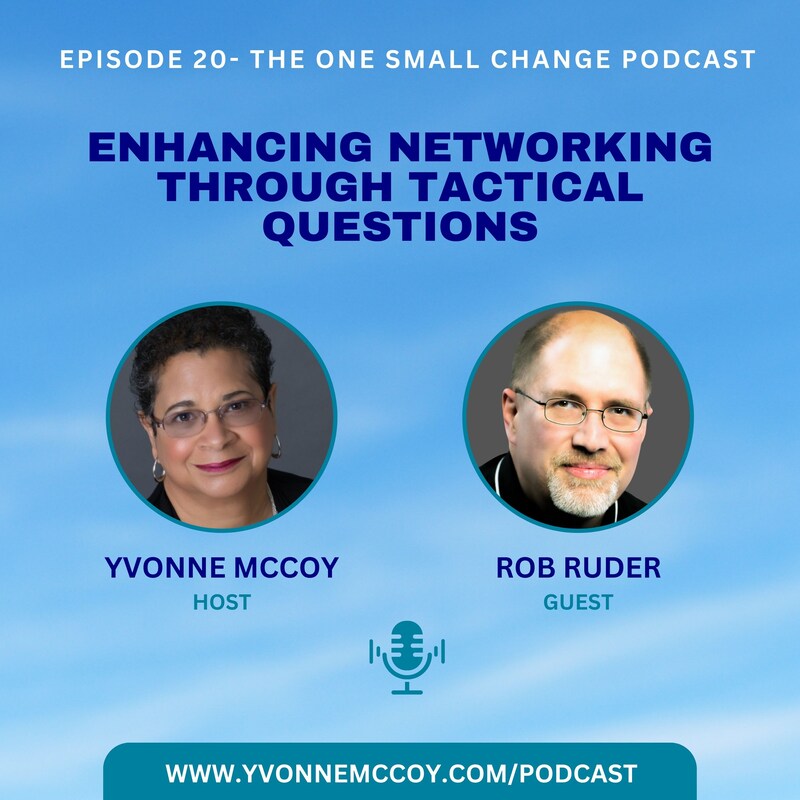
In this episode of the One Small Change Podcast, host Yvonne McCoy engages with cybersecurity expert Rob Ruder, who shares insights on improving business networking by focusing on communication and relationship-building. Rob reveals key strategies on how asking the right questions can enhance business connections and outcomes. He also offers valuable advice on cybersecurity for small businesses, emphasizing the importance of backing up data and maintaining a secure network. Additionally, Rob provides a free resource to help listeners ensure the safety of their online information.
Guest Bio:
Rob Ruder is a seasoned entrepreneur with over two decades of experience focusing on technology and cybersecurity. As the founder of Idic Designs, Rob specializes in helping businesses protect their digital assets through innovative security solutions. Known for his engaging approach, Rob combines his technical expertise with effective communication, enabling him to build strong professional relationships and offer tailored solutions for his clients.
Key Points:
- [00:01:25] - Rob introduces himself and discusses his journey in business discovery and his focus on cybersecurity.
- [00:02:12] - Discovering the impact of asking the right questions when networking and shifting the focus from self to others.
- [00:06:28] - Rob's advice on the importance of in-person networking and how it complements online networking.
- [00:10:08] - The importance of diagnosing client needs through strategic questioning to offer tailored cybersecurity solutions.
- [00:20:25] - Essential cybersecurity steps for business owners, including physical security and data back-up.
Main Quote: "
So the answer is be sure. Have experience with it and know you've done it. Not believe that you did it."
Guest's Website:
Free Dark Web Compromise Report - https://pages.idicdesigns.com/darkweb-report2
Transcripts
Welcome to the One Small Change, and I am thrilled that you're taking time out
Speaker:of your life to come on this journey of exploration and transformation.
Speaker:I'm your host, Yvonne McCoy, and I bring almost 30 years of entrepreneurial
Speaker:experience and passion for discovering growth through the power of
Speaker:seemingly small change. And I want to thank you
Speaker:for joining me and doing this, and I'm hoping that you're gonna find
Speaker:some inspiration that's gonna help you through the week. And this week,
Speaker:we are talking with an amazing person that I came to
Speaker:know, Rob Ruder. Rob,
Speaker:thank you for being here and taking time out of your very, very busy
Speaker:schedule. And what I want is I want you to tell
Speaker:us a little bit about what you do, and share with you how
Speaker:the small change that you're gonna share had an impact on you either
Speaker:personally or professionally. Okay. Well, thank you,
Speaker:Yvonne. I appreciate you sharing your platform with me and
Speaker:give me an opportunity to talk today. I am,
Speaker:as you mentioned, Rob Ruder with Idic Designs. Infinite
Speaker:Diversity and Infinite Combinations. And I've been
Speaker:a business owner for, 23
Speaker:years. I started my business in 2001.
Speaker:And it has been a
Speaker:business discovery of what I do. And so there's a lot of
Speaker:things that I have accomplished.
Speaker:Technology is my main focus. But one
Speaker:things that I've been in lately has been cybersecurity.
Speaker:And the challenge of the cybersecurity
Speaker:world is not so much the
Speaker:technology issues of it. There are a lot of resources and things. But
Speaker:it's communicating with people, especially in networking settings.
Speaker:I'm sure you do networking and
Speaker:working to grow your business. And the
Speaker:one small thing I've discovered is that when I walk
Speaker:into a network situation and announce I'm in
Speaker:cybersecurity, nobody wants to talk with
Speaker:me. But I
Speaker:have discovered through through some recent education over the
Speaker:last year that I can grow my business when I
Speaker:turn around and actually approach somebody
Speaker:and say, what what makes your business
Speaker:so special? And what are you trying to accomplish?
Speaker:So when I take the focus off of what I can do for
Speaker:them and or I'm sorry. What if I take the focus
Speaker:off of what I am looking to do for
Speaker:them and instead let them share with me
Speaker:what they're looking for, and I use my
Speaker:resources in their, to their benefit.
Speaker:They're more receptive to what I do. And and isn't that
Speaker:that old saying nobody cares what you know until they know that you
Speaker:care? Exactly. And and other
Speaker:people like to talk about themselves. So
Speaker:if they're listening to you talk,
Speaker:it's nod your head. Uh-huh. Uh-huh. Uh-huh.
Speaker:But not only are you nodding your head, let's let that you're actually
Speaker:actively listening. I think that, you know, one of one
Speaker:of the big changes for me about networking is
Speaker:I well, first of all, I came to networking very late.
Speaker:And so when I first started networking, it it was I'm
Speaker:going to get a client. When I
Speaker:made that shift of I'm not going to be a client, I'm
Speaker:coming to help the community and to help people
Speaker:and took the the eye off myself, not only did it
Speaker:open me up to potential clients, but it
Speaker:opened me up to collaborations and a whole lot of other things. I mean, if
Speaker:you go in with that narrow view of I'm only looking for a client,
Speaker:you've lost opportunities. Exactly.
Speaker:And that and that was the lesson I learned, in my
Speaker:local area. So as a as a cybersecurity specialist,
Speaker:I needed to grow my network. I had built a business on on the
Speaker:back of just like 4 or 5 clients. I didn't have
Speaker:a wealth of of individuals that I was talking to.
Speaker:And so my mentor in marketing told me I
Speaker:needed to go out and do in person marketing because my
Speaker:best audience was local. But one
Speaker:of the things I found was it didn't work. Because
Speaker:nobody I get I get have this statement of
Speaker:what I did and nobody would approach me. So then I did
Speaker:discover somebody who said it's about communication,
Speaker:connection, connecting with people with what they want
Speaker:to be talking about, and then collaboration with them
Speaker:to help them achieve what they're after.
Speaker:So, you know, one of the things that I think is interesting about you
Speaker:I mean, there are lots of things that are interesting about you. You know, one
Speaker:of the things that we share is kind of, you know, how do people learn
Speaker:and how they educate, and we we'll put a plug in for that later.
Speaker:But, one of the things that I found really
Speaker:interesting with working with you is most people
Speaker:are networking online. You do the majority of your networking
Speaker:in person. Mhmm. Right. You know, in some
Speaker:ways, that seems to me to be like, I'm a I'm a
Speaker:cyber person, but I'm networking person. I don't
Speaker:And it it is. And the the issue
Speaker:is sometimes there is a different
Speaker:relationship you have when you see somebody 1 on 1. And
Speaker:I think anyone who is digital
Speaker:should also be looking at their local area. Now,
Speaker:I, the to be fair, there are some really small
Speaker:communities out there with very few people. But if you're
Speaker:in any city of any size, I think you should be both
Speaker:online and offline. Because you develop skills
Speaker:in both places that are really valuable,
Speaker:especially having these conversations like we're having
Speaker:today. Well, you know, you are you
Speaker:are a cyber you are a tech person, but one of the things we talked
Speaker:about was developing relationships. And so
Speaker:you've got an interesting, take on that.
Speaker:And it comes both from, a clarity exercise
Speaker:that that we've been doing in a group that we're in, but it also comes
Speaker:from a couple of people that you're following now. Right.
Speaker:So can you share a couple of things from that that that could help
Speaker:us? So the
Speaker:the primary the the simple rule that I
Speaker:have whenever I go into a networking situation
Speaker:is ask more questions than
Speaker:give answers. Because the
Speaker:point of connecting with somebody
Speaker:is to not be satisfied with
Speaker:the obvious answer. So I'll I'll
Speaker:give a give a quick example. I had a call with
Speaker:somebody, and they were approaching me about
Speaker:cybersecurity. And simply
Speaker:saying, tell me about your cybersecurity program.
Speaker:And I said, well, could I ask you a
Speaker:question first? And she said, sure. And I said,
Speaker:well, let me let me ask this. What
Speaker:changed? You've been in business for
Speaker:4 year you know, for 5 or 6 months now.
Speaker:And you're you've told me your story about how you have
Speaker:such big clients that you work with.
Speaker:And now you're suddenly concerned about cybersecurity.
Speaker:What I wanna know is what changed?
Speaker:And she suddenly opened up and
Speaker:said, well, my client wants to send me
Speaker:computers and do all this stuff so that they're protected.
Speaker:And that started a whole long conversation
Speaker:that it wasn't me selling what I did. It was
Speaker:just us exploring her business and the
Speaker:challenges and issues she needed to be aware of. Well,
Speaker:you know, I think one of the things first of all, I I love that
Speaker:question, what changed? I mean, what what I say is why now?
Speaker:You know, what made it different? You know, this now becomes an urgent
Speaker:issue for you. And a lot of times, like like you
Speaker:said, what they're coming to you for is not really
Speaker:what the issue is, or it's not the the thing that they
Speaker:need to do. And I think the other thing that is,
Speaker:to me important in part of the connection is when you're asking
Speaker:why now and you're asking questions about their business,
Speaker:then they see that you're not just giving them an out of the box
Speaker:solution. It the the the solution that you
Speaker:have is for them. You know,
Speaker:you're considering all the parts in the movie. I you know, one of the things
Speaker:I often say is people kind of have a have a same pattern that they
Speaker:have to move through, but they stay in different places for different amount of
Speaker:times based on So you may have to use all 4 of your,
Speaker:you know, skills or tools or whatever that you have, but you use
Speaker:them differently, which is what makes what you have to offer
Speaker:so customized and so personalized, it makes you stand above
Speaker:the crowd. So can you
Speaker:give us some examples of some of the other questions that you asked? I mean,
Speaker:what changed is a great question. So so some of some
Speaker:of the other ones I take I take this perspective
Speaker:from a a speaker, by the name of
Speaker:Beck Holland. And the thing I've I've learned
Speaker:here is as an expert, I
Speaker:have as you and I talk a lot, we have systems. We
Speaker:have our our our knowledge in how we do things
Speaker:and so on. But our customer or potential
Speaker:customer is trying to achieve
Speaker:something. And they have one of 2 primary problems.
Speaker:One of those problems is that they have a
Speaker:misdiagnosis. They have gone and looked out
Speaker:there at the world of the internet and said,
Speaker:Oh. I need this.
Speaker:And they don't understand what we understand.
Speaker:And so they have misdiagnosed the problem that they
Speaker:have. So we should be asking them, Why do you think
Speaker:that? How what's your, you know, what's your proof
Speaker:that this is what needs to to change?
Speaker:And the other one she talks about is very close.
Speaker:So listen carefully to the difference. But the other is
Speaker:missed diagnosis.
Speaker:They're busy looking at the the
Speaker:vehicles stopped with red lights in front of them.
Speaker:And they're not paying attention to the sports car going,
Speaker:you know, a 150 miles an hour coming up behind them.
Speaker:And which one is the problem they need to solve.
Speaker:And so that's where where we have to help them
Speaker:understand what it is you're looking for,
Speaker:and do you really need the solution,
Speaker:or is there something else you should be concerned about?
Speaker:Well, you know, one of the things I think
Speaker:that that I love
Speaker:with working with you is that you are always asking
Speaker:questions. I mean, it's like, you know, part of part of my
Speaker:plus and my minus, you know, it's like your greatest strength is also your biggest
Speaker:weakness. Right? So I'm the person that always like, this is the problem, here's
Speaker:the solution, let's go. Right? And so I have to slow
Speaker:myself down because, you know, to
Speaker:go through the steps. But the
Speaker:more that you can connect, the more that you can ask and
Speaker:dig in, even though you think you know the
Speaker:answer or the answer is obvious to you, the more the
Speaker:connection I mean, one one I learned this lesson,
Speaker:in a totally unrelated thing where I was doing a a person's tax
Speaker:return or what, you know, and it was it was a little old
Speaker:lady who had a retirement. So, I mean, it
Speaker:was like it wasn't even before computers, and it was zip, zip,
Speaker:zip, zip, and we were done. And I got a client complaint
Speaker:because she said, she didn't ask me these questions.
Speaker:She didn't ask me if I was over 65. She didn't ask me
Speaker:if I got the x you know? And I was like, well, she was over
Speaker:65 the year before in her tax return. I figured it
Speaker:was. Right? Yeah. But she did not feel at all as
Speaker:I mean, I did not connect with her at all. And the flip
Speaker:side of that coin was I got somebody whose tax
Speaker:return was really complicated that I didn't understand
Speaker:at all, and I asked that man every question
Speaker:that I could think of, you know, aside from what color is your
Speaker:underwear. Mhmm. And he said to me, I never had
Speaker:anybody take this much interest in my tax return before.
Speaker:And I was like, that's because I don't know what I'm doing.
Speaker:But but but but but but sometimes we know so
Speaker:well Mhmm. And the situation
Speaker:that they have is normal or
Speaker:small in our world. Mhmm. But we all wanna think our problem
Speaker:is important. We all wanna think that our situation is unique
Speaker:and be able to help people see.
Speaker:Yes. I understand. That is you know, I can see how that could be
Speaker:unique to you. So I think part of the other question that you have to
Speaker:ask is, you know, what problems is
Speaker:this causing you? Yep. Because,
Speaker:What's the impact? Yeah. What is the impact? So, you know,
Speaker:for some people, the impact could be, you know, I can't handle, you know,
Speaker:payments. For somebody else, it might be, I just can't
Speaker:track what's going on or whatever. And and what I do know
Speaker:about you is that you're very good at the
Speaker:data stuff. So talk about
Speaker:this may be not what you intended to talk about, but if you could just
Speaker:take a minute. For me, one of the big issues with networking
Speaker:is is the follow-up. And, of course, you can get all the networking things, make
Speaker:all the connections you want. But if you don't follow-up,
Speaker:you know, you wasted you wasted your time. So do you have any
Speaker:any Sure. So it well, I think
Speaker:I think the hint the hint is is right there in the question you
Speaker:asked about the data. And I
Speaker:so so full disclosure time. You're
Speaker:right. Follow-up is the biggest, you know, is the biggest
Speaker:issue. In fact, even my marketing coach
Speaker:identified, you know, at not too long ago. She
Speaker:said, Rob, your problem is you need to get
Speaker:better at the follow-up. You're great at meeting people. You're
Speaker:great at having warm, generous
Speaker:first conversations, she says, but you have to follow-up
Speaker:because the deal isn't gonna happen in the first
Speaker:conversation. It's gonna be the second or the third. And
Speaker:so I finally after years of resisting
Speaker:it, I finally had to break down and get
Speaker:a simple very simple. I don't want complicated things. I
Speaker:want a simple customer relationship management
Speaker:database that helps me track where I'm
Speaker:at in the conversation with somebody. So if I set a
Speaker:goal that I want to schedule an
Speaker:appointment with them, the first thing is I need to reach out and see if
Speaker:there's something we can talk about. The next thing is to
Speaker:respond to them and then schedule an appointment.
Speaker:And I have to be that methodical. And that's where
Speaker:systems and systems thinking comes in. So so
Speaker:just let me ask you, you don't have to say what you're using, but
Speaker:does that does that, CRM that you have help
Speaker:you put in, like, part of the conversation that you have with
Speaker:them? Yeah. So It covers it covers and
Speaker:my criteria for choosing this CRM was
Speaker:it had to have a pipeline. It had to be
Speaker:strategic in helping me know where am I at in
Speaker:this in this relationship. The second part of it
Speaker:had to be that it allowed me to track notes
Speaker:and, of course, the important how to reach them, contact them.
Speaker:But the third part was it had to be zero cost,
Speaker:because there's no point in buying
Speaker:something that I pay for over and over and over again if I'm not
Speaker:using it. So, you know, someday, maybe I'll need a
Speaker:complex one and complicate it with all kinds of bells and whistles.
Speaker:But right now, I'm a solopreneur. I need one that
Speaker:small, easy to use, and
Speaker:consistent with my goal of being follow
Speaker:through. So here I wanna jump into into
Speaker:your your specific,
Speaker:what you do. I mean, and and Yeah. So when you go network, nobody
Speaker:wants to talk to you about cybersecurity. And so one of
Speaker:the things that I'm finding is the
Speaker:more I network, the more
Speaker:I become aware of a lot of things that are happening. So for instance, I
Speaker:just I just had did something. Somebody tried to use my booking
Speaker:link. And when I went in to check it, it came up suspicious
Speaker:link because it's I made it into a Bitly link. And
Speaker:so, you know, there's so much weird stuff that's going on in the
Speaker:Internet. Right. When we're networking or
Speaker:or I don't even know what the you know, sometimes you have the the right
Speaker:question. I'm not sure I have the right question. Is it
Speaker:do we need to be more concerned about cybersecurity the more we
Speaker:network, or do we need to be concerned about cybersecurity
Speaker:in general and networking is just one of the areas that
Speaker:it'll impact? Can I say both?
Speaker:Sure. Go for it. So so
Speaker:my my position my position is this.
Speaker:Every business owner needs to be concerned about cybersecurity
Speaker:in the sense that they need to be building a
Speaker:plan for their business.
Speaker:And it's now when they're small businesses is the
Speaker:best time. Because I've been I I have
Speaker:clients that are big businesses, and they spent tens of 1,000 of
Speaker:dollars to get their cybersecurity
Speaker:done. Whereas a small business with a little
Speaker:bit of guidance can build their plan of
Speaker:what they're going to do. And then if something were to happen
Speaker:to them and say a state attorney general
Speaker:knocked at their door and said, what did you do to protect
Speaker:our citizens, you know, from this breach?
Speaker:If they don't have a plan, they're liable
Speaker:for failing to protect the data that
Speaker:they're responsible for. On the other hand,
Speaker:there is always a need. The more you spread
Speaker:yourself out there, we have to be more protected because
Speaker:we don't know who we're coming in contact with. So
Speaker:monitoring your systems and monitoring
Speaker:your identity is really important. And that's
Speaker:where you'll hear lots more people talk about dark
Speaker:web and dark web searches and things like that. Because
Speaker:that's what we do to find out if, in
Speaker:fact, we've been compromised already, and there's
Speaker:work to be done. So
Speaker:that brings us to your gift.
Speaker:Exactly. Yes. So so tell us about what you know, and
Speaker:then I want you to give us a couple of steps that we need to
Speaker:take. Okay. So
Speaker:so the gift is that one of the things I do in my
Speaker:cyber security business is I help my clients
Speaker:track whether or not their email
Speaker:address, their passwords, their
Speaker:contact information. Things have been compromised and released
Speaker:to the dark web. So dark web is
Speaker:this hidden but very vibrant
Speaker:environment where people buy and sell, but mostly what they buy and sell
Speaker:is illegal, including people's identities.
Speaker:So I have a tool that lets me put in your email
Speaker:address and give you a report that shows
Speaker:you whether or not your domain or whether your
Speaker:email address has been compromised. So I
Speaker:can do that for free, and then follow-up with
Speaker:you, to share that document with you
Speaker:and answer questions, that you may have about
Speaker:your business tech. That is
Speaker:amazing, and that is really generous. Any gift of time. Information
Speaker:is a wonderful gift, but information plus time
Speaker:is even more valuable. So give us a couple of quick steps
Speaker:before we end. We're gonna run out of time. Okay. You suggest
Speaker:So couple of quick steps. 1, focus on
Speaker:physical security. So
Speaker:number one thing is be aware around it. If you do
Speaker:business, you know, if you do business in a coffee shop, don't get up
Speaker:and walk away from your your laptop or or things like
Speaker:that. You always need to be aware of who has access
Speaker:to your resources, to that. Biggest breaches have
Speaker:often been people threw a laptop on their passenger,
Speaker:seat. And then their car got broken into and the data
Speaker:stolen. The other the other thing
Speaker:is write your policies down
Speaker:and your procedures for maintaining your system.
Speaker:Because you have all this knowledge in your
Speaker:head or you're maybe you have a VA who has
Speaker:that knowledge in their head. If that knowledge was suddenly
Speaker:lost, what would happen?
Speaker:So if you want to if you want your business to
Speaker:thrive and to be resilient,
Speaker:you need to write it down in a document and
Speaker:have multiple copies of it. So you can't
Speaker:lose it in a fire or anything. And how how
Speaker:often should how often should we back up on a, like,
Speaker:an external driver or something like that? As often
Speaker:as you want, you would not want to have to go back and
Speaker:recreate what you lost. Okay. So
Speaker:so it's always a as I always measure it in that, you know,
Speaker:what's your time worth? And then the idea is how
Speaker:much of your time do you wanna repeat because you lost
Speaker:Yeah. That data. Alright. Here's your
Speaker:question. When was the last time you did something new for the first
Speaker:time? Oh my.
Speaker:1st first for the or yeah.
Speaker:Boy, that is a good question.
Speaker:I unfortunately, I have been spending so much time at
Speaker:home that I'm trying to think of what it what it would
Speaker:have been that I've done first. It could have been in the summertime.
Speaker:Yeah. But that's that's how habitual my life is. It's like
Speaker:going you know? I do I do so much the same thing. I
Speaker:I was thinking I was thinking it was sometime when when I was
Speaker:with, my cousin. I did have I did have,
Speaker:well, okay. Here's here's one. So I went,
Speaker:a first for me was to go to the
Speaker:same play, live play, with the
Speaker:same actors, 40 years after the
Speaker:first time I saw it. That's amazing.
Speaker:Yeah. Yeah. It was it was it was one of those
Speaker:things. In the 1980s, they had they had put together this
Speaker:play when they were college students. And
Speaker:this summer, they got back together
Speaker:and did the play again. They had never done it
Speaker:since. But for for various reasons, they
Speaker:all got back together, and I had a chance to go watch them. So it
Speaker:was kinda like a time warp. Yep. Time warp. Yeah. It was a cute time
Speaker:warp. They were they were, one line of
Speaker:the play was modified a little bit. And it says it it
Speaker:was, when did when did you turn when did you
Speaker:go from 12 to 60? Because
Speaker:40 years ago. Yeah.
Speaker:Alright. We are running out of time, and and I think and Rob and I
Speaker:have talked for a long period of time. One of the things
Speaker:I'm gonna, there gonna be some additional information
Speaker:that's that you're gonna wanna get, but you definitely wanna grab that gift. And
Speaker:so, you know, I have to I have to be sure to say
Speaker:to you as a podcaster, be sure you subscribe and share and engage
Speaker:in social media so that you can supercharge your
Speaker:business through connection, which we talked about. And the podcast
Speaker:is my way of giving back to the community and helping you fuel your quest
Speaker:for growth and impact in a way that can be fun and
Speaker:just enjoyable. So I hope you will continue to join me in the
Speaker:one small change and and, you know, look
Speaker:for the tiniest shifts that's gonna give you some kind
Speaker:of monumental transformation. And you can go and listen to the first
Speaker:the first episode and some of the other ones if you've missed them.
Speaker:And, Rob, before I let you go, you
Speaker:got some last words of wisdom?
Speaker:I would so so this is when it came up recently.
Speaker:To this comes from John Paul Sartre.
Speaker:And that is, to believe
Speaker:is to know you believe. And to know
Speaker:you believe is not to believe.
Speaker:So the answer is be sure.
Speaker:Have experience with it and know you've done it.
Speaker:Not believe that you did it.
Speaker:It's pretty heavy.
Speaker:Welcome to my world. Welcome to your world. I have to tell you
Speaker:that Rob is is a very thoughtful person and
Speaker:poses these interesting questions in the group that we're in,
Speaker:and, we're gonna invite you to something so that you can
Speaker:you can experience that, once a month. But I
Speaker:want you to remember that change is simple, but it's not always
Speaker:easy. And it takes a certain amount of
Speaker:courage, and it takes a certain amount of resilience, and it takes
Speaker:a definitely takes curiosity to step out of your your
Speaker:comfort zone. So if you'll join me on the one small change every
Speaker:week as we embark on this journey for you to come up with innovative
Speaker:possibilities, that would be fantastic because I love
Speaker:connecting with you. And until the next time, stay
Speaker:curious. Rob, thank you for all your time and your thoughts.