Shownotes
A captivating exploration of memory and legacy unfolds as our host, Wendy Green, reflects on a cherished collection of dolls, gifted to her from her parents travels to foreign countries. Each doll holds a wealth of memories, cultural significance, and personal history. Wendy openly shares the emotional impact of these dolls, admitting that while they evoke nostalgia and dreams of travel for her, they are met with indifference by the next generation.
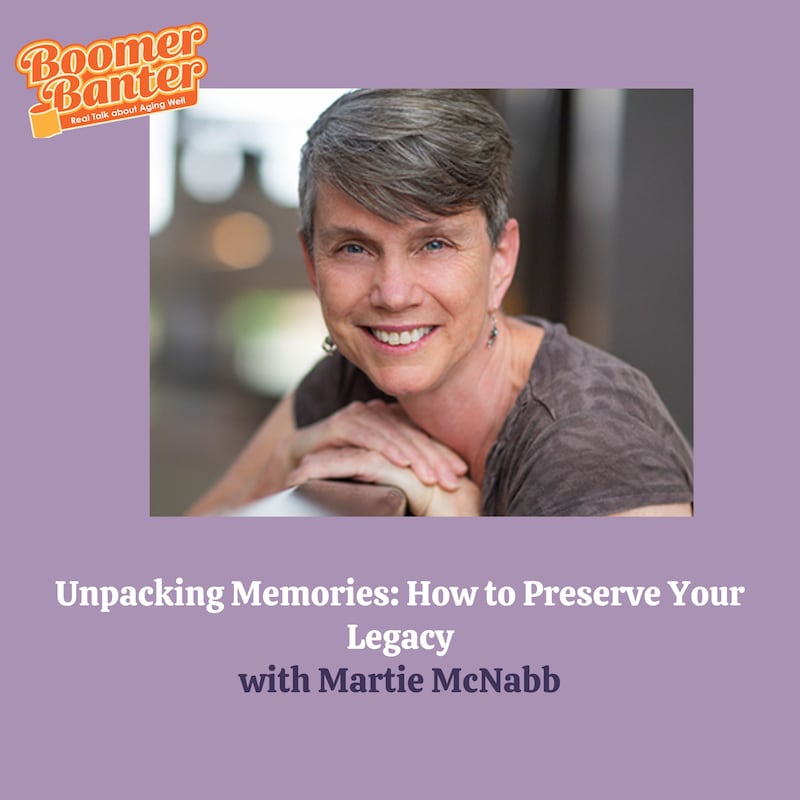
This thoughtful inquiry naturally leads to a deeper conversation with guest Martie McNabb, a legacy artist who highlights the power storytelling through objects. Together, they examine the complexities of emotional attachment to possessions and the weight of familial legacies, including the often-overlooked guilt that comes with letting go of items that once held significance.
Their discussion underscores how storytelling can preserve personal history and forge connections, inviting listeners to reflect on their own possessions and the rich narratives they carry. Ultimately, we are reminded of the enduring power of memory and the vital role that sharing our stories plays in the human experience.
Takeaways:
- The speaker reflects on a cherished collection of dolls from various countries, each representing a meaningful connection to their past.
- A significant theme explored in the podcast is the emotional weight of physical objects and how they embody personal stories and memories.
- The discussion emphasizes the importance of storytelling in preserving personal history and the connections that arise from sharing these narratives.
- Marty McNabb introduces the concept of being a legacy artist, highlighting the value of object-inspired storytelling in fostering connections among individuals.
- Listeners are encouraged to curate their belongings, focusing on the stories that matter rather than the objects themselves, to enhance their personal legacy.
- The podcast delves into how sharing memories, especially in community settings, can strengthen bonds and create a sense of belonging among individuals.
Links referenced in this episode:
- Subscribe to the newsletter, "Thriving Through Time" bit.ly/navigateaging
- Visit our sponsor at greenwoodcapital.com
- Check out Matie McNabb's website showandtails.com
- Visit the Boomer Banter website at heyboomer.biz
- To join the Boomer Banter and Boomer Believers group https://buymeacoffee.com/heyboomer0413
Books mentioned in this episode:
"Keep the Memories, Lose the Stuff" by Matt Paxton
"Passed & Present" by Allison Gilbert
"Time to Tell" by Deborah Wilbrink
Disclaimer:
Learn more about Greenwood Capital or find resources at www.GreenwoodCapital.com. Boomer Banter is sponsored in part by Greenwood Capital Associates, LLC. Greenwood Capital Associates, LLC is an SEC Registered Investment Advisory firm with offices in Greenville and Greenwood, SC. As a fiduciary firm, Greenwood Capital is obligated to disclose any potential conflicts of interest with this arrangement. The host of “Boomer Banter”, Wendy Green, is a client of Greenwood Capital, and her show “Boomer Banter”
has been compensated for her testimonial through Greenwood Capital’s sponsorship. Greenwood Capital is a Legacy sponsor at the stated rate of $2,600 for the 2025 calendar year.
This podcast uses the following third-party services for analysis:
OP3 - https://op3.dev/privacy
Transcripts
I have this wonderful collection of dolls from around the world.
Each one was a gift from my parents, something they brought back from their travels, and as I was growing up, these dolls were lovingly displayed in my bedroom, each one wearing the costume of the country they came from. I didn't play with them as much as I admired them and dreamed of visiting their country one day.
As I moved into my adult life, the dolls lived in boxes for many years.
It is only in the last probably 10 or 12 years that they've been back on display again in my bedroom where I can admire their delightful sweet faces and their wonderful costumes from their countries. I recently asked my children and grandchildren if they would like any of the dolls when I am gone. No way, they said. Those dolls give me the creeps.
I kind of get that. I mean, they never knew the dolls, they have no connection with them, and I'm okay with letting them go. But they meant something to me.
So how do I pass on that memory, that meaning? Or does it even matter? We're going to be exploring questions like this with our guest today, Martie McNabb.
So welcome to Boomer Banter, the podcast where we have real talk about aging well. My name is Wendy Green and I am your host. So imagine having a secret blueprint for aging well.
One that's packed with smart strategies to boost your finances, enrich your relationships, enhance your health, and showcase a sense of purpose. With the Thriving Through Time newsletter. You get these powerful, actionable insights every week.
It's your personal guide to unlocking a more vibrant, confident you. So don't miss out on this transformative newsletter. Subscribe today and start enriching your life immediately.
You'll be kicking yourself if you don't. To sign up, go to bit.ly/navigateaging
So who is Martie McNabb? Besides my guest today?
She is a legacy artist using other people's stuff as her medium. She's also a lover of stories that get attached to these things. Martie was born in a military family in Okinawa, Japan.
She moved nine times before turning 16 and as a result she didn't collect familiar childhood objects like art projects and toys. The things that became dear to her were relationships, experiences and the power of a story.
Later, haunted by the photos and memorabilia people leave behind, she began hosting object inspired story sharing events called Show and Tales Tales T A L E s to encourage participants to reveal a little piece of their personal history through the things they keep. Sharing out loud with others, keeps the memories alive, passes on the history, and enables people from all walks of Life to Build connections.
Show and Tales has been written about in the Wall Street Journal and featured in two books, Time to Tell by Deborah Wilbrink and Past and Present by Alison Gilbert. Things and Stories. Fascinating. So let's get into it. Join me in welcoming Martie McNabb to Boonever Banter. Hi there.
Martie McNabb:Hi there, Wendy. It's lovely to see you again.
Wendy Green:Oh, you as well, Martie. I'm so excited we're doing this. We've talked about it for, I don't know, a couple years probably. So now we're finally doing it. Yay.
Martie McNabb:Absolutely.
Wendy Green:So, so, so, Martie, you moved nine times before you were 16. Can you give us a brief summary of your life and then how you discovered the importance of the story of things?
Martie McNabb:Yes. So as you had mentioned, I was born in Okinawa on a US Military hospital. So yes, I was born a citizen.
But my father, he was an Air Force pilot, a fighter pilot. But my mom had. Unfortunately, this was during a time where our jets were not as safe.
And so my mother saw her friends and neighbors lose their husbands on training missions. So my mother was adamant that he needed to be safe. And she was not well prepared to be a mom. And she did not want to be a single mom at all.
So she forced him out of the Air Force and he worked. He moved to General Electric and of course General Electric. You know, that was the time of the nuclear family.
You know, you just move to where the job is. So we moved, like I said, nine times before I was in high school. And yeah, that was the basis of things. And My mother moved 13 times.
So my father and she moved 13 times. So I think in the beginning she packed up more things. But as it kept on increasing, she just discarded a lot. I didn't have a lot.
We didn't have a lot of things. But one of what I recognized later in life as I got into this work, is that neither one of my parents were very good, quote, unquote, storytellers.
They just weren't natural storytellers. They didn't come up with stories.
But what I found is that if I got them, you know, an object, something that they, they kept, that they kept around their place, and I handed it to them and I asked them the story of this thing, they were able to more easily and kind of effortlessly share a story. And so I think that's also me. I don't respond well to. Here's a story prompt. You know, what was your favorite childhood memory or whatever?
I don't respond easily or automatically to that. Effortlessly. But when I have objects that are, I keep around me and that I see all the time, I can more easily share the stories.
Wendy Green:So that's so interesting. Since you didn't have a lot of objects as a kid, that's interesting that you found the connection with the objects. So.
So tell me what it means to be a legacy artist.
Martie McNabb:Yeah, so I had a difficult time trying to come up with a title for the work that I did. Went with my first business, which is basically shuttered because I'm a part time digital nomad, as you know.
So it's really difficult for me to have continued memories out of the box. And what that was is I, you know, we, we collect, we save so many photos and collect so much stuff over our lives.
We inherit a bunch of stuff as well. And too often we never get around to doing or know what we want to do with it.
And it just sits in boxes and bags and suitcases, storage units, second homes, closets, attics and basements.
And sadly, so many people as we've dealt with lately with climate change and with floods and fires, too often people lose everything before they get around to doing anything with it. So I was like, why do we collect all this stuff and save all these things? It's because they are like, it's our mini museums.
They basically tell a bit of our story, our history.
And so with memories out of the box, I would gather people's things and, you know, boxes and bags and suitcases and even get keys to storage units and keys to second homes.
And I'd go in and I'd spend hours and hours and hours going through because just like a museum and just like your beautiful dolls, if we don't take the time to curate and share the stories, it's the stories that people want. They may keep some of the things, maybe not, but it's the stories. And that's the work that I did is.
But you have to curate and create something first before people won't be so overwhelmed with the amount of stuff.
Wendy Green:Right, Martie, I know as you're talking about all of the stuff in the closets and the boxes, I'm like, yeah, oh, oh gosh. Yeah, I got that too.
Martie McNabb:We are not alone. And you are not alone. I just have a little less because of all the moves, that's all. I don't have it. I just have a little less.
Wendy Green:And what, and, and what have you learned about why do we save all this stuff? I mean, I mean, I guess I have my opinion why I save it. You know, because it means something.
But I think there's also a guilt involved, like, oh, I can't get rid of this. Right.
Martie McNabb:Yes, yes. Well, it's complicated. Needless to say, it. There is guilt in it. There is that. This is something like in, for example, your parents.
It's not only your having those dolls in your bedroom growing up, it's that your parents chose those things.
Wendy Green:That's right.
Martie McNabb:They touched those things.
Wendy Green:Yep.
Martie McNabb:They valued your. Their relationship with you.
And it wasn't passing on of their values, which was traveling, seeing the world, being experienced, exposed to different cultures, and, you know, the richness of life. Right. So it's all wrapped up in that. Right. So that's. Yes, there's definitely guilt in getting rid of things.
I just had a friend tell me about some furniture he had, used it to. Really uncomfortable. Doesn't really fit in my house. But I, you know, so, yes, there. There's definitely that.
But I also think there is the overwhelm and. And the. That. Again, it's not that things. My.
My work, I say things that matter and there's that saying, you know, think the best things in life aren't things.
Wendy Green:Right.
Martie McNabb:It's absolutely. I totally agree with it. But our things have a way of holding on to the stories of the best things in life.
The connections, the travel, the places, the friendships, the. The, you know, your mentor, you know, your. Your favorite boss. You're like, all the things that we hold on to have this.
And realistically, can you imagine saying the best things in life aren't things to people who run museums and historical societies?
Wendy Green:Right. Never.
Martie McNabb:These things share stories, have history, our family and our personal. But our family and also our communities and our. Our human family's story, they hold on to that. Right. And that's why they matter.
Wendy Green:So these boxes of letters and pictures that we have, you know, I mean, boxes. Seriously, Martie, not one ... boxes. So, yeah, you know, and I can feel your warmth and your empathy and. But what do we do with all of those things?
Those pictures that they bring emotional stuff up when you look at them, when you read those letters. What do you do with all of that?
Martie McNabb:Yeah. Yeah. So it's interesting. We've been.
I've been doing a lot of work with a collaborator, friend of mine, Martie Makai, on this very subject is how can we keep these things without keeping the things right? So realistically, there's no one solution, no one way of doing it. I am fond of and feel it's important to curate things.
So my friend Matt Paxton has a Book called Keep the Memories, Lose the Stuff. And he has a show called Legacy List. And he limits the history. Like, he goes in and he finds seven things. I think it's seven things.
Now, seven things is kind of hard to limit things to, right, Wendy, like with your beautiful dolls. Like, hundreds of the beautiful dolls. So I. My encouragement is to encourage people to limit things, curate things down to 30.
Wendy Green:Okay.
Martie McNabb:My. My life, my story and 30 things. Right. Like to limit it or my dog collection. It doesn't have to be your entire. But.
But if we focus things, that's what a curator does in a museum as well, is. Is to pick those things and then decide what to do with them. Doesn't mean throwing away everything else.
But it's like if you pick those 30 and you make sure that they're well documented in some way, that they're photographed, that they are, you know, the. The letters are scanned. Right. That these are preserved in some way. And then you can create some sort of piece of art, a collage, a.
A shadow box with those 30 things, a collage with those 30 things, a book with those 30 things, a video with those 30 things, or a webpage with those 30 things. And you make sure.
But the most important thing, again, is making sure that you share the stories, because it's not about the things per se, it's about the stories that get attached to them.
Wendy Green:Yeah, Yeah. I love that. And. And you do something like that with senior centers, right? My life. Yeah, yeah.
Martie McNabb:Or our community in 30 things. Or your life in 30 things. Yeah. And one. One. So there's a multitude of things, and there's wonderful people out there.
That Past and Present book that you mentioned with Alison Gilbert, it. There's. It has 80 things that you can do with the things that are left behind from your loved ones. It's specifically about. Right.
So there's 80 different things that you can do with it. I have a good friend of mine who recently said, you know, she. She was a little frustrated with Marie Kondo. Like, if it brings you.
If it doesn't spark joy, you know, and she said, my challenges. She lost her sister before her, then her parents. And she has their things, and every one of them brings her joy.
She's in the process of moving out of the US and moving to a foreign country, to Europe, and she's like, I am not going to put them in a storage unit. What do I do? So we've been talking about, can you curate certain things? And we talked about photographing, and she's like, I don't know about.
So things have to work. But I said, yeah, let's be creative.
What about taking 30 things, taking photographs of them, and having charms created from them that you can have a charm necklace or a charm bracelet so that there's actually a feel so you can look at it and see. See, you're like our friend Sky Bergman with her grandmother's wooden spoon, right? So you have a wooden spoon, you have whatever.
So it's a way to keep the things. And when you touch them, you can remember. She could remember her sister and her mother and her father.
So there are an endless, endless ideas and creative people to help. You don't have to do that. And now we have three 3D printing, and there's all kinds of things. Right. So there's many. I.
I'm only coming up with a few ways of keeping the things without keeping the things.
Wendy Green:But I think I. I know.
And I think one of the things you recommended to me when I was mentioning my dolls to you in an earlier conversation, you said, what if you pick a few of those dolls and make like, a little video where you tell your grandchildren and your children the story of this doll and why it was special to you and what country it came from and what you've learned about it. And I thought that was. Yeah. I'm going to share the book titles and the book from Matt that you also mentioned in the. In the show notes.
I'm going to do that. I do need to take one moment to talk about our sponsor, who is Greenwood Capital. And I so appreciate their Boomer Banter.
As you know, this month on Boomer Banter, we're talking about relationships, and today we're talking about relationships with our things and the memories. So having a relationship with your trusted financial advisor who understands your goals and your needs will keep you on a path to achieving them.
So I have such a relationship with my advisor at Greenwood Capital. They are an independent, registered advisory firm, which means that they are a fiduciary. They must place your interests above their own.
I have to say that as a sponsor, Greenwood Capital has compensated my business for this testimonial.
For more information about how they can help you make a financial plan, go to greenwoodcapital.com now, let's get back to my conversation with Martie McNabb.
Martie McNabb:So can I say something?
Wendy Green:Yes, please, please.
Martie McNabb:In regards to your sponsor. So I think I. Maybe it was a month ago you ended up coming on and talking about legacy.
And what I love so much is that what you talked about, about Your financial advisors. It's even, Even though it's. It's. You say financial advisor, it's financial comes first.
We've talked and you talked about how legacy is so much more than our money and our real estate. Right. And. But it sounds like your advisor knows that. Without a doubt.
And is supportive about all the ways that in this, this is the work that I do is legacy work. And that's why I loved your, your, your sponsor and what you said about it when I listened to your episode.
Wendy Green:Oh, thank you.
Martie McNabb:A month ago.
Wendy Green:Yeah, thank you. Thank you for saying that. Yeah, I appreciate that.
So in your experience about storytelling and sharing memories, talk to me about how that builds connections between people.
Martie McNabb:Yeah. So I have. I refer to the work that I do in my story sharing gatherings as story sharing instead of storytelling.
So if you've ever, if any of your listeners have gone to a moth. The moth or any story.
More typical storytelling events, what they probably find is that after the storytellers are done, they, everybody gets up that's there and they leave. Because it's a show, it's a performance, it is well practiced. Shows are often about building that fourth wall. Right.
That is, there's a separation between the person that's on stage and the people in the audience. And it's felt because that's what's happened to me when I've gone.
I have friends who are professional storytellers and they are wonderful and I absolutely love it. But it is performative. Why I love what I do in show and tales, my gatherings is because it's. I consider story sharing connective, not performative.
And so what has happened at all of my in person, because it started in New York City in the back room of a friend's bar called Branded Saloon over a decade ago. And it's still there. Amazing. Of all things, Branded Saloon, I was just there last summer. Well, but it.
What I found at my events is that at every single in person one, people stayed afterwards and connected with the people who shared the story. There was no separation of, oh, you're on the stage.
I can't like, because these are not practiced because they just bring an object that's relatable like the wooden spoon that I just said about wood sky, you know, or a tin cup or an apron or whatever. That there's a ability to cross and feel like it's okay to approach somebody and to start a conversation. And that is absolutely what happens.
People stay afterwards and connect that they've not met each other before. But that night that Story spoke to them and they felt compelled to, to reach out. And one person shows and friendships and relationships.
The relationship, the romantic relationship did not last, but started at one of these events and all kinds of connections and collaborations have happened. So this is. You had mentioned the senior doing these at senior centers or senior communities.
I went to one that had been in existence for quite a long time. People met for lunch like people had been knowing one another for many, many, many years at that point.
And we did this event, it was a four week series. And each time the people who came up said, my God, I've known this person. I've known this person for all this time, for years.
And I never knew this about them. I never knew that I couldn't continue another conversation like afterwards. And so these are. Because they're so simple.
It's show and tell from elementary school.
Wendy Green:Yes, yes, yes. Do you find that that same dynamic works when you do them virtually? Because I know you had to during the pandemic.
Martie McNabb:Yes. Like we all did, right? We all had to go virtual.
So the challenge with virtual is that it does not like people, quote, unquote, can't stay afterwards and continue a conversation.
However, I can't tell you how many times I'm sort of like, oh, so and so's on somebody, like, so and so that I knew both of them, but they didn't know each other.
They're like, the next thing I know they comment on LinkedIn or they're on one another's podcasts or all this, you know, all this stuff happens, right? It happens like, you know, you're a connector as well. Wendy and I think our circle are connectors.
But reality is like, when I'll follow up, when I get around, I'm like, so how do you know each other? And they're like, through you, Martie. We met at one of your events.
We met through one of the, you know, one of the virtual events that I've hosted and I did probably for the two years, first two years of the pandemic, I hosted them monthly. I took a little break last year. We both are, as you talk about, I'm sure with your people.
We're both in the middle of caregiving for our moms, so that has kind of thrown a wrench into things. But I'm going to get back to doing some, some virtual events starting next month, so.
Wendy Green:Oh, good, good. Well. And you're going to join us tomorrow night on the Boomer Believers. I know, I'm excited. And, and it's true, Martie.
Every Time I do a Boomer Believer or Boomer Banter. You know, meetup it people learn things about each other that they've known for quite a while. So it's. It really is a special opportunity to connect.
And you're right, it's harder virtually.
So do you have one or two stories that stick out in your mind that you've heard over the years through show and tales that you know people sharing things that have been really impactful, stories that you can. That you feel good about sharing with us?
Martie McNabb:Yeah, absolutely. Yeah. It's hard to. It's hard to pick and. And I'm.
I'm so looking forward to joining you at your group tomorrow and listening to the stories there of the things that matter to your community. So. Yes. So it is hard. I have probably listened to. I'm so grateful, I'm so honored to have the opportunity to listen to people's stories.
There's not enough space for people to share their stories. I don't think in this world. And I believe stories can change the world and getting to know each other more deeply is what is needed.
So hard to choose. But I would say one is a woman who.
Who happened upon this an event show entails at Branded Saloon in Prospect Heights, Brooklyn, probably eight years ago or nine years ago. Something like early on, I never met her before and of course a lot of people were my own personal friends and neighbors.
So you know, because that's what you have to do when you're marketing it first promoting it. So. But I'd never met her. I never seen her before and never saw her afterwards. But she showed up with a empty egg carton.
And the beauty of having prop is that they really are props, their emotional props because it's very hard to get up in front of people for a lot of us, a lot of people. And so you're able to hold it and feel it and look at it when you get nervous when you're in front of people. Right. So that's what she did.
And she proceeded with this representative object because a lot of people who live in New York don't actually have the real thing. They've either lost it because of forced relocation or because of fire or because they left it in their country of origin.
So representative objects are always welcome. And so. But this was just an empty egg carton. And with this empty egg carton, she shared the story of a grandfather's love.
He talked about being a child. The only child of single mom in Russia. Her mom was poor and had to work multiple jobs.
So when she wasn't in school, her mother had to bring her to her parents house for the weekends so that she could work her second job. I guess her grandfather was not particularly warm and fuzzy and so she didn't hear much, you know, warm and fuzzy.
Love, love relationship or whatever. But every weekend he would fix an egg for his granddaughter and it was a rep. It represented love to her because it was nourishment and for sure.
And he ended up making sure that she had this egg every weekend that with him. And so I was like an empty egg carton could tell such a story. It was. It was amazing.
Wendy Green:That is amazing. What a wow, right? I'm so impressed that she would think of that as her prop. But yes, it definitely told the story of the love, the nourishment.
That was his way of sharing it, right?
Martie McNabb:Yeah. Yeah. And can I end up sharing another one?
Wendy Green:Yes, please.
Martie McNabb:About you.
Wendy Green:Oh, of course. I was nervous too when I first showed up.
Martie McNabb:So I am so grateful to Wendy for being one of my featured speakers at my. I think. I don't believe it was last year. I think it was the year before. So that's when we said we. We've been knowing each other for a long time.
But in March I do a. I had a virtual show entails called Artifacts and Totems and it's the Pandemic Edition.
And since March now is going to be five years since the start of the pandemic here in the United States. And needless to say all of us were thrown into a very different world. Right. Wendy was not alone in the experience of losing a job.
I know other people are dealing with a similar story right now, but Wendy spoke and brought to our show and Tales the mic that she is using right now. It represents to her a a new what. What she was going to create.
How she had to start afresh in a new landscape without her her job that she had before it. Right. What she was going to do for the future. Her resilience. It represented her future which is a podcaster and a host of this.
This podcast and multiple other things being on other people's being called to talk about aging well and resilience and what's next and to embrace the. The what's happening what. What is our future in this next phase of our life. So it represents that. But it also represented the love of her family.
Wendy Green:Yes, it did.
Martie McNabb:When her children didn't quite understand what the heck mom was.
Wendy Green:What what was she doing? What do you want for Mother's Day? Mom, I want a microphone. What?
Martie McNabb:But they trusted her, they love her and they bought her this very special Mother's Day gift.
Wendy Green:It was right?
Martie McNabb:And they now are like totally embracing this new you. And, and so that's the second story I wanted to share.
Wendy Green:Oh, thank you. Yes. You know, I came into that room not know anybody. I mean, I had seen you, you know, but didn't know you. And I was like, how's this game played?
Like, what am I supposed to do here?
Martie McNabb:But I hope you felt welcomed and comfortable once you began.
Wendy Green:You know what, Martie? You set such a welcoming tone, such a welcoming tone and it's hard not to feel welcomed and part of the group and the group mirrors that too. So.
Yeah, yeah. So like I'm really looking forward to tomorrow. It's going to be so fun.
So I'm wondering if you, because of all the moves and you know, not just in your childhood, I mean even now as an adult, you are digital nomad. You said you could move a lot. So are there things that you have still saved that you find are very meaningful to you?
Martie McNabb:Yes, yes, absolutely. So as you know, I lived in Brooklyn. That's what I talked about. So I now live in Vermont with my 88 year old mother.
Part of the year I live where I am right now in Albuquerque, New Mexico in the South Valley with my wife and mother in law and part time in a camper van who's now named Brooklyn.
Wendy Green:Brooklyn.
Martie McNabb:So I. The things that I keep have to have a purpose, you know, a use, they, I utilize them or they have a story and ideally both.
So I have had the good fortune of being able to get on road trips many times in my van and hosted story sharing events around the country. Little pop up events here, some series, different places. But unfortunately as I've traveled, sometimes I leave things behind.
After doing this a couple of times my wife said, oh, what martifact did you leave?
Wendy Green:Martifact. That's brilliant.
Martie McNabb:So I am working on a book called Martifax my life and 30 things. And so I, Yes, I. Needless to say, I have fewer things. As I mentioned earlier, I have fewer things, but I have. We all have things, right?
It's like we all have things. So I have, as a matter of fact I can show.
It is a postcard from my friend Kiki and this she sent out because I sent a small contribution to her new channel. She was starting a, a TV show. Oh, wow. Yeah, a little, I, I don't know, Internet TV show. I'm not all that familiar with everything.
But I love yellow, so it's, It's. It's fitting that I, I held on to it.
mily at the start of COVID in:Very lucky because I know a lot of people that experience was stolen from them.
Wendy Green:Yeah.
Martie McNabb:So grief comes a lot. But I had just posted on.
On Facebook that I had found out that my seventh friend, this was probably in May, May or June, that my seventh friend, I had found out had passed away. Not directly from COVID but I felt probably because he didn't want to seek out medical care. Not because he was afraid of getting Covid, but he was.
He didn't want to burden the over overwhelming burden medical community in New York City during that time. So I don't think he sought that. So I just posted that and the next thing I know, I'm sitting down and just trying to take a break from it.
And I got a text from a friend saying, oh, I'm so sorry to hear about Kiki. And I was like, damn it. Damn it. So this is Kiki. We had just started.
She was working on a nonprofit to help veterans build tiny communities in her area. Her husband is a veteran. And so we had just gotten off the phone like the week earlier to talk about doing a.
I have 26 themes of show and Tales, as you know now.
And we were going to do a Soldier, Sailors and Civilians, like, fundraiser for her, for her, you know, fundraising event for this tiny house community. And yeah, unfortunately I lost. Lost her and really didn't have a close connection. Like we say we know each other, but we don't know each other.
Wendy Green:Yeah, yeah, yeah.
Martie McNabb:Tight connection with her community. So it's kind of. I've fallen away from it, but I'll never have the card Mile and her energy and her love, like it came out of her mouth.
So, yeah, always hold this. This onto this.
Wendy Green:So that's. That's a great story. Beautiful. A sad story. But I'm glad you have the card. Yeah. Yeah.
So, Martie, before I let you go, if you could give everyone listening one piece of advice about preserving their personal history and relationships, what would that be?
Martie McNabb:Yeah, so it would be, yes, it's not that the things matter, but the stories that get attached to them do. So these are the things we keep, the things we that matter and the things that we will leave behind.
And so like I said, your personal museum, make sure that people know about some of these things, why they matter to you and make sure that they know the stories. Yeah, it's, they'll, they'll know you more and you'll know them more.
And even if you right now go and ask people, when you go and visit them, ask them to tell stories of the things that they surround themselves even on, on video. Like look at the things that are behind Wendy right now. Like ask this, ask about them.
You'll find out more about them and, and yourself by doing that. So that's what, that's my last bit of advice.
Wendy Green:Thank you. Let me tell people how they can find you.
So if you are interested in inviting Martie to do a show and tales with one of your groups, you can email her at martie@showandtales.com She also has a website, showandtales.com and there's a podcast, Things that Matter with Marty McNabb. It's twice a month. So go ahead and subscribe to that too and listen to all of the wonderful stories that Martie shares.
I am so glad that we finally were able to do this. This is fabulous. Thank you.
Martie McNabb:Thank you.
Wendy Green:And I just want to one more encouragement to subscribe to the Thriving Through Time newsletter to transform your outlook on aging Well.
Sign up at Bit.ly/Navigateaging and what else do we have? Oh, I want to tell you who's coming next week.
Yes, this is going to be an amazing story. So in March our theme is switching from relationships to focus on purpose and exciting story.
To kick that off, you may have heard or seen the Oscar winning documentary called Free Solo about Alex Honnold who climbed El Capitan in Yosemite without any ropes. Oh my God. Well, his mother, Deirdre Wolonick started rock climbing at 60 and she became the oldest woman to climb El Capitan guided by her son.
They did it up and back in one day. Most people don't do that. She wrote a book about her remarkable life and there is currently a documentary that our friend Melissa made.
Climbing into life. Yeah. So she's, she's currently a documentary about that winning awards and film festivals across the country.
And Deirdre's story is one of following her passions and there were many even when she had no support and overcoming fears to become a rock climber. So that should be a pretty exciting show.
Martie McNabb:Very.
Wendy Green:Yes.
I also want to remind you to check out greenwoodcapital.com and if you have any needs for financial management or financial support, see what they have to offer you. And thank you for sharing your time with Boomer Banter and with me and Martie McNabb. Thanks, Martie.
Martie McNabb:Thank you, Wendy.
Wendy Green:I'll see you tomorrow night.
Martie McNabb:Yes, you will.



