Shownotes
Episode Summary
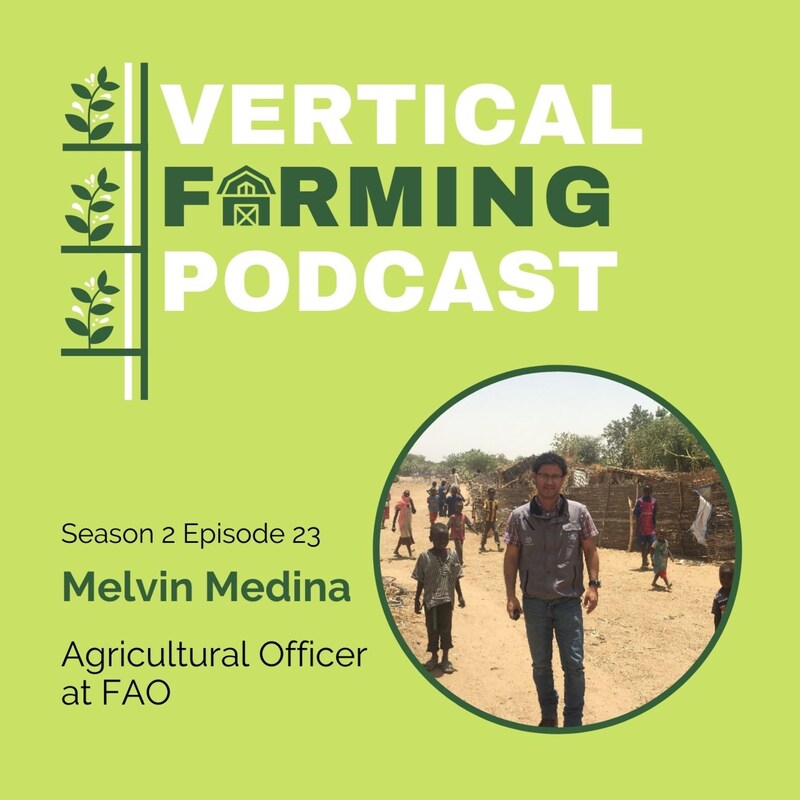
Join Harry Duran, host of Vertical Farming Podcast, as he welcomes to the show Agricultural Officer at FAO, Food and Agriculture Organization of the United Nations, Melvin Medina. The FAO is an organization that is striving for zero hunger, a sustainable planet and a future of food for all. In this episode, Harry and Melvin talk about Melvin’s passion for horticulture, the numerous roles Melvin has held in the AgTech industry and the impactful work Melvin has done in Jamaica, Tanzania, Cambodia and Italy. They touch on specific projects Melvin and his team have worked on throughout the years as well as the message Melvin would like to leave about the future of AgTech and vertical farming.
Episode Sponsor
Key Takeaways
- 03:22 – Harry welcomes to the show Melvin Medina, who shares his passion for horticulture and how he initially got involved in AgTech
- 10:02 – Melvin recalls the decision to join Fintrac and the work he did building greenhouses in Jamaica
- 15:02 – Challenges Melvin and his team faced in constructing greenhouses in an area where hurricanes are commonplace
- 17:46 – Other projects Melvin worked on during his time at Fintrac
- 20:43 – Melvin discusses the culture shock he experienced while working in places such as Tanzania and Cambodia
- 24:04 – Melvin opens up about the challenges of raising a family while traveling so extensively for work and what eventually led his to FAO
- 28:38 – Melvin discusses the common issues he sees among farmers across the globe and what opportunities he sees for technology to address these issues
- 38:42 – Melvin provides a brief history of FAO, their mission and the important work they do
- 42:08 – Melvin speaks to how the global pandemic has affected how we all view agriculture and the overall supply of food
- 44:31 – Melvin speculates on the future of his career and shares a message with the overall community about AgTech
- 48:59 – Harry thanks Melvin for joining the show and let’s listeners know where they can connect with him
Tweetable Quotes
“I think during this pandemic the world has realized the importance of food and the supply of food.” (42:37)
Links Mentioned
Food and Agriculture Organization of the United Nations Website
Melvin’s Division: Plant Production & Protection Division
🎙️🎙️🎙️
Podcast Production and Marketing by FullCast: https://bit.ly/3sxZ34y
See omnystudio.com/listener for privacy information.
Mentioned in this episode:
2025 Precision Ag Report by iGrowNews
2025 Precision Ag Report by iGrowNews
Transcripts
$680 million poured into precision ag last year.
Speaker:Autonomous weeding robots dominated, and John Deere made 2 acquisitions in 3
Speaker:months. A food company, not an equipment maker, bought a
Speaker:robotics startup to protect its own supply chain. The deals are
Speaker:accelerating, the money is moving, and the winners are already separating from the
Speaker:pack. If you're investing, building, or buying in this space,
Speaker:you need the full picture before your competitors get it. The 2025
Speaker:Precision Agriculture Intelligence Report from iGrow News is now
Speaker:available. Get your copy today at
Speaker:igrownews.com/precision. I have seen
Speaker:farmers growing crops on their adapted systems,
Speaker:even low-cost systems, and they are able to send the
Speaker:kids to school. They are able to pay for better
Speaker:healthcare services, and they are able to buy
Speaker:better and more food. It's possible. And being in El
Speaker:Salvador, I have seen farmers that they prefer to
Speaker:continue working in, in the farm, invest,
Speaker:expand.
Speaker:Welcome to the Vertical Farming Podcast, weekly conversations with
Speaker:fascinating CEOs, founders, and agtech visionaries.
Speaker:Join us every week as we dive deep into the world of vertical
Speaker:farming with your host, Harry Duran.
Speaker:Vertical Farming Podcast Season 2, welcome back. If this is your first time listening,
Speaker:I'm so honored that you chose this podcast
Speaker:and this specific episode to enter the world of the Vertical
Speaker:Farming Podcast. It's the show where I interview fascinating CEOs,
Speaker:founders of the leading vertical farming companies from around the world.
Speaker:My name is Harry Duran, and in case you missed last week's show, I had
Speaker:a great conversation. The first with a not specifically
Speaker:founder of a vertical farming company, but actually
Speaker:someone who has a bunch of different skill
Speaker:sets. It's Kyle Barnett, and he's the founder of a site called
Speaker:Ponic Jobs and the co-host of the Crop Talk podcast.
Speaker:We have a wide-ranging conversation on all things
Speaker:hydroponics and all the different interests that Kyle has.
Speaker:It's been a very well-rounded show. Thanks for having me. received episode, so make sure
Speaker:you check that one out if you haven't listened to it. This week, I speak
Speaker:to Melvin Medina. He's the Agricultural Officer at FAO, which is the
Speaker:Food and Agriculture Organization of the United Nations. This
Speaker:episode is brought to you by Ceres Greenhouse Solutions. If you're looking for a
Speaker:greenhouse solution that will suit your specific climate and growing goals,
Speaker:then talk to an expert from Ceres Greenhouse Solutions. Ceres
Speaker:combines passive solar concepts, innovative climate control technologies,
Speaker:and customized grow systems to ensure that their growers are yielding the highest
Speaker:quality product year-round for the lowest operational cost. Visit
Speaker:Ceres Greenhouse Solutions, that's
Speaker:ceresgreenhousesolutions.com, to
Speaker:learn more. FAO is an organization that is striving for
Speaker:zero hunger, a sustainable planet, and a future of food for all. We talk about
Speaker:Melvin's passion for horticulture, the numerous roles Melvin has had in the agtech
Speaker:industry, and the impactful work he's done in Jamaica,
Speaker:Tanzania, Cambodia, and Italy, just to name some of the few places he's
Speaker:been. It's a virtual tour around the globe. in this
Speaker:episode. We touch on specific projects he and his team have worked on throughout the
Speaker:years, and the message Melvin would like to leave about the
Speaker:future of agtech and vertical farming. I learned a lot about
Speaker:FAO and all the good things that they're doing in this sector,
Speaker:and fascinating and inspiring to hear Melvin's journey.
Speaker:So pay attention, there's a lot of great
Speaker:takeaways from this episode. By the way, if you haven't already, please subscribe
Speaker:to the Vertical Farming Weekly Newsletter for weekly updates on all things
Speaker:happening the world of vertical farming, and there you'll also be notified
Speaker:when new episodes are available. Melvin Medina, Agricultural
Speaker:Officer at FAO, which is the Food and Agriculture Organization of the
Speaker:United Nations, thank you for joining us on the Vertical Farming Podcast.
Speaker:Thanks to you for inviting me and be part of this
Speaker:movement. Thank you. I'm wondering if you have
Speaker:listened to podcasts or if it's something that you've been using
Speaker:to consume or learn about content recently. Yes, actually,
Speaker:I have listened to some of the contributions
Speaker:from other colleagues in the past. And yes, not all of them,
Speaker:but yeah. Yeah. We were talking a little bit about how we
Speaker:were— sometimes you discover these things after the fact, but we were both born in
Speaker:El Salvador, which is sometimes a small world.
Speaker:But I'm interested in just going back, winding the clock back a little
Speaker:bit. When you started, when you were in high school and university,
Speaker:were these Did you see yourself working in, in this industry back
Speaker:then? Were those things that were of interest to you, like, um,
Speaker:this topic about food and agriculture? Yes. Well,
Speaker:actually, I studied in the Pan-American School
Speaker:for Agriculture, Zamorano, in Honduras.
Speaker:Okay. Where I did my, um, 2 degrees. One
Speaker:is an agronomist, and the other one was
Speaker:the Agricultural Engineering, and which is
Speaker:the equivalent to the bachelor degree. Yeah.
Speaker:And since the beginning, I, I was
Speaker:pretty much interested in the horticulture, not much in the
Speaker:animal science or extensive crops,
Speaker:but I really liked the, the horticulture,
Speaker:especially vegetables. And,
Speaker:and this is how I became let's say, more interested
Speaker:in this type of crops. But then
Speaker:fortunately, after graduation, I got a
Speaker:job in this area of work. Do you remember
Speaker:where that passion or that interest or that
Speaker:curiosity for horticulture began? Yes.
Speaker:Well, actually, I liked the—
Speaker:maybe the fact that these type of crops are
Speaker:short crops. cycle. And they
Speaker:did these type of crops, they have a lot of— they are
Speaker:affected by many pests and diseases.
Speaker:And so it was a challenge for
Speaker:farmers to be able to produce vegetables, especially in
Speaker:tropical areas, because I was studying in Honduras, but then I
Speaker:went back to El Salvador. Mm-hmm. And
Speaker:Being in a tropical country with 6 months of
Speaker:rain, it was challenging to be able to
Speaker:produce here year-round. And, um,
Speaker:but then I discovered the, the world of protected cultivation
Speaker:systems where in the tropics,
Speaker:if you know how to adapt the system, you can
Speaker:produce year-round.
Speaker:I mean, like, with higher yields and less problems
Speaker:compared to the open field systems. And
Speaker:what were some of the early technologies or systems
Speaker:that you started working with where you saw
Speaker:the potential for what was possible in controlled agriculture systems?
Speaker:Yeah, well, I got a job in this farm which was the most
Speaker:let's say, advanced farm in the country at that
Speaker:time. And
Speaker:we were growing fruits and vegetables. There were
Speaker:around 100 hectares for pineapples,
Speaker:but also mango and avocado. And I was in charge of
Speaker:the production and packaging of vegetables.
Speaker:So this was my first job. And— Was that the
Speaker:job at Fusades? Yes. Yeah, okay.
Speaker:Yes, that was the Salvadoran
Speaker:Foundation for Economic and Social Development. Okay.
Speaker:And well, after a few months, I, I
Speaker:realized that growing in the open field— we used to have
Speaker:20 hectares under open field for
Speaker:vegetables with crops like sweet corn, watermelons,
Speaker:green beans, melons. And then I
Speaker:was also in charge for 1 hectare of greenhouses where
Speaker:tomatoes, bell peppers, lettuce were
Speaker:cultivated using a soilless culture. Hmm. So
Speaker:that was my first contact with the soil-free systems, and
Speaker:I had the opportunity to see the differences between
Speaker:open field and protected cultivation systems in terms of
Speaker:quality efficiency and the production levels.
Speaker:Did you notice anything different in terms of the taste as
Speaker:well of the vegetables or the varieties you could create?
Speaker:Yeah, well, I would say more the
Speaker:differences that I saw was more
Speaker:related to first efficiency in
Speaker:the use of water, fertilizers compared to the
Speaker:open field. but also in the
Speaker:efficiency of controlling pests and diseases.
Speaker:Because, you know, with the plastic, with the nets,
Speaker:we used to spray much less than in the open fields,
Speaker:which this gives you a reduction in the
Speaker:use of chemical pesticides and
Speaker:increase the efficiency in the biological control agents.
Speaker:In terms of quality, yes,
Speaker:because I was also in charge of the packing of these
Speaker:vegetables, and we used to supply supermarkets.
Speaker:And most of the rejections came from, from the open
Speaker:field product— products. So,
Speaker:yeah, so the, the one of the main differences was
Speaker:in terms of quality, because the Up
Speaker:to 95% of the produce coming from protected
Speaker:cultivation system was accepted by the market,
Speaker:and this was one of the main reasons. What's the percentage for
Speaker:open field? What I can tell you is that 80%
Speaker:of the total rejections was coming from the produce
Speaker:cultivated in open fields. And then from there, you started—
Speaker:can you tell us about how you made the transition to starting to work
Speaker:at FinTrac? And for the listener as well, explain what the organization is.
Speaker:Yes. Before that, I established and installed my own
Speaker:greenhouses to produce tomato and sweet
Speaker:pepper in low-cost greenhouse systems, I mean, using
Speaker:local materials. So actually,
Speaker:and I started to produce and sell as a
Speaker:private business. So I was really becoming a
Speaker:farmer. And after a
Speaker:few crop cycles, I got a visit from a person from
Speaker:ThinkTrack, which is a company implementing
Speaker:projects based in Washington, D.C. So they
Speaker:were implementing this project in El Salvador after the
Speaker:earthquakes in 2001. And they
Speaker:asked me if I was willing to help
Speaker:them. To do or
Speaker:to replicate what I was doing in my farm, but with the
Speaker:small-scale farmers in different locations in El Salvador.
Speaker:And I— something came to me and I said, yes, of
Speaker:course, this is what I want to do. I want to share my knowledge, I
Speaker:want to share my experiences. And, um, and
Speaker:that is where I started to work with them. So I used to
Speaker:travel to different locations in El Salvador. Do you
Speaker:know how they found you? Well, they were looking for advanced
Speaker:farmers and they found me because El Salvador is a small
Speaker:country. Yeah, yeah. They offered
Speaker:me this job that in the beginning was part-time,
Speaker:but then because of the requirement of
Speaker:providing technical assistance to farmers from the
Speaker:construction to to harvest, going through the whole
Speaker:production process, needed an agronomist to visit
Speaker:them and provide technical assistance, then I was
Speaker:hired full-time. And you were there for
Speaker:how long? 3 years? No, well, actually, with
Speaker:the company, I, I worked with them
Speaker:15 years in total, but in El Salvador
Speaker:was from 2002 to 2005
Speaker:because then they got a new project in Jamaica, which
Speaker:was called the Jamaica Recovery Program
Speaker:after hurricane. Don't remember exactly the name of that
Speaker:hurricane. Mm-hmm. So in 2005, I was
Speaker:moved to Jamaica to replicate what we were doing in El
Speaker:Salvador. And it was really a very good experience
Speaker:because we were establishing the first greenhouses in
Speaker:Jamaica. Wow. Yes, so we selected—
Speaker:What was the most surprising thing for you when you arrived in
Speaker:Jamaica? I know there could be similarities, but I'm wondering what
Speaker:was the most surprising thing for you when you arrived? Well, it was
Speaker:my first time out of my country, and
Speaker:I have to say that I didn't speak English.
Speaker:So When I arrived in Jamaica
Speaker:without speaking English, it was challenging. But when
Speaker:they offered me a translator and I say, no,
Speaker:this is my opportunity to learn English. And
Speaker:so after a few months, I was speaking
Speaker:English with a Jamaican accent.
Speaker:And well, it's not the best place to learn
Speaker:English. Yeah. Because of the local dialect.
Speaker:But, um, it was, it was good. It was good. Um, I mean,
Speaker:it was surprising the, the prices, for example, for the products.
Speaker:For 1 kilo of tomato, 1 kilo of sweet pepper,
Speaker:of lettuce, comparing to the prices in El Salvador, it was
Speaker:extremely high. And we had a good experience
Speaker:because, well, good, then In
Speaker:2005, we got 2 or 3 tropical storms and
Speaker:I think 1 hurricane again. And the farmers
Speaker:who were having something to sell were
Speaker:our farmers growing crops in the greenhouses.
Speaker:Wow. So the rest of the country was totally destroyed in the open
Speaker:field. And that helped it to have a bigger
Speaker:impact. Because then everybody wants to have a
Speaker:greenhouse. And if you see now, my
Speaker:farmers, the ones that I was providing technical assistance,
Speaker:the first ones are the leads now in the country.
Speaker:They are all providing technical
Speaker:assistance, trainings, not only in
Speaker:Jamaica but also in the Caribbean.
Speaker:So now you can find maybe more than 300 greenhouses in the country.
Speaker:Well, I'm wondering what type of challenges or
Speaker:differences in construction you have to take into
Speaker:account for when you're building a greenhouse in an
Speaker:environment that is susceptible to hurricanes. I wonder if you
Speaker:need to make something a little different than you would in a place that doesn't
Speaker:get them. Oh, definitely. We were
Speaker:at the beginning using wood.
Speaker:because we believed that the wood was going to be the
Speaker:cheapest type of material for constructing the
Speaker:greenhouses, but this material was imported.
Speaker:So it was almost the same price of metal frames.
Speaker:Mm-hmm. So that was one of the things that we learned.
Speaker:And actually, then there was the discussion
Speaker:about the design, which is the best design for
Speaker:Jamaica, For, you know, against
Speaker:hurricane, they wanted to have a hurricane-proof,
Speaker:but it doesn't exist really. What you have to do is just to
Speaker:have some preventative measures, like removing the
Speaker:plastic, removing the nets, because it's better
Speaker:to lose the crop, but not to lose the
Speaker:structure. Very good point. But if you don't remove that,
Speaker:then you're going to lose everything. And we had some
Speaker:experiences and I have some reports that are— because after I
Speaker:went there a couple of years after to do an
Speaker:assessment and I could see that after a hurricane,
Speaker:some of the wooden structures were still standing up and
Speaker:some of the metal imported from Israel were totally
Speaker:destroyed. So it was about what to do and
Speaker:when to do these preventative measures.
Speaker:It must have been a good feeling for you, and even now as you look
Speaker:back, to see the impact that you had.
Speaker:Because when you arrived, there was nothing like that there, and now you've created
Speaker:a whole ecosystem of people who learned from you
Speaker:and now are passing on what they learned from you onto the next generation.
Speaker:So it must be a good feeling to see how your legacy is
Speaker:now lived on in Jamaica. No, definitely.
Speaker:Just to give an example, right now in FAO, we have a
Speaker:project which is going to be implemented in 4 different islands
Speaker:in the Caribbean. It's going to be on protected
Speaker:cultivation systems, the small islands.
Speaker:And one of the international consultants that
Speaker:we are going to use is one of my first farmers in Jamaica
Speaker:because he is the best. I mean, he's— Hmm. He has been traveling
Speaker:around the the region, and I must say he's really good.
Speaker:So can you talk maybe about one of the other projects you worked on
Speaker:at FinTrac after you started to move away from the work you were doing in
Speaker:Jamaica? Yes, after Jamaica, I got this call
Speaker:to go to Tanzania, and
Speaker:Tanzania is an amazing place with huge
Speaker:potential to grow vegetables. Because of the altitude
Speaker:above sea level in some areas in the country, is a huge
Speaker:country. But so the FinTech got this, this project,
Speaker:and they called me to go and do an assessment and see the
Speaker:potential for to establish again
Speaker:low-cost greenhouses. And then we
Speaker:established 10, 10 different, in 10 different
Speaker:locations for small-scale farmers. And they
Speaker:started to grow slowly, not as fast as in
Speaker:Jamaica, because Jamaica farmers are—
Speaker:I mean, they have more fans and they have more money
Speaker:to invest than the farmers in
Speaker:Tanzania. And one of the main challenges is to have enough
Speaker:funds to invest in these type of
Speaker:systems. But yes, it has been growing. one of
Speaker:the main issues in Tanzania was the market
Speaker:transportation in general, because the areas
Speaker:where we were growing the crops were maybe
Speaker:6 hours driving to the main markets in the
Speaker:cities. So we were not prepared to—
Speaker:for these type of issues. But at the end of the day, we
Speaker:consolidated with the Open Field
Speaker:farmers because this program was not only in greenhouses
Speaker:but also open field. So we— there was a lot of
Speaker:work in terms of marketing. Then I, I got, uh,
Speaker:this, another call to go to Cambodia, and
Speaker:I stayed, um, 6 years in Cambodia.
Speaker:But then Cambodia was totally different. Wow. And it was good because I
Speaker:was going like too
Speaker:specialized in the greenhouses and protect the
Speaker:cultivation systems. But in Cambodia,
Speaker:it was totally the opposite. It was everything in the open field in a
Speaker:very difficult environment around the Tonlé Sap
Speaker:Lake where you are at sea level,
Speaker:heat, high humidity, high temperatures all year round.
Speaker:So we were not able to do any greenhouse
Speaker:there. So it was everything about open field
Speaker:systems, which really helped me to go
Speaker:back to the basics, to see a lot of different experiences with
Speaker:many different crops. And let's say
Speaker:stop for a while on these greenhouse
Speaker:systems. Yeah.
Speaker:Can you talk a little bit about all the experiences you've had? Because, you know,
Speaker:it must've been something, at least El Salvador, to
Speaker:Jamaica, there's still a bit of the, like, the Caribbean, like some of the,
Speaker:maybe, you know, the culture is, you know, some overlap, not too much. But
Speaker:then when you go to places now, you go to Tanzania and now you're going
Speaker:to Cambodia, was it a bit of a culture shock for you or did you
Speaker:have time to, you know, get a feel for what the culture was like
Speaker:in these different places? No, definitely the culture
Speaker:is totally different. I mean, I must say that
Speaker:I mean, I have enjoyed working in Tanzania as well as in
Speaker:Cambodia. Just like they're different culture.
Speaker:Cambodia, for example, everything is fresh.
Speaker:Marketing is not an issue because there's a lot
Speaker:of food available. And this is
Speaker:part of their culture. They like to eat fresh food,
Speaker:fresh vegetables. And this is something that
Speaker:I realized when I was there, coming from Tanzania
Speaker:where food in some places
Speaker:is not available. Some areas, I remember when I was
Speaker:in some very remote areas
Speaker:where you can travel 3 hours without any— you
Speaker:don't see any house, any restaurant or anywhere to
Speaker:eat. And you still drive and drive and drive
Speaker:and you can't see anything, just maybe wild animals.
Speaker:But in Cambodia was totally different. It's a population
Speaker:is higher than— I mean, more the
Speaker:population is, the density is higher than in countries
Speaker:like Tanzania. So you find many, many
Speaker:places, restaurants and Everyone is cooking
Speaker:food because they like to eat a lot of fresh food.
Speaker:So that makes farmers to sell almost everything
Speaker:they produce at the farm gate. And that
Speaker:was one of the main impacts that I got from one
Speaker:country to another and the different types of
Speaker:vegetables. Did you have any opportunities to
Speaker:do any sightseeing in Cambodia? And there's a, I know there's a lot of
Speaker:beautiful temples there as well, and it's one of, One of the places that's on
Speaker:my list to visit someday. Oh, definitely. I mean, I was living in
Speaker:Siem Reap, 5 kilometers from Angkor Wat,
Speaker:from the Angkor temples, and it's amazing, really, I can
Speaker:tell you. Yeah, and also the, the people is
Speaker:just amazing, friendly. My daughter was born
Speaker:there and we have very good friends,
Speaker:schools. The price, I
Speaker:mean, the cost of living is very low comparing to other
Speaker:countries. No, it's a beautiful place, really.
Speaker:Yeah, a lot of places to discover. And I guess
Speaker:the most important is the people, very nice, very friendly.
Speaker:And that makes you really
Speaker:feel good, especially when you are with your family.
Speaker:And right now we, we are thinking about going back to visit
Speaker:some of the friends that we left there. Can you talk a little bit,
Speaker:because, about the challenges or the
Speaker:adventures of raising and having a family
Speaker:while you're doing all these traveling, all these different countries? Like, when you're solo, you
Speaker:know, obviously it sounds very exotic. You just throw a backpack on and you can
Speaker:just travel the world. But I'm wondering how you you thought
Speaker:about that? And I imagine it's a conversation you had early on in your relationship,
Speaker:but what were some of the challenges, if there were
Speaker:any, about raising a family and then being in these
Speaker:different locations all the time? Yeah, definitely. Well, when I
Speaker:arrived in Cambodia, I was alone. My wife and
Speaker:my son were in Spain. You can imagine being in
Speaker:Spain and Cambodia, there's a huge difference.
Speaker:And so when I told them that I was going to go to Cambodia, everybody
Speaker:was talking, well, saying, so why, why, why
Speaker:you're going there? But then when I arrived, I mean, it's one of
Speaker:the most peaceful places that you can be
Speaker:safe. And so then I told my
Speaker:wife, okay, come with me, you will see it. And then she
Speaker:came, she saw the environment, she loved it. Oh,
Speaker:she's a Buddhist. So Buddhist, being a
Speaker:Buddhist in a Buddhist country. Oh, that helps. But I must
Speaker:say that she's very open. She likes to travel and she is
Speaker:very easy to adapt, like myself. And, uh, and then,
Speaker:um, our kids are the same. I must say they are
Speaker:very easy to adapt. Now we are in Italy. We have
Speaker:been here 3 years. This is my 4th year
Speaker:in Rome. And yeah, we are very easy to adapt, and I
Speaker:guess all kids are the same. I think what's
Speaker:fascinating and really interesting is when kids
Speaker:see their parents or are raised in an environment where
Speaker:they're introduced to so many different cultures, they
Speaker:automatically assume that this is how families are and this is what
Speaker:life is, and they're open to new possibilities. And it feels
Speaker:like you're almost teaching them that It's great and
Speaker:it's nice to have a sense of adventure in life and to just, you know,
Speaker:and be open to new possibilities. And I imagine, I don't know if you're seeing
Speaker:that already in them, I don't know how old they are, but I think your
Speaker:experiences, I'm pretty sure, have shown them. No, definitely.
Speaker:For example, my son last year, he asked me, how long
Speaker:are we going to stay in Rome, in Italy, and where are we going to
Speaker:go after? That's very nice. And
Speaker:so now that the timeline gets us into you connecting
Speaker:with the group at FAO. So did they find you or did
Speaker:you find them? No, no, I
Speaker:applied for a position in Rome. Well, actually I
Speaker:applied 2 or 3 times and I
Speaker:think the 3rd time I got the interview
Speaker:and I got the position. It was a long process,
Speaker:but what I wanted to really do was
Speaker:instead of being in one place, helping
Speaker:farmers, let's say, or assisting farmers in one location
Speaker:at a time. My vision or my objective
Speaker:was to be in a place or in a company
Speaker:organization where I could reach more people.
Speaker:And FAO has provided me the
Speaker:opportunity to be in one location
Speaker:but helping many farmers around the world. Right now,
Speaker:I have been assisting, just to give an example, in
Speaker:my first 3 years in FAO, I have been assisting
Speaker:countries around more than 60
Speaker:countries, 60 different countries around the world in Latin
Speaker:America, Central Asia, Africa, the Middle East,
Speaker:Southeast Asia, and the Pacific.
Speaker:So it's really what I wanted to do, and it's a
Speaker:really big accomplishment for my professional
Speaker:and personal objectives because
Speaker:right now I am able to help and assist
Speaker:different farmers in different locations, different regions,
Speaker:different countries with different climatic
Speaker:conditions, which is something that I was not For example,
Speaker:it was my first time to assist farmers
Speaker:in Central Asia. I'm curious,
Speaker:now that you've had experience with farmers
Speaker:now from across the world, because it was just a couple of countries when you
Speaker:were first getting started, what are you finding is the common thread
Speaker:in terms of farmers' needs, farmers' concerns, now that
Speaker:you've had a chance to experience them from You know, various parts of the world?
Speaker:Well, I think there are some
Speaker:similarities and some differences
Speaker:in different regions and different cultures. But just to give you
Speaker:some examples, what I have seen in the,
Speaker:the issues that are common between countries
Speaker:and regions are, for example, the lack of access to
Speaker:funds. For funding to start the
Speaker:business, for investment. Another one
Speaker:is the access to high-quality extension services
Speaker:and also proper
Speaker:pest diseases, soil, water, nutrient
Speaker:management. This is what I have seen, and
Speaker:that is like common in between different regions
Speaker:and countries. But there are also
Speaker:other more specifics depending on the region where you are.
Speaker:Just in Latin America, for example, there seems to be
Speaker:technical capacities, a very good technical capacity, but
Speaker:the lack of investments by small-scale farmers.
Speaker:And in other regions, there might be more
Speaker:possibilities for private investments
Speaker:But maybe these countries are located in the
Speaker:dry environments where crop production is more challenging.
Speaker:So I must say that some of the
Speaker:differences are related to the climate in
Speaker:each region. Tropical countries
Speaker:are more or less having the same issues, high temperatures,
Speaker:high humidities, and then The challenges are
Speaker:there, those, how to manage that. But
Speaker:if you go to the Middle East, North
Speaker:Africa, where you have maybe 100
Speaker:millimeters of rain, there is another, and
Speaker:that's another issue. But in general,
Speaker:I think farmers need support, technical assistance.
Speaker:Addressing how to manage climate,
Speaker:how to improve genetic materials,
Speaker:seeds, high-quality seeds, irrigation,
Speaker:water management, how to apply fertilizers,
Speaker:when to apply fertilizers,
Speaker:as well as cultural practices, plant densities,
Speaker:pruning, And of course, how to
Speaker:manage and control pests and diseases.
Speaker:This is pretty much what I have seen between different
Speaker:regions and countries. Obviously, those
Speaker:challenges lend themselves to being
Speaker:solved through a controlled environment agriculture, right?
Speaker:Because if you don't have the pests, if you can
Speaker:control or protect yourself from the elements,
Speaker:which you saw in your early days with doing the greenhouses in
Speaker:Jamaica and El Salvador, you get more control
Speaker:over your crops. And so I'm wondering what
Speaker:opportunities you see. And obviously, we think a lot about
Speaker:vertical farming here on this podcast and greenhouses and some of the hybrids
Speaker:we've seen as well. So in your times and your time at FAO,
Speaker:what have you seen that could be helpful in terms of the new
Speaker:technologies that are coming available to help with some of these challenges?
Speaker:Well, definitely we are promoting protected cultivation systems
Speaker:in my division, the Plant Production and Protection
Speaker:Division in FAO. Since I arrived there, I have
Speaker:been trying to promote as much as possible the protected cultivation systems,
Speaker:and that includes greenhouses, methouses,
Speaker:hydroponic systems, vertical farming, and
Speaker:soilless culture in general, because we know that
Speaker:increase the efficiency and the use of land and water.
Speaker:And also provides resilience against climate change,
Speaker:as well as increasing the efficiency and controlling the pests and
Speaker:diseases because you are in a controlled environment. I must
Speaker:say that we need these systems to be
Speaker:affordable for small-scale farmers,
Speaker:and it will be very good to come
Speaker:up with systems that are low-cost systems. So
Speaker:farmers can afford to
Speaker:invest in this type of cropping systems
Speaker:without losing the efficiency. We have some
Speaker:projects, we have some experiences in the organization
Speaker:with the vertical farming in urban and peri-urban areas
Speaker:to deliver fresh produce, taking advantage of
Speaker:proximity to the cities. So, but
Speaker:also, it's very important to have technical
Speaker:assistance and training on crop production and protection
Speaker:under vertical farming or protected cultivation systems in
Speaker:general. And one of the main
Speaker:challenges is the finance for initial investment, because we
Speaker:know that these type of systems are are
Speaker:not cheap, but I think
Speaker:between the private sector and organizations,
Speaker:NGOs, and their research in academia, we should
Speaker:come out with something that is going to be efficient but
Speaker:also affordable. And this is what I guess our
Speaker:efforts need to be focusing on in the next few
Speaker:years. Do you feel that it's important that if you
Speaker:are going to have success in bringing the cost down, that's an important thing too?
Speaker:Because I think a lot of the focus and attention when it comes to
Speaker:things like greenhouses and vertical farming technologies is all the investment going into
Speaker:building these high-tech buildings that cost a lot of money
Speaker:to build and it costs a lot of money to develop. And there is a
Speaker:learning curve because it's not something you can just give an open field
Speaker:farmer and then place them in a container farm,
Speaker:or maybe a greenhouse is easier, but even like a vertical farm, and assume
Speaker:that everything is going to be the same because there's a bit of a learning
Speaker:curve with understanding what some of that technology is and
Speaker:how to best use it for its maximum capacity. So do you see FAO
Speaker:looking to help create some of these systems or
Speaker:partner with existing companies and join
Speaker:forces together to help build these and make them more affordable?
Speaker:Yes. Well, just to give an example of what some of
Speaker:the mistakes that I have seen in different countries
Speaker:is, for example, when the farmers want to bring
Speaker:systems from Europe, from the United States, from developed
Speaker:countries. So they actually, they buy the
Speaker:system, they want to install it in a tropical country where the
Speaker:conditions are totally different. And, well, number
Speaker:one, Those systems are expensive. Those
Speaker:systems are not adapted to the local conditions.
Speaker:And the people who is operating those systems don't
Speaker:have the training. So when you put all these things
Speaker:together, then you see after some time, you see them
Speaker:abandoned. And this is a very common thing because it's like a
Speaker:recipe. You are buying a recipe. Even the
Speaker:They sell the substrates, they sell you the
Speaker:fertilizers, the seeds, everything. It's like a kit.
Speaker:So when you open the box, then you just have to
Speaker:start to install everything and that's it. But that does— it
Speaker:doesn't work. And I have seen many mistakes and
Speaker:just— so no, we— that— I think that approach,
Speaker:it doesn't work. So what we want to do in the organization is
Speaker:to come up with adapted but affordable systems.
Speaker:And for that, right now, with the new management, the organization is
Speaker:very open to have partnerships with the private sector.
Speaker:In the next years, we are expecting to have more
Speaker:partnerships and come up with adapted
Speaker:systems for small-scale farmers in different countries.
Speaker:We know it's possible because we have done it before. As I have
Speaker:been mentioning you, during the, this talk.
Speaker:So we have to do something similar, and but we need the private
Speaker:sector input suppliers. We need
Speaker:also research and academia to come together and come up
Speaker:with something that is going to be really efficient but
Speaker:profitable, because at the end of the day, we want
Speaker:farmers to make money to improve the livelihoods. And I
Speaker:I can tell you that I have seen that. I have seen farmers growing
Speaker:crops under adapted systems, even low-cost
Speaker:systems. Yeah. And they are able to send the kids to school,
Speaker:they are able to pay for better healthcare services,
Speaker:and they are able to buy better and more food. So
Speaker:it's possible. Yeah, and being in El Salvador, I have seen
Speaker:farmers that they have— they prefer to continue
Speaker:working in the farm, invest, expand,
Speaker:instead of going to United States as an immigrant.
Speaker:And that has— I'm sure that's, uh, something that gives you hope
Speaker:that there's, there's a way forward. Like, for the benefit of the
Speaker:listener and, and anyone who may not know about FAO, can you
Speaker:give some history about the organization? I mean, you— it's
Speaker:almost a testament to how each eager you were to partner with them because you
Speaker:applied 3 times. So it's something that was a goal for you,
Speaker:and I'm wondering if you could talk a little bit about the origins of
Speaker:FAO, what the FAO's mission is as well.
Speaker:Well, this— the FAO is, well, as you know, is the
Speaker:Food and Agriculture Organization of the United
Speaker:Nations. It was founded in,
Speaker:I'm not sure the year,
Speaker:1945. 1940-something, but it was
Speaker:mainly the main source of knowledge.
Speaker:Actually, in the past, if you wanted to know something
Speaker:about irrigation, soil
Speaker:management, or pest and disease management,
Speaker:the main source of information was
Speaker:FAO. Many, many publications
Speaker:high-quality publications. And one of the things that the
Speaker:organization has is the transparency,
Speaker:because we are not selling any— we are not
Speaker:selling irrigation systems, we are not selling fertilizers,
Speaker:we are selling knowledge. Well, and this is important.
Speaker:So being able to work
Speaker:everywhere in the world, I must say, because we
Speaker:have almost 200 member countries.
Speaker:That gives you the opportunity to really have a big
Speaker:impact. So our mission is to
Speaker:assist countries. We have many
Speaker:different projects and many of them are addressing the
Speaker:requests from countries. And our mandate
Speaker:is to assist countries to address
Speaker:their own issues. Can be food security,
Speaker:food safety, food systems, crop
Speaker:production, crop protection. The organization is so big.
Speaker:We have a nutrition division because it's related
Speaker:to the food, economic, statistic. So it's
Speaker:a really big organization, I must say.
Speaker:Only in Rome we have around 3,000 persons
Speaker:working for the organization, only in headquarters.
Speaker:So it's really big. And in this decade, these
Speaker:days that we are trying to accomplish the
Speaker:SDGs by
Speaker:2030, I think FAO
Speaker:plays a very important role. What's interesting about what's
Speaker:happened over this past year Is that I imagine
Speaker:for someone like you, seeing what COVID
Speaker:exposed in terms of supply chains, access to
Speaker:food, access to fresh food, food deserts, these were
Speaker:things that were top of mind for you decades and years ago,
Speaker:long time. You knew that this was— you're preparing
Speaker:for hurricanes in Jamaica. And so
Speaker:these are conversations you're having on a regular basis. the impact of
Speaker:natural events and things like pandemics. I imagine
Speaker:it's almost probably the way you think, like, how do we prepare for the
Speaker:worst? And so I'm wondering what your take has been
Speaker:to see that almost like the rest of the world was
Speaker:realizing, people who had not thought of this issue or problem
Speaker:are now thinking about it and you don't have to convince them and you don't
Speaker:have to sell them on this idea because— Everybody knows, everybody knows
Speaker:how bad it can be. And so, I'm wondering what that's done
Speaker:for you and how— if that's made your work
Speaker:easier or more interesting. Yeah, no,
Speaker:definitely. I think during this pandemic, the world has
Speaker:realized the importance of food and the
Speaker:supply. You know, when you are
Speaker:eating your food in your plate, you never think about Where
Speaker:is that food coming from? And I think now people are
Speaker:starting to think about, okay, I mean, how many
Speaker:efforts are made for your food to be on your plate?
Speaker:But also that includes transportation.
Speaker:And, you know, this is what now they
Speaker:are talking about, the food systems, the importance of
Speaker:the food systems, which is which includes not only
Speaker:producers but also all the actors,
Speaker:including the consumers. So I think the
Speaker:importance of food and agriculture in
Speaker:general is now highlighted during these
Speaker:times. For us, I mean, in my case,
Speaker:it has been very difficult because not being able to travel
Speaker:to assist countries in the field. And trying to do everything
Speaker:virtual is a challenge because some things you can do
Speaker:virtual, but other things you can't. You have to go and see
Speaker:people in the field and do your job in the field. But anyway,
Speaker:hopefully soon everything's going to be going
Speaker:back to normal. Well, it's really fascinating to hear
Speaker:your journey and where, you know, I don't know if you, you
Speaker:knew where you were headed or where you would end up when you started this
Speaker:in El Salvador and, and all the different places it would take you and all
Speaker:the different people you would meet. And I imagine,
Speaker:you know, working for an organization like FAO is probably something that you had on
Speaker:your mind for a long time because it feels like the place where you can
Speaker:have the greatest impact for the type of work that you want to do. So
Speaker:is there anything else on your, what they call the bucket list, of like
Speaker:other organizations maybe you want to work with or things you want to get
Speaker:accomplished as you think about your future? No, well, actually, I mean,
Speaker:I, at the beginning, I wanted to have some experience in the private sector, of
Speaker:course, because it's important. You, I don't think coming to
Speaker:FAO without having field and, yeah,
Speaker:private sector experience is good. So after
Speaker:15, 17 years working in the field with a private company
Speaker:implementing field projects in different countries,
Speaker:I thought it was a good time to come to the organization and contribute.
Speaker:But yes, that was always in my mind, working in the
Speaker:development world and share as
Speaker:much as possible knowledge, experiences, and
Speaker:help to reduce poverty and hunger. That was my
Speaker:main objective coming from country where we
Speaker:see people going to bed without having dinner.
Speaker:So yeah, now I really feel happy to be
Speaker:where I am, and hopefully I will have
Speaker:opportunities to grow within the organization and have a bigger
Speaker:impact. So as we wrap up, again, I want to thank you for
Speaker:taking the time to share your story. Very inspirational. This
Speaker:is a very industry-specific show, and so we talk to people who
Speaker:are making names at some of the biggest companies in vertical farming.
Speaker:I think what I'd like to ask is, is there an ask that you have
Speaker:for this community? You know, I'm sure you have a pretty good list
Speaker:of connections with some of the people at these companies, but, uh, there are
Speaker:people listening. And is there anything you can think of that would be
Speaker:helpful in terms of a connection or a conversation or
Speaker:a project you have coming up that you just want to share more news
Speaker:about? No, I mean, we are having many projects in the organization,
Speaker:and some of them are including the
Speaker:vertical farming systems, but others are
Speaker:in general protected cultivation systems, including greenhouses,
Speaker:net houses. We have different projects in the—
Speaker:and right now we're going to implement projects in
Speaker:Vietnam, Uzbekistan, in the Caribbean, other
Speaker:countries. We have had some experiences in the past, the
Speaker:vertical farming systems for strawberry in Gaza. Wow.
Speaker:We have some in Central America. We are
Speaker:having some experiences growing fodder
Speaker:in Syria and low-cost
Speaker:hydroponic fodder in Sudan. So as you can see,
Speaker:we have many projects because you can imagine
Speaker:almost 200 country members having each
Speaker:country a lot of projects. But it will be good
Speaker:to use this opportunity and tell the
Speaker:community that we are now open for
Speaker:partnerships with the private sector, but also
Speaker:to tell that FAO's mandate is
Speaker:mainly to work with Small-scale farmers.
Speaker:So if you are talking about
Speaker:sustainability with the small-scale farmers, we
Speaker:really need to come up with something that is going to be affordable,
Speaker:but also efficient and profitable. So
Speaker:what I would like to tell the community is that we are working in
Speaker:this direction, and if we can come up with something like addressing
Speaker:all these factors, it will be really good. because we don't
Speaker:want to lose the efficiency because of the cost. But I know
Speaker:it's possible. We just need to bring a lot of people
Speaker:to get different opinions and also to tell
Speaker:the community that the systems have to be adapted
Speaker:to the local conditions. Different climates, different
Speaker:type of systems. And normally all this
Speaker:research and investment are done in developed countries,
Speaker:not in the developing countries. So we
Speaker:need more investment to do research in
Speaker:developing countries and try to address the
Speaker:issues that tropical countries or drylands
Speaker:areas are having. Thank you. So we'll
Speaker:make sure we get the word out when we publish this episode.
Speaker:So I want to thank you again for taking the time. I really enjoyed this
Speaker:conversation. It was a nice surprise to be having a
Speaker:conversation with a fellow Salvadorian as well. So thank you for
Speaker:sharing your story. Where's the best place for listeners to
Speaker:connect, learn more about FAO, and to connect with you? Oh, well, we have the
Speaker:FAO website, and particularly my division
Speaker:is the Plant Production and Protection Division, where if you
Speaker:search on Google, the Plant Production and Protection
Speaker:Division, of FAO, where you will find
Speaker:our website. And of course, you are
Speaker:always welcome to contact me directly. And we'll make sure we
Speaker:include all that information in the show notes for this episode as well. If you're
Speaker:listening, you'll be able to see that in the description for this. So thanks again,
Speaker:Melvin. I hope you have a fantastic weekend in Rome.
Speaker:No, thanks to you, Harry. It was a pleasure to share
Speaker:my experiences. And, um, yes, I'm— we
Speaker:are here whenever you come to Rome. Let me know. Thanks again to Melvin
Speaker:for sharing his story. Very inspiring. Learned a
Speaker:lot. Look into the work that FAO is doing if you haven't done
Speaker:so already. Full show notes available at
Speaker:verticalfarmingpodcast.com. Special thanks to our episode
Speaker:sponsors, Ceres Greenhouse Solutions. Ceres is creating
Speaker:sustainable growing and environments by combining smart design, innovative
Speaker:technology, and dynamic partnerships. Learn more at
Speaker:ceresgs.com. That's
Speaker:ceresgs.com. Podcast production and
Speaker:marketing provided by Fullcast. Sign up for a free podcast brainstorm at fullcast.co/chat15.
Speaker:2 important takeaways. If you haven't already, make sure you're subscribed at verticalfarmingpodcast.com,
Speaker:and there you'll also be able to sign up for our Vertical Farming Weekly
Speaker:Newsletter. It's a recap of the weekly news in the world of
Speaker:vertical farming, and we also notify you of any new episodes as
Speaker:well. Next week, great conversation, my first with 2
Speaker:co-founders. It's with Alexander Olesen and Graham Smith of Babylon
Speaker:Microforms. If you're enjoying this show, please leave us a rating and a review at
Speaker:ratethispodcast.com/vfp. We'll be
Speaker:sure to read those out on future episodes. Until we meet again,
Speaker:here's to your health. Thanks for listening. To read the full show
Speaker:notes for this episode, which includes any links mentioned in the
Speaker:episode, as well as a full show transcription, visit
Speaker:verticalfarmingpodcast.com. There, you can sign
Speaker:up for our email list to be notified when new episodes are published.
Speaker:$680 million poured into precision ag last year.
Speaker:Autonomous weeding robots dominated. And John Deere made 2 acquisitions in 3
Speaker:months. A food company, not an equipment maker, bought a
Speaker:robotics startup to protect its own supply chain. The deals are
Speaker:accelerating, the money is moving, and the winners are already separating from the
Speaker:pack. If you're investing, building, or buying in this space,
Speaker:you need the full picture before your competitors get it. The 2025
Speaker:Precision Agriculture Intelligence Report from iGrow News is
Speaker:now available. Get your copy today at
Speaker:igrownews.com/precision.




