Shownotes
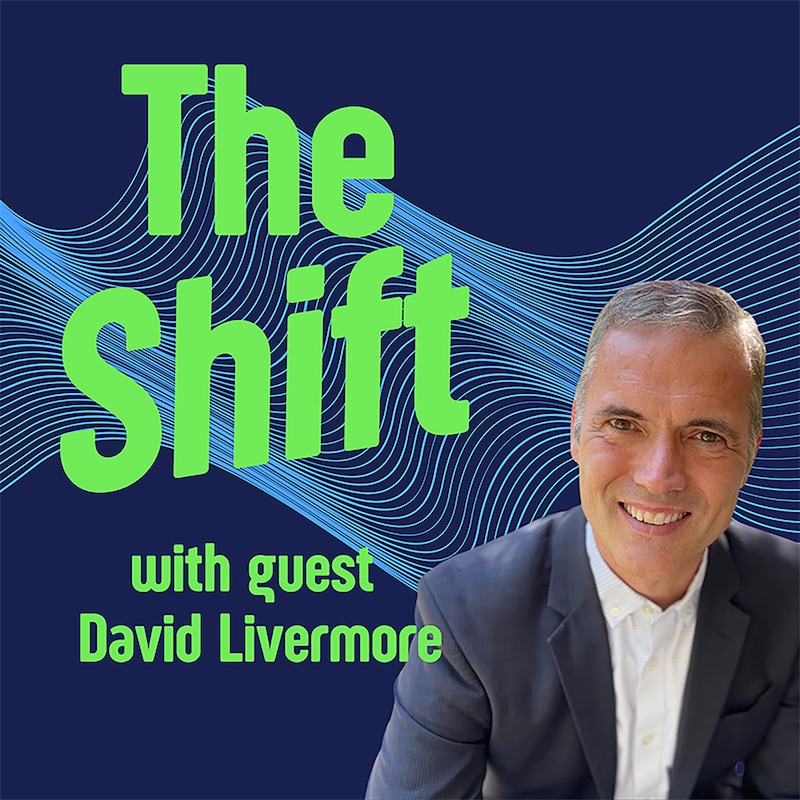
In this episode, Trisha interviews Dr. David Livermore, researcher, author, and one of the world's leading voices on Cultural Intelligence (CQ), in Part 2 of their conversation on the Prism framework for global leadership.
What does it actually take for a leader to see their own archetype clearly — and what gets in the way? This conversation explores how Prism and CQ work together, challenges the assumption that great leadership means doubling down on your strengths, and asks what becomes possible when leaders are willing to try on something unfamiliar — even just 10%.
Learn more about David Livermore's work at davidlivermore.com and globalteamlead.com. Connect with David on LinkedIn
Join Trisha in this journey of growth and discovery throughout the year via Substack or LinkedIn.
Resources mentioned
Global Team Lead Master Certification Virtual certification programme for coaches and trainers to become accredited to use the Prism tool and deliver the Global Team Lead curriculum. Next intake: 15–16 April 2026. Details and registration at globalteamlead.com.
Transcripts
I would like to acknowledge the Dharawal people, the Aboriginal people of Australia, whose country I live and work on. I would like to pay my respects to their elders, past, present, and emerging, and thank them for sharing their cultural knowledge and awareness with us.
Trisha:Hi there everyone. I'm Trisha Carter. I'm an organizational psychologist, a cultural intelligence practitioner, and someone who is genuinely on a quest. Cultural intelligence or CQ is the capability to relate and work effectively across cultures. And what I'm endlessly curious about are those moments when something shifts, when a different cultural perspective suddenly comes into focus.
Trisha:And part of that quest has always been for me, understanding leadership, not just what good leaders know, but how do they actually show up? What do they do instinctively in the moment? And most importantly, from my perspective, what does that look like across cultures? Because I've always felt that the good leader problem was that it didn't move or transfer across cultures.
Trisha:Today I'm returning to a conversation with someone who has been exploring these questions for decades and who has just completed, or isn't still in the middle of, I think, but some of the most ambitious research in this space after the Globe Leadership Study. So he has interviewed more than three and a half thousand leaders.
Trisha:He and his research colleagues have surveyed. Over three and a half thousand leaders, interviewed many of them covering 27 countries and developed a new framework that I think is going to shift the way a lot of us think about leadership styles and cultural intelligence and teamwork.
Trisha:If you haven't listened to the previous episode, go back and listen now. But in the meantime, I'm so glad to welcome back to the shift, Dr. David Livermore.
David:You, Trisha.
Trisha:It's good to be back. And last episode we did some serious work unpacking where the Prism model came from and what the research revealed.
Trisha:I'm not gonna repeat the standard opening questions 'cause I really do want to dive into it, but I'm curious to know in terms of a shift for you, what has Prism revealed about your own leadership? Something maybe that you didn't expect to find when you turned that lens on yourself.
David:Thank you, Trisha. I have to say, and I hope I'm not revealing too much of your podcast interviewing secrets here, but you generously share at least a few of the questions ahead of time that you might want to interact about. And when I read this one, I was like. Huh. I don't know. And it struck me that your own many years of coaching experience really come through in how you are approaching the Shift podcast, because the very question itself made me reflect on a shift that actually had occurred but that I wasn't aware of. So I just wanted to share that for what it's worth. Because what I eventually came to when, so way back to your question if people have forgotten now that I've gone on, like what did it re, what did. Prism and the research review, but my own leadership you've certainly heard me say perhaps some of your listeners have heard me say repeatedly for several years, 90% of leadership models and curriculum are biased toward one particular kind of leadership style.
David:You know, it's, you know, very much a western individualist works autonomously, charismatic upfront, what we described in the last podcast as the trailblazer. And when I reflected on your question, I'm like. I think part of what was uncomfortable for me in the research was. I am part of that 90% that gets reflect I am that per, and I don't know if you remember, but when I first introduced the six archetypes in Prism to CQ fellows, when we were together, I asked the group to reflect on which leadership archetype is hardest for you to deal with.
David:And the vast majority said the trailblazer type. And I didn't say to the whole group at that point. Hello. That's me. And it is part of what I know we'll get into in our conversation this episode, it was a really important point of me to say, that's okay. I need to own that. That is who I am.
David:And yes, it's only one of six effective leadership styles that came up, but it doesn't mean I should go around the world apologizing for that fact. However, as we'll get into, there are definitely times when I need to shift away
David:from that style to have a broader range of what I do. So that was a very long answer
Trisha:I love that answer so much. Thank you, Dave. I think what came to my mind was, would you have achieved all that you have achieved if you hadn't have been a trailblazer? Like would cultural intelligence be where it was? If Dr. David Livermore with the was
David:Uh, it's it's an interesting thought and I would like to hope at least aspirationally. That. I could also say it the other way. If I had refused to apply cultural intelligence and only ever lead as a trailblazer, it's unlikely any of you ever would've joined CQ Fellows because like, who is this
David:American guy who thinks he's not American?
David:So thank you for that. And I think it also points out the limitations.
Trisha:And I'm dying to ask, but I'm not going to now because we'll just keep the focus on you too much. But what is your secondary archetype? Because dear listeners, there is a possibility of learning that you have a secondary archetype, which is perhaps the most easy one for you to switch into. But let's get back to the content.
Trisha:Because I think when we think about Prism, it does give us, as leaders a map of our archetype. And those people that we are working with, that we can help them have a map of their archetype, how they actually show up. So it's not necessarily your philosophy about leadership, but how you show up and.
Trisha:From what we know and understand about metacognition, there can be a significant gap often between how we see ourselves and how we're actually operating. So that's a little bit, maybe the shift that you yourself have revealed. What does it take as we are working with a leader or as you've been working with them to help them to genuinely see their own archetype clearly?
Trisha:And what do you think tends to get in the way of that?
David:I would say this is actually what I see as the primary value of things like surveys, assessments, and profiles. I've, for all the years that we were promoting the cultural intelligence assessment or behavioral preferences, cultural values, or when I use other inventories like strength finds, I've always said.
David:The assessment by itself doesn't change anyone or anything. It's not the point, but it becomes an interesting mirror to provide some self-awareness and specific to this topic and this tool. Once someone understands Prism and I shared, you know, what the acronym stands for in the last episode, power, risk, identity, speed, and Messaging.
David:You can look through our survey and you could pretty quickly guess like, oh, I can see which one of these items is gonna help me score here. It would be a lot harder for you to do that on the leadership archetypes. You'd have to really know all the behind the scenes logic that we've created for, you know, which ones are tiebreakers and which one is weighted more heavily.
David:So all that is to say the tool, especially if combined with the kind of coaching question like you asked me, and I mean that with all sincerity that the tool by itself. Really has to be guided together with, whether it's group coaching or processing with a peer or some kind of training. So I think at the risk of just pushing an assessment, I think the real reason for an assessment and profile is to help with this very piece you've asked about in terms of how do we promote self-awareness,
Trisha:and then helping people to recognize how their own culture has shaped that self-awareness and therefore might have shaped their expectations about what a " good" leader looks like, and to perhaps unpack some of that because we do have those as we ourselves we're confessing.
Trisha:Yeah. And. When we think about how the prism unpacks those individual ways of working, we can see how it maps our team work styles and how people within a team are similar or different to each other.
Trisha:And so again, when a leader or team members see that picture for the first time, you know, themselves and their team laid out together, and you know, there's this mapping process, dear listeners where you can see it, what tends to happen in the room.
David:Two things I would say first is that we've now created language to talk about things that, you know, as people will learn when they listen to the previous episode are. Top points of friction on a team. So I know I have a language to say something about it that might otherwise feel like, how do I talk about the person that's annoying me right now so that it, there's language instead of passive aggressive, like, oh, they have a more indirect messaging style.
David:Or instead of, you know, careless, reckless, oh they definitely have the fast orientation on speed. The other is, and I, I. Feel a bit conflicted on this, but especially on the archetypes. What I've watched in a few of the rooms where I've done this is people will start really using it to label each other.
David:Like, oh, Rob's being such the architect right now. 'cause he is really forcing us to think about strategy. But I like that as long as it can be repositioned of, let's not either give Rob an excuse or put Rob in a box. But let's think about, okay, Rob is really good at helping us. Architect, a strategy, a plan, a logical process.
David:So how do we tap him for a piece that, you know, the coach might not be as intuitively oriented to, or the trailblazer might not. So for me, it's so much about we're creating a way to talk about something that otherwise feels difficult to discuss.
Trisha:Yes. And taking away the, yeah, I mean, you spoke that you started off with the pain points. And pain points cause pain. And so if we take language that doesn't necessarily express the pain or isn't tied into the pain, then it can just be that much easier to work through. The bit that, you know, I'm still thinking about since I went through the accreditation and I guess I'm deeply curious about as well, given that the, both the Prism and CQ frameworks.
Trisha:You've developed them, you've worked deeply with them. When leaders encounter them either together or in some sort of sequence, and feel free to talk about that if you like. What's important about how the two sit alongside each other and where does one illuminate something that the other can't quite reach?
Trisha:Because I'm still thinking about this since I did the accreditation. Yeah.
David:Yeah. And it's a fair thing, especially 'cause people know me so much from the cultural intelligence space. Inevitably the question becomes how is this similar, different to cultural intelligence? For me cultural intelligence will always be the core. Capability I think about for leaders, you know, establishing those four capabilities and really the ability to adjust.
David:In an ideal world, I think CQ and Prism do work together, and I'll speak to that in a moment. I do think both of them can exist. As standalones, but either one without the other is incomplete. So, you know, cultural intelligence and, you know, most of my work is focused almost exclusively on that for the last 15 years is really useful.
David:It can at times feel theoretical to people. The drive, knowledge, strategy, and action doesn't necessarily immediately. Allow a leader and a practitioner to go, oh, okay, I know how I'm gonna use this with my team. Now, prism as a standalone, can be really good at illuminating and creating language for these points of friction.
David:But apart from cultural intelligence, particularly if culture is the source of some of the differences that are there, it's gonna be very difficult to actually make the shifts, to make the adjustments that are needed. So I would say ideally. Prism, operationalizes cultural intelligence. It makes it practical.
David:And, you know, I have a reputation, good or bad, for having been the guy, and I'm certainly not the only one. Many of us in this space do this, but that has said for, you know, 15 years, it depends to any question. And I've sort of recanted a little bit from that. I mean, I still believe it's very situational.
David:Well, and what I mean by that is. That can be quite frustrating to a busy leader who's trying to figure out what to do. Well, it depends on what, so it's just all up for grabs. And so for me, like the archetypes in particular start to create scripts is a little bit stronger language than I want to use.
David:Maybe templates is a better metaphor. A template to say when you're dealing with individuals on your team with this, or a situation like this or with this kind of industry. You might actually be better to use a coaching approach to leadership, whereas when you're dealing with this kind, they may be expecting a more director kind.
David:So I feel like it kind of is the next prism and the archetypes are allowing the next step to how do I actually apply cultural intelligence as a leader? What? What does it look like practically for me beyond just telling me over and over again that I should go through the four capabilities?
Trisha:Yeah. Yeah. No, I really like that, and it's giving, especially for, I think I've spoken to you about really what gave birth to this podcast. It was a group of people who, you know, when I questioned them about their metacognition and their thinking about their thinking, you know, they operated very much on a practical framework.
Trisha:And so they were, please forgive me dear listeners, for stereotyping, I'm not intending to, but they were the engineering types, the programming types, they were, you know, I seem to have over the years attracted a number of clients coming from those sorts of backgrounds. Possibly, you know, my own husband is, fits into that, so, you know, but anyway, often the process of those needed a more practical framework to assist. And so while I would attempt to do that, I often felt like, that I didn't go deep enough. And as you know, that was part of the reason for this podcast to think how can we help people who don't necessarily have that reflection as something that they do easily in the moment. How can we help them to have models and methods? And so I can see that this is exactly speaking to that.
David:And I mean, especially metacognition, thinking about thinking, saying that to the average
David:engineer, like, what? And that's what I love about what you've done with your podcast and continue to do. How do you unpack it? And in this leadership space, I think now we're at least giving them some crutches by saying, well, here's which, how do you do some perspective taking something that comes up with metacognition on what your team's prism dimensions are?
David:And in light of that, which one of these leadership styles is gonna be more useful to you rather than I'm the trailblazer, so I hope you all get used to it.
Trisha:Yeah, no, yeah it's not taking that perspective at all. I'm going to be completely honest about my next question. I'm personally working on using Prism for emerging leaders, so they're not yet in the position of team leadership, and I'm thinking carefully about what to include in that program.
Trisha:And so. What's the one thing that you'd tell a program designer to do or not to do when taking this framework somewhere? Outside of where you've specifically designed for it?
David:Yeah. First of all, and you and I have talked about this, I think you're highlighting that we need to keep iterating and expanding the way it gets developed, because while in the last episode we talked about the global team lead curriculum and operating system, that is just one. Manifestation of this.
David:And while we did look at it primarily as team friction and dynamics, what I would say is knowing a little bit about the leaders that you're working on with this. They've all been part of teams. They are still part of teams, but to your point, they aren't necessarily leading teams. So they'll at least relate to the Prism piece for them.
David:I would say the number one thing I would say to a program designer for a. A population like you're dealing with is focus a lot on the leadership archetypes and what it would look like for them to go beyond their primary and secondary archetype, to find one that maybe feels very uncomfortable, and how could they practice exercising elements of that archetype so that they broaden the repertoire of leadership behaviors they have rather than just.
David:Okay, now I'm self-aware that I have this particular leadership style. So that's a critical difference for people to understand in what we've designed with Prism as compared to something like Strength Finders or the Hogan assessment or the Predictive Index. Those are all based upon innate traits, how we're wired personality.
David:Prism, we look very specifically at things that have been socialized in us. Yes, culture's one of 'em, but it's also neurodiversity. It's also generational difference. It's also organizational culture, and so. If there's no reason to say, well, I have to operate in my area of strength being you being a coach, me being a trailblazer, not saying personality has nothing to do with it, but a lot of what we looked at is how we've been socialized to use that particular leadership style.
David:So why don't I expand my range to be able to lead in a different way when the situation requires it.
Trisha:I love that perspective of the socialization and the explanation that says behind it really. I often talk with people about the families that we grew up in and as we were growing up, what did our parents sort of, say to us about, you know, certain aspects. And because of that, we've been shaped.
Trisha:And so to recognize how that socialization extends into leadership is really powerful. I think I. I'm also wanting, as I think about program design, to come back to cultural intelligence and a little bit to remind the people that I'm working with about the four capabilities and to think about, okay, you have this piece of knowledge.
Trisha:Now what are you gonna have to adapt? When do you have to adapt? And then how will the, your thinking need to be supporting that?
David:Yeah. Sorry Trish. I didn't mean to
Trisha:It's just a bit more explicit than what you were saying, I guess, about the integration between the
David:Yeah, no, that, and that's exactly where I was going to go. I intended to be more concrete about it, and I would say if you're going to use them together this will drive the engineers crazy. But I would say. Which one comes first, depends on what you're after. So Prism could be a really powerful way to start, especially for groups.
David:They're like, I'm not really dealing with cross-cultural. We're not a global team. We're all just domestic. Prism helps highlight these different socialized factors. Then once they see those like, oh, maybe I do need cultural intelligence. So it almost helps make the case for it, but vice versa. Starting with cultural intelligence as the core leadership capability, then sort of what I said previously, prism and especially the archetypes can then be a practical way to say, but how do I actually apply cultural intelligence with a team as a leader?
David:So I, coming back to your previous question, I think ideally they are working in tandem, but which one comes first? Could really depend on that whole program design that you're
David:talking about.
Trisha:Yeah. And I had left a drive out of that conversation. But another aspect that we touched on very briefly in the last. Episode of dear listeners, was around speed, which is one of the dimensions that are quite critical because it's never really been unpacked before, but I think this is one where the CQ drive might need to be reflected on quite often because it could be the one where you lean away from people you know.
Trisha:So, and the confession here. Dear listeners is that Dave and I are at different points on this, so I'm slow. And and for any of you who
Trisha:just went, oh my goodness, this
David:deliberate, reflective.
Trisha:Yeah, reflective because I love reflection. And I wanna see the background and the evidence. But yeah, so this is there.
Trisha:And sometimes there are some people that you want to have in that role, but if you are inclined towards a fast decision making process, you may not be feeling very comfortable about those. So you may not be leaning towards and may not see the benefit.
David:That's such a great insight, and especially if you're stressed or we're under pressure, that's gonna annoy us even more, and the importance of drive is gonna become even more important.
Trisha:Yeah. Oh, there's so much that we can gain from these tools. It's wonderful. So, Dave, if someone finishes listening to this conversation and goes and does one thing differently as a leader tomorrow, just one thing, what would you want that to be?
David:I think it's just being really conscious of the fact that culturally, intelligent leadership, global leadership, inclusive leadership, doesn't mean changing who you are. It's figuring out how to expand the range of behaviors you have to create influence and trust in the groups with which you work. And so I think sometimes we get tripped up in the authenticity space, feeling like, well now you're asking me to lead in a way that's not true to me.
David:Your core convictions and values. Don't need to change. There might be times when we decide to have them change and evolve, but we're not asking someone to keep changing what they value, but the behaviors that manifest those values could be different. So I guess that's a pretty broad one thing. But the one thing I would say is just think about what's the behavior I've been using that maybe isn't accomplishing.
David:The intention, the value of what I want to have done with this particular group, and could I try on a different style or approach to leadership to accomplish that objective.
Trisha:Yeah, I love that very much. And as we are recording. Before the launch of the podcast, and we're a few weeks away from the next opportunity to gain accreditation in this tool. We can't say right now how many places are left in the upcoming accreditation, or if there are any places left, it may be full.
Trisha:But tell us about the accreditation, Dave and where people can find about it and we will put the links in the show notes people. And if it is full, when do you think you might run it again?
David:Thank you, Trisha. It's not yet full at the time of recording. We're close. We have a couple spots left. And yeah, the master certification gives one access to the assessment and the profile. There's two different versions of the profile. One that just walks through Prism for a team member, and then one that includes that plus the leadership archetypes for the leader.
David:They also, those who go through master certification get full access to this curriculum we've been talking about on Global Team Link, but then also. You can actually provide a certification to other individuals, which is a felt need. I've heard from a lot of coaches and individuals that they want to actually be able to certify other leaders.
David:So it's not that you're certifying them to use the assessment, it's for them as a leader themself to get a credential as certified. So yeah, the information on that is all at globalteamlead.com. We are definitely planning to do some additional ones later this year. We haven't set the dates yet, but we'll be.
David:Certainly communicating those. There's been some requests about doing some in-person ones and we've not yet made a decision on that, but certainly looking to that as a possibility as well.
Trisha:I love that. Yeah, that would be pretty cool. And finally, Dave, as you look at your life and the people you've worked with, your research and where you see the world needing to go, what are you hoping for?
David:Something I've been talking about a lot recently in my own life and the people that I coach and train and speak to is what's it look like for us to just make a 10% adjustment, particularly in the space of cultural intelligence and more effective leadership. And I say that because it makes it a little bit more manageable, like we're not.
David:Asking you to entirely change the way you write your emails, but if you have a really blunt, abrupt, shortness to how you write your email, could you just add one more line that warms it up a little bit? You know, if you tend to be someone who has a propensity like I do towards speed, and you're working with a colleague like Trisha, that you respect that pre, that prefers a bit slower pace.
David:Like, how do I. Calibrate a little bit and what might feel like excruciatingly slow to me is like, let me give a little room for it. So I guess it's just to sort of say, what would it look like for each of us to move toward the person who's different to us with even 10%? And how far might that take us?
David:And not only more effectively collaborating, but actually creating a different kind of society than what a lot of us are feeling like we, we live in right now.
Trisha:Yeah, that's a lovely picture and almost sounds like an achievable hope. Something we can get to. Yeah. Huh. So, yeah. Well, thank you dear listeners, for being with us again, and I hope that this episode has given you both, some deep thinking helped you to reflect a little bit on your own leadership and the teams that you are a part of, and also to be able to think about how you might be able to help others in dealing with some of these issues as well.
Trisha:I hope that you are following along and I look forward to being with you for the next episode coming up on this shift.
