Shownotes
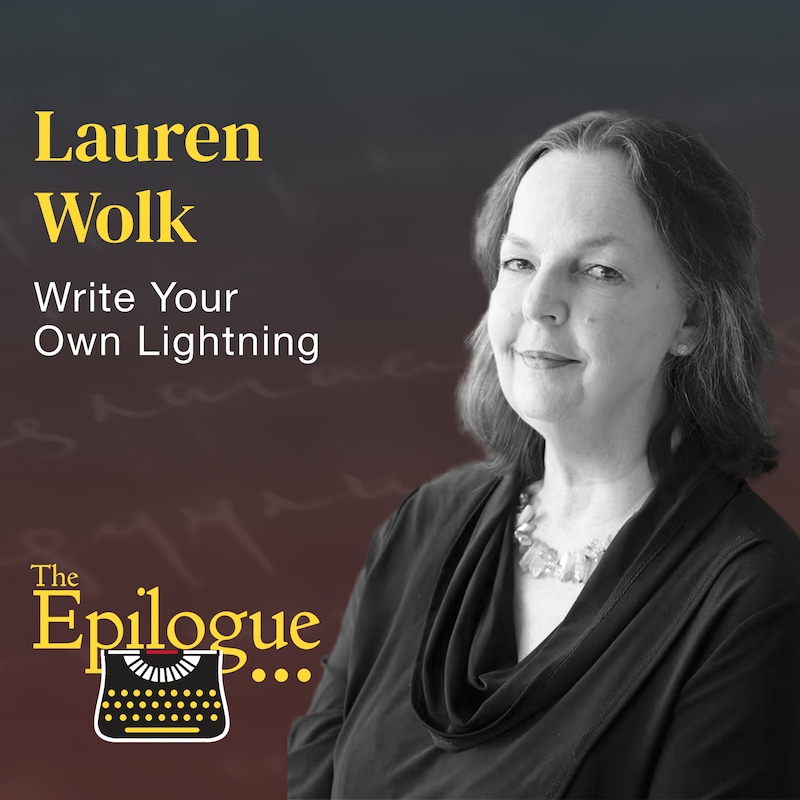
Today we get to share a conversation with the delightful Lauren Wolk, Newbery Honor and Caldecott winning author who crafts stories for middle-grade readers. We discuss her story development process, finding connection to place, her lyrical use of language.
The stories we cherished in our childhood seem to have a magical spark to them. How can we capture that spark in our writing today? And do you really need to write differently for kids than adults? Spoiler alert: it’s all about being true to oneself and letting the characters speak their truth, no matter how complex or dark the themes may get!
Chapters:
- 00:00 - Introduction
- 09:05 - Writing for Younger Readers or Older
- 23:18 - Exploring Themes with Story
- 29:11 - Letting Characters Develop
- 45:10 - Candle Island
- 48:18 - Supporting Young Readers
Lauren's Information:
Lauren Wolk is best known for her novels, including the New York Times bestselling novel Wolf Hollow, which won a 2017 Newbery Honor, the 2016 New England Book Award, a 2017 Jane Addams Honor, the 2018 Massachusetts Book Award, and other honors.
Wolk's latest novel, Candle Island, published in 2025, was a finalist for the New England Book Award.
Collectively, her books have won over 50 state book awards. Lauren is also the Massachusetts Reading Association’s 2024 Children’s Literature Award winner and the author of two new picture books, currently in production.
She is also as a visual artist represented by the Larkin Gallery (Provincetown and Harwich Port, Massachusetts), an award-winning poet, and a filmmaker.
Lauren's Books:
- Beyond the Bright Sea or audiobook
- Wolf Hollow or audiobook
- My Own Lightning or audiobook
- Echo Mountain or audiobook
- Candle Island or audiobook
Links:
Lauren's headshot photo credit: Robert Nash
Visit theepilogue.net to view our interviews, sign up for our newsletter, and watch for upcoming member bonuses such as extended interviews and full video.
Transcripts
You remember that book when you were younger?
That special story that reached inside your heart, still a part of you somewhere, turning the pages on your favorite adventure in that sofa fort in the living room? That spooky story you read under the blankets with a flashlight. Was there something special about the stories you read as a child?
The stories you read and write as an adult have the same magic. Is there a way for you to capture that lightning in your own writing?
Okay, here we go. Welcome to the epilogue where everything makes sense in retrospect, hopefully.
Today I am here with Lauren Wolk, the Scott o' Dell Award and Newbery Honor winning author, Wolf Hollow and Beyond the Bright Sea, as well as several other wonderful lyrical stories for middle grade readers like Echo Mountain and My Own Lightning. Many other awards including the New England Book Award, Jane Addams Honor and Carnegie Award. There's a list on her website, in fact.
Let's see, she's got a new one just came out as well. Candle Island, I think just dropped like a month ago. April, something like that.
She's the go to historical fiction writer for younger readers I think right now. So, Lauren, thank you so much for taking the time to talk with us about Story today.
Lauren:Oh, my pleasure, Michael. I don't know a better way to spend my time.
Michael:You have a lot of stuff to talk about for middle grade and that's really why I wanted to be here. But I just saw also on your website this Incline project. I was wondering if you wanted to. My voice just cracked.
I was wondering if you wanted to talk about that.
Lauren:Sure, absolutely. Because it is connected with everything else I do, including writing novels.
,:She sent me an email with a maybe one minute animation she'd created spontaneously, extemporaneously, no editing or anything else, and said, do you have a poem that might go with this? And I didn't. So I wrote one and I found some music and we put it all together and it sparked this incredible project we've been working on.
We now have, I think 30 of them done. And we were in the Provincetown Film Festival in June with a compilation of them.
And the reason it's so important to me and it fits in with our conversation today, is because writing these sort of quasi poems without any real editing or revision of any kind, because that was the whole point, to be spontaneous, has led me into a whole new way of writing novels.
I'm working on one right now where I am just trying very hard, even harder than I ever have, to block out the world and just focus on the words as they come in the most raw and unfiltered way possible. And it's freaking me out a little, frankly. But it's cool. We'll see what happens.
Michael:That's very nice. Is this also going to be for younger readers or is this. Yes, we don't know yet. Kind of. Okay.
Lauren:This is definitely a middle grade novel and I guess I should call it a novel. It is a novel, but it's got 15 points of view and it's got. I don't know what it's doing, but I'm having fun.
Michael:Okay, everybody, get ready for the Ulysses. Of middle grade novels.
You often write for younger readers, but you're not writing down to them. Your stories are complex, usually historical, strong characters, some honestly challenging topics and themes. Well, first of all, let's.
I'm going to back up. Let's familiarize some people with your work and give a summary of a couple of these.
I'm going to be talking about Wolf Hollow, obviously, and beyond the Bright Sea. Both of these take place between World Wars.
Wolf Hollow, it's a little closer to the cusp of World War II and Brion, the Bright Sea right after World War I. They affect it in different ways. Wolf Hollow, which we're definitely going to talk about, is about, well, do you want to take it or do you want me?
Yeah.
Lauren:No. And in fact, you were talking about my writing for middle grade and having some complex storylines and heavy subjects.
I wrote that book for adults, or at least I thought I did, or I shouldn't say that I wrote it not thinking about audience, certainly not thinking it would be for young people specifically. But when I finished, and of course it has a young protagonist. It's a coming of age story.
It was inspired by my mother's childhood on the farm where she grew up and where I spent a lot of my childhood and my whole life. It was a tribute to her, that family, that time, that place. And I just wanted to write the story.
When my agent thought, my agent at the time said, he said, oh, this is middle grade. Then I said, you're up your mind. You're out of your mind. It's very. They're scary. It's scary. It's dark, it's sad.
Not that I think those are inappropriate for kids and we can talk more about that because I think it's very important that they read such things.
But at the time, I Just wasn't seeing how this book was for that audience until he said, well, don't you remember when you were that age and you read a book that got into your bones forever and changed who you are and how you look at the world? Don't you want the chance to maybe be that to young people? And I said, well, of course there's nothing I would want more.
in more ways than one. I am a:And so I'm just letting out my inner child and all the experiences of my life that have shaped me combined with all the things I've imagined.
Wolf Hollow, as much as it's a tribute to my mother and her childhood is very much a reflection of things that were also important to me, like the natural world, like family, like standing up to injustice, like dealing with bullies, like dealing with loss and grief and uncertainty. All the things that really flavored my childhood, flavor the childhood of this character of mine, Annabel.
It is during World War II and so her life in this wonderful bucolic setting in Pennsylvania is really a microcosm of what's happening in the broader world because this evil bully comes out of nowhere to change things forever far, far for the worse. And it's interesting how the various characters respond to this blonde haired, blue eyed monster who comes into their midst.
So that was my not knowing it, but this was my introduction to the world of literature for young people. And then I finished beyond the Bright Sea before Wolf Hollow was even out. And so I was not influenced really by audience or expectations.
I had a wonderful time writing that. It takes place in the 30s on the Elizabeth Islands off the coast of Cape Cod where I live.
And it's about the difference between how people on Pennekins island and people on Tennyham island lived.
And I don't want to give you any spoilers, so I will just say that the history of one island compared to the other and the legacy of those histories, the effect of those histories on the current residents of the islands is profound, especially on my protagonist, Crow. Young girl named Crow.
Michael:We try to warn before we give spoilers, or at least that's the idea of, um, sometimes when we're talking about specifics that it will come up. But feel free to tune out everybody whenever. Whenever I tell you.
Yeah, so that's, that's very interesting that you had started this, started out without age involved in it.
And I think there's, there's, that's really true in a lot of ways of story in general that we give to these younger readers that, or that they are able to accept from us that the story is the story. And you know, we might take different things from it because of our age.
Lauren:Of course, as, because of our age, our experience, our background, our imagination, all of it.
Michael:So I know originally you wrote it without being targeted at middle grade, but even with the follow up stories or with editing this, what kind of considerations did you feel that you had to make, if any, for the younger readers with this story?
Lauren:Almost none.
I am blessed with an incredible editor, Julie Strauss Gable at Dutton, at Penguin Random House, who agreed with me that very little needed to change in that context, very little. And I was grateful for that because I think sophisticated language, challenging language for kids, I think we should not spoon feed them so much.
I learned my vocabulary by reading Jane Austen and other books that challenged me. And so I don't think we should dumb things down for them.
And as far as subject matter goes and character goes, story goes, I think that if we give young people examples of other young people, fictional, yes, but still, hopefully who ring true, who face challenges with courage and intelligence and integrity and imagination, then we are doing them a great service. Because kids today are facing enormous challenges.
And if they don't have role models in the people, hopefully around them and also the characters around them, then I don't see how they stand up to what they need to face.
I think it's incumbent upon anyone making art of any kind to tell the truth, their own truth, of course, which is somewhat subjective, but if we don't do that, then what's the point? And so I tell the truth as I see it.
And I think kids are perfectly capable of seeing that truth and deciding what they take from it, what they add to it, whether it becomes their own story or not is up to them. So I don't think we pull punches. But. So your question, did we have to change? Do we have to edit, revise because of a younger audience? No.
No, we did not.
Michael:That is a lovely answer. The kids will rise to meet us. That's I guess the lesson here.
Lauren:If we let them.
Michael:Yeah, if we let them. Right, tell them the story and let them live it just like any other reader.
Lauren:So I do want to say though that I don't think there's anything wrong with funny, light hearted, hilarious, fantasy, sci fi, romantasy. I love all that. I think a wide and varied diet of literary things is wonderful, but I do think there's a place at the table for the series.
Michael:Well, yeah, I. I think that it's actually something I was going to touch on. Was the literary genre so called or. I don't, I don't think that it's fair.
A lot of times the way that people take, we'll say a more plot focused story and put it in a different level or, or place than say a more introspective or setting focused story. That said, let's talk about the literaryness and how to.
How does the lyrical language, the flowing passages, I mean, that's a balancing act with any story, regardless younger readers or whatever you put on the shelf. How do you add the lyrical descriptions, the setting, that deep flowing language, the wordiness of the books that's kind of the anti. Hemingway.
Well, at least as far as Hemingway described Hemingway. Without being too heavy.
Lauren:Well, that's a great question. And actually I don't add those things. I start with those things. I start with setting always. I never know what the story will be.
I don't even know who the characters are.
I always start studying the place I know really, really well on a sensory level and an emotional level, like the farm in Pennsylvania or the mountains of Maine or the islands off kitkat. And then I add a character who just appears in my imagination.
And I get to know her in the same way I get to know any human which is a little thin at a time through her actions and her words and the relationship we develop together. And I can only write her story if she tells it to me, but also if I can, and I insist upon this, use the language I want to use.
I have to be immersed in the story as a writer if I expect people to be immersed in it as readers. And so I immerse myself by loving the process, loving the language, loving putting the right words in the right order.
So although I may go back in a second or third draft and add or subtract things, and as I often do, it is the craft that fuels the engine right from the first word. It's the craft. I never do an outline.
I never just whip off a first draft that's story focused or plot focused, I never ever do that because it's no fun for me. It's no fun at all. The writing, writing well, as well as I can is what drives me.
And I get to discover this story as it unfolds, and I get to know the characters as they let me, and I get to be the reader and writer at the same time. And I get to experience all the emotions along the way. I get to be surprised, I get to be sad, I get to be happy, I get to laugh if it's funny.
I get to be confused and scared. It's a roller coaster. It's not easy to write that way. No writing is easy, but it's the way I write and I have to.
So for kids, if I'm indulging in quite a lot of lyrical language at times I'm also, and this is not deliberate, it just seems to be instinctive. I use a lot of dialogue, so there's a balance between the heavy and the light, the slow and the fast.
It just seems that whenever I have indulged my lyrical sensibilities or whatever you want to call my attention to the words, then the whole thing tips and I go sliding into a dialogue driven, much faster paced piece of storytelling for a while.
Michael:I have heard said quite a few places that if you don't enjoy the story that you're writing, why would anybody else enjoy reading it?
And there's people who get wrapped up in wanting to have written rather than writing like they want to have the book with their name on it rather than wanting to write the book.
And that experience immersing, I've found myself too, whenever I. I've felt pressured or whatever for, for the, the story to come out, that just enjoying the process of writing just helps. It kind of feel like it comes out better.
Lauren:So of course, and I always tell young writers, fellow writers, that I'll ask which what's your best advice for someone who's, who's just starting out? And I say, well, just write, I mean, and read. Read everything you get your hands on, even the bad stuff, will teach you stuff, what not to do.
But if you're too worried about being an author, publishing book, who's going to play the lead in the movie version, how much money you're going to make, how incredibly wonderful your life will be once you're a published author. If you focus on all that, you will be so distracted you won't be able to write the book that may perhaps earn you those things.
And so it's kind of a vicious cycle.
And for some reason, people really do romanticize the life of the author, the published author, perhaps because everybody wants an audience, everyone wants their story to be heard. And that is a wonderful thing. But no one's going to hear your story or read your story if you're so consumed with how they feel about it.
You need to know how you feel about it.
Michael:Well, speaking of the lyricism. Your stories are about place. As much as the plot or the characters. You seem to have just alluded to that yourself.
And they're actually part of the Dory's theme as well, Very strongly. So you're writing this historical fiction most of the time. They're not what we would usually consider. Always the big, central historical moments.
On grandiose historical scale. And these shelf busters, the moments in your stories. Have kind of a timeless quality to them. They're often quiet places.
I think history kind of flexes itself around them. How do you choose these places?
Lauren:They are always places that I know so well. That they've been characters in my own life, Settings of my own life. And they've played an enormous role in my emotional development.
Michael:I.
Lauren:The other night, I was lying in bed. Thinking about my grandmother. Who was the matriarch on the family farm in Pennsylvania. I was thinking about her and about that farmhouse.
She's long gone. So is my grandfather. I'll probably never go in that house again. Although it's still in the family. But as I was lying there.
The smell of Clorox and potatoes. Wafting up from the stone cellar. Where she did the wash. And where we stored the root vegetables. Was so powerful in my memory that I started to weep.
Clorox and potatoes. The setting is all about the sensory information that we have taken in. Over and over and over again. In the course of spending time in such places.
And the emotional impact those places have had on us and continue to have on us. Like making us weep in the middle of the night, out of the blue. If I know a place that well And I can recreate it on the page.
Then hopefully my readers. Whether they've ever been in a stone cellar before or not. Let alone a farm in Pennsylvania. Will go there with me.
And feel and sense that place in a way that my characters aren't doing so. And like I said before, I want to be in that story. I want to be in those places again.
I desperately want to revisit all the places that have meant so much to me. I don't necessarily have to spend years there. I could probably write a book right now. Set in Scotland. Where I've only been twice.
Because when I was there, I was all in. I mean, completely all in. My roots are in Scotland and other places. But I almost felt as if I had lived there before for centuries.
It was that strong a reaction. So it's not necessarily the amount of time.
Michael:It's the connection that's probably what I'm feeling reading these as the timeless quality. It's. You're writing these from yourself. Like this is a. It is a little bit unmoored in time and memory and stuff. So technique guys, right from your.
Don't pick the place that you know, you think is going to get you on the next vampire bestseller list. You know, the.
Lauren:You.
Michael:You do have strong themes. They're. They're strongly felt. They're not necessarily strongly applied. I'll say. Like they're. I can feel that there's not always like a.
Necessarily a direct message. A lot of times there's questions that are left open and it's about thinking about the thing rather than the message of the thing.
And that's something that I think we typically feel for younger readers. There needs to be an answer, right? With theme or plot, whatever.
That's probably part of what has what we might consider a literary feel about you're writing is this. The thematic elements kind of woven through. Like these things are related in some ways, sometimes ineffably.
That is, you know, the, the blonde haired, blue eyed bully that's, that's storming through the schoolyard or the, the mysterious man who lands on an island and has some history that we won't always be told and is very concerned with what is now. Right. So is it.
I. I was going to ask this question from a standpoint of younger readers, but I think we've, we've kind of discussed the fact that the younger readers are usually, you know, more mature than we give them credit for.
But is there something about this that we need to be cognizant or thinking about the theme when we're writing to make sure that it's at least that we know what it is, maybe more so for younger readers even if we don't know the answer.
Lauren:Well, I have like 20 different answers to that question. 1. I'm not fond of bully pulpits or preaching.
Michael:Right.
Lauren:And if I were, I'd probably have to be a planner, a mapper instead of a pantser, which is what I am writing by the seat of my pants without a map. These. If there are themes in my stories, it's because they arise spontaneously as the story unfolds. Character driven.
And as my character is facing a challenge and dealing with it in a particular way, the themes emerge. The blonde haired, blue eyed monster. I didn't know why she was so evil.
I started writing about a bully because I was bullied as a kid and so was my mother. And I thought well, this girl who's revealing herself as a bully to my protagonist, Annabelle, is a reflection of that.
But she was so much worse than the bullies in my life or in my mother. She was so downright evil and I couldn't understand why. But the more I wrote, the worse she got.
And that's when I noticed that I had given her blonde hair and blue eyed. That's when I noticed that she was behaving the way Hitler was behaving across the ocean.
That's what I noticed that she was doing to this farm community what the Nazis were doing to Europe. It was not a deliberate, oh, I'm going to create this thing. Although on some level, level, subliminally, I may have known what I was doing.
But once you recognize this theme emerging, once I recognize a theme emerging, if I'm happy enough with that and it suits the story and the characters, then I will develop it.
And in a second draft I will go back and make sure that from the first word up to the epiphany I had about theme, that I've done a good enough job of leading the way in. But I never sit down and say I'm going to write a book about injustice or I'm going to write a book about bullying.
Or somebody said, so you've written a book about ptsd. I said, what? I have not. And yet my character Toby in Wolf Hollow is clearly suffering from that and terribly. Before we had applied a name to.
Michael:That, we used to shell shock or. Yeah, right.
Lauren:So these are things that rise like bubbles in a pond as I'm swimming. And it's, it's always fascinating to see what comes.
But for kids, I'm not sure you have to have lessons or themes or cautionary tales and especially in more light hearted stories. And yet they do emerge.
Try and think of a book for kids that does not have a lesson in it of some kind, even if it's just have fun, don't spend your whole life worrying about the future and you know, go read Captain Underpants, which I haven't read myself, but I know my kids got an enormous amount of enjoyment out of reading books like that. So I think though, that the best ones are not preaching, they are simply following the lives of kids who are learning the world as they go.
Michael:Well, you mentioned like writing the path in, and I see that you're writing the path in, but you're not necessarily writing the path out.
Lauren:And I think you should leave kids with questions. I don't think you should tie off everything nice and tidy. Sorry, I hate the word should and I shouldn't tell anyone else how to write.
But for me, leaving things a little open to interpretation is good because that's the way life is.
Michael:Yeah, well, you. You don't explain everything plot wise either. You leave some room for the kids, for your readers to figure things out.
It's there in the story for them if they want to think about it. There are questions posed for the main characters and plot elements.
And speaking of, maybe a bit of a spoiler in I'll try to be careful with Bright Sea. There's the story identity of someone that the main character is looking for. Know it's not explicitly answered.
There's hints and there could be considered strong hints, but it's not. It's also possible that those hints are not leading the place that you might think as a reader, the characters never reach that conclusion.
So there is a tendency, I think, for a lot of writers, especially newer writers, to think that they have to wrap everything up to answer everything. It's all just either happily ever after or everybody died.
Your stories, I think, are some of the better examples that I might point a writer towards to look at something where things are not always answered, but the story can still feel complete or at least content with itself.
Lauren:Yeah, I like that, the way you've put that. People say, how do you know when a story's done? How do you know when you're finished, when a book's over?
And that's a really hard one to answer because I don't until it ends. It's just. It's a feeling like the end of a piece of music. You can feel that the end is coming.
And so maybe that therefore leads you to write as if it is truly ending. But that doesn't mean that everything gets wrapped up and tied off in vogue.
Sometimes I've had to answer to thousands of kids who want to know desperately what happens after the end of beyond the Great Sea or Echo Mountain, those two especially. And they have all these plans for a sequel. They have mapped it out exactly what's going to happen next.
And now I should write the sequel, which I'm not sure I'll ever do. But I always say to them, well, you're clearly a storyteller. I think you should go write the story you want to tell. And maybe someday I'll.
I'll pick up the threads and continue weaving them, but I might not. And so you'll just have to decide in your imagination what happens after the end.
Michael:I imagine you get a Lot of questions from the younger readers here. And I think some of this is a reflection. This is me kind of supposing an answer here, I guess.
But some of this is a reflection of that interiority, like that You're. It's not the plot events that happen that are the purpose of the story.
It's where the character arrives at emotionally or in their own personal journey that is the end point of the story, whether the plot thingies have happened in. The order that we suppose they should.
Lauren:That's right. So.
Michael:So speaking of which, though, is probably a little bit more practical. You tend to write standalone stories. You do have my own lightning. This is a sequel to Wolf Hollow.
But as a standalone story, you're not taking the planned trilogy quintilogy path. That's popular among kind of starting out. What makes that decision for you as a writer?
Lauren:It was interesting when I decided to write a sequel to Wolf Hollow, it was during the pandemic. And I think I just desperately wanted to return to a safe place where I wanted to spend time, which was the family farm.
Even though Wolf Hollow was a sad book, I really wanted to go back there and find out how Annabelle, my main character, was coping with the sorrow of her life at Wolf Holo. How did it change her? What was she doing? How was she changed? How was she different? How was her life different? And I also.
Because we were all experiencing this bombardment of external forces, all of them negative and scary and debilitating during the pandemic, I wondered how she would react to yet another kind of bombshell in her life now that she has had some experience with the tragedy of her past. And so I went back to that place and that character and struck her with lightning in the first few pages.
Because I've always been fascinated with what happens if somebody survives a lightning strike without being terribly injured. Sometimes they are changed forever in very interesting ways.
So although I write without a map and I don't really want to know what the story is, I did have that sort of idea because I was already starting with a character I knew really well. And so it was kind of natural, therefore, to look a little more closely at the beginnings of plot.
I had the setting of the character, and so I just went straight into a summer storm, not knowing where it would lead me or her.
Michael:It's starting with an event, I guess. But again, you're. You're not. You're not immersing yourself with plot. You're kind of exploring what happened back in this place with this event.
I'm thinking of Paul Schrader talking about, like, problem, metaphor, plot, like. Like the things. You have a problem that you're reaching for a metaphor.
Maybe not consciously, but you literally have a lightning strike jumping in here and that leads to whatever story, if not plot.
Lauren:Yeah. And for me, it's more a question of what if? What if this girl is hit by lightning? What if she wakes up? What if?
And so I don't know the answers, but I can always ask the questions. I'll give you an example of how these things aren't linear. The book I have coming out next, which my editor is reading right now.
So it's very early days yet. It'll be 20, 27. I was lying in bed one night. I often I'm in the shower, lying in bed, doing the dishes when I come up with ideas and.
And as most people do, And I just kept picturing this apple orchard. Just. It would not leave my mind. And I've spent a lot of time in apple orchards, but I didn't know where in the world it was.
It was just an apple orchard.
And suddenly, after a few nights of thinking about this apple orchard and how it looked and how it smelled and the sound of the birds and all the rest, a girl appears. She's standing among the trees and there's a dog with her.
And she's looking into the woods on the far side of a stone wall at the edge of the orchard. And she sees something. She sees a flicker of movement in the bushes. That was it. I just stepped into the scene with her and started writing.
And I won't tell you what that flicker was or how it changes her life, because I didn't know at the time, and I know now, but I'm keeping that a secret. But it's all that was, the door opening. You know, it may have just opened a crack, but I knew where, I knew who, and I knew a little bit of what.
Just that flicker. And that's all I need to begin. Books don't always take. Maybe I write 20 pages and the flame goes out. That happens.
But if I get too far ahead of myself and have too much of a plan, I am bored. And so the flame never gets going in the first place.
So I just, you know, If I've written 20 pages and it turns out to be a non starter, it was better than vacuuming. And, you know, it's a better use of life than almost anything else I can think of. And it teaches me something.
Every time I fail, or I shouldn't say fail, every time I Let something go. I also take something with me that.
Michael:I think is wonderful advice for newer writers especially. But in general, there is a strong tendency to not want to let go. You have this thing. It's precious. You worked on it being okay with walking away.
If it's not going to work, maybe it'll work later.
Lauren:Well, I hate to interrupt, but you set that up perfectly. The book I'm working on right now was something I started two years ago and abandoned.
And I was just going through my old files because I never actually throw anything away, and I found this weird file. I thought, what is this? And it turned out to be the first, like 10 pages of this book. And I read them and immediately started writing the next lines.
And I thought, okay, well, maybe I'll just write another 10 pages and abandon ship again. What else am I going to do right now except mow the lawn? So I. And kept going. And I'm up to page 55 or so, and I don't know if I'll finish.
But it's like, you get to know some people and you think you're going to be friends, and then after a while you realize you don't have much in common and you probably just see them once in a while in passing, and you'll forget their name over time. And that's the way it is sometimes, too, with stories. You see something in them that doesn't quite materialize.
Michael:See, that's a lovely writerly metaphor right there. Okay, so you have this technique that I have observed, this something that a lot of writers don't.
Might have problems with, either because they're trying to do it wrong or because they're trying. Trying so hard not to do it. And that is, you're zooming in and out, and maybe that's how you're exploring the story, but it's something that.
You are using this zooming in and out, this controlled zooming in and out with a narrative voice. You'll be in the scene with the narrator, with the plot, with the things that are happening.
And then you pull back to a broader view of time still in the narrator's voice. And kind of. You use this for foreshadowing sometimes and kind of dropping a flash forward version of a cliffhanger in a way.
You use this in challenging moments to give kind of a comforting feel sometimes, or gives your narrator an additional dimension, something of a future history. It's a lot that it does. And maybe you. And I don't know how conscious you are of doing this, but you do it an awful lot.
I was wondering if you might like to talk about it.
Lauren:I don't do it consciously. I do very few things consciously, which it sounds a little to cop out or I don't. I. I'm pretty much.
When it comes to writing an autodidact, I taught myself by reading a lot, a lot and writing a lot. And the things that felt natural and good to me, I did more of. The more I did, the better I got at them.
And the things I didn't like to do, I didn't do.
And so I've never developed some skills that maybe I ought to have and would have had I gone to graduate school or in other ways, followed a path other than having kids and working in many, many different jobs for a living while I was writing on the side. So the point, I suppose, is that the things we.
Who was it, Aristotle, who said, the things we need to learn to do before we can do them, we learn to do by doing them? Which is a very circular way of looking at things, but so true that doing the thing teaches us how to do the thing.
And that's very true for me with writing. Just trial and error, trial and error and discovery. It's a total act of discovery. When I sat down to write, it came out in the first person.
I had never written in the first person before it just the first line. The year I turned 12, I learned how to lie. I was in the shower. This line pops into my head. I wrote it down and the voice was so strong.
I just kept that point of view. I have been writing in the first person ever since. It's just the way I write now, after decades of writing in the third person.
I, of course, when I was starting out and in college, I'd write. I'd try different experiments. I'd write in from different perspectives, but not seriously.
When I was on my own writing after I left school, it was always third person. So I encourage people to try new things and see whether they take and if they don't, they don't. But first person for me was everything. So it's not.
Very little of it is deliberate. These are just happy accidents.
Michael:We love that. Thank you, Bob Ross, for bringing that in to us.
Lauren:Okay.
Michael:I would encourage people who have been having troubles, especially with a first person narrator. Looking at this kind of a saying, how do you. A lot of times people.
Writers feel like they have to be in a moment and just ride that moment through to the end of the book. Like you have to be always right there, very fixed in time, very fixed in the events. The whole show Don't Tell kind of pushes people into this.
Yours is a great example of this with a first person narrator and using this in a way of a retrospective narrative and being able to zoom in and out on time. I think Little Fires Everywhere by Celeste Ng is a great example of doing that with multiple characters zooming in and out of different heads.
And it's hard to do. People get scared of it. You're doing it, you know, intuitively, but it really works well. And probably the parts that don't work get cut out anyway.
Lauren:And of course, you know, as the book develops, plot becomes more and more important because your storyline is unraveling in front of you and you're following the thread and so your characters are also focused on what's happening in their lives and everything becomes more integrated. The ways character, plot. And I get really excited because I want to find out what's going to happen.
But I am always attending to the voice of my protagonist. I'm always in her shoes, in her skin, looking at the world through her eyes.
And if I try to make her do something that doesn't suit her, I can feel it in my gut. And she rebels too. So the plot never takes over. I hope it doesn't. At least that's.
It's my intention to stay true to my protagonist and who she is even as she's changing. The way she changes has to be appropriate to who she is.
Michael:I think that's something that maybe everybody writing who's having trouble with writing the way that you think you're supposed to write, maybe take a look at that and start in a different place. Start with something different.
Lauren:Yeah. Supposed to, should.
Michael:Yeah.
Lauren:I don't mean this to be a criticism of parents, teachers, people who help through workshopping or anything else. Everybody has advice to give and a lot of it is good advice.
But writers who have not yet found the confidence to listen to themselves first and foremost, I think it's a little dangerous to be telling them what they should or shouldn't do.
Michael:I think we've seen an awful lot about what you value with your writing and how you. What parts of the process you really like. What do you love about your work? What's precious? Where are the darlings?
Lauren:My metaphors. I love imagery. I love figurative language. It's so much fun to write and I love reading it in other people's work. The characters.
I mean, I love my protagonists, those girls, my book daughters are so important to me. I love spending time with them. And I actually am very sad.
When I finish a book, I go through a mourning period where I don't get to spend time with them every day.
And when the book goes out into the world, it's really like putting that kid on the school bus on the first day of school, sending them out into the great unknown. And that's hard to do, too. I get very attached to them. So I love the writing process. I love trying to find the right words.
I love discovering the story as it unfolds. I love getting to know my characters, and I love writing endings. I am a poet, too.
And so whenever I get a chance to write a passage that blends the sensory with the emotional and brings the character to some kind of new awareness or new place in her growth, I am overjoyed.
Michael:So Candle island just came out. Would you like to give everybody a quick introduction for that?
Lauren:Sure, sure. I happen to have the Australian paperback right here, which came out. Oh, lovely. Much faster than usually foreign folks do.
But again, place is everything.
It's set on a little island off the coast of Maine, which is a fictional island, but it was inspired by a number of islands I visited through the Island Readers and Writers, which is a foundation that supplies these tiny island schools and these remote inland schools in Maine with books and author visits and illustrator visits. These are schools no one would visit otherwise. They're tiny. But I love, love, love going to visit them.
And so having spent time on these islands with these kids and realizing that these places are a little bit like Cape Cod in that in the winter, at least, it used to be the case when I was a kid, everyone goes home, the locals remain, and it's a ghost town, and everything's quiet and peaceful and clean and calm. That's really not true anymore, but it was. And that's what happens on these islands.
They are inundated in the summer with summer visitors, but then in the winter, the lobstering and the fishing and the business of everyday life goes on in the summer, there is this often conflict between the summer people, the tourists and the residents. Two different ways of life, two different sets of expectations, two different ways of behaving clashing.
When I started writing this book, and I only knew it was going to take place on an island and that my protagonist, Lucretia, was going to be a new arrival.
She and her mother are coming to this island to escape from something in their past, and also because they have a big secret they're taking with them. They get there and they are neither with the islanders, even Though they now live there, nor are they with the visitors. They are stuck in the middle.
Lucretia especially. And so she's got this secret. She's got this. This thing that she and her mother are running from that is emotionally daunting.
And she's trying to find her. Her place. And she meets island kids and she meets summer kids.
And what she does with these two different populations and how she finds her way on this island is at the heart of the story. It's also about animals. There are quite a few animals in it. And you can tell a lot about people by how they treat animals.
And that's very, very true in this book. It's also about art. There is a lot of creativity in this book. And so it's got a lot of me in it.
It's got a lot of who I am and what I love and problems that I would fix if I could.
Michael:I love hearing the story behind the story with this as well is I think that. So this. What was it? The island writers and writers. Island readers and writers.
Lauren:Wonderful organization.
Michael:Okay, well, I'll try and drop a link in the show notes for that as well, because it sounds like a lovely idea for it is.
Lauren:And the kids, some of these kids have never owned a book before. Their families have never owned a book before. There might be two kids in sixth grade in a class.
There might be just a dozen kids in kindergarten through seventh grade. And so reading and feeling about books the way I do it is kind of new to them. Not reading, but. But having books in their lives.
So island readers and writers does everything possible to encourage them, encourage these kids to be readers and writers. It's a great cause.
Michael:That is great. There are islands even in the landlocked areas. If you.
Even if regardless of this organization or just the school down the street or the kids who don't have the school, that's a worthy cause. Encourage the reading, the writing. Join up, volunteer, donate some books.
Lauren:Absolutely.
Michael:So for listeners who are really interested in your work would like to find out more or explore some of these other things, like the film work with the Inkline project. Where should people look for you?
Lauren:My website has information. I've got an Instagram account. I'm on Facebook.
I am no longer on Twitter or whatever they're calling it these days for reasons that's not apparent to anyone. But yeah, I have a contact form on my website. Anyone who wants to write to me can do it. That way they can get in touch with my publisher.
I do school visits. I speak at conferences. I travel a lot and I love it.
Love, love, love spending time with kids and educators, librarians and teachers, readers and writers of all ages. It's a blast to be part of this tribe of people who love the arts and understand that creativity is the antidote to destruction.
And the more we create, the less we destroy. So hopefully people are out there making themselves and their lives better through the arts.
Michael:There's our little resonating thought for everybody to end the story here. So thank you once again for joining us and for giving us some excellent insights into the world of your stories and how you make them.
I would point everybody to your favorite bookstores, pick up a copy of some of the books that we've talked about.
Even if you don't have kids, remember there is a lot, especially since like we talked about, there's not a different story for kids than there is for adults.
Lauren:If I could speak of that. You're absolutely right. I meet with a lot of octogenarians who, whose lives they point to books and they say, I remember.
I remember those, those times. I remember those places. And I feel like these stories are mine as well.
Michael:Yes, absolutely. And it's there. Doesn't matter how old you are. Middle grade books have been popular because they're still just stories.
So I'm going to be going out and picking up Candle island and sounds like there's a couple others that are going to have my name on it pretty soon here. Thank you once again and I really appreciate your time.
Lauren:Thank you Michael, so much.
Michael:Readers come from many places, different paths of life and every age. The fairy tales and adventure stories of our childhoods stay with us into adulthood.
The most special thing about the stories is that they become part of ourselves no matter how old we get. And the best thing you can do for your story or reader is to write the very best story you can.
Thanks again to Lauren Wolk for this wonderful conversation. You can visit her website at Lauren Wolf to learn more about her books or to contact her.
You can of course pick up a copy of any of her books at your favorite bookstore. You can also find links to her books in the show notes. The links go to bookshop.org to support independent bookstores.
Clicking the links may also support this show in a small way. Also in the show notes, I have added a link to the Island Readers and Writers organization that Lauren spoke about. Take a look at their site.
Also look up what local organizations may be in your area. If you are able, please consider supporting one of these organizations which helps support kids and the arts.
Of course, one of the best ways to support the arts is to go out and make some. Thank you.






