Shownotes
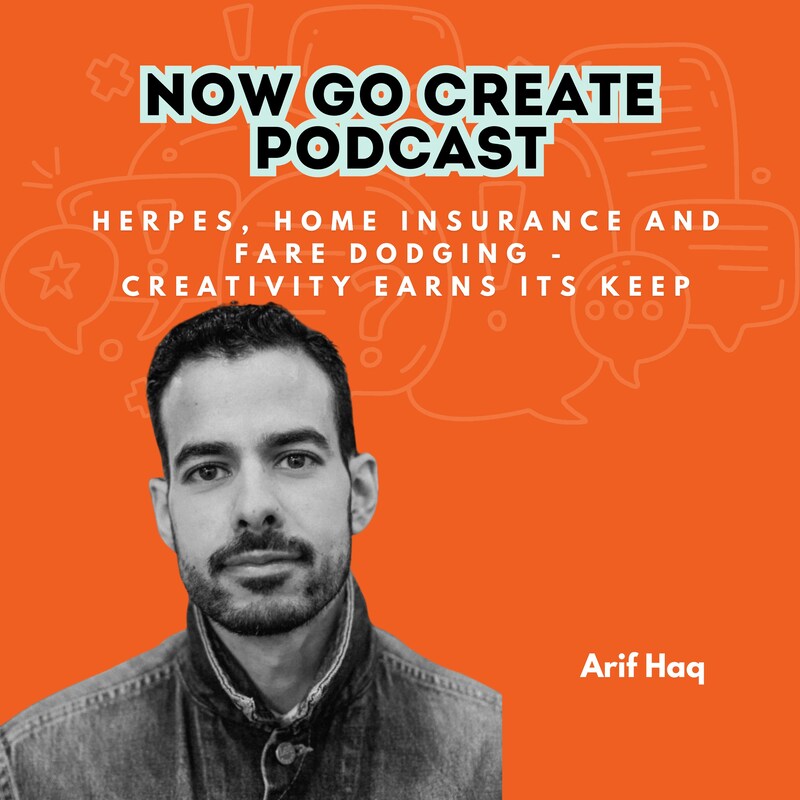
Ever wondered how the world’s best creative ideas are born and why some of them come from the unlikeliest places? In this episode of Now Go Create, host Claire Bridges sits down with ex-PepsiCo marketer Arif Haq to deconstruct some of this year’s most standout campaigns from the Cannes Lions International Festival of Creativity.
We want to figure out how the work got made!
From destigmatising herpes in New Zealand to revolutionising Indian Rail ticket sales, making insurance matter, and some classic Burger King mischief.
Together, Claire and Arif break down how creative thinking thrives when you flip assumptions, lean into cultural truths, and use constraints as springboards rather than blockers. If you want some insight into the award-winning creative minds behind the campaigns and practical inspiration for your own work this episode is for you.
Highlights:
- Claire and Arif break down creative case studies from this year’s Cannes Lions Festival of Creativity
- The New Zealand Herpes Foundation campaign succeeded by combining humour, national pride, and destigmatisation, using Kiwi sporting icons
- The power of “thinking the opposite” is highlighted as a creative tool, ask what the wrong approach is, then flip it for a fresh perspective
- Burger King’s ‘Burger to King’ campaign cleverly used gaming and cheeky humour, reinforcing the brand’s underdog, community-driven persona.
- Consistent brand identity mixed with fresh execution - is a key factor in long-term creativity that balances “new and old at the same time.”
- The Indian Railways ‘Lucky Yatra’ campaign transformed train tickets into lottery tickets, leveraging cultural insights and changing public perception effortlessly
- Creative problem solving often means reframing the product or looking at challenges through a new lens, as demonstrated by AXA Insurance
- Genuine innovation often comes from becoming “professionally nosy”
- Simple creative ideas can have a huge impact, but getting there requires space to think, marinate, and push past the obvious answers
- ‘Own the Dream’ by Rocket, a unifying Super Bowl film, shows the emotional power of music and collective experience
- Building creativity is like exercising a muscle: immerse yourself in great work, get curious, challenge assumptions, and constantly evaluate ideas
- Award-winning creativity often means flipping the brief, rooting ideas in strong cultural or human insight, and executing with authenticity and craft.
Would you like Claire & Arif to review creative campaigns with your team, or run a bespoke creativity session? Get in touch: claire@nowgocreate.co.uk
Do you have a creative challenge or dilemma for a future episode? Email claire@nowgocreate.co.uk or join our weekly email for free creativity resources and worksheets at nowgocreate.co.uk
About Claire Bridges
Claire Bridges is Chief Spark and Founder of leading creative training consultancy Now Go Create, whose philosophy is that everyone can be creative.
Claire worked as Managing Director and Creative Director working with global brands including Starbucks, Kellogg’s, Unilever, P&G and Danone in her previous PR career. Upskilling individuals, teams and organisations with practical creativity tools is Claire’s mission.
She’s one of only 250 people globally to hold an MSc in Creativity, Leadership & Innovation, and authored an Amazon best-selling creative handbook In Your Creative Element based on her academic studies.
Claire and her hand-picked team of experts have worked on thousands of creative projects and trained over 40,000 people around the world since starting Now Go Create in 2011.
Join our weekly email for free resources and worksheets to go with the podcast.
Connect with Claire:
Website: https://nowgocreate.co.uk/
Instagram: https://www.instagram.com/nowgocreate/
Facebook: https://www.facebook.com/NowGoCreate
LinkedIn: https://uk.linkedin.com/in/claire-bridges-b6205b14
About Arif Haq:
Arif Haq is an experienced brand and innovation consultant, ex-PepsiCo marketer, and co-creator of the Heineken Ladder - a framework for evaluating creative work. Arif brings a fresh, practical perspective on how the industry thinks about creativity, brand consistency, and breakthrough ideas.
Connect with Arif:
Website: www.arifhaq.com
Linkedin: www.linkedin.com/in/arifhaq/
Transcripts
Herpes, railways, phone scammers, and insurance.
Speaker A:None of these seem like the most obvious territory for creative thinking.
Speaker A:And that's why these case studies are going to be such fun to unpick today on the Now Go Create podcast.
Speaker A:If you didn't know, every year in June, the great and the good from the advertising industry, marketers and tech firms descend on sunny Cannes in the south of France for a celebration of the world's best creativity.
Speaker A:And if you didn't already know, I am obsessed with figuring out why some ideas hit the spot, why others don't, and what we can take away.
Speaker A:My guest today, Arif Haq, is an ex PepsiCo marketer and he's gonna come at this from the marketer's point of view.
Speaker A:He co created the Heineken Ladder as a way to objectively talk about creative work.
Speaker A:And we're gonna have a good natter about things that caught our eye.
Speaker A:We're going to look at the campaign, talk about how it works, and then we're gonna think about how any of us might get to ideas like it and retrofit them.
Speaker A:So, hack, welcome to the show.
Speaker A:Let's talk herpes.
Speaker B:Thanks for that intro.
Speaker B:Not sure where I'm gonna go with on that.
Speaker B:And it's probably the first time you've ever said that on the podcast.
Speaker B:I'm assuming it is.
Speaker A:It is, yeah.
Speaker A:So let's talk about the first campaign, which is called the Best Place in the World to have Herpes.
Speaker A:And I absolutely love this campaign.
Speaker A:It's really one that stood out for me this year.
Speaker A:And it's from the New Zealand Herpes Foundation.
Speaker A:And it's not a sexy subject, is it?
Speaker A:Although.
Speaker A:Or maybe it is a sexy subject, depending on how you think about it.
Speaker B:Yeah, it's an STD subject.
Speaker A:Exactly.
Speaker A:Exactly.
Speaker A:So it is probably the world's most unlikely tourism campaign, which is underpinned by an important health message.
Speaker A:So I'm just going to share with each of these case studies a little bit about it.
Speaker A:What we'll also do in the show notes is put a link to where people can see the campaigns.
Speaker A:But the idea was to break the stigma around herpes using this combination of humor, national pride, and trying to educate people on the topic.
Speaker A:And the campaign was pretty brave.
Speaker A:And we can talk about this a bit because I know you love talking about, you know, creative bravery and let's not be brave.
Speaker A:We want to make it boring.
Speaker A:But it's interesting how they reframed herpes and the stigma of herpes as something that Kiwis could beat together.
Speaker A:So they rolled out this fun sort of spoofy, almost feeling herpes destigmatization course, which is the central kind of idea.
Speaker A:And then they had this leaderboard as to who could be more educated, more informed, more open minded than any other country in the world.
Speaker A:And they clocked up all of these hours and hours of people engaging with the content and playing around with it.
Speaker A:And I think nobody has ever really wanted to be in a herpes ad.
Speaker A:I would imagine.
Speaker A:I would imagine that's quite a hard sell, you know, from like an influencer or a celebrity point of view.
Speaker A:But they used sporting legends and Kiwi icons from the sporting world and they invited them to talk about it because I think this play around the sort of sporting world, they managed to engage people and get them into it.
Speaker A:So they said that over eight weeks they had nearly 11,000 hours of content.
Speaker A:That's a lot of content viewed.
Speaker A:And New Zealand claimed its place as officially the best place in the world to have herpes.
Speaker A:So what's your take or thoughts on this campaign?
Speaker B:The first thing about this is it, I think the reason, a large reason, part of the reason that it works is it's, it's based on the brand of New Zealand.
Speaker B:So I think, and I don't know where I've got this, if this is true or whether I said this in the submission or certainly I've heard, you know, the New Zealand accent is one of the most trusted or liked accents.
Speaker B:New Zealand people.
Speaker B:When people think of country brands, I think Australia and New Zealand are always near the top.
Speaker B:And there's something about, you know, you can see this being authentic in a way that actually if this was Britain, you wouldn't.
Speaker B:Because everyone knows what Brits are like about everything.
Speaker B:You know, kind of like, you know, uptight about everything, particularly about this kind of stuff.
Speaker B:So you kind of go, yeah, that kind of rings true.
Speaker B:And then the humor that was on there again, that felt true and appropriate.
Speaker B:And the other thing, it was about how we always think about, like how, how did this get made?
Speaker B:You know, which I think is a fascinating thing because in.
Speaker B:In case studies of award shows, they never really ever get to.
Speaker B:I've never really seen it where they.
Speaker B:It's always a.
Speaker B:Basically we had a, we had a challenge.
Speaker B:It was basically impossible.
Speaker B:But we thought, okay, we give it a go and then the next thing is the solution was we come up with some amazing world blowing, no, mind blowing idea actually.
Speaker B:You want that bit in the middle that says, well, we.
Speaker B:How do we come up with.
Speaker B:I was in the shower and I was thinking about the.
Speaker B:However it was we did this exercise and potentially one of the things they asked themselves here was, what's the wrong way to do a campaign about herpes?
Speaker B:You look back on all the historical campaigns about, you know, herpes or health in general, and none of it would have applied any of the principles here.
Speaker B:They almost looked at that and they went, what's the opposite thing to do?
Speaker B:Which is such a powerful.
Speaker A:You.
Speaker B:I've used it to really accelerate people's loss of assumptions in exercises.
Speaker B:I find I don't what you think.
Speaker B:I find it doesn't get you the answer most of the time, but one time out of many, it might get you the answer.
Speaker B:And potentially it happened here.
Speaker B:But it's definitely a jumping off point for something that maybe you otherwise wouldn't have got to.
Speaker A:Yeah.
Speaker A:And going back to that idea about bravery is being able to reduce.
Speaker A:Take all those constraints away.
Speaker A:Because I think the thing about healthcare briefs and challenges like this are that there'll be so many constraints and limitations about what they can and can't say that often that starts to anesthetize and freeze people's creativity before they've even started.
Speaker A:Because they're thinking about the box.
Speaker A:And I think, yes, saying to people, so we talk about creativity, a definition of creativity, thinking outside the box.
Speaker A:Often people will say, is that, okay, well, what is the box?
Speaker A:What is the rules?
Speaker A:And the rules here are like you're saying about reversing them.
Speaker A:The rules here are that herpes isn't funny.
Speaker A:So, you know, that sort of is probably an accepted norm.
Speaker A:So herpes isn't funny.
Speaker A:So what if we flip that and we say, how could herpes be funny?
Speaker A:Or how might it be funny?
Speaker A:And that's quite interesting, isn't it?
Speaker B:I'm sure that was one of the questions right in their process.
Speaker A:Yeah.
Speaker A:Because that think that jumping off point could then if that becomes your strategy to say, okay, our thought is that we flip it and we make it funny.
Speaker A:The execution of that could be a hundred different ways.
Speaker A:So, yeah, yeah, yeah.
Speaker A:I think that's interesting.
Speaker B:The founder of Liquid Death, Mike Cesario, I think he.
Speaker B:I think he literally said, you know, one of the things he did was he went to, certainly when he was like thinking about a new brand, he.
Speaker B:He went into a store and he looked at the categories.
Speaker B:He said, where can I make the most impact?
Speaker B:And right in front of him was just wall to wall water.
Speaker B:And he said, okay.
Speaker B:He looked at that.
Speaker B:This is a Big category.
Speaker B:There is some opportunity here.
Speaker B:And he looked at it, he said, what are they?
Speaker B:They're all doing the same thing.
Speaker B:And he said, what would a water brand that just went.
Speaker B:Did the opposite do?
Speaker B:They would.
Speaker B:Instead of having clear a glass or plastic packaging to show the beautiful essence of water.
Speaker B:Well, everyone knows what water looks like, so you don't need that.
Speaker B:And by the way, plastic is a bit of an issue, sustainability wise.
Speaker B:Yeah, they've all got imagery, certainly literally or, you know, visually of mountains or streams or nature.
Speaker B:And so he said, yeah, okay, well, what's the opposite of that?
Speaker B:Liquid death, you know, so not health, all that stuff.
Speaker B:That's probably the most pure example of when it has.
Speaker B:Literally the opposite thinking has led to the thing, like I said, most time it doesn't happen quite as purely as that.
Speaker B:But it's such a great example.
Speaker A:Yeah.
Speaker A:So I think for anyone listening, it is that whole thought of.
Speaker A:I think it was the late great Paul Arden who said, whatever you think, think the opposite.
Speaker A:And it is.
Speaker A:That is like whatever you think you should do, you could do.
Speaker A:Other people would tell you you have to do is to list everything, the shoulds, the wills that always do, and then see if you can flip that, like you say, flip it and reverse it to use Missy Elliotism.
Speaker A:Let's get one in there.
Speaker A:And so just to try that, to see if it takes you off somewhere else.
Speaker A:And I think also the reverse or the opposite tactic is one to use when you do want to shake things up a bit.
Speaker A:It takes you off into slightly more potentially risky territory.
Speaker A:And again, that's what's so super interesting about, you know, you don't tend to use the word risk in healthcare in the same sentence.
Speaker A:So kudos to the team behind it.
Speaker A:I think the other thing is the cultural relevance there.
Speaker A:And we're going to see this actually quite a lot in the campaigns we're going to look at.
Speaker A:There's definitely this sense of national pride in these kind of local icons.
Speaker A:And like you say, it's culturally highly relevant.
Speaker A:This is feels contextual, definitely to this Kiwi audience that you'd have to find a different cultural relevance for talking about.
Speaker A:I mean, you can imagine, I'm just trying to think, like you say, how that would land in maybe the UK or some other more conservative countries.
Speaker A:It just wouldn't work.
Speaker A:So, yeah, something to think about there.
Speaker A:Yeah.
Speaker A:So should we talk.
Speaker A:Should we move on to Burger King?
Speaker B:Burger King.
Speaker B:Oh, yes, great.
Speaker B:I mean, there's always something to talk about, Burger King almost every year, mainly down to I guess the legacy of one of the most winningest, if I can use that Americanism CMOs in history at Canlar, which is Fernando Machado.
Speaker B:So yes, the legacy of, of his time has led us what.
Speaker B:So one of the examples this year was Burger to King.
Speaker B:So in a nutshell, using the game, you know, FIFA, which is massive, we all know that gaming is massive.
Speaker B:What's one of the biggest franchises in gaming?
Speaker B:Burking realized that there were players in the game, real life players called Burger and King.
Speaker B:And then basically they supported or promoted and rewarded players who not only recruited those players into their teams, but then completed goals or certain plays with those two.
Speaker B:So Berger would set up the pass for the goal and King would score the goal.
Speaker B:And due to advances in AI, that word, we won't talk about it too much.
Speaker B:But then the commentary in EA has got so sophisticated that they, they don't just say the famous names like they used to.
Speaker B:They can say every single player on the pitch names.
Speaker B:The AI audio will do it.
Speaker B:So if you could get a clip of yourself saying Burger King, Burger King, Burger King.
Speaker B:You were rewarded by Burger King.
Speaker B:So stunty.
Speaker B:It was in the context of McDonald's being an official sponsor.
Speaker A:Yeah.
Speaker B:The interesting thing about and do check out the case study videos just it's brilliant.
Speaker B:The reason I talked about it is, is this legacies I mentioned.
Speaker B:So it's in the context of things like Whopper Detour or Moldy Whopper, the very famous, you know, kind of showing the organic matter breaking down.
Speaker B:Very controversial.
Speaker B:Literally.
Speaker B:Steve Stevenage Challenge was also based, based on FIFA where they figured out that they, if they sponsored a very lowly English English club and all the clubs are featured in FIFA and sponsored became a shirt sponsor then then that their logo would appear in the game as well.
Speaker B:And then you, you were awarded with a Whopper if you took lowly Stevenage up into one of the kind of higher echelons of the game and won, you know, one cup.
Speaker A:Yeah.
Speaker B:So they've always really, I find authentic Burger King.
Speaker B:So they're authentically being cheeky, using humor.
Speaker B:Yes.
Speaker B:Using a bit of borrowed interest.
Speaker B:But it feels like it could only really come for Burger King as opposed to, well, definitely not McDonald's who are famously a bit, kind of a bit precious about their.
Speaker A:A bit more sensible and yeah, definitely like you say, what's so interesting about some of these pieces of work is if you do step back and look at them in the context of the other work that they do, then it's just we're going to talk about this a bit.
Speaker A:I know, but it's just this consistency of maintaining the same Persona, the same authentic voice, the same kind of attitude.
Speaker A:And in.
Speaker A:It's not scrappy.
Speaker A:That's not the right word because this isn't scrappy.
Speaker A:It's actually incredibly well thought through.
Speaker A:But it's that underdog thing.
Speaker A:Whereas I think the stats are that Burger King have something like $1 to every $5 that McDonald's spend.
Speaker A:So they will never outspend them in media.
Speaker A:So they have to outthink them or out.
Speaker A:Or in this case, I think it's out earning them in terms of earned media.
Speaker A:And I find that really fascinating because they're really leaning into talkability, press coverage.
Speaker A:And then as you say, there is also a great activation is that you will go and get a Whopper.
Speaker A:So maybe if you've, you know, forgotten about going in to get a burger, you actually do go and get it.
Speaker A:But yeah, it's super.
Speaker A:It's, it's fun.
Speaker A:It's so cheeky.
Speaker A:It's, it reminds me.
Speaker B:It's unapologetic, isn't it?
Speaker A:Exactly it.
Speaker A:And what I love about it as well is the Whopper Detour did the same thing is that they bring their audience in on the prank.
Speaker B:Yeah.
Speaker A:So they make all of their sort of communities and their audiences like co conspirators.
Speaker A:And that is super clever because we then all feel like we're kind of in on the joke.
Speaker A:We're, we're a bit cleverer just because we have been able to sort of get around the rules.
Speaker A:So there's something really clever there about their community as well.
Speaker A:And just feeling like you said, it's sort of, there's something a little bit edgy about it in a way that there isn't if you go and get a McDonald's.
Speaker B:Absolutely.
Speaker B:And the wonderful thing about it is it really hits home at that thing that I talk about a lot with, with clients, which is the, the secret of brand management, if there is any, is to be new and old at the same time.
Speaker B:There's a great book called Hit Makers by Derek Thompson.
Speaker B:It's about the science of like popular everything, popular music, popular ideas.
Speaker B:And he uses this phrase about surprising.
Speaker B:If you want to sell the familiar, make it surprising.
Speaker B:If you want to make the surprising, sell the surprising, make it familiar.
Speaker B:So the idea of familiar surprises or surprising familiarity is so it's such a powerful, powerful moment of aha.
Speaker B:When you see a long term brand who are doing the same thing and you kind of got to do the same thing for decades but each time they're able to, every year able to make that old proposition feel fresh over decades.
Speaker B:I mean you would, if we were talking years ago, you would have mentioned Nike just do it.
Speaker B:They've been, they've been just doing it for 30 or 40 years and arguably they've kind of run out of the surprising freshness in recent years and they kind of, we all know, I guess the story of Nike in recent years, which is unfortunate but I'm sure they are going to be back.
Speaker B:I'm sure Nike, we've got KitKat, have a break obviously, you know, having a break for something like.
Speaker B:Was it 90 years?
Speaker B:Ridiculous.
Speaker A:Yeah.
Speaker A:Long time.
Speaker A:Yeah.
Speaker B:But if you try and do things that are too new constantly.
Speaker B:Well, you know, people just don't know where you stand and you don't tap into all the, the memory structures that you built over time and you just feel inauthentic.
Speaker B:Brands that feel so different every time in a bid to try and feel like they are new.
Speaker B:So the secret is being old and new at the same time.
Speaker B:It's, it's tricky though.
Speaker A:Yeah.
Speaker A:And that's where creativity comes in, doesn't it?
Speaker A:Because like we're saying it's how do you feel?
Speaker A:How do you have that aspect of freshness, cleverness, interest and actually when we're talking, I've read quite a lot about, around B2B and I work with quite a lot of B2B clients and B2B and creativity is that the criticism of B2B brands is that they're so short termist because they're always working on each quarter.
Speaker A:You know there's a quarter and then if it doesn't deliver then they change and they change.
Speaker A:And actually that there are very few B2B brands that actually stick with their distinctive assets and their, and their messaging and you know, they are quite few far between.
Speaker A:So we can think of, I can think of sort of Mail Chimp and you know, Jimmy the Chimp and how they're constantly using him or Salesforce and, and they have that, you know, the cloud and all of that stuff.
Speaker B:Mass, the shipping people, I think they're shipping.
Speaker A:Yeah.
Speaker B:Container or transportation logistics.
Speaker B:They've been doing quite well in the last few years in terms of getting consistent creative work out there too.
Speaker A:Yeah.
Speaker A:So I think it's a really interesting and important point about consistency.
Speaker A:But then how do you keep that fresh?
Speaker A:But I again I think when one of the things I've really noticed over the years and with the work that I've been doing, and you all know this much better than me, coming from the product marketing side, is how to use your assets and your distinctive assets and make them meaningful in your communication.
Speaker A:So make your.
Speaker A:Whether it is, obviously, you know, you worked at Pepsi, so we're talking about, you know, brands that are recognizable, but how do you get to that point with a brand?
Speaker A:I just think it's really interesting.
Speaker A:And behavior like we're talking about with Burger King is.
Speaker A:Is one way of doing it big time.
Speaker B:And actually talking about Pepsi, there.
Speaker B:There was a period of time, and I think they're just coming out of it now where they did suffer, I think, a little bit from trying to be something new all the time.
Speaker B:You know, they went from Pepsi, that brand went from the choice of a new generation.
Speaker B:I mean, way back where everyone understood what that was as a challenger to, you know, Big Red.
Speaker B:And then over time, it went to, you know, went to.
Speaker A:Can't even say it now, can you?
Speaker A:You can't even say it now.
Speaker A:It's got to be big.
Speaker B:I didn't say Coca Cola.
Speaker B:But they change it, you know, play for more.
Speaker B:Dare for more.
Speaker B:In the context of, you know, you compare that to like Snickers, you're not you and you're hungry, which.
Speaker B:Decades and decades of consistent surprises.
Speaker B:And I think that sort of.
Speaker B:That the idea of being a bit boring or being consistent or compounding creativity, which is something that was talked about at Cannes last last week as well, but it's become much more to the fore.
Speaker B:Like, yes, what's new but what also should never change, you know, not for many decades, at least.
Speaker A:Yeah, I've been in way too many meetings where the brand honeycomb or the brand sandwich or the brand pillars or whatever the hell they are.
Speaker A:Triangle, the brand onion, the brand triangle, where a whole group of people, like 45 of you, you're the facilitator, and they're in a room talking about their brand, whatever, and everyone's trying to, you know, mess about with various aspects of it.
Speaker A:And you're like, no, because we need to think about when we're not here.
Speaker A:You know, Nike is not messing about with its brand on or sandwich or laces or whatever it is every, you know, every week.
Speaker A:But people want to tinker in that.
Speaker A:You know, they want to tinker, they want to change, and they want that.
Speaker A:I think there's a.
Speaker A:There's a sort of sense of if you're suddenly put into a marketing role or a leadership role or you Know that it's on you to try to somehow have some influence over that.
Speaker A:And it's just it.
Speaker A:It can be then become quite a messy thing.
Speaker B:Oh.
Speaker B:Oh, yeah.
Speaker B:And the temptation to change and tinker because you need to be seen to be doing something when in fact.
Speaker A:Yeah.
Speaker B:And doing something overt.
Speaker B:And in fact, a lot of the job often is to say if someone just to say, look, I'm not going to change anything, but we're going to optimize a series of loads of stuff that no one will ever know.
Speaker B:The way we work, how things get briefed, how things get approved, all the stuff in the back end, just how we.
Speaker B:How we even diagnose the challenge.
Speaker B:So our metrics, are they real?
Speaker B:Leave the brand as it is.
Speaker B:Let's just get all that internal stuff and.
Speaker B:But it's not.
Speaker B:It's harder to do and it's not as, you know, sexy, not showy, it's.
Speaker A:Not jazz hands, it's not showy, it's not your kind of, you know.
Speaker A:Oh, look, I was the brand manager for two years and look what I managed to do.
Speaker A:So anyway, that's a whole nother chat.
Speaker A:Maybe we can have another time.
Speaker A:So let's talk about Lucky Yatra, which is another campaign.
Speaker A:So if Herpes jumped out at me, you know, from looking at some of the work initially, this campaign I really love for so many reasons.
Speaker A:So this is a campaign for the Indian Railways, and the context of the campaign is that the railways in India are very busy, apparently, and fair evasion is an enormous problem.
Speaker B:I think it was like 41%.
Speaker B:41%.
Speaker B:But don't actually buy a ticket.
Speaker A:Don't buy a ticket.
Speaker A:And one of the reason of that, one of the reasons for that is because there aren't even gates or ticket gates in a lot of places, you know, so there's all these sort of systemic problems in the system where they know people share, but there's not enough guards, there's not enough ticket inspectors.
Speaker B:I've traveled on railways in, where I'm from in Bangladesh and it's exactly the same.
Speaker A:Yeah.
Speaker B:Just, you know, people can just jump on and jump off and in and out.
Speaker B:There's no turnstiles, no one check.
Speaker A:Yeah, yeah, yeah.
Speaker A:So it's one of these brilliant.
Speaker A:Absolute chaos, but a brilliant problem to have, in a way.
Speaker A:Says.
Speaker A:And what I love about this campaign is that it is creativity, it's creative problem solving.
Speaker A:And again, we don't know how they got to this idea, but I love to imagine how they might have Done it.
Speaker A:So again, there's some amazing deep cultural insight here, which is that apparently in India, the playing the lottery is an.
Speaker A:Is part of everyday life.
Speaker A:It's an enormous part of the culture.
Speaker A:And so what they look to do and what they did was take one ticket.
Speaker A:We're going to make it sound very simple, but take the.
Speaker A:The idea that somebody doesn't want to buy a rail ticket, but what they're really happy to spend their money on is a lottery ticket.
Speaker A:So they transformed every train ticket with a code into a lottery ticket, capitalizing on the love of luck and lotteries and just geniusly turning this compliance to buy a ticket from a burden into an opportunity, with literally nothing that changed except the mindset of the human being buying the ticket.
Speaker A:I mean, it is abs.
Speaker A:I think it's absolute genius.
Speaker A:And the investment that they did put into it apparently has led to a 34% increase in ticket sales.
Speaker A:And then this reframing of this compliance as opportunity has also meant that people are obviously actually winning as a result of buying a ticket.
Speaker A:So then they're talking about that, they're sharing that, and the whole thing has actually got a real feel good factor as opposed to if you want to talk carrot and stick, which I know is an old fashioned way of thinking about motivation, but it really is.
Speaker A:We're not gonna, you know, we're not gonna use the stick, we're gonna use the carrot.
Speaker A:So think it's absolute genius.
Speaker A:And the thing that really jumped out to me about this was that I don't know, as I said, I don't know how the team behind it came to the idea, but if we're thinking about what we could apply.
Speaker A:I actually did an episode on a tool called Related Worlds, which you can download.
Speaker A:It sits on the podcast to look at the challenge from you look at the challenge, your challenge, and say, who else or where else in the world does someone have this problem?
Speaker A:And if I can sort of just get it to a level of abstraction or thinking about it, and maybe, you know, in this instance, it's just one word, the word ticket, you know, so say, where else in the world might I be happy to have a ticket?
Speaker A:Well, it certainly wouldn't be a parking ticket, but, oh, it's a lottery ticket.
Speaker A:And then literally away we go.
Speaker A:So I like to imagine that this was sort of like the smoothest birthing of an idea ever, because it's so sort of perfect and beautiful and simplistic.
Speaker A:But as you say, it always looks tidier in the case study.
Speaker A:End than it does at the beginning.
Speaker B:When you just said they transformed a train ticket to a lottery ticket.
Speaker B:The beauty of these types of ideas is you can just do that and everyone goes, boom.
Speaker B:You know, there's loads of detail and context.
Speaker B:Everyone goes, yep, boom.
Speaker B:And the brain just goes, yes.
Speaker B:They go, I totally understand why and how and what.
Speaker B:And I'd be fascinated to know the exercise they did and whether it was.
Speaker B:It could have been a moment of just a second, or it could have been a kind of maybe a long convoluted process.
Speaker B:It is one of those beautiful moments of tangible value generated from an intangible or an idea or a thought.
Speaker B:And this not changing anything in the physical world, but changing something in people's brains.
Speaker B:Change manipulating, I guess that word cycle psychology to reframe something in the same way, I guess, that, you know, De Beers did back in the day with diamonds and making, you know, making them, you know, a luxury good and all that stuff.
Speaker B:Super smart and simple.
Speaker B:I love it.
Speaker A:By the way, if you would like Hack and I to come and talk to you about creative campaigns, deconstructing them and our top picks from Cannes line this year, then drop me a line.
Speaker A:My email address is in the show notes and we can come and do a bespoke session for you.
Speaker A:So this is.
Speaker A:Loved it.
Speaker A:We love doing so.
Speaker A:We'd love to come and do that.
Speaker A:What should we talk about next?
Speaker B:Okay, something really different.
Speaker B:Axa.
Speaker B:AXA Insurance.
Speaker B:And they had a campaign called Three Words.
Speaker B:And again, this was talking about simplicity in the previous campaign.
Speaker B:I think this year is a lot of that kind of.
Speaker B:That simplicity at its heart.
Speaker B:So to combat the issue of domestic violence, which is an issue in France, but also many countries around the world, as we all know, sadly, they looked in quite an interesting place as a source of inspiration, which is the home insurance contract.
Speaker B:They provide home insurance to, you know, millions of contracts in France and indeed in all the countries they operate in.
Speaker B:And what they did was they added the words into the contract for mandatory home insurance.
Speaker B:They added the words and domestic violence to one of the.
Speaker B:To the clauses that you could claim the insurance.
Speaker B:So normally it's got, you know, whether it's burglary or whether it's force, force majeure or flooding.
Speaker B:And they.
Speaker B:They added just three words and domestic violence.
Speaker B:And the insight at the heart of that is that one of the first questions I guess lots of people ask when they hear about stories of domestic violence.
Speaker B:And it's not always, you know, wives.
Speaker B:It can be the husbands as well, but predominantly is the wives.
Speaker B:Is.
Speaker B:They say, well, why didn't, why didn't you leave?
Speaker B:And actually it's you, you can't leave in many cases, you know, I haven't got the money to go and move myself to another house and all that stuff.
Speaker B:So if that.
Speaker B:Suddenly the addition of the three words gave a vehicle an access to actually to do something about it.
Speaker B:Because you could claim it under the insurance, even if the insurance wasn't in your name.
Speaker B:Some of the case studies video just gets all the detail in there.
Speaker B:So even if you're not a named person on the case, on the, on the contract, you can claim for that.
Speaker B:And I thought it was just again, simplicity, solving a real challenge.
Speaker B:And the clause was retroactively added to about two and a half million contracts.
Speaker B:So hopefully made a.
Speaker B:That's a meaningful significant number.
Speaker A:Yeah, this is a really interesting campaign, isn't it?
Speaker A:Because, you know, we've both been kicking around for a long time and I started my career in corporate PR and corporate communications and looking at lots of, you know, and then, you know, CSR or corporate social responsibility brands.
Speaker A:Doing something, something for good was definitely something I feel looking back, you know, going back 25 years or so.
Speaker A:But it was very much a sort of add on to.
Speaker A:We know people feel better about our brand if we do something.
Speaker A:You know, if you've got two commoditized products and one does something for good or has some kind of.
Speaker A:Then we know that people will then choose that product or brand.
Speaker A:And I think this is.
Speaker A:CSR has moved on so much now that this is like, it's a CSR campaign, but it is product innovation like with CSR baked into it.
Speaker A:And that's what I find really fascinating.
Speaker A:And I know that this work was part of their whole approach they've been doing for a few years.
Speaker A:They had decided strategically to focus on women and girls and on domestic violence.
Speaker A:So again, putting it in the context of other work that they've done.
Speaker A:So what I think is really interesting is that they've gone from saying we're going to do something philanthropic, we're going to support other people in how they support women and girls or as you say, other victims of domestic violence.
Speaker A:We should say that.
Speaker A:And we're going to look at how we can bake that into our, as you say, into our home insurance contracts.
Speaker A:And what I find interesting about that is it's that change in lens.
Speaker A:So if you, you could put different lenses through that contract, couldn't you?
Speaker A:Or through the policies and we Might end up with a different idea.
Speaker A:And I think going back to how might you get to an idea or what might you do?
Speaker A:I think just the idea of trying to step into your customer's shoes.
Speaker A:You know, everyone talks about being customer obsessed, customer focused is this won't be relevant to all of their customers by any measure, but it's about acknowledging where there are problems in the system and there may be some underserved customers or consumers or people that need some attention.
Speaker A:It's making me think about a campaign from a few years ago which listeners might have seen, which was the Ikea Disables campaign, which was where they worked with, they co created a whole load of innovation for disabled community in Israel where I think 1 in 10 people identifies with having a disability and they didn't change or innovate brand new products, they changed their existing products to have bolt ons.
Speaker A:So that for example, someone with cerebral palsy who finds it hard to sit down in a low chair, they created higher legs for that chair and so on.
Speaker A:And it's just that sense of.
Speaker A:I think the question that I would ask or think about if I was trying to get to an idea like this is two things.
Speaker A:And again like you say, the simplicity in retrospect is so easy.
Speaker A:But one is just like what is fit for.
Speaker A:What's not fit for purpose anymore in relation to your product or service?
Speaker A:You know, and I can think of lots of campaigns that spring to mind where people have started to like this girl can always campaign, you know, or so not this girl can.
Speaker A:That was the Sport England campaign.
Speaker B:It was run like a girl.
Speaker A:Exactly.
Speaker A:Yeah.
Speaker B:Like an idiom that are kind of.
Speaker B:Everyone just sort of says without thinking.
Speaker A:Yeah.
Speaker B:But when you think about it, you go, hang on, that's just.
Speaker B:Yeah, that needs to be updated.
Speaker A:Yeah, exactly.
Speaker A:So it's challenging something.
Speaker A:So I, when I think of this as a principle, I can start to see other examples of it.
Speaker A:So I think if you were trying to think about for your product or service or whether you're big or small is just to say is there something that's just not serving us or our customers very well anymore?
Speaker A:And then whoever noticed these three words or found or decided to do this clearly needs an incredible pay rise.
Speaker A:I mean, you know, that.
Speaker A:Let's hope that that's, that's happened out there in the world.
Speaker B:Hopefully.
Speaker B:If you, if you're out there, let us know if you got something for sure.
Speaker B:For sure.
Speaker B:At least get a hold of the actual, the, the lion out there.
Speaker B:The other one, it Reminds me of, actually, this is also contract for change a few years ago now from Michelob or AB InBev, which is.
Speaker B:Which, I mean, look it up.
Speaker B:I think everyone probably knows about it now, but it's a, it's a very internally focused business thing.
Speaker B:You know, how.
Speaker B:How AB and Bev, you know, bought their crop to make beer.
Speaker B:And similarly, this, like a contract, like how that contract's written.
Speaker B:It's an internal business thing that has major implications and benefits that has turned into, not cynically or anything, into a, into a marketing communications piece to provoke a conversation.
Speaker B:It's not like it's, it's, it's not just talking the talk.
Speaker B:They've actually looked at their business.
Speaker B:Is there something about our business that we can do to help.
Speaker B:Help to, to drive this, support this, rather than just talk about it fundamentally.
Speaker B:Can we help?
Speaker B:And it's such a minor thing, but I mean, you can just the way we've described it just hopefully unlocks a genuine change.
Speaker B:Like, you can see how.
Speaker B:Because the barriers.
Speaker A:Yeah.
Speaker B:Leaving are so, so, so large.
Speaker B:As we've discussed.
Speaker A:Yeah.
Speaker A:The, the other thing is, I think that all of these campaigns and any of the things that we're talking about, they all seem so simple when you step back from them.
Speaker A:But I think there's that relentlessness to be nosy.
Speaker A:I always say that I'm professionally nosy.
Speaker A:You know, like, you've got to want to stick your nose in and kind of go, what's going on here?
Speaker A:Why do we do it like this?
Speaker A:What's, what's being overlooked?
Speaker A:What can I see that other people are not seeing?
Speaker A:And that's just, you know, getting your head out from up from, you know, looking at your screen and looking up and kind of just being able to just get really nosy.
Speaker A:And like we were saying earlier, talking before, it's just, that takes.
Speaker A:Takes time, you know, all of that takes time.
Speaker A:And I'd be so fascinated to know how long some of these campaigns are in coming to fruition.
Speaker A:But I think just get, get nosy about things and get nosy about things when you don't necessarily know where it's going to lead as well.
Speaker A:That's the other thing that I would.
Speaker B:Say you talk about this in, I think in the book.
Speaker B:But, you know, the five whys, which everyone is familiar with.
Speaker B:But, you know, that's a really good example, isn't it?
Speaker B:Like, why.
Speaker B:Why is that?
Speaker B:Why is that?
Speaker B:Why is that?
Speaker B:Why is that that?
Speaker B:And you would.
Speaker B:Is that that thing about being curious and frankly, A little bit annoying because you're being curious about things that people go, why are you thinking about that?
Speaker B:We're trying to solve this.
Speaker B:Why are you talking about that?
Speaker B:And why, why, why?
Speaker B:Unless you just force the why.
Speaker B:And if you can get to the fifth why without being thrown out, whose office you're in, you know, that's good.
Speaker B:But you, you, because you're prompted something that people kind of don't want to think about, but potentially there's a solution in one of those why.
Speaker A:And also in when you're crunched for time, you might settle at the first why or the second why because you just think, oh, okay, I've got far enough.
Speaker A:And I think it's when you do give yourself permission and time to think that you'll push a bit harder.
Speaker A:And we were just talking about it.
Speaker A:Some stuff that we're working on this week is it's about having time to percolate overnight and come back to it and ruminate and like, let it marinate a bit.
Speaker A:And again, creativity needs time.
Speaker A:I know it's not a popular.
Speaker A:I know it's not a popular thing to say, but it does and doesn't necessarily need weeks, months is.
Speaker A:But it, you need to be able to allow yourself and other people time to think.
Speaker A:There was one, there was one other campaign you wanted to touch on.
Speaker B:Oh yeah, Rocket.
Speaker B:So Rocket in the States is basically a company.
Speaker B:They, they offer lots of things but, you know, mortgages and financial products for individuals.
Speaker B:And I want to talk about them because they won a gold line for a campaign called Own the Dream and it was during the super bowl and it was essentially a.
Speaker B:It's a classic brand film.
Speaker B:Do check it out.
Speaker B:The reason it's interesting, it's one, the first reason is it's the comeback of, I mentioned the most winningest CMO in his.
Speaker B:In history, which is Fernando Machado.
Speaker B:But the original Fernando Machado is Jonathan Mildenhall and he was back, he's now back as a, you know, a CMO at Russia Rocket and really did as a client and was one of the, the, the CMOs that had certainly the.
Speaker B:One of the biggest profiles.
Speaker B:He was a CMO of Airbnb before then, now being at Rocket.
Speaker B:And I've been lucky to work with him at 21st century Coca Cola.
Speaker A:Don't forget that he was at Coke.
Speaker B:Oh, yeah.
Speaker B:He worked for the Red guys too.
Speaker B:Yes.
Speaker B:Yeah, yeah.
Speaker B:Wasn't cmo, but, you know, but absolutely.
Speaker B:And he started off agency and so even since my time when I was a client and Then it contagious.
Speaker B:He was just one of those voices for emotion, you know, not as a tactical, like, nice thing to have and feelings, but because they, they, they move.
Speaker B:And the science proves this now it moves people to do things, reconsider brands, purchase brands, reconsider lots of fundamentals that they thought they were, you know, fully landed.
Speaker B:And this campaign, basically it was, it centered around a brand film with lots of different Americans singing John Denver's Take Me Home Country Road.
Speaker B:And it was during the Super Bowl.
Speaker B:So they played it in the super bowl and it was an anthemic.
Speaker B:Everyone knows that song had a live stadium sing along during the Super Bowl.
Speaker B:And obviously we assume lots of millions of people at home.
Speaker B:And I say assume because there are very few things in America, I'm not going to get political here, but that, that, that have the potential to unite everyone.
Speaker B:Whether you're red or you're blue.
Speaker B:I call the, the purple icons, the people in the middle, you know, and Dolly Parton's one of them, I think, I think no matter red or blue, you know, yes, you could unite, unite anybody anyway, potentially Willie Nelson, although maybe not, but, you know, something like that.
Speaker B:Country singers are my thing, basically.
Speaker B:That's why I say so many of them.
Speaker B:But songs do it too.
Speaker B:So I don't care if you're red or blue, wherever you are.
Speaker B:I think Take Me Home Country Road is one of those things that you just cannot, if someone starts singing it, it, you cannot help but do it.
Speaker B:Right.
Speaker B:So there's a brilliant example of you, a uniting moment there.
Speaker A:I'm singing it in my head right now.
Speaker B:Exactly.
Speaker B:I think we're about to break into it.
Speaker B:I was.
Speaker B:And it's just so, so fantastic.
Speaker B:And in the context of what is going on in the US Right now, it was a celebration of family and diversity.
Speaker B:And you can see Jonathan's fingerprints all over it, frankly, given his history with Coke and Airbnb.
Speaker B:Be.
Speaker B:And he said, he said a lovely quote about this, about this way.
Speaker B:He said from the start, this is more than a commercial.
Speaker B:We set out to create a moment that captures the raw emotional journey of chasing a dream that once fell out of reach.
Speaker B:And he is talking there about the dream of home ownership, but I think he could just as easily be talking.
Speaker B:There's a subtext about the dream of the American dream, the united nation.
Speaker B:And in fact, you know, all countries to some degree are kind of have seen this kind of fragmentation.
Speaker B:And so it was a real old school callback to not just, you know, Jonathan, but that type of Work that uniting work at scale that can really move people and, you know, through a traditional medium, you know, film.
Speaker B:Although the campaign was more complex and nuanced, obviously digital in that respect.
Speaker B:So I was just fascinated by that comeback and that work.
Speaker B:It's not been in the market for very long, I think, you know, superb.
Speaker B:Wasn't that long ago, but it picked up.
Speaker B:Picked up a line.
Speaker A:Yeah.
Speaker A:And the most competitive place to go and, you know, see if you can pick up a lion.
Speaker A:And the most expensive advertising minutes anywhere in the world.
Speaker A:What's interesting about that, I haven't, I haven't seen it before we were talking about it, but I think it's also something there about even though it was old school and it was film, I think it's that sort of activating the community or a group again.
Speaker A:Like we're saying just to, to have everybody singing and united at a moment like that.
Speaker A:So powerful in itself is that you're not.
Speaker A:It's not static.
Speaker A:It's.
Speaker A:Even though it's film, it's not static.
Speaker A:There's something very two way about that and that feels very modern way of doing.
Speaker A:It's a dream really, to be able to have some kind of communication that makes people feel passionately enough to sing.
Speaker B:Oh, my God.
Speaker B:Yeah.
Speaker B:And I should mention, it didn't win the film.
Speaker B:It was.
Speaker B:It won media lines, I think, media execution, you know, so it was smartly, you know, the context of it was smartly delivered.
Speaker B:Yeah, but, yeah, it seems so.
Speaker B:We talked a lot today, haven't we, about simple things that seem simple once you say them.
Speaker B:Obviously those things aren't simple to get to, but there is the heart that.
Speaker B:Yeah.
Speaker B:Songs unite people.
Speaker B:What song?
Speaker B:I bet I'd love to know what, what other songs they brainstormed, you know, was it just that one straight off?
Speaker B:But.
Speaker B:And then brought to life.
Speaker B:Because the idea then.
Speaker B:Okay, yeah, but then brought to life in the very specific way.
Speaker B:You can see the casting is so specific again.
Speaker B:So the, the detail and execution and craft in there.
Speaker B:Done with a.
Speaker B:With a scalpel in the most expensive, you know, time that you can buy as an advertiser in the world.
Speaker B:There was lots of noise can line for me.
Speaker B:That was one of the things that stood out.
Speaker B:Like, oh, wow, this felt really old school in a good way.
Speaker B:It's like, ah, yeah, those things really still do matter.
Speaker A:It's funny when you're talking about it because, you know, it's making me think about one of the most famous Coca Cola moments or most famous things about Coke which is I want to teach the world to sing.
Speaker B:Right there.
Speaker A:Yeah, right there.
Speaker B:That's a Jonathan ad.
Speaker B:Before he was, I mean, you know, was even born.
Speaker A:Yeah.
Speaker A:I think one of the things just to pick up, to close it out today is one of the things that you just said there, which is really interesting and important, which is about the craft and about the execution of these ideas.
Speaker A:And they're all, they've all been executed in different ways, you know, whether it's sort of bringing it to life in the game or bringing it to life with a physical lottery ticket.
Speaker A:The contract piece is really interesting because that's actually only they've had to bring that to life in other ways.
Speaker A:But I think looking at the case films is something in any case films, whatever space you work in, whatever you do, I would say creativity is, is a muscle and evaluating creativity is a muscle.
Speaker A:And just to immerse yourself with and share work and, and have a point of view on it, you know, whether it's, whether you, if you've got a team, a small team, a big team, you have stand up meetings, you have zoom calls, just ask people to bring something.
Speaker A:I'm a bit geeky about direct mail.
Speaker A:I collect direct mail instead of throwing it away.
Speaker A:And then I sort of, yeah, it is quite sad, but I quite like to lay it all out on a table and then just say, right, all of these things came through your letterbox, you know, within a week period.
Speaker A:Like when you look at it like that.
Speaker A:I do it at Christmas actually.
Speaker A:You know, when all the charity stuff comes through.
Speaker B:Yeah.
Speaker A:And then you've got, you've got 20 different charities asking you for money.
Speaker A:All of a sudden it becomes quite interesting to see how there are, what they're asking for and how they present themselves.
Speaker A:So I just think going back to that nosy is to do what we're doing today, get nosy, pull something apart, see how you might have got to it and dare I say, how you might have even changed it or you think you could make it easier, even better if you were adding to it or if you were having to do the next iteration of that campaign.
Speaker B:Yeah, I mean, I love that you can, you can get better at this.
Speaker B:Sometimes you and I get in front of people, they say, I'm not creative or I, you know, I, I'm not, I don't have great, I don't know what's good.
Speaker B:You said you can, you can get better at this over.
Speaker B:You can hone your taste and judgment and one of the easiest and most enjoyable Ways to, to do it is immerse yourself in what's really good.
Speaker B:It's easily available.
Speaker B:It's not just Cannes, it's dnad.
Speaker B:There's loads of awards around the world.
Speaker B:Immerse yourself in it.
Speaker B:It's just the supercharged way to accelerate your knowledge to go up.
Speaker B:Suddenly you'll find just knowing what's good and what's modern and fresh will transform the next meeting you have, the next brief, the next conversation you have, because it's just.
Speaker B:It's there.
Speaker A:Yeah, definitely.
Speaker A:So what I take out of that conversation is that everything that we talked about today is a standout example of unexpected creativity, solving a real world problem.
Speaker A:And it's really important.
Speaker A:It just shows how important it is to challenge assumptions, try to flip conventions, break rules.
Speaker A:And really what really came through for me was this, that idea of rooting ideas in cultural insight, which I know won't be a surprise to many of you.
Speaker A:So, five different things to take out here to end the show today.
Speaker A:The first thing is about thinking about how you flip it.
Speaker A:So what's the wrong way to solve the problem?
Speaker A:What's the unexpected or opposite of what's expected?
Speaker A:That can get you to some really interesting ideas.
Speaker A:Like we've talked about thinking about the product as the message.
Speaker A:And again, this is not rocket science.
Speaker A:But I do think sometimes we go quite far away, sometimes from what the core of the product or the service is about.
Speaker A:AXA didn't just talk about domestic violence.
Speaker A:They added three words to the policy to give people a way out, a safe way out of domestic violence.
Speaker A:And that is, I don't want to swear, but that is brand purpose really in action there.
Speaker A:And the other thing that I really take out of this is that creativity is a muscle.
Speaker A:You can get better at recognizing, evaluating and selling great ideas.
Speaker A:You've got to get nosy, you've got to get deep down and dirty into under.
Speaker A:Understanding how things work is a bit like trying to figure out why is a joke funny.
Speaker A:And just thinking about how you might do something a bit more differently.
Speaker A:And I think one of the things that I noticed is the more that you immerse yourself in work of all sorts of different shapes and sizes is that you will start to develop your taste.
Speaker A:And you know, taste is a thing I don't think that you can teach.
Speaker A:I think you just learn what you like and what you don't like and you can add that all into the mix.
Speaker A:And you know, this is such a big soup of things.
Speaker A:Creativity is such a big soup of things.
Speaker A:The more that you assess and understand how or why something works, the more you can develop your taste.
Speaker A:If you want Hack and I to come and talk to you about this, we can come and give you our insider take on what makes award winning creativity tick.
Speaker A:Plus really importantly all the practical tools that you and your team can use to get to better ideas faster.
Speaker A:So if you want a deconstruction of creativity tailored to your business business, get in touch.
Speaker A:My email claireowgocreate.co.uk is also in the show.
Speaker A:Notes thanks for listening to this episode of Now Go Create.
Speaker A:I hope you enjoyed the conversation on how to upskill and unleash your creativity at work.
Speaker A:A big thank you to my amazing guests for joining us and giving us all the insider juice on what inspires them, how they get creative and what we can apply in our own work.
Speaker A:And if you like the episode, please be sure to subscribe to our show and follow us on social media at Now Go Create.
Speaker A:Now Go Create.
