Shownotes
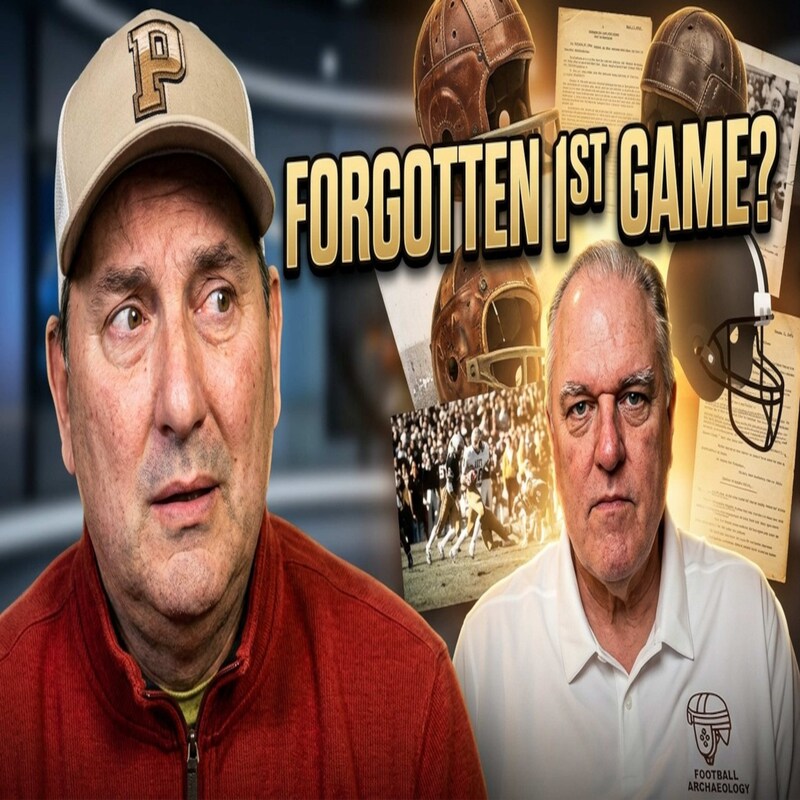
The primary focus of this podcast episode revolves around the historical inquiry into the inception of college football in the Midwest, specifically highlighting the first recorded game played by Northwestern University against the Chicago Football Club in February of 1876. This narrative challenges the traditional notion, which posits that the initial college football match in the region occurred between Michigan and Racine College. We delve into the complexities of historical interpretation, as our guest, Tim Brown of Football Archaeology, elucidates how new findings can reshape our understanding of past events. The conversation further explores the distinctions between rugby and football, raising pertinent questions about the evolution of the sport and the classifications of early games. Ultimately, we aim to foster an appreciation for the rich history of football, encouraging listeners to engage with the past to better understand the present landscape of the game.
Do you want more football history? Test your Gridiron Knowledge, we feed you Daily with our new FREE activity, The Pigskin Trivia Drive.
Grab a copy of our latest book, "Marooned," on the 1925 Pottsville Maroons NFL franchise saga.
*OR* Grab a copy of our book on Western Pennsylvania football history, "World's Greatest Gridiron Team" on the 1903 Franklin All-Stars
Drop us a line at PigskinDispatch@gmail .com and check out and subscribe to the Pigskin Dispatch YouTube channel.
Contact us directly at [email protected]
Miss our football by the day of the year podcasts, well, don't because they can still be found at the Pigskin Dispatch website.
Transcripts
You know, it's always fun to look back at what's happened in the past and appreciate the people and events that make things maybe even change the way that we live today or the way we enjoy our football. Tim Brown of Football Archaeology does this quite a bit in his writings and his presentations he does here.
We're welcoming him here again this Tuesday to talk about another, a great story from football's past. Tim, welcome back to the Pig Pen.
Timothy Brown:Thank you, Darin. This is perhaps one of the most important questions we have addressed together.
Darin Hayes:All right. Well, yeah.
Timothy Brown:Who played in the Midwest first college football game? I mean, you know, that is pretty important.
Darin Hayes:You know, it is.
Timothy Brown:You know, I mean, it's the, not the, not the birth of football, but it's certainly the heartland of it.
Darin Hayes:Yeah, I mean, people myself may argue
Timothy Brown:something different or whatever, but I don't care.
Darin Hayes:You think about it, you know, the Midwest at the time we're recording this, the Midwest has won the last three national championships. You know, when all these Big Ten schools are Midwest.
Timothy Brown:So they won D1, D2 and D3 this year.
Darin Hayes:Yeah. So Midwest has got some football going on, that's for sure.
Timothy Brown:And who. And Montana State won fcs, right? Yeah.
Darin Hayes:Yeah.
Timothy Brown:So they're kind of Midwest. Yeah.
Darin Hayes:So that, I mean, that's a very valid statement and very pertinent to the modern day football fan. So what can you tell us about the story?
Timothy Brown:Yeah, so, you know, for, for a long time, I mean, like myself, you know, everybody, you know, it's the, you know, you, you read something, you depend on what other people have done in the past in order to, to build your work. Right. I mean, you use their building blocks.
Well, sometimes those building blocks are wrong and, but you don't know it until you look into it or until somebody else looks into it and finds something new.
So, and we talked about this two weeks ago because, you know, we're just chatting about how history kind of gets reinvented, you know, from time to time. Right.
And either because new facts emerge, you know, I liken it to, you know, if they haven't dug up that fossil yet, we don't know that a certain dinosaur ever existed.
And so in a football history, you know, in that realm, if nobody stumbled upon this article before or no, nobody went looking for a certain thing before, we may not know that it happened because we forget, you know, or, you know, society forgets.
So anyways, for a long time, the kind of received wisdom was that the first football game in the Midwest was Michigan against Racine College And I wrote a tidbit about that, I don't know, four years ago, something like that, because that's the story that I'd always heard. And so then I dug into it and found newspaper articles and said, here's what happened. You know, had a little bit of flavor to it. And. But I didn't.
I didn't check at the time. I didn't check to see, well, maybe was there an earlier game. So then in.
ago football club in February: st have found that out around:And so we just passed the 150th anniversary of that game. So that Northwestern is, you know, making a little bit of noise about it. So I think that's why I came across it.
And so then I. I ended up looking into the Chicago Football Club because, you know, and in that case, it was a team that played rugby rules. You know, I mean, everybody called it football at the time, sometimes rugby, but.
So they were the Chicago Football Club, but they played under rugby union rules. And it was mostly made out of. Made up of English immigrants.
So, you know, we always think of the Canadians introducing football to us because that's the story that we get from the East Coast. Right. And that did happen, obviously, but here in the Midwest, it was the English, English immigrants.
So, you know, these guys are out there, you know, they're trying to find people to play, and. But hardly anybody has heard of this game or played it.
So they're playing people like, you know, the Chicago Barge Club, which must have been some kind of ceiling, you know, sort of organization, you know, a little bit later, it had cycling clubs. And, like, they might start as a cycling club, but then they play football and baseball, too. I mean, that's just kind of the way those clubs worked.
But they end up playing Northwestern. And Northwestern was able to have 20 guys on their team, and the Chicago Football club only had 15.
And, you know, like, Northwestern hadn't bothered to set up the goal posts. There were no goal posts for the game. So they must have kicked, like, over a wall or they did something, you know, so then.
So then I decided, okay, well, I'm going to look into this Chicago Football Club and just Try to, you know, gather up some more information about them.
ola of Chicago in December of:And, and then, you know, we can get into this and argue about it if you want, but, you know, the story also kind of gets into the whole thing. Okay, when. At what point did rugby, like this was a rugby match?
u know, is a rugby match from:And if you're gonna do so, you know, so there's that basic question, and then if you're gonna say, no, it's rugby, okay, then it's okay, well, when did football become football? You know, at what point in the game's history was it no longer rugby?
So then we can say, oh, that's first football game, or that's first football game in the Midwest. And another slice of it is, okay, what does. If only one of the two teams playing in a game is a college team, is that still a college football game?
And, and if not, you know, if you need both of them to be college football teams, then every team that has on their all time winning records, their all time records, games against high schools, against military teams, against athletic club teams, against YMCA teams, professional teams. Yeah, get rid of every one of us. Right? So. Because you can't have both ways.
Darin Hayes:Right?
Timothy Brown:So anyways, I mean, I just, I think those are kind of fun issues to kind of kick around a little bit. But so. So here I am.
I'm all proud of myself because I found this little story and then like a day later, day after I publish it, I find another story. And it was published by Northwestern, like on the 150th anniversary of their game. And so. And I'm like, hey, no, sorry, I found this earlier one.
So I wrote to the football sid and said, hey, I found this game. And he wrote back to me pretty quickly and said, well, here's. Here's our deal. They have some sources that I haven't.
I just haven't had a chance to check yet. They have some sources that indicated that this was supposed. The game with Loyola was supposed to be a practice game. And it was. And it.
There was also something about it was a foreign game, which foreign back then meant away game. But anyways, you know, they've got some kind of stuff that's suggested that it wasn't a real game.
So then their game was the first, you know, the Northwestern Chicago Football Club game was the first game.
So to be determined whether the story that I wrote is accurate or not, I mean, it's accurate in terms of what happened, but, you know, I still need to do some more research to determine whether or not Northwestern's view of that game is one that I agree with or that I still agree with my original position.
Darin Hayes:Okay, well, well, okay. So let's. You, you posed a question within this question, and you said, okay, when was football, you know, when was it a football game?
When was a rugby game, in your opinion?
And you've done quite a bit of research on this and wrote and have talked to people like Dr. Tony Collins about these different genres of what we call football around the world.
So when, when do you think the time frame, maybe not the particular game, when was that time frame where the first American football game would have taken place?
Timothy Brown:Yeah, so I view it. And so this, this Loyola game actually kind of violates what I'm, you know, my general position.
American football started in:They adopted the rugby rules, the rugby union rules as the, you know, how they were going to play one another. And it's kind of like the Pope, you know, you can trace his. The lineage of popes back to St. Peter.
Darin Hayes:Right.
Timothy Brown: ee rules. Four. Four rules in:After the adoption of those rules.
All right, but for argument's sake, in terms of the first game in the Midwest, and for the purpose of this article, you know, I'm willing to argue that Loyola.
Darin Hayes: dering, you know, the game in: Timothy Brown:Yeah, I mean, you know, they may have even called it football, but, you know, any kicking game was, you know, considered football at the time. And yeah, I mean, there's so many things wrong with that game.
And I just view it as, you know, Park H. Davis, a Princeton guy, was, you know, probably the preeminent early historian. And so he said it was that game. And so that's what, that's the way it's kind of come down.
But I, yeah, I don't consider that to be even though, like, you know, a few years back I would have said, yeah, that was first game. Well, not anymore. I, you know, just learned enough to argue otherwise.
Darin Hayes:Yeah, maybe it's more of a consideration for the first intercollegiate sporting event between.
Timothy Brown:Well, but there were, there were, you
Darin Hayes:know, baseball games probably.
Timothy Brown:True. Well, crew and baseball before that.
Darin Hayes:Okay. All right. So that even it throws that one out.
Timothy Brown:Collegiate contest were crew.
Darin Hayes:Oh, okay. All right. All right. Well, Tim, you ask the hard questions.
You research the hard questions and then you bring them to us and really make us think in your writings. Tonight, you're doing it here in this episode and you do this a lot and study the antiquity and make people appreciate what's happened in the past.
Maybe you could share with us how folks can get into this and see your work.
Timothy Brown:Sure. Just go to footballarchaeology.com it's a substack site.
You know, either, you know, bookmark it or subscribe, in which case you'll get an email every time I send out a new, a new story.
You know, you can also find my books through that site or just go to Amazon and search for Timothy, you know, Timothy P. Brown or football history and you'll, you'll find one of my books.
Darin Hayes:So, yeah, I highly recommend it. You got a lot of good ones and you people can learn a lot, so just like they can from, from your tidbits and listening to you here.
So, Tim, we really appreciate you joining us this Tuesday and talking about football history and love to talk to you again next week.
Timothy Brown:Very good. Thanks, sir.
Speaker C:That's all the football history we have today, folks. Join us back tomorrow for more of your football history.
We invite you to check out our website, pigskindispatch.com not only to see the daily football history, but to experience positive football with our many articles on the good people of the game, as well as our own football comic strip, cleat marks comics pigskindispatch.com it's also on social media outlets, Facebook, Twitter, Instagram, and don't forget the Pigskin Dispatch YouTube channel to get all of your positive football news and history. Special thanks to the talents of Mike and Gene Monroe as well as Jason Neff for letting us use your music during our podcast.
Speaker D:This podcast is part of the Sports History Network, your headquarters for the yesteryear of your favorite sport. You can learn more at sportshistorynetwork.
Timothy Brown:Com.




