Shownotes
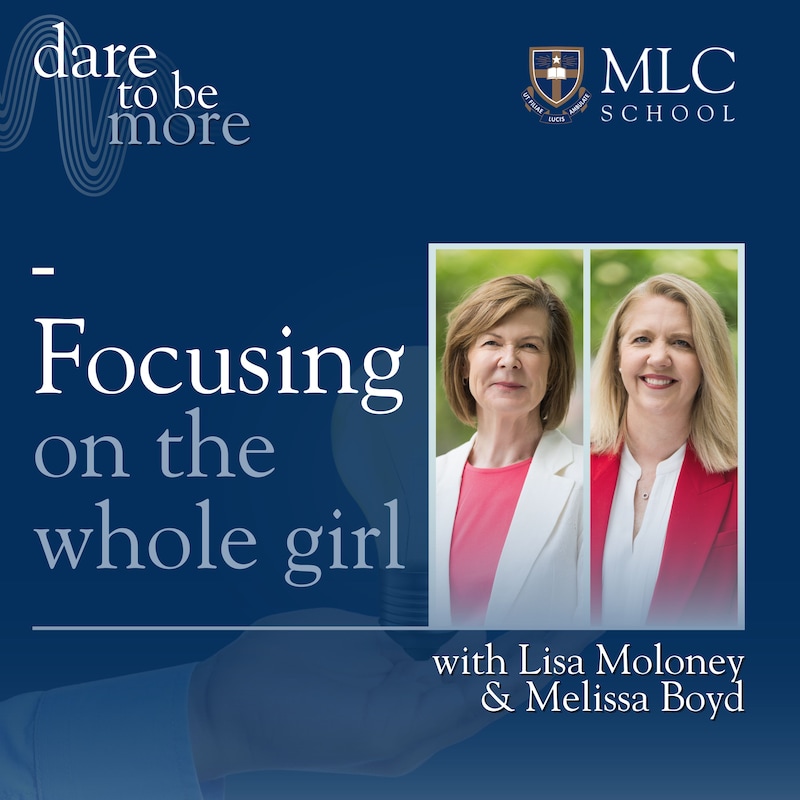
In this episode of 'Dare to Be More', host Anthony Perl speaks with Lisa Moloney, Principal, and Melissa Boyd, Deputy Principal, about MLC School's approach to developing the "whole girl" through a balanced education that extends beyond academics.
Lisa and Melissa explain the School's guiding principle that "the MLC School girl is at the heart of everything we do," and how this shapes decision-making across all aspects of school life. Melissa, who oversees co-curricular programs, camps, immersions, and service learning, describes how these opportunities help students develop both competence and confidence.
The conversation explores MLC School's extensive co-curricular program, which offers over 80 different activities ranging from music and sports to robotics and cadets. Melissa shares how these programs evolve based on student interests, highlighting the school's new all-girls cadet unit—one of only three in Australia—where "girls lead girls" in developing leadership skills.
Lisa discusses the School's renowned music program and how participation in activities like music helps build community, develop persistence, and teach students that improvement comes through practice and dedication. Both educators emphasise that involvement in diverse activities not only creates well-rounded individuals but often leads to stronger academic outcomes.
The episode concludes with Lisa and Melissa sharing their personal interpretations of the School's motto, 'dare to be more', describing it as both an invitation to try new things at the individual level and a call to action that permeates the entire school community.
About MLC School: MLC School is a leading independent girls' school in Sydney, committed to empowering young women through academic excellence, character development, and innovative education. Our mission is to inspire girls to dare to be more.
Connect With Us:
- Website: mlcsyd.nsw.edu.au
- Instagram: @mlcsydney
- Facebook: @MLCSchoolSydney
- LinkedIn: MLC School
Co-host: Anthony Perl
Produced by: 'Podcasts Done for You'
Transcripts
Welcome to Dare to Be More the podcast from NLC
2
:School in Burwood, Sydney.
3
:Today we are focusing on whole girl
education with our special guest,
4
:Lisa Maloney, principal of MLC
School and Deputy Principal Mel Boyd.
5
:In this episode, you'll discover how
MLC school's extensive co-curricular
6
:program develops well-rounded students.
7
:The connection between co-curricular
involvement and academic success,
8
:as well as why balance is essential
for nurturing mind, body, and soul.
9
:MLC School is committed to empowering
young women to become confident,
10
:compassionate, and courageous
leaders who dare to be more.
11
:I'm your host, Anthony Pearl.
12
:Let's begin today's conversation.
13
:Well, hello everyone and welcome to
another episode of Dare to Be More.
14
:I am delighted to have both Lisa
and Melissa with me here today.
15
:Why don't we start with you, Lisa,
and do another quick introduction.
16
:I know people would've heard you
on the first episode, but let's
17
:tell everyone again who you are.
18
:I'm Lisa Maloney and I'm
the principal of MLC School.
19
:This is my eighth year and I
absolutely love it, so I'm very happy
20
:to be back with you again today.
21
:Fantastic.
22
:And Mel, why don't you do the honors
of introducing yourself to everybody?
23
:For sure.
24
:Hi, it's nice to meet you.
25
:I'm Mel Boyd.
26
:I'm the deputy principal
here at MLC School and I am
27
:partway through my third year.
28
:I think this is going to be a really
interesting episode for everyone listening
29
:in, because this is getting to the
heart of who the school's all about.
30
:It's about the girls, isn't it?
31
:I mean, that's the, that's where it
all begins and ends, doesn't it, Lisa?
32
:It does, and in fact, I, I love the
fact that you gave me a lead in there
33
:around heart because when we were working
on our strategic planning quite a few
34
:years ago, actually, we're trying, we're
wrestling with what is this all about?
35
:What's, how do we describe
what MLC is about?
36
:We came up with this phrase, I guess,
that the MLC school girl is at the heart
37
:of everything we do, and that's carried
on into the next strategic planning
38
:period because it's proved to be a
really good test for us at all times.
39
:As we talk about the future of the school,
as we talk about decision making, even
40
:when we talk about budget, it becomes,
well, are we putting the girl at the heart
41
:of this decision when we come back to it?
42
:That's what we're here for.
43
:So yes, that heart part is absolutely
key, and it obviously speaks to.
44
:I guess just the practicalities, but
there's also that passion for making
45
:sure the girls are cared for is where
that heart metaphor also resounds.
46
:I think that's certainly been very
obvious to me in talking to lots of people
47
:connected with the school, that heart
is very much at the center of things.
48
:Absolutely.
49
:And to I guess from that.
50
:Has evolved, I guess, approach to teaching
and learning and also to wellbeing
51
:and, and our pastoral care programs.
52
:All of that is framed around how, how
do we make sure that this is true?
53
:How do we make sure that we look
after her heart as well as her
54
:head and her spirit, and all the
other parts that are so important?
55
:And that's where Mel's job is
critical in the deputy principal role.
56
:She takes the lead in making
sure and keeping us honest in
57
:that space and looking at how
our programs and opportunities
58
:support that very important goal.
59
:Mel, I'd love you to jump in there as well
with your impressions of things, because
60
:I think it's also important, actually, you
bring an interesting point there, Lisa.
61
:I don't think people understand what a
deputy actually does, so I think it's
62
:also important to understand that, 'cause
we kind of have this notion of what a
63
:principal does at the head of things.
64
:Mm-hmm.
65
:But where does the deputy fit in?
66
:Because this is an important part of it.
67
:I'd love someone to
explain it to me as well.
68
:No, in all in ness.
69
:I think when I describe what I
do, it no day is the same, which
70
:is what a fantastic job that is.
71
:But I really talk about beyond
the curriculum a lot of the time.
72
:And the programs that I have direct
responsibility for looking after
73
:include our co-curricular, our camps
service, and all of those activities
74
:that can bring a lot of character
and opportunities to our girls.
75
:And when I talk about.
76
:Our responsibility as leaders and what I'm
hoping to curate in the programs that we
77
:offer is that combination of what we're
trying to develop in the girls, which is
78
:that perfect mix of competence and their
self-efficacy and belief in what they
79
:know and can do and their confidence.
80
:So that ability to generally dare more
to take those measured risks and extend
81
:themselves in whatever passionate pursuit
that they put their heart and mind to.
82
:So that's what we are here to cater for.
83
:I mean, talk to me a little bit about
the co-curricular aspect of it and
84
:what that actually means for the girls.
85
:Yeah.
86
:I, I, I sort of lose a bit of sleep when
I think about how much we have on offer,
87
:and if you were to count together all of
the different aspects of that, whether
88
:it's music programs, debating and orry,
academic giftedness programs, our sport,
89
:there's so many things that we could do.
90
:There's actually 80 plus different
activities on offer here.
91
:I think when you think about that concept
of the girl at the heart, it's really
92
:making sure that whoever she's, whatever
she loves, there's an opportunity
93
:for her to engage in those pursuits.
94
:So some of those activities
exist within the school day.
95
:So we have student developed lunchtime
clubs, and I'm thinking about, one pops
96
:to mind is Craft Club, which is a group of
students who really like craft, who got a
97
:very small budget and they gather together
once a week to create and connect.
98
:But what that's turned into is actually
the service club, and they're creating
99
:and connecting, but doing that now with
heart and purpose to serve the community.
100
:I know a few weeks ago.
101
:Their craft activity was to decorate
cupcakes, but now they decorate
102
:cupcakes for a local nursing home.
103
:So they're expanding their little club
and growing it and finding their purpose
104
:together, which is so beautiful to watch.
105
:Can I jump in the mail?
106
:'cause what I love about that is
that's the mission in action as well.
107
:So I guess we talk about them being
agents of change in the their own
108
:lives and the lives of others.
109
:And I love the fact that just from
what seems to be a simple thing
110
:of just a student initiated group,
that they grow along that path.
111
:Actually demonstrate that very
thing that we're wanting to do
112
:in the world as a school and
community, very much student driven.
113
:Those clubs is well as staff will,
will be sort of the guide on the side
114
:rather than the stage on the stage and
really just facilitates those programs.
115
:But outside of that we have
our formal offerings as well.
116
:And those are programs led
and delivered by school staff.
117
:So, Al May Lisa, you might wanna talk a
little bit about our world renowned music
118
:program and some of the offerings there.
119
:Oh, and I must say, when I was thinking
about coming to MLC School as a musician,
120
:this was one of the things that was very
much at the heart of my decision making
121
:was the school's reputation for music.
122
:And getting here the quality of what we
produce is absolutely astonishing, but
123
:it's also the breadth, and I guess it
comes back to this, making sure there's
124
:a place for every girl who wishes.
125
:Be musical to explore music,
to have that opportunity.
126
:So you see it, you know there's the
rock band and there's the, but then
127
:you've got your chamber orchestra.
128
:You've got your year one strings, but
you've got your un audition choir.
129
:So there's all these
different opportunities.
130
:And music making is so community building.
131
:In fact, we have our first
old girls choir rehearsal.
132
:So our old girls have decided that music
was such a foundational part of their
133
:experience right across the years that
they're coming back tonight for the
134
:first rehearsal of the MLC School All
Girls Union Choir under the direction
135
:of one of our, one of our former
students who is now a staff member.
136
:So music is just a key part of
what we do for many, many reasons.
137
:The link to academic success, of course,
is important, but it's about community.
138
:It's about finding your tribe, finding
people that have similar interests to you.
139
:Daring to be more, yeah, nothing
is more, more challenging I don't
140
:think, than standing on a stage and
performing with a musical instrument.
141
:You know, all those practice hours and
so on, kick in and the muscle memory
142
:means that you usually do perform well.
143
:But yeah, sometimes maybe you don't
and that's a lesson in itself.
144
:But yeah, music is huge and you have,
you hear the passion in my voice
145
:because it was part of my reason for
coming and continues to be part of my
146
:reason for loving the school so much.
147
:It's so wonderful that people find
their place, and even from a staff
148
:point of view as well as the students
themselves, you know that they find
149
:what is their passion and what drives
them and gives them an outlet for that.
150
:Because I think too often school can be
thought of as just about math, science,
151
:English, and it's not about that.
152
:It's about so much more and pursuing
passions that can sometimes lead
153
:to careers as well, can't they?
154
:I mean.
155
:Lisa, there's plenty of people that
find these little things and then
156
:it turns into something more because
it's been driven by a little club.
157
:Abso absolutely, and I think that's
one of the great joys of watching
158
:girls, you know, as they grow
and they find new opportunities.
159
:And one that's growing in for
us at the moment is this stem
160
:engineering robotics space.
161
:And I can see in the future those girls
coming back to us and telling us about
162
:these careers they have pursued in.
163
:In related fields.
164
:'cause let's face it, we really dunno
what those, some of those fields
165
:may be in the future because that
space is evolving so, so quickly.
166
:But I can see that yes, that there's
just so many opportunities for them to
167
:take that knowledge and that willingness
to try new things and take risks.
168
:And I guess if we're being cliche,
dare to be more in that space, into
169
:the world beyond, and then apply
that to whatever opportunities come
170
:and as you say, potentially careers.
171
:So, yep.
172
:Very exciting to think about all the
possible pathways that they might take.
173
:And Lisa, that's a big list of 80
odd active of co-curricular activ.
174
:Um, that is huge.
175
:But I suppose there's, there's always
room for more as well, isn't there?
176
:Oh, so when will we get anything done?
177
:You know, I, I would actually
probably counter that with what we're
178
:trying to do here is not necessarily
keep adding more, but just to keep
179
:refining that list of activities
to really reflect student interest.
180
:So picking up on what
Lisa said about robotics.
181
:Robotics started here as RoboCup, which
is very much a junior school focus.
182
:And it's not so much about the driving
of the robots, but the building of the
183
:robots and that small group of girls that
started in junior school a few years ago
184
:have pursued that passion relentlessly.
185
:And the demand is now there
that we move into the big girl
186
:robotics, the competitions, which.
187
:Not only are we designing and
programming and building, but we
188
:also now have to drive and compete
in competitions with our robots.
189
:So it's really exciting to watch
their passion grow and as we add more
190
:in robotics, there might be another
activity that might cease to continue
191
:because that's not as relevant
for our girls in this day and age.
192
:So it's curating and listening
to our community on their next.
193
:Point of interest is, and at the same
time, there will be activities that
194
:we will always run because they're
always going to be a feature, and
195
:that's some of our sport programs.
196
:One area that I think something
that we're super proud of at
197
:the moment is our cadet unit.
198
:So we've traditionally had a coke.
199
:Co-educational cadet unit with the boys
school and we've made, we've did to
200
:be more and made that bold decision to
become an all girls unit where we see
201
:girls leading girls and demonstrating
that genuine leadership on the field.
202
:So I think that makes us the
third all girls cadet unit in
203
:Australia, which is super exciting.
204
:There was a story, one of our lead
cadets was telling me a story the other
205
:day about what cadets means to her.
206
:We're actually.
207
:In the middle of doing our captain
interviews, and one of the questions
208
:is about what was that moment for you?
209
:That hook.
210
:And she was talking about going
on an incredibly challenging hike.
211
:And this is a camp that she
qualified for the very few young
212
:people in Australia get to go to.
213
:And she just wanted to quit.
214
:And she said it was so hard.
215
:It's the hardest thing I've ever done.
216
:You know, the blisters are
there, you just wanna give up.
217
:But she persevered and she was
so incredibly proud of herself.
218
:A quiet achiever that came back in
insanely strong and she'll be heading
219
:up one of the leaders of our cadet
program moving into this new era.
220
:So it's so exciting to watch
them find themselves and.
221
:How, how often do we as adults get
the chance to really push ourselves
222
:outside our comfort zone like that,
and that's what we are here for.
223
:Yeah.
224
:I think you may make an
important point there, isn't it?
225
:It's now, while they're young, is
the opportunity to try different
226
:things and to, you know, opt in
and opt out of different things as
227
:they learn what they might like.
228
:And you don't have to be
amazing at any of them.
229
:You just have to enjoy it, I think is
part of the experience, isn't it, Lisa?
230
:Oh, absolutely.
231
:And the idea that.
232
:To get better.
233
:You just have to keep doing it.
234
:You know that, that, in fact,
there, there is no magic to
235
:success or, or to achievement.
236
:It's really about continuing, as
Mel described in the cadet setting,
237
:but applying those learnings to
really any aspect of life that very
238
:few of us just luck into something.
239
:It's because we set a goal, we think
about, you know, what it is that we
240
:need to improve and we keep doing it.
241
:I think that's one of the great
advantages of students being
242
:involved in a range of things.
243
:It's, they're pretty safe failure things.
244
:You know, if you shoot the netball
and you miss, it's really not the
245
:end of the world, then maybe next
time if you practice at home or after
246
:school, next time you'll get the shot.
247
:And that's just an important life lesson.
248
:And there's nothing magic to it.
249
:It's just keep going and keep trying.
250
:And before you know it, you can
actually do something that you couldn't.
251
:And that's also really important
at the micro and the macro level
252
:in terms of how this whole.
253
:This program of opportunity comes back
to the girl, her heart, her development,
254
:and who it is that we want her to be.
255
:And Mel, we talk about this sort
of well-rounded education and
256
:incorporating all of these things.
257
:And Lisa just touched on sport as well as
part of that process for, you know, giving
258
:people that experience of working in teams
and all of those other things that sport
259
:give you in terms of physical activity.
260
:Definitely, well, it has to
be the mind, body, and soul.
261
:And we know so clearly
that one can't exist.
262
:Well and healthly without the others.
263
:So it's all about the balance, and I
think the way that we really encourage
264
:our girls to achieve that balance.
265
:One example is through the spirit
of MLC award that's opened to year
266
:seven and eight students that actively
encourages participation in at least
267
:one sport doing well in your academics.
268
:It's really looking at
that well-balanced girl.
269
:That ties into neuroscience where we
know that the brain starts to prune
270
:neurons at that late adolescent stage.
271
:So the more exposure we can have to
creative pursuits and academic pursuits
272
:and sporting pursuits, the longer we
keep all of those neurons firing while
273
:she's trying to figure out her strengths.
274
:So we don't wanna shut them off
early by focusing on only one area.
275
:If we focus on academic, sure we'll get
great results, but we might not have
276
:well balanced individuals at the end.
277
:And that's why it's so important that.
278
:The diversity of what we offer
captures everybody, but there's
279
:nobody here that can't play sport.
280
:I'm a PE teacher by background,
and I'm highly competitive.
281
:However, what I'm really proud of
in our sports department is our
282
:unofficial motto is have a crack.
283
:Have a crack.
284
:I, we don't mind if you just wanna
play a social netball team with
285
:your friends or if you are going
to go to nationals for rowing.
286
:We just want you having that lifelong
enjoyment of physical activity,
287
:making connections, putting your
devices down and connecting with the
288
:world around you is so important.
289
:Knowing how to be part of a team there,
I mean there are so many possibilities
290
:that open up from being involved
in sport and other co-curriculars.
291
:Yeah.
292
:Well, can I jump in there?
293
:'cause there's something you said.
294
:In my experience, it's a little bit
counterintuitive in terms of you would
295
:think that just focusing on academics
would get you the highest results.
296
:What?
297
:Yeah.
298
:Whatever measure you'd like to use.
299
:But in my experience, the girls who
actually do get the highest results, I
300
:guess at the end of schooling are usually
the girls who have been involved in,
301
:in a range of co-curricular activities.
302
:Obviously as they get older, how many
of those always needs to be negotiated?
303
:It is, it does seem to have that effect
that, you know, getting out, running
304
:around, you know, being involved in
debating, you know, and so on, does
305
:help with academic progress as well.
306
:And I think that that's something
that we really try to encourage is
307
:to, to make sure you do some of those
things right through your schooling.
308
:Acknowledging that you might need to
pull back the scope of those, because
309
:in fact, as well as being good for
your, your body and your mind and
310
:your soul, it's potentially gonna be
really good for your learning as well.
311
:Definitely studies out
there that show that effect.
312
:So important.
313
:And I guess one other question that I
wanted to ask you perhaps, Mel, is that
314
:if you're a parent sitting out there,
or indeed you, one of the students
315
:who's sitting out there that maybe
you're new to the school or you're only
316
:on the verge of coming to the school.
317
:What do they need to do to work out
how that, how and where they get
318
:involved in some of these activities?
319
:What's the little push they need
or where do they need to go?
320
:Well, they need to try before they buy
and try as many things as possible.
321
:You know, being open-minded about
activities and not just following what
322
:my friends do is the most critical
piece of advice for our new families.
323
:We have some really amazing opportunities
for them to come to Co-curricular
324
:Fair and have a taster and explore
some of the activities on offer.
325
:Not doing the one thing all the time.
326
:Some students will, if you are
going to be an Olympic diver,
327
:you are going to dive nonstop.
328
:But if you don't have plans and ambitions
to be an Olympic diver, having that
329
:diversity of individual activities,
something for the mind, something for
330
:the body, something for the heart.
331
:So for me, if I was a a parent
coming into year seven, I'd
332
:be encouraging my daughter to.
333
:A service activity to increase
her perspective on the world
334
:and to build her empathy.
335
:I'd want her to do a practical
activity where she's moving to ensure
336
:good health, and I'd want her to
do something musical or creative to
337
:really balance that whole view of who
she's and keep those neurons firing.
338
:So more for your daughter,
but don't try and do it all.
339
:That's also a trap.
340
:That's one of the.
341
:Year seven tracks, isn't it?
342
:Oh, I could do this if it was like
being in a shop full of lollies, you
343
:know, is that, which one do I choose?
344
:You can definitely, I indulge
like in a lolly shop and burn.
345
:So it's balance.
346
:And I think that comes back to
your point, Lisa, about those
347
:students who do well academically.
348
:They do learn to time manage,
they do learn to juggle.
349
:And when we think about our
own work-life balance, we're
350
:required to do that all the time.
351
:Let's teach them well in an enjoyable
way, how to manage life successfully.
352
:UPS downs, challenging times altogether.
353
:I've loved this discussion and I think
we could probably talk for a whole
354
:lot more about this because this whole
concept of the whole girl and what's
355
:at the heart of everything you do is
so much focused on that, and it's a
356
:tribute to both of you because it comes
out in the passion that you clearly
357
:have for all of these different areas.
358
:Just to wrap things up, I know
we mentioned this in the previous
359
:episode, Lisa, but I want to do
it again because in this context,
360
:and I'll come to you as well, Mel.
361
:Dare to be more in the context of the
whole girl and the girl at the heart
362
:of everything you do in the school.
363
:What does dare to be more really mean?
364
:Dare to be more means lots of things.
365
:It means in the micro space it means just
trying something a little bit different.
366
:A little bit.
367
:It's going for the team when perhaps
not guaranteed you're gonna get into it.
368
:It might be.
369
:For some children putting your hand
up in class when that's actually
370
:something that's quite hard for you.
371
:So it starts at that small space, perhaps
going to an activity at lunchtime where
372
:you don't necessarily know anybody.
373
:So it's from there.
374
:But then if we take that further,
it's also about what if our
375
:cadet program became all girls?
376
:What if we introduced this new
opportunity for our students that
377
:perhaps nobody else has thought of or
has, has dead to dead to investigate.
378
:So it works right across
the school and from.
379
:The younger student in the smallest class
right through to the grownups who are,
380
:who have got the job of making sure the
school is successful into the future.
381
:Wonderful.
382
:What about for you, Mel?
383
:What does dare to be more For me, I
think I picture it as Dare to be more.dot
384
:Choose your own adventure.
385
:And it could be dare to be more
caring, dare to be more adventurous,
386
:dare to be more academic.
387
:But for me it's a call to action.
388
:It's a call to do something, not just
to think about it, to actually make.
389
:Steppen to be courageous in
whatever pursuit it is that
390
:you are looking to engage in.
391
:But don't just sit we,
we get out and we do.
392
:It's a place of action.
393
:Fantastic.
394
:Such wonderful insights.
395
:I really appreciate you both
being part of this episode of
396
:the podcast, dare to Be More.
397
:Thank you so much.
398
:Thank you for joining
us on Dare to Be More.
399
:If you enjoyed this episode, please
subscribe wherever you get your
400
:podcasts so you never miss an episode.
401
:Your likes and comments also
help more families discover
402
:these valuable conversations.
403
:For more information about MLC School
and their approach to girls education,
404
:visit their [email protected].
405
:Check out the show notes
for more information.
406
:The Dare To Be More Podcast is
produced by podcast Done for you.
407
:I'm your host, Anthony Pearl,
and we invite you to join us next
408
:time as we continue to explore
what it means to dare to be more.
