Shownotes
This week's Wildlife Matters podcast unveils an intriguing exploration into the world of nature detective work, aptly titled "The Clue is in the Poo." In this compelling feature, we delve into the significance of animal droppings as vital clues in understanding local wildlife and their habitats. Our discussion highlights the myriad insights that can be gleaned from these often-overlooked indicators, enriching our appreciation of the natural world. Additionally, we reflect on recent developments in wildlife conservation, including the inauguration of a green bridge designed to facilitate wildlife movement, and we address the ongoing issue of raptor persecution in Scotland. Join us as we embark on this enlightening journey, encouraging you to observe and engage with the wildlife that surrounds you.
This week's episode of Wildlife Matters delves into the captivating world of wildlife detection through an examination of animal droppings, which we have aptly titled 'The Clue is in the Poo'. In this engaging segment, we unpack insights from studying scat, emphasising its significance as an indicator of local wildlife. By analysing the characteristics of analyses, including their morphology and chemical composition, we illustrate how these seemingly mundane remnants can provide profound information regarding the presence, habits, and health of the animal populations in our vicinity. Our discussion aims to inspire listeners to adopt a more inquisitive approach to their surroundings, transforming them into nature detectives who can decode the stories written in the landscape. Furthermore, the episode highlights recent developments in wildlife conservation, specifically the opening of the UK's inaugural heathland green bridge, which facilitates the movement of wildlife across human-made barriers. This landmark initiative exemplifies innovative approaches to addressing the challenges of habitat fragmentation, showcasing how thoughtful infrastructure can coexist with and benefit the natural environment. In stark contrast, we confront the disheartening issue of raptor persecution in Scotland, urging our audience to reflect on the implications of such actions for biodiversity and the ethical responsibilities we hold to protect endangered species. As we transition to our Wildlife Matters Mindful Moments, listeners are encouraged to immerse themselves in the serene ambience of a woodland at dusk, cultivating a sensory awareness that fosters appreciation for the complexities of wildlife interactions. This segment serves not only as a moment of reflection but also as a call to action, urging our audience to engage with their environments and contribute positively to the preservation of the natural world.
Takeaways:
- In this week's episode of Wildlife Matters, we explore the intriguing topic of animal droppings, emphasising their significance in understanding local wildlife.
- The newly constructed green bridge across the A3 in Surrey, which connects lowland heath habitats, facilitates wildlife movement, demonstrating the harmonious coexistence of infrastructure and nature.
- Our investigative feature, 'The Clue is in the Poo,' illustrates how animal scat can reveal vital information about species, behaviours, and ecological dynamics across various habitats.
- Throughout our adventures in Somerset's woodlands, we uncover the hidden gems of nature, inviting listeners to engage with their local environments and share their discoveries with us.
Companies mentioned in this episode:
- National Highways
- Surrey Wildlife Trust
- RSPB
- Wildlife Matters Org
Want to get in touch?
Email [email protected]
Transcripts
Hello and welcome to this week's Wildlife Matters podcast.
Speaker A:If you're curious about wildlife and the natural world, then you are in the right place.
Speaker A:Today we'll reveal some of the secrets that you can uncover about your local area with our main feature, the Clue.
Speaker B:Is in the Pooh, which is your guide to becoming a nature detective.
Speaker A:So get ready for a fun adventure as we share what you can learn from Poo and why it is one.
Speaker B:Of the most important interesting ways to.
Speaker A:Understand your local habitat and find out who lives there.
Speaker A:And then, in Wildlife Matters mindful moments,.
Speaker B:We'll focus on one of Britain's most.
Speaker A:Elusive and iconic mammals, a creature that is rarely seen, let alone heard.
Speaker A:But first, let's look at the latest.
Speaker B:News stories that have caught our attention.
Speaker A:The natural world in this week's Wildlife Matters Nature News.
Speaker C:Hello and welcome to this week's Wildlife Matters Nature News.
Speaker C:Our lead story this week week is the news that Britain's first Heathland green bridge has opened at the busy M25A3 interchange in Surrey.
Speaker C:After nearly 50 years, local wildlife, including reptiles and amphibians from Ockham and Wisley Commons can now move freely again.
Speaker B:The Cockcrow Bridge, which opened on 22.
Speaker C:May, reconnects these natural areas.
Speaker C:National Highways led the 2.7 million pounds project as part of the larger M25 Junction 10 improvements, which are now nearly finished.
Speaker C:The bridge crosses the A3 just before it joins the busy M25, giving people a quiet path above the traffic to explore with.
Speaker C:One side of the bridge is open for people walking, cycling or riding horses.
Speaker C:The other is planted with ether plants for animals and wildlife.
Speaker C: Since: Speaker C:National Highways says the new Cockcrow Bridge is the first in the UK built to support lowland heathland habitat.
Speaker C:This rare habitat has been shrinking in recent years.
Speaker C:The bridge is considered a significant step forward and clear evidence that development and wildlife can go hand in hand.
Speaker C:We just need the will to make things work for people and for wildlife.
Speaker C:The A3 divides Ockham and Wisley Commons, which together cover 600 acres of its rare eastland habitat.
Speaker B:Before the bridge, many species could not.
Speaker C:Cross between both commons, but now a 65 meter long bridge bridge connects them.
Speaker C:Wildlife Matters visited the bridge to speak with project leaders from National Highways and the Surrey Wildlife Trust.
Speaker C:Jonathan Wade, the senior project manager at National Highways, explained that from the start they knew they needed to build eight bridges around Junction 10.
Speaker C:As we developed the design, we soon realized the rare heathland on both sides offered us a once in a generation chance to create the UK's first heathland green Bridge into a landscape.
Speaker B:As a result, Cockroach Bridge is not.
Speaker C:Just a structure, but a six kilometer thread of bridal way open to everyone on horseback, bicycle or foot, restoring connection for people and nature.
Speaker C:In terms of animals and wildlife, the bridge was aimed at species such as amphibians and reptiles because of the value of the heathland that forms both sides of the A3.
Speaker C:It was all about creating the Connecticut connectivity for those reptiles, those amphibians and increasing their gene pool.
Speaker C:Wildlife Matters also spoke to James Hearn, the Director of Reserve Management at Surrey Wildlife Trust, who told us why the project is so important.
Speaker C:This bridge represents a bit of a turning point, I think, in how we perceive infrastructure installations in the UK.
Speaker C:This is the UK's first lowland heath Green Bridge.
Speaker B:It's on a major part of the.
Speaker C:Road network that is critical infrastructure for the uk.
Speaker C:For the first time in decades, species that live on Wisley Common can now cross the Green Bridge to meet species on Occam Common and vice versa.
Speaker C:It's a significant step towards blurring the lines between nature and development rather than.
Speaker B:Treating them as separate.
Speaker C:Connecting these two commons for the first time in decades is ecologically incredibly important.
Speaker C:There is a population of adders on both sides of the common, a species that is really struggling at the moment.
Speaker C:If you imagine those populations were isolated before the bridge went in, you end up with the problem of genetic isolation and a restricted gene pool.
Speaker C:But now, because we're able to let those species mix, that's given both populations a lot of genetic resilience.
Speaker C:So that will pay dividends in the long run.
Speaker C:The main benefit for wildlife, I think, of this connectivity is that rather than viewing this site as two separate sites, with the A3 cutting it in half, we can now view it as one site again.
Speaker C:And we have already recorded badgers, foxes and deer all using the Green Bridge on our trail cameras.
Speaker C:So although the bridge and habitat have only been here for a matter of.
Speaker B:Months, we've already recorded quite a suite.
Speaker C:Of species starting to use it.
Speaker C:The exciting bit is what we'll record over the next few months and years.
Speaker C:Our second story this week takes us to Scotland, where a new report highlights the extent of illegal raptor persecution persecution in the country.
Speaker C:Scotland's raptors are protected by law, but wildlife criminals still target them.
Speaker C:The new report shows these birds are shot, poisoned or trapped in remote locations.
Speaker C: ion report shows that between: Speaker C:The victims included nine golden eagles, 10 peregrine falcons, 12 goshawks, 27 red kites and 52 common buzzards.
Speaker C:The report is based on detailed investigations using post mortems, police files, court records, intelligence briefings and first hand accounts.
Speaker C:It found 62 shootings, 54 poisonings and 41 cases of illegal trapping.
Speaker C:Most of these crimes occur in remote parts of the countryside and out of public view.
Speaker C:Offenders often destroy evidence, remove satellite tags and try their best to cover their tracks, ian Thompson, RSPB investigations manager, told Wildlife Matters.
Speaker C:This report makes horrendous reading for anyone who cares about the protection of some of our rarest parents and most spectacular species.
Speaker C:Documented incidents were widely scattered across the country from the Scottish Borders to the Western Isles, but it is telling that 64.3% significant majority occurred on land managed for game bird shooting.
Speaker C:The report also explains how difficult it is to gather enough admissible evidence to support a prosecution.
Speaker C:A recent conviction of a Perthshire gamekeeper who killed a goshawk was possible because of video evidence from a hidden camera set up by the RSPB to watch the crow trap.
Speaker C:There are hundreds of these traps in use across our countryside with no compliance and no monitoring, little regulation and no accountability, said Ian Thompson.
Speaker C:We hope that Nature Scott's recently announced review of general licenses which permit the use of such traps will finally recognize the substantial evidence based documenting their widespread abuse and misuse and their indiscriminate nature as well as the impact they are having on protected birds of prey.
Speaker C:Our third story is from our recent visit to Somerset where I was lucky enough to spend some time time in Somerset's woodlands, which offer peaceful paths and a cool escape, especially in the recent heat wave.
Speaker C:From community woods by the river Tone.
Speaker B:To ancient slopes overlooking the levels, there.
Speaker C:Are so many peaceful places such as beacon Coppice, Kingston St Mary, which is a hidden gem in the Quantic Hills area of outstanding natural beauty.
Speaker C:If you follow a narrow country lane and cross the two fields, you'll find a quiet spot that feels untouched and peaceful.
Speaker C:The path follows the field edges and runs beside hedgerows before rising steadily, offering expansive views over the blackdown hills from the woodland edge.
Speaker C:Informal and sometimes muddy with a style to cross, the route is best suited to conform walkers seeking an adventure.
Speaker C:Or you can visit the spinney in Kingston St. Mary, a popular local wood with a network of informal paths in the centre.
Speaker C: ith ornamental trees from the: Speaker C:Mixed with native woodland trees, you'll find the remains of an old mill and.
Speaker B:A green wildlife corridor here, making it.
Speaker C:A great place to explore on the weekend.
Speaker C:The Netherclane Community Woodland at Bishop's Hull is just west of Taunton.
Speaker C:The Riverside Woodland Walk, which is level with good paths, was created from six acres of former pasture land that has now been planted with native broadleaf trees and meadows link the woodland areas.
Speaker C:Managed as near nature reserve, it's popular for family exploring and on lead dog walking with benches, riverside views and marked paths.
Speaker B:The site is mostly level, making it.
Speaker C:A more accessible option, but parking on the nearby land is very limited.
Speaker C:Above Norton Fitzwarren, a small woodland surrounds Norton Hill Fort, an Iron Age hill fort that once covered about 5 hectares on the hill Fort Toll.
Speaker C:Today, though, short paths wind through the mixed woodland and scrub to the edge of the ramparts.
Speaker C:And from here you can see across the Taunton Vale and get a feel for the site's long history.
Speaker C:Henlade Wood lies between Stoke St. Mary and Henlade on the western edge of the Blackdown Hills.
Speaker C:The woodland mixes pockets of ancient woodland with newer millennium planting on rolling ground, and it's home to a bright variety of bird species and seasonal wildflowers.
Speaker C:In clear, good weather, you can enjoy sweeping views across the Somerset Levels and the surrounding hills from the higher points in the wood.
Speaker C:Bishop's Lydiard Woodland is a small woodland just outside the village.
Speaker C:It's just 0.6 of a hectare, but it provides short shady loops and it pairs well with a visit to the village or a ride on the historic west side Somerset Railway, which stops nearby.
Speaker C:And lastly, Ash Common, which has a wilder feel to it.
Speaker C:With a mix of habitats spread across about 9 hectares, you'll find deciduous woodland grassland, wet heath, scrub, hedgerows and streams here.
Speaker C: nature reserve in Somerset in: Speaker C:A network of clearings and footpaths gives plenty of choice for circular walks, with good chances of spotting local butterflies and dragonflies and birds in the summer.
Speaker C:Somerset offers so much for wildlife and nature lovers, and we recommend that you take the opportunity to explore the county.
Speaker C:And we hope that you enjoy some of the woodlands that we have shared with you today.
Speaker C:And that has been this week's Wildlife Matters Nature News.
Speaker A:It was very exciting to be among the first people to see the new lowland heath habitat.
Speaker A:The Green bridge across the A3, just before it reaches the M25 north of Guildford in Surrey.
Speaker A:This bridge connects two commons that were.
Speaker B: Split apart in the: Speaker A:Generations of separation, the wildlife can now.
Speaker B:Cross freely between them.
Speaker A:Again, this shows that creative solutions can help both people and wildlife.
Speaker A:Hopefully this is just the first of many new ideas as the UK plans its future landscapes.
Speaker A:For decades, the persecution of raptors in.
Speaker B:Scotland has been an open secret.
Speaker A:Even though tourism brings money to large.
Speaker B:Landowners, it does not excuse breaking the.
Speaker A:Law or endangering native species like Golden.
Speaker B:Age ghouls or peregrine Balkans.
Speaker A:I was excited to share highlights from our recent Somerset adventures with you.
Speaker A:As we continue to journey through the.
Speaker B:Four corners of the uk, we can.
Speaker A:Keep bringing you fresh discoveries and sharing some hidden gems.
Speaker A:For every episode, we research into the.
Speaker B:Local or wild places and seek out the very best nature hotspots.
Speaker A:If you do visit any of the sites that we've shared today, or indeed they are your local habitats, then please.
Speaker B:Do get in touch and share your stories with us.
Speaker A:You will find our contact details in the show Notes.
Speaker A:Now, imagine stepping into a mixed broadleaf woodland at dusk.
Speaker A:This is where one of Britain's most.
Speaker B:Iconic native style species becomes active.
Speaker A:Can you guess which animals calls we're listening for in this week's Wildlife Matters mindful moments?
Speaker A:I hope you felt the magic of the woodland with us at dusk.
Speaker A:Were you able to guess which secretive.
Speaker B:Creature we were listening for?
Speaker B:And if you guessed correctly, well done.
Speaker B:And if you weren't sure, then don't worry because these mammals are rarely seen and even less often heard, so it's no surprise, really, if their sound remains a mystery to you.
Speaker B:Here at Wildlife Matters, we spend as many evenings as possible in late spring.
Speaker A:Sitting watching our local badgers and it's.
Speaker B:Always a delight to see them come out at night.
Speaker B:As the twilight deepens and they step from their sets and begin searching for food, it's a great time to listen to them chattering amongst them themselves.
Speaker B:And the perfect audio for this week's Wildlife Matters mindful moments.
Speaker A:Now let's move on to this week's main feature.
Speaker A:Wildlife Matters Investigates explores what it takes to become a true nature detective and highlights the value of every clue left.
Speaker B:Behind in the wild.
Speaker A:How do we do it?
Speaker A:As you'll see, sometimes the best evidence.
Speaker B:Is found in the most unexpected places.
Speaker A:And yes, the clue is in the poo on this week's Wildlife Matters main feature.
Speaker A:Hello and welcome to today's Wildlife Matters main feature.
Speaker B:We're talking about poo and we've entitled this one the Clue Is in the Poo and it's a field guide to wildlife droppings all around us in the countryside, parks and gardens.
Speaker B:One of nature's most overlooked clues is easy to miss.
Speaker B:The humble dropping.
Speaker B:Ecologists call it scat.
Speaker B:And for those who know what to look for, it tells an amazing story.
Speaker B:By looking at things like size, shape, color, smell, and what's inside, ecologists can learn a lot about local wildlife.
Speaker B:Sometimes DNA from scat can show not only the species, but also the individual animals, its family ties, population numbers and even breeding habits.
Speaker B:It's like reading the whole life story from a single tiny poo.
Speaker B:Professional ecologists also study the whole landscape for clues.
Speaker B:Every call at dusk, a muddy footprint, a tuft of fir on a bramble, a and a half eaten meal help them understand animal numbers, behavior and movements.
Speaker B:Droppings are just one part of that story, but often one of the most revealing.
Speaker B:Animal droppings are much more important than they may seem at first.
Speaker B:The best part is you don't need a science degree or a lab to start spotting these clues for yourself.
Speaker B:Signs like droppings show animals are active nearby.
Speaker B:So put on your boots, grab a stick and come along with me for a walk.
Speaker B:Together we'll learn how to find and identify wild animal droppings.
Speaker B:Because, as you'll soon see, the clue really is in the poo.
Speaker B:By the end of our walk, you'll feel confident enough to crouch down, take a close look and use size, color, texture and even smell to figure out which animal was there before you.
Speaker B:So you've found something interesting on the path ahead.
Speaker B:What should you do next?
Speaker B:Whether you find something odd on the lawn, see a pile near a park bench, or come across something on a country trail, the first step is always the same.
Speaker B:Make a note of your location.
Speaker B:Habitat is everything.
Speaker B:Typical habitats to look for include woodlands, riverbanks, meadows and heathlands.
Speaker B:Next, take a moment to observe the size, shape and color.
Speaker B:These are your best guides at this stage, especially the color of the droppings.
Speaker B:I always suggest taking a photo of what you find.
Speaker B:Put a coin next to it for scale before snapping the picture and write down the GPS coordinates.
Speaker B:Or use a three word location reference so you can return or share the find with others.
Speaker B:When you're ready to look closer, gently break the dropping apart with a stick or a spatula.
Speaker B:This is where things can get really interesting.
Speaker B:Just remember always to wear gloves and wash your hands well afterwards.
Speaker B:If you plan to conduct more detailed studies, such as examining the droppings under a microscope, you may want to collect the sample in a petri dish.
Speaker B:This approach is especially appealing to aspiring wildlife enthusiasts who want to follow in Chris Packham's footsteps.
Speaker B:He says, rubbing his hands together with barely contained enthusiasm.
Speaker B:Right then, if you're ready, let's head off on our first poo hunt and see what the countryside has left behind for us.
Speaker B:Our walk today begins in a sun dappled meadow alive with the hum of insects and the rustle of long grass in the breeze.
Speaker B:We already have a good sense of the wildlife that calls this habitat home.
Speaker B:And it's here we encounter one of the most common common wild animal droppings in Britain, the unmistakable calling card of the rabbit.
Speaker B:Rabbits and brown hares have a remarkable and highly specialized digestive system.
Speaker B:Through a process that's known as hindgut fermentation.
Speaker B:Bacteria in the caxam, a small pouch at the junction of the small and large intestine, break down tough plant matter and produce nutrient rich parcels called cacotrophs.
Speaker B:This process is how ruminants like deer chew their cud.
Speaker B:But it occurs in a different part of the digestive system.
Speaker B:These cacotrophs are absolutely vital to the animal's health.
Speaker B:Packed with B vitamins, amino acids and beneficial bacteria, they cannot be absorbed in a single pass through the gut.
Speaker B:The reason for this behavior, known as coprophagy, is simply survival.
Speaker B:A diet of grass and herbaceous plants is rich in fibre, but often low in protein and vitamins.
Speaker B:So re ingesting the caicatrophes is nature's way of extracting every last drop of nutrition from every mouthful.
Speaker B:Rabbits and hares typically re ingest caica trophes directly from their hindquarters, often in the quiet hours of early morning or late evening.
Speaker B:Before digesting them for a second time, it is important to note that the soft mucus covered caica troves are rarely seen because the animals eat them almost straight away.
Speaker B:The firm, dry pellets that you'll find on your walk are the real waste made after the second round of digestion.
Speaker B:Rabbit droppings are easy to spot once you know what to look for.
Speaker B:They are small, round hard balls, usually yellow, brown or green, and packed with fibrous grass.
Speaker B:Most are about 1cm across.
Speaker B:If you break one open, you'll find only plant material, which shows the rabbit is a strict herbivore.
Speaker B:Brown hair droppings are bigger and flatter than rabbit droppings, usually about 1 1/2 to 2 cm across, they are often greenish brown and have a surprisingly sweet smell.
Speaker B:Many people say it reminds them of freshly cut hay or even of a digestive biscuit.
Speaker B:Hair droppings are more fibrous than rabbit droppings and have larger pieces of plant material within them.
Speaker B:At the western edge of the meadow, the landscape changes.
Speaker B:Here, a fast flowing tributary cuts through the land, its waters eventually reaching the River Arran.
Speaker B:At this point, the river is about 6 meters wide.
Speaker B:Farmers straightened it a century or so ago, which is why the water flows so quickly.
Speaker B:And it's here, in the soft clay banks that our next wild mammal has made its home.
Speaker B:Water vole droppings are cylindrical, measuring 8 to 10 millimeters in length, with distinctively blunt ends, a shape often compared to a Tic Tac mint.
Speaker B:Ranging in colour from green and brown to an occasional deep purple, they are most commonly found in latrines, deliberate piles of droppings that serve as scent marking stations.
Speaker B:It's a kind of territorial billboard.
Speaker B:These latrines are typically positioned at the water's edge or on objects jutting out into the water, prominent spots deliberately chosen to broadcast the vole's presence.
Speaker B:Latrines are a key indicator of water vole activity, particularly during the breeding season, when females mark their territories.
Speaker B:Most active voles often trample the droppings after depositing them, reinforcing the scent mark.
Speaker B:A word of caution.
Speaker B:Rats also inhabit riverbanks and their droppings can look similar.
Speaker B:But rat droppings are bigger, pointed at both ends instead of blunt, and have a much stronger, unpleasant smell.
Speaker B:Very different to water bowl droppings.
Speaker B:Otters are staging a quiet but remarkable comeback across Sussex after years of decline caused by pollution and habitat loss.
Speaker B: nfirmed sighting came back in: Speaker B: Then, in: Speaker B:Although otters are mostly active at night, they are often busiest at dawn and dusk, when the world is neither fully awake nor asleep.
Speaker B:Even though I've visited many times, I haven't seen one here yet.
Speaker B:But the signs tell a different story.
Speaker B:What I have found, along with other local naturalists, are spraints.
Speaker B:The otter's droppings.
Speaker B:Dark, greenish, often slimy and irregularly shaped, they are unmistakably wild.
Speaker B:Otter spraints are actually some of the sweetest smelling droppings that you'll find in nature.
Speaker B:I know some serious wildlife enthusiasts who actually enjoy the slightly fishy spirit sweet smell of otter sprints.
Speaker B:I always take a sniff myself, although I wouldn't say I enjoy it.
Speaker B:To me, it smells a bit like sweet jasmine, floral and herbal, with a touch of green tea.
Speaker B:It's unusual, but not unpleasant.
Speaker B:Pull it apart and the otter's menu is laid bare.
Speaker B:Fish bones, glinting scales and the angular fragments of crayfish claws all tumble out.
Speaker B:Spraints are often found in obvious open places, like along riverbanks, flat rocks or under bridges, where they are quite easy to spot.
Speaker B:If you find otter spraints, I strongly suggest reporting your discovery to the local mammal society or your local wildlife trust.
Speaker B:Both keep ecological records and are always interested in hearing from the public.
Speaker B:We follow the river for another couple of kilometres, the sound of water gradually giving way to the creak and rustle of trees as we enter the woodland for the first time.
Speaker B:Today, this is mostly ancient woodland, but what makes it special is the mix of different habitats found here.
Speaker B:Most of these areas have been left alone, with little or no human interference.
Speaker B:Nature often does its best work when we leave it alone.
Speaker B:At the edge of the woodland, an old earth bank rises topped with coppice trees.
Speaker B:Centuries ago, this would have marked the end of the wood or the edge of a pasture.
Speaker B:But now the many stemmed hazels have been left to grow for a long time, twisting together to form a tangled thicket that gives perfect cover for secretive animals.
Speaker B:At the base of these hazels, you'll find a series of earth holes, some shallow, some deep, all made for a purpose.
Speaker B:And all of them point to one animal.
Speaker B:With cub season still in full swing, I keep a respectful distance from the den and instead turn my attention to the ground around me, scanning for scats that I know will be close by.
Speaker B:Out here, all your senses wake up and in the end, it's my nose that helps me find what I'm looking for.
Speaker B:Foxgat.
Speaker B:It looks a lot like dog feces, but foxgat has one clear feature.
Speaker B:It tapers to a point at one end.
Speaker B:It's usually dark, but its look changes with the seasons and depending on what the fox has been eating.
Speaker B:In autumn, the scat often turns a purple colour because the fox eats a lot of fruit and berries here.
Speaker B:In early summer, the fox's diet changes to birds, rodents and sometimes eggs, which is why the scat at my feet has a faint sulphurish smell.
Speaker B:Foxes often leave scat in obvious places, like tufts of grass, molehills or along paths to mark their territory and let other foxes know that the area is taken.
Speaker B:The scat has a strong musky smell that domestic dogs find irresistible.
Speaker B:They love to roll in it.
Speaker B:This behaviour likely comes from their wolf ancestors, when sharing a scent helped keep the pack together.
Speaker B:Thousands of years of domestication have done little to dim that ancient instinct.
Speaker B:There is another mammal resident in this woodland, one that has lived here far longer than most.
Speaker B:I head towards the Spot I know well where.
Speaker B:Their latrines will tell us everything that we need to know.
Speaker B:Latrines are shallow pits dug into the ground that are used repeatedly as shared toilets.
Speaker B:They are dug on purpose and often get covered over time.
Speaker B:Where you find one, you'll usually find several, because the animals that make them are very social and live in close family groups called clans.
Speaker B:I push through a small patch of elder now full of creamy white blossoms.
Speaker B:The plant often grows near badger sets thanks to years of disturbed nitrogen rich soil.
Speaker B:And there it is, the distinctive D shaped entrance to the set.
Speaker B:The cubs likely underground, so I will keep my distance.
Speaker B:The set is clearly active with fresh bedding has been pulled to the entrance.
Speaker B:Well worn paths lead away and a few coarse gray hairs are caught in the hawthorn blossom by the main path.
Speaker B:There are small signs, but they are unmistakable.
Speaker B:A short walk from the set.
Speaker B:Badgers, much like us, prefer a designated toilet area.
Speaker B:They dig small scrapes that are around 10 to 15 centimeters deep, which are used by the whole clan.
Speaker B:It's a surprisingly civilized arrangement for a wild animal.
Speaker B:Badgers are true opportunists, eating with the seasons and taking whatever the land provides.
Speaker B:As a result, their droppings are wonderfully variable.
Speaker B:In autumn, when earthworms, berries and fungi are abundant, they can range from dark black to a rich brown to a striking purple.
Speaker B:The droppings are usually firm and sausage shaped.
Speaker B:Still, they can get soft and runny depending on what the badger has eaten, especially after eating lots of juicy earthworms following heavy rain.
Speaker B:To me, badger droppings have a sweet musky smell, though some naturalists say that they smell oily.
Speaker B:Like many things in wildlife, it's a personal experience.
Speaker B:Two deer species are native to these islands, although several others have since established themselves here and all leave remarkably similar droppings.
Speaker B:Today we're focusing on the native roe deer, though this woodland is also home to the smaller dog sized munt track, an introduced species that has spread widely across southern England.
Speaker B:Deer are ruminants.
Speaker B:They regurgitate and chew their food a second time before fully digesting it.
Speaker B:This thorough process means their droppings offer very little clues about their diet.
Speaker B:By the time waste is produced, almost everything in identifiable has been broken down.
Speaker B:Because deer are strict herbivores, their droppings have almost no smell.
Speaker B:You'll have to rely on sight alone.
Speaker B:No sniffing needed.
Speaker B:All deer droppings look quite similar and are small for such a large animal.
Speaker B:Roe deer droppings are smooth oval pellets, usually around 2 cm long.
Speaker B:When fresh, they are shiny and jet black.
Speaker B:But as they age they turn dull brown as they begin to dry out.
Speaker B:Each pellet is a bit cylindrical, usually pointed at one end and rounded at the other, like a tiny polished acorn.
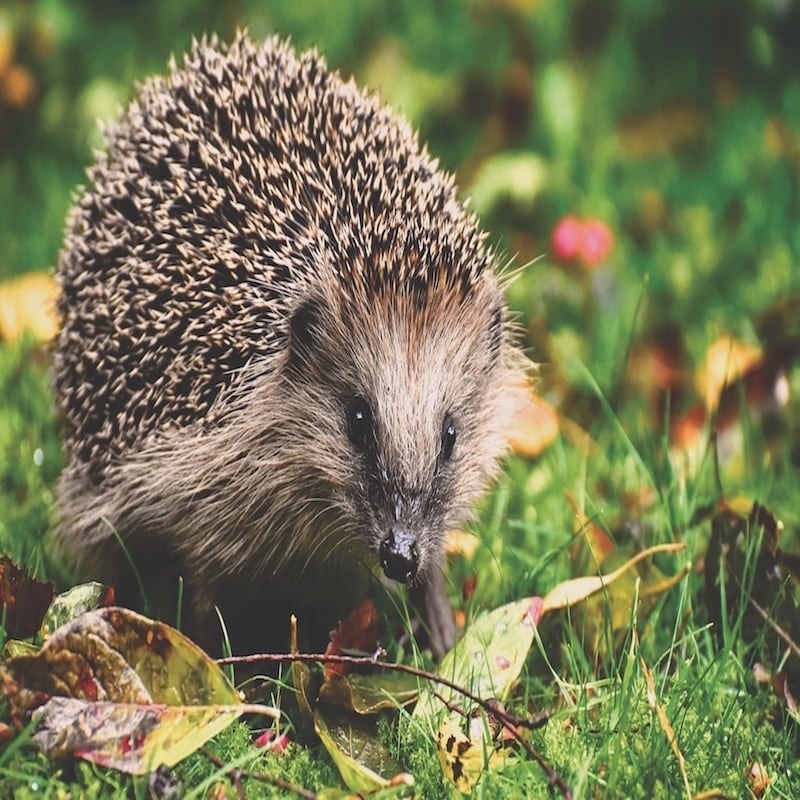
Speaker B:Our next species is one of Britain's most loved native mammals, the hedgehog.
Speaker B:Equally at home in ancient woodland as it is in a suburban garden, the hedgehog is a creature of remarkable adaptability.
Speaker B:Here, the local hedgehog population has stayed fairly steady, but in many rural areas, numbers have fallen quickly, and conservationists are now asking for the hedgehog to be officially listed as a red listed species.
Speaker B:It's a sobering thought for an animal so closely tied to the British countryside.
Speaker B:There is, however, genuine cause for optimism.
Speaker B:Urban hedgehog populations have grown significantly in recent years, and this spiky little creature is now, paradoxically, more commonly encountered in our towns and cities and villages than it is in the open countryside.
Speaker B:There are many reasons for the decline of hedgehogs in rural areas, but changes in farming are a big factor.
Speaker B:The use of more pesticides, removing hedgerows to make bigger fields, and using larger machines have all played a big part in the hedgehog's disappearance from our countryside.
Speaker B:Hedgehog droppings are cylinder shaped, around 5cm long and usually dark brown to black.
Speaker B:The best way to identify them is to look for tiny shiny bits inside the remains, such as beetle wing cases and other insect parts, which show that the hedgehog is a true insect eater.
Speaker B:In gardens where hedgehogs are fed, the color and texture of their droppings can vary considerably.
Speaker B:Wet and dried dog or cat food appears to provide a good nutritional balance, although it lacks the crunch that hedgehogs naturally obtain from beetles, snails, earthworms and slugs.
Speaker B:Hedgehogs aren't only insect eaters, though.
Speaker B:They will also eat eggs, fruit and nuts.
Speaker B:Always ensure hedgehogs have access to clean, fresh water and never offer them bread or milk, as most weaned animals are lactose and gluten intolerant.
Speaker B:As for the droppings themselves, they are not especially fragrant, particularly when the animal has been fed on pet food.
Speaker B:There is, however, a faint but distinctive hint of linseed oil that, once encountered, is not easily forgotten.
Speaker B:Before we leave the ancient woodland, there are a few more residents to find.
Speaker B:As always, it's their droppings that will give them away.
Speaker B:This area is home to at least three bat species, which is a lot for one place.
Speaker B:Since all British bats eat insects, their droppings only contain parts of insects that they can't digest.
Speaker B:This gives bat droppings a crumbly texture, which is important for distinguishing them from Mouse droppings.
Speaker B:Mouse droppings can look similar, but turn rock hard when dry.
Speaker B:Shape, size and texture together can help identify the specific bat species.
Speaker B:The first Rhus I've found is home to the common pipistrelle, Britain's most widespread bat, and the one you're most likely to see in your garden on a summer's evening.
Speaker B:Its droppings are fine textured, about 1.5 to 2 mil wide and 7 to 9 mil in length, and tapering gently at both ends.
Speaker B:They are thin and smooth, about the size of a grain of rice, and pile up right below the roost entrance, just as we see them here on an old timber beam.
Speaker B:The second bat species here is the noctule bat, one of Britain's largest bats and a true creature of the high canopy.
Speaker B:Noctules roost in the natural cavities and hollows of broad leaved trees, making ancient woodland like this an ideal home.
Speaker B:All around us, gnarled old oaks and ash trees offer exactly the kinds of crevices, splits and old woodpecker holes that noctural bats seek out from the ground.
Speaker B:Look up the trunk for dark stains.
Speaker B:These are marks left by the feces and urine that have seeped from the roost over time.
Speaker B:In an old woodpecker hole about 4 meters up, the dark smear on the bark is fairly easy to spot.
Speaker B:At the base of the tree, we find a small pile of droppings around 3mil wide and up to 15mil long.
Speaker B:The uppermost ones are jet black, indicating that they are fresh.
Speaker B:And below them, the older droppings have dried to a crumbly brown.
Speaker B:Pick up one of the older dried droppings and gently crumble it between your fingers.
Speaker B:You'll notice a sharp, unmistakable smell of ammonia right away.
Speaker B:If you needed more proof, that's it.
Speaker B:The third bat species in this woodland draws us towards the mill pond, a glittering stretch of still water fringed with willows, where Dorbenton's bats roost in the hollow trees along the bank.
Speaker B:One of the great pleasures of a summer evening is to sit quietly at the mill pond's edge and watch the Daubenton's bats at work, skimming the surface with breathtaking precision, snatching insects from the water with their feet or tail membrane in a display of effortless acrobatics.
Speaker B:Daubenton's backdroppings are unlike anything else that you'll find in the field.
Speaker B:They usually have three separate segments, each set at about 45 degree angles to the next, giving them a twisted, kinked look.
Speaker B:They have a Subtle smell of river plants.
Speaker B:Green, damp and faintly aquatic.
Speaker B:I'll leave you with one of my favourite wildlife facts, shared with me by a specialist bat ecologist on a memorable evening at this very spot.
Speaker B:If you place a Daubenton's bat dropping in the water, they will dissolve and turn it green.
Speaker B:Our last woodland resident leaves something behind that could be mistaken for droppings, but it tells an even more interesting story.
Speaker B:What we're looking at isn't feces at all, but regurgitated pellets.
Speaker B:Yes, tawny owls haunt this woodland.
Speaker B:Their calls are familiar sound on autumn nights.
Speaker B:Like many species, they return to the same favoured roost spots day after day.
Speaker B:And beneath these perches, the owl pellets accumulate.
Speaker B:All owl species regurgitate pellets because of how they eat.
Speaker B:Unlike most birds, owls swallow their prey whole, since they don't have teeth to break it up.
Speaker B:Deep inside the owl's digestive system in the gizzard, a strong muscular chamber that breaks down swallowed prey and separates what can be digested from what can't.
Speaker B:Fur, feathers and bone are packed into a tight bundle, which the owl then brings up through its beak as a neat, dry pellet.
Speaker B:Finding my first owl pellet as a child, the thrill of carefully pulling it apart to reveal a dense, powder fibrous mass of fur, and within it, the delicate bones of something small and unsuspecting.
Speaker B:At the time, I had no idea what I was looking at, and even now I can rarely identify the bones beyond the skulls.
Speaker B:Although a specialist can read the entire food chain from a single pellet, I.
Speaker A:Gather a handful of pellets to leave.
Speaker B:With a local volunteer, a meticulous and passionate naturalist who analyzes them under her microscope and always has something exciting to report when we next meet.
Speaker B:Meet.
Speaker B:As the evening sun sets behind the trees, turning the woodland to amber and gold, I head back through the woods, tired and muddy.
Speaker B:That's a wrap up of this week's Wildlife Matters main feature.
Speaker B:Until next time, keep your eyes on the ground, your nose in the air, and remember, the clue is in the poo.
Speaker A:I hope you enjoyed stepping into the shoes of a Nature nature detective with me, uncovering hidden clues and discovering the wildlife of one of my favorite places.
Speaker A:We encourage you to explore your patch of the world.
Speaker A:Whether it's a woodland, a city park, a community garden or a treasured nature reserve, the size and type of habitat really doesn't matter.
Speaker C:It's your curiosity that counts.
Speaker B:If you sit quietly beside a river, a pond or even in a park in the heart of the city and stop and listen.
Speaker B:You'll soon discover nature's secrets are all around you.
Speaker A:Anyone anywhere can become a nature detective.
Speaker B:The more you tune in with your.
Speaker A:Senses and piece together the evidence, the.
Speaker B:More the story of your local wildlife will unfold.
Speaker A:And with each discovery, your connection to.
Speaker B:The natural world will deepen.
Speaker A:Next time on Wildlife Matters, we're heading to the beautiful wetlands of the Somerset Levels.
Speaker A:Join us as we look for the magic and mystery of this watery landscape and adventure into Avalon.
Speaker A:Be sure to subscribe so that you never miss an episode.
Speaker A:Please leave us a review wherever you get your podcasts.
Speaker B:It really helps other wildlife folk to.
Speaker A:Find us in this world which is driven by algorithms.
Speaker A:And as always, thank you for spending time with us today.
Speaker A:We hope your inner nature detective has been inspired.
Speaker A:Wildlife Matters will return in two weeks.
Speaker A:Until then, stay curious wild ones.
Speaker A:This is Wildlife Matters signing off.
