Shownotes
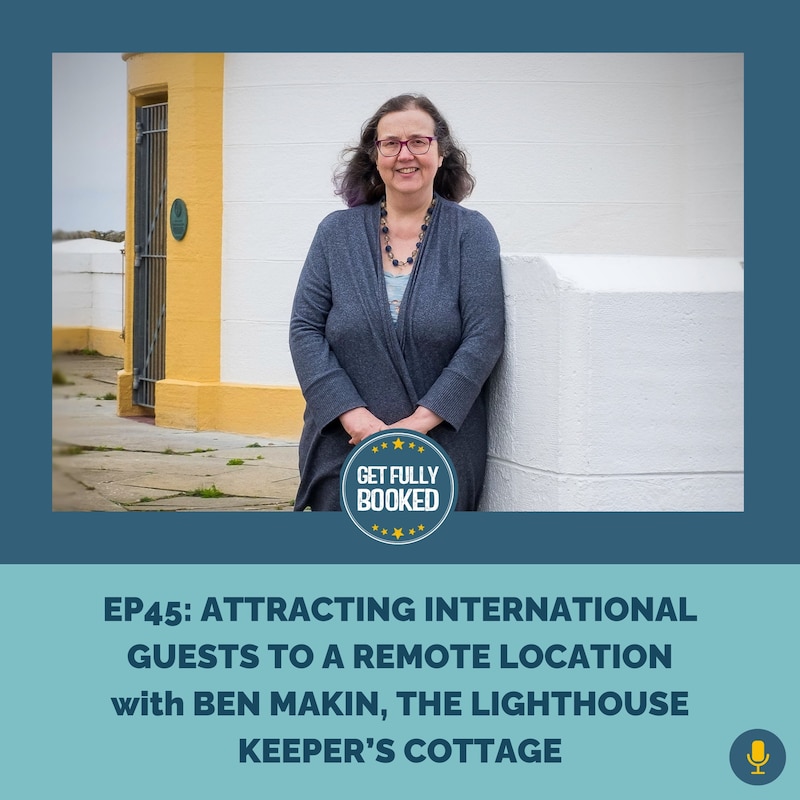
This week, I'm chatting with Ben Makin, who runs a lighthouse keeper's cottage near Wick in Scotland – possibly the most remote location of any of my marketing club members.
Ben's got a really interesting guest mix, with around 38% of her bookings coming from overseas visitors. She's worked out exactly who her ideal guests are and has even given them names. There's Christine, her UK off-season guest who comes with her husband and a couple of dogs, and Christophe, the European family road-tripper who books nice and early.
What's brilliant about Ben's approach is how data-driven her marketing is, but not in a boring way. She uses a simple paper questionnaire that's working incredibly hard for her business, giving her insights into what guests searched for, what they valued, and what they loved about their stay. This information has completely transformed her marketing messaging.
We get into the nitty-gritty of hosting international guests versus UK visitors – their booking patterns, how long they stay, and what they need from their experience. Ben shares some really practical ideas like using Google Translate for guest communications, having translated activity sheets, and even writing welcome messages on a chalkboard in guests' native languages.
On the marketing front, Ben's got a pragmatic approach to OTAs. She doesn't hate them because she's worked out how to use them strategically, particularly for attracting US guests who really love Airbnb and Booking.com.
If you're thinking about how to appeal to overseas visitors or are more off the beaten track than most, this episode is packed with practical insights from someone who's actually doing it successfully.
---
Key Takeaways:
- Know your ideal guest avatars in detail – Ben has two distinct profiles with names and booking characteristics.
- International guests often book earlier and at higher prices, filling your calendar before UK guests start booking.
- Around 70% of US guests use OTAs versus only 20% of UK guests – understand these different booking preferences.
- Add OTA commission fees on top of your rates so you still get your full amount.
- Use the strictest cancellation policy on OTAs to prevent excessive cancellations.
- Mine your data from website analytics, social media insights, and guest feedback to inform your marketing activity.
---
Find out more about the Lighthouse Keeper's Cottage Noss Head:
---
Do you have a marketing roadmap for your business?
No more winging it and feeling like you are in constant marketing chaos! Create your easy-to-follow marketing roadmap for the year ahead. My Direct Bookings Bootcamp is now available ON DEMAND! Let’s make this the best year yet for direct bookings! Head to my website for more info.
---
Are you currently rely on Airbnb or another online agent (OTA)?
Take Sarah's FREE quiz here - it's time to give them the boot!
---
Connect with Sarah:
---
Transcripts
You're listening to Get Fully Booked with Sarah Orchard.
Speaker A:Are you ready to master your marketing so you can ditch your reliance on the online agents and grow your direct bookings?
Speaker A:I'll be sharing with you exactly what it takes to grow your direct bookings and the simple marketing steps to get more profit in your pocket.
Speaker A:Hello again.
Speaker A:I'm back for another another episode of the Get Fully Booked podcast.
Speaker A:I'm your host, Sarah Orchard.
Speaker A:Today I'm delighted to welcome a fellow host to the podcast who is possibly located in the furthest away spot of all my marketing club members.
Speaker A:Ben Macon has an unusual holiday cottage rental near Wick in Scotland.
Speaker A:Up in the North Highlands, we're going to be chatting about attracting international guests to a republic more remote location and what marketing has worked best.
Speaker A:Welcome to the podcast, Ben.
Speaker B:Hello.
Speaker B:Thank you very much for having me.
Speaker B:I've been looking forward to this.
Speaker A:It's great to have you here and obviously I know quite a lot about your business because you're one of my marketing club members.
Speaker A:But for the people listening in today, tell us all about your holiday rental.
Speaker B:We have a lighthouse keeper's cottage.
Speaker B:It's so far north that we can see Orkney and we're on a route called the North Coast 500.
Speaker B:And that's a bit of a mixed blessing because people want shorter stays because it's marketed as a road trip rather than a destination.
Speaker B:And we do find that we are part of a longer trip for most guests.
Speaker B: We opened in: Speaker B: down and we reopened again in: Speaker B: So now my base is: Speaker B:I take my base year with marketing.
Speaker B: ar came from OTA, so that was: Speaker B: bit disappointing because in: Speaker B:But OTA use is actually rising in Scotland, so it's tracking the trends in Scotland.
Speaker B:So for my direct business, I have a website.
Speaker B:I blog on there every month.
Speaker B:I use Facebook.
Speaker B:But I do find that there's an absolutely constant need for horizon scanning just to keep on top of what's going on.
Speaker A:It's interesting that the percentage of OTA bookings are growing in Scotland.
Speaker A:Do you think that's because there is a higher percentage of international guests?
Speaker B:It is interesting and I don't know.
Speaker B:I think I did do some checks on my international guests and OTAs.
Speaker B:I say this a bit later, but OTAs are very popular, very popular with Americans and I think that might be what's driving the Scottish stats.
Speaker A:Yes, I was gonna say Scotland does have a, you know, destinations within the uk, obviously, you know, we've got London, you know, but Scotland with Edinburgh and, you know, the Highlands, it's obviously.
Speaker A:And the Islands as well.
Speaker A:It's obviously, it's a very big.
Speaker A:A very big draw.
Speaker A:So you do get a mix of both UK and international guests.
Speaker A:So what percent of your guests come from overseas?
Speaker B:About 60%, 62% of my guests are from the UK.
Speaker B:38 are from overseas.
Speaker B:About a quarter of those of my total guests are from Europe.
Speaker B:And I've got two avatars.
Speaker B:My UK guests is Christine.
Speaker B:She's British Nesta.
Speaker B:She comes off season with her husband and a couple of dogs.
Speaker B:And in fact, I had a booking come in about 10 minutes before we started this conversation, which was an absolute classic Christine booking.
Speaker B:I do offer an off season and shoulder season discount for couples for short stays, and that's just to get people to come.
Speaker B:But because it's a discount for couples, then if there's people with three or four people, I'm not offering that discount.
Speaker B:So that's Christine.
Speaker B:Like I said, quarter of my guests are from Europe and this is Christophe and he comes because he's planning a family road trip in Scotland.
Speaker B:It's a big.
Speaker B:It's a big family holiday for them.
Speaker B:And the lighthouse, it's a really cool place to stay on the route that he's planned.
Speaker B:So I don't think we pull people, but we are great for people who are coming here anyway.
Speaker A:So being on the north coast, 500.
Speaker A:So obviously people are planning their itinerary and obviously you've got a more unusual place which is obviously going to draw them in to sort of have a stopover with you on their route.
Speaker B:Yeah, or they're going to Orkney or whatever.
Speaker B:But yes, I'm not trying to market the area, just.
Speaker B:Just my place.
Speaker B:He brings his family in the summer and I do have to say I would probably fill the place anyway in the summer.
Speaker B:But the big advantage of Christophe is he usually books about five or six weeks before the UK visitors start booking.
Speaker B:So he books in Q1, January, February, March.
Speaker B:UK visitors, I find, don't start booking until April, May, June.
Speaker B:And that's recent.
Speaker B:It used to be before COVID everybody booked in January.
Speaker B:Now UK visitors are booking later and later.
Speaker A:Yes, that's a definite trend, isn't it?
Speaker B:Now, the other difference between Christine may well rebook us because she's in the uk.
Speaker B:Christophe typically doesn't they always write, oh, we want to come back in the guestbook, but actually they don't.
Speaker A:No, because it's a big trip, isn't it?
Speaker A:If they're coming from Europe and they're planning a road trip, it's sort of like when they do a road trip, they probably don't repeat it, I would have thought, unless they would something like they were maybe on a motorbike or something and they.
Speaker A:Or they had a sports car and they wanted to do a specific route again.
Speaker A:But I think from a lot of people, it's almost like maybe they've ticked it off their bucket list.
Speaker A:It's like, we've done that, we've done that road trip and then they'll plan somewhere else.
Speaker A:So, like you say, you have to work a bit.
Speaker A:I suppose you have to work a bit harder because you're not getting those repeat stays from Kristoff.
Speaker A:I love the fact you've got avatars and you've given them names.
Speaker B:Well, that was your training.
Speaker B:They're definitely.
Speaker B:Yeah, we're double.
Speaker B:It's kind of like a double bucket list.
Speaker B:We're like a bucket list because we're lighthouse and we're bucket list because we're on this road trip.
Speaker B:But I do think there's a really, really important question, which is what do international visitors do for you and for me, they fill the calendar early at a high price and that means I don't lose my nerve and I don't discount because I've got the security of those bookings and I'll talk about cancellations a little bit later.
Speaker B:But I think it's this really important question and I've only got one unit.
Speaker B:If I had like 10 units, then they would be doing something very different for me.
Speaker B:They wouldn't.
Speaker B:They wouldn't be the opportunity cost of them booking, if that makes sense.
Speaker A:Yeah.
Speaker A:So I love the fact it.
Speaker A:It because they.
Speaker A:The bookings come in earlier, it's a bit more sort of assurance and you can sort of see, I suppose, because the booking patterns are further out, less likely to.
Speaker A:Less likely to panic, less likely, like you say, to discount because you're thinking, I haven't got the bookings in.
Speaker A:Probably less weather dependent as well.
Speaker A:I suppose people in the UK who might be thinking of a domestic break might be watching the weather and do something on an impulse.
Speaker A:Whereas when someone's planning a road trip, which you've described, or a big trip from country, they're not going to cancel it or postpone it because of the weather, which is probably just as well.
Speaker A:When you're in northern Scotland.
Speaker B:They also tend to book a little bit longer.
Speaker B:So my average stay is 3.25 nights.
Speaker B:That's actually a couple of days below the Scottish average, which apparently is sort of 4ish 5 nights.
Speaker B:But I think that's because of the travel time.
Speaker B:If someone comes to Edinburgh, it takes another day to get to us and then another day to get back.
Speaker B:So my EU guests stay slightly longer.
Speaker B:They are 3.75 nights.
Speaker B:What I found really interesting is my US and Australian guests stay much less time.
Speaker B:They stay 2.75 or something.
Speaker A:Do they?
Speaker B:Yeah, and I think it's because they're trying to pack so much in.
Speaker A:I was gonna say, are they trying to cram while they're here?
Speaker B:I mean, American guests, they're just like, right, I have this tick list, I have this bucket list.
Speaker B:I'm going to spend an hour at this castle and then I'm going to drive three hours.
Speaker B:No, that three hours will take you four.
Speaker B:I'm sorry, you've got this.
Speaker B:Or five and then I'm going to spend 20 minutes.
Speaker B:It's like, no, don't do it like that.
Speaker B:So yeah, the American guests and interestingly the Australians as well, New Zealanders, they, they'll stay like a short time.
Speaker A:Oh, interesting because I mean, I presume the trips that they're coming over for are probably longer because of the, obviously a very long flight time to get here.
Speaker A:But then like you say, once they're here they might have two weeks, say or three weeks.
Speaker A:Then they're like super cramming everything in, ticking, ticking it all off.
Speaker A:So we've sort of covered this a little bit, but we've sort of noticed differences between hosting guests and that was more about their booking patterns and their behavior in terms of their actual stay duration and what they want to do when they're with you.
Speaker A:But what about their needs and wants versus UK guests just from a stay perspective once they're actually with you?
Speaker B:So I'm quite a hands off host so I tend to let people get on with it unless they reach out to me.
Speaker B:I don't sort of do a formal meet and greet for anyone because I think there's something quite exciting about sort of going to somewhere that's that you think of as being remote and far away and you can then explore it and oh, here we are and let's go in and let's see what it looks like.
Speaker B:And I think you can take some of that magic away by going, and there's the bathroom.
Speaker A:It ruins the adventure.
Speaker A:Yes.
Speaker B:Please don't put toys.
Speaker B:Please only put toys.
Speaker B:No, so we don't do that.
Speaker B:And also, they've done an awful lot of research already.
Speaker B:They kind of know what they're doing, particularly Christophe.
Speaker B:He's really planned.
Speaker B:It's.
Speaker B:They do tend to have their families with them.
Speaker B:I do recommend family activities in the cottage.
Speaker B:I've got an info tablet, which has got sort of a guest website and lots of other info.
Speaker B:It's like Touch day.
Speaker B:I did it before Touchstone was a thing, but I've got that there.
Speaker B:And I've also got laminated things to do sheets with QR codes to Google Maps.
Speaker B:So I go into my maps and I set up, like, what to do if you're here for three days.
Speaker B:And the drop pins.
Speaker B:So there's those and there as well for sort of just spontaneous things.
Speaker B:Prepping for this podcast made me think that I might actually take those sheets, bung them through Google Translate, and just have different language versions in there, just as a nice thing to have.
Speaker B:I do use Google Translate a lot, and if I get messages, I will bung my answer through to Google Translate.
Speaker B:Big messages tend to come in through English, but I still bung my answer through Google Translate because that's a courteous thing to do.
Speaker B:And a lot of them are actually booking using OTAs.
Speaker B:And the automatic translation in Airbnb, I do have to say, is really helpful.
Speaker B:I did at one point think about getting one of those phones that Samsung were advertising that translates conversations in real time, but I actually only had one guess where that would have been a help, because Christophe, bless him, they all speak.
Speaker B:He and his family all speak fabulous English.
Speaker B:So that's the shame it's not being used.
Speaker A:But I think those touches of even, like, well, if you wrote a welcome card and message in their local language, because obviously you know where they've come from.
Speaker A:I think, you know, it might not be perfect, but I think those little gestures and like you were talking about laminating the activity cards, they may then still use them in English.
Speaker A:But ultimately it's those little touches that show that you're understanding of cultural differences in language.
Speaker B:That's a nice idea, actually.
Speaker B:We put.
Speaker B:I have put a chalkboard up on the fridge that says, hello, Christophe, welcome, blah, blah, here's my phone number.
Speaker B:Have a great time.
Speaker B:But I could actually say bienvenue.
Speaker B:Um, so that's.
Speaker B:That's an action I'm going to take away from this, from this podcast.
Speaker A:See lots of ideas, but I think yeah, it's just sometimes there's little touches, aren't they?
Speaker A:Like you say you can still be a hands off guest, but you can.
Speaker A:Or host, but with your guests.
Speaker A:But you can, you can just put little touches in that make them like, if you had like a little welcome suite and a little message and it was written in, you know, local language for them, that's a nice welcoming touch.
Speaker B:The chalkboard's been brilliant just as a way of opening up conversations without being in their face.
Speaker B:And I've had so many more compliments on our hosting in the guestbook since it went up.
Speaker A:Yeah, people also write, I know another host who's got one and people, she writes a welcome message for the guests on the chalkboard and then they often scrub it out and write a thank you back to her on the chalkboard.
Speaker A:So I think it's a nice bit of guest interaction.
Speaker A:We've got a chalkboard in our lookout bar and obviously if we've got like, you know, proposals or honeymoons and things like that, we'll write like, will you marry me?
Speaker A:On it or congratulations.
Speaker A:If they're coming for a honeymoon and they do, then write things back on the board for us.
Speaker B:I hide my chalk pen.
Speaker B:Maybe I should actually leave it out.
Speaker A:Leave a little bit, leave them a little bit of chalk somewhere so that they can actually write something.
Speaker A:Because then it's nice for socials as well because this other host takes pictures of the messages and then she uses it for stories on her social media.
Speaker A:So it can be quite helpful from a content point of view as well.
Speaker A:But they sound like they're not in terms of expectations of the guest experience.
Speaker A:They don't have any sort of, like, peculiarities in terms of, like, requirements of like towels and bedding and that sort of stuff.
Speaker A:Anything odd?
Speaker B:No.
Speaker B:I mean, we had one Korean guest who used every single towel in the place.
Speaker B:Because culturally you use a towel once you don't use it, you know, reuse it, that's fine.
Speaker B:There's a huge thing of whether or not you should put an extra sheet on a bed for Americans.
Speaker B:I don't, we don't actually have enough Americans to make it worthwhile.
Speaker B:And I'm just like, no, you're coming to Scotland.
Speaker B:This is, this is what I offer.
Speaker B:This is.
Speaker A:Yeah.
Speaker A:And you probably want a blanket on your bed.
Speaker A:You want an extra blanket on your bed to keep warm and cozy.
Speaker A:So yes, it's.
Speaker A:Yeah, I think it sounds like you, you don't need to adapt the actual guest experience.
Speaker A:But like you said, there were some quite nice ideas there weren't there?
Speaker A:From like the chalkboard and the sort of, you know using some elements of local, local language to, to help them during their stay.
Speaker A:So should we move on to marketing and what I mean you did mentioned briefly about sort of what marketing you use but what marketing's work best for you to attract overseas guests.
Speaker B:They do come, I've said or mentioned already they're coming via the ATAs.
Speaker B:I think the very, very first thing obviously is to know your avatar and since I did a sort of I, I have a paper questionnaire which you know about which tells me what people search, terms they use, what they're wanting from the holiday, why they booked us and a bit about their travel and what they enjoyed staying and that enabled me to optimize my messages and I also mined the guest book again to find out what they enjoyed and the emotions that they record and that's been absolute gold for my messaging because I love history and I've got a gummy leg so I don't like walks.
Speaker B:My guests, castles, castles, they're cool but not interested in the details but they love the walks.
Speaker B:So it's completely transformed my messaging.
Speaker B:So really understanding your avatar is essential.
Speaker A:Is the fundamentals I suppose for the listeners benefits because I know you've got this very detailed questionnaire and I think you've got your people might be thinking of like a traditional like post stay survey which is normally like you know, quite short but you go into quite a lot of depth like you say so that you can really mine that for messaging and information.
Speaker B:My questions are what's what did you search for a lighthouse cottage, unusual place to stay and then a little bit more about location.
Speaker B:Was it on the North Coast 500 near John O', Groats, that sort of thing.
Speaker B:Then ask about what was important, was it price, facilities, green ethos?
Speaker B:Again trying to profile them is what's important.
Speaker B:Ask them about social media, what social media they use.
Speaker B:Ask them the purpose of the visit and bearing mind this is all of my guests, not just the things.
Speaker B:So the one I'm looking at now it was a family adventure but some of times it's visiting friends and family, that sort of thing.
Speaker B:And I give them tick boxes, paper and it's paper because that's so not threatening.
Speaker B:It doesn't feel like you're being mined for data.
Speaker B:Ask them about is it their own car, did they fly, have they hired a car?
Speaker B:Ask them about the trip, are they straight here?
Speaker B:Have they had an overnight stop and then Ask them about what's the best bits.
Speaker B:Was it castles, was it museums?
Speaker B:This guest I'm looking at now, it was castles and eating out.
Speaker B:That's what they wanted.
Speaker B:And then I capture their email address, obviously well done.
Speaker B:And I give them a little discount code if they want to come back.
Speaker A:Perfect.
Speaker A:So that's a piece of paper that is working really hard in your rental, isn't it?
Speaker A:In terms of not only giving you sort of insights, also probably telling you what marketing is working as well.
Speaker A:Because if you spending time and energy on one thing and then they're telling you that they're finding you through other means, obviously it sort of shapes that.
Speaker A:But also you've got their email address to talk to them again in the future and you've given them an incentive to come back.
Speaker A:So it's, it's working really hard for you.
Speaker A:I think it's great.
Speaker A:I'm.
Speaker B:It's a third of a four.
Speaker B:Two sides, third of a four.
Speaker B:Very, very not corporate.
Speaker B:It's, it's very low key and I've.
Speaker B:Obviously I have to then type it all in by hand to get the stats, but it's been the best thing that I did from day one because that has told me who my avatars are.
Speaker A:Yeah.
Speaker A:And I think working with you because we've worked together on your strategy, it's, you know, knowing that information has made, makes it so much easier for your marketing.
Speaker A:And I agree completely about what you've said about it not being digital and it's paper.
Speaker A:So it probably feels far more like you say they're not being data mined, they're sitting there of an evening maybe with a glass of wine or a cup of tea and a little coff and they're thinking, I'll just fill this in, you know, and it's, it's not, not too threatening for them.
Speaker A:So you're.
Speaker A:And you're getting some amazing insights.
Speaker B:Yeah, no, it's.
Speaker B:Anyway, what marketing's work best.
Speaker B:Know my avatar, absolute starting point, OTAs.
Speaker B:I already mentioned the OTA is rising in Scotland.
Speaker B:So a third of my guests are using OTAs.
Speaker B:70% are coming direct of those OTAs.
Speaker B:The other way around.
Speaker B:20% of my UK guests use OTAs.
Speaker B:So 80% are coming direct EU guests.
Speaker B:About 40% of my EU guests use OTAs.
Speaker B:60% are coming direct US guests.
Speaker B:70% use OTAs.
Speaker B:Only 30% of my US guests come directly US guys really, really, really like Airbnb and booking.com for some reason.
Speaker B:It's easy.
Speaker B:There's brand names it's safe.
Speaker A:Yeah.
Speaker A:They trust the brands and I suppose they feel maybe they have more comeback and security.
Speaker B:I think so.
Speaker B:I think, I think.
Speaker B:I mean, when I think about myself, am I booking a place in Turkey, having somebody that.
Speaker B:The feeling there's someone there to mediate an issue, even though we all know the OTAs are bad at that, and the fact that you can have discuss those issues in your own language, it's a comfort blankie, isn't it?
Speaker B:And then you've also got.
Speaker B:If you do a long trip, you've got all your paperwork in one place as well, which I think's an advantage for my guests doing their longer trips.
Speaker B:So I think there are, there's a place for OTAs and I wouldn't be able to do what you've done, Sarah, and just not have.
Speaker B:I do have ways I use them so I don't hate them.
Speaker B:So.
Speaker A:I love that.
Speaker B:I don't hate the OTAs because I have the strictest cancellation policy there is.
Speaker B:Before I did that, 50% of my booking.com bookings would cancel.
Speaker B:So not an option.
Speaker B:My default pricing is my summer rates.
Speaker B:So if there's no pricing there will default to the highest rate.
Speaker B:I do, but in actual fact, my pms, I use Bookster and they pull the rates direct from Bookster.
Speaker B:So I just have to update Bookster and I also add a commission.
Speaker B:I also have the commission fees on top.
Speaker A:Top, yeah.
Speaker B:So if I get a booking, I still, you know, there's a thousand pound booking, I still get the thousand pounds.
Speaker B: They pay: Speaker B:That's up to them.
Speaker B:If they want to pay 200 quid for a search engine and to have their.
Speaker B:The stuff all in one place, that's their call.
Speaker A:And the security, that's the.
Speaker A:That's the premium they're paying for that, isn't it?
Speaker A:So that's what.
Speaker B:Yeah.
Speaker B:So they pay the.
Speaker B:The OTA for the value add the OTA provides.
Speaker B:And that's where I don't hate a booking coming in from an ota.
Speaker B:It's a paperwork payment, but it's nothing else.
Speaker A:Yeah.
Speaker B:And the other thing with the OTAs is be willing to open your calendar early.
Speaker B:And that might be a bit of a dual sword because.
Speaker B:Do you want to.
Speaker B:But that's because I get.
Speaker B:My international visitors are planning ahead, so I need my calendar open early.
Speaker B:If I had a strategy of using the OTAs to plug gaps, then I wouldn't get those international visitors.
Speaker B:So it's a decision you need to make about balancing those pros.
Speaker A:And cons and understanding them as a guest, a potential guest in terms of their booking behaviour.
Speaker A:And I'm with you.
Speaker A:I'm not, you know, I'm not.
Speaker A:I'm actually somebody in the industry who doesn't go around bashing OTAs.
Speaker A:I think sometimes they really work in your favor.
Speaker A:I think if you.
Speaker A:And just as you've illustrated, Ben, when you actually see it as a.
Speaker A:It's a tool in your business and it's a marketing tool and it's getting you in front of an audience who would be difficult to maybe get the confidence for them to book direct.
Speaker A:Also, you've got their marketing power to get to that audience.
Speaker A:And I think long as you manage it from a, you know, pricing and making sure that they don't get all of your stuff, that you could shift yourself.
Speaker A:It's like I know another host who very much uses it to plug the gaps, but that's for a domestic market.
Speaker A:And I think if you can very much use it to your advantage if you.
Speaker A:If.
Speaker A:But you've got to proactively manage it and you very much do that.
Speaker A:And that's the difference, isn't it?
Speaker B:There's ways of doing it without OTAs.
Speaker B:So visit Scotland, the Scottish Tourism alliance, they host an annual event which puts operators in touch with the travel trade.
Speaker B:So this is tour operators and international travel trade buyers.
Speaker B:Now, again, I've only got one unit.
Speaker B:There's no benefit to me for doing that and a lot of work.
Speaker B:But if I had 10 units, that would be very different.
Speaker B:It would potentially be something that would go.
Speaker B:So it does need a lot of prep.
Speaker B:But VisitScotland hosts a webinar providing guidance and support.
Speaker B:So travel trade might be an option for you, depending on who you are.
Speaker B:As you know, I capture email addresses so of the website visits as well as from previous guests.
Speaker B:So my email opening stats actually reflect my booking percentages and I was thinking about this on my pop up.
Speaker B:I don't actually capture home country, but it would actually make sense to do that and to also see if you could capture it off your pms because then you can segment by uk.
Speaker B:For me it would be eu, uk, eu, Anglosphere.
Speaker B:But I think even if you don't segment, I can still include messages like, you know, oh, you're Scotland adventure or trip of a lifetime or is the White House on your bucket list?
Speaker B:So I think you can still do that.
Speaker B:So email obviously.
Speaker B:But to just to be minded that you will be, you could well have an international audience for that.
Speaker A:Yeah.
Speaker A:So you need to be able to segment them.
Speaker A:So also when you have your sign up form, you can then put home country, you know, capture that and make sure that you've got that in your segments.
Speaker A:And purpose of trip is also, you know, particularly, you know, I've got listeners and clients who maybe don't just have, you know, leisure guests, they might have contractors or business guests.
Speaker A:Again, it's like, you know, you need to think about your accommodation and who your ideal guest is and the occasion or the, you know, the motivation for their trip so that you can, you know, tailor your marketing accordingly.
Speaker A:And it can be very different according to their, you know, motivations.
Speaker A:I mean, generally you're not getting business people staying with you.
Speaker A:They're, they're coming on their, maybe on their road trip.
Speaker A:So you sort of know, you know a lot about their, you know, their motivations and what messaging to use to attract them.
Speaker B:But yeah, but if you're, if you're near an airport and you could well have international business people, I don't know.
Speaker B:Yes, it's really understanding that.
Speaker B:I also think you can do stuff on social media because obviously on Facebook ads in particular with Google Ads, you can target your avatar.
Speaker B:But before you do that, you need to really understand your audiences.
Speaker B:So my Facebook is massively skewed to a local audience.
Speaker B:20% of my Facebook audience is within 40 miles of me and sort of like 10% is from the EU.
Speaker B:Instagram Much more international for me.
Speaker B:It's much closer to my booking percentages.
Speaker B:In fact, I think it's actually higher.
Speaker B:My international audience on Insta is higher than my booking percentages, but Insta is massively less responsive for me.
Speaker B:I'll get chats.
Speaker B:If I post the same thing on Facebook and Insta, I'll have a conversation on Facebook which 20% of that is people who know me.
Speaker A:I suppose it's the nature of having a, you know, a lighthouse keeper's cottage is, it's a very Instagrammable sort of that someone sees it and they're like, oh yes, like, you know, save that, it's aspirational.
Speaker A:But they may not then be people that convert into actual guests and making that big trip to come and see you.
Speaker B:But those stats are available on Meta and they're also available on Google Analytics and Google Ads.
Speaker B:So mine those stats, find out who's looking at you.
Speaker B:My website stats are actually very interesting because half of my active users are from the UK, 16% are China.
Speaker B:But I think that's bots.
Speaker B:When I look at engaged sessions, it goes up from half to 70% of my engaged users of the UK and then the US, who we said are not a big guest set.
Speaker B:And then I've got a long tail with Germany and so on.
Speaker B:So my website stats sort of reflect more my actual direct bookings than my guest percentages.
Speaker B:And it's not engaging my EU guests as well as maybe it could.
Speaker B:And I did look at translating the website.
Speaker B:There's a WordPress plugin and it's time consuming and I step back from that.
Speaker B:But I did run a little pilot a couple of years ago where I had the front page translated by friends of mine who.
Speaker B:I've got German friends who translate into German, Danish into Danish and so on.
Speaker B:It's important if you do manual translations, it's by native speakers and that did attract German speakers to the website, which was interesting.
Speaker B:So I think there is a place for it and if you can do it in a way that's not incredibly time consuming, it may well be worth translating the website.
Speaker B:And with more and more people planning trips using AI, I think that really might be something to explore.
Speaker A:Yeah, I know when I worked at Avis, we had international company and I was in the European head office based in the uk.
Speaker A:We had.
Speaker A:It's obviously native language in every market.
Speaker A:And I think though we found that the, you know, the northern European countries tend to speak more keener to speak English than the southern European countries.
Speaker A:But ultimately you still needed, you needed websites in local language and created, like you say, not by somebody living in the uk, but someone who's a native speaker to allow for, you know, it's that sort of colloquialisms and, you know, native tongue is different to, you know, just like you say, like Google Translate or some of the automated, automated systems that can do it.
Speaker B:I was comfortable, I was happy to rely on the automatic translation and the AI translations because they are so good.
Speaker B:And also it's perfectly possible just to say at the top of every page, I'm sorry, this has not been translated back.
Speaker A:You have a little, little notice.
Speaker B:Yeah, a little sort of, oops, sorry, it's not worth it for me because as I said, I would film the summer anyway.
Speaker B:But if you're in a position where you can really attract and service and stand out, if you're in Oxford or Stratford or somewhere, like that really might be worth it.
Speaker A:Yeah.
Speaker A:And I think, you know, the Google Translate you can get, like you say there's a little widget you can put on your website.
Speaker A:So if you do.
Speaker A:For the listeners, if you do Get a lot of international guests because of your location or the type of property that you've got.
Speaker A:There are some Quick Win tools, they're never perfect.
Speaker A:But I think also guests appreciate you making the effort.
Speaker A:So even if you just accurately translate sort of a welcome message and then have a tool that will translate your pages, obviously if you're getting a very high percentage of international guests from particularly from European countries, you probably need to think about having.
Speaker A:And I've got some club members who are in that position and they actually are translating their websites into all of their sort of key feeder market languages so that they can provide something good for those guests.
Speaker A:I think, Ben, you've shared loads of amazing tips today and I think the thing, the biggest thing I've taken away from our chat today is there's two things I think about your business and why it does so well is that a you, you know, your ideal guest and you've also, you're very good on your numbers.
Speaker A:And you, you know, you, you inform your marketing through data, not in a boring way, but like, just like having your guest questionnaire, I think, you know, for people listening in, you know, the fact that you mine your guest book and you mine that, that little survey so that you've got those insights which obviously is then helping to fine tune your marketing.
Speaker A:And that seems to be working really, really well for you.
Speaker A:It's a great insight.
Speaker A:I have a last question for you and this is a fun question.
Speaker A:I think you're gonna like this one.
Speaker A:If you could have a famous person come to stay at your wonderful cottage, who would it be?
Speaker B:The first person who springs to mind is actually Princess Anne, because she has, I know she has a thing about lighthouses.
Speaker B:She's, she, I think she's visited, I'm not sure if she's visited every lighthouse in the uk, but she's, she's Queen Bee of the lighthouses, she's patron of this or that or whatever and she just often visits side houses, so that would be cool.
Speaker B:But that said Prince, well, not Prince Charles.
Speaker B:King Charles has his little summer hideaway at the Castle of May, which is 12 miles away.
Speaker B:So she might go, she might not want to stay with him.
Speaker B:Who knows?
Speaker B:Anyway, so that's one thought.
Speaker B:My other thought is, Alan, you're being greedy.
Speaker A:You're having, you're being greedy.
Speaker A:You're having two.
Speaker B:Princess not going to come, is she?
Speaker B:She's not going to come.
Speaker B:My other thought was Prince is Alan Cummings, Scottish actor.
Speaker B:He's the host of the US Traitors and I just love the way he interacts with Scotland.
Speaker B:It's his home country and he does a great tartan game and I think he would just be fun.
Speaker B:So I think that's my fantastic.
Speaker B:He's the person I'd invite.
Speaker A:Okay, you'd invite him.
Speaker A:I think that's a really, really good one.
Speaker A:Thank you for sharing that with us today and thank you for being here today and coming onto the the podcast to share your your learnings and what works for you.
Speaker B:It's been fun.
Speaker B:It's also it was a prompt for me to mine into my data, so that was good too.
Speaker A:So thank you for being here and thank you for everyone who's listening in today.
Speaker A:If you enjoyed this episode, you know what I'd like you to do?
Speaker A:I'd love it if you could leave me a review because you know how much us hosts love those five star reviews.
Speaker A:Next week I'm back with a solo episode to talk about a very special business birthday mine.
Speaker A:Bye for now.
Speaker A:I'll see you next time.
Speaker A:Thank you for listening to Get Fully Booked with Sarah Orchard.
Speaker A:If you want to see if you are ready to ditch the likes of Airbnb and grow your direct bookings, put your business to the test with my free direct booking Roadmap quiz.
Speaker A:Head to my website get-fullly booked.com quiz and let's get you more direct bookings and more profit it in your pocket.
