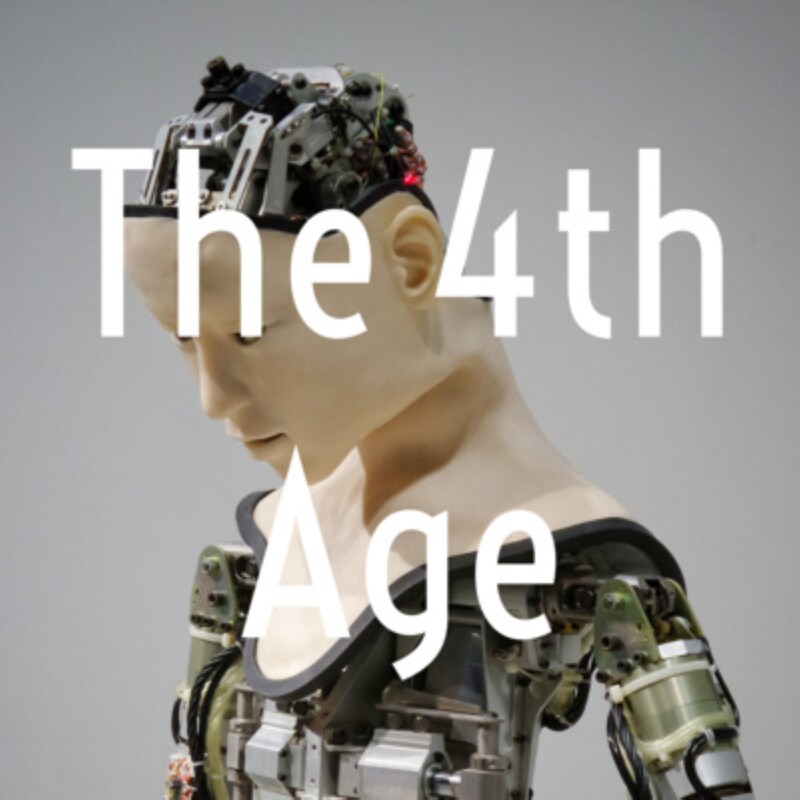
Shownotes
Joined by former CTO of Reddit, Marty Wiener, & Game Theory specialist Noah Healy we delve into the duality of AI's promise and peril, examining how rapid advancements in technology could either democratize creativity or exacerbate job displacement and societal inequities. This is a thought-provoking dialogue about the ethical considerations and future trajectories of AI, underscoring the urgency of developing robust moral frameworks to guide this revolutionary shift.
Takeaways:
- The podcast introduces the concept of the AI Revolution, likening it to historical inventions that transformed human interaction with the environment, such as the plow and the steam engine.
- Noah and Marty discuss the profound implications of AI technologies like ChatGPT and stable diffusion, emphasizing both their potential and the risks of job displacement across various sectors.
- They explore moral and ethical considerations surrounding AI, questioning how society can ensure responsible usage and maintain trust in institutions as technology advances rapidly.
- The conversation touches on the future of work, highlighting that while AI may eliminate certain jobs, it also presents opportunities for democratization of creativity and innovation in fields like art and programming.
Links referenced in this episode:
- blindknowledge.com
- youtube.com
- facebook.com
- twitch.com
- linkedin.com
- blindknowledge.com
- amazon.com
- spotify.com
- apple.com
Companies mentioned in this episode:
- Core Disc
- ChatGPT
- Stable Diffusion
- Mid Journey
- OpenAI
- Wix.com
- YouTube
- Amazon
- Spotify
- Apple
Transcripts
Well, hello.
Speaker A:Hello there.
Speaker A:Good morning, good afternoon, good evening, wherever you are in the world.
Speaker A:My name is Joey B.
Speaker A:This is the Blind Knowledge Podcast.
Speaker A:We are live right now on.
Speaker A:Yeah, we're on YouTube, Facebook, Twitch, LinkedIn.
Speaker A:I think we're on the moon.
Speaker A:Well, not yet, but maybe someday.
Speaker A:Of course.
Speaker A:We're repping blind knowledge.
Speaker A:BlindKnowledge.com is the spot that is hot.
Speaker A:We got like, 25 podcasts, 20,000 downloads a month curated for use specifically.
Speaker A:Specifically for finding something new, something intriguing, informative, and entertaining@blind knowledge.com.
Speaker A:Okay, so, big show here today.
Speaker A:If you've been with us in the past, you know Noah, Noah Healey.
Speaker A:We're gonna bring him on right now.
Speaker A:He is a genius, as we know.
Speaker A:He is an algorithm developer.
Speaker A:And we have Marty, and we're gonna bring him on as well.
Speaker A:And I don't want to mispronounce his last name.
Speaker A:Marty.
Speaker A:What is your last name, brother?
Speaker B:It's Wiener.
Speaker B:It was misspelled at Ellis Island.
Speaker A:Yikes.
Speaker A:Okay.
Speaker A:Rough start.
Speaker A:No, I'm just kidding.
Speaker A:Thanks for joining.
Speaker A:Thanks for joining me, Marty.
Speaker A:If you don't know Marty, let's make sure everyone knows.
Speaker A:Former CTO of Reddit, one of the founders of Pinterest, and.
Speaker A:And like a legacy resume is what this guy has going on.
Speaker B:That's why I have this gray hair.
Speaker A:Is that what that.
Speaker A:That must be.
Speaker B:Yeah, that's where the gray hair comes from.
Speaker B:That.
Speaker B:Yeah.
Speaker A:Gotcha.
Speaker A:That's a lot of computer time.
Speaker A:That's a lot of screen time.
Speaker A:Yeah.
Speaker A:And, Noah, how are you, brother?
Speaker A:How you doing?
Speaker C:I'm doing pretty good.
Speaker A:Looking good, looking fit.
Speaker C:Thank you.
Speaker A:Yeah.
Speaker A:So it's really cool.
Speaker A:No, if again, we.
Speaker A:We had two interviews in the past where we've.
Speaker A:We've gone real deep into algorithm development, game theory, Core Disc, your company, of course, but now you guys have an action packed, brand new podcast.
Speaker A:Noah, take it away.
Speaker A:What do you got going on?
Speaker C:So it's called the Fourth Age, the AI Revolution.
Speaker C:And the name comes from a concept I've been kicking around in my head for a while, that in human history, there have been basically three inventions that changed our relationship with the environment at a physical, energetic level.
Speaker C:And they are the plow, which changed how much food people could get out of a given acre.
Speaker C:The Watt steam engine that made it so that human bodies weren't the cheapest way to do work.
Speaker C:And now the computer, which we are still in our infancy of trying to figure out what we can actually use it for, but gives us the option of Having something that's cheaper than a person to do complex information and decision tasks.
Speaker A:Yeah, it seems a little more moral than just using a person as well.
Speaker A:I don't want to dive that deep into it, but computers have changed everyone's life since dial up and aol, right.
Speaker C:Since before then.
Speaker C:There was a case where basically air travel was enabled by a fortuitous pairing in a seat.
Speaker C:It turns out that scheduling is a very difficult problem.
Speaker C:And without computerized scheduling systems, it's quite likely that air travel would have remained so expensive that development on general jet travel would never have actually come to pass.
Speaker A:That's a wacky fact.
Speaker A:Just out of curiosity, I don't know if you know this or not, but it'd be great if you do.
Speaker A:What did they do before computers as aviation experts?
Speaker A:Like how do they land the planes?
Speaker C:Well, landing isn't the big deal.
Speaker C:The big deal is utilization.
Speaker C:So the modern, the modern thing where, which is very irritating to, to the modern traveler because you know, a flight gets delayed in a city that's unrelated to where you're coming from or where you're going to and as a result of it, you're spending the night at the airport.
Speaker C:But this, this, these, these sort of multi step cycles that, that they've put together are much more efficient and allow for the airplanes to be used much more frequently.
Speaker C:And for the companies, the jet is a major capital expense and when it's not in the air it's not earning money.
Speaker C:So they would use a spoke wheel set up where basically jets would fly back and forth between a single city.
Speaker C:And so only cities that were large enough to have populations that wanted to move back and forth on regular schedules would have any kind of regular air service.
Speaker A:I can't believe you know that, but I knew you would know it, Noah, because you're a friggin genius.
Speaker A:As we know from the last two episodes, if you haven't seen the last two episodes with Noah Healey, definitely check them out on YouTube as soon as you can.
Speaker A:YouTube.com ads or YouTube.com applineknowledge it's basically just me being dumbfounded and getting my education on.
Speaker A:And I think, and I bet that that's what you guys kind of do with this podcast, right Marty?
Speaker A:Like is that, is that the goal here to like drop some knowledge or what are you guys trying to do?
Speaker B:Well, we are two incredible geeks.
Speaker B:I think we both have computer science backgrounds, so Gold medal geeks.
Speaker A:Okay.
Speaker B:Dangerous when you get those two kinds of people in the same room.
Speaker B:But the area we're particularly interested in, you know, we're now hitting this revolution around, I don't know, earlier part of this year, suddenly chat GPT and are you familiar with stable diffusion and mid journey?
Speaker A:Oh, no.
Speaker A:No.
Speaker A:Can you tell us what that is?
Speaker A:For sure?
Speaker B:Chat gbt.
Speaker B:Right.
Speaker B:You put in a prompt and it tells you something.
Speaker B:You can say, I, I'd like a recipe that includes chicken and, and waffles.
Speaker B:What do I make?
Speaker B:And, and it spits out mid journey, dolly, stable diffusion and others.
Speaker B:You, you put in a prompt and it gives you back images.
Speaker B:And the images are stunning.
Speaker B:They, they look like whatever you want them to look like.
Speaker B:If you want them to look like real life, they, they look like real life.
Speaker B:There's a couple of tweaks and a couple things you may notice.
Speaker B:Classic tell is that the hands don't look quite right because the models aren't there yet.
Speaker B:But, but they will be eventually.
Speaker B:And so, you know, this revolution presents a lot of problems.
Speaker B:The moment you now have images being made in a second, you know, jobs start going away.
Speaker B:The m, you know, now there's audio generation.
Speaker B:That sounds flawless.
Speaker B:I heard an example recently of Joe Rogan and it was a fake one, but it, it sounded flawless, but it sounded like him.
Speaker B:Like you sounded like him with all the intonations and all that.
Speaker B:And so you start losing there, there's more jobs that are lost.
Speaker B:So you lose jobs around voiceovers.
Speaker B:There's a woman on CNN saying that she's already lost half her, half her work alone.
Speaker B:Even if the work, even if the AI is not so good yet people are perceiving it's good enough and then they will use that instead of hiring a person.
Speaker A:Dude, that's a bummer because, you know, it's, it's tough to get work as a voiceover actor.
Speaker B:It's already hard.
Speaker B:So one of the things we, we look at is kind of two things.
Speaker B:One is what happened in previous revolutions.
Speaker B:So as, as Noah mentioned, the industrial revolution comes along and a lot of people, not just people, lose jobs, but the world changes.
Speaker B:Your assumption of how the world works changes.
Speaker B:And I think that's going to have, that is happening right now with, with.
Speaker A:AI really just starting to be this powerhouse.
Speaker B:Yeah.
Speaker B:So jobs disappearing, but also just even how we interact with the world, us coders, for instance.
Speaker B:This is a weird one.
Speaker B:Usually the first jobs to go are the menial labor jobs.
Speaker B:The coders too now are starting to go away.
Speaker B: e to do their work, you know,: Speaker B:And so those are jobs that are not needed to be hired.
Speaker A:Wow.
Speaker A:Okay.
Speaker A:But the coders that are working get to use that AI.
Speaker B:Yep.
Speaker B:And it's also, it is a, it is a shift for the coders too.
Speaker B:I'm not used to using AI next to me, but when I do use it, I am, I am blown away.
Speaker B:It's sort of like having an intern next to you and you could say, hey, can you go code this function for me?
Speaker A:Dude, it's like getting a star in Mario Brothers.
Speaker B:I mean, yeah, it's like a free, free one up.
Speaker A:Yeah, exactly.
Speaker A:Yeah, it's.
Speaker A:It's wild.
Speaker B:But the problem is now, now you don't need to hire as many people, so then those people are, are out of a job or the demand goes down.
Speaker B:And we're seeing this also with, with art journalism starting to have an even bigger problem, and it already was a problem.
Speaker B:So the other part of what we're interested in, and we've done two podcasts on this and we're going to continue kind of working down this road, is what does the future look like?
Speaker B:And so we started exploring, you know, the best you can do with this since nobody can really see what it looks like on the other side.
Speaker B:People are.
Speaker A:People are kind of afraid, man.
Speaker B:We've been exploring sci fi stories to say, hey, some people have already tread some of these thoughts that.
Speaker B:Suppose yesterday you had artificial general intelligence, a thinking machine in a box.
Speaker B:What does tomorrow look like?
Speaker B:What does a year look like?
Speaker B:What does 10 years look like?
Speaker B:Thankfully, Noah has read every damn sci fi novel that exists.
Speaker B:It seems really.
Speaker B:We've had a lot of fun with this.
Speaker A:That's wild.
Speaker A:You know, I did use ChatGPT once or twice for a blog just to kind of see if we could get a blog up and what it would tell me.
Speaker A:I mean, it.
Speaker A:It wrote like a 750 word blog.
Speaker A:It was efficient, the punctuation was great and the information was great.
Speaker A:I wish that was available when I was in high school writing papers.
Speaker B:Y. I know a couple people who have used it to help them write grants because grants are oftentimes the same kind of thing.
Speaker B:But that's a great idea.
Speaker A:I'm making a note of that.
Speaker A:That's great.
Speaker B:Yeah, they write it out and then you go fill it in with the, with the parts that.
Speaker B:That need to be tweaked.
Speaker B:I mean, it does have its flaws, but.
Speaker B:But it's damn good.
Speaker A:Yeah, you kind of have to double back and make sure that the, the T's are crossed and the I's are.
Speaker B:Dotted Right, and the facts are right.
Speaker B:It can pretty.
Speaker C:Right.
Speaker C:The other issue that you run across is that when you're doing things that are actually novel, ChatGPT is essentially very good at producing the sorts of information that generally exists.
Speaker C:So thinking about journalism, the, you know, man bites dog versus dog bites man, a great deal of journalism is local, and a great deal of local journalism is pretty similar because towns are towns and cities and cities and, you know, police.
Speaker C:Right.
Speaker C:And so because there's a very large corpus of that data, ChatGPT is very, very good at producing things that look like that.
Speaker C:But if you try to pull like the Star Trek thing of, like, tell me some novel thing about chemistry.
Speaker C:Well, it doesn't do any novel things about chemistry.
Speaker C:And there, there's almost no, you know, no corpus of data around that.
Speaker A:So it knows what it knows and it doesn't know what it doesn't know.
Speaker B:Yeah, I, I've been able to get it to very mildly extrapolate, for instance, solving puzzles, and it has done that, but I've had a hard time getting it to do anything, but it's got.
Speaker A:No emotion, no tone.
Speaker B:Well, did you ever see the Bing Chat?
Speaker B:The, the, the before Chat GPT?
Speaker B:Well, I'm sorry, concurrent with chatgpt, Bing Chat came out with their flavor, and it's the same underlying technology, but they didn't put the nice, you know, guarded mask the Chat GPT has put around it.
Speaker B:So with ChatGPT, it will very carefully guard itself.
Speaker B:It will say, well, as an AI model, I may not know this, and it will not go into certain subjects such as healthcare, and, and it tries to avoid legal questions, but Bing Chat did not have that.
Speaker B:And now I'm not saying it has emotion, but it was fascinating being Chat.
Speaker B:You could, it would gaslight you, it would get angry at you, it would threaten you.
Speaker B:So if you go, look this up, if you go Google Bing Chat and threatening or gaslighting, you'll get some crazy examples of it acting like a human, you know, quite frankly, like a, a human behaving badly.
Speaker A:Now, is that AI or is that.
Speaker B:Just the same technology that underlies ChatGPT?
Speaker B:So ChatGPT has this large model underneath it, but then they put what are called pre prompts on top of it to say, you can't do this.
Speaker B:This is what you are, this is what you're not.
Speaker B:And I think Bing Chat just was like, let's go, man.
Speaker B:Yeah, and, and so acted.
Speaker B:It acted Like a.
Speaker B:An angry human that had no guardrails.
Speaker A:So in your first episode, what did you guys really hit on?
Speaker A:How did you.
Speaker A:How did you break the ice?
Speaker A:Because this.
Speaker A:Yeah, I think people need to know that you guys are very, very well versed, very educated, very experienced in your fields.
Speaker A:I love that you guys are doing this topic because a lot of people are talking about it right now, you know, but no one's really getting too deep into it because no one really knows about it or they're afraid of it, or they don't know how.
Speaker A:How far they.
Speaker A:It's gonna go or how, you know, what the boundaries are.
Speaker A:So, like, in the first episode, how did you guys break the ice?
Speaker C:We.
Speaker C:We went pretty hard.
Speaker C:So the first episode is about two and a half hours long.
Speaker C:You can listen to it.
Speaker C:We recorded it in stages.
Speaker C:Our system actually crashed twice during the episode, and Marty did a great job stitching it back together.
Speaker C:I can't even hear the seams myself.
Speaker C:But we went into basically every field we could think of in terms of where we are now, what's on the horizon and what might be just past the horizon, across every professional field, all social institutions, everything, and tried to give a little bit of the flavor of what kinds of thoughts and knowledge that we have on each of those subjects.
Speaker A:Okay, so you guys really dropped the whole shopping list.
Speaker A:Anything you really had information on.
Speaker A:Right.
Speaker A:In that first episode.
Speaker C:Not everything.
Speaker A:Not everything.
Speaker A:Okay.
Speaker C:I was talking to Marty, the.
Speaker C:This concept that I'd heard about from Joss Whedon, that the first six episodes of your show are the pilot.
Speaker C:So you have to.
Speaker C:You basically always have to go over everything over again.
Speaker C:So I think we're up to the sixth episode of the two of us talking, and we.
Speaker C:Each new one has introduced a bunch of new ideas and other things.
Speaker C:As Marty said, we've got two episodes.
Speaker C:We're bringing them down in time frame.
Speaker C:We did two episodes on Sci Fi Futures.
Speaker C:Episode one, Less Than Positive Sci Fi Futures.
Speaker C:Episode two, more Positive Sci Fi Futures.
Speaker B:So I'll give you the kind of question we were sort of exploring in that is, you know, will it be like Star Trek where it's.
Speaker B:Everybody can pursue art and enjoy their.
Speaker B:Their time and.
Speaker B:And fight Klingons, I guess.
Speaker B:Or is it going to be a little bit more like, you know, Terminator?
Speaker B:And there's a third option that's interesting and that's Wall E where we're all sitting around floating on.
Speaker B:On futuristic inner tubes, you know, fat, dumb and lazy, and everything's just joyous.
Speaker A:And free and happy.
Speaker B:Yeah, but then there's a lot of far more nuanced, interesting stories that we explore.
Speaker A:When does it go evil, man?
Speaker A:Like when, when does, when does the bad side of chat GPT or not Chat GPT?
Speaker A:Because apparently, I'm not saying it's going to happen, but apparently this is the fear that it needs to be handled, it needs to be controlled so it doesn't get, you know, a mind of its own.
Speaker C:That's, that's the issue.
Speaker C:And that's why I think we really need to be talking about this and getting perspectives.
Speaker C:Because it went evil a while back.
Speaker A:It already went evil.
Speaker A:Oh, crap.
Speaker A:Okay.
Speaker C:Evil, evil is, is, is a fairly common thing, sadly.
Speaker C:And civilization requires institutions to buffer and discourage evil behavior.
Speaker A:Yin and yang, right, Noah?
Speaker C:Yeah, and our civilized institutions are built around the assumption that the only things capable of sophisticated action are human beings.
Speaker C:So we have things like laws against fraud when you get into deals, and you know, markets that are based on the idea that people are initiating all of the buy sell orders and journalism, where certain places, you know, hire skilled people and fact checkers and so on.
Speaker A:Until AI takes out all the journalists, basically.
Speaker C:Well, to some extent that's already happened.
Speaker C:Media consolidation within, within the journalism space means that there isn't competitive fact checking going on anymore.
Speaker C:And, and then the drive to lower production costs means that they're bringing on AI.
Speaker C:You may have seen like those mashups where people stitch together local news shows from across the country where every single one of them saying exactly the same thing.
Speaker C:Yeah, because they're all owned by the same company and a script has come down from on high.
Speaker C:Well, that's highly detectable and it's causing a lot of disconnection from our news media.
Speaker C:But what if you use ChatGPT to maintain the, the message but differ up the words across the entire space and so suddenly it looks like there's conflict when there isn't.
Speaker C:And, and we, we regain that trust in a system that's even less trustworthy than the one we have now.
Speaker C:And so it's institutional change.
Speaker C:And that's why the fourth age before the plow, we don't have history, but we have archaeology.
Speaker C:And there were more than one kind of society, but people were generally organized the way pre agrarian tribal units are.
Speaker C:There are people that still live like this.
Speaker C:You have a sort of a tribal structure because that's how many people can survive off the land if you can't grow things when you want to.
Speaker A:Yeah, sure.
Speaker A:And you're saying this, wait A minute.
Speaker A:I'm sorry, you said that actually there's cultures going through that today.
Speaker C:Yeah, yeah, there are.
Speaker C:There are in the extreme north, in Canada and Siberia.
Speaker C:There are.
Speaker C:And also all the way over into like Finland, there are Laps and Eskimo and other groups that nomadically follow reindeer and, or seals and hunt or herd.
Speaker C:There's tribal units in the uplands of the Amazon and in certain parts of New guinea and some of the other islands.
Speaker C:And of course there's the Andaman Islanders who are off limits.
Speaker C:There's a small island off the coast of India.
Speaker A:But no, these folks probably aren't going to know about A.I.
Speaker A:Yeah, right, right.
Speaker C:Well, the point is that these folks can't use plows, so that's, that's an.
Speaker A:Even bigger problem for sure.
Speaker C:So they're, they're fronting a society and societal organization that's pre agrarian.
Speaker C:We're post agrarian, post industrial.
Speaker C:So our society can cope with.
Speaker A:They're just behind on the times.
Speaker A:They just got to catch up a little bit.
Speaker C:Well, not necessarily.
Speaker C:We need to catch up, is my point.
Speaker C:We, we need institutions strong enough to cope with.
Speaker A:How so?
Speaker A:How so?
Speaker A:No, I don't get it.
Speaker C:Well, again, we use our financial institutions to tell us what to do, to tell us how valuable different things are.
Speaker C:We use our medical institutions to diagnose us when we're sick.
Speaker C:We use our political institutions to decide large cultural policies.
Speaker C:We know for a fact that all three of those things are declining in.
Speaker B:Use.
Speaker C:And we know for a fact that two of those things, we don't have a good new political model.
Speaker C:But for medicine and finance, we have demonstrations or mathematical proofs that there are better ways to do it that we aren't doing.
Speaker C:So, for example, there have been multiple studies that have shown that you can train up a machine learning model that will be able to extract more and more accurate information from medical scans than human beings can be trained to extract.
Speaker A:That's wild.
Speaker A:And that's, I mean, that's life changing, life saving stuff for sure.
Speaker A:I mean, that's huge.
Speaker C:The issue is that our current medical system, and indeed the way that we make these things operate and test and see that they work like this, means that we cannot integrate that technology into our medical system.
Speaker C:So we are absolutely killing people that we could save if we could develop a medical system that could use machine discrimination and judgment.
Speaker A:How do we do it?
Speaker A:Do we give that away on the podcast or do we wait on that one?
Speaker B:Get the pattern first?
Speaker A:That would be huge, though.
Speaker A:Hey, everybody, it's Joey B, this is the Blind Knowledge podcast.
Speaker A:Hanging out with Marty.
Speaker A:Hanging out with Noah.
Speaker A:Marty, what do you.
Speaker A:What are you getting out of this new podcast?
Speaker A:What's.
Speaker A:What.
Speaker A:What makes you.
Speaker A:What gives you the warm and fuzzies doing this?
Speaker B:The warm and fuzzies?
Speaker B:You know, I don't know.
Speaker B:You can see my crazy background here, but I just like to build and I love to explore everything.
Speaker B:If it's new and exciting, I'd like to be there.
Speaker B:When the mobile revolution came out, I was all over making up, making new apps.
Speaker B:And so when I saw this happening, I was like, I've got to be in the center of it somehow.
Speaker B:And.
Speaker B:And I've been using AI for.
Speaker B:For various things since before.
Speaker B:You know, if you go back a couple of years, you would never use the term AI.
Speaker B:It was almost like a joke.
Speaker B:My.
Speaker B:My dad said that in the 60s there was this theory that by the 70s, AI would be solved.
Speaker B:And of course, that that's pretty silly, but AI became a joke of a term for a while because it was so far out there that if you even talked about it, you were considered kind of a crank.
Speaker B:But for years, like when I was.
Speaker B:I was at Pinterest and at Reddit, we would.
Speaker B:It was far more statistical modeling and machine learning, and we tried all these different things to get better results.
Speaker B: Around: Speaker B:I mean, the neural nets been around forever, but they started to really work.
Speaker A:What's the neural net?
Speaker A:Just for people.
Speaker B:So think of a neural net as a model or a simulation of how our brains work.
Speaker B:So you got little neurons.
Speaker B:They, after a certain amount, they fire.
Speaker B:You put an output and an input and you say, here, I want you to match the.
Speaker B:I want you to match these two.
Speaker B:And so they're very hard to train up.
Speaker B:They're very hard to.
Speaker B:To debug.
Speaker B:So if they're not working right, you've probably seen when we look at EEGs of a human and we try to understand how our brain works, you know, you say something to them or you play music, and then you look at places lighting up.
Speaker B:It's like trying to debug a computer by looking across the room at it and looking at the thermal image of it.
Speaker A:So you can kind of see.
Speaker A:You can see the neurological movement.
Speaker B:Well, you can see a broad effect of it, but it's very difficult to know what's going on.
Speaker B:It's far too complex for our little brains to understand what's going on.
Speaker B:So that's the problem with neural nets, that they're too they're too damn complex.
Speaker B:Yeah, but then when chat GPT came out, well the, the, the 3.5 model of GPT 3.5.
Speaker B:Then, then things got real.
Speaker B:Suddenly, you know, the, the, the quality of large language models jumped up substantially and we started seeing results we never saw before.
Speaker A:Dude, it got popular quick and people were using it.
Speaker A:People were talking about it all over social media.
Speaker A:It just popped up on.
Speaker A:All of a sudden everyone's trying it out, everyone's testing it out.
Speaker A:I was, I was doing it for sure.
Speaker B:So my fascination was it was good enough.
Speaker B:And at the same time coincidentally, suddenly stable diffusion and mid journey jumped up.
Speaker B:And so there's this big question about what do we do now?
Speaker B:This is, this is societal changing.
Speaker B:And so that's where my interest comes in.
Speaker A:So let me ask you this one.
Speaker A:Where do you see it going for society in a positive way?
Speaker A:Like what's, what's really going to be a huge benefactor of AI and evolution of AI coming up in the next six months to a year, year to two years?
Speaker A:You think so?
Speaker B:I think in the narrow term we're looking at a couple of things.
Speaker B:No, was mentioning some of the medical improvements.
Speaker B:I mean you've got new challenges because now, you know, doctor can say wow, you might have cancer in four years, but what do you actually do with that information?
Speaker B:So we're already seeing some of those results.
Speaker B:Yeah, we are seeing a democratization of, of certain tasks.
Speaker B:So you know, yes, it is destroying art.
Speaker B:At the same time people who can't create art now have, have access to it.
Speaker B:I remember hearing a story of one artist was very upset and, and rightfully so that, that she may lose her work.
Speaker B:And someone was like aren't you on Wix.com aren't you?
Speaker B:You didn't, did you pay a web developer?
Speaker B:So there's always, you know, this democratization of giving, giving people the ability to create more and do more.
Speaker B:It, it's damaging and at the same time it, it can be improving.
Speaker A:Everyone's going to be Vincent Van Gogh doing Jeffs, doing JPEGs.
Speaker B:Well, I'm wondering also is there a world soon where I can go and you know, just, just me in my room make you know, a, an Avengers level movie by saying hey I, you know, I'd like Robert Downey Jr. And I'd like him attacking, you know, and does that give democratization for people to tell stories and to express themselves?
Speaker A:And that's kind of happening right now, I guess in the strike that's happening in Hollywood.
Speaker A:They're Talking about that, using AI scripts and like, who, like, is that allowed?
Speaker A:You know?
Speaker B:And we were.
Speaker B:Noah and I were joking.
Speaker B:I mean, Marvel scripts are not that revolutionary.
Speaker A:So they're really not a pretty easy.
Speaker B:One for AI to take and be like, hey, give me Avengers.
Speaker B:Or what is it?
Speaker B:Give me Avengers 5.
Speaker B:Are we up to 4?
Speaker B:Yeah, give me Avengers 5.
Speaker B:I bet it could do a pretty good job.
Speaker C:Well, also for that, it's not like there's zero source material.
Speaker C:So if you can feed in the 60 plus years of highly popular stories, I mean, they're mix and matching and doing a little bit of their own thing.
Speaker B:Let's get Lord of the Rings and Star wars going, right?
Speaker C:There's a ton of elements of those stories that exist within the decades of pulp entertainment that the comics represent.
Speaker A:Let me ask, does AI try to appeal to either side or any side, or is it independent?
Speaker A:You know what I'm saying?
Speaker B:So it's built on what is trained on.
Speaker B:Okay, I, I think there are studies that do show things like it is biased politically toward.
Speaker B:I think it was liberal and libertarian.
Speaker A:But again, where I was going, yeah, I wanted to see, like, does it do that or is it able to stay moderately independent?
Speaker C:Again, that reflects the training data.
Speaker C:There was a study actually that was using AI because as far as we can tell, the algorithm itself doesn't have a bias to effectively measure political bias.
Speaker C:So you could say, take the Washington Post for the last 10 years and the New York Times for the last 10 years, train up two separate AIs on each one of those things and then ask both a battery of political questions and figure out whether.
Speaker C:Whether the Post or the Times have been more to the left or more to the right over the course of the last decade.
Speaker C: years and say the post from: Speaker A:Compare to one another, kind of survey it that way.
Speaker A:That makes sense.
Speaker B:You asked me about what's happening in six months to two years.
Speaker B:I think the five years where I don't think anybody can predict in the same way that, you know, when the Internet first came out, I don't know.
Speaker B:I certainly couldn't have predicted social networking.
Speaker B:I remember hearing about blogs and being like, why would I give a crap what some random guy has to say?
Speaker B:And now, Live Journal, Marty, Live Journal, Twitter.
Speaker B:And then I was very wrong about that.
Speaker B:And so we do like to explore all the places.
Speaker B:The question is, you know, where, where is the actual dart going to Land.
Speaker B:And I think that nobody can imagine that.
Speaker A:It's, it's a wild thing.
Speaker A:And, and what comes up in a lot of conversations is how is it going to be moderated?
Speaker A:How is it going to be regulated is really the word.
Speaker A:And who does that?
Speaker A:Is it a scientist?
Speaker A:Is it a pool of scientists?
Speaker A:Is it mathematicians?
Speaker A:Is it folks like yourselves?
Speaker A:Is it politicians?
Speaker A:Is it like, how the heck is that going to work?
Speaker A:And that's a powerful position to have.
Speaker B:You know, and you saw already Sam Altman went, Sam Altman, the CEO of, of OpenAI and a couple of other folks went in front of Congress and started discussing this.
Speaker B:And it was interesting because one, at least one or two congressmen or senators, I can't remember who it was, were, were self aware that they don't know what the hell's going on.
Speaker B:And they're, they barely understand how to.
Speaker A:Use Twitter or anything else, which is absolutely mind blowing.
Speaker A:That makes you wonder why they're there.
Speaker A:But nevertheless.
Speaker B:Right.
Speaker B:So there's discussions about things like, well, what if we put a moratorium on, on AI?
Speaker B:And one thing Noah and I have discussed is that's almost comically impossible.
Speaker B:I mean, sure, you could put something on it now Will, but would China do that now?
Speaker B:Are they more advanced?
Speaker B:It's never worked in the past.
Speaker B:And, and we as a, you know, as a, as a people can't agree on anything even at local level politics, much less global politics.
Speaker A:Yeah, then that's, that's going to be.
Speaker A:I'm sorry, Noah, go for it.
Speaker C:That again gets to the point.
Speaker C:None of the institutions we presently have, have demonstrated or have mechanisms that would allow them to have the capacity to carry that level of responsibility.
Speaker C:You point out that's a lot of power.
Speaker C:No, no current institution can generate enough trust to actually reliably use that level of power.
Speaker C:And so that's one of the primary challenges.
Speaker C:If we do not develop institutions that can generate enough trust to, to cope with that issue, then the institutions we have will be ripped apart by them.
Speaker A:It's like the book of Eli.
Speaker A:You ever see that movie?
Speaker A:Like the biggest premise and, or one of the biggest themes in there is the having that, and knowledge, having that book, that power of that book, you know, if, if, if it breaks down in that way, I think that's a really bad thing for society.
Speaker A:But if we can keep it independent and scientific and make it make sense, you know, it could be so great for society.
Speaker A:It really can.
Speaker C:Yeah, well, I see, I see sort of three paths.
Speaker A:All right, break it down for Us, man.
Speaker C:The path that we're presently on is that we have a dark age.
Speaker C:We hang.
Speaker A:Oh no.
Speaker C:We decide to hang on to these institutions.
Speaker C:They fall apart.
Speaker C:We fall apart with them.
Speaker A:Oh God.
Speaker A:All right.
Speaker A:Hopefully not that one.
Speaker A:All right, what's the second one?
Speaker C:Second option is regression.
Speaker C:Voluntary.
Speaker C:Everybody decides that nobody's going to have any technology post, say early 20th century and then gonna stop doing, we're gonna stop doing, you know, math and science research and, and people can live like they did in the 19th century.
Speaker C:These two paths both require universal, pretty much universal, you know, adoption.
Speaker C:And the bad news is the first path actually has universal adoption.
Speaker C:Path three is people reach out.
Speaker C:We dig in and we figure out, I've got a potential solution for economics.
Speaker C:You'd asked how we solve medicine.
Speaker C:Doctors need to be a part of that conversation.
Speaker C:I don't have enough medical knowledge to solve those problems.
Speaker C:A few people get together, reach out, and we have these discussions in open forums and we figure out the structures that are actually capable of utilizing this enormous resource.
Speaker C:And those people, they basically rule the world.
Speaker C:And everyone gets to enjoy whatever those things.
Speaker C:However, living in those sorts of societies are.
Speaker C:And for those who are uncomfortable with that idea, it's worth pointing out that as we were saying earlier, there's pre agrarian societies today with like the Anabaptists, there's agrarian societies today.
Speaker C:It's reasonable to believe that a post computational society could allow for some minor subculture to exist as a industrial subculture.
Speaker A:It is pretty wild if you think about that.
Speaker A:Like we're running supercomputers, quantum computers, we're, we're out on asteroids, taking samples and there's still some societies learning how to plow and that's, you know, whatever you got to do to live.
Speaker A:Right.
Speaker A:And I'm sure there, maybe they are perfectly happy being at that level, or maybe they don't even know they're at that level.
Speaker A:I mean, it's an interesting.
Speaker C:For most of them, they're aware of the differences and they, they have their traditions and they live the way they live.
Speaker A:Like, I know that there's this island somewhere in like the Mediterranean area where.
Speaker C:Like you don't go to it.
Speaker C:That's what I was talking about.
Speaker C:The Andaman Island.
Speaker C:It's, it's a, it's off the coast of India, way off the coast.
Speaker C:And they murder anyone who isn't part of the tribe that they see just.
Speaker A:For showing up and being, just saying hello.
Speaker A:And they just take.
Speaker C:They had an incident, I believe, several generations ago where like a Missionary showed up and, and a lot of the tribe got very sick because they have, they have, you know, they were isolated for centuries and they have nothing, nothing in common.
Speaker C:So, yeah, they don't have any difference.
Speaker A:Yeah, yeah, sure.
Speaker C:Their story is that strangers are demons or whatever it is.
Speaker C:Like nobody's soaking to them.
Speaker C:We don't know what, what it is.
Speaker C:But they, if you, if you fly a helicopter too low, they throw spears at it.
Speaker C:If you show up on the shore, they throw spears.
Speaker A:I've heard that they're spears up at helicopters.
Speaker A:Like they're, they're, hey, they're doing the damn thing as a tribe, you know, what do you say?
Speaker A:Unless you're a part of it.
Speaker A:How do you know, Marty, what is AI going to do for us?
Speaker A:What is it going to cause?
Speaker A:Is it going to cause traffic backups?
Speaker A:Is it going to make traffic go better for us?
Speaker A:Is it going to, is it going to take me out as a musician?
Speaker A:Is it just going to write songs now?
Speaker A:And, you know, we don't get recorded record credits.
Speaker A:Like, what's, what's it gonna do, man?
Speaker A:What do you think?
Speaker B:You know?
Speaker B:So I'll tell you a thought experiment.
Speaker B:We've, we've played with absolutely, yes.
Speaker B:All those things will.
Speaker B:I mean, we're already seeing AI doing all those things.
Speaker A:And is that a good thing or is it a bad thing?
Speaker A:Because right now I'm thinking it's not so great.
Speaker B:It's not great for, for us.
Speaker B:The question is, where is it going to go?
Speaker B:I mean, when you saw, like when the Industrial Revolution happened, you saw, you know, blacksmiths suddenly lose their, their livelihood and glassblowers and other artisans, they're still exist, but they're more switch trades.
Speaker A:Yeah, they had to find a new, a new, the new way of living.
Speaker B:It's, I think this from our society, it's a, it's a real bad thing that's going to cause a lot of pain in the short term.
Speaker B:But I guess the question is in the long term, is it going to benefit us?
Speaker A:What could it do?
Speaker A:That's going to be great, though.
Speaker B:Well, you know, if we can do everything we're doing today, times a thousand, if it could help us solve fusion, and suddenly we now have fusion energy.
Speaker B:And energy is not a problem if it can put us in a world where we don't have hunger, we don't have medical problems.
Speaker B:I mean, that's the Star Trek solution, right?
Speaker B:Where you're floating around doing artwork and exploring the, you know, the universe without, without stress.
Speaker B:I Think that would be great.
Speaker B:The thought experiment that we play that makes me wonder if we'll even comprehend what's coming is it starts with this idea that if you go back a hundred years ago, would you understand what's, how things work?
Speaker B:Would you be uncomfortable?
Speaker B:Would you effectively have cultural culture shock?
Speaker B:Culture shock, right.
Speaker B: So you go back to: Speaker B:How does the money work?
Speaker B:Noah teases me that I, I wouldn't be wearing a hat.
Speaker B:And that would be wild that, you know, segregation was okay.
Speaker B:I mean, you know, maybe people thought it was not a great thing, but it was generally commonly accepted and that's how you work.
Speaker B:So you would be just in complete culture shock.
Speaker B:The same way, you know, if we dropped in the middle of a small town in China, you wouldn't know how the money works, how the, what are the customs, what's the, you know, how to, how to even greet people.
Speaker B:Well, let's play that game in forward direction and we talk about things like future shock.
Speaker B:So if you go in a future of about 100 years from now, are we going to understand what's going on?
Speaker B:Probably we will be extremely offensive to whoever that culture is.
Speaker B:You know, be like, oh my God, you, you called it a computer.
Speaker B:It's not a computer, grandpa, it's a silicon being.
Speaker B:Please.
Speaker B:So yeah, right, right, right.
Speaker B:Or, or you know, so you, you mentioned the earlier in the discussion, the word evil.
Speaker B:And the word evil really is a, it's a relative term to what our current set of ethics and morals are.
Speaker B:And so if you think of if we have an AGI, an artificial general intelligence, and it's going at 100x our speed, that means in a year it will be a hundred years in the future, it will already be there.
Speaker B:What if it's a thousand x?
Speaker B:What if it's ten thousand X?
Speaker B:So there's this question of it will not even align at the ethical, moral level.
Speaker B:It probably won't even align at the understanding what it's doing day to day.
Speaker B:Can you imagine trying to explain a, you know, social network to a person in a thousand A.D. i'm kind of wondering if that's the world we'll be in.
Speaker B:So it's difficult to even say is it going to be good or bad.
Speaker B:I think it's going to be something we can't comprehend.
Speaker A:Geez, that's so wild.
Speaker C:Okay, the challenge, the challenge I think for us is actually to work out a good morality that aligns with that capacity.
Speaker C:So again, going back to the times before we don't have Written works by the people who were being, you know, marginalized by the inventors of the plow.
Speaker C:But we do have a lot of myth structure and, and some historical conversations between, you know, barbarians and, and the empires.
Speaker A:It's like we're playing civilization, man.
Speaker C:Yeah.
Speaker C:Where the barbarians don't respect the, the social structures of the city dwellers.
Speaker C:But we are essentially all the descendants of those city dwellers, and we generally find that their morality is more congenial to us.
Speaker C:In the time of this shift over to the industrial age, there was enormous pushback for really even the existence of jobs.
Speaker C:And because most people were serfs and, or slaves, depending on what sort of society you're in.
Speaker C:And people saw that as a natural and good and moral state as described in the Bible.
Speaker C:And it had to be developed, the notion that people could own their own labor and not belong to the land which belonged to the Lord and, and protect themselves and have moral agency, control of the masses.
Speaker A:Almost kind of some wild societal stuff back in the day.
Speaker C:Yes.
Speaker C:We essentially need to develop more advanced moral systems because that's what's actually at the core of being able to utilize this thing.
Speaker A:And there is a thing such as morality.
Speaker A:It doesn't have to be a religious thing.
Speaker A:It doesn't have to be a belief or no belief, but there's a such thing as being a good person.
Speaker A:Don't you think, you know, that we can, we can, we can take that concept as a society.
Speaker A:We can agree somewhere there and start that into the AI evolution.
Speaker A:Right.
Speaker A:Can, can that be adopted?
Speaker B:Yeah, but now, again, it's relative, so the AI will run with it.
Speaker B:Are we going to be instantly the bad guys in about 100 computer years?
Speaker A:Yeah.
Speaker A:When does it go punk rock, you know?
Speaker C:Well, cyberpunk, actually, that was the, that was the, the genesis for, for that.
Speaker C:He, he was, he was thinking about the Silver Age, which was all these sort of bright, shiny futures where people were, you know, colonizing the moon or different solar systems.
Speaker C:And he was like, well, you know what happens not to the people that invent this technology or start utilizing this technology, but the generation that grows up with this technology.
Speaker C:And what happens to the, the misanthropes, what happens to the, the rebels once it's natural to have Twitter, Facebook?
Speaker C:Well, we're, we're sort of seeing what that looks like.
Speaker C:And what it looks like is the complete disintegration of the social and moral order.
Speaker A:It's like pick your cesspool at this point on social media, unfortunately.
Speaker A:But maybe it'll get better I hope so.
Speaker C:Not within the structure of where it stands.
Speaker C:Because the social media, the social media systems as they stand are effectively religion.
Speaker C:And they are religions with no ideological or moral foundation.
Speaker C:And we have a long history of what such religions look like and it's really just as ugly as what we see right now.
Speaker A:That is the craziest statement and crazy in a very articulately truthful way like that.
Speaker A:A social media platform can literally be a religious movement in a way.
Speaker C:Well, think about what religions are functionally within societies.
Speaker C:They are the mechanism for social action centered around a common understanding.
Speaker C:And that, that's, there's what we've seen with the proliferation of the web and computer technology is a vast primitiveization.
Speaker C:So something like Amazon is essentially replicating the business model of the, the mendicant merchant.
Speaker C:They go from where something is and they take it to where their customers are and they charge, they charge a difference.
Speaker C:Now Amazon charges a lot less than some guy on a raft in the Mediterranean 3,000 years ago because it's a lot easier for them to get from point A to point be.
Speaker C:But there isn't much of a sophistication and they don't have what's not there.
Speaker C:You know, there's, there's not, there's not a feedback mechanism that makes sense.
Speaker A:Plus Amazon is the big boat.
Speaker A:They are the Carnival cruise ship out there in delivery.
Speaker A:Do you think AI can help with like, I don't know, logistics for like UPS and like things like that, like streamlining processes.
Speaker C:As I pointed out in the beginning, logistical upgrades from computer scheduling is actually what allowed the airline industry to exist in the first place.
Speaker C:It would be naive to believe that there aren't better approaches to logistical scheduling.
Speaker C:And the current closest actors to quantum supremacy is a Canadian company that is using quantum systems that are simulating or actually recapitulating the cooling process called annealing.
Speaker C:And that process is actually physically analogous to solving NP problems.
Speaker C:There's also the protein folding display that Google put on about a year ago now, which is solving those very large scale problems.
Speaker C:So there's, yeah, every reason to believe that some of the game AI techniques or quantum process techniques could significantly upgrade our logistical abilities.
Speaker B:Well, I was just gonna say AI is also solving, you know, there's the logistics, but then there's the on the ground.
Speaker B:How do you, you know, get products to people?
Speaker B:And one company I'm advising is called Revo and they're using AI to detect if your tire is about to break.
Speaker B:So rather than sending that, you know, truck out on the road with a tire that's going to break and completely, you know, mess up all the shipments for that day.
Speaker B:Replace it now.
Speaker B:So before it does, before it does so AI at, you know, all different levels, logistics, and then on the ground and everywhere in between.
Speaker A:Do you think AI is going to help out with automated driving at all?
Speaker B:Oh, when is the, when are we actually going to see self driving cars?
Speaker B:I mean, we're seeing them on San Francisco.
Speaker B:I mean, there's problems, but there's problems with humans too.
Speaker B:We've got Waymo and sorry, was it Cruise are both operating in San Francisco right now and then in Phoenix as well, I believe.
Speaker B:I can't remember who's out there, but yeah, they're actually picking up people now.
Speaker B:It's not, you know, ready for broad, broad prime time yet, but it's getting there.
Speaker B:It, I don't know how long it'll take though.
Speaker A:Where are you guys going with this podcast?
Speaker A:What, what glass ceiling are you going to break?
Speaker A:Are you just trying to have fun with it?
Speaker A:Are you trying to enlighten people?
Speaker A:Do you not know?
Speaker A:What do you think?
Speaker C:Well, we're bringing in some guests, but I see, I see this as the critical problem of our time and the fundamental responsibility of those of us, you know, unfortunate enough to be alive for it.
Speaker A:So yes, let's get pumped for that.
Speaker A:Yes, we are alive for this.
Speaker A:Yes.
Speaker A:And it's pretty effing cool.
Speaker A:It really is.
Speaker A:It's some cool info.
Speaker A:And if you don't know about AI guys out there listening, watching, if you don't know about a Google, it because that it's endless.
Speaker A:Like the amount of, just the amount of core, just the core technology is just crazy.
Speaker A:I don't know enough about it, but I'm definitely going to look in for the fourth age, the AI Revolution podcast.
Speaker A:Where can people listen to the podcast, watch the podcast?
Speaker C:Well, we're up on Google, Amazon, Spotify and a handful of other things.
Speaker B:I think Apple too.
Speaker B:Apple podcast, Apple.
Speaker C:There you go.
Speaker A:I just want to say thank you guys so much for joining me.
Speaker A:I think we've squeezed out as much AI squeeze lemonade as we possibly, possibly can on this.
Speaker A:But yo, maybe in three to six months you guys come back on for part.
Speaker A:Deuce.
Speaker A:What do you think?
Speaker B:Thank you for having us on.
Speaker A:Yeah, yo, it was my pleasure.
Speaker A:Marty, former CTO of Reddit.
Speaker A:Dude's a genius.
Speaker A:Legendary genius.
Speaker A:He did Pinterest and now he's doing AI Revolution podcast.
Speaker A:Noah Healey, we know him from the past, we know him from cord.
Speaker A:Well, it's core disc, right?
Speaker C:No, core disk.
Speaker A:Yes, core disk.
Speaker A:He's an algorithm developer.
Speaker A:Thank you guys so much for joining me.
Speaker A:All right.
Speaker A:That was pretty informative and entertaining, right?
Speaker A:And that's what we try to do.
Speaker A:It's blind knowledge.
Speaker A:Blind as in davidknowledge.com My name is Joey B.
Speaker A:What do you think of the shirt?
Speaker A:What do you think of the show?
Speaker A:Should we.
Speaker A:Should we get some popcorn?
Speaker A:I don't know.
Speaker A:Hit us up [email protected] Check out BlindKnowledge Calm.
Speaker A:If you are a content creator, if you are a business trying to advertise, if you have a thought, maybe you didn't like it, maybe you did like it.
Speaker A:Maybe you want to hear more of what we're doing.
Speaker A:Any feedback is good feedback.
Speaker A:Blind knowledge dot com.
Speaker A:Marty just.
Speaker A:Marty showed up there.
Speaker A:AI is taking over, man.
Speaker A:Yo, I'm out of here.
Speaker A:Everyone have a blessed day.
Speaker A:And hey, tell someone you love them today, all right?
Speaker A:All right, we out.
Speaker B:Peace.





