Shownotes
Season 26, Episode 13 - Shaun Boyce, Bobby Schindler
Summary
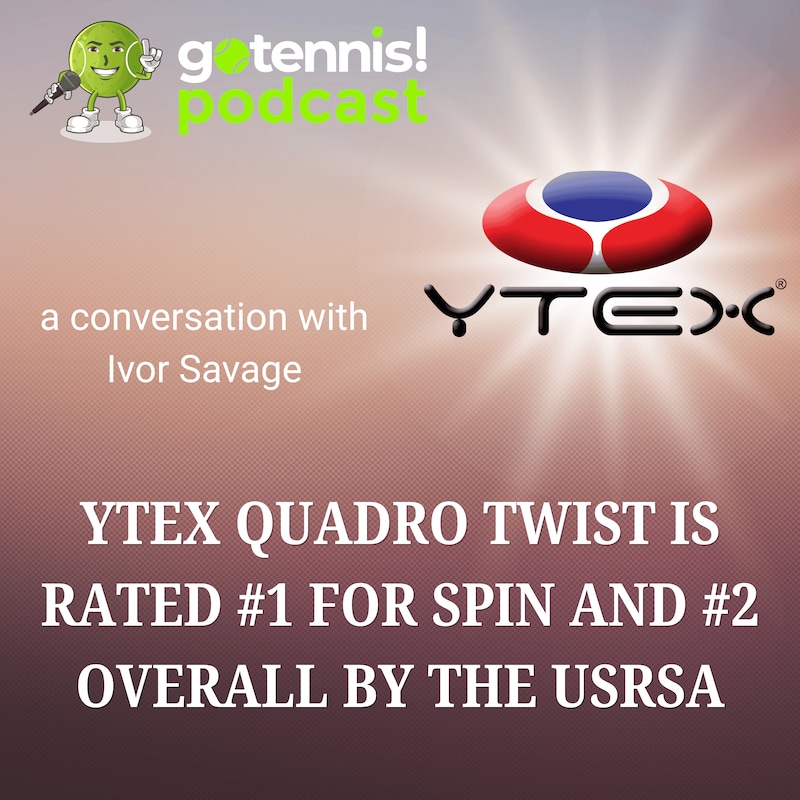
In this episode, Ivor Savage shares his journey from South Africa to becoming a prominent figure in the tennis string industry with Y-Tech. He discusses his passion for tennis, the evolution of string technology, and the importance of supporting junior players. Ivor emphasizes the need for better financial support for players outside the top 100 and shares insights on marketing strategies for tennis products. The conversation culminates in Ivor's vision for the future of tennis, advocating for a system that allows more players to thrive financially in the sport.
Takeaways
Ivor Savage is a passionate tennis player and coach.
He moved to the US to pursue his tennis career and coaching.
Y-Tech was founded to provide high-quality tennis strings.
The Quadro Twist string offers a unique playing experience.
String shape affects spin and control in tennis.
Ivor emphasizes the importance of supporting junior players.
The tennis industry needs to provide better financial support for players.
Y-Tech offers personalized sample programs for string testing.
Ivor believes in making tennis accessible for more players.
He advocates for a cap on prize money to support lower-ranked players.
Chapters
00:00 Introduction to Ivor Savage
03:07 Journey in Tennis and Coaching
05:43 The Story Behind Y-Tech
09:05 Understanding String Technology
11:59 The Importance of String Shape
14:54 Marketing and Distribution Strategies
17:38 The Future of Tennis and Player Support
20:28 Ivor's Vision as King of Tennis
Keywords
Ivor Savage, Y-Tech, tennis strings, coaching, tennis technology, player support, tennis industry, stringing, tennis coaching, tennis community
Full YouTube Video: https://youtu.be/3DmBsxJWZMQ
Short Clip: https://youtube.com/shorts/rWeDNaCIWhA
Ivor's King of Tennis Answer: https://youtu.be/bPfQoqrftno
Learn more about YTEX: https://www.ytexstrings.com
Contact Our Hosts
- Shaun Boyce, RSPA: [email protected] | https://americanracketsportsassociation.com/
- Bobby Schindler, RSPA: [email protected] | https://letsgotennis.com/windermere
- Geovanna Boyce: [email protected] | https://regeovinate.com/
- GoTennis Website: https://letsgotennis.com/
Learn more about the Marc Kaplan Media Excellence Award we (the GoTennis! Podcast) won from USTA Georgia: https://letsgotennis.com/captivate-podcast/gotennis-podcast-wins-the-marc-kaplan-media-excellence-award/
Join Our Community
Check out the GoTennis! Atlanta Facebook page for deals, updates, events, podcasts, news, stories, coach profiles, club information, and more.
Support the Show
- Donate Directly: https://gotennispodcast.captivate.fm/support
- Crypto Donations: Get into crypto with https://coinbase.com/join/PEWRLWK?src=referral-link
Start Your Own Podcast
Considering your own podcast? We recommend Captivate: This podcast is hosted by Captivate, try it yourself for free.🎾 Shop Tennis Strings at Tennis Warehouse: All Strings | Polyester | String Reviews
Transcripts
Hey hey, this is Shaun with the award-winning GoTennis! Podcast powered by Signature Tennis.
Speaker:Check us out at LetsGoTennis.com and we invite you to learn more about the award by
Speaker:following the link in the show notes.
Speaker:And as you're listening to this, please look in your podcast app where to leave a review
Speaker:and do that for us.
Speaker:We would love to earn your five-star reviews.
Speaker:And now let's get into our recent conversation with Ivor Savage.
Speaker:We talk about YTEX Strings, the little known fact that the Quadro Twist string was rated
Speaker:by the USRSA as one of the best strings on the market, as well as a few other interesting
Speaker:bits of information about strings and racket equipment.
Speaker:Have a listen and let us know what you think.
Speaker:Ivor Savage.
Speaker:Thank you so much for taking time to be with us on the GoTennis! Podcast.
Speaker:And we will ask you the first and most obvious question, which is who are you and why do
Speaker:we care?
Speaker:Well Shaun, thank you very much for having me on your podcast here.
Speaker:First of all, I got to say when you ask that question, I always see some of the sports
Speaker:superstars when they get their trophies, that's that question and I not that I'm a superstar
Speaker:of sport, anything like that.
Speaker:But first of all, love saying I'm a child of God, right?
Speaker:Big believer.
Speaker:Big question and so on, so that's the number one on top I could give that credit to.
Speaker:Now if you're a little accent, I'm originally from South Africa.
Speaker:I lived there for 25 years.
Speaker:I started playing tennis with a nine year old, absolutely obsessed with tennis.
Speaker:You know, I would play seven days a week.
Speaker:If you would make an eight day, I would play on the day eight as well.
Speaker:All right, so I was not a problem child.
Speaker:My parents, I was the easiest kid.
Speaker:I always went to school afterwards, got my bicycle, got to the tennis court.
Speaker:I played at sunny side tennis club.
Speaker:That was a very busy tennis club, only six scored, but we always had tennis and I played
Speaker:matches every day.
Speaker:I can't recall that I ever did a drill in my life, like hitting cross courts or volleys,
Speaker:like even the guys in Savannah will tell you, I'm the worst guy to warm up with.
Speaker:I hit a couple of shots and I'd say, you guys ready?
Speaker:Let's go.
Speaker:Let's go.
Speaker:You know, so I played tennis all my life and on when I was 25 is when I moved, well,
Speaker:let me first say in South Africa, my little tennis history, I was top 30 in the main
Speaker:server there.
Speaker:So I did have a nice high ranking, not top 10 like Anderson or Jessica on those guys, but
Speaker:it made it to top 30.
Speaker:And I came over in 2001 to the Van Miracadame in Hilton Head, was the gentleman there, funny
Speaker:enough, there was a tall free number, one of the tennis magazines.
Speaker:And that number wasn't tall free.
Speaker:I probably wouldn't be in the States right now.
Speaker:So I just called them and said, hey, can I speak to Dennis Van Meer?
Speaker:I didn't say, do I go through his admin or so on?
Speaker:And they put me right through the big man, you know, and I talked to him and he spoke a
Speaker:little African still because he's from South Africa originally.
Speaker:I don't know if you guys know that the academy that's called Van Mir is actually not Van Mir
Speaker:or it's Fundamentable.
Speaker:That's his last name in Officance, but when he moved to the States, he's like, none of the
Speaker:Yankees will pronounce Fundamentable.
Speaker:He changed to Van Mir, a very smart move there.
Speaker:Yeah.
Speaker:So I moved to and I started, I was like an internet for a couple of years.
Speaker:Then I coached at Sea-Pines Racket Club, which was just a stone throw away for about three
Speaker:years.
Speaker:And then I made a couple with two identical boys.
Speaker:There were 12 years old at the time.
Speaker:They were commuting back and forth from Savannah, Georgia to Hilton Head for the two boys.
Speaker:And long story short, I started coaching them and I was their private coach like four years.
Speaker:They went off to play tennis and waffered college and so on.
Speaker:And I'm still in the industry.
Speaker:Like I said, coach tennis is very little right now, but I took over the YTEX business about
Speaker:eight years ago.
Speaker:And that's everything is like a little bit of a nutshell.
Speaker:But now I'm here in Savannah, Georgia running YTEX and just loving it every second of it.
Speaker:And YTEX, it is the letters are Y-T-E-X.
Speaker:When I first saw it, I thought Y-Tex.
Speaker:But when I spoke with you, you're very clearly saying Y-Tek.
Speaker:Well, maybe it must be an action thing because some people say Y-Tex and I say Y-Tek, you
Speaker:know, any way you pronounce it, I think Y-Tek is how I pronounce it.
Speaker:Some people will say Y-Tex, this is the way they pronounce the X of the end.
Speaker:But you own the company, so you get to call Y-Tek.
Speaker:What my mother calls me is my name.
Speaker:It doesn't matter what anybody else says.
Speaker:Well, the other thing is Y-Tek.
Speaker:Y-Tek, there we go.
Speaker:Done.
Speaker:Done, no choice, Bobby.
Speaker:We cannot call it Y-Tex anymore, no matter what we see.
Speaker:All right, so a little bit of history there is there an acronym or what's the Y-T-E-X?
Speaker:Does it stand for anything?
Speaker:Where's the name come from?
Speaker:Well, funny enough, the person that started YTEX, Jim was named as Andres Yeri, he started
Speaker:it 12 years ago, he launched it at the Sony Ericsson Open.
Speaker:But before that, he was a sponsor for the Junior Orange Bowl, who in Kibbutz came Florida.
Speaker:Now he started the business for him and his family, actually, he's for his son to take over
Speaker:when his son graduated college and so on.
Speaker:Now his son is actually more than the arts he parked.
Speaker:So eventually, he's like, hey, dad, you know, I'm not so much in the sales, tennis and so on.
Speaker:But I worked for him for like, as an intern, and then he's VP for like a couple of years.
Speaker:So after eight years, the dad's like, well, I have my own kind of business and I was looking
Speaker:to sell it.
Speaker:And I was like, whoa, you know, I'm your guy, you know, I believe in this string so much.
Speaker:Love it.
Speaker:And I definitely want to take it over.
Speaker:Now I ask him at some point, what is the YTEX, 10 for?
Speaker:Now I love that there's some catchy, funky story behind it.
Speaker:But there isn't.
Speaker:You know, he's all I can say is he's last name is Yeri, which starts with the Y.
Speaker:So I ask him maybe stands for Yili technologies and he says, well, that's a cool right there,
Speaker:you know, sounds like that.
Speaker:That explains it.
Speaker:So he didn't even have that thought where he came up with the word Y-Tex, but I assume it's
Speaker:probably what that can stand for.
Speaker:Yeah.
Speaker:Okay.
Speaker:Got it.
Speaker:All right.
Speaker:Now Bobby, I'm sure you've got you deal with strings and restringing more often than I do.
Speaker:So Bobby, ask all the questions about the string and take it from here.
Speaker:All right.
Speaker:I just have to ask the one.
Speaker:I know it's a big country.
Speaker:Do you know Earl Granger question?
Speaker:From South Africa.
Speaker:Oh, Granger.
Speaker:Yes.
Speaker:Yeah.
Speaker:Not personally, but I do.
Speaker:Okay.
Speaker:Because he came over.
Speaker:He worked with me for obviously went to University of Tennessee, was Paul Anacone's
Speaker:doubles partner, unbelievably driven guy.
Speaker:And we didn't end well.
Speaker:He did give me his cousin who worked with me for 12 years.
Speaker:So here's Keri Bannem, who's now married very well to a big shot at Coke and they're raising
Speaker:kids in Buckhead.
Speaker:So yes, we had the and also my favorite, of course, got to tell the dentist, Vandemir story.
Speaker:He was giving a clinic one day at Rackie Club of the South and he was working on Valleys
Speaker:and when he did the Valleys, he would say take a picture with his South African accent.
Speaker:So I literally I watched him for a day, say, you know, 10,000 times take a picture.
Speaker:So to this day, when I want to emphasize somebody's volume, I channel my inner dentist and
Speaker:they take a picture.
Speaker:Nice as man in the world, like you said, not as surprised to me that he picked up the phone
Speaker:because just he was always, you know, tennis, he was always there for everybody.
Speaker:Love that man.
Speaker:Yes, I know you and he always would say, let's go, go, go, go, go, let's go, let's go, let's
Speaker:go.
Speaker:And he would remember everybody's name.
Speaker:That's one thing that blew me away.
Speaker:You can have a clinic with him 10 years ago.
Speaker:You'll come in there and he says, hey, hi, Iver, hey, Bobby, you know, it's so on, it's amazing
Speaker:how he to retain people's names.
Speaker:I was fortunate.
Speaker:I've worked with somebody who had done the Vitt Oscar, her Tata, who moved from Hilton
Speaker:head came here and you know, that he was a mentor.
Speaker:You know, everybody, I do know everybody's name and because you guys always worked with big
Speaker:groups, he could run a drill.
Speaker:Oh my God.
Speaker:You could put 10 people on the court and they were still flying.
Speaker:So yeah, a lot of, yeah, a lot of good connections there.
Speaker:So with the strength always, my first question and how long have you been going with the
Speaker:strength now?
Speaker:12 years, 12 years, 12 years, 12 years, 12 years old.
Speaker:Yes.
Speaker:Yes.
Speaker:So what did he ever tell you?
Speaker:Like I'm always, and I love the fact that you took the Bible out model.
Speaker:Let's get into junior academies.
Speaker:Let's get to kids.
Speaker:When you look at this, because I tried it, we had a racket and I tried to introduce it.
Speaker:It's hard.
Speaker:It's hard to break into tennis.
Speaker:You know, what, what any secrets could you tell us that, you know, it's sustained
Speaker:and you know, obviously the, your string is very soft.
Speaker:So is that the thing that you try to differentiate with other folks right off the bat?
Speaker:That is the main, you know, quality from what I take that says, I support you.
Speaker:You know, a lot of brands say we have a soft string here and so on, but, you know, I went
Speaker:to like six years ago to I RIT symposium in Saddlebrook, you know, for stringers and we
Speaker:had a little demo court there and I had our flagship, the Quadrude Twist.
Speaker:I have a right here.
Speaker:Let me see this is the flagship, the Quadrude Twist right there.
Speaker:We put that in and in the bunch of players, rackets, well actually a demo rackets over there
Speaker:and as the guys start hitting, we wanted them to experience it, not just talk about it.
Speaker:The guy next to me, I was hitting next to him and he says, is this a polystring?
Speaker:Was it felt like a multi-filament string to him now?
Speaker:You know, most guys want, you know, players want to make the transition from synthetic
Speaker:gut, multi-filament, eventually, wants a turn like 10, 11, 12, he's always start breaking
Speaker:out of strings.
Speaker:They want to go to the world of poly and there's no turning back.
Speaker:I mean, people, if you play Academy CISON, the kids are going to play with polyregardless,
Speaker:they might hybrid or so on.
Speaker:Now that smooth transition, we have coaches that come back to us and says, I used to hybrid
Speaker:the strings just to make it soft for my players on, but he says, if this is how a poly feels
Speaker:to heck with hybrid, you know, and that's the one thing I tell a lot of people too.
Speaker:They really ask me, he's like, well, what should I hybrid with?
Speaker:And the first thing I tell them is, if you try the quadrotuist and you string it like, you
Speaker:know, 50 pounds or 48 pounds or so on, you can do it full bed.
Speaker:You don't have to hybrid because the biggest reason people hybrid is, you know, they want
Speaker:to softer, you know, on their arm and they also want their tension to last longer for
Speaker:tension retention.
Speaker:And also with the quadrotuist, it holds tension a long time.
Speaker:So literally, there is no reason to hybrid it.
Speaker:You know, I always tell people, you know, a couple of sets, first one you can play full bed
Speaker:and then you can hybrid and see what the difference is.
Speaker:Are you like it?
Speaker:But there's no reason to hybrid at all.
Speaker:Now in our line, we, the majority of us strings are soft co-pollies, but we also have some
Speaker:firmer because some players, like you say, different stroke, different folks.
Speaker:I got one friend of mine, he plays with Kevlar at 70 pounds, he's like a boy, he says,
Speaker:I like that debt mute feeling.
Speaker:That's what I told him, you crazy, but that's you, you know, and he doesn't like the mousse
Speaker:here feel.
Speaker:So for people like that, we do have a little firmer strings that we lay out there, but the
Speaker:majority that we focus on is soft, soft, easy on to make that transition.
Speaker:Now, when I say the soft part, we have the round co-pollies with shaped and twisted.
Speaker:So we try to cover all angles that players are normally would go for.
Speaker:But the softness is easy on the almost the main thing.
Speaker:So question for those who don't know what you're talking about.
Speaker:I'm going to pretend like I know the answer and I'm asking for a friend.
Speaker:Describe the difference between round and twisted.
Speaker:You're talking about shape of string.
Speaker:Yes, yeah.
Speaker:So if you look at the string, normally most strings that it came out with was nice, round,
Speaker:solid core, one at the beginning, so the tailies that got like five versus on, but the
Speaker:shape string, for example, our quadrote twist, it's if you take that round string and you
Speaker:make it in a square shape, all right.
Speaker:Now that is the square shape.
Speaker:We come from we have a string called square x, all right.
Speaker:Now, if you take the square x and you twist it, it becomes the quadrote twist.
Speaker:All right, with some people don't know.
Speaker:So our square x was actually the same product, but once you twist it, it becomes the quadrote
Speaker:twist.
Speaker:Obviously to generate more spin, you know, when you try to, now I always tell people, you've
Speaker:got to have to ask been already.
Speaker:You're not going to put the, if you got a string here as ready number one for spin, you're
Speaker:not going to step on the cord and start hitting a ball like graphite.
Speaker:You know, you've got to have the technique, the mechanics and so on.
Speaker:This just adds to maximizing that spin when you make contact with the ball that grabs
Speaker:that ball to give you that extra little kick.
Speaker:Okay, so a little bit in the weeds, it's a, it's a, it's a friction concept.
Speaker:So the smoother round my string is, it's a softer attack on the ball, so to speak.
Speaker:So if I take something, a string that's square, which you don't really think about a string
Speaker:having a shape, you just picture it being round, right.
Speaker:So in this case, you've taken a square and twisted it and that twisted square gives
Speaker:me more grip, gives me a better attack on the ball, which adds to my already having top
Speaker:spin because obviously you can't just have spin because you have grip on the string.
Speaker:And just, Sean, just to bull down that question you had right there, we had the string that
Speaker:we launched two years ago called the square x-sharp.
Speaker:Now, this one, I know if you can see closely, if you look there, you'll see it's a square
Speaker:shape, but it slams inwards, all right.
Speaker:Now we launched that string during shark week, you know, in the US.
Speaker:Now, me from South Africa, we see sharks all the time.
Speaker:You know, it's no big deal, but I was fascinated how when shark week came on TV, it was, everyone
Speaker:was talking about, hey, did you got that recorded?
Speaker:Are you watching shark week?
Speaker:I'm like, okay, no big deal.
Speaker:But so we decided, hey, we're going to launch shark, this square x-sharp in each shark
Speaker:week because literally when we launched that string, people play with it.
Speaker:The coach says, these balls, when they were hitting it, the felt of the ball would get stuck
Speaker:in the string, that's how much it gripped the ball before it releases.
Speaker:So the square x-sharp without quadro, that's our two most popular ones.
Speaker:So that really shows you as a difference between having a round normal string and having something
Speaker:which would grip on it.
Speaker:Got it.
Speaker:So bite is the concept with shark.
Speaker:Big bite.
Speaker:So this is why our hit show, Dear Week, never really went anywhere in Georgia because it's
Speaker:just not, you know, you see, doesn't, doesn't help.
Speaker:Okay, Bobby, questions again, stick with the technical, you got anything business wise?
Speaker:I know.
Speaker:Yeah, business wise, Bobby's probably got his brain running.
Speaker:Yeah, this is obviously, you got to feel it.
Speaker:So how do you get it into, and you know, and I'm one of them, you know, pros aren't necessarily
Speaker:the most reliable fish in the sea.
Speaker:So you know, what do you do to get it into people's hands so people can see it and actually feel
Speaker:it?
Speaker:Yeah, Bobby, I'm 100% with you that people's got to feel it because I deal so many times
Speaker:with stringers.
Speaker:For example, a stringer can be a 3-0 level player, but he spends a lot of time stringing
Speaker:your rackets and a lot of those stringers, they all focus on what does the chart say?
Speaker:What does the number say?
Speaker:They'll say, for example, well, this one stiff is rating.
Speaker:It's a little higher than that one.
Speaker:Why doesn't play softer?
Speaker:So to get into the detail, I'll tell those people right away, I'm a player first, like I said,
Speaker:I played for 41 years, tennis, and it's some of the highest levels too.
Speaker:I mean, I played the USA, Teno national championship we won.
Speaker:Now, I'm not saying that to brag.
Speaker:I'm just saying that you say that I know about the top level of tennis and also the beginning
Speaker:level of tennis.
Speaker:So that's important to understand.
Speaker:Just to get back to your question, how do you get it in people's rackets?
Speaker:Now, obviously, when we say, hey, we've got this string, it's phenomenal.
Speaker:We're not as big as Wilson's, linko, those guys.
Speaker:They just flood the market with samples.
Speaker:We were left to do that.
Speaker:But we do what we've done is, for example, we have sample programs.
Speaker:For example, if you go on our website, the whitepextwings.com, we made it easy.
Speaker:We created two packages.
Speaker:The one is called the Y-Box and the other one is a tryback.
Speaker:Now, in the white box, you get six strings of your choice.
Speaker:Now it can be once you apply to the white box, this questionnaire we put there like, tell
Speaker:us what strings you play with, tell us what strings from white take you would like to
Speaker:try, or tell us your ideal string.
Speaker:In most of those cases, I personally reply to all of them when people apply for the white
Speaker:box and I go and I look at the string that I play with, that they play with, it's a linko
Speaker:confidential, they want something a little softer, but same type, I recommend, hey, I'll
Speaker:extra, extra be perfect for you at this tension.
Speaker:So we try to make it personalized, not just some people saying, oh, try the string, I look
Speaker:at what people say they play with, because you think about it.
Speaker:You take your whole life looking for a racket to play with and eventually a string.
Speaker:How many strings have you gone through?
Speaker:A bunch.
Speaker:And you finally settle on this one.
Speaker:Now for you to switch to a different brand, you got to make sure that string that you
Speaker:play test kind of matches what you want.
Speaker:You don't want something that's totally different.
Speaker:So that's why I pay a lot of attention on what is the string that they currently play
Speaker:with, what they would like to play with.
Speaker:And we send that in the white box with a couple of other goodies with it and so on.
Speaker:Now we also have a laser piece of one, which is the tripe pack where they get three, three
Speaker:strings of they choosing and a dry fatigian and so on.
Speaker:So that's the way that we make it very, let's say inexpensive, affordable for them to
Speaker:find out.
Speaker:The youngest rumor about white tag, it's been on the market a long time.
Speaker:Why is it so popular?
Speaker:We don't, and I tell people never get reals right off the bat.
Speaker:Get some of the sets first, play test and take one, say two sets of so on.
Speaker:And then if you love it, that's when you jump for the reals, 660 feet or more if you are
Speaker:string or string breaker.
Speaker:So who would you say is there a level that you get point to that is your, your, your
Speaker:best clientele, most loyal?
Speaker:Well, the most loyal, obviously people that looking for a string that's easy on the
Speaker:arm, you know, that's pretty much the testimonies that we get all the time is, you know, I had
Speaker:this string, I switched to the quadro, my own pain is gone.
Speaker:So it's, that's pretty much what I'm looking for.
Speaker:If I get those emails from people that says, my elbow pain is gone, I get a little excitement
Speaker:to kick on it.
Speaker:You know, I mean, for me, it's not about, oh, how many orders we have been this, for me,
Speaker:it's like if somebody says they tennis elbow is gone or this string helped for that, that's,
Speaker:that's my focus point.
Speaker:And that's, that's why I decided, you know, when the, when I bought the company from Andres,
Speaker:you know, eight years ago, you know, it's one of the things you got to believe in your
Speaker:product, you know, overwhelmingly, like I'll be, I'll be here telling people shouting,
Speaker:hey, get this quadro, get the quadro.
Speaker:And once they play with it, not to bore you with the details, we have about 97% five out
Speaker:of five stars on our website out of like seven hundred reviews.
Speaker:But if you, and you look at it, I always encourage people go on the website, look at the reviews,
Speaker:spate some time to see what other people say.
Speaker:And all of them, you can say it's like, hey, I've switched from this string, my elbow pain
Speaker:is gone.
Speaker:This is a lot more softer.
Speaker:And that's what I'm focusing on going there.
Speaker:It's not so much what different streets we have than other brands.
Speaker:My focus is how do we help people with tennis elbow or the most importantly, how do we
Speaker:get players, specifically young juniors that wants to make a transition from synthetic
Speaker:guts, multi-filament, they pop strings all the time.
Speaker:Parents go crazy.
Speaker:We have to restring your racket again.
Speaker:You know, that can stop to to polyester string where he doesn't hurt that arm and he doesn't
Speaker:hurt the parents budget when they play a little bit longer with the strings.
Speaker:Excuse it.
Speaker:I want to introduce it in the winter in Atlanta, especially this winter.
Speaker:It's not such cold temperatures.
Speaker:Here's your winters.
Speaker:I mean, I always tell, don't have a tendency to restring rackets this time of year unless
Speaker:somebody brings because the cold is going to affect it so much.
Speaker:But this might be a good way to offset the cold a little bit as well.
Speaker:Yeah.
Speaker:Yeah.
Speaker:That's right.
Speaker:So, I love it, Bobby, with somebody who says, not to bore you with the details, but hang
Speaker:on them.
Speaker:Let me get into the percentages.
Speaker:I'm like, I am.
Speaker:I feel like you didn't make it boring.
Speaker:We appreciate that.
Speaker:We've had a couple of--
Speaker:Well, hey, Sean.
Speaker:Well, sorry.
Speaker:Just to chime in there a little bit, we say not to bore the details.
Speaker:Let me bore you with a little detail.
Speaker:Of course.
Speaker:Now, a lot of people will say, you know, I'm pretty white in Sean.
Speaker:I'm just going to throw that little nugget in there.
Speaker:When the US RSA, you know, they play tasted 200 strings blind test that they got and they
Speaker:played tasted.
Speaker:This quadroot twist, the one that I mentioned to you, this one right here, that came in
Speaker:number one for spin and number two overall.
Speaker:You know, with power, feel, durability, and so on, the only string that performed higher
Speaker:was Wolf's natural gut.
Speaker:So I let you tell people, you're-- this is the holy grid of string.
Speaker:You know, if you look here for polyester and so on, it's really that good.
Speaker:Out of 200 strings, number one for spin, number two overall.
Speaker:Now, some of the other strings falls in that same category.
Speaker:So basically, you know the string quality is just phenomenal.
Speaker:Yeah.
Speaker:Not as popular as the main brands because we don't sponsor Joe Kuwich, Nadal, Sinner of
Speaker:those guys.
Speaker:We would love to, but give me a check first of a million bucks and I'll do it.
Speaker:You know what I'm saying?
Speaker:Yeah.
Speaker:Well, all right.
Speaker:Well done.
Speaker:Good.
Speaker:So I didn't have to prompt you with, so why don't you tell me if you want any awards recently
Speaker:and then you need to bring it up.
Speaker:You knew--
Speaker:Yeah.
Speaker:You knew to mention that.
Speaker:And we put that in the press release that went out recently because I tech and the American
Speaker:Raga Sports Association have gotten together to make sure that we can help with tennis elbow
Speaker:that we can get this into more coaches, hands, and more pro shops.
Speaker:What else do you have going on in your world, Iver?
Speaker:Is there anything interesting happening with Y-Tech?
Speaker:Is there anything from a stringing perspective?
Speaker:Because a lot of people just picture it as kind of a necessary thing, but not all that
Speaker:interesting.
Speaker:What else is going on in the stringing world that anybody might find interesting?
Speaker:Well, the big thing is the partnership we just have now with the ARA, you know, we felt
Speaker:it very necessary.
Speaker:Like I mentioned before, you know, I'm a player first and I lost a string rackets for
Speaker:locals.
Speaker:And I always feel like, you know, if you string for people in your area, in your coach or
Speaker:your player and your people you string for, you should be able to make profit, you know,
Speaker:with a string that you buy, not just your labor.
Speaker:And I bet there's a lot of players out there probably listening and watching this right
Speaker:now saying, yeah, well, I string rackets, I get it online, you know, maybe a little discount
Speaker:while I pay retail, but I'm going to, you know, mark it up and so on and make my money
Speaker:out of the labor and so on.
Speaker:And I'm like, if you string rackets, you should be able to get this kind of pricing.
Speaker:So this is the partnership that we offered, you know, for the ARA.
Speaker:And we're grateful, you know, you guys parking with us in this, that any member of the
Speaker:ARA and some of that joins of your organization, we would offer them a wholesale account with
Speaker:white tech.
Speaker:Now, you know, if you normally partner with other brands and you say, hey, I want a wholesale
Speaker:account, first of all, they require say, hey, send us your business tax ID and we have this
Speaker:minimum order requirement.
Speaker:And that is a lot to us from a local stringer that just wants to make some profit out of
Speaker:strings.
Speaker:So we bypass that and specifically because we're not as big name, we want to give that advantage
Speaker:to the stringers out there and the coaches and say, hey, we offer you this wholesale account
Speaker:and it is absolutely free.
Speaker:Like I said, only thing that they have to do is go on the computer and say, hey, if I'm
Speaker:not sure about this brand, let me order a sample.
Speaker:When we order the Y box or something, just you taste it out.
Speaker:If it's as awesome as you think it is or that you play out of experience, say, oh, this is
Speaker:awesome.
Speaker:You have a wholesale account there waiting for you now to throw this little add to it.
Speaker:Now obviously a wholesale pricing, you mean you saving like 30% more, we just launched
Speaker:a bundle program, meaning if you order more than two, reals or three, you get more discount.
Speaker:So if you get the bundles, you order a couple of reals, you get up to 50% discount on the
Speaker:strings.
Speaker:So that is a huge incentive for stringers that would normally buy strings at retail pricing.
Speaker:So that's pretty much what's happening with Y-Tech right now is we launched the bundle
Speaker:program.
Speaker:I love it.
Speaker:Bobby, we're going to have to send this episode straight to FAD and see what you think.
Speaker:Well, I'm getting the feeling you're not working with your service.
Speaker:That's just a feeling I'm getting.
Speaker:Well, Bobby, you know what?
Speaker:I would love to work with them.
Speaker:I think I can't add them queen like a bunch of times and so on the past, but you know what?
Speaker:With any kind of new brands, you know, the response I normally get from some of the companies
Speaker:is they will look at bringing in a brand when there's a lot of demand for people asking
Speaker:for that specific string and so on.
Speaker:And so it's very hard getting into some of the big online, or the big companies like we
Speaker:are with tennis wearers.
Speaker:You know, if you look at them, you'll see Y-Tech's there, but our flagship, the quadrotrus
Speaker:features there now for us, we love to feature all of our line, but it's hard for them because
Speaker:they're always waiting for customers to come in first and request a certain string.
Speaker:You know what I'm saying?
Speaker:So we are open for that.
Speaker:You know, if you have some connection with your service, we would love to chat with them.
Speaker:No, I'm not.
Speaker:No, I'll just leave it at that.
Speaker:Okay.
Speaker:I got it.
Speaker:We're going to leave that one in no.
Speaker:I'm going to leave that one right there.
Speaker:That's the deep one.
Speaker:Bobby, Bobby, you got anything else for Iver before I hit him with King of Tennis?
Speaker:No, I want to hear.
Speaker:All right.
Speaker:So Iver, our last question, which we always love, and it's a lot of fun.
Speaker:We asked if you were King of Tennis, whether it's the whole world, whether it's professional,
Speaker:social, amateur, league, ATP, any scale at all.
Speaker:If you were King of Tennis, is there anything you would just do or change?
Speaker:So you give me the safety right now.
Speaker:I'm King for a whole year, all right?
Speaker:Okay.
Speaker:One thing that's very close to me is like as much I care for the players and so on with
Speaker:their strings and so on, I care a lot about the up and coming juniors that wanted to
Speaker:be professional.
Speaker:Now I tried it when I was in my 21s and so on.
Speaker:But if you look currently, you can make a living if you're in the top 100, right?
Speaker:From tennis, pretty much, you know, I think the top 100 is on.
Speaker:Once you're outside the top 100, you know, we had a Savannah Challenger.
Speaker:You know, Savannah was a $50,000 Challenger.
Speaker:Sounds big.
Speaker:The price pool was $8,000 for the winner.
Speaker:And those guys, you talk about Nick Kerrio as a wins it a couple of years ago, Aini Shikori.
Speaker:He won a couple of years ago.
Speaker:Those guys are guys that already made for top 50.
Speaker:You know, so everybody that is outside the top 100 pretty much gives up very quickly when
Speaker:they see it's so hard to break in the top 100 and they sleep.
Speaker:Some of them sleep in a car for a day or two just to play that tournament to get points
Speaker:as long.
Speaker:So I would say to end your question there is the professionals like Jokovic, Senator
Speaker:those guys that gave spade millions upon millions.
Speaker:I would say, if I was in charge, I would cap, say, this is the max.
Speaker:And when somebody would get for tournaments, now they will get out of bed for 500,000.
Speaker:They'll get out of bed for a million.
Speaker:It's just they get money poured onto them like you would not believe while the rest are struggling
Speaker:out there.
Speaker:So I would say to have some sort of a program where if you are the top 1000 in your sport that
Speaker:you can make a living out of it.
Speaker:So that meaning the tournaments that they'll played out of it, that the money is trickled
Speaker:down in such a way where people can make a living because you and I know how tough it is just
Speaker:to get one ATP point.
Speaker:If you get that one point, you feel like, hey, I'm officially in professional, but that doesn't
Speaker:mean nothing.
Speaker:I've come to live off that.
Speaker:You don't live off points.
Speaker:You live off money.
Speaker:You have to say, so that might get you into tournaments.
Speaker:I would say if you get an ATP point, you know, or you're the top 1000 in the world in your
Speaker:sport that there's got to be funding for tournaments for those players with, because right
Speaker:now, if I've had so many students that I coach over the years and the parents would come
Speaker:and say, hey, does my son do you think he can be a professional?
Speaker:You know, I would never say no.
Speaker:I would say give it all you got and so on, but we all realistically know 99.99, 99% of them
Speaker:can maximize the get high scholarships and so on.
Speaker:The professional, you can count on one or two hands.
Speaker:Who of them going to make it?
Speaker:Now, if the top 1000, now they can live off that.
Speaker:I think the normal coaches will tell players, hey, you know, go for it.
Speaker:You've got it.
Speaker:You're so on this room for you because it doesn't make sense for me.
Speaker:There's only room for 100 people in this whole world to make a living out of the sport.
Speaker:So that's the one thing I would change.
Speaker:Bobby, what do you think?
Speaker:Well, I mean, we're trying, right?
Speaker:There's various, I love the German club.
Speaker:These, what intense is trying to do.
Speaker:I think it has to.
Speaker:I would always, you know, I'm a capitalist at heart.
Speaker:So you follow the market, but I do obviously when you just look at professional sports football,
Speaker:like, you know, the magic.
Speaker:It's 1500 people make a living, professional baseball, most to 800 people make a living, basketball,
Speaker:over 600.
Speaker:Like you said, I mean, we're talking about less than a hundred and combining men and women
Speaker:do not make a living, you know, or struggling.
Speaker:And that's, yeah.
Speaker:And I think I think it scares a lot of people out of it.
Speaker:You know, if you were inclined to say, I would love your professional athlete at a young age,
Speaker:you know, that's going to keep you out of tennis.
Speaker:You don't see the pathway that you see with other.
Speaker:And I love the idea of what they're trying to do with more teams, more team oriented events
Speaker:as well.
Speaker:This way you get more people involved from that.
Speaker:I love that.
Speaker:So yeah.
Speaker:And I think that would have helped the game because it would, it would increase familiar
Speaker:already.
Speaker:You know, you're more likely to know somebody as silly as it sounds that played at a professional
Speaker:level.
Speaker:And I'm always going to have an attachment when you say, well, I played against that person
Speaker:and look, they're on tour or something.
Speaker:So yeah, I mean, that's a struggle that just needs to address.
Speaker:And I think a good way to do it would be to short the darn season for the big guys.
Speaker:So the, you know, the lesser guys could go train and play a club league or doing intense
Speaker:for two months out of the year before they got to go chase the ATP point.
Speaker:So yeah.
Speaker:Yeah.
Speaker:Let's do it.
Speaker:Let's do it.
Speaker:Well, like you say, you know, as king, as king, I would enforce the law by reality.
Speaker:Like you say, you know, the approach will take a different day by day.
Speaker:Well, and the question there is, okay, you're king.
Speaker:It's not about enforcement.
Speaker:You have to invent the law.
Speaker:So how exactly is it?
Speaker:Exactly.
Speaker:Is how I'm going to do it?
Speaker:Because anybody can say, I wish.
Speaker:Yes.
Speaker:But then there actually has to be a way for it to be done.
Speaker:I keyed in on the idea of you saying we don't, we don't survive on points.
Speaker:We survive on money.
Speaker:And what if there was an ability to translate points to money in some way to where if you
Speaker:get that ATP point, ATP point, it is worth X a year.
Speaker:And if you keep it, it gets to its worth, X a year.
Speaker:And the ATP can figure out how to actually just define it by that and say, okay, well,
Speaker:I need 13 ATP points to pay my bills this year or this month or whatever that looks like
Speaker:to actually have a plan and say hopefully someday somebody listens to this podcast.
Speaker:And says, hey, these guys got it figured out.
Speaker:Let's do that.
Speaker:John, I didn't think of that.
Speaker:That's an excellent point.
Speaker:Yeah.
Speaker:Yeah.
Speaker:You got it right there.
Speaker:That's why I'm doing it.
Speaker:I agree.
Speaker:I think that's the other you're taking my friend engineering is a good and it's also set
Speaker:now you know, something you can sell to a sponsor because you know, you're not just selling
Speaker:the event.
Speaker:You're selling ATP points.
Speaker:And so you have more people competing for ATP points, more knowledge about who the sponsor
Speaker:is.
Speaker:So yeah, I mean, I think that's a very interesting way to approach it.
Speaker:Just to see what it is.
Speaker:What is what is 818?
Speaker:Yeah.
Speaker:What is it really worth now and what could it be worth?
Speaker:So yeah, that's a great jump off spot.
Speaker:All right.
Speaker:We'll have to do a follow up.
Speaker:See if we can figure that one out.
Speaker:Iver, with why tech strings.
Speaker:I appreciate your time.
Speaker:I appreciate you being here.
Speaker:And Bobby is always appreciate your help.
Speaker:And gentlemen, thank you so much.
Speaker:We'll talk again soon.
Speaker:Appreciate you, Sean.
Speaker:Bobby, thank you.
Speaker:Have a good one.
Speaker:Well, there you have it.
Speaker:We want to thank reGeovinate.com for use of the studio and signature tennis for their support.
Speaker:And be sure to hit that follow button.
Speaker:For more Racket Sports content, you can go to LetsGoTennis.com.
Speaker:And while you're there, check out our calendar of events, great deals on Racket Sports products,
Speaker:apparel, and more.
Speaker:If you're a coach, director of any Racket Sports, or just someone who wants to utilize
Speaker:our online shop, contact us about setting up your own shop collection to offer your branded
Speaker:merchandise to the Racket Sports world.
Speaker:And with that, we're out.
Speaker:See you next time.
Speaker:[MUSIC PLAYING]
Speaker:[MUSIC PLAYING]
Speaker:[MUSIC PLAYING]
Speaker:(upbeat music)






