Shownotes
What if the biggest problem in healthcare isn’t a lack of information but a lack of understanding?
Millions of people are told the same frustrating sentence every year:
"Your labs look normal."
But they still feel exhausted. Inflamed. Sick. Stuck.
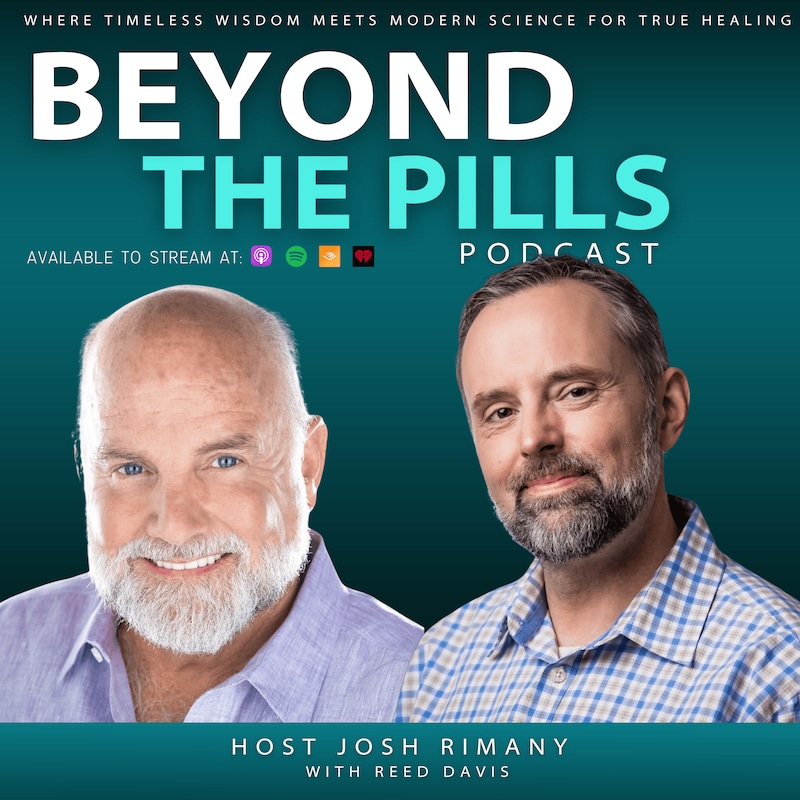
In this episode of Beyond the Pills, Josh Rimany sits down with Reed Davis, founder of Functional Diagnostic Nutrition (FDN), a pioneer in functional lab testing who has worked with 10,000+ clients and trained more than 5,000 practitioners worldwide.
His mission is simple:
Stop guessing. Start understanding.
Reed explains why the traditional medical model often fails people with chronic symptoms.
The system focuses on diagnosing diseases and managing symptoms, while ignoring the deeper biological imbalances that drive illness.
Instead of chasing a single “root cause,” Reed introduces a more accurate concept:
Metabolic Chaos.
Chronic illness rarely comes from one problem.
It comes from multiple stressors interacting at once — environmental toxins, hormone imbalances, poor nutrition, emotional stress, gut dysfunction, and lifestyle factors.
When those stressors pile up, the body loses its ability to regulate itself.
That’s when symptoms appear.
In this conversation, you’ll discover:
• Why “normal labs” don’t always mean healthy
• The real reason chronic illness is exploding globally
• Why functional medicine still isn’t enough in many cases
• The concept of metabolic chaos and why it explains complex illness
• Why lifestyle changes are the hardest — but most powerful — medicine
• The difference between data and wisdom in lab testing
• Why healing requires both guidance and personal responsibility
Reed also shares why true healing requires walking what he calls a “narrow path” — improving sleep, nutrition, stress, movement, and detoxification simultaneously.
Because the body already knows how to heal.
It simply needs the right signals.
If you’ve ever been told “nothing is wrong” but still feel like something is off…
This episode will change how you think about health forever.
Listen now to discover why healing isn’t about finding the right pill — it's about restoring the body’s ability to function.
Welcome to Beyond the Pills.
Follow Reed Davis on IG
https://www.instagram.com/fdntraining
💊 Join The Beyond The Pills Community Today, Unlock True Healing Tomorrow!
Transcripts
119_Reed_D
===
[:Josh: More medications, less health. Something's broken. Traditional medicine manages symptoms, but true healing addresses root cause. I'm Josh Rimini, pharmacist turned healer. At Beyond the Pills, we merge ancient wisdom with modern day science to inspire you through stories of transformation, practical trainings, and holistic healing.
Join me and other practitioners as we guide you towards vibrant health, body, mind, and spirit, and move beyond symptom management into true healing. Hello everybody. Welcome back, uh, to be on the pills. My name is Josh Rimini, pharmacist turned healer. Today's guest is Reed Davis. He's the founder of Functional Diagnostic Nutrition, or FDN as it's been known in our circles and one of the most experienced functional diagnostic experts in the world.
Reed [: e, not just for individuals, [:Reed, welcome to Beyond the Pills, my friend.
Reed: Well, thank you Josh. I'm really excited to be here. We've spoken before and we're in the same business, you know, which is helping people learn. How to live themself out of the trouble they've live themself into.
Josh: Hmm.
Reed: And so I think it's gonna be great.
Josh: Well, we, we start off with the right stuff.
Look, look at that. Um, I, I love the origin stories, so, um, let's just dive in, shall we? 'cause we, I've known you through other channels. I'm very familiar with FDN, like my, my mentors. Like, it's been this fun process for me to get you on the show because I've heard you from all these other places I've hung out with.
lients. What were you doing? [:Reed: I was actually in environmental law. I was saving the whole planet, air, BS, water, trees, bees, and it was beautiful thing. I was in Southern California. It's a long time ago now, but, but I was, I enjoyed that, but, um, I didn't own the company.
There was some mission issues. I was really into the mission, like again, saving birds and fish is a cool thing, but I got kinda sick of some of the hype. Uh, vernal pools are cool. You, you gotta move them. Um, the California ferry shrimp, not so much. So, so I, we, we made a lot of money, um, and stuff, but it just wasn't as satisfying note real quickly.
chiropractic wellness center [:Taking him in for chiropractic and massage and, you know, you know, therapy and stuff, physical stuff. He, he got seven varsity letters in four different sports. And yes, but I got a new career because the more I talked to those doctors there, the more I wanted to understand better innate intelligence, how the body heals itself.
And, you know, I've never really been to a doctor myself except for some sports stuff. And, uh, didn't know the frustration that the people were having, which is what we really want to talk about. And, uh, it was just so I talked myself into a job there, and within a short period of time I was, I was running the place and having my way with lab testing.
just got to do like a really [:And I started my own business and, and it was like a teaching, uh, FDN we call it FDN now, I, I just came up with that name and then kind of stuck with it. And I'll just finish by saying, the first people that ever took my course, it was 19 people. I had 20 seats open. I filled 19 of them and figured I, it's
Josh: real,
Reed: you know?
and more really developed it [:And, uh. And, and it's, well, here we are today.
Josh: Well, and I've, I've followed that journey. Um, it's funny you say 17 years because that's, that's when I started my entrepreneurial journey. Um, and you talk about that, you know, and, and some of those things we'll talk like for someone new to FDN, what makes this methodology different from standard functional medicine or some other things like, I really wanna know, 'cause practitioners are listening to and people that are like moving in that allopathic realm of tra let's call it traditional medicine.
And we're looking for these new things. The people that listen to this podcast are a, a, a really good example of that. We're looking to go beyond in these different ways. So what do most practitioners misunderstand about lab testing?
first. I just wanna preface [:Uh. I had a lot to learn when I jumped into, I wanna help people instead of saving the planet. What about people including me? And I had an awful lot to learn, as, you know, uh, but I had nothing to unlearn. And so the only object I had, the, the, my objective was strictly for all the people coming in the office.
Uh, they were patients, they were getting doctor care, but they didn't really want it. The last thing they wanted was another diagnosis and treatment plan for whatever you wanna call it, that they had back then. Like, fibromyalgia was really big, you know? Um, and no one could figure that out. So, so anyway, so my only objective was to find the underlying causes and conditions.
. Ha ha. We can diagnose and [:And I spent the next 10 years sorting it out, and, uh, now I can teach others the same thing. So the biggest difference is probably that it's, it's a real, it, um, I don't wanna say strict, but it's, it's a, it's a real methodology, which means a method steps, uh, and then the ology, the, the think the way of thinking is that there's always underlying causes and conditions, and other people say that, but we embody that and we never.
that question by saying, um, [:And then it became integrative. Meaning now, now the public is demanding more from the education and different, uh, meth methods from their physicians. So they're demanding it, it became integrative and now the other words. But finally, functional medicine has come along. That's what it's evolved into, but it's still medicine.
d go deeper into that, how I [:And last thing, if you're, if you're one of those practitioners who's been to this training and that training, and you've been to the gut training, you've been to the hormone training and you've been to the different things, and you might even call yourself functional medicine. Um, but there's a, there's another step to take to fully evolve.
And, and we we're that step.
there's, there's this cross [:Um, because when we don't like the diagnosis, what do we do? We get a second,
Reed: second opinion.
Josh: So we don't call it an opinion in the beginning. We call it an opinion, like an opinion later, right? But it's an opinion, and we don't need to label ourselves with a problem. What you said keeps resonating with me and has been for probably my, my whole life is the root.
ion of medical oversight and [:Right. It's not like an or it's an and and to me 'cause that's, that's, there's no like line between what is medicine and what is wellness, right. And what is just living and lifestyle Med. Lifestyle medicine is a medical category now, but it's lifestyle. You don't have to get a doctor's oversight to learn how to sleep better.
And eat better and move better and have different relationships. Right. These is, this is that intersection between the clinical side of things and what is literally just being
Reed: Yes. Yes. Uh, you said important things there too, Josh, and I'll just continue, you know, the discussion here of, uh, what are we looking for, which is the underlying causes and conditions.
ot cause and kinda indicated [:We get to the root cause, you know, and I still see people doing it. You know what, you may never find the root cause, right? It could be 10 different multiples, uh, you know, uh, a whole constellation. Of, uh, you know, things affecting a person. And so the term I came up with, I gave up on root cause I said, um, good pursuit, keep looking, but it's really me.
ing an effect on each other. [:So you have multiple causal factors and it's, you know, people know they have their environment, they have their physical body, it's broken up or whatever. They have their mental, emotional psychospiritual and chemical stress. Remember I came outta the environmental loft field. I know how bad the environment is, and especially for people.
And so all these multiple causal factors, it's just metabolic chaos. Now, how do you sort it out? That's what I spent 10 years doing. But that term, the, the two terms that I really like to, uh, one's in the bio, you read it, uh, we seek and resolve hidden, uh, these, these sort of healing opportunities, like just what could be improved.
plus years ago were the. [:But I really did a lot of it and blood test of course. Um, and I had, because I had to solve for, again, Mrs. Smith or Mr. Jones coming in and saying, I've been to eight practitioners already and, and have done all these tests and they keep giving me different diagnosis, but it, none of it really helps.
Josh: Or, or they say the, the, the classic person coming in my seat is, I've done all these tests.
The doctor says there's nothing wrong with me.
Reed: Oh boy, that one,
ght? That learning of how we [:Reed: Me, me too. Me too. Uh, I know something's wrong. My doctor said my blood work looks normal, but I know something's wrong. So what they do is they go out, they go down the street, they try a bunch of sometimes weird stuff. Like, remember I lived in California? No shortage of it. Right? So, so it was like they, well they've been to three medical doctors, two alternative practitioners and a shaman or something, you know, so, so they went here, they, I didn't wanna be number nine outta 15 people.
They had to see to get better. I was out riding my motorcycle one day, 25 plus years ago. Said, you know, just thinking about, actually it was ruining my ride, which are otherwise beautiful in the hills of Southern California. Um, those people at the office, you know, like, I'm gonna be the last guy they need to see.
just ran thousands of labs, [:You know, you could go for a week to a a four M conference and come out and call yourself functional medicine practitioner, you know, but if you're still in the same model of thinking and it's not, it's not fully evolved. And so people still go away. Suffering. So my job was to end it, I had to figure it out.
ith kids growing up and, uh, [:This isn't magic. It takes time to heal and often it requires a narrow path. You know, it's like, well, you know, lady came in with her husband, they're sitting, uh, I was sitting next to them at a table and I had all her test results. I'm gonna go over her reports and. And she was just crying. She was just in tears.
And I said, what, what's wrong? Are you scared? You know, like, she goes, no, I just don't want you to take my ice cream away.
Josh: I've heard it so much. And I go,
'em to jump through hoops of [:Josh: Yeah. But not my ice cream. I've had women say the same thing, like, nuts, don't take away my cheese and I'll do anything. I'll give you my left arm and one child and maybe a kidney, but don't take away my cheese please.
Reed: So, so I, I learned both sides of it that well.
Josh: Yeah.
Reed: There's what's right. You know, there's all the, the lab work and you can pretty much sort it out. Okay. You got hormones, you got immune system, dietician, detoxification, like people are walking in and they have all of it. There's, there's no one diagnosis, a bunch of stuff not working right?
It's, uh, that's why I call it metabolic chaos. It's, and even some brokenness, perhaps a medical condition, maybe they had a gallbladder removed and just different, different things. But then, then what? There's no writing prescriptions in what? In FDN. The, the prescription, if you will, is, uh, change your life.
at right, go to bed on time, [:So, so, uh, so it's a narrow path. And that's, again, I just wanted to throw out, in fairness, you, you,
Josh: you touched on something really cool here because part of the equation and part of the formula if, if you will, that I've also experienced in my own personal and professional journeys with this is when we're talking about this stuff, is there's that level of empowerment and investment investment in yourself, not just dollars, right?
odel, it's not proactive. So [:Very similar to what I believe too, is you have a part in your own healthcare journey, which is not what big pharma or big food have programmed us in a way to understand like, hey, diagnose me, gimme the pill and I'm gonna walk outta here. My symptoms will be fine and I'll be managed. I do not love the word disease management.
r food not as nutritious and [:But I thank you for enlightening people. Like, Hey guys. Everybody has to walk that narrow path, but you gotta walk it. Nobody's gonna walk your legs for you in this realm of if you wanna be really, well, that's what I say to most of my clients before they even pay me a dollar. What is your willingness?
What, how bad do you want it?
Reed: You, you know, you're, you're, you're right on target. And, um, couldn't agree more that the person must be committed. And way back when I could recall, again, being outta my bike and thinking haunted actually by, by back at the office. And, um, I would wonder why are they putting their health, talking about the patients?
, the other things like, um, [:You try something and it, it was, might sound legit and all that, but, but to your point about the self-care, um, I started asking patients coming in and I was the, the front man. So I got to see everybody and I would say, you know, Mrs. Smith, you're doing so good. You're coming in three times a week and you're getting your chiropractic and your acupuncture and your other treatments and modalities and things.
ment, augment, or, you know, [:And that's where the idea of self-care and the, the other half of, of FDN, half of it's the investigation, the lab work. The other half is what do people have to go home and do? So to our point about the narrow pathway and, um, you know, taking away their ice cream, you know, before bed, probably not a good idea.
But that, so that's where they have came from, just listening to people. And I didn't want them coming in the office all the time. I thought they're, a lot of 'em were just kind of, um, spending money. So they looked like they're working on themselves, but they really weren't. Mm. You know, so, so, and the doctors didn't like when I told people that, you don't need to come in the office.
it all works out and we did [:Josh: well, I, I, I appreciate that comment, but also the, the, you're a pretty matter of fact guy, right? You say things as they come, right? That there's no, and sometimes in health we need that wake up like, hey.
Because how many doctors did they go to where they didn't ask the damn question that says, yeah, whatcha doing outside of this office visit?
Reed: Yeah. Or,
Josh: or
Reed: ask or
Josh: in developing out your own. And, and, and yes, this wasn't normal back in the day when you were coming up with some of these ideas, but to, in today's world, in the new generations, they're looking for this.
But we still need that guidance. We still need these labs. We still need,
Reed: yes.
d functional medicine today. [:This is my favorite place to play, is working in this quantum world of, you know, relationships and. MINDBODY connection and all these fun things that we, we knew of from the ancient world, but now we're adapting it into the modern day science. There is a lot of lab things now direct to consumer, and I wanna talk to you because you are one of the pioneers who really took the word lab and really made it functional, right?
Functional component of people's overall wellbeing. But now we're seeing the likes of all these subscriptions and these things where people can get 500 labs for 500 bucks, but there's nothing to do with it. And so I just wanna get your, your thoughts on this, because this is where pe, this is where healthcare is going now.
hat I hold dearly to myself, [:Reed: Yes.
Josh: So talk I talk to people a little bit 'cause you know, I could go on a function health or wherever these things are now to get, just get my lab with no doctor.
Reed: Yeah. Yeah. And that's, that's not a bad thing
Josh: data, but data to me is just one point. It's the data. Do anything for you if you just know the data.
up with the name functional. [:It's very functional. That was a cool word back then. Now it's abuse. Um, and uh, but it could also be the f could be foundational. Foundational. It's foundational. And the diagnostic was, I, again, I just thought it was trying to think of a cool name to call my workshop, my first workshop, 19 people, I had no clue that they wouldn't go away and we'd have 5,000 today.
But, but the, the idea is, is the diagnostic was not medical diagnosis, which is diagnostic in nature. 'cause we're using labs and we're looking at data. So you could say functional diagnostic nutrition. 'cause I was a nutritionist, a nutritional therapist. I had a certificate in that and much other certs. Um, but also functional or foundational.
tional, it's it's diagnostic [:So, so from that, you know, when you look at the labs from that point of view, you're just getting data that everyone needs. And when I taught my first class, I had completely forgotten. I just didn't consider that, hey, these people, unless they're a doctor and a lot of 'em weren't, uh, they can't get the labs.
done. So I had to do that in:Yeah.
of them, including the big [:Everybody's. And why? Well, because labs are very low margin companies. They, they don't make very much money on each lab. They have to do super high volume to, to make a buck, which keeps the doors open, which is a good thing. But, but, um, so, so they now kind of got off on some tangents on the direct to consumer.
What? So, so I have my own program that my practitioners use if they need it. And, uh, a lot of 'em don't 'cause their doc, they can order any lab they want. So we, we do a really good job of that, the customer service and we'll, we'll ship right to. Patient or client's door, any state doesn't matter. Matter of fact, we're in 50 countries and working on getting the labs to everyone on the planet, you know?
ect to consumer thing isn't, [:Josh: Well, that's the, that's the key. I think, like, I'm not bashing direct to consumer. I think accessibility is so important and you, you've paid the way for that.
But what I, what I see missing in all of my entrepreneurial friends, because they're, they're entrepreneurs. They're not people that have dived into what we've done. And a lot of people that look at this now from health, longevity, vitality, even some things about hormones, it's like, oh, I'm just gonna do.
Jordan had very good coaches [:Like, I don't go to, I don't do my own taxes. There was no way I would do my own taxes in bookkeeping. It would be the last thing I wanna learn.
Reed: That'd be a joke.
Josh: But you bring in, bring a professional in, right? And so there's this balancing, it's never balanced, but for me, Reid, it's a balancing. It's like, do you have the right person in your corner that can guide you through this stuff as you're empowering yourself?
Reed: Well, so true. And I, I'll say that I've got mine and without my mentors early on, uh, it would not have turned out the way it did. I became. Well known and an expert, but I had my mentors too. And now I train practitioners, and maybe I'm their mentor, but I've, I've trained so many who are so smart and so good at this.
works, you know, the innate [:What, you know, what I, what I discovered. But, um, you, once you get the thinking, right, you go run all kinds of labs and you can specialize a little bit in the kind of person who shows up at your door or, and, and think, you know, niching and things like that. Um, so I'm not sure I'm mentioning your question, but addressing.
Idea of, um, and you're right, they're, they're not bad. Direct to consumer isn't bad, but, um, they say, you know, the, the lawyer who represents himself in court has an idiot for a client. You know?
itality. Right. I still have [:Absolutely. And especially with your spouse too. Like, you never be the practitioner for your spouse. People don't ever, ever try it in the entire world. It will never work. Yeah. I married up, right?
Reed: Yeah, yeah, for sure. Um, nothing like a good partner spouse who can, you know. Some additional information or feedback or,
Josh: well, I just, it's, it's just part of the nature of the, the how we're influenced the, the energetics of it all.
You did speak some beautiful words to me because here we are. You said it, innate ability to heal.
Reed: Oh man.
he body to innate unlock the [:Reed: Yes. And this is also a great opportunity to show how, uh, let's say modern medicine and uh, functional. Health coaching, uh, with labs and like FDN uh, can work together because it's that exact thing, that innate healing ability that has to have time to work. So there are situations that might arise. I'm thinking of drive-by shootings, car accidents, you know, getting off a plane from West Africa and your temperature's 105 and, and you're bleeding from your eyeballs.
our life because there isn't [:So, so that kind of defines it for me when the downward spiral in chronic illness is really contracted. Um. You, you, you probably should see a doctor. You know, you definitely shouldn't see a doctor and see what they can do to stop that downward spot to try to put the brakes on whatever that downward process is, and then work together with an FDN practitioner who will work around the edges of that until it goes away.
eal anything and everything, [:I don't wanna laugh here, but, but you know, so again, when the, when the downward spiral is really contracted. Doctor and FDN you know, when it's protracted, when it's this long drawn out thing, it took you five years to get in the lousy shape you're in. It's gonna take some time to get your back in shape and you don't really have a medical condition Most of the time what the people who come to us and sometimes it really serious and sometimes they may even have a diagnosis from, and I've seen those completely disappear.
wn those contributors to the [:Are self-sabotaging and they're, they're, they're eating crap and they're, they're breathing be, it is just, you know, there's lots of things going on in the environment that aren't good for us. So we coach up function, coach down those contributors to metabolic chaos. And as you uncover obstacles to healing, sometimes you gotta get pretty creative, especially when it's in their head, you know, when it's in the mind and emotions of the person.
Um, they're addicted. You know, the people are so addicted to, to, to certain some of these bad behaviors. Um, that's a where the health coaching comes in. Like, coaches are so important.
style. You know, I would say [:But once that becomes compounded over time, there is a dysfunction where the medical interventions are appropriate. We have to put these things on. 'cause you, like you said, we gotta put some breaks down here. Like you, you're, if you have hypertensive crisis because your bad habits have brought you down here, or metabolic dysfunction or whatever you wanna say, like, whatever the, the deju is for that is there's, the medications are needed for the symptoms to be slowed down so you can take over the innate bot, like it does take time.
This is the other, the other part of, like, for me, it's like you could just put a line down the middle. It's like traditional medicine is this. What we're talking about is this. It's not, or it's, and it's like this takes time, but then when you bring people into the equation, you say like, listen, you didn't get here overnight either.
So this is this, our [:So we're giving it the good signals, we're taking the ones out, and along the way we're making some of these things possibly unnecessary. You said chronic disease is possible to eradicate from your existence. How many times have you seen it in your career?
Reed: Oh, thousands of times.
Josh: Right.
Reed: I had, I had thousands of patients and clients come through the office.
at some other stuff. So I, I [:I didn't care about that anymore. I just wanted to help people. And I was always kind of a boy scout. But what I'm saying is, is, um, how, how, what? Like, and, and I, again, spending 10 years sorting it out with great mentorship, I recognize some patterns on my own. That worked. They just, everybody, no matter what their chronic downward sp spiraling condition was, if it wasn't downward, sp spiralling really fast.
Where, where they need to see a doctor. Uh, and that'd be fine. No, no problem. I'm, I'm not a doctor. You know, it's two different sandboxes and, uh, and you can do both.
Josh: Yeah.
Reed: And hopefully [:What it boils down to for me, but, um, uh, yeah, everyone can take that and everyone can learn how to do that if they're so inclined. I, I love taking practitioners who are, we're doing a lot of nurses and registered pharmacists. People are on the, in, in the health space as allied practitioners. Um. Some even licensed people, a lot of chiropractors and acupuncturists and some medical doctors, um, they seem to be a bit more stuck where they are.
and often walking a narrower [:Josh: Well, I I, I wanna pause you because you said something very profound, and I don't want people to miss it, but I heard you say, is joy your key ingredient for longevity?
Reed: Well, it should be in the mix there somewhere, don't you think? I mean, I did.
Josh: Yeah. You, but you like said it so nonchalant. Like, but the real thing for me is joy and happiness, and then you got kept going. It's like, no, that's absolutely it right there. Like, people are so miserable. They're, they're stuck in their own world.
It's like, let's be happy, let's be joyous. Let's bring our vibrational energy up to love and beyond and see what happens. Yeah.
here is really good. I mean, [:Why wouldn't you be happy? You know, be it, we had people coming in the office who weren't happy, you know, and I had to coach 'em up. You wanna be happy? You know, let's this resolve stuff. I'll tell you about Windley real quick. She was coming in the office. I, it was about her sixth or eighth visit, and I had talked to her many times.
She was coming in for chiropractic one day for neck and back pain. And, um, how you doing, man? She was having a bad day and, and she told me all about it. She goes, it's horrible, Reid. I'm just so, um, unhappy and frustrated and, and, you know, I'm gonna get it. We'll butt in and try to help, but not this day. She was telling her old story.
se I'm on medication for the [:And, and he said, lady, you can be fat or you could have the hives according to her, that was his response. And so now I'm certain to see where she, why she's so unhappy. And she goes, and then I said, well, that's depressing. And he said, I'll be happy to write you a prescription for antidepressants.
Josh: Well,
Reed: and I know why she's staring at the floor.
r back to the treatment room [:As if that was some, you know, space concept or something like that. And she, she had snapped around like this. I thought she snapped around so hard, she wouldn't need her chiropractic adjustment that day. And what, what? I said, well, I don't know, but maybe we could find out if you'll do some tests, we'd find out why you get the hives.
ce and the hope and the, um. [:She called her doctor, said, I'm, I'm, I found out why I get the hives. Like what a concept. And she was off, uh, her medication and she was working out to a sweat and she was taking hot showers. I said, so she goes, well, I never, I haven't done that in two years. 'cause even on the meds I would get the hives with hot showers and sweating.
So what it changed in her life, my point being just that you can change, this changes people's lives. It changes the practitioner's life. When you get that joy, you see that joy and that happiness and the things you mentioned.
Josh: Well that's, that's you said in the full circle moment here in the beginning of this is we all got in this to help people.
and my cancer diagnosis and [:But it's what you said is true. We're not never bashing the traditional methods. Right. But it's not the only way to do it. Like if some people wanna move beyond and say, I'm depressed, it's not the pill. Right? Why am I depressed? Because I'm holding on weight? Why am I holding on weight? Because I'm on a medication for hives?
Well, why are you on a hi? Like you got to the one question nobody ever asked her in the medical field is like, why are the hives even coming? Really? Okay, let's find that And look it, it may not be that simple for everybody, but asking the questions makes the difference.
Reed: Yeah. Yes. Yes. Yes. Um, the same thing though, like you mentioned.
Have you seen [:Believe it or not, that used to occur. And, um, answer the phone. Hi, it's so and so, and I just want to tell you, Rita, I've been on your program for a couple months and, uh, I thought it was strange when you had me eat more protein and fat and, and, and things like that and other stuff. It, it, it seems okay to me, but I wanna tell you that I went to the doctor the other day.
ad high cholesterol. And she [:Like, and I, I just had this relief, like this is back in the day when I was, I'm still learning. We're always learning, but, but I was really just getting started and, um, that sense of accomplishment and it is it, that was a relief as well. But, but the emotional satisfaction, um, and I could go on and on. On and on.
I could just tell you
ere to open up awareness for [:They're not, all of them are unnecessary. That's why there's a delineation for me. But we can talk about how do we make them unnecessary through those diet, those lifestyle, those targeted labs that the doctor never heard of that might just unlock one pathway for you that brought you to the next step.
'cause you said yes to bringing them to that space, where at the end of the day, the outcome was, I don't know what you're doing. But keep doing it says the doctor.
Reed: Yeah. Right. No. So many, how
Josh: many times have you heard that? 'cause I heard it a lot. Many,
Reed: many. The doctor, uh, um, you know, you, you can't argue with success, right?
master Tell me that. 'cause [:They could technique me, which was the whole point. But none of them could muscle me. Uh, and, and, uh, uh, they said, what do you do? How do you, you go to the gym or I said, well, I do Pilates. And the Pilates, you know, like they, they didn't understand Pilates, but my, the master came over one day and he goes, whatever you're doing, just keep doing it.
Like, 'cause 'cause you're like the
e these conversations about, [:Or like we can if people aren't, if you have a chronic condition and you're not incorporating some level of lifestyle. I love your dress acronym. It's so beautiful. Right?
Reed: Thank you.
Josh: It's it's diet, it's rest, it's exercise, it's stress management. Yeah.
Reed: That didn't happen overnight,
Josh: but that is the premise of lifestyle medicine and health coaching is going through these lifestyle modifiers.
up, these conversations of, [:Maybe. Maybe my doctor's cool with that and then they say, I don't know what you're doing. This is fun stuff for you. I've, I like it. Or maybe they do, like, you know, part of this journey for me was going through it in my personal life, not to learn about it as a practitioner so I can prescribe it for others.
When you move to this wellness side of things, you have to be. It has to be in your life. And that's the big, that's the big delineation I've seen in my career and my mentors who you share friendships with too, um, have taught me you gotta be the product of your product.
Reed: Yes. I'm just curious, you mentioned something did, when you're a pharmacist, I, I don't know if you were actually kind of handing out medicine at some point.
You probably were.
Um,
up until last year. Well, I [:Reed: Did when, when people came up, did you look at the medicine and look at the person and go, like, this isn't gonna help them.
Like, you know, they're, they're, they're on the way out. Or did you look at 'em and go, this isn't gonna help you. One, this is useless for what you got. You can see. I'm just asking, you know.
Josh: No, no, it's a great question. My evolution in pharmacy was to pay attention and understand like literally they're coming back every month, they're not getting better.
What's wrong here? Oh wait, over time, because I was in pharmacies for years. Yeah. Oh, wait a second. You've been here every month now you're getting more prescriptions. And more prescriptions. And the, the, this disease management, everything's on target. Your blood pressure is at target. Like all these things.
are they getting sick or not [:Reed: Yes.
Josh: Which then led me to those questions of, well, why do sometimes people get better and sometimes they don't, and what, what's the connection between that?
And so it's got me on like 5,000 rabbit holes in my life for sure.
Reed: Similar to when I was asking, what are you doing at home? Like they, you're coming in and you're getting your therapy, but what are you doing at home? So, well, I'm glad that you did that, Josh, and it must be pretty rewarding for you to be sitting where you are, you know, helping others come to that same realization.
It's a real paradigm shift that's required, especially, you know, remember I had a lot to learn, but nothing to unlearn. I was,
Josh: I love that statement, by the way. It's beautiful. I'm,
Reed: it's just true. It's just,
Josh: well, I believe we evolve, right? We're always evolving, we're always growing, we're always learning, and we're always adapting into the new environment.
do some rapid fire with you [:Reed: Okay. Go ahead.
Josh: Um, because you work with the same kind of clients as I do, high performers, things like that, is burnout inevitable for high achievers?
Reed: Oh, no. No. Not if you remember. To the habits of stress reduction included in that.
Um, it's, it's possible, but the signs are real obvious. You start, um, you know, not wanting to go to work so much as you used to or whatever it is. Um, you don't handle stress or, or maybe other things start to bother you that wouldn't have bothered you before. Um, and so you get IRR irritable is what I see.
I see people getting irritable.
Josh: Well, I think, uh,
Reed: yeah, that's, so
Josh: I just, I'm asking you because I want rapid fire, like I know some of these answers for you, but like, what's, is chronic disease? Random?
o, I think it's very purpose [:Josh: Hmm. Can vitality be engineered?
Reed: Oh yeah. That's what we do with our labs. I think we get the data and we look for, you know, like if you, if you're tracking CRP and homocysteine and, um, you know, CA, uh, hemoglobin A1C and things like that, you can sort of engineer a program to, to change the paper. That's not how we work per se.
be a good place to start or [:Josh: No, I just, I'm curious, these are curious questions.
Maybe not have a complete answer. What's one lab marker people? That mo everyone could benefit from that probably aren't looking at.
Reed: Uh, I would say that there's, uh, so many. What comes to mind for me in functional in, if the end is the cortisol to DHA ratio because one indicates your cat, catabolism, catabolic, uh, levels.
There is your anabolic. So catabolic and anabolic need to be in balance or your body's going to break down. What you want is balance and resiliency in all systems, all cells, all everything. So balance and resiliency. So you could measure catabolic and anabolic. Those are the two main categories of metabolism.
ic. It's either building you [:Josh: I love that. Um, it's the one lab I love to draw on everybody that I go run program.
'cause coherence also is one of those big words for me. Um, so what's the one lab marker people obsess over that matters less than they think?
Reed: Probably cholesterol, you know, or something like that. Um, I don't, I don't know. There, there's much more important lab markers. I think the hemoglobin A1C would be good to obsess over, you know, because you, you can change your habits matter of figure, maybe there's drugs that have some effect, but there's nothing like using a marker to guide your.
e are the kind uric acid and [:That's what FDN is. It's a, it's a constellation of healing opportunities. You gotta look at more than one lab mean.
Josh: What, um, well I guess that brings me to the last couple questions here, and thank you for participating in my rapid fire. Um, what's one overlooked healing opportunity? People ignore?
You know? And people, if you [:So if you're self-medicating, you're under stress and you probably aren't even, probably just think it's normal. But I wanna tell you, it's not normal. You know, if you have two jobs plus kids, whatever, you know, and you used to handle it just fine and now you don't, that's a sign and something to pay attention to.
It. Stress is the root of all evil.
ng about here, and reducing, [:So this is the resiliency, but then it's, the other part is like just talking about this and saying like, people, they, they throw it out the window like there's nothing to do and you can, and then the other one is environmental wellbeing, like we've talked about a lot, is really looking at this from the perspective of there is, we are living in a more toxic environment, but there's many things we can be doing.
So thank you for that. Where do you see healthcare heading in the next 10 years?
uh, you know, uh, health and [:I, I like seeing, um, getting rid of, um, the capture of these government agencies by industry. And I think if that continues, we'll be in pretty good shape. I think half the reason we're in bad shape is because of capture. I don't wanna get political, but believe, you know, it's part of it. We have to have to say it, that the, uh.
The capture of industry or capture of agencies that are supposed to protect us by industries is bad. And, um, you know, so the hope I've, I've seen a lot of hope lately. I've written some papers, like I just wrote a, an article on, on the new food pyramid, for instance. I think it's phenomenal. I mean, it's not perfect and I can tell you where, where it needs to be, um, continued to be worked on, but absolutely.
that, that's very promising. [:Josh: Well, it's, it's, it's putting more attention. I'm been placing my attention on this 'cause I say big food, big pharma a lot, but what that really means is. Ultra processed foods are not good for our bodies and we're, uh, we're, we're at that top level, governmental, whatever you wanna call it.
Like, we're now changing the way people are thinking about food, not from a sustenance perspective or energetics, it's just literally what's good for your body and why we're recommending to put more into it.
Reed: Yeah. You know, and it takes time. I mean, just think about smoking. So smoking, there was a lot of capture of FDA and other things by this, like tobacco companies.
w, just like with cigarettes [:Josh: Yeah.
Regardless of the, because it was the, the health were and blah blah. It's not proven, blah blah. Well, yeah. It's funny how we're saying that now, because we know in it now we owns the, uh, the food in. Oh yeah.
Reed: That's gonna happen with trans fats. That same thing will happen with trans feds pretty soon. It's gonna be, um, no one wants to buy that crap.
And so, but it's still in food everywhere, you know, like today. But so the thinking that we're talking about in some of the, um, again, I, I, these, these agencies who are supposed to protect us, who've been not protecting us, um, that's changing. You know? And again, just like with smoking, I think most people, I mean, I see people smoking, but not like before, you know?
eans what? It means you, you [:You can't eat those in abundance. You, you don't wanna overdo those, but they're otherwise good for you. Whereas these, um, other fats are inflammatory,
Josh: yeah,
Reed: not good for you, but they're everywhere. So we could do that with, if we could get rid of cigarettes for the most part, um, or. In a big way. Um, you know, we could do that with trans fats too.
l happen. I'll be long gone, [:Josh: Well, I think, I think what, what's, what's good about the, the modern day world that we're in, that we didn't have when I was growing up, which is, you know, consumer demand is one thing, but like the awareness is it's instantaneous now, so you can't hide behind anything.
So all of this stuff is getting exposed. We know that there's, there's so much un regulatory process with processed chemicals and processed foods today, and that opening up that awareness of let's study this, let's make sure we understand all this stuff. I think it's coming too. I, I, I really agree.
Reed: You know, for, yeah.
Yeah. I know that we're, might be hitting up against the wall in the time, but, um, um, there's just so much good happening as well as. Hm. Things we'd like to see change quicker.
nal diagnostics. I love your [:Don't guess, but don't worship the lab reports either. Um, that feels aligned with our mission here at Beyond the Pills, which is to simplify wellness and move people towards healing. So where can people find you? Where can they look for FDN? Where can they find an FDN coach?
Reed: Yeah, you know, you can go first of all.
Um, thank you for that opportunity. We have a URL people could type into their computers, FDN training.com/beyond pills 26. So fdn, what we do, fdn training.com/beyond pills 26. And we could, you know, see, uh, referrals coming from your. Group. And by the way, you know, I'm gonna have you on our podcast, we'll help each other get some listeners and some, uh, followers.
se links in our, our podcast [:You do, you do it well. And there's, there's things to, uh, move people down this line where you don't have to go back and get a PhD to really do impact in the world. So, we'll, we'll be, I'm no doubt be helping each other along this way and giving us both resources and both, uh, helping each other in this mission that we're on.
I appreciate you, my friend.
Reed: Fantastic, Josh. Thanks for having me.
Josh: Oh, this was fun. I can't, I'm glad it was full circle moment for me. Um, I hope you guys enjoyed this episode. There's plenty to do, plenty to see here. Um, really excited that you are able to join me here, Reid. Um, that's a wrap, guys. Until next time, stay well.
Reed: Thanks for [:Josh: mission to de-prescribe 10 million unnecessary medications resonates with you, share this episode, subscribe and leave a review. Whether you're a practitioner or someone ready to reclaim your health, visit rx to wellness.com for free resources to begin your journey together, let's go beyond the pills and co-create a world of vibrant health and true healing.
Until next time, live better and stay well.





