Shownotes
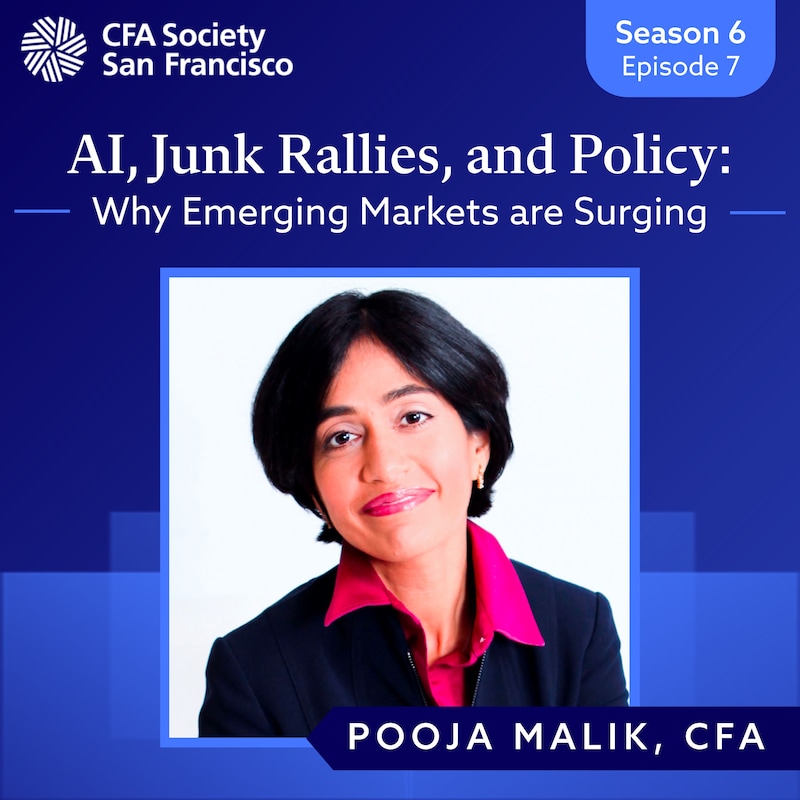
The global investment landscape has shifted dramatically since 2024. In this episode, Pooja Malik, CFA - Founding Partner and CIO at Nipun Capital - returns to Financial Perspectives to discuss the surprising trends of 2025 and 2026 in Emerging Markets, including the "junk rally" in AI-linked stocks and the impact of US tariffs on local policy.
With over 20 years of experience managing $100B+ portfolios at firms like BlackRock, Pooja provides a masterclass on alpha extraction in modern Asian markets. In this follow-up to her 2024 appearance, Pooja discusses how the AI theme has moved beyond the "obvious winners" to impact the entire power supply chain. She also shares her quantitative perspective on why the volatility of Indian and Chinese equities is trending downward, creating a new paradigm for global allocators.
In this episode, we cover:
- The AI Bubble in Asia: Why retail investors are buying anything remotely linked to power and data centers.
- Risk Reversal: Why US debt and political uncertainty are shifting risk perceptions toward developed markets.
- Sovereign Powerhouses: A look at the distinct economic visions of India, China, and Saudi Arabia.
- The Benchmarking Gap: Why EM drives 60% of global GDP but only 10% of equity benchmarks.
Transcripts
Lindsey Helman: Hello and welcome to Financial Perspectives, a CFA Society San
Speaker:Lindsey Helman: Francisco podcast where we interview and discuss trends
Speaker:Lindsey Helman: with leaders from across the investment and finance industry.
Speaker:Lindsey Helman: This month, our host, Tanya Suba-Tang, Programming and
Speaker:Lindsey Helman: Membership Director with CFA Society San Francisco, had the
Speaker:Lindsey Helman: pleasure of welcoming back Pooja Malik, founding partner and CIO
Speaker:Lindsey Helman: of Nipun Capital.
Speaker:Lindsey Helman: Listen in as they discuss the shifting risk dynamics between
Speaker:Lindsey Helman: the US and emerging markets.
Speaker:Tanya Suba-Tang: Pooja, Just so great to see you again.
Speaker:Tanya Suba-Tang: How are you?
Speaker:Pooja Malik, CFA: I'm doing well.
Speaker:Pooja Malik, CFA: Thank you for having me, Tanya.
Speaker:Tanya Suba-Tang: I'm always excited to have you on our podcast.
Speaker:Tanya Suba-Tang: This is the second time you're
Speaker:Tanya Suba-Tang: with us, and I'm very excited
Speaker:Tanya Suba-Tang: about our conversation because a
Speaker:Tanya Suba-Tang: lot has happened in the emerging
Speaker:Tanya Suba-Tang: markets.
Speaker:Tanya Suba-Tang: And so, you know, I'm going to jump right in here.
Speaker:Tanya Suba-Tang: And for our listeners, you know, the last time I spoke to Pooja
Speaker:Tanya Suba-Tang: was back in twenty twenty four.
Speaker:Tanya Suba-Tang: Can you believe it?
Speaker:Tanya Suba-Tang: I still feel like it's twenty twenty four.
Speaker:Tanya Suba-Tang: I don't know where the years went, but I'd love for you to
Speaker:Tanya Suba-Tang: share with our listeners what has changed in the market since
Speaker:Tanya Suba-Tang: then, and I'd love to know what has surprised you.
Speaker:Pooja Malik, CFA: It's a good question.
Speaker:Pooja Malik, CFA: A lot has changed, even though it's only been two years or
Speaker:Pooja Malik, CFA: maybe even eighteen months since we last spoke.
Speaker:Pooja Malik, CFA: And let me try to recap broadly.
Speaker:Pooja Malik, CFA: I would say three main changes.
Speaker:Pooja Malik, CFA: The first is investor sentiment around emerging markets has
Speaker:Pooja Malik, CFA: changed a lot.
Speaker:Pooja Malik, CFA: And to me that is the most important thing.
Speaker:Pooja Malik, CFA: When we spoke in twenty twenty
Speaker:Pooja Malik, CFA: four, emerging markets had been
Speaker:Pooja Malik, CFA: underperforming developed
Speaker:Pooja Malik, CFA: markets.
Speaker:Pooja Malik, CFA: US equities had been on a decade long bull run.
Speaker:Pooja Malik, CFA: And it was an era of US exceptionalism.
Speaker:Pooja Malik, CFA: You remember that phrase.
Speaker:Pooja Malik, CFA: and what's changed is today US equities appear to be overpriced
Speaker:Pooja Malik, CFA: or at least priced for perfection, where most stocks in
Speaker:Pooja Malik, CFA: the US appear to be what's called glamour stocks.
Speaker:Pooja Malik, CFA: And at some point when these stocks miss earnings
Speaker:Pooja Malik, CFA: expectations which are very hyped, that's when we are likely
Speaker:Pooja Malik, CFA: to get a correction in the US.
Speaker:Pooja Malik, CFA: Now the fact that US equities appear overpriced combined with
Speaker:Pooja Malik, CFA: dollar weakness has strengthened the appetite for em.
Speaker:Pooja Malik, CFA: The dollar weakness is coming, of course, from the Federal
Speaker:Pooja Malik, CFA: Reserve decision to cut rates, but also from political
Speaker:Pooja Malik, CFA: uncertainty in the US.
Speaker:Pooja Malik, CFA: So the backdrop of the US equity market has led more investors to
Speaker:Pooja Malik, CFA: look at em.
Speaker:Pooja Malik, CFA: And I think that's been one big change around foreign investor
Speaker:Pooja Malik, CFA: sentiment being more positive for em than before.
Speaker:Pooja Malik, CFA: Now, another thing that has
Speaker:Pooja Malik, CFA: changed is that policy support
Speaker:Pooja Malik, CFA: from the local governments in Em
Speaker:Pooja Malik, CFA: has become stronger, and the
Speaker:Pooja Malik, CFA: impetus for that was when the US
Speaker:Pooja Malik, CFA: announced tariffs in twenty
Speaker:Pooja Malik, CFA: twenty five.
Speaker:Pooja Malik, CFA: Many of the local governments felt compelled to provide policy
Speaker:Pooja Malik, CFA: incentives and other measures to support local markets.
Speaker:Pooja Malik, CFA: Some local governments even
Speaker:Pooja Malik, CFA: encouraged domestic institutions
Speaker:Pooja Malik, CFA: and banks to buy stocks to
Speaker:Pooja Malik, CFA: support their local equity
Speaker:Pooja Malik, CFA: markets.
Speaker:Pooja Malik, CFA: We saw this in China, we saw this in Taiwan, and we saw this
Speaker:Pooja Malik, CFA: in many of the smaller markets.
Speaker:Pooja Malik, CFA: So as a result, all of this attracted domestic buyers of
Speaker:Pooja Malik, CFA: stocks into the markets as well.
Speaker:Pooja Malik, CFA: And since twenty twenty four,
Speaker:Pooja Malik, CFA: especially looking back at
Speaker:Pooja Malik, CFA: twenty five we saw domestic
Speaker:Pooja Malik, CFA: institutions becoming net
Speaker:Pooja Malik, CFA: buyers.
Speaker:Pooja Malik, CFA: So in essence now you had multiple sources of demand for
Speaker:Pooja Malik, CFA: equities foreign investors as well as domestic investors.
Speaker:Pooja Malik, CFA: And then to top off all of this, the icing on the cake has been
Speaker:Pooja Malik, CFA: the sentiment around AI.
Speaker:Pooja Malik, CFA: And I see you smiling there.
Speaker:Pooja Malik, CFA: Right?
Speaker:Pooja Malik, CFA: that's been a hot topic across equity markets.
Speaker:Pooja Malik, CFA: There was positive sentiment around AI in twenty twenty four
Speaker:Pooja Malik, CFA: in the US of course.
Speaker:Pooja Malik, CFA: And for many years in the US.
Speaker:Pooja Malik, CFA: And then last year in twenty twenty five we saw it impact
Speaker:Pooja Malik, CFA: Asia more broadly, and the largest impact was in Korea,
Speaker:Pooja Malik, CFA: where stocks like Samsung were up over one hundred percent.
Speaker:Pooja Malik, CFA: SK Hynix that is the largest
Speaker:Pooja Malik, CFA: manufacturer of Dram chips,
Speaker:Pooja Malik, CFA: right.
Speaker:Pooja Malik, CFA: that stock returned over three hundred percent last year.
Speaker:Pooja Malik, CFA: So, you know, you're asking me what has been surprising?
Speaker:Pooja Malik, CFA: The fact that AI became a theme
Speaker:Pooja Malik, CFA: in Asia and EM is not
Speaker:Pooja Malik, CFA: surprising.
Speaker:Pooja Malik, CFA: I think what has been surprising is how strongly retail investors
Speaker:Pooja Malik, CFA: latched on to that theme.
Speaker:Pooja Malik, CFA: And they bought not just the
Speaker:Pooja Malik, CFA: obvious winners like TSMC,
Speaker:Pooja Malik, CFA: Samsung and SK Hynix, but they
Speaker:Pooja Malik, CFA: bought anything that had
Speaker:Pooja Malik, CFA: anything to do with AI even
Speaker:Pooja Malik, CFA: remotely.
Speaker:Pooja Malik, CFA: So now there's this thing that,
Speaker:Pooja Malik, CFA: you know, with AI needing more
Speaker:Pooja Malik, CFA: servers, servers needing more
Speaker:Pooja Malik, CFA: data centers.
Speaker:Pooja Malik, CFA: The world is going to run out of power.
Speaker:Pooja Malik, CFA: And so companies far down the supply chain, even companies
Speaker:Pooja Malik, CFA: that are involved in power construction, whether it's
Speaker:Pooja Malik, CFA: nuclear power, electric, thermal, hydro, all those stocks
Speaker:Pooja Malik, CFA: had a big rally because retail investors bought anything
Speaker:Pooja Malik, CFA: remotely linked to AI.
Speaker:Pooja Malik, CFA: So we saw junk stocks, loss making stocks.
Speaker:Pooja Malik, CFA: All kinds of stocks rally
Speaker:Pooja Malik, CFA: because retail investors were
Speaker:Pooja Malik, CFA: buying them.
Speaker:Pooja Malik, CFA: And that is the thing that's been the biggest surprise to me.
Speaker:Pooja Malik, CFA: I also think that, you know, I
Speaker:Pooja Malik, CFA: think there's room for
Speaker:Pooja Malik, CFA: correction here because while
Speaker:Pooja Malik, CFA: it's true that the AI theme is
Speaker:Pooja Malik, CFA: structural and will require more
Speaker:Pooja Malik, CFA: resources, including power, it's
Speaker:Pooja Malik, CFA: not clear that all of those
Speaker:Pooja Malik, CFA: companies will be able to
Speaker:Pooja Malik, CFA: execute on that demand
Speaker:Pooja Malik, CFA: opportunity.
Speaker:Pooja Malik, CFA: But each of those stocks is
Speaker:Pooja Malik, CFA: being priced like earnings are
Speaker:Pooja Malik, CFA: going to go up five times,
Speaker:Pooja Malik, CFA: right.
Speaker:Pooja Malik, CFA: So I think what I've been
Speaker:Pooja Malik, CFA: surprised by is the junk rally
Speaker:Pooja Malik, CFA: in Em.
Speaker:Pooja Malik, CFA: And I think that that will be
Speaker:Pooja Malik, CFA: due for a correction at some
Speaker:Pooja Malik, CFA: point.
Speaker:Pooja Malik, CFA: So to recap quickly, the three
Speaker:Pooja Malik, CFA: things that have changed since
Speaker:Pooja Malik, CFA: twenty four has been foreign
Speaker:Pooja Malik, CFA: investor sentiment around Em
Speaker:Pooja Malik, CFA: domestic policy, support from
Speaker:Pooja Malik, CFA: local governments.
Speaker:Pooja Malik, CFA: And lastly, the retail optimism
Speaker:Pooja Malik, CFA: around AI, which has led to a
Speaker:Pooja Malik, CFA: strong junk rally in emerging
Speaker:Pooja Malik, CFA: markets.
Speaker:Tanya Suba-Tang: So based on all those, you know, surprising changes that you just
Speaker:Tanya Suba-Tang: shared is the very term emerging markets becoming obsolete.
Speaker:Tanya Suba-Tang: And should we instead be viewing these nations as individual
Speaker:Tanya Suba-Tang: sovereign powerhouses rather than a monolithic asset class?
Speaker:Pooja Malik, CFA: There's some of that already happening.
Speaker:Pooja Malik, CFA: Tanya.
Speaker:Pooja Malik, CFA: And you remember when we spoke
Speaker:Pooja Malik, CFA: last time, we touched a little
Speaker:Pooja Malik, CFA: bit on this issue that emerging
Speaker:Pooja Malik, CFA: markets is not really an asset
Speaker:Pooja Malik, CFA: class.
Speaker:Pooja Malik, CFA: It's a bunch of countries put
Speaker:Pooja Malik, CFA: together because there was no
Speaker:Pooja Malik, CFA: other place where there fit
Speaker:Pooja Malik, CFA: cleanly.
Speaker:Pooja Malik, CFA: And you can see the discrepancy in how major classifiers or
Speaker:Pooja Malik, CFA: benchmark providers think about some of these countries.
Speaker:Pooja Malik, CFA: You know, the long standing example is Korea, where MSCI
Speaker:Pooja Malik, CFA: thinks of Korea as an emerging market and Footsie thinks about
Speaker:Pooja Malik, CFA: Korea as a developed market.
Speaker:Pooja Malik, CFA: To me, again, it's amazing that
Speaker:Pooja Malik, CFA: a developed market or almost
Speaker:Pooja Malik, CFA: developed market like Korea was
Speaker:Pooja Malik, CFA: up almost one hundred percent
Speaker:Pooja Malik, CFA: last year.
Speaker:Pooja Malik, CFA: I haven't seen a developed market being one hundred percent
Speaker:Pooja Malik, CFA: in my lifetime of investing.
Speaker:Pooja Malik, CFA: And I've been doing this a long time.
Speaker:Pooja Malik, CFA: But that aside, going back to your point about should we view
Speaker:Pooja Malik, CFA: these nations as as individual sovereign powerhouses rather
Speaker:Pooja Malik, CFA: than a monolithic asset class?
Speaker:Pooja Malik, CFA: That trend is already underway, starting with China.
Speaker:Pooja Malik, CFA: And you've seen the emergence of China.
Speaker:Pooja Malik, CFA: The growth of China being almost now back to thirty, thirty five
Speaker:Pooja Malik, CFA: percent of the EM index.
Speaker:Pooja Malik, CFA: at some point in time, definitely.
Speaker:Pooja Malik, CFA: I think China will be big enough to be its own asset class.
Speaker:Pooja Malik, CFA: the other reason for this A call it shift, or really thinking of
Speaker:Pooja Malik, CFA: em as a bunch of different countries is because the
Speaker:Pooja Malik, CFA: underlying investor behavior is different in these countries.
Speaker:Pooja Malik, CFA: The commonality is that all of these countries have a large
Speaker:Pooja Malik, CFA: retail presence in terms of equity market participation.
Speaker:Pooja Malik, CFA: But retail investors do behave differently in China versus
Speaker:Pooja Malik, CFA: Taiwan versus India.
Speaker:Pooja Malik, CFA: So in our model at Nipun, for
Speaker:Pooja Malik, CFA: example, we view these countries
Speaker:Pooja Malik, CFA: as distinct.
Speaker:Pooja Malik, CFA: The investor behavior is different.
Speaker:Pooja Malik, CFA: The regulation is different.
Speaker:Pooja Malik, CFA: The reporting guidelines are different.
Speaker:Pooja Malik, CFA: The data availability is different.
Speaker:Pooja Malik, CFA: And I think for a lot of asset managers, understanding these
Speaker:Pooja Malik, CFA: differences enables better alpha extraction in Em.
Speaker:Pooja Malik, CFA: So from my perspective, to answer your question, yes, these
Speaker:Pooja Malik, CFA: countries are different.
Speaker:Pooja Malik, CFA: They've always been different.
Speaker:Pooja Malik, CFA: Understanding and recognizing
Speaker:Pooja Malik, CFA: these differences is important
Speaker:Pooja Malik, CFA: from a manager or investor
Speaker:Pooja Malik, CFA: standpoint.
Speaker:Pooja Malik, CFA: At the same time, classifying
Speaker:Pooja Malik, CFA: them as EM makes it easier for
Speaker:Pooja Malik, CFA: an allocator.
Speaker:Pooja Malik, CFA: So, you know, imagine you're a pension fund and you have, let's
Speaker:Pooja Malik, CFA: say sixty percent of your portfolio in equities.
Speaker:Pooja Malik, CFA: and then you have, you know, ten percent of that in EM, so sixty
Speaker:Pooja Malik, CFA: percent, you know, ten percent of sixty percent is six percent.
Speaker:Pooja Malik, CFA: and then you want to break that
Speaker:Pooja Malik, CFA: out into twenty five individual
Speaker:Pooja Malik, CFA: countries.
Speaker:Pooja Malik, CFA: All of a sudden you have these tiny allocations to manage.
Speaker:Pooja Malik, CFA: And so I think that's why from an allocator standpoint, it's
Speaker:Pooja Malik, CFA: ease of convenience rather than anything else to keep it as one
Speaker:Pooja Malik, CFA: category versus I think if you think about it from an alpha
Speaker:Pooja Malik, CFA: generation perspective, it's often helpful to break it out.
Speaker:Pooja Malik, CFA: The Uber sort of covering around my statement here is the
Speaker:Pooja Malik, CFA: disconnect between how important EM is from a GDP perspective.
Speaker:Pooja Malik, CFA: versus how important or not it
Speaker:Pooja Malik, CFA: is in the benchmarks, meaning
Speaker:Pooja Malik, CFA: that EM is a big driver of GDP
Speaker:Pooja Malik, CFA: growth.
Speaker:Pooja Malik, CFA: Almost sixty percent of the
Speaker:Pooja Malik, CFA: world's GDP growth is coming
Speaker:Pooja Malik, CFA: from EM, but EM is only ten
Speaker:Pooja Malik, CFA: percent of global equity
Speaker:Pooja Malik, CFA: benchmarks, right?
Speaker:Pooja Malik, CFA: So that disconnect is what you
Speaker:Pooja Malik, CFA: see when you think about the
Speaker:Pooja Malik, CFA: allocator perspective versus the
Speaker:Pooja Malik, CFA: manager perspective.
Speaker:Tanya Suba-Tang: So kind of following up a little bit on that.
Speaker:Tanya Suba-Tang: But for the decades, obviously
Speaker:Tanya Suba-Tang: the narrative was emerging
Speaker:Tanya Suba-Tang: markets were risky due to the
Speaker:Tanya Suba-Tang: volatile politics.
Speaker:Tanya Suba-Tang: So, you know, kind of taking up how you said to kind of start
Speaker:Tanya Suba-Tang: thinking of these as individuals have perceptions of risk shifted
Speaker:Tanya Suba-Tang: in today's global environment?
Speaker:Pooja Malik, CFA: Yes. Risk is a very slow moving phenomena.
Speaker:Pooja Malik, CFA: You know these are embedded in people's minds and mindsets.
Speaker:Pooja Malik, CFA: And it takes a long time for
Speaker:Pooja Malik, CFA: people's perceptions of risk to
Speaker:Pooja Malik, CFA: change.
Speaker:Pooja Malik, CFA: Two things have happened simultaneously, Tanya.
Speaker:Pooja Malik, CFA: The first is the uncertainty in
Speaker:Pooja Malik, CFA: the US has gone up because of
Speaker:Pooja Malik, CFA: unpredictable actions from the
Speaker:Pooja Malik, CFA: administration over the last two
Speaker:Pooja Malik, CFA: years.
Speaker:Pooja Malik, CFA: Whether that was tariffs, whether it was Venezuela in I
Speaker:Pooja Malik, CFA: don't know where we're going to go with Greenland.
Speaker:Pooja Malik, CFA: But a lot of that uncertainty
Speaker:Pooja Malik, CFA: has caused investors to have a
Speaker:Pooja Malik, CFA: heightened risk perception of
Speaker:Pooja Malik, CFA: the US.
Speaker:Pooja Malik, CFA: At the same time, many of the
Speaker:Pooja Malik, CFA: major markets in Em are becoming
Speaker:Pooja Malik, CFA: more stable.
Speaker:Pooja Malik, CFA: So if you think about countries like China and India, the reason
Speaker:Pooja Malik, CFA: they're becoming more stable is because their domestic economies
Speaker:Pooja Malik, CFA: have grown to a point where they're less export sensitive
Speaker:Pooja Malik, CFA: than they used to be.
Speaker:Pooja Malik, CFA: Historically, domestic
Speaker:Pooja Malik, CFA: consumption has gone up domestic
Speaker:Pooja Malik, CFA: demand for equities has gone up
Speaker:Pooja Malik, CFA: and government policy support in
Speaker:Pooja Malik, CFA: these local markets have gone
Speaker:Pooja Malik, CFA: up.
Speaker:Pooja Malik, CFA: The other thing that we've seen in these major markets in the
Speaker:Pooja Malik, CFA: E.M. is that the fiscal balance sheets of these governments have
Speaker:Pooja Malik, CFA: become more stable over time versus the US debt situation has
Speaker:Pooja Malik, CFA: worsened over time.
Speaker:Pooja Malik, CFA: Again, it's not to say that one
Speaker:Pooja Malik, CFA: is better or one is worse, but
Speaker:Pooja Malik, CFA: just if I look at trends over
Speaker:Pooja Malik, CFA: time, balance sheets have
Speaker:Pooja Malik, CFA: improved in EM at the government
Speaker:Pooja Malik, CFA: level and become weaker in the
Speaker:Pooja Malik, CFA: US.
Speaker:Pooja Malik, CFA: So as a result of this,
Speaker:Pooja Malik, CFA: perceptions have shifted,
Speaker:Pooja Malik, CFA: although slowly, and I think
Speaker:Pooja Malik, CFA: that shift is likely to
Speaker:Pooja Malik, CFA: continue.
Speaker:Pooja Malik, CFA: You could also see a point in time where many of the other
Speaker:Pooja Malik, CFA: EM's, even though they're smaller, like Taiwan, I think
Speaker:Pooja Malik, CFA: you could see that market also become more stable.
Speaker:Pooja Malik, CFA: I think markets like Latin America are still very high risk
Speaker:Pooja Malik, CFA: because those are narrower markets, smaller markets, fiscal
Speaker:Pooja Malik, CFA: situations still tough.
Speaker:Pooja Malik, CFA: The one area to watch out for in
Speaker:Pooja Malik, CFA: emerging markets is the Middle
Speaker:Pooja Malik, CFA: East, because the Middle East
Speaker:Pooja Malik, CFA: historically has been a very oil
Speaker:Pooja Malik, CFA: sensitive market.
Speaker:Pooja Malik, CFA: The big change in the Middle
Speaker:Pooja Malik, CFA: East over the last three years
Speaker:Pooja Malik, CFA: has been the emergence of Saudi
Speaker:Pooja Malik, CFA: Arabia as a very large market,
Speaker:Pooja Malik, CFA: with a very keen political and
Speaker:Pooja Malik, CFA: economic ambition to grow
Speaker:Pooja Malik, CFA: non-oil GDP.
Speaker:Pooja Malik, CFA: So if you think about where
Speaker:Pooja Malik, CFA: China was twenty years ago, one
Speaker:Pooja Malik, CFA: of the things that enabled China
Speaker:Pooja Malik, CFA: to grow was a very strong vision
Speaker:Pooja Malik, CFA: from the leadership where the
Speaker:Pooja Malik, CFA: Chinese authorities wanted China
Speaker:Pooja Malik, CFA: to be an economic and financial
Speaker:Pooja Malik, CFA: superpower.
Speaker:Pooja Malik, CFA: Now, markets like India and
Speaker:Pooja Malik, CFA: Saudi also have very clear
Speaker:Pooja Malik, CFA: visions of where they want to
Speaker:Pooja Malik, CFA: be.
Speaker:Pooja Malik, CFA: So, for example, India wants to be the third largest country in
Speaker:Pooja Malik, CFA: the world after US and China.
Speaker:Pooja Malik, CFA: And that's a stated vision.
Speaker:Pooja Malik, CFA: And so policy support for that
Speaker:Pooja Malik, CFA: vision is improving year on
Speaker:Pooja Malik, CFA: year.
Speaker:Pooja Malik, CFA: The same thing in Saudi where
Speaker:Pooja Malik, CFA: Saudi wants a significant part
Speaker:Pooja Malik, CFA: of their GDP to come from non
Speaker:Pooja Malik, CFA: oil revenues.
Speaker:Pooja Malik, CFA: And so we're seeing investments in infrastructure.
Speaker:Pooja Malik, CFA: We're seeing changes in the real estate sector.
Speaker:Pooja Malik, CFA: We're seeing changes in banking to support that vision.
Speaker:Pooja Malik, CFA: And that's why I have this belief that I think the risk in
Speaker:Pooja Malik, CFA: emerging markets is going to go down over time, where I wouldn't
Speaker:Pooja Malik, CFA: say that we'll see convergence, but I think uncertainty in the
Speaker:Pooja Malik, CFA: US has gone up at a time when risk in EM is going down.
Speaker:Pooja Malik, CFA: So you're right.
Speaker:Pooja Malik, CFA: And actually it was a very interesting question because I
Speaker:Pooja Malik, CFA: do think perceptions of risk have started shifting And over
Speaker:Pooja Malik, CFA: time, we are also going to be seeing this in the numbers.
Speaker:Pooja Malik, CFA: You know, many of us that tend to invest in stocks, we're all
Speaker:Pooja Malik, CFA: very quantitatively inclined.
Speaker:Pooja Malik, CFA: And I myself come from a quant background.
Speaker:Pooja Malik, CFA: We're starting to see this
Speaker:Pooja Malik, CFA: already that the volatility of
Speaker:Pooja Malik, CFA: Indian equities has gone down
Speaker:Pooja Malik, CFA: over time.
Speaker:Pooja Malik, CFA: We're starting to see that in China.
Speaker:Pooja Malik, CFA: And I think over time we'll see that more and more EM countries.
Speaker:Pooja Malik, CFA: So you're right that while EM
Speaker:Pooja Malik, CFA: remains more risky, more
Speaker:Pooja Malik, CFA: volatile than developed, we're
Speaker:Pooja Malik, CFA: starting to see that shift where
Speaker:Pooja Malik, CFA: EM is becoming more stable and
Speaker:Pooja Malik, CFA: developed markets are becoming
Speaker:Pooja Malik, CFA: more volatile.
Speaker:Tanya Suba-Tang: Wow. Thank you so much for all that insights.
Speaker:Tanya Suba-Tang: It's amazing to know what's really changed, like you said
Speaker:Tanya Suba-Tang: the last eighteen months.
Speaker:Tanya Suba-Tang: So I am looking forward to maybe
Speaker:Tanya Suba-Tang: connect with you in the next
Speaker:Tanya Suba-Tang: eighteen months and see where we
Speaker:Tanya Suba-Tang: are and maybe get some more
Speaker:Tanya Suba-Tang: updates.
Speaker:Pooja Malik, CFA: sounds great.
Speaker:Pooja Malik, CFA: Thanks for having me, Tanya.
Speaker:Lindsey Helman: Thank you to this month's guest,
Speaker:Lindsey Helman: Pooja Malik, for joining us
Speaker:Lindsey Helman: today to discuss the emerging
Speaker:Lindsey Helman: markets landscape.
Speaker:Lindsey Helman: Join us next time for another
Speaker:Lindsey Helman: Financial Perspectives episode
Speaker:Lindsey Helman: airing on the last Tuesday of
Speaker:Lindsey Helman: the month.


