Shownotes
EPISODE SUMMARY:
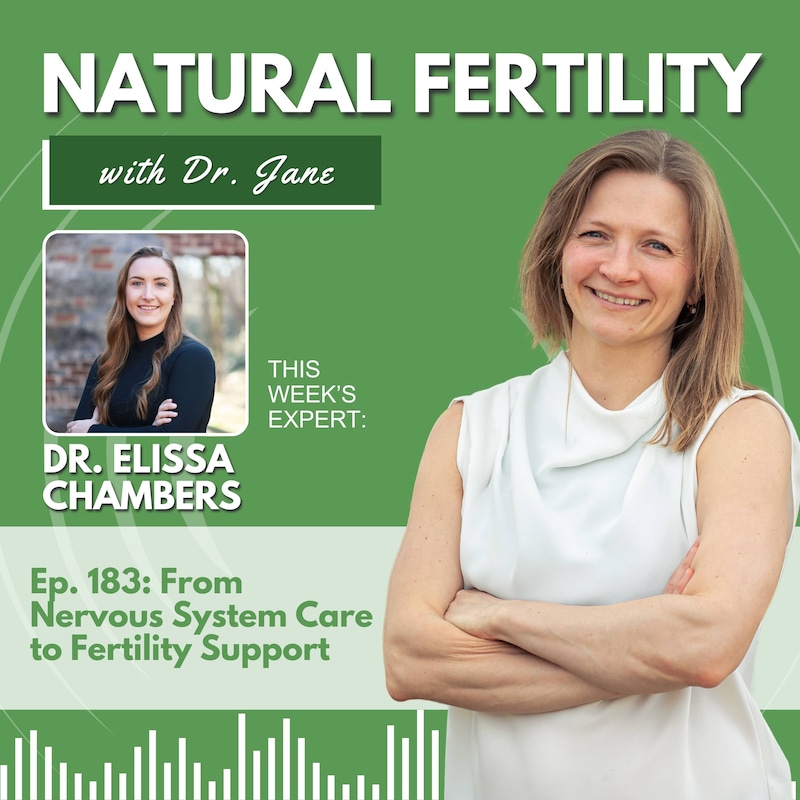
In this episode, I sit down with Dr. Elissa Chambers, a nervous system-focused chiropractor and the newest practitioner joining our fertility clinic. We talk about her journey from sports medicine to women’s health, the personal stories that pulled her into the fertility space, and why nervous system regulation, lab testing, and emotional connection are essential in helping couples build healthy families. If you’ve ever felt dismissed or limited by standard care, this episode is a breath of fresh air—and a glimpse into how we’re changing the fertility care landscape.
ABOUT DR. JANE’S PRACTICE:
Dr. Jane is a Naturopathic Doctor and a Natural Fertility Expert. She and her team of expert practitioners help couples navigate infertility for 1+ years, get to the root cause of their struggles, heal, and bring healthy babies home.
After having a family member struggle with infertility and experiencing a miscarriage herself, Dr. Jane realized how little support and education women receive. She is on a mission to change that. Since 2020, she has dedicated her practice to fertility, where she and her practitioners work with couples 1:1, running functional lab work, customizing treatment plans and providing her couples with the support they need to get pregnant, have a stress free pregnancy and a healthy baby.
Learn more about Dr. Jane’s practice: www.drjanelevesque.com/practice
Apply to work with Dr. Jane & her team: www.drjanelevesque.com/application
Join to receive Dr. Jane's weekly Fertility Files: https://link.getcmm.com/widget/form/JStvkHpRAamc7VwPMEQE
CHAPTERS:
00:00 Introduction to Dr. Elissa Chambers
03:02 The Unique Approach to Chiropractic Care
06:04 Journey into Fertility and Maternal Health
08:57 The Emotional Impact of Fertility Challenges
12:01 The Importance of Comprehensive Testing
15:01 Connecting Preconception Care to Child Health
17:53 Understanding Maternal Influence on Child Development
19:01 The Importance of Body Awareness in Infants
21:10 Instincts and Decision-Making in Healthcare
23:38 Aligning with a Like-Minded Team
24:49 Understanding Fertility Challenges
26:53 Postpartum Support and Maternal Health
28:36 Generational Health and Preconception Care
30:48 Personalized Care in Fertility Treatments
TAKEAWAYS:
I have a really intimate relationship with the nervous system.
Anxiety is a factor in women's health.
Listening to your body is crucial for managing stress.
Many women struggle with PCOS and endometriosis.
Painful periods can feel like something new each month.
Understanding the 'why' behind bodily changes is important.
Pregnancy can reveal underlying health issues.
Healing opportunities may be missed during pregnancy.
Stress management is key for reproductive health.
Women often face unique challenges in their reproductive journeys.
ABOUT NATURAL FERTILITY:
Pregnancy is a natural process, so if it’s not happening or it’s not sticking, something is missing. Join Dr. Jane, a naturopathic doctor and a natural fertility expert, every Tuesday at 9am for insightful case studies, expert interviews and practical tips on optimizing your fertility naturally.
If you’ve struggling with infertility, pregnancy loss, women’s health issues or just want to be proactive and prepare yourself for the next big chapter in your life… this show is for you.
SUBSCRIBE TO & FOLLOW NATURAL FERTILITY:
Spotify: https://open.spotify.com/show/0WjrEeP...
Apple: https://podcasts.apple.com/us/podcast...
CONNECT WITH DR. JANE:
Website - www.drjanelevesque.com
Instagram - www.instagram.com/drjanelevesque/?hl=en
Facebook - www.facebook.com/dr.janelevesque.nd
YouTube - www.youtube.com/@dr.janelevesque7319
Individualized care is essential for effective treatment of chronic fertility issues.
Transcripts
Hi guys, welcome to another episode of Natural Fertility with Dr. Jane. Today I am joined by Dr. Lisa Chambers and she's actually one of the practitioners that's coming on to practice with myself and Dr. Nicole. Hi, Lisa, how are you? I'm so excited to have you here. Tell everybody just your credentials, know, what's the doctor credentials, what's your experience, who you are, and then we'll just dive into your story to give...
Elissa Chambers (:Hi, I'm good, excited.
Dr. Jane Levesque (:people an idea of who you are. It takes a lot of reps for me to figure out the right practitioners to hire and how to train you guys. And, you know, I still feel like I'm learning so much, but you caught my eye and my attention. So I'm excited to introduce everyone.
Elissa Chambers (:There you go.
Well, like Dr. Jane said, my name is Dr. Elissa. I am a doctor of chiropractic. I have been working in the space of maternal things for the past five years, kind of making my way through all of that. But really excited to be taking this next step and joining Dr. Jane's team and doing all things fertility.
Dr. Jane Levesque (:Yeah, when you, and I mean, you're still kind of finishing in within your chiropractic practice. One of the things that really intrigued me is how you practice and how you adjust. Will you tell a little bit about how you got into adjusting the way that you do and why you decided to do that?
Elissa Chambers (:Mm-hmm.
Elissa Chambers (:Mm-hmm.
Elissa Chambers (:Yeah, so when I practicing, I called myself a nervous system chiropractor, really focused on the body. What is the body doing? Where is there that dysregulation or lack of communication happening in the body rather than just looking at pain, right? We're looking at function, but also not just going in and moving every single bone in the body, but really taking a good look at the body, a good analysis, listening to what the patient is telling.
you and then giving that patient what they need today and then when you see them the next day or a week later that might be something different but then also listening to their body and listening to their words and giving them what they need and whenever they are in front of you essentially.
Dr. Jane Levesque (:Yeah, I was really intrigued by that. think if you're listening in Canada, the way chiropractic medicine works versus in the States is a little bit different. I always think of chiropractors in the States as almost functional, you know, functional medical professionals, just because you do look at supplements, run labs, that kind of stuff. But I do still think that we'll go to the chiropractic office, most of us, and you're just going to get
Elissa Chambers (:Mm-hmm.
Dr. Jane Levesque (:palpated really quickly, adjusted and then be done with it and then come back again a week later or two weeks later and guess some of them will release the muscles, so on and so forth. But you didn't, you weren't doing that. You were very much looking at the nervous system and then helping people create foundational health. So then when they came back, something shifted and then you didn't just repeat that same protocol because that doesn't make any sense.
Elissa Chambers (:Mm-hmm.
Elissa Chambers (:Mm-hmm. No, it does not. And what they present with when they first see you might be something different because once you do something different in the body, the body's either gonna change or it's gonna adapt or it's, you know, whether that's for the worse or for the better after that first initial.
Dr. Jane Levesque (:You
Elissa Chambers (:change, whatever that is, whatever change you're making within your body. And so really diving in and listening to what the body is saying is important rather than just doing the same thing every time and hoping you get the result that you want.
Dr. Jane Levesque (:Yeah, for sure. Now, tell me why the fertility space? Why step into that and your experience so far in the fertility, just supporting the clients that you have and family members, that kind of stuff.
Elissa Chambers (:Yeah.
Yeah, so when I first decided I wanted to be a chiropractor, I was like, I'm going to go into sports. I'm going to adjust athletes. I'm going to work for a team. Like I was because I played sports and that's how I got into it. In high school, my mom took me to the chiropractor because she was like, hey, it makes your dad feel better. Like, why don't we take you and see if it helps it helps you with your pain and your performance? And I thought it was the coolest thing in the world. I'm like, this guy made me feel better and I didn't have to take a pill. Like, that's really, really cool. So
Dr. Jane Levesque (:Me too, I thought I was gonna beat you.
Elissa Chambers (:before I left for chiropractic school, can't even remember me, like a month before I left, my sister told me she was pregnant. And it was kind of a big shock, change, you know, like, I'm leaving and I don't even get to be a part of this process, part of this journey with her. And she, unfortunately, had a very through the medical system experience.
Getting pregnant, being pregnant was terrible for her. And then she, you know, had a cascade birth where she got induced and ended up in a C-section. And I was 800 miles away at school. And I felt that, you know, there was something that I could have done, but I really couldn't do anything. And so after that, my mind shift.
focus changed all of that. And I was like, I'm going to start learning about pregnancy and babies and I'm going to go to these clubs and I'm going to listen to these talks and all of that kind of stuff. then I just fast-tracked, put my mind to it. All of my elective change, everything I was doing was to learn how to help women maybe not have that experience. Maybe that was going to be my sister's next pregnancy or my best friend's pregnancy or my own pregnancy. And I just fast-tracked that and then going into practice.
I just really loved working with women. I loved listening to their stories, whether that was how they got pregnant or how they did their second pregnancy differently and all of those types of things. And I worked in a couple different types of clinics. The first clinic was a rehab clinic, which really didn't resonate with me. And then I moved into more of a pediatrics and pregnancy type clinic where I was seeing a lot more kids.
but I was also seeing moms and I was like, still feel like this isn't right. Like I feel like there's more. Yeah, like I'm not having enough time and I had a patient at that clinic that I saw majority kids where she brought her child in to see us and...
Dr. Jane Levesque (:This is not the root cause. There's more, yeah.
Elissa Chambers (:she had really great results. And so she was like, Hey, I'm going to sign up for care for myself. Like I want to get adjusted. And she didn't tell me in her new patient appointment that she was doing IVF and she was trying to get pregnant. And her first child was eight years old and she's been on this eight year journey of not being pregnant and doing multiple rounds of IVF. And at her like last, where we did her nervous system scans again, we were transitioning her into wellness care. She,
told me she was pregnant. She was like, and I didn't tell you I was doing IVF, but I took a break and I was giving my body a chance to heal like I was doing for my daughter. And I didn't even like, I didn't even realize.
And she got pregnant and we cried together. were, was like, you know, and then something like shifted in me and I was like, I love this. Like I want to be the person that's supporting these women on this journey. And so I moved into practicing inside of a women's health center. There was midwives and pelvic floor, PTs and doulas and all of that stuff. So seeing a lot more volume in fertility, a lot more volume in, you know, women who are having uncomfortable periods and you know, trying to get second with their
Dr. Jane Levesque (:Yeah.
Elissa Chambers (:pregnant babes, pregnant, yes, yes. And it was a lot of like, I can only help them this much. Like I can only get to a certain point and then it's me telling them, okay, so you need to go ask X, Y and Z provider about this test or like what you should do next. And then they would leave and then I would feel helpless because either they wouldn't go ask.
Dr. Jane Levesque (:We're told it was all normal.
Elissa Chambers (:or they would go and talk to their provider and it would be brushed under the rug and they were told that nothing was wrong. And so, and I think I shared this with you on the interview, is I was like, I feel like I hit a roadblock. Like I feel like I can't help these women more. And then I was only seeing the women and we know the partner's just as important. So it just felt like that, like the universe. Like I believe that the universe puts you where it's supposed to be at the right time. And I think the universe like.
Dr. Jane Levesque (:Yes, totally.
Elissa Chambers (:brought me here, it brought me to you in this practice and to be able to like move that roadblock out of the way and just help people more.
Dr. Jane Levesque (:Yeah, I think it's the, story with your sister. And I remember you got emotional because I was like, who's this young practitioner? You know, and not that you're like that young, but I'm just still like, you know, why, why go into the space? And I'm very diligent about asking that question because I think the space is very, very difficult. And it's, you are sitting with patients through some of the hardest parts
Elissa Chambers (:Yeah. Yeah. Sure.
Mm-hmm.
Elissa Chambers (:Mm-hmm.
Dr. Jane Levesque (:in their journey. And I'm not surprised that patient that was going through IVF was this like, I don't want to tell another person about this. Let me just go for my nervous system. And I don't want to tell them and spill my story about the last eight years and how terrible it has been, you know? So, and I remember how, you know, emotional you got with your sister. And I was like, Hey, that's one of the reasons I'm here too. Cause my sister was told that she's going to need IVF and
Elissa Chambers (:Mm-hmm.
Elissa Chambers (:Mm-hmm. Mm-hmm.
Elissa Chambers (:Yeah.
Elissa Chambers (:Yeah?
Elissa Chambers (:Mm-hmm.
Dr. Jane Levesque (:she's not going to be able to have kids naturally without it. And nothing could be further from the truth. I just didn't realize like, they didn't even test her. They just said that because of her age. So of this number, they didn't even look at anything. where her vitamin D was at like 11 and optimal is like 60 to 80. No, that has nothing to do with it. So I think that's a really big component to have this passion and this drive.
Elissa Chambers (:No.
Elissa Chambers (:Mm-hmm.
Elissa Chambers (:Mm-hmm.
Dr. Jane Levesque (:And then I just remember meeting you and thinking that like, yeah, she really does feel blocked and she wants to learn more. And I'm all about creating a space where it's like, there is so much to learn that you're now coming from a phase of like, I didn't know where to go to like, my God, I'm drinking from a fire hose because I have to learn so much and the space is constantly evolving. And now we're not just looking at the female, we're looking at the male and we're trying to understand how.
Elissa Chambers (:Hahaha
Elissa Chambers (:Mm-hmm.
Dr. Jane Levesque (:their DNA and their methylation and all of this other nutrient levels are all working together. And so I knew that you were going to be up for the challenge.
Elissa Chambers (:And it's honestly so much fun. Like, I love to drink from a fire hose and I love to learn more and that, I mean, went to school for eight years, right? Did all the things and then you get out of school and you almost have this like imposter syndrome where you're like, okay, I'm not studying all the time anymore. Like, what's going on? So like now, yes, to like get it. Yeah.
Dr. Jane Levesque (:And you know nothing. I still feel like I know nothing and I remember coming out of school and being like, what am I supposed to do with this diploma?
Elissa Chambers (:Right, and like now, getting a taste of like practicing for five years and then learning new things but also having that relevant experience where I'm like connecting the dots. Where I'm like, my god, that patient I saw four years ago needed this. Or my gosh, this patient that I just saw, whatever, needed this. And so it's almost a little, you know, it's a little bit better to learn this way because I have some experience and I've, you know, a lot of it's, you know, relative.
Dr. Jane Levesque (:It is. Yeah. think the eye opening experiences, I had a patient yesterday and they've been struggling for three years and they have like two pages of lab work and it's like maybe 20 or 30 markers at most. And it's just like really like they've been struggling for three years and the testing is so, so minimal and they're just brushed off.
And so, like you said, the people are either not gonna go to the test to go ask anybody because they don't know how to ask or they feel weird asking an authority because the authority should know what to test, which they don't unless they are driven and understand, you know, what it is that you're working towards and they're not being compensated by the pharmaceutical industry. And again, like, don't get me wrong, there's amazing doctors out there, but the doctors that are amazing.
Elissa Chambers (:Mm-hmm.
Dr. Jane Levesque (:they look so much further than just, okay, I need to do this treatment and this, they're trying to understand why the body isn't getting pregnant and they're involving the couple. So they're either not going to the doctor at all because it's just too much to ask or when they go, the doctor goes, you don't need that. And that's where the block is. Cause if we don't do testing, then it's really hard for us to know what's going on.
Elissa Chambers (:Mm-hmm.
Elissa Chambers (:Mm-hmm.
Elissa Chambers (:Mm-hmm.
Elissa Chambers (:Right, we need a little bit of data.
Dr. Jane Levesque (:Yeah, a little bit. We do a lot of data. We do a lot of data. Yeah, that's it. Tell me what you're looking forward to in terms of coming on and taking on patients with the experience that you have.
Elissa Chambers (:Just a smidge.
Yes, the more the better, the more you know.
Elissa Chambers (:Yeah, so one of my favorite things is connecting with people, learning people's because it's more than just what the data tells you, right? Like it's looking at the person that's in front of you, and it's almost like a scavenger hunt or like a puzzle that you're putting together. So yes, the labs are insanely important, but also like...
What are the other things that impacted you in your life that's causing your body to be stuck in fight or flight? Was there something that started off when you were a baby? Were you vaginally birthed or are you cesarean birthed? A lot of things that people don't necessarily ask or tell or maybe even know about themselves even. And so my favorite part is just making those connections, building relationships with those patients and clients and.
people and getting to know their story and then, you know, doing the scavenger hunt of what is going on with their body and why their labs are saying that because it's so much more than just what the number is.
Dr. Jane Levesque (:Yeah, I do find that I was the same. I used to work with kids and then I was like, I gotta start working with them in pregnancy. And then during pregnancy, I'm like, why can't do anything? Because there's not a lot that you can do during pregnancy. Don't get me wrong, we do a lot to support, but you're not going to detox. You're not going to, you know, shift methylation a bunch. Like you're just going to support things and keep everything as steady as possible versus, you know, revamp even certain nutrients. You're not going to
Elissa Chambers (:Mm-hmm. Yeah.
Elissa Chambers (:Mm-hmm.
Mm-hmm.
Dr. Jane Levesque (:do really high doses like molybdenum or manganese or stuff like that because you just don't want to rev the system up. And then I was like, okay, if pregnancy is not it, I guess it actually starts preconception. And I think Dr. Nicole is the same as you where you kind of looked at the babies and the kids and what did you see in the babies and the kids that you could connect back to the pregnancy or even the pre-conception care.
Elissa Chambers (:Mm-hmm.
Elissa Chambers (:Mm-hmm.
Elissa Chambers (:Mm-hmm. Yeah, absolutely. And people think that I'm crazy when I'm like, you need to go to the chiropractor before you get pregnant. You need to go to the pelvic floor PT before you get pregnant. So everything starts there. then, you know, obviously seeing the mom beforehand during pregnancy and then seeing the baby, like you get so much more of the glimpse of the story. But then a lot of times, like what's going on with the baby is what was going on with the mom.
or what was going on with the dad before then. So having the whole picture is really nice, but starting, you know, taking care of your body even before you even think about getting pregnant or trying is the most important step in all factors and all facets of health.
Dr. Jane Levesque (:Mm-hmm.
Dr. Jane Levesque (:Is there something that you saw in the kids that you were like, this is connected to this and you could just make those connections for people or yourself?
Elissa Chambers (:absolutely. mean, definitely with the babies seeing moms during their pregnancy where it's like, okay, these are the symptoms that mom had and now baby's coming out and you know, you were feeling X, Y, and Z and now baby has a right-
head preference, like looking preference and okay well that leans to why you were feeling that certain thing in your body or you had a lot of morning sickness with your second pregnancy versus your first pregnancy and now this baby is having you know like a lot of like
Dr. Jane Levesque (:John does.
Elissa Chambers (:Yeah, and detox and all of those types of things in their bodies or relating like I had a mom who had a mold exposure in her house and then her kids, the baby that she had while she was living in that house is having recurrent ear infections. So like it all ties back to the mom.
Dr. Jane Levesque (:Mm-hmm. Mm-hmm. It's a lot of pressure for the moms. Yeah. Yeah.
Elissa Chambers (:Yeah, it is. It absolutely is. And they take that on and they sit with that. And so it is a lot of pressure for them.
Dr. Jane Levesque (:Mm-hmm. Yeah, and I mean, we really do try to unpack that. think all my calls that I had this week, I'm always like the infertility journey is I always look at it as a symptom of everything else that happened because something that I learned on an office hour with Dr. Leah just on the weekend where right now aspirin is in style. So everyone who has miscarriages, they will just give aspirin.
let alone coagulopathies or something like that. But there is research and data showing that aspirins can cause miscarriages too. So it's going in and out of style. The question that somebody asked was like, what effect does that have on the babies when the mom is on the aspirin? And I was like, that's gold. And Dr. Leah being in practice for 30 years, like, well, I tend to see coagulation issues within the baby because you're now,
Elissa Chambers (:Mm-hmm.
Elissa Chambers (:Mm-hmm.
Elissa Chambers (:Mm-hmm.
Dr. Jane Levesque (:They're just, tend to need some kind of support because they're basically used to this thinner blood. And so then when you take that away, whether that's migraines, whether in like, you could see the babies having a migraine, way, you know, how in pain they are, or they have issues further down the road. It's like, God, that's fascinating. You know, and I don't, it's not coming from a place of blame because I know I've passed some things on to my babies and being able to sit with that and forgive myself.
Elissa Chambers (:Mm-hmm.
Elissa Chambers (:Yeah?
Elissa Chambers (:Yeah.
Elissa Chambers (:Mm-hmm.
Elissa Chambers (:Mm-hmm.
Dr. Jane Levesque (:but also to say, wow, it's amazing that I can walk them through this instead of like, I should have been perfect, which doesn't exist. It's a different place. You know, it's a different place to mother from.
Elissa Chambers (:Mm-hmm. Mm-mm.
Elissa Chambers (:Absolutely, absolutely. It makes sense though because if you take something away from the body, it's gonna forget how to do it and then you take...
Dr. Jane Levesque (:especially if it was there since birth or since conception.
Elissa Chambers (:Yeah, yeah, absolutely, absolutely. If you don't use it, you lose it, right? And the babies aren't getting the opportunity for their bodies, their innate intelligence to learn how to do that.
Dr. Jane Levesque (:Tell me, why did you get into chiropractic medicine? Was it just the sports?
Elissa Chambers (:Yeah, so my first experience was I was a senior in high school and I was playing basketball and it was my first true love was basketball and I had an injury. I hurt my low back and I was sitting on the bench and it was eating me from the inside out. And so like I said, my mom was like, what are the things that we can do? Like I can...
take you to the medical doctor and they can give you pain medication and muscle relaxers or I can take you to the chiropractor and we can see if we can fix the problem. And my mom was a very like forward thinking in that sense and she didn't even really know what she was doing but she questioned a lot of the standards that they told you that you had to do with your kids. And so...
She did that and I was like, wow, this is really, really cool. Like I feel better and I didn't have to take any medication and I got adjusted and now I can play again. And as a teenager who you're one main focus is that is that sport. It was like life changing. And not to mention my chiropractor was really cool. Like he was like a really cool guy and he had jeans on and he was just like casual and, know, whatever. wasn't like the experience that you get when you go.
Dr. Jane Levesque (:you
Elissa Chambers (:to a medical doctor and it's anxious for kids and all of that kind of stuff. And I was like, wow, this is cool. And from that first adjustment on, I had no backup plan. I was like, that's just what I'm gonna do.
Dr. Jane Levesque (:Yeah, so was really your mom that like pushed you into, hey, guess why not take a pill.
Elissa Chambers (:Yeah, exactly, yeah. That's true. So being raised in that mindset where, and if you talk to her now, she's like, yeah, I didn't really know why, but I just questioned. You guys didn't need all those shots, and you guys didn't need to go to the doctor every single time you got sick. She followed her gut. Yeah, exactly, exactly.
Dr. Jane Levesque (:Mm-hmm.
Dr. Jane Levesque (:She followed her instinct. She followed her instinct, yes. Which is a lot of things that we teach our patients because sometimes the more, you know, I've had patients tell like, I think I just felt pressured to do IVF. Like I didn't actually want to do it. I didn't think it was going to work. And it was like, okay, let's learn how to listen to that instinct because here you are three, four cycles later and it didn't work and you were right.
Elissa Chambers (:Mm-hmm. Mm-hmm.
Elissa Chambers (:Yeah?
Dr. Jane Levesque (:You were right. So I'm saying, yeah, you know, and I'm going to hope you figure out what was missing. And that's where we'll do the data and the labs and all of the thorough assessment to help us understand. But that instinct goes a really long way.
Elissa Chambers (:Exactly.
Elissa Chambers (:Mm-hmm.
Elissa Chambers (:And sometimes people forget about that instinct. So when you remind them, well, like, what's your gut telling you? What is your body telling you? And they're like, wait, what? And I'm like, yes, what do you feel when somebody asks you that question? How does that make you feel? And so that's huge.
Dr. Jane Levesque (:Yes.
Dr. Jane Levesque (:Yeah. Yeah. Yeah. I always say like the zing of the nervous system, when something resonates for you, that's your nervous system. That's your nervous telling you like, yes, that's right. There's something here versus you have like an aversion to something or someone that's literally your body going, that's your nervous system. Nervous system dictates a lot what needs to be in your life versus doesn't. just...
Elissa Chambers (:Mm-hmm. Mm-hmm.
Yeah? Uh-huh? Mm-hmm. Yes. Yes.
Dr. Jane Levesque (:I think about, and I do this with my kids and I'm always like, stop doing it. But you know, when you're like, you're fine, or don't worry about it, like just do it. It's like, their nervous systems are so in tune and we're just told to suppress it, shut it down. Doesn't matter, you know? Yeah.
Elissa Chambers (:Mm-hmm. Mm-hmm.
Elissa Chambers (:yes.
We're taught not to. Absolutely. My friends think I'm crazy. Because they'll be like, I had a visceral reaction to that. My body told me no. And now they're like, OK, they're catching on. They're like, OK, well, why did she do that? I'm because my body told me no.
Dr. Jane Levesque (:Yeah, that's it. Yeah, my body told me no. So that's good. What are you most excited about in terms of like joining and what's aligning the most for you in terms of the mission, the vision and just being part of the team?
Elissa Chambers (:Yeah.
Elissa Chambers (:First of all, everybody on the team is amazing. You've grown an amazing company. able to practice with like-minded practitioners. So still getting to know everybody, but really aligning with the things that you and Dr. Nicole and all of that stuff. I'm just really excited to step into the next chapter and really aligning with like,
Dr. Jane Levesque (:Good.
Dr. Jane Levesque (:Not be limited. Not be limited.
Elissa Chambers (:Yes, not being limited to like being able to, you know, expand on what I already know and how I can already help people. Just and I'm just really excited, like I said before, to like connect with people and learn about people and help them on their journeys. Like like it is hard. Like this is a hard thing. Fertility is hard, but.
I almost love that it's hard. Like I love that you get to tap into that emotional side with people and you get to connect with them and hear their stories. And I just love people. I just love people and I just, I'm so excited.
Dr. Jane Levesque (:Yeah, absolutely. What would you say is kind of the expertise of someone listening to this? What is it that they're struggling with besides infertility? Obviously that's everyone coming to us, but I do find that everyone has different, whether it's B2OS or POI or endometriosis or cortisol, adrenaline, Candida infections, all of this. Is there anything that you'd say like, this is what?
Elissa Chambers (:Mm-hmm.
Elissa Chambers (:Mm-hmm.
Elissa Chambers (:Yeah.
Dr. Jane Levesque (:I'm gonna be really good at. I'm the best practitioner for this couple.
Elissa Chambers (:Yeah, so I have a really intimate relationship with the nervous system. anything... Everybody's, everybody's. Also mine, also mine. you know, like anxiety is a factor. you like we talked about listening to your body and stress, lifestyle. I've worked with a lot of women that have the PCOS and endometriosis and, you know, the...
Dr. Jane Levesque (:Yours or everybody's?
Good. yes, good.
Elissa Chambers (:the painful periods, hard, you know, the hard, every single month, it's, you know, it feels like it's something new in your body. I also have, I'm very comfortable with...
you know, someone that has already had a healthy pregnancy and is now struggling to get pregnant again, whether that's second, third, fourth, fifth pregnancy, whatever that is, and kind of diving into the why and like, like what's now going on in your body that wasn't maybe wasn't an issue that first time or your body just did a better job of suppressing the first time. Most.
Dr. Jane Levesque (:Mm-hmm.
Dr. Jane Levesque (:Or the pregnancy just brought it out and you didn't get an opportunity to heal. Like I can't tell you how many women are like, I can't get pregnant. I'm like, you're just depleted. That's all that is. Like you just didn't get, it took a lot. Pregnancy is the hardest thing that the female body will ever do. And it takes, it takes a lot of nutrients and energy to do it well. And then to push that baby out, breastfeed, stay up late, do all of these things. And I think sometimes we as women are like, yeah, and I just want to do it again.
Elissa Chambers (:Yeah?
Elissa Chambers (:Yeah? Mm-hmm.
Elissa Chambers (:Mm-hmm.
Elissa Chambers (:Mm-hmm.
Elissa Chambers (:and I
Dr. Jane Levesque (:supposed to. You can, but the minimum timeline is usually about two years between babies if we want to do it well. Otherwise the depletion is quite quite strong.
Elissa Chambers (:Yeah.
Yeah, and I don't think women are supported in that postpartum journey either. And I think they're brushed to the side and they're, you know, it's a lot of, the baby's healthy, so you're doing great. And it's like, okay, but like, let's talk to mom. Like what's going on with mom? Like she needs to heal her body as well. And they're gonna prioritize the baby.
Dr. Jane Levesque (:No!
Dr. Jane Levesque (:Yeah. And what are they basing the baby is healthy on? Just like it has four limbs and it doesn't, do you know, like, I think that I, I hear that all the time. It's like, and the baby was healthy. And I'm like, what does that mean though? Like, what do you mean by the baby is healthy? That do you see the eye? Do you see the jaundice? Do you see the anxiety? Do you see the baby that's not sleeping at nighttime or having really crazy colic? Like we don't see, you don't see those things. You're just seeing a picture and then you're assuming like, it's a
Elissa Chambers (:Mm-hmm.
Dr. Jane Levesque (:healthy baby and it's like there's so much to babies and they feed off us. So when the mom is distressed, it's like, well, the baby is distressed. Yeah. Sorry, I interrupted. that the last one? Was there someone, something else?
Elissa Chambers (:Yeah? Yeah? yes! Absolutely, absolutely.
Mm-hmm.
Exactly. 100%.
Elissa Chambers (:No, I think that if there's more it's gone now. It's okay.
Dr. Jane Levesque (:It's gone now, I'm sorry. Well, I'm really excited to have you. think there is the space is growing and it's evolving. Obviously the company is growing, evolving. The message is resonating. The mission and the vision is resonating. And it's only been five years of me talking about how I want to help couples build generational health. And that does...
come down to the quality of the egg in the sperm and the relationship that you have between you and your partner because it is the foundation. And I wish that I did preconception care with my first and like yourself, Dr. Nicole and Katie, any other practitioners we bring on, it's like, you have to be in line with that. And usually there's a history of like, man,
Elissa Chambers (:Mm-hmm.
Dr. Jane Levesque (:I saw the experience postpartum. I saw the experience during pregnancy. I saw all of these things and I wondered if there's anything that could be done to prevent them. And it's like, yes, absolutely. And that's why we're here. And so we're excited. I mean, I'm excited to keep bringing on practitioners and putting you like just collectively.
Elissa Chambers (:Mm-hmm. Mm-hmm.
Elissa Chambers (:Mm-hmm.
Elissa Chambers (:Mm-hmm.
Dr. Jane Levesque (:One, two brains is better than one, three brains is better than two, four brains is better than three. So we can keep learning and evolving in the space because there's so much to learn and there's so much work to do, you know?
Elissa Chambers (:Mm-hmm.
Elissa Chambers (:And there's so many people to help.
Dr. Jane Levesque (:Yeah. Yeah, that's it. And changing the, well, it's like setting a new standard in natural fertility care. Like it's even some of my colleagues in the natural space, they don't talk about methylation. They don't talk about doing environmental toxic panels or vaginal microbiomes or even stool analysis sometimes, you know, and we kind of get caught up into it's the hormones, it's the hormones. So I'm going to run my hormone metabolites. And then it's like, but if I don't.
Elissa Chambers (:Yeah.
Elissa Chambers (:Mm-hmm.
Elissa Chambers (:Mm-hmm.
Dr. Jane Levesque (:Like I've had patients come to me and they're like, I've been doing the Dutch test every six months for the last two years. And I look at it and I'm like, it's the same test. Nothing has changed. Why do you keep running it? And it's like, my practitioner, that's just what they do. And it's like, what, what are you talking about? You know, let's treat the person sitting in front of you as opposed to try to fit it into a program that it's a cookie cutter and everybody's going to get this test or these tests. And we're just going to keep running everyone through that.
Elissa Chambers (:Yeah.
you
Mm-hmm.
Elissa Chambers (:Mm-hmm.
Dr. Jane Levesque (:and then like three different variations of a supplement protocol. Nope. I refuse to do that.
Elissa Chambers (:Yep, and then when it doesn't work in six months, off you go. Yeah.
Dr. Jane Levesque (:That's it. Well, I mean, you tend to go because you're so frustrated and you spend so much money. It's like you tend to just leave and I say you should leave. know, I we specifically like there's no contract. It's everything is month to month. But I have people who worked with me for over two years and they're not obliged to anything. They're just getting value. And that's the whole point. They're getting better. And whether that's their kids are now getting better and they're navigating.
Elissa Chambers (:Yeah? Yeah?
Elissa Chambers (:Mm-hmm.
Elissa Chambers (:Absolutely.
Dr. Jane Levesque (:daycare and sickness and you know, vaccines and all of this stuff, or they're still navigating their fertility journey or now they're pregnant. And like, there's so much to navigate in our day and age. It's at the end of the day, we're going to help you. It's the generational health component. And that means passing on not the genes, like the information that you learn. you can, here's how I feed my children. Here's what I do in my household. This is how I do grocery shopping. These are the recipes that we make, you know?
Elissa Chambers (:Mm-hmm. Mm-hmm.
Elissa Chambers (:Mm-hmm. Mm-hmm.
Elissa Chambers (:Mm-hmm.
Elissa Chambers (:Yeah. And building the habits. Yeah.
Dr. Jane Levesque (:So we can share that and make the effect. Yeah. That's it. And just make that change. So we do. And I'll say like, I'll keep bringing practitioners on as we go. We'll settle for a bit, but it's like we kept out at 30 people. And I think that's really important. That was actually a really interesting shift for Dr. Nicole. She's also a chiro and she was just so used to seeing more and more people and feeling rushed. And I was like, no.
Elissa Chambers (:Mm-hmm.
Elissa Chambers (:Yeah. Mm-hmm. Mm-hmm.
Dr. Jane Levesque (:you're not gonna rush, like you're gonna block an hour and you're just gonna study and figure out this case. And you're just gonna look at every freaking detail and you're gonna ask me questions as you need to and you'll go and do your own research. And it's like, that's what we do as a team. It's like, there is no rushing because the details tells us, a lot of the times the women have or the men even have ran the tests. And I'm like, has anyone looked at these or walked you through them? They're like, no.
Elissa Chambers (:Mm-hmm.
Dr. Jane Levesque (:Okay, let's do that. Let's help you understand the data, you know? So all that to say, I'm excited to have you here. I'm excited to get started and bring your expertise to the table. It's been fun to watch you digest all the stuff and now let's do it.
Elissa Chambers (:Yeah.
Elissa Chambers (:Absolutely.
Elissa Chambers (:you
Elissa Chambers (:Yeah. Yeah, let's put it into motion.
Dr. Jane Levesque (:That's it. All right. Thanks Dr. Lisa. Thanks everybody for joining and we'll see you guys next week.
Elissa Chambers (:Thank you.




