Shownotes
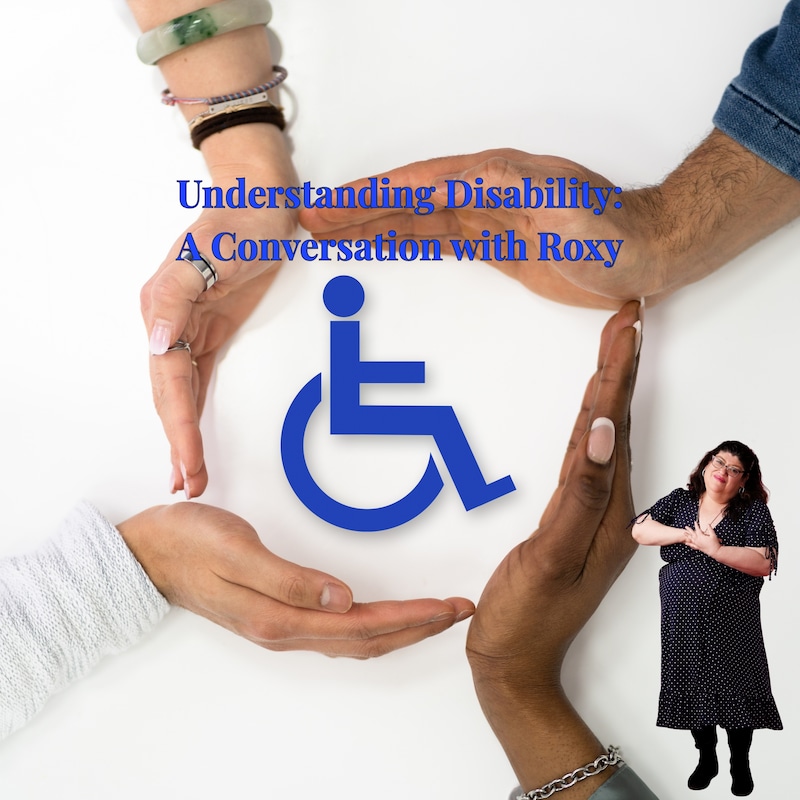
Roxy's journey is a testament to resilience and the power of self-acceptance. Growing up in Arizona, she navigated a world filled with challenges, stemming from her disabilities and a tumultuous home life.
Despite facing bullying and a lack of understanding from peers and even family, Roxy's spirit remained unbroken. She speaks candidly about how her mother's overprotectiveness shaped her childhood experience, contrasting with her father's more supportive approach. Roxy's determination to break free from societal labels drove her to pursue higher education, challenging the low expectations set for her.
Her story reflects the struggles many face when trying to find their voice in a world that often overlooks those with disabilities. As she embarks on her new venture, embracing disability through her media platform, Roxy emphasizes the importance of not only embracing one’s own differences but also advocating for inclusivity in society.
Her narrative is one of empowerment, illustrating how the fight for personal acceptance can lead to broader societal change.
Takeaways:
- Roxy emphasizes the importance of embracing one's unique journey and experiences, especially for those with disabilities.
- The podcast discusses how societal perceptions can often overshadow the humanity of individuals with disabilities, leading to miscommunication.
- Roxy's journey from feeling limited by her disabilities to becoming an advocate for inclusion highlights the power of self-acceptance.
- Effective communication is key for fostering understanding between individuals with disabilities and those without, focusing on curiosity instead of labels.
- Roxy's work in creating adaptive clothing demonstrates a practical approach to enhancing accessibility for the disabled community.
- The discussion highlights that everyone has a story, and sharing those stories can break down barriers and promote empathy.
You can connect with Roxy on her two websites at:
www.embracing-disability.com or
www.embracingwellnessbyroxy.com
and on her social media platforms:
YT: www.youtube.com/@prosperatvnetwork
FB: www.facebook.com/roxyrocker311
Instagram: @embracingwellnessbyrox
Instagram: instagram.com/disabilityrox
LinkedIn: https://www.linkedin.com/in/roxy-rocker336
The music in this video is copyrighted and used with permission from Raquel & The Joshua 1:8 project © 2025 All Rights Reserved. All rights to the music are owned by Raquel & The Joshua 1:8 project © 2025 All Rights Reserved. You can contact Raquel at https://YourGPSForSuccess.Net
Transcripts
I've walked through fire with shadows on my heels Scars turn to stories that taught me to feel lost in the silence found in the flame now we're my battle cry without shame this isn't the end it's where I begin A soul that remembers the fire within welcome.
Speaker B:Back to another episode of A Warrior Spirit, brought to you by Praxis33.
Speaker B:I'm your host, Errol Snow.
Speaker B:Let's dive in.
Speaker B:I want to thank you guys for joining me for the start of year four of A Warrior Spirit.
Speaker B:This show would not be possible without you or the wonderful guests like the one I have tonight.
Speaker B:Roxy is the visionary behind Embracing Disability, a magazine and media platform dedicated to educating, empowering, and uplifting the disability community.
Speaker B:She's also a licensed massage therapist with a practice that goes far beyond traditional bodywork.
Speaker B:And as a person with disabilities herself, she brings a profound lived wisdom and unique, attuned gift for seeing others both in their shadow and in their potential.
Speaker B:Roxy, thank you for doing this with me.
Speaker C:Hello.
Speaker C:I'm so glad to be here.
Speaker B:Well, I am happy that you get to start year four.
Speaker B:Your guest one, Year four.
Speaker B:So thank you for coming here and sharing your message.
Speaker B:Yeah, get the honorary role.
Speaker B:Right?
Speaker C:That's a good honorary.
Speaker C:Whoa, Darryl.
Speaker B:So, Roxy, where did you grow up?
Speaker C:Jersey and Arizona.
Speaker B:Okay, well, I'm not in Jersey, but I am in Arizona.
Speaker B:What part of Arizona did you grow up in?
Speaker C:I grew up in Scottsdale.
Speaker B:Oh, the ritzy part?
Speaker C:Yeah, not really.
Speaker C:I was in the poorer part, the poor part.
Speaker B:We call that East Mesa.
Speaker C:Yeah, pretty much.
Speaker C:I was near the.
Speaker C:The McDonald Butes like down from.
Speaker C:Down from, you know, where the Smitty's was and the Milk Depot.
Speaker B:So how old were you when you were here?
Speaker C:I lived in Arizona from the time I was nine to the time I was 30.
Speaker C:Something like 33.
Speaker B:Okay, so most people move here for the warm climate.
Speaker B:Why did you move away?
Speaker C:I was kind of done of the heat burning me up and I had some very dysfunctional parents, and if I continue to stay with them, I probably wouldn't have been able to grow because, you know, and then I'm sure as they aged in place, I would have become their caregiver.
Speaker B:So what was life like for a young child in Arizona who's not built for the 120 degree weather?
Speaker C:Well, the 120 degree weather, you know, you kind of get used to it and you have to like, you get used to the snow, so you kind of get used to it and then what's Interesting is I don't think I was built for the angry people and the bullying.
Speaker C:Oh, that's what I don't think I was built for.
Speaker B:You know, it's interesting.
Speaker C:I handle the heat.
Speaker B:Yeah.
Speaker B:I, I grew up in the Midwest and I've lived all over the United States and my wife lived on the East Coast.
Speaker B:She, she grew up in Boston.
Speaker B:And coming here, it's really, you know, it's a melting pot of people.
Speaker B:So you think it'd be more sociable.
Speaker B:And it is one of the most antisocial places I've ever lived.
Speaker B:You, you open up the garage door, you drive your car in, you close the garage door.
Speaker B:You have a nine foot wall or a seven foot wall around your backyard and you don't see or talk to anybody.
Speaker B:It's.
Speaker B:They.
Speaker B:And you don't certainly wave to anybody.
Speaker B:They think you're like, you know, some kind of terrorist or something.
Speaker B:Like.
Speaker B:It's the most insane place I've lived for, is a communal.
Speaker B:It's crazy.
Speaker C:I got more friends when I went to churches out there.
Speaker C:Like the new thought churches out there.
Speaker C:When I went to them, I found people.
Speaker C:But other than that, it's isolated and there was a lot of bullying in, a lot of bullying in school.
Speaker B:What was your home life like?
Speaker C:Not good.
Speaker C:Very dysfunctional.
Speaker C:My brother bullied me at home.
Speaker C:My dad worked a ton of hours because he was trying to take care of all of us.
Speaker C:And my mom had a lot of dysfunction and wasn't really happy.
Speaker C:So her dysfunction became everybody else's dysfunction.
Speaker C:She helicoptered me because of my disabilities.
Speaker C:So if I would try to go for a walk after I'm outside for 15 minutes, she's screaming and hollering my name, looking for me, like causing a search party because I'm gone for 15 minutes.
Speaker B:So how many siblings did you have?
Speaker C:Well, I have a half sister in New York and then I have a quite not remarkable brother in Arizona.
Speaker B:Is he older?
Speaker C:And I have an uncle older, three years.
Speaker B:So you mentioned your disability and part of your career is working with the disabled.
Speaker B:What, what, what is your.
Speaker B:I hate labels, so sure.
Speaker B:What is your disability?
Speaker C:I was born with a leg discrepancy when I was born and they didn't find out about it until I was about three, but I was falling a lot, so they wanted to know why I was falling all the time.
Speaker C:And.
Speaker C:And then they found out that I had a pretty significant leg discrepancy and they put a heel lift on my shoe so I had to walk around with a Gate and a he lift and see a lot of medical professionals when I was a young child, so they were always trying to get the legs to balance.
Speaker C:By the time I hit puberty, before I hit puberty, they decided to do a surgery on my left leg to stunt the growth, but it didn't really work.
Speaker C:It wasn't a very successful surgery.
Speaker C:So my.
Speaker C:My operation wasn't very successful.
Speaker C:And then I would say in the late 70s, they diagnosed me with, like, all the disses, so I had dysgraphia, dyscalculia, dyslexia.
Speaker C:And I think I had.
Speaker C:I know they put me in speech, but they.
Speaker C:I.
Speaker C:What was called the pull out system.
Speaker C:So you had to go to special classes to get special help from teachers that were trained in, like, different things.
Speaker C:I used to love to read, so they were confused about how I couldn't really do math or writing, but I wanted to read all the time.
Speaker C:They were confused that I couldn't color in the lines.
Speaker C:They were confused that I could explain things well, but they were confused about a lot of things.
Speaker C:They weren't judgy in Jersey, but they were a little judgy in Arizona.
Speaker C:I remember I had one teacher that made me sit and write cursive for hours.
Speaker C:Felt like torture.
Speaker C:I don't think this is gonna do anything.
Speaker C:Still gonna be the same handwriting.
Speaker C:You're just making me write it over and over again.
Speaker C:It didn't improve anything.
Speaker C:Still got sloppy handwriting.
Speaker B:So were they treating your disability as a neurological disability or a learning disability or a physical learning disability?
Speaker B:Learning disability, learning disability.
Speaker C:And then I had the.
Speaker C:The body stuff, you know, where I would fall and walk strange.
Speaker B:So did your parents treat you as a disabled child or did they treat you as a normal quote, unquote?
Speaker C:My dad, I think more tried to treat me normal and love me just who I was.
Speaker C:My mom treated me very disabled.
Speaker C:My mom definitely made me, you know, over protected me.
Speaker B:So how would you view yourself then at that.
Speaker B:At that age?
Speaker B:Did you view yourself as having an issue?
Speaker C:Oh, yeah.
Speaker B:Did you.
Speaker B:Did you act accordingly, like.
Speaker B:Or did you try to power through it and overcome it?
Speaker C:Well, I wanted to overcome things, but, oh yeah, the kids all knew I was labeled and they treated me as such.
Speaker C:So I knew I was different, but I was already different.
Speaker C:And.
Speaker C:And then I wanted to go and, you know, when I would see my peers, I was like, well, I want to be like them.
Speaker C:Why can't I be?
Speaker C:I want to do leadership.
Speaker C:I want to do, you know, you know, community service.
Speaker C:Why do I have to not be like them.
Speaker C:And that would always make me mad.
Speaker C:Like I didn't want to be like that.
Speaker C:Like I didn't want that at all.
Speaker C:And I didn't want to be known just because I was different.
Speaker C:But that's how you were labeled and you were basically shut out of things and you were basically told that you couldn't.
Speaker C:I was able to go to the churches and I was able to go to the youth groups like where they allowed to include you.
Speaker C:Forced to include you or was yeah, forced to.
Speaker C:They.
Speaker C:But I had some cool teachers because like my, my high school dance teacher was like, oh no, no, we're gonna make sure you're included in all of it.
Speaker C:My pull out teacher, Tony Klima, she was pretty phenomenal.
Speaker C:Gail Hartman was pretty phenomenal.
Speaker C:And they wanted to make sure that I was going to sur and make things happen, you know, I mean, but I was also winning awards and stuff when I was little.
Speaker C:So like I would win weird awards like in art.
Speaker C:And I don't know if it was like because they felt sorry for me and they wanted to give me recognition or like they were like, wait, there's something here because like I won something on computers back in like 1984.
Speaker C:And I think I was talking, I think I was a visionary and intuitive.
Speaker C:So in 1984 I said, well, the computers are going to take over the world.
Speaker C:And they did.
Speaker C:Right.
Speaker B:Like 40 years later she is right, right.
Speaker C:Literally was a visionary.
Speaker C:And then I talked about, I did some really interesting art project and they were like, this is like one of the best masterpieces we've ever seen.
Speaker C:And I won like first or second place and like some art thing.
Speaker C:And I was never an artist.
Speaker C:I wanted to dance and act.
Speaker C:So.
Speaker B:So.
Speaker C:But I won awards and I won like spotlight on Team Women and.
Speaker B:But you're.
Speaker B:Anybody who comes to, to meet you sees a very dynamic personality, like very bolsterous and out there and, and for, you know, just in it.
Speaker B:Were you like that as a kid even?
Speaker C:I mean, I wanted to be.
Speaker C:It was hard because she wouldn't really let me do much, but boy did I want to be.
Speaker C:I wanted to dance and I wanted to play and I wanted to, I wanted to be.
Speaker C:And then when I got a little older, when I got older and I was able to kind of do a few things.
Speaker C:I think the harder part was like I tried to go to the dances, but it's like, you know, when you're isolated and then like they don't let you be in any of the friend groups.
Speaker C:Like, you have a very small limited of people, right?
Speaker C:You know, of, of like, who's your circle?
Speaker C:Like, and I probably couldn't even tell you where any of my high school friends are right now.
Speaker C:Like, people talk about the reunions and the high school friends.
Speaker C:Maybe there's five people, three, four that I kind of know.
Speaker C:I think when I got older and out of college and more into like, well, let me go networking, I think I really wanted to be a little bit more boisterous.
Speaker C:But it was hard too, because I don't really think I appreciated myself or loved myself or cared for myself.
Speaker C:So because of some of the self esteem issues, I think I was always trying too hard.
Speaker C:And then after a while when I really started realizing that, like, business was fun and I got way older because I didn't really start my businesses until I was in my 40s.
Speaker C:And when I got way older and I realized that business was fun and business could actually get me connected into community and I started learning how to get into communities.
Speaker C:I've been having the time of my life.
Speaker C:I've been going to parties and I get to go to gatherings and I get to go, you know, to things like movement maker, live with the Unleashed.
Speaker C:So I get to do a lot of really nifty and cool stuff, and then I just find more nifty and cool stuff.
Speaker C:And I collect people along the way.
Speaker C:So I know that I have a disability, but I also am unique and I want to.
Speaker C:And I like that I have my high verbal learning.
Speaker C:I have my high verbal verbal skills.
Speaker C:And I like that I literally now that I'm learning more about myself after some of the troubles and those challenges that I went through my whole life, I love that I get to be me.
Speaker C:And there's nothing really more exciting than me being, you know, me being who I am.
Speaker C:And I want to be curious about how to bring money in, which is always hard.
Speaker C:And I want to be curious about how I want to approach my businesses and how I want to show up in the world.
Speaker C:So.
Speaker B:But this is fascinating because you, you struggled in school, you were bullied, and then you went to college, which is even more school.
Speaker C:Oh, God, yes.
Speaker B:Like, what propels you to go to college after your high school experience?
Speaker B:Like most people say, that's enough of that BS for me.
Speaker B:I'm not doing more.
Speaker C:I watched a woman at home suffering and saying that she was never gonna be enough.
Speaker C:She hated her life.
Speaker C:She didn't want anything.
Speaker C:She wanted to get married, have babies, and then that Wasn't enough.
Speaker C:She couldn't really work.
Speaker C:Her learning disabilities were so severe.
Speaker C:Your mom don't go to college?
Speaker C:Yeah, my mom.
Speaker C:My mom don't go to college.
Speaker C:That's dumb.
Speaker C:You're stupid for even thinking about that.
Speaker C:I'm like, watch me.
Speaker C:And so I wanted to be more and I really hope that I could have been a special ed teacher, but that didn't really work out very well.
Speaker C:And then they were like, well, you can't really do teaching because you don't really learn very well and you can't pass math.
Speaker C:And I was like, what am I going to use math in a third grade classroom?
Speaker C:You know, per general or even a pull out system?
Speaker C:Like, when am I going to use math?
Speaker C:I'm sure there's another teacher in there that might be able to do that.
Speaker C:No, you need to know math.
Speaker C:So I got a sociology degree.
Speaker C:But most of the reason why I went to college was because I had two parents that struggled their whole entire life and one woman who basically said, you don't need to amount to anything.
Speaker C:And teachers at my school saying being a secretary is just going to be okay.
Speaker C:And I was like, no, why do I have to.
Speaker C:Why do.
Speaker C:Why are you going to make me poverty and suffering?
Speaker C:You know, like, you know, they were almost would say, just go find a husband.
Speaker C:Well, how hard is that?
Speaker C:When you were, you were.
Speaker C:There was almost negligence at home because I was so isolated and I wasn't allowed to really socialize.
Speaker C:So I didn't really know how to interact and I didn't really know how to meet men or meet anybody really, you know, and when I'm boisterous or when I'm bold and when I speak up, people thinks that I'm speaking up because I'm complaining, but I'm really just trying to be in my power and say, no, I need to know how to do this and I really need to know how to get to this next step.
Speaker C:And can you hold my hand and help me or can you be a collaborator with me?
Speaker C:And sometimes it works really well.
Speaker C:They're like, yeah, let's kind of figure out how to do that.
Speaker C:And other times they are kind of like, you're kind of problematic and you're dramatic and I'm like, and like, it's like I'm working on my healing.
Speaker C:I'm doing things in my life and I'm like, am I. Yeah, am I really problematic or drama, you know?
Speaker C:Right.
Speaker C:Like all that I'm doing is trying to learn.
Speaker C:I'm trying to learn you.
Speaker C:Because you're not in my world.
Speaker C:So I'm also trying to understand people all the time because they're not in my world.
Speaker C:And I don't think like everybody else.
Speaker C:I'm thinking in this huge, big picture.
Speaker C:Like, I'm jumping up here, like, massively into, like, some penthouse or top of the building, and you're, like, down here telling me the basics, and I'm like, no, I'm, like, way up there, and I need.
Speaker C:You got to bring me down a little bit.
Speaker B:Do you think that's part of your.
Speaker B:Like, you.
Speaker C:You.
Speaker B:You felt at a young age that you were gifted and intuitive, and people who are isolated spend a lot of time in their head.
Speaker B:They spend a lot of time with their higher self, and especially ones who want to grow beyond what the world has limited them to.
Speaker B:So do you think that intuitive nature and that spiritual guidance has exponentially broadened your brain, but it's comes across in the limitations of the physicality?
Speaker B:So people don't understand that you're that far advanced, and they don't give you the credit for it, and they don't treat you like that.
Speaker C:They don't.
Speaker C:So I had an episode yesterday with.
Speaker B:That and describe that.
Speaker C:So I've been doing some healing work since.
Speaker C:So the answer to that question is yes, because when I was like, I don't know, let's just say 15 years old, I started studying the Bible because the churches were the only places I could go.
Speaker C:And I started studying the Bible, and then all of a sudden, I would speak in tongues, and I think God and I wanted to have a conversation.
Speaker C:So I go to the church, and I'm like, so I'm talking to God and I'm praying, and then all this language is coming out of me.
Speaker C:They're like, that's not true.
Speaker C:But wait, wait a minute.
Speaker C:I don't know.
Speaker C:I don't know this Hebrew tongue.
Speaker C:I don't know this thing.
Speaker C:I think I'm speaking in tongues.
Speaker C:I think I'm reading the Bible and I'm talking out loud in a whole different language.
Speaker C:That's not normal.
Speaker C:I have that memory.
Speaker C:I have that knowledge.
Speaker C:I have it.
Speaker C:And then they're like, no.
Speaker C:False.
Speaker C:Can't happen.
Speaker B:See, that's what.
Speaker B:I'm gonna stop you right there, because that angers me that the.
Speaker B:The church people don't take the reality of church prophecy, which is people can and will speak in tongues, and then when it happens, they dissuade them and discard them and shun them.
Speaker B:Like your platform from the Pulpit does not exalt you to the only one who can experience the hand of God in your life.
Speaker B:I hate that.
Speaker B:That's why I'm spiritual and not religious.
Speaker C:So my brother.
Speaker C:So my brother and I almost tried to have a debate with me.
Speaker C:He loves to debate with me.
Speaker C:And I said something about God and something about.
Speaker C:And he's like, blah, blah, blah.
Speaker C:And he was like, that's not true.
Speaker C:And I said, I'm not gonna debate my love affair for God with you.
Speaker C:I'm like, that's just off limits.
Speaker C:Like, we can't do that.
Speaker C:But so example yesterday, I've been doing some healing work.
Speaker C:I'm doing some of this new work that I'm madly in love with called Dynamic Somatic Talk.
Speaker C:People are trying to understand it.
Speaker C:It's a little bit beyond this world.
Speaker C:And it's.
Speaker B:My.
Speaker B:My wife is a shamanic healer, so I understand.
Speaker C:Yeah, you.
Speaker B:You got the right spot.
Speaker B:Go.
Speaker C:It's beyond this world.
Speaker B:Yeah.
Speaker C:And there's an energy, life force that goes through it.
Speaker C:So since I've come back from Malibu, my pain is less, my comfort is better, my mind is clearer, and I'm a little bit more aware.
Speaker C:Right.
Speaker C:Like, the awareness is better.
Speaker C:So I'm trying to onboard somebody to get into this group.
Speaker C:She took action.
Speaker C:The action might have not have been appropriate.
Speaker C:Might have been appropriate.
Speaker C:I don't know.
Speaker C:But she didn't also list the other leaders who have been around for like, six years.
Speaker C:She just took it in herself and said, hi, I'm here.
Speaker C:We're gonna do this.
Speaker C:And I was like, you just got here, like, and, you know, let's just put the past behind us.
Speaker C:And da, da, da.
Speaker C:So in my world, people were attacking me because I'm different for a wide variety of things.
Speaker C:Something got triggered in the group, and I'm saying to her, hey, I was a little surprised that you did that.
Speaker C:Is there any way before you do that again, can we just have a communication.
Speaker C:Can we just be in a team?
Speaker C:I love your initiative.
Speaker C:I love your.
Speaker C:I'm giving her positive feedback.
Speaker C:So.
Speaker C:And then when we were in the group, she.
Speaker C:When we were having our meeting, I'm trying to lead the meeting.
Speaker C:She's authoritative.
Speaker C:She's taking over.
Speaker C:She's saying, no, we're not going to do this until I do this.
Speaker C:And I'm like, you just got here.
Speaker C:I'm like, I don't understand.
Speaker C:I'm like, how do you think you can just walk all over the two leaders that have been there for five and a half Years, right?
Speaker C:And so I'm like, okay.
Speaker C:So when I saw it, I was a little triggered because when they were upset with me, they attacked me.
Speaker C:There was a bunch of people who were.
Speaker C:Because I'm misunderstood, were saying ugly things about me.
Speaker C:She left all of us off.
Speaker C:So I'm like, you're opening up the door of Pandora's box for them to be ugly again.
Speaker C:You didn't get permission to do that, didn't communicate to that, and I now have no safety.
Speaker C:Plus, you didn't even acknowledge the leaders to say, hey, we had a meeting.
Speaker C:I'm glad I'm here.
Speaker C:You know, let us know.
Speaker C:Let all of us know what you need.
Speaker C:She said, let me know what you need.
Speaker C:And I was like, hey, can we be a little bit more of a team?
Speaker C:So she got mad about micromanagement.
Speaker C:Then she was like, blaming me, like, this is like some big elite job.
Speaker C:And I'm like, it's a volunteer role on a Facebook group.
Speaker C:Like.
Speaker C:Like, seriously?
Speaker C:I'm like, I think you're the perfect person for the job, but I'm not really exactly sure why you're getting so upset.
Speaker C:And so.
Speaker C:But she's like, oh, well, you're so.
Speaker C:It's always that I'm taking it over the top.
Speaker C:You know that.
Speaker C:That.
Speaker C:Because I mentioned it or I had to communicate about it, and I need to go through my process.
Speaker C:So you understand.
Speaker C:And maybe I just should have said I need safety.
Speaker C:Are you going to be here to keep.
Speaker C:Keep me safe?
Speaker C:Because people who do not get traumatized, or people who are not attacked or, you know, maybe somebody's teased or maybe somebody's being brutal, but people who are not attacked, who are not bullied, who are not do not know that world, don't know that somebody is going to be triggered by them again.
Speaker C:And you opened up a door.
Speaker C:They're already mad at me about something.
Speaker C:Who knows what they're mad at me about?
Speaker C:You just let the door open again to allow them to hurt me.
Speaker C:And you didn't make me feel safe.
Speaker C:And I've been here for the longer, so.
Speaker C:Right.
Speaker C:So how do you.
Speaker B:I want to.
Speaker B:I want to know this from you, and I apologize for cutting you off, but I do want to.
Speaker B:Questions are popping through my mind at a warp speed, too.
Speaker B:So how do you communicate effectively with others so that they can communicate effectively with you?
Speaker B:Because I've known you not well, we're not buddies.
Speaker B:We haven't gone drinking.
Speaker B:But I've known you for three years.
Speaker C:Yeah, three, four years.
Speaker B:And I would not if this were the first time I was meeting you, I wouldn't know how to approach you in a fashion that communicates effectively with you, because I don't understand your disability, nor do I need to.
Speaker B:I need to understand that you're a person who's trying and wants to learn.
Speaker B:And how do I get better at learning how to communicate that to you?
Speaker B:So what's an effective route for people outside the disability world to interact with those who have the disability?
Speaker C:Well, first of all, there's a good population of people that don't even want to know that you have it.
Speaker C:And then you're being drama.
Speaker C:Then you're being a dramatization, because especially if you're a hidden disability, you're dramatizing something.
Speaker C:You don't need to be worrying about it.
Speaker C:Nobody thinks you're disabled anyway.
Speaker C:Only you do.
Speaker C:So that's.
Speaker C:First of all, can you acknowledge that I have had an experience?
Speaker C:Experience.
Speaker C:Let's just acknowledge that I have an experience.
Speaker C:Secondly, treat me like I'm human.
Speaker C:And third, you know, I would love it if you would just ask some questions and be curious, because first of all, when you're kind of knocking somebody down and being like, well, you don't need to worry about that, what you do because.
Speaker C:Because you don't know what somebody's going to do, and you don't know how somebody's going to treat you.
Speaker C:And, you know, when I figured out and I unveiled the curtain, they were all angry that I use my personal platform for disability and they see it all the time.
Speaker C:So a bunch of people blocked me.
Speaker C:A bunch of people got annoyed and frustrated.
Speaker C:Then I'm doing disability advocacy.
Speaker C:I didn't know that, but I'm not doing it on their page, so why do they worry?
Speaker C:So it's uncomfortable.
Speaker C:It's an uncomfortable topic, I think, you.
Speaker B:Know, and again, I hate labels, so forgive me, but we speak in a labeled world.
Speaker B:I think it's hard for, quote, unquote, normal people to interact with a disability because they don't want to come across.
Speaker B:And you said be curious, but they don't know how to be curious because it comes across as labeling them as disability or not letting them be a normal person.
Speaker B:So how do you interact in a fashion that is a curiosity without the label?
Speaker C:So I think that when I started kind of doing all these networking things, like, let's just take our Elena, for example.
Speaker C:I met her, and I think one of the first things that happened when I met Elena was we might have hugged or touched each other's Hand.
Speaker C:We were interactive.
Speaker C:So she's safe.
Speaker C:She's warmth.
Speaker C:Right.
Speaker C:Like, did you treat me normal?
Speaker C:You might know that I have a disability platform, but did you come up to me and just be like, hi, Roxy, can I learn more about you?
Speaker C:Or, hi, Roxy, you know, how are you today?
Speaker C:Like, I mean, normal.
Speaker B:Yeah.
Speaker C:I think that, you know, the person that I call one of my best friends now is, you know, I would call her sometimes and be like, well, I'm really frustrated about this, this and this.
Speaker C:She's like, well, can you tell me more information about why?
Speaker C:And I would be like, well, I just don't really feel heard when I'm trying to talk about my website.
Speaker C:And I just don't like some of the things that are on my web shout.
Speaker C:She's a marketing person.
Speaker C:And I was like.
Speaker C:She was like, well, I think that if it's your website, you should be heard about it.
Speaker C:And I go, yeah, I don't really feel like people are listening.
Speaker C:So she was listening, she was interacting.
Speaker C:There was warmth, there was personality.
Speaker C:You know, sometimes I'm bold and I'm like, but I want to know you all more.
Speaker C:And I'm curious about this, but a lot of times the people are not like, well, she's a weirdo and we're not going to talk to her or if I'm boisterous or if I'm expressing about inclusion.
Speaker C:And you know, they're like, well, you know, she really likes to stand a tall on, like, what her hill is.
Speaker C:And, you know, how can we deny that?
Speaker C:I think that where I'm curious and where I'm intrigued and interested is because when you meet someone, you know, and you're saying that they don't know how to interact with them because they're in a wheelchair or they're.
Speaker C:They speak about their disability, but what if it was human to human and just be like, hey, Roxy, how was the weather today?
Speaker C:Like, we interacted in the beginning, hey, Roxy, how's your new year?
Speaker C:You know, and then we could probably get into the.
Speaker C:The depth of the dialogue later.
Speaker C:But if you include.
Speaker C:You've just included me in dialogue.
Speaker B:Yeah.
Speaker B:And I think that's a mistake that normal people.
Speaker B:Yeah, I. I don't think.
Speaker B:I don't think, you know, again, sorry for the label, but I, I don't think.
Speaker B:I don't think normal people include enough by asking the broad general question, the human question that they ask anybody else, how are you?
Speaker B:Right.
Speaker B:I do want to ask you, how are you?
Speaker B:But I do want to ask you About a couple of these things.
Speaker B:This was something that happened last November.
Speaker C:Yeah.
Speaker B:So even though it's in the, you know, a couple months ago, can you explain what this was?
Speaker C:Yeah.
Speaker C:So for a long, long time, sometimes clothes didn't fit me.
Speaker C:Right.
Speaker C:And was that because of the leg?
Speaker C:Yes.
Speaker C:And because I also had some scoliosis and some structural issues.
Speaker C:My body is just weird.
Speaker C:My body is off.
Speaker B:Okay.
Speaker C:So I love to, like, almost play alchemy or sleight of hand and say, wait a minute.
Speaker C:Do you want to know anything about disability, or do you want to understand disability?
Speaker C:Well, there's a world of people who are disabled and.
Speaker C:And they can't find the clothes they need.
Speaker C:So there's this world of, you know, I really needed some Velcro over here.
Speaker C:Or what if I had magnets and I can just open it up and close it?
Speaker C:Well, you know, what if I could stitch something that made the pants wider and stretchier so when I got them on, they kind of fit a little bit better.
Speaker C:And when I had an amputation, that it could go over that leg.
Speaker C:And, you know, if I can't really stand up while I'm putting my pants on, you know, what if I could just open it and then put my pants on and then be able to stand up and get my prosthetic on?
Speaker C:So it's a world that doesn't fit us.
Speaker C:So I made some adaptive bags and adaptive clothing to help people function differently in a world.
Speaker C:So.
Speaker C:So I have, like, pants that have magnets.
Speaker C:I have dresses that open up in the front.
Speaker C:I have dresses with full magnets on them.
Speaker C:So I'm.
Speaker C:I'm excited about that whole concept of taking an idea and saying, okay, well, how do we make this better, and how do we make this more inclusive so we can also educate on disability.
Speaker B:Issues in education, which is the mother of all necessity.
Speaker B:Right.
Speaker B:You do what you can't find, and that's how you not only help yourself, but you help others who are in the same need.
Speaker B:You also then have your embracing wellness, your massage, and your embracing disability speak about these two.
Speaker C:So embracing disability is a media platform.
Speaker C:You know, I want to elevate the world of people with disabilities.
Speaker C:People with disabilities are also scared of being elevated.
Speaker C:And I'm sorry, I'm not in the circle very well, because sometimes my body has to shift.
Speaker B:That's okay.
Speaker C:I'm out of the circle.
Speaker B:I'll see what I can do.
Speaker C:Awesome.
Speaker C:So there.
Speaker C:That looks better.
Speaker C:So embracing disability happened right after I had my horrible car accident, which was Four years ago, and I crashed, and I hurt my head, and I had hematomas.
Speaker C:I broke my nose, I broke my orbital bone, and I probably broke my jaw.
Speaker C:And I feel like it was.
Speaker C:It was quite nutty experience.
Speaker C:But while I was in the hospital, I could see how they treated you.
Speaker C:Oh, yeah, you're just gonna be disabled now.
Speaker C:Like, I already been.
Speaker C:What are you talking about?
Speaker C:Like, oh, yeah, you're gonna just need to use the walker.
Speaker C:You know, forget about walking.
Speaker C:You'll need.
Speaker C:You'll need something.
Speaker C:I'm not using a walker.
Speaker C:So, like, there's so much judgment in the hospital, it's ridiculous.
Speaker C:So while I was in the hospital, I was like, well, what do we can do about elevating people?
Speaker C:What can we do about bringing this elevation forward and bringing these ideas forward so people with disabilities don't have to feel so challenged?
Speaker C:And so remarkably like they're not worthy enough or they're not important enough?
Speaker C:And then.
Speaker C:And then the second part of that is, 10 years ago, through a program called vocational rehabilitation, I was able to get my massage license, which I think massage is great.
Speaker C:Massage is where you need people.
Speaker C:And you can kind of do stripping or deep tissue.
Speaker C:Massage is great.
Speaker C:I think it's wonderful, but I think it's not the only way.
Speaker C:And I've been studying for the last quite a few years that I've been researching different kinds of modalities and different kinds of work.
Speaker C:And I'm doing.
Speaker C:And I'm now, you know, really in love with lymphatic drainage, which is a modality that helps boost immune.
Speaker C:It boosts immunity, helps performance.
Speaker C:It moves the lymphatic system, which is part of our bodies, 25 to 30 times faster.
Speaker C:For over a year, quietly, I've been.
Speaker C:Been learning something called dynamic somatic touch.
Speaker C:And now I have this tool where I can work from the head to the chest to the.
Speaker C:To the thoracic to the diaphragm to the belly to the pelvis and help things move through life force down your legs.
Speaker C:I've been practicing it, Darrell, now, for three and a half weeks.
Speaker C:And I'm clearer.
Speaker C:I have less anxiety, and I'm more at peace.
Speaker C:And the pain has gone from a 12 to a 3 to a 6, which I can't explain.
Speaker C:Like, I just can.
Speaker B:Because you're intuitive enough to understand, but.
Speaker C:Like, how do you explain it to the world out there?
Speaker B:Yeah.
Speaker C:So, I mean, I feel like.
Speaker C:And on the interesting part, too, that I might have a handful of people with disabilities, but most of my clientele are people who don't have a disability at my massage place.
Speaker C:And I also think that even in embracing disability, I interact with the disability world, but I'm trying to educate the societal people because they're the ones that really need to understand disability and disability values.
Speaker C:And I want to educate that society City now what's going to be really fun is I'm just got sworn in today through the governor's op May the governor's office and asked me to join the independent living center for the whole state of Commonwealth of Massachusetts.
Speaker C:Man, when you get sworn in, you're like, I solemnly got blah, blah, blah, blah blah blah, blah, blah blah blah blah.
Speaker C:Put your hand on your heart and say that you're going to uphold the constitution to the whole commonwealth in the whole United States of America.
Speaker C:It was some serious business today, man.
Speaker C:They weren't messing around.
Speaker C:I was like, whoa.
Speaker B:You, you start moving things like the people.
Speaker B:People need to understand that everything is energy and it flows or it's blocked and that's it.
Speaker B:And there are practitioners that will help you keep it flowing, get it unblocked and get it moving again.
Speaker B:And unless you're in balance, unless you're in alignment, unless you're flowing, things are going to be a little more challenging than they need to be.
Speaker B:Now, just because you have perfect flow doesn't mean you have a perfect life.
Speaker B:But you still have to have it flowing for everything.
Speaker B:You know, I look at it like a three legged stool, right?
Speaker B:If one of your legs is shorter than the other, no pun intended, sorry.
Speaker B:But if one of the three legs, if one of the three legs is shorter, all you're going to do is wobble.
Speaker B:All three have to be in balance.
Speaker B:And until they are, you may be able to keep the stool from falling, but all you're going to do is wobble.
Speaker B:So you have to have them balanced.
Speaker B:And that's what energetic flow, whatever the modality is, helps do.
Speaker B:And everything is energy.
Speaker C:And this is why when I became a massage therapist was the healthiest thing I've ever done.
Speaker C:Because then I was able to keep me in flow.
Speaker C:My brother, other people in the world think that I stay in this world of drama, stay in this world of hurt, in this pain.
Speaker C:I can't.
Speaker C:Because how would I go into a treatment room and help another human being feel better, move out of there in more comfort and less disconnected in their body if I was a disaster and sitting in my pain body?
Speaker B:And that's why I think embracing disability should be.
Speaker B:I don't.
Speaker B:I'm not telling you how to run your business, and nor will I ever.
Speaker B:But I think it should be, I think it should be working more with those who are not disabled to help them embrace the disability abilities of others and make the connection better and make it more of a communal world where one side understands the other and it's more inclusive than not.
Speaker C:So two things are happening.
Speaker C:One, I'm gonna set up a whole inclusive values campaign, inclusive values concept, where I want people to start having that conversation with me.
Speaker C:And then they can sign up for a deeper way that they can be like, oh, I can earn like a certificate or I can earn a badge or I can earn some, I can learn and earn this certification or this way about understanding inclusion.
Speaker C:So let's say it's the bank, right?
Speaker C:And the bank doesn't know how to do it.
Speaker C:But then all of a sudden they're like, oh, well, we've got some money so we can do some re evaluation of this.
Speaker C:We know our bathroom is okay, but we can lower a couple of the tables.
Speaker C:Maybe we could have like another small area where it could be wheelchair accessible so people could actually write out their deposit tickets.
Speaker C:Right?
Speaker C:So inclusion can't, is not hard and it's also not expensive.
Speaker C:But if you can learn those ways from intelligent people that have disabilities with their lived experience, that's really valuable, right?
Speaker C:And then I think that if I bring on agencies, I bring on, you know, people who are sharing stories to my show or maybe a bigger platform like a virtual summit or a virtual or an in person conference.
Speaker C:We have some intersectionality of, oh, you know, there's an inclusion bank in Mississippi and then there's.
Speaker C:Which probably isn't inclusive, but, but there, let's just say Arizona, California, maybe they're a little bit more on the upside.
Speaker C:And then there's not an inclusive bank in Chicago, right?
Speaker C:And then so the, the inclusive bank from California is talking about it.
Speaker C:Some of the customers are there talking about it.
Speaker C:And then they're talking about the access problems that are happening in Chicago.
Speaker C:There's a woman who's fighting.
Speaker C:Some of the disability advocates are good fighters.
Speaker C:So there's a woman who's fighting, who's saying that she wants to go to the bar and wants to have a place where she can do transfers at the bar because she wants to hang out and have some drinks with her friends.
Speaker C:And so people are arguing, I guess with her and saying, oh, you shouldn't want what you want.
Speaker C:And God, you're just a crybaby because you are always complaining and you're always getting mad and you're always being frustrated and you're always, you know, having some difficulties with that.
Speaker C:And so, you know, luckily, Daryl, I still don't even know how I've done it.
Speaker C:I have 67 reviews on embracing disability.
Speaker C:60 something reviews on embracing wellness.
Speaker C:On embracing wellness.
Speaker C:Sorry.
Speaker C:That are all five stars and positive.
Speaker C:Nobody's making fun of me.
Speaker C:I don't even know how I done it.
Speaker C:I have been almost for a good eight months now doing content online about a wide variety of subjects, and nobody has made fun of me.
Speaker C:I still haven't done like the, the talk, but I still don't even think on our platform on embracing what's possible.
Speaker C:Nobody has made fun of me.
Speaker C:But I do know that on other platforms, on TikTok and other places, people are being made fun of, people are being threatened, people are being yelled at, people are being told that, you know, they shouldn't really be fighting for what they want or they should.
Speaker C:That, you know, they really shouldn't be asking for the things.
Speaker C:Now, in these kinds of interactions, sometimes I'll have somebody argue with me when I say I need more or I want more.
Speaker C:Oh, oh, oh, yeah.
Speaker C:You're just not the right fit for us Again yesterday with the other lady.
Speaker C:Oh, yeah.
Speaker C:If this was a job interview, this wouldn't have been the right fit.
Speaker C:Why y' all throwing fits?
Speaker C:And I'm saying, can we come together and can we have some discussion?
Speaker C:Because I know I'm unique.
Speaker C:I know I'm different.
Speaker C:I know that my brain thinks differently.
Speaker C:I know I'm wired differently.
Speaker C:But you don't want to take the 3, 4 minutes that it could take that we could come to a.
Speaker C:An agreement.
Speaker C:And maybe it isn't the right fit, but you can't take those four minutes of your life to have a dialogue, to try to figure out how to make inclusion happen.
Speaker B:But that's all.
Speaker B:But that's the beauty of being able to just create your own place for that to happen.
Speaker B:And not only have you done that, you mentioned, you know, our good friend Elena.
Speaker B:You've.
Speaker B:You've now brought your message to Roku and to ProsperityV network, and now you're able to build your own platform.
Speaker C:Yes.
Speaker B:Where you can make collaboration happen.
Speaker B:So explain what your show's about and how did this come to be, other than the fact that Elena asked you?
Speaker C:Elena didn't ask me.
Speaker B:Nice.
Speaker C:So.
Speaker C:So I am curious about things.
Speaker C:Michael Faber or business strategist that we all kind of know.
Speaker C:He talks about offers and things all the time, right?
Speaker C:And so I'm like, I need to understand an offer.
Speaker C:I need to understand what messaging is.
Speaker C:I need to understand all these things.
Speaker C:So I watch Elena, and I was like, what is she talking about?
Speaker C:What is she doing?
Speaker C:Like, that a TV show, like, is that going to just be, like, for a couple of episodes, and then everybody just kind of gets their own little few minutes on there, and everybody's a guest speaker.
Speaker C:So it's a podcast.
Speaker C:So I was really curious.
Speaker C:And then she, like, spelled it all out.
Speaker C:She was just like, la, la, la, la, la.
Speaker C:So you get this, this, this, and this.
Speaker C:And I was like, so wait a minute.
Speaker C:You.
Speaker C:You gotta slow this down.
Speaker C:And you got to tell me that.
Speaker C:Is anybody doing anything about disability?
Speaker C:She goes, nope.
Speaker C:And I said, cool.
Speaker C:And then I go, you got to tell me.
Speaker C:Like, you're telling me that if I give you a couple hundred bucks right now, 2 to 500, you'll let me have a show?
Speaker C:Let me have a show, and I could talk about disability all day long, and you'll let me have my own show.
Speaker C:Show like, that just, like, blew my mind.
Speaker C:Like.
Speaker C:Like, wait, you're telling me that I get to have my show.
Speaker C:I don't have to do a podcast and wait, and you're telling me that you're going to also clean it up for me and make it decent, and I don't have to do any of that.
Speaker C:All that I got to do is push a button and record.
Speaker C:Like, that's kind of ridiculous.
Speaker C:I'm like, seriously, my.
Speaker C:That's just too easy and too beautiful.
Speaker C:And so I didn't want to call it embracing disability because it wasn't embracing disability.
Speaker C:I wanted to call it.
Speaker C:And I also just saw Mel Robbins, like, a couple weeks earlier, and I went, well, I.
Speaker C:And I was having this idea on embracing what's possible.
Speaker C:Maybe I'll do a podcast, then let them.
Speaker C:And I was like, well, what if mine is embracing what's possible?
Speaker C:Because then it's not about disability.
Speaker C:It's about thinking beyond your limits, thinking beyond your box.
Speaker C:Thinking beyond.
Speaker C:What is your embracing what's possible?
Speaker C:What's the story around that?
Speaker C:What do you want to do?
Speaker C:What do you want to be?
Speaker C:What do you want to become?
Speaker C:And I had to get water because you have to hydrate.
Speaker C:And so, you know, what do you want to do?
Speaker C:What do you want to become?
Speaker C:So I want to actually talk to people that are trying to become something.
Speaker C:This month, I'm kind of doing.
Speaker C:It's not leadership, but it's Kind of like, you know, empowerment.
Speaker C:So I just interviewed Michael Faber, and then I'm going to be bringing on this DPC agency, and then there's one other woman that I think I'm going to be interviewing, and then I'm going to do an interview with the statewide Independent Living Center Council that I just got appointed to.
Speaker C:So we're actually engaging in conversation because I make it very conversational, but we're engaging in conversation around talks.
Speaker C:Michael and I talked about inclusion, but we also talked about life and we talked about details.
Speaker C:I'm on another.
Speaker C:I don't have a show on that platform, but I'm on another network with a lovely lady named Barbara Beckley, and they invite me to his.
Speaker C:Sometimes be on that platform.
Speaker C:And a lot of times I'm talking about scars and I'm talking about life happenings and things that have happened to me.
Speaker C:So I think having a platform of where you can express yourself and then bring in with a very caring vibe, bring in other people that you can talk to and talk about life measures and being curious about what do you want to create.
Speaker B:And the beautiful thing about having your own platform is that if you don't have a guest who you can discuss stuff with, you can go on and share your own ideas and your own views, and that will spark interest in other conversations that can happen further down the road.
Speaker B:So you're not limited to what the guest interests are.
Speaker B:You're not limited by anything other than what you put on the air.
Speaker B:And it'll be inclusive because you'll make it inclusive and it'll be possible because that's what it's supposed to be for.
Speaker B:So I want to ask you, who is the roxy of today versus the roxy of 10 years ago?
Speaker B:You said.
Speaker B:You said you're healing, you're transformed.
Speaker B:How are you different?
Speaker C:I don't hate myself.
Speaker B:It's a good start.
Speaker C:I don't fear everything anymore.
Speaker C:I want to try out an idea.
Speaker C:I'm just like, boom, let me try it out.
Speaker C:It might work.
Speaker C:I'm feeling more attuned to myself than before, where I think I was trying to be attuned.
Speaker C:It was always about a try and not that it was.
Speaker C:I think The Roxy of 10 years ago cared about herself but didn't know how to.
Speaker C:I didn't know how to overcome the battles of what people would always say.
Speaker C:So people would always say, well, you know, I really wouldn't do that because, you know it's going to be really hard.
Speaker C:Oh, yeah.
Speaker C:I really want to put forth that kind of effort because, you know it's going to be really difficult for you.
Speaker C:Yeah, you can't really do that.
Speaker C:Why should you?
Speaker C:Yeah, you know, I can't believe that you would do that.
Speaker C:Like, what?
Speaker C:Oh, and.
Speaker C:And you know what you did.
Speaker C:And I was like.
Speaker C:It was all.
Speaker C:There was always some kind of blame somewhere, and it was always coming from the outside.
Speaker C:And I know a lot of times, you know, you can't act like a martyr, but I can definitely tell you that now I would look at myself and I would try to reflect.
Speaker C:But again, and when problems stir up, you know, I mean, it's kind of weird that, like, at the beginning of a year I had a problem, you know, and towards the end of the year I had a problem, but I had less and less problems with people, which I think is wonderful, because I. I don't think it's fair that if I know what I'm doing that other people have to interject and be like, well, you don't know what you're doing, and we probably know better for you.
Speaker C:But how do you know if you're not in my head and we haven't had a conversation?
Speaker B:Yeah, that's them seeing your disability and not your humanity.
Speaker C:Correct.
Speaker B:So what do you want your legacy to look like?
Speaker C:I hope that I put forth enough content, enough product that things can sustain and that the work that I did 30 years ago in employment.
Speaker C:We're in the same situation that we're in now, and I'm kind of disappointed, but I'm going to celebrate something different.
Speaker C:I'm in a woman's group, and I'm the one that safely started talking about disability in that group.
Speaker C:And when I safely talked about disability in that group, more people will be able to realize that they could be safe.
Speaker C:So if I can set a precedence where people can embrace their disability, celebrate their achievements, celebrate their milestones, and not feel guilty or that they're a martyr about it and that they can stand up in a respectful way, Then I've done some due diligence.
Speaker C:I've done some advocacy.
Speaker C:I've done a lot in my life, and I'm hoping that there's a couple more things that I'm written or that is out there that gives a little bit more oomph to the things that I'm working on.
Speaker C:So I hope before I leave this earth, I get to at least write two books, have a couple more articles, and maybe have some really cool content on some platforms.
Speaker B:I think, because you've already overcome everything you have and you have a determination.
Speaker B:I don't see that that's not going to happen for you.
Speaker B:I see you're going to make it happen no matter what.
Speaker B:So I'm going to ask you the final question.
Speaker B:Roxy.
Speaker C:Yeah.
Speaker B:What does a warrior spirit mean to you?
Speaker C:I think that when you're a warrior, you're fighting for a cause.
Speaker C:There's a cause, whether that's a good cause or a bad cause.
Speaker C:You're fighting for a cause.
Speaker C:Right.
Speaker C:But when you add the word spirit in there, so, you know, I'm going to take the example of our crazy nation right now.
Speaker C:Right.
Speaker C:So they're fighting for some oil.
Speaker C:Are they being warriors?
Speaker C:Maybe.
Speaker C:But they're fighting for some oil, and they're fighting for some something.
Speaker C:But there's no spirit there.
Speaker C:And spirit is the passion, the fuel, the love, the.
Speaker C:The commitment behind it.
Speaker C:Give me a warrior.
Speaker C:I'm gonna get it.
Speaker C:I'm gonna go and find whatever I want, and I'm gonna go and get it.
Speaker C:You know, you can be a warrior and you can fight a battle, but if you fight a battle that has.
Speaker C:Or you.
Speaker C:Or you take on this warrior piece and you do it with spirit.
Speaker C:Spirit is what is bringing that energy forth there.
Speaker C:It's the life force energy.
Speaker B:It is.
Speaker B:Yes.
Speaker C:Right.
Speaker B:So, yes, I. I'm glad that you brought your warrior spirit and your life force to the show.
Speaker B:Thank you for starting off year four.
Speaker B:I appreciate you and.
Speaker B:And I'm.
Speaker B:I'm glad that we're in the same tribe and we're gonna both make it happen.
Speaker B:So thank you.
Speaker C:We're gonna make things happen.
Speaker B:We're gonna make.
Speaker C:We have warrior energy, spirit.
Speaker B:There you go.
Speaker B:Well, I appreciate you.
Speaker B:And may 2026 be all that you desire.
Speaker B:Desire and all that that you deserve.
Speaker C:May you blossom and just keep having more fun and more joy.
Speaker C:And thank you for your time today.
Speaker B:Oh, you're more than welcome.
Speaker B:And if you'd like to get in touch with Roxy, you can do so on her two websites, embracing disability.com or embracingwellnessbyroxy.com and also on her social platforms, YouTube, Facebook, Instagram, or LinkedIn.
Speaker B:And as always, thank you for joining us on this edition of a Warrior Spirit.
Speaker B:Be sure to like or subscribe so you catch all the episodes.
Speaker B:You can tune in on all the major platforms as well as on Roku via the Prospera TV app.
Speaker B:And remember, the journey is sacred.
Speaker B:The warrior is you.
Speaker B:So be inspired, be empowered, and embrace the spirit of the warrior within.
Speaker A:It's how we rise from it.





