Shownotes
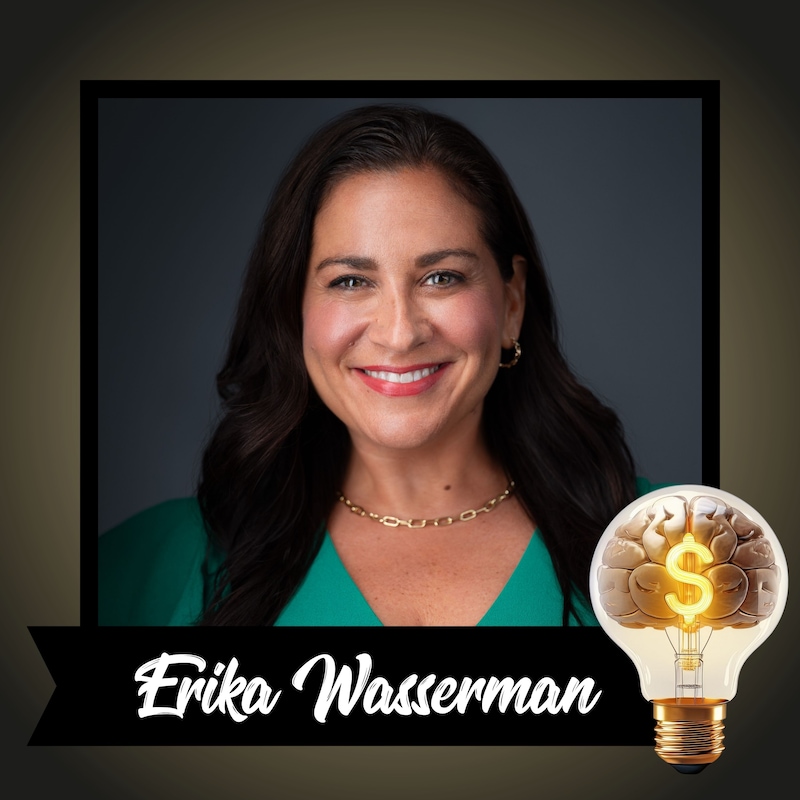
In this episode of Financial Behavior Thought Leaders, host Dr. Mary Bell Carlson welcomes Erika Wasserman, certified financial therapist, keynote speaker, and now the author of the soon-to-be-released "Conversations with Your Financial Therapist." Erika’s reputation for turning taboo money topics into empowering, approachable conversations takes center stage in this candid interview. Together, Mary and Erika dig into the emotional landscape of money, the journey that brought Erika from sipping rosé abroad to gracing stages around the globe, and how her unique tools are rewiring how leaders, advisors, and everyday people talk about money.
She and Mary discuss her speaking journey–starting with chance meetings and pandemic pivots–and the wild ride that’s led Erika to present for clients like Warner Music and Discovery Channel and rub elbows (backstage!) with Barbara Corcoran. Erika shares behind-the-scenes wisdom on her keynote talks, including her crowd-favorite "Put Your Money Where Your Mouth Is," and discusses the transformative potential of her new book and conversation cards for making real money talk accessible to everyone.
Key Takeaways:
- The Power of Invitation and Saying Yes: Erika’s career trajectory is a testament to openness and responding to invitations both personal and professional. Opportunities like writing her book and speaking on global stages didn’t come from ambitious self-promotion but from embracing invitations as signals she was “ready.” This mindset has fueled her dynamic, authentic approach to growth and opportunity, encouraging listeners to be receptive and present to what comes their way.
- Making Money Conversations Comfortable: A core theme in Erika’s message is that the setting and tone matter deeply when talking about finances. Whether at home or in a financial advisor’s office, making these conversations comfortable and choosing the right time and place can set the stage for honest, productive dialogue. Erika’s "Money Mindset Method," with actionable steps starting from "Make the Conversation Comfortable," helps demystify how to initiate tough talks and break persistent taboos around money.
- Why Mindset and Language Matter in Finance: Erika’s keynote ("Put Your Money Where Your Mouth Is") explores how our words and underlying beliefs shape financial outcomes. Our attitudes about money, often inherited from family, culture, or past experience, direct our financial actions. Becoming more aware of the stories we tell ourselves and others (and learning to reframe them) empowers financial professionals and clients alike to unlock greater confidence and possibility.
- Practical, Actionable Tools for Advisors and Clients: From her five-step framework to her innovative conversation card decks, Erika focuses on practical, repeatable tools that make tough topics easier to navigate. Financial advisors, in particular, can use these tools to gain deeper insight into their clients’ mindsets, foster trust, and create more meaningful engagement whether that’s through storytelling cards or shifting everyday language about finances.
- The Importance of Authenticity and Simplicity: Erika’s success, both as a speaker and author, stems from keeping things simple, authentic, and actionable resources designed not for abstract theory but for people’s real lives. Her insights are deeply informed by her lived experience as a single mom and entrepreneur, declaring that if advice isn’t simple and practical, she won’t use it. This philosophy shapes both her book and her approach to client work, ensuring everything she shares is genuinely useful.
Whether you’re a financial advisor seeking better client conversations, an event planner in search of an engaging keynote, or just eager to improve your own relationship with money, this episode is packed with stories, laughter, and truly actionable wisdom.
Don’t Forget: Erika’s new book, Conversations with Your Financial Therapist, lands September 17th and is available for pre-order. Learn more at conversationswithyourfinancialtherapist.com. For booking information, visit financialbehaviorthoughtleaders.com.
If you’re looking for a speaker who blends personal development with professional strategies and who can help your audience rewrite their money story, Erika is the one to call.
Transcripts
Welcome to Financial Behavior Thought Leaders. Today we're featuring Erica Wasserman, a certified financial therapist, dynamic keynote speaker, and now the author of the brand new book, Conversations with your Financial Therapist. Erica is known for her refreshingly real approach to talking about money, helping leaders, managers, and financial advisors not only improve their own relationship with money, but also guide others in doing the same. We'll dive into her speaking journey, unpack the core ideas from her keynote Put yout Money where your Mouth Is, and hear how her new book is changing the way people think, feel, and talk about money. Welcome, Erica. We're glad to have you.
Erika Wasserman [:Thanks. I'm excited to be here. It's always fun when you and I get together. The conversations go all over the place. So it's, it's fun to be on a podcast and do it.
Mary Bell Carlson [:I love it. Me too. Have actually have it recorded. Well, we're going to talk. Speaking of going all over the place, we're going to back it up and we're going to start with how you've even got on stage. I would love to hear what inspired your career to be on stages.
Erika Wasserman [:To be on stages. I think my parents will tell you I was born to be on a stage, so I'm not sure about that part. It's somewhere where I feel comfortable, which was interesting when I later learned in life that not everybody's comfortable on a stage. And so it comes natural. It's. I enjoy it. But the reality of how I became on stage in financial therapy, well, that's a fun story, actually. And it involves sipping ros in a foreign country.
Erika Wasserman [:Not so bad, right?
Mary Bell Carlson [:Yeah.
Erika Wasserman [:January 2020, I went to a wellness resort and again was sipping rose, sipping, sitting in the water. And I talked to everybody and lo and behold, one of the women that I met there, Judy Goldberg, give her a good old shout out. We connected. And again, it was January 2020. Oh, wow. Fast forward to probably around May 2020. She and I kept in touch and we realized that financial wellness was so needed during this new Covid time. And she was in leadership and development for companies as a consultant.
Erika Wasserman [:So my first client was Warner Music and my second client was Discovery Channel globally. I remember sitting in a closet, you know, with Zoom doing recording in India for Discovery Channel at three in the morning because the conversations around money and so much uncertainty that was happening then. So Zoom became my first platform globally talking about the emotional side of money. And since then, it's just gone on and on to, I would say, bigger, just different stages. And I've engaged in conversations with thousands of people all across the world.
Mary Bell Carlson [:Erica, that's amazing. Like, we're recording this in 2025.
Erika Wasserman [:You.
Mary Bell Carlson [:This has only been five years, but you have been on fire those last five years. That's a huge amount of change. Talk to us about some of the other clients you've worked with and what you've done. You've done some incredible projects.
Erika Wasserman [:Yeah, thanks. So for me, as you could tell, it's my passion. So for me, as soon as I connect with somebody that understands financial wellness, not everybody does. So that's probably one of my biggest obstacles is connecting with people who understand financial wellness. And I've had some great advocates in the media on this. You know, being in the New York Times and, you know, NerdWallet and U.S. news and Report, I could go on and on. It's.
Erika Wasserman [:It's great. And I've been really fortunate for that. And also to be on some epic stages. I'll give a shout out there to Epic Realty. That had me out there for the shareholder summit. And the speaker right after me was a shark, was Barbara Corcoran from Shark Tank. So I was able to do this live workshop on stage, 500 people. And she was the other paid speaker of the event, which was amazing because I got to meet her backstage, which led to a great conversation.
Erika Wasserman [:And she said to me, oh, we need to keep in touch. This is such a needed topic. She has her own money stories. She works with investors that have money stories. And guess what? You're going to tell me to keep in touch? We're going to keep in touch. And lo and behold, she endorsed my book that's coming out September 17th. Conversations with your financial therapist. Stories and scripts to grow your mindset.
Erika Wasserman [:And I have a quote from her right on the front cover of how important it is to start those conversations.
Mary Bell Carlson [:Well, I love it. And I love that you brought up the book, because that's exactly where I wanted to go next. And say, what inspired you? Really don't let big things scare you, right? You go from a stage, you're like, yeah, yeah, I was born to do that. But like, writing a book, Most people spend their whole lives wanting to write a book, and if they do it, it's like the achievement of a lifetime. You're like, yep, I'll write a book and I'll have a publisher, and it's no big deal. Tell us what inspired this? Where did this come from?
Erika Wasserman [:Interesting enough. I had done some work on human design. Are you familiar with human design?
Mary Bell Carlson [:No.
Erika Wasserman [:Tell us so human design takes, like, your birthday, where you're. Where you. Where you were born, time of day, and it spits out, like a horoscope of some sort. And so many people in human design. I know minimal on this, but what I learned from it, it told me it was somebody who liked an invitation. And I have to say that was the biggest aha. That I received from it, because it's really true. You invite me to something, there's a really good chance I'm showing up.
Erika Wasserman [:But I wouldn't necessarily invite myself to things. So on my planning for my business, a book goes somewhere out there in space.
Mary Bell Carlson [:Yep.
Erika Wasserman [:Wiley Publishing reached out to me and said, would you be interested in writing a book? And at first I was like, oh, this must be spam, right? Like, who. What publisher writes to somebody saying, come write for us? And then I engaged in conversation. I did some research with people who had written with Wiley, and I said, yes. I said, because it was an invitation, it must mean that I'm ready, because otherwise I probably would have put it off for a long time. And like you said, I said yes. I went to Copenhagen. I spent a month on a riding retreat, riding my bike, went to different coffee shops and popped out a book that I'm really, really proud of.
Mary Bell Carlson [:That is awesome. And I just love the fact that you don't let anything stand in your way. You just let opportunities flow in and it seems to be at the right place and right time and things work out like they need to. I love that about you.
Erika Wasserman [:Thank you. It's a superpower. Just don't ask me to run. Like, if. Like an invitation for a marathon, that's going to be a harder. A harder sell.
Mary Bell Carlson [:So I do want to dig into this book because I think that a lot of us, first off, financial therapists, that probably throws them off right there. But secondly, if they're picking it up for the first time, what can they expect to experience from this book?
Erika Wasserman [:Oh, I just got chills. This is so exciting to talk about. So talking about money is so taboo, but it impacts our own personal health, right? Sleepless nights, how many times are you tossing and turning, thinking about back to school, shopping, how much am I going to spend? Did I overspend? The next vacation, whatever it is, your salary at work, aging parents, we can get into all of these. That impacts our personal health. But then it also impacts your health with your partner, romantic partner. How many arguments, how many discussions have you avoided? I see a lot of that. Then you have business partners. You have.
Erika Wasserman [:If you're a manager and then you have family members and communities. So these conversations should be taking place on all different levels. But oftentimes we're avoiding these conversations because we don't know how to have them productively. So I got to thinking based on the clients that I've had and you know me, you're like laughing. I'm a creator. This is one of my things. If there's a void I want to create in that space. And so I went and pulled out what can I do that's repeatable framework for people to use in any of those conversations that we just talked about.
Erika Wasserman [:And I created the money mindset method. It's a five step approach. How cool is this using the word money, five letters. I had a brainstorm with my with my people on this. We had a whole session going but we use the word money we came up with. And it's a repeatable framework that you can use with yourself, you can use with your co parent over discussing back to school shopping or something you can use with your manager about talking about a raise and the five steps that it take you through. I'll give you a hint. The first one is M.
Erika Wasserman [:Any guesses of what M could stand for other than money?
Mary Bell Carlson [:You gave that one away.
Erika Wasserman [:Yeah. Make the conversation comfortable. How do you do that? If you listen to my tone, it's easy, it's approachable, it's open. So time, tone, temperature of the room, these are all really important things when you're having a conversation. Meaning, honey, I'm leaving for work.
Mary Bell Carlson [:Bye.
Erika Wasserman [:Hey, did you get that email about the mortgage? Not the time to start a productive financial conversation. So I invite you to think. When was the last time you had a productive conversation with anybody? What was the setting like and could you repeat it when you're ready to have your money conversation?
Mary Bell Carlson [:So my husband's going to hate this but I love bringing up money right as we're going to sleep because it's on my mind. So I'm like oh crap, did we pay that or did that happen or what? And he. So he came into our marriage as the non dominant financial person that was always been me. And he hates money with a passion, hates talking about it.
Erika Wasserman [:Send him my way. Sounds like we need to have a conversation with that one.
Mary Bell Carlson [:But you're exactly right. That was actually something with his therapy background. He said please do not. That is like my safe space right as we're going to bed is not the time. Whether it's on your mind or not, which it usually is. It for him, that is not the time he wants to be talking about money or the right setting or right place.
Erika Wasserman [:So on that note, grab your phone because it's probably right next to you. Or a pen and paper, if you're non digital in your room, write it down.
Mary Bell Carlson [:Oh yeah, write it down.
Erika Wasserman [:Make a note of it. And then in the morning, while you're brushing your teeth, hey, honey, do we pay that bill? It's a different conversation. And then the other idea on this is don't have money conversations in the bedroom or in the office. Oh, well, the office is more. If it's going to be a stressful conversation, there's too many distractions. You want it to be in a neutral place. Now, if you're sitting in the office because you have to pull up some paperwork, that's different. But if you're sitting in an office, make sure that there's less distractions and that you can have a productive conversation.
Erika Wasserman [:Notifications are turned off, the kids have a snack, those kind of things. And that's part of that make the conversation comfortable. And we skip over that step so many times. And so we're setting ourselves up for failure before we even start those tough conversations.
Mary Bell Carlson [:So let me ask you another question on that then. Those that are listening to this may be like, but I'm a financial advisor. Of course my conversations are going to happen in the office. How do you not have it? So what would you tell the financial advisors listening?
Erika Wasserman [:Oh, this is my favorite. I love working with advisors on this because it's something we do every day. Back to running, you know, and I tell this story all the time. I don't like to run. And so during COVID I'm like, I'm going to run. And I got to like the end of my street. My head was down. I'm like, this sucks.
Erika Wasserman [:Sorry if I'm not allowed to say that. And you know, and I'm looking around and I see this gazelle, this woman, the matching outfit, the visor, the airpods, the ponytail swishing back and forth. And I'm like, this is money conversations. I looked at myself and I'm like, this is how people feel having a money conversation. Could I run around the corner? Absolutely. If somebody was chasing me, I could do it. Mentally, I was like, I'm done. I don't want to do it.
Erika Wasserman [:That woman across the way had been doing it for so many times. She's gotten, I'm sure a twisted ankle, been rained on, but because of her practice, could run forever. So that's for financial advisors, you're the gazelle in that situation. Somebody's walking in, they're me running. So just coming into your office or pressing Zoom might take a lot, and they might have had a sleepless night beforehand or a fight with their partner before they walk into the room. So it's not as they make it comfortable for you, it's making it comfortable for them is really important. And again, I end up doing a 60 mile walk for breast cancer over three days. Right.
Erika Wasserman [:Because a friend invited me. Again, I got to be careful on this.
Mary Bell Carlson [:You're going to get a lot of invites.
Erika Wasserman [:And I found what I was good at. So your financial level might not be the ultra marathon runner. It could be, you know, a good walker, and that's okay. And so when you're dealing with your finances as an advisor and on the other end, it's getting to a comfort level that you can handle, and that's good for both you and the person that you're working with.
Mary Bell Carlson [:Well, I've never heard of a financial advisor and gazelle being compared to a gazelle, so this is a first. But also I love the fact that we're kind of pulling it into that financial advice space, which is where we really lie. And you've got this keynote. It's very creative. Put your money where your mouth is, and it's all about financial advisors and connecting into your clients. Can you tell us more about the core message of this talk?
Erika Wasserman [:Yeah, I love it. It's so much fun. Fun. And as you can tell, I bring a lot of energy to this keynote because I want to make talking about money fun. And I want it to be engaging. And that's something that people shrink away from or fall asleep in. Let's be real. How many sessions have you said? And you're like doing your grocery list.
Erika Wasserman [:This is not that kind of conversation. This is how our mindset plays a role in our conversations. So, for example, put your money where your mouth is. What are you saying? Because what you're saying is where your money's going. Not just for you, for your business, for your clients. I'm a X amount of producer. Well, you just limited yourself. How did you come up with that number? Interesting, right? I'll never make it to senior VP when we start talking this way, putting our mouth in places and saying words, our actions follow.
Erika Wasserman [:And with our money mindset, we get it from three major things. Any guesses? You should have a guess. Come on.
Mary Bell Carlson [:I'm stuck back on the Gazette thinking the egg. I don't know.
Erika Wasserman [:So our first pillar is our background, how money was talked about at home. Right. So I'll give you an example. If you grew up in a house where financial advisors are a rip off, I can just invest on my own. Well, that's where your money's not going to go there. Right. The next one is I'll keep with background. My house, we always bought on sale, we never bought retail messaging from your past.
Erika Wasserman [:Then you get into religion and culture. Money is greed. Money doesn't buy you happiness. Men are the ultimate decision makers. And what we're seeing with the great transfer of wealth, there's more and more women coming into the wealth, but don't have confidence in their relationship with money. So what advisors starting to hear from women are, I don't know where to start. I don't understand anything. Even if they're even allowed to say these words, oftentimes they're not even saying it and they're hiding or they're just nodding.
Erika Wasserman [:And so as an advisor, it's going to be really important to notice not just where the words are coming out, but the body language as well with your clients. And so those are the things that we're going to be talking about because we want to enable everybody to have confidence in money. The last piece is experience. You invest in a pharmaceutical stock, it did crap. And all of a sudden the person sitting next to you, you're telling them, oh, there's a great pharmaceutical stock. And they're like, Nope, next. Because 90% of our emotions, our decisions with finances are emotional. Daniel Kaiman.
Erika Wasserman [:Right. 10% are logical. And so now you take your personal experiences and as an advisor, the way you're showing up is actually leading and guiding your clients as well. So this amazing keynote talks about how you are speaking about money, shows up for yourself, shows up for your clients and it lands on the end with this amazing experience. I don't want to give it away, but let's just say if money could be flying all over you, flying out of the sky, what would you say to it now? And all of a sudden your messaging starts changing and when we start talking differently, our energy starts flowing differently. And that's the amazing new keynote.
Mary Bell Carlson [:I love it. I'm so excited. Now after they go home and they're back in the office, we'll go back to that office, right? That still environment that we started with. What do you hope is different with that person the next day after they've heard this keynote?
Erika Wasserman [:Awareness. I think that's the biggest thing is most People like in all jobs, I don't care if you're the garbage man all the way to the doctor. We come into routines, habits, the same things day in and day out. So after this, I would want you to be inspired, curious and ready to maybe shift a little bit. Right. Little shifts add up into your next conversation. So what they will leave with is to invite them with their next client to use the money mindset framework to start noticing some of the words and reframing how they're talking. And all of a sudden, over time, small shifts will start happening that hopefully engage and retain clients and become referral partners because they feel seen, seen and heard by you.
Mary Bell Carlson [:Yeah. What I love about this, Erica, is the fact that you take, let's be honest, some pretty complex topics like psychology is not easy to grasp. It's, it's nice to hear and I think it's fun to listen to, but it's really hard for most of us to implement. But what I just heard from you are super practical, small step ways of implementing pretty sophisticated psychological tools along the way. Is that also what people are going to get both out of the book and the Keener?
Erika Wasserman [:That's the only way I know how to do things right. So I'm a single mom to three now teenage girls, but I've been divorced for over 13 years and I need things simple, practical and actionable and if they're not those three, they're not going to serve me. So, so I'm only going to show up authentically and in doing that, that's the output that you're going to get from working with me as well.
Mary Bell Carlson [:I love that about you. And I do have to throw in here your conversation cards because that's really, that came even before the book. It is this fact of you want people talking about money and being comfortable talking about money. So I'm not going to give it away. You talk about it. What are these conversation cards that you have and what, why did you build it?
Erika Wasserman [:I was sitting in a bar.
Mary Bell Carlson [:All good stories start there.
Erika Wasserman [:I mean it's either a bar or a shower where your ideas come from. And again, I was sitting at a bar. Maybe this is 2021 now. So we're still in that weird period of time. Outdoor bar. Couple next to me was on a 10 year anniversary dinner and they had conversation cards and she's like, I don't want to just stare at him. I want to learn something new and have a nice dinner together. Goes back to I talk to everybody.
Erika Wasserman [:Right? So she and I Started talking. She said, hey, would you like some cards? My friends and I start playing the cards. And that's where the aha moment come came to me, because so many people had come to me saying, I don't know how to start those conversations around money, or I could never ask that. And now, all of a sudden, the cards are asking it. And so right there, that was it. I went and got online, created the cards, had them manufactured, and they're on Amazon. There's two editions out right now called let's Talk Finances. One is for couples, and one is for anybody who's going through a divorce or finished a divorce.
Erika Wasserman [:Because you have to reset your whole mindset, your whole mindset on everything. But one is finances. And there's not a lot of tools out there about money, like, who's your new beneficiary? What are things that are keeping you up at night? You know, and things like that. So the idea behind those is they will grow in series, like a family addition, aging parents, roommates. For my friends that are going off to college, all of these are needed conversations. And I find that people use them a lot on road trips and walking the dogs, you know, just. And financial advisors use them in their offices, either as gifts or when they walk in, they have a client pick a card, and all of a sudden they're storytelling versus how was your summer trip? Or what is retirement? You know, how much do you want for retirement? They're now talking about what their hopes and dreams are or past history, and they're learning about their client through storytelling.
Mary Bell Carlson [:It's just a very different conversation, right? When you're asking a question, you're really wanting to hear the answer. That's a totally different conversation. That someone who walks into your office and you know, or you think you know what you're going to tell them, right? That you have an agenda and you have something you want to say to.
Erika Wasserman [:My favorite questions that I get, the best responses are, is, what's your favorite bill to pay?
Mary Bell Carlson [:Hmm.
Erika Wasserman [:I love your face, Mary. So tell me, what is your favorite bill to pay? Because most people don't think of this before.
Mary Bell Carlson [:That's why I was confused. I was like, I don't know. The one I have set up on autopay that I don't have to think about, probably, which is most of them. Um, but I would say probably the electric field, because that means that, one, I have a house, and two, we're comfortable. Like, it's a sign of comfort and ease. And it is set up on auto Pay so I don't have to think a lot about it.
Erika Wasserman [:Yeah. So for me, when my kids were younger, it was the nanny. Mm.
Mary Bell Carlson [:Yep.
Erika Wasserman [:That favor. Bill to pay. I will. I will do. I would cut any corners to make sure that I had help in the house with three toddlers. Right. And the other question, especially with couples. But I've done this.
Erika Wasserman [:I did this with my daughter. The other day we were on CBS Miami, and we did the cards live. And what do you. What do you buy that annoys somebody else?
Mary Bell Carlson [:I know what my husband buys that annoys.
Erika Wasserman [:Go ahead, tell us.
Mary Bell Carlson [:I don't know if it works. Greeting cards. I hate wasting money on greeting cards. I. I've never appreciated them. And yet, interestingly enough, that's typically what he would get gifted as a child. So that's what he knows. Like, those are very special to him because that's how he was shown love as he's younger.
Mary Bell Carlson [:So it's actually been a part of friction in our family. Greeting cards, of all things. But it drives me nuts. We waste money on.
Erika Wasserman [:And that's generally what it is. I had a client who said it was plants that his wife was buying. And when we dug into it, she grew up in New York where there was no balcony. So now that she lives in a house that has a backyard, it was a sign of wealth, but I'm laughing. So my greeting cards. My dad in college would send me a greeting card with, like, $20 cash. Way before Venmo. Right.
Erika Wasserman [:Like, that's how we got like, a little. A little bump from our parents. But the greeting card was never the right holiday. I mean, because you'd go to the dollar store, and it was back in the day when it was two for one. Do you get a St. Patrick's Day card? You'd get a Halloween card. It was never. And it'd be crossed out to make, you know, like it was.
Erika Wasserman [:Right. So we weren't big greeting card spenders, but greeting cards are a big part of my life.
Mary Bell Carlson [:Interesting. Yeah. Yeah. It's so fun to see that. Well, Erica, this has been just a joy talking with you, and we're so excited for the book coming out September 17th. And you can pre order your book now. Let's also do one final question. I want to go behind the scenes.
Mary Bell Carlson [:What is something that people, most audience members, won't know about you from seeing you on stage?
Erika Wasserman [:I can never figure out what pair of shoes to wear when I go on stage.
Mary Bell Carlson [:Why is that?
Erika Wasserman [:Don't know. I'm in a period of life where I've locked in my stage outfit. So my stage color is green. Best decision I ever made. So, like, it limits my choices, especially as a woman. Right. Like, I have a few stage presence outfits that I wear. So really the one.
Erika Wasserman [:The thing that's interchangeable is my shoes. And right now, I don't like any of them. They're not comfortable. So if anybody has comfortable heels that are cute, let me know because I never know if I'm supposed to be able to show toes. Not show toes when you're presenting, because who knows? Boots. If you have shoe ideas for. For stage presence, bring them my way.
Mary Bell Carlson [:I love it. I love it. I would say I do struggle with the same thing. My feet are to the point that there are no shoes that are comfortable anymore. And so it's a struggle to find shoes that are comfortable and should be honest.
Erika Wasserman [:Right. You can't wear sneakers. I mean, you can. Sorry. You can wear sneakers on some people.
Mary Bell Carlson [:Get away with it.
Erika Wasserman [:Yes.
Mary Bell Carlson [:Yeah.
Erika Wasserman [:I feel more powerful in heels, and so I like that stage presence. So send me your suggestions.
Mary Bell Carlson [:Well, I hear a lot of invitations throughout this conversation. Invitations for a little champagne, invitations for shoes, invitations to go do fun things. So, Erica, thank you so much for joining us.
Erika Wasserman [:And thank you for the invitation to.
Mary Bell Carlson [:Be on your podcast anytime, anytime. And if you're looking for a speaker who blends personal development and professional strategies and can help you rewrite your money story, Erica's the one to call. You can learn more and book her@financialbehaviorthoughtleaders.com and her new book, conversations with a Financial Therapist is out. It is conversations with your financial therapist.com, so get your own copy and start your money conversations today. Erica, thanks for joining us.
Erika Wasserman [:Thank you.
