Shownotes
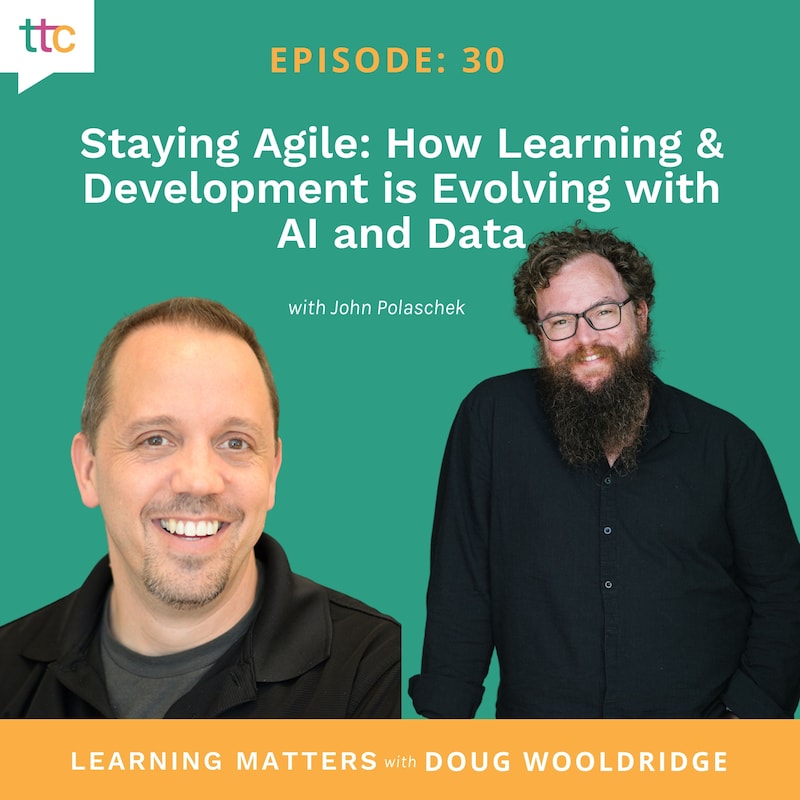
Ever feel like Learning & Development (L&D) moves at lightning speed? That’s because it does. Businesses are evolving rapidly, and training programs need to keep up. This week on the Learning Matters podcast I sat down with John Polaschek, Head of Global Learning Solutions at ServiceNow. He shared his thoughts on what makes L&D successful today and where it's headed next. Spoiler alert: It’s all about agility, AI, and leveraging data.
What’s Inside This Episode?
Agility is key – How John and his team stay flexible and responsive to changing business needs.
AI in L&D – At first, John was skeptical, but now he sees AI as a game-changer. Learn how tools like Articulate Rise, Capsule, and Synthesia are helping teams develop training faster and more effectively than ever before.
Making data work for you – Why L&D teams must go beyond completion rates and smile sheets to truly measure learning impact and make better decisions.
Personalized learning at scale – Imagine an AI-powered assistant that schedules the right training at the right time based on your calendar and upcoming projects. That future is closer than you think!
The challenge of proving value – Why L&D teams are under more pressure than ever to show real business impact, and how to do it effectively.
Major ServiceNow Announcement – ServiceNow has just made over 600 courses available for free to anyone in the world! John shares why this is such a big deal and what’s coming next.
At ttcInnovations, we help businesses create lasting change with immersive learning experiences. Through instructional strategy, design, and content development we empower employee confidence, performance, and results.
💡 Looking for custom learning experiences without licensing fees? Contact us for a free consultation! https://bit.ly/4aOhPKq
🤝 Need extra hands fast? Try staff augmentation! Click here to get matched with experts in 48 hours - no job posting needed. https://bit.ly/4aOhPKq
🚀 Simplify outsourcing with our subscription plans - predictable pricing and limitless innovation. Book a meeting for your free first week! https://bit.ly/4aOhPKq
🎯 Boost results with serious games for optimal retention and results. Contact our Dashe team to get started! https://bit.ly/4aOhPKq
Resources & Links
🔗 Connect with John Polaschek on LinkedIn: https://www.linkedin.com/in/jpolaschek/
🔗 Explore ServiceNow’s Now Learning (Free Courses!): https://learning.servicenow.com/lxp/en/pages/servicenow
🔗 Learn more about TTC Innovations: https://ttcinnovations.com/
Transcripts
Welcome back to Learning Matters. I'm Doug Wolteridge, your host. And today I'm very excited to chat with our guest. In 2015, his team earned CLO Learning Elite. He's hired over 40 learning professionals to date and expanded the team to scale for global development and reach an AMER, EMEA, and APJ.
John Polaschek (:Ahem.
Doug Wooldridge (:He leads a global team of 65 folks to create multimodal content training thousands of learners resulting in thousands of trained and certified individuals each month. And he's head of global learning solutions, shared services at ServiceNow.
Doug Wooldridge (:John Palaszczuk, welcome to the show.
John Polaschek (:Thanks. It's humbling hearing that. Thank you. I mean, it's weird to hear myself spoken about in that way, but I appreciate it. Thank you very much.
Doug Wooldridge (:Well, we only bring the best of the best here on this show. And today, as always, we'll be covering some of the big questions, concerns, and exciting changes in the world of learning and development. So I'd like to start with this, John, what strategy matters most in learning and development today?
John Polaschek (:my gosh, we were talking about this. It's a tough one because there's so many different perspectives I think people would have who are listening to this coming from different places where they work. But I think the one that has worked really well for me and my team is first and foremost being agile. Just coming at it with the approach of like, you need to be able to turn on a dime and shift wherever the business is sort of taking itself and be responsive to that and help the business adapt.
Doug Wooldridge (:Mm-hmm.
John Polaschek (:I think, you know, thinking about where your business, the entire business, not just the business of learning, needs to be. that's, you know, I don't know, it's like the, you know, Holy grail or whatever, you know, whatever, you know, I don't know if anybody can always answer that, but, you know, you're looking at your people and you're saying, look, in order for this, for this business to be as successful as we can be, we need to have the most successful people who work here.
Doug Wooldridge (:Hahaha
Yeah.
John Polaschek (:And the only way to do that is to kind of be working in the now and the future at any given time, right? You're sort of preparing, because it takes a little time to build skills. So that, think, is the sweet spot wherever you can try to find that.
Doug Wooldridge (:Mm-hmm.
Doug Wooldridge (:And how do you go about that? How are you sitting there being like, okay, we have to start with is this learning that you're asking for the right type of learning? Is that right? You got to start with portion one. Are we doing the right thing here?
John Polaschek (:Yeah.
Yeah.
John Polaschek (:Yeah, that's a great one. I think people often come, I think, to learning teams saying, hey, can you help us? And we just want a little course that does this or whatever. And you're always kind of like, how did you reach the conclusion that you thought you needed a course? Which is a funny thing to say, because on, excuse me, on, you could argue too that like from our side, we should be really happy that all these people are coming to us and wanting our services. And you're like, great, this is exactly what we're here for.
Doug Wooldridge (:Yeah.
Doug Wooldridge (:Sure.
John Polaschek (:But I also think it's sort of incumbent upon us to sort of challenge that ask out of the get-go, right? And say, is this really what you need? And let's talk for a minute, you know, just sort of pause. What is it you're really trying, what is the outcome you're trying to achieve? And that's where I feel like us in our profession, in the learning profession, can look at, you know, what is the outcome that they wanna achieve? And we can look at that then with sort of a clear set of opportunity, you know, what are the solutions we could provide that would give them that outcome, right?
Doug Wooldridge (:Mm-hmm.
John Polaschek (:And we might say, you don't even really need a course per se. Maybe you need a job aid. Maybe you just need a video. Maybe it's more about awareness or something, and then it's building later on to something that's more about skill or whatever. So yeah, so I think that's sort of my reaction anyway when people come to us with that type of request.
Doug Wooldridge (:And so once you've gotten the idea of how we're going to solve for this and let's say you you know you've worked with them for several months and worked on several initiatives how do you take that data and and use that to showcase any type of success?
John Polaschek (:Yeah, that's another key point, which I don't know that learning organization, at least in my experience, I'll just say, I don't want to call out any one else who's like, Hey, I do agree. Yeah. Yeah. It's just been my experience that in the learning profession, we do a great job of doing what we know really well, which is like educating people, scaling people up on the things they need to learn. But we're not so great at going back and evaluating.
Doug Wooldridge (:No, we're all about blanket statements here.
John Polaschek (:Like how successful was that? Could it have been more successful? Was there a better way? Cause you're usually moving on to the next thing. So the data piece that you bring up is a huge component that I think needs to play a bigger role today than it ever has. know, companies are getting more strategic with their money, you know, and how they spend it. They want to ensure like, am I getting value for the things we're spending money on? And the way that a learning organization can share its value back to the company is with data.
Doug Wooldridge (:Mm-hmm.
John Polaschek (:and really kind of saying to them, here are our successes and calling out the failure points. I mean, we should do it to ourselves, right? And then that only helps us get stronger and it helps the rest of the business when they come back to you for that second, third, fourth time, you can say to them, hey, we did this last year, it didn't work. What about this other approach or what about this other idea? Let's do that instead. And we've actually done that in a few cases where I work now and we've had some really great experiences where learn from your lessons in the past.
Doug Wooldridge (:Mm-hmm.
John Polaschek (:apply something different in the future and then when you try it that new way we're like my god this totally worked you know so
Doug Wooldridge (:Where are you gathering that from? you also getting feedback from the learners and also the C-suite folks?
John Polaschek (:Yeah, great question again. It's from a multitude of spaces because what we're also finding is some of our solutions don't live in the LXP or LMS, whatever you're using to kind of host your content, let's say. So what we try to do is aggregate data from many different sources, which would be again, your LXP or LMS to kind of, that's like your starting point, least to get a few things, right? But then we go back to the learners themselves. So we do something called a longitudinal study.
Doug Wooldridge (:Mm-hmm.
John Polaschek (:where we go back to the learners roughly three months later. And it's a sample set. It's not everyone. We send a survey to them and we literally ask questions like, did the training that you completed three months prior help you address the needs that you have today? Or are they beginning to help you in such a way where it's either helping you professionally in your own career development or it's helping you on the job with the work that you literally just had to do.
regardless of your career per se, like, you know, because people have different drivers, right? So we ask a few of those questions and we get the feedback and we learn from that to see like, is our training hitting the mark? Because we didn't really know, right? You get those smiley face surveys at the end, you know, the last day, right? And for us anyway, I'll just say they're always great because we have great people and we have great delivery and our training is rock solid and stuff and people want to be nice. And, you know, so they say great things. But to us, the...
Doug Wooldridge (:Mm-hmm.
Doug Wooldridge (:Yeah.
Doug Wooldridge (:And that does feel nice, but I feel like you want to dig a little further.
John Polaschek (:It does, yeah. Yeah. And it's not to say that those are a waste of time either, because you do get some info, which is good. And so you still got to have them and they're helpful. And so we do that type of, we capture data there, literally at the end of every session or engagement that we have. And then as well as that longitudinal study. And then we do also check in with our leadership as well, where we'll say,
are you seeing a difference in your people and in the performance and the things that we're trying to measure against? And so they're kind of the ultimate stakeholder for us, So, yeah.
Doug Wooldridge (:Mm-hmm.
Doug Wooldridge (:Definitely. And just to take it to an aside, are there any top two like trends or big things that you're most excited about in our industry right now that you're ready to like dig into and try to implement at your org?
John Polaschek (:Yeah, and I have to admit at first I was a little hesitant about this first one, the and it's probably gonna sound like everybody's talking about AI. mean, you know, it's everywhere, right? And I was even getting sick of it for a while. was like, ugh, like stop with the AI stuff, you know.
Doug Wooldridge (:yeah.
Doug Wooldridge (:Yeah, how long can this Buddhist word be existent in our in our lexicon here? mean,
John Polaschek (:Yeah, totally. But I've sort of come around almost like a 360 in a way, I guess you could say, know, kind of gone through the whole range of emotions around it or whatever. But I'm back on the bandwagon in the sense that I'm seeing, you know, the tools that we use, you know, things like Articulate Rise or some of the things we do for video production. There's a tool out there called Capsule. These are just ones that are like coming to mind. There's a million of them. Synthesia is another one.
Doug Wooldridge (:Yeah.
Doug Wooldridge (:Mm-hmm.
John Polaschek (:you know, are embracing and using AI in the incorporation of the tools that we use. And it's transforming how quickly we can develop and respond to business needs. And that's really cool. And it's amazing to me. I can go around to my team and I'll ask them like, hey, it's kind of we jokingly say kind of do some back of the napkin math, like it doesn't have to be perfect, you know. But can you estimate how much this tool that maybe, you know, incorporates AI, how much is it time? Is it saving you?
Doug Wooldridge (:Mm-hmm.
Doug Wooldridge (:Sure.
John Polaschek (:I've had people literally say, it can range. Sometimes it's like 10%, but in some cases it can be 50%. So like something that took them 20 hours in the past is now taking them 10 hours. That is a significant game changer for everyone, really. I mean, for the employer, right, who's paying you, but also for that individual who can say, gosh, I can get through some of this stuff in half the time. This is amazing. And then what does it open up for you to go do and explore other areas that you could be?
Doug Wooldridge (:Yeah
Doug Wooldridge (:yeah.
Doug Wooldridge (:Mm-hmm.
John Polaschek (:developing. So again, I
Doug Wooldridge (:It seems like the biggest thing that it allows folks to do is the L &D industry is incredibly fast paced. Like you said, you have to stay agile. So what you get out of this is the ability to get a large initiative in and look at it and go, okay, this actually isn't going to take a hundred hours. It's going to take 45 hours. So that gives us at least a little breathing room because we know the next project's coming right away.
John Polaschek (:Yeah.
John Polaschek (:Yeah. Yeah. And your customers love it too, right? Because in the past, you know, we would hear this a lot, like, you know, we like you guys, but you're kind of hard to work with, you know, or like, you know, you asked so much of us and there's so many questions, you know, and all that. And, you know, cause we want to get to a good solution, right? But now we, you know, we, do the same thing. You know, we try to adhere to good practices and stuff, but to be able to turn around much more quickly, it's sort of changing that experience for the people in the business that you.
Doug Wooldridge (:Right.
John Polaschek (:typically engaged with, right? They're like, my gosh, you guys are so fast and the quality is so great. So yeah, it's a lot of fun and it's an interesting time to be in this space because I feel I've been here for doing L and D type work now for a very long time. And I feel like this is another, like I can remember when everybody was at the beginning stages and they needed an LMS and then they needed an LXP and everybody was moving their content. mean, I'm to sound really dated, but like from CD-ROM and bringing it to the web and that kind of stuff.
Doug Wooldridge (:Ha ha ha ha!
John Polaschek (:I feel like now we're at another one of those kind of amazing evolutions and maybe even a bit of a revolution. I mean, you know, in this space.
Doug Wooldridge (:Yeah. Was there any hesitancy in your org to start implementing these new tools?
John Polaschek (:No, the good thing for us, and I feel very fortunate, is we're a technology first kind of company and we're an AI first company. mean, we just embrace it, we love it, and it becomes a component of our very technology that we create and sell to our customers. So it's sort of in our DNA and we then embrace it on our team. like, boy, we better be, was it drinking our own champagne or whatever, right?
Doug Wooldridge (:You
Doug Wooldridge (:Hahaha
John Polaschek (:So it was kind of an easy thing in that regard. I would say the harder part of it was just like with all of us when change comes in our lives, you sort of go through that curve, right, of like, you I'm a little afraid, I don't know, I'm hesitant. And then you kind of go, okay, well, I'll try it, I'll test it. And then you, okay, I'm gonna adopt it, you know, that kind of thing. I think it is literally called the adoption curve or something like that. Anyway.
Doug Wooldridge (:Yeah.
John Polaschek (:Yeah, so we, know, you could definitely see that throughout our team. And there were people that were moving quicker than me, you know, which was great. And I encouraged that. And then there were people a little bit slower than me. So I was probably somewhere there in the middle kind of. But now it now come, you know, one year and a half, two years into this kind of thing that we're in. Everybody's pretty psyched about it and embracing it in our normal workflows. We've adopted a few tools that we now have literally put into our.
processes and the way that we build our content and stuff. So it's here to stay. Yeah.
Doug Wooldridge (:awesome. Do you have any advice for folks that are just kind of dipping their toes in the pool here and might want to adopt some AI functionality for their business?
John Polaschek (:Yeah, I mean, it's, I'm sure what I say is easier said than done because every organization is gonna have some of its own challenges. know, now we live in a world too where, you know, everything has to go through a security review and that kind of thing, right? So, but I will say, do what you can to at least test. Like one of the ways we were able to get some of the things in a little more quickly was we would go to our senior leadership and say,
Doug Wooldridge (:haha
Doug Wooldridge (:yeah.
John Polaschek (:hey, this thing looks really interesting. We'd like to do a proof of concept. Can we just throw it on a credit card? You know, that kind of a thing, right? And when you're enabled to do that kind of a thing and explore it, and then you create something that you then can show them as an example that they can then get excited about, and they can find the usefulness in it, you know, like, my gosh, you did this in no time, or this would be amazing for my team, or, you whatever. Then you get them on board. And the moment that they become a stakeholder, you're in.
Doug Wooldridge (:Sweet.
Doug Wooldridge (:you
John Polaschek (:Because then you can say, OK, great. Well, now we need 100 licenses. And they're like, wait, it costs that much? But you can usually get around that pretty quickly once you start to say, well, here are the benefits and all that kind of thing. So I would say, if you can, try to do that kind of proof of concept. Put together some data. Definitely come back to the business with the value proposition. Like, yeah, it's going to cost us x, but in reality, it's going to save us y. And we should do it. And usually,
Doug Wooldridge (:Mm-hmm.
John Polaschek (:Usually you get buy-in with that kind of thing.
Doug Wooldridge (:Well, it sounds like ServiceNow's leadership team is incredibly willing to keep on the vanguard of things, the cutting edge of technology, and really trust that you all know what you're doing and you know what you're bringing to them, and it will be a success in your organization.
John Polaschek (:Yeah. You know, it helps we have some people too internally that are, we're all just sort of, you know, nerds and geeks at heart or whatever, you know, we just, we, like technology and stuff. So we have some people that would download and install like some LLMs. Like we, got kind of like, know, these sandbox environments, let's call it. And so we were able to experiment a little bit on that end. And part of the reason I bring that up is just to encourage anyone out there who ends up listening to this, that like,
Doug Wooldridge (:Yeah
Doug Wooldridge (:Mm-hmm.
John Polaschek (:You can do that too. mean, and try not to be afraid. The tools are getting easier and easier. So if you're a little bit concerned about like, using an external LLM or whatever, like I don't know where my data is going or whatever. And I do get that because you hear that a lot from corporations. There are options where you can literally download some of these things, run them locally and still get some major benefits. And that's just using like regular, what I'll call regular AI or whatever, which sounds funny to say that.
But then obviously in our industry, there are specific industry tools which make even more sense where you can feed it some information and then it produces, literally produces a course of some kind. And so, but I would say just explore and try those things out.
Doug Wooldridge (:Mm-hmm.
Doug Wooldridge (:Yeah, I think most of the major AI usage companies have that option because they, you know, that was the first question that they got asked when they went to the major, you know, fortune 500 companies in this country to be like, Hey, do you want to use our stuff? Well, we can't have any of our proprietary information be put into your data set. So yeah, I think we finally got to the point of where luckily
John Polaschek (:Exactly.
Doug Wooldridge (:Like you said, there's a lot of sandbox options and personalization that you can do and safeguards that you can make sure that any of that information is safe and secure. At least we hope so.
John Polaschek (:Right.
John Polaschek (:Right, yeah. And maybe even in the worst case scenario, do something on your own personal computer, let's just say, not work-related, but like a kind of a simulated work environment, you know, type of thing. And then again, you could take that as an example. And again, usually you get the buy-in then, right? People see that and the potential and what it brings. And then they're like, okay, I'm kind of hooked. You know, it's hard to steer them away.
Doug Wooldridge (:Mm-hmm.
Doug Wooldridge (:Yeah.
Doug Wooldridge (:I mean if you're telling me that I'm gonna be able to save 20 hours of work, I'm gonna say yes. What do I need to do to sign up for this?
John Polaschek (:Yeah, exactly, right. You make the argument really well.
Doug Wooldridge (:Well, on the opposite side of very fun things happening, do you see any problems or issues that learning and development communities facing that we might need to solve for?
John Polaschek (:Yeah, well, a couple of things probably. You know, like anything, the closer you are to it, the more you sort of recognize the problems and the challenges, right? Some of it is to keep going just for a moment longer on the AI thing. I think there are people in the learning space just as they would be in any other space, not just learning. When you see this introduction of this new technology, there's a bit of fear, right? You're like, hmm, what is this going to do? And is it going to take my job away? You know, but we like to use the expression that
Doug Wooldridge (:Hahaha
Doug Wooldridge (:Yeah.
Doug Wooldridge (:Yeah.
John Polaschek (:AI is not going to take your job away, but it's the people who use AI will take your job away. So it's like you better, yeah, you better embrace it, right? Like just go look for it, find the way that it helps you do your job and you're to be that much better for it. And you'll be a better sort of like work citizen or employee or whatever for having embraced it and trying to find the ways where it can make you a better employee rather than not doing it, right? Because if you can't put that on your resume,
Doug Wooldridge (:I like it. We're cutting it.
You
John Polaschek (:Who's gonna hire you? You gotta be able to say, I'm using these tools, I'm current, I'm modern. Anyway, so that's a big one. And then the other one would be just, and again, we kind of danced around this in the very beginning, but data, it has always been what I think of as kind of a weak point in this space. we, wow, the LXP, the LMS takes care of that. We can see how many people we trained, great, whatever. But I feel we're lacking because...
Doug Wooldridge (:Right. Yep.
Doug Wooldridge (:Cool.
John Polaschek (:a lot of that training too, especially at corporations, you could argue, it's like, you trained all these people, but remember that course was mandatory, you know, or whatever. it's like, of course, yeah. But what I like to think of is like, more, what additional insights can you either glean from that existing data or do we need to go to the next level? And what level would that include? Like, you know, kind of my thing about early, the thing I mentioned earlier, around like a longitudinal study and not that that's the end all be all, but are there some things you could do to go?
Doug Wooldridge (:Yeah, yeah, exactly.
John Polaschek (:further a little deeper with your learners and engage them and say, you hey, is this really hitting the mark? Because we want to do the best job we can training you in a new skill. And we also want to do it as efficiently as possible, like in the shortest amount of time. So like if you see people in your system that are kind of lingering or not finishing courses, you kind of want to know why, you know, what is that? Why can't they get through this stuff? What's going on? And again, I've always just felt like maybe it's the places I've worked or whatever, because they tend to be a little bit more on the technology side.
Doug Wooldridge (:Mm-hmm.
John Polaschek (:of the industries we can all be in, you tend to move really quickly. So you don't always take that moment to reflect or look back and, you hey, what can we learn? You're always just moving on to the next thing. So, but I would just say we need to do a better job of sort of pausing, looking back, really looking at the data and then determining what else could we actually be collecting that would truly help us be better at what we're doing.
Doug Wooldridge (:there a moment in your career where you really got into this we have to use this data we have to make something of this
John Polaschek (:More so now, actually. Yeah, I would say we kind of got, it felt like to me, again, I'm always trying to be careful how I say things because people, again, who listen are going to be like, it was never like that for me, you know, or whatever. But for me anyway, for many years, more than half of my career so far in the first half, we almost got a pass in terms of data. It was more like, hey, we know we need training. A lot of it was mandatory, you know.
Doug Wooldridge (:Yeah.
John Polaschek (:code of ethics or whatever type, training for your employees or whatever. It's like, we gotta do it, it's just mandatory. So go out there and make it and put it out there and you're like, okay. And you almost just got a pass because all you really had to report on was like, did everybody take it? You're like, yeah, everybody did it. So you're like, okay, good. I think what's happening now more and more is companies truly are getting crunched with, do we have the right skill sets in our organization to make our company as competitive as it can be?
and evolve to wherever we need to be in the future. So then they come back to the learning department, whatever you call yourselves, we're global learning and development, teams are different. They come to you and they say, hey, how are you transforming our organization? So we're gonna be relevant in five years or six, seven, 10 years, you know, and that's a big responsibility that I feel like wasn't there earlier in my career, but it's become more real, you know, today than ever before.
Doug Wooldridge (:Mm-hmm.
John Polaschek (:So the data will get back to that, that you'll be able to point to the data and say, hey, here's how we're doing it. Here's what the data is showing us, where we're successful, where we're not successful. Here's where our skills are weaker as a company. Is it leadership skills? Is it more on the technology side? Are you an engineering kind of company? Do you need more of that? So.
Doug Wooldridge (:Mm-hmm.
Doug Wooldridge (:So with that, you feel like learning organizations have been leaned on more recently from the leadership teams to really try to keep on that cutting edge?
John Polaschek (:Yeah, completely. Like again, when I first started, keep referring back to the early days. There was when I started, I don't think there was a chief learning officer. Like that role didn't exist, you know, in the, but that has come to fruition, right? Like pretty much I can't even think of an organization now that doesn't have a CLO and, that's a real thing. They want that person at the table with everyone else, you know, all the other, you know, C-suite talking about where we're going to go, where we're headed. And I think,
Doug Wooldridge (:Yeah.
Doug Wooldridge (:Mm-hmm.
John Polaschek (:a greater responsibility exists there at that level and that part of the company than ever before. Yeah.
Doug Wooldridge (:Yeah. And then where, I guess, you know, with, we've been talking about AI and all that good stuff. Where do you see the future, you know, within the next five years of learning with all of the options out there now for, I hate the phrase of it, but just in time learning and, um, more tailored learning for the individual or at least the, that employee role may be for a large corporation.
John Polaschek (:yeah.
Doug Wooldridge (:How do you see learning playing out? You see it more as like.
John Polaschek (:Yeah.
Doug Wooldridge (:the YouTube-ification or like the TikTok-ification of the learning industry.
John Polaschek (:Exactly. Yeah, exactly. TikTok everywhere and for everything. That's just what we should be doing. Yeah, exactly. I mean, it's funny. We talk.
Doug Wooldridge (:Yeah, why not? They only need 30 seconds. That's right. Now we're back to they viewed it and now all we have is the data is that they viewed it.
John Polaschek (:Yeah, exactly. I jokingly say when people come to me and they say, yeah, we want more like TikTok, TikTok style training. go, really? Do want your doctor to have become a doctor through TikTok? And they're like, well, no.
Doug Wooldridge (:Yeah, let me tell you about spleen operations in 45 seconds or less.
John Polaschek (:Right. I'm like, it depends on what we're talking about. So I think of all these things as sort of additive to what, you know, just like, you know, a long time ago there was only radio, you know what I mean, or whatever. And then TV came along, right? But radio didn't go away. I kind of see that with all these different formats for learning where it's like, again, getting back to very early in our conversation, we were kind of talking about the right solution for the outcome you're trying to achieve, right? So sure, a TikTok style sort of, I'll call it either single,
It's weird to call it a core. I'll call it a micro learning or something or or a campaign where maybe you do several, you know, these tick tock style type things that can make a ton of sense. And it can be really good, really beneficial. Raise awareness, get people talking, getting people to kind of understand maybe, you know, a focal point for the company or a direction where the company is headed or something, you know. So you sort of get everybody kind of permeates right throughout the company. But then you would add on to that is what I think it's like, OK, well, what's the next level? And also are there targeted groups? So
Doug Wooldridge (:Yeah, okay.
Doug Wooldridge (:Mm-hmm.
John Polaschek (:you might sort of do the tick tock of thing that we were just talking about to get sort of this universal common language of some kind, like certain terms or certain things that again, AI or whatever it is you want to talk about. But then you start looking at the different compartments or different divisions within a company or whatever, the different groups and saying, well, for this group, we need to go deeper. Maybe the legal department, you're going to need some specific training or again, the engineering folks or whomever.
Doug Wooldridge (:Yeah.
Doug Wooldridge (:Mm-hmm.
John Polaschek (:Uh, that's where you say, okay, tick tock only got us so far, but now we're going to go into longer form, whatever, you know, maybe some video, maybe rise courses, whatever it is, right. Um, maybe, you know, back to instructor led training even, you know, uh, and they all have, they all serve a purpose. Yeah, exactly. Uh, so I'm a fan of all of it, like, you know, but it is funny to me. I remember a couple of years ago, everybody was saying that we want Netflix, you know, and that's kind of gone away and now it's tick tock. So.
Doug Wooldridge (:Here's the thought.
Doug Wooldridge (:Yeah.
John Polaschek (:It's kind of funny.
Doug Wooldridge (:It might come back, who knows? There's always somebody out there that's like, that can go to a leadership team and be like, think about this, what if your entire employee team had Netflix, but for your organization? And then they look at the price and they're like, I don't think we can do that.
John Polaschek (:Yeah, exactly.
John Polaschek (:Right.
I do think though, maybe one thing I should touch on is not only are those formats great, but it can also help a lot for the personalization component of learning. So that's another space where I think we're headed even further. It's like the perfect convergence of all these technologies sort of coming together where we have faster internet than ever before. We have more options for learning than ever before.
Doug Wooldridge (:Mm-hmm.
John Polaschek (:We can now know more about you as an individual than ever before when you come into a platform or a system or whatever. So now I can imagine a world where I come online for work, let's say, and it's like, hi, John. And we can see in your calendar that you have a couple of gaps here today. We also know that later in the week, you're going to be presenting. Would you like us to automatically put a little module in there, in your empty space, to brush up on presentation skills? You know what I mean?
Doug Wooldridge (:Yeah.
John Polaschek (:that type of thing, I'd be like, fantastic, click that, yes, please. Yeah, exactly. And, oh, and we'll add this to your phone so on your commute home, it'll be a podcast that you can listen to automatically. I think that's where we're sort of headed and it will become more and more robust. So I embrace all of that because in my mind, who wouldn't want that? It's so convenient, it'd be great.
Doug Wooldridge (:Everyone needs a personal assistant.
Doug Wooldridge (:Yeah. Well, that's whole point of this AI thing is to try to hopefully make our lives a little easier and, and so we can get the work done, be successful at our job so that we can enjoy the time outside of it with our family, their friends, whatever hobbies we like to do. Is there a project or initiative that you guys are working on that you're most excited for this year?
John Polaschek (:Right.
John Polaschek (:We got a lot of things. One that I probably I can just hint toward. I can't say too much, but yeah, maybe this will get the audience even more, you know, kind of anticipation building kind of thing. We're we're getting ready. We did just launch literally like in the last one to two weeks. We just announced that for service now anyone in the world basically.
Doug Wooldridge (:boy.
Doug Wooldridge (:Okay, I like hints. We can be secretive here.
John Polaschek (:can access what we currently call Now Learning, our learning platform that's available publicly. All the content in there, except for one thing, which I'll explain in a minute, is now free. yeah, so it's a really big deal. And the fact that we just launched that feels really great. Yeah, thanks. And we have well over 600 courses in there. A lot of the content we provide leads to certifications. So you can...
Doug Wooldridge (:Mm-hmm.
Doug Wooldridge (:Whoa. All right.
Doug Wooldridge (:Yeah, congratulations.
John Polaschek (:literally become a ServiceNow professional certified, you know, whatever, you know, it could be administrator, implementer for, yeah, different parts of the system. So that was a big endeavor for us to build up that library over the last few years that we've built up. And we were charging for a portion of that library, but we've now since actually opened it up to lower that barrier to entry. So it feels really great. The one area that there is still a fee is the instructor led training. So if you sign up for like a three day course, there is still a fee related to that, but.
Doug Wooldridge (:Very cool.
Doug Wooldridge (:Mm-hmm.
John Polaschek (:Yeah, so it feels great because we're really just opening it up literally to anybody in the world to sort of embrace that and and learn more about the ServiceNow ecosystem and the tools and technology. So that's a big one. And there's a little bit more on that to come in May.
Doug Wooldridge (:Okay, we'll keep an eye out. Was there anything over the period of trying to get that massive initiative release that your team struggled with and you're proud that you guys overcame?
John Polaschek (:Yeah.
John Polaschek (:Yeah, there's again like several things. I mean, I just feel really good and I attribute it to the great team that we have and all the people there. They're just so dedicated and smart. But this is going to sound maybe probably a little funny, especially coming from me working at a tech company like ServiceNow. But some of the systems that we had in place and processes were pretty archaic when I first joined the company about five, a little over five years ago. Like for example, we would still for our instructorly classes,
we were still creating books in a very traditional way, like literally like Word documents and then kind of combine that with PowerPoint and all these things so that we could teach these classes. It worked, it was great, but we knew that looking at that, we're like, God, we're probably not as efficient as we could be. There's a lot of back and forth for corrections and with the smeeze looking it over and it's hard to capture all the edit points and everything. It was just kind of a mess and we knew it, but it was like hard to break away.
Doug Wooldridge (:Yes.
Doug Wooldridge (:Mm-hmm.
John Polaschek (:But in the last couple of years, we broke away. went to a new platform. was, people would probably know it as a system called Inkling. It actually has been purchased recently in the last like half a year. I think it got picked up by another company, but that really dramatically changed things for us because it basically took our entire sort of production process and moved it to the cloud. And it just made everything more streamlined, quicker, modern.
Doug Wooldridge (:Awesome.
Yeah, imagine that you can have access to all of that data right at your fingertips. Yeah.
John Polaschek (:Yeah, yeah, and it's better for the customer as well. You know, they have a better experience and that's what was so great about this solution. And not that it has to be literally that solution. I'm not here to kind of, you know, promote that particular tool or product or whatever. But yeah, I mean, it just. Yeah, exactly. But just, you know, moving to a format where it was, it felt great because it was helping ourselves. Like, so we go, we'll be better. Our jobs will be easier. This will be nicer. You know, this is a better environment.
Doug Wooldridge (:Promote away.
We got the website in the description.
Doug Wooldridge (:You
John Polaschek (:And the real benefit was to our customers who are like, this is a better experience for us too. And they can have their whole collection of books in the cloud. And we can use it in sort of an unlimited capacity too. So it sort of opened up the door for us to think about, well, what else do we want to put there? But that would be beneficial for our customers and learners and that kind of thing. So anyway, so that was just something we did that feels really, really good among many things. mean, we're again, going back to the AI thing, we're playing with that and other areas like that.
That's cool.
Doug Wooldridge (:Very cool. Well, I'm going to transition here a little bit. We've been talking a lot about what you're currently working on and all that stuff. I want to hear about you. I want to hear about what little John was like back in the day. What happened in your life that paved the way for you to now be at your position at ServiceNow?
John Polaschek (:I was a troubled kid who got into a lot of trouble. Yeah, I won't go that far back. when I get asked this question or people sort of inquire about it little bit, I like to bring up the fact that I actually got started pursuing a career in film and television. Yeah, and I worked on a couple, was coming out of college, I got a communications degree, but the element within the communications degree was a...
Doug Wooldridge (:very cool.
John Polaschek (:specific to film and television and radio actually at the time. And I was fortunate that as I was graduating, a literal movie came to town. Actually two movies came to town where I was going to school. And I was able to enter. One I can remember was, I think the title is called Every Knee Shall Bow. And it was a made for television. It was kind of like a mini series where I think it aired over like two or three nights kind of a thing.
Doug Wooldridge (:Mm-hmm.
Doug Wooldridge (:Awesome. What movies?
Doug Wooldridge (:Mm-hmm. Yeah.
John Polaschek (:had to do with the Ruby Ridge story. Yeah, so great, know, kind of a big cast at the time and stuff. And that was really cool. And that it wasn't so much that, you the cast or whatever, it was the production, you know, that that was like fascinating to me, like the scope and the scale. And then another one was called George B. is another movie.
Doug Wooldridge (:Yeah.
Doug Wooldridge (:Yeah.
John Polaschek (:And anyway, I got to work on both of those. was a great experience. George B. I was a camera loader and learned how to operate the Panavision camera and load the film and everything. And I was like, yeah, I'm like, this is amazing. And I was having a lot of fun and stuff. But the other interesting thing that was happening right at that time was the internet was coming about. Like Netscape 1.0 came out, you know, and there was a sort of all this stuff going on. So when I wasn't doing the production stuff, I ended up getting a job at a photo studio.
Doug Wooldridge (:Awesome.
Doug Wooldridge (:You
John Polaschek (:which was still great, still kind of in the area I wanted to be in. We were doing advertising photography. It was a lot of fun. I loved it. And everything's going great, but I would go home at night and not only would I play games like a young adult, you know, whatever, but yeah, exactly. I was dabbling in just like, well, how do you make a webpage? And, what if I wanted a webpage and what can I put on that webpage? And a lot, you know, a lot of people were kind of doing that because it was early days. And I found myself sort of just
Doug Wooldridge (:as you should.
John Polaschek (:getting sucked into that more and more and more and just really fascinated by it. And then, you know, I often think that like for a lot of us, we have these sort of inflection points or moments, you know, where it's like, I could go this way, I could go that way, you know. Well, my boss at the time where I was working said, hey, John, we love you, you're doing a great job here in the advertising studio and everything, been there for a few years. But they said, hey, we also know you know a lot about the internet. I was like.
Doug Wooldridge (:yeah.
John Polaschek (:Yeah, maybe not really, you know, it's like a weird, right? You know, I don't know how to respond. I'm like, well, I play with it a little bit, but I don't know. I'm like, downloaded the whole thing last night when I was at home. So yeah, I got it. She, she was so, I mean, I'm still to this day kind of amazed, but she basically said, well, we have all this training that we've put out on CD-ROMs, but we know that we can't sustain that for our company and, you know, kind of distribute it and everything gets costly, all that. And now with the internet sort of coming.
Doug Wooldridge (:Yeah.
Doug Wooldridge (:you
John Polaschek (:where it is evolving to where it is, we need somebody who knows something about it to help us sort of take that older format stuff and move it to the web. Could you do that? And I was like, what in the hell? I don't know what I'm doing. But I said, yes. I said, yeah. I'm like, Right. Yeah, exactly. Immediately regretted it, right? Like, this was such a bad idea.
Doug Wooldridge (:You said yes and immediately like my god, why did I say yes?
John Polaschek (:But no, but also, again, where I just feel so lucky about this because the CD-ROMs and everything that they had at the time, one of the reasons that they were successful was you could put more media on them. So for again, I'm dating myself for people who remember those though, they had some videos and had some more interactivity and stuff, kind of like video games, right? And I love that stuff. then so coming from that background, like I talked about, film, television kind of stuff, and then playing games at home, at the end of the day.
Knowing a little bit about the internet and then at the same time Macromedia flash was was coming about it was this perfect Yeah, like storm of everything coming together and I basically taught myself Macromedia flash and I put all those that you know courses that existed and new courses Online made them available for the company that I worked for they had like 500 stores and remote locations and stuff so that was one of the reasons for this and and people would literally come to me and they said
Doug Wooldridge (:Yeah, okay.
John Polaschek (:Hey, or actually it was kind of the reverse. I would be in the store sometimes and I would see an employee and I'd go, well, you're kind of supposed to do this or whatever. And they're like, how do you know that? And I go, well, I made the training that you had to take. And then they're like, that training, that was great training. It was really fun. And they would have that kind of a response. that was, I was like, I'm hooked. Like I'm in, like the moment somebody kind of gave me that kind of feedback, I was like, this is it, man. know, like this is.
Doug Wooldridge (:Ha ha ha ha ha.
Doug Wooldridge (:You didn't even know it, but you were an instructional designer already.
John Polaschek (:Yeah, because not only because it hit on so many levels, it was like not only was it there in making the content, was it sort of helping me facilitate that inner need that I have to produce something creative, but then that outcome of somebody on the other side saying, I liked it, it helped me, it made me capable of doing my job. So like I'm literally helping this person on a professional level, maybe even changing their life from an income level or what, right? Like all these things start to kind of go through your head and you're like,
Doug Wooldridge (:Mm-hmm.
John Polaschek (:what could be better? This is the best thing in the world. know, like it feels so good because you're just helping other people and they appreciate what you've done for them, you know. So to me, it was like, this is it. I'm in. I'm just going to keep doing this now and been doing that ever since.
Doug Wooldridge (:here you are awesome well before I let you go here I have one last question if you could go back to early 20s John and you could give yourself a little bit of advice not advice that you would give to like the younger generation Gen Z coming in what advice would you give to yourself
John Polaschek (:the first one would be invest like in anything, invest in Apple, you know, whatever Microsoft, you know, that would be the first one. no, think the biggest one. And I, I try to think that I already have this in me, but I do remind myself to sort of stay this way. And I think I would tell myself in the early days, like just be as open-minded and curious as you possibly can be. Like stay curious, just keep.
Doug Wooldridge (:Yes.
Doug Wooldridge (:Mm-hmm.
John Polaschek (:kind of that childlike mindset, right? Of like, what's this? Or yeah, maybe I want to learn a little more about that, you know? Because you never know where it's going to take you and it also helps you explore new opportunities that maybe you can bring back to the job and sort of make yourself a better person in the process. And I just love it. I love learning new things. Last night I was literally playing with ChatGPT and making my own plugin for a WordPress site that I'm working on.
Doug Wooldridge (:you
Doug Wooldridge (:cool.
John Polaschek (:Yeah, it was fun. And I only bring that up because again, it's sort of this divergent, right? From maybe what we would normally do professionally. But I often think that it's sometimes in those moments where you're doing something sort of to the side where then you go, wait a minute, if I can use it for this or I can build, why couldn't I apply it back over here in the job that I have? So anyway, when I say stay curious, it's sort of like, stay curious about everything. So.
Doug Wooldridge (:There's always an opportunity as long as you give yourself that chance to keep looking for magic in the world and keep being excited about new and exciting things.
John Polaschek (:Yeah, I agree. We live in an amazing time. Anybody who tells me, I get mad at my kids if they're like, I'm bored. I'm like, are you serious? Yeah, exactly.
Doug Wooldridge (:This is the greatest time to ever be alive. mean, crazy things happening in the world, good and bad, but this is the most exciting of timelines that we can be on here. So don't lose sight of that. Well, I love it. Before I actually get you out of here, where can people find you, John?
John Polaschek (:Right.
John Polaschek
Yeah, exactly. Yeah, it's a good call, yeah.
John Polaschek
Probably the easiest place. I'm not like a super socialite or whatever, but LinkedIn is probably the easiest, know? Yeah, so LinkedIn is probably the best.
Doug Wooldridge
Okay. Well, perfect. Well, this has been an incredible conversation. So thank you so much for giving us a deep dive into your world. Really appreciate you have been on the show here today.
John Polaschek
I appreciate it. Thanks for inviting me as a guest. This was a fantastic experience. really appreciate it. Thanks.
Doug Wooldridge
Awesome. And thank you listeners. If you learned something today or had a laugh, tell somebody about the podcast. Thanks again, John. This has been another great episode of learning matters. As always like and subscribe or if you get your podcast and don't hesitate to reach out to TTC innovations to learn more about how we can help you through training needs. See you next time.
John Polaschek
Yeah, you bet.


