Shownotes
Episode 29: When QuickBooks Starts Touching Real Money: Payments, Invoices, and Bank Feeds
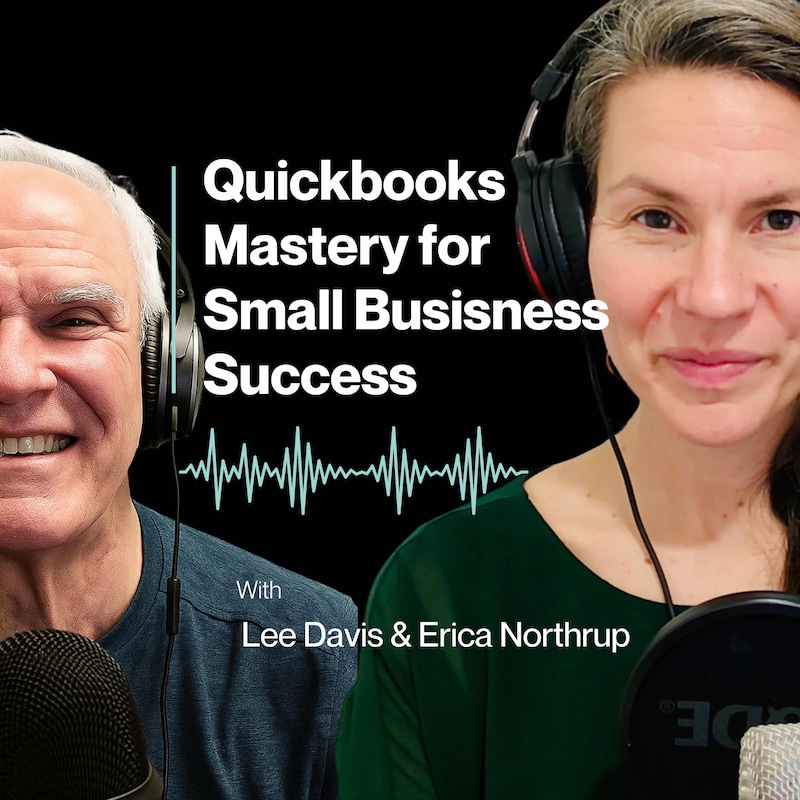
In this episode of QuickBooks Mastery for Small Business Success, father-daughter team Erica Northrup and Lee Davis talk about what happens when QuickBooks becomes more than a place to organize your books.
Once you start using QuickBooks Payments, invoice payment links, ACH payments, bank feeds, and billable time, QuickBooks is no longer just helping you track numbers. It is connected to real money movement inside your business.
That can be incredibly helpful, but it also means business owners need to understand what QuickBooks is actually doing before they click certain buttons.
The biggest lesson in this episode is the difference between Record Payment and Charge a New Payment. Lee shares a real client situation where a customer was accidentally charged twice because the business owner thought they were simply recording a payment that had already happened, but QuickBooks understood the action as a new payment request.
This episode is especially helpful for small business owners who send invoices through QuickBooks, accept ACH or credit card payments, use bank feeds, or want a cleaner workflow for tracking billable time.
Key Takeaways
- QuickBooks Payments allows customers to pay invoices electronically through a payment link.
- When QuickBooks is connected to payments, business owners need to understand the difference between recording activity and initiating money movement.
- Record Payment means the payment already happened.
- Charge a New Payment means QuickBooks is being asked to process a new payment.
- Choosing the wrong option can lead to duplicate charges, fees, frustrated customers, and extra cleanup.
- Bank feeds are powerful, but they work best after the QuickBooks file is properly set up and reconciled.
- Bank feed issues may be caused by browser problems, bank-side issues, QuickBooks-side issues, or open support cases.
- Time tracking inside QuickBooks can help service-based businesses capture billable work and create cleaner invoices.
Questions to Reflect On
- Do you know whether your QuickBooks payment workflow is simply recording payments or actually processing new payments?
- Are your invoices, customer balances, and payment settings set up clearly enough to avoid duplicate charges?
- Have you connected your bank feed before your QuickBooks file was properly set up?
- Are you reviewing bank feed transactions carefully, or are you relying too heavily on QuickBooks suggestions?
- If you bill for time, do you have a consistent process for tracking and invoicing billable hours?
Mentioned in This Episode
Free QuickBooks Clarity Scorecard
Download at: https://lee-davis-and-company.aweb.page/unlock-clarity-free-scorecard
Send Us Your Questions:
Lee Davis & Company:
leedavisandcompany.com
Timestamps
00:56 - What Happens When QuickBooks Starts Touching Real Money
02:10 - How QuickBooks Payments Help Businesses Get Paid Faster
12:48 - How Invoices and Payment Links Work Together
20:49 - Record Payment vs. Charge a New Payment
25:47 - The Duplicate ACH Payment Client Story
31:07 - Why Bank Feeds Should Not Be Set Up Too Early
35:01 - How to Troubleshoot QuickBooks Bank Feed Issues
38:34 - Using QuickBooks Time Tracking for Cleaner Invoices
42:13 - Final Reminder: Record Payment Is Bookkeeping, Charge a New Payment Is Payment Processing
Call to Action
If you enjoyed this episode, hit subscribe and stay connected with us at leedavisandcompany.com.
Download our free QuickBooks Clarity Scorecard to see whether your QuickBooks setup is giving you the financial insight you need.
Have a QuickBooks question? Send it to [email protected] — your question may be featured in a future episode.
Transcripts
Welcome to QuickBooks mastery for small Business Success.
Speaker A:I'm Erica Northrup.
Speaker B:And I'm Lee Davis.
Speaker A:I handle the tech and he handles the numbers.
Speaker A:And together as a father daughter team, we bring decades of experience helping small to medium sized businesses thrive.
Speaker B:We know that as a business owner, your time is best spent mastering your craft and growing your business, not getting lost in QuickBooks.
Speaker B:Managing finances can be confusing and you don't have hours to waste sorting through spreadsheets or fixing bookkeeping mistakes.
Speaker B:That's where we come in, helping you streamline QuickBooks so you can focus on building your business.
Speaker A:Each week we break it all down into simple, actionable steps so you can focus on growing your business, not fixing your books.
Speaker B:Let's embark on this journey together.
Speaker A:Welcome back to QuickBooks mastery for small Business Success.
Speaker A:I'm Erica Northrup, here with my papa, Lee Davis.
Speaker A:And this is episode 29, when QuickBooks starts touching real money, payments, invoices and bank Feeds.
Speaker A:Today we're talking about what happens when QuickBooks becomes more than just a place to organize your books.
Speaker A:Now we're talking about sending invoices, collecting payments, connecting bank feeds, tracking billable time and helping money move through the business.
Speaker A:And that can be incredibly helpful.
Speaker A:But it also means business owners need to understand what QuickBooks is actually doing before they click certain buttons.
Speaker A:Because Papa, this topic really came up from a real client situation where a customer was accidentally charged twice and a problem came down to one very important distinction.
Speaker A:The difference between recording a payment and charging a new payment.
Speaker A:So today we want to walk through QuickBooks payments, invoices, bank feeds and time tracking.
Speaker A:But especially how business owners can avoid making costly mistakes when QuickBooks is connected to real transactions.
Speaker A:So, Peppa, let's start with the basics.
Speaker A:When we say QuickBooks payments, what are we actually talking about?
Speaker B:We're talking about system that QuickBooks created so that small businesses entrepreneurs like us can be paid with a click of a button through your invoicing.
Speaker B:For several years.
Speaker B:I think that a lot of the transactional work that was done was done through perhaps a system where you'd have to have a client's credit card and you'd have to hold that credit card either be run by authorized.net or something on POS system.
Speaker B:But QuickBooks made it easy for clients to receive an invoice.
Speaker B:And if you sign up for QuickBooks payments, then they can pay with a click of a button.
Speaker B:And my clients actually love it.
Speaker A:That seems like it would be really helpful.
Speaker B:Our clients actually love it.
Speaker A:Yes, absolutely.
Speaker A:Okay, so instead of sending an invoice and waiting for a check.
Speaker A:This gives the customer a direct way to pay from the invoice itself.
Speaker B:That's right.
Speaker B:It's email.
Speaker B:So that when I do our company invoicing that the invoice has a great feature that you can email that invoice after you've prepared it and you can send a copy of it to two or three people if you want, and then they'll get the invoice with all the detail and a way to pay it.
Speaker A:Okay, that makes a lot of sense.
Speaker A:So what do we primarily use at Lee Davis and company?
Speaker B:We use a combination of payment automatic options.
Speaker B:To be honest, some of our clients really do love QuickBooks payments to pay online.
Speaker B:Okay.
Speaker B:And that's a very rapid payment process.
Speaker B:In other words, if I send that invoice out on Monday, it could be very likely.
Speaker B:I have some great.
Speaker B:We have some great clients that pay right away and I can get paid on Tuesday or on Wednesday.
Speaker B:And then we have some clients who pay us through QuickBooks, but they don't use QuickBooks payments.
Speaker B:They use the contractor payments.
Speaker B:So they'll enter our invoicing into the contractor payments and they'll pay through that rate and through that.
Speaker B:There's no fee to us, so we don't get a fee charge.
Speaker B:The client pays a subscription for contractor payments.
Speaker B:And frankly have some clients that really like the contractor payments.
Speaker B:It does allow for their.
Speaker B:Their vendors to get paid the next day, and it immediately integrates with QuickBooks and there's a small fee for that each month.
Speaker B:So for my clients who like that payment method, I can set it up for them and it works slick.
Speaker A:Yeah, that seems like it would be very handy.
Speaker B:And the other.
Speaker B:We have some clients who want me to mail the invoice.
Speaker B:Okay.
Speaker A:Still old school.
Speaker B:Old school.
Speaker B:And they drop off a check.
Speaker B:Yeah, they're great that way.
Speaker B:They drop off a check and they want to connect with me.
Speaker B:Different clients like different ways to connect.
Speaker B:And we're so blessed to have clients who really are awesome to work with.
Speaker B:And so the connection of still writing a check works.
Speaker B:And then lastly, a client could decide they wish to pay via a credit card.
Speaker B:And while we don't offer that necessarily as a QuickBooks payment option, there are some methods that, particularly for our clients who receive QuickBooks subscriptions through us, which we have a significant number.
Speaker C:Yep.
Speaker B:And that they like reoccurring payments.
Speaker B:So you can set up a reoccurring payment for a QuickBooks subscription.
Speaker B:And part of it sits in the way you Invoice that in the invoicing model, you.
Speaker B:You can make reoccurring invoices for quarterly invoices.
Speaker B:So I have several clients who like that method.
Speaker B:And again, while we don't offer, we only take ach, we only take bank transactional work because, frankly, that's the lowest fee.
Speaker B:And that's what I recommend for most of my small businesses.
Speaker B:Although many of, like our landscaping clients who take QuickBooks payments, they offer the full array of credit cards and ach.
Speaker B:But anyway, then I have some of my clients who only accept cash.
Speaker B:Only accept checks.
Speaker B:Yeah, they.
Speaker B:That's the way they do business.
Speaker C:Yeah, absolutely.
Speaker A:So going back to QuickBooks Payments for a minute, when a business owner turns on QuickBooks payments, does that mean QuickBooks is now connected to actual money movement, not just record keeping?
Speaker B:Yes.
Speaker B:That means that you have to go through a extensive setup process for them to verify your bank account, and the owner has to submit an affidavit.
Speaker B:And it's quite an extensive process.
Speaker B:So you have to be prepared to provide your banking documentation, proof of a deposit.
Speaker B:And so it is a process that I think is important.
Speaker B:And while I can't necessarily always help a client with that, because it depends, if they're clients of ours and we have access to their bank account, I can do most of that transactional work for them, but they have to sign.
Speaker A:That makes sense.
Speaker B:And because they take responsibility, because it does mean that money transactionally, as you have asked, will flow through the QuickBooks system.
Speaker C:Yeah, absolutely.
Speaker A:Now, you mentioned that you do prefer ach.
Speaker A:That's what we take at Lee Davis and Company.
Speaker A:I know you have a very strong view on stock storing credit card information.
Speaker A:Can you explain why that matters from a security standpoint, Papa?
Speaker B:I can tell you in Massachusetts, for example, when I managed a prestigious medical group there that you were not allowed to take and store any credit card information.
Speaker B:And if you were caught doing that and they came in, it was a $2,500 fine for each card.
Speaker B:Oh, wow.
Speaker A:Each card.
Speaker A:That's crazy.
Speaker B:That you stored.
Speaker B:And in today's marketplace, there is so much fraud.
Speaker C:Yeah.
Speaker B:And a small company like Lee Davis and Company, we don't have the security.
Speaker B:And I don't like some of these websites that even store credit card information at all.
Speaker B:I think that if we had the ability to have a vault, I would even question whether I would want that.
Speaker B:Yeah, I think people should have control of their own credit card.
Speaker B:We should not.
Speaker B:It opens us up to liability, and I don't want to be on anybody's front page news about where I have to notify them that there's been a breach with their credit card.
Speaker A:Yeah.
Speaker A:Never good.
Speaker A:Yeah.
Speaker A:It's important to treat because there is a lot of fraud out there.
Speaker A:So it's important to treat this information in the capacity that it needs to be treated because you can really cause a lot of harm and damage to somebody.
Speaker A:If someone gets access to somebody's credit card or information and then they're running up thousands and thousands of dollars of fraudulent charges that can just really ruin somebody.
Speaker C:Yeah, absolutely.
Speaker A:It's something not to be taken lightly for sure.
Speaker B:No.
Speaker A:So I know you talked, you touched on a little bit on how QuickBooks payments is convenient, but also something business owners need to understand before they start using it.
Speaker A:So would you say that just considering talking about security protocols, is that something that when you were talking about that, that what you were referring to, that we need to be cautious there?
Speaker B:Of course.
Speaker B:I think, Eric, if we could back up for just a minute to answer your question is I think that when I talk with customers about QuickBooks Payments or any payment mechanisms for that matter, I think that the entrepreneur needs to understand what his customer wants.
Speaker B:And I think that while that sounds very simplistic, clients don't stop and think in this changing business model, if it is changing and it is rapidly with AI and different needs for cash, because companies have different needs for cash.
Speaker B:There are some companies that tend to be operate more on the fringe and they didn't start out very well capitalized.
Speaker B:So QuickBooks can be really a great tool for them to help their cash flow.
Speaker B:Yeah, absolutely.
Speaker B:But they have to communicate effectively with their customers to do that.
Speaker B:Just because you offer QuickBooks payments doesn't mean that your customers are going to take it.
Speaker B:So you have to try and educate them a bit as you roll this out.
Speaker B:Like in, like in any business planning, require some education to say, maybe you send out a notice in QuickBooks to say we're now offering QuickBooks payments.
Speaker C:Yep.
Speaker B:And just prepare your customers and I think if you have a, oh a well company that you do a lot of commercial work, they may be interested in QuickBooks payments but then they may be old style where they're happy to get that snail mail invoice or maybe they'll get an email invoice but they're going to write a check.
Speaker C:Yeah, absolutely.
Speaker B:So you just have to understand your customer.
Speaker A:Yeah, I think that's a great call out because really it comes down to that.
Speaker A:It comes down to really understanding who your customer avatar is who is your ideal client?
Speaker A:Who is your ica?
Speaker A:Who is the person that is going to be on the other side of placing that payment and paying that payment?
Speaker A:And what does it look like for them?
Speaker A:Is this something that you should even offer for them or would this be beneficial for them?
Speaker A:So I think that is a really, really great call out.
Speaker C:Absolutely.
Speaker B:I think for Erica, for high ticket sales, you don't want customers using QuickBooks payments.
Speaker A:No.
Speaker B:Okay.
Speaker B:You want them to send you a check because if you have an invoice for $25,000, you don't want to pay a $250 fee.
Speaker A:No big.
Speaker B:Okay.
Speaker B:You don't want that.
Speaker B:You want that customer to send you that check.
Speaker B:Now.
Speaker B:But if you have, on the other hand, a, like our landscaping company sends out invoices for maybe $400.
Speaker B:Yes.
Speaker B:Perfect client for QuickBooks payments.
Speaker C:Absolutely.
Speaker B:So I think, again, I can't say it enough, but understand your customer and then understand your cash needs, too.
Speaker B:You may not need to offer QuickBooks payments.
Speaker B:You may deliver great service and, and you may have a commercial client base that you have contracts on.
Speaker B:So you know what, you just need to look at what works for you and what might be beneficial for your client in the whole payment process.
Speaker A:So once QuickBooks Payments is set up, how does that connect to the invoicing process?
Speaker A:Walk us through what happens when a business owner sends an invoice.
Speaker B:Okay.
Speaker B:So understanding once you've gone through your sales process and you're ready to create the invoice, you need to make sure that the invoice is accurate, that you've collected all the right data.
Speaker B:And QuickBooks has a way for in their product summaries for you to look at and click the button to bring over, if you will, your charges into an invoice.
Speaker B:So that could be a whole separate podcast in and of itself.
Speaker B:But let's just talk about once you've created that invoice, then you're going to go in and hit the invoice button.
Speaker B:Choose the customer.
Speaker B:Because in some cases there's different ways within QuickBooks to create an invoice.
Speaker B:But I'm just going to walk you through what I would consider the easiest way.
Speaker B:Choose the customer.
Speaker B:Add the product or services on the line item.
Speaker B:You kind of eyeball them, you kind of look down your invoice to make sure that you've captured all of their charges.
Speaker B:Our clients have different charges based on what products they purchase from us.
Speaker B:So some may have subscriptions, some may have contract services, some may have consulting Work.
Speaker B:And some may have various products that they purchase that we offer.
Speaker B:And so make sure that the invoice is complete and that if you need to add quantity or note, you can certainly do that.
Speaker B:And then if you that point, you are set to put the invoice date in and a due date.
Speaker B:And I always recommend that they're due upon receipt.
Speaker B:You can set your settings to say, I want my invoices to come out always to be due on receipt.
Speaker B:And then you review and send it.
Speaker B:And before you do that, you need to check to see that the email addresses are correct, because they're going to.
Speaker B:Once you hit send, another screen comes up and it won't allow you to add a email address.
Speaker B:It would in the first screen.
Speaker B:Okay.
Speaker B:But in the second screen, you're now ready to send them.
Speaker B:And you can have a note that says, thank you for your business.
Speaker B:Please find and close your invoice.
Speaker B:We would appreciate prompt payment.
Speaker B:And so that customer receives that invoice by email.
Speaker B:And some customers will have accounts payable at such and such that they want their to go to.
Speaker B:And the invoice includes a view and pay link and messaging.
Speaker B:And invoice layout can be customized.
Speaker B:It's a very good process.
Speaker B:And if you send out, we send out 20, maybe 20 invoices a month, maybe 25.
Speaker B:So, you know, that's something that.
Speaker B:Making it easy and having the process that you do, I think is critical.
Speaker C:Okay.
Speaker A:So following up on this invoice process.
Speaker A:So the invoice and the payment option can be connected in one workflow if I hear this correctly.
Speaker B:That's right.
Speaker B:Yep.
Speaker A:What is the difference between just a regular invoice and one that's connected to QuickBooks payments?
Speaker A:Or is there a difference?
Speaker A:Because I feel like in the past I worked with a coach once a couple of times, and she invoiced through QuickBooks and I was able to pay that invoice via the invoice that she sent me.
Speaker A:Was that QuickBooks payments or was that.
Speaker B:That's payments.
Speaker C:Okay.
Speaker B:If there's not a payment option on that invoice, then the Customer doesn't offer QuickBooks payments.
Speaker B:They could very well offer QuickBooks for invoicing, but they don't offer QuickBooks payments.
Speaker A:But there's no way to pay that invoice if it doesn't include QuickBooks payments.
Speaker B:That's correct.
Speaker B:A payment option.
Speaker B:Yes.
Speaker A:Gotcha.
Speaker A:So if someone doesn't have QuickBooks payments turned on and utilizing that function, then you get an invoice and then how do you Pay it.
Speaker B:Snail mail.
Speaker A:Snail mail just via.
Speaker B:Or you may pay on their website.
Speaker C:Yeah.
Speaker B:Or they may offer some other payment options that you can avail yourself.
Speaker B:But again, you'd have to find out from your customer or your customers to find out from you what particular payment options you offer if you don't want snail mail.
Speaker A:Because I know we've.
Speaker A:Even in the work that we've done on the renovations, a lot of our contractors have used QuickBooks and we just pay it right there.
Speaker A:So that has to be QuickBooks payments.
Speaker C:Cause that.
Speaker A:That is very slick.
Speaker A:That is very slick.
Speaker A:That's very easy to utilize.
Speaker B:It's convenient.
Speaker A:Yeah, it is convenient.
Speaker B:People get it and they pay it.
Speaker B:But sometimes people get a bill in the mail and where to go.
Speaker B:It goes over in the pile when they're going to pay their bills.
Speaker C:Yeah, absolutely.
Speaker B:Okay.
Speaker B:That's just the way we work.
Speaker B:And the mail may not get opened.
Speaker C:Yeah.
Speaker A:So I guess that sort of leads into my next question.
Speaker A:When the customer gets that email, what are they actually clicking on?
Speaker A:So they're clicking on the payment option inside of the email that they get from.
Speaker B:That's correct.
Speaker B:So they'll open up the invoice.
Speaker B:Invoice.
Speaker B:And they'll look at it and see the amount.
Speaker B:And then they have an option to click right there and to maintain it.
Speaker A:Yeah, it is on the other side.
Speaker A:And it's also easy to pay a portion that you can pay a portion of.
Speaker A:Of your bill or if you're going to.
Speaker A:Our bills were quite large for a renovation, so we took some money from here and some money from there.
Speaker A:So we paid with one option and then PA off the rest with another option.
Speaker B:Sure.
Speaker A:So there's those kind of things, it seems, that you can do Inside with.
Speaker A:With QuickBooks Payments.
Speaker B:Yes.
Speaker A:Which is easy for your customer.
Speaker C:Yeah.
Speaker A:Okay.
Speaker A:Is this one of the reasons clients like QuickBooks payments?
Speaker A:I know from my perspective, it is definitely one of the reasons I loved this feature because I didn't have to write a check or mail a check and send a check.
Speaker A:Do you think this is one of the major features of they like the convenience of it?
Speaker C:Yeah, absolutely.
Speaker A:So for a business owner listening, what should they have set up before they start sending these kind of invoices with the payment links for Quick Payments, Is there anything they have to specifically have set up?
Speaker B:Erica, that's a great question.
Speaker B:It leads into an example I have for a contractor that we chose, and that was a plumber.
Speaker C:Yep.
Speaker B:And he converted over to QuickBooks, and his billing, frankly, was a mess.
Speaker B:He didn't have good checks and balances to make sure that he could send out his invoices and capture all that was needed, all the services he did.
Speaker B:So our invoice never got sent out.
Speaker A:Oh, no.
Speaker B:And I had to call him and say, we'd like to use you again.
Speaker B:We really liked your service, but I'm concerned you haven't invoiced us the last time you sent your son out.
Speaker A:You're an honest customer.
Speaker A:Not everyone has that.
Speaker A:No level of honesty.
Speaker B:And he thanked me because he would never have found out.
Speaker B:And from my perspective, when you use a contractor and you value them.
Speaker C:Yeah.
Speaker B:And if they did a great job for you, you want them to come back.
Speaker C:Yeah, absolutely.
Speaker B:When you need them.
Speaker B:So making sure that you pay your contractors quickly.
Speaker B:And this guy, really, he's a Christian that.
Speaker B:And he thanked me profusely and said that he had trouble and he.
Speaker B:My note buried in some place on his desk.
Speaker C:Yeah.
Speaker B:And so I think the answer is make sure you've got your billing systems set up well before you start this process.
Speaker C:Yeah.
Speaker A:I think it's important in all aspects of business is to have systems in place.
Speaker A:And this is something that we are really iterating for our listeners.
Speaker A:It's important in all aspects of business, but especially when you think about collecting payments to have that system set up.
Speaker A:So it seems like the workflow here would be create the invoice, send the invoice, then the customer clicks, view and pay, and then the payment comes through.
Speaker A:QuickBooks payments.
Speaker A:Do you think that kind of sums up the basis of how this works?
Speaker B:I summarized it.
Speaker A:Yeah.
Speaker A:Excellent.
Speaker A:Most awesome.
Speaker A:Okay, so this is the part I think we really need to slow down a bit because this is where the real world problem happened.
Speaker A:This is a big difference between recording a payment and charging a new payment.
Speaker A:But I can see how those could sound similar to a business owner because they certainly sound similar to me.
Speaker A:So, Papa, can you explain the difference between record payment and charge A new.
Speaker B:Payment receive a payment is going to.
Speaker B:There are two boxes.
Speaker B:Okay.
Speaker B:And normally you automatically.
Speaker B:It checks the first box to record the payment.
Speaker B:Okay.
Speaker B:And that's going to automatically populate for you to put the check number in.
Speaker B:So these are.
Speaker B:These are all check payments or cash or.
Speaker B:But they are not credit related.
Speaker B:So when you choose to hit charge a payment, you're going to be using QuickBooks payments.
Speaker B:Oh.
Speaker B:And you're going to need to have that client's ACH information, their bank account and their routing number.
Speaker B:If you offer ACH or if you Take credit cards.
Speaker B:You have to have their credit card information.
Speaker B:So that is the key difference.
Speaker B:And normally clients, it will default to record a payment, not charge a payment.
Speaker B:That understanding the difference between recording and charging is significant.
Speaker C:Yeah, absolutely.
Speaker A:So record a payment.
Speaker A:This means the payment already happened.
Speaker A:And then charge a new payment.
Speaker A:This means QuickBooks is to going.
Speaker A:Going to process a new payment.
Speaker B:That's correct.
Speaker B:So the idea is if a customer sends you a check.
Speaker B:Yep.
Speaker B:You have a check in your hand.
Speaker C:Yep.
Speaker B:Okay.
Speaker B:And the other is to charge a payment is a future transaction you're now generating.
Speaker C:Yes, absolutely.
Speaker A:So the record payment is someone sent you money based off of an invoice that you probably already sent them.
Speaker B:That's correct.
Speaker A:And then charge a new payment is when we're talking about QuickBooks payment.
Speaker B:That's correct.
Speaker A:Is where they're going to pay the payment based off of the.
Speaker B:Yeah, they're going to pay the charge.
Speaker A:They're going.
Speaker A:They're going to pay the charge.
Speaker B:Yeah, they're going to pay the charge using some form of credit or debit card.
Speaker A:That makes sense.
Speaker A:So would it be fair to say that record payment is bookkeeping, but charge a new payment is payment processing?
Speaker B:Yeah, that would be fair to say that.
Speaker B:That might make it a little clearer.
Speaker B:And in most cases, 95% of the time you're going to be recording that payment.
Speaker B:Okay.
Speaker B:Because it's going to go transactionally through your system that you've already.
Speaker B:It's going to hit the correct invoice and it's going to match up with what they owe.
Speaker B:All right.
Speaker B:So that is the record payment and it will default.
Speaker B:But if for some reason you now decide you think that payment processing, you want to use an ach, and you may have their ACH information or you may have their credit card information, but most of the times the client will choose that option to pay based on the invoice they receive.
Speaker B:You don't necessarily have their information, nor should you.
Speaker B:But in an instance where there's confusion that you are mixing transactional work, then it can very well create a colossal mistake.
Speaker A:Lots of problems.
Speaker A:So if the money has already come in through the bank, which option should the business owner use?
Speaker B:If the money has come through the bank, then they're going to receive payment.
Speaker B:In other words, they're going to.
Speaker B:If the money comes through the bank in an ach, transactional work that you maybe.
Speaker B:Or even a.
Speaker B:If you put through some work with a customer through their bank, then you're going to want to receive payment.
Speaker B:If they send you A check.
Speaker B:You're going to want to receive payment.
Speaker B:If your customer provides for you their ACH information, bank account number, and the routing number, then you're going to want to charge a payment that makes sense and it makes it very clean.
Speaker A:Okay, so if they choose charge a new payment after already processing the payment somewhere else, what can happen?
Speaker B:Papa, they're paid twice.
Speaker A:They're paid twice.
Speaker A:And the customer paid twice.
Speaker B:That's correct.
Speaker A:They lost double the money.
Speaker B:Yes.
Speaker B:They are paid twice and the customer is charged twice.
Speaker B:And sometimes the customer didn't have the funds to be charged twice.
Speaker C:Yeah.
Speaker B:And there's all kinds of reverberation that comes through return checks and just mistakes that can cause a lot of consternation.
Speaker A:Absolutely.
Speaker A:Okay, so this is where our real world example comes in.
Speaker A:Right.
Speaker A:This is where the client situation came in.
Speaker A:Pepa.
Speaker A:So can you walk us through what happened?
Speaker B:Our client, their customer wanted to be paid, wanted to work through a bank and use their ACH information, and they work through the bank to pay the client, and they did that.
Speaker B:So the customer worked with their bank and paid it, paid our client.
Speaker B:And all of that all seemed great, except when our client decided he wanted to post, he wanted to enter the payment in QuickBooks.
Speaker B:And so he chose because he happened to have the ACH information, he thought he was going to enter that payment.
Speaker B:Oh, okay.
Speaker B:He was going to not record the payment.
Speaker B:He was going to charge the payment.
Speaker A:Right.
Speaker B:And so it was really just massive confusion.
Speaker B:Really just a simple mistake in which box you checked.
Speaker B:And so QuickBooks did what they always do.
Speaker B:They process payments and they took a fee and he had to pay a return fee.
Speaker B:So all of a sudden, the fees start adding up for all of these transactions.
Speaker B:And.
Speaker B:And of course, the customer, they blamed QuickBooks.
Speaker A:Right.
Speaker C:Yeah.
Speaker B:But again, it was a very real example for me to see how this works.
Speaker C:Yeah.
Speaker B:And to be able to fix this problem for our client.
Speaker B:Because there's a lot of transactional work behind the scenes once this happens.
Speaker B:And so we were able to handhold our client and take care of him.
Speaker C:Yeah.
Speaker A:I'm sure from the client's perspective, he thought he was just documenting had already happened.
Speaker B:Yes.
Speaker C:Yeah, absolutely.
Speaker A:But I'm sure from Book's perspective, he was telling QuickBooks to initiate another payment.
Speaker B:Of course.
Speaker C:Yeah.
Speaker A:That is such an important distinction because the intention was one thing, but the software action was something else.
Speaker B:Exactly.
Speaker C:Yeah.
Speaker A:So what would you tell a business owner to ask themselves before clicking one of those options?
Speaker B:Papa, I told my client, call me.
Speaker B:You are going to do something that you've never done before.
Speaker B:You're a client of ours.
Speaker B:I will walk you through that.
Speaker B:But, you know, clients will sometimes think they could do it right.
Speaker B:I know how to post payments.
Speaker B:I'll just click this box and I got.
Speaker B:So you can see how it happens.
Speaker B:But I oftentimes caution clients, especially with large amounts of money, something new to you.
Speaker B:That's why you have us.
Speaker B:And one call could have saved him a lot of aggravation.
Speaker A:Yeah.
Speaker A:Time, money, stress, all the things.
Speaker C:Yeah, yeah, absolutely.
Speaker A:That is a such a good reminder, and I'm sure that is really good, solid advice.
Speaker A:So this is exactly why we talk so much about setup and training.
Speaker A:Because most business owners are not trying to make a mess.
Speaker A:They are just trying to do the right thing.
Speaker A:But QuickBooks gives you options that can look similar while doing very different things.
Speaker A:So, Papa, when you see something like this happen, is it usually because the business owner is careless, or is it usually because they were never really trained on what QuickBooks is doing behind the scenes?
Speaker B:They're not careless.
Speaker B:They've just never been trained.
Speaker C:Yeah.
Speaker B:And it doesn't come up that often.
Speaker B:Okay.
Speaker C:Yeah.
Speaker B:And frankly, they're not focused on QuickBooks.
Speaker B:They're focused on delivering their service and getting paid.
Speaker C:Yeah, absolutely.
Speaker C:Absolutely.
Speaker A:So would you say one of the challenges with QuickBooks is, is that two options can look similar, but the result behind the scenes can be very different?
Speaker B:Of course.
Speaker B:Yes.
Speaker C:Yeah, absolutely.
Speaker A:So how much easier is it to prevent this kind of issue with setup and training versus trying to clean it up after the fact?
Speaker B:I think one of the things we're developing through this podcast, Erica, is really to help people and get training.
Speaker B:Whether they just use our podcast as a training tool or they have some more advanced needs and they want to contact us and have a business relationship, training pays.
Speaker C:Yes, absolutely.
Speaker A:Because I think this is where working with us, working with Lee Davis and company can be so helpful.
Speaker A:It's not just about cleaning up a file after something goes wrong.
Speaker A:It's about helping business owners understand the workflow so they know what they're clicking, why they're clicking it, and what QuickBooks is going to do next.
Speaker A:And.
Speaker A:But this is exactly the kind of situation where having someone experience in your corner can save a lot of confusion, time, and frustration.
Speaker A:So if you are looking for somebody, if you're looking for some help, I just want you to consider just reaching out to us.
Speaker A:Send us an email@supporteadavis and company.com and we'll have a conversation and see if we would be a great fit for you guys.
Speaker A:Okay, so back to what we were talking about.
Speaker A:Now, once we talk about payments, invoices, the next piece business owners usually think about is the bank feed, because they want QuickBooks to connect to the bank and pull transactions in automatically.
Speaker A:But you have a pretty specific philosophy about when that should happen, don't you, Papa?
Speaker B:So.
Speaker B:Oh, I do.
Speaker B:Anybody who's taken our training course, I've got a huge X over the bank feed.
Speaker A:Okay.
Speaker A:So what is the bank feed and when do you recommend setting it up?
Speaker B:Papa?
Speaker B:I Recommend Some cases.
Speaker B:3 To 6 months.
Speaker C:Yeah.
Speaker B:After you have added the software, after you've had experience in getting the work set up correctly in the chart of accounts.
Speaker B:And you've gone through a couple of business cycles and you've reconciled your accounts.
Speaker A:Yep.
Speaker B:And you really understand transactionally what's happening.
Speaker B:And you go ahead and bring in your bank feedback.
Speaker B:With a little bit of training on the bank fee will pay off.
Speaker B:Amazing.
Speaker B:It'll be a great tool and you'll understand how it fits together with your bank and your accounts.
Speaker B:Your bank account in QuickBooks in the chart of accounts and how it feeds through, because it is a bank feed.
Speaker B:Okay.
Speaker B:And knowing that matching is a great tool as opposed to adding in the bank feed.
Speaker B:So just appreciating the fact the bank feed is powerful and can save you some time.
Speaker C:Yeah.
Speaker B:It can also create for you a incredible headache and cost you a lot of work.
Speaker B:So it's a tool that, if used correctly, it can really enhance your business.
Speaker A:So let's dig into that just a little bit, Papa.
Speaker A:So why would it be a problem to connect the bank feed before the QuickBooks file is properly set up?
Speaker B:Because you have.
Speaker B:And as humans, we look for a shortcut.
Speaker A:Oh, yeah, of course.
Speaker B:We think that we can get it done quicker.
Speaker B:Oh, we just push this button.
Speaker B:This one.
Speaker B:Push all the buttons.
Speaker A:Yeah.
Speaker B:Add.
Speaker B:You didn't pay attention to what you're adding.
Speaker B:All right.
Speaker B:Because you are really efficient.
Speaker B:And so if it came through the bank, you're just going to add it.
Speaker B:And you didn't pay attention to the account that QuickBooks is telling you to use.
Speaker B:And QuickBooks doesn't know.
Speaker B:All right.
Speaker B:They have some algorithms, all right.
Speaker B:Just based on what they see comes through the bank.
Speaker B:And those algorithms should go away.
Speaker B:All right.
Speaker B:There should not be an algorithm that gives you an account.
Speaker B:You should decide on the account that you're going to charge when you start entering work.
Speaker B:So I tell people, understand first how it works.
Speaker C:Yeah.
Speaker B:Then go through and Figure out your business processes.
Speaker C:Yeah, absolutely.
Speaker C:Absolutely.
Speaker A:Yeah, that's so good.
Speaker A:Okay, so what kinds of accounts can be connected through the bank feed?
Speaker A:Papa?
Speaker B:Certainly what's most common is your checking account.
Speaker B:But you can also have loan accounts that are connected to the bank feed.
Speaker B:Particular loan that will bring in and that you can feed directly into QuickBooks.
Speaker B:And you also have a credit card that can be added.
Speaker B:And QuickBooks has.
Speaker B:If as long as your banking relationship or your credit card company has a relationship with with QuickBooks, then you're able to download that information.
Speaker B:If not, you have to go out to the bank website and upload the information.
Speaker B:So when choosing a bank, you want to choose one that has a relationship with QuickBooks.
Speaker C:Yeah, absolutely.
Speaker A:Everything's going to integrate better if you.
Speaker B:Yeah, or a credit card company.
Speaker B:All the major lending institutions have relationship with QuickBooks.
Speaker B:Some however will charge a fee a bank.
Speaker B:If you chose a bank and they have a QuickBooks option, but they say yes, but we charge a fee every month to our customers for that service.
Speaker B:You have to decide whether that fee is appropriate and you want to use that bank or not.
Speaker B:There's enough other banks that may be a no fee based.
Speaker C:Yeah.
Speaker B:Depending on your banking relationship and how convenient, how much you like that bank.
Speaker B:There may be a decision based on.
Speaker B:It may not be based on fees that you're concerned with, but then it may.
Speaker C:Okay, okay, love that.
Speaker A:So let's talk about what happens when the bank feed stops working because that can be really frustrating I am sure for business owners.
Speaker A:So if a business owner notices that their bank feed is not updating, what are some of the first steps that they can try?
Speaker B:You probably need to first look at your browser.
Speaker B:We use Safari, that's our choice.
Speaker A:We are a Mac platform and that is what we prefer to use on the Apple ecosystem.
Speaker C:Yeah, yep, absolutely.
Speaker C:We do love it.
Speaker B:But unfortunately Quicks prefers Chrome, doesn't prefer Safari.
Speaker B:Yes.
Speaker B:And.
Speaker B:Or there could be other.
Speaker B:Another web browser that you could use.
Speaker B:Right.
Speaker B:So that's the first thing you want to deal with is the browser.
Speaker B:And while we're talking about.
Speaker B:I think that you can just understand that there is within QuickBooks the transactional work for the bank feed.
Speaker B:You can click an update button and you can see if that will bring over the transactions.
Speaker B:That's the first step.
Speaker B:Usually the transactions will come over automatically.
Speaker C:Yep.
Speaker B:But sometimes there's a block and for whatever reason.
Speaker B:But if you try and click the update button, then it may solve the problem.
Speaker B:If it doesn't go in and try a different Browser.
Speaker B:And then As I said, QuickBooks often works best in Chrome.
Speaker B:Yep, yep.
Speaker B:And so if you wind up having.
Speaker B:And you've tried all that, then quite frankly you should contact QuickBooks support.
Speaker A:Right.
Speaker A:So this would be the moment to reach out to QuickBooks.
Speaker B:That's right.
Speaker B:Because they're going to ask you, have you done all these things, so you may as well do them and then contact QuickBooks support.
Speaker B:And.
Speaker B:And because they may have a case open.
Speaker A:Yeah.
Speaker B:With that particular bank like TD bank or there's a PayPal issue going on right now with some of their integration with QuickBooks.
Speaker B:And quite frankly, your bank may be putting a block on because you might need to sign an agreement and there's some very specific language that your bank may have in the way that has to get addressed.
Speaker B:And if you have more than one account, you have to pay attention to how the operations work through.
Speaker B:You're going to get the screens.
Speaker B:So sometimes QuickBooks can help you or we can help you walk through that.
Speaker B:And, and because it's not always clear.
Speaker C:Absolutely.
Speaker B:Where, if you have multiple talents, one's coming over and one isn't, why that's the case.
Speaker B:And yeah.
Speaker B:So QuickBooks support can really add you as a user to the open case if they're having a problem with your bank or credit card company and they'll alert you when that case is resolved.
Speaker A:Yeah, I think it's a good reminder because sometimes I think users of QuickBooks will think, am I doing something wrong?
Speaker A:I must be doing something wrong.
Speaker A:It's not always on your end.
Speaker A:Sometimes it is on QuickBooks end or sometimes it's on the bank's end.
Speaker A:So understanding that, and I worked for Apple for years and when there is ongoing issues do pop up, and trust me, there are engineers that are working on those issues to get them resolved as quick as they can.
Speaker A:But sometimes they just take time.
Speaker A:And so sometimes a good reminder to remind ourselves that yes, technology moves fast, but sometimes resolving issues does not move fast, but eventually it will get resolved.
Speaker B:Yeah.
Speaker B:I think one of the things you have to keep in mind is that QuickBooks is a third party.
Speaker C:Yeah, absolutely.
Speaker B:You're the customer, you have a bank.
Speaker B:QuickBooks is in the middle.
Speaker B:Okay.
Speaker B:They're just a third party.
Speaker A:It's a good reminder.
Speaker A:Okay, so the last workflow that we want to touch on is time tracking, because this is another way QuickBooks can connect the work you do to the invoice you eventually send.
Speaker A:So how do you use time entries inside QuickBooks to make invoicing easier?
Speaker B:Papa Oh, I love it.
Speaker B:Because I don't use QuickBooks time in attendance.
Speaker C:Yeah.
Speaker B:Because I don't use their payroll.
Speaker C:Yeah.
Speaker B:I absolutely love their time tracking where you can enter your time in through their software.
Speaker B:I can go in and enter my time.
Speaker B:I can choose the particular person who delivered the time, usually me, sometimes you and I can choose the client and choose the service we have various services we charge for.
Speaker B:And I can add the number of hours, I can add a note, and I can mark the time and is billable.
Speaker C:Yep.
Speaker B:And then I can make a note in the section for the particular date.
Speaker B:While I may have a date in the time in the notes, I like to make sure my client has the date that I provided that Service.
Speaker B:And then QuickBooks will keep track of your unbilled time.
Speaker B:So you can know that as long as you have put your time in.
Speaker B:And I'm a daily guy, at the end of every day, I like to update my time.
Speaker C:Yeah.
Speaker B:And I want to make sure that I've been fair to my clients and fair to me that I don't want to have to do it at the end of the month or at the end of the week.
Speaker B:I simply want to.
Speaker B:At the end of the day, I put all my time in.
Speaker B:And.
Speaker B:And then you can add.
Speaker B:At the end of the month or the end of the week or whenever you do your invoicing, you can add some entries to that invoice if you need to.
Speaker C:Yeah, absolutely.
Speaker C:So good.
Speaker A:So instead of trying to remember everything at the end of the month, you were tracking the time as the work happens.
Speaker A:Is that about sum up?
Speaker B:Yeah.
Speaker A:How the future works.
Speaker C:Yeah.
Speaker A:That is so good.
Speaker A:Does this help prevent Miss Billable Time Papa?
Speaker B:Oh, of course, yeah.
Speaker B:Yes, it's very fair.
Speaker B:And we've done this for years, Eric.
Speaker B:We've been in business for, I think we're starting, I don't know, our 11th or 12th year.
Speaker B:I always lose track.
Speaker C:Yeah.
Speaker B:Invoicing is something that you need to be able to do effectively.
Speaker B:I don't care what your business is.
Speaker C:Yeah.
Speaker B:Do it effectively.
Speaker B:If you are the landscape company, you might want to invoice weekly.
Speaker C:Yeah.
Speaker C:Yep.
Speaker B:And you may want to have a app that helps you collect your charges.
Speaker B:And there could be.
Speaker B:As long as you have good processes to.
Speaker B:To track that app and you have some checks and balances within QuickBooks, it could be time saving for you.
Speaker C:Yeah, absolutely.
Speaker A:So when you go to create the invoice, Papa, QuickBooks can actually.
Speaker A:Those unbilled time entries.
Speaker A:Correct?
Speaker B:That's correct.
Speaker B:It has a Great suggestion to say click here.
Speaker C:Yeah.
Speaker B:You can click all your services that maybe that you put out there to invoice.
Speaker A:So I'm sure for service based businesses, would you say this is one of the cleaner ways to connect daily work to the client billing?
Speaker B:Yes, because if you have some reoccurring charges you do weekly for clients, then you don't have to remember.
Speaker B:As long as you've got your system set up, you can set up reoccurring charges so that you know that it's.
Speaker B:It just allows QuickBooks to enter those in summary for you on the invoice.
Speaker C:Yeah, absolutely.
Speaker A:That was so good.
Speaker A:So today we talked about what happens when QuickBooks starts touching real money.
Speaker A:We talked about QuickBooks payments, how invoices can include a payment link, how ACH payments can flow through QuickBooks, and why the difference between record a payment and charge a new payment matters so much.
Speaker A:And I think that is the phase I want people to remember.
Speaker A:Record payment is bookkeeping.
Speaker A:Charge a new payment is payment processing.
Speaker A:So if the money already came in, you are recording it.
Speaker A:If you are asking QuickBooks to collect the money, you are charging a new payment.
Speaker A:And understanding that difference can help prevent duplicate charges, fees, frustrated customers, and a lot of time and cleanup.
Speaker A:You know, we also touched on the bank feeds and why setup matters before you connect everything, how to troubleshoot connection issues and how billable time can flow into invoices.
Speaker A:Papa, thank you so much for walking us through this.
Speaker A:I think this is one of those episodes that sounds technical at first, but it really matters because these are the places where QuickBooks connects directly to a business owner's cash flow.
Speaker A:And they matter.
Speaker A:That was so good.
Speaker A:Do you have any final words on this episode that we just laid down?
Speaker B:Erica, I think this episode is really helpful and I think you've brought it full circle.
Speaker C:Yeah.
Speaker B:That there are some features within QuickBooks that can be helpful, but you have to harness them correctly.
Speaker C:Yeah.
Speaker B:If you use them in a way that's efficient and if you understand them, they can be of great value.
Speaker C:Yeah, absolutely.
Speaker A:That was so good.
Speaker A:Papa, thank you so much for always bringing such great wisdom and knowledge every week.
Speaker A:This is fire for people and I love it.
Speaker A:So you guys, if you are listening and realizing that you are not totally sure whether your QuickBooks payments, bank feeds, invoices, or customer balances are set up correctly, this is exactly why we created our free QuickBooks Clarity Scorecard.
Speaker A:It is designed to help you get a clearer picture of where your QuickBooks file stands, what might be working, and where you might need support before small issues turn into bigger problems.
Speaker A:You can find the QuickBooks Clarity Scorecard on our website at leedavidsoncompany.com or I will drop it in the show notes and you can access it there.
Speaker A:So you guys, next week we are in for a treat because next week we're going to going to continue this conversation with John Bushbaum of envirospect LAN Services, llc.
Speaker A:John experienced firsthand how confusing this payment workflow can be when you're trying to record money that has already come in versus accidentally initiating a new payment through QuickBooks.
Speaker A:So next week we'll hear the client side of the story, what happened, what he learned, and how having guidance from Lee Davis and company helped bring clarity to the situation.
Speaker A:That episode is going to be very practical.
Speaker A:It's going to be a very practical follow up to today's conversation because it shows that these are not just theoretical QuickBooks issues.
Speaker A:These things happen in real businesses with real customers, real payments and real consequences.
Speaker A:Have a great week and we'll see you next week.
Speaker A:Bye for now.
Speaker A:Thanks for tuning in to QuickBooks mastery for small Business Success.
Speaker B:If you enjoyed this episode, hit subscribe and stay connected with us at leedavis.
Speaker A:And company.com we know QuickBooks can be overwhelming, so we've put together a free resource to help you get started right away.
Speaker A:Grab your [email protected] and when you do, you'll also get access to our VIP email list where we share exclusive QuickBooks tips, business strategies and support, and we'd.
Speaker B:Love to hear from you.
Speaker B:If you have a QuickBooks question or a business challenge, send it our [email protected] we might feature it in a future episode.
Speaker A:We're here to help you simplify QuickBooks and grow your business one step at a time.
Speaker A:See you next time.




