Shownotes
Automotive supply chains are no longer being reshaped by crisis. They are being reshaped by clarity, and clarity is forcing hard choices.
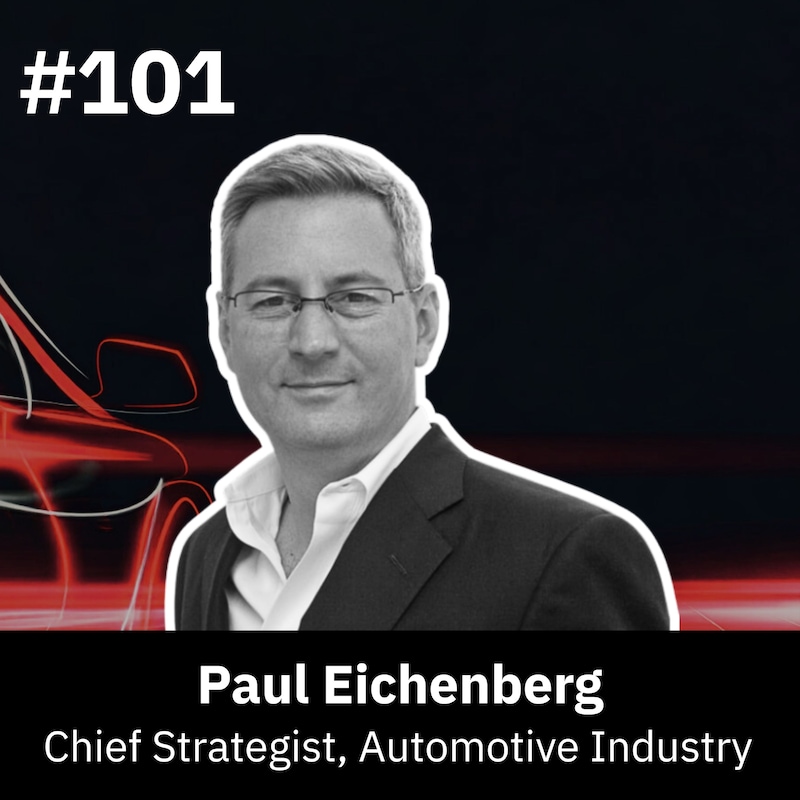
In this episode of the Auto Supply Chain Champions Podcast, Jan Griffiths and co-host Tom Roberts are joined by Paul Eichenberg, Chief Strategist and author of The Road Ahead: Five Key Predictions for the Global Automotive Industry in 2026, for a blunt, reality-check conversation about what lies ahead for suppliers.
The industry has moved past the chaos of shortages and disruptions, but that does not mean conditions are improving. Flat volumes. Thin launch schedules. Policy volatility. Long-standing assumptions that once protected supplier business models no longer apply.
Paul makes the case that 2026 is not about recovery. It is about reckoning. Growth will not lift all boats. Outgrowth will be selective. Capital allocation, portfolio focus, and strategic intent will determine who wins and who fades.
This conversation challenges automotive leaders to confront the most dangerous assumption still in play: that the industry is operating under the same rules it always has. The leaders who succeed in 2026 will be decisive, intentional, and willing to make hard bets instead of spreading resources thin.
Themes Discussed in This Episode
- Why flat volumes expose weak supplier strategies
- The end of “a rising tide lifts all boats” thinking
- What outgrowth really means in a 0–1% market
- Capital allocation as the ultimate strategy lever
- Why the next decade is the hybrid decade
- Portfolio focus vs being all things to all customers
- Why clarity, not comfort, defines 2026 leadership
Featured Guest
Name: Paul Eichenberg
Title: Chief Strategist, Automotive Industry
About: Paul is a seasoned automotive strategist and industry advisor with decades of experience supporting OEMs and suppliers through major market transitions. He is the author of The Road Ahead: Five Key Predictions for the Global Automotive Industry in 2026, where he outlines the structural shifts redefining growth, competition, and portfolio strategy across the global automotive value chain.
Connect: LinkedIn
About Your Hosts
Jan Griffiths
Jan is the host and producer of the Auto Supply Chain Champions Podcast and The Automotive Leaders Podcast. A former automotive manufacturing and supply chain executive, Jan is recognized as a Champion for Culture Change in the automotive industry. She brings direct, grounded conversations to leaders navigating execution, disruption, and transformation across the global automotive ecosystem.
Tom Roberts (Co-host)
Tom is Co-host of the Auto Supply Chain Champions Podcast and Vice President of Strategic Industry Development at QAD. He works closely with automotive and industrial manufacturers to close the gap between insight and execution, helping leaders move from visibility to systems of action that drive real operational outcomes.
Mentioned in This Episode
Episode Highlights
[02:52] The most dangerous assumption suppliers are still making as they enter 2026
[05:27] Why outgrowth, not volume recovery, will separate winners from losers
[09:44] Why the next decade belongs to hybrids, not single-path electrification
[17:17] Why portfolio and footprint choices now define competitiveness
[22:22] The one bold move Tier One CEOs must make in 2026
Top Quotes
[05:19] Paul Eichenberg: “The idea that the tide raises all boats is no longer the assumption that suppliers should have going forward.”
[07:23] Paul Eichenberg: “Strategy execution comes down to how you allocate capital in your talent or your resources.”
[22:51] Paul Eichenberg: “Being all things to all people is a path to failure in this type of constricting market.”
[23:17] Paul Eichenberg: “This is a year of clarity.”
Follow the Auto Supply Chain Champions Podcast for real conversations with leaders who are making hard choices, focusing their bets, and leading with intent.
🎧 Follow the podcast:
🔗 Learn more about QAD Redzone: https://www.qad.com/
Transcripts
[Transcript]
[:[00:00:30] Tom Roberts: Great to be here, Jan. What I see every day is simple: manufacturers don't have a data problem, they've got an execution problem. This show is about how artificial intelligence, systems of action, and empowered teams can help close that gap.
[:And this is the very first episode of the Auto Supply Chain Champions podcast. Yes, we've rebranded. We've changed the last name — Auto Supply Chain Champions, and we have a new co-host. Tom Roberts, welcome to the mic.
[:[00:01:13] Jan Griffiths: Great to be co-hosting with you on this wonderful podcast. We've passed our 100 episodes, and so here we go. We are gonna talk about 2026, and the title of this episode is: 2026 is Where Comfortable Strategies Go To Die. Boy Does that sound ominous, but today's conversation is about clarity, not comfort. The industry is past chaos of shortages and disruptions, but that doesn't mean that things are getting easier. Flat volumes, thin launch schedules, shifting powertrain strategy, China's rise, software-defined vehicles, and permanent policy volatility. Wow, that's a lot. Forcing suppliers to make real choices.
lobal Automotive Industry for:[00:02:30] Paul Eichenberg: Thank you very much. Glad to be with both of you.
[:[00:02:52] Paul Eichenberg: I think when you look at the blog, one of the things that I talk about is that, in the past, volumes, policy changes, new launches, the activities that suppliers have always relied on in order to cover the sins of the business. And as a result, we're now moving into a period where really we've probably reached close to peak automotive.
So, you've got a lack of volume in the market. It's what we're used to as far as just increasing volumes. You've got a real thin or a thinning launch cycle, especially the traditional North American suppliers, and then, you've got just this constant policy, lack of stability. So, as a result, you just have a very, very different environment.
And I think one of the things that I talk about in the article is just the rise of China and the rise of the globalization of the Chinese OEMs, but the Chinese suppliers, which we can talk about further later on but as a result, you've got flat volumes, but you've got traditional OEMs globally losing share to Chinese OEMs.
t we've been into. So really,:[00:05:11] Jan Griffiths: So the most dangerous assumption then is that we're playing the same game that we've always played.
[:[00:05:16] Jan Griffiths: I felt it in your blog, right? There's a wake up call in there.
[:[00:05:27] Tom Roberts: Now, Paul, you argue that outgrowth is no longer industry-wide. Talk to me about outhgrowth, and what's the one strategic decision that most clearly separates the winners from the losers.
[:The EVs is in this regulatory environment, and just this global environment is gonna be very hard, to see the type of growth that we would've expected a couple years ago. Even that's slowed down. Now, you're seeing more of a shift back to ICE, you're seeing a shift to plugin hybrids. You're seeing it shift to range extender vehicles.
So, you've got broader segments of the market from that standpoint. Obviously, autonomy is gonna be much harder and difficult to achieve than what was expected. So, when we talk about outgrowth, where are those pockets of growth going to be, where a supplier can invest and recognize greater growth than what we're seeing in a flat market between 0 and 1% growth globally? That's what I mean by outgrowth, and I think, in this environment, capital allocation becomes so critical.
I always tell people that strategy execution comes down to how do you allocate capital in your talent or your resources, and if you take a company like Lear, for example. Lear has a traditional seating business, which hasn't been easy to operate in globally over the past 5, 10 years.
However, then, they've made big bets in the areas of electric vehicles and power electronic components for EVs. Now, with that market not growing as fast is what people expected. That is extending those investment cycles where, ah, what pays the bills? Well, the seating business still pays the bills for a company like that, and what you have is you have companies that are attacking the base business, and then, you have the hope that there's that outgrowth in the EV portion of that business. So, investing in both equally is just not an option. There are tough strategic decisions that all companies have to make when it comes to their portfolio, and we're really at a time where, again, over the next few years, I feel, these are gonna be very defining times because we're in a very different market as far as volume. The OEMs are in a very different market as it comes to global competition, and as a result, what you have to do is you have to make your big bets going forward based on very different market conditions than what we expected.
So when I talk about outgrowth, where is that going to come? But then, what's your thesis in how you're going to win? Does Lear win, in ultimately, the seating business and starts to push off investments in the EV sector? Or do they go all in on the EV sector and say, hey, we're gonna get weaker and weaker in the seating business, but ultimately, here's how we're gonna position ourselves long term in this. These are the strategic big bets that I think companies have to start to prepare to make.
[:[00:10:18] Paul Eichenberg: Well, I see hybrids becoming a key part of the next 10 years. I would tell you, when I was at Magna 15 years ago, and we started to look at how this market was going to evolve. We thought there was gonna be a transition that the market was gonna transition from the ICE to hybrids and then ultimately to EVs, and I think what we saw was, ah, you know what? The market tried to leapfrog that transition.
[:[00:10:48] Paul Eichenberg: And tried to go all BEVs, and I think, to a certain extent, that makes a lot of sense. We saw what was happening with Tesla, there's a lot of benefits that come with a BEV and a software defined vehicle, and obviously, high levels of electrification help enable those type of things. But the market wasn't ready for that kind of shift, and I think, what you're going to see is much more of that traditional evolution and that shift from the ICE to mild and full and plugin hybrids to even range extenders and then to BEVs.
And I think you can look at each of the key markets. Obviously, that's gonna happen here in North America as we've had a policy change and a change in regulation. I think Europe is really starting to consider much more of that kinda shift in their regulatory policy. Also, they came out with something before the holidays that supported that fact as far as more plugin hybrids, more range extender vehicles, which is really following where the top end or the high end of the market in China is going.
The low end portion of the market in China has been focused on battery electric vehicles, where the high end is focused on plugin hybrids and range extender vehicles. So, more of those aspirational vehicles even in China are plugin hybrids and range extender vehicles that sort of have the best of both worlds. So you're seeing a shift that's taken place in each of the core markets around the globe that really supports this idea that the next 10 years the focus is gonna be on these plugin hybrids and these range extended vehicles as infrastructure and other issues get worked out in a manner allow the OEMs to come forward with alternatives that really are attractive to the consumer.
[:[00:13:22] Paul Eichenberg: That's a great question. And what I would tell you is, as you look at things globally and just like you were talking about earlier, General Motors. General Motors has a large presence in China. VW have had a large presence in China. However, their local partners, and the local OEMs have been taking a tremendous amount of share away from them as they position themselves to grow globally.
And then, when you look at Chinese OEMs as a segment globally. They're not only growing in China, but now they're starting to export, and you start to see, I saw just in the news last week, Nissan has sold a South African factory to Cherry. This is a move that's taken place. We've heard about it in Latin America, where the Chinese OEMs are coming and making investments. They're making investments across South Africa, India, across the globe, in an effort to grow, and as a result, they're taking tremendous share away from traditional Western OEMs.
And it's not just the big three, the European OEMs, but it's also, they're taking share from some of the Asian OEMs also. So, you'll have to be aware that those companies are coming. And so, when you look at this new world order and this nationalistic view that's taken place here, you're gonna see each country making strategic decisions as far as, well, what are we gonna do for our industry?
And my sense is that China coming to Canada, they are not gonna CKD, they are gonna produce vehicle for that market, in that market, just like they're working to do across South America, across South Latin America. So, the fact of the matter is this is a huge strategic challenge for traditional suppliers where they've gotta figure out how to partner with them.
And what I would tell you is, as I've worked with suppliers, suppliers are most concerned around the idea of, hey, the Chinese OEMs have hyper competitiveness. I can't go and compete with them and make money, and they never really break in. However, I'll tell you the name of the game has changed and companies have to figure out how do I get as lean? How do I get as mean? How do I get as aggressive and make money? Because I would argue those Chinese companies aren't just losing money doing this. Now, there may be subsidies, there may be other things that some of them have, but the idea is you have to crack this nut or you have to just say, hey, uncle, I'm done.
And I think this is the strategic challenge that sort of encompasses what we're talking about because it's regulatory changes, it's geopolitical changes, it's a new foundation of competition. It's new customers. All of these things sort of encompassed into these huge challenges that you have to make based on how you view your portfolio and which portions of the portfolio, whether it's customer portfolio, product portfolio, manufacturing portfolio, whatever.
What are gonna become your priorities going forward in this new environment?
[:[00:17:37] Paul Eichenberg: So again, it's a changing environment. How do you participate in that as a traditional supplier? What does it mean for your customers? I mean, ultimately, if you look at those type of free trade zones that take place between India and other countries, hey, if I produce in India and I ship into, let's say Thailand, it's a free trade agreement.
I'm assuming, when it comes down to it, it's the same type of philosophy. Hey, can I ship from Europe into India with minimal tariffs, vice versa. So, this is gonna be, again, very critical for suppliers. Hey, where do I have a footprint? Where can I leverage my existing footprint and opportunity to grow with those customers who are really taking advantage of those strategic types of opportunities. Now, ultimately, is Ford for instance, going to participate in that? Well, you betcha. So, work with Ford around that strategy, just like you'd work with Ford as far as to localize in Canada to support them there.
So these are the issues that I think again, changing environment requires you to develop a new strategy as far as how do I take advantage of these? That makes me most competitive with my customer.
[:[00:19:04] Paul Eichenberg: I don't think we're gonna see 'em in the US, but I would say, there's an opportunity for them to come and take share in areas like Canada and Mexico, which are critical to our manufacturing environment, which then is gonna make it harder for GM, Ford, Stellantis, Toyota, Nissan, et cetera, to compete because they'll be losing scale in a core market that's 15, 16 million vehicles. As they start to lose share, well, it's gonna be harder for them to compete. It's gonna make it harder then for the suppliers to compete. So I don't expect them here producing vehicles in the United States. I don't expect that.
[:[00:20:03] Paul Eichenberg: I don't foresee that happening this year. But I'll tell you, I had a commercial vehicle OEM as a customer last year, and they talked about how quickly BYD is coming into the commercial vehicle space, and specifically, the bus industry in Europe. How quickly they went from entry to domination.
[:[00:20:29] Paul Eichenberg: And they were disruptive. They were disruptive with the business model. They were disruptive as far as how they went to municipalities, how they serviced vehicles. It was completely disruptive, but it only took five years for them to establish a very strong position in Europe. And when you talk to that OEM about what could happen if BYD came to just Latin America. This is the biggest threat we see. They don't talk about the commercial vehicle as far as the traditional players there. They talk about somebody disruptive like that, who has just a completely different approach to the market as the biggest threat for them.
So, I don't see them coming into the US market, but to be honest, they don't need to come into the market to really create a dominant position by being in Latin America, Mexico, Canada, being in Europe. This is gonna hurt our traditional OEMs, it's gonna hurt traditional suppliers, and you gotta figure out how you're gonna succeed in that evolution of the market.
[:[00:22:00] Paul Eichenberg: It was.
[:[00:22:11] Jan Griffiths: I agree. Now, Paul, I want you to bring us home with this question, and I'm gonna give you ten seconds to answer.
[:[00:22:19] Jan Griffiths: 10 seconds. You got to answer this question. If you are sitting in a Tier One CEO role today and you could make only one bold move in 2026, what would it be and what happens if you don't make that bold move?
[:[00:23:15] Jan Griffiths: To be intentional, and you said this is a year of clarity.
[:[00:23:20] Jan Griffiths: There it is. Okay. Well, Paul, it's been an absolute pleasure having you on the show. Thank you.
[:[00:23:27] Jan Griffiths: We wanna hear from you, our listener. Tell us, what are your challenges right now? What conversations do you want to hear across the airwaves on this podcast? Drop us a comment on our podcast website. The link is in the show notes.

