Shownotes
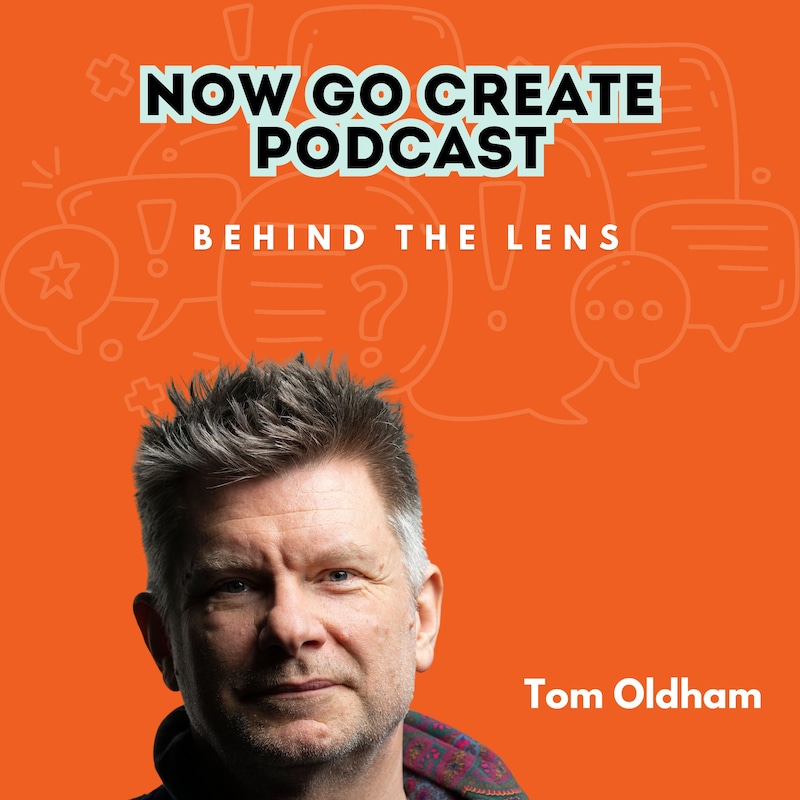
What if the key to unlocking fresh ideas lies in shifting your perspective? In today's episode, we're stepping behind the lens with award-winning portrait photographer Tom Oldham. Join your host Claire Bridges as she talks to Tom about his journey, from photographing music royalty including Rick Rubin, Alicia Keys, Nick Cave and the Gallaghers, to his brand work and personal projects that fuel his curiosity. Discover Tom's insights on dealing with constraints, why rapport is his secret weapon and why altering your ‘lens’ can be a game-changer. Tune in to explore the highs and lows of his 30 year career, and hear about life through his lens.
Here are the highlights:
- Why being brave with your ideas is essential
- How to push the creative brief
- On resilience, thick skin and self-esteem in a competitive field
- How to stay creatively fresh
- Dealing with problems, setbacks and fragile egos
About Claire Bridges:
Claire Bridges is Chief Spark and Founder of leading creative training consultancy Now Go Create, whose philosophy is that everyone can be creative.
Claire worked as a PR agency Managing Director and Creative Director working with global brands including Starbucks, Kellogg’s, Unilever, P&G and Danone in her previous PR career. Upskilling individuals, teams and organisations with practical creativity tools is Claire’s mission.
She’s one of only 250 people globally to hold an MSc in Creativity, Leadership & Innovation, and authored an Amazon best-selling creative handbook In Your Creative Element based on her academic studies.
Claire and her hand-picked team of experts have worked on thousands of creative projects and trained over 40,000 people around the world since starting Now Go Create in 2011.
Connect with Claire:
Website: https://nowgocreate.co.uk/
Instagram: https://www.instagram.com/nowgocreate/
Facebook: https://www.facebook.com/NowGoCreate
LinkedIn: https://uk.linkedin.com/in/claire-bridges-b6205b14
About Tom Oldham:
Tom Oldham is a London based portrait photographer working globally on commercial briefs, as well as shooting editorially and for purpose driven, socially conscious NGOs and charities. Alongside this, Tom shoots personal projects and is a multiple award winner. In 2024, Tom shot a project around the UK election entitled The Hopefuls, where he photographed portraits and interviewed a vast array of politicians hoping to get elected. Tom is also the founder of Creative Corners, a scheme which gathers in photobooks and donates libraries to state school photography courses, of which he has collated 20 so far with more to come. If you have books to donate please find details below.
Connect with Tom:
https://www.creativecorners.uk/
Produced by winteraudio.co.uk
Transcripts
Are you in need of a creative boost today?
Speaker A:Welcome to the Now Go Create podcast with me, Clare Bridges.
Speaker A:I'm here to equip you with the tools and strategies to energize your thinking and unleash your creativity at work, no matter your role.
Speaker A:Today we're going behind the lens with a true creative visionary, Tom Oldham.
Speaker A:This multi award winning portrait photographer has captured some of the biggest names in music, including the Gallaghers, Ed Sheeran, Dave Grohl, the list goes on and on.
Speaker A:He's also a master of commercial photography, working with brand giants like Adidas, EE and the National Lottery.
Speaker A:Get ready for a fascinating conversation as Tom reveals the secrets behind some of those iconic shots.
Speaker A:How he deals with constraints and nails the perfect image in just five minutes.
Speaker A:And why changing your lens, literally and figuratively, is the key to unlocking your creative flow.
Speaker A:Welcome to the Now Go Create podcast, Tom Oldham.
Speaker B:Thank you, Clare.
Speaker B:Nice to be here.
Speaker A:Lovely to have you.
Speaker A:So can you tell us a bit about what being a portrait photographer entails?
Speaker B:Well, there's a lot to that answer.
Speaker B:The main thing for me is putting yourself out there, working hard to take all kinds of different briefs, be they commercial or editorial or your own personal work, and keeping it fresh and alive, as you maybe can sense.
Speaker B:I've been doing this for about 183 years and it's still a really, really massive part of my life, my work, and I really, really enjoy it.
Speaker B:And Cartier Bresson, a really famous French photographer, he worked until he was about 86 I think, and I would still really, really like to be doing this for as long as possible.
Speaker B:And therefore what's important with that is to keep enjoying it.
Speaker B:And so that mixture of kind of work that I take on, as I mentioned before, it's really important that there's a really broad range within that to keep it fresh and exciting.
Speaker A:And tell me a bit about your broad range because you're being very humble in relation to being a portrait photographer.
Speaker A:You have photographed some very, very famous people and done some incredible projects.
Speaker A:So tell us a little bit about some of the projects you've worked on, some of the people you photographed.
Speaker B:So I will find myself one day maybe shooting for Adidas and Manchester United.
Speaker B:I had a nice Ronaldo moment, which you might want to look up.
Speaker B:That felt like a thing, like a moment.
Speaker B:But also I get an incredible amount of value from doing my own projects and I do quite a lot of self initiated work and things that irk my curiosity and be they just sort of one day projects or can span over quite a few years.
Speaker B:So that freshness again is really, really important to me.
Speaker B:So just keeping it spicy.
Speaker B:And not everything has to make sense as well.
Speaker B:It doesn't have to be always on this sort of logical career path because that has got sort of success and failure written all over it.
Speaker B:And I really don't want any of my projects to be regarded as successes or failures because they're all personally motivated, you know.
Speaker B:So just enjoying them and executing that vision that you have for that particular project is really, really important for me.
Speaker B:I did a really lovely thing around the election this year called the Hopefuls.
Speaker B:And I don't actually know how and when it came to me, but it came from.
Speaker B:I'm quite politically engaged and really, really curious about who on earth puts themselves forward for these things and why do politicians stand and put themselves through it, really apart from power of vanity and ego and in the sense of, you know, doing good for their community as well.
Speaker B:So I really wanted to go out and meet the people that have the neck to stand.
Speaker B:So.
Speaker B:So with a producer called Ruth Newton who's absolutely amazing and very much works in this sector, I just went out and photographed 43 in the end, political candidates from very far left to very far right, all in England.
Speaker B:And we were caught short by the sudden calling of the election.
Speaker B:So we really put ourselves out there and made a really, really lovely project.
Speaker B:It's entirely democratically captured.
Speaker B:So everyone was asked the same questions.
Speaker B:They were all in locations that they had chosen, they were framed in all in exactly the same way, in the middle of the frame.
Speaker B:And it was absolutely fascinating for me.
Speaker B:And we published a website, thehopefools.co.uk, with video clips and people answering those questions.
Speaker B:And I really, really enjoyed it.
Speaker B:So everyone's welcome to have a look and let me know their thoughts on that.
Speaker B:You know, it didn't serve any purpose other than my own curiosity really and trying to inspire people, new voters especially to go and meet their candidates in one way or the other and find out that they don't actually have to vote for the obvious three parties, four parties, and that they can go and explore candidacy and find their guy.
Speaker B:Because voter registration and first time voters, and especially in young voters, is perilously low in this country engagement politically.
Speaker B:So just to try and stimulate and motivate and apparently I was told it was fairly successful.
Speaker B:Successful at that.
Speaker A:Yeah.
Speaker A:And that's really interesting.
Speaker A:I think that taps into perhaps some of your more commercial work as well, in the sense that the power of a photograph, the power of that, what, what it can convey and how that seemingly sort of fleeting moment and, and one, one moment can then impact people.
Speaker A:You talked about Adidas earlier, but can impact people to move in some way, whether that's change their behavior, vote, buy something, whatever it might be.
Speaker A:Can you tell me a little bit about some of your commercial work?
Speaker A:How you take all this passion and curiosity that you talked about and put that into a brief.
Speaker A:When you get one, a creative brief or commercial brief, it might not look like a creative brief from someone like Adidas or someone else.
Speaker A:How do you take that sort of information on paper and then start to make it have meaning?
Speaker B:Yeah, thank you.
Speaker B:That's an amazing question.
Speaker B:For me.
Speaker B:It's about.
Speaker B:There are several stakeholders in any scenario like that and invariably the people with the money are the ones with the biggest stake.
Speaker B:However, it's really.
Speaker B:I can't really talk about specifics with some of the briefs, but we call it the minor inconvenience sometimes where we'll get the, we'll get the minor inconvenience out of the way, which is the brief, and then do what we think they should have asked for.
Speaker A:Yeah, love that.
Speaker B:Yeah.
Speaker B:And quite often on set we'll be like, yeah, we've got that.
Speaker B:And I think it's really, really good.
Speaker B:But can we just try, can we just try one more?
Speaker B:You.
Speaker B:It's alarming how often that is the shot that gets used or celebrated and it's just that extra little, We've got an extra 90 seconds.
Speaker B:Can we just do this?
Speaker B:And it takes a risk.
Speaker B:But you know, so often, and we know this, decisions are made by committee and there's.
Speaker B:And everyone's afraid at every level.
Speaker B:Right.
Speaker B:And especially in a corporate structure, people are very, very afraid and risk averse, especially post Covid, people are really, really terrified.
Speaker B:And I've very much been the beneficiary of that work wise where I know that there's conversations happening where it's like, okay, who absolutely nailed this last time?
Speaker B:Who can we use?
Speaker B:Who's going to get it right?
Speaker B:And it's like, well, Tom actually did this last time.
Speaker B:It's like, okay, getting back, you know, and I'm really, really grateful for that.
Speaker B:But going back to the actual on set thing, it's about getting the brief locked, everyone happy, absolutely.
Speaker B:Signed off and then just twisting it a little bit, advancing it a little bit towards our tastes and with those stakeholders.
Speaker B:I am one of those stakeholders and I want to really put out work that I'm super Proud of as well.
Speaker B:You know, so quite often our own vision comes into that.
Speaker A:Yeah, I love that thought.
Speaker A:I have never thought about it like that before, which is, you know, we talk a lot when we were talking about marketing or communications or pr, we talk about.
Speaker A:And you talked about local government, you know, do I do work with, you know, government teams sometimes.
Speaker A:And obviously the word stakeholder is the, the word that's in the room when you're talking about any idea because you know, your, your idea is only as good as your ability to sell it.
Speaker A:But I really love that idea of you as a stakeholder.
Speaker A:As you're saying is, you are, you're, you're having that confidence and self worth, sense of self worth to say I am a stakeholder as well.
Speaker A:And so this work has to reflect, like you say, I have to be proud of it.
Speaker A:And it has to reflect the kind of work that I want to do.
Speaker A:And I suppose that then feeds into your overall body of work like you say you want to be working into your 80s, which you've got a couple, two or three years left yet.
Speaker A:I mean, you know, if you keep, if you can keep going.
Speaker A:And so, yeah, that sense of like when you look back on that body of work is that there is, there's meaning and narrative and there's a sense of it in there.
Speaker A:So it's interesting that sort of commercial, not necessarily the commercial side has to fit into that somehow.
Speaker A:So I love that idea of you or us as individuals, as stakeholders as well, because I think we sometimes forget that conversations about trying to please other people.
Speaker A:So I think that's a really important message.
Speaker A:You talked about a lot about curiosity.
Speaker A:You've mentioned curiosity quite a lot of times.
Speaker A:And in all the conversations I'm having, that is a word in relation to creativity that just comes up time and time again.
Speaker A:I sort of like to think of it as being professionally nosy.
Speaker A:That's how I sort of say myself when people get really annoyed if I'm sort of constantly asking questions.
Speaker A:But I just, I'm just being professionally nosy.
Speaker A:Tell me how you keep.
Speaker A:I know you've got your own projects, but how do you stay curious about, about the world and about the work that you're doing?
Speaker B:Curiosity for me just really comes from a place of hunger about wanting to know more about it.
Speaker B:And like my enthusiasm for this hasn't diminished at all.
Speaker B:And I don't work every single day in terms of shooting anyway.
Speaker B:We work constantly.
Speaker B:I think every freelance photographer, photographer in the world doesn't have a day when they're not thinking about photography, they like.
Speaker B:It's, it's, it's too obsession level.
Speaker A:Yeah.
Speaker B:And just on that, I think you do have to be fairly robust emotionally to be able to cope with the sort of highs and lows of this industry.
Speaker B:But how do we keep curious?
Speaker B:It's constant stimulation.
Speaker B:We're not short of visual stimulation and access to it, are we?
Speaker B:All the platforms we have to see amazing work and beautiful pictures.
Speaker B:So.
Speaker B:And it's very motivating that we have access to the world now to put our work out and say, what do you think of this?
Speaker B:And that is motivating and stimulating.
Speaker B:And I don't know what more I can tell you about it, really.
Speaker B:It's because it's something we don't analyze.
Speaker B:It's completely inherent with us that we have to be looking and seeing and believing in our own work constantly.
Speaker B:So it's all so intermingled.
Speaker B:I realize that might be quite a rubbish answer.
Speaker A:No, no, it's not.
Speaker A:I would just.
Speaker A:I guess.
Speaker A:And this is what I find really interesting.
Speaker A:This is one of the reasons why I'm doing the interviews with people who, you know, your, your living is your, is creativity.
Speaker A:You know, you have to stay creative.
Speaker A:And as you say to you, that's inherent in you.
Speaker A:It's.
Speaker A:It's something that you do and you don't know another way to be.
Speaker A:But for a lot of people, particularly we talked about the corporate world, they are almost sucked away from that.
Speaker A:So that sort of connection to their creativity or to their passion or to their interest is they may enjoy their job and they may enjoy the work that they're doing, but they're not having to stimulate or sort of creatively poke themselves every day to say, what is my next piece of work going to be?
Speaker A:Because you've got, you know, a PowerPoint to write or a spreadsheet to do or a meeting to go to.
Speaker A:So in a way that sort of, you know, that I would call it almost a luxury of being able to constantly feed your curiosity, to feed your creativity.
Speaker A:That's your, that's your existence, but for a lot of people it isn't.
Speaker A:So that's what I find fascinating about these conversations.
Speaker A:So what do you do on a.
Speaker A:On a day when you're not shooting or when you're not.
Speaker A:You're not having to go and do work or.
Speaker A:You talked to me, you said that you have a daily walk, don't you?
Speaker B:Oh, yeah, I have to, yeah, absolutely.
Speaker B:Just to completely clear the mind.
Speaker B:It's meditative.
Speaker B:And whilst it might be physically helpful, it just mentally is absolutely essential for me just to completely clear out.
Speaker B:And that isn't listening to a podcast necessarily.
Speaker B:It's completely being with your thoughts and what you need to progress that day.
Speaker B:That's, yeah.
Speaker B:Sacred.
Speaker B:Utterly vital.
Speaker B:Yeah.
Speaker B:Going back to creative process and people that are trying to inject more creativity into their existences and their output.
Speaker A:Yeah.
Speaker B:Something that's been really important to me is to remind myself about being brave with my ideas and to the first point, about our being stakeholders, putting out and incorporating as much bravery into your ideas as possible.
Speaker B:And the mantra that an audience would rather be confused than bored, I think is utterly golden.
Speaker B:And in your presentations that normally on PowerPoint might be quite dry, you know, to get a bit snappy with them and throw in a few random thoughts and actually spice them up a little bit.
Speaker B:It just keeps people awake, doesn't it?
Speaker B:And just.
Speaker B:And if you're slightly unpredictable and you can see all of these things, just gently push towards a slightly more creative process.
Speaker B:And that, I think, inspires people to want to know more from you.
Speaker B:And I certainly have been the beneficiary of that when I've just like idea three, you know, the classic scenario of, here's the big idea for the presentation.
Speaker B:If that's a bit out there, then here's a second, much safer option.
Speaker B:And, oh, yeah, I've also got this other little thing that you might want to see, you know, and that's the one people are always like, can we expand on that a bit more, please?
Speaker B:And so many great things have come out of that, I feel.
Speaker B:And I don't have loads and loads of ideas, but the ones I do have, I like to think that they are less obvious, they're slightly braver and don't necessarily follow a linear route at all the hopefuls.
Speaker B:Nobody was saying, tom, go and shoot some politicians, will you?
Speaker B:But loads of great things happened because of that, because people weren't really expecting it.
Speaker B:And, you know, as well as your own personal journey and benefits, you know.
Speaker A:So often we talk about needing a really large.
Speaker A:When we're.
Speaker A:When we're in a sort of creative setting at work or in a brainstorm, we feel like we need a large volume of ideas to kind of fill the funnel and just sort of declutter our minds and then we start winnowing them, winnowing them down.
Speaker A:Tell me more about not having many ideas.
Speaker B:Yeah, I'm really, really jealous of those people that have loads of beautiful notepads next to their bed with full of ideas, the things that they need to, you know, that potentially they're going to fulfill, because I don't have that.
Speaker B:And I really, really, especially post Covid, had to wait a long time for the lightning to strike and there's nothing you can do about that.
Speaker B:You can't really force it.
Speaker B:I don't think.
Speaker B:You can't just like go, I'm going to go.
Speaker B:I haven't seen this idea.
Speaker B:I just can't.
Speaker B:I just don't know what.
Speaker B:I'm just going to go and shoot something.
Speaker B:And I'm not really a fan of that.
Speaker B:I think you need to be.
Speaker B:You need a little bit of structure to it, but you definitely need the work to be an answer to the question you're asking.
Speaker B:I wanted to know, who are politicians?
Speaker B:Why do they stand?
Speaker B:So I went and found out and answered my own question.
Speaker B:I did a project called Inside the Pain Cave and that was really, really simple.
Speaker B:I heard about a race up Swain's Lane in North London, in Highgate, by the cemetery, where cyclists start at the bottom and race to the top.
Speaker B:And it's very exciting to watch because they get to the top, they're slightly out of breath and then the lactic acid overwhelms their bodies and they hit the deck next to their bikes and feel really overwhelmed by it.
Speaker B:And.
Speaker B:And that's when your portrait photographer strikes.
Speaker B:And I did a lovely portrait, portrait project, completely respectful of the fact this is a very private moment for them inside the Pain Cave.
Speaker B:So I kind of obscured their faces in the shots, but also wanted to express how physically they were completely bent out of shape.
Speaker B:And that was, you know, five miles from my house and took half a day pretty much until I had 20 good ones or whatever and then went home again, you know.
Speaker B:So that was just a simple idea.
Speaker B:I can't do that.
Speaker B:I'm not a super fit cyclist, so I can get in my Lycra and race up a hill and nor do I have any interest in doing that, but I'm interested in the people that do.
Speaker B:And owning a camera, my friend Chris Lanaway helped light it and we just went and investigated it and it was a real lot of fun to do and simple, you know, So I don't believe that all ideas have to be this great, big, grand, expensive, time consuming thing.
Speaker B:It can be like, yeah, this on Sunday, I'm free, I'll go and do it.
Speaker B:You know.
Speaker B:One of the biggest projects I did was some portraits of crooners called Last of the Crooners.
Speaker B:And it was in my local pub in Palm Tree, the Palm Tree pub in bow, here in E3.
Speaker B:And it's about 800 yards from my house.
Speaker B:And I shot it over a day and a half.
Speaker B:I mean, I'd invested quite a few years getting to know the people in that pub.
Speaker B:But actually the execution of that project took a day and a half and it won a massive award.
Speaker B:We had an incredible launch event.
Speaker B:We made a vinyl album recording of the Crooners.
Speaker B:You know, to have like a physical embodiment of the project itself and something tactile you can handle.
Speaker B:When I was little, I lived on a farm in Dorset.
Speaker B:My mum, to get a bit of peace, would put Stevie Wonder albums on the headphones and give me the album artwork to sit and listen to.
Speaker B:And I know every crackle on those records.
Speaker B:And it just looked like the perfect medium for photography.
Speaker B:And that's what I really wanted this project to be.
Speaker B:So we made a gatefold album with my friend Andy Gangadine and he recorded it really amazingly.
Speaker B:Got beautiful room recording of the performers live and just like incredibly proud to be able to do it.
Speaker B:And that that album means an incredible amount to me.
Speaker B:You could only buy it from the pub, so you had to go to the pub to experience it.
Speaker B:And just all of these little things stack up.
Speaker B:But I think it's really important in terms of ideas that they don't have to be enormous and expensive.
Speaker B:Actually, it's just a case of you've got to go and execute them, you've got to put yourself out there.
Speaker B:And so many people, musicians especially, I think, are bad for unfinished tracks.
Speaker B:They've made a track but it's not quite finished.
Speaker B:Because if they do finish it, what that would mean is that they've then got to do something with it.
Speaker B:They've got to put it out.
Speaker B:So it's sort of self scuppering in a way.
Speaker B:So my thing is really honoring your ideas is really important.
Speaker B:If you've had the idea, honour it, execute it, put it out.
Speaker B:And it's muscle memory.
Speaker B:That feeling of like, shit, shit, shit, shit, shit, shit, shit.
Speaker B:Is this any good?
Speaker B:This isn't any good, is it?
Speaker B:Why am I doing this?
Speaker B:This is no good, actually.
Speaker B:This is starting to look all right.
Speaker B:Oh, and that sort of shape of the creative experience like that, you know, this bit here becomes muscle memory for this bit here.
Speaker B:And how you actually feel like, oh, my God, it was worth it.
Speaker B:All that money I spent or time or whatever it might be, like whatever the sacrifice was, is Pretty much always worth it in my experience, that there's.
Speaker A:So much to unpack there.
Speaker A:I think.
Speaker A:I love that, you know, the creative process is messy, isn't it, when we talk about creativity and also, you know, when I'm trying to help people get more confident in their own creativity, unleash creativity in themselves.
Speaker A:You know, I think it's this.
Speaker A:It's never going to be a straight line.
Speaker A:Like you say, it's really messy.
Speaker A:I love the idea of that, the repeated experience, experiences.
Speaker A:And that feeling, that sort of angsty, horrible, messy feeling of not knowing the answer and being right in the middle of it only gets better with experience of knowing that you're going to come out the other side.
Speaker A:So what I'm really taking out of that from is about commitment as well.
Speaker A:It's like, I think it's about, you know, you commit to it and do it even though it might hurt a little bit or hurt a lot as you're going through it.
Speaker A:And the other thing I think that I'm really pick up on from all your work, and I think as a photographer, you just absolutely embody this and you have to have it, is that you're interested in people.
Speaker A:So therefore you're able to go and take photographs of, you know, potential candidates.
Speaker A:You're going to go and take photographs of Rick Rubin, who we're going to talk about in a minute, or Messi, or whoever it is, because you're fundamentally interested in people.
Speaker A:And a really key part of being able to generate creative ideas is empathy for the.
Speaker A:Whoever it is is on the.
Speaker A:On the other end of what you're doing.
Speaker A:So I think there's just really that sense of how to step into someone else's shoes or even just how to understand them in a very short amount of time.
Speaker A:And I wanted to ask you about time and about time constraints because we talked about a lovely sort of meandering process in your own profession and your own personal projects.
Speaker A:But I know that sometimes we've talked about this a little bit before, sometimes you'll get in a room, and I know that you've only got five minutes with the talent.
Speaker A:There's a love portrait of Rick Rubin behind you, which I want to talk about in a second.
Speaker A:But I wonder if you've got any examples of where you have had.
Speaker A:You know, if you can give us, if you can explain to listeners a bit about what happens when you get in a room, what happens before if you've got a celebrity that you're shooting for.
Speaker A:I know you do a Lot of music covers, a lot of musicians.
Speaker A:What happens?
Speaker A:What's the process?
Speaker A:You've got what happens before and then what happens in the room?
Speaker B:Well, the various hoops we have to jump through to be in the room with famous people are many.
Speaker B:And there has to be a considerable amount of trust in place, unfortunately.
Speaker B:So it's quite restrictive if you haven't.
Speaker B:It's that thing about getting your equity card, isn't it?
Speaker B:You can only get your equity card if you've been an actor.
Speaker A:Yeah.
Speaker B:But you can't act if.
Speaker B:Unless you've got an equity card.
Speaker B:So you can't shoot famous people unless you've shot some famous people.
Speaker B:And I'm very fortunate to be on this side of it because just starting out now and trying to get that break is very, very hard.
Speaker B:So attaching yourself for the young photographers and new photographers, attaching yourself to a publication or an outlet where people will see the work, because nobody, if I can't photograph who I want just by saying, can I take your picture, please?
Speaker B:There has to be a need for it.
Speaker B:And it's really important to outline that, I think that I can't walk in the room with anybody I want and photograph whatever I want.
Speaker B:So PR people are the gatekeepers, invariably, and you have to pitch your ideas about what the creative is going to be like.
Speaker B:I'm very lucky in that I shoot for Mojo magazine a lot, that Rick here was photographed for Mojo magazine, and I've been doing that for 15 years.
Speaker B:I'm still the new boy, but I, I.
Speaker B:Yeah, I've put in a shift with them.
Speaker B:So there's trust in place and there's trust that on the artist side, that Mojo Magazine commission, people who know what they're doing and are sympathetic and there's empathy in place.
Speaker B:So you absolutely nailed.
Speaker B:The whole point of you being there is because you have empathy and you know what it's like, and you can put yourself in their shoes about how they feel about being photographed.
Speaker B:Right.
Speaker B:And this is a really commonly overlooked aspect of being a portrait photographer.
Speaker B:The atmosphere in the room that you create, that enables people.
Speaker B:Jane Bowne, an amazing photographer who worked for The observer for 50 years, she said that a good portrait is given and not taken.
Speaker B:Right.
Speaker B:And what she meant by that is that you have to create an atmosphere where people are going to be willing to give you the image that you want.
Speaker B:And that comes from being able to read the room and is it chat and taking your time and being patient and just like being super, super relaxed so that they feel you're confident.
Speaker B:A really big part of a photographer feeling relaxed is that the preparation is done.
Speaker B:You know, the first frame you shoot is going to look really good and they're going to be impressed because we're always tethered to a laptop.
Speaker B:So everyone sees what's coming in immediately.
Speaker B:So we need all of these things in place before anyone has stepped in the room.
Speaker B:Really.
Speaker B:Complete confidence, a harmonious atmosphere.
Speaker B:All your prep is done, you've been pre sold in to their people and then it's executing it very, very efficiently and ensuring that everyone's going to be happy.
Speaker B:It takes a lot sometimes and the energy isn't always with you and you've got to try and turn it around and that can be through, not rushing.
Speaker B:I had a lovely moment with a singer, soul singer, called Smokey Robinson once, which some people will know and some won't.
Speaker A:And of course, I mean, let's start getting the big names out.
Speaker A:Hang on.
Speaker A:Just like, he's dropping.
Speaker A:Yeah, yeah.
Speaker B:But there are some people that won't know what I'm talking about, but I'm sorry to them, but look him up.
Speaker B:And Smokey Robinson came in the room and he's American, he's really.
Speaker B:He was in great shape, he's got amazing teeth.
Speaker B:And we started shooting and I was really aware that he was just rolling out his normal thing.
Speaker B:Right.
Speaker B:At that point, I put the camera down and looked at him and went, I don't know who's doing your pr, Smokey.
Speaker B:But when I told my dad I was going to be photographing with you today, he went, oh, you're gonna love Smokey Robinson.
Speaker B:He's a.
Speaker B:He's a lovely fella.
Speaker B:And I was like.
Speaker B:And I don't know how my dad knows that, but.
Speaker B:But he, you know, I'm sure he's right.
Speaker B:And.
Speaker B:And Smokey Robinson goes, oh, man, I love your dad.
Speaker B:And I was like, my dad is not going to believe that you just said that when I tell him.
Speaker B:So you had to break the atmosphere, right?
Speaker B:You've got immediate what?
Speaker B:The whole purpose of that was to completely change the atmosphere.
Speaker B:So when I pick the camera back up again, he's like completely different.
Speaker B:Just 30 seconds a minute.
Speaker B:He's way looser.
Speaker B:Right.
Speaker B:Suddenly we've connected about something and from there onwards we get the portraits that we want and we can shape it a bit.
Speaker B:And having a little technique with.
Speaker B:With Ronaldo at Manchester United.
Speaker B:Sorry, let me just put another massive name drop.
Speaker B:Sorry, sorry, you asked.
Speaker B:We took a risk.
Speaker B:We have 30 minutes.
Speaker B:There's literally somebody with a stopwatch to get and bounce him out of there, whether we're finished or not.
Speaker B:But I've got a digi who I'm working with, who I trust.
Speaker A:And what's the digi?
Speaker B:The digi is the person.
Speaker B:The digi's there looking on the laptop at the photos coming in.
Speaker B:Right.
Speaker B:Technically, this was astonishingly hard to achieve what we were doing, because we had a small shaft of light that was just hitting a small section of Ronaldo's face.
Speaker B:And I wanted to challenge how he's the most followed person on Instagram, how little light we could put on his face and see him as still recognizable.
Speaker B:And that was a risk for Man United, for Adidas and.
Speaker B:But, you know, with the creative agency home ground, we really went for it, okay.
Speaker B:And respect to their bravery because it was rewarded and we get a really good one.
Speaker B:And Digi, the digital operator on the laptop, says to me, and he's got a big monitor next to him, says, you might want to show him this.
Speaker B:It looks good.
Speaker B:So I take a risk.
Speaker B:And Ronaldo comes over to the monitor and.
Speaker B:And there's a lot of people in their route in the room there, like, looking at me like this, right?
Speaker B:There's a lot.
Speaker B:And they.
Speaker B:Yeah, a lot of stakeholders that really care about this asset.
Speaker B:And he comes over, looks at the monitor and goes, this photographer is amazing, by the way.
Speaker B:Not all my stories are like that, but this says to the room, this photographer is amazing.
Speaker B:Right?
Speaker B:And watch everyone go from that to that, you know, like, we're golden, it's okay.
Speaker B:But from that point on, again, you've sort of broken the ice and the format shifts and suddenly him and everyone else is on your side, you know, so having those little mechanisms up your sleeve to just kind of, again, shift the atmosphere so that you can get more control over the proceedings and it can be really hard to do.
Speaker B:And you've got to choose your moments.
Speaker B:I did the same thing with Nick Cave once on the.
Speaker B:We were photographing him for a cover mojo on the dance floor at the Hammersmith Palais Odeon, and they're looking really good.
Speaker B:And I'd been tipped off that Nick Cave is quite image conscious, right?
Speaker B:So he comes over to the laptop, I invite him to have a little look, and he comes over to it and goes, and I knew that was Nick Cave for I really like it, but I'm not going to let you know.
Speaker B:And.
Speaker B:And then, you know, we were only supposed to have 15 minutes and we got loads more time with him because he Liked the pictures, you know, And I've got a hundred more stories like that where it's just like, just break the rhythm of it.
Speaker A:Yeah, I want to hear about one of the bad ones now.
Speaker A:I want to hear.
Speaker A:You don't have to name names, but I want to hear when something's gone wrong.
Speaker A:Because we talked a bit when we were preparing for this, didn't we?
Speaker A:We talked a bit about what you were saying is there's so much that goes on outside the room and quite a lot of it is preparing for if something goes wrong.
Speaker A:And I think, again, this is really interesting from a creative point of view and just thinking about it goes back to risk, doesn't it?
Speaker A:Which is we can try to mitigate the risks, but ultimately something might go wrong.
Speaker A:So I love to know a time something went wrong.
Speaker B:So the scorch of shame is still burning hot with that, even though it was my very, very first sort of big opportunity.
Speaker B:And maybe it's kind of useful that it happened at that point because I remember it as though it were yesterday and it really set the tone quite well for my sort of celebrity based interactions onwards.
Speaker B:Anyway, I was living in Plymouth at the time.
Speaker B:I was a technician in the art college.
Speaker B:But me and a friend had started up a magazine and issue one cover was my Portrait of the Cardigans, the band.
Speaker B:And it was happening in a hotel in Kensington.
Speaker B:We get there a little bit early, I go to plug in my lights and the plug socket was round pin in the hotel, probably to avoid books like me pitching up with lighting equipment.
Speaker B:So that wasn't going to happen very remarkably professionally.
Speaker B:Ilford had brought out a very fast film that could respond in low light.
Speaker B:It was February, I think, and there was a window behind me and there was just enough light to shoot a portrait.
Speaker B:Anyway, we had one hour with the band.
Speaker B:Most of that was taken up with the interview.
Speaker B:So I had 10 minutes to shoot them and shot all the band and then had about two or two minutes, I think, left with the singer right at the end.
Speaker B:And I decided rather foolishly to waste half of one of those minutes saying, you know, how's it going?
Speaker B:And she just rolled her eyes at me and went, look, can we just, can we just get on with this?
Speaker B:And I was like, scorch.
Speaker B:And I was really just trying to be friendly, but it was just amateur, to be honest.
Speaker B:And I was like, yeah, of course, yeah, sorry.
Speaker B:And we did get on with it and I shot two rolls of film in 90 seconds and went, thanks.
Speaker B:So thanks so much.
Speaker B:And we had the COVID but she just looked like she didn't want to be there in the COVID And it was a real lesson.
Speaker B:And the story was sort of crafted around the experience in a gonzo sort of way, but not in any way any of our best work or proudest moment.
Speaker B:And from that point on I was just like, the talent is not your friend.
Speaker B:You're there to do a job, they're there to do a job.
Speaker B:Honor that if something good comes out of it, ultimately then great.
Speaker B:But.
Speaker B:But don't look for that.
Speaker B:And there was a huge amount of learnings from that and about approach and about pure professionalism.
Speaker B:So that's when it went wrong.
Speaker B:But now the stage we're at with things is we assume it's going to go right, but from the outset we're looking at where it will go wrong and planning for where it will go wrong.
Speaker B:So having two of everything we need on set for when one of them blows up, you know, which, which, which they don't, but they might and they can or something doesn't work.
Speaker B:Somebody doesn't turn up.
Speaker B:Just having enough resource so that the result is guaranteed.
Speaker B:And that is expensive to do occasionally, but just feels like insurance against the worst, you know.
Speaker B:And everything we're about is getting the next job.
Speaker B:It's not always this job.
Speaker B:It's making sure that one went really well.
Speaker B:This one's also going to be delivered on time and on budget and with a few pleasant surprises, hopefully, and getting the next one.
Speaker B:And it's about not having that many clients, but looking after them really well.
Speaker A:There's a.
Speaker A:You're reminding me of.
Speaker A:There's a really good tool that people can look at which is called a pre mortem.
Speaker A:So the post mortem is obviously when the patient is dead and there's nothing that can really be done at that point.
Speaker A:But when you're thinking about it in project terms, the idea of a pre mortem is that you get to the point where you think you're ready and then you ask what are all the things if I look out from this project, you know, in six months or a year's time, why did it fail?
Speaker A:What went wrong and what could I have done differently?
Speaker A:So it's almost trying to bake those.
Speaker A:You've got the learnings of experience and history informing your project, because you do not a similar thing each time, but you've got a process.
Speaker A:A pre mortem enables you to tackle even a brand new project while still thinking about being aware of.
Speaker A:I think I'm Ready, but what might go wrong.
Speaker A:So it's quite a good way of thinking about something.
Speaker A:I wanted to talk about about what you want people to feel when they look at the work that you've created or how you feel when you're doing it.
Speaker B:There's a great many emotions involved in our process, right.
Speaker B:And listening to those is really important about how much you're enjoying what you do and the stresses and strains it puts upon you.
Speaker B:I mentioned earlier about robustness and how prepared I think you have to be for the highs and lows of rejection and acceptance also.
Speaker B:And competition winning, but competition losing, you know, and how it is supposed to be art, a lot of this.
Speaker B:And everyone has an opinion on that, as the expression goes.
Speaker B:So there's a.
Speaker B:There's a lot out there.
Speaker B:And I learned quite a while ago to teach myself about self esteem and not necessarily honoring those nagging doubts that you have and how it serves no one to have self doubt.
Speaker B:And I'm not naturally overconfident type at all.
Speaker B:But it's just muscle memory again.
Speaker B:And I do genuinely believe, without sounding too sort of California about it, that you can park that self doubt, those nagging voices that say, don't do this, you'll look like an idiot.
Speaker B:Don't do it, don't do it.
Speaker B:And you can train yourself out of them and get yourself into a position where really you convince yourself no one's going to die.
Speaker B:No, it doesn't really matter.
Speaker B:Just put it out and see what happens.
Speaker B:And it's so rare that people try to shoot you down for what you're doing.
Speaker B:But especially when I'm doing schools talks and I go to quite a lot of schools and meet people that.
Speaker B:Young people that are quite crushed sometimes and I really, really feel for them.
Speaker B:It's tragic that they don't feel that they can sort of honour their work.
Speaker B:Some can and some can't.
Speaker B:And just to say that, try and push those doubts aside or just pretend you're somebody who doesn't have self doubt, I think is actually a really good frame of mind to maintain that.
Speaker A:You're making me think of a lyric to a song, the Sabrina Carpenter song, where she says, you said you're an actor, act like a standup guy.
Speaker A:It's basically like, yeah, you kind of just, you know, try, as you say, sort of try something else on for size.
Speaker A:Like, I think that whole piece about the inner critic is really interesting.
Speaker A:I've done a whole episode on that, on the voices and the things that we say to ourselves and how you can try to turn that inner critic into an inner coach and how, and it sounds like you're really putting that into practice, which is amazing.
Speaker A:But based on, you know, your experiences and you know, I'm thinking, you know, your meditative walks each day and all of those good things, that's the time when you can.
Speaker A:The first thing to deal with your inner critic is knowing that they're there.
Speaker A:A lot of the time we're talking to ourselves in our head hundreds and hundreds of times a day.
Speaker A:We're saying terrible things to ourselves, things we'd never say to anyone else.
Speaker A:You know, I'm quite clumsy, so I might bang into things quite often and I will say the most awful things to myself.
Speaker A:I'll be like, you stupid cow.
Speaker A:Or like you're so clumsy, stuff like that.
Speaker A:And I'll end up with a massive bruise.
Speaker A:And then I'll think, God, I would never speak to my child like that.
Speaker A:You know, like we say the most horrible things to ourselves.
Speaker A:So I think that's really important, that idea of acknowledging those voices but then trying to counter them or as you said, you know, build your own self esteem.
Speaker A:And the work that you're doing in school sounds amazing.
Speaker A:I think, you know, when it, there's a whole, you know, that's a whole other conversation.
Speaker A:But I know.
Speaker A:Tell me a bit about your Creative Corners project because I know that goes into schools.
Speaker A:Let's talk a bit about that.
Speaker B:Well, I went, I went to a school where a friend of mine is the head of art.
Speaker B:And we were in class chatting about the, he was talking about the budgets they have.
Speaker B:And he said, yeah, for the last few years we had £4 40 per student per year for art.
Speaker B:And I was like, what?
Speaker B:And he said, oh no, but it's actually gone down to £1 85 per student per year for art supplies.
Speaker B:And I was just like.
Speaker B:And this is coming as a commercial photographer that sometimes it's like the producers, like we need 10 mahogany tables now and then at the end of the day they're like, does anyone want a mahogany table?
Speaker B:Because like, you know, we're gonna bin em.
Speaker B:It's not as extreme as that, but you know what I mean?
Speaker B:And there's an incredible amount of waste.
Speaker B:And I was like, why aren't we investing in our young people for their benefit and societies?
Speaker B:I just don't see it.
Speaker B:Everybody wins when young people are able to have self expression.
Speaker B:Yeah, right.
Speaker B:And if that's coming through art, then that's amazing.
Speaker B:And, and that it's an important thing, important skill to be able to access, I think.
Speaker B:And I was really alarmed by this budget thing, so I went home and looked at my, the shelves in my lounge and I had lots of, well, not lots, but like an amount of photography books that really, really were just acting as jewelry on my shelves.
Speaker B:You know, I, I, I certainly wasn't looking all of them every day, so I got rid of all the ones, I put all the ones into a box that I just didn't really look at.
Speaker B:I'm looking at my bookshelf and put a call out on social media.
Speaker B:Has anyone got any books they didn't want?
Speaker B:I'm gathering some up for this school and people came through and some friends of mine shared it and then magazines like the British Journal of Photography and the Photographer's Gallery, people like that came forward and said, and loads of different publishers, Satanta and loads of incredible book publishers got in touch and said, can I, I've got a pile of books here that I don't, don't know what to do with.
Speaker B:And I was like, well, I do know what to do with them.
Speaker B:And I gathered in about 500 books and shared them to two schools like my old school in Dorset and my friend's school.
Speaker B:And then it just sort of, I hadn't quite had enough of it.
Speaker B:I quite enjoyed it.
Speaker B:It's really nice exercise and meeting people and it sort of fills a bit of time.
Speaker B:And I did last week I did my 20th school, gave my 20th library to a school.
Speaker B:So only thanks to other people that like, I'm not out buying these books.
Speaker B:They're donations from people that, you know, see the advert in BJP sometimes I have an advert in there, I love it, I really enjoy it.
Speaker B:You only get, you can only give what's donated and I get some really lovely things donated from incredible people and it feels really good.
Speaker B:I get loads out of it and I'll do a, like a presentation and then hand over the books and maybe we'll do like a demo as well of lighting or something like that.
Speaker B:And Sony came on board and have donated cameras as well.
Speaker B:And now that's a scheme, the scheme with the cameras kids in focus is rolls out all over Europe and that's a separate thing that I, that came through me winning a Sony Award.
Speaker A:So that's incredible.
Speaker B:It's been brilliant.
Speaker A:Yeah, Tell me, so what, what's the name of it or where can people find out more about it?
Speaker A:If someone's listening now and they think, oh, I've got books Or I've got.
Speaker A:Yeah.
Speaker A:What's.
Speaker A:Where'd they find out about it?
Speaker B:Well, they can [email protected] which is the website with all the information on.
Speaker B:All about it.
Speaker B:And we just want inspirational books, so art or mainly photo books for young photography students in state schools.
Speaker A:I love that.
Speaker B:Where they don't have £40 to buy a new photography book.
Speaker B:So, yes, please reach out because I know exactly what to do with those books.
Speaker A:Yeah, that's amazing.
Speaker A:Thank you, Tom.
Speaker A:So I just want to talk about that portrait of Rick Rubin behind you, because he's been.
Speaker A:He's been there the whole time.
Speaker A:He's been looking at us, he's been looking at me.
Speaker A:Yeah, I love.
Speaker A:I absolutely love that portrait.
Speaker A:So tell.
Speaker A:Tell us a little bit about working with Rick and about how you got that photograph.
Speaker B:He's a bit of an icon.
Speaker B:So he's the great, most successful music producer working today.
Speaker B:Def Jam Records, Chili Peppers, like Megadeth and I think Metallica and sort of rock things.
Speaker B:He's really into really amazing hip hop, Adele, Johnny Cash.
Speaker B:Loads of, like, iconic, iconic level productions have come through him.
Speaker B:He's got a fascinating process, which I thoroughly recommend reading his book because it's all in there.
Speaker B:And I had the privilege of meeting him for Mojo to help him.
Speaker B:I didn't exactly help him launch his book, but to promo his book.
Speaker B:Right.
Speaker B:And it happened in London and it was quite an interesting one for us and quite unusual because we packaged up all our equipment and got over to West London to this address, and he's on the way and his PR message messages me and says, can.
Speaker B:Can we not do it in the house, please?
Speaker B:Can we just go for a little walk around the block?
Speaker B:And it's like drizzling.
Speaker B:It's late October and it's for a serious.
Speaker B:The Mojo interview is quite a serious feature in the magazine.
Speaker B:And I just had to message like, no, no, sorry, we need to some.
Speaker B:We've come to you.
Speaker B:We need to do this sort of properly.
Speaker B:It's this heavyweight.
Speaker B:And there was a bit.
Speaker B:I could sense a slight sort of disgruntled air as we started the process.
Speaker B:And.
Speaker B:Fair enough.
Speaker B:And that's totally fine.
Speaker B:And that's like a red rag to a bull with me, because that's like a challenge.
Speaker B:It's like, okay.
Speaker B:And he was doing Desert Island Discs with Lauren Laverne the next day.
Speaker B:And, I mean, I was desperate to hear his selections.
Speaker B:And I said, you're doing Desert Island Discs?
Speaker B:And he's like, yeah.
Speaker B:And I Said, you know, that's massive, right?
Speaker B:Like, Lauren Laverne's a proper heavyweight and really knows music.
Speaker B:So you better get this right, mate.
Speaker B:This is big over here.
Speaker B:And he was like, oh, no, no.
Speaker B:I've been really focused on it, like for two weeks.
Speaker B:I've thought about nothing else.
Speaker B:I was like, great, great, great.
Speaker B:And then again, we've got some engagement then and we've started.
Speaker B:And we started really, really simply.
Speaker B:And I'm quite far back and just sort of using a longer lens, so I'm not in his space yet.
Speaker B:And he's just like, we're making nice shots work.
Speaker B:And then as your confidence grows and the trust grows, we got closer and closer and closer.
Speaker B:And this shot behind me really works because I'm about 12 inches from his face with a wide angle lens.
Speaker B:I'm really, really close in.
Speaker B:And having.
Speaker B:Being in the personal space is really where the feels are.
Speaker B:And I don't know what he was chuckling about, I can't remember, but he was happy to be photographed.
Speaker B:And that was a really nice feeling that we had gone from a fairly frosty start to me being 12 inches from his face and us both chuckling, you know, and that was the success of it.
Speaker B:So photographers don't actually tend to have their own work on display in their house, I would like to point out.
Speaker B:But that was a special one.
Speaker B:And just so.
Speaker B:So it just is the kind of photo it could have been taken at any point in the last sort of 80 years, probably.
Speaker B:Really, like, there's nothing techniquey about it.
Speaker B:It's just human engagement.
Speaker A:He looks like.
Speaker A:If you didn't know who he was, he looks like a really happy fisherman to me in that photograph.
Speaker A:You know, he just.
Speaker A:That's what he looks like.
Speaker A:But you can see just the crinkles around his eye.
Speaker A:Everything he's genuinely feeling like, feeling in that moment, he's feeling just.
Speaker A:You can see the happiness.
Speaker A:Like you can feel the happiness in the image.
Speaker A:And I think when.
Speaker A:When you're shooting anything, you know, if you're shooting for, you know, whether it's an advertorial or whether you're shooting, you know, visuals for still visuals for a campaign, I think you sometimes forget that sense of what feeling you're trying to elicit in your audience.
Speaker A:And actually the.
Speaker A:Because we empathize, you know, when we see.
Speaker A:I think it's called mirror neurons.
Speaker A:I don't know how much you know, it's.
Speaker A:I think it's mirror neurons so that we know when someone is genuinely feeling a feeling.
Speaker A:And and just to.
Speaker A:If anyone is sort of briefing in photography or thinking about photography in any way, shape or form, even, dare I say it.
Speaker A:And I know this is, you know, we're now going, we've gone from the heavyweights, we're going to the lightweight now, but the most people's experience of a portrait is going to be their LinkedIn.
Speaker A:Their LinkedIn portrait.
Speaker A:And so I was just thinking about when we, when we were, you know, planning to talk this morning about if you, and this is really going into this, you know, if you've made some of the most famous people in the world, most iconic people in the world look relaxed and happy, is that.
Speaker A:How could we take like a tiny bit of that Tom Oldham, like magic fairy dust and apply it to how we project ourselves in the world?
Speaker B:I feel as though the LinkedIn headshot.
Speaker A:Can you believe where this conversation's gone?
Speaker A:I'm so sorry.
Speaker B:No, I can, I can.
Speaker B:No, no, don't be sorry.
Speaker B:They are portraits that we.
Speaker B:Where we are professionally projecting.
Speaker B:Right.
Speaker B:And do you want to professionally project the fact that you're exactly the same as everybody else?
Speaker A:Yeah.
Speaker B:Because if you could take a color shot on a white background and well done, you've fallen in line with everybody else.
Speaker B:Or maybe you could be a little bit braver.
Speaker B:You could hire a professional photograph photographer for one, and maybe they could come in, you could pay them handsomely to shoot beautiful portraits of you and all your team in a nice way with proper lighting and make it flattering, you know, and maybe, you know, by doing that, you might get a certain level of engagement and conversation that could set you apart from this perceived standard of something that's astonishingly dull, actually.
Speaker B:And even if that photo is in black and white on a black background, maybe it's going to be a great deal more eye catching, you know, and you've taken a minute to just hair and makeup and glasses and cleaned your glasses and, and a shirt and, you know, just those little touches that might just set you apart.
Speaker B:I just, I see it in a very straightforward way, but I would do.
Speaker B:Because that's all I think about all day.
Speaker B:But I went, I love LinkedIn for that because you can really assess, like how brave somebody is, what they want, what they want.
Speaker B:Do they want to stand out or don't they?
Speaker B:Like, are they creative thinkers or aren't they?
Speaker B:Do they settle for something like a low resolution file that's just been, you know, like, oh, that'll do, I'll crop it.
Speaker B:That's fine.
Speaker B:Because will it do?
Speaker B:Because we're all assessing constantly based on this stuff and should it be an opportunity to input your own creativity in a very small but immediate way?
Speaker B:Yeah, I think it could be.
Speaker A:You know, I feel so judged right now.
Speaker B:Yeah, we need to.
Speaker A:Yeah, no, no, yeah.
Speaker A:I'm just thinking.
Speaker A:Do you know what, it's funny, I think my LinkedIn headshot is actually a professionally taken photograph, but in a, in a, you know, very catfish way, professional catfish.
Speaker A:It is 13 years old and I'm at least stone lighter, but I look really good in it.
Speaker A:I'm not, you know, like, it's really vain, but I look great in it because I had my hair and makeup done and.
Speaker A:Yeah, so, yeah, so I really like the photograph, but I know exactly what you mean about the low res ones and we do settle and it's time and everything else.
Speaker A:But I think it's so interesting you took.
Speaker A:You know, the job market is quite tough right now for a lot of people.
Speaker A:So I think, like you say anything that can get you to stand out and make you look like you've thought about it and you're, you're a creative thinker is really good advice.
Speaker A:If you could give yourself, your younger self, a piece of advice, looking back on the Tom of the Cardigans era, what advice do you think you would give yourself?
Speaker B:Yeah, interesting.
Speaker B:I think for me it would be be prepared for how long it takes to be good at something.
Speaker B:And it's only now I realize sort of how bad I was back then, you know, that I was really prepared.
Speaker B:I started quite late, so I was really prepared to put in a shift to get up to speed.
Speaker B:And maybe it would be nice to illustrate to people how long it takes or how long it took me to get up to speed and really learn about who all the people are who I need to know who has any sort of weight and that all of those aspects, because photographers are technicians, they're creatives, but they're also accountants and managers and promo people.
Speaker B:And like we have all these sort of very varied roles.
Speaker B:There's a huge amount to learn and as there is in all jobs, I'm sure.
Speaker B:But for me, yes, be prepared to dig in for the long haul and that it never ends.
Speaker B:Also that there isn't this big moment where you go, oh, well, that's it, I've cracked it, I'm done.
Speaker B:Awesome.
Speaker B:You know, like, I'm not going to do that sort of $1 billion business sale, you know, that's not going to be me.
Speaker B:So unfortunately, there isn't this Checkout moment where you just go, boom town, done it, delivered.
Speaker B:So it's about, like, coming back to my initial point, still loving it and still enjoying it and staying motivated.
Speaker B:And so career longevity, I would say, is the.
Speaker B:Is the thing I would say to my younger self.
Speaker B:Set your stall out.
Speaker B:Because remember all those people that you start out with, I'm sure, Claire, you've been the beneficiary of this.
Speaker B:All the people you start out with, if you're still present and around in the same way for a long shift, they're all coming up with you and some of them will fade away.
Speaker B:But, you know, somebody from Cake, dear Stuart Cousins contacted me and I haven't seen him for 17 years.
Speaker B:And he messaged me and said, do you want to shoot a portrait?
Speaker B:I'm in Sydney, but I need somebody in London photographed.
Speaker B:And it's like, yeah, I'd be genuinely honoured to do that.
Speaker B:Thank you.
Speaker B:So being good and consistent for a really long time, I feel like I'm eating the fruit from those seeds that I planted many years ago.
Speaker A:Yeah.
Speaker A:I mean, we've known each other, what, 20 years now?
Speaker A:And like, you say, it makes me laugh because I always say, don't they be nice to people on the way up because you'll see them on the way down.
Speaker A:And.
Speaker A:Yeah.
Speaker A:And definitely there's hubris in that, for sure.
Speaker A:So, Tom, I'm just thinking sometimes, you know, you're at your desk, you're feeling uninspired or you work by yourself a lot of the time, as I do.
Speaker A:We've all got a camera phone on, whatever, you know, on our phones.
Speaker A:Do you have any tips or quick exercises for people to get out and use photography to help them to get creative?
Speaker B:Yeah.
Speaker B:So quite often in my job, when something isn't working, we'll change the lens.
Speaker B:Right.
Speaker B:And not just metaphorically.
Speaker B:If we're on a telephoto lens, we'll go to a super wide lens.
Speaker B:So just to completely change how the subject looks, how you're looking at the subject.
Speaker B:And I would.
Speaker B:I recommend this constantly to people that everyone just takes the photo like that, right?
Speaker B:Cameras in the same position, and that's why everything looks the same.
Speaker B:So go super wide, go low, go super wide and get really close to your subject and zoom in, corrupt it, have it look like all pixelated, just completely change your perspective on it.
Speaker B:Do the opposite to what you think you should, because there are so many benefits in, like, completely refreshing your point of view, your perspective, your lens on the subject.
Speaker B:And I mean that spiritually physically, mentally, you know.
Speaker B:So to engage with your subject with a completely fresh eyes like that may pay more benefits than the obvious.
Speaker B:And that's how I would recommend everyone tackle anything.
Speaker B:So if you are feeling stuck, switch the whole thing up.
Speaker B:And it might seem nonsensical, but even if you come back to the same way of doing it again, it might, you, you might feel refreshed.
Speaker A:Something that I go out and do myself and I invite people to do if I'm feeling a bit bored or stuck and I don't have very long and I started it actually during lockdown because obviously we were confined to our gardens and our spaces.
Speaker A:Is taking my camera and trying to photograph something that I walk past every single day, like a really mundane object or a thing from a completely different point of view to your, you know, changing, changing the perspective on it.
Speaker A:So like you say, going up really close, even just to a.
Speaker A:A drop of rain on a leaf or you know, the kind of like I'm really obsessed with gardens and nature and just trying to look at something that I have ignored or it's become mundane to me to look at it through a fresh pair of eyes because I really think that is a.
Speaker A:That's the essence of creativity to me is trying to find a new way of looking at things.
Speaker A:And of course that's why you say you, you in your work, that's what you're doing metaphorically and physically whenever you photograph something.
Speaker B:It's really integral to all of our practice to be able to reconsider things constantly and how would we approach it and I think how light hits certain subjects in different ways as the day changes and the sun position changes makes it worth re looking.
Speaker B:And it just.
Speaker B:There's that quite famous expression, God knows who said it about.
Speaker B:Imagine you were just teleported into this moment in this time and how you'd.
Speaker B:Going to the shop would be the most stimulating, mind blowing experience.
Speaker B:The availability of all of these things, the colors, the packaging, the walk there, the noises and to.
Speaker B:I don't mean we have to approach everything in life with such naivety, but just to imagine.
Speaker B:Reimagine that and then tackle your brief with that kind of perspective, ready to have your mind blown.
Speaker B:I think it's worked for me in a very healthy way.
Speaker B:It's like how do we completely reset and refresh and re engage with things that are very common with us.
Speaker B:And that is the challenge sometimes, isn't it?
Speaker B:We're doing the same kind of work.
Speaker B:But actually how can we tackle this again in A different way.
Speaker B:And we love that because we have so many options.
Speaker B:And I was.
Speaker B:It's interesting, just a small point on team.
Speaker B:So one of my.
Speaker B:We're called assistants, but I don't actually like that term because they're not lesser than me because they're really integral to me succeeding.
Speaker B:Right.
Speaker B:So some of the people I work with who might be in charge of lighting, it was fed up the line to me that, like, Tom works in a really weird way, doesn't he?
Speaker B:And I was like, what?
Speaker B:What?
Speaker B:He's like, why does he keep asking us what we think about things?
Speaker B:And I was like, well, because you're on set with different people all the time.
Speaker B:Like, I want you to bring the best that you can possibly bring, and I want to know what you think, how we can make it better.
Speaker B:I don't necessarily always know.
Speaker B:So leaning on.
Speaker B:Not leaning on people, but like, leaning on people for their opinions and access to their ideas and knowing that they're free enough to offer that up if they think it could be better, apparently that's novel in my world.
Speaker B:So I want those people.
Speaker B:I don't want the ones that stood there with their arms folded saying, what are we going to do?
Speaker B:Then I want the ones saying, like, I did this the other day and it looked amazing.
Speaker B:We could do a version of that.
Speaker B:And it's like, great freshness doesn't necessarily have to come from yourself.
Speaker B:You know, it can be from other people and you can pursue that down and it can form part of your practice, I think.
Speaker A:And that.
Speaker A:That aspect of collaboration, we haven't really touched too much on that, but that really comes into that.
Speaker A:And I.
Speaker A:I think you're collaborating with your team around you, collaborating with the artist or the performer or the musician that you're photographing.
Speaker A:And also, fundamentally, when you talked at the beginning about, you know, creativity and looking at the world in a certain way is just inherent to you.
Speaker A:What you're talking about is openness, openness to experience, openness to someone else's point of view, openness to doing it differently.
Speaker A:And that is the fundamental trait that you need if you're going to be more creative in.
Speaker A:In the world and in life.
Speaker A:So you're naturally.
Speaker A:You've got a natural tendency, openness, which is almost sort of like, you know, we're.
Speaker A:We should kind of surfacing through this conversation.
Speaker A:But that.
Speaker A:That's one of the key things that is.
Speaker A:Is.
Speaker A:Is probably keeping you, you know, curious and nosy and open to other people's points of view, because as you say we don't, it's a lot easier.
Speaker A:We talked about you going back to the beginning.
Speaker A:We talked about the hopefuls.
Speaker A:When you talk about politics, we don't necessarily want to have our opinions changed.
Speaker A:We don't want to be challenged.
Speaker A:We quite like where we are in our status quo quo a lot of the time.
Speaker A:So if you want to be more creative, you actively have to challenge the status quo in yourself as well as everyone else.
Speaker A:I don't know if we can finish off with whether you have an answer to this question, Tom, to finish the sentence.
Speaker B:Creativity is essential, vital, undervalued, and something I really hope to nail one day.
Speaker A:Yeah, I think, I mean, I think you're well on your way, but obviously we'll revisit this maybe in the, in your 80s and my 80s and you might have had your boom moment, your billionaire boom moment by then.
Speaker A:I'm really hoping for mine.
Speaker A:And yeah, we'll reconvene then.
Speaker A:Thank you so much for being on the podcast, Tom.
Speaker B:Amazing, beautiful.
Speaker B:I'm honored to be on it.
Speaker B:Thanks so much, Claire.
Speaker A:I hope you enjoyed that conversation as much as I did.
Speaker A:One of the key things that I took out of my chat with Tom was his quiet drive and determination to keep going, the need to be brave with your ideas.
Speaker A:And I love the idea of taking yourself into consideration as a stakeholder in any creative conversation.
Speaker A:Too often things can become so diluted that they don't retain any of the original meaning or creativity you set out with.
Speaker A:Tom talked about being brave and taking risks and that's balanced with planning meticulously for when things go wrong.
Speaker A:And we discussed the pre mortem a way to try to consider the risk.
Speaker A:The idea is that a post mortem looks back on why a project died, whereas a pre mortem tries to mitigate problems before they happen.
Speaker A:I'm going to put some more information on that in this week's Pod sheet, available to [email protected] thanks for listening to this episode of Now Go Create.
Speaker A:I hope you enjoyed the conversation on how to upsell skill and unleash your creativity at work.
Speaker A:A big thank you to my amazing guests for joining us and giving us all the insider juice on what inspires them, how they get creative and what we can apply in our own work.
Speaker A:Check out the free downloadable worksheet for this episode on my website, nowgocreate.co.uk and if you like the episode, please be sure to subscribe to our show and follow us on social media.
Speaker A:Now Go Create now go create.
