Transcripts
So I have a relationship now to the river,
to the water, to the mountains here,
Speaker:in a way that I could not
have dreamed of before.
Speaker:And that feeling of connection, of
belonging, is a gift and it's a privilege.
Speaker:Hello and welcome back to
Remember Why You Are Here,
Speaker:a podcast for seekers and sensitives
where you can relax, receive,
Speaker:reconnect yourself, and remember
the most important thing of all:
Speaker:why you're here. I'm Asia Suler, author,
Speaker:earth intuitive, and teacher.
Speaker:And in this episode today I want to
reflect on an event in my life and in my
Speaker:community that was instrumental
in showing me and reminding
Speaker:me why I'm here.
Speaker:I want to talk about the lessons
that I learned and the orientations,
Speaker:the perspectives,
Speaker:that came through for me through
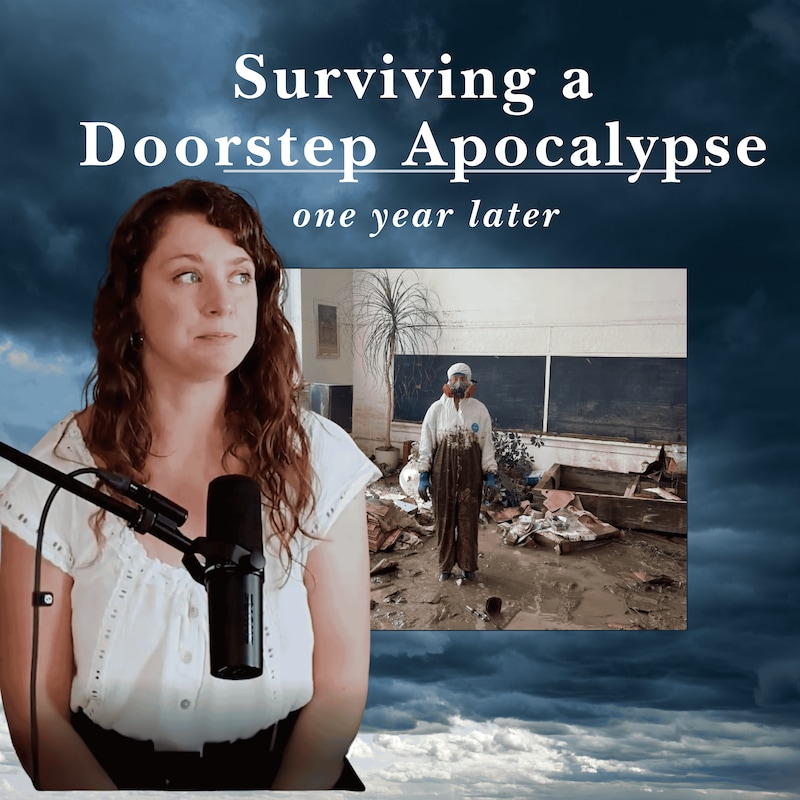
living through a doorstep
Speaker:apocalypse.
Speaker:So we are just past the
one year anniversary of
Hurricane Helene here in the
Speaker:mountains of Western North
Carolina. A little over a year ago,
Speaker:the hurricane came through and
massively changed our community,
Speaker:changed the mountains here,
changed life as we knew it.
Speaker:The hurricane itself caused a 1000 year
Speaker:catastrophic flood that
destroyed many towns,
Speaker:including my town of Marshall,
North Carolina, and my apothecary,
Speaker:which was housed in the old high school,
Speaker:in a beautiful building in the middle of
the river - on an island in the middle
Speaker:of the river. So if you're not
familiar with Hurricane Helene,
Speaker:or you haven't heard about this,
Speaker:this was a storm that came
in from the Gulf Coast,
Speaker:traveled 400 miles inland to the
mountains of Western North Carolina
Speaker:and caused just really,
Speaker:in some ways people would... during it,
were talking about it as being biblical,
Speaker:like a biblical level of disaster here.
Speaker:We had over a thousand landslides
Speaker:occur in the mountains here,
Speaker:tornadoes and windstorms that took
down over a hundred-thousand acres of
Speaker:trees. I have some friends whose property,
Speaker:land, has half the
trees down, if not more,
Speaker:just thousands of trees
falling in a matter of seconds.
Speaker:The neighboring county to us that
houses Asheville, Buncombe County,
Speaker:lost over 17% of their
trees in this event.
Speaker:There's over 73,000 homes that
were flooded during this time,
Speaker:lives that were lost.
Speaker:And while there was these
really specific catastrophic
Speaker:things happening over
the course of the storm,
Speaker:what also happened was a huge time
Speaker:period afterwards in which we lost
Speaker:access to a lot of basic needs and
Speaker:cornerstones of living
in the modern world.
Speaker:So Asheville itself, our closest city,
Speaker:was without power for weeks,
Speaker:was without drinkable
water for over 50 days.
Speaker:A lot of people that I
know were living without
Speaker:electricity, without water,
Speaker:for upwards of a month
or sometimes even longer.
Speaker:Many of us lost our access
to the outside world,
Speaker:whether it was through the bridge going
down that leads away from our house or
Speaker:one of our roads being
covered in a landslide.
Speaker:Three of the four major
arteries roads out of this area
Speaker:were destroyed or had
to be fixed in order to
Speaker:be able to leave. So there was a period
of time in which we couldn't even leave.
Speaker:The grocery stores were shut
down, cell service went down.
Speaker:So for days,
Speaker:we had no idea actually what
was happening for our friends,
Speaker:what was happening in other
parts of the mountains here.
Speaker:There was a whole package and
series of things that went on
Speaker:that then also put us into crisis mode for
Speaker:months afterwards. So it wasn't
just the few days of the hurricane,
Speaker:it was months of recovering, getting
electricity back, water back,
Speaker:communication back,
Speaker:rescue missions for folks who were
further ou,t digging out our homes,
Speaker:our towns, restructuring our entire lives.
Speaker:And so while all of this
was happening last year,
Speaker:pretty much everyone I know, myself
included, was just in survival mode,
Speaker:basically just trying to make sure
that we could get through this,
Speaker:move through this, deal with
the individual, personal,
Speaker:as well as collective losses
that we were moving through.
Speaker:But why I want to talk
about it now is because
Speaker:so much richness and learning
came out of this experience,
Speaker:and we are in the midst of this
one-year anniversary event,
Speaker:and anniversaries are
deep, they're profound.
Speaker:Anytime there's an anniversary
of something big in your life,
Speaker:whether it be beautiful or be
hard, things come up for review.
Speaker:Things come up to be understood
and further integrated.
Speaker:And there was so much that
I learned through this
Speaker:huge experience, this experience that
was a very personal experience for me,
Speaker:but also a very collective
experience where I live.
Speaker:It was an ecological experience as
well as a geological experience.
Speaker:And I really wanted to share some of
these learnings and lessons and insights
Speaker:because it's part of
my integration process,
Speaker:but also because it
feels like some of these
Speaker:learnings and gleanings are
really pertinent to us as a
Speaker:collective right now,
Speaker:that this is not just a one-off
experience here in these
Speaker:particular mountains,
Speaker:but that we are as a collective
moving through really big times of
Speaker:transformation, upheaval, and change.
Speaker:And some of the learnings
that came through
Speaker:this experience seem a bit
like torch lights for me
Speaker:as we move into this time here on
earth and this era that we're currently
Speaker:inhabiting.
Speaker:So my love and the brilliant poet
and thinker here in our community
Speaker:iz par sha came up with this
term "doorstep apocalypse." And
Speaker:I remember hearing this and just
having it ring this absolute bell
Speaker:in me that what we went through here as
a collective in the mountains of Western
Speaker:North Carolina,
Speaker:it was a small taste of what a
Speaker:collapse might look like, what
an apocalypse could look like.
Speaker:It was like we had this window of
time, days stretching into months,
Speaker:depending on where you were and
what you were moving through,
Speaker:where we saw what would happen if all the
Speaker:systems went down, if there were no
grocery stores, if there was no gas,
Speaker:if there was no way out, if there
was no running water anymore,
Speaker:if there was no electricity,
Speaker:if what we had was to
rely on one another and
Speaker:the land.
Speaker:And this was just a small
glimpse really in the
Speaker:scope of things.
Speaker:But I think about this etymology
of the word apocalypse and how
Speaker:in its original form means to uncover.
Speaker:And so there's a lot that we
uncovered and saw during this time.
Speaker:So in this podcast today,
Speaker:I want to share some of what I
learned through living through
Speaker:cataclysm in the hopes that
some of the lessons that I
Speaker:gleaned, some of the perspectives
that came through for me,
Speaker:are helpful for you
Speaker:in the losses and the ruptures and the
transformations that you are moving
Speaker:through in your personal life and that
we are moving through as a collective.
Speaker:The first lesson that became
very clear very quickly in this
Speaker:experience is that cataclysm
reveals the core of the human heart.
Speaker:We have this story that in disaster,
Speaker:our true nature as
humans will be revealed.
Speaker:And the fear is that that true
nature is one of selfishness
Speaker:and violence and savagery.
Speaker:And I'm here to tell you that
it's true that in disaster,
Speaker:our true nature is revealed.
Speaker:And what is revealed
actually is that at our core,
Speaker:we are deeply altruistic beings,
Speaker:deeply compassionate and deeply caring.
Speaker:During the hurricane
and still to this day,
Speaker:but very obviously in the days and
then weeks that followed this huge
Speaker:event,
Speaker:the outpouring of community
care was so immense.
Speaker:I heard more than one person say,
Speaker:this has totally redeemed
my faith in humanity.
Speaker:Within hours of the water
receding people were out
Speaker:rescuing people. People were
setting up aid stations,
Speaker:medic tents, food distribution,
Speaker:getting supplies to folks.
Speaker:The grassroots organizing that
happened here was truly amazing.
Speaker:And I think in some ways could
be like a case study because
Speaker:it blew me away.
Speaker:And I think it blew a lot of people away
who came in even from the outside to
Speaker:see what was happening.
But at the heart of this,
Speaker:what really was revealed
to me is the core of our
Speaker:humanity, at the core of who we are
as humans, we are deeply caring,
Speaker:deeply altruistic,
Speaker:and that hardship actually has
the potential to reveal this to
Speaker:us, that when the going gets tough,
Speaker:our true nature shines through.
Speaker:And that true nature is one of generosity.
Speaker:In her book, A Paradise Built In Hell,
Speaker:Rebecca Solnit reflects on this.
Speaker:This was a book that a lot of people were
reading after Hurricane Helene here in
Speaker:the mountains because it was so reflective
of our experience and was giving us a
Speaker:lot of context for what it is that
we're moving through. In her book,
Speaker:she looks at historical examples
of disasters and how they
Speaker:reveal what people could
be in everyday life,
Speaker:what communities could actually look like,
Speaker:how disasters uncover this
for us, how apocalypses,
Speaker:these great uncoverings, show
us actually what's possible:
Speaker:that we could be more connected
to one another, more cooperative,
Speaker:more democratic, and more egalitarian.
Speaker:One of the things that happens
in great community-wide disasters
Speaker:like this is that a lot of the
social boundaries dissolve.
Speaker:So I know in our community
that looked like folks who
Speaker:were liberal back-to-the-landers
working side by side
Speaker:in community,
Speaker:in these community hubs that were
so essential to the folks here,
Speaker:side-by-side with folks
who are more right-leaning,
Speaker:who would be going to church on
Sundays, versus whatever it is,
Speaker:the homesteaders who'd be staying at
home and making altars underneath trees.
Speaker:And this dissolving of social boundaries
had such a healing force to it to
Speaker:have these hierarchies and these
boundaries come down to just be people
Speaker:helping people to live, to
survive, to feel cared for.
Speaker:And that was a really incredible
aspect of this whole experience,
Speaker:that it wasn't just, let's make
sure everyone is fed, it was,
Speaker:let's make sure everyone's cared for.
Speaker:There were free
acupuncture clinics set up,
Speaker:people offering massages,
reiki. It was a true, deep,
Speaker:authentic care for other human beings.
Speaker:And there's a way in which moving through
something like this can just really
Speaker:reveal to us actually what's possible
in terms of how we can relate to one
Speaker:another, how we can be in community and
what the truth of the human heart is.
Speaker:And I think this is one of the fears
that we have walking into this time of
Speaker:cataclysm in our world.
Speaker:Great big change is that this is
Speaker:just going to make humans
more self-centered,
Speaker:less generous, more violent.
Speaker:But actually there's a balancing effect
that comes about when there is great
Speaker:loss in this way,
Speaker:where it actually instead
brings to light our true
Speaker:nature,
Speaker:our nature as beings who
are designed to be deeply
Speaker:altruistic and caring for one another.
Speaker:As I mentioned before, there were
days where we had no cell service,
Speaker:and so nobody knew how their friends were,
Speaker:if their family was okay. Some of us,
Speaker:if we didn't have gas in our car, we
couldn't get gas, we couldn't go anywhere.
Speaker:Or the road, or the way, it was blocked.
Speaker:But once cell service came back online
Speaker:after, for some people it was a few
days, for some people it was longer.
Speaker:But when that came back online,
Speaker:the flood of texts that we all received,
Speaker:they all started out the same
way. It was, are you safe?
Speaker:Do you have food? Do you have water?
Speaker:And this was from people I was close to,
Speaker:but also just people in my community,
Speaker:anyone who had my number.
Speaker:We all just were reaching out
to one another and making sure
Speaker:that we were cared for.
Speaker:There was this sense of this
openhearted caring without condition,
Speaker:without hierarchy,
Speaker:just a deep caring for other human
beings and for the world around
Speaker:us. It strips away all the things that
prevented us from just being in that
Speaker:natural flow of care.
Speaker:It really was this experience of
falling in love with people again,
Speaker:and it spread to the
areas outside even these
Speaker:mountains. The influx of love
and support and care that
Speaker:we received in the
aftermath of this event.
Speaker:I literally witnessed it bring
and stitch people's souls
Speaker:back together inside of
their bodies here. I mean,
Speaker:it was a soul wrenching time
and the kind of love and
Speaker:care and support,
Speaker:whether it was a love note or supplies
or money that was sent in, donations,
Speaker:it changed everything for us.
Speaker:It reoriented us to this
sense of this global
Speaker:community or this community that spreads
even wider than the hollers that we are
Speaker:within.
Speaker:And I hold onto this memory
as such a talisman of what can
Speaker:be possible for us, as yes,
Speaker:we move into big times on this planet:
Speaker:that instead of it breaking us
Speaker:down, that it could actually build
us up, build up our communities,
Speaker:build up this sense of
collective love and care and
Speaker:agape. And that that's the potential here.
Speaker:And cataclysm has the ability to do that.
Speaker:I just want to say here personally
that me and my business received over
Speaker:800 donations during this time.
Speaker:And it is not hyperbole
to say that that was
Speaker:absolutely lifesaving for me.
Speaker:It enabled me to devote
myself to fundraising and
Speaker:helping to support mutual aid
networks here on the ground for
Speaker:months. So I just wanted to take
that moment and say thank you.
Speaker:And I know I've said it before here,
Speaker:but it still astounds me.
Speaker:And as we're moving through
this one-year anniversary,
Speaker:it's just been coming up for me so much,
Speaker:just how profoundly soul saving that was
Speaker:and how much it meant to me.
Speaker:So if you need an example
today of just miraculous
Speaker:care
Speaker:and the reality that
we are a deeply caring
Speaker:species,
Speaker:then hopefully this will remind you.
Speaker:There was also this piece, this lesson
that came through, that was just...
Speaker:it's one of those things
where we'd prefer to not have
Speaker:apocalypse be the thing that reminds
us of this, but at the same time,
Speaker:I think this is an inbred part of
the human experience that crisis
Speaker:delivers us back into the
expansiveness of the present moment,
Speaker:that crisis has this ability for us.
Speaker:There's this concept in
anthropology that crisis,
Speaker:it deprives us of temporal agency,
Speaker:like our ability to structure,
Speaker:manage and manipulate
our experience of time.
Speaker:Like that gets taken
away from us in crisis.
Speaker:And if you've ever experienced
crisis in your life,
Speaker:whether it was acute or ongoing,
you will know this feeling.
Speaker:It's like I've lost my
ability to have agency over
Speaker:time.
Speaker:And this was so obvious during this
Speaker:time of the hurricane
and our recovery period.
Speaker:I mean literally without electricity,
Speaker:without cell service, we
didn't know what time it was.
Speaker:The whole season of autumn
was entirely different.
Speaker:I mean the weather was different
with all the trees down.
Speaker:The colors were different.
Speaker:It was like our day-to-day patterns
were completely and utterly different.
Speaker:Cooking over fire with your
neighbors for weeks on end
Speaker:because you don't have electricity. And
Speaker:so there's a breakdown in the normal
routines that happens in crisis
Speaker:that brings us back into the
present moment. It reminds me of...
Speaker:the anthropologist Jane Guyer
called this during the pandemic,
Speaker:"enforced presentism," like
this sense of having to be
Speaker:forced to be in the present moment.
Speaker:There's nowhere else you can
be but in the present moment.
Speaker:And there's a function I think,
Speaker:of crisis inside of our psyches
and the human consciousness,
Speaker:where it forces us to be
present in the moment.
Speaker:It brings us into the present because
we don't know and can't predict what's
Speaker:going to happen in the future. When
your life gets turned upside down,
Speaker:you lose that ability to plan because your
Speaker:plan so far completely
shifted and you can no longer
Speaker:stick to this plan or this
strategy moving ahead.
Speaker:And often what was in the past is
not accessible in the same way.
Speaker:And so we are just in the
present moment, we are here.
Speaker:And there's this weird thing that's
happened with time in the year since the
Speaker:hurricane where it both feels
like it's been five years
Speaker:and it feels like it's still
Speaker:happening.
Speaker:And it is still happening in a certain
way because we are deep in recovery mode
Speaker:still. There are still
places being cleaned out,
Speaker:stripped out, communities being rebuilt,
Speaker:bridges that still haven't been built.
Speaker:So we're still very much in
the midst of recovery here,
Speaker:but it's powerful to
Speaker:embrace crisis as this force,
Speaker:sort of this consciousness and this
entity, that brings you into presence,
Speaker:leaves you no other choice but
to bring you into presence.
Speaker:And what a potent experience to not
just experience this personally,
Speaker:but collectively, within collective,
Speaker:within this entire region,
Speaker:this vast region that was
affected by this huge event.
Speaker:All of us were completely
in the present moment.
Speaker:There was nowhere else that we could be.
Speaker:And I think about this
Speaker:as we move through real
tangible change in our world,
Speaker:that there's this potential for it to
actually bring us into the present moment,
Speaker:this present moment where we have
power, where we can create change.
Speaker:There's a reality that
we forget all the time,
Speaker:that the present moment
is actually all there is.
Speaker:We can travel in our
psyches to other places,
Speaker:but our body is only ever
in the present moment.
Speaker:And so becoming present brings us back
into our bodies, the seat of our power,
Speaker:the seat of our potential.
Speaker:And from there we can
find new ways of being.
Speaker:From there we can cocreate.
Speaker:We can literally create a new future.
Speaker:And this was so tangible in the
aftermath of the hurricane where there's
Speaker:all these choice points.
Like, do we rebuild? For
Speaker:our town in particular, for
Marshall, North Carolina,
Speaker:we've always known that we are in a
Speaker:high risk, flood prone
area. Do we rebuild?
Speaker:And then there were so many
individual choices too.
Speaker:Do I rebuild my house or do I
move on? Do I go back to that job?
Speaker:Even though now there's so much
less job security within that field
Speaker:because it relied on tourism and now
there's so many less people coming here.
Speaker:All of these choice points. For me, a
big one was do I restart the apothecary?
Speaker:And I have a whole episode where I
talk about my decision to let that go.
Speaker:But this was a moment of power, right?
Speaker:A moment of power to come
into the present and be like,
Speaker:what do we want to create moving ahead?
Speaker:And as we experience
more crises in our world,
Speaker:this becomes a potential to come
more into the present moment,
Speaker:more into our bodies. and therefore
more into our ability to co-create,
Speaker:to create our futures.
Speaker:So if you're moving through
individual crisis at this time,
Speaker:like a personal crisis in your life,
Speaker:I want you to know that that's also
on offer for you right now too.
Speaker:And it might not feel that way,
Speaker:because you're in the midst of what
feels like sort of this enforced
Speaker:presentism. But at the same time,
Speaker:there's also an opportunity
here and you are actively
Speaker:shaping your future in this
moment simply through being
Speaker:present with what is. There's
also this piece, and it was so
Speaker:glaringly obvious, but
also so nuanced for us,
Speaker:that loss rewrites the larger map of
Speaker:landscapes that we inhabit.
Speaker:So as I mentioned before,
Speaker:we didn't have access to
information for days or sometimes
Speaker:weeks depending on where you were living.
Speaker:And so we were piecing
it together day by day.
Speaker:If you hiked out from where you were to
get information or if you had a radio,
Speaker:they started doing radio broadcasts.
Speaker:And so day by day we start
piecing this puzzle together
Speaker:of what had happened.
Speaker:And some of it was really
shocking and confusing
Speaker:because we had major
floods happen, for example,
Speaker:in areas where there
was not major rainfall.
Speaker:And part of this process
for all of us here was
Speaker:this mapping of this larger landscape
that we're a part of in this way
Speaker:that we had not mapped it before.
Speaker:So starting to understand what
exactly happened that this
Speaker:rain came and hit the Blue
Ridge Escarpment and that it was
Speaker:this rain happening in a lot of
ways higher up that came down
Speaker:the ridges in a very particular way
that it came down causing landslides,
Speaker:feeding little creeks that fed
bigger creeks, that fed rivers,
Speaker:that pushed massive amounts of
water into places that frankly had
Speaker:pretty mild rainfall or
weren't experiencing windstorms
or tornadoes or some of
Speaker:these things. And so all of us
were rewriting the whole map,
Speaker:understanding from a bird's
eye perspective this place
in which we live in a way
Speaker:that we never did before.
Speaker:And at the same time,
Speaker:we were also rewriting
the maps that we did know.
Speaker:So many places that I know and
Speaker:love and visited were just gone.
Speaker:They were washed away. They no longer
existed anymore. There was a landslide.
Speaker:Access to them is completely blocked.
Speaker:I recently went on a hike
to one of my favorite
Speaker:spots in the mountains,
Speaker:and it was like being in a
completely new place, completely new.
Speaker:It went from being this beautiful
creek with deep swimming holes and
Speaker:moss for miles and deep green to stripped,
Speaker:bare rock.
Speaker:The river had completely changed shape and
Speaker:size. And landslides
taking away whole sides
Speaker:of the mountains,
Speaker:trees piled up stories high
inside the waterways and the river
Speaker:flows. And it just... it
Speaker:was a really interesting thing to move
through and to continue to move through,
Speaker:to have... not only get this wider view
of the landscape, piece it together,
Speaker:piece together weather
patterns and ridge patterns and
Speaker:geology in a way we never had to before,
Speaker:but then also to rewrite the maps
of the place in which we live.
Speaker:And at the same time,
Speaker:it really reminded me of this
thing that I learned about
Speaker:grief once,
Speaker:where we know through a neuroscience
perspective that our brain maps the world
Speaker:based on relationships.
Speaker:That that is a huge part of
how our human brain works.
Speaker:And so when we lose someone,
Speaker:part of why that grief and grieving is so
Speaker:disorienting and hard is because
we have to rewrite the entire map
Speaker:of our existence. Because
that relationship no longer
exists in the physical,
Speaker:temporal map of our mind.
Speaker:This is why neuroscientists Mary
Francis O'Connor talks about
Speaker:grieving as a kind of learning.
Speaker:Our brain is actively intensely
learning in the aftermath of
Speaker:loss because we're having to
remap our entire existence.
Speaker:And so when we have any kind of loss,
Speaker:but when we have a kind of
community-wide loss in this way where
Speaker:we've lost community members, landmarks,
Speaker:places in which we literally
mapped our existence,
Speaker:we have to rewrite and
remap this entire landscape
Speaker:inside of our brain.
Speaker:And I think that there's this piece here
Speaker:where
Speaker:it's so similar to the
grieving of a loved one
Speaker:where through the intense pain
and reorientation of this process,
Speaker:what we gain access to
are new maps of meaning.
Speaker:We gain access to larger perspectives of
Speaker:ourself, our world, of what matters.
Speaker:And it's a hard-won meaning
to have that kind of meaning
Speaker:in your life,
Speaker:the kind of meaning that comes through
grieving and having to rewrite the map
Speaker:of your existence, that is hard one.
Speaker:And I think that this kind
of learning is really at the
Speaker:bedrock of human wisdom,
Speaker:our ability to find meaning
and create landscapes of
Speaker:meaning in the aftermath of such loss.
Speaker:And I had this experience about a month
Speaker:after the hurricane - I guess it
was about a month and a half - where
Speaker:I've boarded an airplane
and flew up north to
Speaker:my friend's baby shower. And it
was such a surreal experience.
Speaker:I hadn't left at all the entire
time of the hurricane and the
Speaker:recovery and all of us were just
in this intense place together,
Speaker:and leaving felt like literally
going to an alien planet. I was like,
Speaker:where am I? What's happening
here? There's no dust in the air,
Speaker:there's no collective crisis.
There's free flowing, fresh water.
Speaker:But one of the things that
happened was I got on the airplane,
Speaker:and I've flown out of Asheville
airport more times than I can count.
Speaker:I get on this airplane and I've
flown this specific route many times.
Speaker:And normally they fly up, they
get altitude pretty quickly,
Speaker:you lose sight of the ground,
Speaker:you get a little bit of the
mountains for a few minutes,
Speaker:then you're up and you're
sort of flying out.
Speaker:But what happened was we flew up and the
Speaker:pilot took us over everything.
Speaker:We flew up and we flew right over
Speaker:Asheville.
Speaker:We flew over the hardest hit
flood areas in Asheville.
Speaker:We flew east past Swannanoa,
Speaker:we flew over the reservoir that had
Speaker:been so damaged that it was unable
to provide clean drinking water for
Speaker:people for upwards of 50 days.
Speaker:We flew over everything.
It was unbelievable.
Speaker:And I'm looking around at everyone
and I'm like, are you all seeing this?
Speaker:Are you all seeing what
is happening right now?
Speaker:We are getting this
literal bird's eye view.
Speaker:And it was just so monumental for me.
Speaker:I just had tears streaming down
my face to have been on the ground
Speaker:and in it. Like in it so
intensely. Like in a Tyvek suit
Speaker:up to my waist in muck, in it.
And then get this bird's eye view.
Speaker:And both... see both at the same time,
Speaker:be able to see both the absolute
catastrophe of what happened to so many of
Speaker:these communities and to see that this was
Speaker:in a lot of ways like this
ripple on the surface of
Speaker:the earth, like this small ripple
in the vastness of the earth.
Speaker:And while this was a very physical
experience for me literally being up in an
Speaker:airplane and looking down at the ground,
Speaker:I think there's something
about crisis that
Speaker:when we are willing to move
through it, to be in it,
Speaker:to be in the present moment of that,
Speaker:that it ends up giving us this
kind of perspective to actually see
Speaker:the crises in our life as this
ripple in the wider field of the
Speaker:world and the wider face of the earth.
Speaker:And that that doesn't diminish
its importance or its bigness,
Speaker:but that we are at the same
time held by all that is not in
Speaker:crisis, all that is,
well, all that is growing,
Speaker:all that holds a meaning and
a pattern and a perspective
Speaker:of possibility beyond
what we might be able to
Speaker:access in that moment.
Speaker:But there's also this thing
where disaster digs up what isn't
Speaker:working in our lives.
Speaker:So you've probably seen this in your
own personal life and what you've moved
Speaker:through, that when the
shiitake hits the fan,
Speaker:you're seeing very clearly
what isn't working.
Speaker:So this was so unbearably
obvious during the
Speaker:hurricane. This was a huge
pain point for many of us here.
Speaker:The sheer amount of trash,
Speaker:the detritus of industrial
society and capitalism
Speaker:literally washed up
stories high on the banks
Speaker:of our rivers, mud, toxic mud,
Speaker:washing into our homes
and down our streets.
Speaker:The ways in which many of
these landslides happened,
Speaker:happened because of how
we grade for houses,
Speaker:how we grade for roads,
Speaker:things like this were
literally uncovering,
Speaker:going back to that definition
of apocalypse, uncovering
like what is untenable,
Speaker:what doesn't work.
Speaker:We were confronted in this
way that many of us in
Speaker:the privileged western world
don't have to confront.
Speaker:We were confronted with the
sheer amount of trash and
Speaker:stuff that we produce as a
culture. It's right there, right?
Speaker:It's right in our face. And
Speaker:I think that this is happening
on a very physical level.
Speaker:But what I witnessed inside
of my community is that
this was also happening for
Speaker:people on a really personal level,
really beginning to recognize,
Speaker:like what is untenable in my
life? What can I no longer stand?
Speaker:What is toxic about the way
in which I've been living?
Speaker:I refuse to go back to that.
Speaker:So many people made such big
changes after the hurricane,
Speaker:and some of that was
because we were forced to,
Speaker:because of something that we lost or
something that changed irrevocably.
Speaker:But some of that was just because it
brought us face to face with the bareness
Speaker:of our soul and our desire in
this life. And we realized like,
Speaker:this isn't working. This
is not how I want to live.
Speaker:This is not what I want to
be adding to. And for me,
Speaker:a lot of what came up with this was
patterns of overwork and overgiving:
Speaker:that I got sort of a front row
seat to a lot of my patterns of
Speaker:running myself into the
ground in order to give.
Speaker:And it was a huge update and
learning for me in a time of such
Speaker:profound need to really let go of that
Speaker:pattern and to put my oxygen mask
on first so that I could care for
Speaker:my family, that I could
be there for my daughter,
Speaker:that I could still be involved in
fundraising for my town without
Speaker:completely bottoming out.
Speaker:And I think that this happens
for all of us in the midst of
Speaker:crisis in this way, that disaster
digs up what is not working.
Speaker:And at the time it can feel punitive.
Speaker:It can feel like we're we're
just being confronted with this
Speaker:nastiness of existence.
Speaker:But the reality is we are just uncovering
what's always been there and no longer
Speaker:works. And when we can embrace that,
Speaker:we can make really powerful
changes in our lives,
Speaker:changes that do truly transform
the fabric of our existence.
Speaker:Disaster like this really rewrites for
you what is important, what matters.
Speaker:And coming out of this
experience, I really asked myself,
Speaker:what kind of life do I want to live
and what am I willing to risk to
Speaker:live it?
Speaker:And this is the exquisitely
painful beauty that
Speaker:comes out of living through
disaster in our lives,
Speaker:whether it's personally or collectively,
Speaker:is you arrive at the
altar of this question:
Speaker:What do I want to live for,and
what am I willing to risk
Speaker:in order to come alive? And I think if
all of us asked ourself that question
Speaker:and followed through this world would
be a completely different place.
Speaker:In the months after this event,
Speaker:I had so many people, anytime
I ever said where I was from,
Speaker:give me this look of just grieving and
Speaker:empathy and care. And
it meant so much to me.
Speaker:And it often surprised
them when I started talking
Speaker:about the event.
Speaker:And what I said was that
there's a piece in which
Speaker:it was a great privilege. And
Speaker:specifically it was the privilege
Speaker:of becoming a part of
the story of this place.
Speaker:It was the privilege of becoming
a part of the story of deep time.
Speaker:So we as humans are just kind of a
flash in the pan so far on this planet.
Speaker:We have not been here very long at all.
Speaker:And we are living in landscapes
that are millions of years old.
Speaker:And most of us don't get to see the kind
Speaker:of changes that happen to create
the landscapes in which we live.
Speaker:We look around and we see the landscape
as this sort of static entity.
Speaker:But when you move through
something like this,
Speaker:the privilege is that you get
to witness and be a part of
Speaker:the deep-time story of that landscape.
Speaker:And it's terrible and
beautiful all at once.
Speaker:So I got to witness, for
example, the town where I live,
Speaker:in Marshall...
Speaker:We are on perched on this little
Speaker:bank next to the river with cliffs
on either side of hard stone.
Speaker:And you look at the river valley
and you look at the way it's shaped
Speaker:and you realize after an event like this,
Speaker:this is why the valley is shaped this way,
Speaker:because this has happened many,
Speaker:many times over the course
of the life of these
Speaker:mountains. Looking at someplace
like the Swannanoa river
Speaker:valley, which experienced
horrific flooding,
Speaker:it's this wide valley.
Speaker:You almost wouldn't know it was a valley
unless you zoomed out because it's so
Speaker:wide.
Speaker:And yet we know that if this
is a thousand-year flood
Speaker:that we experienced and this
valley is a million years old,
Speaker:then this has happened 1000 times.
Speaker:And so there's this way
in which we're literally
Speaker:witnessing the creation of
a landscape, the creation
Speaker:of this life story, of this place.
Speaker:And that's a privilege.
Speaker:What a privilege to be
a part of this deep-time
Speaker:story.
Speaker:And I see that in the world
at large right now as well,
Speaker:that we are going through really
big change on this planet.
Speaker:And it's a heartbreak and
it's also a privilege to live
Speaker:at this time, to be a part of this deeper,
Speaker:wider story that we're likely only
Speaker:going to be here for a small fraction,
Speaker:not just in our individual
lives, but as a species.
Speaker:And we are a part of that story.
Speaker:We're witnessing that story.
We are co-creating that story.
Speaker:And there's something that happens
in your psyche when you can
Speaker:rework your perspective of
it to see it as a privilege,
Speaker:to see it as a privilege
to experience that.
Speaker:There are stones that have been unearthed
by this hurricane that have never seen
Speaker:the light of day, millions
and millions of them.
Speaker:Stones that have never
touched a human hand.
Speaker:The ways in which the
landscape here has been scarred
Speaker:is very much like the scarring that
Speaker:might come through childbirth.
Speaker:It's like this is now a part
of the story of this place,
Speaker:the body of this place, and just
what a privilege to be here,
Speaker:to witness that, to move through that,
Speaker:to be with the earth in that way.
Speaker:And this was a commonality
among many of the people that
Speaker:I talked to in my community
here in this event,
Speaker:that there was no
Speaker:animosity towards the river.
Speaker:There was no animosity
towards the mountains.
Speaker:There was only deep feeling,
Speaker:there was only grief and
there was only connection.
Speaker:The connection actually that we felt and
feel now to this place in the aftermath
Speaker:is immense,
Speaker:deeper than it could have been before.
Speaker:I remember specifically kicking
the door down to my apothecary,
Speaker:and there's foot of mud left behind by
Speaker:nine feet of floodwaters.
Speaker:And walking in and seeing
that nine-foot floodline and
Speaker:everything that had
been in there picked up,
Speaker:swirled around in some sort of
slow moving eddy in the deep
Speaker:body of this river and then
gently deposited back down.
Speaker:I could see the etchings of
the water as it went down over
Speaker:hours and hours and hours.
Speaker:And I could feel, standing in that room,
Speaker:I could feel the body of the
river having been in that room,
Speaker:the body of the river having
inhabited the entirety of
Speaker:this valley.
Speaker:And to come into presence with an element
like that, to come into presence with
Speaker:a force of nature, a being of
nature in that way, is powerful.
Speaker:And lifechanging. And I think
that this is really a part of
Speaker:our human experience, the
deep human experience,
Speaker:the experience of our deep ancestors,
Speaker:that we moved through
big cataclysm like this,
Speaker:where we were brought
into contact with the
Speaker:bodies of this world in
a way that widens our
Speaker:perspective, that forces
us to our knees in awe,
Speaker:in reverence, in gratitude, and respect.
Speaker:So I have a relationship now
to the river, to the water,
Speaker:to the mountains here, in a way that
I could not have dreamed of before.
Speaker:It's it's relationship-building to
Speaker:move through something like this
together. And when I say together,
Speaker:I don't mean together
as a human community.
Speaker:I mean together as a human
and more than human community,
Speaker:together as an ecology.
Speaker:You feel deeply the ways in which
you are part of that ecology.
Speaker:You are inseparable. And
that feeling of connection,
Speaker:of belonging of the rawness
and intensity of being a
Speaker:body within bodies, and relationship
to the body of the land is...
Speaker:it's a gift and it's a privilege.
Speaker:There's a primacy now,
Speaker:a directness in the way in which I
could communicate with this place in the
Speaker:aftermath of this experience.
Speaker:It's being someone who's already very
deeply connected to these mountains having
Speaker:moved through this,
Speaker:it's the same as having
moved through a major rupture
Speaker:with a human that you love.
Speaker:You probably have people in your life
who you've moved through really hard
Speaker:things with, and on the other side,
Speaker:there's a closeness and an
intimacy that wouldn't have been
Speaker:possible without having moved
through that kind of rupture.
Speaker:And that's how I feel
about these mountains now.
Speaker:And I think it's how we are all going
Speaker:to feel the more we move
through big times here
Speaker:on this planet,
Speaker:that some of these
cataclysms and disasters,
Speaker:that the touching of an
apocalypse, a great uncovering,
Speaker:it actually then gives us
the ability to create deeper
Speaker:intimacy and connection with this planet,
Speaker:deeper relationship to really perceive
the preciousness of this place
Speaker:that we're within,
Speaker:to uncover our connection to
Speaker:her, our connection to this planet,
Speaker:our connection to the
landscapes we live within,
Speaker:our connection to our own deepest
selves and what truly matters.
Speaker:So I hope that this podcast episode,
Speaker:while it was very personal for me
Speaker:and a tender project that I wanted
to make sure I put out into the
Speaker:world, I hope that it also is giving you
Speaker:some perspective and support
for helping you rewrite
Speaker:cataclysm in your own life.
Speaker:So may the disasters and the
ruptures in your own life help
Speaker:you realize the true nature of your heart.
Speaker:May they bring you into the present
moment in a way that expands
Speaker:your reality.
Speaker:May they help you rewrite
the map of meaning in your
Speaker:life, help you release and
see what's not working,
Speaker:and really start to see
yourself as someone who is
Speaker:here to be in relationship with
Speaker:the deep magic of this planet,
Speaker:to be in relationship with
this time of great change,
Speaker:that you have a role here to
play and that the individual
Speaker:disasters that we experience in
our life help us connect to that,
Speaker:help us become the kind of people
Speaker:who can walk through the bigger
story happening here on this planet.
Speaker:The word cataclysm comes
from the Greek "kataklusmós,"
Speaker:which is down, washing down.
Speaker:And I think that there's this
level, in talking about cataclysm,
Speaker:where it's like we can really clear away,
Speaker:wash away,
Speaker:the things that prevent us from
living how we're meant to live,
Speaker:from living from our heart,
from living from what matters,
Speaker:for seeing the unbelievable privilege
that is living on this planet,
Speaker:that everything that has happened
to us and that is happening to us
Speaker:currently and that will happen to
us in the future is all a part of us
Speaker:moving into deeper
connection, moving into...
Speaker:deeper into our soul's path and into the
Speaker:great privilege of being a part
of the story of this planet,
Speaker:the privilege that we all
came here to be a part
Speaker:of. Surviving and making
meaning out of your
Speaker:own losses and disasters,
it feeds the greater whole.
Speaker:I think that this is at the bedrock
of human culture is our ability to do
Speaker:this as a species. This is
a huge feature of humankind.
Speaker:And that when we move through
these not only personal,
Speaker:but huge society-wide soul forging times,
Speaker:we come out better.
Speaker:We come out more aligned with our
true nature and more aligned with the
Speaker:living world around us.
Speaker:And I think there's this level in which
this is what true disaster prep is.
Speaker:Disaster preparation is not
about hoarding resources,
Speaker:but it's about being willing to walk
through these arcs in our own life,
Speaker:to walk through these times where
everything falls apart in our own life,
Speaker:and to learn how to show up
with clarity and heart in
Speaker:moments of breakage. And
as we walk through that,
Speaker:we learn how to become these people
Speaker:who can show up for this big
change here on this planet.
Speaker:We can start to see that
collapses are coming together,
Speaker:that breakdown is a breakthrough,
Speaker:and that disaster opens your
heart to be moved. It's moving.
Speaker:It's very moving to live through an
Speaker:experience like this. And
when our heart is moved,
Speaker:we can move collectively into a new era.
Speaker:So thank you so much for
listening to this episode
Speaker:today,
Speaker:for being a part of the
wider arc of this experience.
Speaker:For me.
Speaker:This podcast came directly
out of Hurricane Helene;
Speaker:the inception of this podcast,
the name of this podcast,
Speaker:the support that I
received during that time,
Speaker:enabled me to start creating
this podcast once we were
Speaker:out of crisis mode, and I could
start to resource on the other side.
Speaker:And so just by listening to this,
Speaker:you are a huge part of the arc of this
Speaker:experience. And with this
Speaker:open heart today, I just want to
thank you so much for being here.
Speaker:Thank you so much for all the ways
in which you have so bravely walked
Speaker:through the cataclysms in your
own life, for all the learnings,
Speaker:the hard earned learnings that
you have gleaned from that,
Speaker:and that you are now
bringing to the world.
Speaker:You become an even
greater force of healing
Speaker:through walking through the
natural disasters in your own
Speaker:life. And I want to
honor you today for that.
Speaker:So if you are feeling moved to
donate towards the continual
Speaker:recovery here,
Speaker:I'm going to put some links
here in the show notes,
Speaker:specifically highlighting the
beautiful building that housed my
Speaker:apothecary that I have now
been a large part of helping
Speaker:to rescue.
Speaker:I'm currently on the board of this
building called Marshall High Studios,
Speaker:and we recently got nonprofit status,
so I'm very excited about that.
Speaker:I'll put that link there.
If you are feeling moved,
Speaker:then there are some
resources there. But truly,
Speaker:I just want to say that
Speaker:if we are in the midst of a
doorstep apocalypse as a world,
Speaker:I am just so delighted that I
can be standing here with you.
Speaker:I think there's this way in which we are
on the threshold of a great uncovering,
Speaker:and I wouldn't want to be
here with anybody else.
Speaker:So thank you for being here.
Thank you for listening.
Speaker:Thank you for everything that you've
walked through in your own life.
Speaker:It has brought so much
meaning to the whole.
Speaker:And may whatever greets you
in the rest of your day,
Speaker:as you move through the meaning
making in your own life,
Speaker:may it help you remember that thing that
Speaker:is really the most helpful
and important thing of all,
Speaker:remembering why you're here.
