Shownotes
Women were were excluded from federally funded medical research until 1993. Health journalist Meghan Rabbitt interviewed over 100 female experts to create a manifesto for women's healthcare everything from why we're still learning anatomy named after dead men to why your gynecologic history affects your heart disease risk decades later.
Meghan is a health journalist who's been translating complex medical topics into accessible language for 25 years. She's spent her career asking doctors the questions patients want answered and helping women understand their bodies better. When Maria Shriver asked her to write a manifesto about women's healthcare, even with all that experience, she was shocked by what she learned. Women weren't included in federally funded medical research until 1993. Autoimmune diseases disproportionately affect women, but we still don't know why. Heart disease kills more women than all cancers combined, yet awareness is declining.
We talk about what it means to become the CEO of your own healthcare and why that mindset matters.
Meghan shares practical strategies for making the most of short doctor visits and navigating the flood of health information online. We discuss why shame keeps women from getting care, why we need to stop normalizing pain, and how perimenopause can be a window of opportunity instead of something to fear. The conversation covers everything from why your pregnancy complications matter for heart health decades later to why medical devices are still designed without women's bodies in mind.
Highlights
- Most doctors don't proactively discuss lifetime breast cancer risk with patients.
- 70% of autoimmune disease patients are female, but research is severely underfunded.
- Anatomical eponyms like "fallopian tubes" actually increase cognitive load for medical students.
- Making a prioritized symptom list before appointments helps maximize limited doctor visit time.
- 80% of the 10 million Americans with osteoporosis are women.
- Gynecologic history like preeclampsia impacts heart disease risk decades later.
Start thinking of yourself as the CEO of your own healthcare. That means educating yourself, showing up to appointments with a prioritized list of what matters most to you, and stopping the apologizing. Your body isn't something to be ashamed of. Your symptoms aren't an inconvenience. If you're a woman of color facing additional barriers in the healthcare system, bring someone with you to appointments who can advocate alongside you.
Make sure to subscribe to the podcast and share this episode with any woman who needs permission to stop normalizing pain and start demanding better care.
Get in Touch with Meghan:
Get in Touch with Me:
Transcripts
use it. I was showing it to my daughter. I have a 13 year old and a seven year old. I'm like, Listen, you guys, this is very easy to read. Like because they're already like they know everything about period. Every time I get angry at them. They're like, is this scary? Like, just be honest with it.
Meghan Rabbitt (:Well, that's such a high compliment to me because I've heard from another couple of doctors as well who have said to me, know, I'm going to give this to my daughter because as a doctor, she thinks I just go on and on and she already knows a lot. But like, it's such a high compliment coming from you because that's really why I wrote this book is to actually empower patients with the information we need so that when we go to see you in the guy, you know, at our annual visit, we're like, you know, we can have such a different conversation, right? Yeah.
Dr. Sameena Rahman (:Yeah.
Dr. Sameena Rahman (:Thank you.
Dr. Sameena Rahman (:Yes.
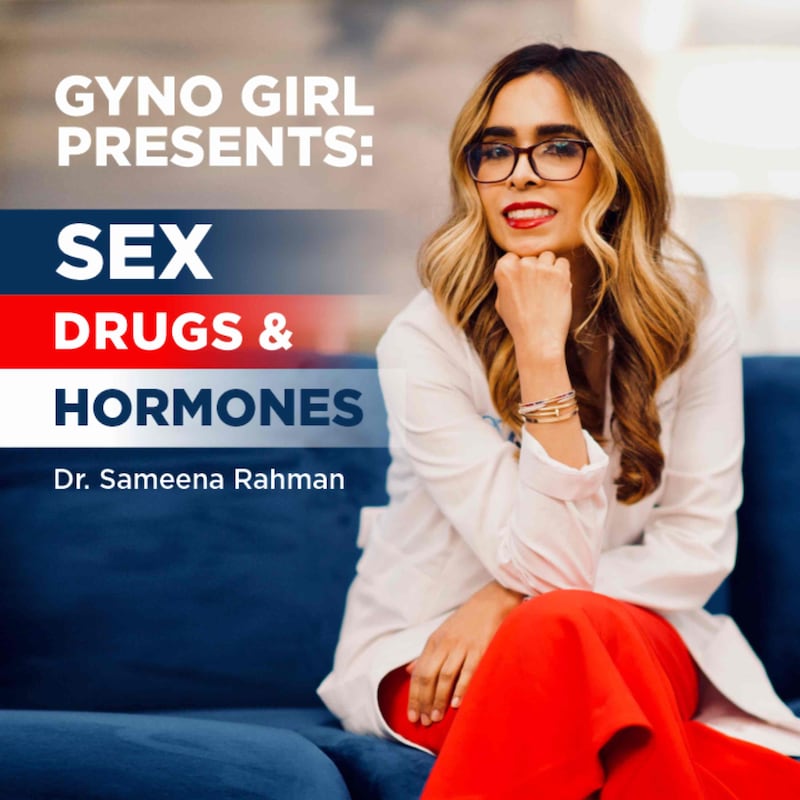
Dr. Sameena Rahman (:I want to get into it so we can talk about this. I'm going to do my little intro and then at the end I do a wrap up and then I'll do a full intro of you. I have some intro written up. Let's get started because I want to talk to you as much as I can. Hey y'all, it's me Dr. Samina Rahman, gyno girl. Welcome back to another episode of Gyno Girl Presents Sex, Drugs and Hormones. I'm Dr. Samina Rahman.
Meghan Rabbitt (:Okay, cool.
Dr. Sameena Rahman (:I'm super excited to have a special guest today. And I want us to think about how much more women are informed and more vocal we are these days. We're more engaged. I have patients coming in all the time. They've seen stuff on social media. They've seen stuff on TikTok. They are reading books. There's tons of books out there, but sometimes they still leave the doctor's office confused or dismissed, whatever. Today's conversation is really about
changing the rules. And I often say on this podcast, my tagline is I'm here to educate so you can advocate for yourself. And this is living proof. What I'm going to introduce to you is the Bible for Advocation of all sorts of like women's health issues, not just, you know, reproductive, hormonal, everything. Today, my guest today is the amazing health journalist that you heard on the intro and author Megan Rabbit, whose book
the new rules of women's health is a deeply reported, evidence-based, and empowering look at why women's healthcare has fallen short for decades. Probably more than that. And what we need to know to change it right now. And I love the approach that she's done. She interviewed over a hundred different experts. She breaks down what the old rules are for women and how we're taught to accept suffering and all the bad things and what the new rules we are.
embracing and this is totally aligning with my podcast because that's what I'm here to do. I'm here for you guys to be able to take information with you every time you see your clinician so that you don't leave even more confused. And so I love that she did this in this very expansive book. I think it's how many pages? Almost seven. This is really like an encyclopedia. I don't know if people remember what encyclopedias are.
Meghan Rabbitt (:I do.
Dr. Sameena Rahman (:Does anyone remember the encyclopedias of women's health rules? So today we're going to talk about what shocked her the most, the misopportunities women face across lifespan and how to navigate with the flood of information we get online and through media outlets, what's actually true, what she actually learned. So really it's changing the narrative on how sometimes we're viewed as difficult patients, but we want to become the empowered patients.
We want to be able to advocate for ourselves. And realistically, I've said this before, like, no one's coming to save you. So we got to, we got to do it for ourselves. So thank you so much, Megan Rabbit for being here. I'm so excited. Such a fan.
Meghan Rabbitt (:Thank you so much. I'm right back at you. I am such a fan. Gyno girl, amazing, amazing information for women. Yeah, that really, that's gonna help us feel empowered to care for ourselves and get the care we deserve.
Dr. Sameena Rahman (:Absolutely, absolutely. Well, let's start at the beginning. What were the moments or series of moments? I read your, when we're talking about your intro, and you could tell us about some of the health issues that you talked about in your book. But what made you realize at some point, we can't follow these old rules anymore. There's some new rules that we have to follow. And why did you realize that needs to exist?
Meghan Rabbitt (:Yeah. Yeah, it's a great question. It's like we have been left out of research for far too long. We being women, right? You talk about this all the time. It's like we have for far too many years, the research on sex specific differences in health has just not existed. It has been underfunded, understudied.
Dr. Sameena Rahman (:Mm-hmm.
Meghan Rabbitt (:you know, when I really tucked into the research for this book, I think I realized that a lot of this had to do with women just not being at the table where decisions were made when it comes to what gets researched. Right. And so because the men at the table, amazing clinicians and researchers, they weren't dealing with stabbing pain that's associated with all these gynecologic conditions. And so those didn't get studied. Right. And then there's a whole
Dr. Sameena Rahman (:Yeah.
Dr. Sameena Rahman (:it.
Meghan Rabbitt (:bunch of other factors that we need to talk about when it comes to the sexism and historically in medicine. Bingo, bingo. so, thankfully that is changing. And so the impetus for this book, the real spark for this book was I worked for Maria Shriver. I was out in LA and I've been a long time health journalist, so going on 25 years now. And she looked at me and she said, we have a long road ahead.
Dr. Sameena Rahman (:Yeah, systemic patriarchy.
Dr. Sameena Rahman (:Yeah.
Meghan Rabbitt (:We are not where we need to be when it comes to women's health research, but we do have some new findings, you know, based on the research that we are finally starting to do on women. I want you to write a manifesto. It's been far too many years since we have had a real, just a manifesto. But you know.
Dr. Sameena Rahman (:Yeah.
Dr. Sameena Rahman (:Yeah, just bring a little bit of this stuff out, what have I done? Yeah, that's all I want from you, have I done?
Meghan Rabbitt (:Yeah, and Maria's driver is a commanding woman. you look at her with I looked at her with wide eyes and I was like, OK, Maria, I'm on it, you know. And so I really started looking at the research, what we have, what women need. You know, we've got so many great health books. And so there are so many out there. But what I aim to do, I interviewed over 100 experts, all female. I felt like that was really important to get the female voice in here. You know, for too long, we haven't had a seat at the table. And now we do. I wanted those voices in this book.
Dr. Sameena Rahman (:she's amazing.
Dr. Sameena Rahman (:Thank
Dr. Sameena Rahman (:important.
Yeah.
Meghan Rabbitt (:And so really looking at lifespan issues, everything from anatomy, puberty, sexual health, all the gynecologic conditions, and then getting into some of the specialties, heart health, brain health, and really helping women understand what we need.
Dr. Sameena Rahman (:autoimmune, I love the stuff around, you you did with autoimmune diseases and immunity and all the things. you know, skin, you talk about skin, like it's just, it's a lot. It's pretty much, that's what I said, it's like an encyclopedia of like, okay, well, I'm having some GI, well, what about multiple sclerosis or, you know, like you can look up certain topics and get, you know, a starter on some of these things and really get, you know, some answers that you deserve. So.
Meghan Rabbitt (:Yeah.
Meghan Rabbitt (:Yeah, thank you. mean that that was the goal. You know, this is a big book and so it's not going to be one you bring to. It's not a beach read, right? It's not going to be one you cozy up with with in your favorite reading chair with a cup of tea and go cover to cover. But what it is, you know, I had a high compliment. Someone said this is a coffee table book because you want to be able to access it. It's really pretty, but also you want the men.
Dr. Sameena Rahman (:Great.
Meghan Rabbitt (:in your life to be like, what's that? you know, I've given this, I've given chapters to my husband and said, look, I need you to read the breast health chapter because I have a follow-up ultrasound and I want you to support me in a better way than you usually do. And he found so much, you know, so, so much information for him that has helped him support me. And I think that's really important as well.
Dr. Sameena Rahman (:Yeah.
Dr. Sameena Rahman (:Uh-huh. Absolutely. Well, you know, my theme is, I mean, I'm gyno girl is my like trade name or whatever, but so I love superheroes and I love comics. So I love a good origin story. So tell me like what brought you into the healthcare space as a writer? mean, I think it's so amazing when people can translate and, know, obviously as clinicians, we try to do this to the best of our capacity, but we don't, we're not always.
I'm like good at it, honestly. So, you know, and so I think that translational, you know, communication is so important for people to really understand their healthcare needs. But what brought you into writing and what brought you into healthcare writing specifically?
Meghan Rabbitt (:Yeah, I always wanted to be a doctor. So when I was a little girl, I thought I was going to be a doctor. And then I, you know, I really tucked into a lot of science and I just felt like, I don't know that I'm this is cut out for it. And yeah, so I always wrote, you know, throughout my life as well. It's how I process the world, really. And then when I got to college, I took my first journalism class and very quickly after college and I got my first job in magazines in New York City.
Dr. Sameena Rahman (:Yeah.
Dr. Sameena Rahman (:you like it.
Dr. Sameena Rahman (:Yeah.
Meghan Rabbitt (:the health beat was my jam. I just wanted to cover health topics. I think it was because I had always been interested and fascinated by the body and how miraculous it is. And so that was really my training by old school journalists who really taught me how to ask the right questions and translate complex medical topics into language that all of us can not only understand, but then put into practice in our life. And I feel like,
Dr. Sameena Rahman (:Yeah.
Yeah.
Dr. Sameena Rahman (:I'm not telling you this.
Meghan Rabbitt (:Doctors like yourself, you're amazing at communicating with patients. And what I get the privilege of doing is asking you questions that all of us might have. And then really in asking you questions, doing the translation, doing the like, okay, I hear what you're saying and asking the follow-up to help it make even more sense. I often give the example of, I was working on a story ages ago about why oatmeal lowers cholesterol. And I was getting all these like complex answers and I'm like, just.
Tell me how exactly it works in the body. And I just love doing that because I feel too, like women are smart. We are smart. And when we understand the why, we'll be more inspired to do the thing you're telling us to do.
Dr. Sameena Rahman (:Right. Yeah.
Yes.
Dr. Sameena Rahman (:Absolutely, 100%. I agree with that 100%. And I love the fact that through writing, you're able to give patients voices. You interview people with different conditions or have been dismissed, unfortunately, by the health care system, which we can all agree is not meant to serve women in any capacity. That is helpful, I think. And so how has that been for you, just being able to go out and talk to different patients in different scenarios?
Meghan Rabbitt (:Yeah. Yeah.
Dr. Sameena Rahman (:you know, different, you things happening COVID, all the things that were going on at once. Yeah.
Meghan Rabbitt (:love it, you know, because it's like I, yeah, it's amazing talking to these mostly women. I focus a lot on women's health, right? And so I talk to these women who are dealing with conditions that make them feel invisible. So autoimmune disease, for example, you know, or chronic pain, which disproportionately impacts women. And a lot of times these conditions, they're, you don't have the outward signs. And so you feel really alone in the struggle with it. And so I love talking to women about that, helping.
Dr. Sameena Rahman (:you
Meghan Rabbitt (:them give voice. And I think a lot of us, when we talk about what's going on in our health, we not only feel empowered, it's this extra sense of like, yeah, this happened to me, but we also feel like we're paying it forward because if someone else can read a story about my experience, if someone else can listen to a podcast like yours and say, that was me too, it makes us feel like we're helping other women who used to be in our same boat. Right. And I think it's just, yeah, it's a real privilege. consider it a privilege.
Dr. Sameena Rahman (:Yeah.
Meghan Rabbitt (:to talk to patients, to talk to physicians and researchers to help give this information a platform.
Dr. Sameena Rahman (:Absolutely. And I think it's important because I have a lot of clinicians that listen to my podcast to understand that patient perspective as well. know that sometimes, again, I talked about this a lot in my podcast at our health care system. When you have a 10 minute visit, it's not going to be fruitful for patients with really complex conditions or even transitioning through anything. And so it's really so important that you know.
that we see the human side to all of it, right? Because at some point, as a burnt out clinician, and I've been there, I've been at a point where I had to see 40 patients a day and it's, you don't feel good. That's not why you went into this. And so I always say that I don't blame a lot of the clinic, even though they could say things better when they don't understand or when they don't have time, sometimes I hear stories. I'm like, why did they tell you that?
Meghan Rabbitt (:Yeah, yeah. And I think you're bringing up such a good point, which is like every clinician I interviewed for my book, they want to help patients. And so they're not trying to make people feel dismissed. And we're working within a system where appointment times are shorter than ever. Right. But I felt really passionate about interviewing doctors for my book to help readers understand how we can make the most of those shorter visits. And there are some tips, you know, like, I wonder what you think of this, but
Dr. Sameena Rahman (:Yeah.
Dr. Sameena Rahman (:Sure.
Meghan Rabbitt (:I have started doing in my own life, I write down a list of what's happening for me, the symptoms, and then I prioritize that list. So I rearrange the list and I'm like, look, this is all that's going on. I understand that we might only be able to tackle three of these things. Here's what feels most important to me. What do you think? And my God, I have received, like you can almost tell like the doctor's eyes start going like, cool, we can have a conversation now because I recognize as a patient, their limitations with time.
Dr. Sameena Rahman (:Yeah.
Dr. Sameena Rahman (:Yeah.
I love that.
Dr. Sameena Rahman (:Yeah, yeah.
Meghan Rabbitt (:And they also recognize from my end, like, okay, this girl knows what she wants to talk about.
Dr. Sameena Rahman (:Yeah, no, I love it. And in fact, I love when people come in with,
I read this article, I read this book. What do you think about that? We can have like so many more fruitful conversations. And honestly, like, you know, instead of having to explain some of the conditions that they've already like, you know, sometimes I'll have a patient like, I know I have provoked vestibulodynia and I read the book about sexual pain and I know it's this and I'm like, sweet, let's go. Let's figure out. Cause obviously, you know, once we start, you know, exposing the layers, it's true. And so it's really, really nice that people come in educated. I love that.
When you interviewed over like 100 health experts to report, what do you think shocked you the most? Like what was most shocking for you to hear?
Meghan Rabbitt (:Yeah. I mean, honestly, at every turn, I was surprised by something, which in and of itself surprised me because I've been steeped in health news for my whole career, right? And so let's start with anatomy. There's a whole group of mostly female, but men are coming on board to anatomists who are really passionate about stopping the use of anatomical epitomes.
Dr. Sameena Rahman (:Sure, yeah, for more time.
Dr. Sameena Rahman (:Mm-hmm.
Meghan Rabbitt (:So fallopian tubes, right? Let's stop calling them fallopian tubes because they're actually named after an old Italian priest whose last name is Fallopio. my God. I had no idea. And so now I refer to my uterine tubes as uterine tubes, you know? And the cool part about this too, which also surprised me, but it makes sense, is that for those who are in medical school, you know, not using eponyms.
Dr. Sameena Rahman (:Yes, Yeah.
Yeah. I know. hit myself.
Meghan Rabbitt (:rather, you know, some people call them anatomical toponyms where it's like, you know, you're talking about the structure in relation to where it is actually cuts down on cognitive load. It's going to help the people who are training to take care of us remember these things, you know. So that's an anatomy.
Dr. Sameena Rahman (:course. yeah. Yeah, yeah, yeah, yeah. Good old Cooper's ligament. You know, you're like, thinking of all the, you know, Scarpa's fashion, you know, all the things and you're like, wait, why am I learning some dude's name? I know. Right, right.
Meghan Rabbitt (:Yeah, because they laid claim to a body part like some explorer, you know, charging through our body way back in the day. Right. And so that was surprising. I feel like some of the surprising things that really impacted my own health and made changes, you know, prompted me to make changes in my own life. I interviewed Dr. Lisa Larkin, who said, you know, most doctors are not proactively talking to their patients about lifetime risk of breast cancer. And sure enough.
You know, I was like, geez, how did I make it to, I was 46 at the time, know, 45. How did I make it to age 45? And no doctor has talked to me about my lifetime risk. Sure enough, I did the Tyroacusic model online myself. I brought the results to my gynecologist and he said, oh yeah, this score combined with your category D extremely dense breasts means let's get you a breast MRI. Changed.
Dr. Sameena Rahman (:Yeah. Yeah. I know.
Meghan Rabbitt (:you know, change the game. I think, you know, to your point too, like when, when you have a doctor who's really eager for patients to come with information, you know, it felt so empowering. I felt like, cool, like I am taking charge. I'm owning my health in this new way, but it surprised me that a lot of doctors are not proactively talking about this with their patients.
Dr. Sameena Rahman (:100%. I think, and I think what, you know, obviously again, with the healthcare system, the way it is, we practice reactive medicine, right? We're not proactively preventing disease, which, you know, in this day and age with the amount of knowledge we have around cancers and, you know, some of, obviously not enough knowledge around women, you know, specific diseases about, you know, how they impact women, but we have a lot that we've learned in the last, you know, even since I graduated med school 20 years ago, it's like we've learned so much.
And unfortunately, if you're not one of the doctors that has the time or money or availability to go to conferences or to read on your whatever, then you become stuck 20 years ago, right? And which happens, we know in menopause, right? 20 years ago, nobody's given hormones, which I know the rhetoric is changing, which is great. But I think to your point, it's true. We're not practicing preventative medicine the way we need to.
Meghan Rabbitt (:Mm-hmm. Mm-hmm.
Meghan Rabbitt (:Yeah, yeah. And it just points to us as women needing to own our healthcare. know, Maria has said something which I absolutely love, which is we have to become the CEO of our own healthcare. And it's fantastic, right? Because it's like, think about that CEO energy. It's like you educate yourself, you figure out what, yeah, you become the big boss, you know? And when we can do that for ourselves in a healthcare scenario, I think we ultimately get better care and we feel more empowered. You know, this is when...
Dr. Sameena Rahman (:I love it. Yes.
Yeah, boss.
Dr. Sameena Rahman (:Yes.
Dr. Sameena Rahman (:told.
Meghan Rabbitt (:we walk out of our doctor's visits being like, yeah, right on. I feel like I expressed what I needed to express and got the care I deserved. Another thing I'm curious about your take on this, which really surprised me when I talked to young women, they're like, I have never heard this. Our gynecologic history actually impacts our heart health, potential heart health risk later on. So things like pregnancy complications, even if they clear up after pregnancy, you might think it's totally in the rear view. Whereas actually that can impact heart.
Dr. Sameena Rahman (:Yeah.
Yes.
Dr. Sameena Rahman (:Yeah, absolutely.
Dr. Sameena Rahman (:Right.
Meghan Rabbitt (:risk or heart, know, risk of heart attack and stroke, et cetera, later on. And that's something we don't talk about enough, right? Yeah.
Dr. Sameena Rahman (:Yeah, 100%. Yeah, yeah. So that's what I always ask my patients is like, you know, did you have preeclampsia? Did you have interstitial? What did you have, even though you might not have it now? Because we need to be pro heart disease still number one killer. We need to really like, I'm not a cardiologist, but heart health is very near and dear to me because, you know, number one South Asians like, you know, we carry a huge burden of heart disease.
1 third of the world population, but 60 % of the world heart disease. So you have family members that have died of heart attacks. My mom's mother died in her first heart attack. So it's like, that's something that I feel like we should be on top of for women. We talk about this a lot, but not hard enough.
Meghan Rabbitt (:We're all worried about breast cancer and that should be on our radar, right? But you're absolutely right. know, heart disease kills more women than all forms of cancer combined. And that is remarkable. And what really surprised me again, something that shocked me and I was so sad when I heard this, I interviewed preventive cardiologist, Dr. Martha Gulati. She said, our awareness that heart disease is our number one risk is going down.
Dr. Sameena Rahman (:Yes.
Dr. Sameena Rahman (:Yeah, my god, had some we had someone at the menopause society I can't kind of forgetting her name now, but she's a great preventive cardiologist who said the same thing She was like she showed us the studies and it was really surprising that people just don't even realize so listen up guys
Meghan Rabbitt (:We gotta fix that.
Meghan Rabbitt (:Yeah. And one more thing to hot flashes, know, you know, in the menopause transition, all the women listening to this menopause transition, if you're dealing with recurrent hot flashes and they're bad, it is not a benign condition. know, Dr. Lauren Stryker, I interviewed her and she was like, man, hot flashes are not something to just suffer through or, you know, you have to bring this up with your doctor so that it, cause it can impact your risk of heart disease later on. And so just knowing this helps us be proactive.
Dr. Sameena Rahman (:Yeah, yeah, it's a Harvard. 100%. Okay, so your title is the new rules of women's health. So what are some of the important new rules you think we should embrace?
Meghan Rabbitt (:Yeah. Number one, we have to own our health. We have to become the CEO. So that means first and foremost, educating ourselves. We have to educate ourselves so that we can talk about what's happening to us in a way that's, well, first of all, not even talk about what's happening to us, but understand what's happening to us. Know if symptoms we're having are normal or not. I think as women, a lot of times I'll speak personally. For years, I ignored my own very
Dr. Sameena Rahman (:Right.
Meghan Rabbitt (:should have raised red flags, menstrual symptoms, know, heavy, heavy periods. Turned out I had a uterus full of fibroids, but because, yeah, because I wasn't educated, I hadn't, you know, it was just normal for me. And because I didn't get an education about what a normal menstrual cycle is and bleeding, I just ignored it for years, you know? So that is a big new role. I think also, you know, again, across...
Dr. Sameena Rahman (:Yeah.
Dr. Sameena Rahman (:Oh yeah, I used to have that in the video.
Dr. Sameena Rahman (:in
Dr. Sameena Rahman (:Yeah.
Meghan Rabbitt (:across every specialty, there's new rules in terms of how we need to care for ourselves in ways that are different than men. You know, we are not small men, right? As we are finally starting to understand and talk about more or rats or cows or yeah. Yeah, exactly. So, yeah, you know, I had new rules for me personally, again, after doing so much reporting for this book and spending so many years working on it is like, you know, getting into some of the nitty gritty.
Dr. Sameena Rahman (:or not.
Yeah, I'm sorry. yeah, cap flippers. Yeah.
Meghan Rabbitt (:I broke up with alcohol. Man, that's the new rule for women. I think a lot of us have, you know, done the, have a glass of wine or two to take the edge off. There is just no benefit. A lot of health risks associated and I feel better than ever, you know? I am.
Dr. Sameena Rahman (:I mean, just the risk of you talk about your breast cancer risk. Sometimes people, you know, like are pushing the hormone like, I mean, it's just like, if you want to have alcohol, the risk is just as much as like, you know, being sedentary, you know, whatever the case might be, or even using hormones.
Meghan Rabbitt (:Totally. Yeah. think another big new rule for me personally, I think for a lot of women is I'm really open to menopausal hormone therapy when the time comes when I, you know, I am already talking, even though I'm about to turn 47, I don't have any symptoms, but I am already talking to my doctors about menopausal hormone therapy. And I think that's something that's, my mom who's in her early seventies, she was part of the generation as Dr. Kelly Casperson says, who has just denied hormone therapy and she should be so pissed off. Yeah.
Dr. Sameena Rahman (:good.
Meghan Rabbitt (:Exactly. And rightfully so, right? And so now I am more proactive about that because thankfully we're talking more about it. We understand more about it. And whether or not it's right for me remains to be seen, but at least I'm proactively having those conversations.
Dr. Sameena Rahman (:Mm-hmm.
Dr. Sameena Rahman (:That's great, yeah. And I think, you know, just thinking about, we always talk about whether or not we use it for prevention or not, or prevention of chronic disease, but most people want to have strong bones, and we know that's a huge indication for menopausal hormone therapy. you know, barring any, you know, side effects or adverse indications, most women can probably, you know, say that I want to protect my bones and they'll get them. They'll get the...
Meghan Rabbitt (:Yeah, and that's me. And I'm already talking to my clinicians about that. I read a stat recently, 80 % of the 10 million Americans with osteoporosis are women. 80%. That is something that should be on all of our radars, right? And how to prevent that fate.
Dr. Sameena Rahman (:Yeah.
Dr. Sameena Rahman (:Because we always say in our little menopausic groups that we don't want to be frail and peeing on ourselves and not able to think. And all the things that we think of, majority of people in nursing homes are women. So we want to, it nursing home prevention 101, right? yeah.
Meghan Rabbitt (:Totally. Yeah.
Dr. Sameena Rahman (:Well, so another interesting and you know, this is something I love to talk about as well. It's really bias and systemic failures. And so that was sort of a major theme. And we all know what was it 1993 before women were allowed in medical research, which is mind blowing still. Yeah. And so when we talk about the research bias toward women, how women were left behind.
Meghan Rabbitt (:Federally funded. Yeah.
Dr. Sameena Rahman (:How did that bias show up most clearly for you when you were reporting it? What are the big things, the red flags that you think of in your head after all the interviews, the most glaring biases that you learned about, that you were surprised about? There's so many.
Meghan Rabbitt (:Yeah, mean, when for so many, yeah, there is. The first that comes to mind is autoimmune disease. It disproportionately impacts women to the tune of I think 70 % of autoimmune disease patients are female. And unfortunately, you know, we don't know all the reasons why.
Dr. Sameena Rahman (:Yeah.
Meghan Rabbitt (:You know, the next logical question is why. And that's the thing is like, we've got some good theories and a lot more research is needed. So that is one area where so many women are really suffering from these conditions. And because we are so behind in the research, we're behind in being able to treat them. Right. And so I think that's a big glaring like, whoa. know, Maria Shriver, who asked me to write this book, has been a fierce advocate in the women's brain health space. Right. And it's, you know,
Dr. Sameena Rahman (:Absolutely.
Dr. Sameena Rahman (:yeah, also in the swammer.
Meghan Rabbitt (:Yeah, the women's Alzheimer's movement. founded that movement. She was governor of First Lady at the time, and her dad died of Alzheimer's disease. And what she said was that so many of the people coming up to her saying, you know, I'm so sorry Alzheimer's touched you. It happened to my mom, my sister, my aunt. It was all women. And she started asking why, why women? And she was getting the very unsatisfying answer that we just live longer. And she was like, hmm.
Dr. Sameena Rahman (:enough.
Meghan Rabbitt (:That doesn't add up, right? And so thankfully we have a lot more information now. And Maria, in her beautiful Maria way, was just like, well, if the research doesn't exist, well, I'm going to fund it. And how cool is that? Yeah, and we have more women doing that, saying we need, we have a lack of funding there. Well, I'm going to fund it. And so those are two big areas that I think.
We still need more research. Luckily, we're making some tracks, but yeah, really it has a big impact on us, you know, dealing with these conditions that disproportionately impact us. And even the best doctors are like, I can't explain to you all the reasons why. And that's really unsatisfying.
Dr. Sameena Rahman (:Yeah, it's very frustrating actually. even like, you know, when I see my endometriosis patients or my patients, even with like significant fibroids and you think, you know, if, if.
80 % of men had these tumors that a large percentage of them were bleeding out every month or were significantly impaired seven days out of the month or 10 days out of the month. We for sure have a vaccine by now. Or something, an ancient note of some type.
Meghan Rabbitt (:Amen. Amen. my gosh. Totally. you know, it goes not only the research into the diseases, which is really important, but I recently had my first breast MRI. And when I got off that table, I was like, yikes, that was, you know, it was fine. I don't want to, if this is in, you know, get your breast MRI, don't don't, you know, but it's a little uncomfortable on your rib cage, you know, and the tech and I joked, we were like,
it's totally a man who designed that machine. And I'm convinced it is after having one, you Yeah, but even something like that, like the more we have women and the more we take a female specific lens into, you know, not only the research we're doing in terms of health conditions, but also
Dr. Sameena Rahman (:Yes.
Come on, engineers, let's go.
Meghan Rabbitt (:medical devices that are screening us for diseases and making sure it is happening in a way that's more comfortable for women and fits our anatomy better. Like we're just behind, you know, and that's really sad. Yeah, we need to keep talking about it so that change continues to happen.
Dr. Sameena Rahman (:Absolutely.
Dr. Sameena Rahman (:this week.
Yeah. Yeah. And I love supporting women entrepreneurs. There's, you know, the group, the
not heavier than Nellis spec, it's like this smoother. So I mean, I'm a firm believer that like, you know, if you approach a pelvic exam through a trauma informed lens, then you know, you're less likely to have a patient struggle, you know, but there are some, and you know, I use like pronox in my office, nitrous oxide for exams even, because I see so much pelvic dysploid dysfunction, but I love the fact that like, you know, she was someone that had gone through all these, you know, miserable, awful pelvic exams and really
Meghan Rabbitt (:Yeah.
Dr. Sameena Rahman (:suffered in trauma. And as a result, she's like, I'm going to do so I always tell the story now that I'm using her speculum, I tell my patients are like, Look at this is nice and pink, like I like it.
Meghan Rabbitt (:Yeah, and isn't that the company too where women can order it and then you get a kit yourself and you can bring it. Yeah, you can bring it to your doctor if you know, and it comes with like cozy socks, if I remember correctly, and just like things to make that exam more comfortable. And I think these are important things, right? Because we have a lot of, you know, we go to the doctor and it can be a scary situation. can be fear inducing. It can feel like there's a real power differential in a good way, right? We go to you because you have so much more knowledge than we do about our bodies and can care for us in a way that we can't on our.
Dr. Sameena Rahman (:Yeah, comfort too. Yeah.
Dr. Sameena Rahman (:Yes.
Meghan Rabbitt (:ourselves. But there's anything you can do to feel a little more empowered, a little more confident in those interactions. It's going to help you be more open to saying everything that's happening. And that's another big thing I learned and another big new rule of women's health is like, we got to work towards dropping the shame we feel as women around our bodies. When I interviewed a urologist, amazing urologist, Dr. Maria Ulocco, she gives
Dr. Sameena Rahman (:your personal life.
Dr. Sameena Rahman (:I love you.
Meghan Rabbitt (:She's amazing. She gives women a hand mirror for every vulvar exam. And she says, I can't tell you how sad it makes me when so many women don't want to look. They're ashamed.
Dr. Sameena Rahman (:They don't want to look. Most of them don't. And they're always apologizing about their pubic hair, and they didn't shave, and da-da-da-da. In fact, one of my friends and colleagues, Tammy Rowan, did this whole research study because as gynecologists, all we hear is apologies. I'm sorry, I didn't shave my legs. I'm sorry. And it's like the shame around your own body. You call it the hoo-ha. You don't call it the best of your vagina, vulva, whatever. It's like we have these names for it.
I make sure my girls know what they're talking about, but sometimes they get looks from people that are like, your six year old just say vagina? And I'm like, yeah, well, is she going to say nose or eyelid? Because it's a body part.
Meghan Rabbitt (:Amen to that. Totally. mean, that's the thing. That's what's going to help us drop the shame, right? It's because your little one is going to use words like vagina and vulva versus down there. what is the difference between the nose or the eyes or, you know? And it's like, yeah, I mean, I'm reminded of Dr. Elizabeth Coleman, who I interviewed for this book, who sits at the bedside of cancer patients. And she's like, these are women dying of breast cancer. And they're apologizing for not wearing deodorant or shaving their armpits, you know? And it's like,
I think you can speak to this. Every doctor I interviewed is like, we've seen everything. We don't want you to apologize. What do you have to be ashamed about? This is your female physiology. There's no apologizing here. Yeah.
Dr. Sameena Rahman (:Yeah. Yeah. Yeah. Yeah. There's no positive. I mean, it's funny. Even when women forget tampons and they're just mortified, I'm like, listen, we all are busy. Sometimes we're going to forget. And yes, maybe it doesn't feel or smell right for you, but this is not anything that we're not used to seeing or dealing with.
And the other thing I like that you highlighted in your book was really some missed opportunities at different stages in women's lives when it comes to the biggest missed opportunities of either advocating for themselves or understanding certain parts of what's happening. What do you think in different stages, like in your 20s and 30s versus like perimen plus midlife, what would you tell a woman to not forget these missed opportunities?
Meghan Rabbitt (:Yeah, I think when it comes to our reproductive years, 20s, it's like understand your menstrual cycle, talk to your doctor about your menstrual cycle and get really detailed about what symptoms you're having. Whether it comes to your period, your mood swings or PMS, I feel like there's such an opportunity to talk to our doctors about, and to get some education that we miss in health class or sex ed.
Dr. Sameena Rahman (:Yeah.
Meghan Rabbitt (:I think sex is another big one. We gotta talk about all the things when it comes to sex so that we're not stuck in our own little shame spiral about like, I should have higher desire than I do, or things should be different. It's like, I should be able to orgasm as quickly as my male partner. Like, wow, no, we need to educate ourselves, right? And talk to our doctors about these things so that we have these opportunities to say, this thing that I thought was normal isn't, and let me get care. Or this thing that I have shame about is,
Dr. Sameena Rahman (:me.
Dr. Sameena Rahman (:Yeah.
Dr. Sameena Rahman (:I'm ready.
Meghan Rabbitt (:every other woman deals with. So maybe I can drop the shame, right? I think when it comes to midlife, which is where I'm at, which, you I am solidly in perimenopause and I really now understand this time in my life as a window of opportunity. And I think we are
Dr. Sameena Rahman (:Absolutely.
Dr. Sameena Rahman (:Thank you.
Dr. Sameena Rahman (:wonderful. I love that.
Meghan Rabbitt (:Right. We're talking a lot more about the symptoms of perimenopause and why we deserve treatment. And I think this is amazing. You know, we need to be talking about all the different things that can happen, tracking our symptoms, talking to our clinicians so that we can get the care we deserve. But I think it's also important to look at this transition as one of opportunity. Right. I interviewed doctors who are like, gosh, we can't scare the younger generation out of like, I feel more myself in a lot of ways. I feel like I'm giving fewer
Dr. Sameena Rahman (:you
Dr. Sameena Rahman (:Right.
Meghan Rabbitt (:F's about things that are making me feel more confident and happy. She, yeah, she is onto something with that 100%. You know, and, then when it comes to our health, think understanding that at midlife, have this real window of opportunity to double down on lifestyle habits that'll prevent us from seeing all of the ologists in our seventies and eighties and nineties, right? You know, don't you want to like,
Dr. Sameena Rahman (:Yeah, you know, the clob
Dr. Sameena Rahman (:Yeah, right.
Meghan Rabbitt (:And it's basic stuff. I think that's the thing. I'm getting a lot of questions around, what's the one thing we can do? What's the best way to biohack your health? And it's like, honestly, it's such an unsexy answer, but one that I think most doctors are like, yup, it's like stay consistent with the things we talk about all the time. Double down on a really good diet, get enough sleep, lift weights, and get your cardio in. It's all these things we're hearing about, and it's like start where you can. Start where...
Dr. Sameena Rahman (:Yeah.
Dr. Sameena Rahman (:sleep.
Meghan Rabbitt (:your, your the lowest hanging fruit for you and build on that. But staying consistent with these things really does pay off down the road.
Dr. Sameena Rahman (:Yeah.
Dr. Sameena Rahman (:And the other thing I love telling people is just really like social connections and improving your cognitive fitness, right? Like what's, you know, you hear all these studies about, know, so and so did a study on what brought them the most happiness in their life. And it wasn't money and it wasn't things, it was the social connections that they had had. And so I think that even if you look at cognitive fitness and how we can improve our cognitive fitness, I think that's a huge one.
Meghan Rabbitt (:yeah, I heard from one brain health specialist who, you know, we talk about exercise as a really potent way to help our brain health over the longterm. And she said to me, you know, do exercise, but exercise with someone else, you know, do, do a form of physical activity where you're actually socializing at the same time and you get a double whammy effect because social connections matter so much, like you're saying for cognitive health. You know, I picked up pickleball throughout writing this book and
Dr. Sameena Rahman (:No.
Dr. Sameena Rahman (:yeah yeah well yeah i love it
Meghan Rabbitt (:I love it because it's such great physical exercise, right? I'm sweating, but I've also made so many more friends and it's fun. It makes me feel like a kid again, like I'm running around a court, like just having fun and laughing. And that social connection and the joy it brings me, it has impacted my health for the better in a number of ways.
Dr. Sameena Rahman (:No.
Dr. Sameena Rahman (:I love that idea actually. recently just because you know obviously the world's on fire and it's hard to tell to tolerate some stuff happening. But so one of my dear friends that I've known since I was 17 lives like in Hawaii and she she does calligraphy right and she write she used to write me these really elaborate letters and I would just never have time to do it and now I've really locked in and tried to you know like get some good stationary and you know we trained in a time when we learned cursive.
Meghan Rabbitt (:Yeah, I love that. Yeah, I learned cursive.
Dr. Sameena Rahman (:So, yeah, so, you know, there's something about and I just read a study on it because I was like, there's something therapeutic about this because I just wrote like seven letters last week. But it was it's something about handwriting versus typing that really locks in your really your mindfulness and like the physical sensations of writing and, you know, really cognitive cognitive improvement and memory and all these things. So
Meghan Rabbitt (:that.
Dr. Sameena Rahman (:for anyone else listening out there, some of my old friends are going to get letters from me. but I did, I just told a patient, she's like, what else can I do? Cause I'm having a lot of patients come in, you know, like forgetting to take medicine and really feeling the state of distress because of, know, whatever side they're on politically or whatever, they're just, everyone's feeling some distress, right? And so it's, really one of these things where, and I don't know when this is going to air, but I'm sure that still will be happening.
Meghan Rabbitt (:I love that.
Meghan Rabbitt (:Yeah, totally.
Meghan Rabbitt (:I mean, yeah, it just feels like I saw a meme the other day where it was, you know, it's just like, it feels like dumpster fire after dumpster fire, right? And it can be really hard because we're, has an impact on us, right? Emotionally and even physically sometimes. And so it's.
Dr. Sameena Rahman (:Ha ha ha!
Dr. Sameena Rahman (:Right.
Dr. Sameena Rahman (:Well, even when you talk about why do women, sometimes I think about how, you know, we talk about systemic injustices that happen to women, to people of color, you know, able, you know, disabled individuals, to different genders, gender diverse people. And I think that there's, you know, good enough data that, you know, this whole weathering process that happens on, you know, the stress that we, that occurs.
does eat away. I we know that like there's, I interviewed this great doctor who looked at South Asians and why we have all the heart disease that we do. And it came down to enduring, you know, hundreds of years of colonization under the British rule, we endured famines after famines, right? And so these situations that we deal with have a cumulative effect on our life and our health. So.
Meghan Rabbitt (:Absolutely, and I think it is such an important point and one that I really tried to weave throughout this book, which is that if you are a woman of color, the odds are stacked against you. If it feels like you are up against more barriers, it's because you are. And I think that is first and foremost important to recognize and name, right? And we have to talk about it because it is shocking that even well-meaning physicians have implicit biases.
Dr. Sameena Rahman (:You won.
Dr. Sameena Rahman (:Mm-hmm. 100%. 100%.
Meghan Rabbitt (:that impacts the way they care for women of color. what I try to do is interview experts to be like, okay, so what do we do about this? What do we do about the fact that we have these microaggressions impacting our health, that discrimination has a real impact. it's like, again, of start where you are, have a health advocate, bring someone with you to your doctor's visits. If you're feeling like this is happening to you,
Dr. Sameena Rahman (:Mm-hmm.
Dr. Sameena Rahman (:Yeah.
Meghan Rabbitt (:have someone with you. If you feel like your pain is not believed, which can happen to women of color, unlike white women, bring someone with you and have them chime in and say, you know what doc, the thing is, this is my sister. This pain that she's describing is not common for her, you know, just so that you can feel listened to more, you know? And it's like, it's not fair that you have to work within this systemic racism that exists, but because it's there, it's like, yeah, what can you do?
Dr. Sameena Rahman (:Right.
Dr. Sameena Rahman (:exist.
Dr. Sameena Rahman (:What can you do? I agree 100%. I talk about that a lot. And so I'm glad that you weave that through your book as well. Well, let's talk about one other thing is that there's so much health information, right? There's a lot happening on TikTok. There's a lot happening. And I'm always out there trying to know, disassemble some of it. But, you know, as a person out there, how do you navigate? Like what practical guidance do you have for women? Like how do we navigate if you don't know, if you don't know the evidence, if you don't, if you think that, you know,
There was some trend happening on TikTok where I my gynecologist can just scoop out my period. It was I don't know if you saw that Anyway, so, you know then people come in asking for these things and you're just like So, how do you talk to women about using practical guidance for you know their health?
Meghan Rabbitt (:Yeah, it's a great question because I think everyone can relate to the fact that we feel overwhelmed with information, right? Bombarded with information, misinformation, and not really understanding where to start when it comes to sorting through and rising above and figuring out what actually applies to me. I think I feel really passionate about women knowing that everyone listening can become a health journalist right now. And here's how.
Dr. Sameena Rahman (:Yeah.
Meghan Rabbitt (:First and foremost, what we do as health journalists is we look at the source. So you have to just do a little bit more digging. it's like you say, OK, this is interesting health information. I'm wondering if it's going to apply to me. First, you look at the source. Who's saying it? Is there an ulterior motive? Or is this person? Yeah. And you can find that fairly easily, sometimes not. But just do a little digging. Do a Google search. What is this person's qualifications?
Dr. Sameena Rahman (:Yeah.
Dr. Sameena Rahman (:Right.
Meghan Rabbitt (:why are they sharing this information? I feel like so many in the menopause really are out there trying to be medical educators. You are trying to disseminate information so that patients come to see you feeling more informed. And I think you have the chops to back it up. And so that's first and foremost, look at the source. I think then what you want to do, what I do as a journalist, is you look for the medical consensus. You look for who else is saying the same information, or is this information coming from some
Dr. Sameena Rahman (:Right.
Meghan Rabbitt (:you know, influencer off the wall that nobody agrees with. Like that's another, you know, that's another thing. And then I think, you know, really a key part of this, once you've done that research and you're like, okay, I think this information is solid. It comes from a good source and it might work for me. Bring it to your doctor. You know, you say, look, here's the information I heard. Is this right for me? Because I think that's what we can't miss in our, in our
Dr. Sameena Rahman (:Yeah.
Meghan Rabbitt (:push to optimize everything and get all the information and be empowered patients, we have to understand that health advice that works for me based on my personal medical history and family health history might not be the same that you're getting from your doctor, you know? And I think that's really important and it points to our need for clinicians that feel like true partners in our care where they're helping us make shared decisions. know, shared decision making is a big
Dr. Sameena Rahman (:Thanks.
Dr. Sameena Rahman (:this.
Dr. Sameena Rahman (:Yes.
Meghan Rabbitt (:you know, key word that you want, you know, when I see a doctor, I want us to be feeling like, we're having a great conversation. We're talking about this information in the context of my health, and we're coming to an action plan that feels right for me.
Dr. Sameena Rahman (:Absolutely. I love that. And I think what's important to understand too is that
know a of people chat GPT things and they're doing things. I mean, you to remember like who's feeding the chat GPT. It is still based on systemic bias, right? And so I have patients who are of color and they get different answers than my white patients. And, you know, so to me, that's a stark reminder. But I also think that, you know, with the amount of sort of like private equity and people that are kind of buying out health care and pushing us to more of an automated health care system, right? This is one of the new things I've been thinking more about is
How are, you know, this is we cannot have cookie cutter medicine. We cannot like it's not one size fits all. And I do feel like that's one of my fears with AI and some of these other like, you know, private equity people that are kind of buying up things and doing things. Because at the end of the day, it's going to become cookie cutter medicine, right? Like it's going to be like, okay, this is this is our algorithm and this is what works and this is what's going to happen. And so I totally that's why it's even more important. Everything that you're saying.
Meghan Rabbitt (:Yeah, it needs to be personalized, right? It's why this, trying to find the one answer, the lowest dose possible of exercise or sleep or whatever in this optimization conversation, I don't think really suits us, certainly not as women. I think in general, we really, yeah. I...
Dr. Sameena Rahman (:Thank you.
Dr. Sameena Rahman (:you
Dr. Sameena Rahman (:Yeah.
Meghan Rabbitt (:I say this from a place of privilege, like I have choice when it comes to doctors and I realize not everyone does and we need to fix that, right? But I think if you are like, if you do have choice, if you are someone where you can interview different doctors to find out who's going to take that personalized approach with you, who's going to really take the time to get to know you and understand what you're going through to help you land on things that feel really right for you. It pays in the long run to like do that effort, make that effort now to find your people.
Dr. Sameena Rahman (:Absolutely, I definitely agree with you. Okay, so in closing, I want to talk a little bit about, so say a woman does read the whole book because she's like, I want to know everything about everything. What do you hope that she feels or does differently at her next doctor's appointment?
Meghan Rabbitt (:I love it.
Meghan Rabbitt (:Yeah, I hope she feels more confident. I hope she goes into that, you know, gets in that flimsy gown and sits there maybe with a lot of nerves, but says, you know, I feel nervous right now, but I'm going to talk to you about what's happening to me and I'm not going to hold back. I'm going to talk to you about the symptoms. I'm not going to apologize for what I'm going through. And I want to know what you think.
Dr. Sameena Rahman (:Yeah.
Dr. Sameena Rahman (:No.
Meghan Rabbitt (:You know, I hope that that woman feels confident doing that, you know, because I think for a lot of us, we don't, you know, we might feel confident going in and then the doctor comes in and we're like, we're like five year old girls again, you know, feeling a little scared. And I think knowledge is, we say a lot, knowledge is power. I think knowledge is empowerment too. It's like when we have the information, not only the information, but the language we need to talk about what's happening with us.
Dr. Sameena Rahman (:Yeah.
Meghan Rabbitt (:think that's when we start to really feel empowered and become that empowered patient who can say, this is what's happening, let's talk.
Dr. Sameena Rahman (:I love that. Yeah, and I think that's one of the key things I would say that I would take away too is that women, we're not asking for too much. We shouldn't continue to try to suffer and deal with things that we know that there's solutions for. And unfortunately, sometimes there's not a clear solution. It's not one thing. It's multiple things. And the reality is sometimes I tell patients, I'm like, oh my God, I have to do another thing.
And I feel bad because it's like true. I feel the same way when I think about what I have to do. Like I'll have to do another thing to make myself healthier. But at the end of the day, I think we'll reap more benefit from it and it'll be something that we should do for ourselves, like to be the CEO of our own health.
Meghan Rabbitt (:Yeah, and like, let's stop, not only stop apologizing for our bodies and our symptoms, but let's stop normalizing pain and suffering. You know, I don't know about you, but at my age now, like, I kind of got the message when I was little, like, suck it up, you got this. Like, buck up, buttercup, like, you're good. You know, don't complain, be the good girl. And then I became this, you know, kind of the overachiever. And, you know, when we get into that sort of, you know, I think a lot of women can relate to this. We get into that mode.
Dr. Sameena Rahman (:Yeah. Yeah. Yeah.
Meghan Rabbitt (:And we just start ignoring or worse, think we start like as Dr. Vonda Wright told me, so many of her patients say they wear female patients wear their pain like a badge of honor. We we brag about our high pain tolerance. Meanwhile, when we don't treat pain, it gets worse, you know, we suffer more. And so I think that's another big hope is that.
Dr. Sameena Rahman (:Yes, yes!
Dr. Sameena Rahman (:Yeah.
Meghan Rabbitt (:Even if someone reads one chapter of this book, they walk away being like, okay, I understand this more. And pain is not an option anymore. Suffering is not an option.
Dr. Sameena Rahman (:100%. I love that. And I love everything that you're doing. And I'm so grateful that you were able to come on the podcast today and everyone should go out and get your, really your encyclopedia, your guide, your manifesto as Maria Shriver says, the new rules of women's health. and Maria Shriver wrote a very lovely forward as well. So I love to see it you.
Meghan Rabbitt (:Thank you, Dr. Robin. Yeah, it's exciting. I'm really hopeful that this is gonna help women. That's my biggest hope for the book.
Dr. Sameena Rahman (:Yeah. And like I said, you don't have to read all of it at once. There's, you know, there's, I'm, you know, I'm wondering about what I should do for my skin. Like you can really pick and choose topics too. And that's what I love about it most too. Yeah. Yes. Yeah.
Meghan Rabbitt (:Yeah. Yeah. And give it to your husband. Give it to your partner, your boyfriend, your son. Give it to the men in your life where you're like, I need you to support me through this. And to support me means you need to be educated too. Yeah.
Dr. Sameena Rahman (:Right, absolutely. Well, thank you so much, Megan. This has been an honor and a pleasure. And I hope that we can meet IRL one day. Where are you looking again? Oh, Colin. Nice. OK. Yeah, I'm in Chicago.
Meghan Rabbitt (:I would love that. Boulder, Colorado. yeah, not, yeah. Your Chicago. Yeah, I have a Chicago trip. My niece, one of my nieces who this book is dedicated to is actually at the University of Chicago. So we're gonna meet IRL soon. Yeah, I will. Yeah, likewise. Thank you so much for having me.
Dr. Sameena Rahman (:Oh, lovely. Look me up. We can look you up with you. actually, I don't live that far from U of C, so that's good. OK, awesome. All right, thanks, Megan. And I'll let you know when this goes live. You'll find.
Meghan Rabbitt (:All right, we're meeting.
Meghan Rabbitt (:That's amazing. Yeah, no, hats off. Like I feel like what you're doing in the world is so great. And it's just like, yeah, you know, as I think Kelly Casperson was on your pod recently and she's like, we're not influencers. We are medical educators and you are, you know, you are taking, you are helping us care for ourselves, you know, by educating us. And I think it's like, it's so good. More power to you. Keep it going.
Dr. Sameena Rahman (:Yeah.
Yes.
Dr. Sameena Rahman (:Absolutely. And you're part of the team, honestly. You're part of the team. So we appreciate that as well.
Meghan Rabbitt (:Totally. Yeah. got, let me keep me posted when your book comes out. I want, I want to be aware. So yeah, when you have a pub date, no, I'll buy one, but when you have a pub date, let me know so that I can help, you know, I'm happy to connect you with, with other media too. Yeah.
Dr. Sameena Rahman (:yeah, I'll send you one. Yeah.
Dr. Sameena Rahman (:perfect, thanks so much. Well thanks everyone for listening today and tuning in to Gyna Girl Presents Sex Drugs and Hormones. Remember I'm Dr. Samir Arman and I'm here to educate so you can advocate for yourself. Please join me next week.

