Shownotes
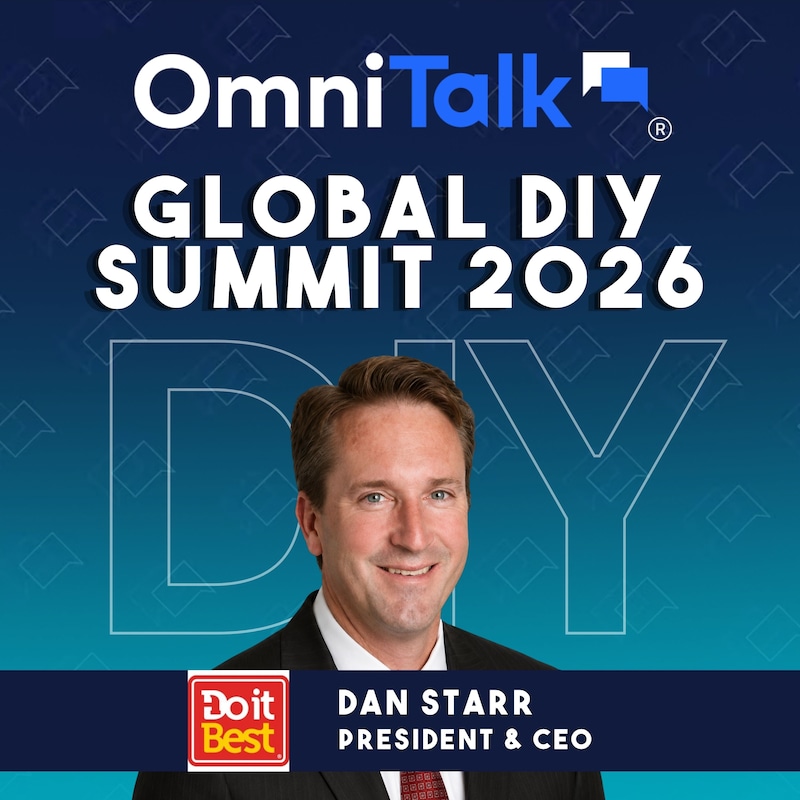
In this Omni Talk Retail interview, recorded live from the Global DIY Summit 2026 in Amsterdam, Chris Walton catches up with Dan Starr, President & CEO of Do it Best Group, to discuss the company's transformation following its acquisition of True Value.
Dan shares what it takes to integrate two major wholesale distribution organizations, how Do it Best is eliminating duplicate costs while preserving culture, and why speed and urgency are critical to realizing the value of an acquisition.
The conversation also explores the future of the True Value brand, including how Do it Best plans to introduce it to a new generation of homeowners through modern marketing, ecommerce, and omnichannel experiences.
Plus, Dan explains why member success remains at the center of every decision and how Do it Best is leveraging scale to help independent retailers compete in a rapidly changing retail environment.
Key Topics Covered:
• The Do it Best acquisition of True Value
• Lessons learned from large-scale integration
• Eliminating duplicate costs and improving efficiency
• Why culture was easier to align than expected
• Reintroducing the True Value brand to Millennials and Gen Z
• The importance of independent retailers in home improvement
• Building ecommerce capabilities for 9,000 locations
• What omnichannel means for independent hardware stores
• How Do it Best supports retailers with digital tools and customer service
• Dan Starr's perspective on leadership during transformation
Thank you to Vusion for supporting Omni Talk Retail's live coverage from the Global DIY Summit 2026 in Amsterdam.
This podcast uses the following third-party services for analysis:
Podcorn - https://podcorn.com/privacy
Transcripts
Hello, everyone.
Speaker A:This is Omnitalk Retail.
Speaker A:I'm Chris Walton, and I'm coming to you live once again from the DIY Summit in Amsterdam from the Vuzion podcast studio.
Speaker A:Thanks to Vuzion for making all of our coverage at the conference possible.
Speaker A:Now, joining me is a man that likely needs no introduction if you're at the conference, because he hit the main stage earlier this morning.
Speaker A:And that is Dan Starr, the president and CEO of Do It Best group.
Speaker A:Dan, thanks for joining us.
Speaker B:Happy to do it.
Speaker B:Thrilled to be here.
Speaker A:Yeah.
Speaker B:Tell us about yourself.
Speaker A:Your background's really interesting.
Speaker A:And also about Do It Best.
Speaker A:Curious what all comprises Do It Best?
Speaker B:Yeah, not a problem at all.
Speaker B:When I say Do It Best group, that kind of implies there's more than one organization going on there.
Speaker B:So, yes, the legacy company of Do It Best is a wholesale distribution company across the US we acquired True Value, which also is a wholesale distribution company, and we're integrating the two.
Speaker B:Right now.
Speaker B:We're about most of the way through that integration, but the logistics driving trucks and distribution centers takes a little bit longer, as you might imagine.
Speaker B:So we're kind of running two different PLs right now, but those two are part of that group as well as sort of an E commerce business.
Speaker B:So all those kind of fold up within Do It Best group.
Speaker B:I am the CEO of all that.
Speaker A:Got it, Got it.
Speaker A:Okay.
Speaker A:So the theme of the conference is I want to make sure I get this right.
Speaker A:Accelerating in a new global reality.
Speaker B:Yeah, yeah.
Speaker A:Cool theme, huh?
Speaker A:What does acceleration look like for you when you have a network of independently owned hardware stores?
Speaker A:Like, how do you think about that term, acceleration?
Speaker B: the fact that In November of: Speaker B:And they were similarly sized in terms of the number of distribution centers, in terms of the number of retailers served.
Speaker B:They're about the same size company as Do It Best.
Speaker B:So what that meant acceleration to me was accelerate integration because you're eliminating cost and you're gaining efficiency.
Speaker B:That's still what it means to me is move faster.
Speaker B:There's a sense of urgency in bringing together those organizations in order to realize the value of what we acquired.
Speaker A:Right.
Speaker A:So how do you do that?
Speaker A:Like, how do you.
Speaker A:How do you make that happen?
Speaker A:How do you do that efficiently?
Speaker A:What are some of the tips and tricks?
Speaker B:There are none.
Speaker A:Just brute force.
Speaker A:Is that what it is?
Speaker A:Hard work?
Speaker B:In many ways, it's.
Speaker B:It's just hard work because you have so many Things.
Speaker B:You have IT systems that you need to migrate to one platform on and that's multiple IT systems.
Speaker B:You've got SKUs within a warehouse.
Speaker B:Supply chains are not easily changed.
Speaker B:They're not changed overnight for certain.
Speaker B:So you've got to consolidate what manufacturer programs you have.
Speaker B:If I have 80,000 SKUs in a distribution center for do it best and 80,001 for true value and about 50% of them are the same, you better start changing those SKUs and consolidate.
Speaker B:So it's what you might think of as little things like that that are enormous lift and it's moving quickly to get that done.
Speaker A:Yeah.
Speaker A:One of the things I was gonna ask you is like, is there any secret sauce you can share in terms of making something like that work?
Speaker A:Cause it seems like you all have been successful on it.
Speaker A:And one of the things I was thinking about too from what you just said is I bet you're doing, maybe you're not actually.
Speaker A:So I'm gonna ask you, are you doing more inspect what you expect since the acquisition than you were prior to or is it just something that you're always doing in your roles?
Speaker B:Probably always doing is probably more accurate and so much is changing.
Speaker B:Inspect seems to imply that you're reviewing something with reference to an expected standard.
Speaker A:Okay.
Speaker B:In a high change environment, I think it probably plays out a little differently than that.
Speaker B:You're not inspecting that.
Speaker B:Your messing with the whole thing.
Speaker A:You're building it.
Speaker B:You're building it as you go and you're trying to move as quickly as you possibly can.
Speaker B:I think that's a more, I don't know, apt description of what we're going through right now.
Speaker A:How do you keep your head around if you're building the right thing?
Speaker A:Because I feel like in this situation you could get, you could get your head tied in knots trying to figure out where to go next.
Speaker B:Yeah.
Speaker B:The good news for us is we've been very, very efficient at hard lines distribution for 80 years.
Speaker B:We know what we're doing and so it's less about, gosh, are we doing this the right way?
Speaker B:I think we have confidence, proven confidence that we do this and we do this well.
Speaker B:It's part of the reason why we're so impatient to eliminate all these things that we see as duplicate cost.
Speaker B:None of those.
Speaker B:It's just, I think it grinds the gears of people within our organization to be running two trucks over the same miles.
Speaker B:That's another example.
Speaker B:So eliminating that as soon as possible is the main thing.
Speaker A:Yeah.
Speaker A:So that, I mean, God, there's a lot of nuggets right there.
Speaker A:So this interview is great already.
Speaker A:So, like, yes, what I'm hearing from you right there is like, you know, anywhere you have duplicate, duplicate costs.
Speaker A:Be laser focused on getting that out of the PNL.
Speaker A:Yes, 100%.
Speaker A:Okay.
Speaker B:Yeah.
Speaker A:So I'm curious then, what Was there anything that you found simpler than you expected during this process and also anything you found harder than you expected during this process?
Speaker B:Yeah, I think the simpler thing that I found was trying to communicate to True Value retailers and members of the employees, members of the True Value team, the cultural sort of the cultural mandate, the cultural identity of Do It Best of now, our one organization.
Speaker B:I thought that that was going to be a big challenge.
Speaker A:I would think so.
Speaker B:Because culture, when you especially bring on another company, it's like there is especially a competitor.
Speaker B:The day before the closing, we were competitors.
Speaker B:The day after, we're supposed to embrace and be part of one culture.
Speaker B:That's not easily done.
Speaker A:Probably down the street too, in some instances.
Speaker A:Or am I wrong?
Speaker B:No, you're right.
Speaker B:Sometimes across the street.
Speaker B:So there were a number of challenges like that you can anticipate.
Speaker B:I approached that and went, ooh, one culture is going to be difficult.
Speaker B:What I was surprised at was just the uniqueness of what we were going through.
Speaker B: ompany was acquired in around: Speaker B:Even you shaking your head, it seems like you know where this.
Speaker A:I know where this is going.
Speaker A:I've heard this story before.
Speaker A:Not in this way, but I know what you're going to say.
Speaker B:Well, Private equity did, frankly, just not a great job of managing the business and satisfying the stakeholders.
Speaker B:They disappointed the stakeholders, and ultimately it ended up in bankruptcy.
Speaker B:So the experience with Private equity was not a positive one.
Speaker B:Well, in many ways, that kind of opened the door for me to walk in and say, the culture of True Value, of True Value, historic culture of True Value built by a man named John Connor is an important legacy.
Speaker B:And it's one that is very similar to the culture of Do It Best.
Speaker B:What I'm asking you to join is that culture.
Speaker B:And I could relate it directly to their experience and their prior experience and say, that's where we are.
Speaker B:That's who we are culturally, and that's what we're headed back to.
Speaker B:And it's not going to be like it was with private equity.
Speaker A:Got it.
Speaker A:So it was simpler than you expected.
Speaker A:Because in reality, you learn very quickly they were hungry for leadership and vision.
Speaker B:Yes.
Speaker A:That's basically the summary of what you.
Speaker B:Just said, that's exactly right.
Speaker B:And I think a lot of True Value retailers are also hungry to be part of a co op again, meaning I want to be an owner.
Speaker B:So there was an appetite for that.
Speaker A:They want to do well.
Speaker B:They do.
Speaker A:They want to succeed.
Speaker B:They do.
Speaker B:So it turns out that they want.
Speaker A:Goals they can hit.
Speaker A:Right?
Speaker B:Yeah.
Speaker B:Right.
Speaker A:I mean, imagine that.
Speaker A:Yeah.
Speaker A:No, that's great.
Speaker A:All right, so you just.
Speaker A:I teased it before, but you just delivered your keynote.
Speaker A:It was titled Reinventing a Legacy Brand for the Next Generation.
Speaker A:And so home improvement is always kind of this dicey dichotomy when you start talking about topics like that, because you're reinventing for the new generation.
Speaker A:But yet there's a lot of, you know, things that people assign mentally to the DIY business themselves, the DIY retailers themselves.
Speaker A:How do you kind of skirt those issues together?
Speaker B:What have you found that works so far?
Speaker B:What have I found that.
Speaker A:Right, Right.
Speaker B:I'll tell you what I was concerned about.
Speaker B:One of the issues that I tried to hit on stage was the idea that while we're trying to reinvent a brand, what we're really trying to do, I would say, maybe more accurately, is reintroduce a brand to the next generation.
Speaker B:The next generation.
Speaker B:Millennials and Gen Z, they're not familiar with the True Value brand.
Speaker B:When we acquired it, we were very pleased to discover that the unaided brand awareness for True value was about 74%.
Speaker B:Okay, that's pretty powerful.
Speaker A:That's pretty good.
Speaker B:But True Value as an organization hadn't invested in that brand, meaning deployed it in advertising, targeting different groups with different messages that reflect buying behaviors and how they want to reach people.
Speaker B:They hadn't invested in it.
Speaker B:They hadn't bought anything.
Speaker B:They hadn't advertised in more than 10 years.
Speaker B:So as you might imagine, in that 10 years, a lot can change.
Speaker B:If you go back, my favorite thing is to reference 30 years or so, because it was Pat Summerall.
Speaker B:If you say Pat Summerall and Paul Harvey.
Speaker B:Pat Summerall on TV with sport, with football and Paul Harvey on radio.
Speaker B:If you try to mention those two names to anyone, I'm going to say under 40.
Speaker A:Oh, yeah.
Speaker A:Especially Paul Harvey.
Speaker B:Right?
Speaker A:Yeah.
Speaker B:They have no idea who you're talking about, and they think you're, like, crazy old at the same time.
Speaker B:So that is a helpful.
Speaker B:Yeah, that is a helpful way to divide the world for us.
Speaker B:If you know who those people are, you know our brand.
Speaker B:If you know our brand, we don't want to alienate you.
Speaker B:We want to bring you Along.
Speaker B:We're also not going to spend a whole lot of money trying to introduce our brand to you.
Speaker B:You already know it.
Speaker B:However, if you're in that younger cohort, if you're among that group that's coming into home ownership for the first time, we are targeting that group.
Speaker B:We want them to know who we are, and we want them to know, here's how we can help you.
Speaker B:We're going to bring you along in your project and give you a sense of confidence, but allow you to be the architect of your own plan.
Speaker B:So that's kind of the messaging that we are using to establish the brand to a new generation.
Speaker A:Got it.
Speaker A:Wow.
Speaker A:Sounds like you found a diamond in the rough here as I'm doing this conversation.
Speaker B:Yeah, I would say so.
Speaker B:Yeah, I would say so.
Speaker A:Sure seems like it.
Speaker B:Well, some people worried that going into bankruptcy was going to hurt the brand, and I think that's probably true for this kind of audience.
Speaker B:You've got folks who are in the industry who know all that history for this group is like, oh, you know, for manufacturers, they were concerned about true value.
Speaker B:They're in bankruptcy.
Speaker A:Right.
Speaker B:The vast majority of the consuming public really had no idea.
Speaker B:And it didn't.
Speaker B:It didn't jump that divide and start to diminish retail awareness or retail perceptions.
Speaker B:It didn't change that.
Speaker B:So we did acquire a strong retail brand.
Speaker A:Right.
Speaker A:There's a lot of dry powder in that keg.
Speaker B:Yes.
Speaker A:All right, so, you know, we are omni talk.
Speaker A:Omnichannel is a word we talk about a lot.
Speaker A:How do you think about that term again across your independent network?
Speaker A:What do you.
Speaker A:What are you working on?
Speaker A:What do you find that works well?
Speaker A:What do you find that's a unique challenge.
Speaker B:Yeah.
Speaker B:Well, help me first.
Speaker A:Okay.
Speaker B:People say that word and it means a lot of different things to a lot of different people.
Speaker B:What does that mean to you or what should that mean to me?
Speaker A:Well, to me, it means you're always available to the customer whenever he or she wants something from you.
Speaker B:So what does that mean in terms of, like, how do we support.
Speaker B:For me, what that means is we have to prepare our members to satisfy the needs and demands of a new generation.
Speaker B:So here I was just talking about that.
Speaker B:We're aiming at a different demographic.
Speaker B:My mom knows how to work her smartphone, but she's not a digital native.
Speaker B:That next generation, they have expectations that are very different from my mother's generation or from my generation.
Speaker B:They expect to be hit in lots of different ways.
Speaker B:Where they live, where they consume.
Speaker B:Right.
Speaker A:And you.
Speaker B:And as you said always it works the other way too.
Speaker A:Yep.
Speaker B:That the retailer is accessible in some form or fashion.
Speaker B:Whether that's through some kind of.
Speaker B:Whether it's a social media platform or otherwise.
Speaker B:Right.
Speaker A:Yep.
Speaker B:Okay.
Speaker B:So it's up to us to provide the tools for our members to be able to meet that.
Speaker B:Let me take.
Speaker A:Got it.
Speaker A:You want to take it a member first approach.
Speaker A:That's kind of how you think about it.
Speaker B:Yes, sir.
Speaker A:That's awesome.
Speaker B:Every time it's a member first approach, if it doesn't work for them, why are we doing it?
Speaker A:Okay, so I stopped you but keep going.
Speaker B:No, that's fine.
Speaker B:That's fine.
Speaker B:So an easy example, one that I don't think anyone would look at and say, wow, that's revolutionary.
Speaker B:It's an E commerce platform.
Speaker B:You've got 9,000 locations running businesses that vary all over the place.
Speaker B:Do they have the time to create and host a URL that's function?
Speaker B:No.
Speaker A:On their own?
Speaker A:No, no, definitely not.
Speaker B:So you want to provide a best in class, best in suite platform for them that's accessible.
Speaker B:We'll provide a take rate for products that sold through there.
Speaker B:But if we brand to their unique brand and frame and customer goes and buys from them and it's shipped to home, they think that they just bought from that retailer.
Speaker B:They didn't.
Speaker A:Right, right.
Speaker A:And is that something you had to put in place or just.
Speaker A:Yeah, okay.
Speaker B:No, we rolled that out.
Speaker B:The new platform, we rolled that out for true value dealers.
Speaker B:February of this year.
Speaker A:February.
Speaker A:Okay.
Speaker B:Yeah, no, we had that and it was within a year of us rolling it out to do it best retailer.
Speaker B:So we already had an E Commerce but we really needed to replace it.
Speaker B:We didn't want to have a bunch of micro sites everywhere.
Speaker B:If you're going to be playing in E commerce, you're not going to be strong in that unless you are owning it end to end and then allowing the retailer to have their brand associated with it.
Speaker B:But you can't have, you can't do it well.
Speaker A:You can't do it well.
Speaker A:Where you're meeting the expectations, stand in doubt.
Speaker A:Which goes back to what we said at the outset.
Speaker B:Right.
Speaker B:And then we'll take over the customer service.
Speaker B:They can contact us anytime.
Speaker B:The customer can contact us anytime.
Speaker B:So we're enabling sales, giving value of that back to the retailer, but we're taking that off their plate to maintain it.
Speaker A:Yeah, it all comes back to using scale where you can for efficiency and then also giving the incentives to the organization by having a member focused approach as well.
Speaker B:Right, Right.
Speaker A:Well, Dan, thank you so much.
Speaker A:This was great, man.
Speaker A:I could talk.
Speaker A:I could talk to you for a long, long time.
Speaker A:In fact, I had more questions.
Speaker A:I think I'm just gonna let them go because I want to be cognizant of your time.
Speaker A:But maybe we'll do this again sometime, because it's been a blast.
Speaker A:All right, thank you, everyone, for tuning in.
Speaker A:Thanks to Vuzion and the DIY Summit for making our coverage today possible, and as always, to everyone listening and watching at home.
Speaker A:Be careful out there.