Shownotes
What does it take to lead a top-tier School of Public Health? For Dr. Francesca Beaudoin, the journey started in the chaos of the ER.
In this episode of Humans in Public Health, we sit down with Interim Dean Beaudoin to trace an incredible trajectory. She has experienced Brown from every possible angle: first as a medical resident, then a doctoral student, then as member of the faculty, a department chair and administrative leader.
Now she steps into the role of Interim Dean, prepared to propel the school forward with momentum. Host Megan Hall sits down with Dr. Beaudoin to discuss how 20 years in academia and on the medical frontlines—from treating acute trauma to staffing mobile opioid recovery units—prepared her to lead during a time of transition.
Transcripts
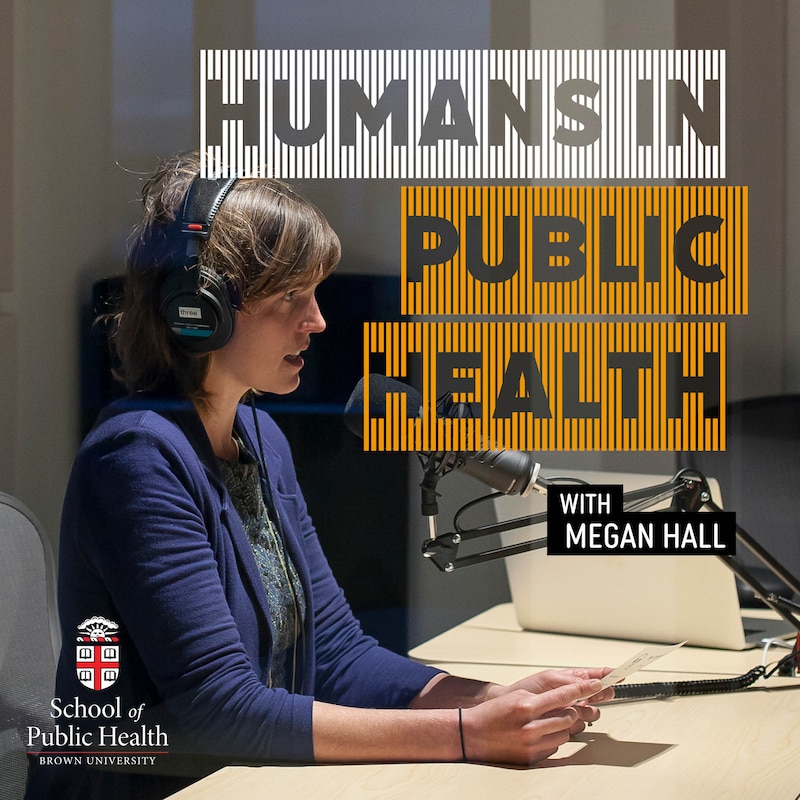
Megan Hall:Welcome to Humans in Public Health. I'm Megan Hall.
In the past few years, the field of public health has become more visible than ever before, but it's always played a crucial role in our daily lives. Each month, we talk to someone who makes this work possible. Today, Dean Francesca Beaudoin.
we record this in February of:The school is also in transition. In early December, Brown announced that Dean Ashish Jha would be leaving the institution at the end of 2025, and that a longtime School of Public Health faculty member and administrator would step into the role as interim dean …
Francesca Beaudoin: My name is Francesca Beaudoin. I'm the interim dean in the School of Public Health at Brown University.
School of Public Health since:Megan Hall: So usually when we have an interview with a new dean, it's a get to know you: Who are you, where are you from? But you've been here.
Francesca Beaudoin: You know me, Megan,
Megan Hall: You've been here a long time. so I thought instead of trying to figure out where you're from we could kind of track your history here in Rhode Island and at Brown to cover just all the ways that you've been intertwined with the School of Public Health and Medicine here.
y at Rhode Island Hospital in:Francesca Beaudoin: 20 years, that's a long time. But my whole professional career has been in some way, shape, or form attached to this place.
orking in the ER in– it was:Francesca Beaudoin: Yeah. That's actually really what started my public health journey was that time in the emergency department,
One of the things that I first got interested in actually was around pain management of older adults. And I actually distinctly remember this patient that I was taking care of.
It was an older woman in her probably early eighties. I remember what she was wearing. She had a nice little like pink bathrobe on and she had broken her hip. and I was a new little baby doctor and I was very excited to take care of my patient with hip fracture.
And one of the things you do for patients with hip fractures when they come to the ER is you manage their pain. And the standard of care at that time was to give people opioids specifically, usually morphine. And that's what I did. And I gave my patient and her, you know, she's probably 82, 83 years old, a reasonable dose of morphine.
And she basically stopped breathing, almost stopped breathing, Fast forward. She was fine and she got her hip repaired and she went home and she was okay. But for that moment you know, this light bulb went off in my head of like, why don't we have better tools to manage pain?
It occurred to me that we were managing pain in the same way that we had managed pain for decades. We had ibuprofen and Tylenol, acetaminophen, opioids. But there hadn't been anything new or different that had been done for acute pain management, particularly in the emergency department, in those days.
How do I take what I've learned from this one person and pull it back and help lots of people who've experienced a hip fracture? And this taking like a population lens, which is what public health is all about, and then like zooming it back in on the individual. And that set me off on a path of really trying to change the way that care happened for emergency department patients.
I did one of the first studies in the emergency department on femoral nerve blocks for pain management. This is akin to getting Novocaine at the dentist for having your cavity repaired. Basically providing local pain management so that people don't have the system wide effects like my patient had, and stopping breathing or confusion.
And that little study that I did actually sparked a whole line of inquiry around different types of pain management and better pain management practice, not just for me and for our emergency department here in Rhode Island, but much broader than that.
Megan Hall: So that moment with the elderly woman in the ER and then those questions about pain management, is that what led you to get your PhD at Brown?
Francesca Beaudoin: It absolutely is. So I followed a non-traditional path. A lot of people who are physicians who have MDs or DOs and also have a PhD, do it at the same time, bundled while you're in medical school, and I did not. I actually went back to school as I was out in practice as a physician, and I went back to school right here at Brown in the very school that I am now helping lead.
And the reason I did that is because I didn't have the tools and the technical expertise needed to answer the questions that needed to be answered, that I wanted to be answered, but also that the public needed the answers to those questions. So I, I went, I went back to school.
Megan Hall: And she loved it.
d started, the PhD process in:Megan Hall: It was during this period, while Francesca was at Brown AND still practicing as a doctor in the ER, that she started to notice a dramatic change...
Francesca Beaudoin::And we were behind in making those linkages and that association in the data. But for those of us that were working in the ER, we felt it.
Megan Hall: Francesca realized she needed to pay attention to this growing opioid crisis.
Francesca Beaudoin: And so my research shifted, my clinical practice shifted, all informed by what I was seeing on the ground in real time.
might remember an episode in:Francesca Beaudoin: I'm still working on the RV in Woonsocket. I work clinically on Friday mornings for CODAC Behavioral Healthcare.
Megan Hall: In the RV, Francesca and the rest of the team give patients treatment for opioid addiction, and also try to help with other needs-- be it housing, food or medical attention. They see up to 150 people a month.
Francesca Beaudoin: It is something that brings me a lot of, just like personal satisfaction, trying to help make a small impact in individual people's lives. And it's a nice compliment to doing things at a much higher scale. Sometimes when you're so entrenched in data, you lose sight of actually the people that you're helping. So when I meet with someone, I'm literally just focused on that person and that moment with them.
I always come back from those shifts feeling more motivated and more energized to help the problems of today. It definitely roots you in people's reality.
Obviously like lots of people do public health without working clinically or having a clinical degree, but that is the lens from which I view the world and I think it's, it's powerful and it's a reminder
Megan Hall: In:Francesca Beaudoin: One of the things that I enjoy the most about the work that I've done as academic dean and now as the interim dean is organizational change and helping enable a culture that lets people thrive in the work that they do.
We spend a lot of our time at work, and I do just strongly believe life is too short to not enjoy where you work. And fundamentally, the School of Public health is a place where people work and they do great work, highly impactful work.
And I think that it is my job to make sure that people can thrive. Because if the people thrive, then the work that they do is going to be of that much greater impact on clinical practice or practice in a nonprofit setting. The work they do will have more impact on policy. It will have an impact on the communities where we do our work in a positive way. It will lead to better training and education of our students who are the future of public health. So when I had the opportunity, to become the academic dean, and for people listening, that's kind of like, day-to-day on the ground, kinda academic side of the house in the school, so research, education, community engagement, diversity, equity, inclusion, faculty.
I jumped at that opportunity because I knew that I could be a positive influence in the school and help direct the culture and all the other things that go along with that, the systems that let people thrive in their work. And now as an interim dean, I'm trying to keep that same momentum and sense of stability and bring that to the school because we have so many fantastic people and we don't have enough time on this podcast to talk about all the work that people are doing, they will get to come back themselves, and you'll hear it from, from the faculty themselves.
Megan Hall: You, you have said in other interviews that one of your big goals as Dean is to keep momentum. So talk about what you mean by that. You worked closely with Ashish Jha when he was here, so what of the initiatives that he started, are you excited to keep moving and how are you building on that momentum?
giene I think were in the mid:The Doctor of Public Health degree was one of the first doctoral degrees put forth and proposed by the university. Our school, on the other hand, is still pretty new, especially compared to our peers. It's only 13– going on our 13th year. And it provides this combination of kind of the old kind of richness that is like this great university with kind of a startup feel.
And Ashish came in and we had a tremendous amount of growth this past five years. We have recruited world class faculty, we have grown our student programs. We have started work in new areas, for instance, like the Pandemic Center that are responsive and nimble to changing public health needs. And we absolutely have to continue that. Reaching back even further, the things that were pillars of strength for the school in addictions, biostatistics and health data science, aging, those were really the bedrocks that allowed the school to become an independent school. And we need to see those things through and what is their next level of impact? What is the next, you know, version of these things over the next 10 years?
And if I took this interim role as a moment to just like tread water and let us catch our breaths, I would not be doing right by the school.
While we are in this period of uncertainty, there's great opportunity, and I know that our faculty are eager to keep going, especially at this moment in time where there is public distrust in public health. Public health systems are being attacked. We don't have time to sit and wait and see what's going to happen.
Megan Hall: What are some of the exciting things that are happening in public health right now?
Francesca Beaudoin: One thing I've been thinking about as a parent, I have a tween and two teens at home, is the way that digital media and screens are impacting the mental health of our youth. We have the Hassenfeld Child Health Innovation Institute, the fantastic faculty there, standing up a lot of work in this space to give, finally give parents some guidance about what are the best practices around screens, digital media, social media. Mike Silverstein, Caroline Kistin, and also other faculty outside of that center.
Also front of mind for a lot of people is the cost of health care. We know that medical inflation is way outpacing other types of inflation, meaning the dollar you spend on your health care today does not get you as much health care as it did 5, 10, 20 years ago, and way out of proportion when you compare to other types of things we consume.
Our faculty in the Center for Advancing Health Policy through Research, Andy Ryan, Erin Fuse Brown, Chris Whaley, to name a few, are trying to not only just describe but actually help us address how Americans can improve access to health care and make health care more affordable. What are the policy levers? And they're working really closely with local lawmakers, policymakers in Rhode Island. We just had a policy summit that was really impactful. Great conversation and a lot to follow, I think from that. But also lawmakers in D.C. to to move the needle on some of this because it really is getting to a breaking point.
Another thing a lot of people are thinking about are plastics and environmental toxins. The Center for Climate, Environment & Health, doing a lot of work in this space. Somebody was asking me the other day, is it okay to microwave my lunch in Tupperware? Lots of people are thinking about this, and if you haven't thought about it, now that I just said it, you are. But our researchers they're actually understanding the health impacts and providing guidance for people. What, what should you do? What should you do with your kids' lunch, your own lunch, and you know, other forms of forever chemicals that are in the environment. Joe Braun, Marianthi Kioumourtzoglou, Lots of exciting work happening in that space. And that's not even talking about the climate portfolio that's there as well.
Megan Hall: Francesca takes over as interim dean at a challenging time for public health, and for Brown University, following the tragedy on December 13th.
Where is the school focused right now in its response, and how might what happened at Brown inform your teaching and research in public health?
Francesca Beaudoin: When we are talking about the tragic events of December 13th, our emphasis and focus right now, first and foremost, is on community recovery and healing
But I also know that our faculty and students are scholars. They're scientists, they're inquisitive, they're creative, and they want to use their expertise and their skills to help attack a problem that unfortunately feels very close-- it is very close to home right now. Over the next months, you know, and beyond, I think we will come together as a school and figure out what the appropriate response is. So more, to follow on that.
Megan Hall: Do you have a message to our audience that you want to, to tell them about, where public health is going at Brown, or how you want them to be involved?
Francesca Beaudoin: To anybody that's listening to this podcast, engage with us. We really want to hear from alumni. From people in the community that are interested in public health, there are opportunities for you.
If you are a part of a non nonprofit community organization, reach out to us. We wanna hear from you. Subscribe to our public health newsletters. Some of our research centers like the Pandemic Center, have an excellent tracking report loaded with data. So find a way to reach out to us. Follow our social media and we wanna hear from you because that is what actually helps us come up with new questions. It drives our science and maybe there are some unlikely partnerships.
And then be a champion of public health.
Megan Hall: Francesca Beaudoin says her vision as interim dean is to build off the school's strengths.
Francesca Beaudoin: My commitment to this school is not interim, it's not temporary. I am here for Brown and for the School of Public Health. And the work is the work. The work continues and there is a job that needs to be done.
Megan Hall: Dean Francesca Beaudoin thank you so much for coming in and welcome to your new position.
Francesca Beaudoin: Thanks for having me, Megan. It was fun.
Megan Hall: Dr. Francesca Beaudoin is the Interim Dean of the Brown University School of Public Health. She also serves as a professor of Epidemiology and Emergency Medicine.
Humans in Public Health is a monthly podcast brought to you by Brown University School of Public Health. This episode was produced by Nat Hardy and recorded at the podcast studio at CIC Providence.
I'm Megan Hall. Talk to you next month!