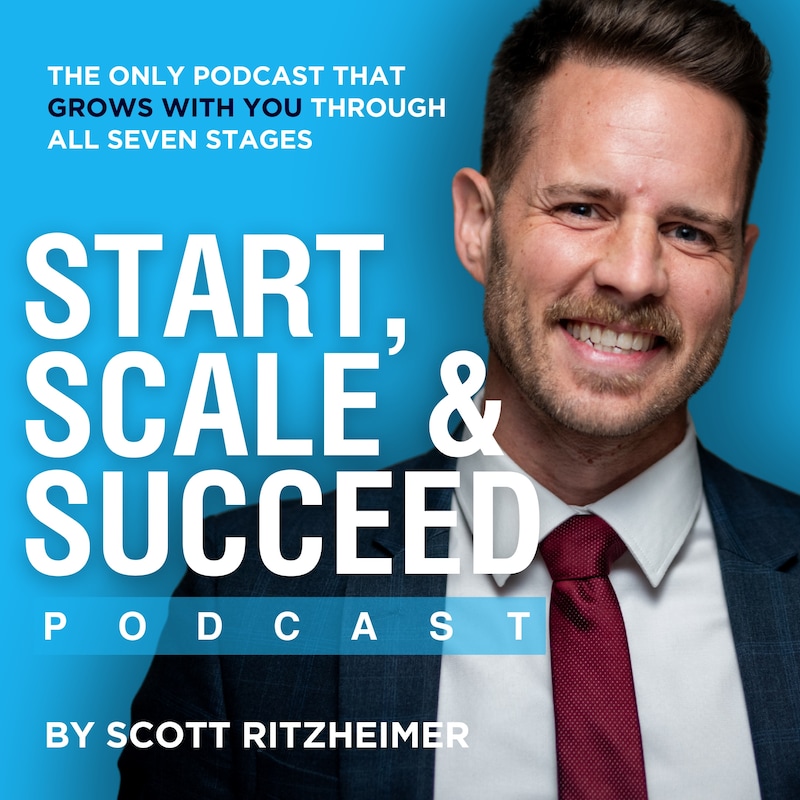
Shownotes
In this eye-opening episode, Dylan Bost, Co-Founder and CEO of Sunny HQ LLC, shares how to break free from the disillusioned leader trap and reclaim personal profitability. If you struggle with growing revenue but shrinking take-home pay and constant burnout in stage 4, you won't want to miss it.
You will discover:
- Why owner compensation often gets sacrificed first during scaling.
- How to structure pay so the business rewards you, not just employees.
- What mindset and systems shift profit from the company to your life.
This episode is ideal for for Founders, Owners, and CEOs in stage 4 of The Founder's Evolution. Not sure which stage you're in? Find out for free in less than 10 minutes at https://www.scalearchitects.com/founders/quiz
Dylan Bost is a designer, entrepreneur, and founder of Sunny HQ, a fully managed WordPress hosting and support company serving B2B brands, agencies, and service-based businesses. With over 30 years of experience in design, systems, and digital operations, Dylan has led teams, built companies, and helped hundreds of founders simplify and scale their backend operations. His first business, a creative agency, taught him the hard way what happens when growth outpaces clarity. After a complete reset, he built Sunny HQ around simplicity, service, and sustainable systems.
Want to learn more about Dylan Bost's work at Sunny HQ LLC? Check out his website at https://sunnyhq.io/
Connect with Dylan:
Website: https://dylanclaytonbost.com/
LinkedIn: https://www.linkedin.com/in/dylanbost/
Facebook: https://www.facebook.com/DylanClaytonBost
Instagram: https://www.instagram.com/dylanclaytonbost/
Mentioned in this episode:
Take the Founder's Evolution Quiz Today
If you’re a Founder, business owner, or CEO who feels overworked by the business you lead and underwhelmed by the results, you’re doing it wrong. Succeeding as a founder all comes down to doing the right one or two things right now. Take the quiz today at foundersquiz.com, and in just ten questions, you can figure out what stage you are in, so you can focus on what is going to work and say goodbye to everything else.
Transcripts
Hello, hello and welcome. Welcome once again
Scott Ritzheimer:to the start, scale and succeed. Podcast, the only podcast that
Scott Ritzheimer:grows with you through all seven stages of your journey. As a
Scott Ritzheimer:founder, I'm your host, Scott Ritzheimer, and today I want to
Scott Ritzheimer:talk to those founders out there who've hit that place in their
Scott Ritzheimer:business or nonprofit, where it's working. You might be
Scott Ritzheimer:having magazine articles written about you. You might have you
Scott Ritzheimer:might be the envy of your peer group, but you've hit this place
Scott Ritzheimer:where, despite the fact that revenue is growing, maybe even
Scott Ritzheimer:profitability is getting better for you, it seems like it's
Scott Ritzheimer:getting worse. You have a team around you. It seems like you've
Scott Ritzheimer:got everything that you've been asking for, but somehow, it's
Scott Ritzheimer:just getting heavier and heavier and heavier. Every single one of
Scott Ritzheimer:those joys starts to feel like a burden, and you can't quite tell
Scott Ritzheimer:why. And here's what nobody tells you about this moment, the
Scott Ritzheimer:problem isn't fundamentally operational, though you may have
Scott Ritzheimer:lots of operational problems. You don't need a better org
Scott Ritzheimer:chart or some other tip or tactic or trick to make this all
Scott Ritzheimer:better, you don't need another strategic offsite. There's
Scott Ritzheimer:something else missing, and we're going to explore what that
Scott Ritzheimer:is today. And who better than with my guest, Dylan Bost, who
Scott Ritzheimer:is a designer and entrepreneur, and he's also the founder of
Scott Ritzheimer:sunny HQ, which is a fully managed web, Wordpress, hosting
Scott Ritzheimer:and support community company, sorry, I'm getting all over the
Scott Ritzheimer:place, fully managed WordPress hosting and support companies
Scott Ritzheimer:serving B to B, brands, agencies and service based businesses
Scott Ritzheimer:with over 30 years of experience in design, systems and digital
Scott Ritzheimer:operations, Dylan has led teams, built companies, and helped
Scott Ritzheimer:hundreds of founders to simplify and scale their backend
Scott Ritzheimer:operations. His first business, a creative agency, taught him
Scott Ritzheimer:the hard way what happens when growth outpaces clarity and
Scott Ritzheimer:after a complete reset, he built sunny HQ around simplicity,
Scott Ritzheimer:service and sustainable systems. He's here with us today. Dylan,
Scott Ritzheimer:welcome to the show. So glad to have you here.
Dylan Bost:Thanks, Scott. I'm excited to be here. Appreciate
Dylan Bost:it.
Scott Ritzheimer:Fantastic. I want to start with a question
Scott Ritzheimer:just about your story. Things were going good. You'd built a
Scott Ritzheimer:creative agency, and at this, this caught me every time I read
Scott Ritzheimer:it. It catches me again, actually. But you said that
Scott Ritzheimer:growth outpaced clarity. What did that actually mean in your
Scott Ritzheimer:world, in your life?
Dylan Bost:Yeah, well, you just really outlined it, right? I
Dylan Bost:mean, I think that. So my model, like, you know, from when I grew
Dylan Bost:up, was, as most people right now, and especially in America,
Dylan Bost:right? We're driven to success. And to me, what I've learned
Dylan Bost:that success is, like, one dimensional in those terms,
Dylan Bost:right? It doesn't typically include your family. It doesn't
Dylan Bost:typically include your own personal growth. It doesn't
Dylan Bost:typically include, like, anything outside the business.
Dylan Bost:And that was me. So I worked 1012, hours a day, year on end.
Dylan Bost:It was exciting work, right? It was an agency, so I had and I
Dylan Bost:thrive since I was early on in my career, you know, the manager
Dylan Bost:of a restaurant, I could deal with all the problems. And there
Dylan Bost:was something really wonderful about that. So enter this
Dylan Bost:agency, anybody that's in that world knows is a constant level
Dylan Bost:of challenge and issue that's natural, right? You're running
Dylan Bost:print items and commercials and video and web and brand and all
Dylan Bost:these things. And so there was always something that kept me
Dylan Bost:from asking any deep questions about, like, Was I happy, right?
Dylan Bost:I'm a very simple question. I seemed happy, and I'm pretty
Dylan Bost:happy guy, but in reality, I got about probably eight years in,
Dylan Bost:and I just remember, like you said, everything on paper was
Dylan Bost:great. We were making lots of money, winning all the awards,
Dylan Bost:fantastic staff, lots of clients, growth, and yet, I
Dylan Bost:remember standing up in my office and just asking this
Dylan Bost:question. It was really, it still drives just a little bit
Dylan Bost:of fear I haven't healed completely from it is, you know,
Dylan Bost:I asked this question of, Why am I doing this? You know, like,
Dylan Bost:what is the purpose? And the problem with that question for
Dylan Bost:me was I had always known the answer, or if I didn't know the
Dylan Bost:answer to something, because I didn't have all the answers, but
Dylan Bost:I was willing to I knew what the next step was, right? I knew,
Dylan Bost:well, I don't know how to do that, but this is what I have to
Dylan Bost:do to get to the point where I know that we can deliver this,
Dylan Bost:or I can deliver this. But this question really struck me,
Dylan Bost:because it was existential in that I don't know why I'm doing
Dylan Bost:this, right? No one's really going to care in 10 years about
Dylan Bost:this website, and I can attest to that. Now that was 15 years
Dylan Bost:ago. No one cares about any of that work. And so it was in, you
Dylan Bost:know, at the time, it wasn't necessarily, I was trying to be
Dylan Bost:altruistic or like but I wanted to know that what I was doing
Dylan Bost:was going to make some more profound impact on the world.
Dylan Bost:And it didn't seem like marketing or advertising was
Dylan Bost:doing that. And so not only did I not know you know, why I was
Dylan Bost:doing it, but I didn't really know what the next step was. You
Dylan Bost:know, now I'm. Leading this company, 25 employees, and you
Dylan Bost:know, you're supposed to know all the things. So what do you
Dylan Bost:do? You know, for me, I didn't ask for help. You know, that's
Dylan Bost:the biggest thing. So I didn't even talk to my partner about
Dylan Bost:it. I'm just white knuckling it. I'm going through the process.
Dylan Bost:I'm going to make it happen. And so it was really a tough thing
Dylan Bost:in that moment, just to kind of really realize, what in the
Dylan Bost:world do I do next?
Scott Ritzheimer:Yeah, it's interesting how hard that can be
Scott Ritzheimer:to admit. And you touched on a couple of things. One is, we're
Scott Ritzheimer:running too fast to even admit it in the first place. But I
Scott Ritzheimer:think a lot of folks who are maybe in the earlier stages of
Scott Ritzheimer:this, if you said, are you happy without a moment's hesitation,
Scott Ritzheimer:they would just say, yes, that's that's the right and obvious
Scott Ritzheimer:answer. When was it that you realized that you weren't
Scott Ritzheimer:actually happy?
Dylan Bost:Well, it was a slow burn, unfortunately, because I
Dylan Bost:tricked myself into I was like, we know what we can I'll figure
Dylan Bost:this out. I did start to read a couple of books, and I started
Dylan Bost:it, and then I don't know if that made it worse, because the
Dylan Bost:more I've read, the more I realized that I didn't this was
Dylan Bost:not doing it for me. It was that slow burn. What that looked like
Dylan Bost:was right around 2008 to make, you know, to really start to add
Dylan Bost:a catalyst to things. 2008 hits. We have about 30% of our
Dylan Bost:businesses, real estate development, and that just went
Dylan Bost:away, and we were left holding about a third of our receivables
Dylan Bost:that we would never collect. So now financial pressure enters
Dylan Bost:into it, and now I'm now I'm scrambling, because what was
Dylan Bost:before, just a question about, you know, what do I want, or
Dylan Bost:what makes me happy? Now there was a survivability, you know,
Dylan Bost:issue on the table, and there again, no help. And I didn't
Dylan Bost:ask, didn't go to mentors, because I was supposed to know,
Dylan Bost:and you know, and I had no business doing that. You know,
Dylan Bost:the reality is in what I know now is, I mean, just ask people,
Dylan Bost:but you know, so it really became a point of, I forced my
Dylan Bost:own hand, right? I mean, I I essentially didn't ask the right
Dylan Bost:questions, didn't seek help, didn't didn't lay people off.
Dylan Bost:You know, that was in, you know, I talk about that because it's
Dylan Bost:like, you know, when I started that business, I, you know, I
Dylan Bost:knew design, I didn't know business, so I learned along the
Dylan Bost:way, and really did pretty well. But the that was, that was one
Dylan Bost:real weak spot. Was, was, when did let people go? You know,
Dylan Bost:they were my family, in a way, and here again, now haven't even
Dylan Bost:mentioned my, my real family, you know, here, I just believed
Dylan Bost:some weird way that they were just on a different planet and
Dylan Bost:they were going to be taken care of, so that didn't enter into
Dylan Bost:it. So now, you know, unconsciously, you know, or
Dylan Bost:subconsciously, that's putting even more pressure on me. And
Dylan Bost:so, you know, at some point in there, you know, honestly, I
Dylan Bost:crashed the whole thing before I realized I needed to change. You
Dylan Bost:know, I just rode the slide, unfortunately, all the way down
Dylan Bost:and burned. And then I realized, okay, it took that, you know,
Dylan Bost:you got to find your bottom. It doesn't matter what the
Dylan Bost:situation is, and mine, unfortunately, was way lower
Dylan Bost:than than it should have been you.
Scott Ritzheimer:You mentioned, you talked about this idea of
Scott Ritzheimer:not catching it on time, or going way farther than you
Scott Ritzheimer:should have. What were some early signs now that, if you
Scott Ritzheimer:look in the mirror, they're clear as day, but might be hard
Scott Ritzheimer:for folks to recognize if it's their first time going through
Scott Ritzheimer:it.
Dylan Bost:You know, I think zooming out to more of a macro
Dylan Bost:based on what the business I mean, just normal business
Dylan Bost:goals, right? And recognizing that, okay, we're losing 30% of
Dylan Bost:revenue unless we can replace that in the next two weeks,
Dylan Bost:right? Or some, some promise of that, of I mean, that's a real
Dylan Bost:clear red flag, and that's something if I went back, more
Dylan Bost:than likely, things could have been differently. If I had laid
Dylan Bost:off, you know, a third of the staff, or even half the staff,
Dylan Bost:at that point, and we could have regrouped. We had other
Dylan Bost:business. But the problem is, I let that ride for probably five
Dylan Bost:or six months, and where we just ate through basically every bit
Dylan Bost:of financial resource that we had. And then some, you know,
Dylan Bost:ate into personal finances. And that, of course, I'm sure
Dylan Bost:anybody in the business world who knows more than me is like,
Dylan Bost:well, that's a clear red flag. But for me, you know, it wasn't.
Dylan Bost:It was like, I can do this. These are my family. I've got to
Dylan Bost:take care of it. It was, you know, then zooming even outside,
Dylan Bost:you know, our specific bubble and saying, you know, this is
Dylan Bost:really happening, right? This is not, this is a pretty major
Dylan Bost:thing. It's not turning around. Business is slowing starting to
Dylan Bost:just recognize some of those basic indicators I just didn't
Dylan Bost:do.
Scott Ritzheimer:Yeah, yeah, you mentioned this, this
Scott Ritzheimer:question of, Why am I doing this? And to some extent, what
Scott Ritzheimer:difference is this making? And said something along the lines,
Scott Ritzheimer:I don't remember your exact words, but marketing, isn't it.
Scott Ritzheimer:And yet, you coming out. Out of that, you've gotten back into
Scott Ritzheimer:the marketing space, and you're giving it another go. What's
Scott Ritzheimer:different this time?
Dylan Bost:Huge difference. Built the new business from a
Dylan Bost:really different platform. So instead of going into it and
Dylan Bost:saying, Okay, where's the revenue coming from, and who's
Dylan Bost:the customer, sure, we asked those questions, obviously, but
Dylan Bost:a big thing for me was, what time do I want for my family and
Dylan Bost:for me? So if I'm going to design a business, and from the
Dylan Bost:beginning, I built the business by myself for about almost a
Dylan Bost:year, and improved the model, and it was it's easier for me.
Dylan Bost:I'm a real get in there and do it kind of person, right? It's
Dylan Bost:easy for me to say, okay, look, if I can set something up so
Dylan Bost:that I'm only technically working, you know, for four
Dylan Bost:hours a day. And of course, in the beginning, it was longer,
Dylan Bost:but I could extrapolate that out too, okay, once this is
Dylan Bost:happening and this, I have two other people then, and so I
Dylan Bost:could really easily say at that moment, once I worked out all
Dylan Bost:the kinks built. So we built, essentially a technology
Dylan Bost:platform first and then processes on top of that. And a
Dylan Bost:big key factor was, you know, my time is, do I have personal
Dylan Bost:time? Am I home, you know, at five, you know, on the minimum,
Dylan Bost:most likely or started working from home. But, you know, am I
Dylan Bost:available in the afternoon to pick kids up and do, and so that
Dylan Bost:was a real key factor. You know, on the business side, of course,
Dylan Bost:it was moving from, you know, the advertising agency, very
Dylan Bost:subjective business, right? I'm going to design you a website.
Dylan Bost:You obviously have an opinion on what that looks like. That is
Dylan Bost:wide open. You know, there's a lot of back and forth, a lot of
Dylan Bost:time investment to I wanted something that was that was
Dylan Bost:subscription based, and that we could build something more
Dylan Bost:objective. So in this case, your website either works or it
Dylan Bost:doesn't. That's it. There's no guesswork involved there, right?
Dylan Bost:It's either fixed or it's not fixed. And so that became the
Dylan Bost:model. So we really focused tightly on, we only do a very
Dylan Bost:small amount of web development. It's really focused on just a
Dylan Bost:high end, really great performing technology stack, and
Dylan Bost:then on top of that, just fantastic service. So that looks
Dylan Bost:like customer support regular day to day, but we finish those
Dylan Bost:every day, so success is like every day, instead of success
Dylan Bost:over four or five months, and, like I said, on or off, very
Dylan Bost:easy to judge whether or not we've done our job.
Scott Ritzheimer:Right. One of the things that I talk with my
Scott Ritzheimer:clients, a lot about, folks who listen to the show will have
Scott Ritzheimer:heard it as well. But I think vision can really be
Scott Ritzheimer:encapsulated in what is it that you're doing or will do that
Scott Ritzheimer:will matter in 50 years and in in practice, a lot of people
Scott Ritzheimer:will take that and think of it in the context of either the
Scott Ritzheimer:business and who they serve, the business and how profitable they
Scott Ritzheimer:are, which isn't a great answer, or the even the business and how
Scott Ritzheimer:it serves its employees and team members. And I think those are
Scott Ritzheimer:all great and your vision might be in one of those groups, but
Scott Ritzheimer:an often overlooked one is what's the impact going to be on
Scott Ritzheimer:your family? Because you talk to folks later, in later stages,
Scott Ritzheimer:that's what all they talk about. You know, when you look at stage
Scott Ritzheimer:six, stage seven, they're all talking about their family and
Scott Ritzheimer:how they provide it, and what that's going to look like. And
Scott Ritzheimer:so this idea that your business can serve your family now and in
Scott Ritzheimer:the future, I think is a really noble vision. I really like that
Scott Ritzheimer:element of what you shared. I appreciate you opening up about
Scott Ritzheimer:that. I have another question for you. We switch gears just
Scott Ritzheimer:slightly, but it's a question that asks all my guests. I'm
Scott Ritzheimer:interested to see what you have to say, especially in the
Scott Ritzheimer:context of your story and how all this unfolded. But what
Scott Ritzheimer:would you say is the biggest secret you wish wasn't a secret
Scott Ritzheimer:at all? What's that one thing you wish everybody watching or
Scott Ritzheimer:listening today knew?
Dylan Bost:You know, it's, I don't know that it's that much
Dylan Bost:of a secret for me. It's, you hear about this a lot, and I
Dylan Bost:don't think people understand the profoundness of this. It's
Dylan Bost:honestly, you know, you talked a little bit about it, and
Dylan Bost:clarity, but it's an urgency as well, is is taking more time,
Dylan Bost:right? Unless you're emergency services kind of person, right?
Dylan Bost:The reality is, I don't believe, I believe we're moving business
Dylan Bost:too fast, right? I believe it's we're in this reactive mode. So,
Dylan Bost:you know, I talk a lot about the difference between a reaction
Dylan Bost:and a response, and where that comes from, and how you can this
Dylan Bost:one thing will help, right? It. I lived in a reactionary period
Dylan Bost:for decades, right? I always know the answer I added right
Dylan Bost:now I fix it for you. That leads to a complete nervous system
Dylan Bost:deregulation, but it also leads to failure in a lot of cases,
Dylan Bost:right? Because I don't believe when we react right? We're using
Dylan Bost:all of the intelligence and knowledge base that we have
Dylan Bost:personally to answer that question or solve that problem.
Dylan Bost:So I work very diligently, and I with our staff and the people
Dylan Bost:that I work with to shift simply from a reactionary mode to a
Dylan Bost:response mode. The big key there is the breath. I mean, this
Dylan Bost:stuff comes down to we breathe all day long. Everybody does,
Dylan Bost:but most of us breathe right in the top part of our chest. And
Dylan Bost:you can't discount that, because what that does is not to get
Dylan Bost:energetic with it. I mean, that simply pushes us, pushes us
Dylan Bost:faster and faster, but Breathing deep. So even before I jump on a
Dylan Bost:podcast, before I answer emails, right? If it's if I'm reading an
Dylan Bost:email beyond just a simple thing like I'll take a moment, take a
Dylan Bost:deep breath, and then think about the answer. And that
Dylan Bost:little micro change every day adds up to a really huge change
Dylan Bost:in just how you deal with everyday situations.
Scott Ritzheimer:Yeah, yeah, yeah. So good. It's so hard and
Scott Ritzheimer:so good. Yeah, there's some folks listening who'd love to
Scott Ritzheimer:hear more of your story, or even love to know how sunny HQ can
Scott Ritzheimer:help them with with their website today. How can they
Scott Ritzheimer:reach out to you? How can they find more out about the work
Scott Ritzheimer:that you do?
Dylan Bost:Yeah, with Sunny HQ, we've even got a free giveaway.
Dylan Bost:So just go to sunny hq.io/podcast, just give us your
Dylan Bost:email address. There's a great download. It's a simple PDF.
Dylan Bost:It'll walk you through just some questions to ask yourself about
Dylan Bost:your website. And there's a really cool optimization tool so
Dylan Bost:you can put in your web address, and it will give you a lot of
Dylan Bost:information that most people don't know. I mean, just with
Dylan Bost:SEO and server speed and Page Speed, so that's super helpful.
Dylan Bost:And then for me, just dylanboss.com I've got a book
Dylan Bost:coming out later this year, and there's a link there for the
Dylan Bost:book, but just you can check out all the information there.
Scott Ritzheimer:Fantastic. We'll get those in the show
Scott Ritzheimer:notes for you that's bossed with a T on the end, but we'll get
Scott Ritzheimer:them in the show notes so you can just tap or click right
Scott Ritzheimer:through. Dylan, thanks so much for being on the show. Really
Scott Ritzheimer:was a privilege and honor. Having you here with us today,
Scott Ritzheimer:and for those of you watching and listening, you know your
Scott Ritzheimer:time and attention mean the world to us. I hope you got as
Scott Ritzheimer:much out of this conversation as I know I did, and I cannot wait
Scott Ritzheimer:to see you next time take care.